Free Printable Chemical Names and Formulas Worksheets for Class 10
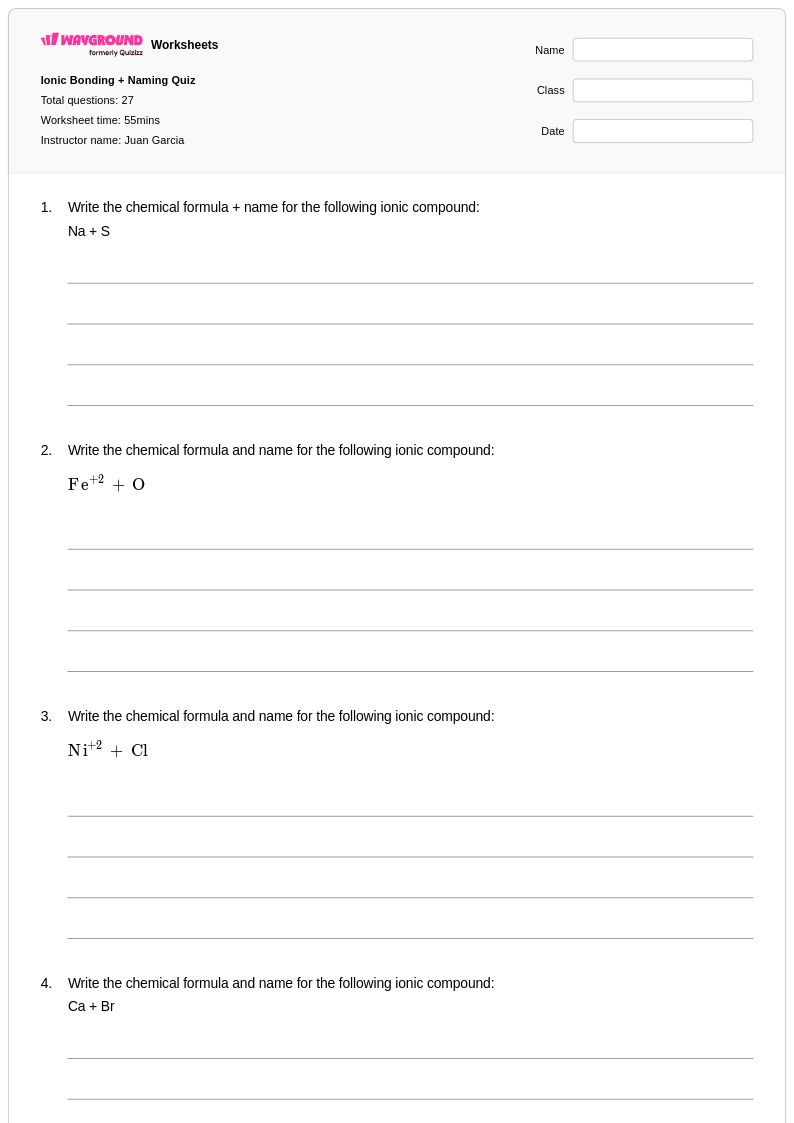
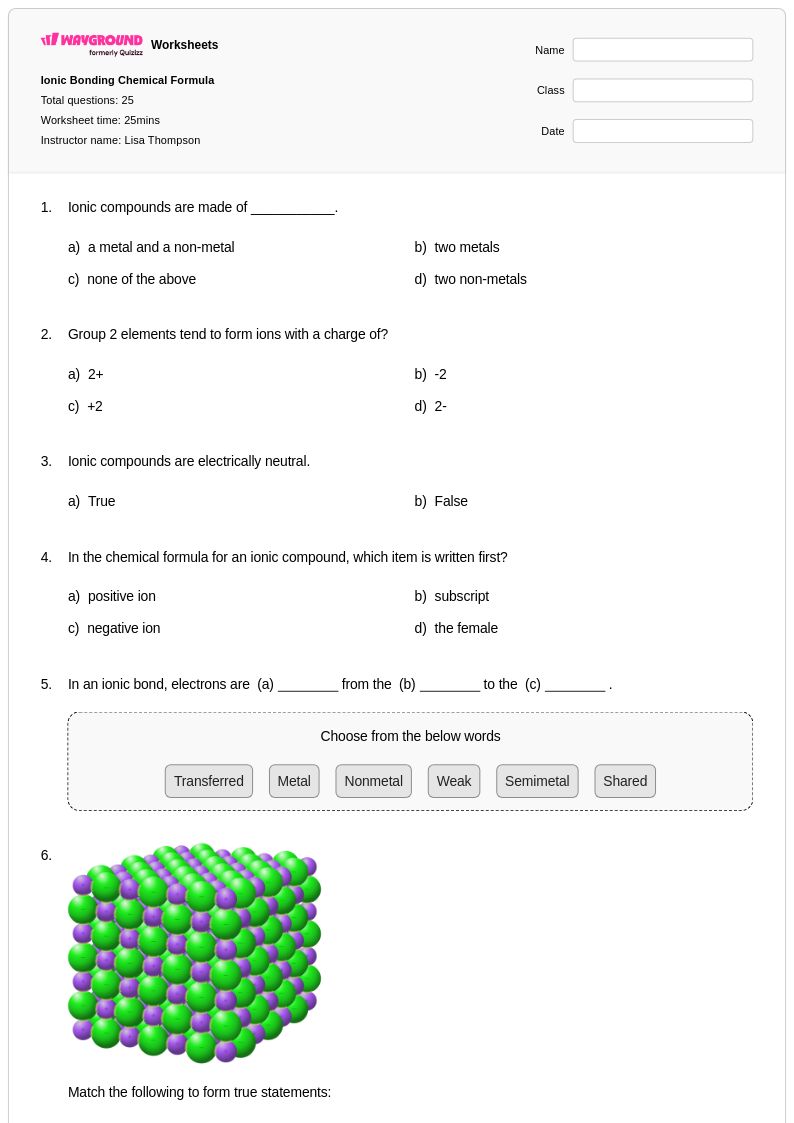
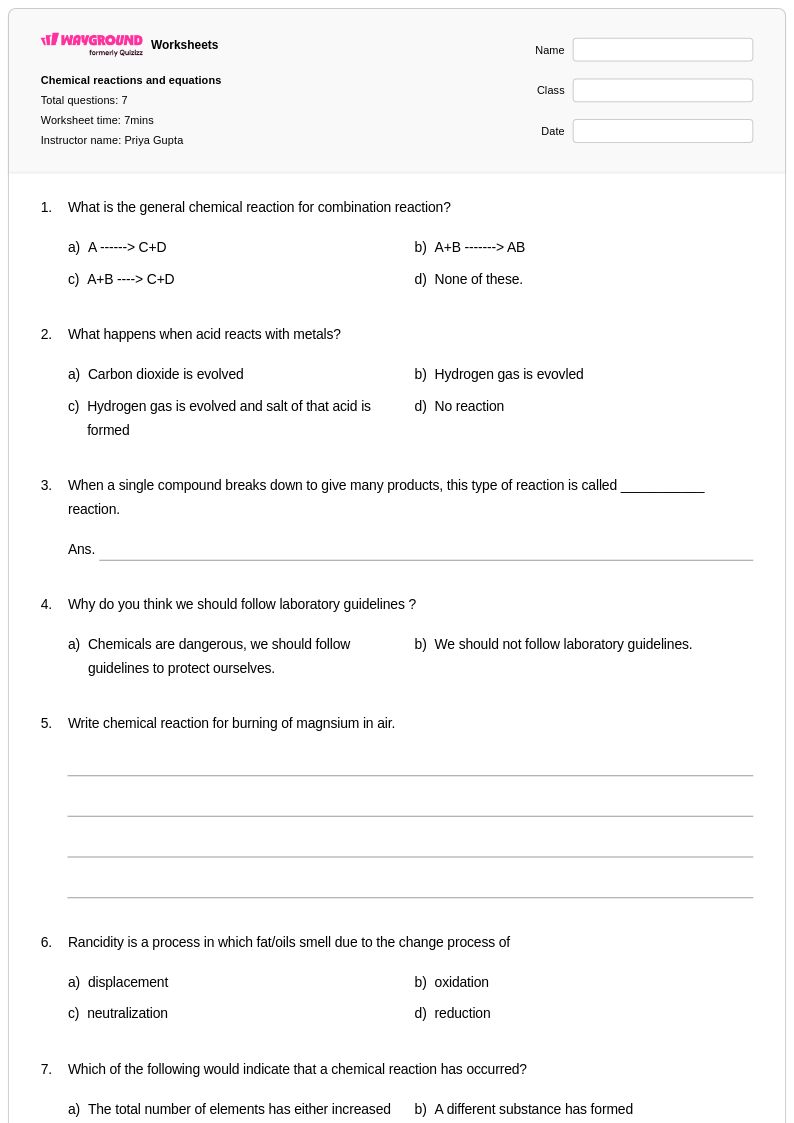
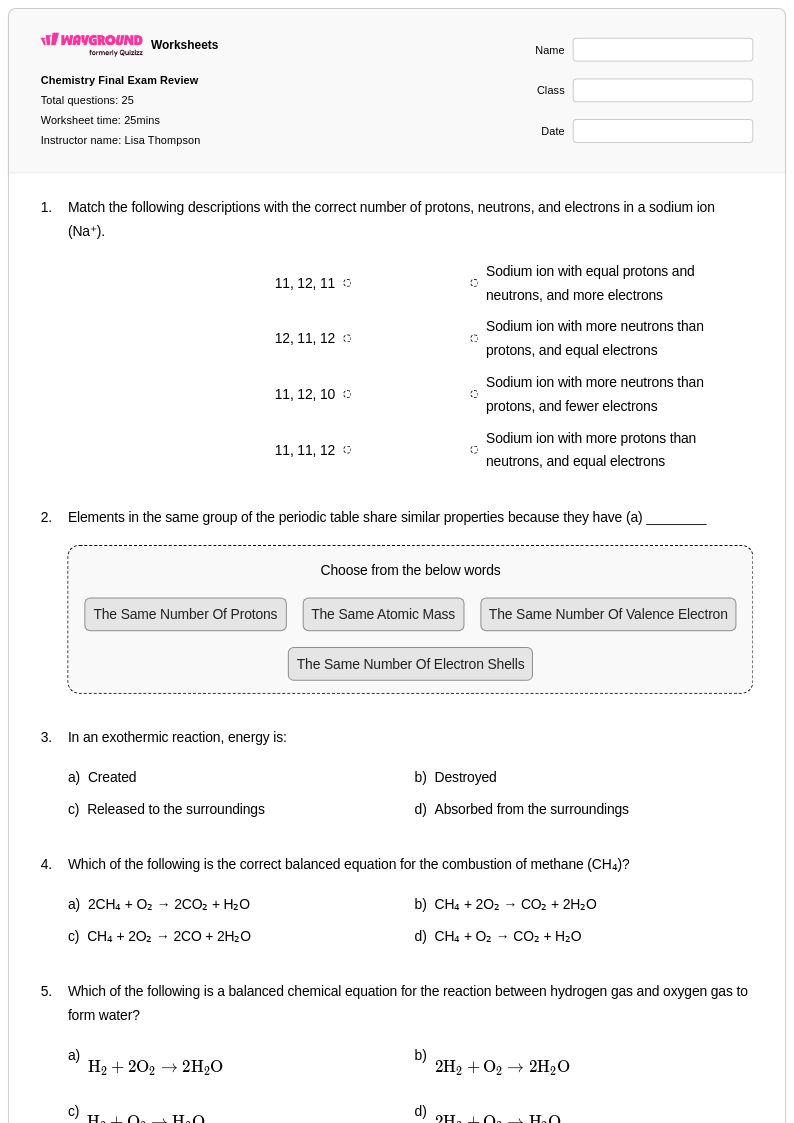
Wayground's free Class 10 chemical names and formulas worksheets provide comprehensive practice problems and answer keys to help students master writing chemical formulas, naming compounds, and understanding molecular structures through engaging printable PDF activities.
Explore printable Chemical Names and Formulas worksheets for Class 10
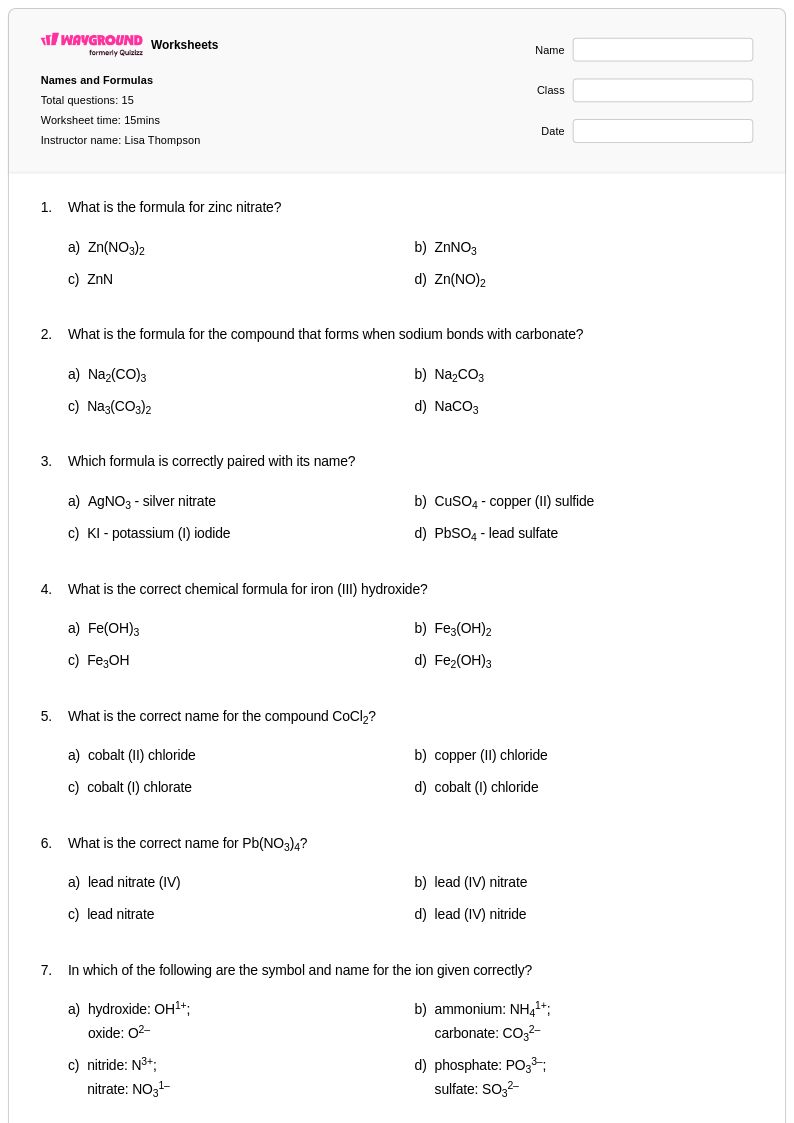
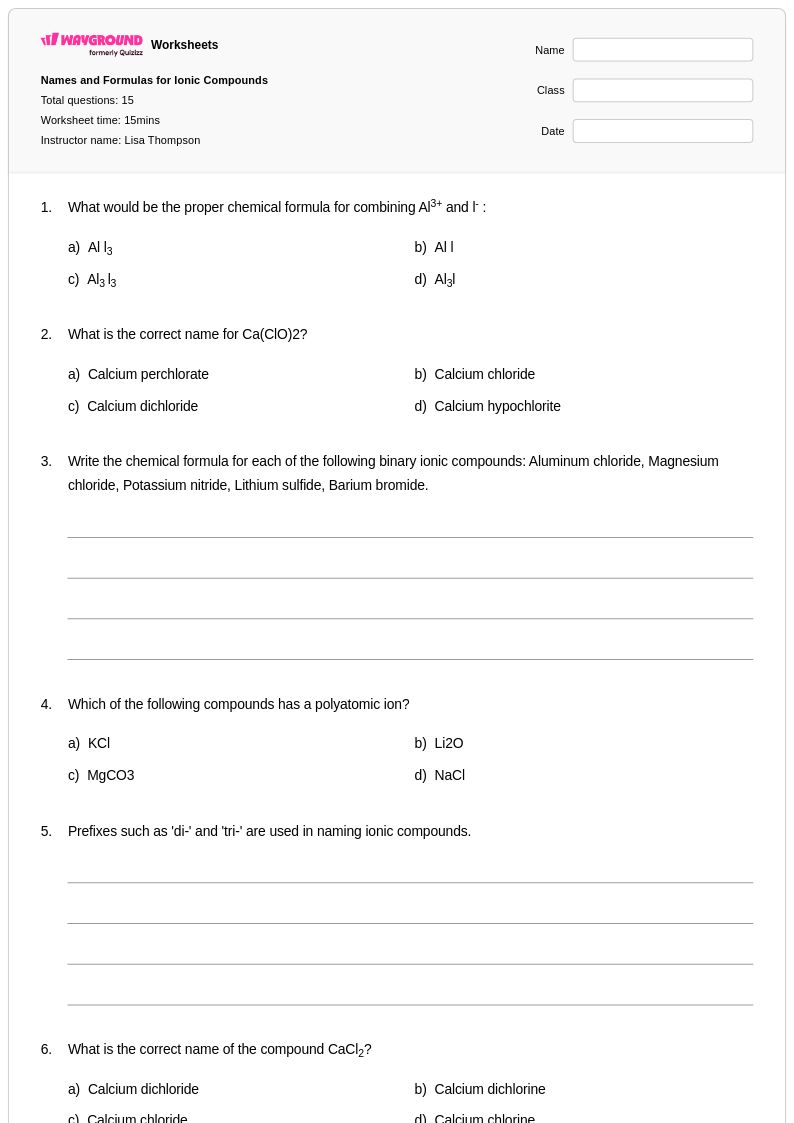
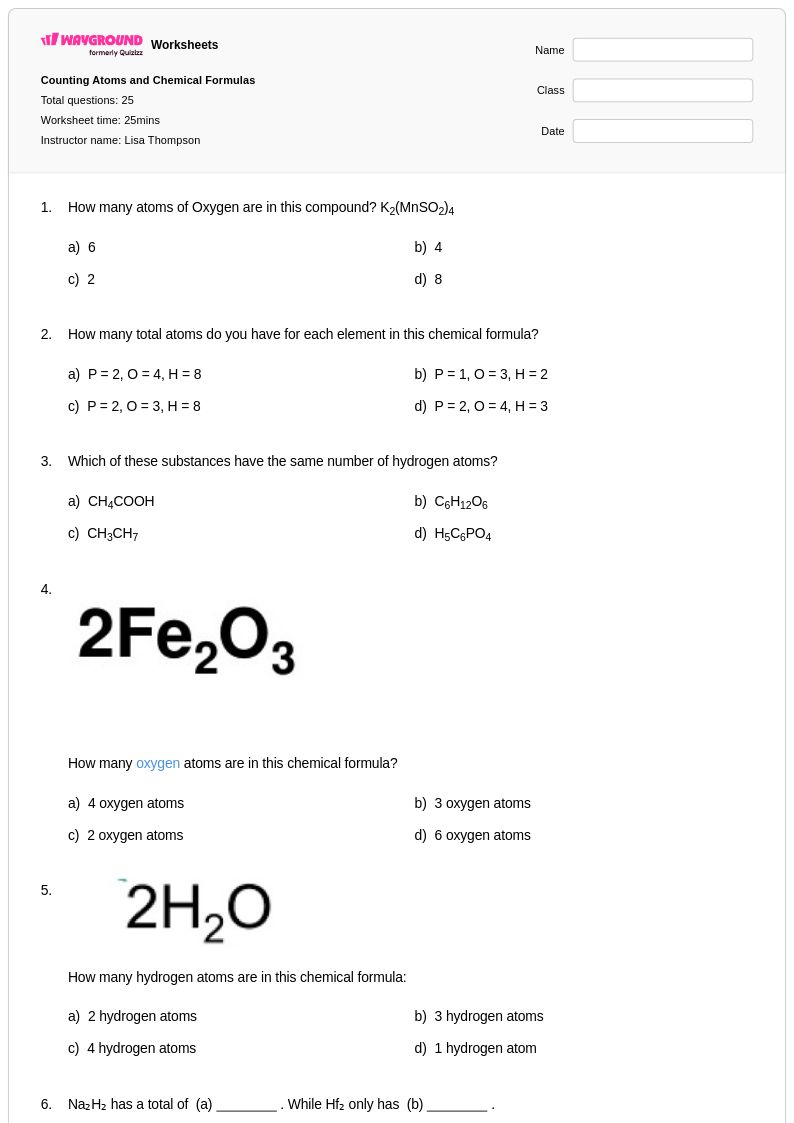
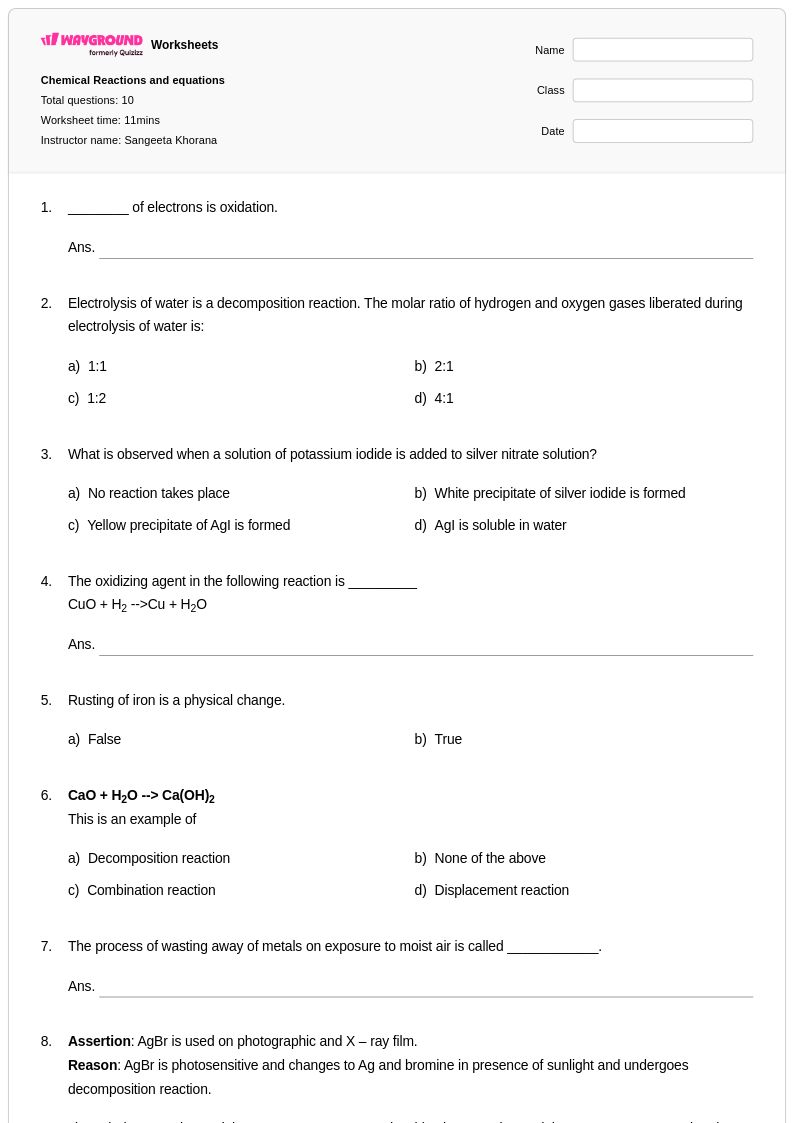
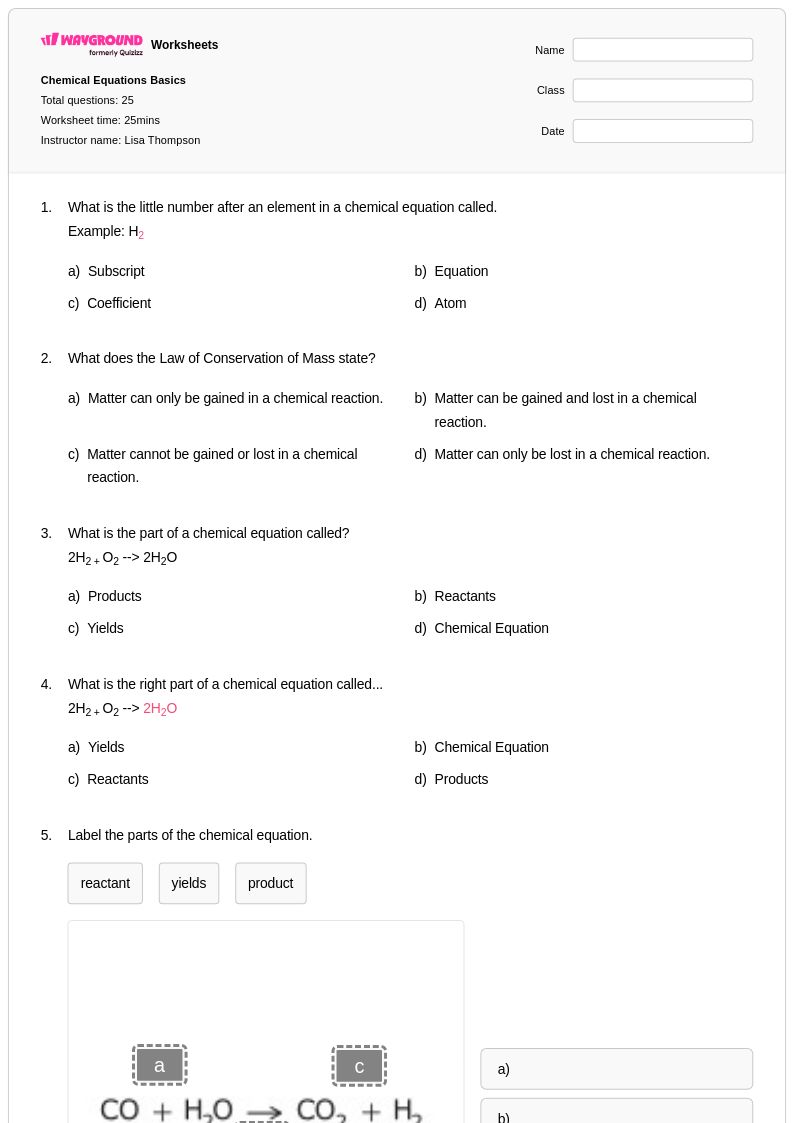
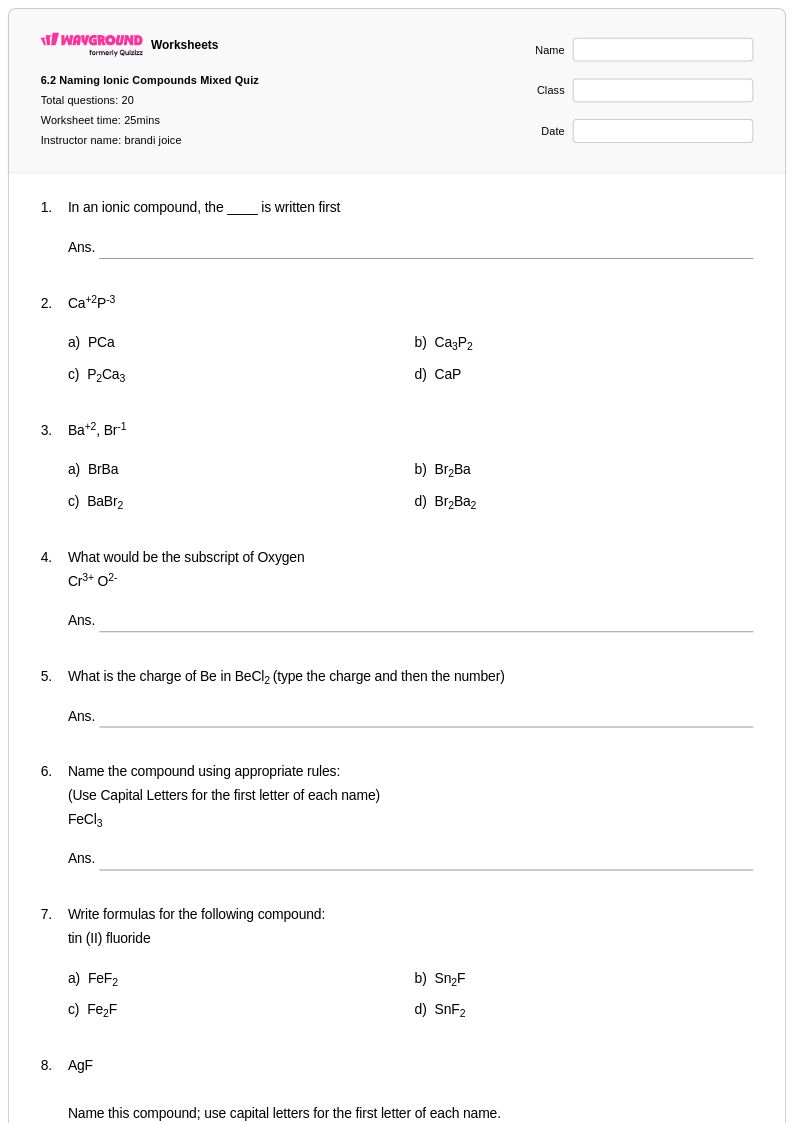
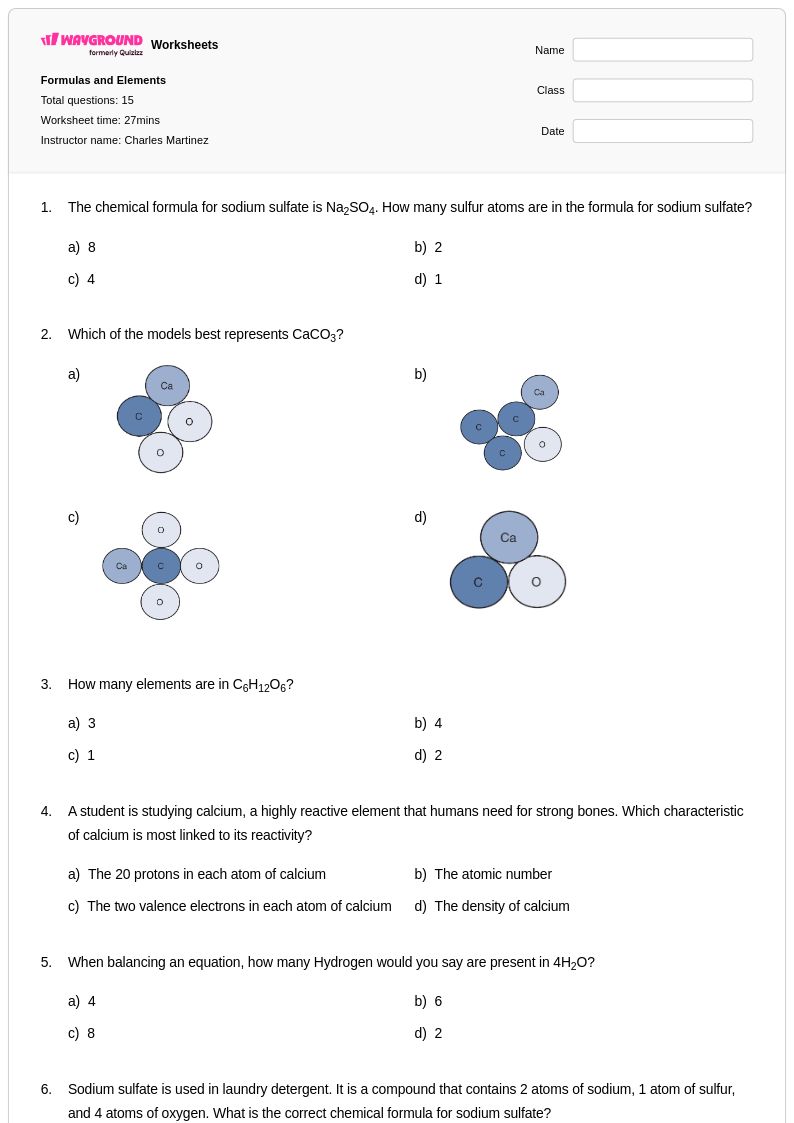
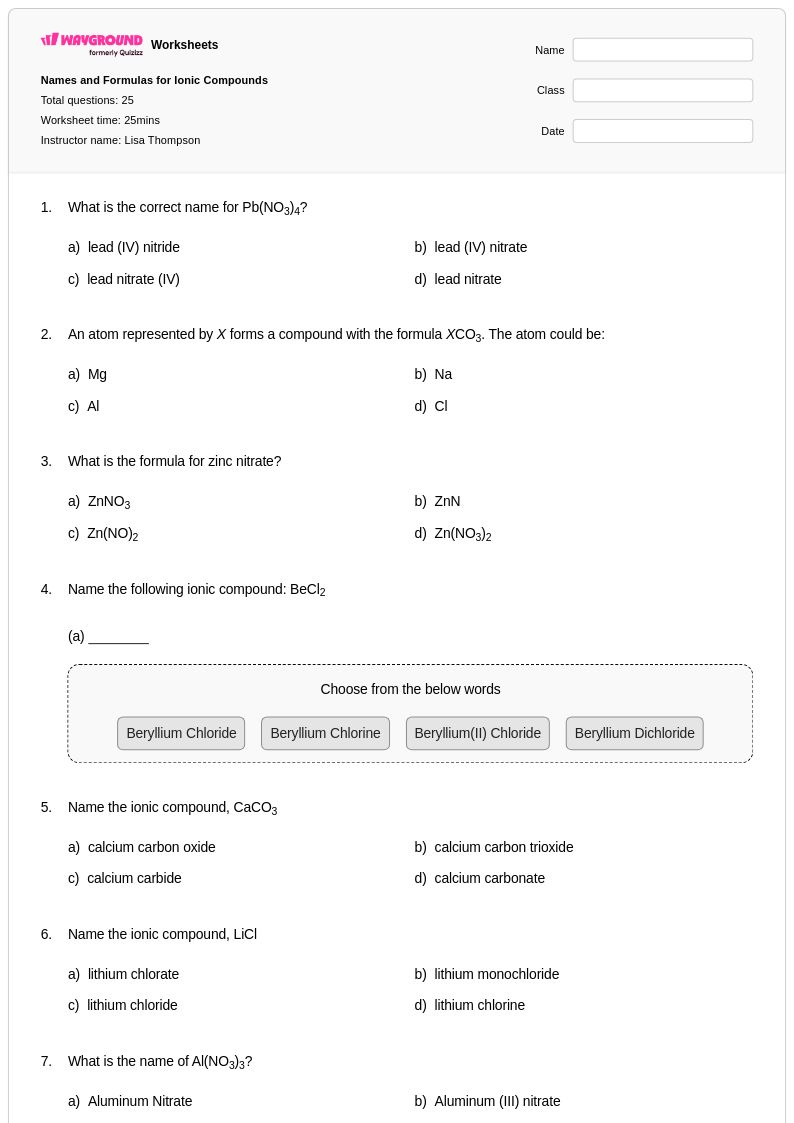
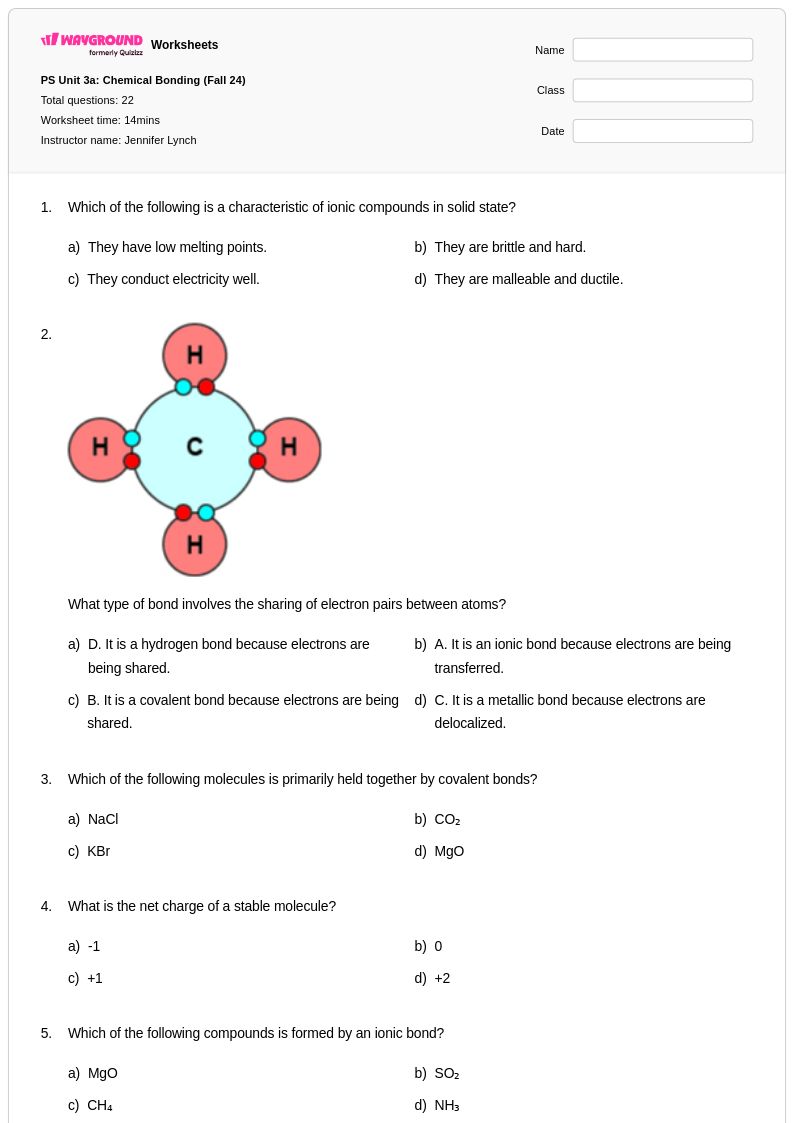
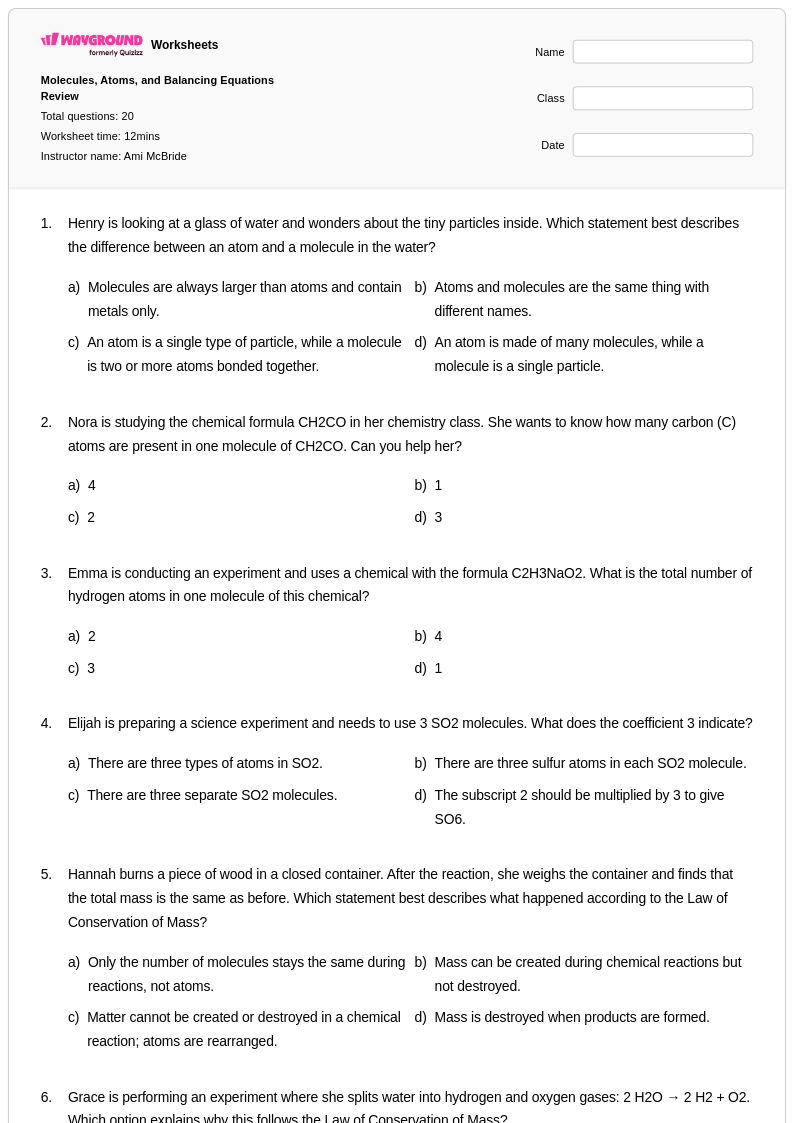
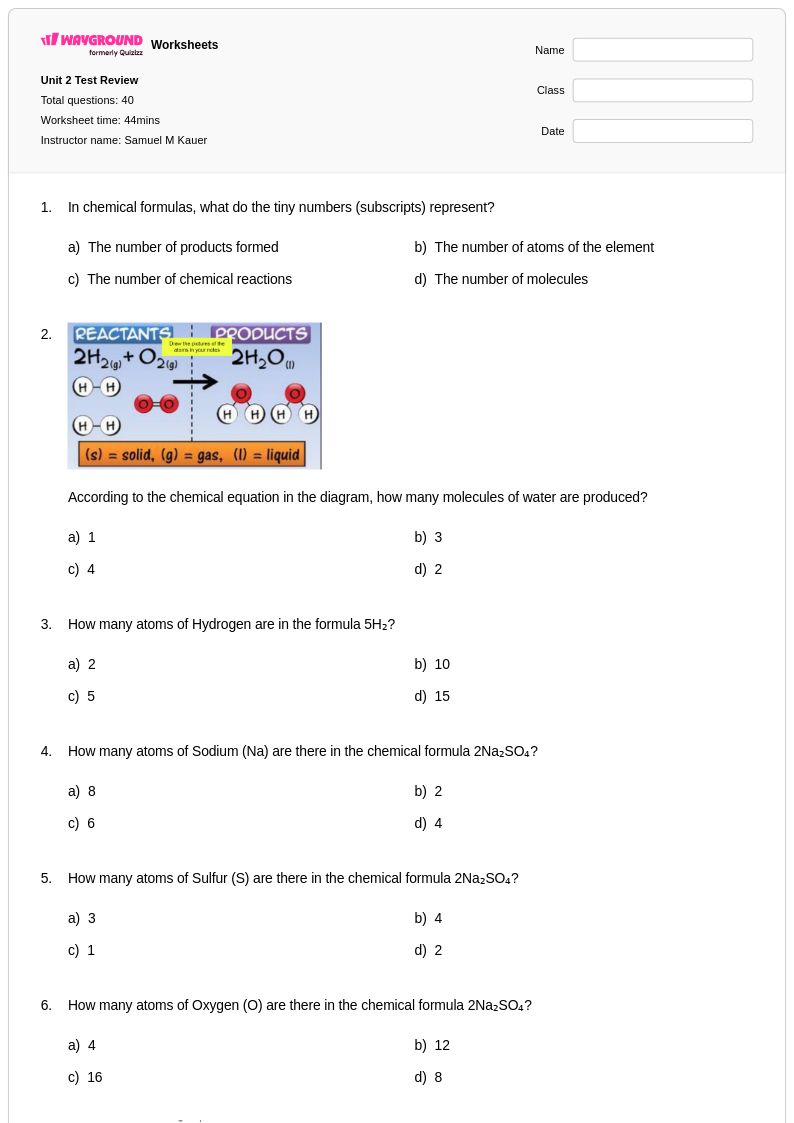
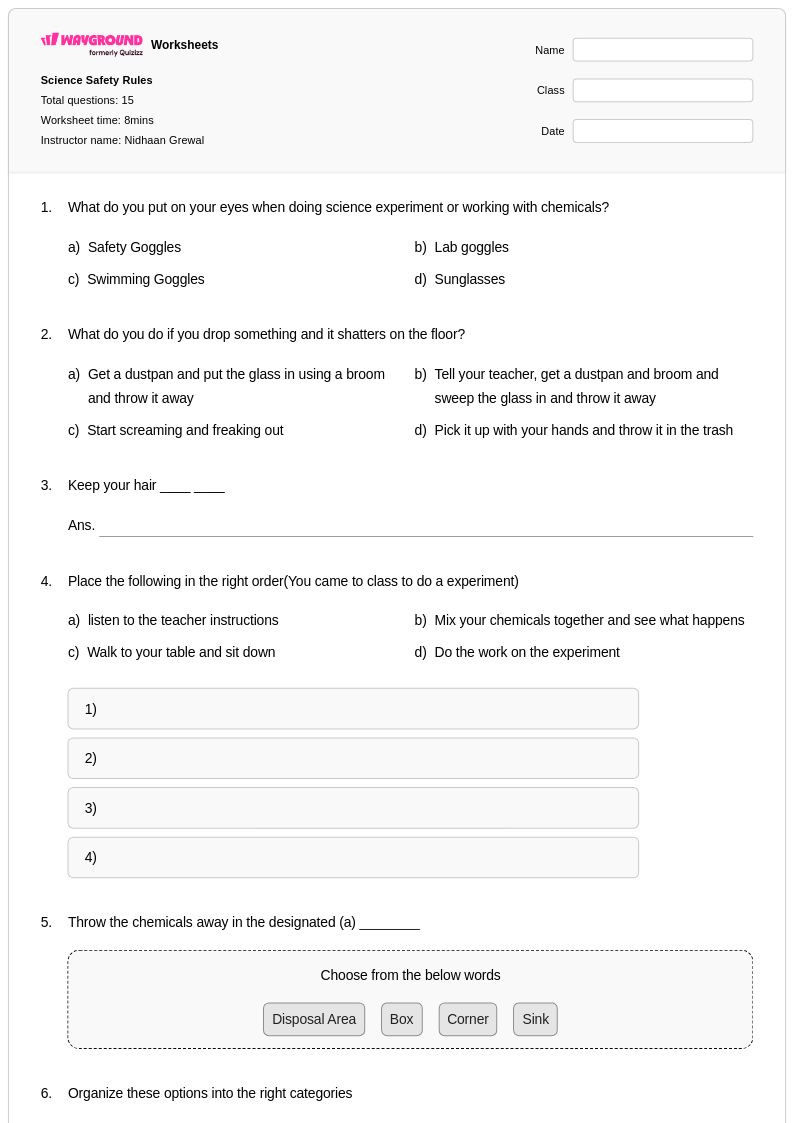
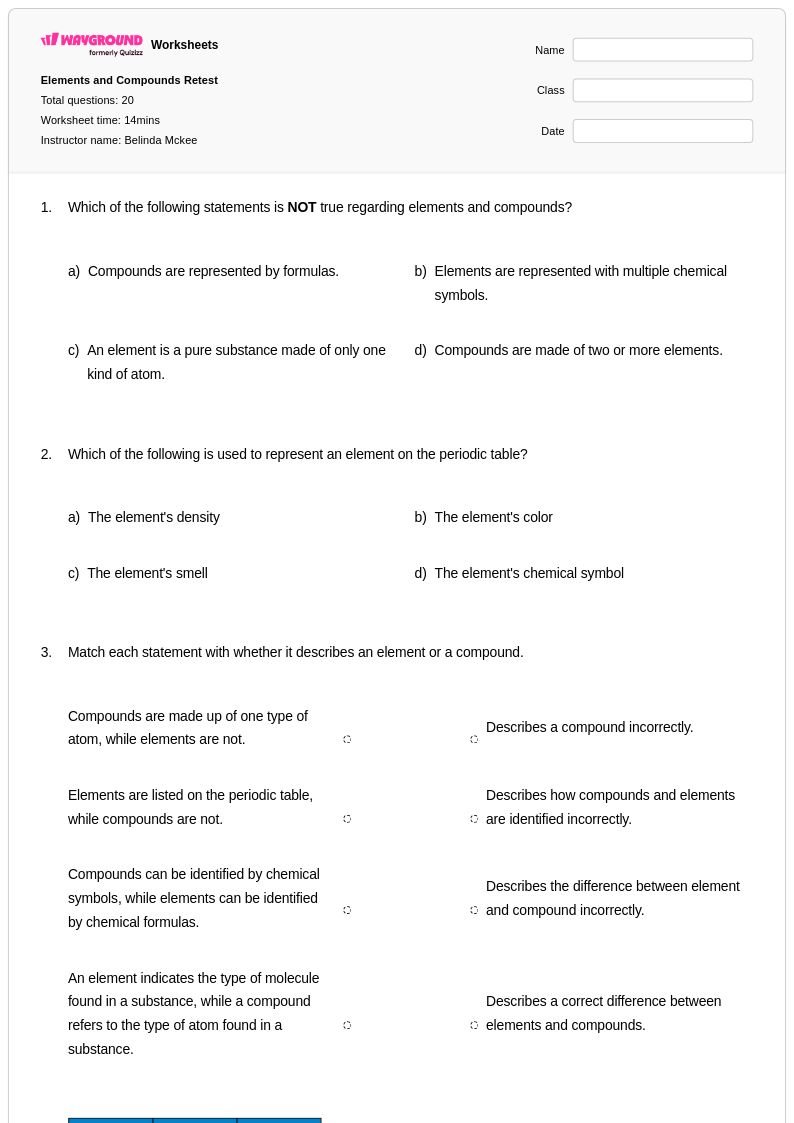
Chemical names and formulas worksheets for Class 10 students available through Wayground (formerly Quizizz) provide comprehensive practice in mastering the fundamental language of chemistry. These expertly designed resources strengthen essential skills including writing chemical formulas from compound names, determining empirical and molecular formulas, balancing chemical equations, and understanding ionic and covalent bonding patterns. Students work through systematic practice problems that build proficiency in nomenclature rules for binary compounds, polyatomic ions, acids, and organic molecules. Each worksheet collection includes detailed answer keys and is available as free printables in pdf format, allowing students to develop confidence in translating between chemical names and their corresponding symbolic representations.
Wayground (formerly Quizizz) supports chemistry educators with millions of teacher-created worksheet resources specifically targeting chemical names and formulas concepts for Class 10 instruction. The platform's advanced search and filtering capabilities enable teachers to quickly locate materials aligned with state and national chemistry standards, while differentiation tools allow for seamless customization based on individual student needs and learning objectives. These comprehensive worksheet collections are available in both printable pdf formats and interactive digital versions, providing flexibility for classroom instruction, homework assignments, test preparation, and targeted remediation. Teachers can efficiently plan lessons that progress from basic nomenclature rules to complex formula writing, use the resources for enrichment activities with advanced learners, and implement systematic skill practice that ensures students master this critical foundation for success in advanced chemistry coursework.
FAQs
How do I teach students to write chemical formulas from compound names?
Start by teaching students to identify whether a compound is ionic or covalent, since the naming rules differ between the two. For ionic compounds, students need to recognize the cation and anion and balance charges to write the correct formula. For covalent compounds, teach Greek prefixes (mono-, di-, tri-, etc.) as direct indicators of atom count. Building from binary compounds before introducing polyatomic ions gives students a scaffold that prevents early frustration and builds lasting confidence.
What exercises help students practice chemical nomenclature?
Effective practice alternates between two directions: naming a compound from its formula, and writing a formula from a compound name. Worksheets that include binary ionic compounds, covalent compounds, and polyatomic ions as separate sections let students build proficiency in stages rather than being overwhelmed by mixed problem sets. Timed conversion drills are also useful for reinforcing recall of common ion charges and IUPAC prefixes.
What mistakes do students commonly make when learning chemical names and formulas?
One of the most frequent errors is applying ionic naming rules to covalent compounds or vice versa, which produces names like 'carbon dioxide' written as an ionic compound. Students also commonly forget to reduce subscripts to the lowest whole-number ratio in ionic formulas, resulting in formulas like Ca2O2 instead of CaO. Confusing polyatomic ions such as nitrate (NO3⁻) and nitrite (NO2⁻) is another persistent issue, as is misusing the prefix 'mono-' on the first element in a covalent compound name.
How do I differentiate chemical names and formulas instruction for students at different levels?
For struggling learners, restrict initial practice to binary ionic compounds with single-charge metals before introducing variable-charge metals and polyatomic ions. Advanced students can be challenged with organic nomenclature or multi-step problems that require both naming and formula writing in the same exercise. On Wayground, teachers can apply accommodations such as reduced answer choices or read-aloud support to individual students, allowing the rest of the class to work at default settings without disruption.
How can I use Wayground's chemical names and formulas worksheets in my classroom?
Wayground's chemical names and formulas worksheets are available as printable PDFs for traditional classroom use and in digital formats for technology-integrated environments, including the option to host them as a live quiz on Wayground. Printable versions work well for in-class practice or homework, while the digital format supports immediate feedback and self-paced review. All worksheets include complete answer keys, making them practical for independent student work or teacher-led correction.
What is the correct way to apply IUPAC nomenclature rules for covalent compounds?
For binary covalent compounds, IUPAC rules require using Greek numerical prefixes to indicate the number of each atom, with the more electropositive element listed first. The prefix 'mono-' is omitted from the first element but retained for the second (e.g., carbon monoxide, not monocarbon monoxide). The ending of the second element's name is replaced with '-ide.' Teaching students to systematically apply these steps in order reduces the guesswork that leads to naming errors.