Free Printable Ionic Formula Writing Worksheets for Class 10
Master Class 10 ionic formula writing with Wayground's comprehensive collection of free worksheets, printable PDFs, and practice problems featuring detailed answer keys to strengthen chemistry skills.
Explore printable Ionic Formula Writing worksheets for Class 10
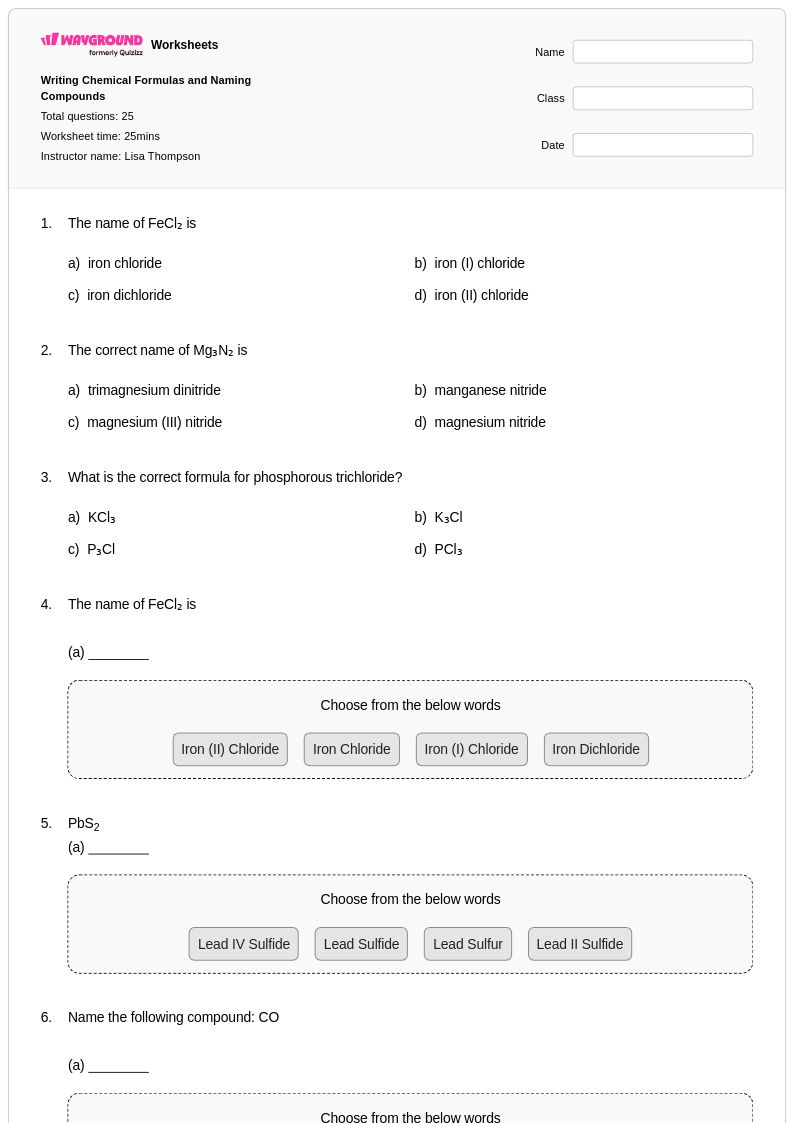
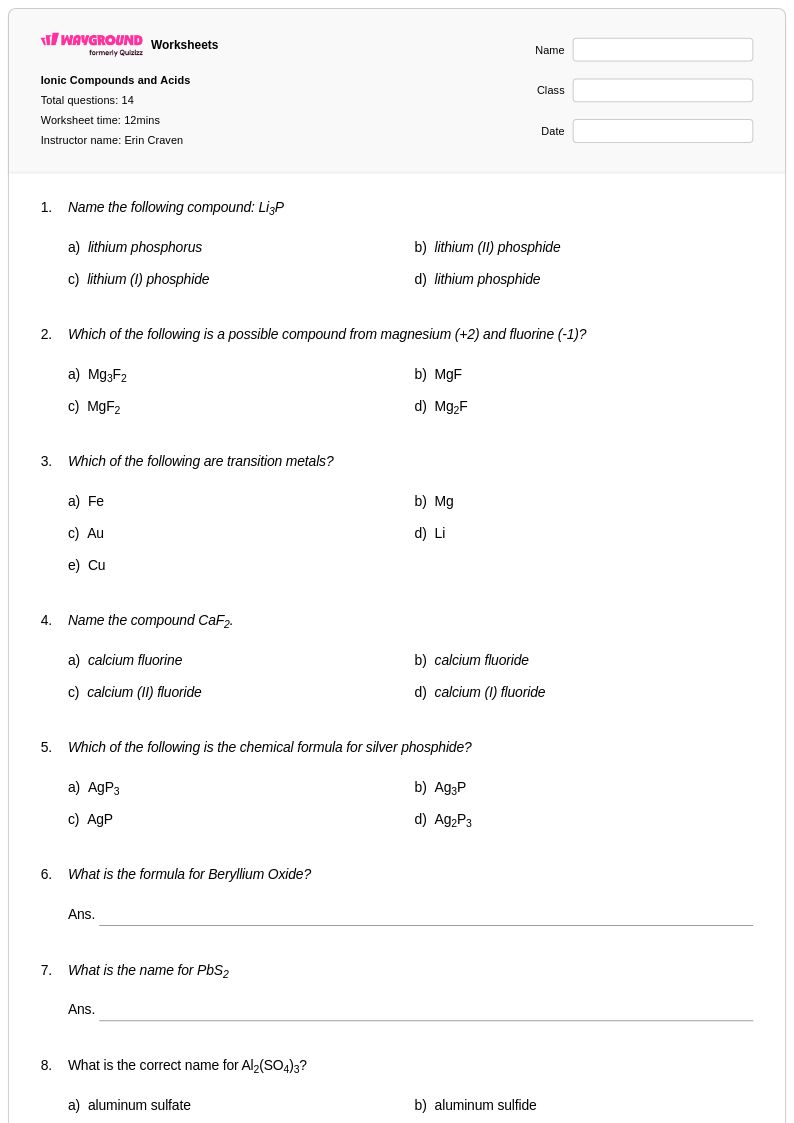
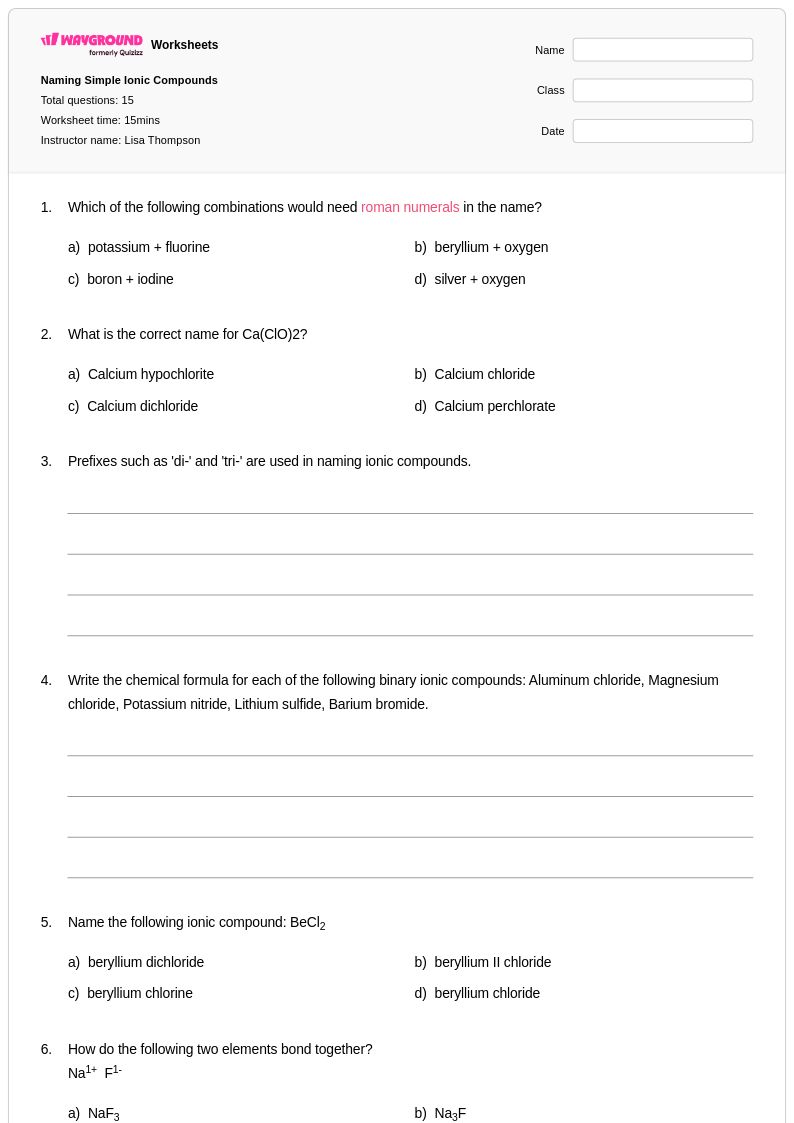
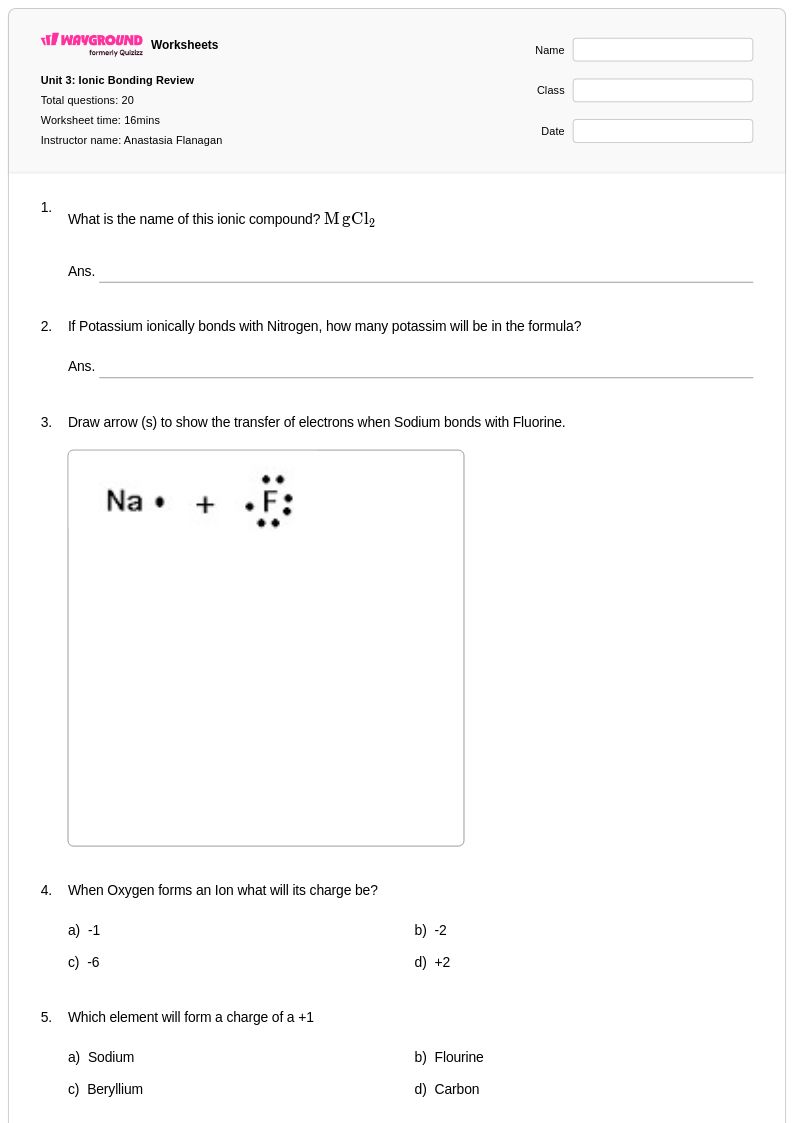
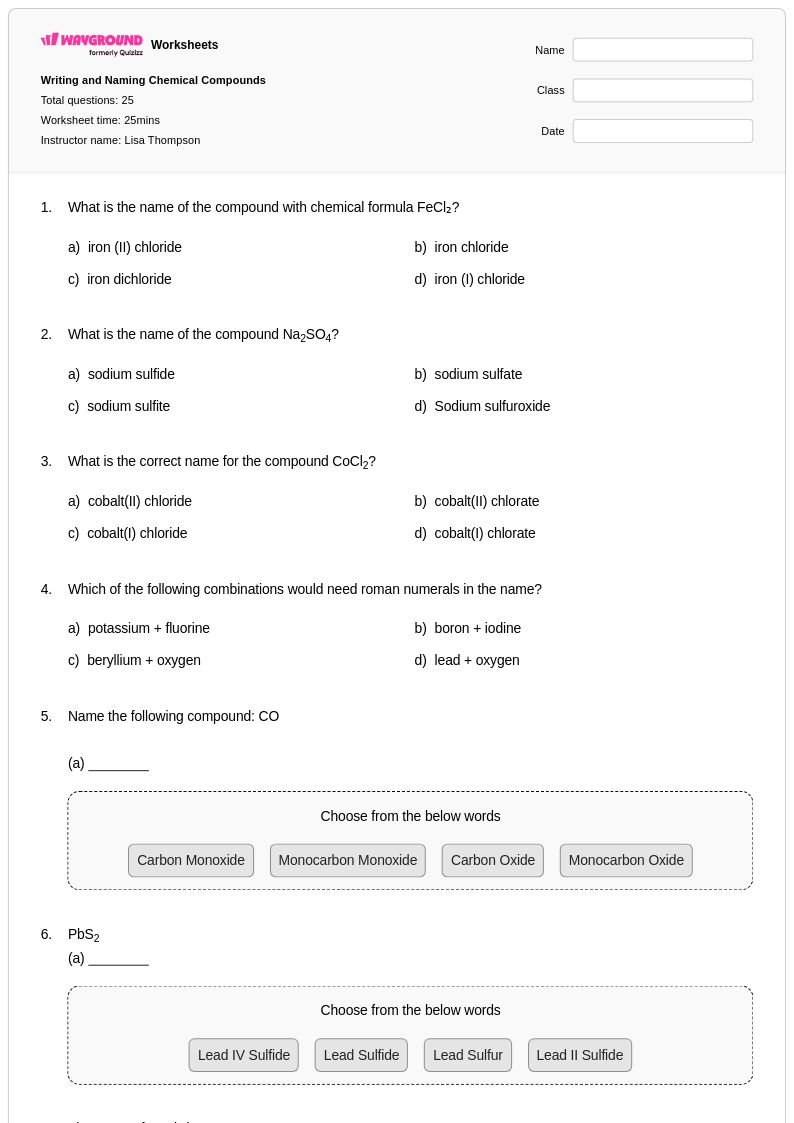
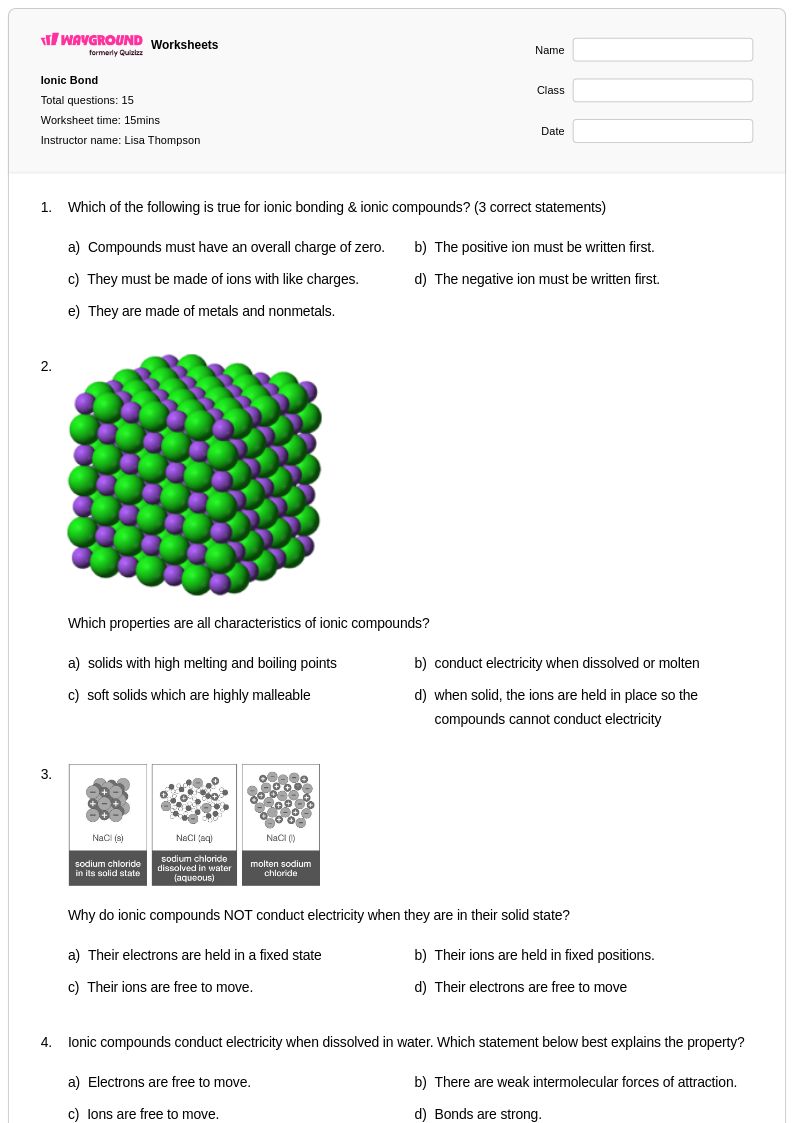
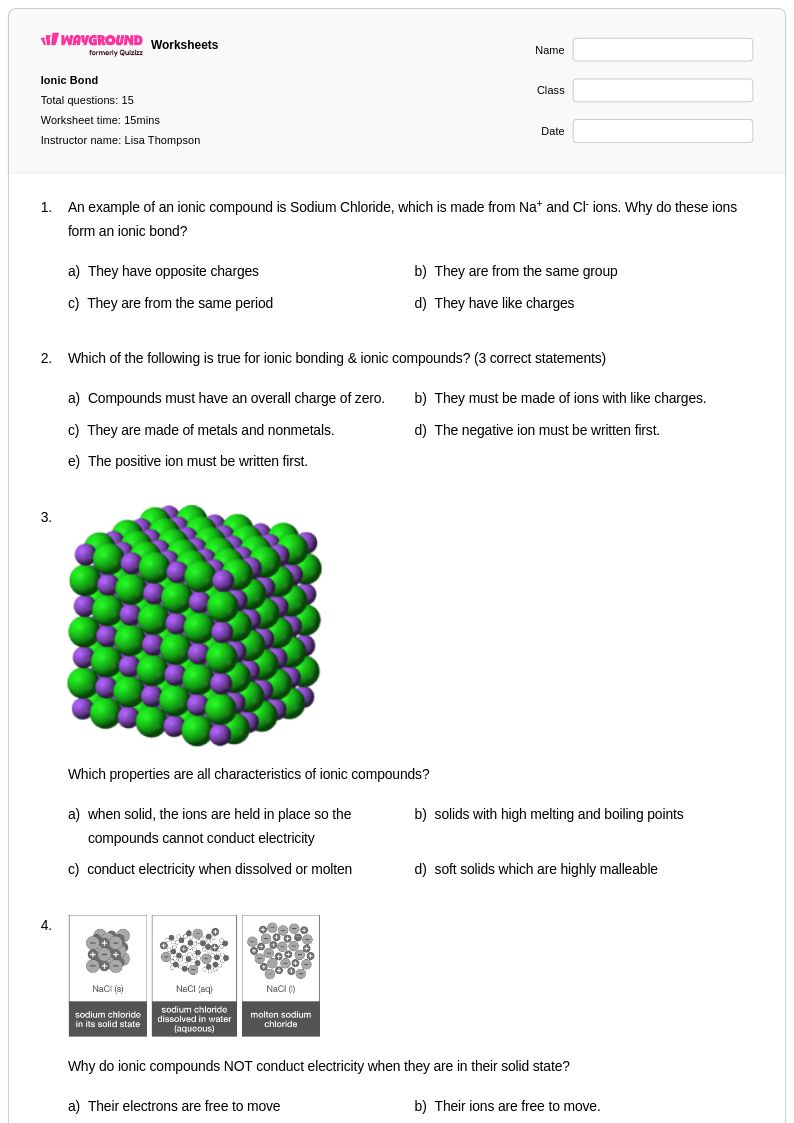
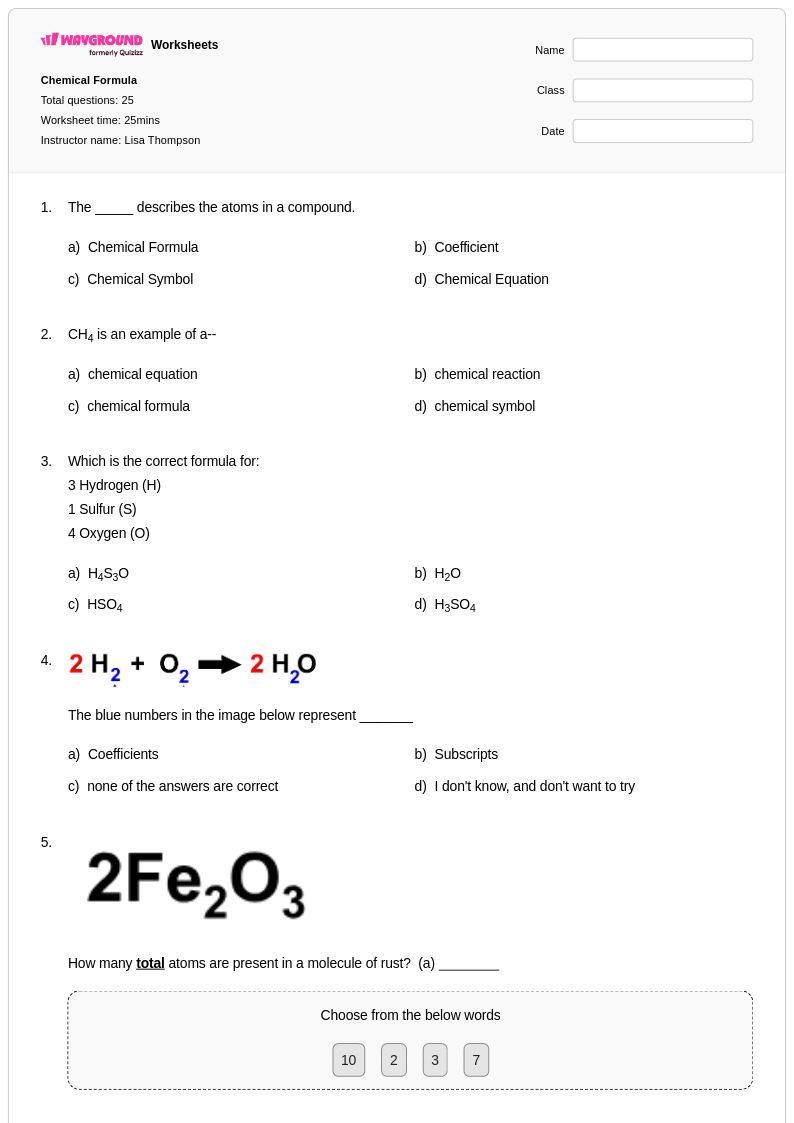
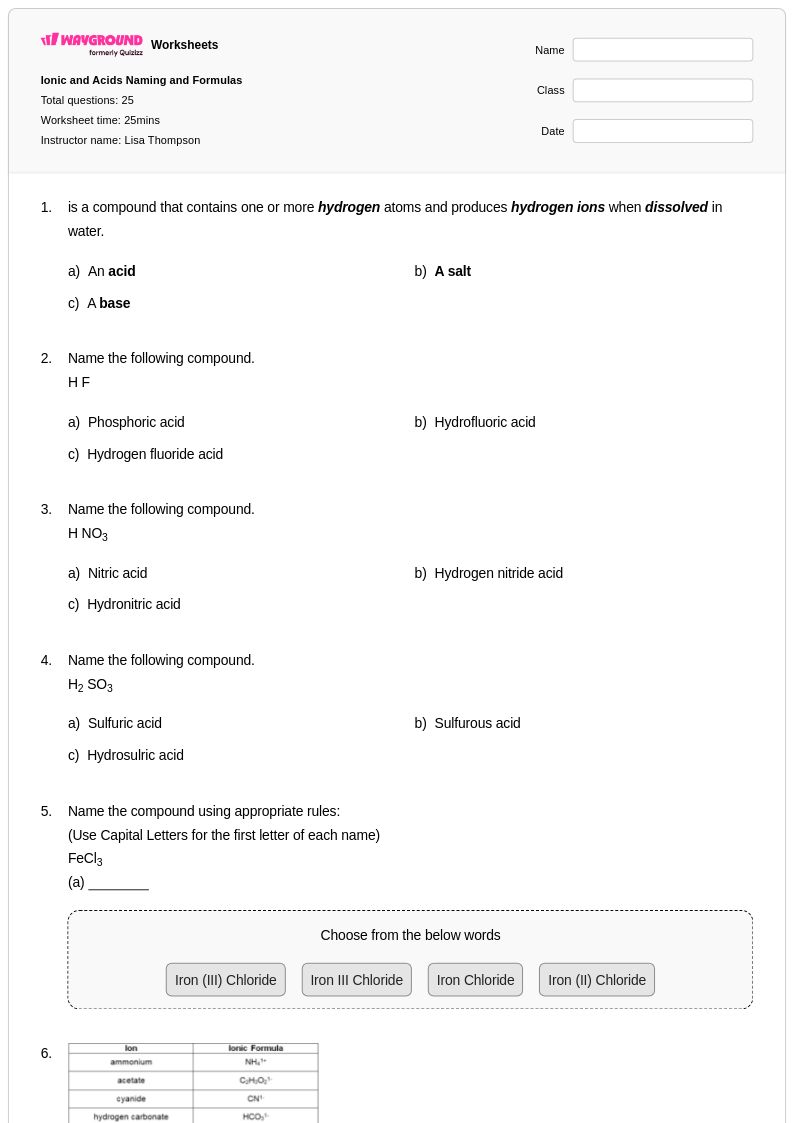
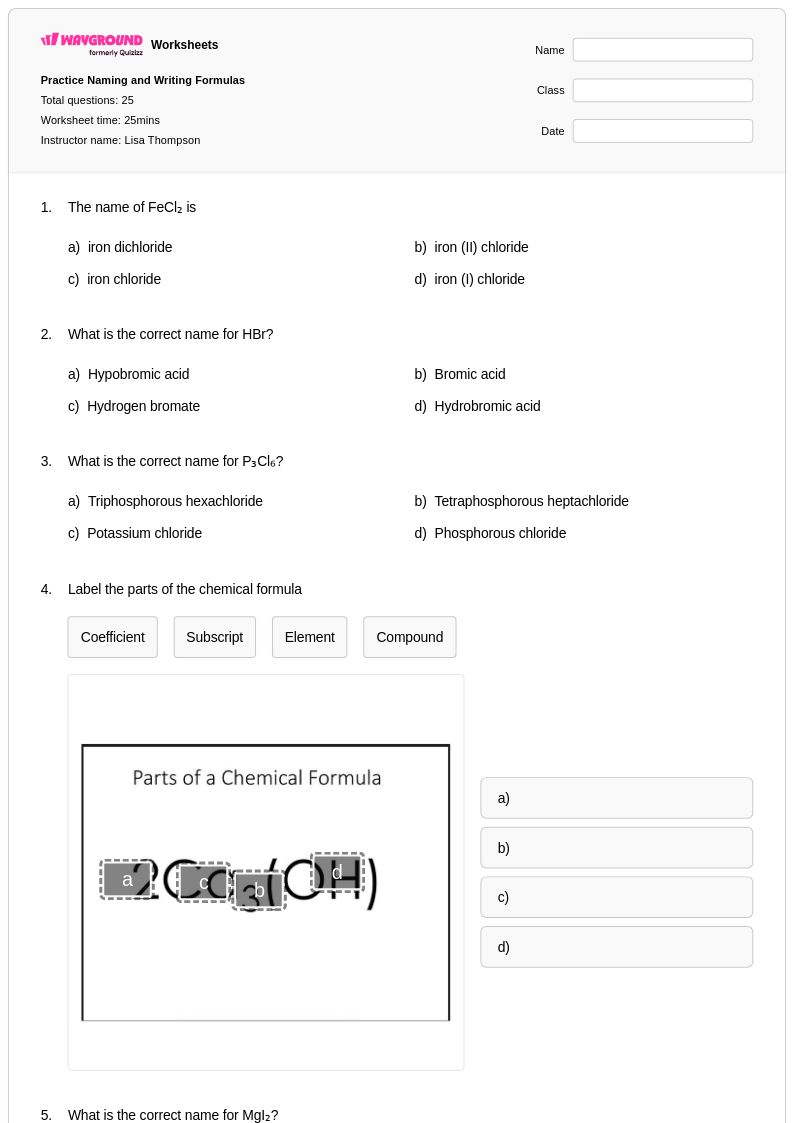
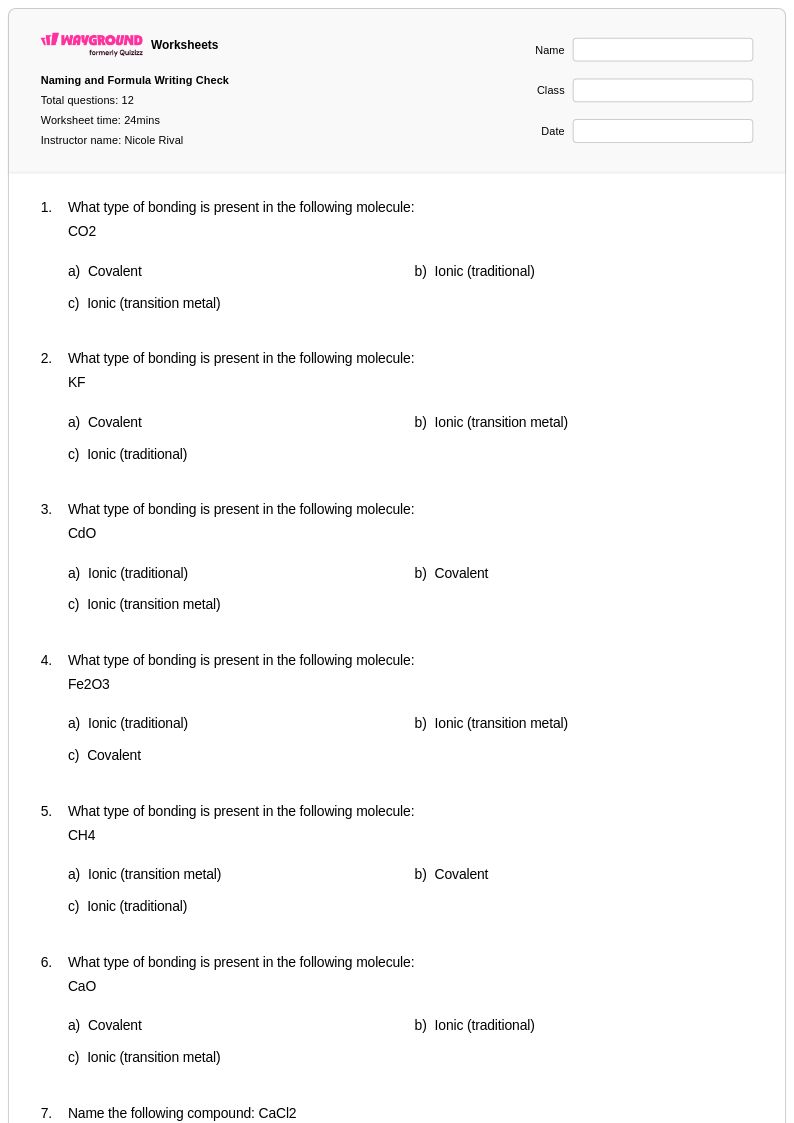
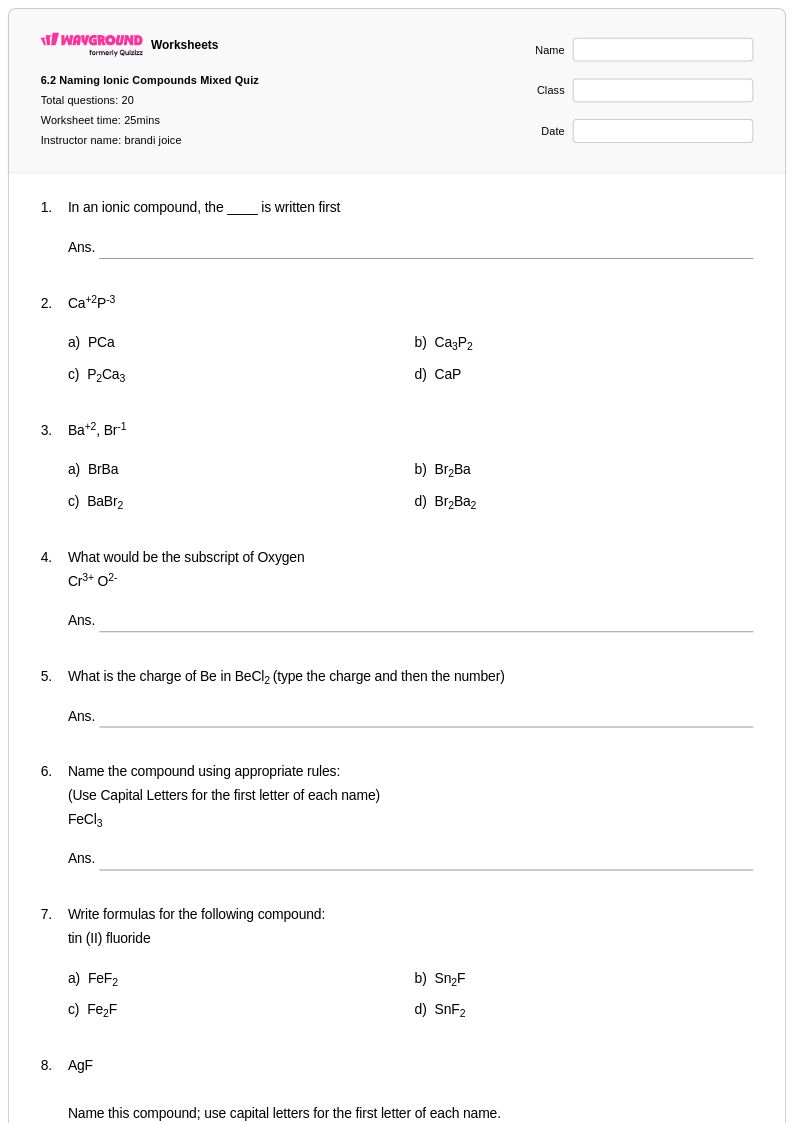
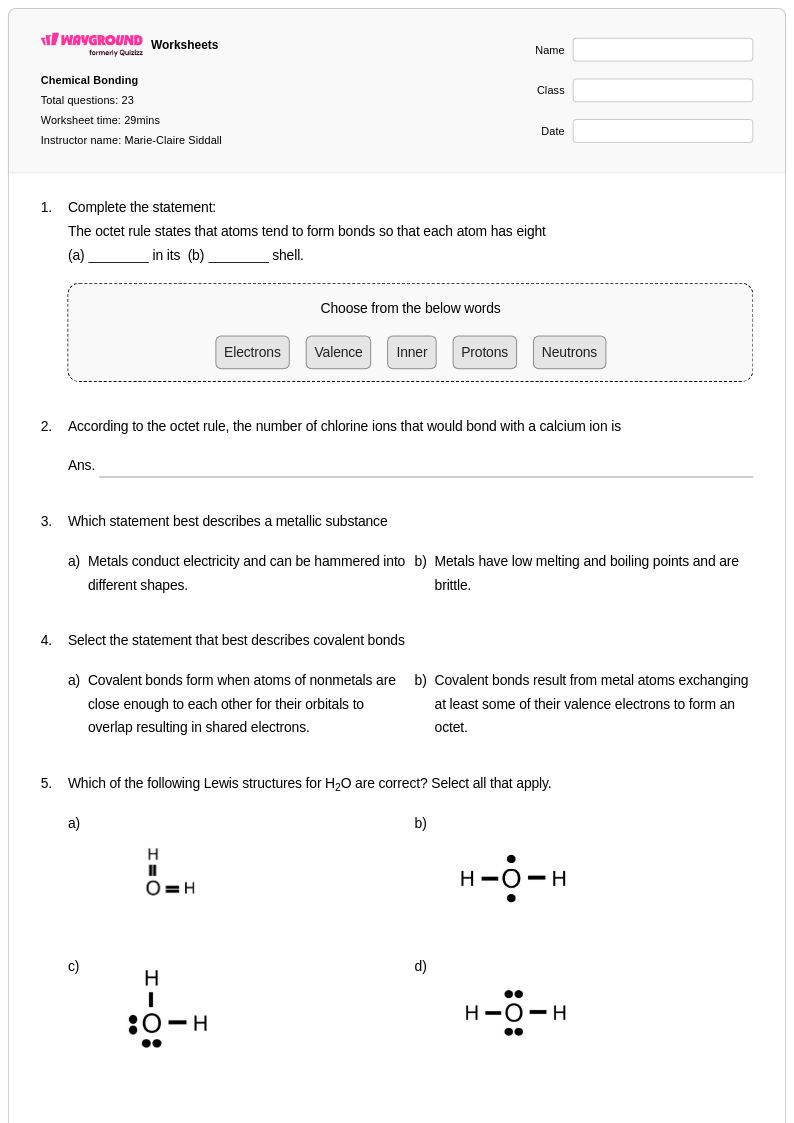
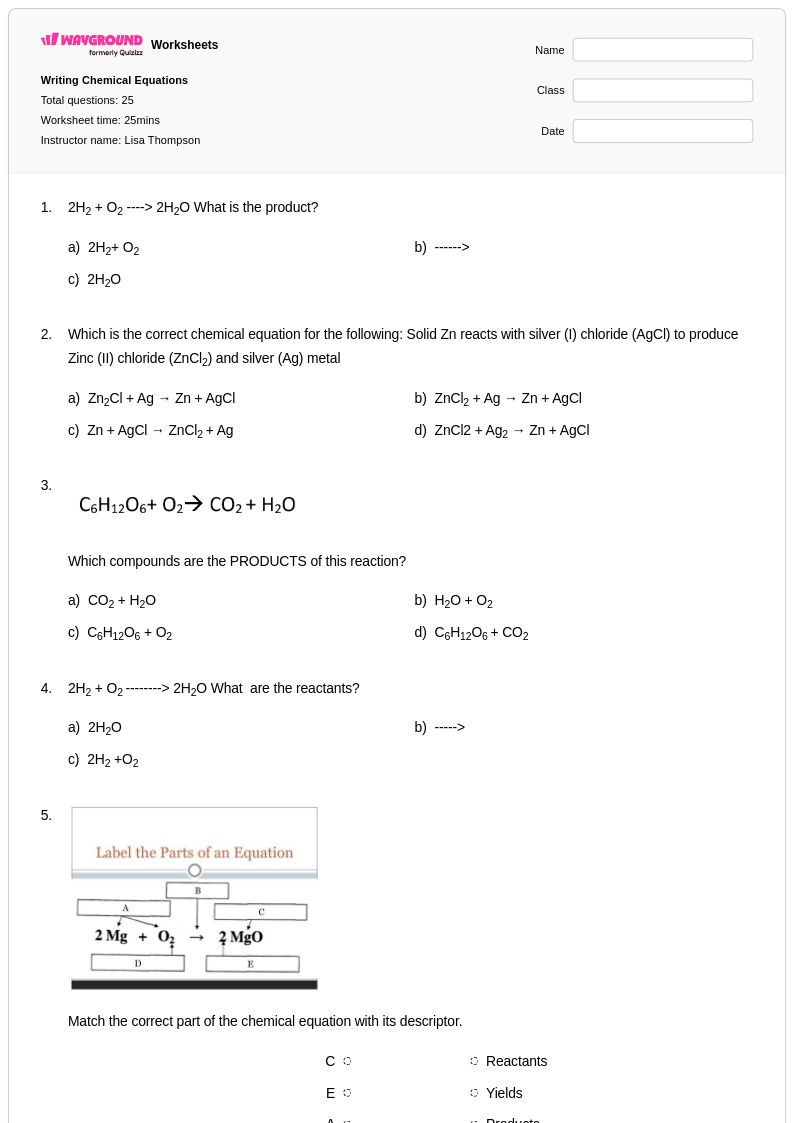
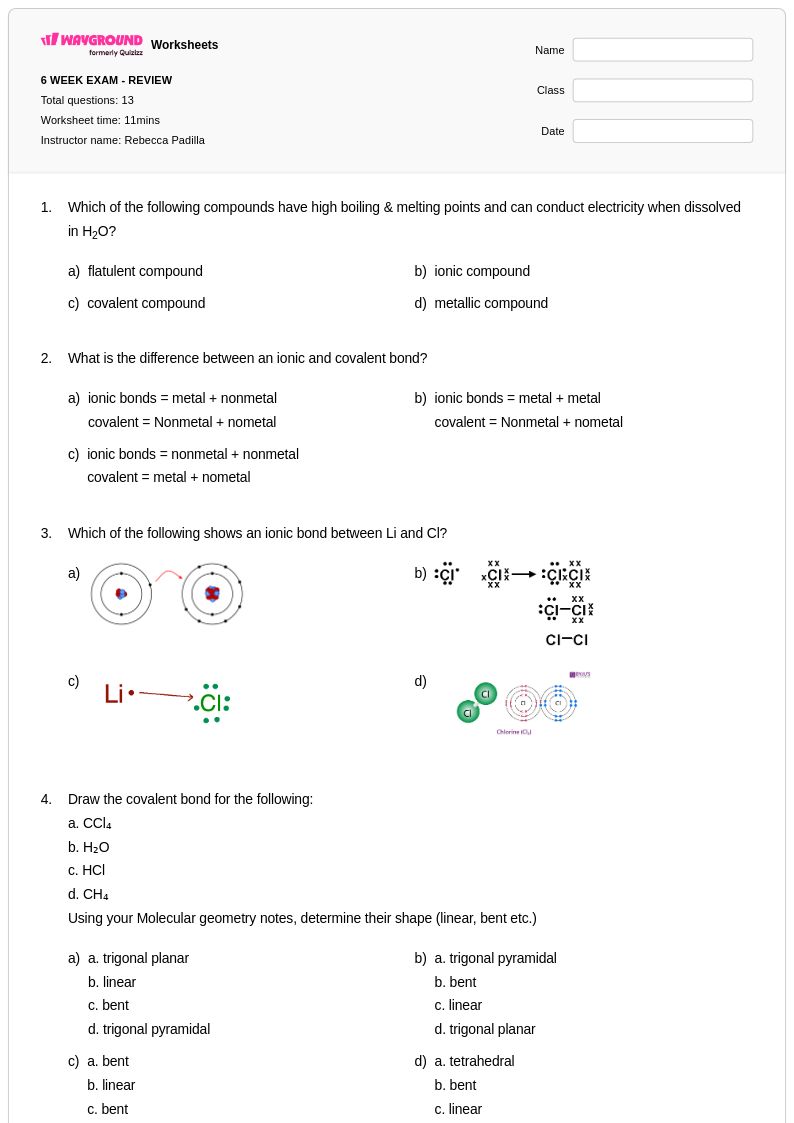
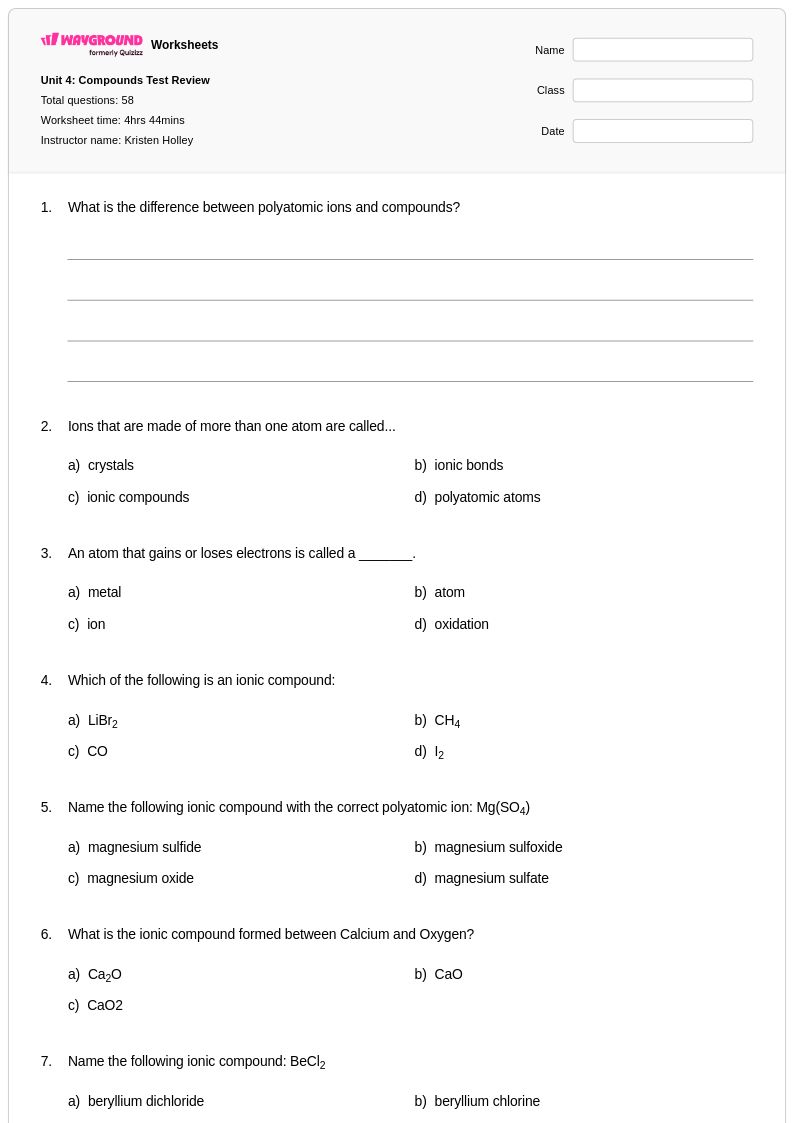
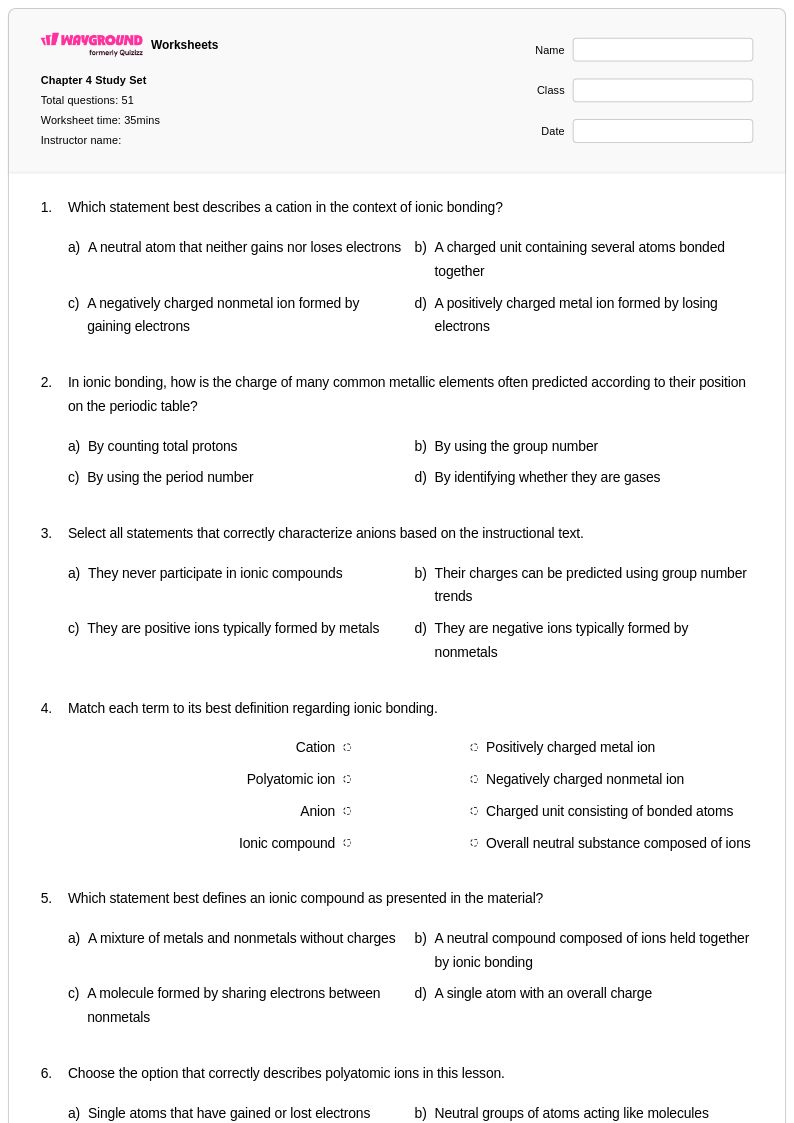
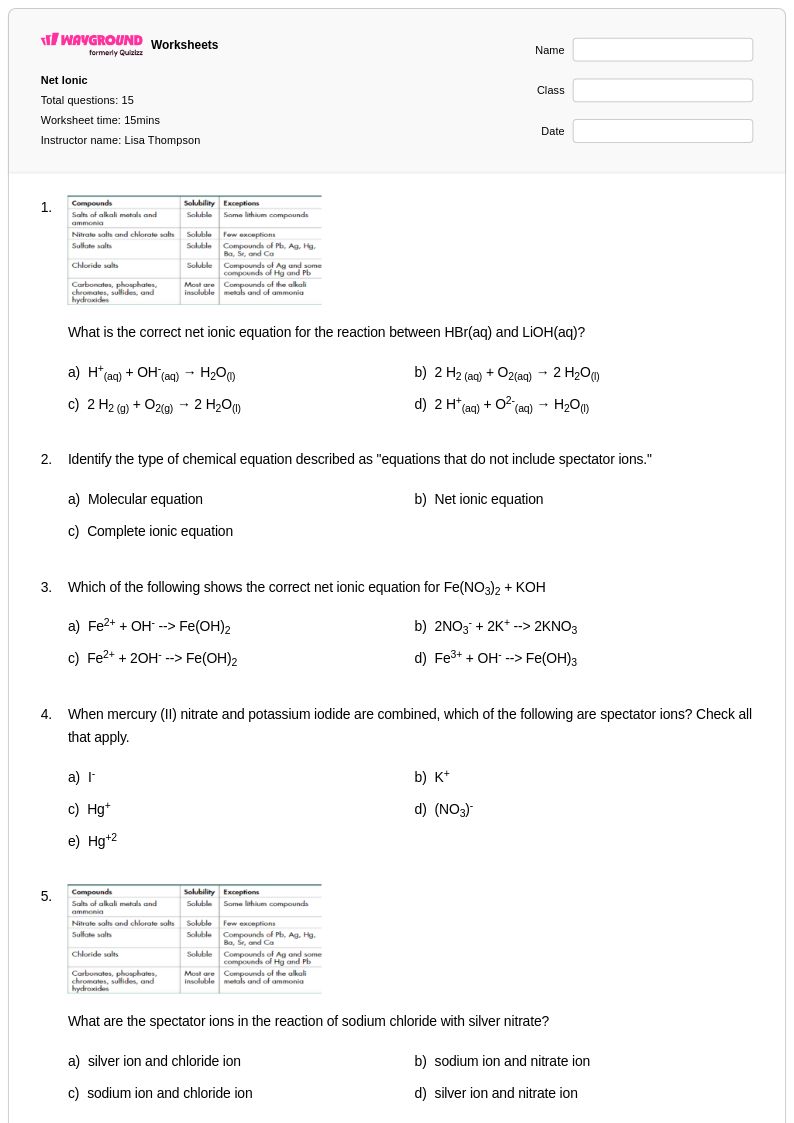
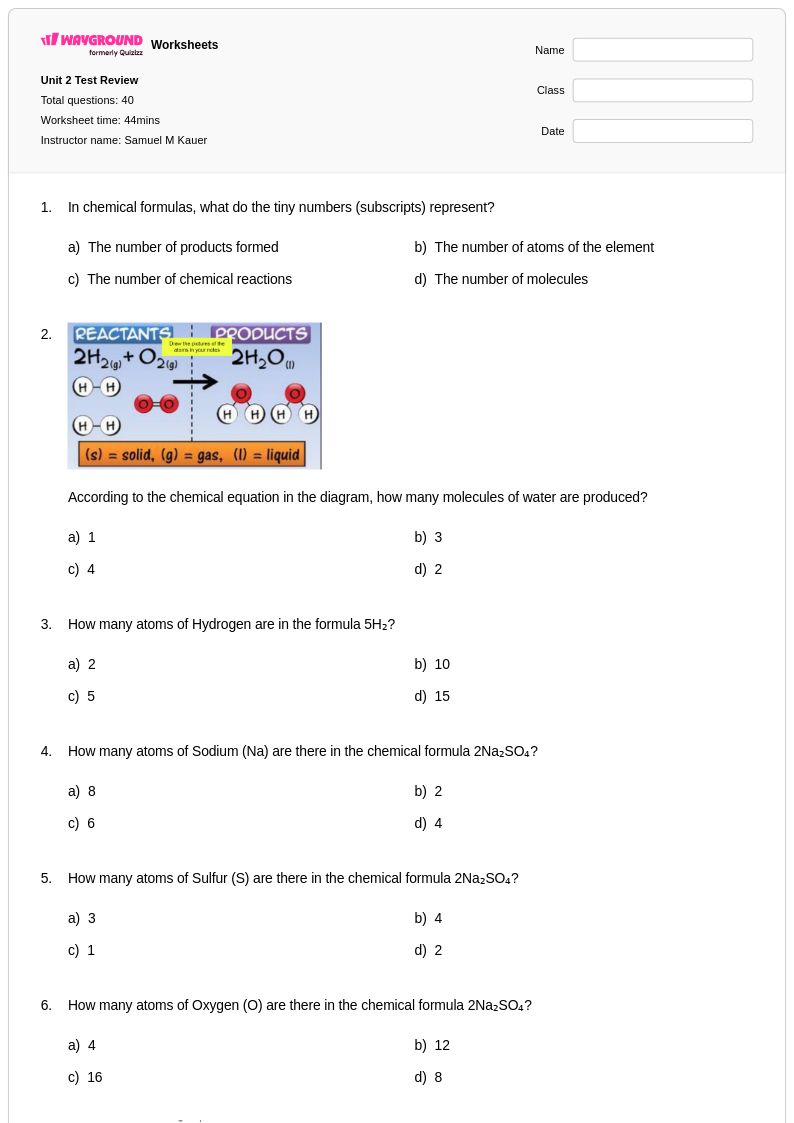
Ionic formula writing worksheets for Class 10 students provide comprehensive practice in one of chemistry's most fundamental skills through Wayground's extensive collection of educator-developed resources. These carefully crafted worksheets guide students through the systematic process of determining ionic charges, applying the principle of electrical neutrality, and constructing correct chemical formulas for ionic compounds. Students work through practice problems that progressively build their understanding of how cations and cations combine in predictable ratios, while answer keys allow for immediate feedback and self-assessment. The printable pdf format ensures accessibility for both classroom instruction and independent study, while free resources make these essential chemistry tools available to all educators seeking to strengthen their students' foundational knowledge of ionic bonding and compound formation.
Wayground, formerly Quizizz, empowers chemistry teachers with millions of teacher-created ionic formula writing worksheets specifically designed to meet Class 10 academic standards and diverse classroom needs. The platform's robust search and filtering capabilities enable educators to quickly locate resources that align with specific curriculum requirements, whether targeting basic binary ionic compounds or more complex polyatomic ion combinations. Teachers can customize worksheets to match individual student skill levels, supporting both remediation for struggling learners and enrichment for advanced students ready to tackle challenging multi-step formula writing scenarios. Available in both digital and printable pdf formats, these differentiated resources streamline lesson planning while providing the flexibility needed for effective skill practice, formative assessment, and targeted intervention in this critical area of chemical literacy.
FAQs
How do I teach students to write ionic formulas for the first time?
Start by ensuring students can identify the charges of common cations and anions before attempting formula writing. Introduce the principle of electrical neutrality — that the total positive charge must equal the total negative charge — and teach the crisscross method as a reliable procedural shortcut. Begin with simple binary ionic compounds like NaCl and MgO before moving to compounds requiring subscripts, and only introduce polyatomic ions once students are confident with single-element ions.
What practice exercises help students get better at writing ionic formulas?
Effective practice moves from recognition to construction: students should first identify ion charges from a reference table, then balance charge ratios, and finally write the correct formula with appropriate subscripts and parentheses. Worksheets that progress from binary ionic compounds to polyatomic ions build procedural fluency systematically. Repeated low-stakes practice with immediate feedback from answer keys helps students internalize the charge-balancing process rather than memorizing formulas by rote.
What mistakes do students commonly make when writing ionic formulas?
The most common error is forgetting to reduce subscripts to the lowest whole-number ratio — for example, writing Ca2O2 instead of CaO. Students also frequently omit parentheses around polyatomic ions when subscripts are needed, writing SO4 instead of (SO4). Another persistent misconception is treating the formula as a simple combination of element symbols without accounting for charge balance, which leads to incorrect subscript placement.
How do I help struggling students who can't remember ion charges well enough to write formulas?
Struggling students benefit from having a reduced reference table of the most common ion charges available during practice rather than requiring full memorization upfront. On Wayground, teachers can apply accommodations such as reduced answer choices to lower cognitive load for selected students and enable read-aloud support for those with reading difficulties, while other students work with default settings. Scaffolded worksheets that isolate the charge-identification step before asking students to write full formulas also reduce the working memory burden.
How can I use Wayground's ionic formula writing worksheets in my classroom?
Wayground's ionic formula writing worksheets are available as printable PDFs for traditional classroom use and in digital formats for technology-integrated environments, so they work for in-person, hybrid, and remote settings. Teachers can also host worksheets directly as a quiz on Wayground, enabling real-time student responses and automatic grading. Each worksheet includes a complete answer key, making them practical for independent practice, homework, or structured review sessions.
How do I differentiate ionic formula writing practice for advanced and struggling students in the same class?
For advanced learners, assign problems involving multivalent transition metals (e.g., iron(II) vs. iron(III)) and complex polyatomic ions to deepen understanding of variable charge states. For students who are struggling, restrict practice to compounds with fixed-charge ions and provide a charge reference sheet. Wayground's customization tools allow teachers to modify practice problems to match individual skill levels, and accommodation settings such as extended time can be applied to specific students without disrupting the rest of the class.