Free Printable Naming Molecular Compounds Worksheets for Class 10
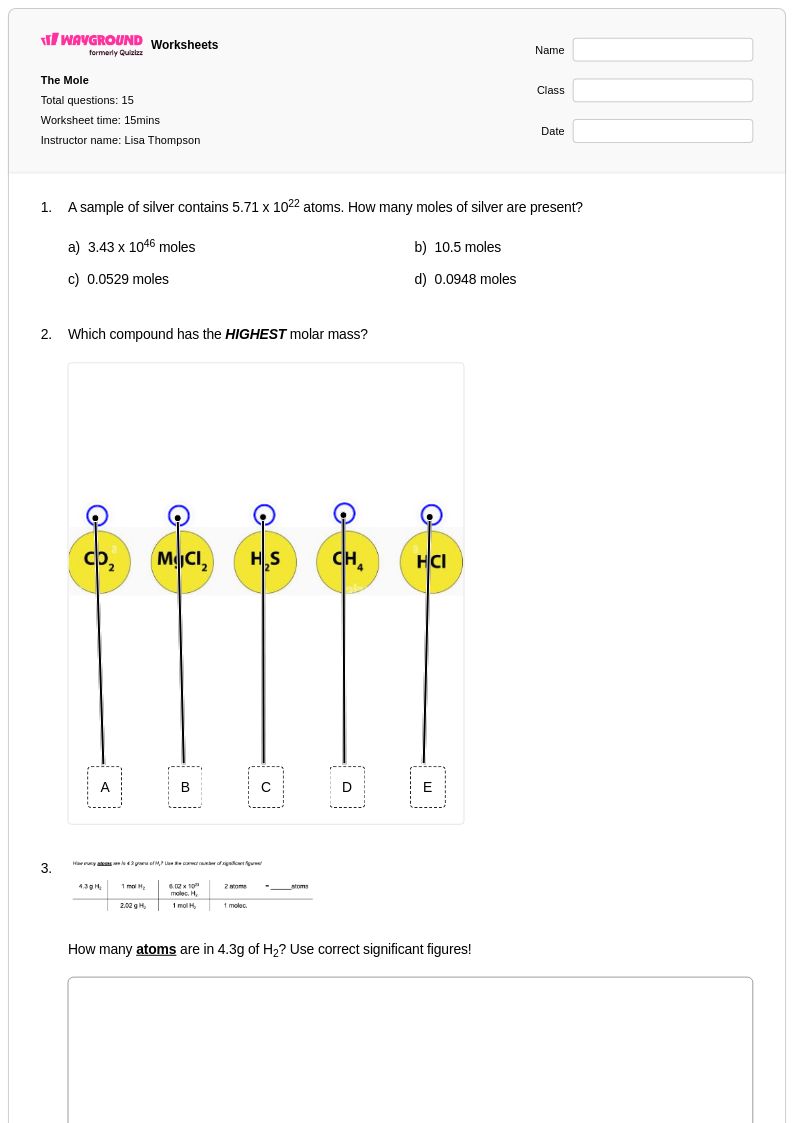
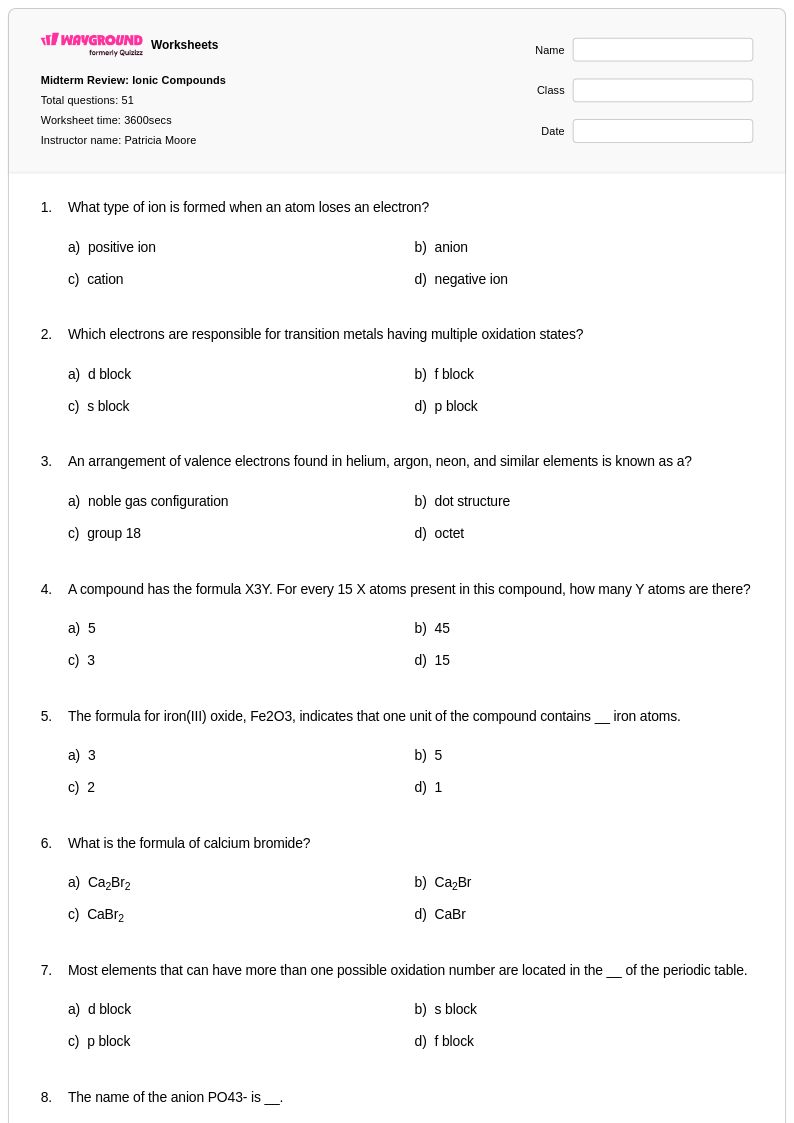
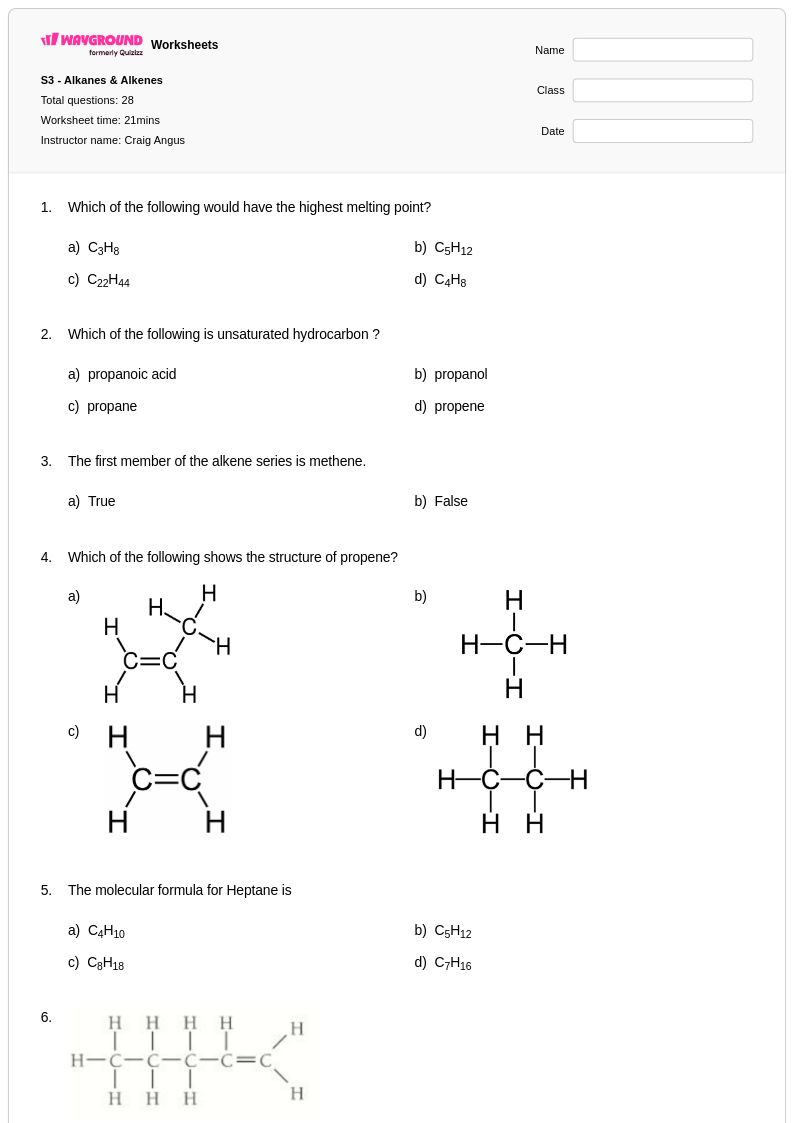
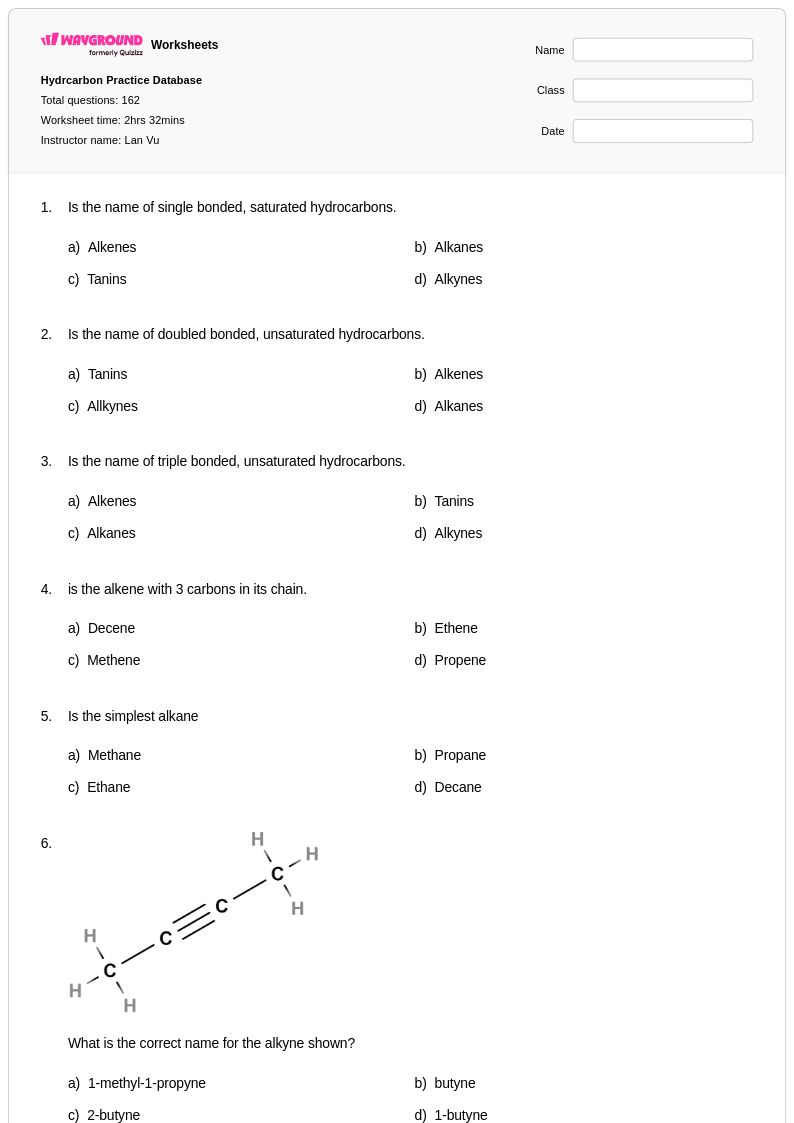
Class 10 naming molecular compounds worksheets from Wayground provide free printable PDFs with practice problems and answer keys to help students master chemical nomenclature rules and compound identification skills.
Explore printable Naming Molecular Compounds worksheets for Class 10
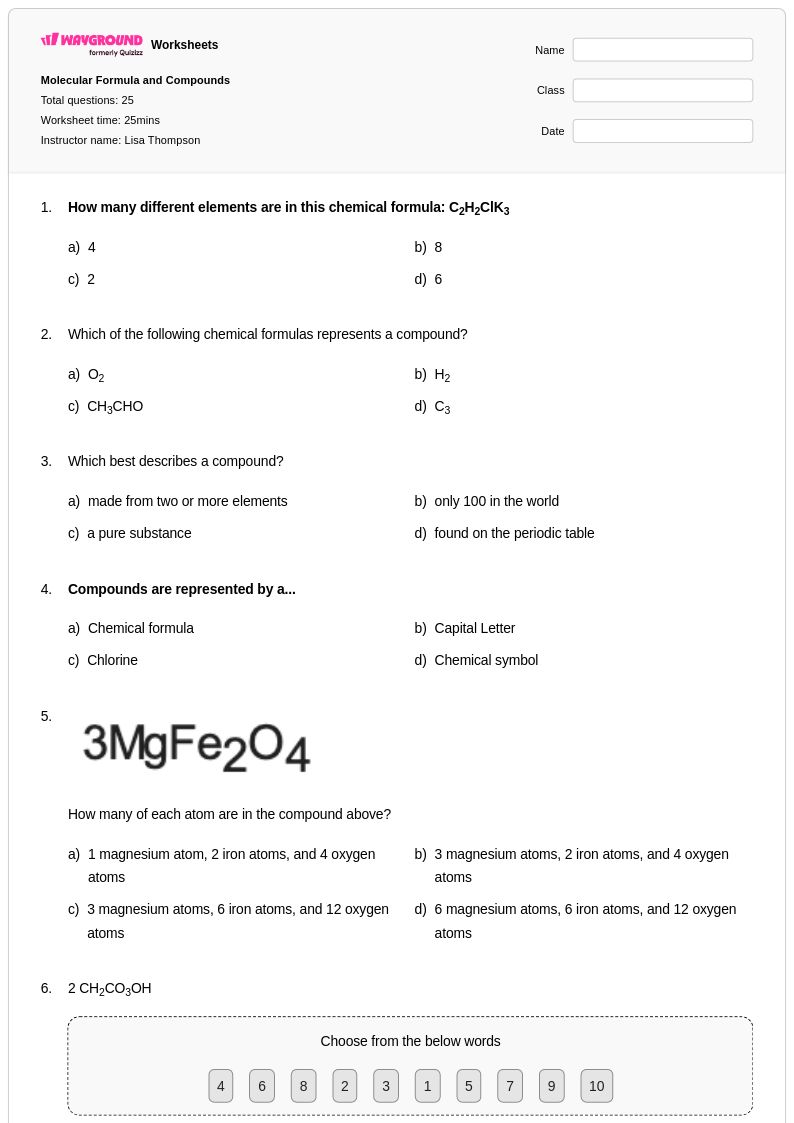
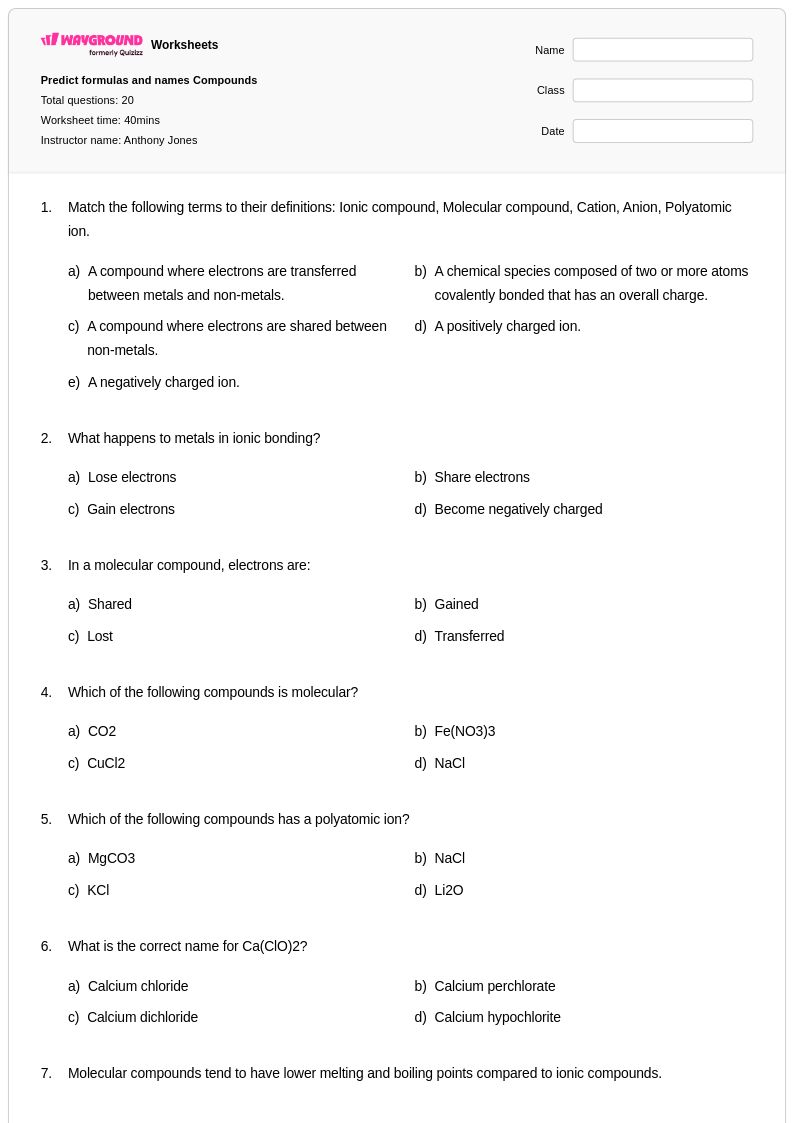
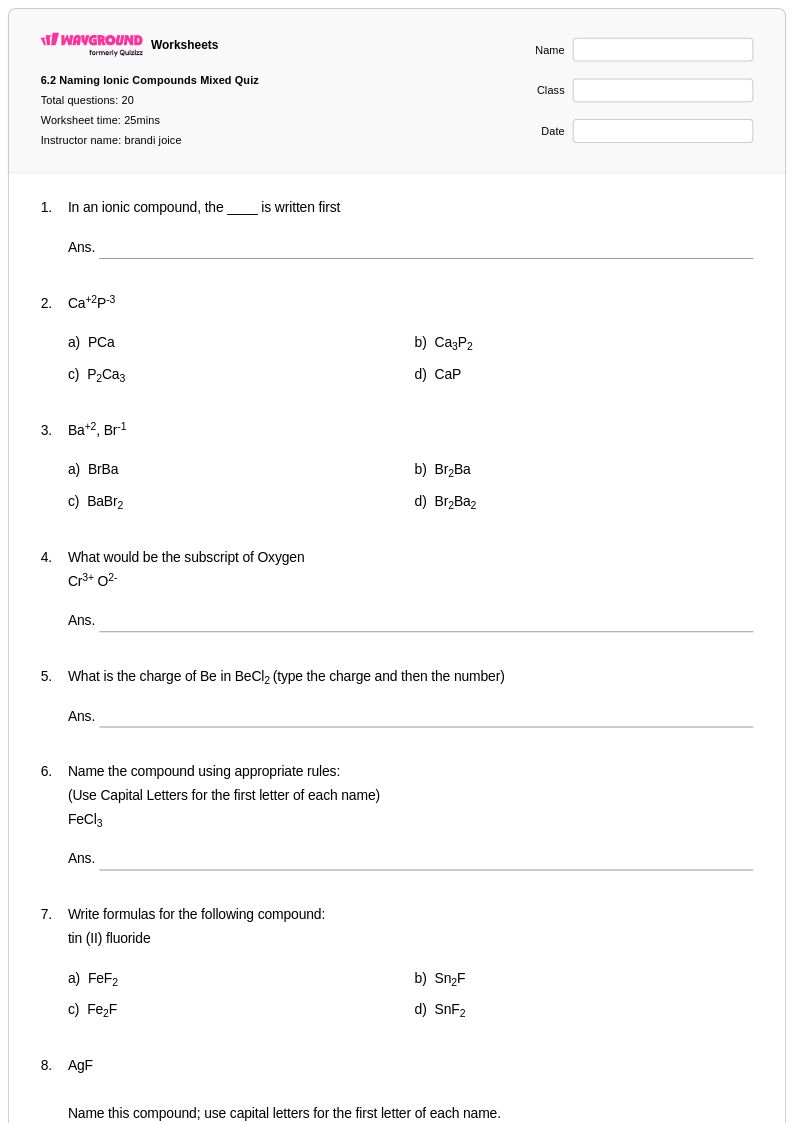
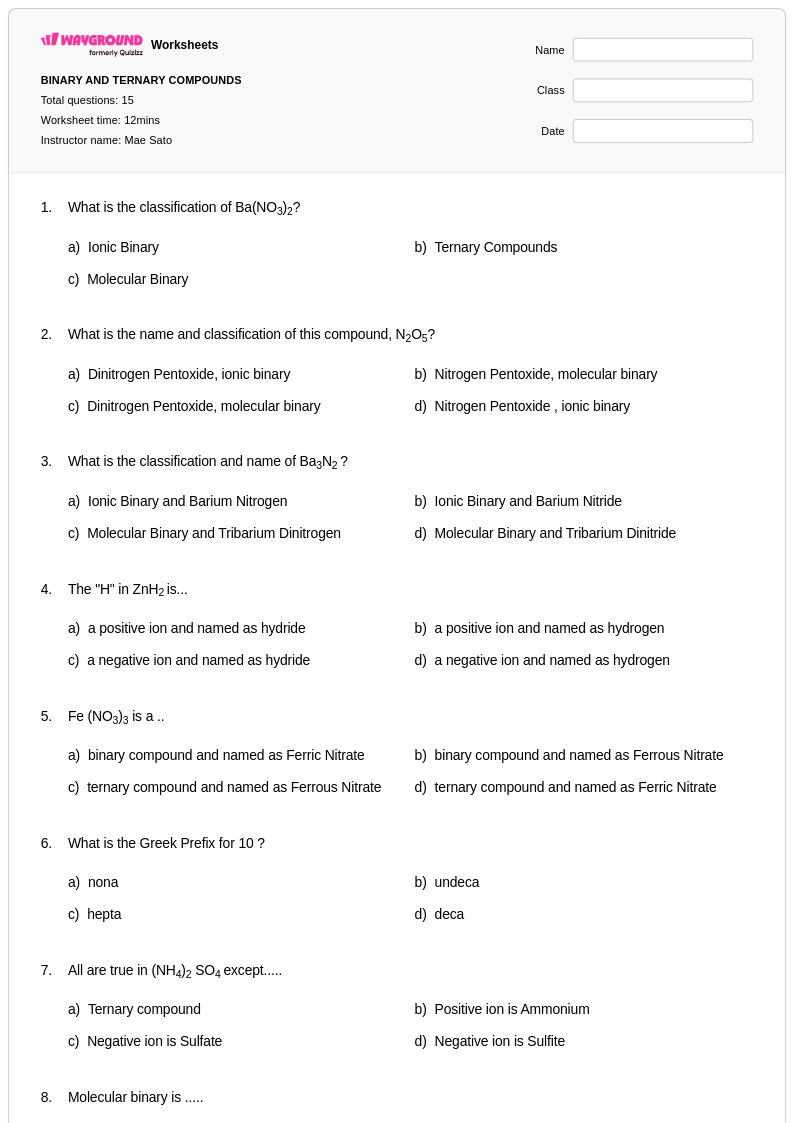
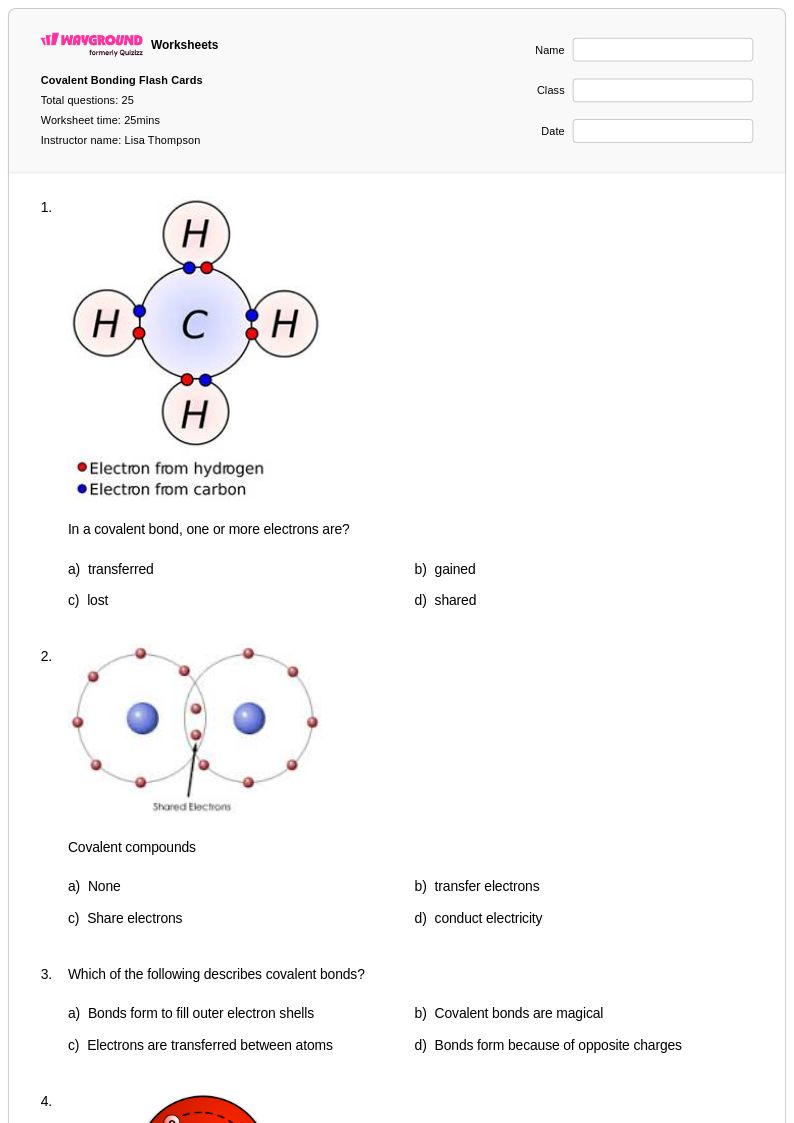
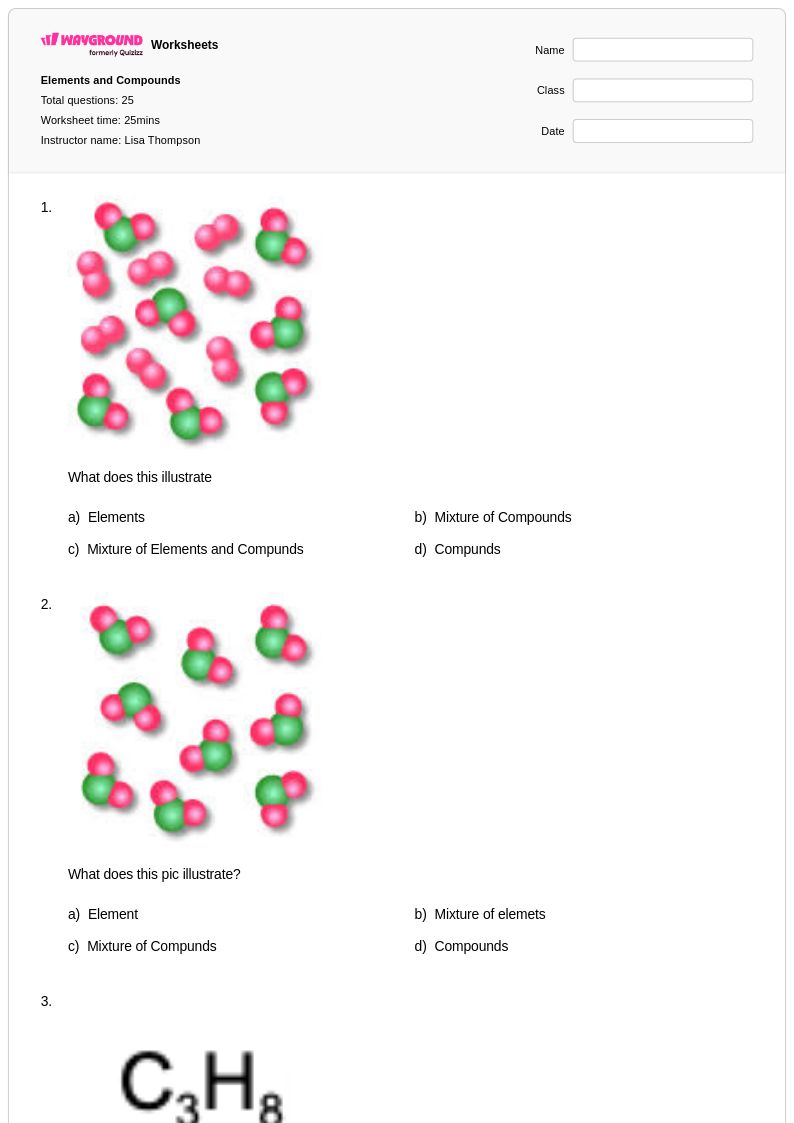
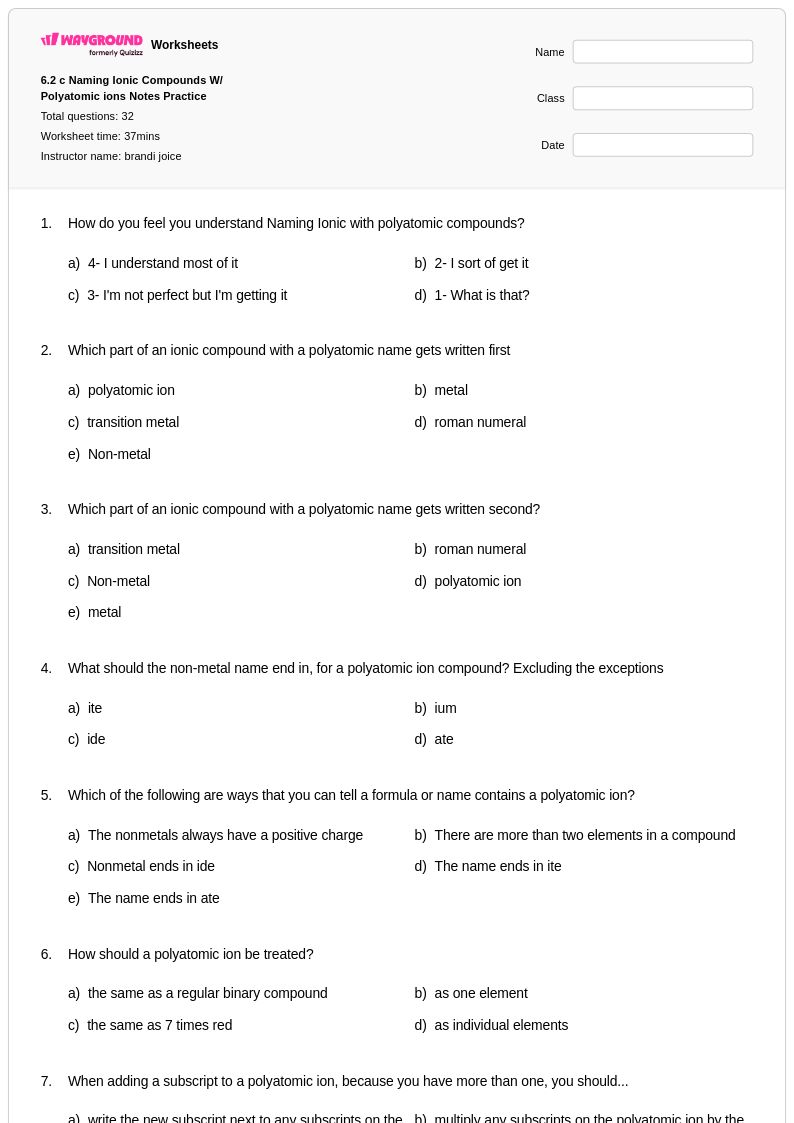
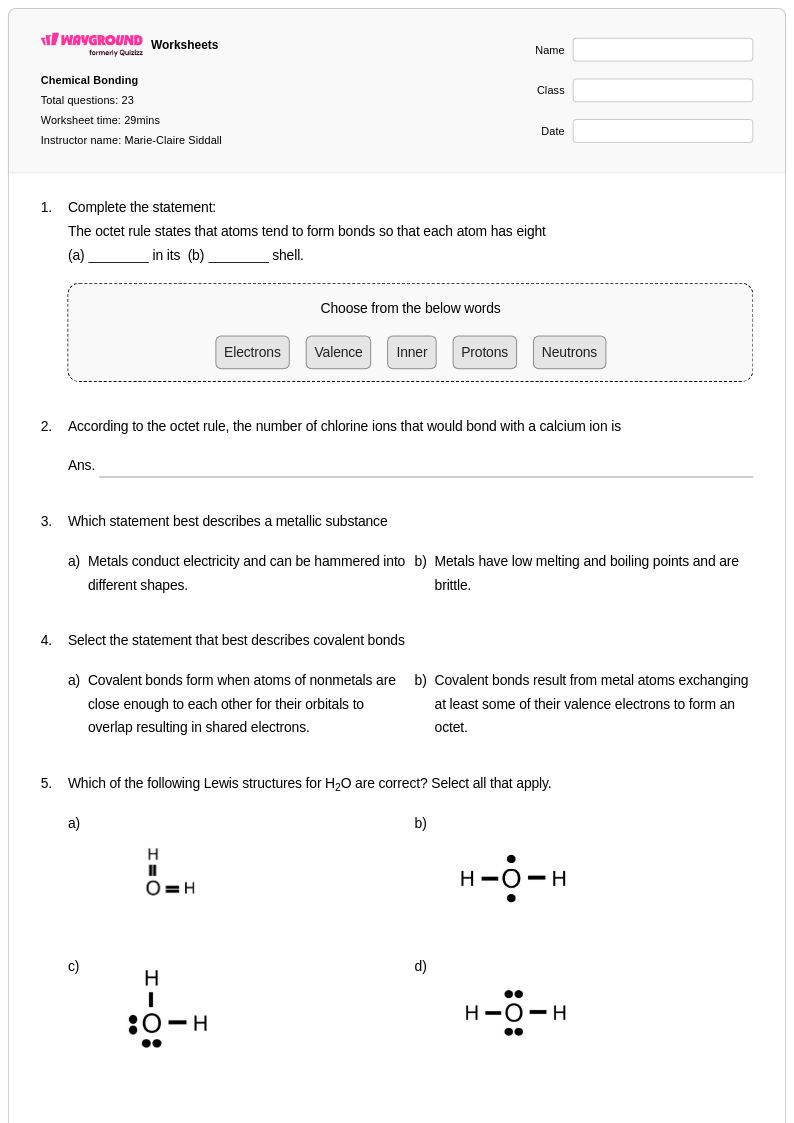
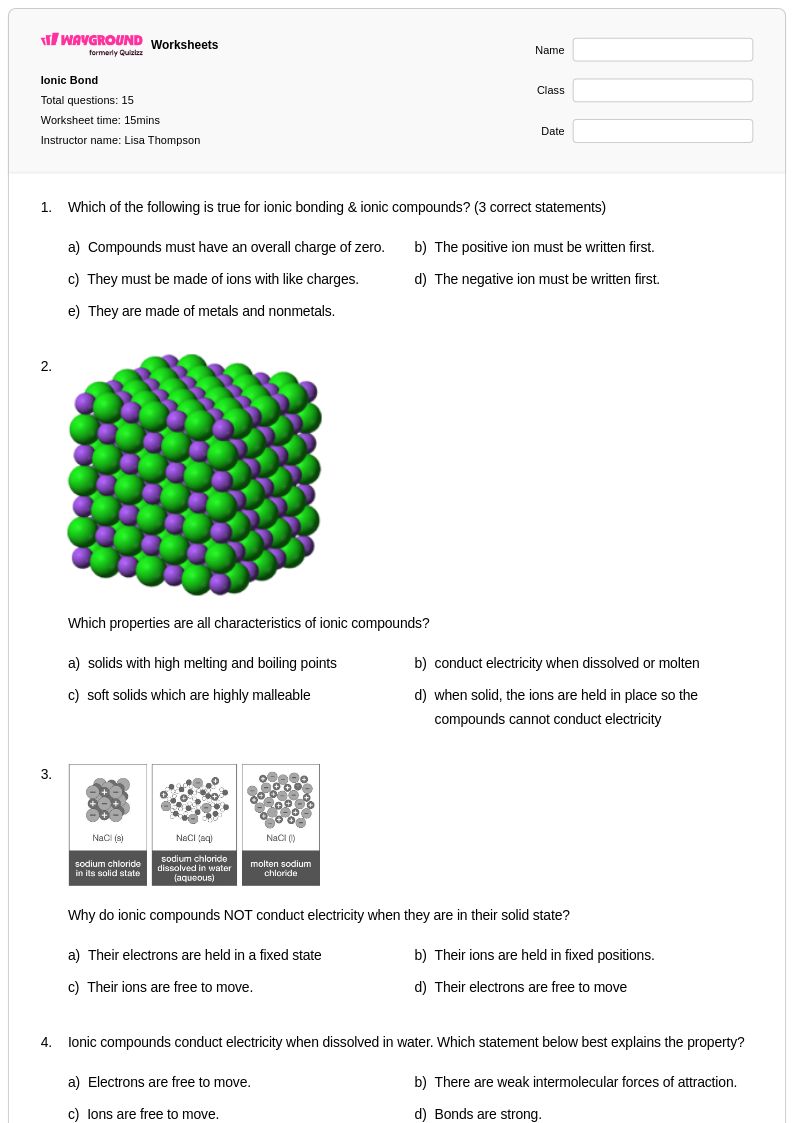
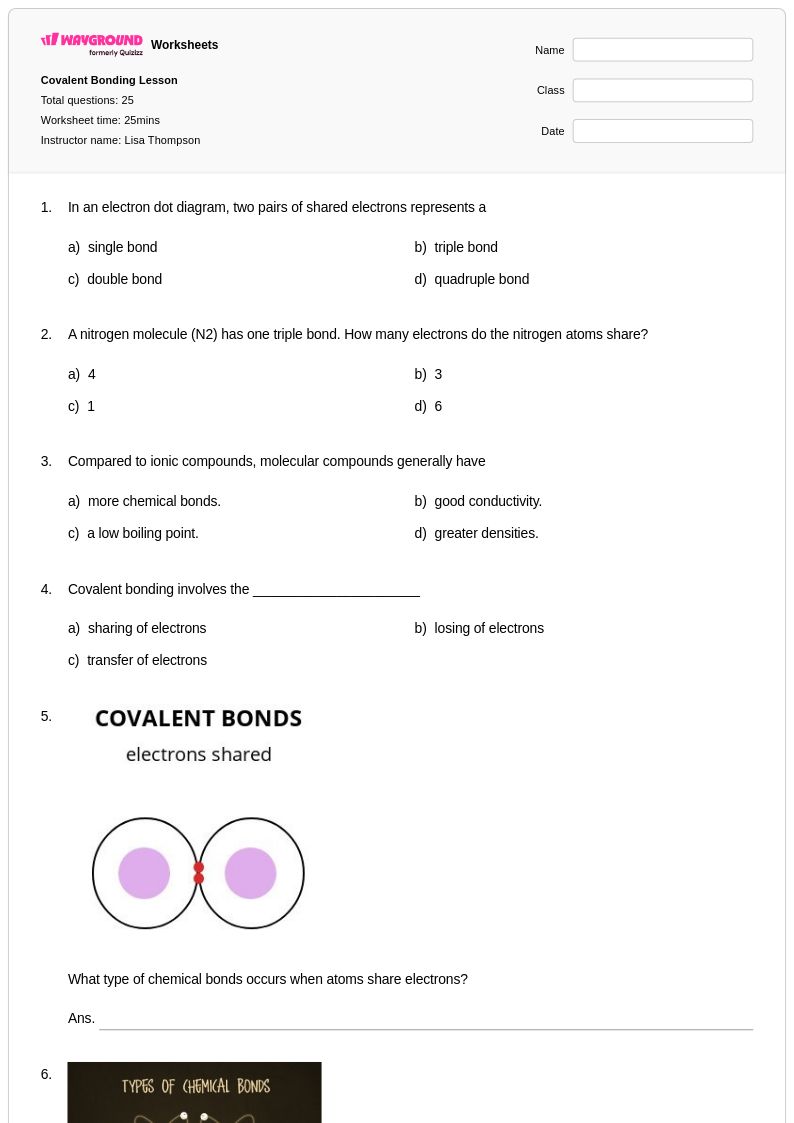
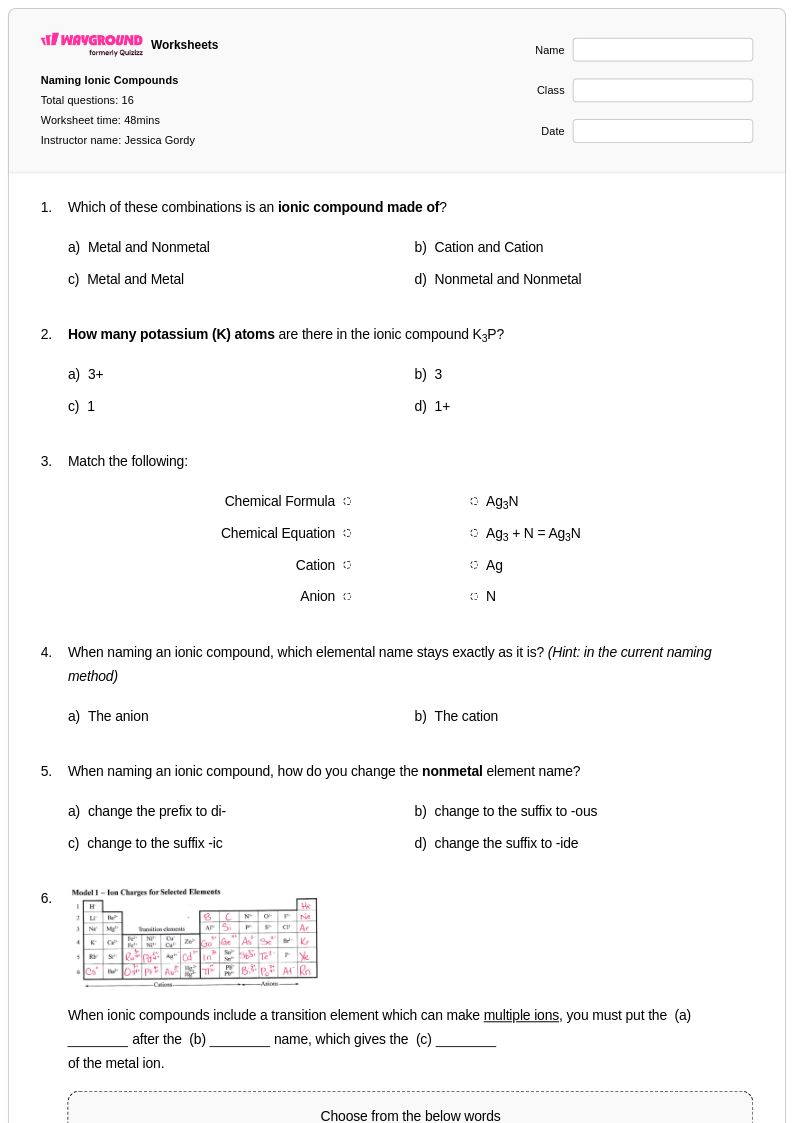
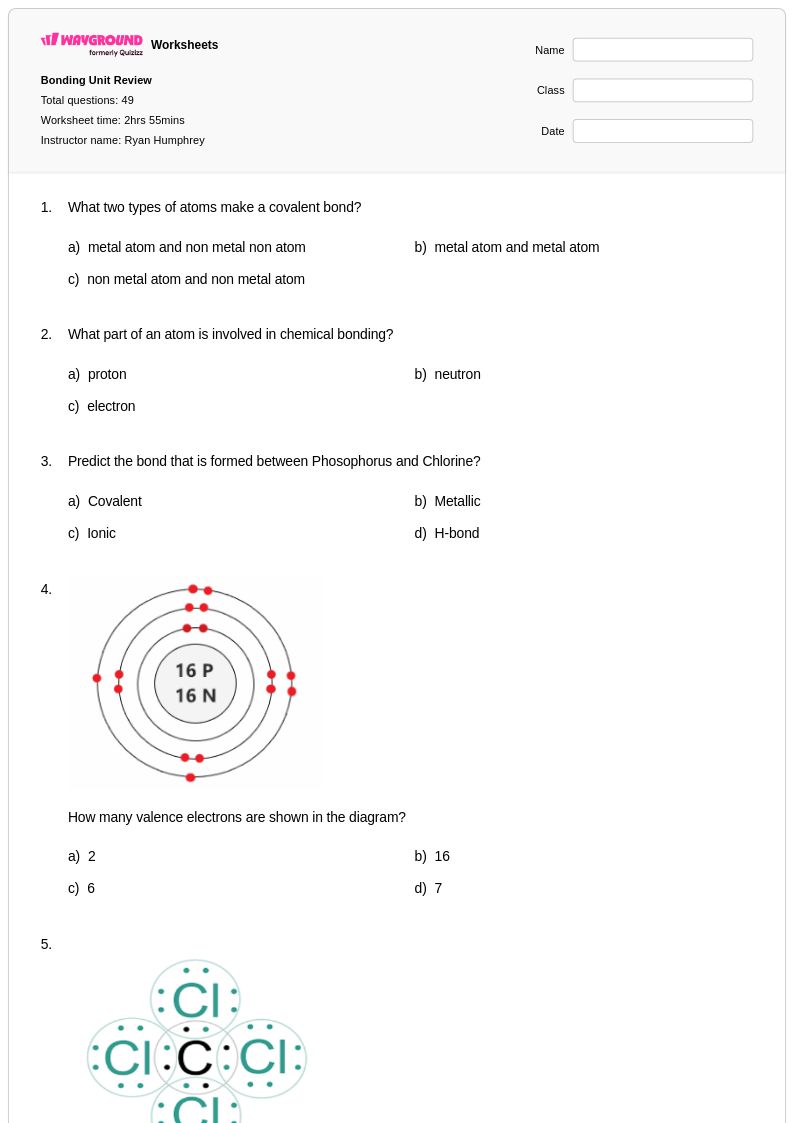
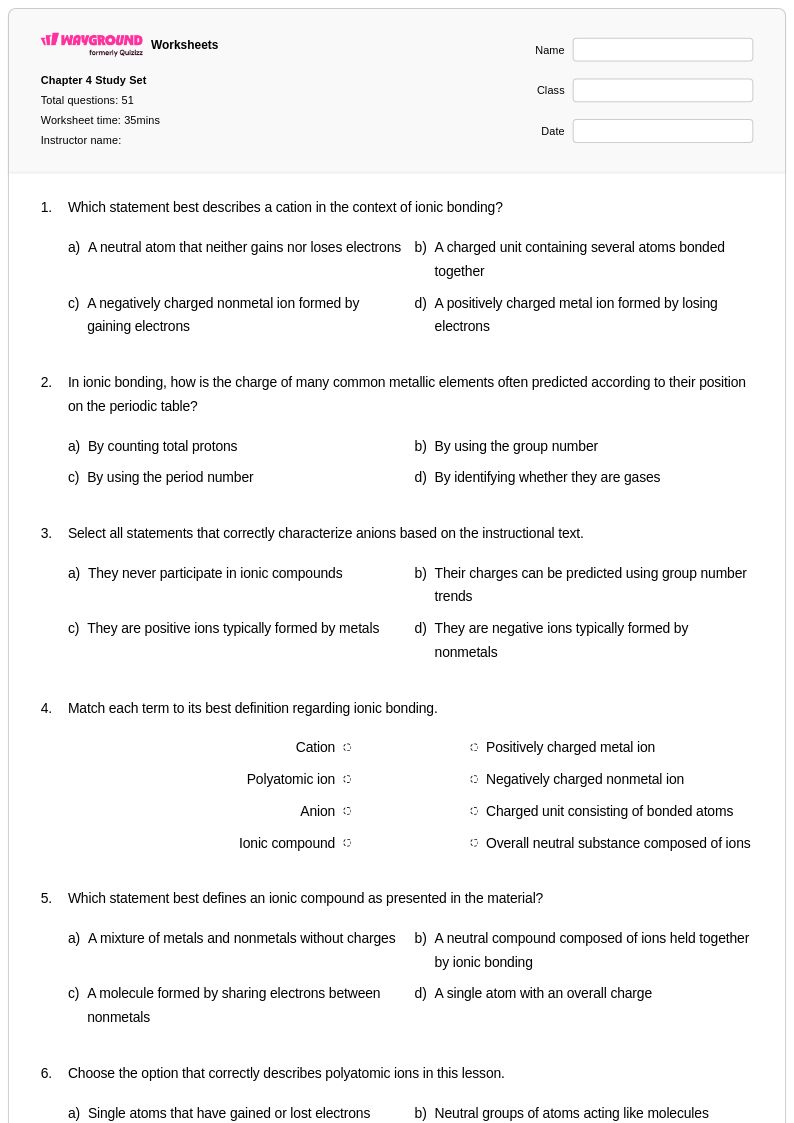
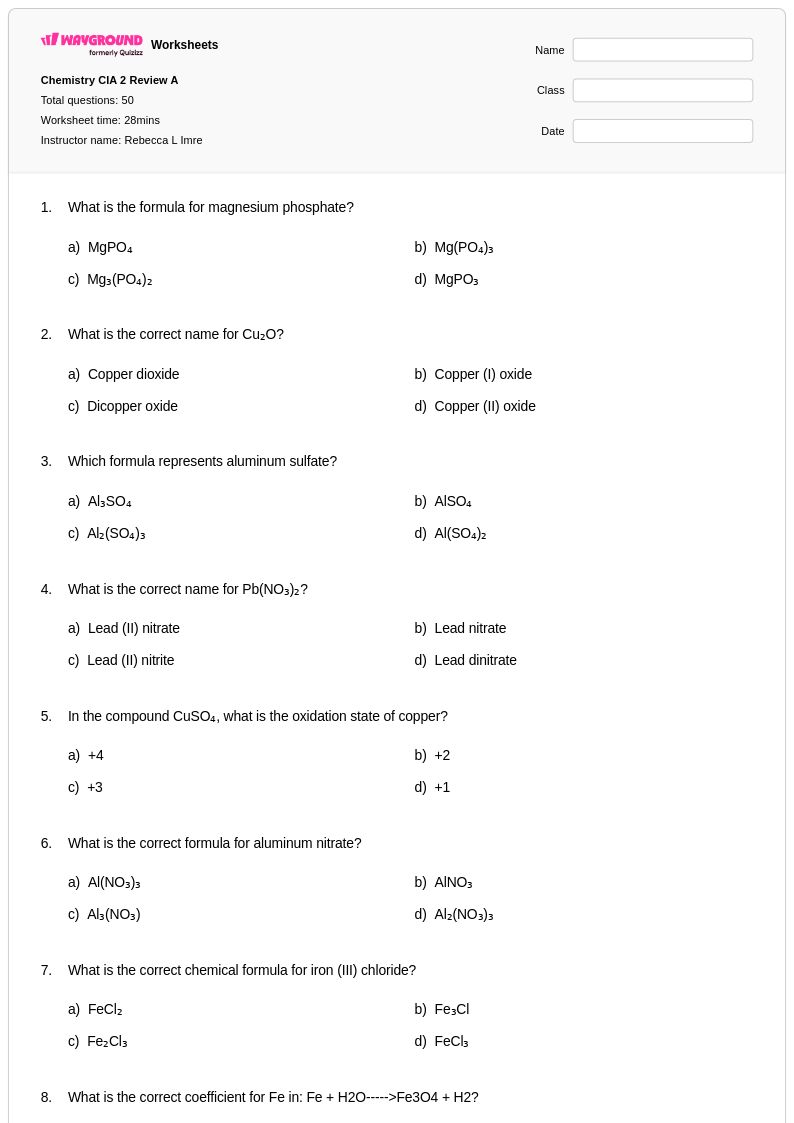
Naming molecular compounds represents a fundamental skill in Class 10 chemistry that requires students to master systematic nomenclature rules and apply them consistently across various compound types. Wayground's comprehensive collection of naming molecular compounds worksheets provides structured practice opportunities that help students develop proficiency in identifying molecular formulas, applying prefix systems, and distinguishing between ionic and molecular compound naming conventions. These carefully designed printables offer progressive difficulty levels, from basic binary compounds to more complex polyatomic structures, ensuring students build confidence through systematic practice problems. Each worksheet includes detailed answer keys that allow for immediate feedback and self-assessment, while the free pdf format makes these resources easily accessible for both classroom instruction and independent study sessions.
Wayground's extensive library of teacher-created resources supports educators with millions of high-quality worksheets specifically designed for chemistry instruction, including comprehensive materials focused on molecular compound nomenclature. The platform's advanced search and filtering capabilities enable teachers to quickly locate grade-appropriate content that aligns with curriculum standards, while built-in differentiation tools allow for seamless customization based on individual student needs. These naming molecular compounds worksheets are available in both printable pdf formats for traditional paper-based learning and digital formats for interactive classroom engagement, providing flexibility for diverse teaching environments. Teachers can effectively utilize these resources for initial concept introduction, targeted remediation for struggling students, enrichment activities for advanced learners, and regular skill practice sessions that reinforce proper nomenclature techniques throughout the academic year.
FAQs
How do I teach students to name molecular compounds?
Start by establishing that molecular (covalent) compounds are formed between two nonmetals, which distinguishes them from ionic compounds. Introduce the IUPAC prefix system — mono, di, tri, tetra, and so on — and teach students to apply prefixes to both elements, with the exception that 'mono' is dropped from the first element. Reinforce naming order by always naming the less electronegative element first, then the second element with the appropriate prefix and an '-ide' ending. Consistent practice with formula-to-name and name-to-formula conversion exercises accelerates fluency.
What are the most common mistakes students make when naming molecular compounds?
The most frequent error is confusing molecular and ionic naming rules — students often omit prefixes because they default to ionic naming conventions. A second common mistake is incorrectly applying 'mono': students either add it to the first element (e.g., 'monocarbon dioxide') or drop it from the second element entirely. Students also frequently misspell prefix-element combinations, such as writing 'tetraoxide' instead of 'tetroxide,' where vowel elision applies. Explicitly contrasting ionic and molecular naming side-by-side helps address the first error before it becomes habitual.
What practice exercises help students get better at naming molecular compounds?
Two-directional drills are most effective: give students a molecular formula and ask for the name, then give a name and ask for the formula. This bidirectional approach forces students to internalize the prefix system rather than pattern-match in one direction only. Sorting activities that require students to classify compounds as ionic or molecular before naming them add a critical reasoning step. Timed prefix-recall drills and error-correction exercises — where students identify and fix intentionally wrong names — are also high-value practice formats.
How do I help students distinguish between ionic and molecular compound naming?
The clearest entry point is element type: molecular compounds consist of two nonmetals, while ionic compounds involve a metal and a nonmetal (or a polyatomic ion). Teach students to check the periodic table first before applying any naming rule. A comparison chart that places both naming systems side-by-side — with columns for 'uses prefixes,' 'uses -ide ending,' and 'uses Roman numerals' — gives students a quick decision-making reference. Compound-classification practice as a prerequisite to naming practice reduces the frequency of applying the wrong rule set.
How can I use Wayground's naming molecular compounds worksheets in my classroom?
Wayground's naming molecular compounds worksheets are available as printable PDFs for traditional classroom use and in digital formats for technology-integrated or remote learning environments, making them practical across instructional settings. Each worksheet includes an answer key, so they work equally well for guided practice, independent seat work, or self-paced review. Teachers can also host worksheets as a quiz directly on Wayground, giving students an interactive experience while automatically managing answer checking. For differentiated instruction, Wayground's platform allows teachers to configure accommodations such as read aloud, extended time, and reduced answer choices for individual students without disrupting the rest of the class.
How do I support struggling students who can't remember the prefixes for molecular compounds?
Anchor the prefix sequence to a memorable mnemonic or visual — many teachers use music, color-coded charts, or repeated low-stakes quizzing to build prefix recall before applying them to compound names. Breaking practice into two phases helps: first master prefix-to-number matching in isolation, then transfer that knowledge to full compound naming. On Wayground, teachers can enable the reduced answer choices accommodation for students who need support, limiting the number of options displayed to lower cognitive load during digital practice. Repeated retrieval practice in short sessions is more effective than massed review for prefix memorization.