
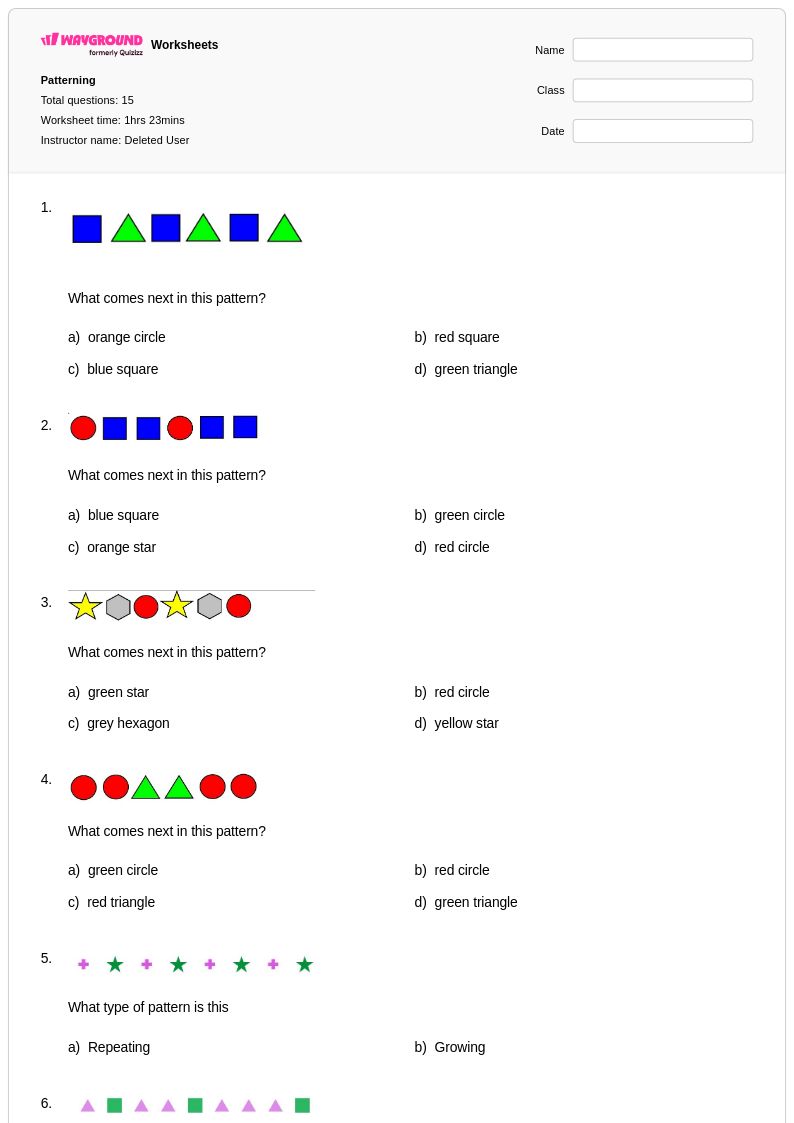
15 Q
1st
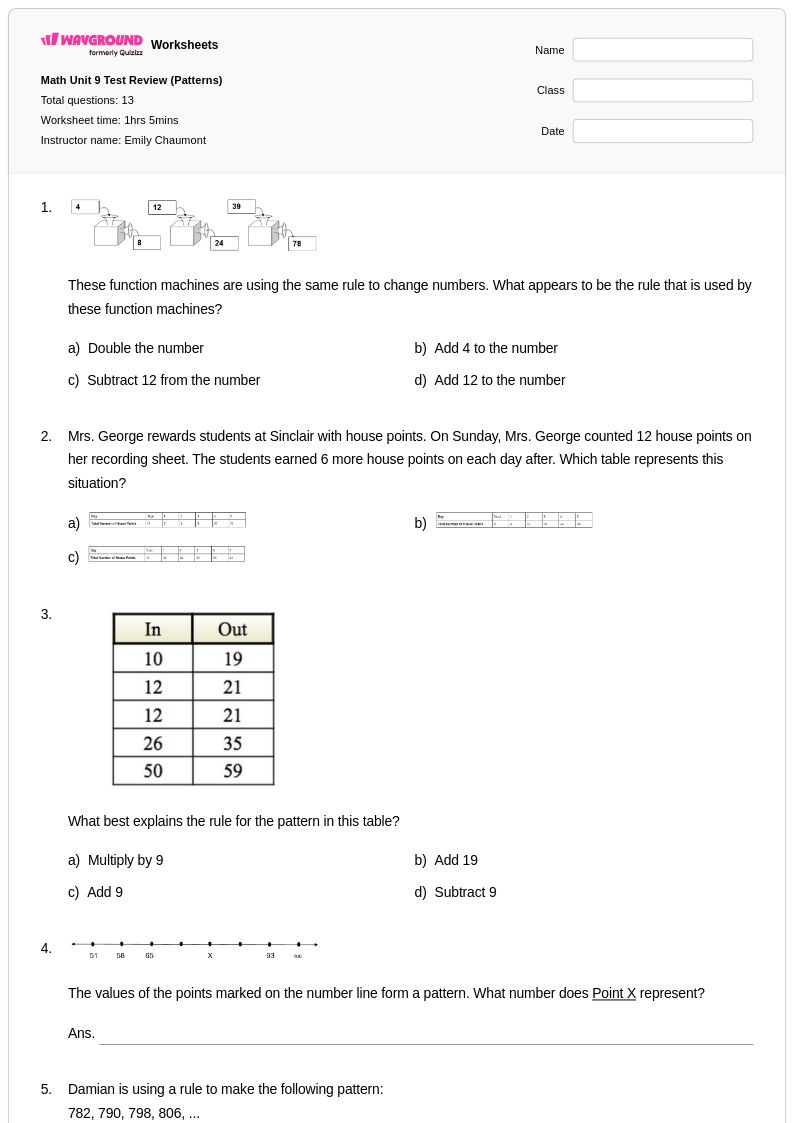
13 Q
4th

15 Q
5th
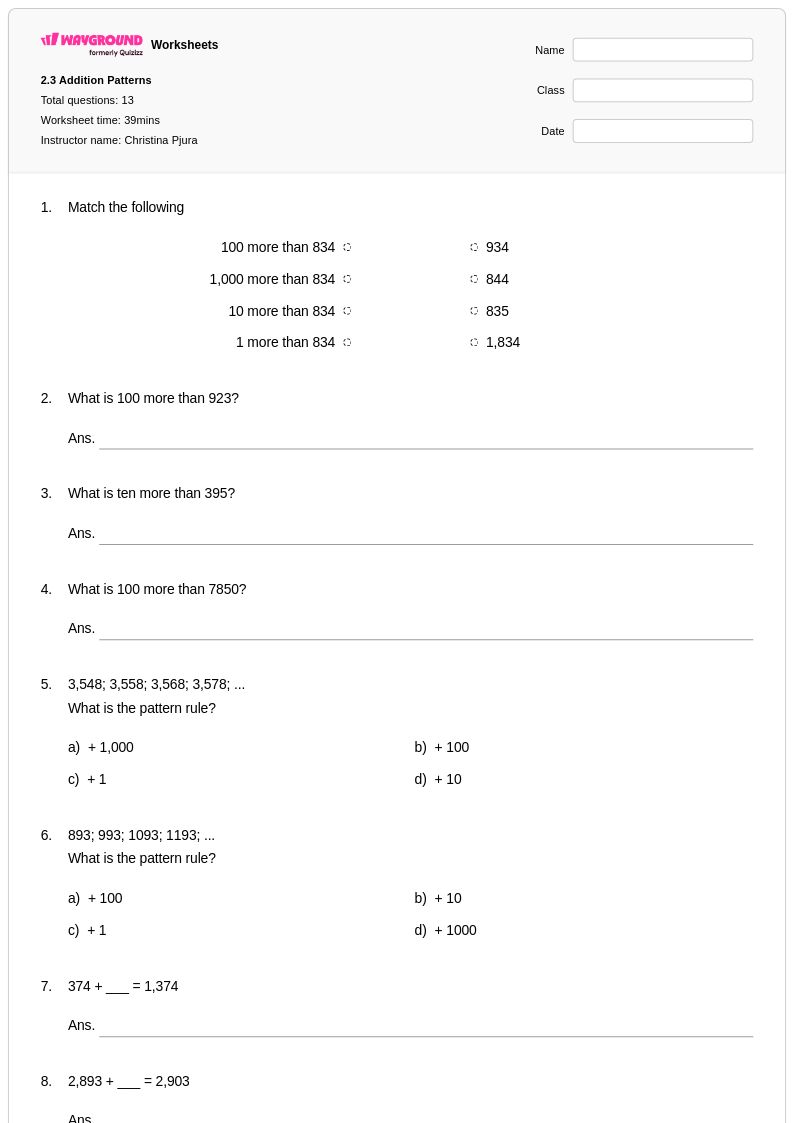
13 Q
3rd
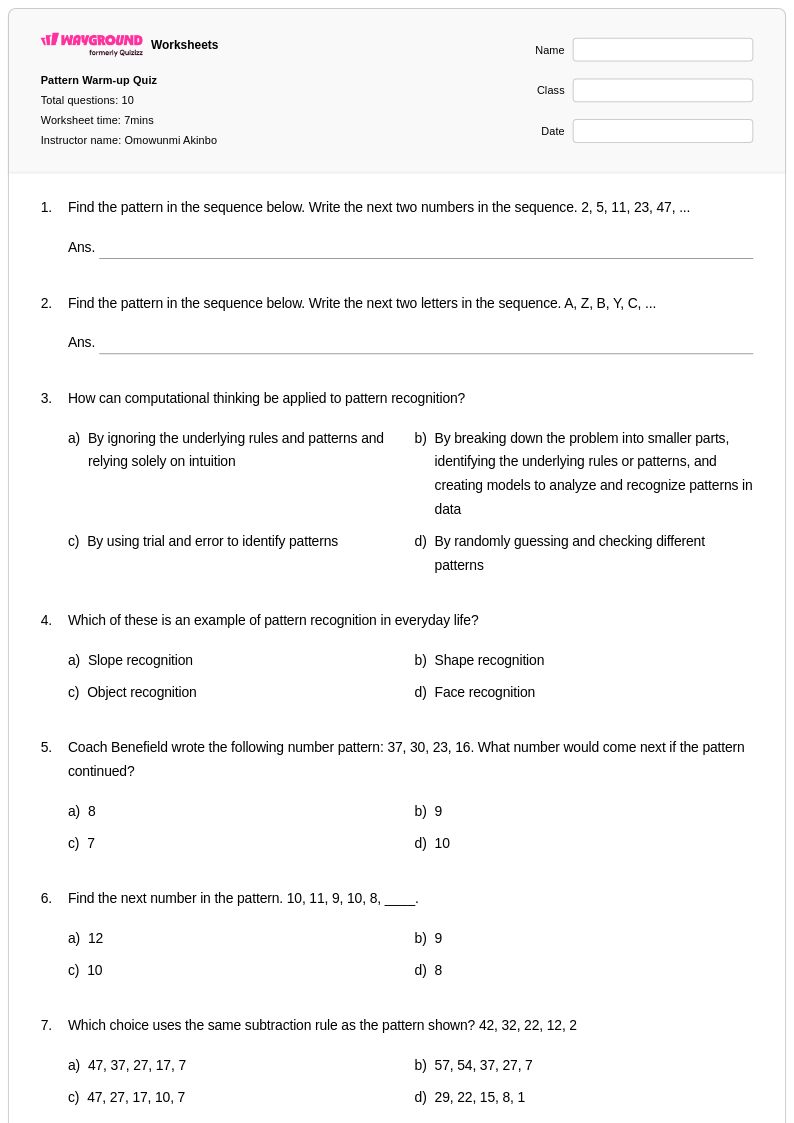
10 Q
9th
15 Q
4th
9 Q
4th
15 Q
5th - Uni
11 Q
5th - Uni
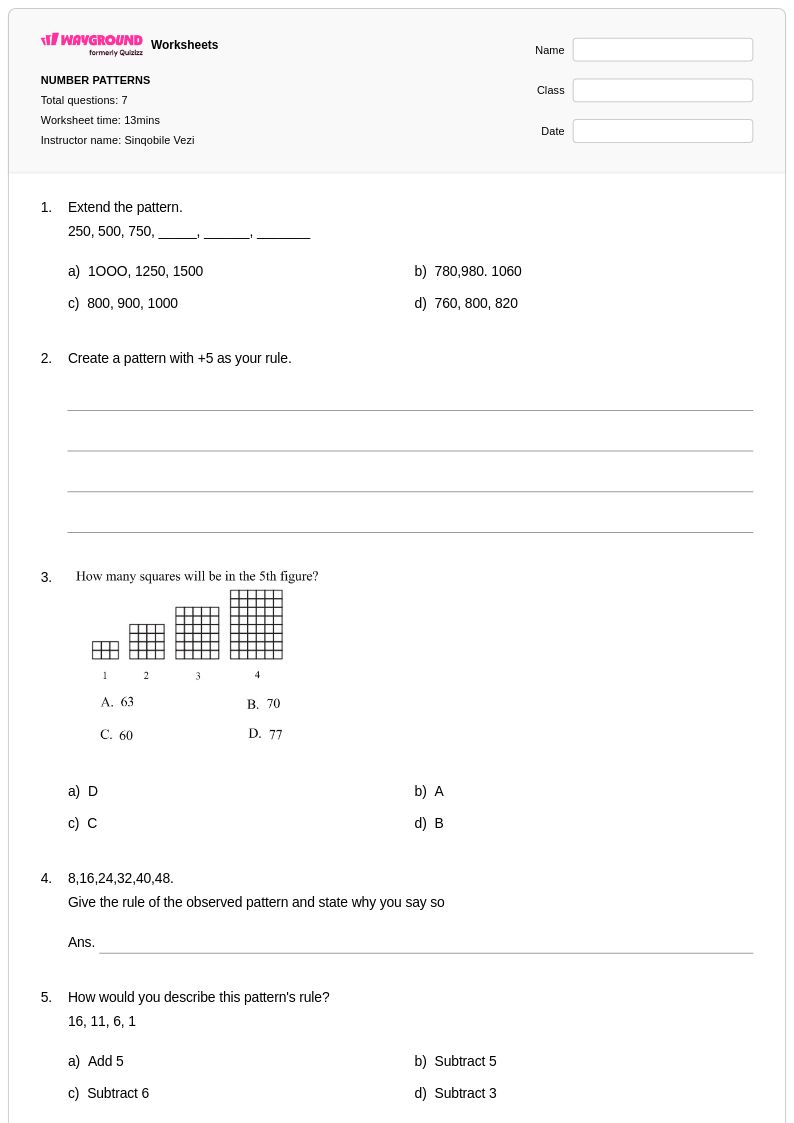
7 Q
5th
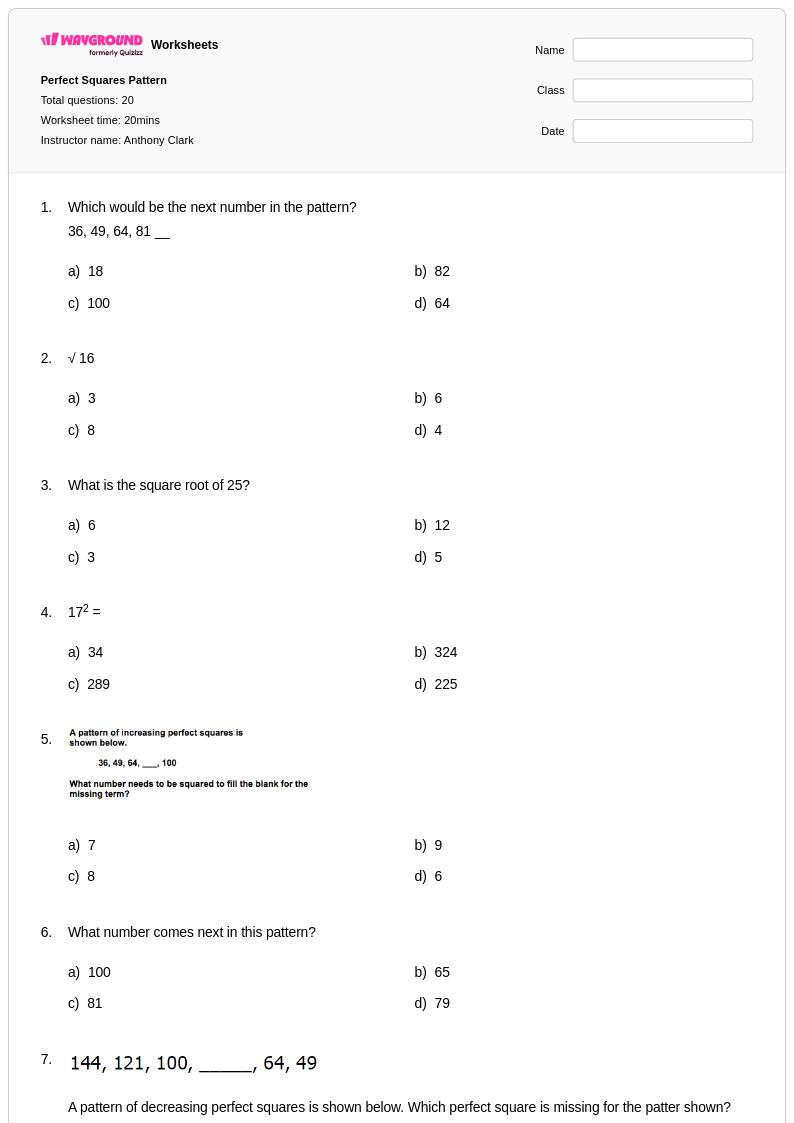
20 Q
6th - Uni
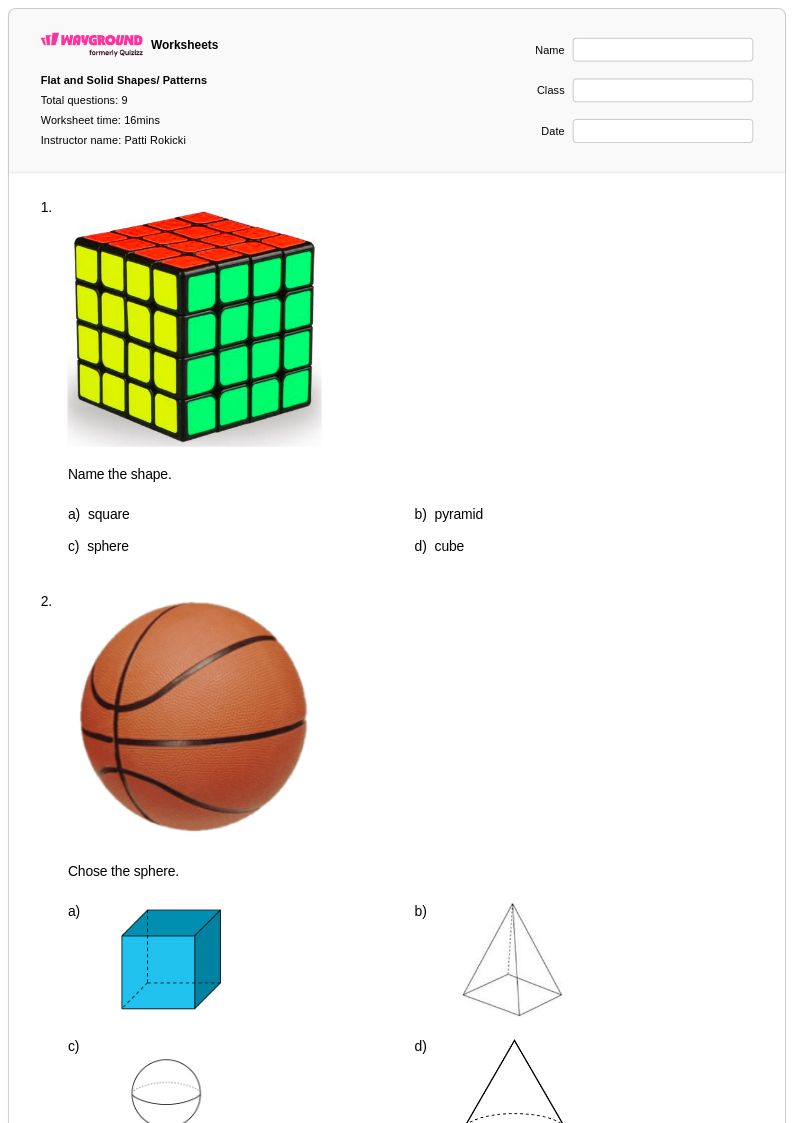
9 Q
KG
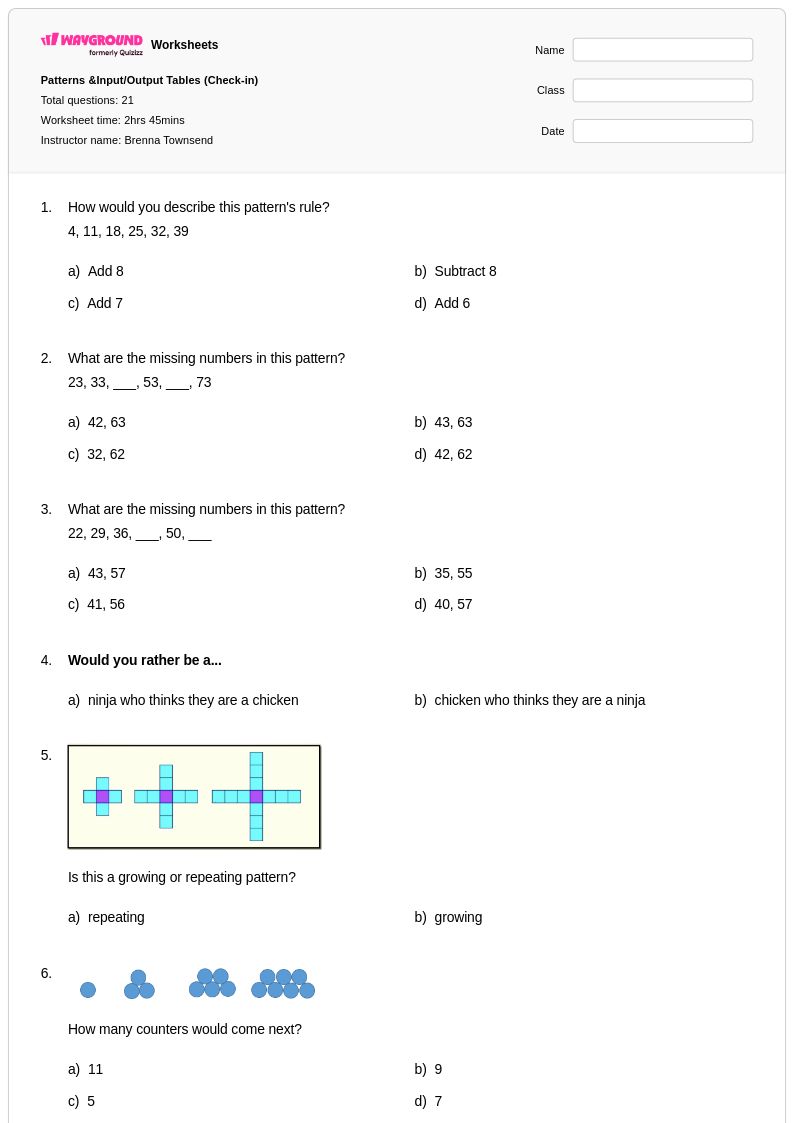
21 Q
6th - 8th
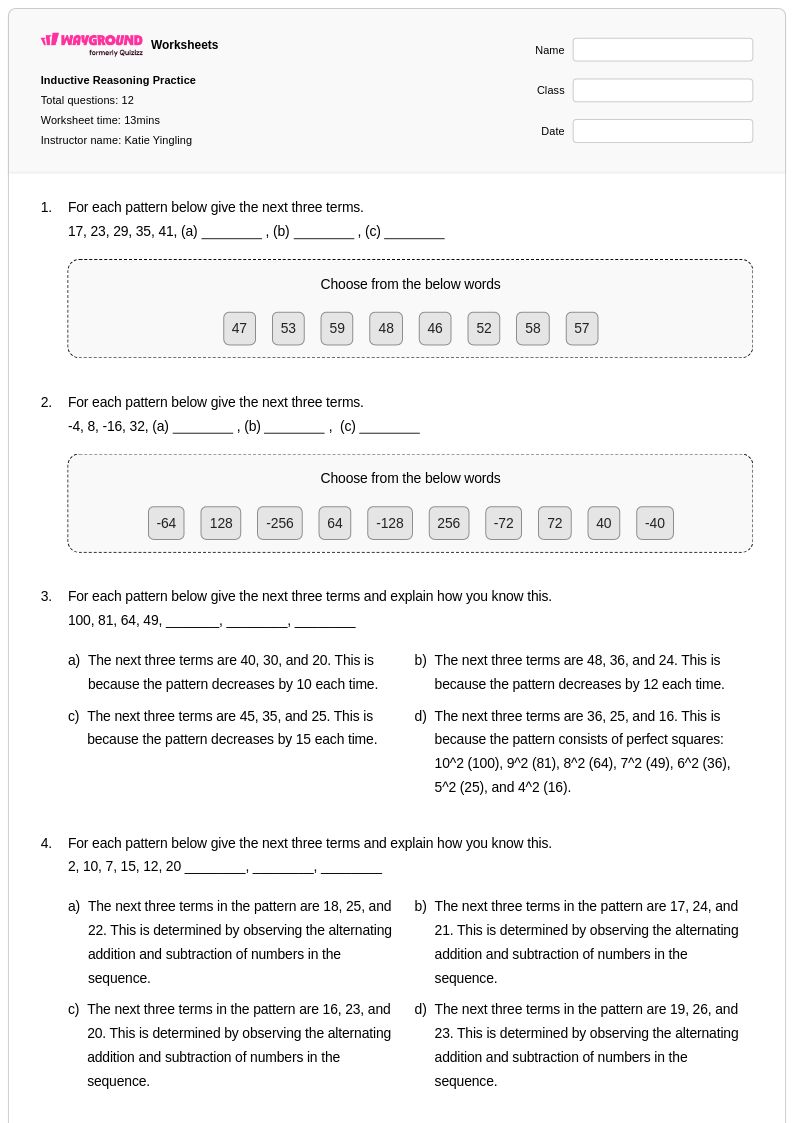
12 Q
9th - 12th
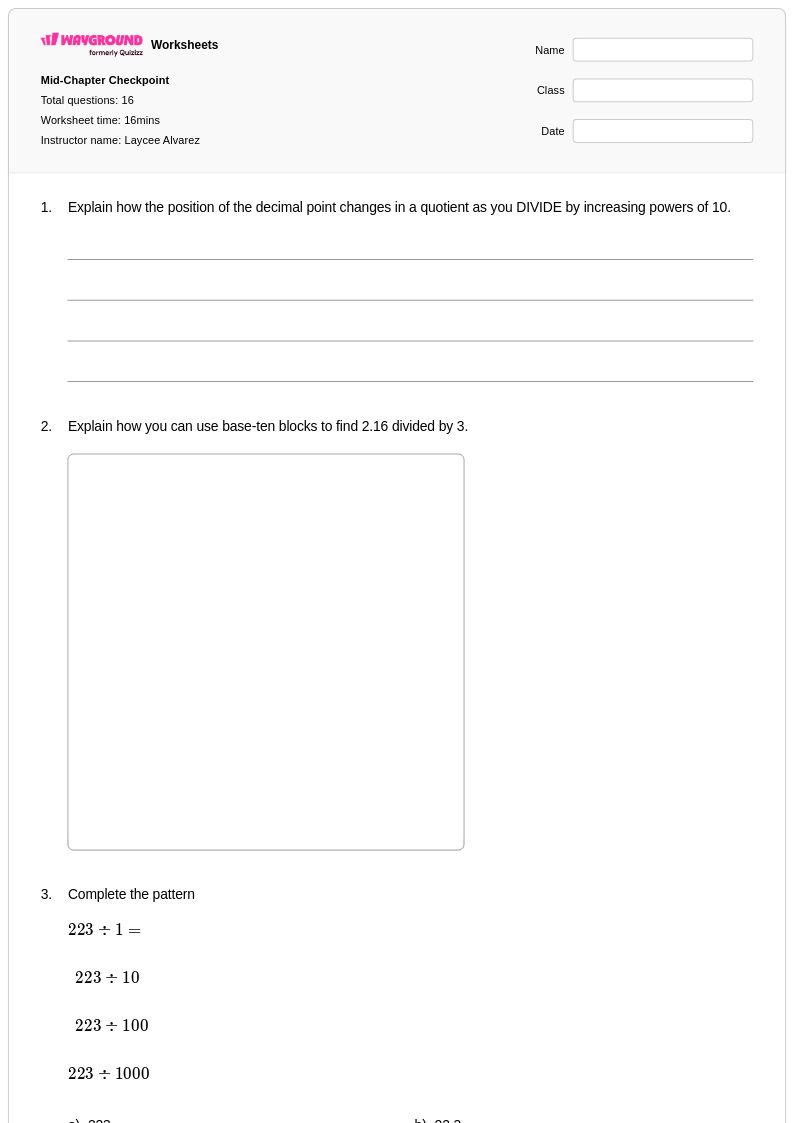
16 Q
5th
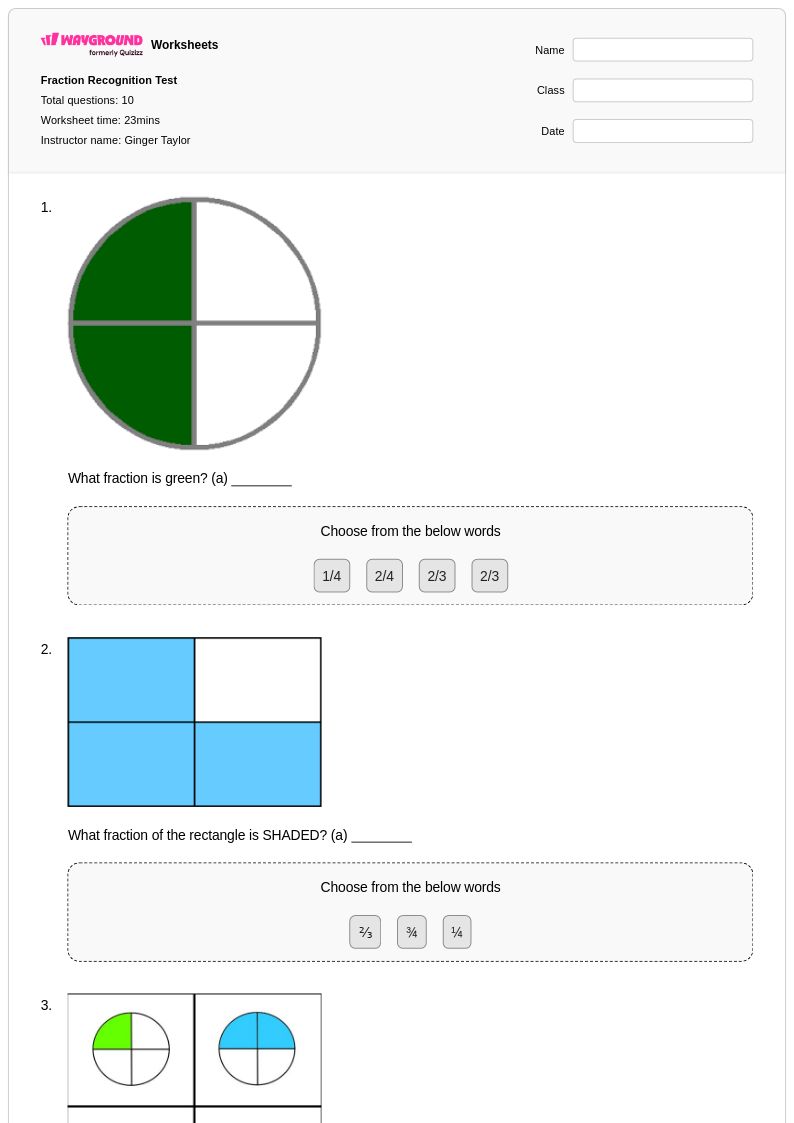
10 Q
3rd
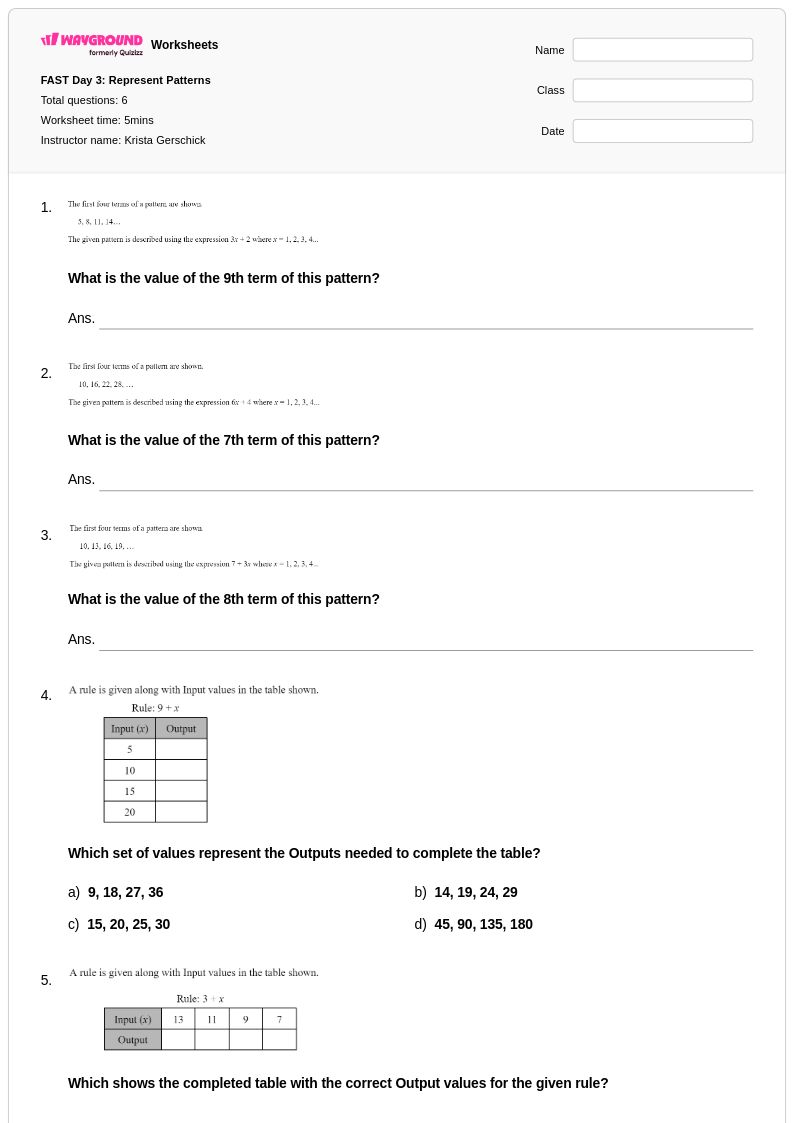
6 Q
5th
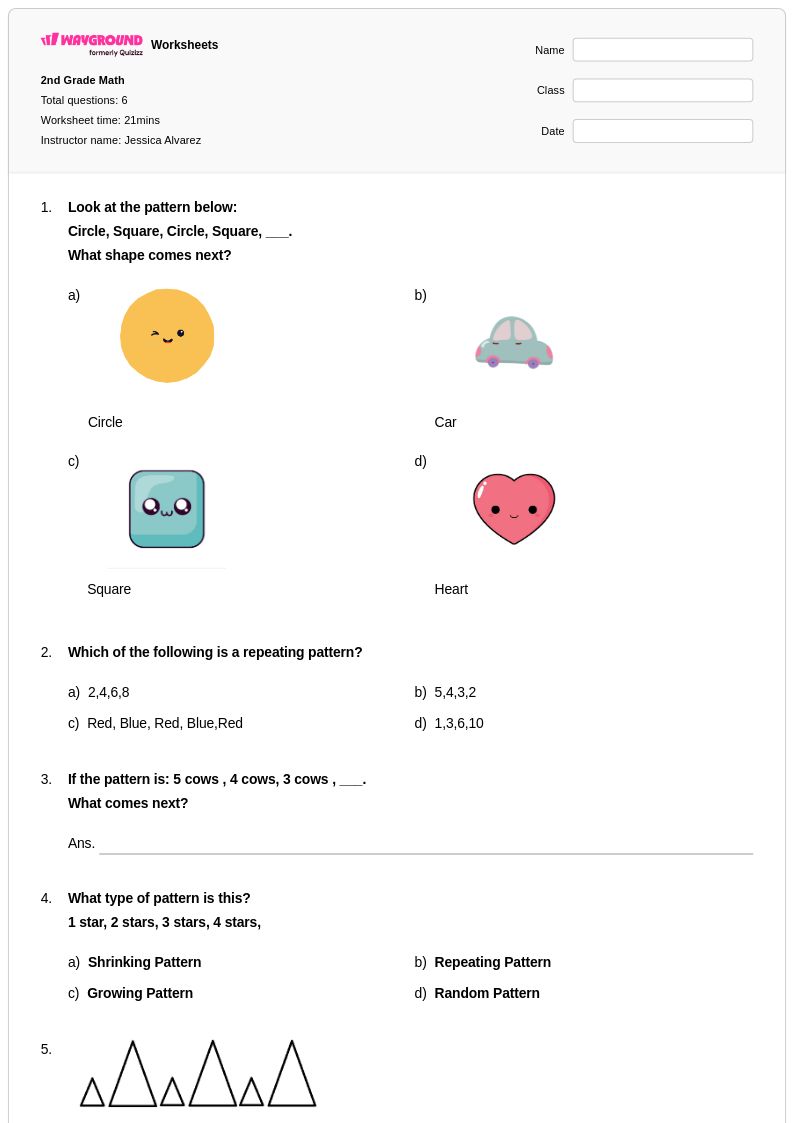
6 Q
2nd
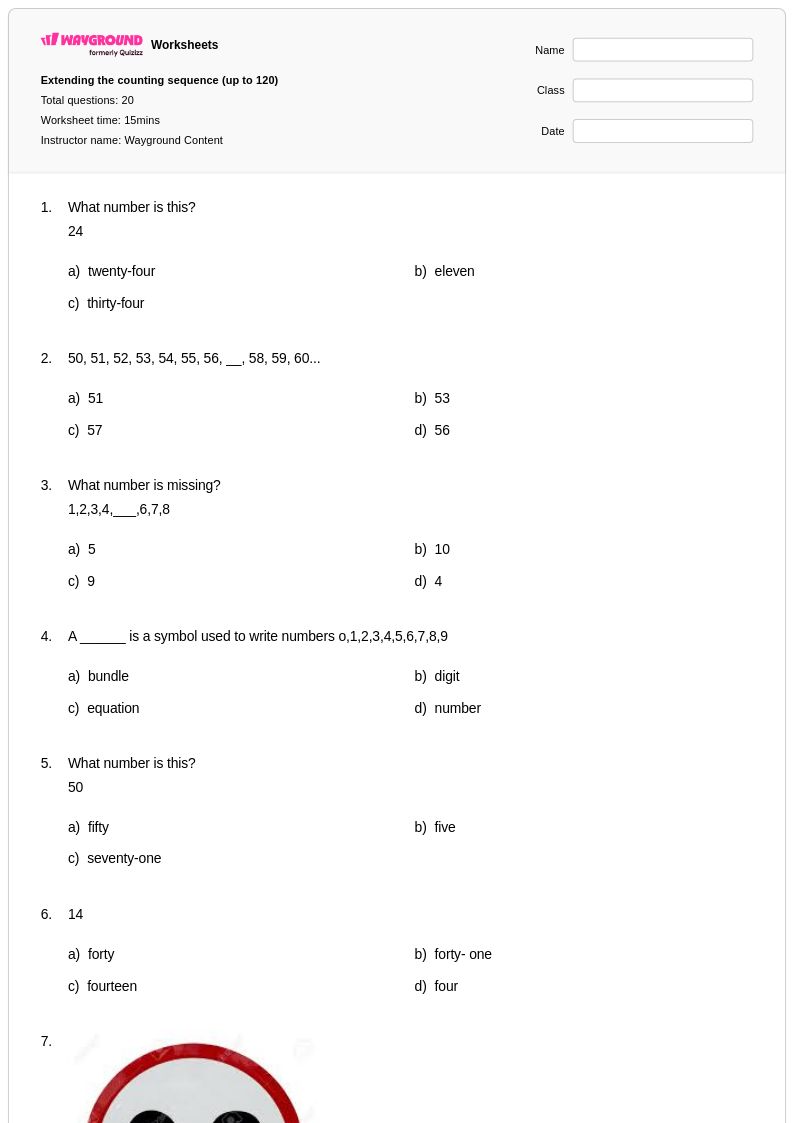
20 Q
1st
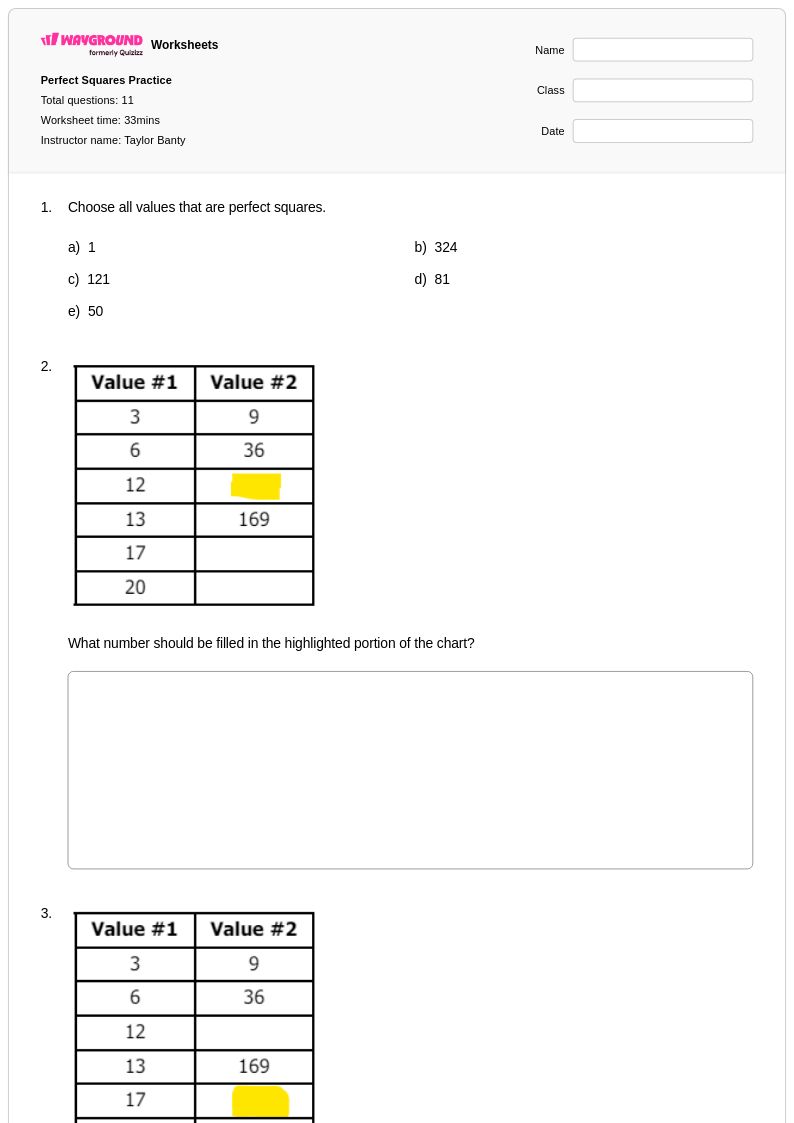
11 Q
6th
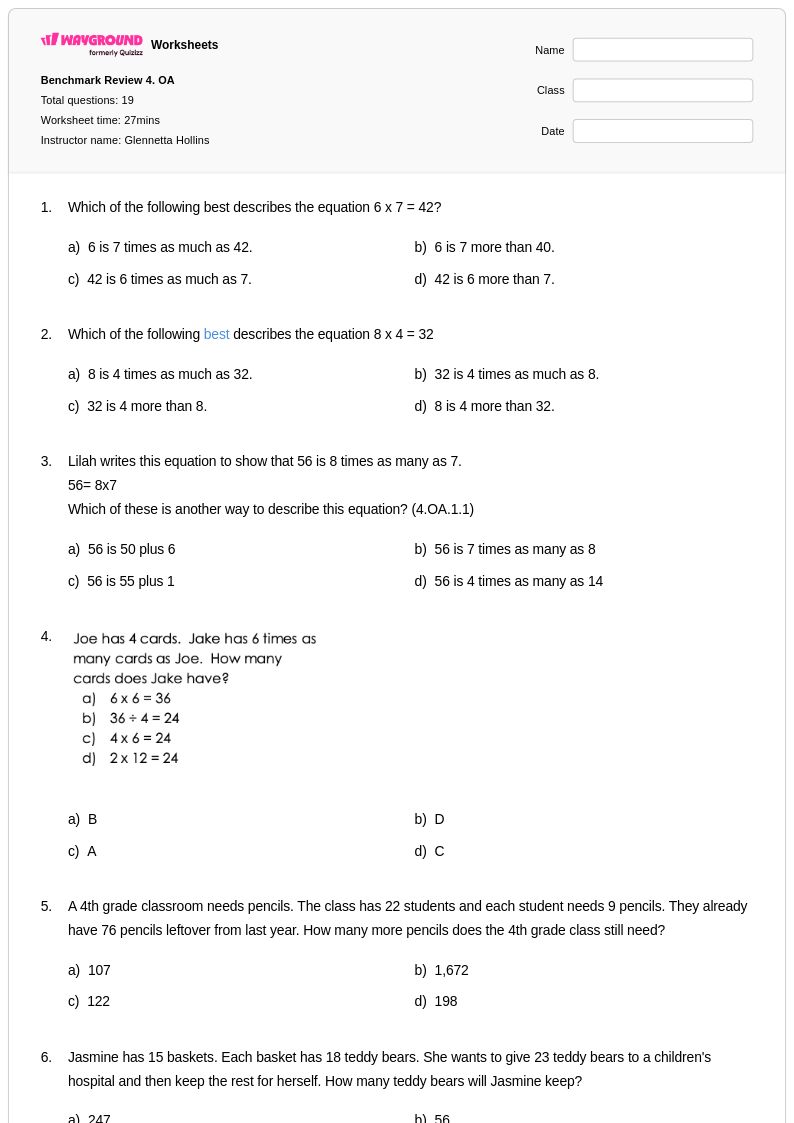
19 Q
4th
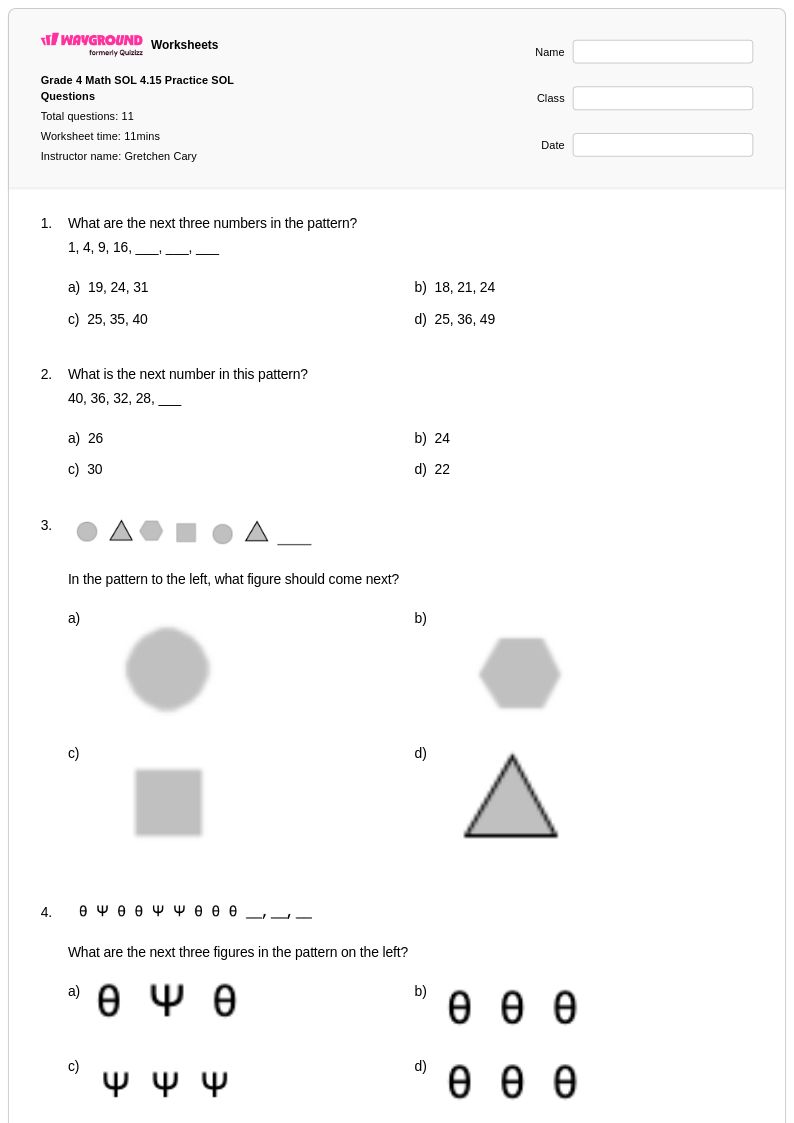
11 Q
4th
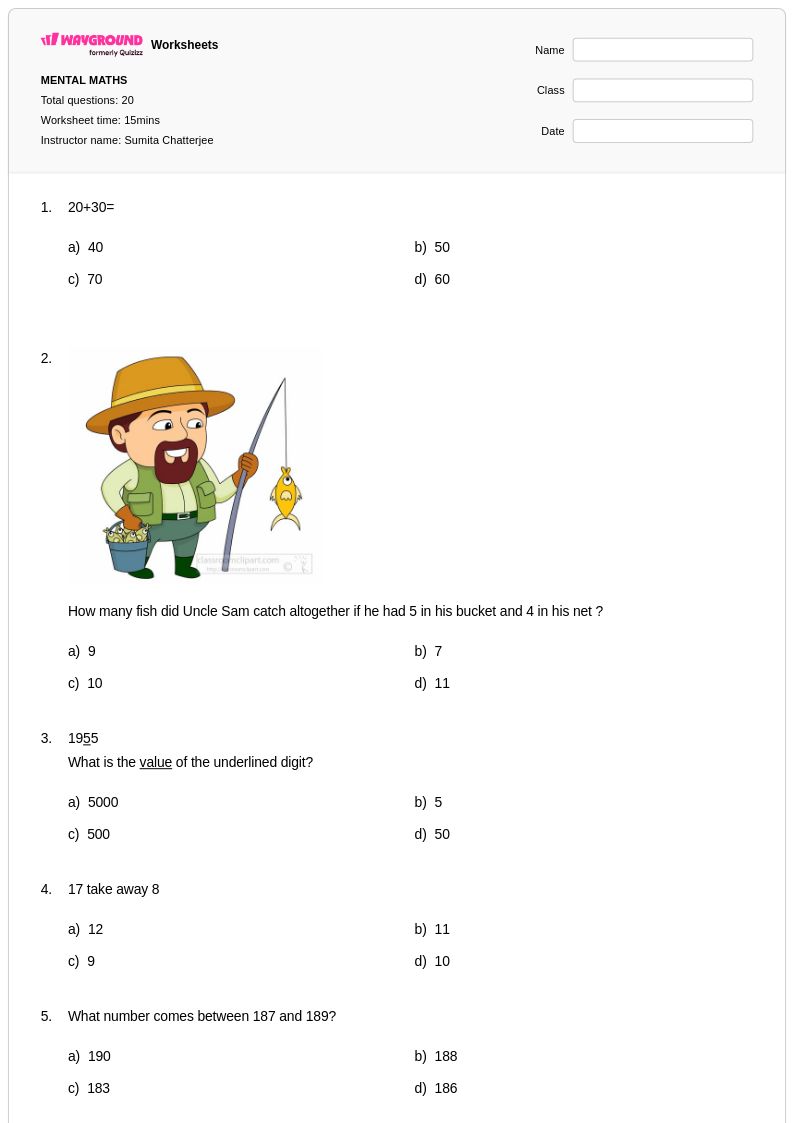
20 Q
2nd
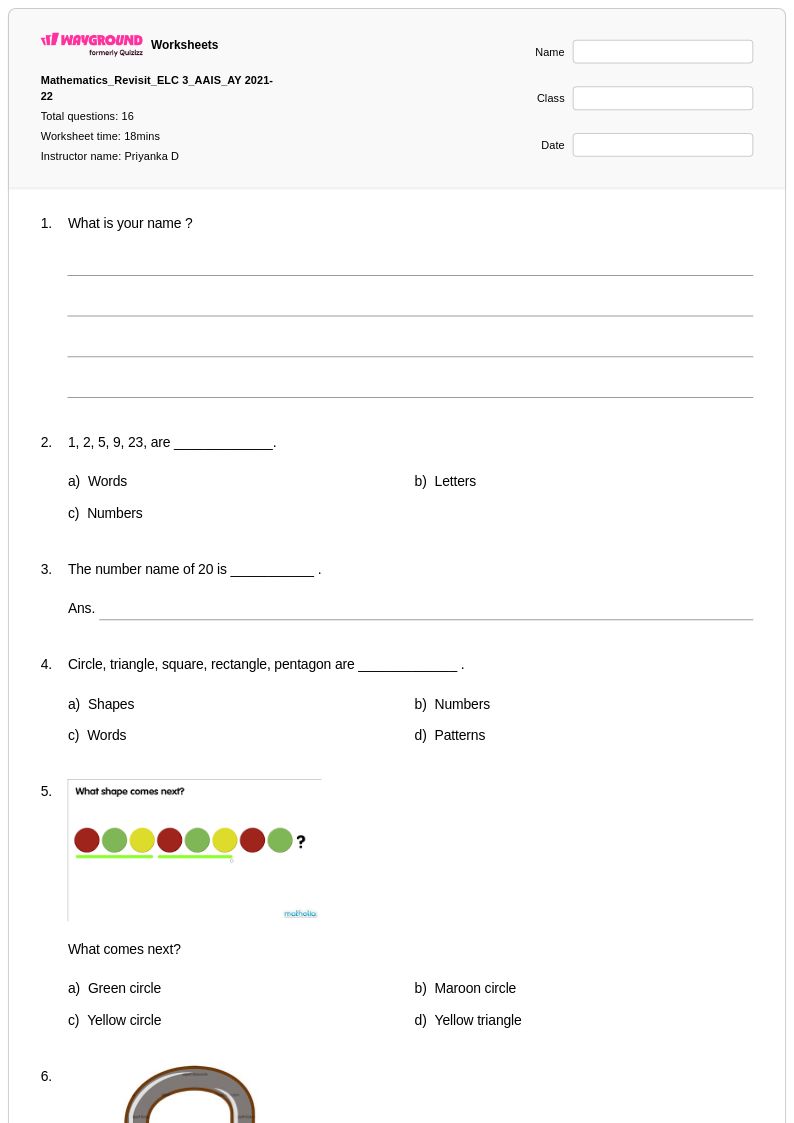
16 Q
KG
Explore Worksheets by Subjects
Explore printable Pattern Recognition worksheets
Pattern recognition worksheets available through Wayground (formerly Quizizz) provide comprehensive practice opportunities for students to develop critical mathematical thinking skills by identifying, analyzing, and extending sequences and relationships in numbers, shapes, and data. These carefully designed printables strengthen foundational cognitive abilities including logical reasoning, sequence prediction, and abstract thinking that form the cornerstone of mathematical proficiency across all grade levels. Students engage with diverse practice problems ranging from simple numeric patterns to complex geometric progressions, with each worksheet including a complete answer key to support independent learning and self-assessment. The free pdf resources cover essential pattern types including arithmetic sequences, visual patterns, growing patterns, and repeating cycles, allowing educators to target specific areas where students need additional reinforcement or challenge.
Wayground (formerly Quizizz) empowers educators with an extensive collection of millions of teacher-created pattern recognition resources that can be easily searched, filtered, and customized to meet diverse classroom needs and learning objectives. The platform's robust differentiation tools enable teachers to modify worksheets for various skill levels within the same classroom, while standards alignment features ensure that selected materials directly support curriculum requirements and learning benchmarks. Available in both printable and digital formats including downloadable pdf versions, these resources offer maximum flexibility for lesson planning, targeted remediation sessions, and enrichment activities. Teachers can efficiently locate age-appropriate materials, customize difficulty levels, and create comprehensive skill practice sequences that build students' pattern recognition abilities systematically, making instructional planning more streamlined and effective while ensuring every student receives appropriately challenging mathematical experiences.
FAQs
How do I teach pattern recognition?
What exercises help students practice pattern recognition?
What are common mistakes students make when learning patterns?
How can I use these pattern recognition worksheets in my classroom?
How does pattern recognition fit into the math curriculum?
How can I differentiate pattern recognition practice for my students?