Free Printable Bacterial Cell Worksheets for Grade 11
Enhance Grade 11 students' understanding of bacterial cell structure and functions with Wayground's comprehensive collection of free worksheets, printables, and practice problems featuring detailed answer keys and downloadable PDFs.
Explore printable Bacterial Cell worksheets for Grade 11
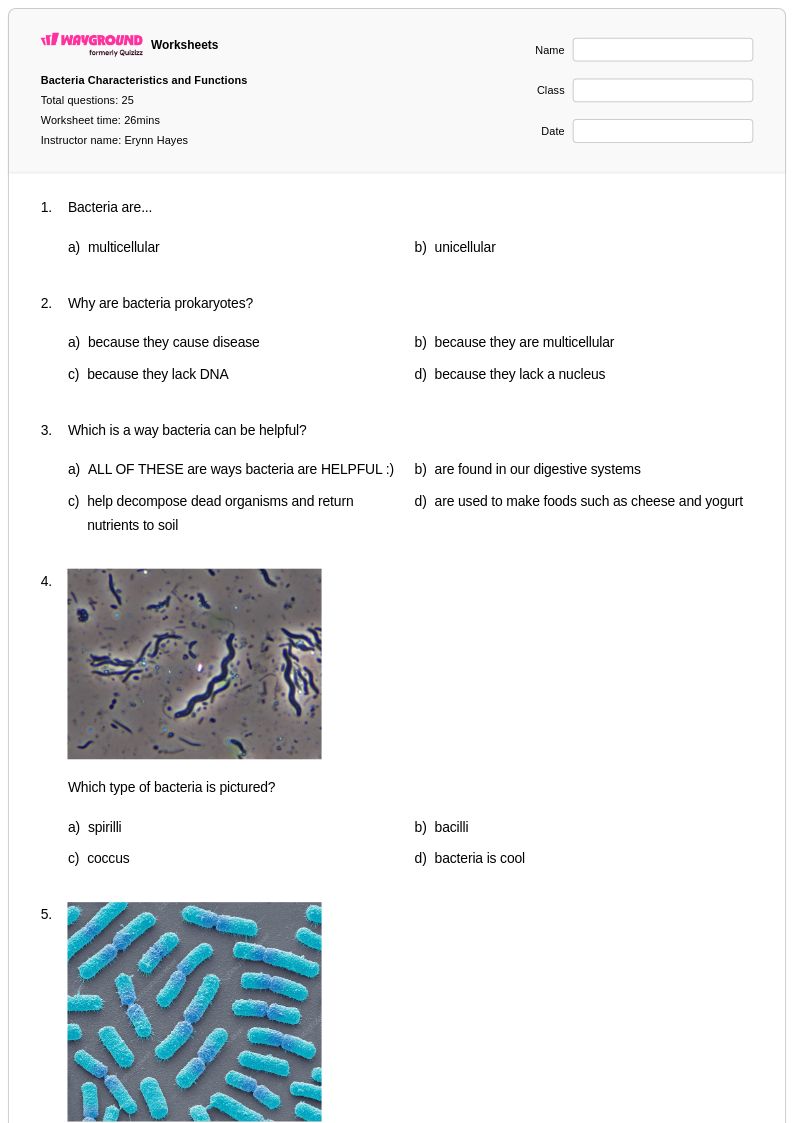
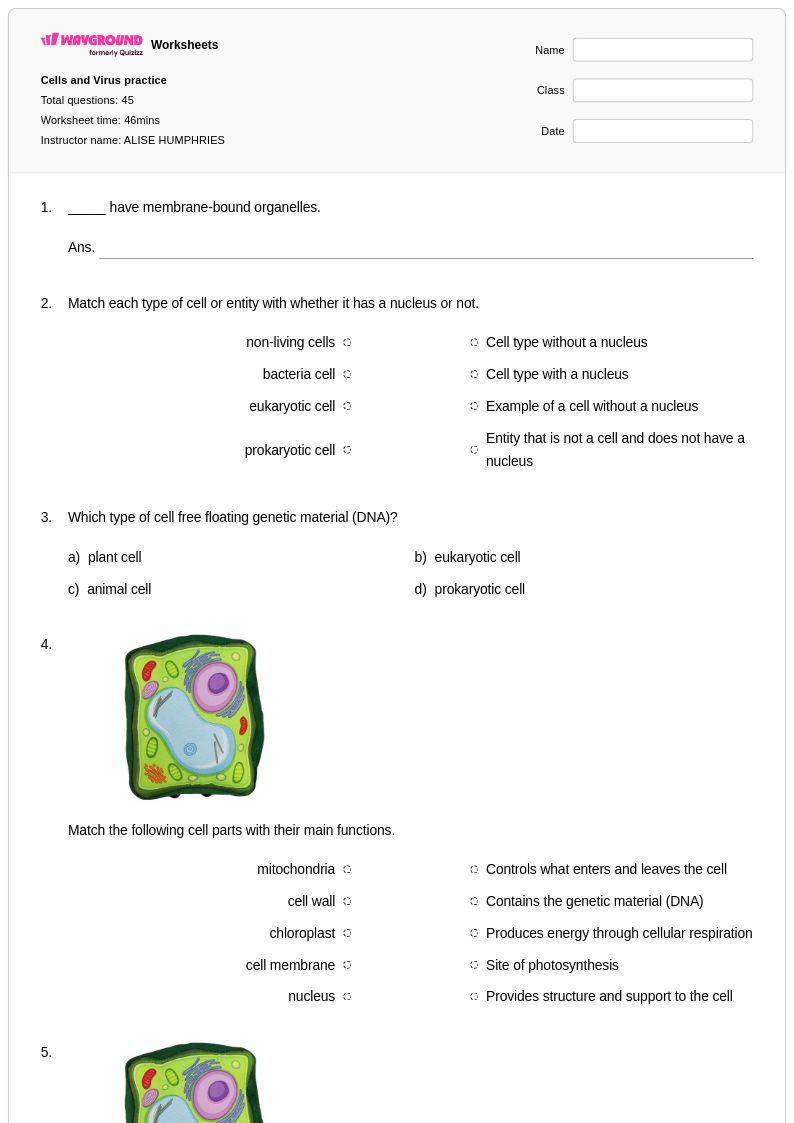
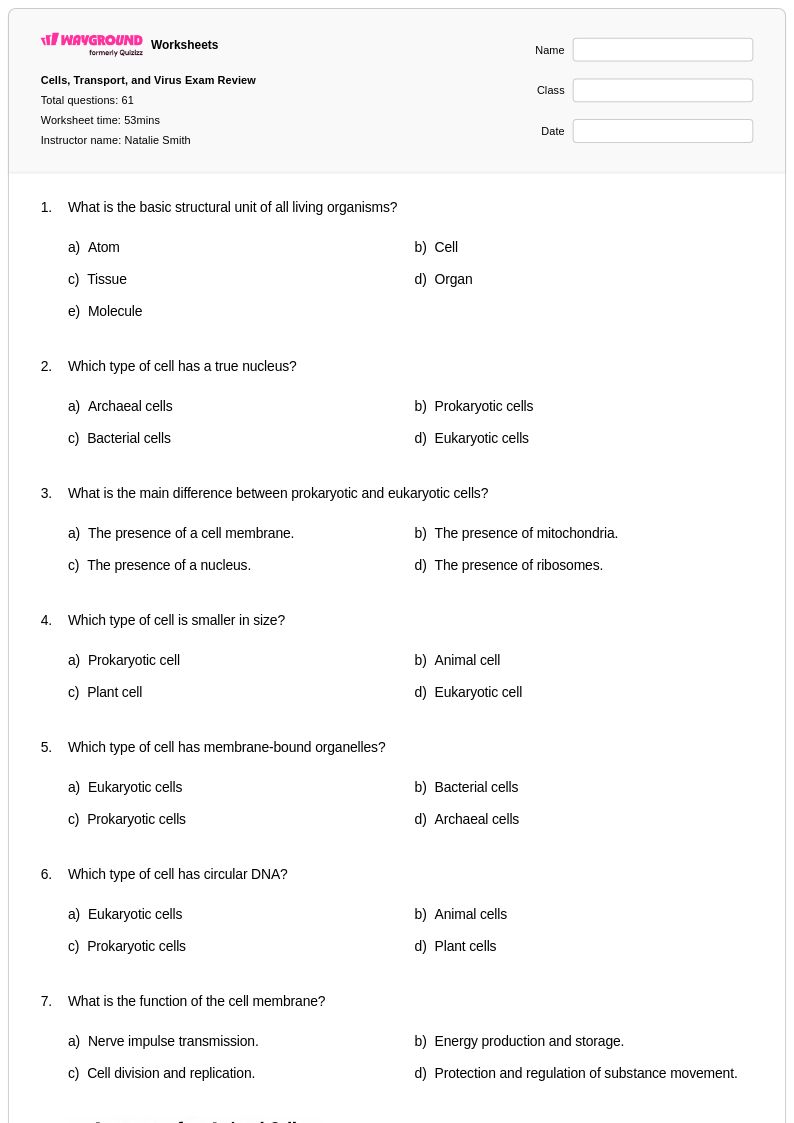
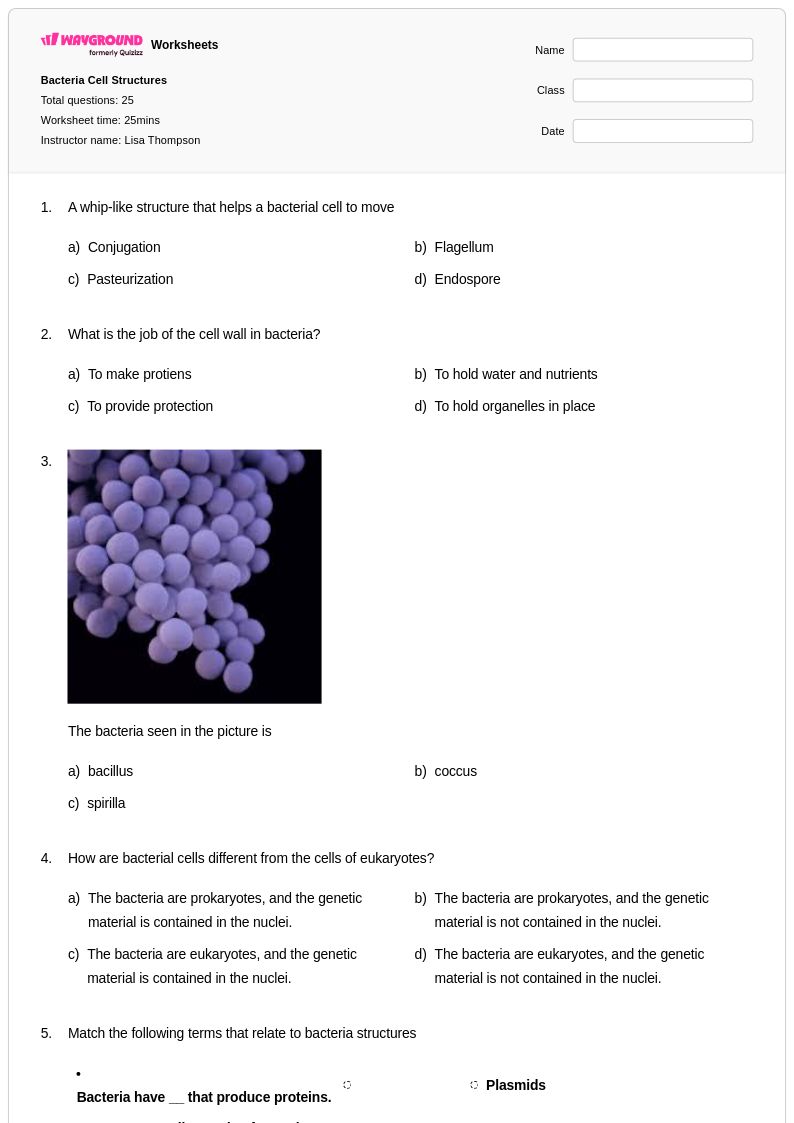
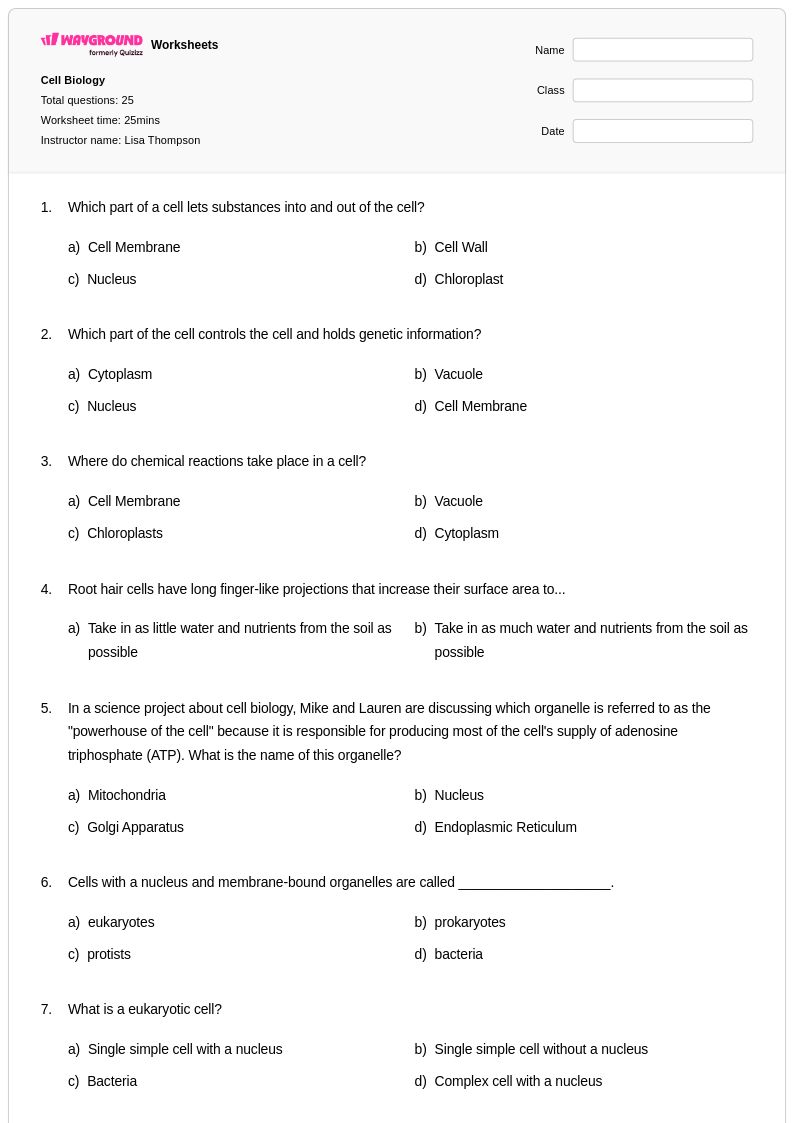
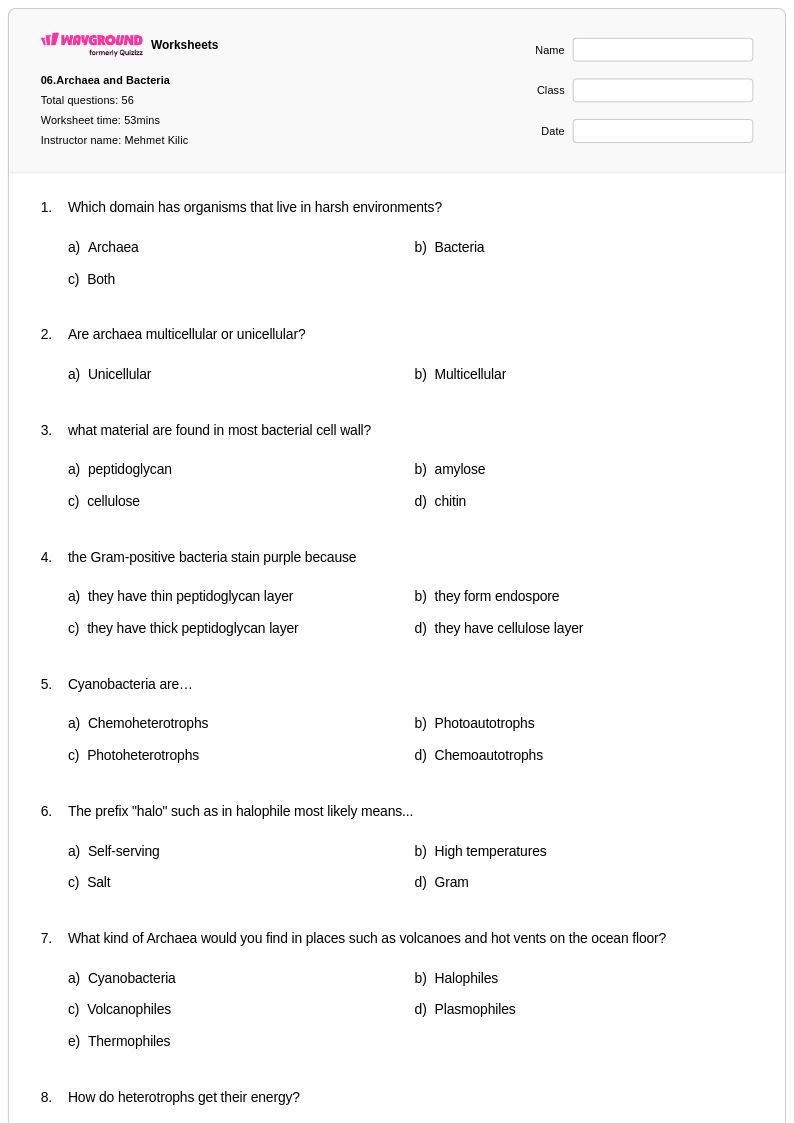
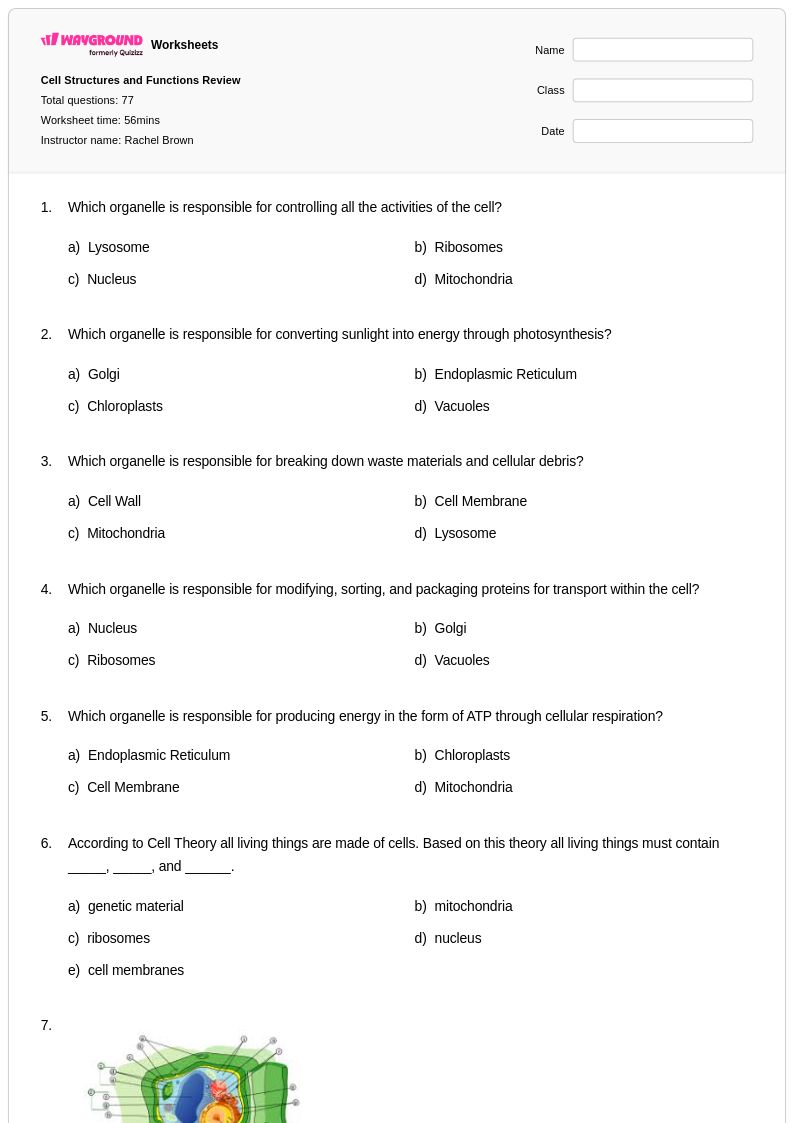
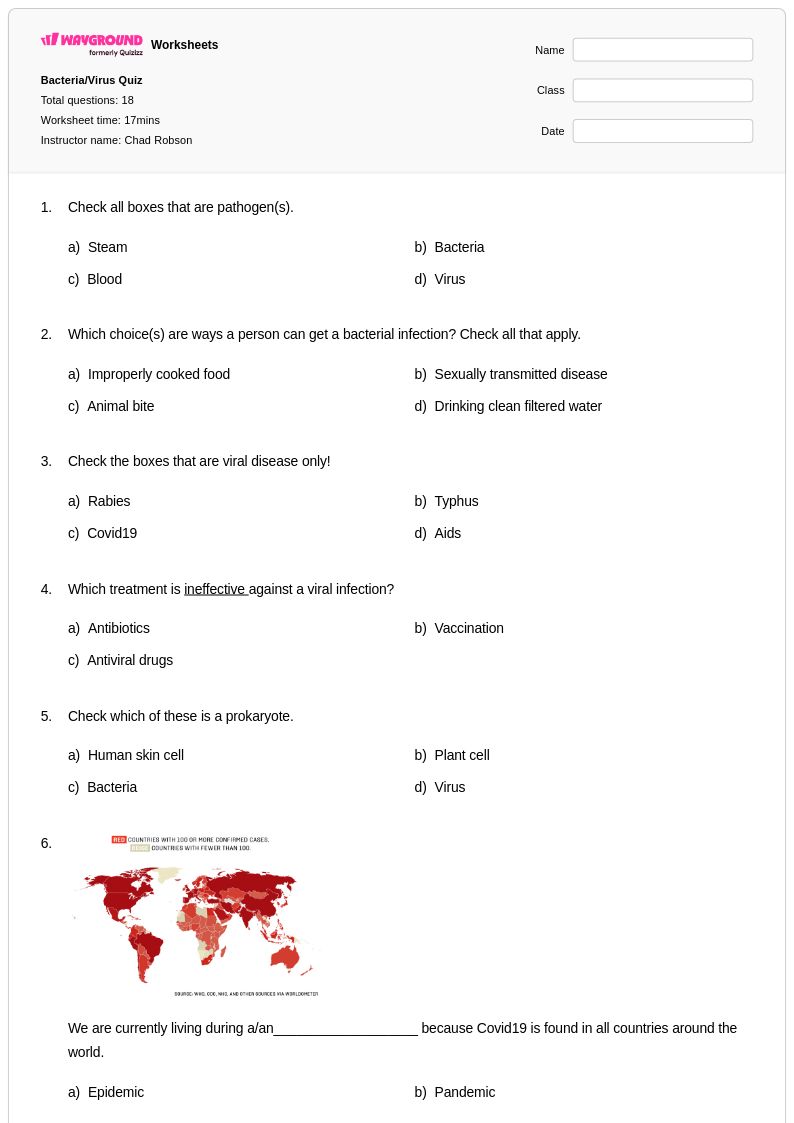
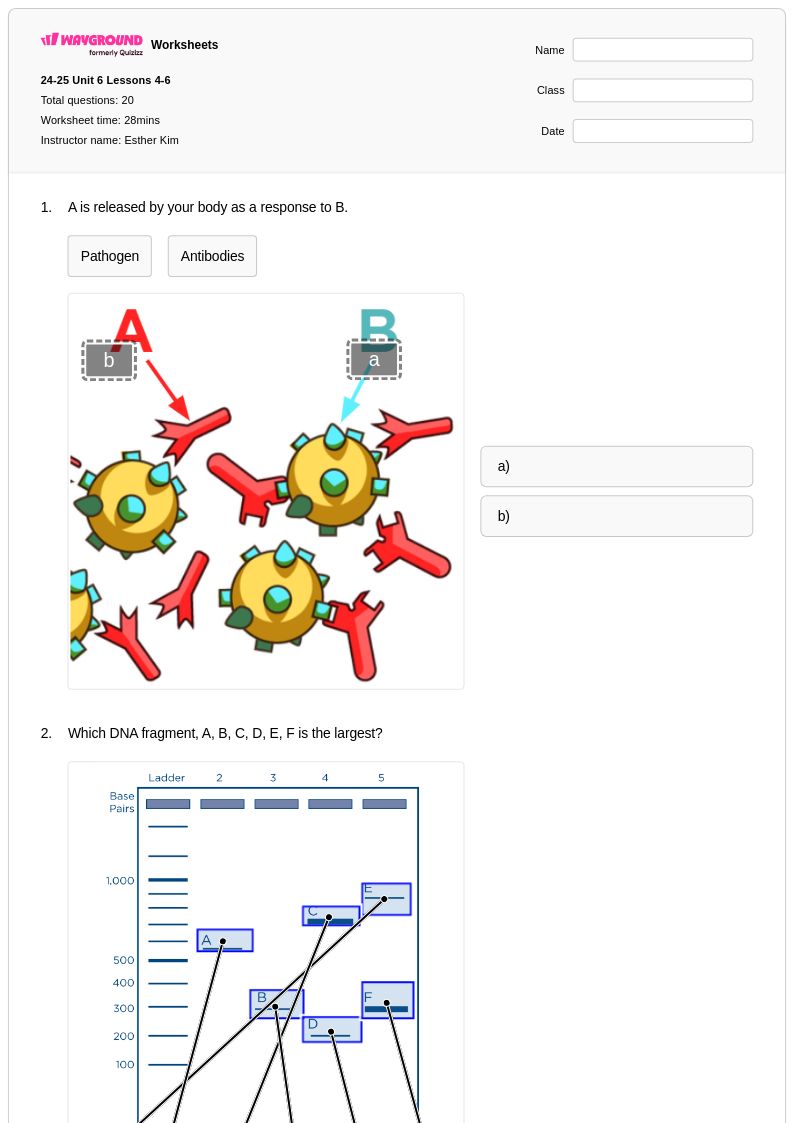
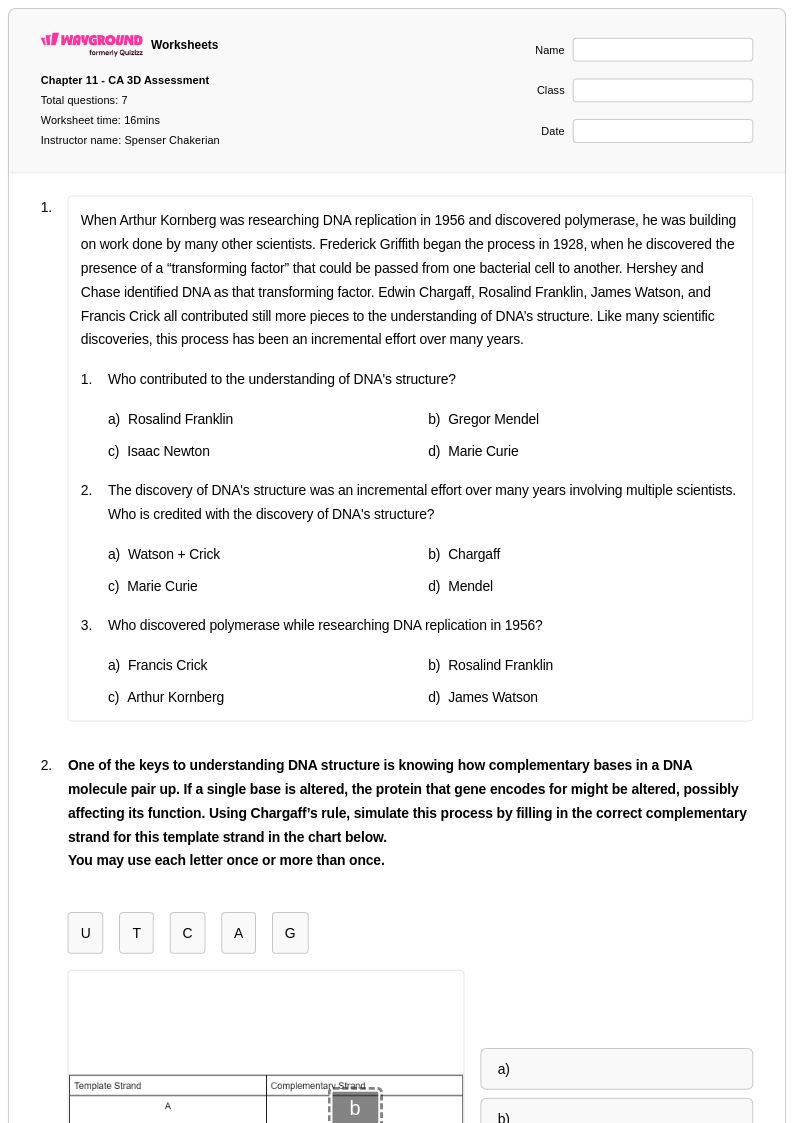
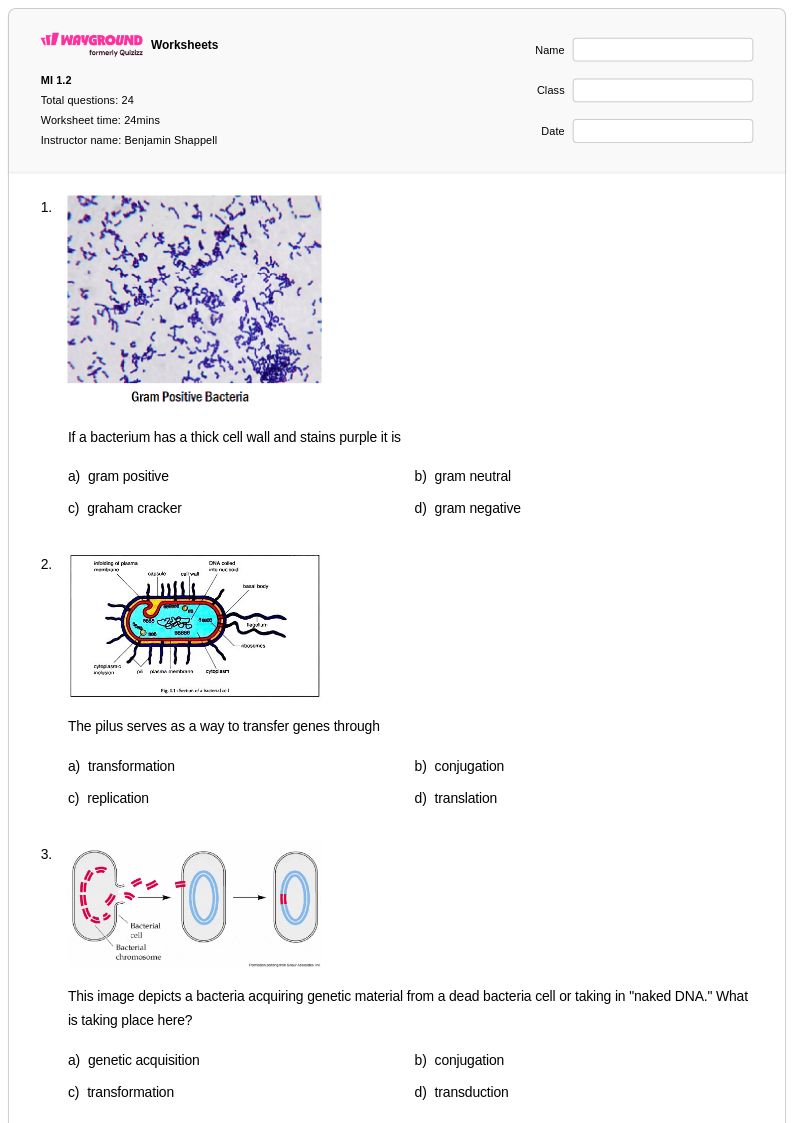
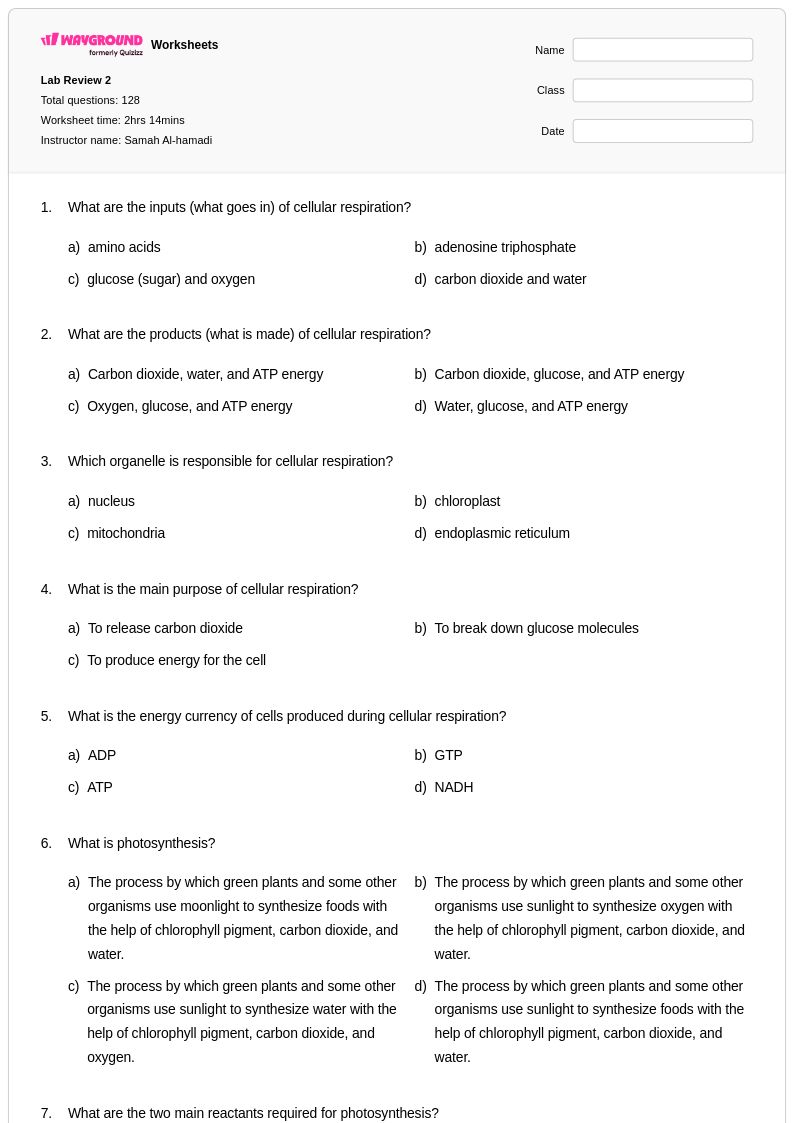
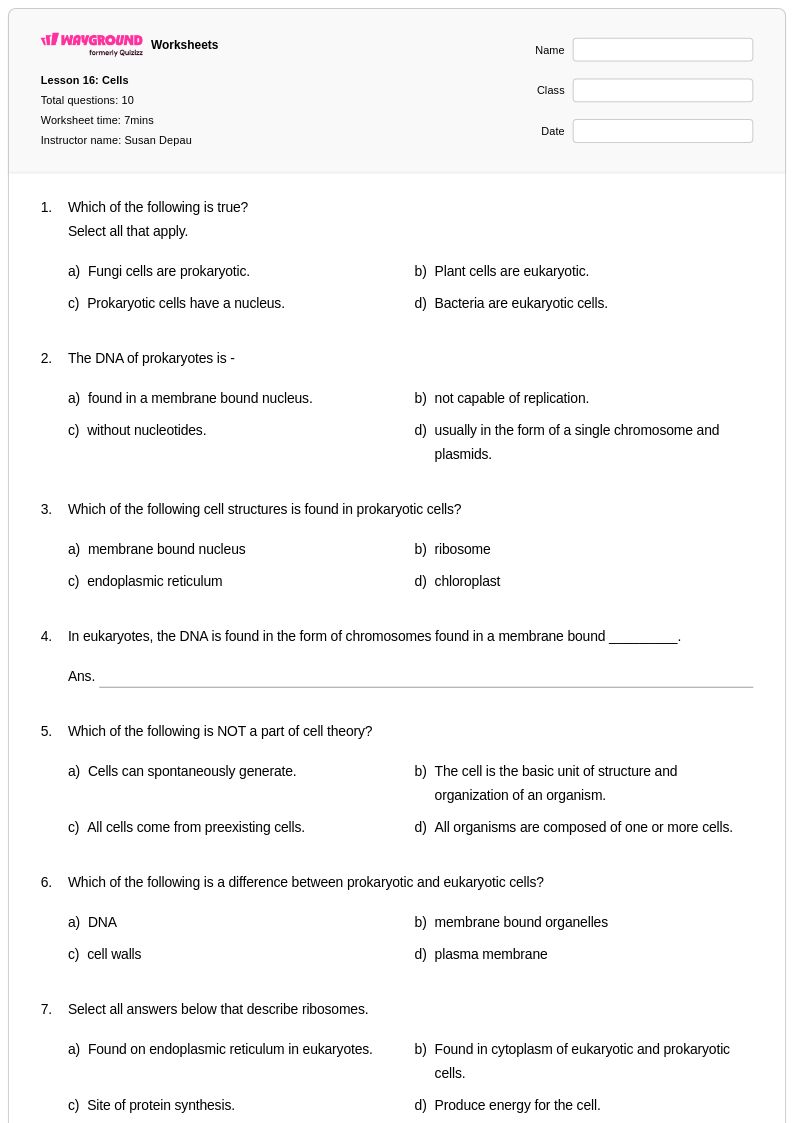
Bacterial cell worksheets for Grade 11 biology students through Wayground (formerly Quizizz) provide comprehensive exploration of prokaryotic cellular structures and functions that form the foundation of microbiology understanding. These expertly designed worksheets strengthen critical skills including identification of bacterial cell components such as cell walls, plasma membranes, ribosomes, nucleoids, and plasmids, while developing deeper comprehension of how these structures enable bacterial survival and reproduction. Students engage with practice problems that challenge them to compare prokaryotic and eukaryotic cellular organization, analyze bacterial metabolic processes, and evaluate the role of bacterial cells in various biological systems. Each worksheet includes detailed answer keys that support independent learning and self-assessment, with free printable pdf formats ensuring accessibility for diverse classroom environments and study preferences.
Wayground (formerly Quizizz) empowers educators with millions of teacher-created bacterial cell resources that streamline Grade 11 biology instruction through robust search and filtering capabilities aligned with national and state science standards. Teachers can efficiently locate worksheets targeting specific bacterial cell concepts, from basic structural identification to complex metabolic pathway analysis, while utilizing differentiation tools that accommodate varying student readiness levels within the same classroom. The platform's flexible customization options allow educators to modify existing materials or create personalized worksheet collections, with seamless availability in both printable and digital pdf formats that support diverse teaching modalities. These comprehensive features enable teachers to design targeted lesson plans, implement effective remediation strategies for struggling students, provide enrichment opportunities for advanced learners, and facilitate consistent skill practice that reinforces essential bacterial cell biology concepts throughout the academic year.
FAQs
How do I teach bacterial cell structure to my students?
Start by contrasting prokaryotic and eukaryotic cells so students have a structural anchor before introducing bacterial-specific components. Walk through each organelle in functional context — for example, explain why the cell wall provides rigidity, how flagella enable motility, and why the nucleoid region lacks a membrane. Using labeled diagrams alongside written descriptions helps students connect visual structure to biological function, which is especially important for components like pili and ribosomes that are difficult to visualize without reference images.
What exercises help students practice identifying bacterial cell components?
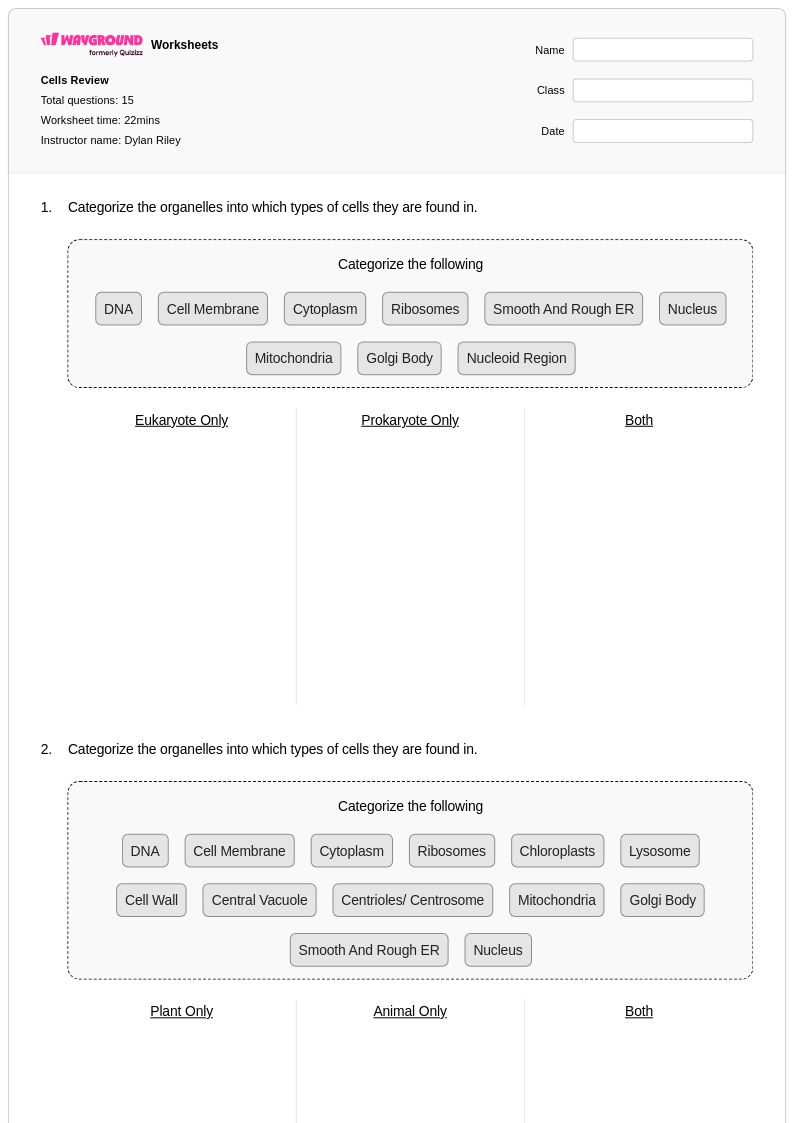
Labeling diagrams of bacterial cells is one of the most effective practice formats because it requires students to recall both the name and location of each structure simultaneously. Comparing-and-contrasting tasks — where students identify which features are unique to prokaryotes versus shared with eukaryotes — deepen comprehension beyond simple memorization. Practice problems that ask students to connect a bacterial structure to its function, such as matching flagella to motility or the plasma membrane to selective permeability, reinforce analytical thinking in cellular biology.
What mistakes do students commonly make when learning about bacterial cells?
The most frequent misconception is that bacterial cells are simply smaller versions of eukaryotic cells, which leads students to incorrectly assign organelles like a nucleus or mitochondria to prokaryotes. Students also routinely confuse the cell wall with the plasma membrane, misunderstanding that these are distinct structures with separate functions. Another common error is conflating the nucleoid region with a true nucleus — reinforcing that the nucleoid is an unbound region of DNA, not a membrane-enclosed organelle, is critical for accurate understanding.
How do I use Wayground's bacterial cell worksheets in my classroom?
Wayground's bacterial cell worksheets are available as printable PDFs for traditional classroom use and in digital formats for technology-integrated environments, making them flexible across different instructional settings. Teachers can use them for initial concept introduction, targeted skill practice, remediation, or enrichment depending on where students are in the unit. You can also host the worksheet as a quiz directly on Wayground, which allows you to track student performance and apply accommodations such as extended time or read aloud for individual students who need them.
How do bacterial cell worksheets support differentiation for diverse learners?
Wayground allows teachers to apply student-level accommodations directly within the platform, including extended time, read aloud for students who need audio support, reduced answer choices to lower cognitive load, and adjustable font sizes and themes through reading mode. These settings can be configured per student and saved for reuse across future sessions, so differentiation does not need to be rebuilt each time. This means students with varying needs can engage with the same bacterial cell content at an appropriate level without disrupting the experience for the rest of the class.
How should I structure a lesson comparing prokaryotic and eukaryotic cells?
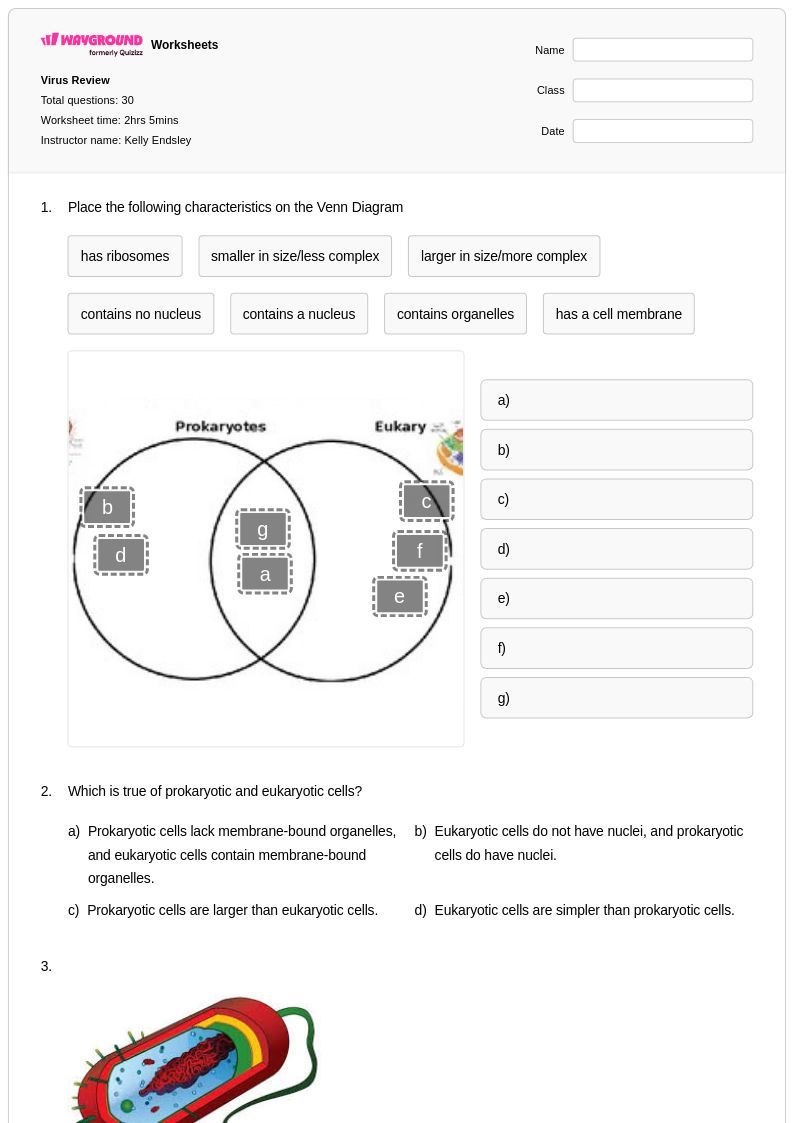
Begin with shared features — both cell types have a plasma membrane, ribosomes, and DNA — before moving into what distinguishes prokaryotes, such as the absence of membrane-bound organelles and the presence of a nucleoid region. A side-by-side diagram or Venn diagram activity works well here because it forces students to categorize actively rather than passively read. Bacterial cell worksheets that include comparison tasks are particularly effective at this stage because they give students a structured framework to apply their understanding immediately after instruction.