Free Printable Genetic Modification Worksheets for Grade 11
Explore free Grade 11 genetic modification worksheets and printables from Wayground that help students master biotechnology concepts, gene editing techniques, and ethical considerations through engaging practice problems with comprehensive answer keys.
Explore printable Genetic Modification worksheets for Grade 11
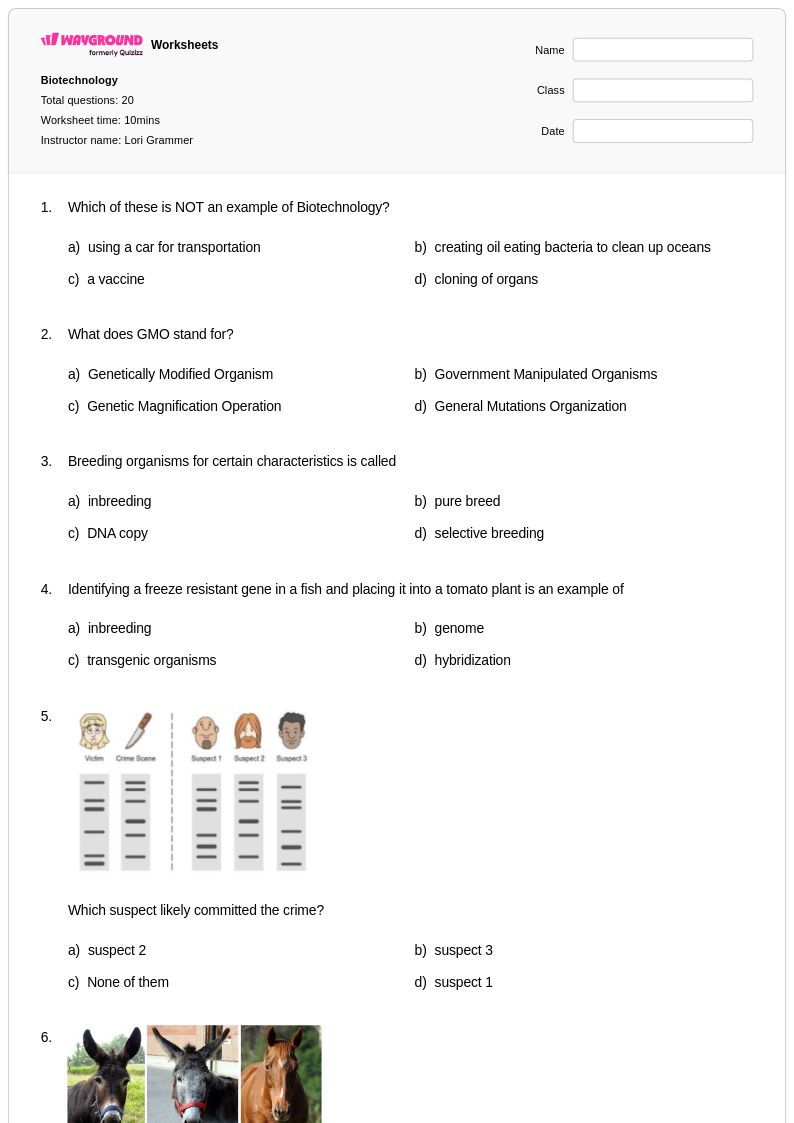
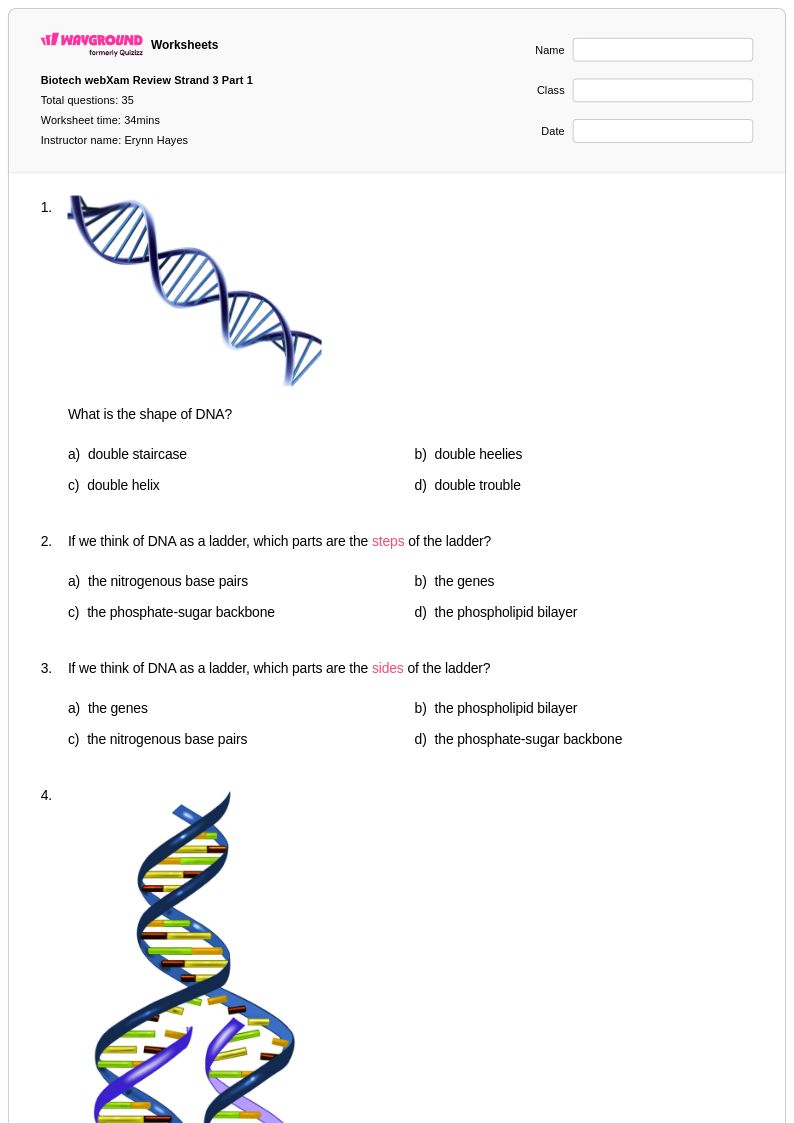
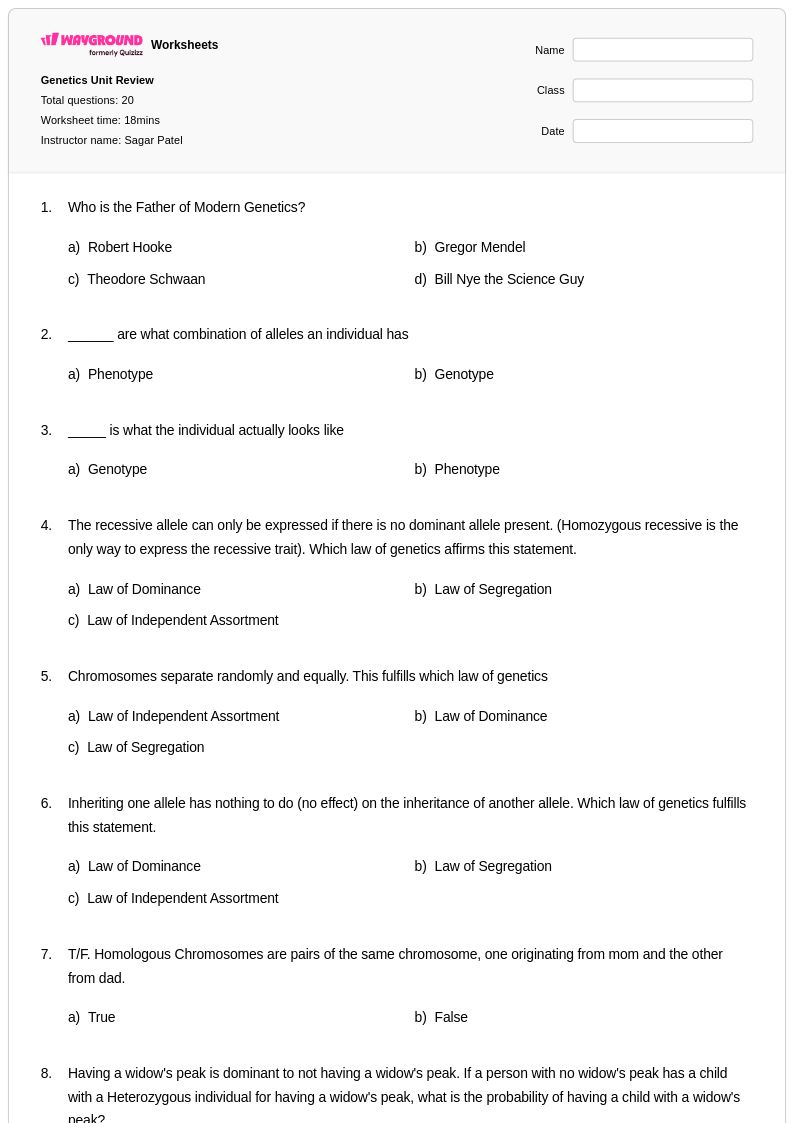
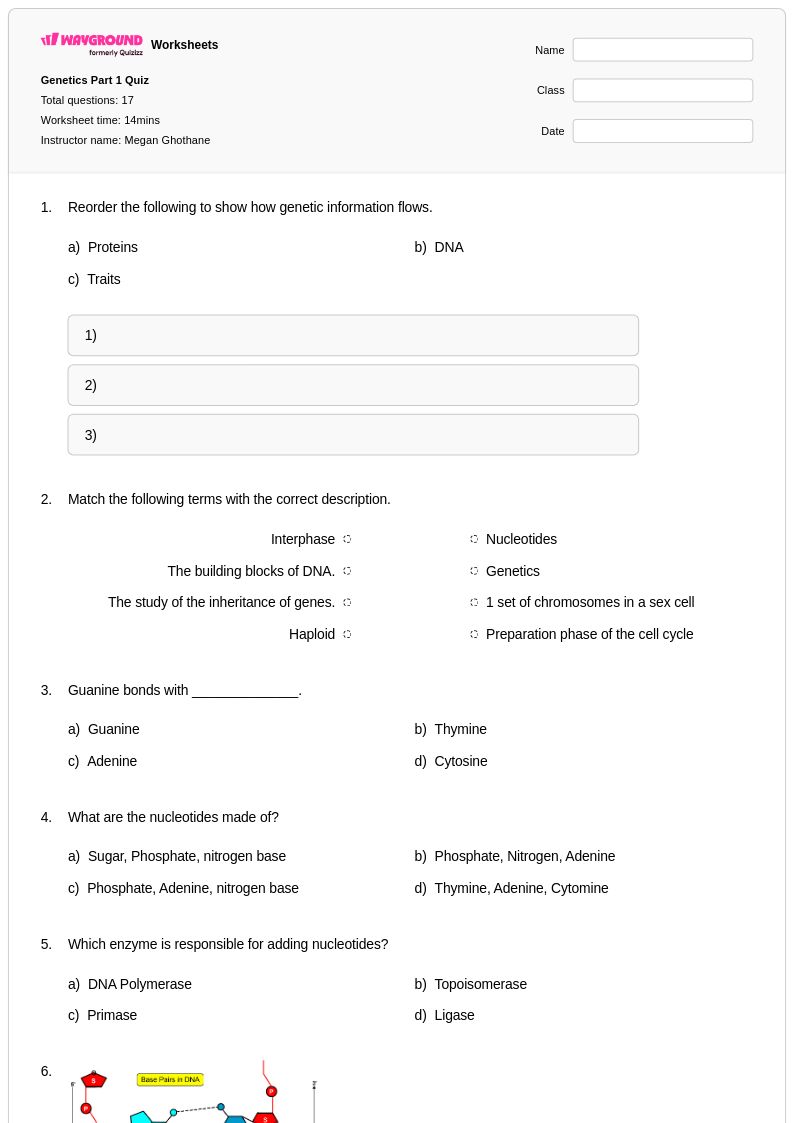
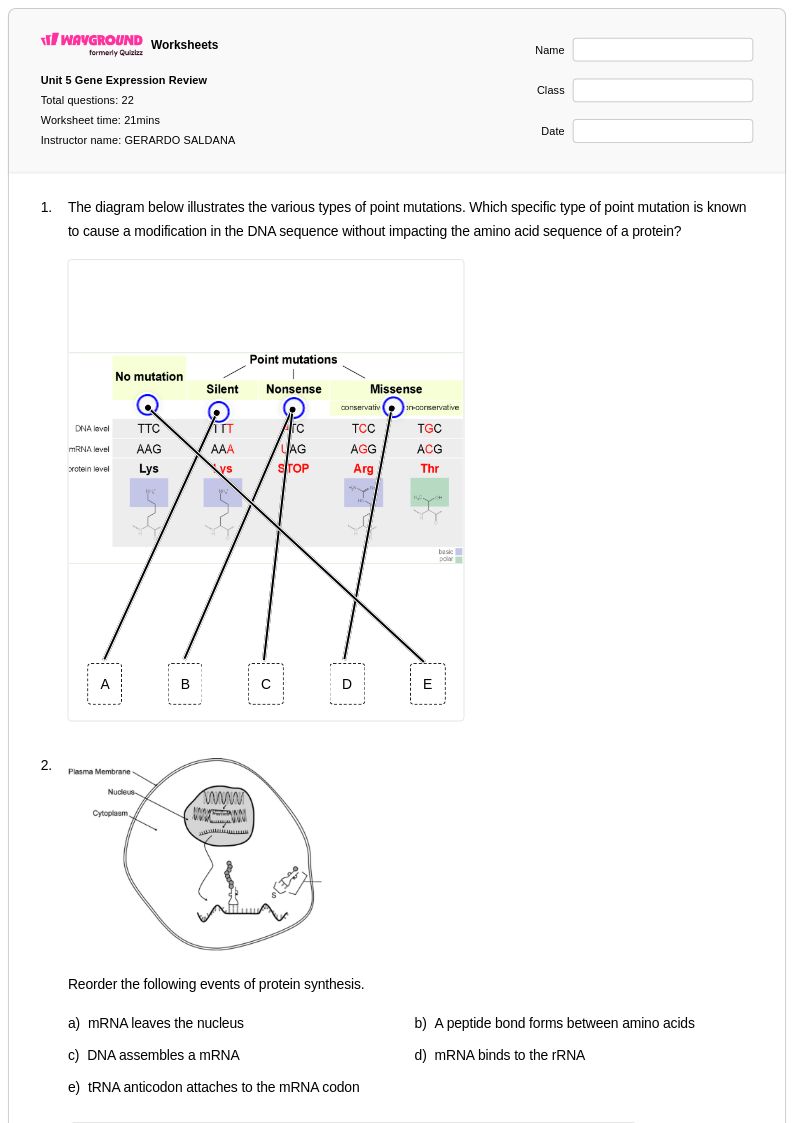
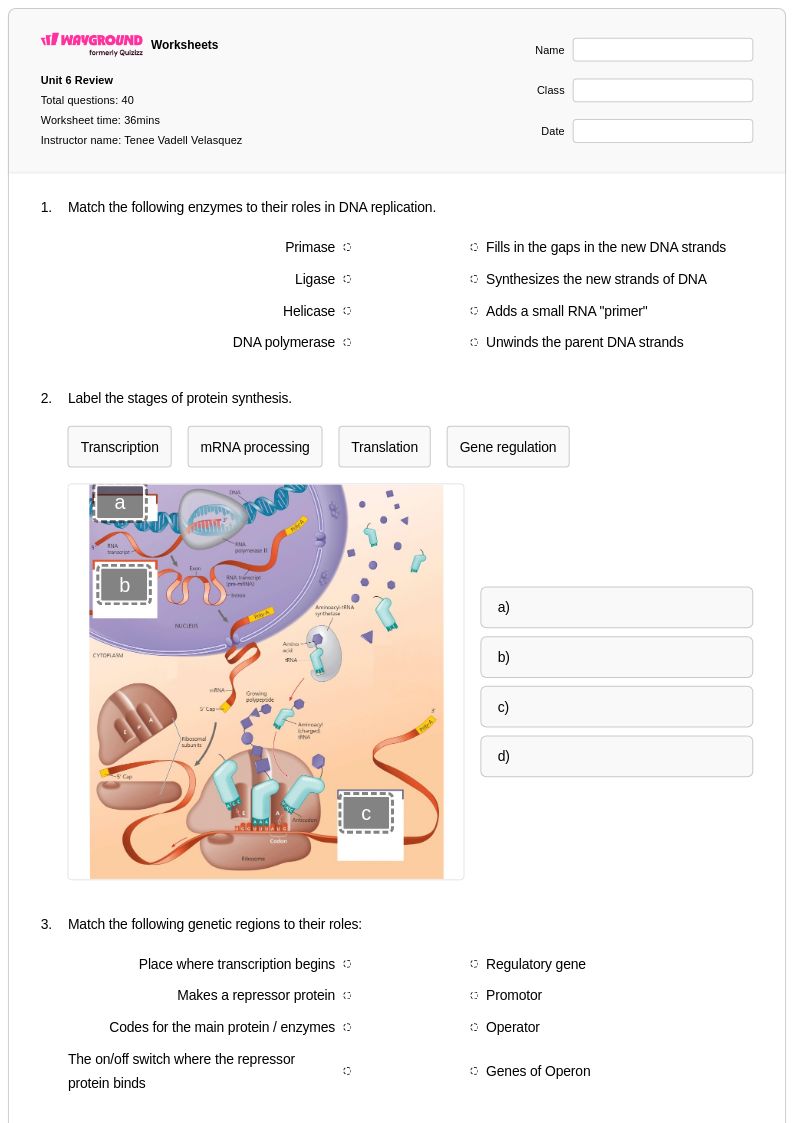
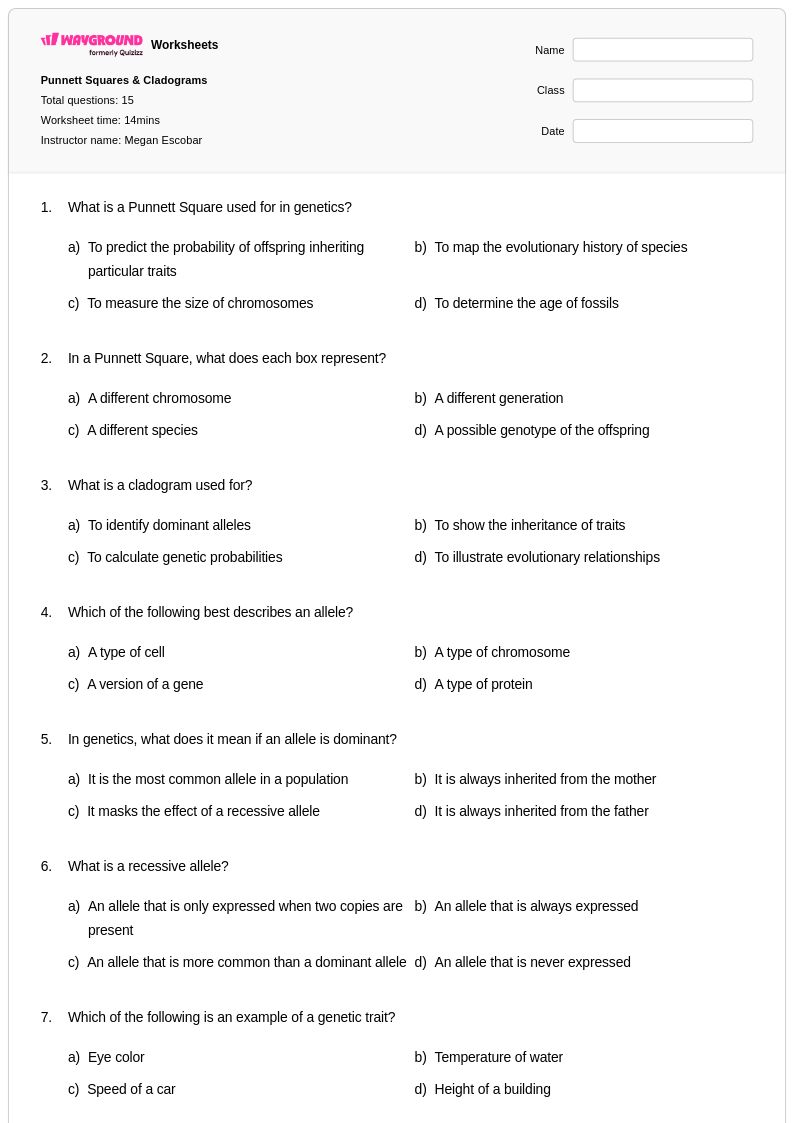
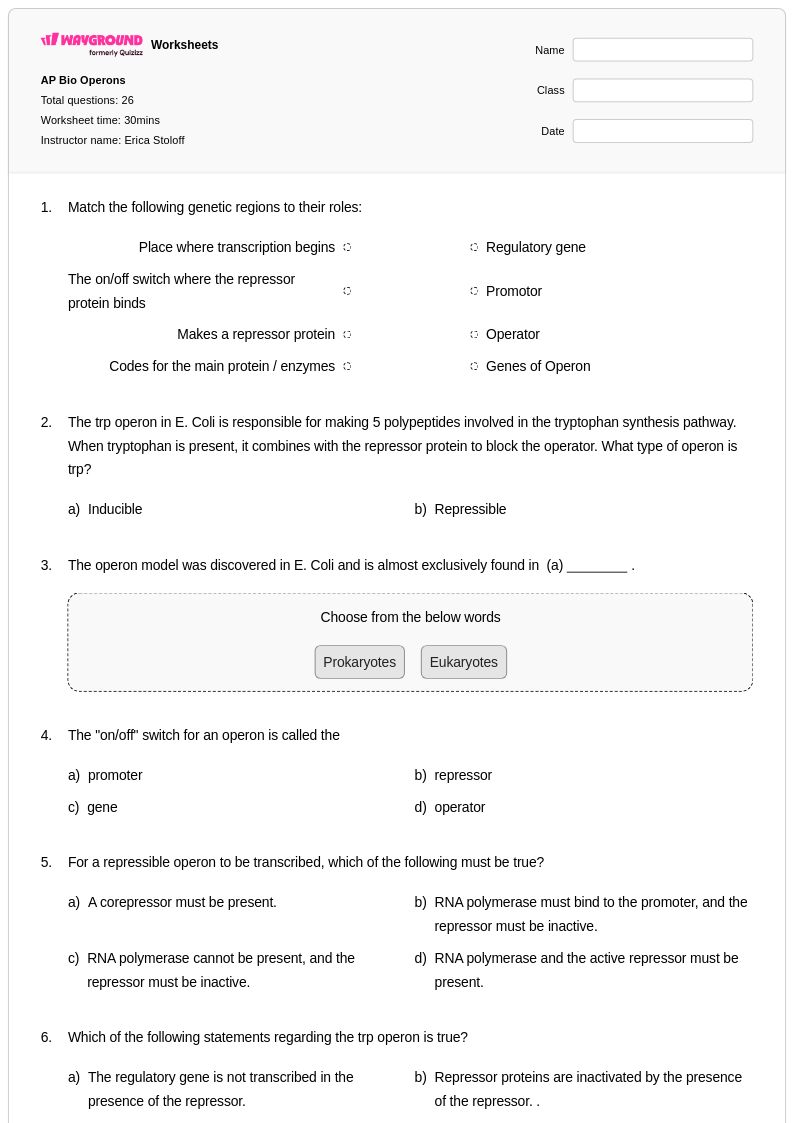
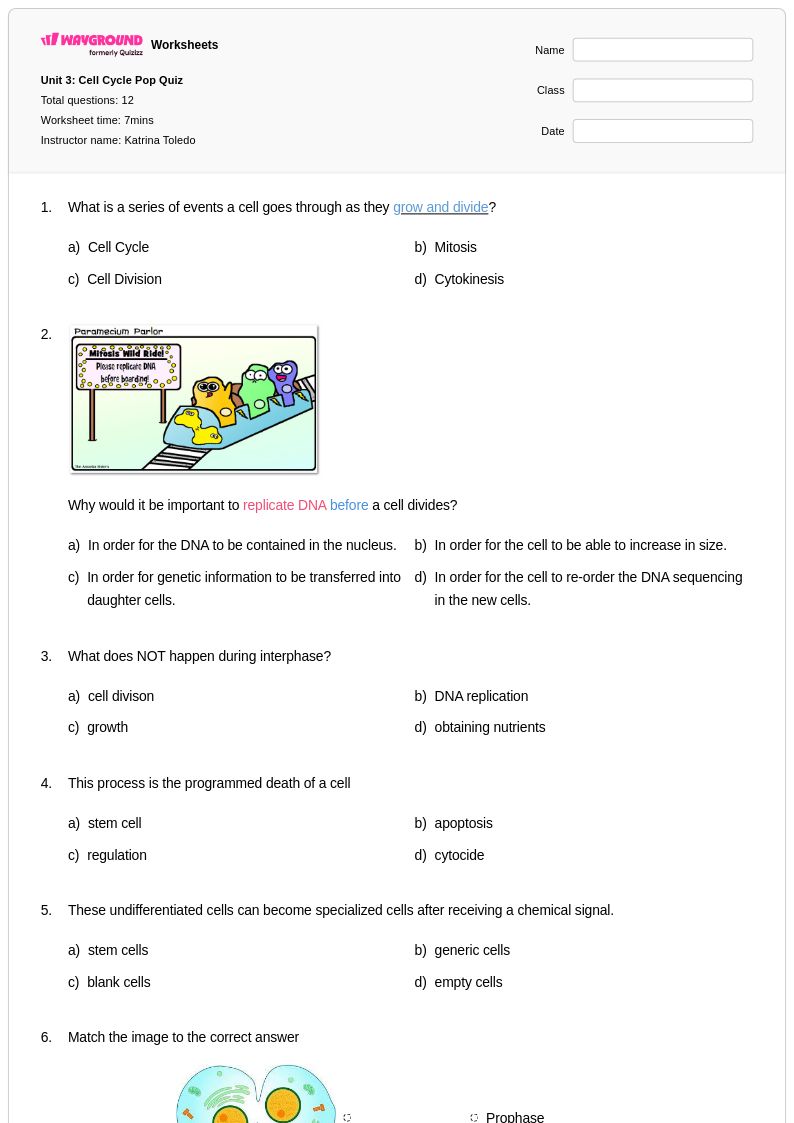
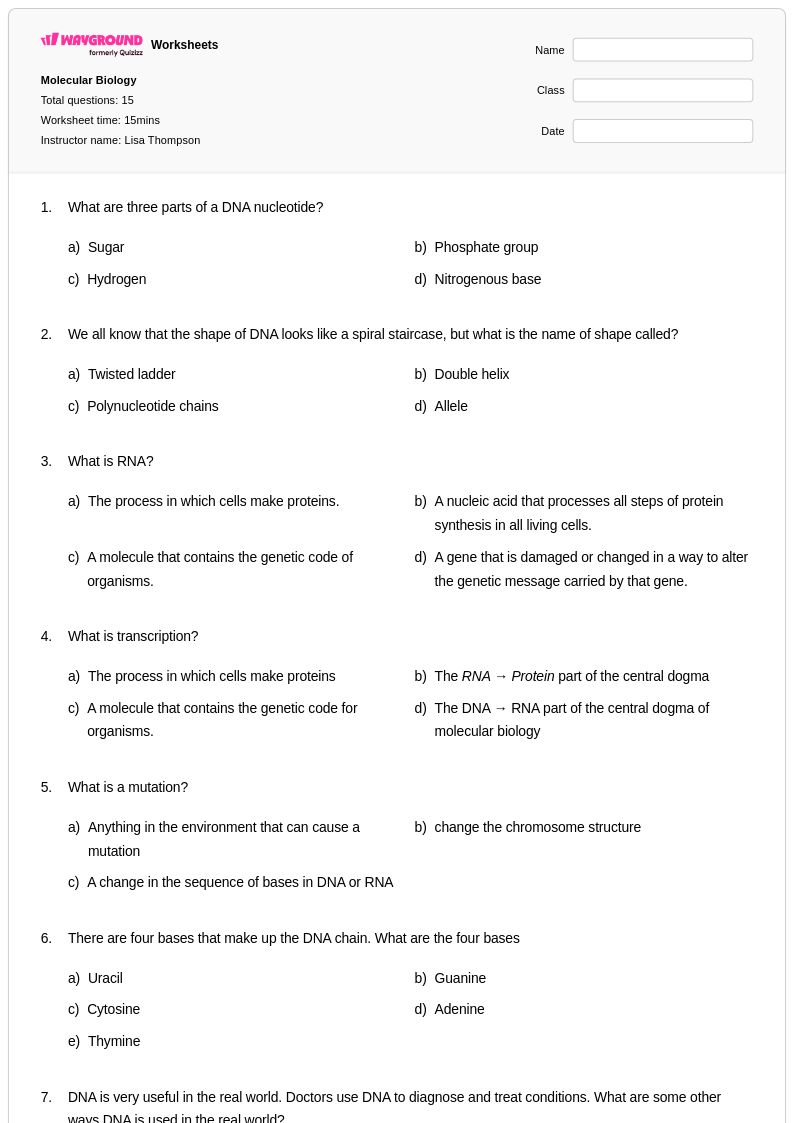
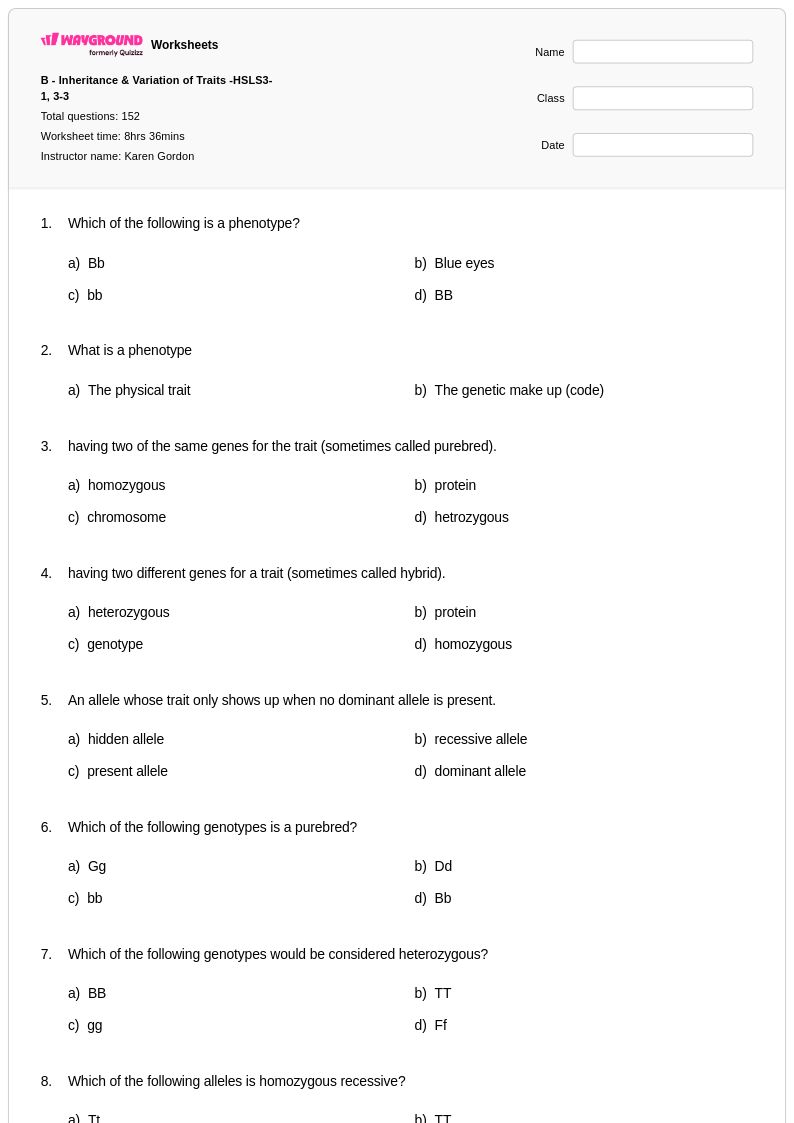
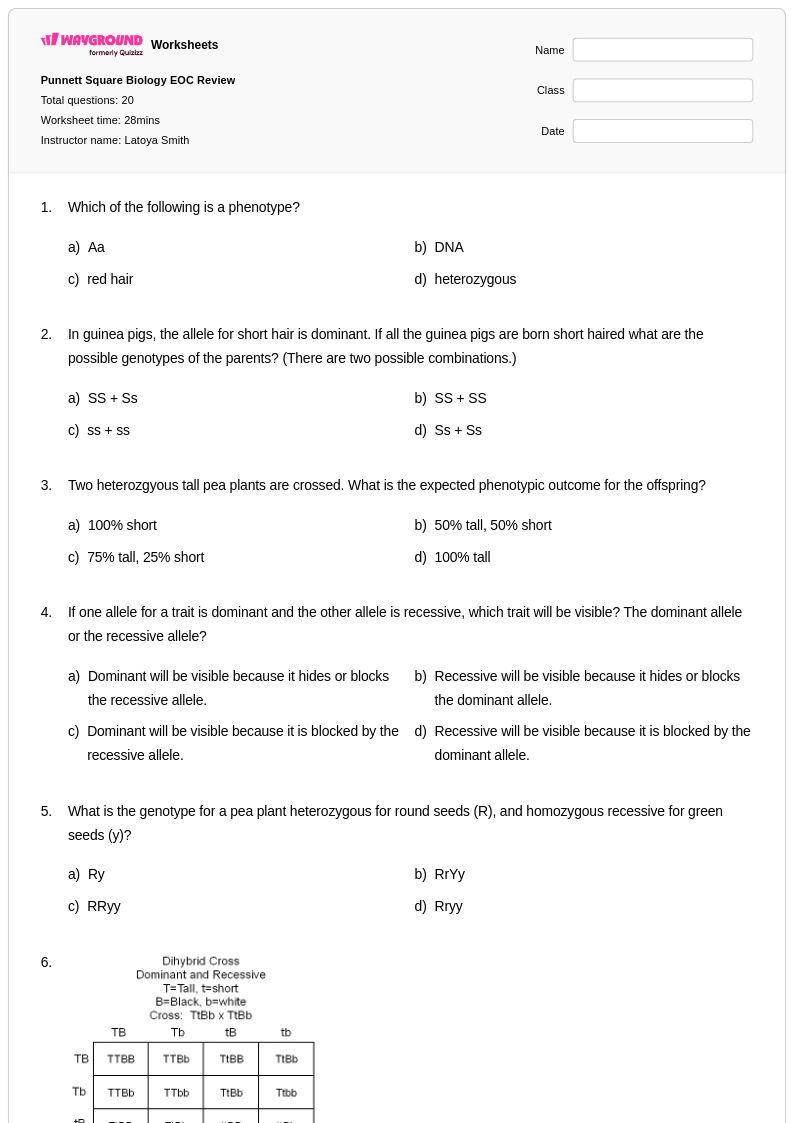
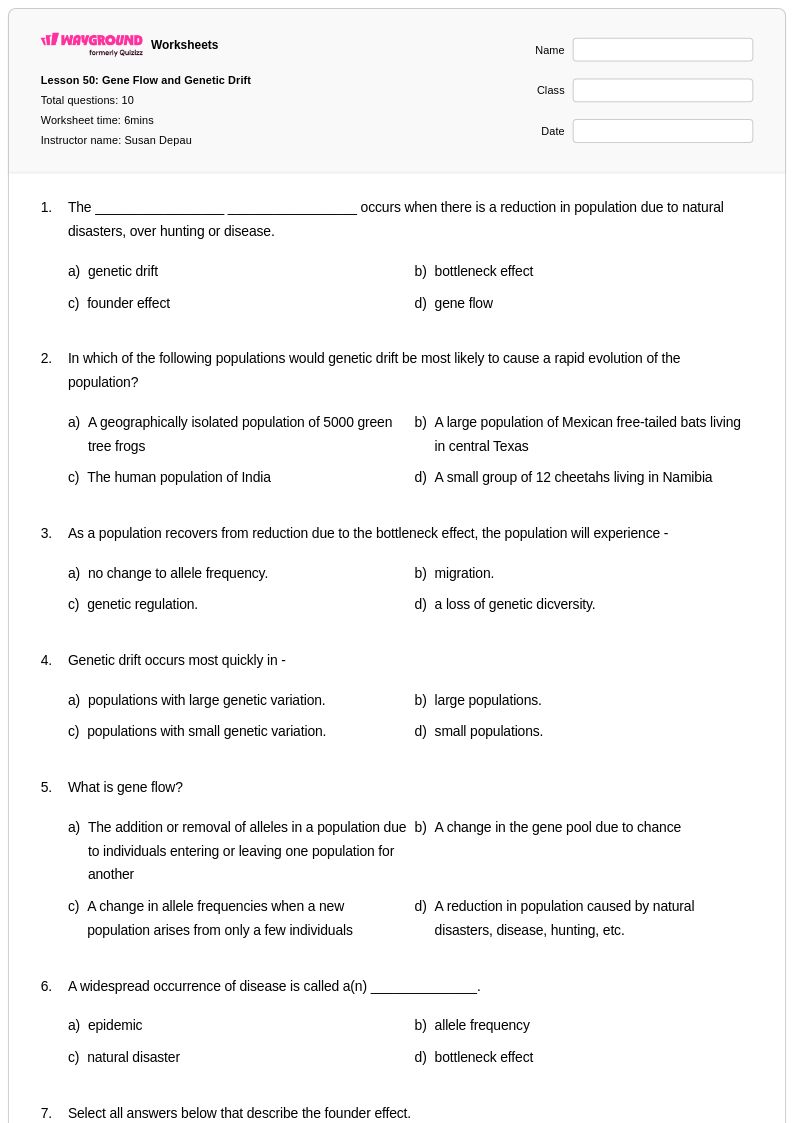
Genetic modification worksheets for Grade 11 students available through Wayground (formerly Quizizz) provide comprehensive coverage of biotechnology principles, CRISPR gene editing techniques, ethical considerations in genetic engineering, and real-world applications of recombinant DNA technology. These expertly crafted resources strengthen critical thinking skills as students analyze case studies involving genetically modified organisms, evaluate the benefits and risks of gene therapy, and examine the scientific processes behind creating transgenic species. Each worksheet collection includes detailed answer keys that guide students through complex genetic scenarios, while printable pdf formats ensure accessibility for both classroom instruction and independent study. The practice problems systematically build understanding of restriction enzymes, plasmid vectors, and the polymerase chain reaction, preparing students for advanced coursework in molecular biology and biotechnology careers.
Wayground (formerly Quizizz) empowers educators with millions of teacher-created genetic modification resources that can be easily discovered through sophisticated search and filtering capabilities aligned with state and national science standards. Teachers can differentiate instruction by selecting worksheets that match individual student readiness levels, from introductory genetic engineering concepts to advanced bioethics discussions surrounding human genome editing. The platform's flexible customization tools allow educators to modify existing materials or combine multiple resources to create targeted practice sessions for remediation or enrichment activities. Whether educators prefer traditional printable worksheets for hands-on laboratory exercises or digital formats for interactive assignments, these comprehensive collections support diverse teaching approaches while ensuring students develop the analytical skills necessary to understand the rapidly evolving field of genetic modification and its profound implications for medicine, agriculture, and society.
FAQs
How do I teach genetic modification to high school students?
Start by grounding students in foundational DNA structure and gene expression before introducing modification techniques like CRISPR, gene insertion, and gene deletion. Using real-world case studies — such as genetically modified crops or gene therapy trials — helps students connect abstract molecular concepts to tangible applications. Pairing direct instruction with structured analytical tasks, such as interpreting genetic sequences or evaluating the outcomes of a specific modification, builds both content knowledge and scientific reasoning skills.
What types of practice problems help students understand genetic modification?
Effective practice problems for genetic modification ask students to interpret genetic sequences, predict the outcomes of specific edits such as insertions or deletions, and compare the mechanisms of different gene-editing tools like CRISPR versus older recombinant DNA methods. Case-based problems that ask students to evaluate the benefits and risks of a genetic intervention in agriculture or medicine are especially valuable for developing higher-order thinking. Problems that require students to assess ethical considerations alongside the science reinforce that genetic modification involves both technical and societal dimensions.
What misconceptions do students commonly have about genetic modification?
A frequent misconception is that genetic modification is a single, uniform process — students often conflate traditional selective breeding with modern gene editing techniques like CRISPR, which operate at a fundamentally different level of precision. Many students also assume that any genetic modification produces immediate, predictable results, when in reality outcomes depend heavily on gene expression context and off-target effects. Another common error is treating all GMOs as equivalent in terms of risk, rather than evaluating each application individually based on the organism, the modification, and the intended use.
How can I use genetic modification worksheets to address ethical considerations in my classroom?
Worksheets that present case studies — such as gene therapy for inherited disease, CRISPR use in embryos, or herbicide-resistant crops — work well as structured discussion anchors, giving students a factual basis before moving into ethical analysis. Prompts that ask students to evaluate multiple stakeholder perspectives (patients, farmers, regulators, the public) build the analytical framework needed for science ethics discussions. Combining these worksheets with a structured debate or Socratic seminar gives students practice articulating evidence-based positions on complex biotechnology issues.
How do I use Wayground's genetic modification worksheets in my class?
Wayground's genetic modification worksheets are available as printable PDFs for traditional classroom distribution and in digital formats for technology-integrated environments, making them adaptable to in-person, hybrid, and remote learning settings. Teachers can also host worksheets directly as a quiz on Wayground, enabling real-time student responses and automatic grading. Each worksheet includes a complete answer key, so teachers can use them for independent practice, guided review, or formative assessment without additional preparation.
How can I differentiate genetic modification instruction for students at different ability levels?
For students who need additional support, reducing the complexity of sequence interpretation problems and providing partially completed scaffolds can lower the cognitive load while maintaining engagement with core concepts. For advanced students, enrichment tasks that explore cutting-edge developments — such as base editing, epigenetic modification, or current CRISPR clinical trials — extend learning beyond standard curriculum. On Wayground, teachers can apply individual accommodations such as extended time, read-aloud support, and reduced answer choices to specific students, while the rest of the class works under default settings.