Free Printable Natural Selection Worksheets for Grade 11
Enhance Grade 11 students' understanding of natural selection with Wayground's comprehensive collection of free biology worksheets, featuring engaging practice problems, printable PDFs, and complete answer keys to master evolutionary concepts.
Explore printable Natural Selection worksheets for Grade 11
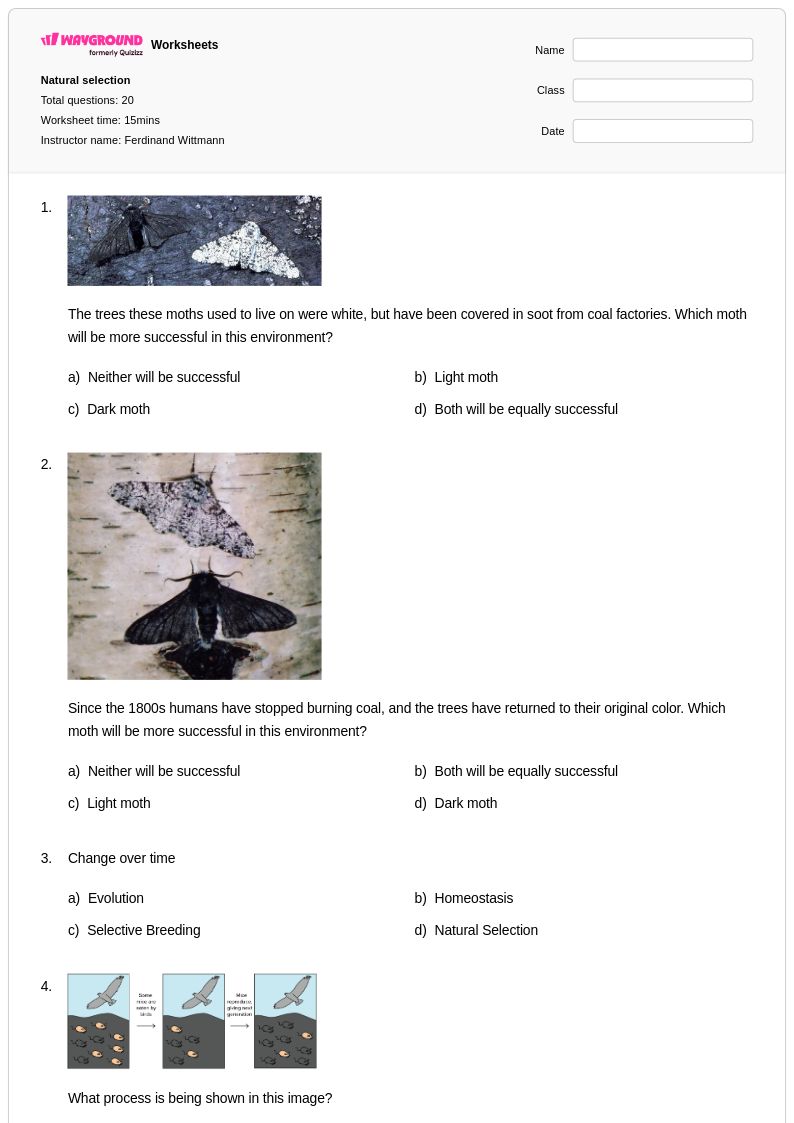
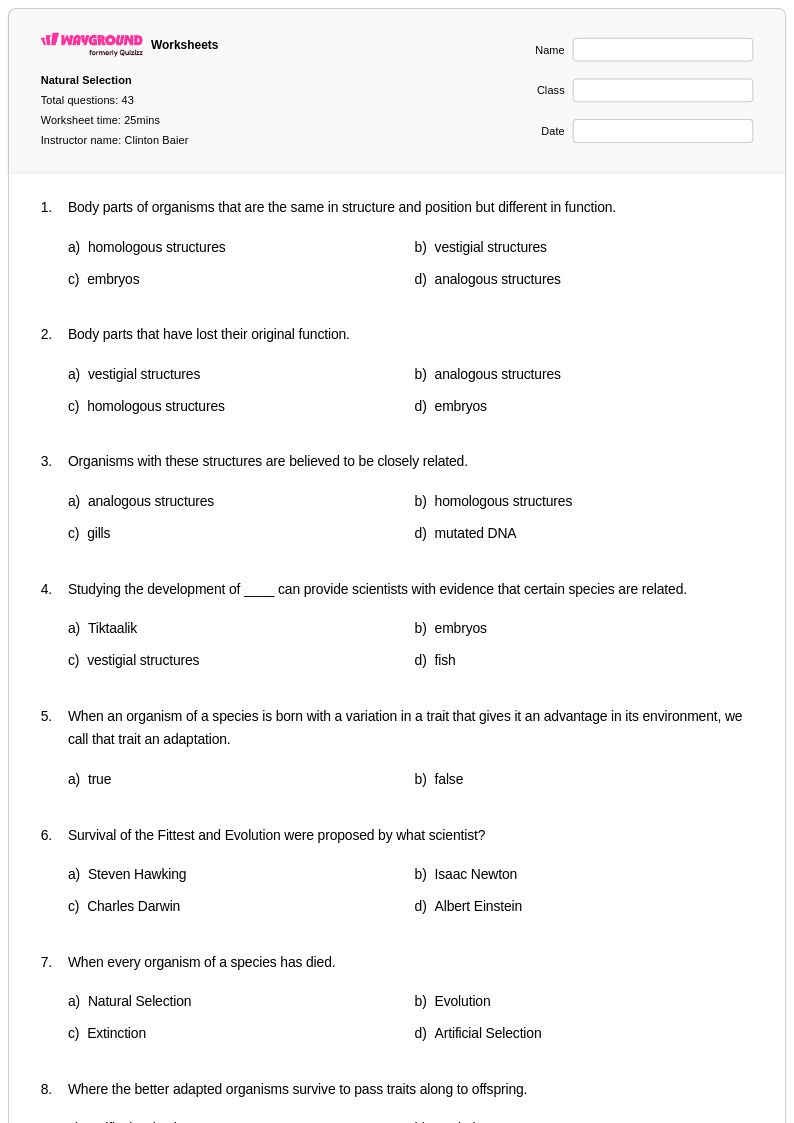
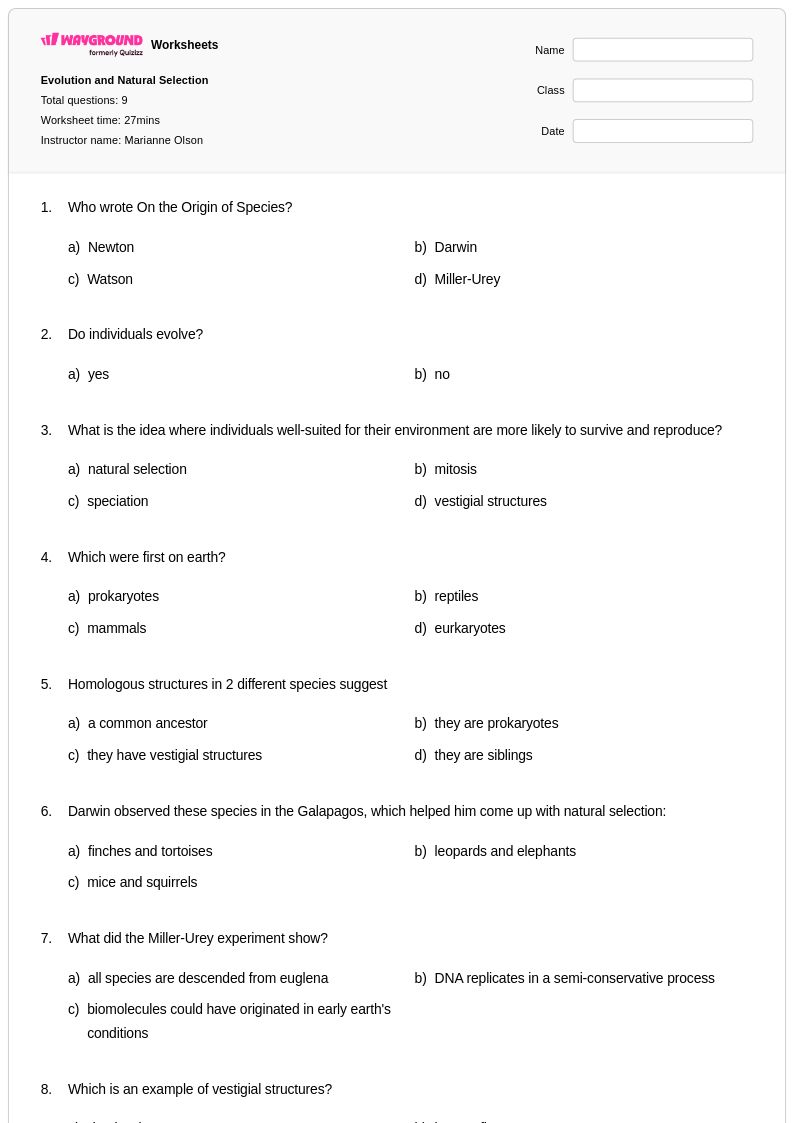
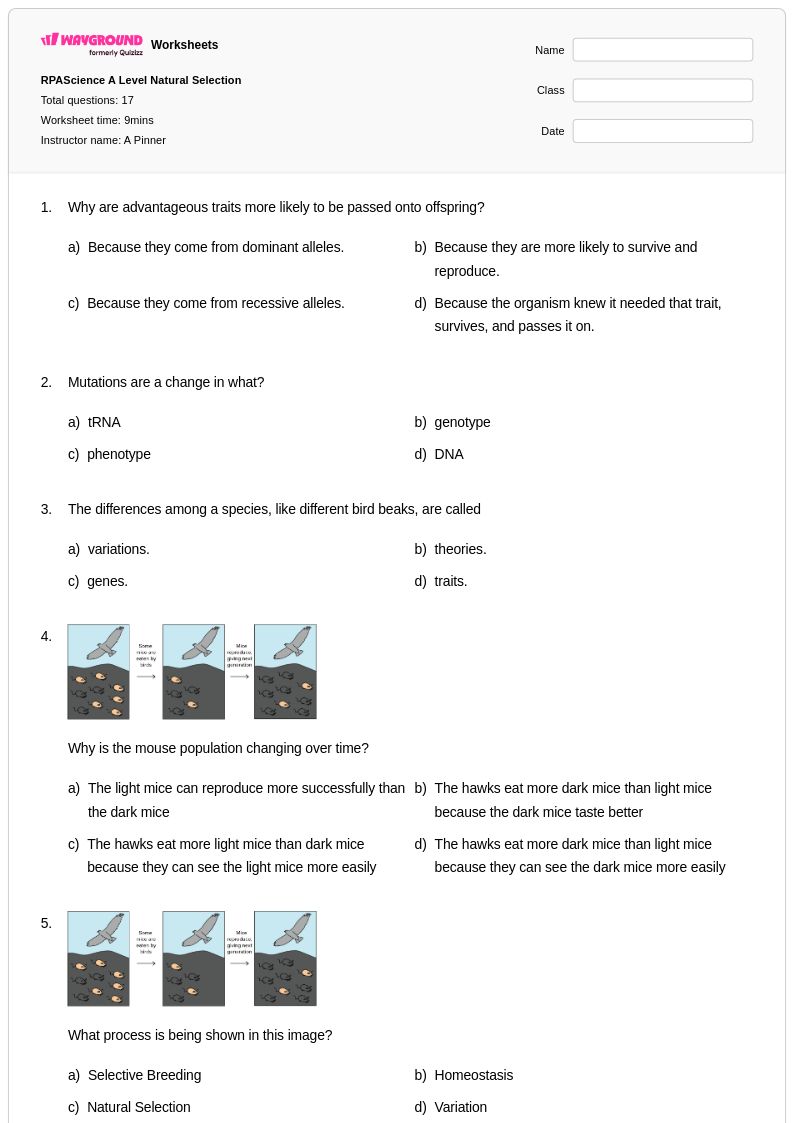
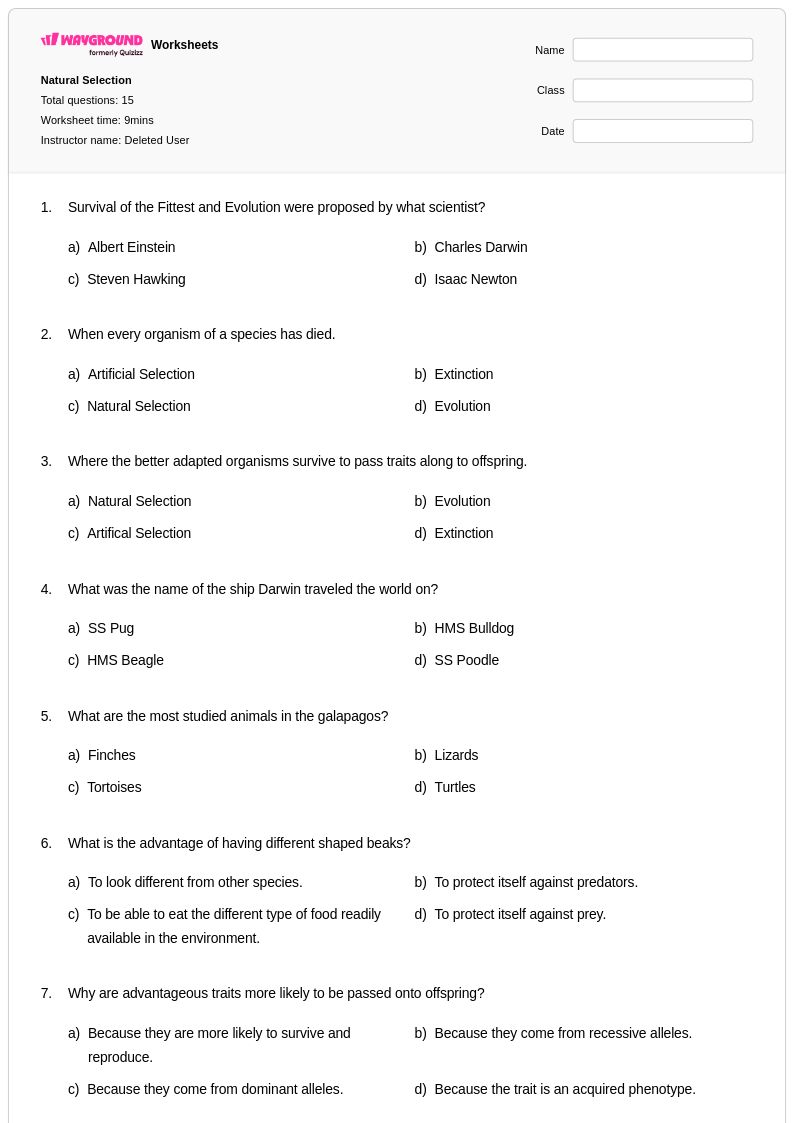
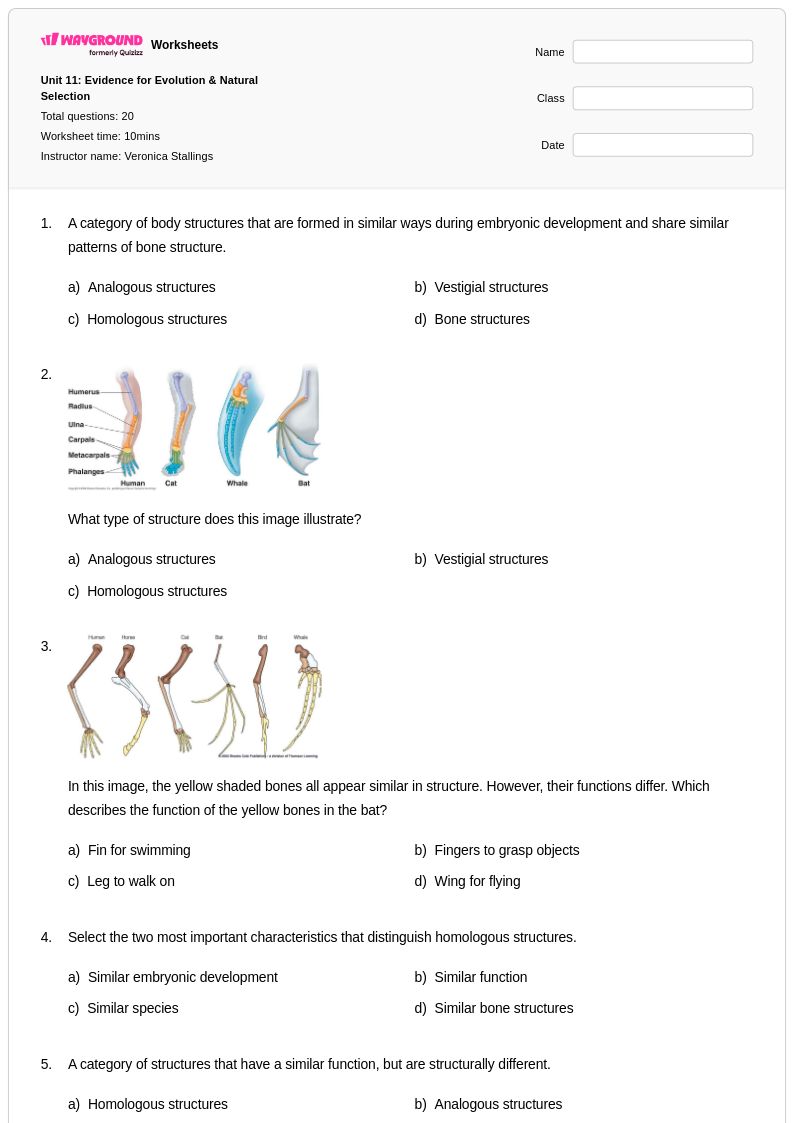
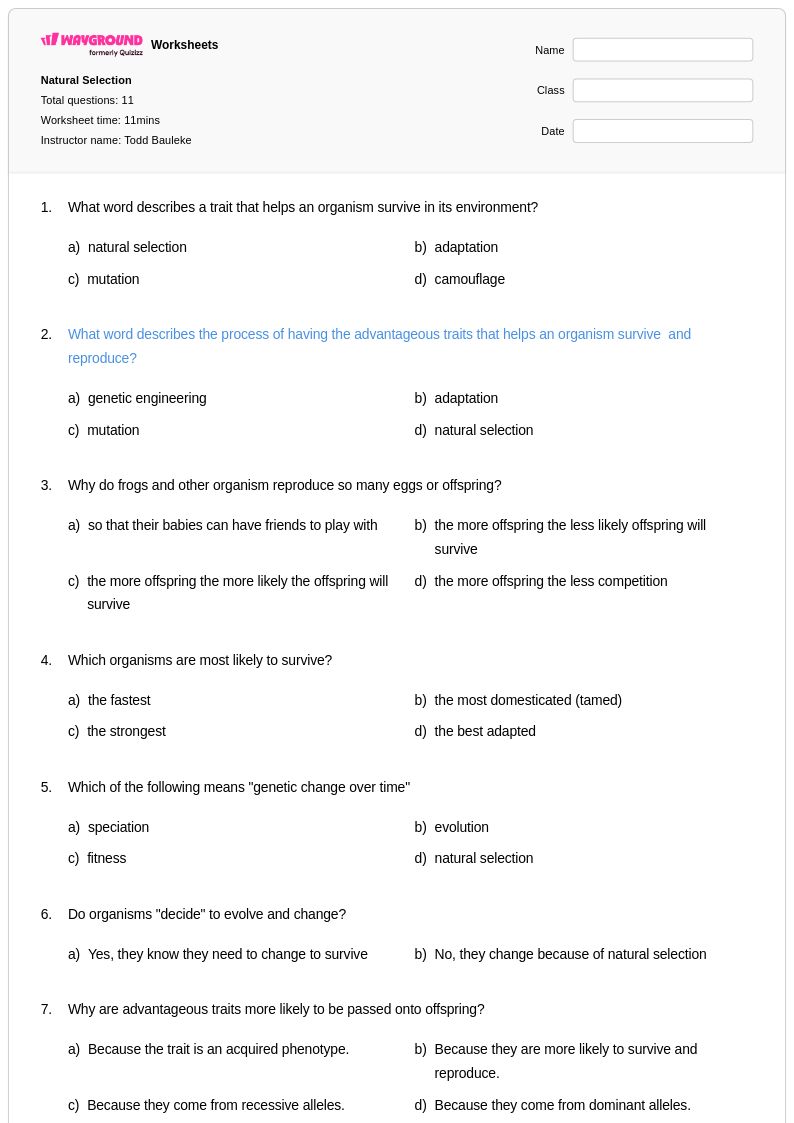
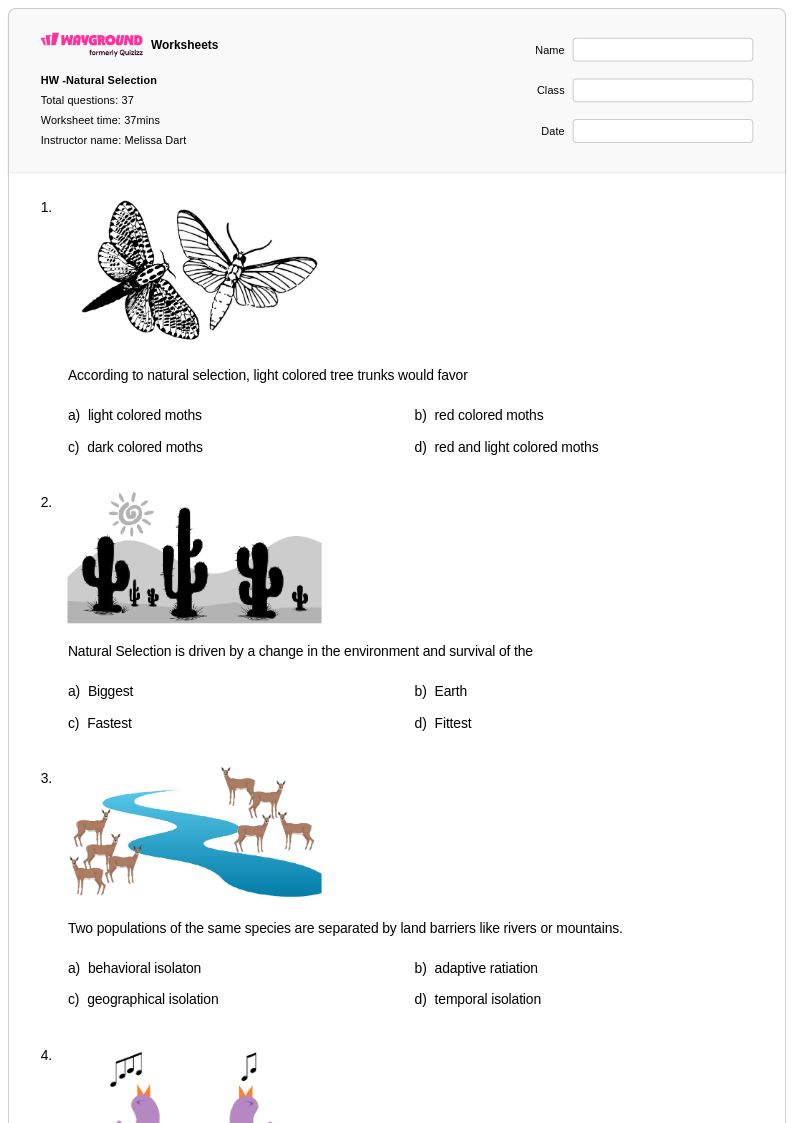
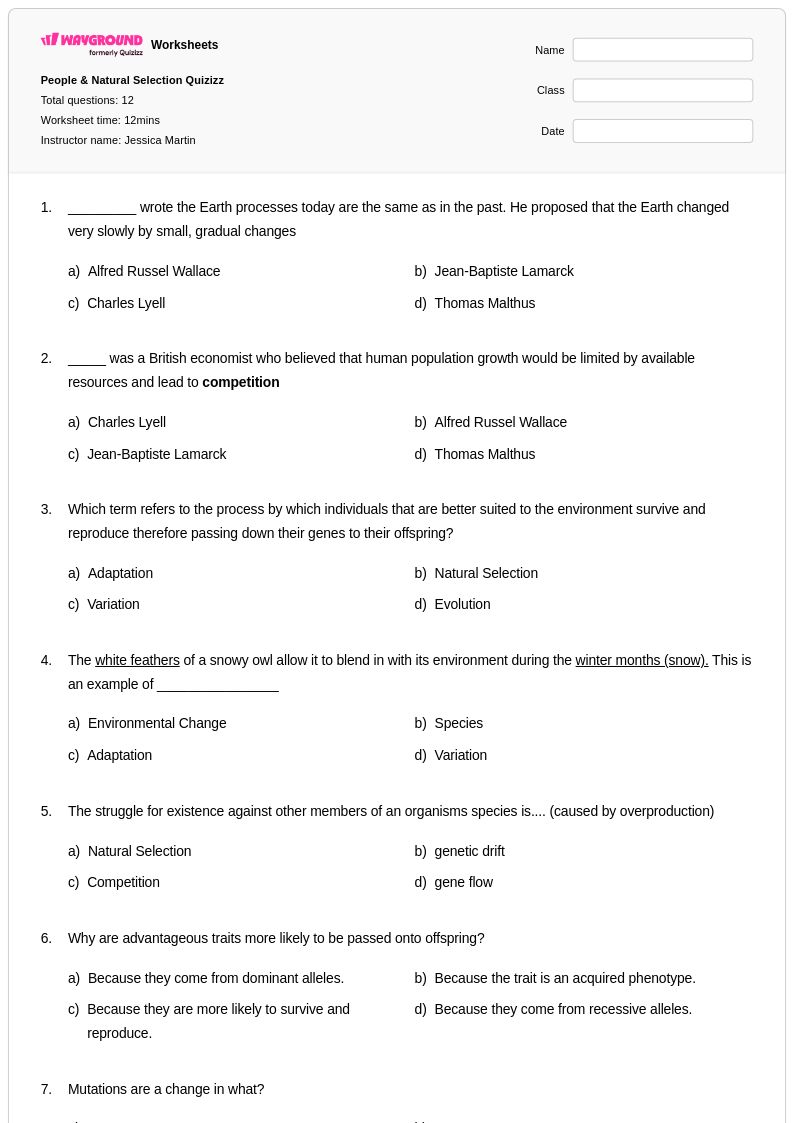
Natural selection worksheets for Grade 11 students available through Wayground (formerly Quizizz) provide comprehensive practice with the fundamental mechanisms driving evolutionary change. These expertly designed resources strengthen students' understanding of key concepts including variation within populations, heritability of traits, differential reproductive success, and the role of environmental pressures in shaping species over time. The worksheets feature detailed practice problems that guide students through analyzing case studies of natural selection in action, from industrial melanism in peppered moths to antibiotic resistance in bacteria. Each resource includes a complete answer key and is available as a free printable pdf, allowing students to work through complex scenarios involving fitness advantages, selective pressures, and population genetics while developing critical thinking skills essential for advanced biology coursework.
Wayground (formerly Quizizz) supports biology educators with an extensive collection of millions of teacher-created natural selection worksheets specifically aligned to Grade 11 standards and learning objectives. The platform's robust search and filtering capabilities enable teachers to quickly locate resources that match their specific curriculum needs, whether focusing on directional selection, stabilizing selection, or disruptive selection patterns. Advanced differentiation tools allow educators to customize worksheet difficulty levels and problem types to accommodate diverse learning needs within their classrooms, while the availability of both printable and digital pdf formats provides flexibility for various teaching environments. These comprehensive resources prove invaluable for lesson planning, targeted remediation for struggling students, enrichment activities for advanced learners, and regular skill practice to reinforce understanding of this cornerstone concept in evolutionary biology.
FAQs
How do I teach natural selection to middle or high school students?
Start by anchoring the concept in four observable mechanisms: variation within a population, heritability of traits, differential survival, and reproductive success. Using real-world case studies such as peppered moths during the Industrial Revolution or antibiotic resistance in bacteria makes abstract evolutionary processes concrete and memorable. Building from a single well-understood example before introducing broader population genetics helps students develop a transferable mental model rather than memorizing isolated facts.
What practice exercises help students understand natural selection?
Effective practice tasks include analyzing graphs of trait frequency changes over generations, interpreting scenarios involving predator-prey relationships, and working through structured problems based on examples like Darwin's finches or bacteria developing drug resistance. These exercises require students to apply the four mechanisms of natural selection rather than simply recall definitions, which builds the analytical reasoning that science standards prioritize.
What misconceptions do students commonly have about natural selection?
The most persistent misconception is that organisms intentionally adapt or 'try' to change in response to their environment, when in reality selection acts on pre-existing variation. Students also frequently confuse natural selection with Lamarckian inheritance, believing traits acquired during an organism's lifetime are passed to offspring. A third common error is treating evolution as goal-directed or progressive rather than as the result of differential reproductive success within a specific environment.
How can I use natural selection worksheets to assess student understanding?
Natural selection worksheets are well suited to formative assessment when they include scenario-based problems that require students to identify which individuals survive, explain why, and predict how a population changes over time. Checking for the misconception that organisms 'choose' to adapt is a high-value diagnostic move. Answer keys allow teachers to pinpoint exactly where reasoning breaks down, whether at variation, heritability, or the selection pressure itself, so reteaching can be precise rather than broad.
How do I use Wayground's natural selection worksheets in my classroom?
Wayground's natural selection worksheets are available as printable PDFs for traditional classroom use and in digital formats for technology-integrated or remote learning environments. Teachers can also host worksheets as an interactive quiz directly on Wayground, giving students immediate feedback on their understanding. All worksheets include complete answer keys, reducing grading time and allowing teachers to focus on targeted follow-up instruction.
How can I differentiate natural selection instruction for different skill levels?
For students who struggle, reduce cognitive load by focusing first on a single, highly visual example such as peppered moths before introducing variation across multiple species. For advanced learners, introduce quantitative problems involving allele frequency shifts or have students design a hypothetical selection scenario and predict the outcome. On Wayground, teachers can apply accommodations such as read aloud support, reduced answer choices, and extended time on a per-student basis, allowing the same worksheet to serve a range of learners without singling anyone out.