Free Printable Skeletal Muscle Worksheets for Grade 11
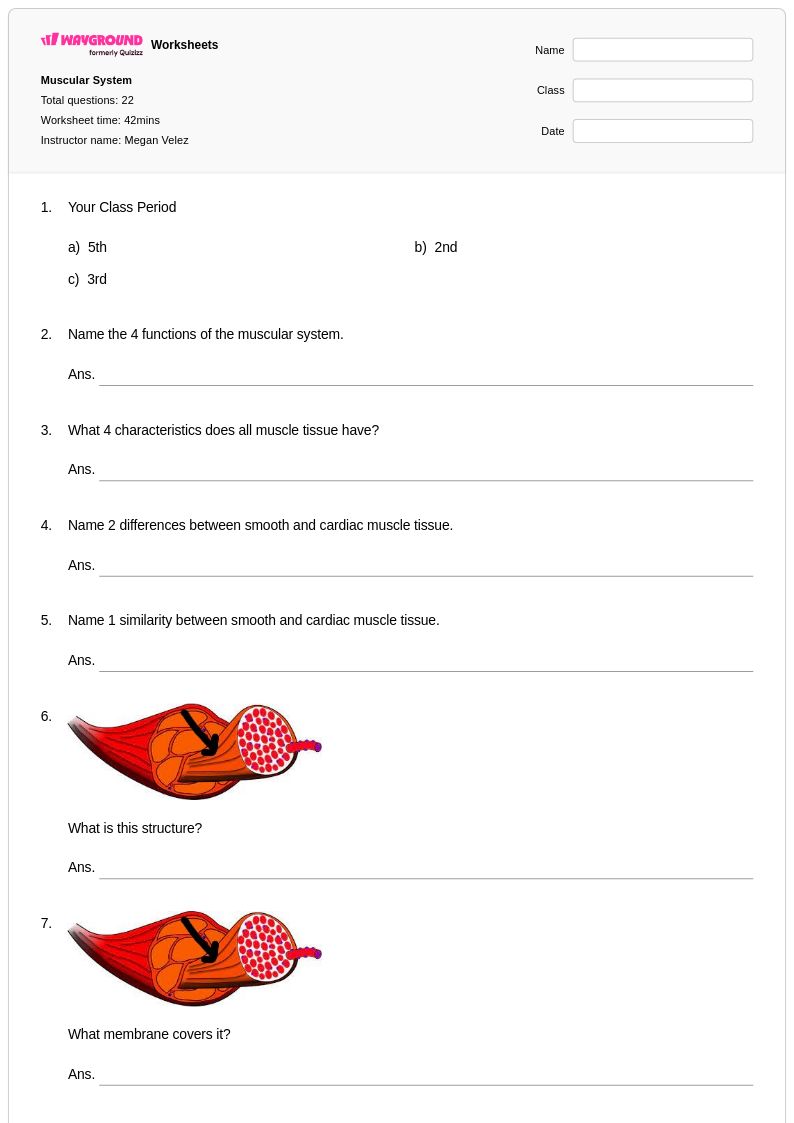
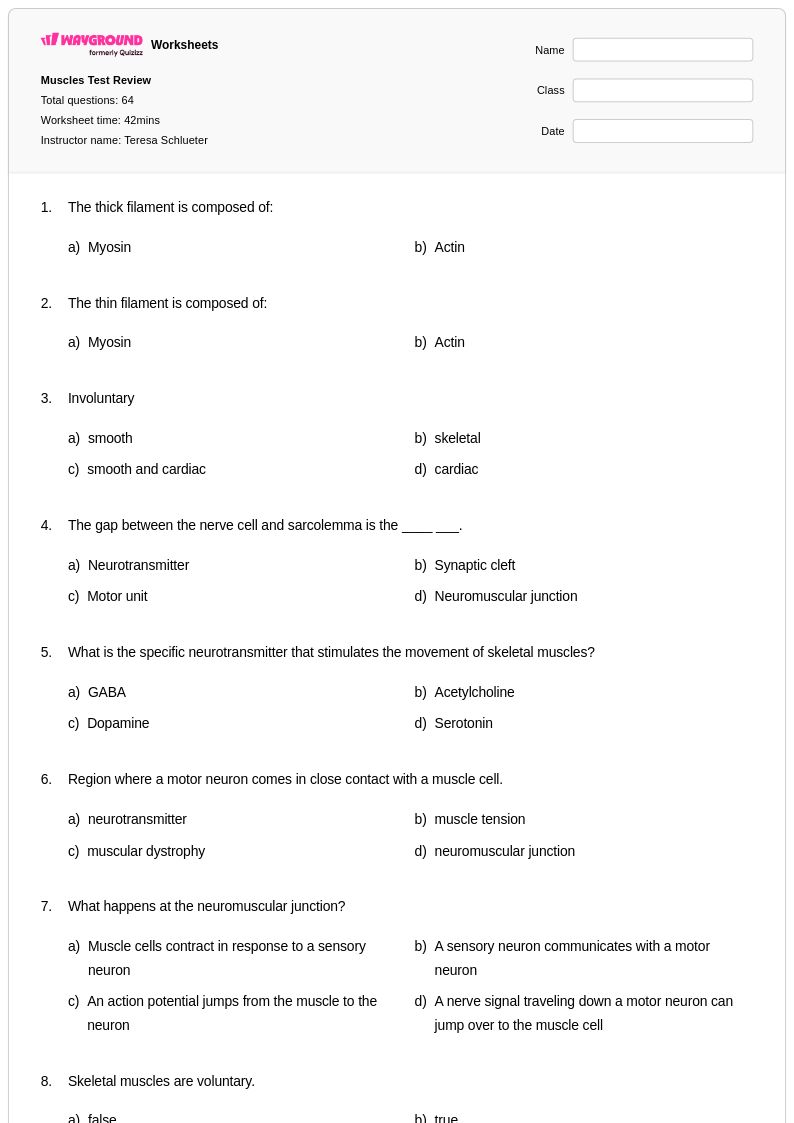
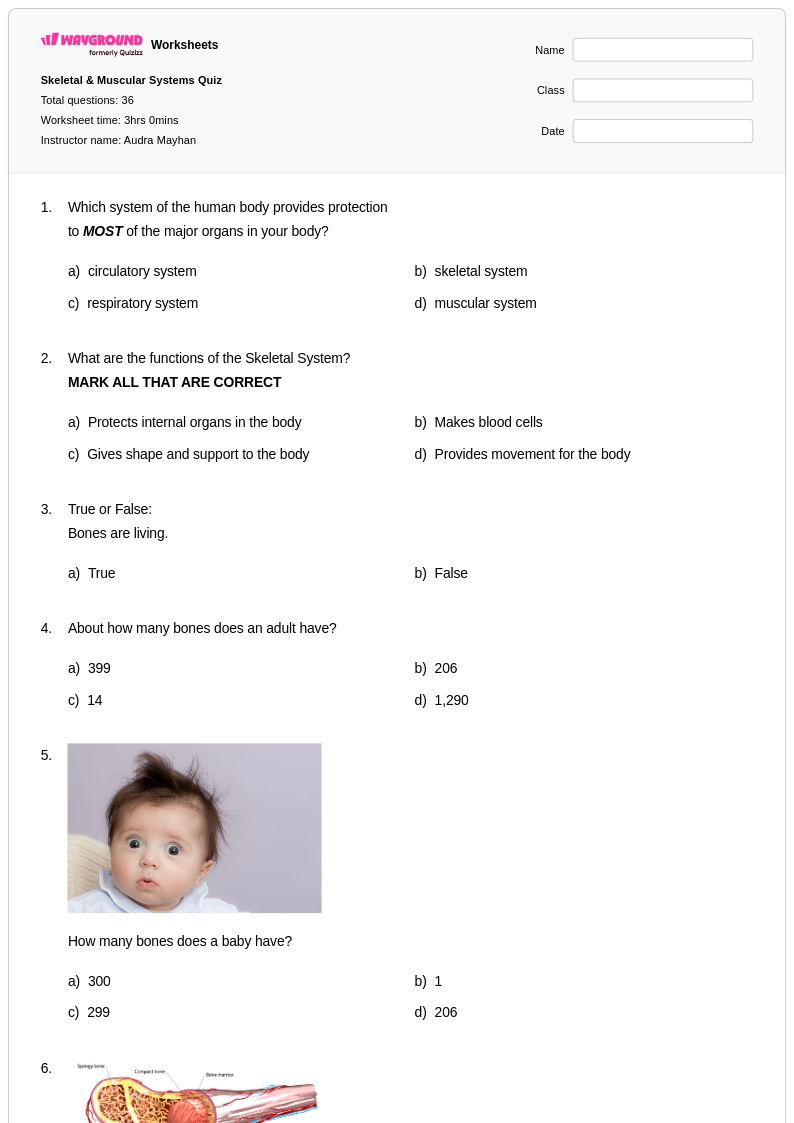
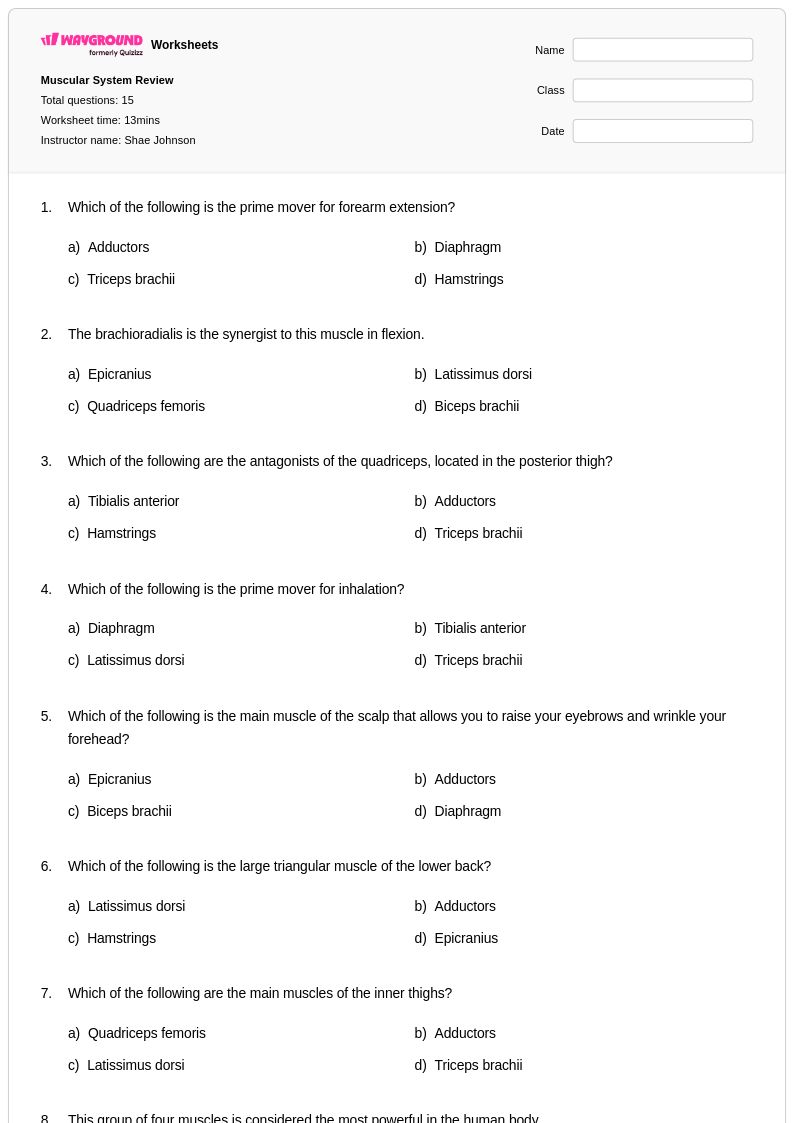
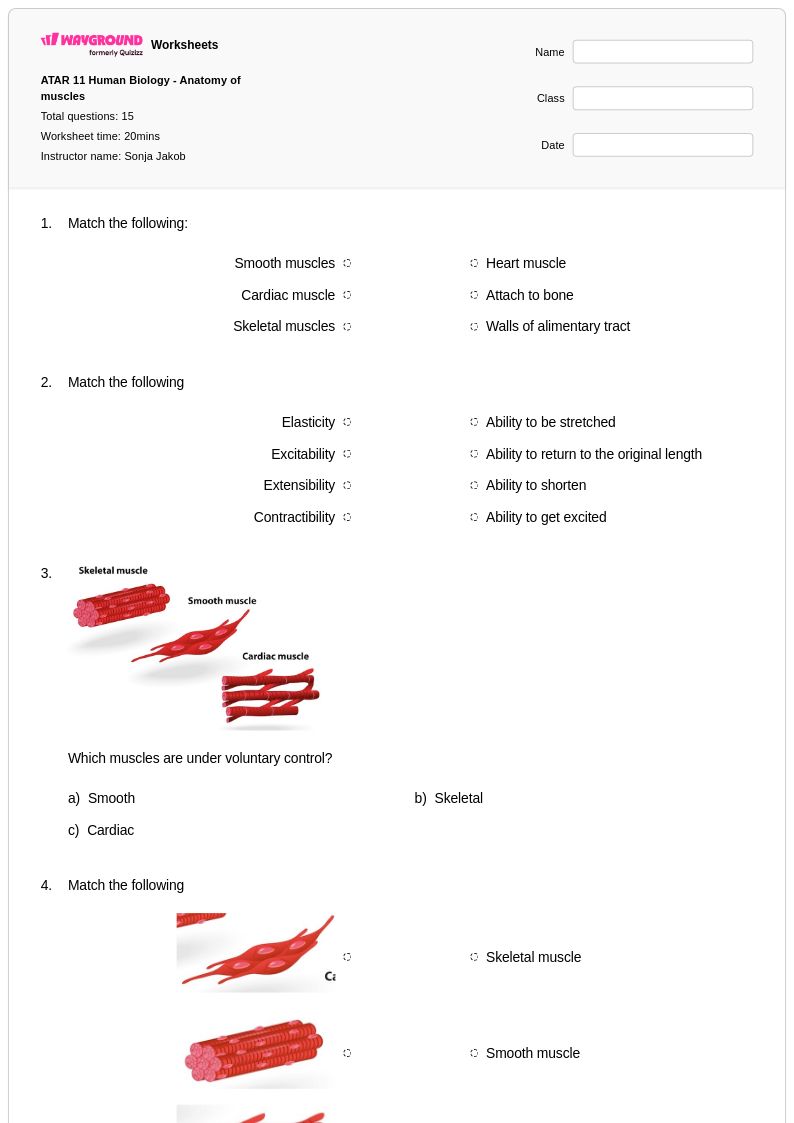
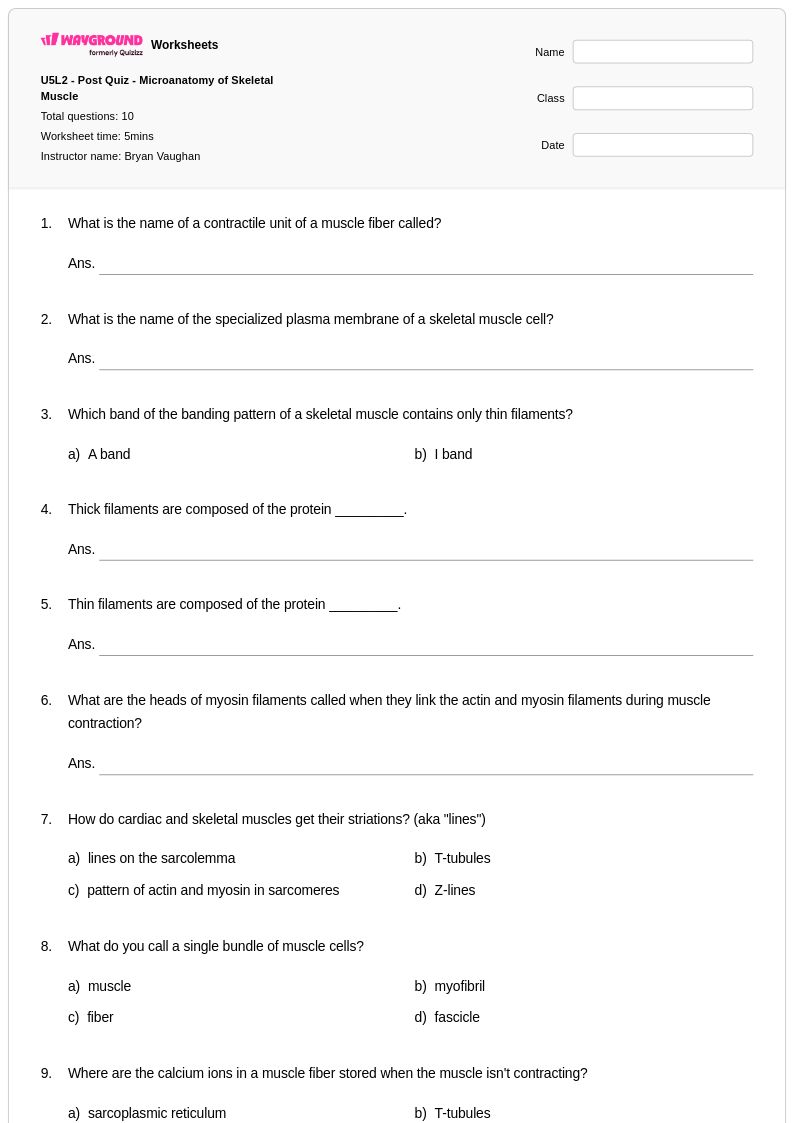
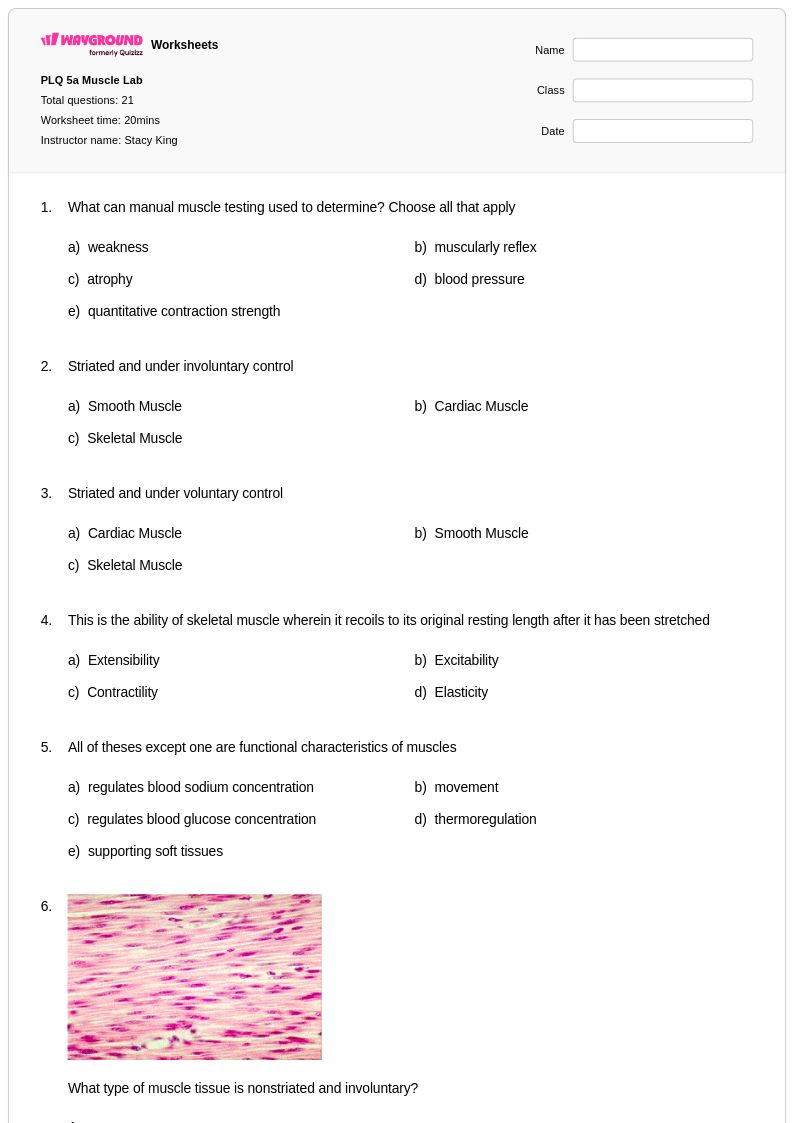
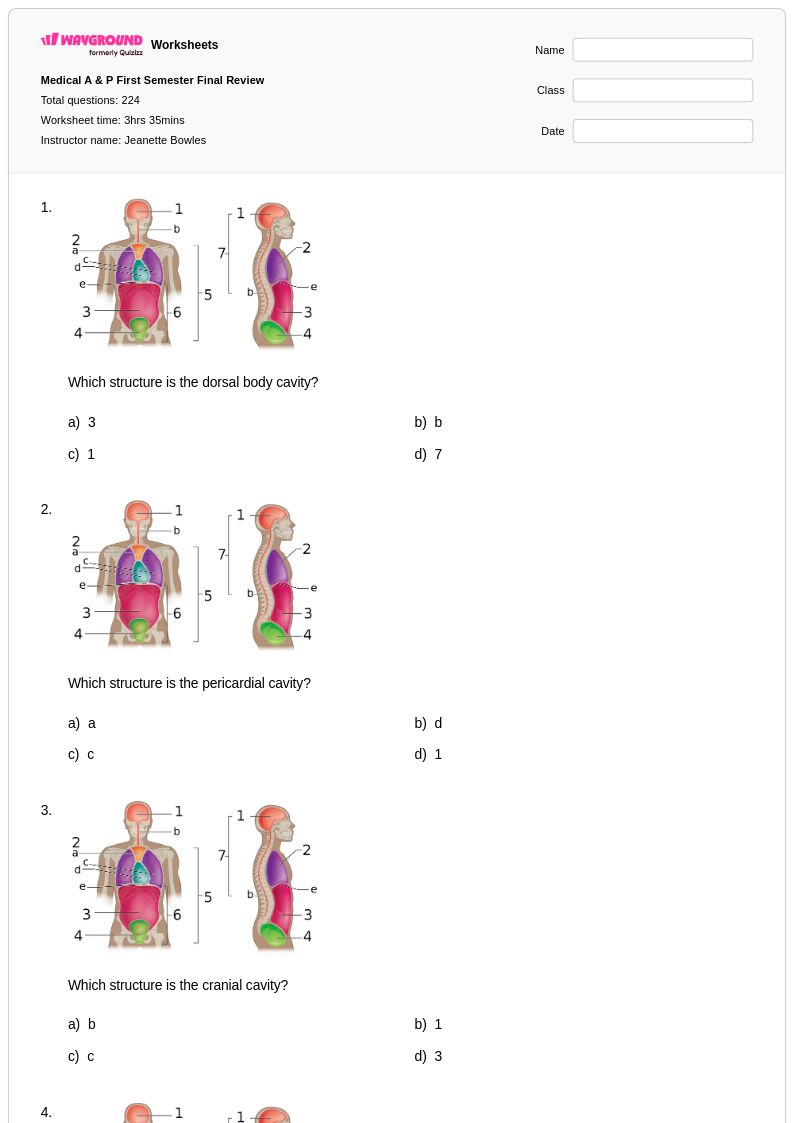
Grade 11 skeletal muscle worksheets from Wayground provide comprehensive printables and practice problems to help students master muscle structure, contraction mechanisms, and physiological functions with detailed answer keys.
Explore printable Skeletal Muscle worksheets for Grade 11
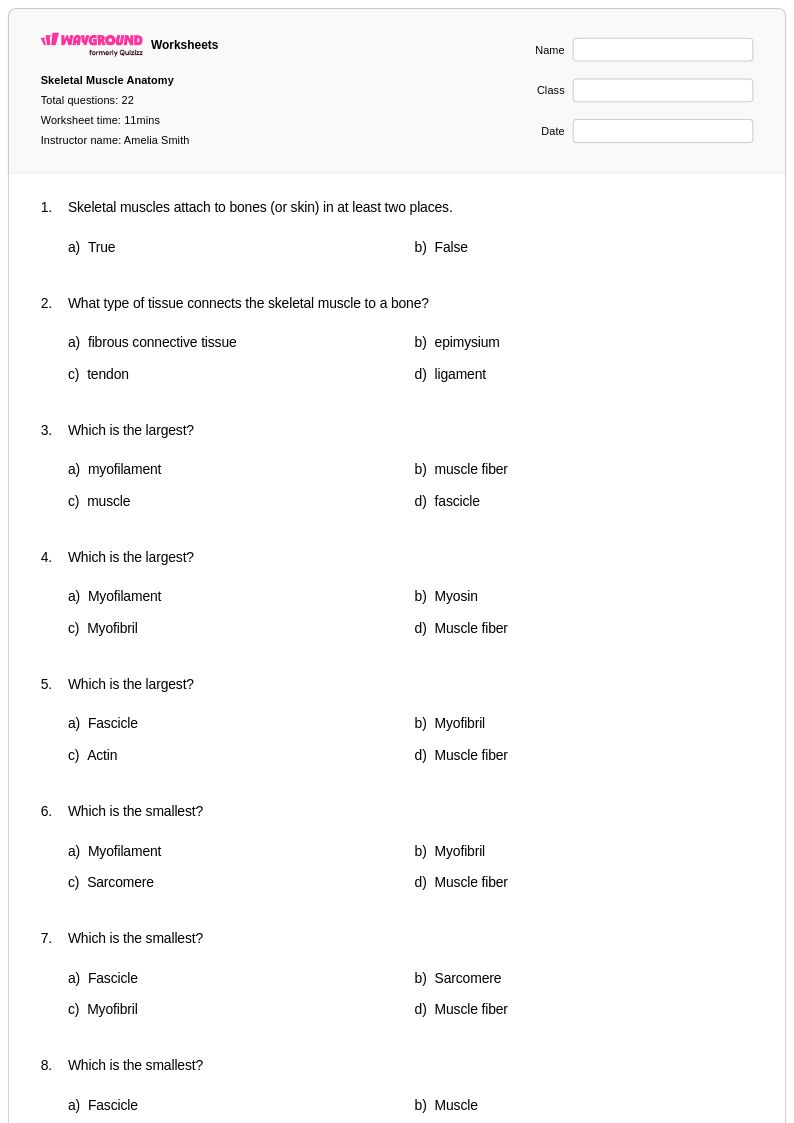
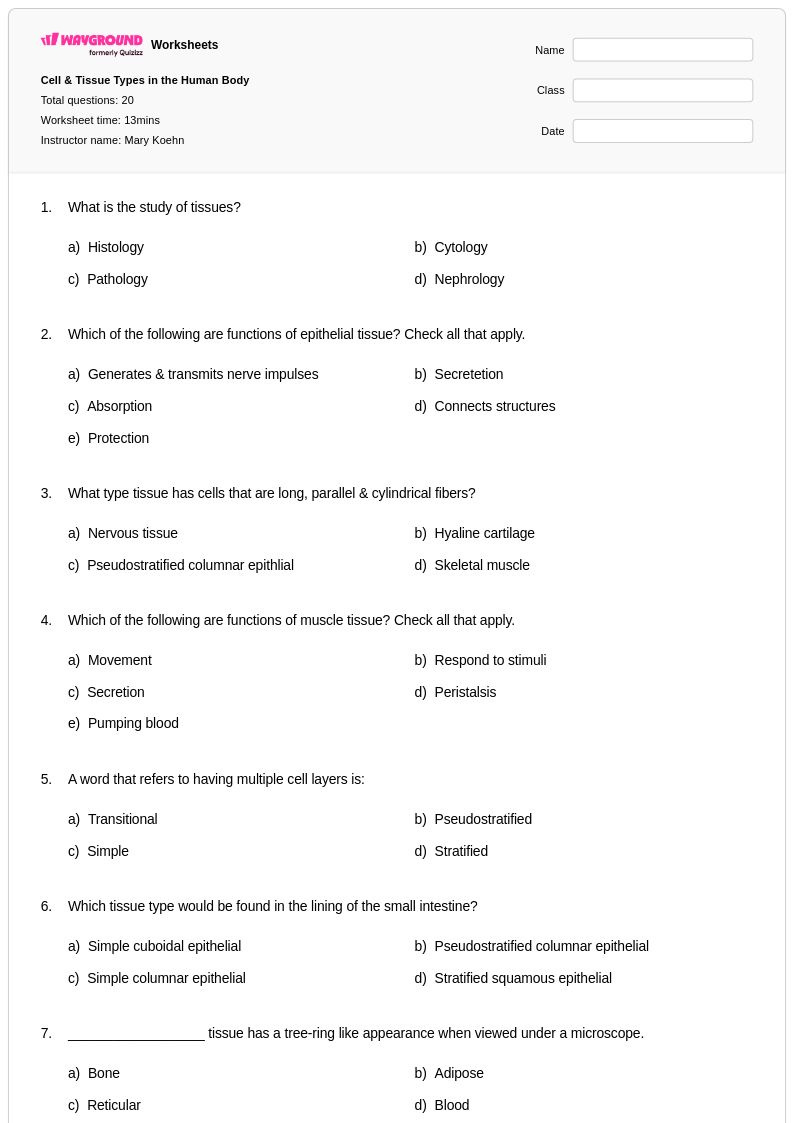
Skeletal muscle worksheets for Grade 11 biology students available through Wayground (formerly Quizizz) provide comprehensive coverage of this fundamental physiological system that enables voluntary movement and maintains posture. These carefully designed educational resources strengthen students' understanding of skeletal muscle structure, including the organization of muscle fibers, myofibrils, and contractile proteins like actin and myosin. The worksheets feature detailed practice problems that explore muscle contraction mechanisms, the sliding filament theory, neuromuscular junctions, and energy systems that fuel muscle activity. Students can access these materials as free printables or downloadable pdf formats, with complete answer keys provided to support independent learning and self-assessment of complex biological concepts.
Wayground (formerly Quizizz) empowers educators with an extensive collection of millions of teacher-created skeletal muscle resources that can be seamlessly integrated into Grade 11 biology curricula. The platform's robust search and filtering capabilities allow teachers to quickly locate materials aligned with specific educational standards and learning objectives, while built-in differentiation tools enable customization for students with varying academic needs and abilities. These skeletal muscle worksheets are available in both printable and digital formats, including convenient pdf downloads, making them adaptable for traditional classroom instruction, hybrid learning environments, or remote education settings. Teachers can effectively utilize these resources for lesson planning, targeted remediation of challenging concepts like muscle metabolism and fatigue, enrichment activities for advanced learners, and structured skill practice that reinforces critical thinking about human physiology and biomechanics.
FAQs
How do I teach skeletal muscle structure and function effectively?
Start by grounding students in the hierarchical organization of skeletal muscle, moving from the whole muscle down to the sarcomere level before introducing function. Connecting structure to function early, such as explaining why the arrangement of actin and myosin filaments enables the sliding filament mechanism, helps students build a coherent mental model rather than memorizing isolated facts. Using labeled diagrams of sarcomere anatomy alongside contraction cycle sequences tends to improve retention significantly. Once students can describe the structural components, introducing excitation-contraction coupling and the role of calcium ions provides a logical next step.
What exercises help students practice the sliding filament theory of muscle contraction?
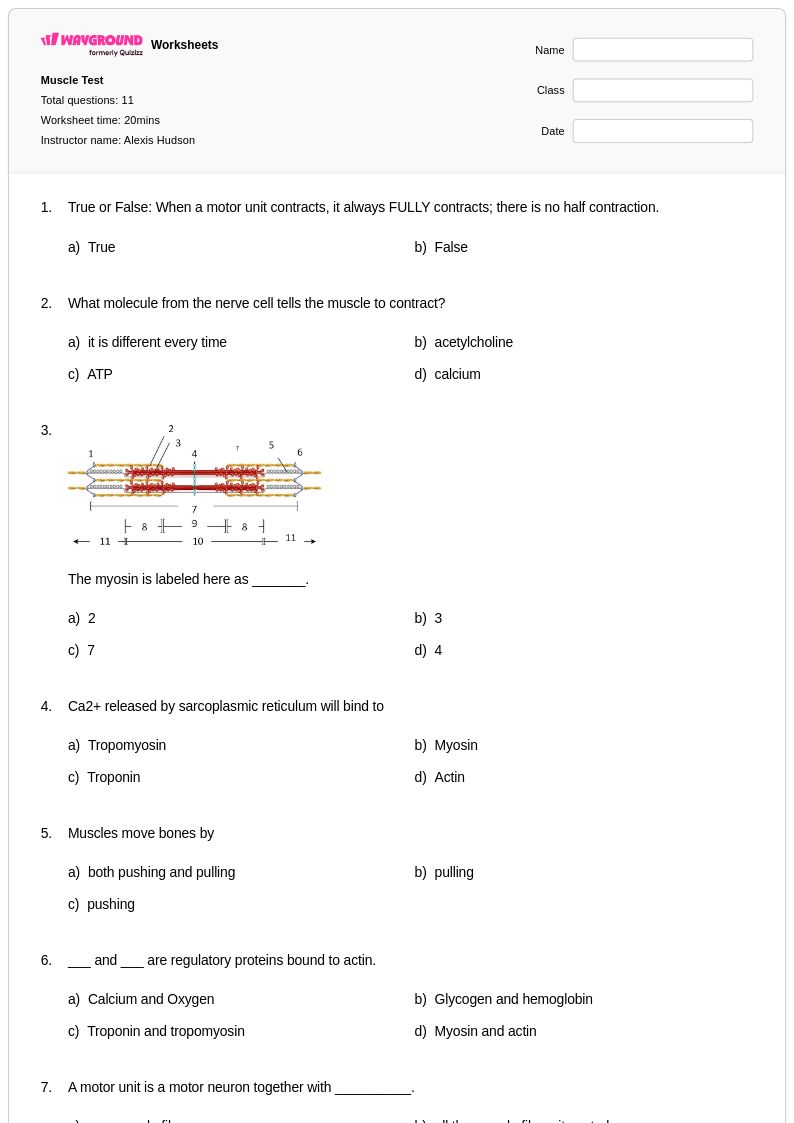
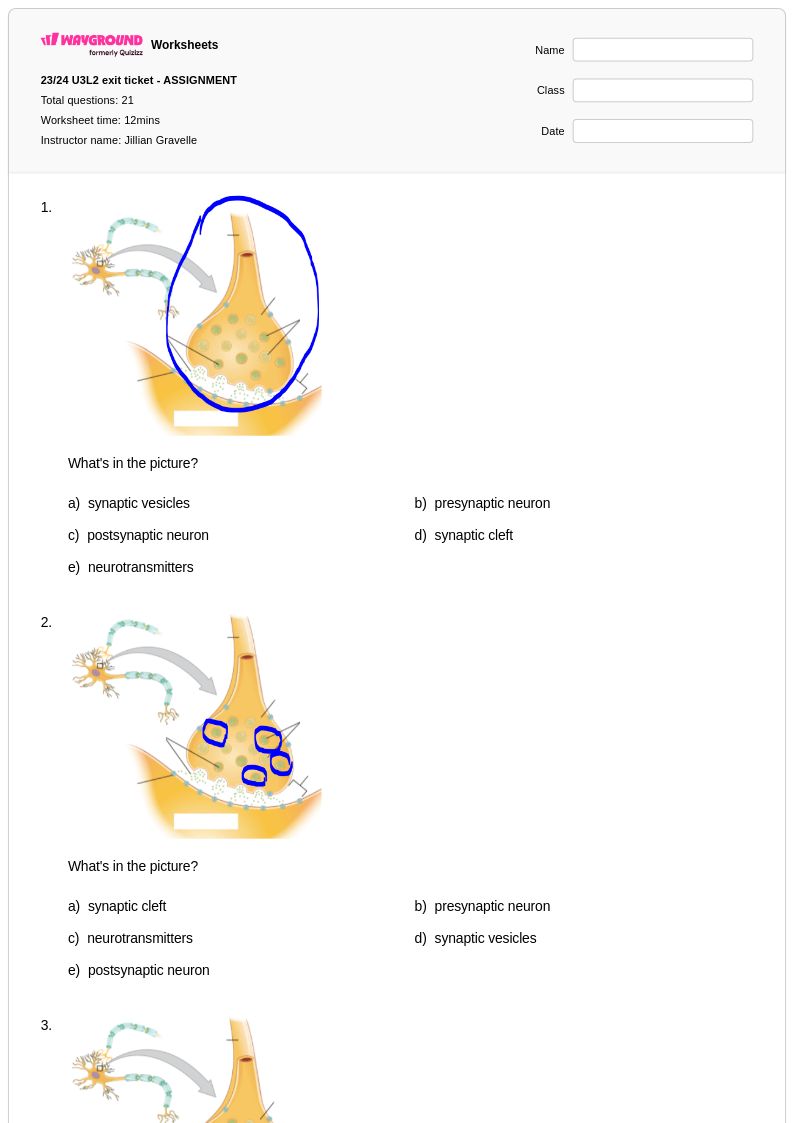
Sequencing exercises where students arrange the steps of the contraction cycle in order are particularly effective for reinforcing the sliding filament theory. Diagram labeling tasks that require students to identify the positions of actin, myosin, troponin, and tropomyosin at different stages of contraction target key vocabulary while building conceptual understanding. Practice problems that ask students to trace the role of ATP and calcium from a nerve impulse through cross-bridge formation and detachment help connect the molecular mechanism to the broader physiology. Skeletal muscle worksheets that integrate these question types across a single resource allow teachers to address multiple dimensions of the topic in one session.
What are the most common mistakes students make when learning about skeletal muscle?
One of the most persistent misconceptions is that muscles push as well as pull, when in fact skeletal muscles only generate force through contraction. Students also frequently confuse the roles of actin and myosin, mistakenly believing that myosin filaments shorten rather than understanding that the filaments slide past one another while their individual lengths remain constant. Another common error is conflating motor unit recruitment with muscle fiber type, leading to confusion about how force is graded during voluntary movement. Addressing these misconceptions explicitly, with targeted practice problems that force students to apply the correct mechanism, is more effective than simply re-explaining the concept.
How do I differentiate skeletal muscle instruction for students with different learning needs?
For students who struggle with the volume of terminology, reducing the number of answer choices on practice questions and providing read-aloud support can lower cognitive load while keeping them engaged with grade-appropriate content. Advanced learners benefit from extension problems that connect skeletal muscle physiology to applied contexts such as muscle fatigue, fiber type distribution in athletes, or neuromuscular diseases. On Wayground, teachers can configure individual accommodations including extended time, read-aloud functionality, and reduced answer choices for specific students, while the rest of the class works under standard conditions without being aware of those adjustments.
How can I use Wayground's skeletal muscle worksheets in my classroom?
Wayground's skeletal muscle worksheets are available as printable PDFs for traditional classroom distribution and in digital formats that support technology-integrated learning environments, including the option to host worksheets as an interactive quiz directly on the platform. The printable versions work well for structured lab follow-ups or homework assignments, while the digital format supports real-time feedback during class. Each worksheet includes a complete answer key, which reduces grading time and allows teachers to focus post-lesson discussions on the specific misconceptions that the class data reveals.
How do I help students understand the difference between skeletal muscle fiber types?
Students often find fiber type classification easier to grasp when it is framed around functional tradeoffs rather than pure memorization: Type I fibers are fatigue-resistant and rely on oxidative metabolism, making them suited for endurance activity, while Type II fibers generate greater force rapidly but fatigue more quickly. Connecting fiber type to familiar contexts, such as comparing the dark and white meat in poultry or discussing marathon running versus sprinting, gives students an intuitive anchor before introducing the underlying biochemistry. Practice problems that ask students to predict which fiber type would be preferentially recruited during different activities reinforce this conceptual framework and are a reliable indicator of whether students have moved beyond rote recall.