Free Printable Types of Reproduction Worksheets for Grade 11
Explore Grade 11 biology worksheets focusing on types of reproduction, featuring comprehensive printables and practice problems with answer keys to help students master sexual and asexual reproductive processes through free PDF resources.
Explore printable Types of Reproduction worksheets for Grade 11
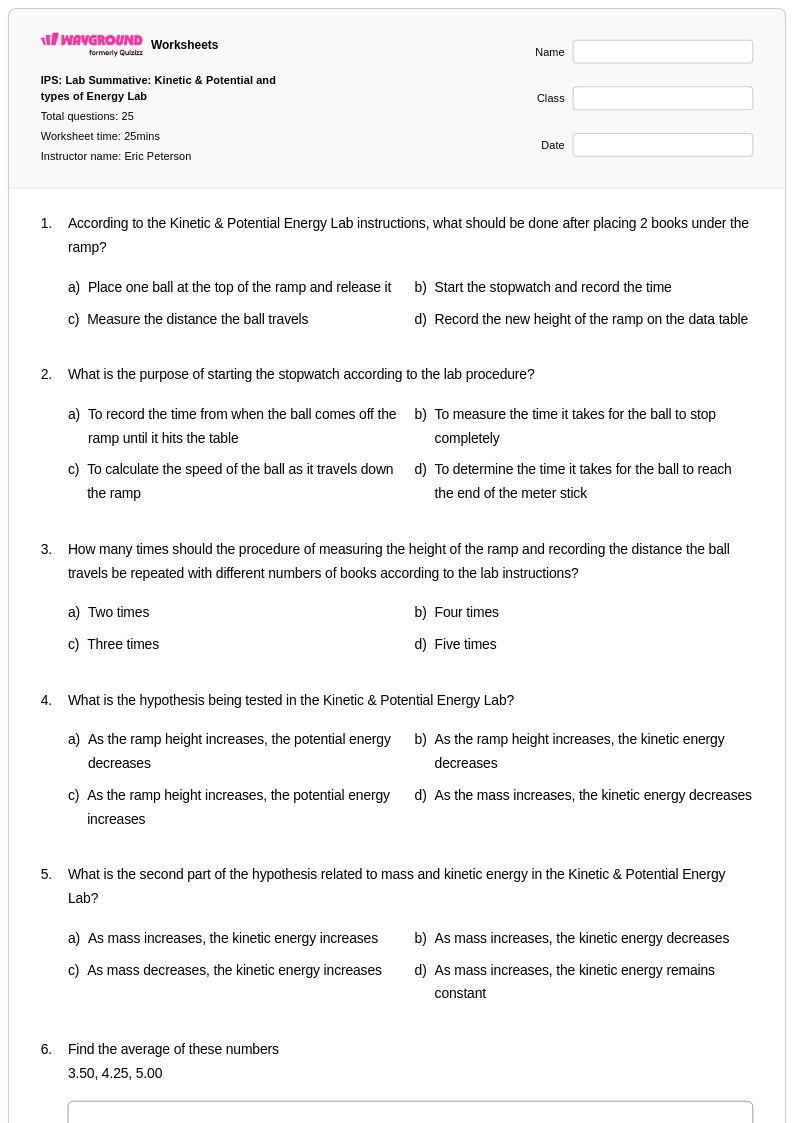
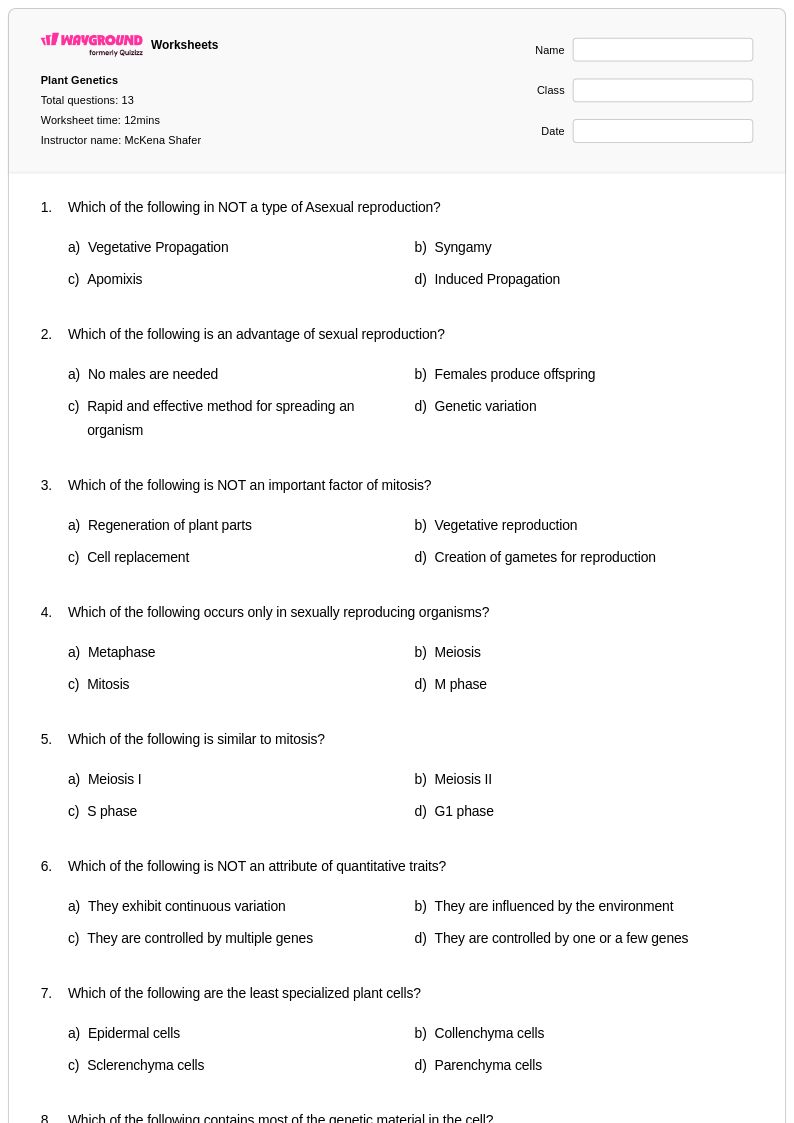
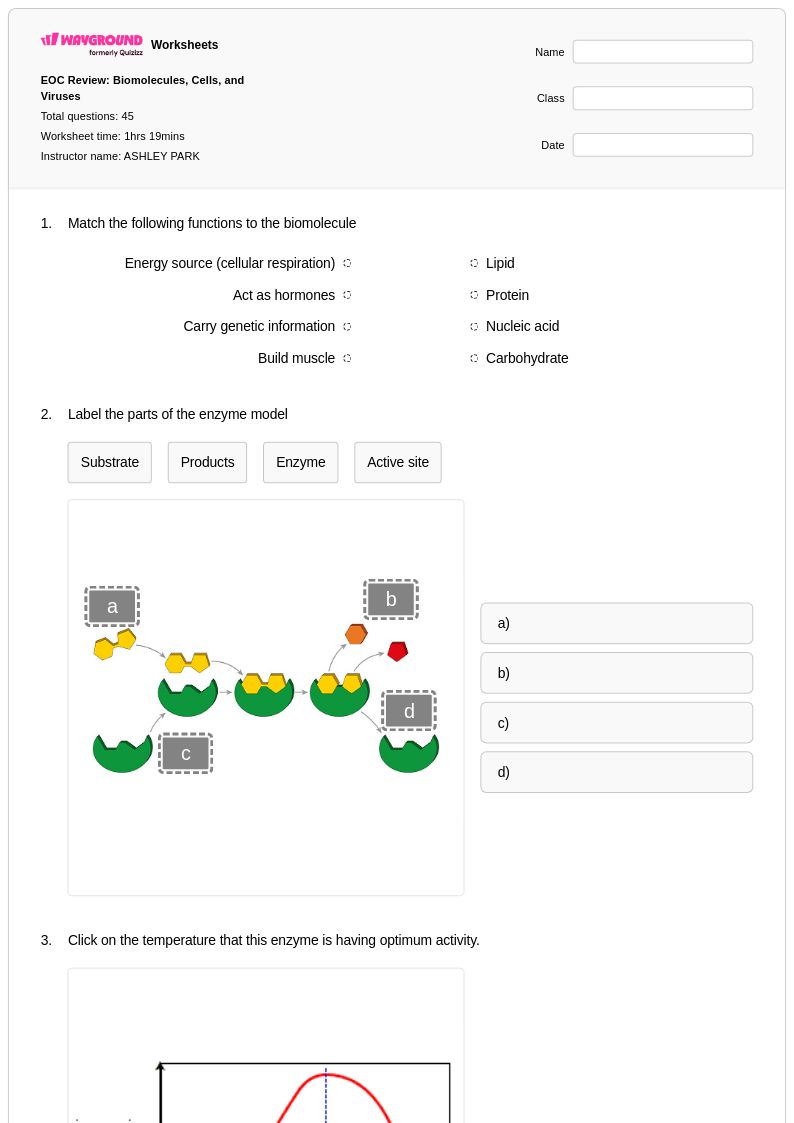
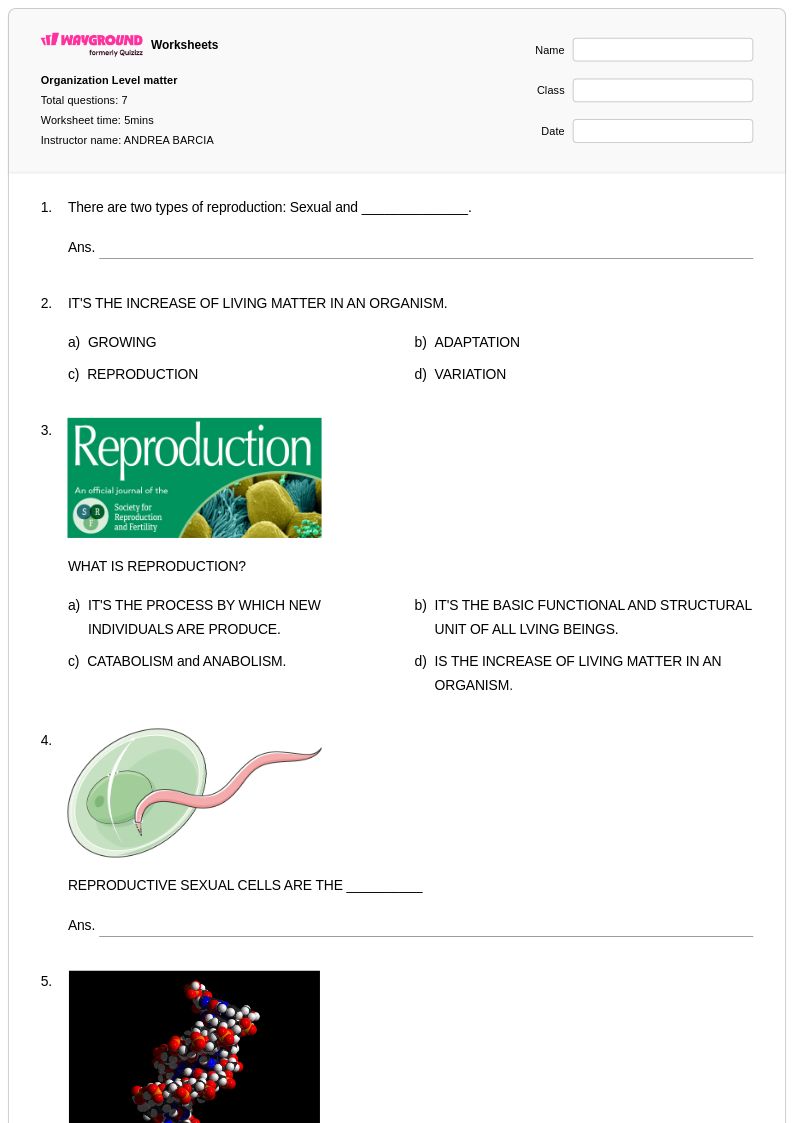
Types of reproduction worksheets for Grade 11 students through Wayground (formerly Quizizz) provide comprehensive coverage of both asexual and sexual reproduction mechanisms across diverse organisms. These educational resources strengthen students' understanding of fundamental biological concepts including binary fission, budding, fragmentation, spore formation, and vegetative propagation in asexual reproduction, alongside detailed exploration of gamete formation, fertilization, and genetic variation in sexual reproduction. The worksheets feature practice problems that challenge students to compare and contrast reproductive strategies, analyze the advantages and disadvantages of each type, and examine real-world examples from bacteria, plants, and animals. Each worksheet comes with a detailed answer key and is available as a free printable pdf, enabling students to work through complex scenarios involving reproductive cycles, chromosome behavior during meiosis, and the role of environmental factors in reproductive success.
Wayground (formerly Quizizz) empowers educators with an extensive collection of millions of teacher-created resources specifically designed for Grade 11 biology instruction on types of reproduction. The platform's advanced search and filtering capabilities allow teachers to quickly locate materials aligned with specific educational standards and curriculum requirements, while differentiation tools enable customization for varying student ability levels and learning styles. These worksheets are available in both printable pdf format and interactive digital versions, providing flexibility for classroom instruction, homework assignments, laboratory activities, and assessment preparation. Teachers can seamlessly integrate these resources into their lesson planning for initial concept introduction, targeted remediation for struggling students, enrichment activities for advanced learners, and ongoing skill practice that reinforces the complex relationships between reproductive strategies and evolutionary success across different taxonomic groups.
FAQs
How do I teach the difference between sexual and asexual reproduction?
Start by anchoring students in purpose: asexual reproduction produces genetically identical offspring quickly, while sexual reproduction introduces genetic variation through the combination of gametes. Use comparative examples across organism types, such as bacteria dividing by binary fission versus mammals reproducing sexually, to make the distinctions concrete. Visual diagrams comparing mitosis and meiosis help students connect cellular mechanisms to the broader reproductive strategies. From there, students are better equipped to analyze trade-offs like energy cost and evolutionary adaptability.
What are common misconceptions students have about types of reproduction?
One of the most persistent misconceptions is that asexual reproduction only occurs in simple or "primitive" organisms. In reality, many complex plants and animals reproduce asexually through processes like budding, fragmentation, or vegetative propagation. Students also frequently confuse mitosis and meiosis, incorrectly applying meiosis to all cell division or failing to connect meiosis specifically to the production of gametes in sexual reproduction. Addressing these errors explicitly through targeted comparison exercises significantly reduces long-term confusion.
What exercises help students practice identifying types of reproduction?
Effective practice exercises ask students to classify reproductive examples across diverse organisms, compare the genetic outcomes of each reproductive method, and analyze reproductive cycles in context. Tasks that require students to identify whether a given organism's offspring are genetically identical or varied push deeper thinking than simple recall. Worksheets that include practice problems on the advantages and disadvantages of each reproductive strategy also build the analytical skills students need for assessments.
How do I assess whether students understand reproductive processes like mitosis and meiosis?
Assess understanding by asking students to sequence the stages of each process, explain what each produces, and connect cellular events to organism-level outcomes. A reliable indicator of mastery is whether a student can explain why meiosis results in genetic diversity while mitosis does not, without simply reciting definitions. Error patterns to watch for include mixing up the chromosome counts in resulting cells and failing to recognize that meiosis specifically supports sexual reproduction by producing haploid gametes.
How can I use types of reproduction worksheets in my classroom?
Types of reproduction worksheets on Wayground are available as printable PDFs for traditional classroom use and in digital formats for technology-integrated environments, giving teachers flexibility regardless of their setup. The digital format also allows teachers to host worksheets as a quiz directly on Wayground, making it easy to assign work, collect responses, and review results in one place. Each worksheet includes a complete answer key, which supports efficient grading and allows students to self-check during independent practice.
How do I support students who struggle with reproductive biology vocabulary?
Students who struggle with vocabulary in this topic often lose the thread when terms like gametes, zygotes, haploid, and diploid appear without consistent reinforcement. Pairing vocabulary practice directly with process-based tasks, rather than treating it as a separate activity, helps terms stick in context. On Wayground, teachers can enable the Read Aloud accommodation for individual students who benefit from hearing questions read to them, and adjust font size and display settings through reading mode to reduce visual processing barriers during independent work.