Free Printable Chemical Equilibrium Worksheets for Class 11
Enhance Class 11 chemistry skills with Wayground's free chemical equilibrium worksheets featuring comprehensive practice problems, printable PDFs, and detailed answer keys to master equilibrium concepts and reactions.
Explore printable Chemical Equilibrium worksheets for Class 11
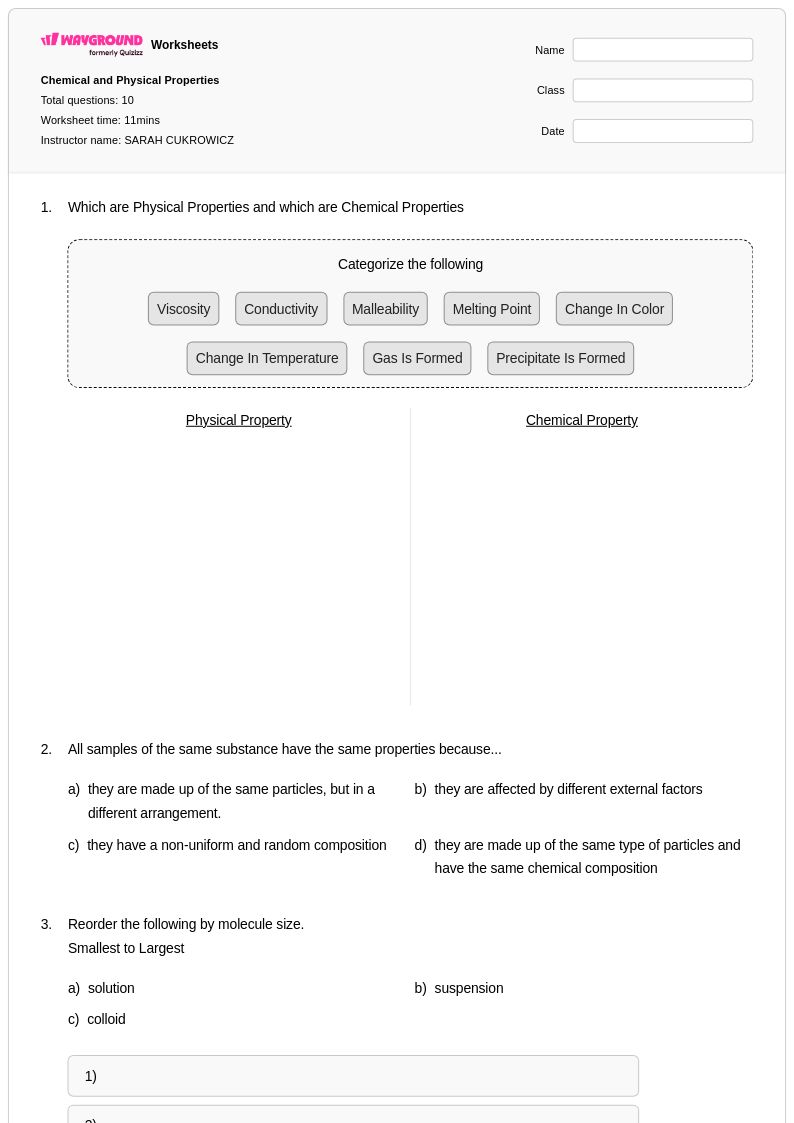
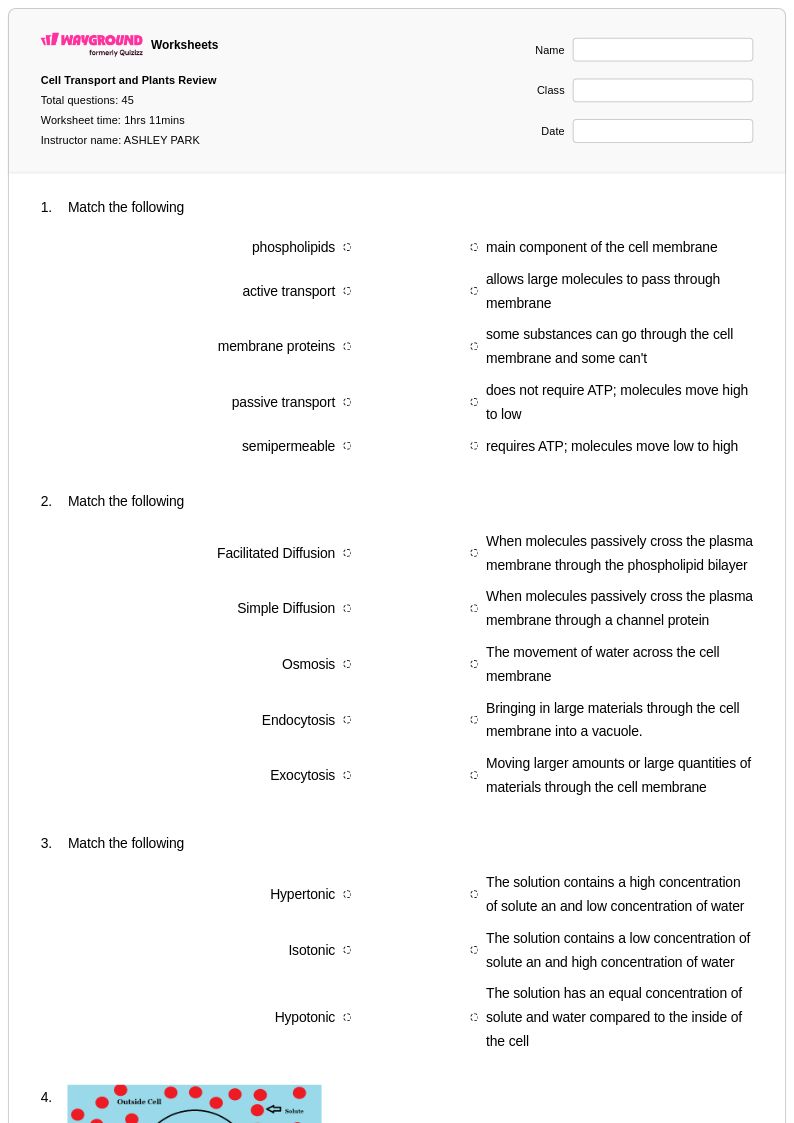
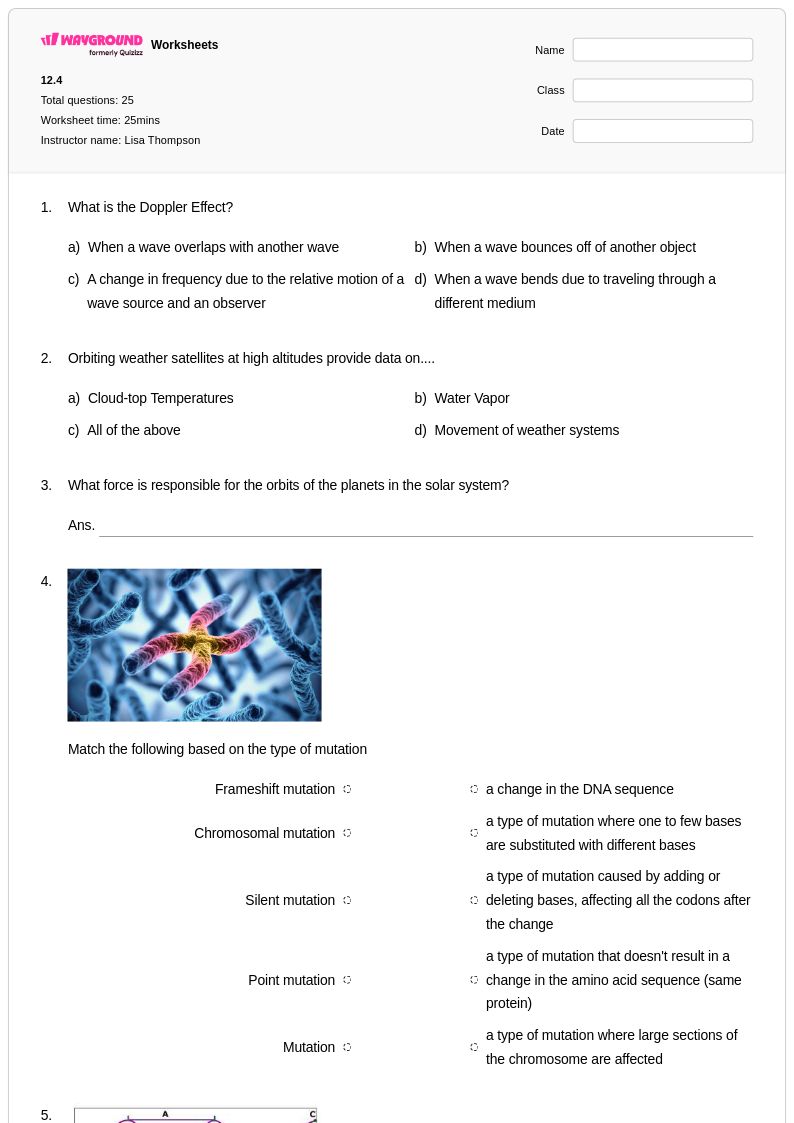
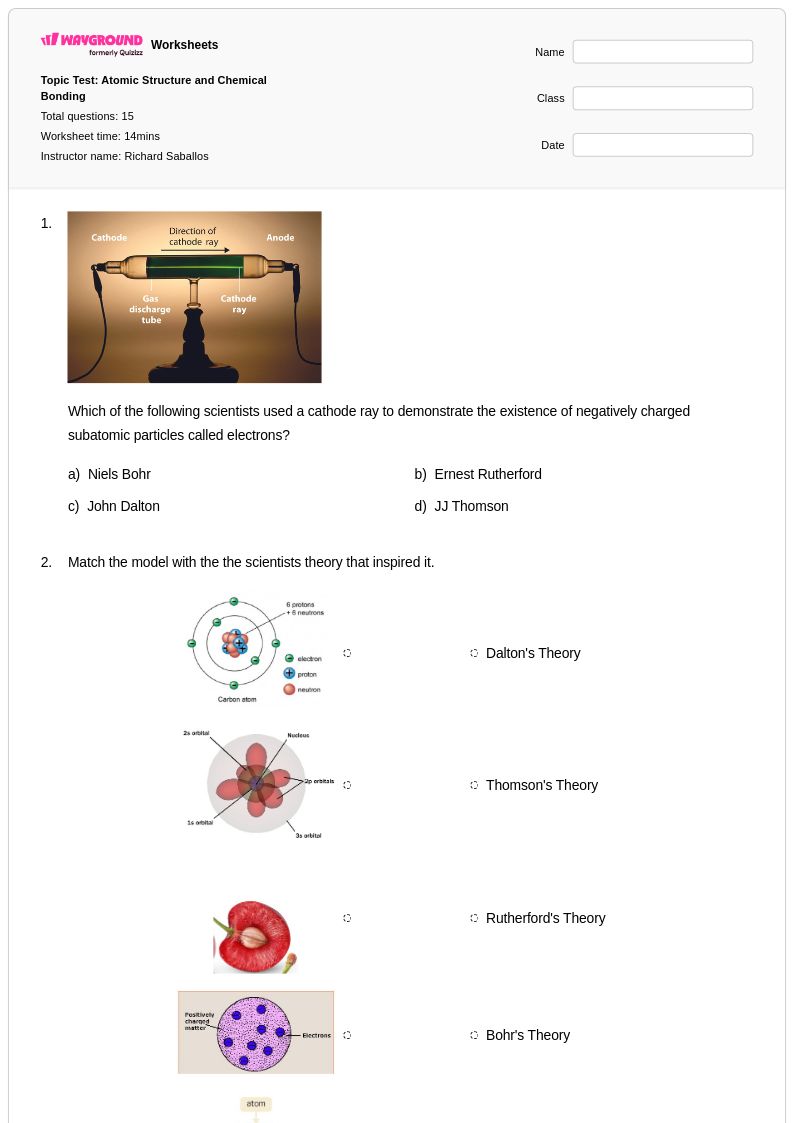
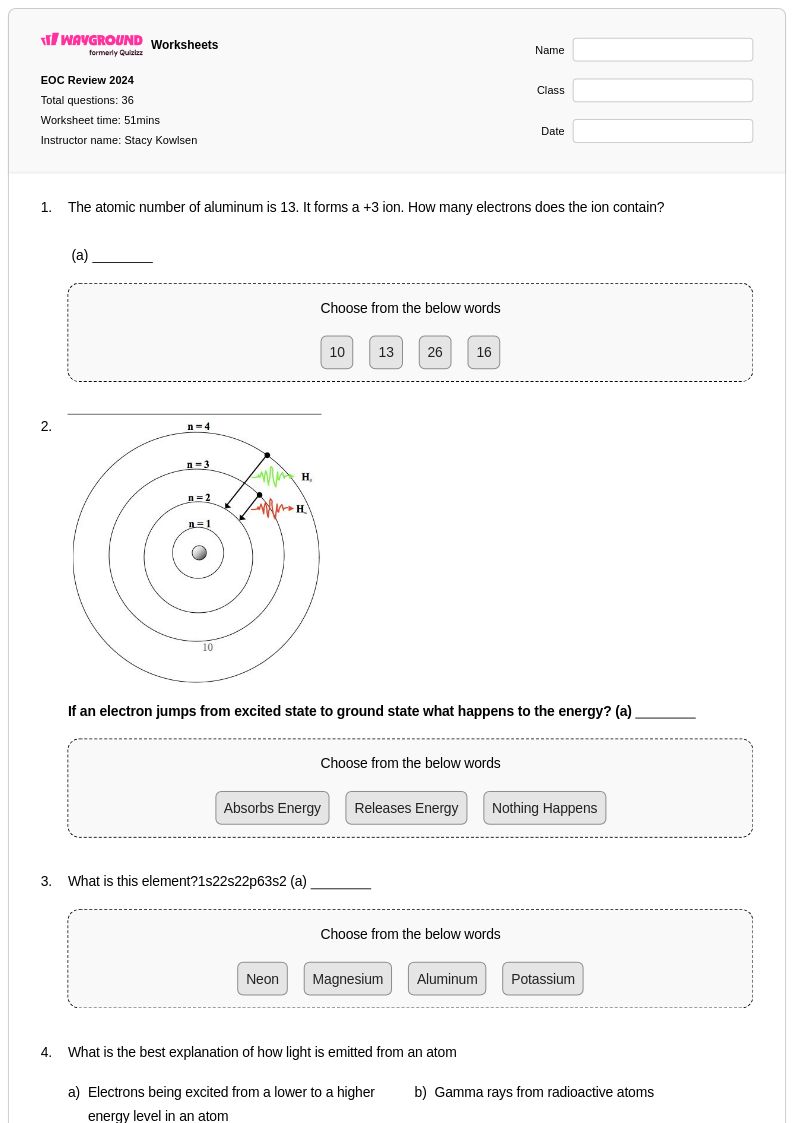
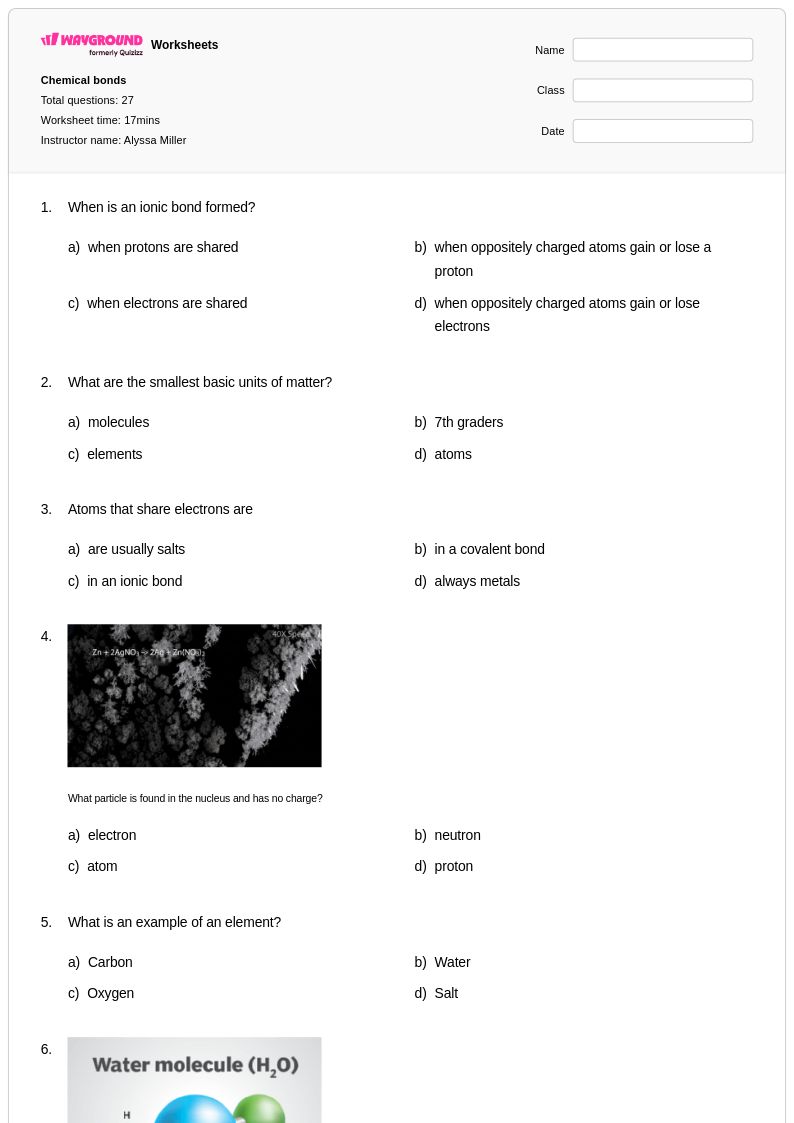
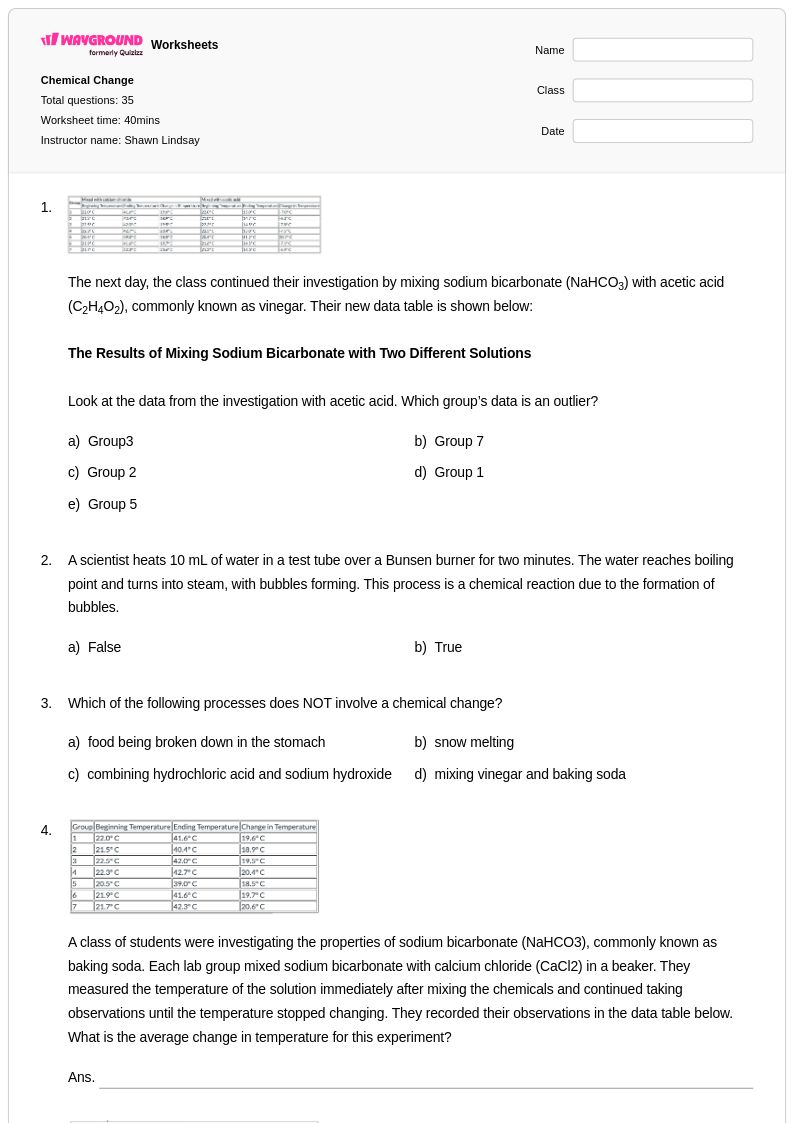
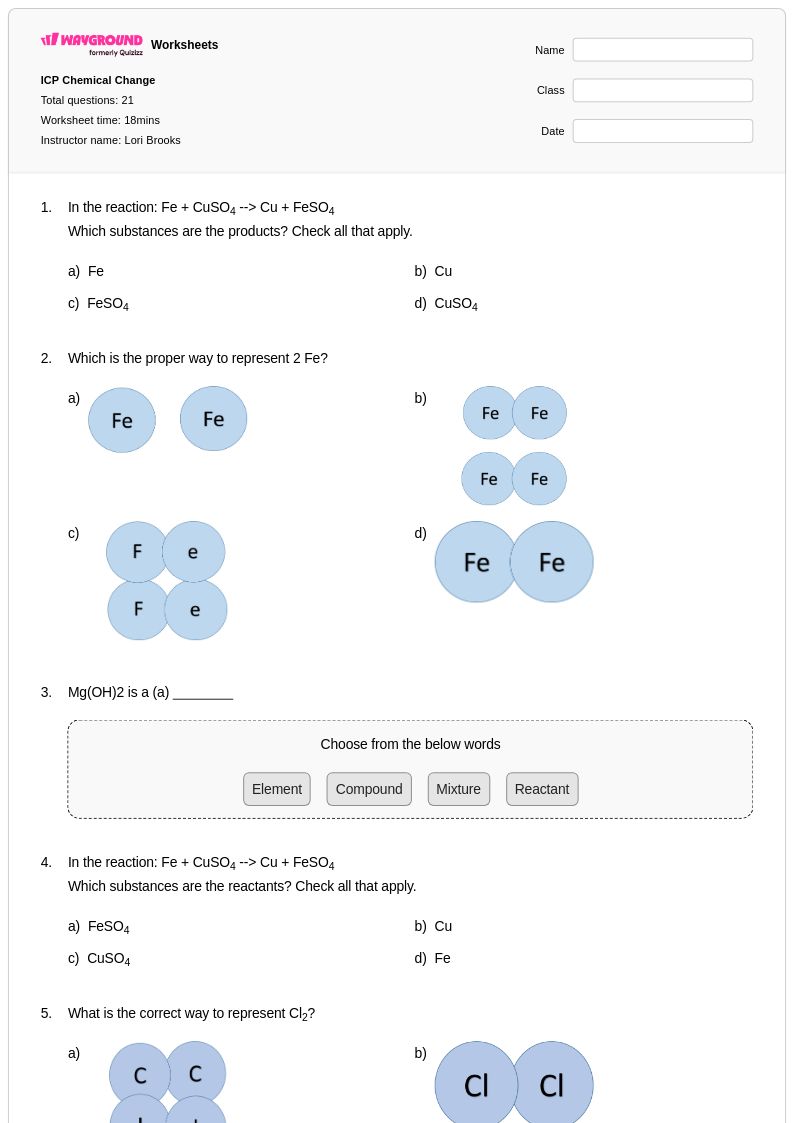
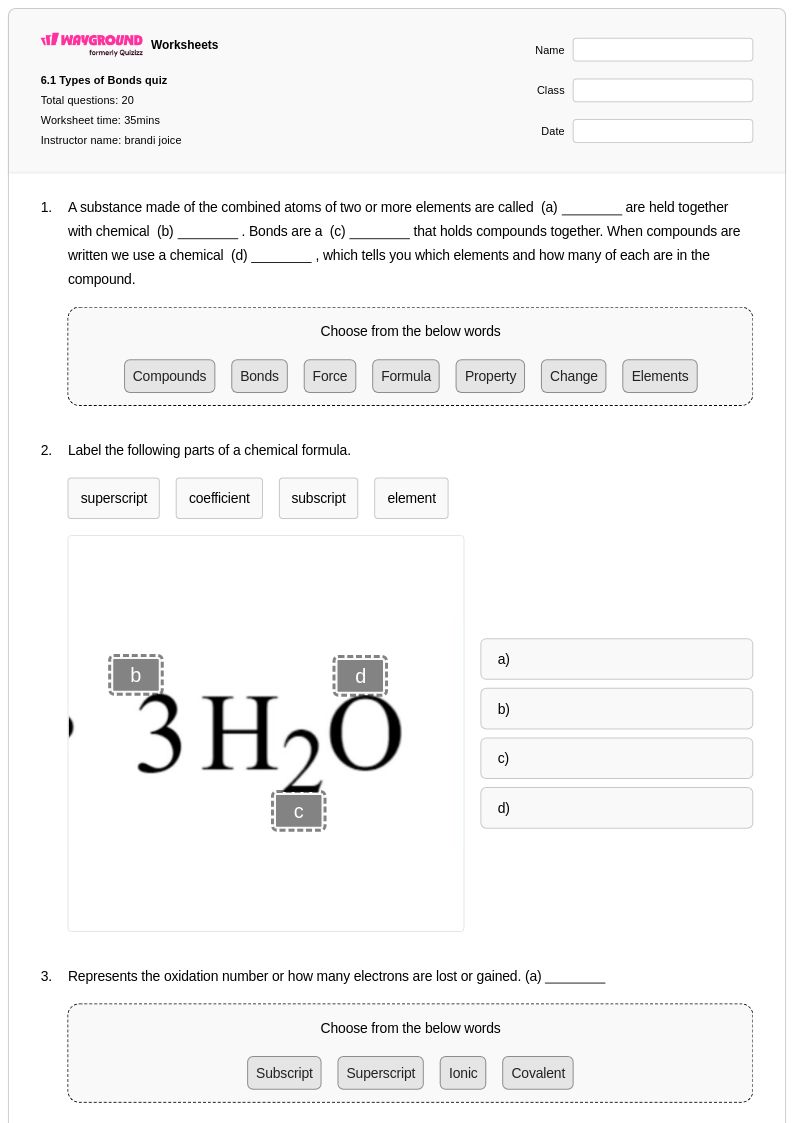
Chemical equilibrium worksheets for Class 11 students available through Wayground (formerly Quizizz) provide comprehensive coverage of this fundamental chemistry concept that governs reversible reactions and dynamic balance in chemical systems. These expertly crafted resources strengthen students' understanding of equilibrium constants, Le Chatelier's principle, reaction quotients, and the factors that influence equilibrium position including temperature, pressure, and concentration changes. The worksheet collection includes detailed practice problems that guide students through calculating equilibrium expressions, predicting shifts in equilibrium, and analyzing real-world applications in industrial processes. Each worksheet comes with a complete answer key to support independent learning and self-assessment, while the free printables are available in convenient pdf format for seamless classroom integration and home study.
Wayground (formerly Quizizz) empowers educators with millions of teacher-created chemical equilibrium resources that feature robust search and filtering capabilities, enabling quick identification of materials aligned with specific learning standards and curriculum requirements. The platform's differentiation tools allow teachers to customize worksheets based on individual student needs, accommodating various learning levels within the same Class 11 chemistry classroom. These versatile resources are available in both printable and digital formats, including downloadable pdf versions, making them ideal for lesson planning, targeted remediation of misconceptions about equilibrium dynamics, enrichment activities for advanced learners, and regular skill practice to reinforce complex equilibrium calculations. The extensive collection supports diverse instructional approaches, from guided practice sessions to independent assessment preparation, ensuring students develop mastery of chemical equilibrium principles essential for advanced chemistry coursework.
FAQs
How do I teach chemical equilibrium to high school chemistry students?
Start by establishing a firm conceptual foundation in reversible reactions before introducing equilibrium constants. Use concrete analogies, such as water flowing between two containers at equal rates, to illustrate the dynamic nature of equilibrium before moving into quantitative work with Kc and Kp expressions. Once students grasp the concept, introduce Le Chatelier's principle to show how systems respond to stress, then progress to numerical problems involving equilibrium concentrations and ICE tables.
What are the most effective practice exercises for chemical equilibrium?
The most effective practice combines conceptual questions with quantitative problem-solving. Students should work through writing equilibrium expressions from balanced equations, calculating Kc and Kp values, completing ICE tables to find equilibrium concentrations, and predicting reaction shifts using Le Chatelier's principle. Sequencing problems from basic to advanced, including applications in acid-base chemistry and solubility equilibria, ensures students build durable understanding rather than surface-level procedural fluency.
What mistakes do students commonly make when solving chemical equilibrium problems?
The most frequent errors include writing equilibrium expressions with reactants in the numerator instead of products, forgetting to exclude pure solids and liquids from K expressions, and incorrectly setting up ICE tables by using initial amounts rather than concentrations. Students also commonly confuse Kc with Kp and misapply Le Chatelier's principle when multiple stresses are applied simultaneously. Targeted practice with annotated answer keys helps students identify and correct these specific misconceptions.
How do I use chemical equilibrium worksheets in my chemistry class?
Chemical equilibrium worksheets on Wayground are available as printable PDFs for traditional classroom use and in digital formats for technology-integrated or blended learning environments, including the ability to host them as a quiz on Wayground. Teachers can use printable versions for in-class practice or homework, while digital formats allow for real-time assignment and tracking. Both formats include answer keys, making them suitable for guided instruction, independent practice, or self-paced review.
How do I differentiate chemical equilibrium instruction for students at different skill levels?
For struggling students, begin with conceptual equilibrium questions and guided ICE table setups before introducing full calculations. Wayground supports individual student accommodations including extended time per question, read-aloud functionality for question text, and reduced answer choices to lower cognitive load for students who need additional support. Advanced learners can be challenged with multi-step problems involving solubility product constants, reaction quotients, and industrial process applications such as the Haber process.
How do I help students understand Le Chatelier's principle beyond memorization?
Le Chatelier's principle is best understood when students can predict and explain equilibrium shifts before applying them mathematically. Present scenarios where concentration, temperature, or pressure changes occur and ask students to reason through the system's response using the equilibrium expression rather than a memorized rule. Pairing prediction questions with calculation problems, such as showing how a new Kc value reflects a temperature change, helps students move from rote recall to genuine conceptual understanding.