Free Printable Muscles of Upper Limb Worksheets for Class 6
Class 6 students can master the muscles of upper limb with Wayground's free biology worksheets, featuring printable PDFs with practice problems and comprehensive answer keys for effective learning.
Explore printable Muscles of Upper Limb worksheets for Class 6
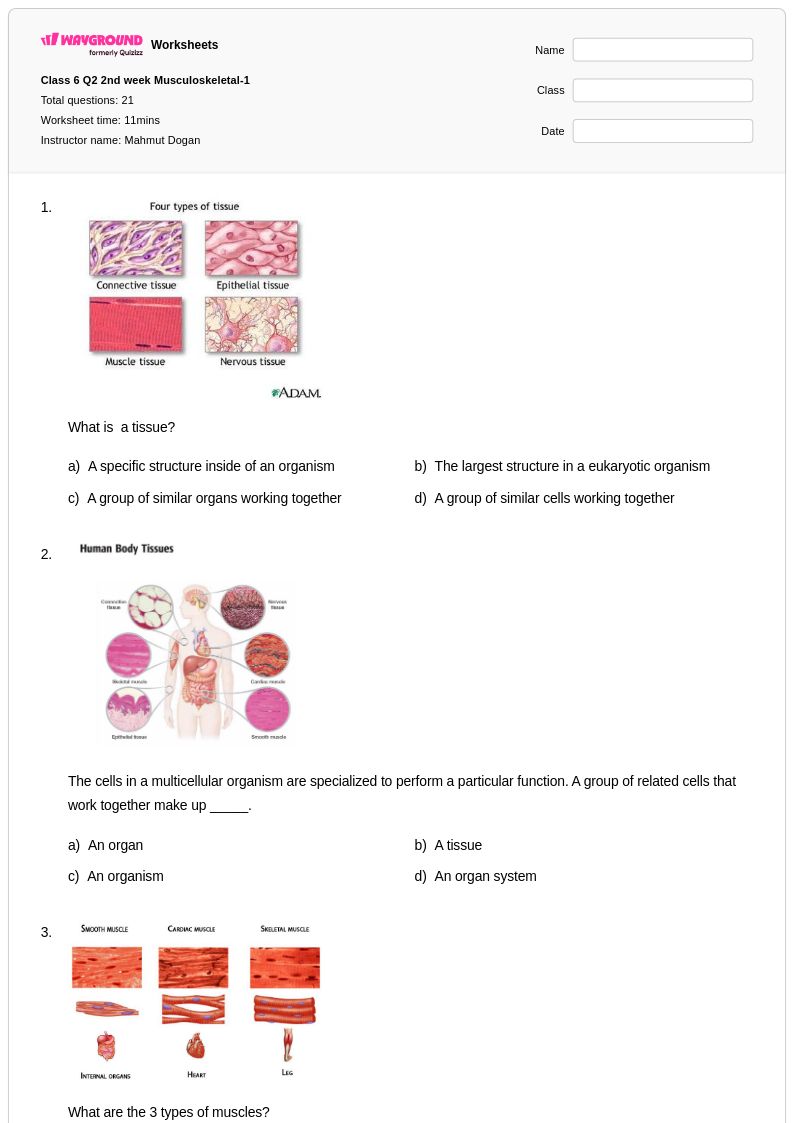
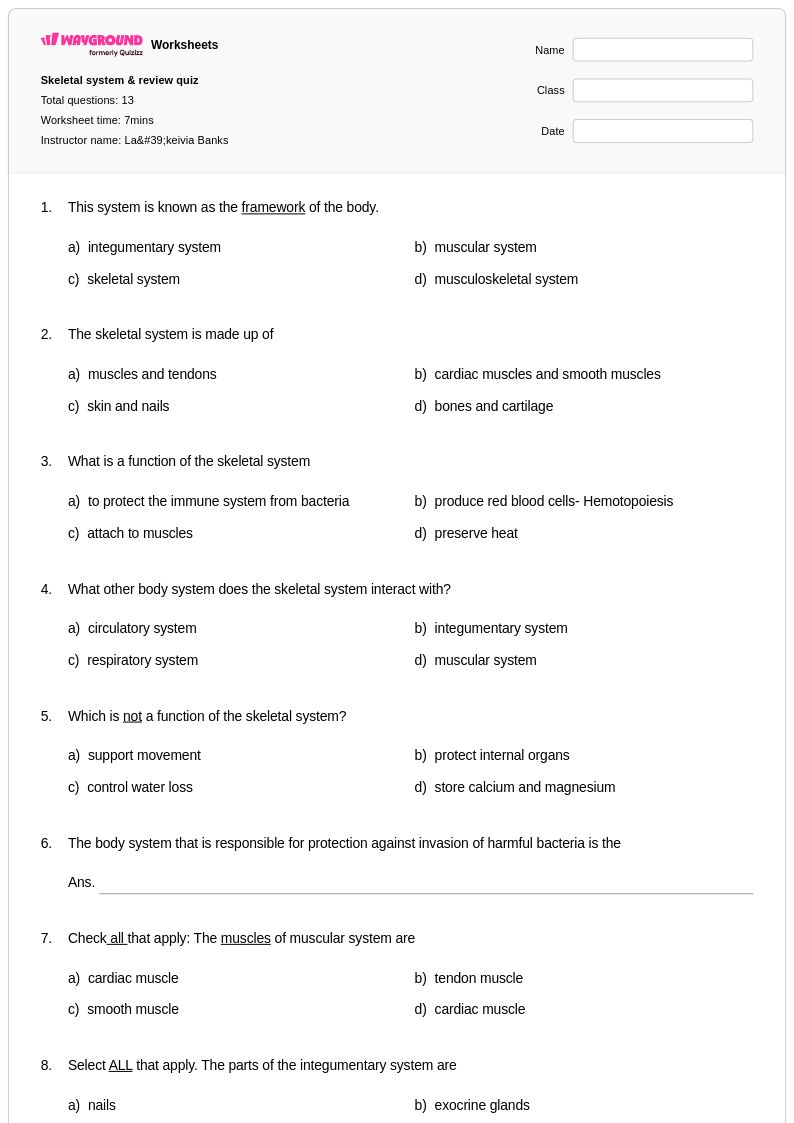
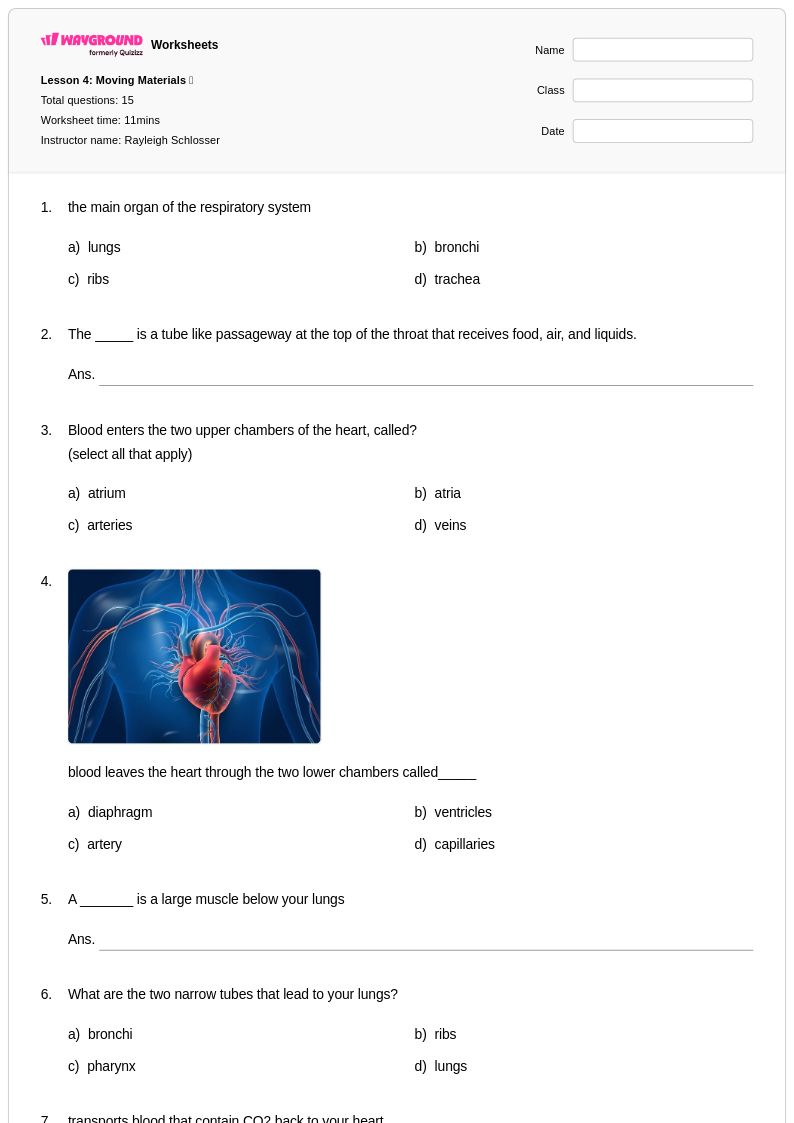
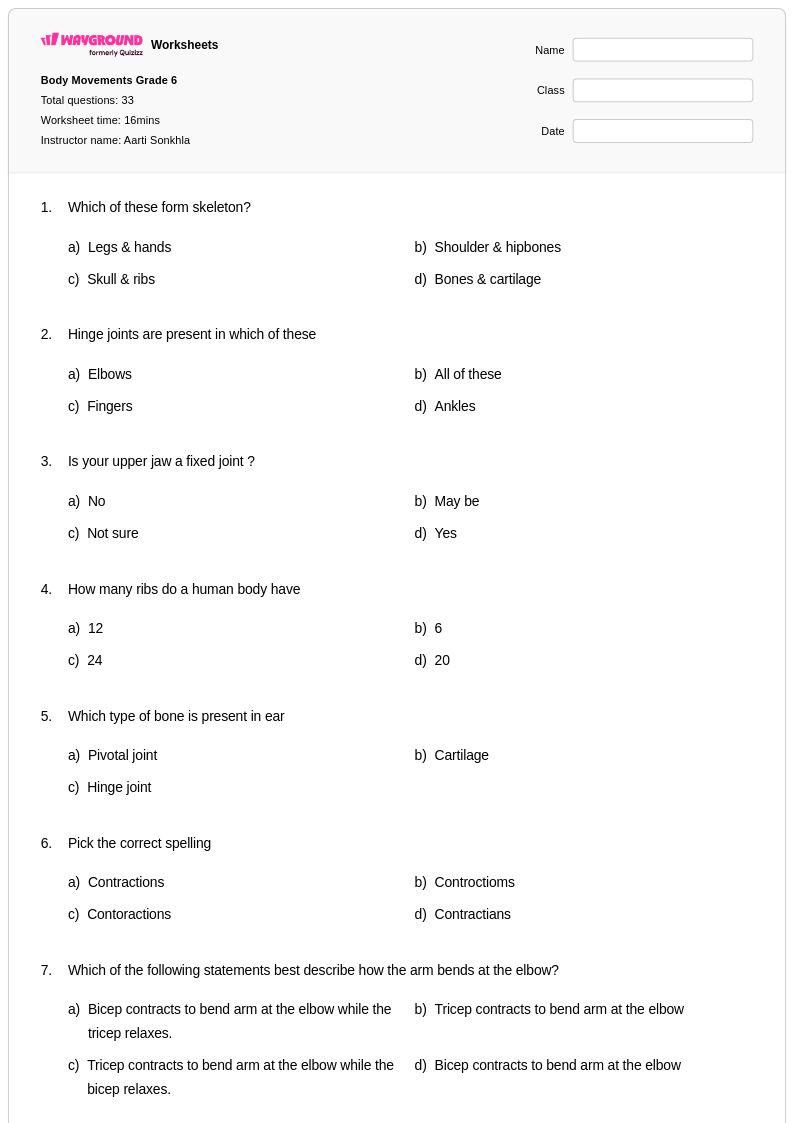
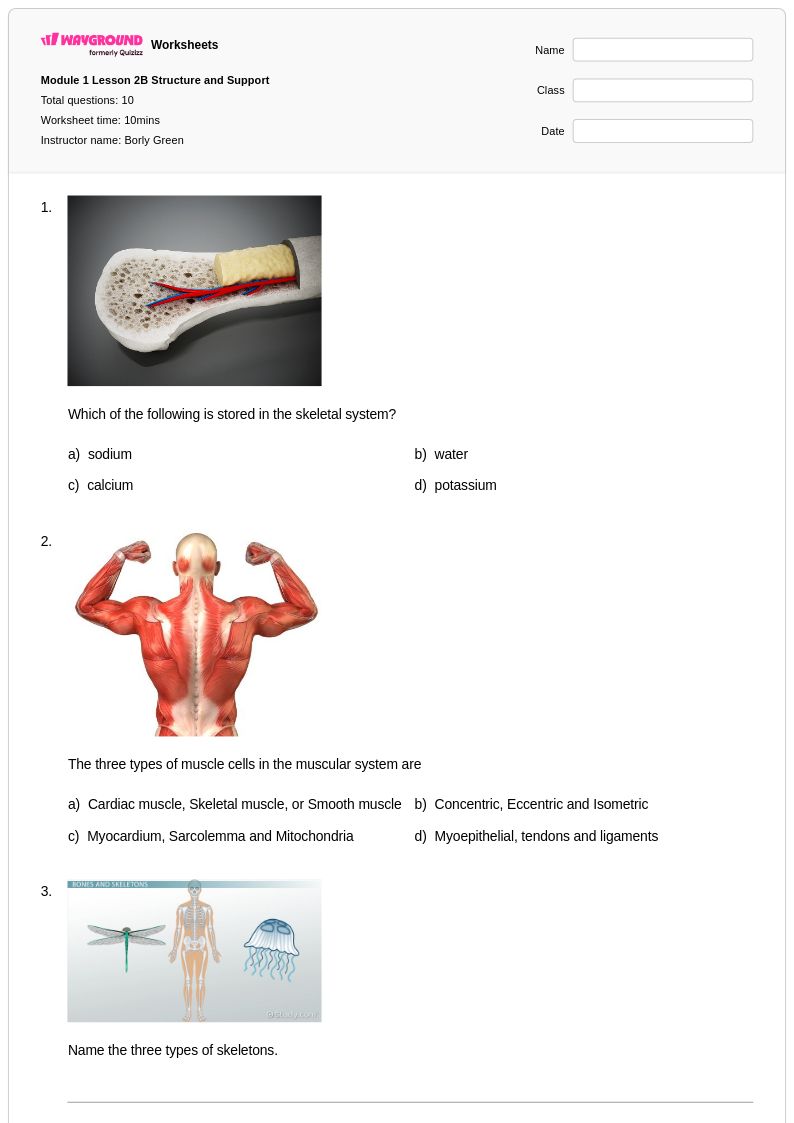
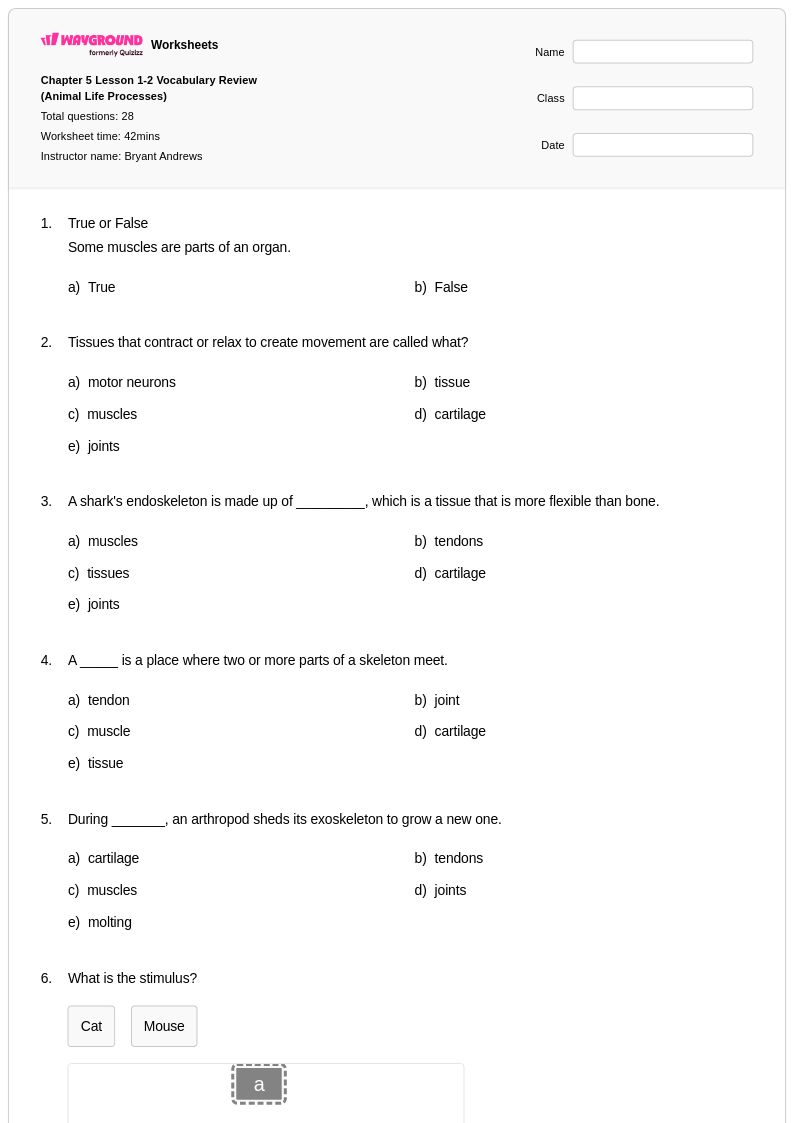
Class 6 muscles of upper limb worksheets available through Wayground (formerly Quizizz) provide comprehensive anatomical education focused on the major muscle groups that control arm and shoulder movement. These carefully designed educational resources help students identify and understand key muscles including the biceps, triceps, deltoids, and forearm muscles while developing essential scientific vocabulary and anatomical knowledge. The worksheets strengthen critical thinking skills through detailed labeling exercises, muscle function matching activities, and practice problems that connect muscle structure to movement patterns. Teachers can access complete answer key materials and free printable pdf resources that support classroom instruction and independent study, ensuring students build a solid foundation in human anatomy and muscular system concepts.
Wayground (formerly Quizizz) supports educators with millions of teacher-created resources specifically designed for upper limb muscle instruction, featuring robust search and filtering capabilities that align with science education standards. The platform's differentiation tools allow teachers to customize worksheets based on individual student needs, offering both remedial support for struggling learners and enrichment opportunities for advanced students. These flexible resources are available in both printable and digital pdf formats, enabling seamless integration into lesson planning whether for in-person laboratory sessions or remote learning environments. The comprehensive collection facilitates targeted skill practice and assessment, helping teachers efficiently identify knowledge gaps while providing structured remediation activities that reinforce proper anatomical terminology and muscle function understanding.
FAQs
How do I teach the muscles of the upper limb effectively?
Teaching upper limb musculature is most effective when organized by region, moving proximally to distally from the shoulder girdle and rotator cuff through the arm, forearm, and into the intrinsic hand muscles. Pairing anatomical diagrams with functional movement analysis helps students connect muscle names to real actions, such as linking the biceps brachii to forearm supination and elbow flexion. Reinforcing origin and insertion points through labeling exercises and clinical case examples deepens retention and prepares students for applied assessments.
What exercises help students practice identifying upper limb muscles?
Labeling diagrams, matching muscles to their origin and insertion points, and completing fill-in-the-blank tables on functional movements are among the most effective practice formats for upper limb muscle identification. Having students classify muscles by compartment, such as anterior versus posterior forearm or intrinsic versus extrinsic hand muscles, builds systematic thinking rather than rote memorization. Repeated low-stakes practice with immediate feedback is especially important given the volume of muscles students must learn in this region.
What mistakes do students commonly make when learning upper limb muscles?
Students frequently confuse muscles with similar names or adjacent locations, such as mixing up the brachialis and brachioradialis or misidentifying which rotator cuff muscle performs which movement. Another common error is conflating the origin and insertion of a muscle or incorrectly stating the joint it acts on, particularly in the forearm where muscles can cross both the elbow and wrist. Students also tend to overlook the intrinsic muscles of the hand entirely, focusing on the larger, more familiar proximal muscles at the expense of the lumbricals and interossei.
How do I use Wayground's muscles of upper limb worksheets in my class?
Wayground's upper limb muscle worksheets are available as printable PDFs for traditional classroom use and in digital formats for technology-integrated learning environments, making them adaptable for in-person labs, homework, or remote instruction. Teachers can also host worksheets as a quiz directly on Wayground, enabling real-time student responses and automatic grading. All worksheets include complete answer keys, so they can be used for guided practice, self-assessment, or formative review without additional preparation on the teacher's part.
How can I differentiate upper limb muscle worksheets for students at different skill levels?
For students newer to anatomy, simplified labeling activities focused on major muscles like the deltoid, biceps brachii, and triceps provide an accessible entry point before introducing smaller or deeper structures. Advanced learners can be challenged with questions on biomechanical relationships, muscle synergists and antagonists, or clinical correlations such as how rotator cuff injuries affect shoulder movement. On Wayground, teachers can apply accommodations such as reduced answer choices or read-aloud support to individual students without disrupting the rest of the class, making differentiation manageable within a single assignment.
How do I help students remember the origin and insertion of upper limb muscles?
Mnemonics, movement-based learning, and repeated diagram practice are the most reliable strategies for helping students retain origin and insertion data across the upper limb. Having students physically perform or observe the movement produced by a muscle, then trace that back to which bones must be involved, creates a functional anchor for the anatomical detail. Structured tables that group muscles by joint action, such as all elbow flexors or all wrist extensors, also reduce cognitive load by organizing information into meaningful categories rather than isolated facts.