Free Printable Photoelectron Spectroscopy Worksheets for Class 11
Class 11 photoelectron spectroscopy worksheets from Wayground help students master electron binding energies and orbital analysis through comprehensive practice problems, free printables, and detailed answer keys.
Explore printable Photoelectron Spectroscopy worksheets for Class 11
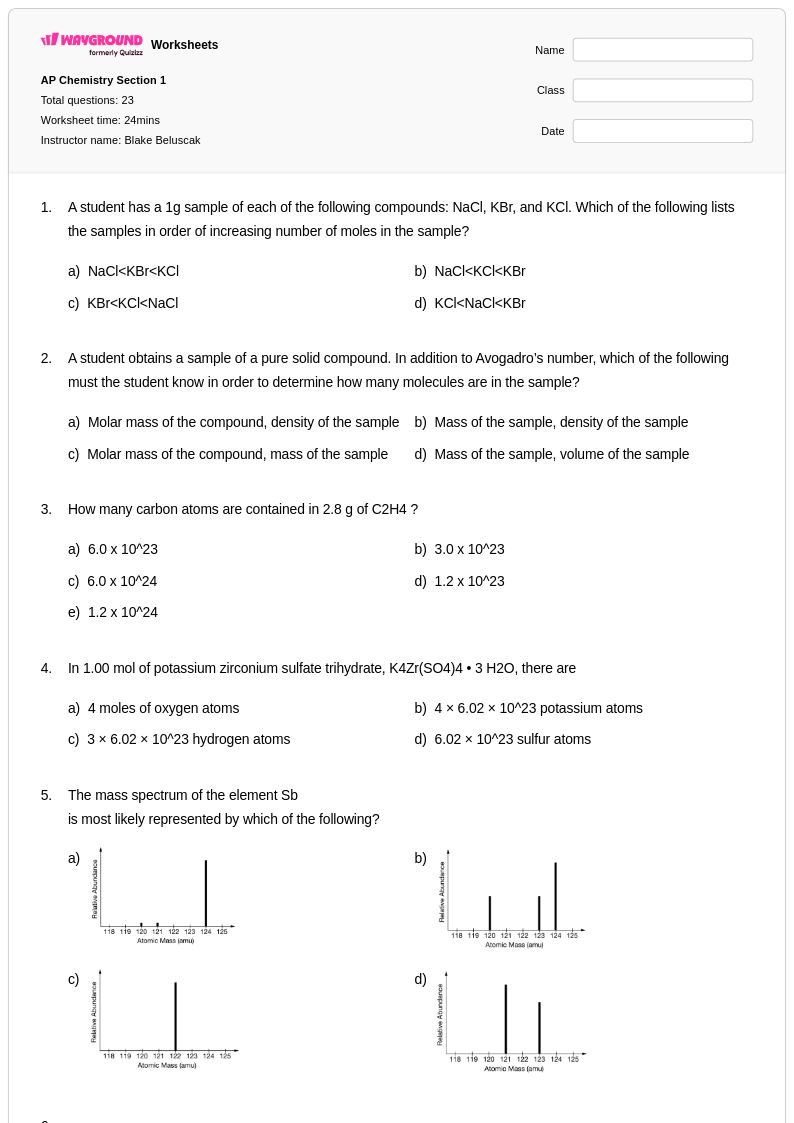
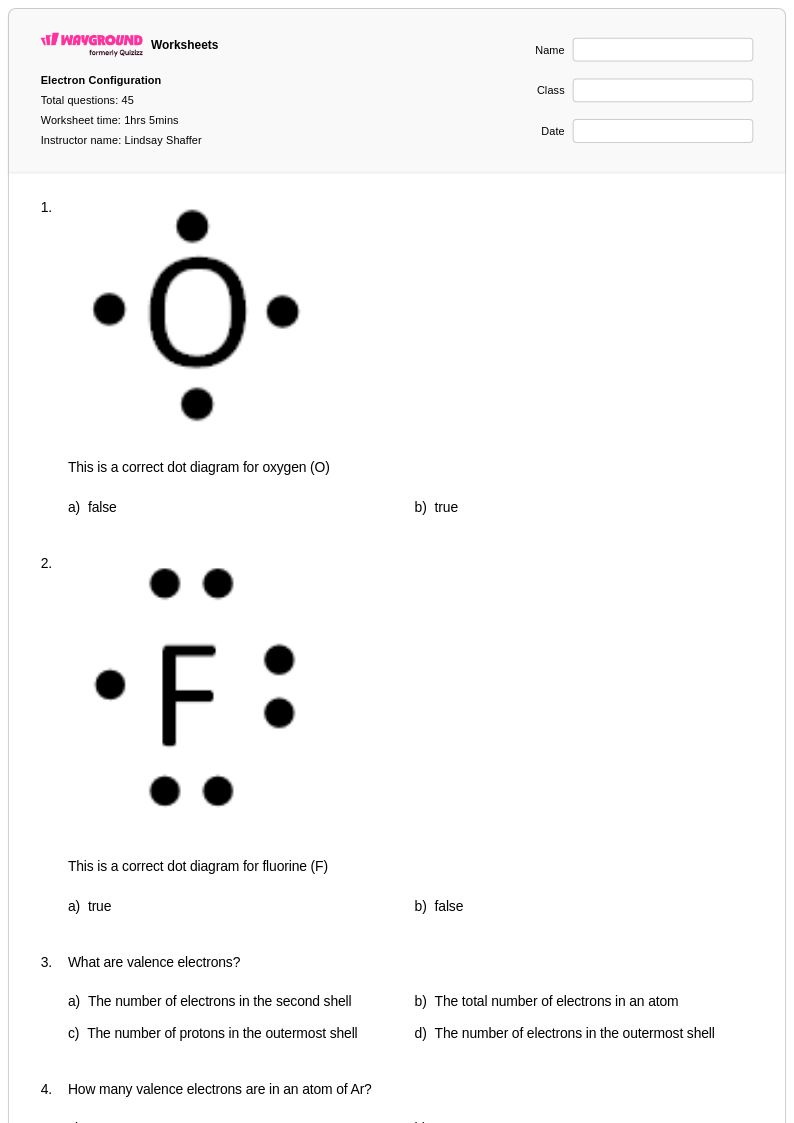
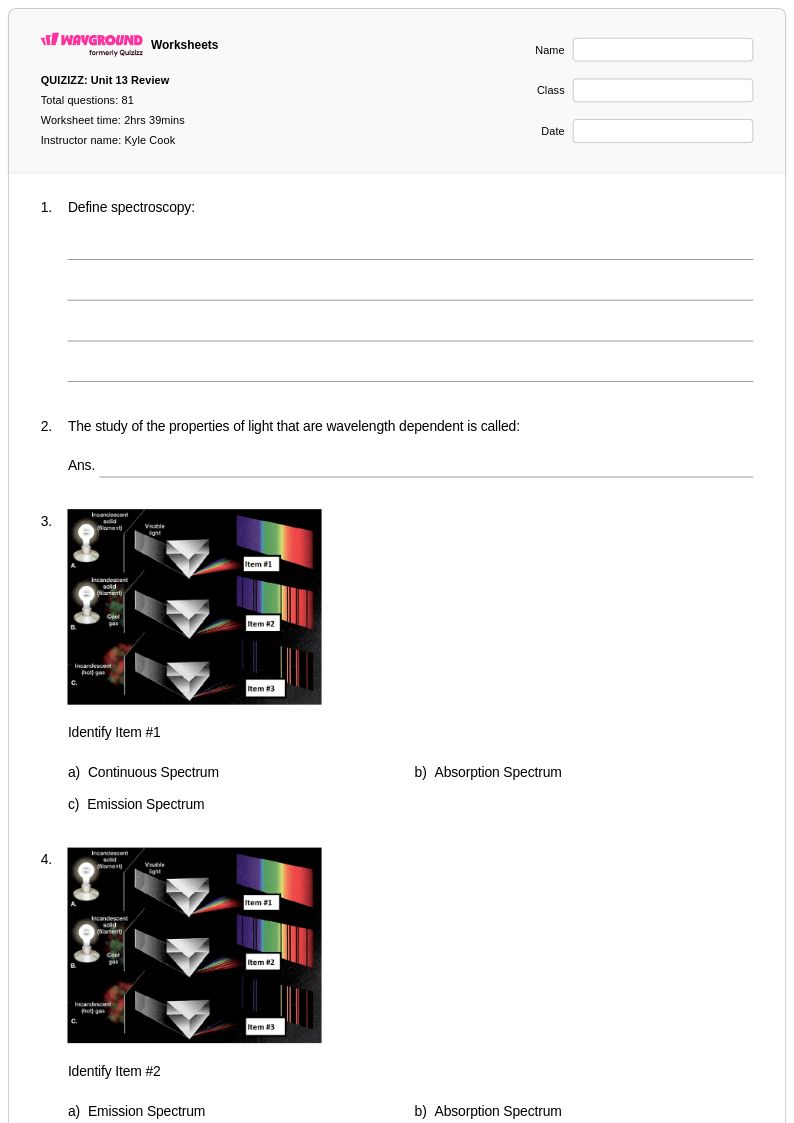
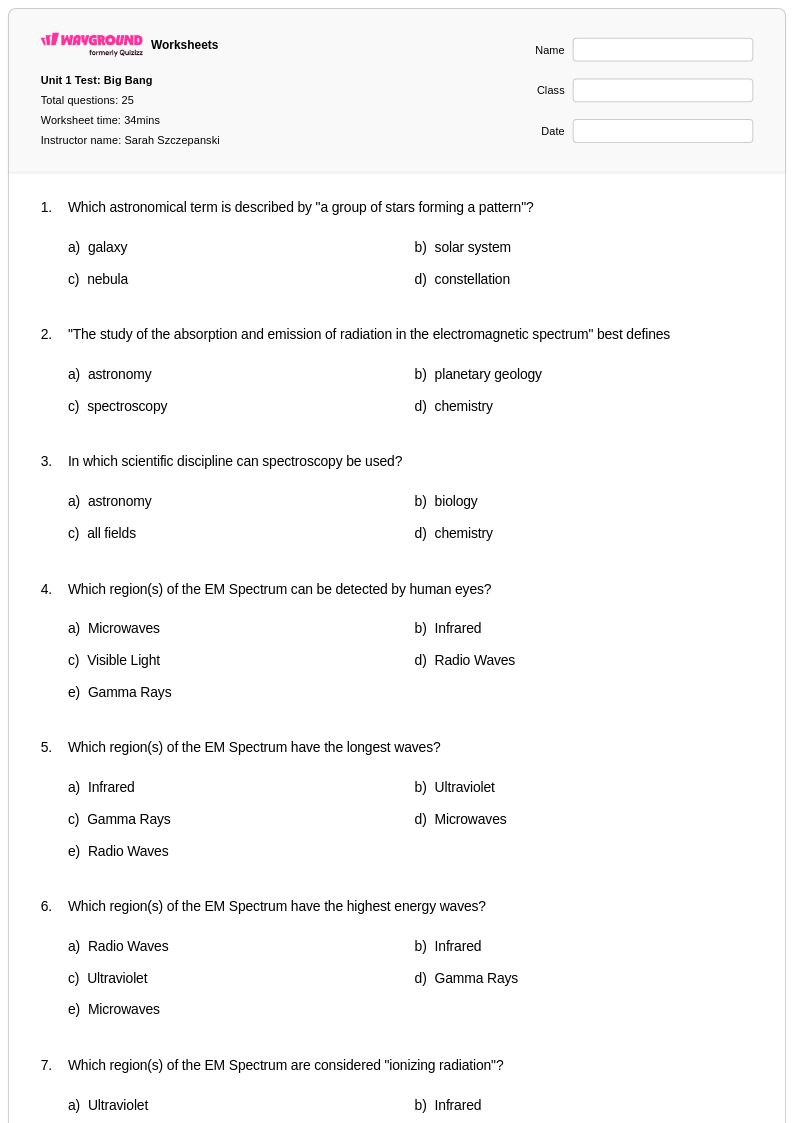
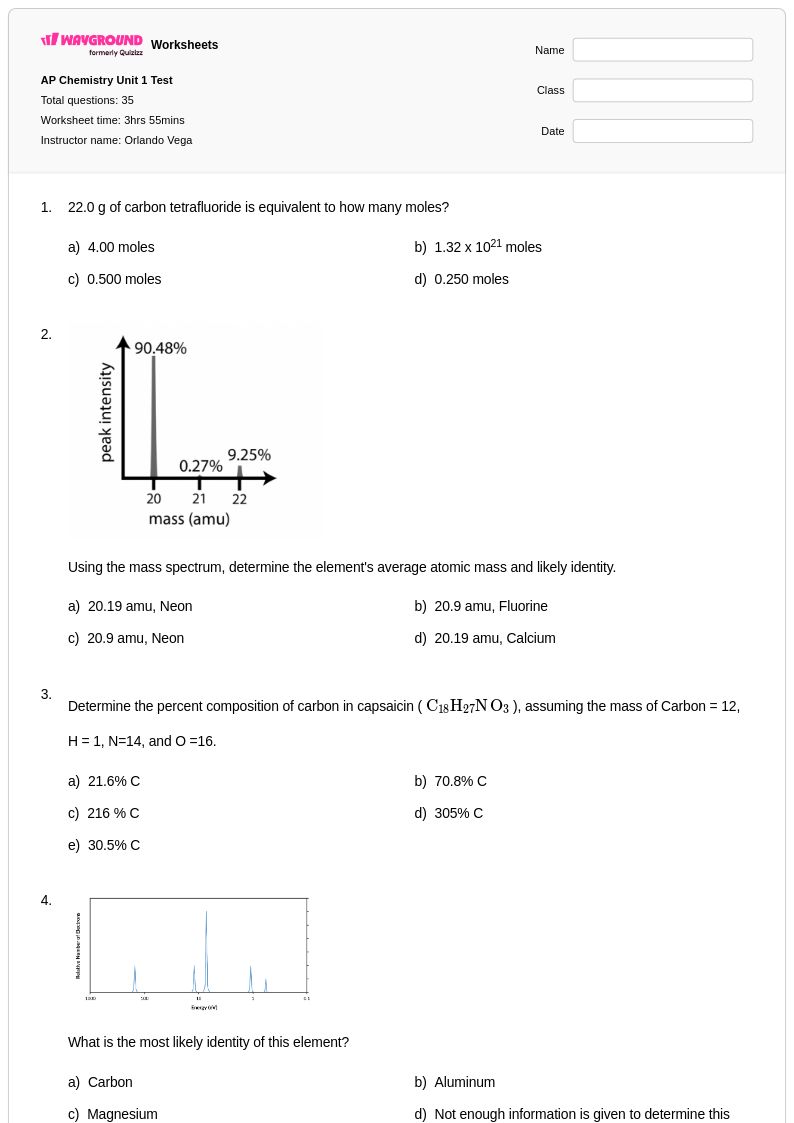
Photoelectron spectroscopy worksheets for Class 11 students available through Wayground (formerly Quizizz) provide comprehensive practice with this advanced analytical technique that measures the energy required to remove electrons from atoms and molecules. These carefully designed worksheets strengthen critical skills including interpreting photoelectron spectra, correlating binding energies with electron configurations, analyzing peak patterns to determine atomic structure, and connecting spectroscopic data to periodic trends. Students work through practice problems that challenge them to identify elements based on their photoelectron spectra, calculate ionization energies, and explain the relationship between electron shielding and binding energy. Each worksheet includes detailed answer keys and explanations, with many available as free printables in convenient pdf format to support both classroom instruction and independent study.
Wayground (formerly Quizizz) empowers teachers with millions of educator-created resources specifically focused on photoelectron spectroscopy and advanced chemistry concepts, featuring robust search and filtering capabilities that align with current chemistry standards and curriculum frameworks. The platform's differentiation tools allow instructors to customize worksheets based on individual student needs, whether providing additional scaffolding for struggling learners or enhanced challenges for advanced students ready to explore complex spectroscopic analysis. Teachers can seamlessly access materials in both printable and digital formats, including downloadable pdf versions, making lesson planning efficient and flexible for diverse classroom environments. These comprehensive worksheet collections support targeted skill practice, remediation of challenging concepts, and enrichment activities that deepen students' understanding of modern analytical chemistry techniques essential for advanced coursework and laboratory applications.
FAQs
How do I teach photoelectron spectroscopy to chemistry students?
Start by grounding students in electron configuration and ionization energy before introducing PES spectra. Teach them to read a PES spectrum by connecting peak position to binding energy and peak height to the relative number of electrons in that subshell. Bridging the abstract quantum mechanical model to actual spectroscopic data is the key instructional move — students need to see that PES is experimental evidence for the theoretical orbital model they already know.
What exercises help students practice interpreting photoelectron spectra?
Effective practice starts with single-element spectra where students identify each peak by subshell and match the pattern to a known electron configuration. From there, students should practice working in reverse — given a PES spectrum with unlabeled axes, identify the element. Multi-electron atom problems that require students to predict relative peak heights and positions based on effective nuclear charge add meaningful complexity and deepen spectral interpretation skills.
What mistakes do students commonly make when analyzing PES spectra?
The most common error is confusing peak height with binding energy — students often assume the tallest peak corresponds to the most tightly held electrons, when in fact peak height reflects the number of electrons in that subshell. Students also frequently misread the x-axis direction, forgetting that binding energy increases from right to left on a standard PES spectrum. A third common misconception is treating all electrons in the same principal energy level as equivalent, which leads to errors when distinguishing s and p subshell peaks.
How does photoelectron spectroscopy connect to electron configuration and the quantum mechanical model?
PES provides direct experimental evidence for the shell and subshell structure predicted by the quantum mechanical model. Each peak in a PES spectrum corresponds to electrons in a specific subshell, and the binding energy of that peak reflects the energy required to remove an electron from that subshell. This makes PES one of the most powerful tools for helping students see electron configuration not as an arbitrary memorization task but as a model grounded in measurable physical data.
How can I use photoelectron spectroscopy worksheets in my classroom?
Photoelectron spectroscopy worksheets on Wayground are available as printable PDFs for traditional classroom use and in digital formats for technology-integrated environments, making them flexible for lecture reinforcement, lab prep, or independent practice. Teachers can also host them as a quiz directly on Wayground, allowing for easy assignment and real-time tracking of student responses. All worksheets include detailed answer keys, so they work equally well for guided instruction or self-directed review.
How do I differentiate photoelectron spectroscopy instruction for students at different levels?
For students who are still developing confidence, begin with spectra for elements in periods 1 and 2 where the number of peaks is small and the pattern maps directly to a simple electron configuration. More advanced students can work with transition metal spectra or be asked to explain anomalies caused by electron-electron repulsion and shielding effects. On Wayground, teachers can apply accommodations such as reduced answer choices or read-aloud support for individual students, ensuring the same material is accessible across different learning needs without requiring separate worksheet sets.