Free Printable Shark Anatomy Worksheets for Class 6
Class 6 shark anatomy worksheets from Wayground help students explore fish biology through engaging printables and practice problems with answer keys, making marine science accessible and fun.
Explore printable Shark Anatomy worksheets for Class 6
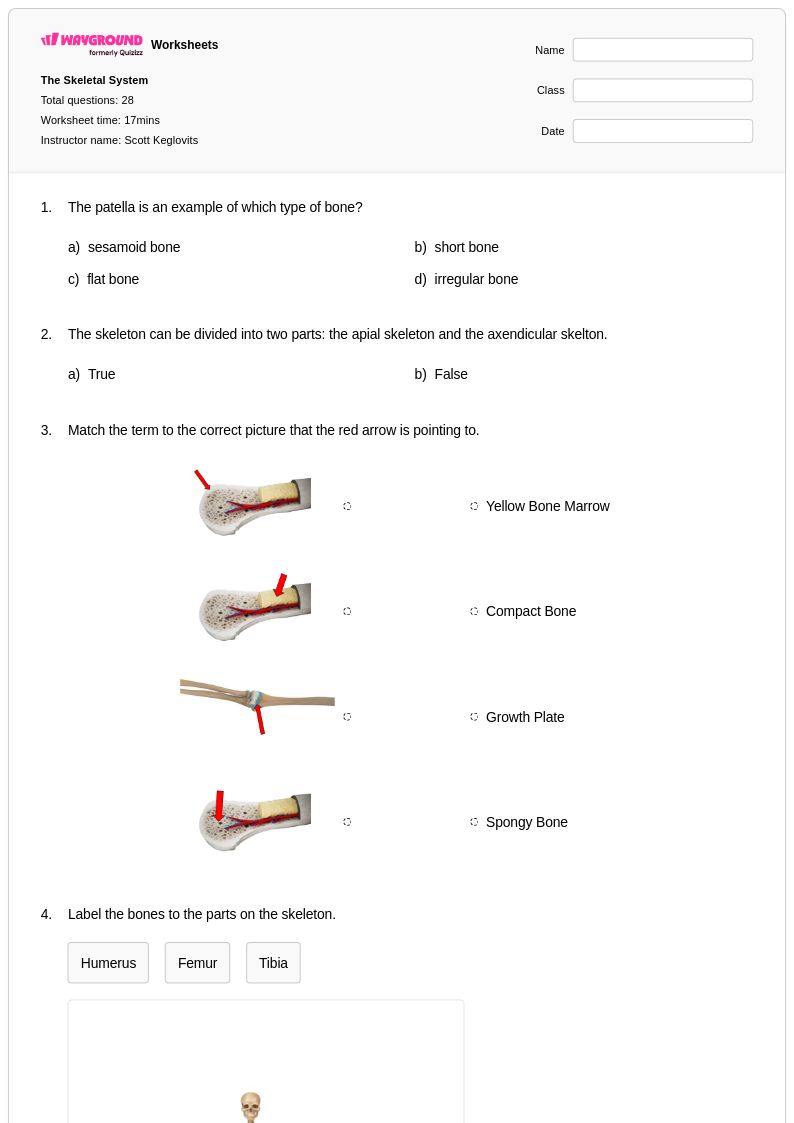
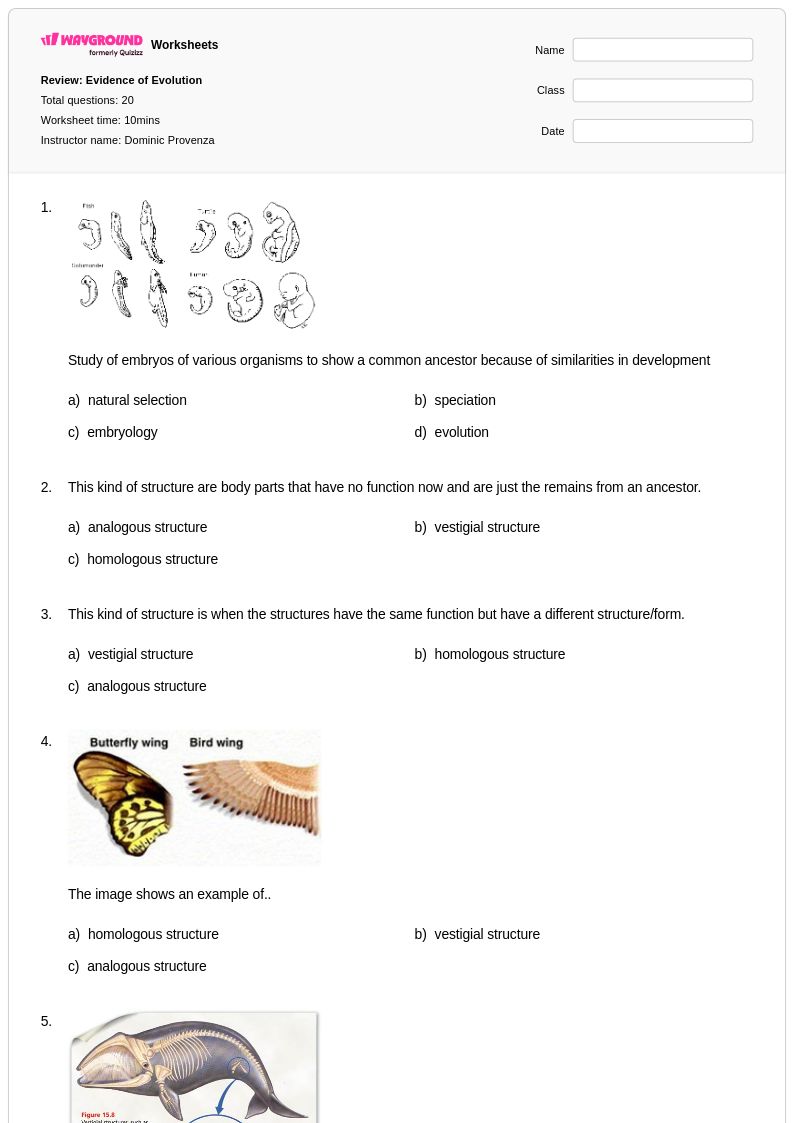
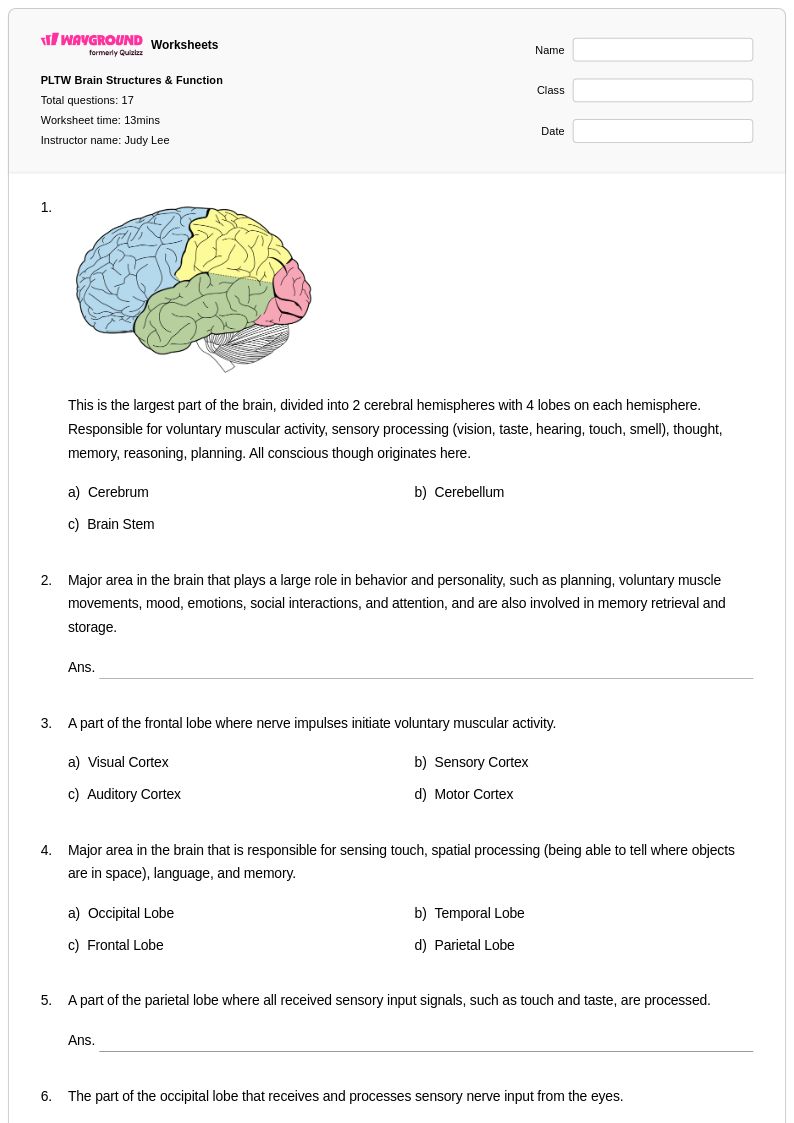
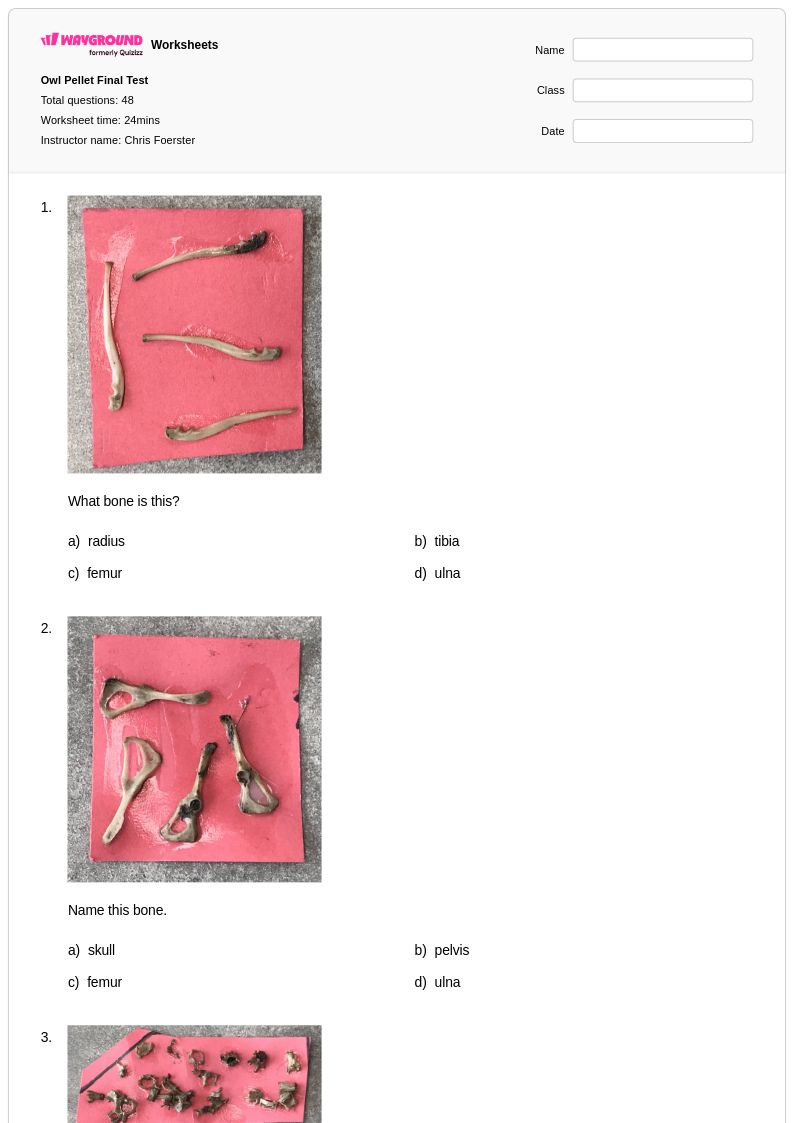
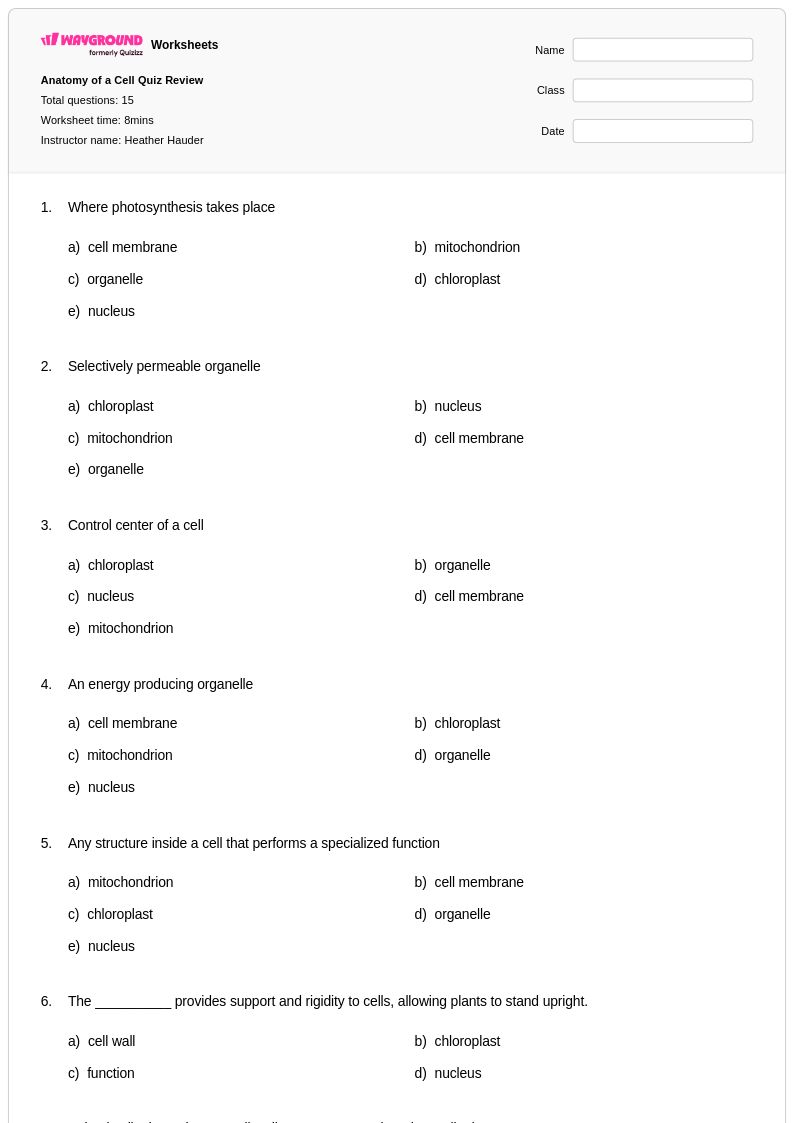
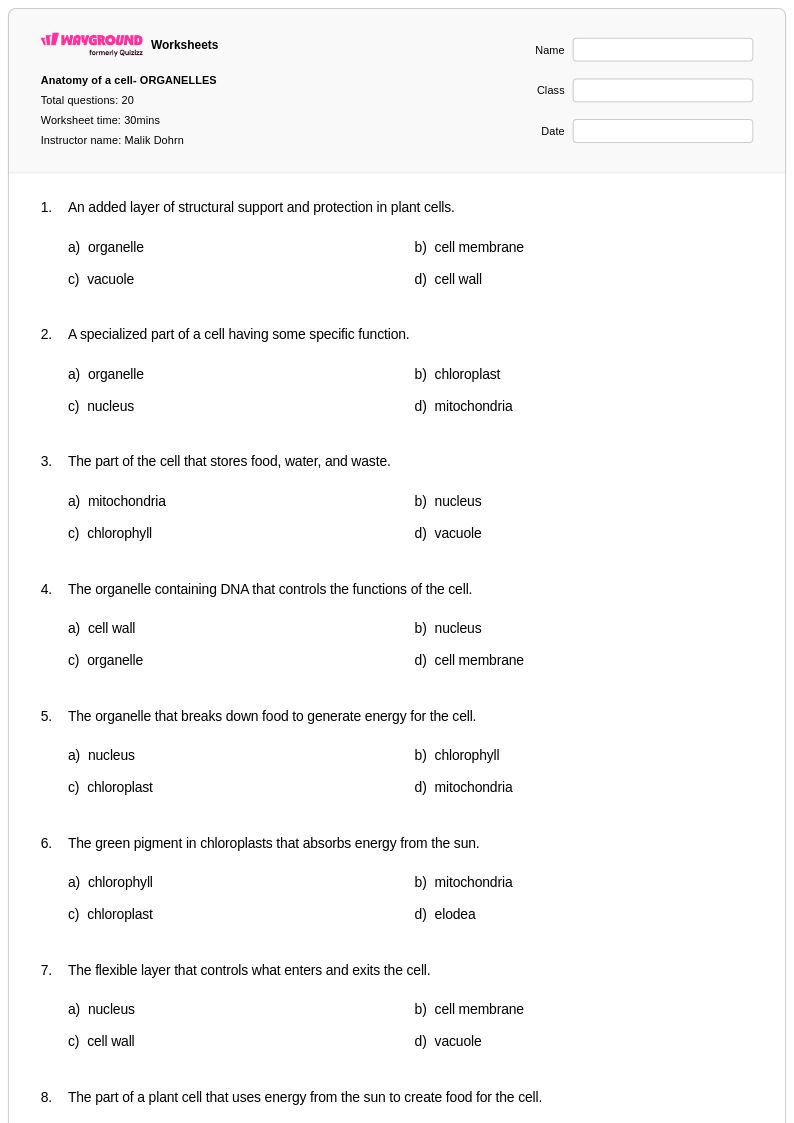
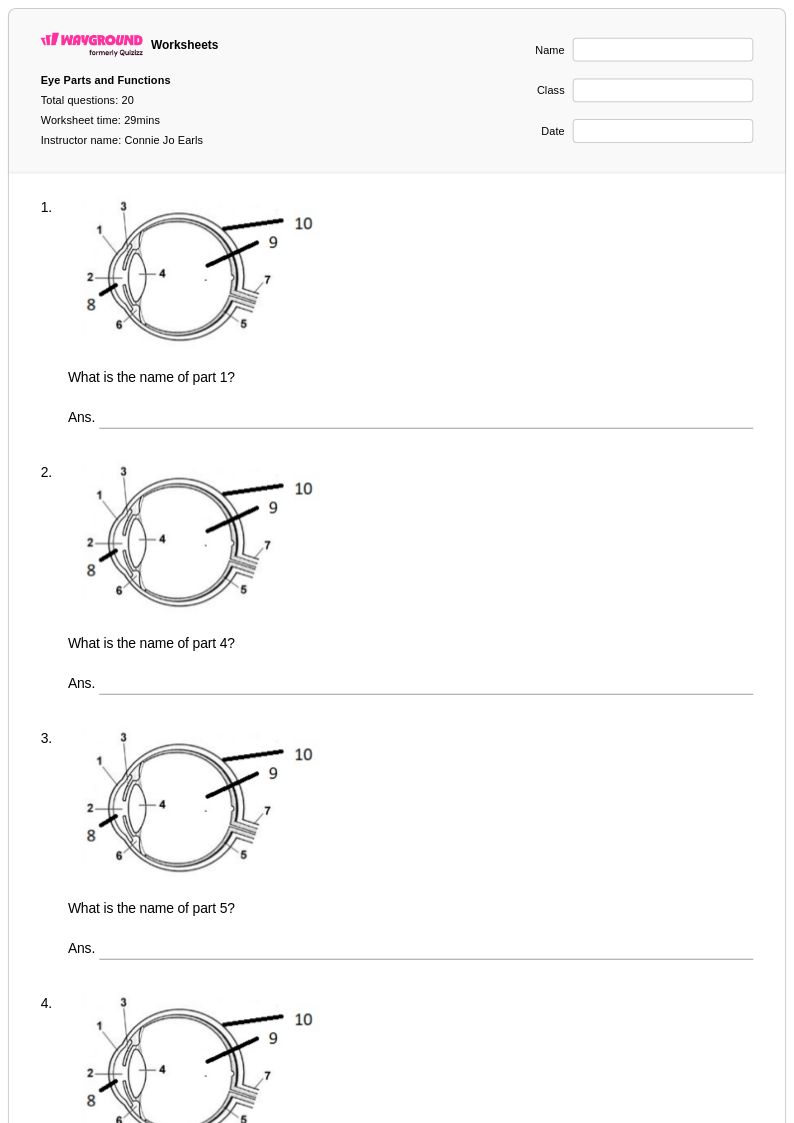
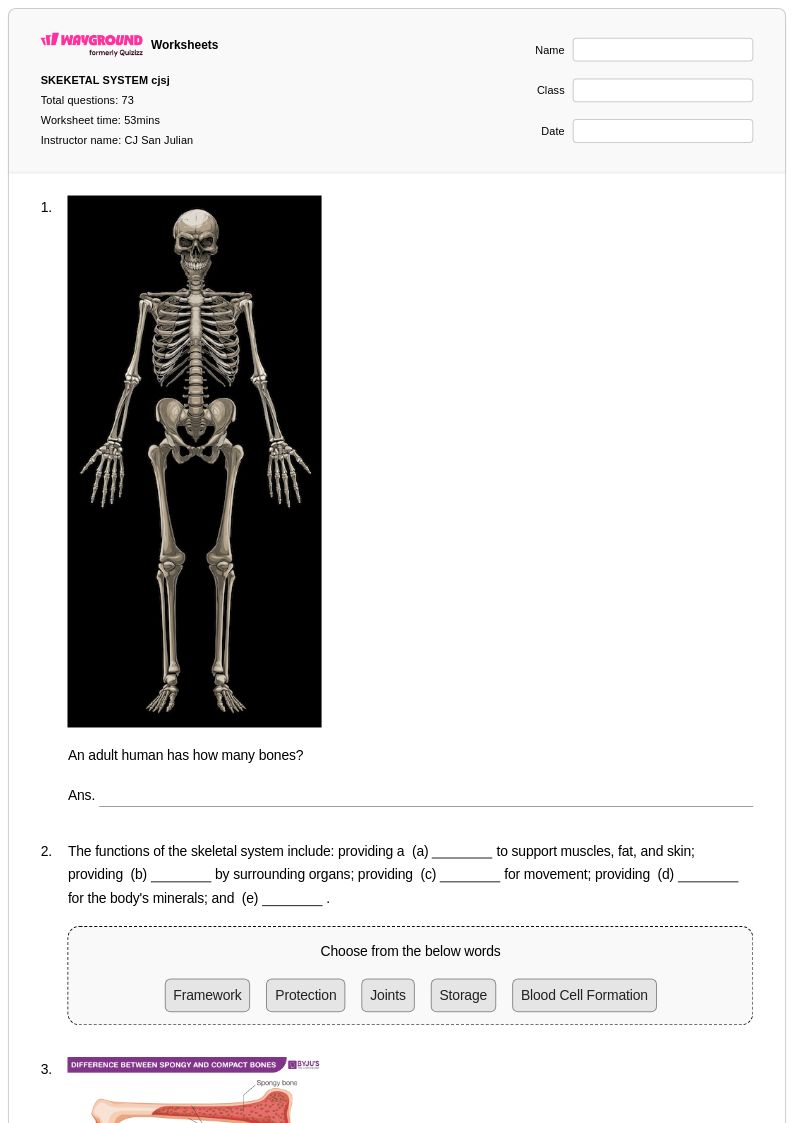
Shark anatomy worksheets for Class 6 students available through Wayground (formerly Quizizz) provide comprehensive exploration of these fascinating marine predators' biological structures and adaptations. These educational resources guide sixth-grade learners through detailed examination of shark skeletal systems, specialized organs like the ampullae of Lorenzini, gill structures, and unique features such as dermal denticles that distinguish sharks from other fish species. The worksheets strengthen critical thinking skills through practice problems that require students to identify anatomical parts, analyze how form relates to function in aquatic environments, and compare shark anatomy to other vertebrates. Teachers can access these materials as free printables with accompanying answer keys, making assessment and self-directed learning more manageable while ensuring students grasp complex biological concepts through hands-on diagram labeling and comparative analysis activities available in convenient pdf format.
Wayground (formerly Quizizz) empowers educators with access to millions of teacher-created shark anatomy resources that support diverse classroom needs and learning objectives. The platform's robust search and filtering capabilities allow teachers to quickly locate Class 6 appropriate materials that align with state science standards, while differentiation tools enable customization for varying student ability levels and learning preferences. These shark anatomy worksheet collections are available in both printable and digital formats, including downloadable pdf versions that facilitate seamless integration into lesson plans, homework assignments, and assessment strategies. Teachers benefit from the flexibility to modify content for remediation support, enrichment activities, or targeted skill practice, ensuring that all students can engage meaningfully with complex biological concepts while building foundational knowledge of marine life anatomy and evolutionary adaptations.
FAQs
How do I teach shark anatomy to students?
Start by introducing the major external features — the fins, gills, lateral line, and rostrum — before moving into internal systems like the cartilaginous skeleton, digestive tract, and sensory organs. Connecting each structure to its function helps students understand why sharks are such effective apex predators. Using labeled diagrams alongside real-world examples, such as how the ampullae of Lorenzini detect electric fields, makes abstract anatomy concrete and memorable.
What exercises help students practice identifying shark body parts?
Labeling diagrams is one of the most effective exercises for reinforcing shark anatomy, as it requires students to recall and place terminology in context rather than just recognize it. Matching activities that pair anatomical terms with their functions build vocabulary while deepening understanding of form-function relationships. Comparing shark anatomy to other vertebrates — such as bony fish or mammals — also strengthens comprehension by highlighting what makes cartilaginous fish structurally unique.
What common mistakes do students make when learning shark anatomy?
A frequent misconception is that sharks are fish in the same way bony fish are — students often overlook that sharks have a cartilaginous skeleton rather than a bone-based one. Another common error is confusing the different fin types, particularly mistaking the dorsal fin for the caudal fin or misidentifying the pectoral fins. Students also tend to underestimate the role of the lateral line and ampullae of Lorenzini, treating them as minor features rather than critical sensory systems central to shark predation.
How can I differentiate shark anatomy instruction for students at different skill levels?
For students who need additional support, reduce the complexity of labeling tasks by providing a word bank or limiting the number of structures they must identify. More advanced students can be challenged with open-response questions that ask them to explain the evolutionary advantages of specific adaptations, such as the heterocercal tail or electroreceptor organs. On Wayground, teachers can apply accommodations like reduced answer choices or read-aloud support to individual students without disrupting the experience for the rest of the class.
How do I use Wayground's shark anatomy worksheets in my classroom?
Wayground's shark anatomy worksheets are available as printable PDFs, making them easy to use in traditional classroom settings, and in digital formats for technology-integrated environments. Teachers can also host the worksheets as an interactive quiz directly on Wayground, giving students an engaging format while automatically collecting responses. Each worksheet includes a complete answer key, so they work equally well for guided instruction, independent practice, or formative assessment.