
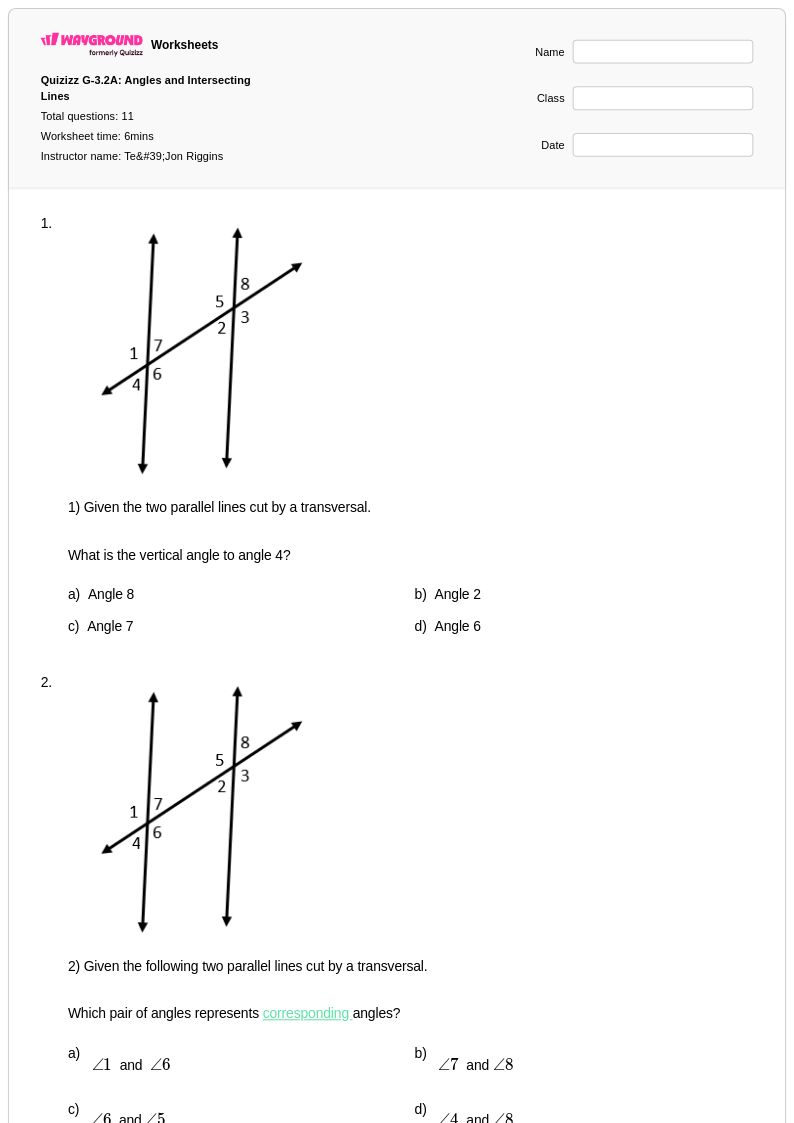
11Q
9th
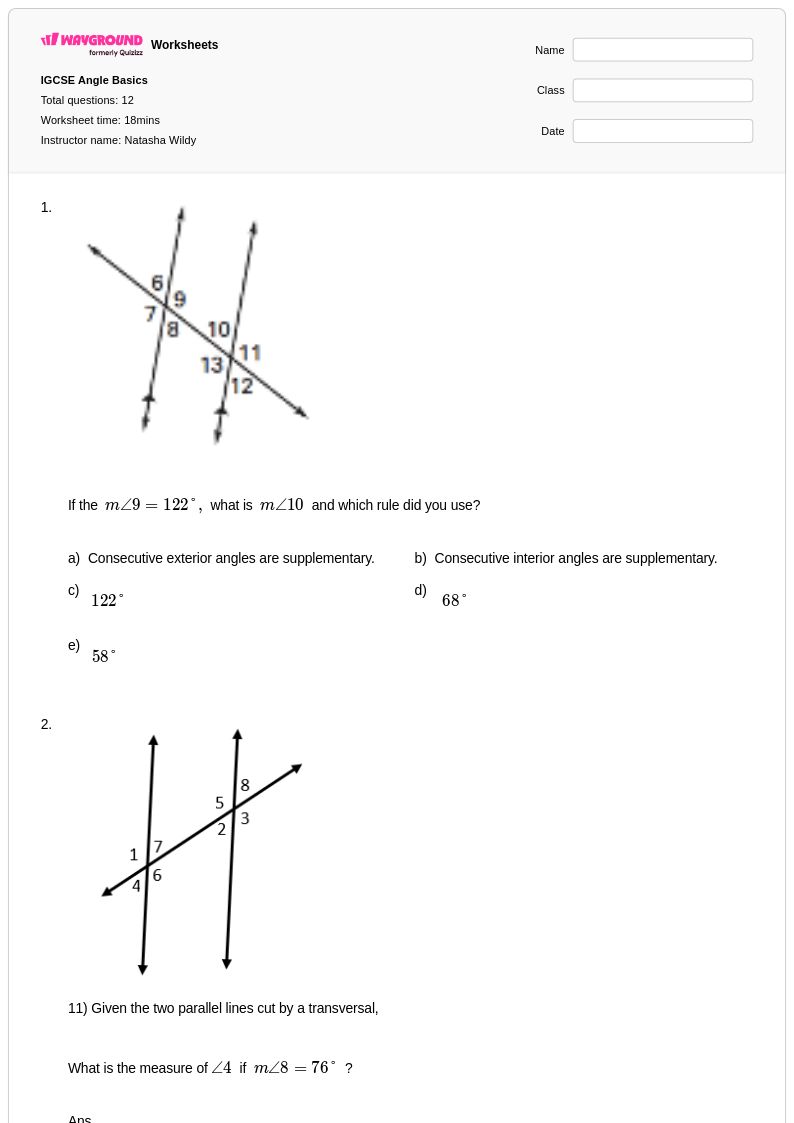
12Q
10th
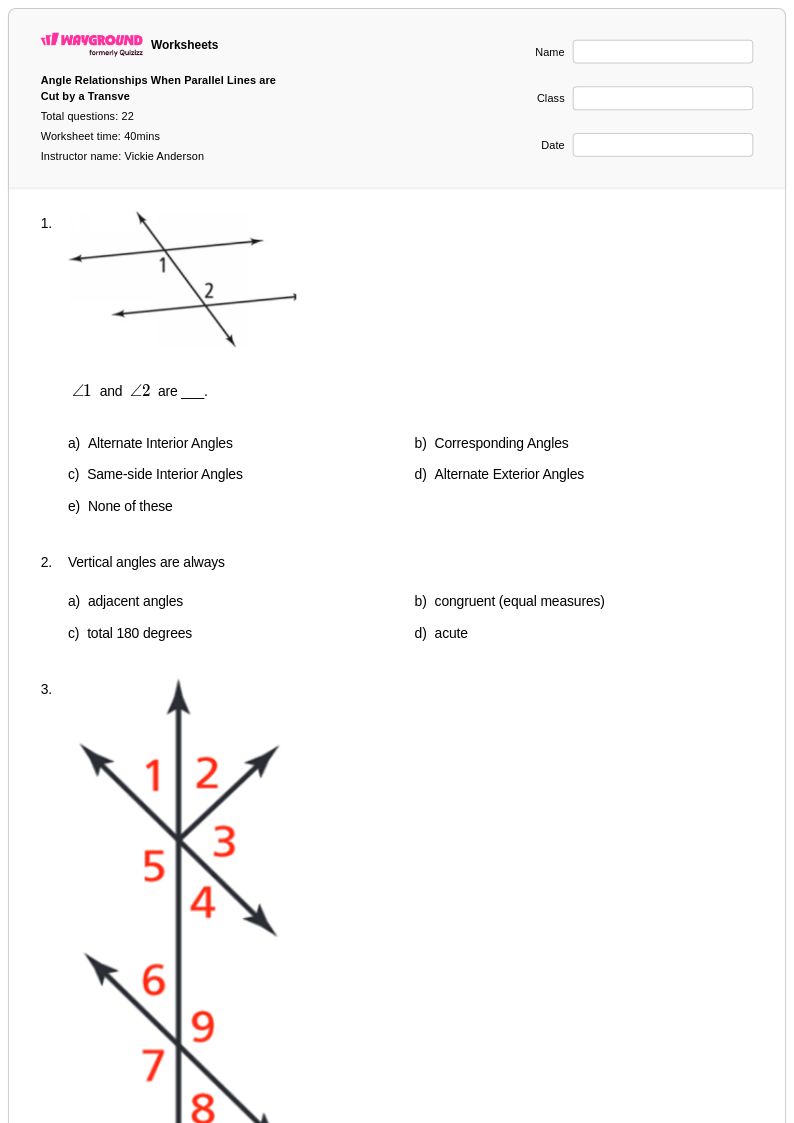
22Q
8th
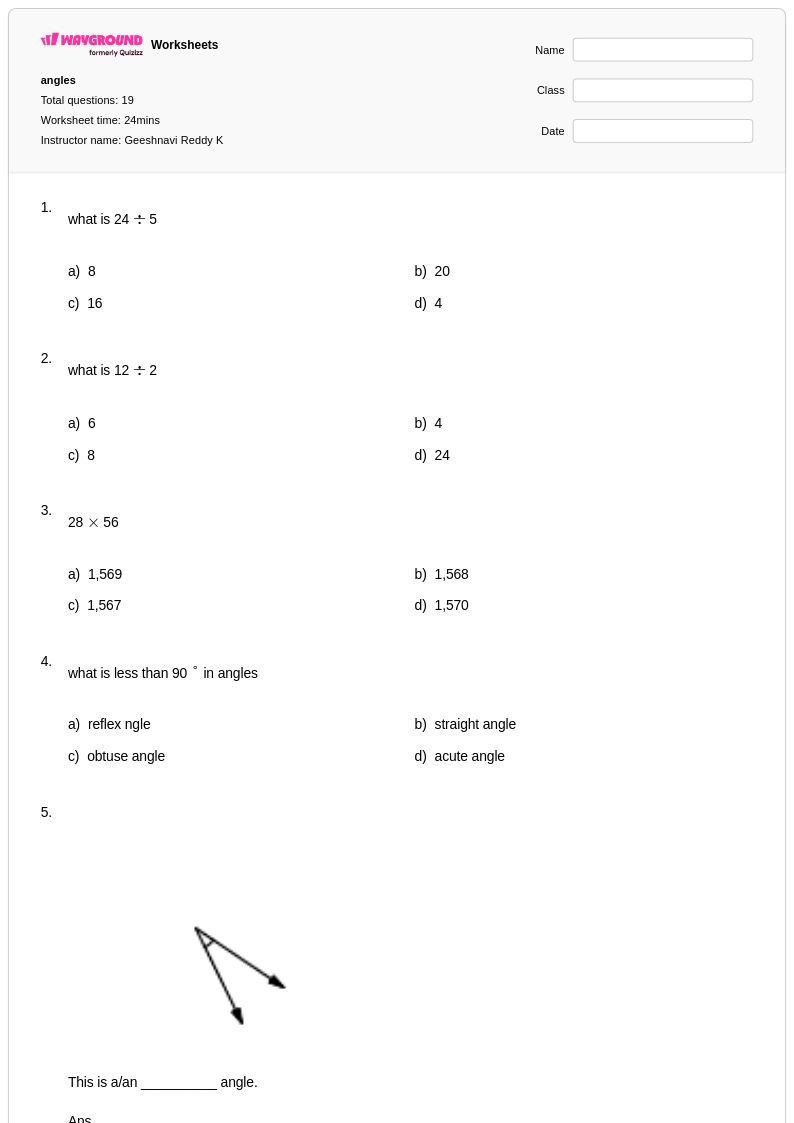
19Q
4th
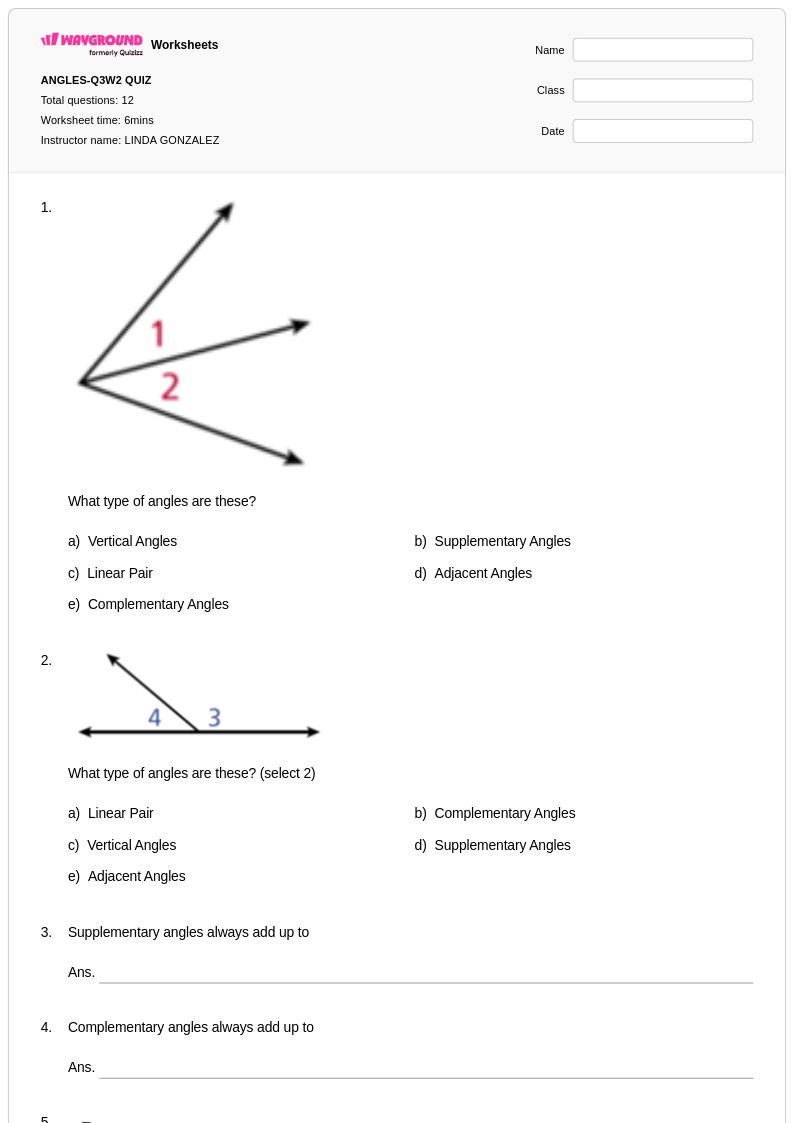
12Q
7th
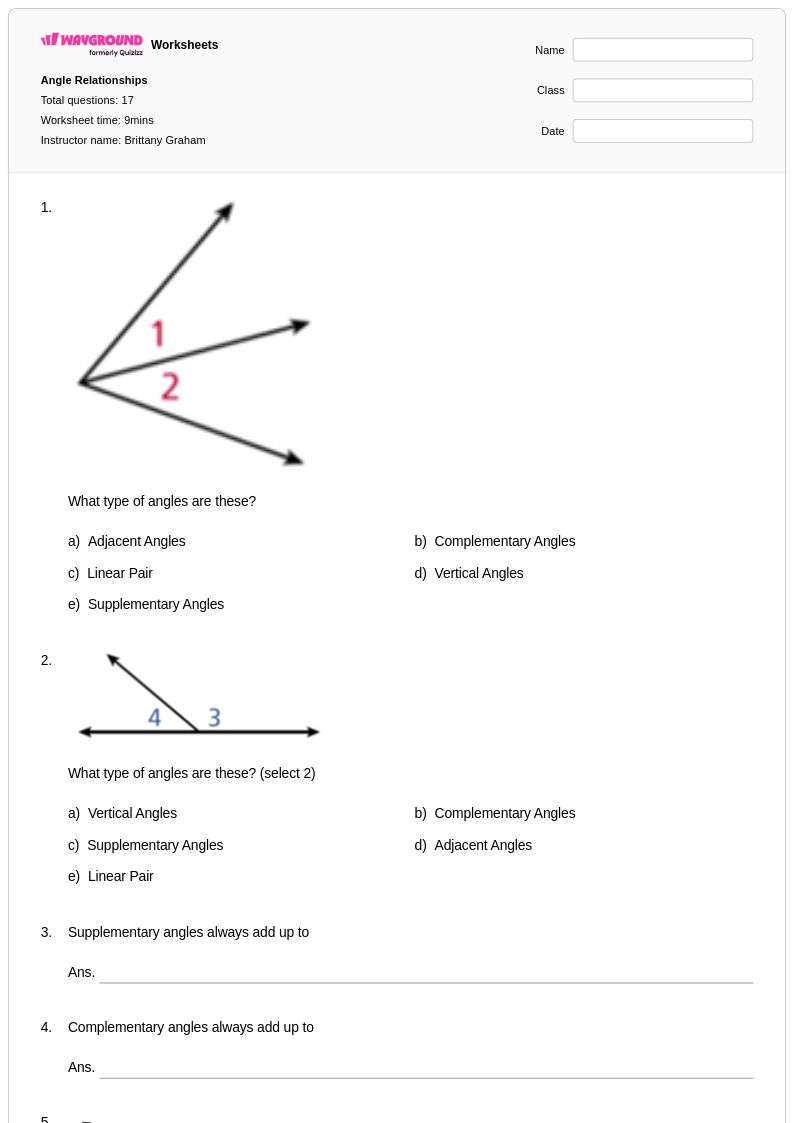
17Q
9th - 10th
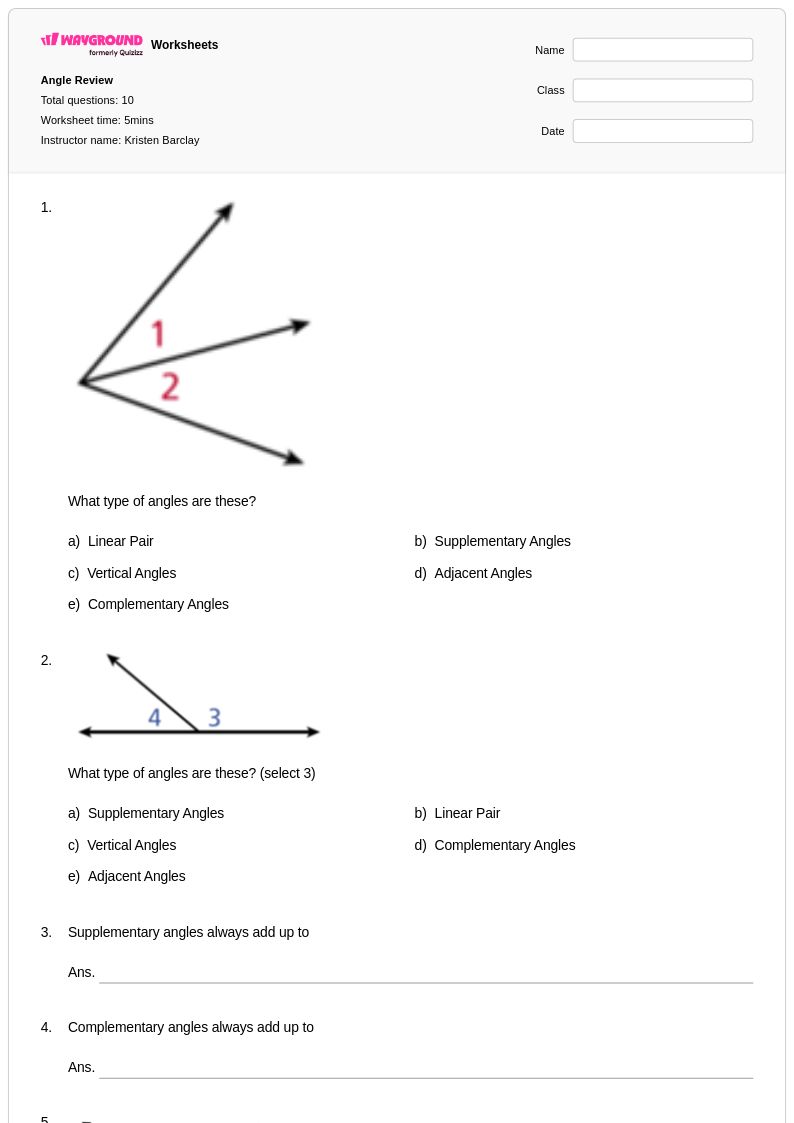
10Q
9th - 10th
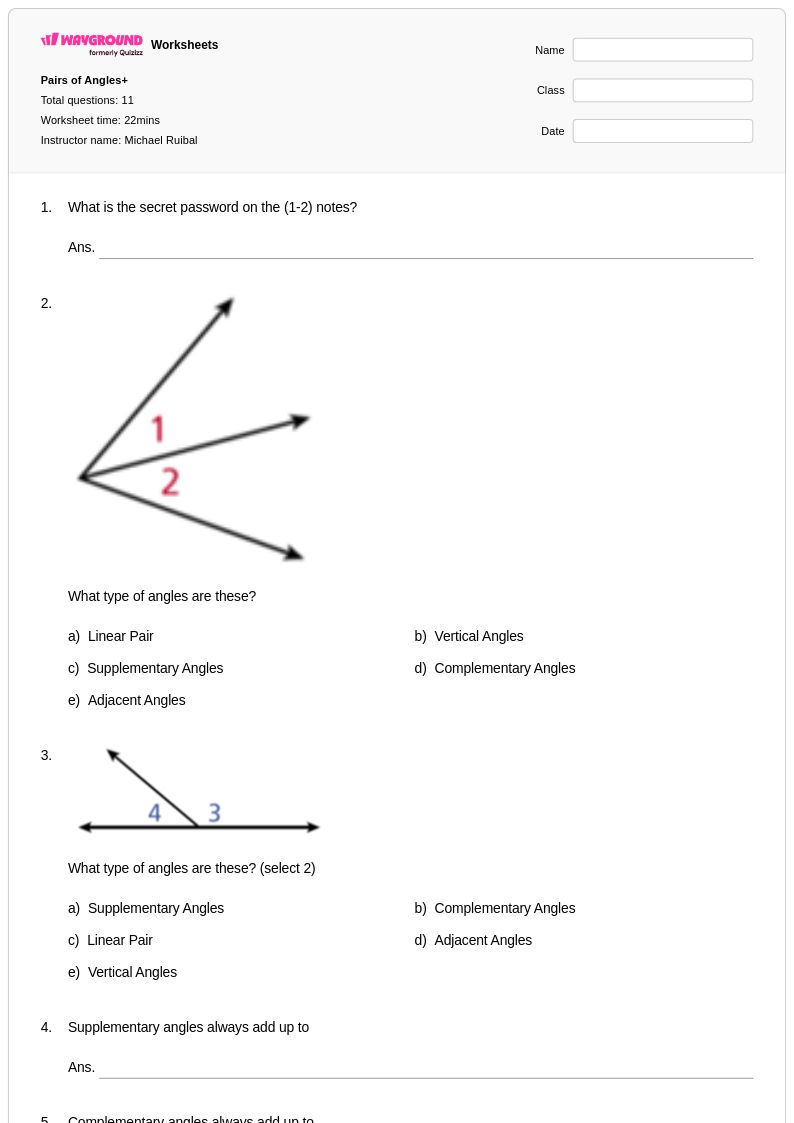
11Q
10th - 12th
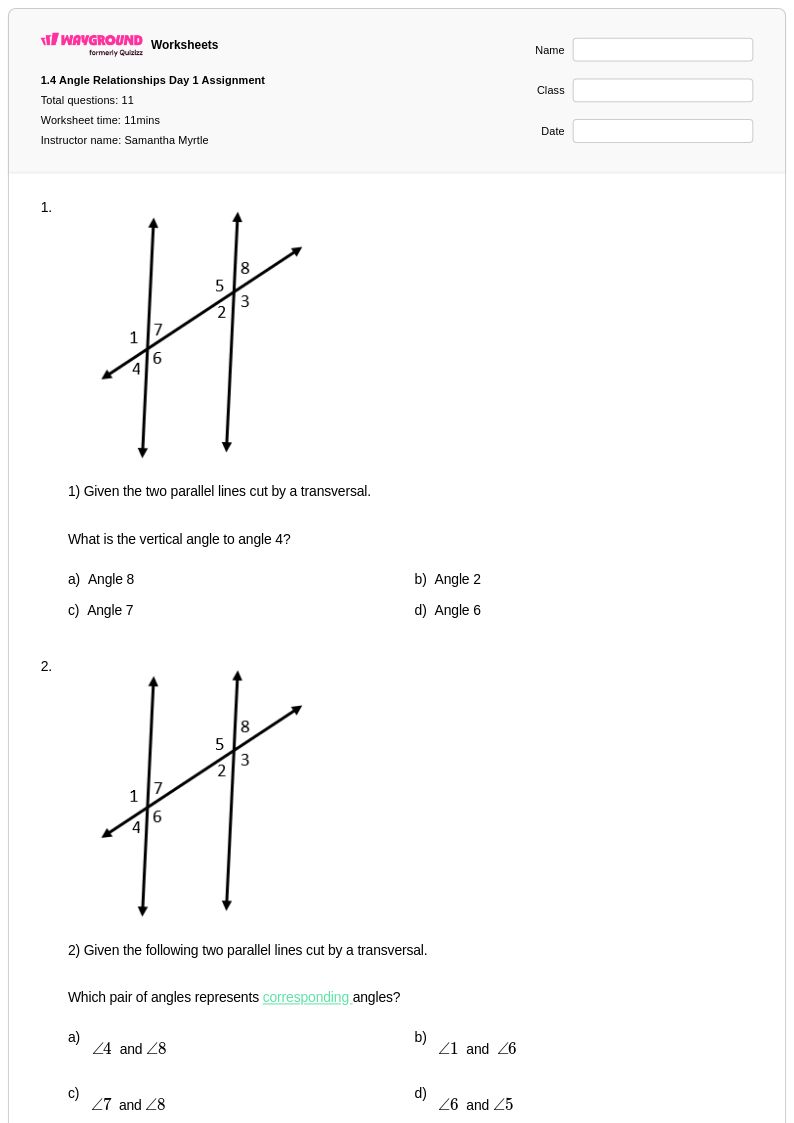
11Q
9th - 12th
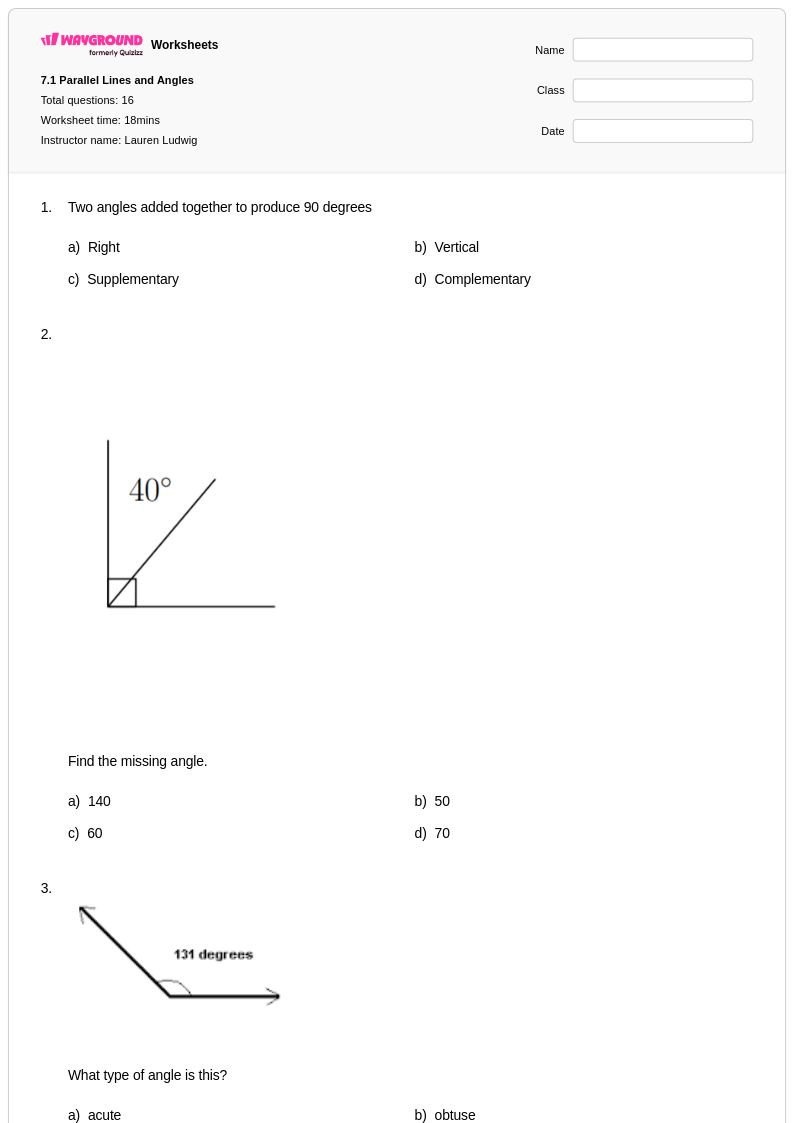
16Q
9th
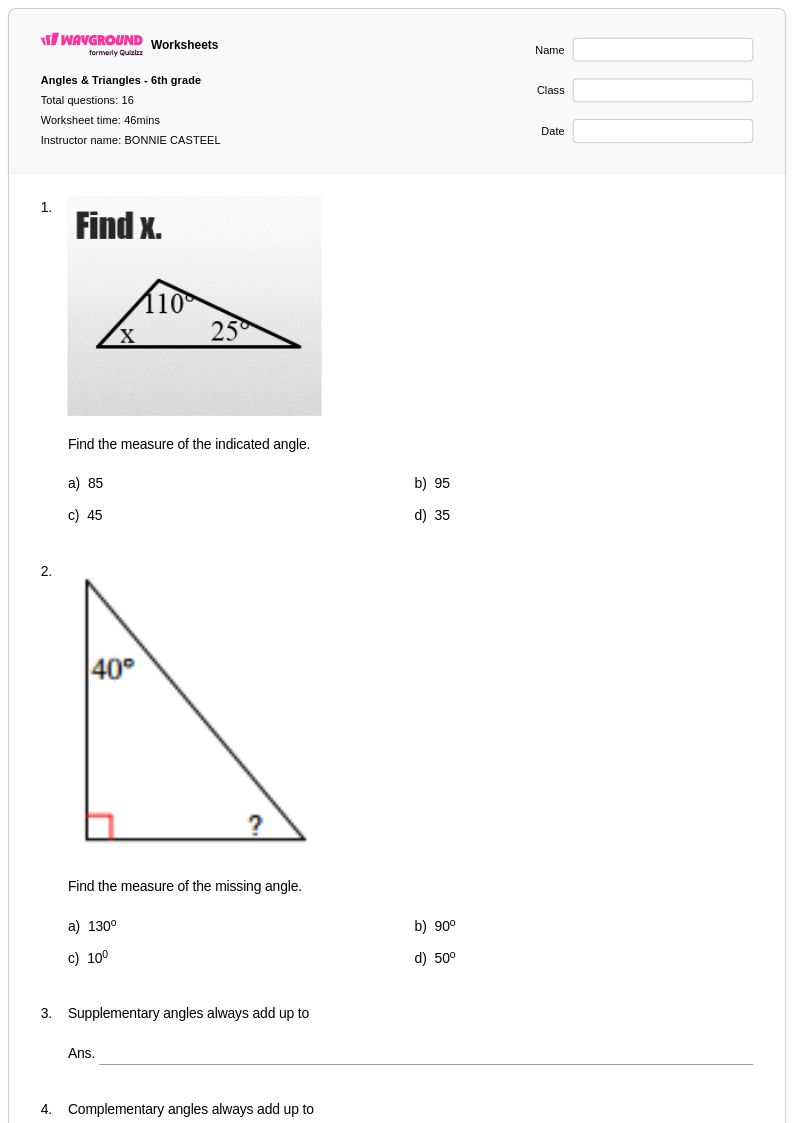
16Q
6th
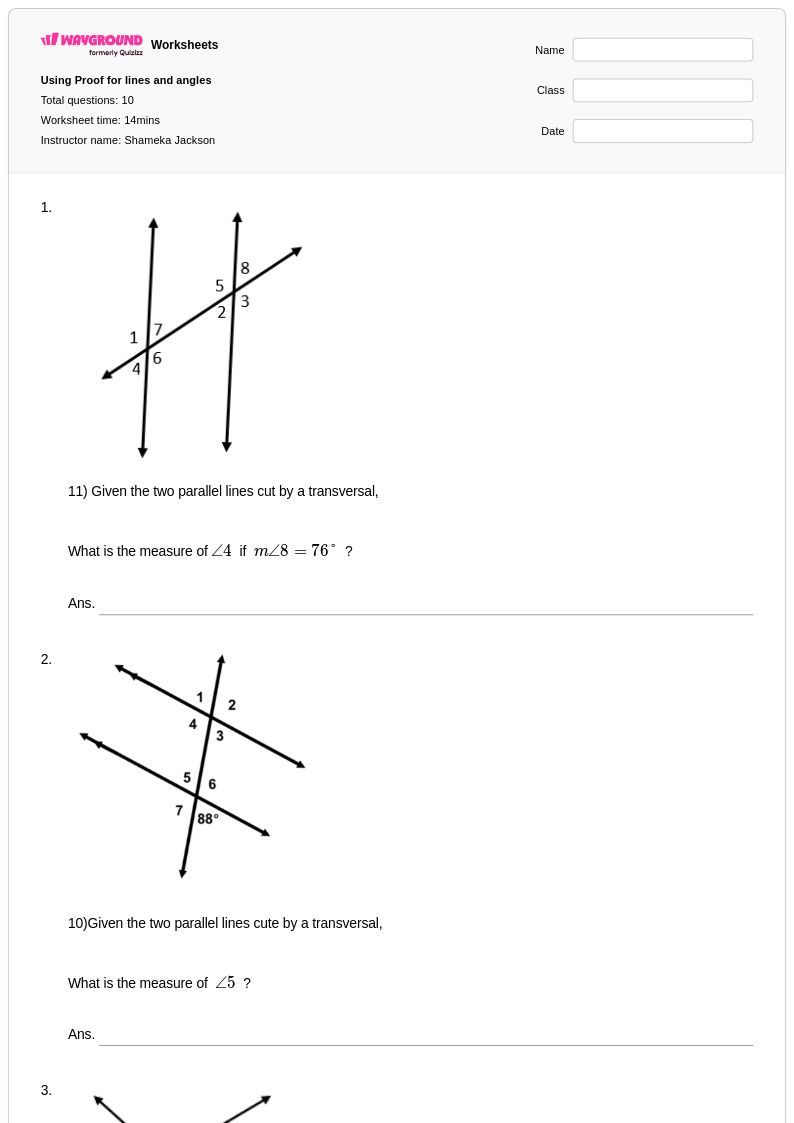
10Q
10th - 11th
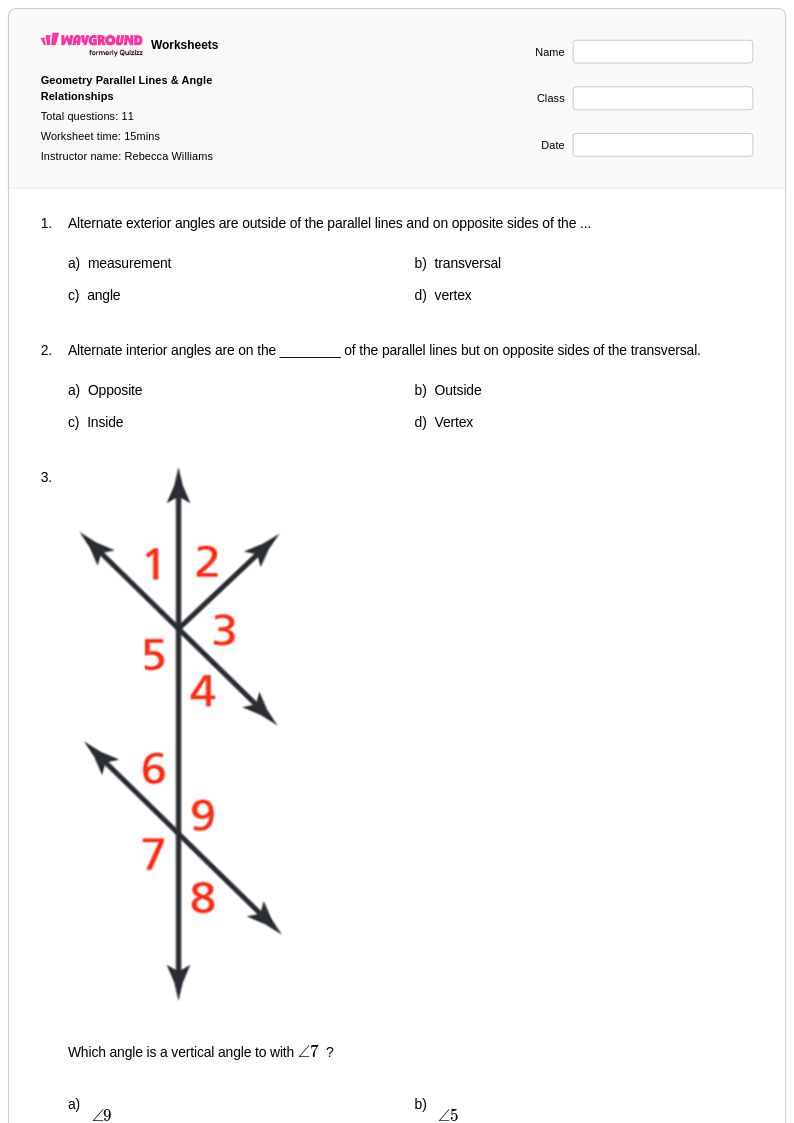
11Q
9th - 10th
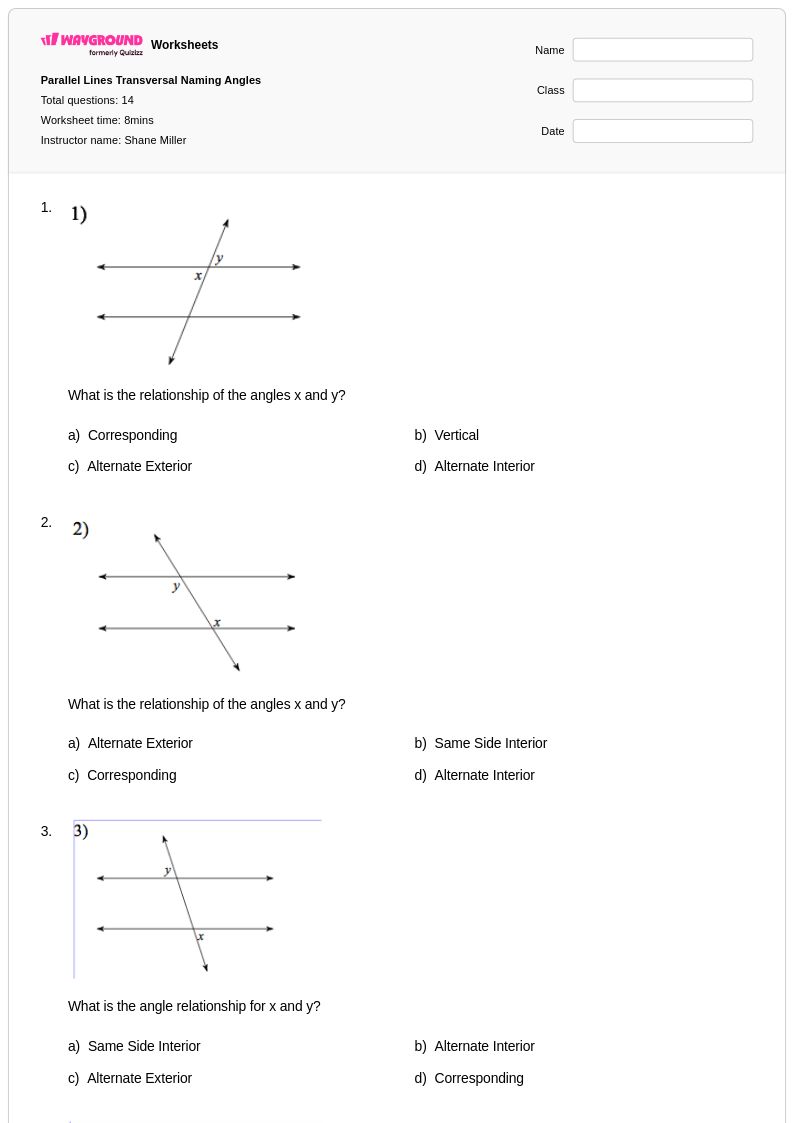
14Q
7th - 10th
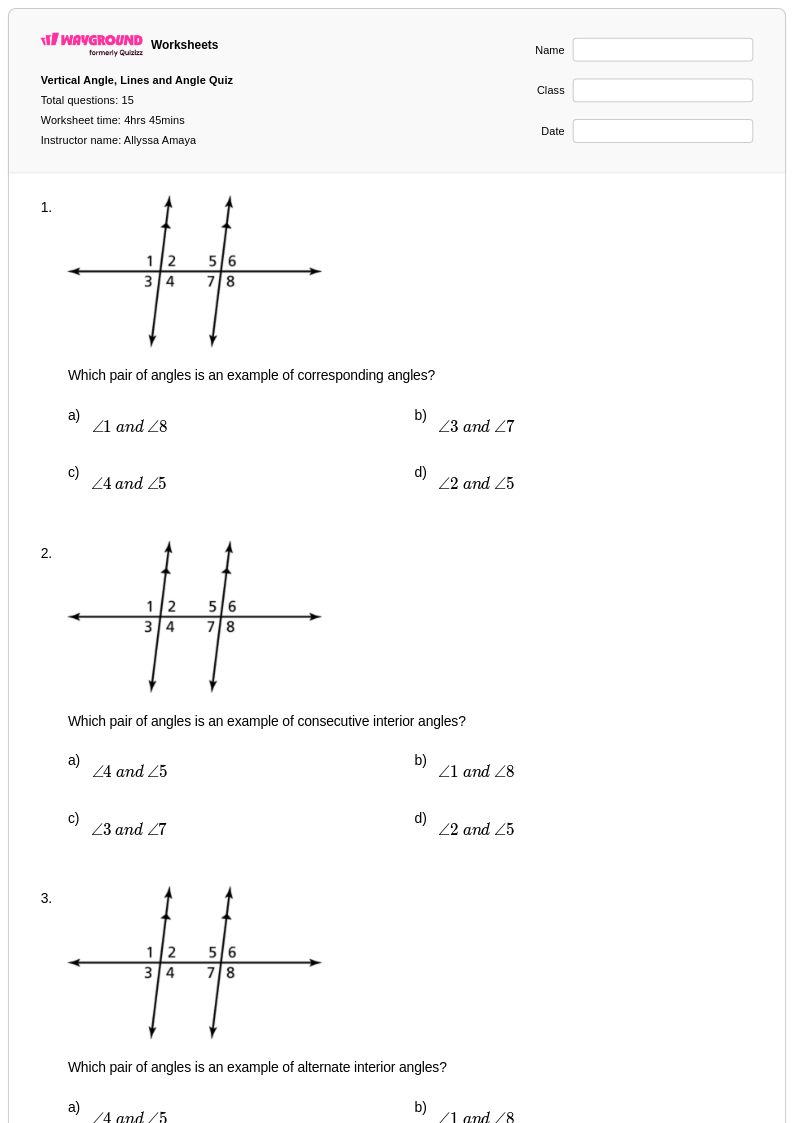
15Q
9th
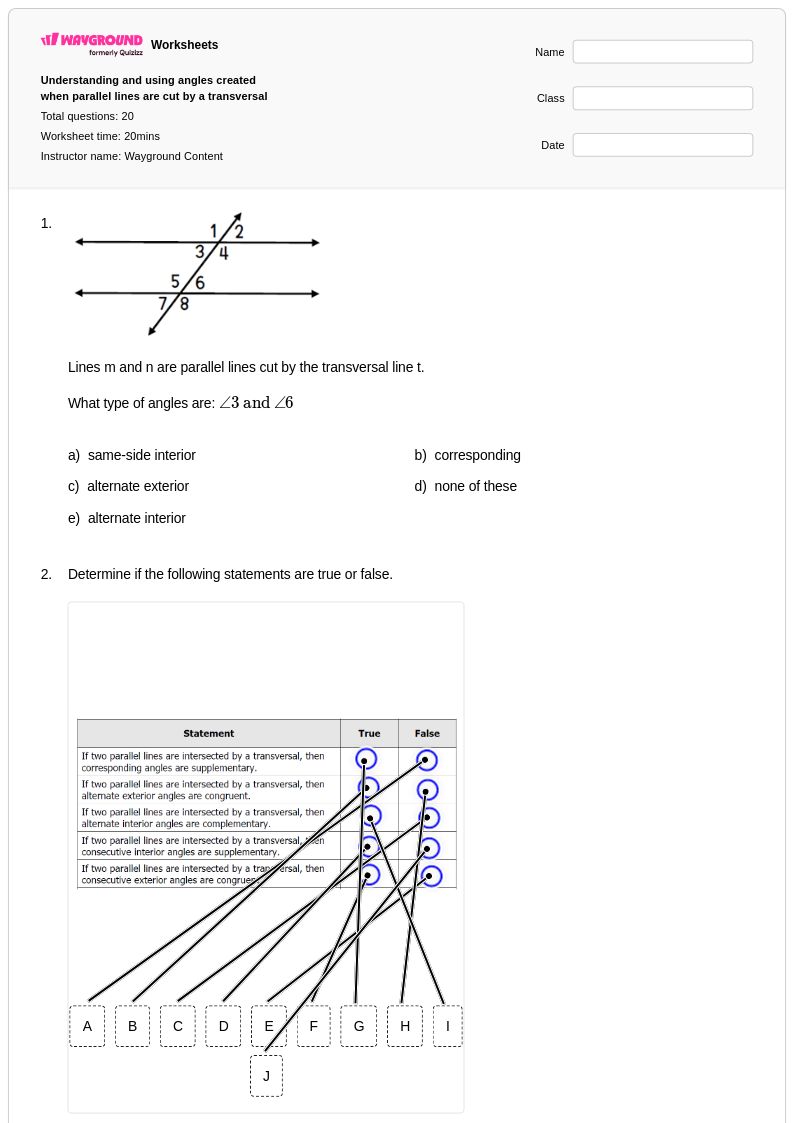
20Q
8th
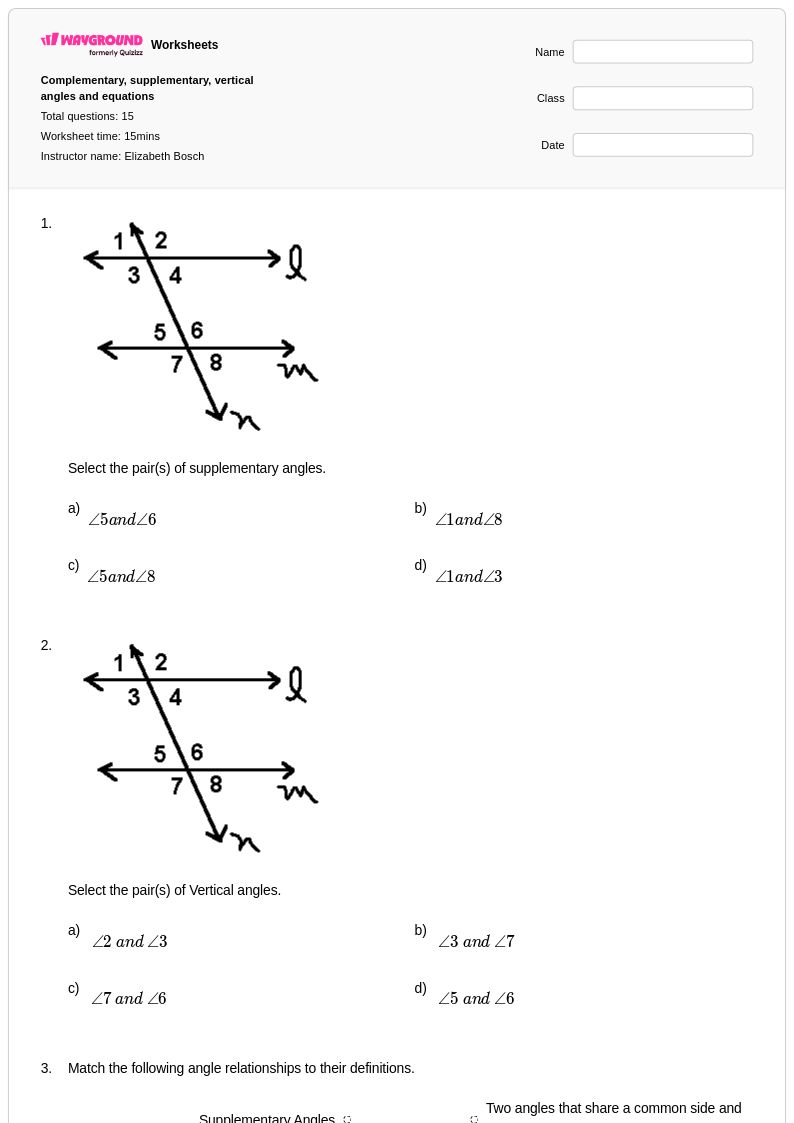
15Q
7th - Uni
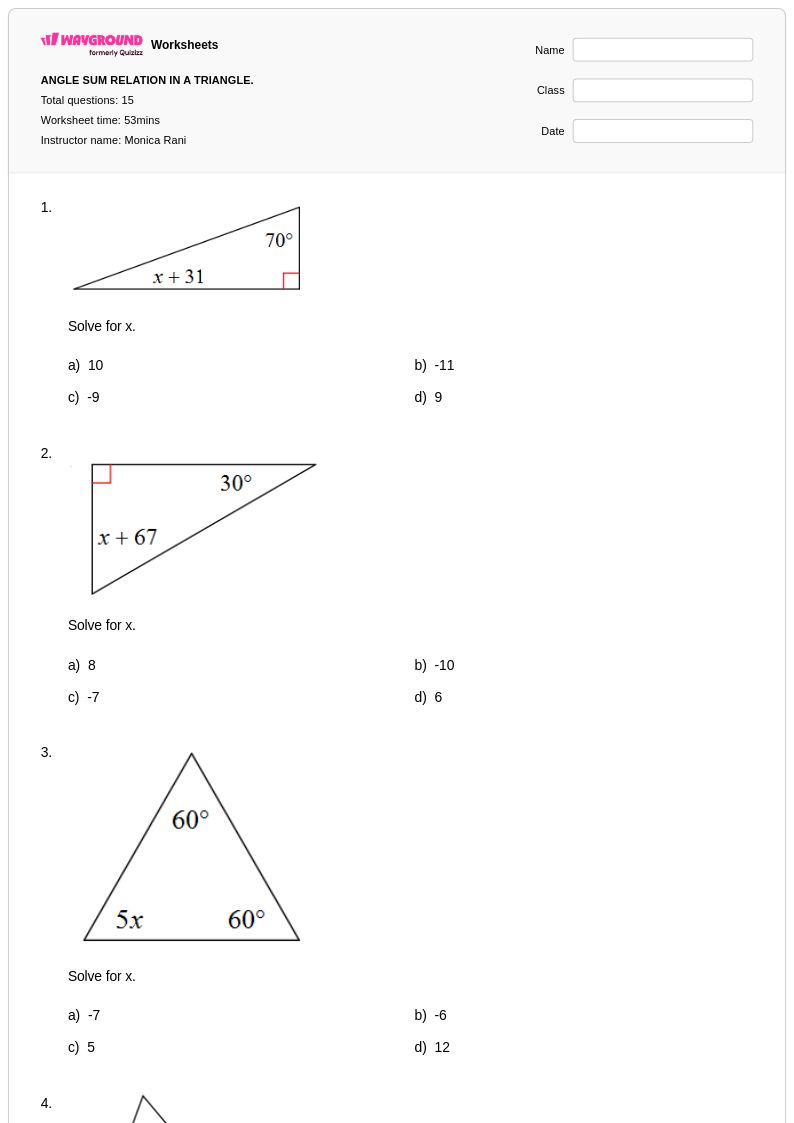
15Q
8th
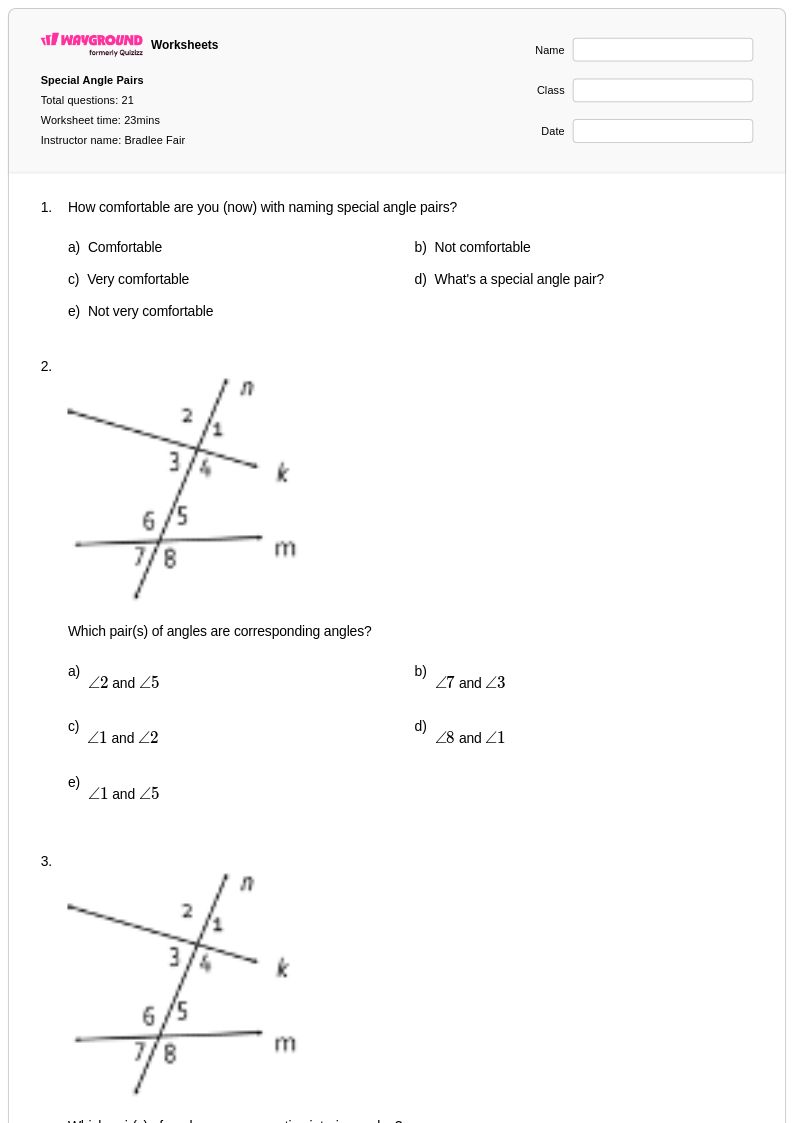
21Q
9th - 12th
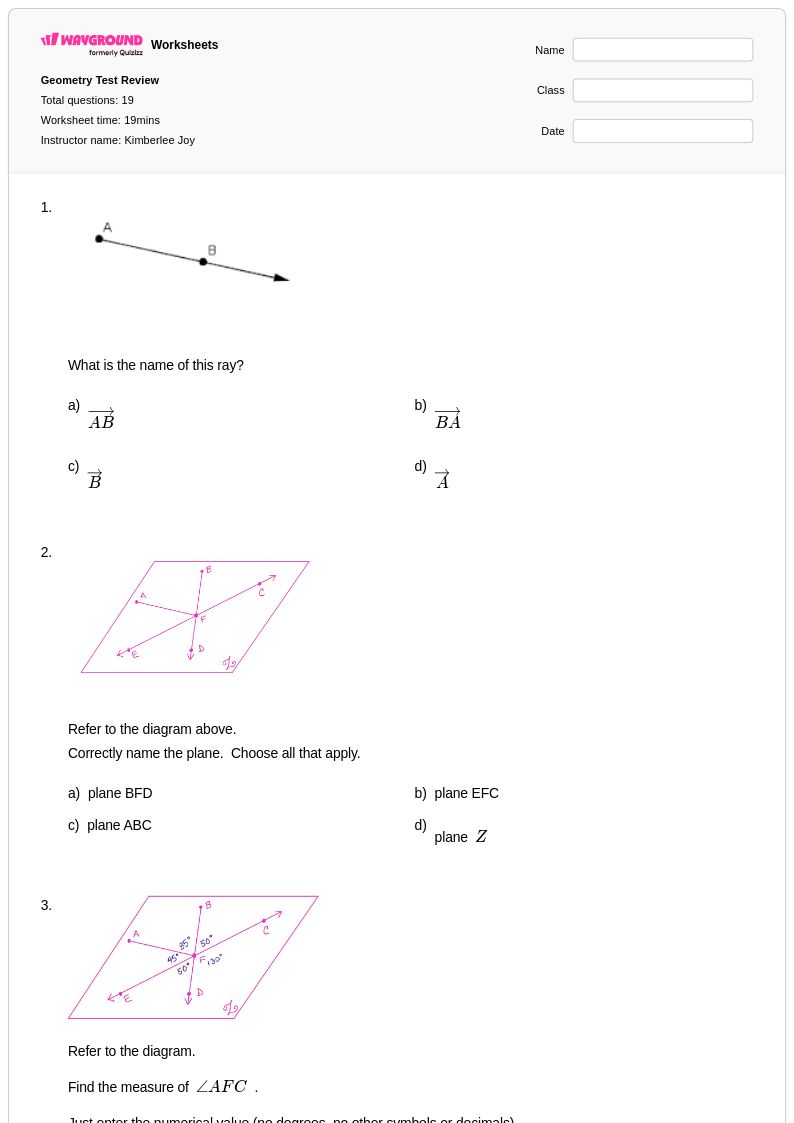
19Q
9th
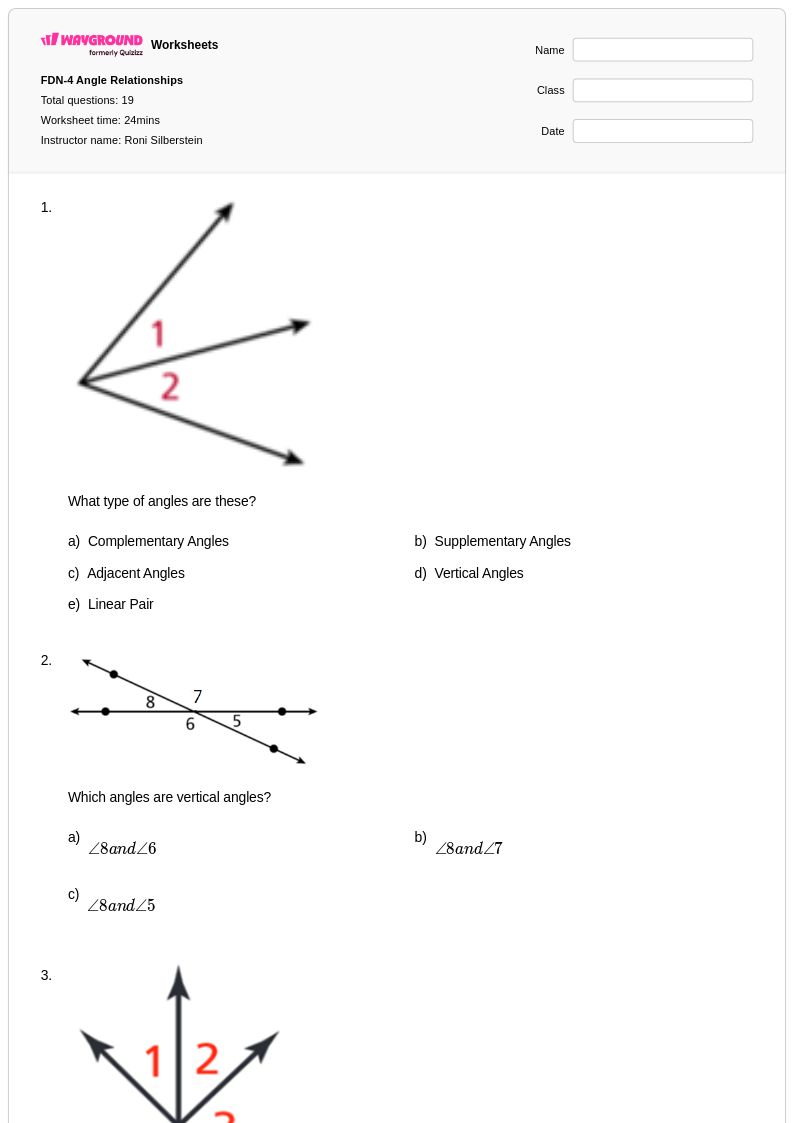
19Q
10th
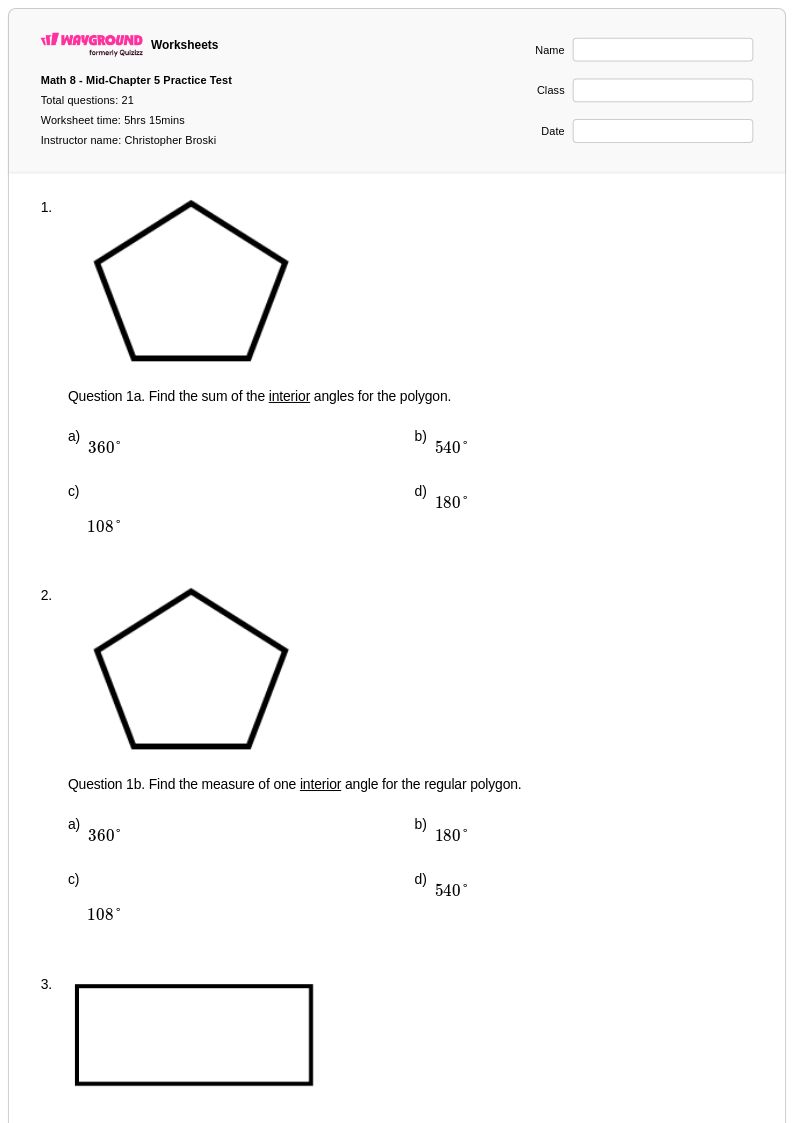
21Q
8th
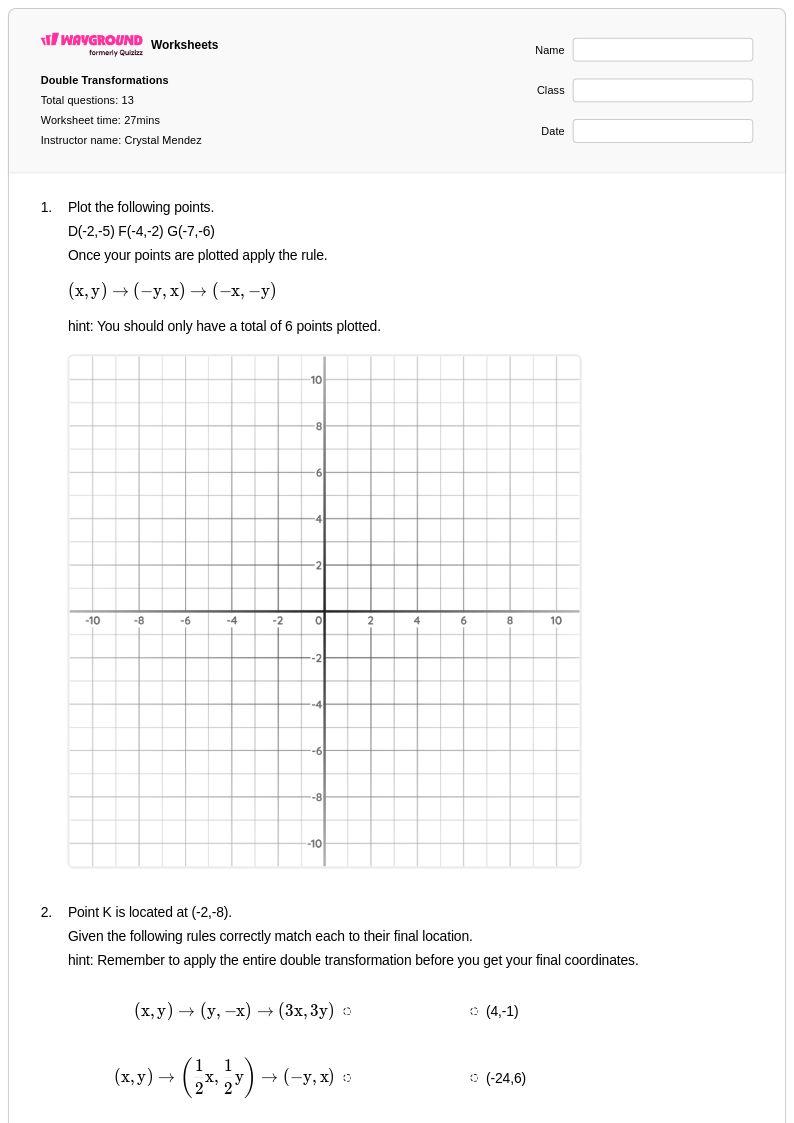
13Q
10th
Explorar hojas de trabajo por materias
Explore printable Angle Rules worksheets
Angle rules worksheets available through Wayground (formerly Quizizz) provide comprehensive practice opportunities for students to master fundamental geometric principles governing angle relationships and measurements. These expertly designed resources strengthen critical mathematical skills including identifying complementary and supplementary angles, applying vertical angle theorems, understanding linear pair relationships, and working with angles formed by parallel lines and transversals. The collection features carefully scaffolded practice problems that progress from basic angle identification to complex multi-step proofs, with each worksheet including detailed answer keys to support independent learning. Students can access these free printables in convenient pdf format, making them ideal for both classroom instruction and home study sessions.
Wayground (formerly Quizizz) empowers educators with millions of teacher-created angle rules resources that streamline lesson planning and differentiated instruction. The platform's robust search and filtering capabilities allow teachers to quickly locate worksheets aligned to specific mathematical standards and student proficiency levels, while customization tools enable modifications to match individual classroom needs. These versatile materials are available in both printable and digital formats, including downloadable pdf versions that facilitate seamless integration into existing curricula. Teachers can leverage this extensive collection for targeted remediation of struggling learners, enrichment activities for advanced students, and ongoing skill practice that reinforces geometric reasoning and problem-solving strategies essential for mathematical success.
FAQs
How do I teach angle rules so students know which rule to use?
What exercises help students practice angle rules?
What mistakes do students commonly make when applying angle rules?
How can I use an angle rules worksheet on Wayground?
How do angle rules fit into the Common Core geometry curriculum?
How can I differentiate angle rules practice?