Free Printable Colligative Properties Worksheets for Year 12
Master Year 12 colligative properties with Wayground's comprehensive collection of free worksheets, printables, and practice problems featuring detailed answer keys to strengthen your chemistry understanding.
Explore printable Colligative Properties worksheets for Year 12
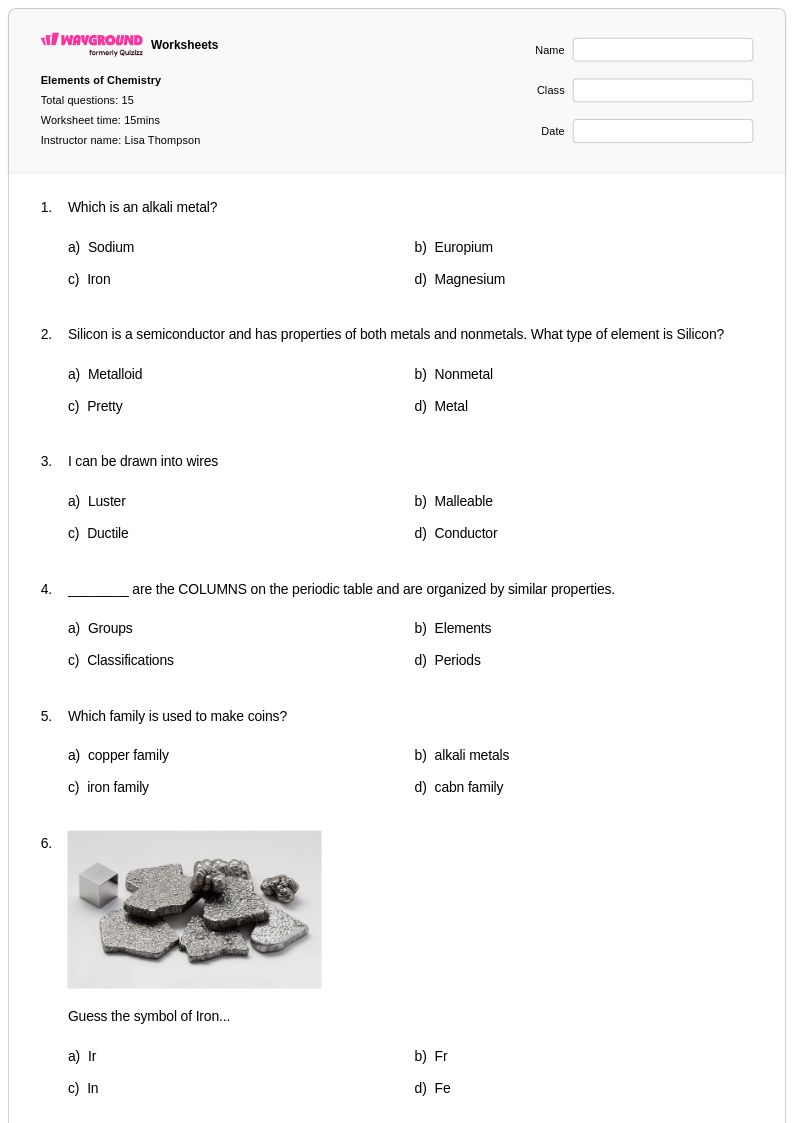
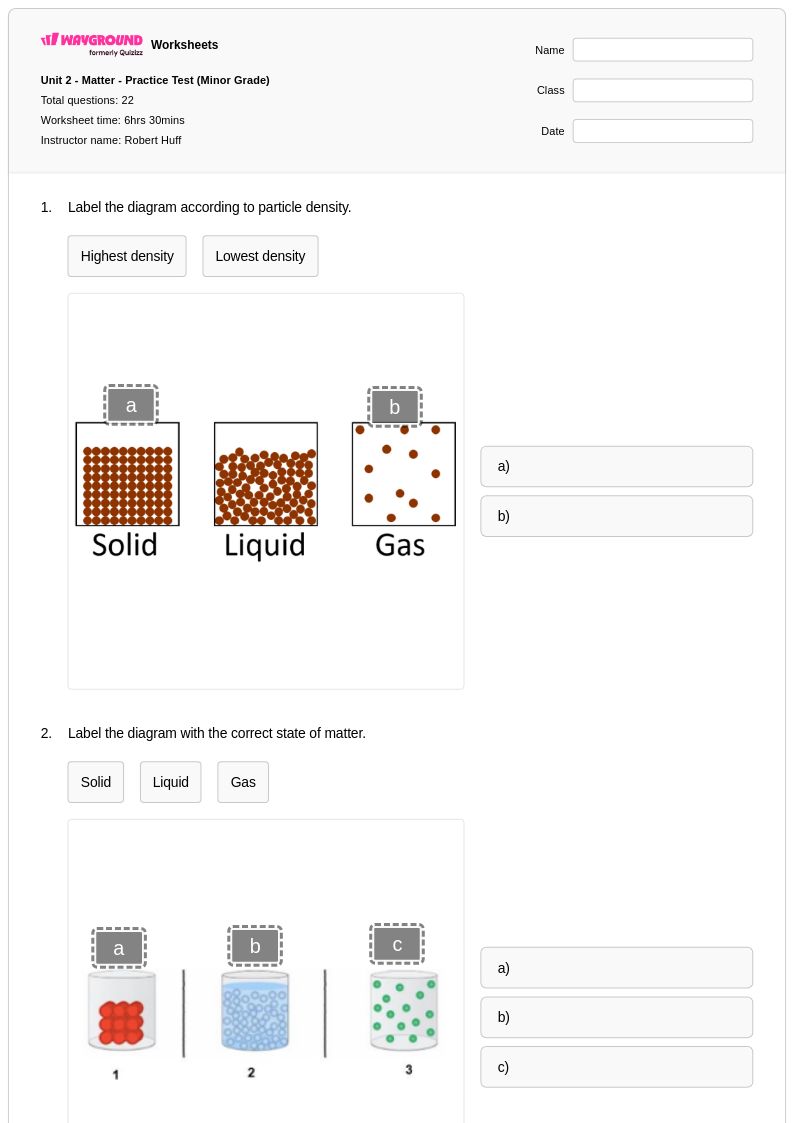
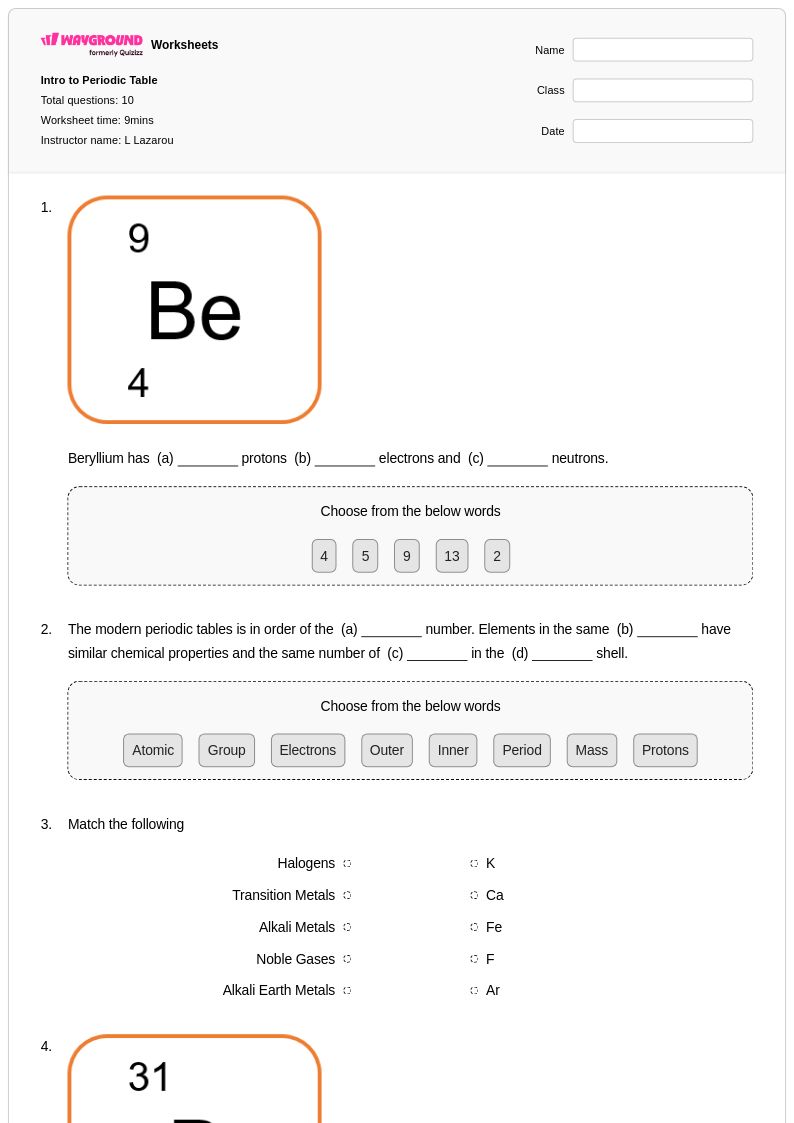
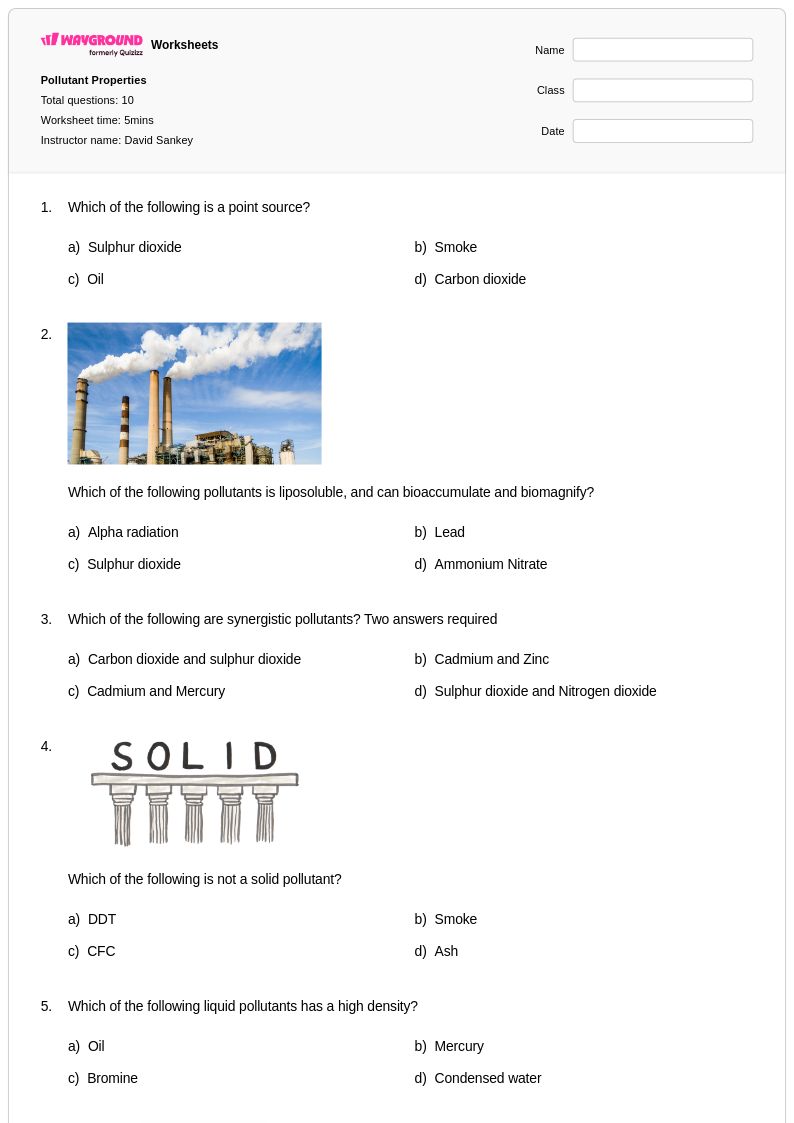
Year 12 colligative properties worksheets available through Wayground (formerly Quizizz) provide comprehensive practice with the fundamental concepts that govern how dissolved particles affect solution behavior. These expertly designed resources strengthen students' understanding of vapor pressure lowering, boiling point elevation, freezing point depression, and osmotic pressure through systematic problem-solving approaches. The worksheets feature carefully scaffolded practice problems that guide students through molality calculations, van't Hoff factor determinations, and real-world applications such as antifreeze solutions and salt water systems. Each printable resource includes detailed answer keys that support independent learning and self-assessment, while the free pdf format ensures easy classroom distribution and home study access.
Wayground's extensive collection draws from millions of teacher-created resources specifically focused on advanced chemistry concepts, offering educators powerful search and filtering capabilities to locate materials perfectly aligned with their Year 12 curriculum standards. The platform's differentiation tools enable teachers to customize worksheets for varying ability levels, from foundational practice with basic colligative property identification to advanced problem sets involving complex solution chemistry calculations. These versatile resources support comprehensive lesson planning by providing both printable and digital formats, making them invaluable for targeted remediation of challenging concepts, enrichment activities for advanced learners, and structured skill practice that builds student confidence in quantitative chemistry problem-solving.
FAQs
How do I teach colligative properties to chemistry students?
Start by establishing the core principle that colligative properties depend on the number of solute particles, not their chemical identity, before introducing individual properties like boiling point elevation and freezing point depression. Use real-world anchors such as road salt melting ice or antifreeze in car radiators to make the concept tangible before moving into calculations. From there, introduce molality and the van't Hoff factor as the quantitative tools students will apply across all four colligative properties: vapor pressure lowering, boiling point elevation, freezing point depression, and osmotic pressure.
What practice problems help students get better at colligative property calculations?
Effective practice should progress from conceptual identification tasks to single-step calculations and then to multi-step problems involving molality, van't Hoff factors, and colligative property constants. Students benefit from problems that require them to distinguish between electrolytes and non-electrolytes first, since this directly affects van't Hoff factor values and the magnitude of colligative effects. Including comparison problems where students rank solutes by their effect on boiling point or freezing point builds both procedural fluency and conceptual understanding simultaneously.
What mistakes do students commonly make when solving colligative properties problems?
The most frequent error is forgetting to apply the van't Hoff factor when working with electrolytes, which causes students to underestimate the colligative effect of ionic solutes like NaCl or CaCl₂. Students also commonly confuse molality with molarity, leading to incorrect calculation setups, especially in problems where temperature changes make molarity unreliable. A third common misconception is assuming that colligative properties depend on the type of solute rather than the particle count, which can be addressed directly by comparing equimolar solutions of glucose and sodium chloride side by side.
How can I use colligative properties worksheets in my chemistry class?
Colligative properties worksheets on Wayground are available as printable PDFs for traditional classroom use and in digital formats for technology-integrated environments, including the option to host them as an interactive quiz directly on Wayground. Printable versions work well for guided practice during class or as homework assignments, while digital formats allow for immediate feedback and easy distribution to remote or hybrid learners. Each worksheet includes an answer key, supporting both teacher-led review and independent student self-assessment.
How do I differentiate colligative properties instruction for students at different levels?
For students who are still building foundational skills, focus practice on single-property problems using non-electrolytes so the van't Hoff factor does not add complexity before the core equation is secure. Advanced learners can be challenged with multi-solute systems, real-world application problems involving biological membranes or industrial processes, and problems that require them to work backwards from a measured property change to determine solute concentration. On Wayground, teachers can apply accommodations such as reduced answer choices or read-aloud settings to individual students, ensuring that the same worksheet can serve learners across a range of needs without singling anyone out.
What real-world examples can I use to make colligative properties relevant to students?
Antifreeze solutions in car radiators are a direct application of both freezing point depression and boiling point elevation, making them useful for showing why the same additive serves two purposes. Saltwater boiling point comparisons, the use of road salt in winter, and the function of osmosis in biological cell membranes all connect colligative properties to experiences students already have. Incorporating these examples before or alongside calculation practice helps students build a mental model of why the math matters beyond the worksheet.