Explore Wayground's comprehensive collection of free Evidence of Evolution worksheets and printables that help students analyze fossil records, comparative anatomy, and molecular data through engaging practice problems with complete answer keys.
Explore printable Evidence of Evolution worksheets
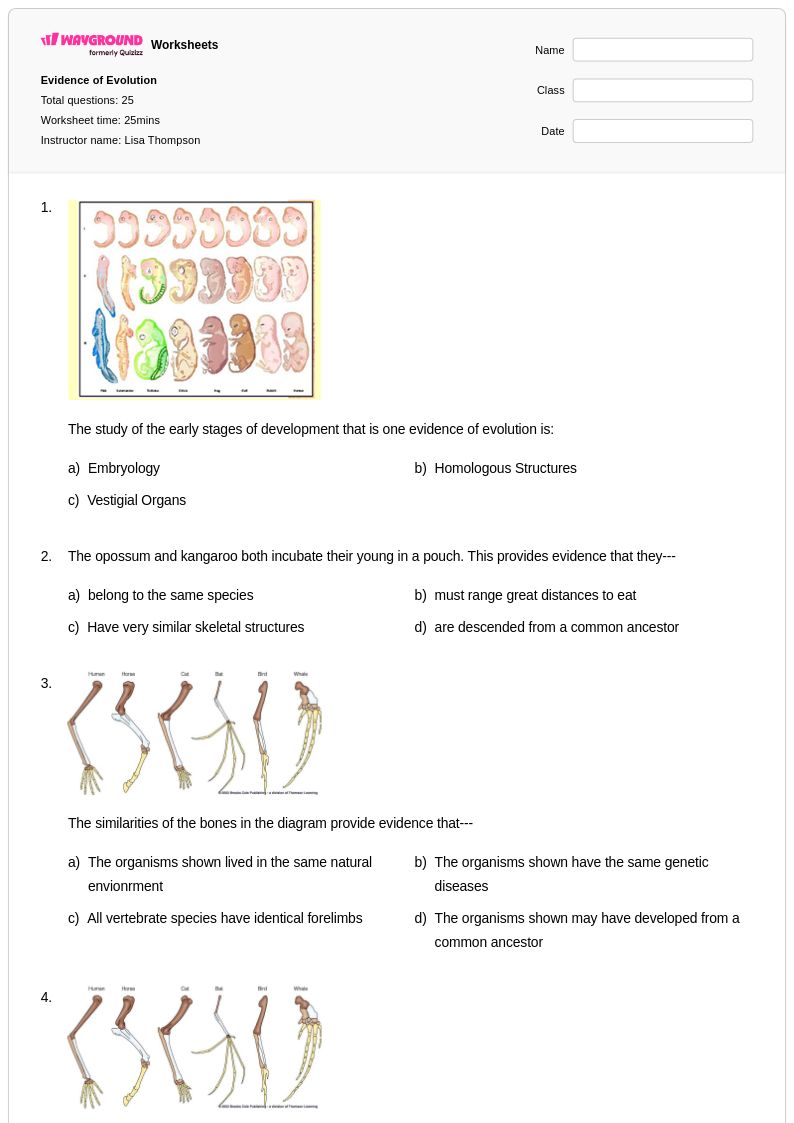
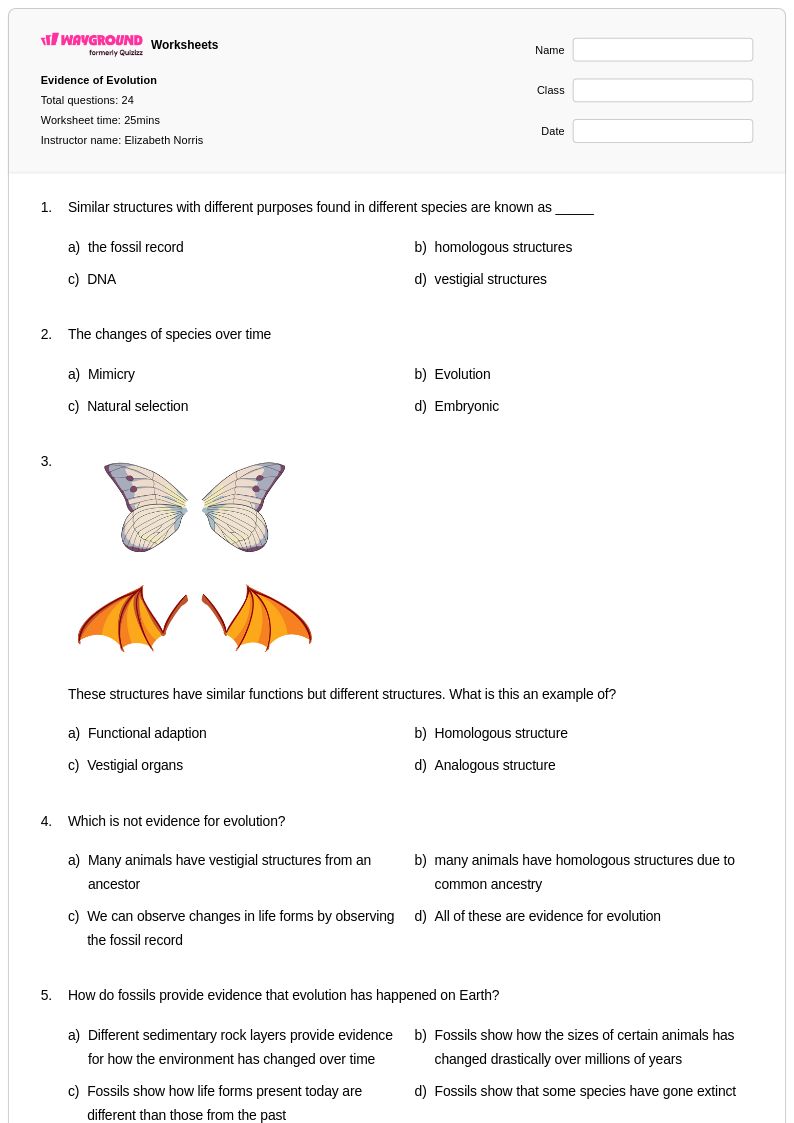
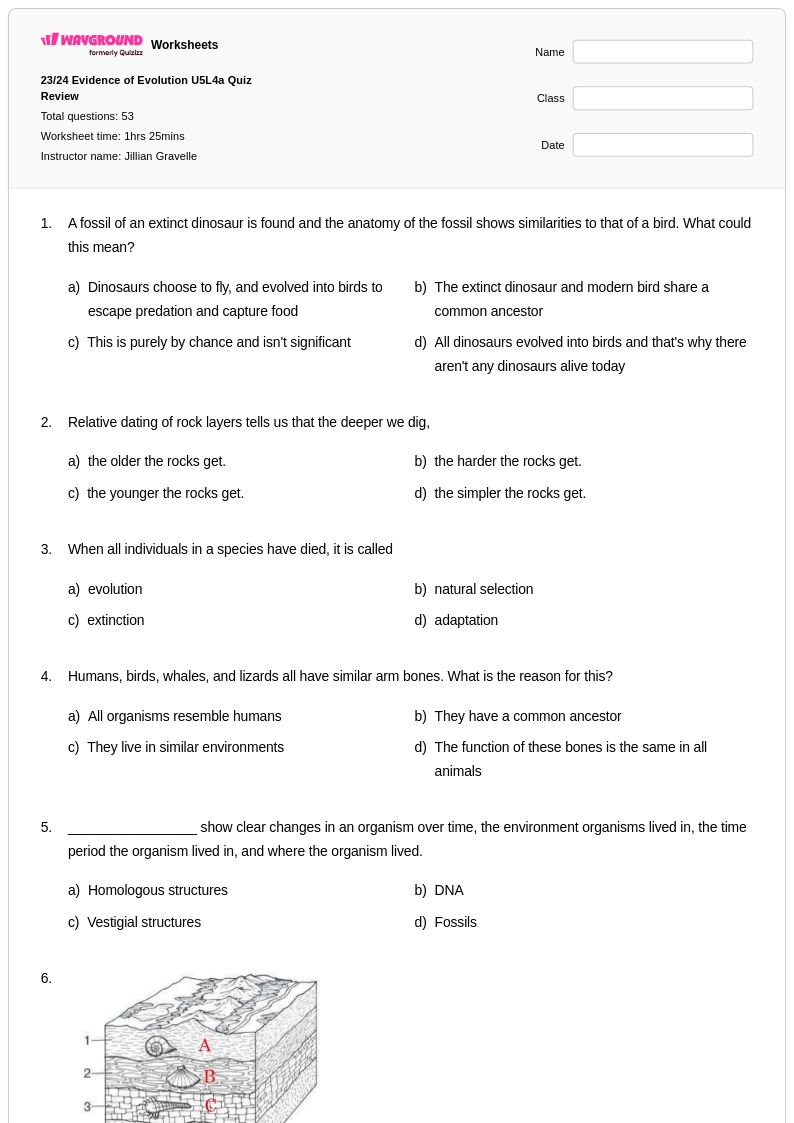
Evidence of Evolution worksheets available through Wayground (formerly Quizizz) provide comprehensive educational resources that help students understand and analyze the scientific evidence supporting evolutionary theory. These carefully crafted worksheets guide learners through critical concepts including fossil records, comparative anatomy, embryological development, molecular biology, and biogeographical distribution patterns that demonstrate evolutionary relationships among species. Students engage with practice problems that strengthen their analytical thinking skills as they examine homologous and analogous structures, study transitional fossils, and interpret DNA sequence comparisons between related organisms. Each worksheet comes with a detailed answer key to support both independent study and classroom instruction, and teachers can access these resources as free printables in convenient pdf format for seamless integration into their curriculum.
Wayground (formerly Quizizz) empowers educators with millions of teacher-created resources specifically designed to support instruction on Evidence of Evolution topics, featuring robust search and filtering capabilities that allow teachers to quickly locate materials aligned with their specific standards and learning objectives. The platform's differentiation tools enable instructors to customize worksheets to meet diverse student needs, whether providing additional support for struggling learners or offering enrichment opportunities for advanced students ready to explore more complex evolutionary concepts. These versatile resources are available in both printable and digital formats, including downloadable pdf versions, making them ideal for traditional classroom settings, remote learning environments, or hybrid instruction models. Teachers can seamlessly incorporate these materials into their lesson planning for initial skill development, targeted remediation of misconceptions about evolutionary evidence, or extended practice sessions that deepen student understanding of how scientific evidence supports the theory of evolution.
FAQs
How do I teach evidence of evolution in a way students actually understand?
Start by grounding instruction in concrete, observable examples before moving to molecular or biochemical evidence. Use fossil records and comparative anatomy as entry points because students can visually compare structures, then build toward DNA sequence comparisons and embryological development. Framing each line of evidence as an independent confirmation — not a single argument — helps students understand why scientists consider evolutionary theory well-supported.
What types of practice problems help students analyze evidence of evolution?
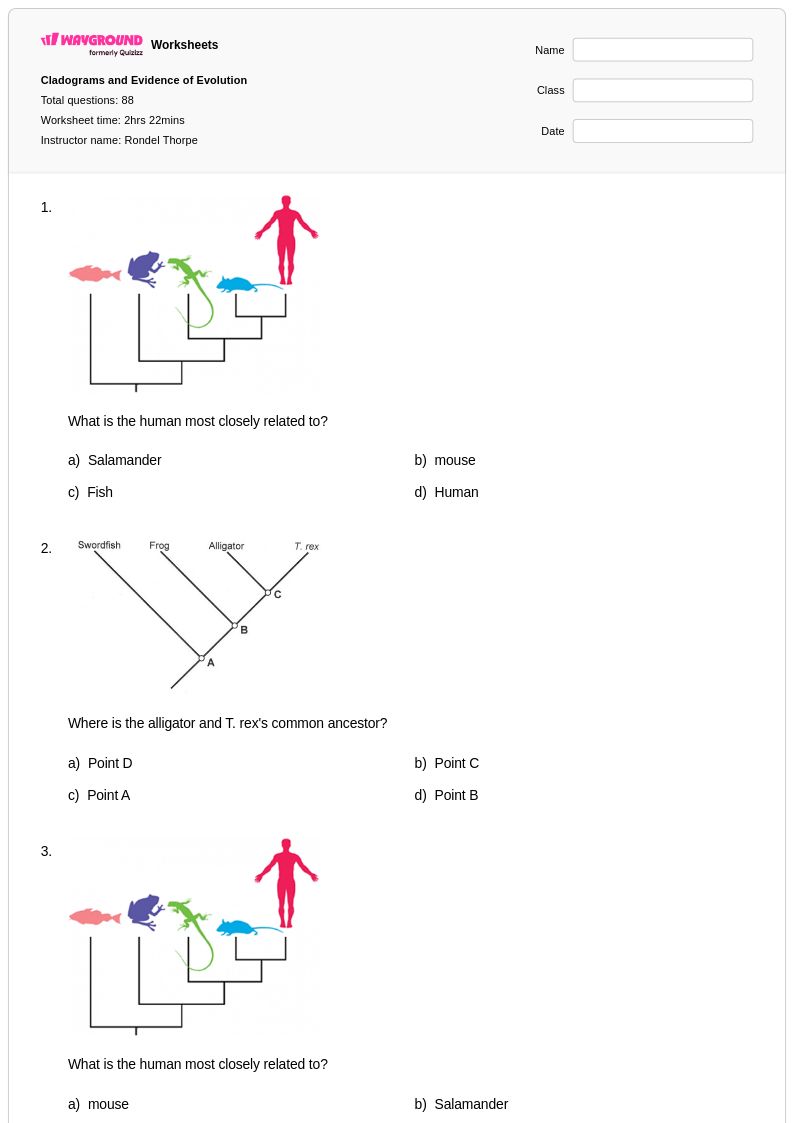
Effective practice includes interpreting cladograms using DNA or anatomical data, identifying homologous versus analogous structures in diagrams, and analyzing fossil sequences to infer evolutionary change over time. Problems that ask students to compare embryological stages across species or map biogeographical distribution patterns also build strong analytical skills. These exercise types push students beyond memorization toward reasoning with actual scientific evidence.
What misconceptions do students commonly have about evidence of evolution?
One of the most persistent errors is confusing homologous and analogous structures — students often assume physical similarity always indicates close evolutionary relationship, when analogous structures arise from convergent evolution rather than shared ancestry. Students also frequently misread fossil records as complete or chronological, not understanding that gaps are expected due to preservation conditions. Another common mistake is treating evolution as a linear progression rather than a branching tree of descent.
How can I use evidence of evolution worksheets to address different skill levels in my class?
For students who need additional support, worksheets that focus on visual identification of homologous structures or guided fossil record analysis reduce cognitive load while still developing core skills. Advanced students benefit from open-ended problems that require them to synthesize multiple lines of evidence — such as combining molecular data with biogeographical patterns — to draw conclusions about evolutionary relationships. On Wayground, teachers can apply accommodations such as read aloud, extended time, or reduced answer choices to individual students, so each learner engages with the same content at an appropriate level.
How do I use evidence of evolution worksheets from Wayground in my classroom?
Wayground's evidence of evolution worksheets are available as printable PDFs for traditional classroom use and in digital formats for technology-integrated or remote learning environments. Teachers can also host worksheets directly as a quiz on Wayground, giving students an interactive experience while automatically collecting responses. Each worksheet includes a complete answer key, making them practical for independent student work, guided instruction, or formative assessment.
How do I assess whether students truly understand the difference between homologous and analogous structures?
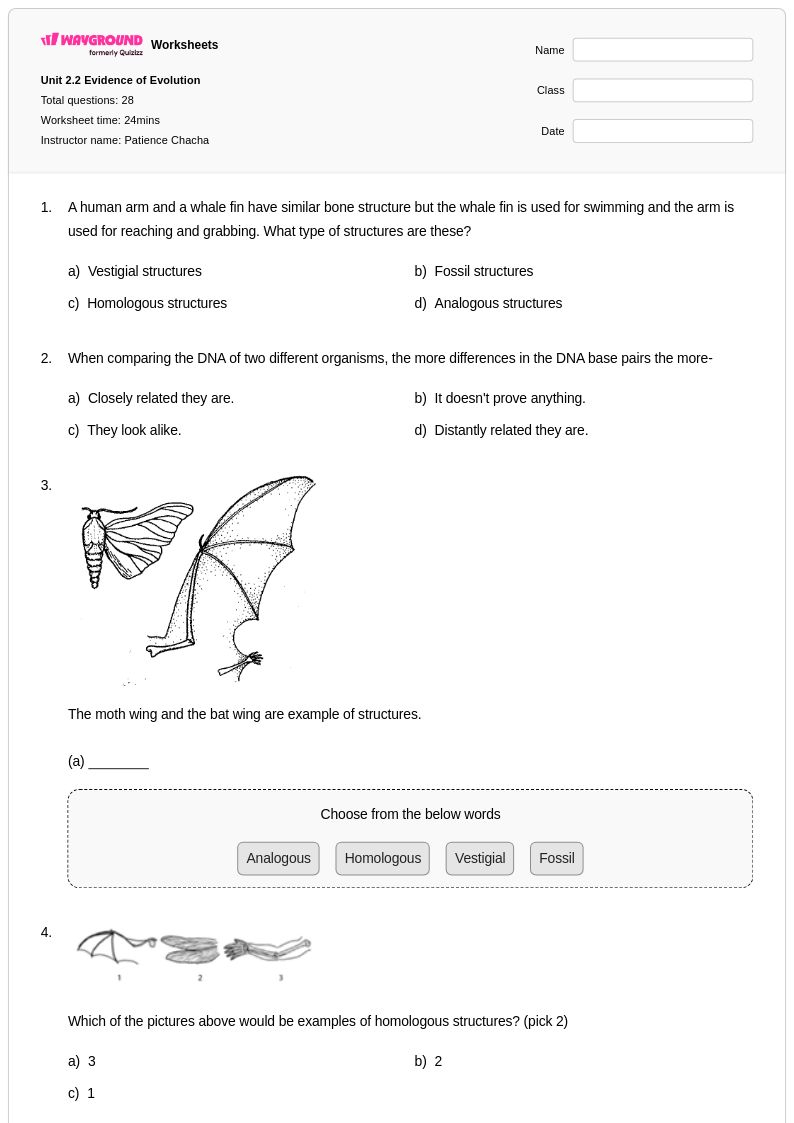
Ask students to explain their reasoning, not just label a diagram — a student who understands the distinction can articulate why a bat wing and a human arm share homology despite different functions, while a bat wing and a bee wing are analogous despite similar function. Tasks that require students to sort novel examples into categories without prior exposure, or to identify errors in a fictional scientist's reasoning, reveal whether understanding is genuine rather than memorized. Written short-answer questions paired with visual diagrams are particularly effective for surfacing this misconception.