Free Printable Grams to Moles Conversions Worksheets for Year 12
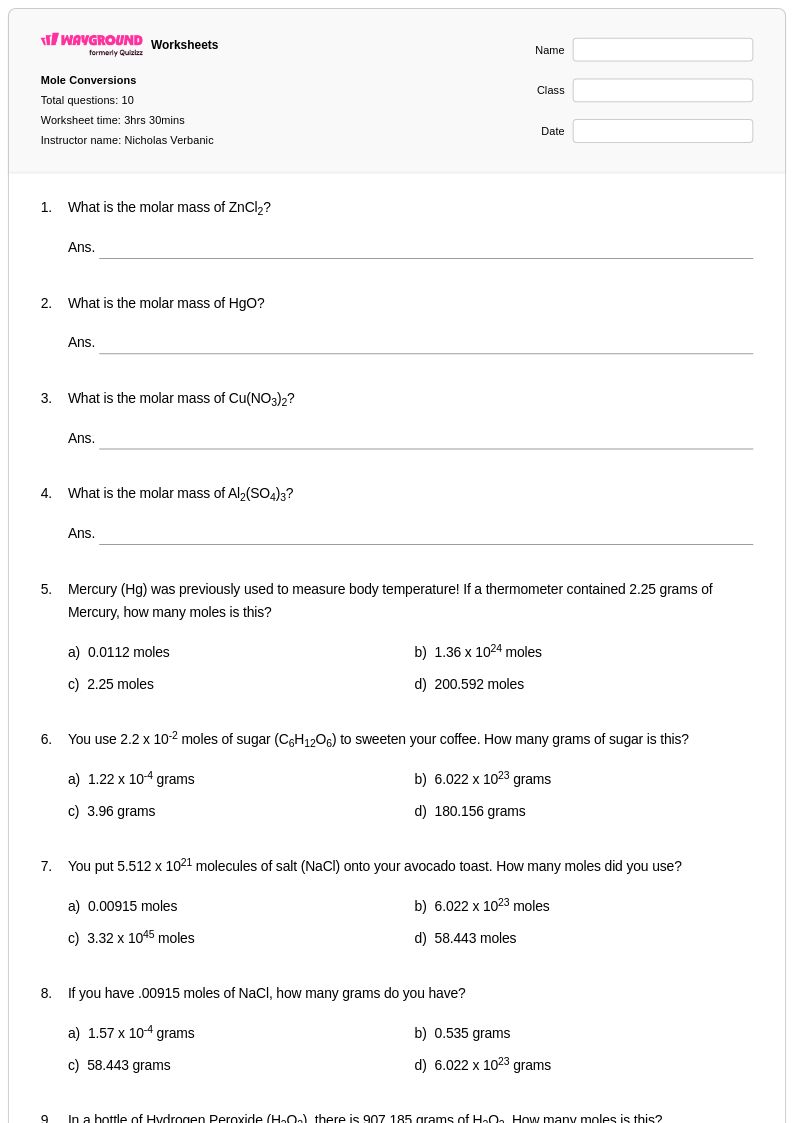
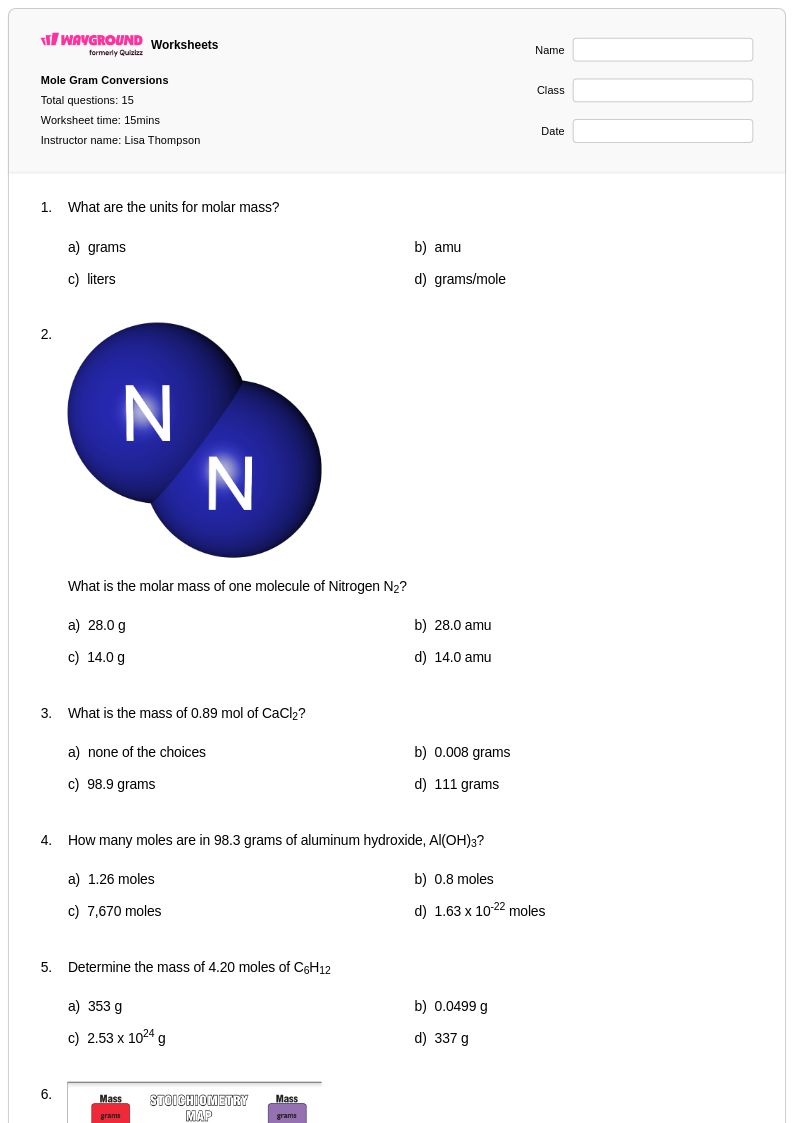
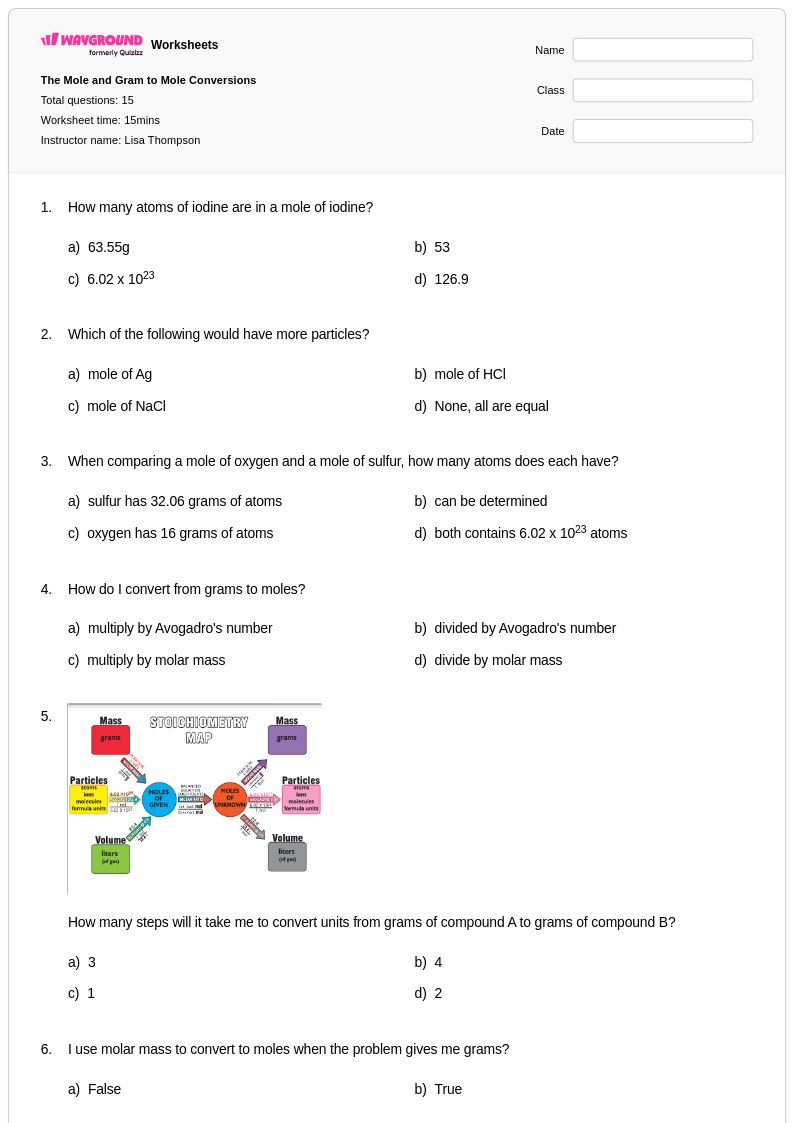
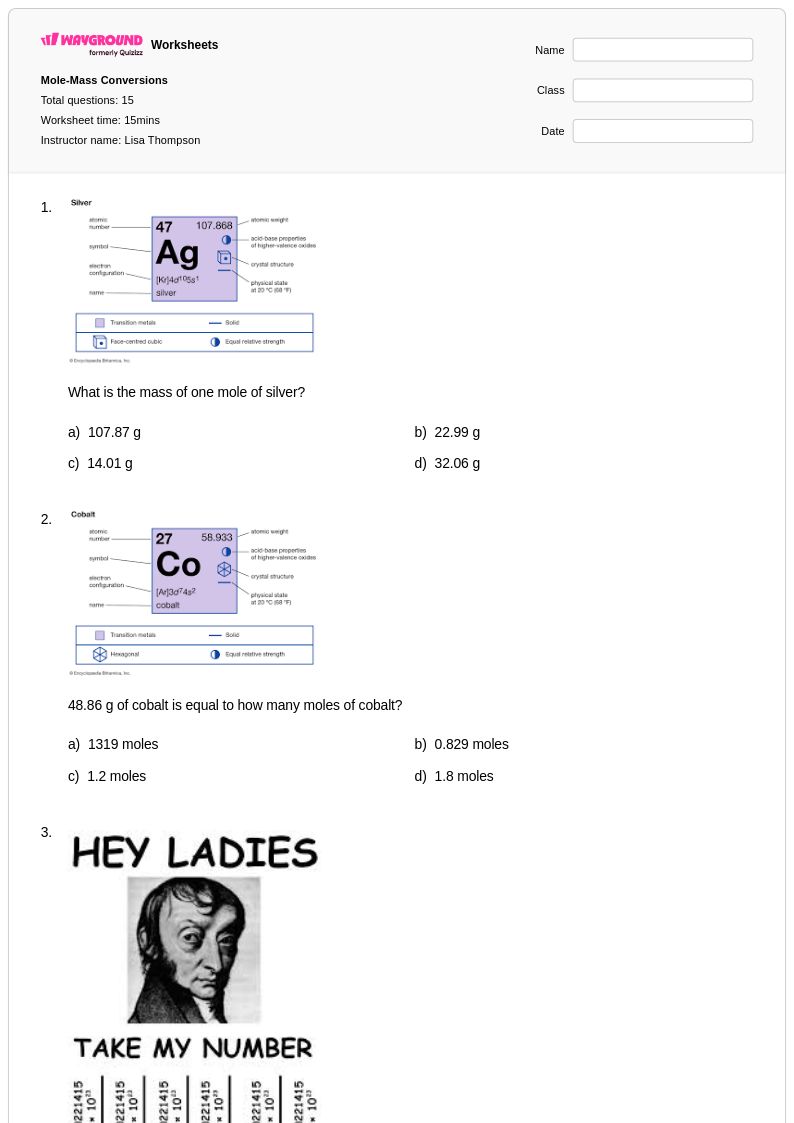
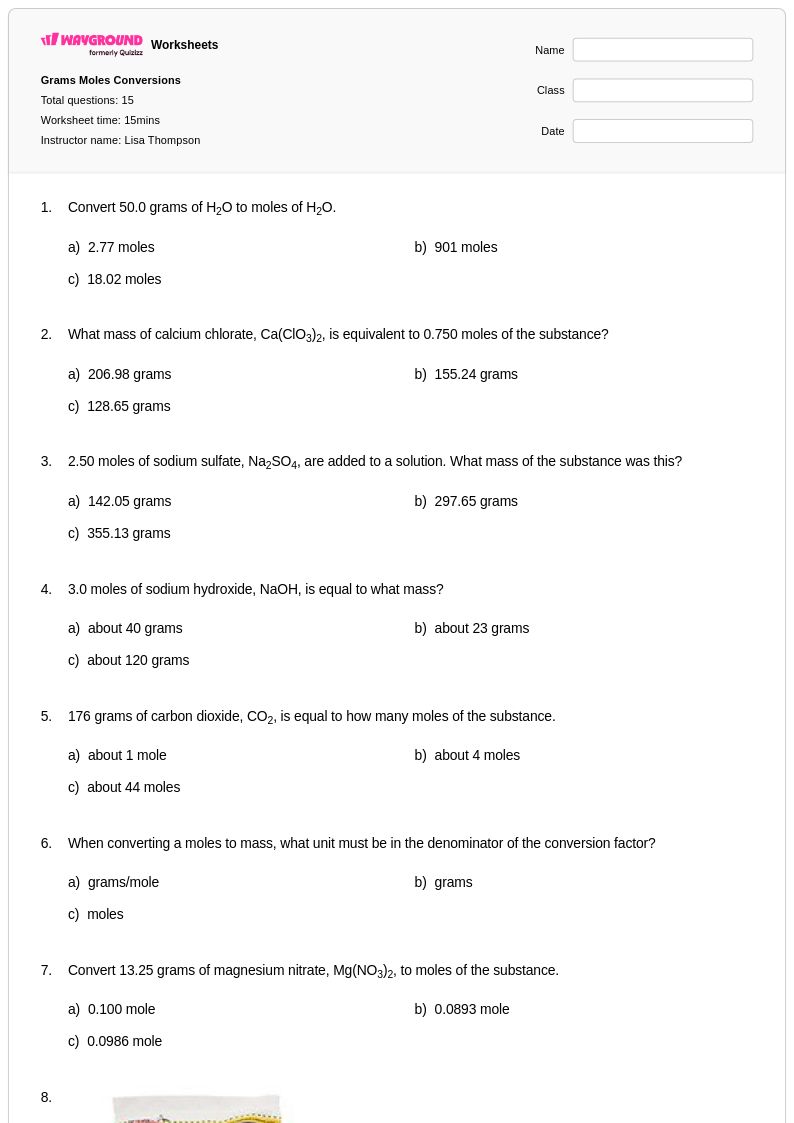
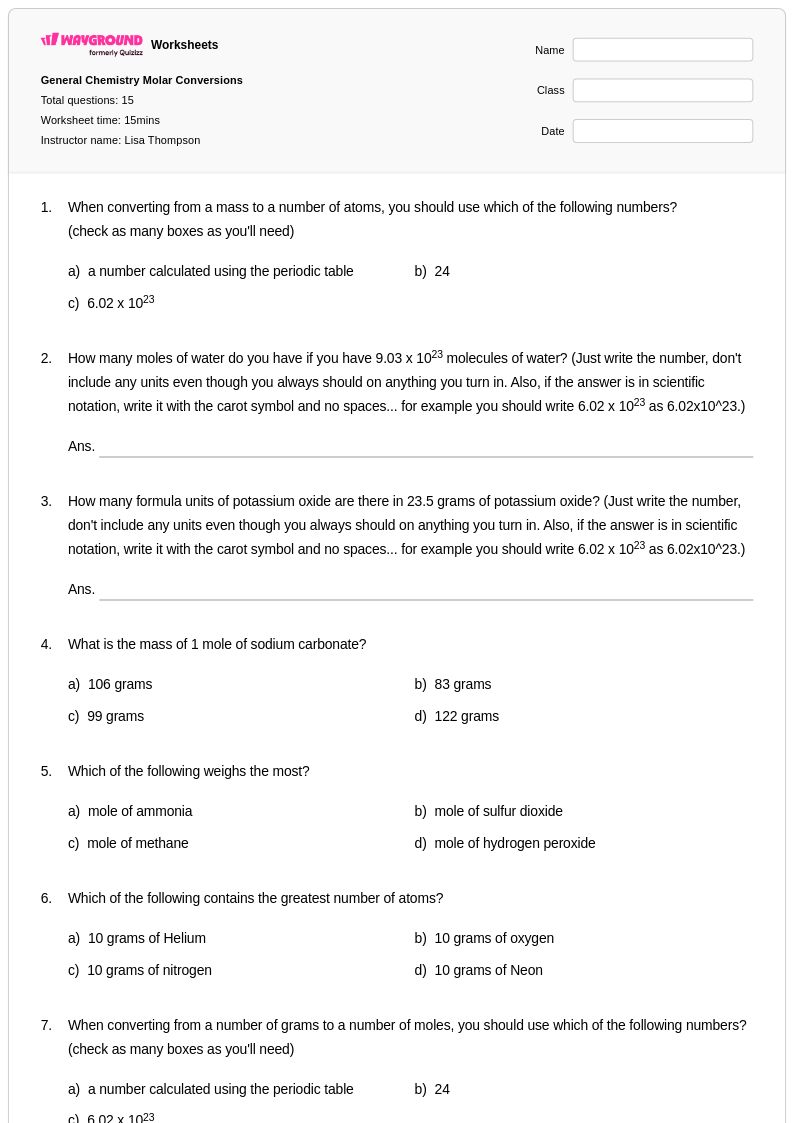
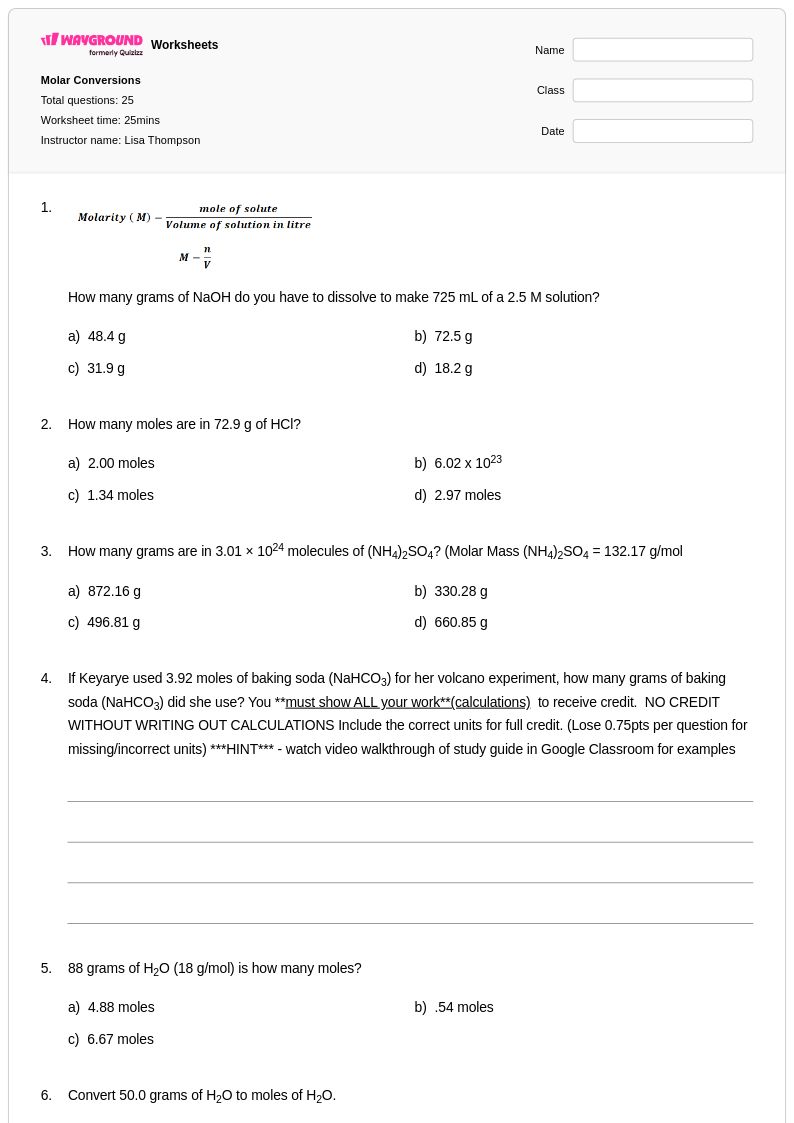
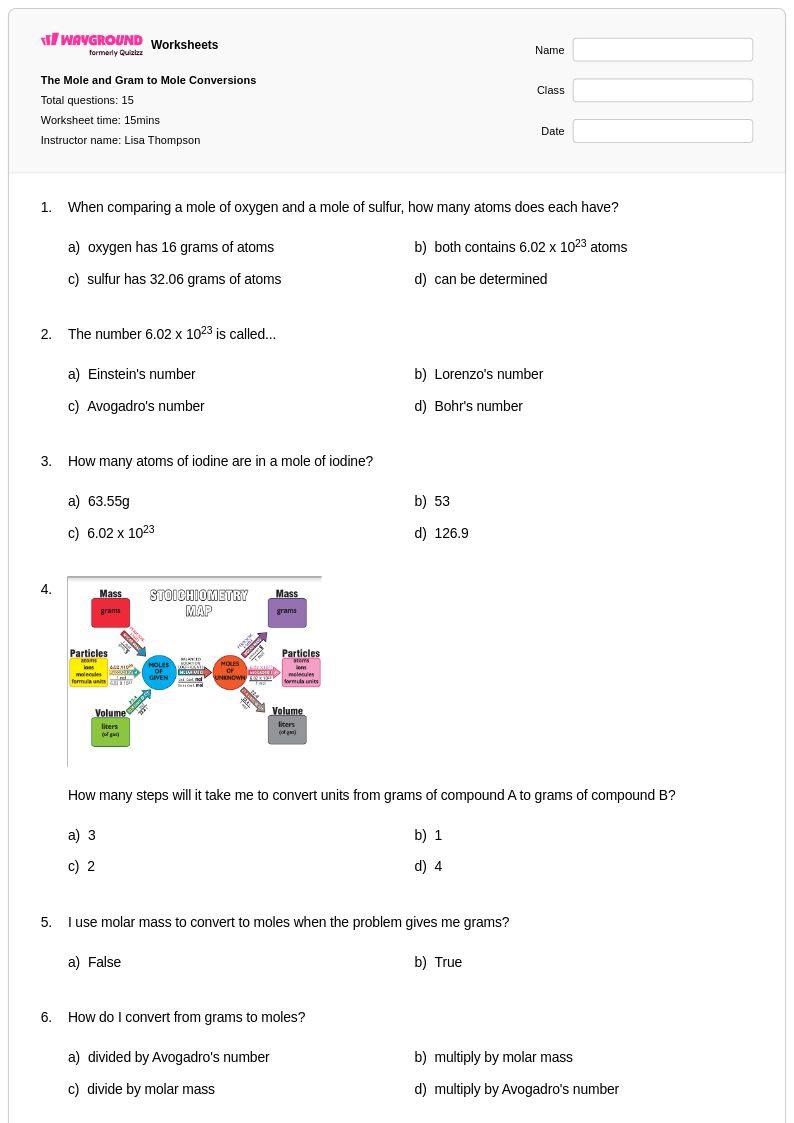
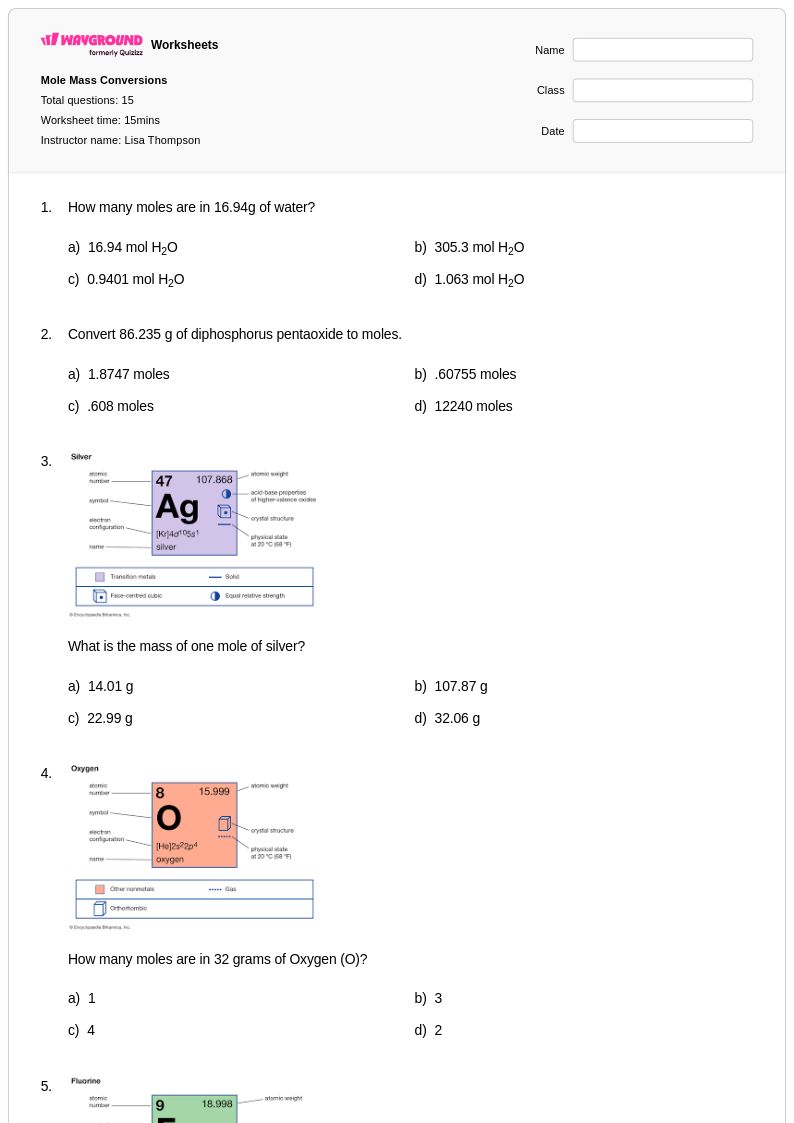
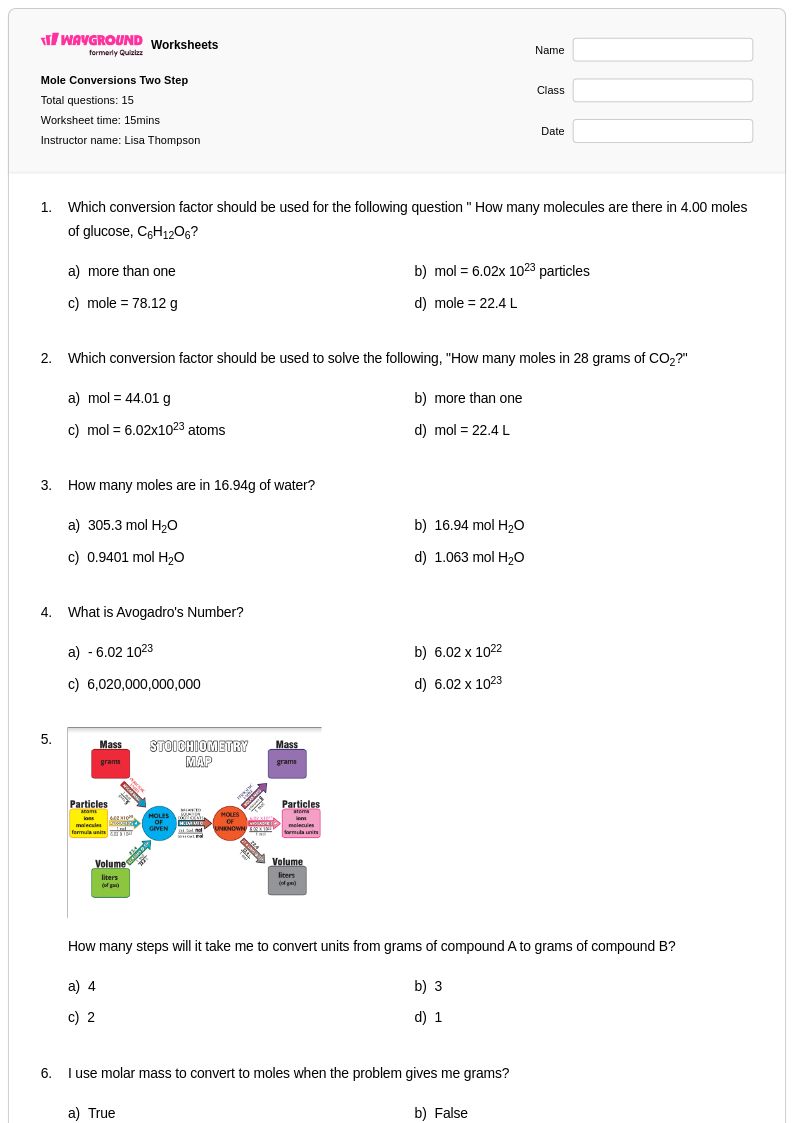
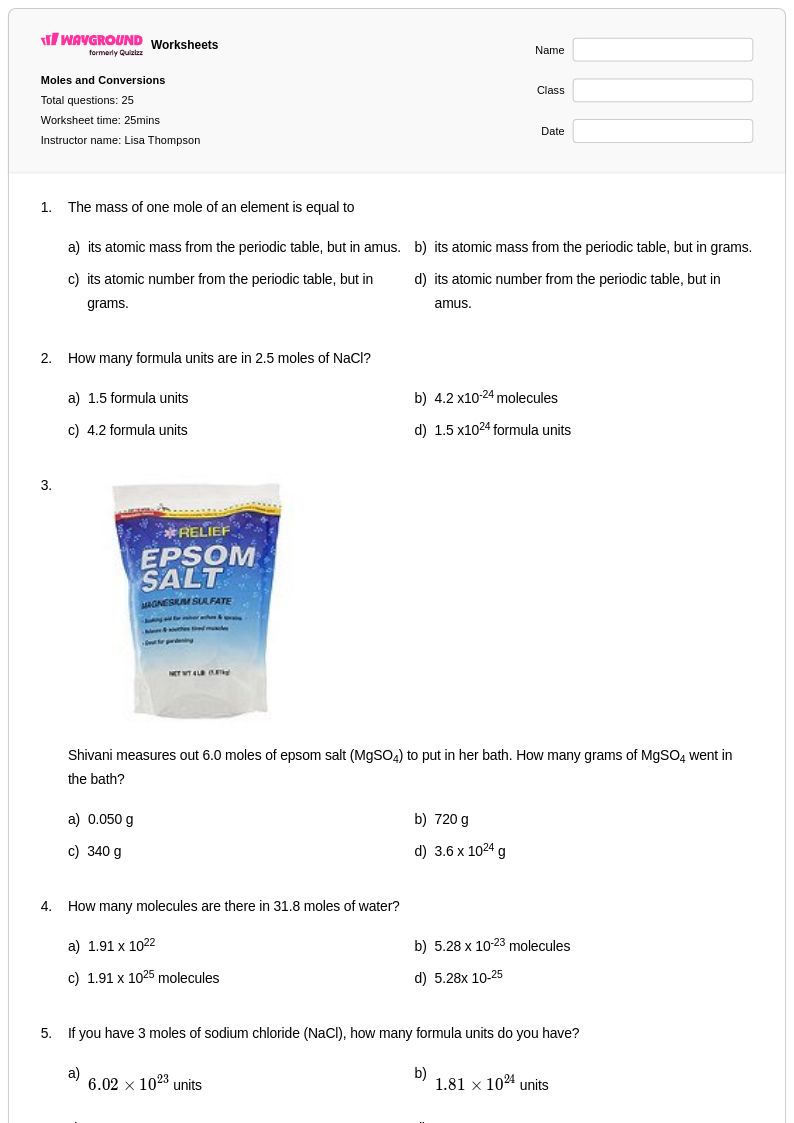
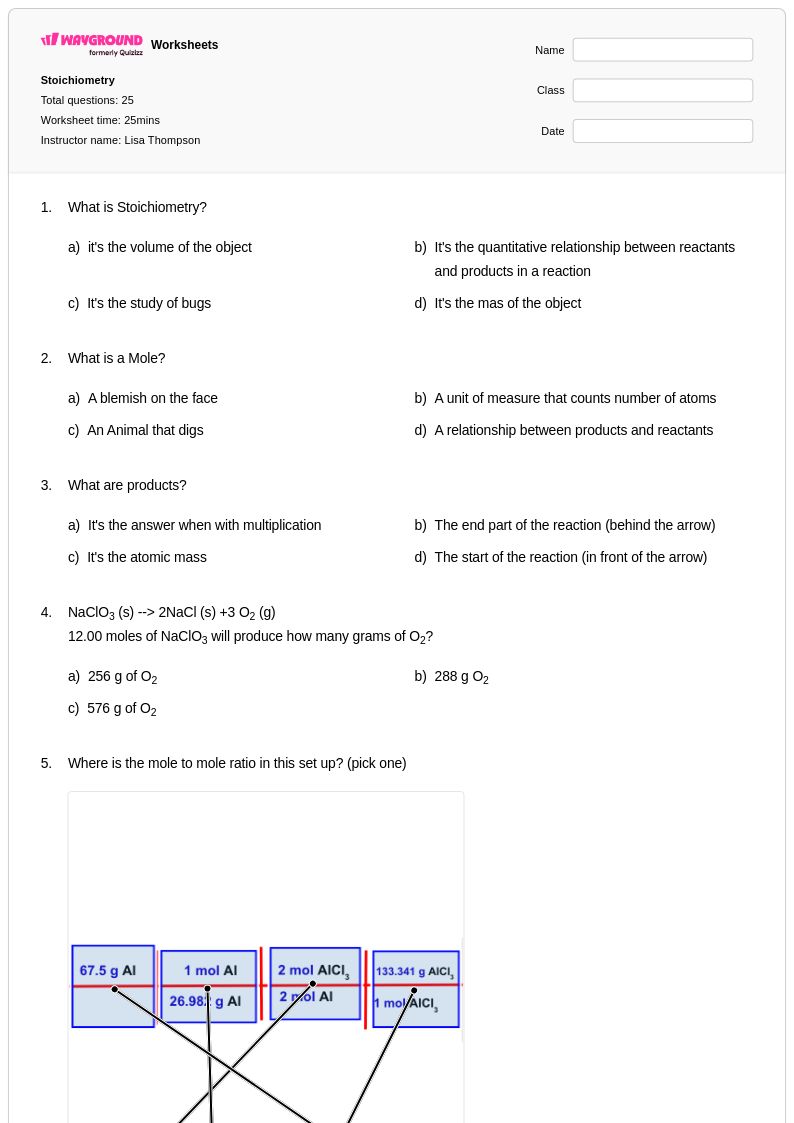
Year 12 grams to moles conversions worksheets from Wayground offer comprehensive practice problems and answer keys, helping students master stoichiometry calculations through free printable PDFs and interactive exercises.
Explore printable Grams to Moles Conversions worksheets for Year 12
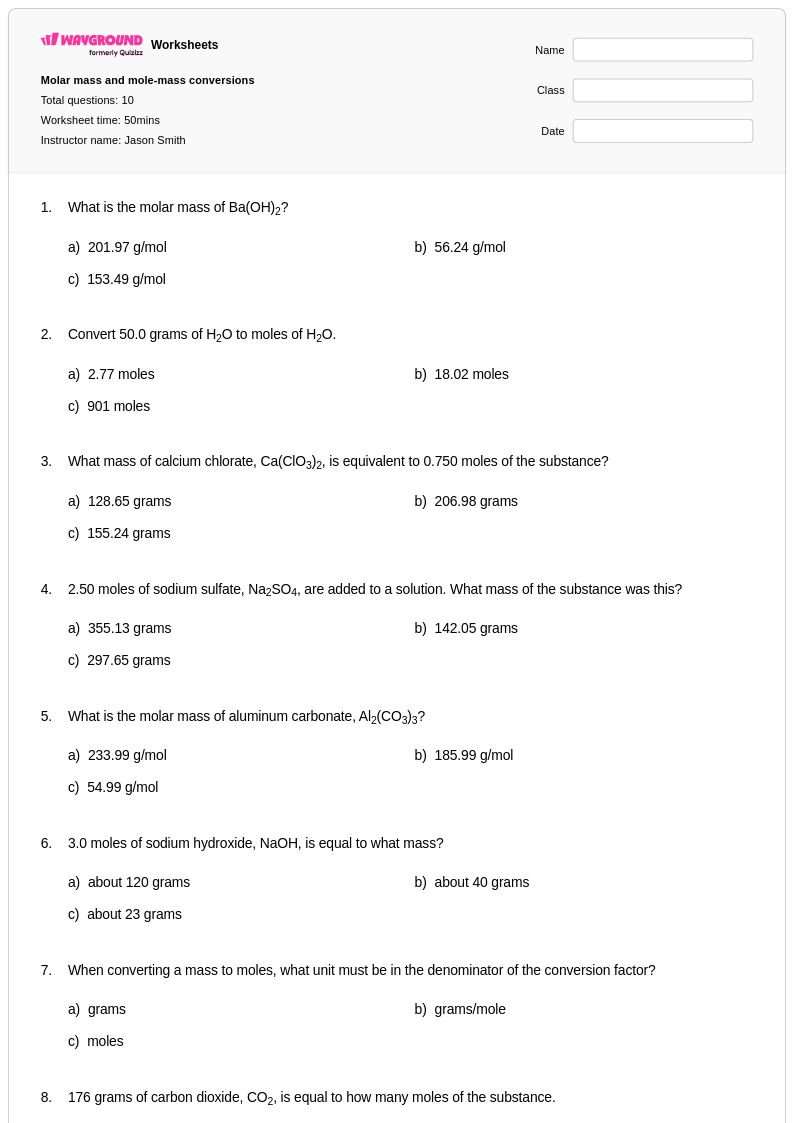
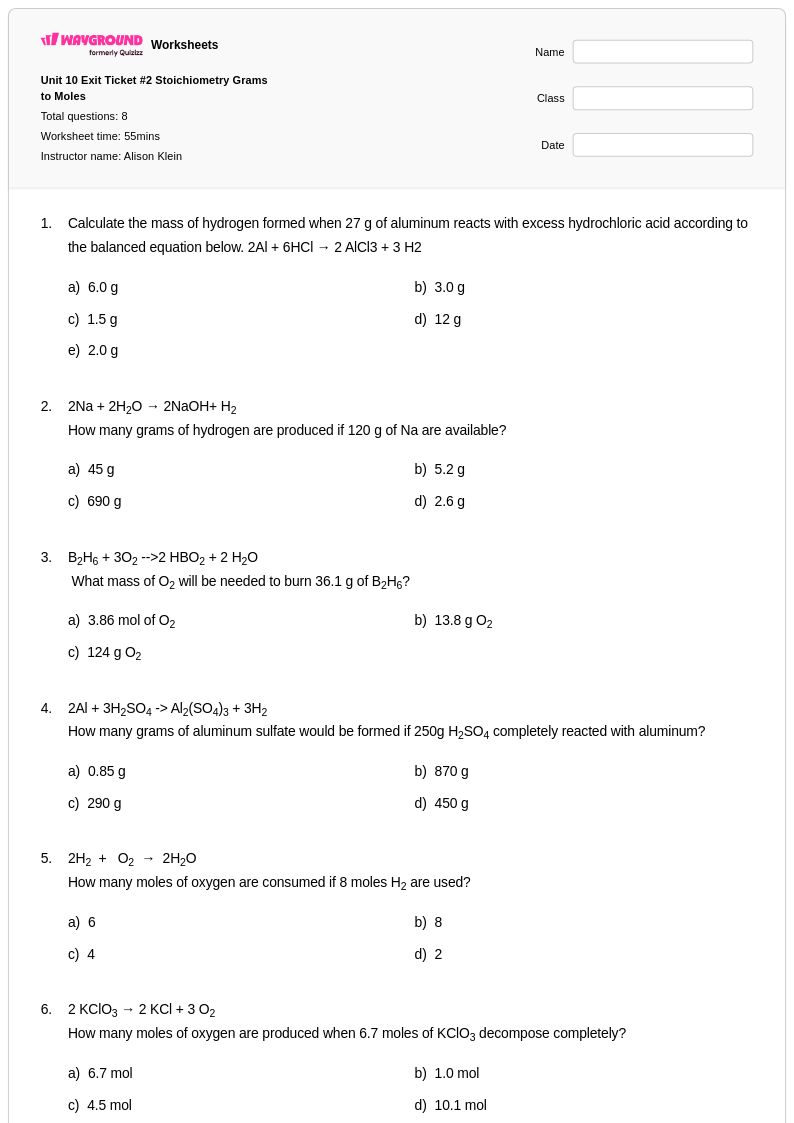
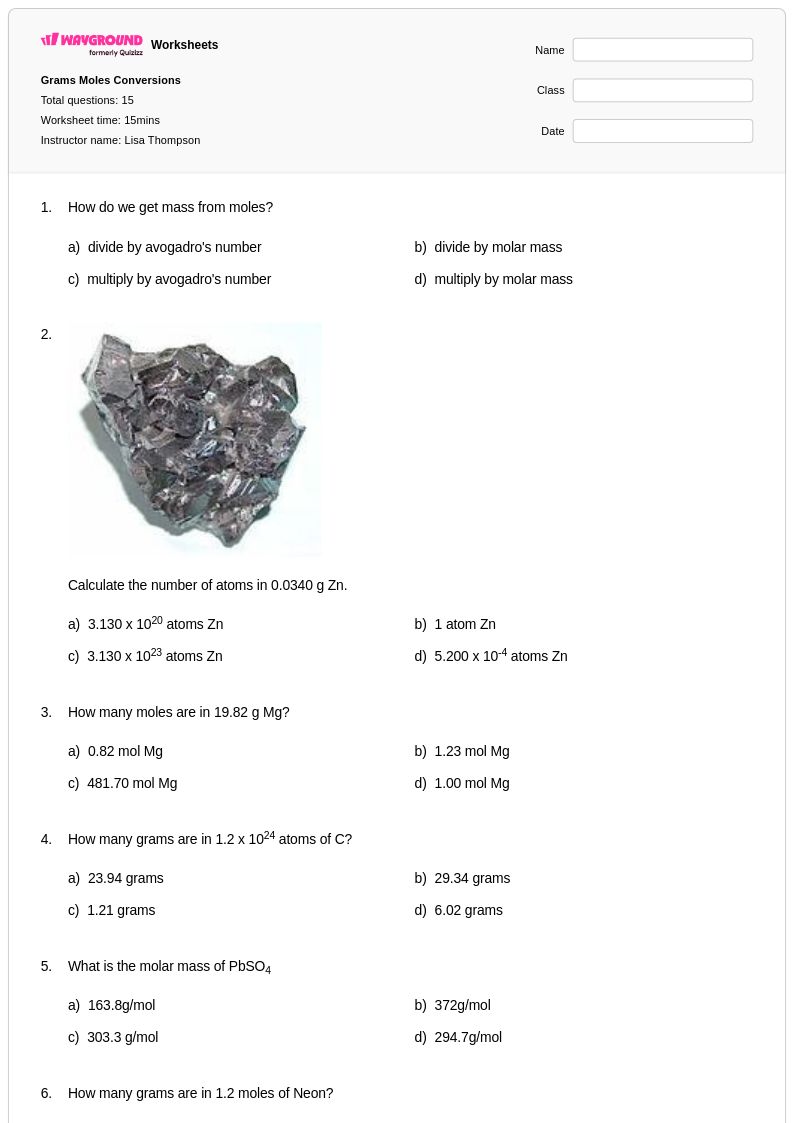
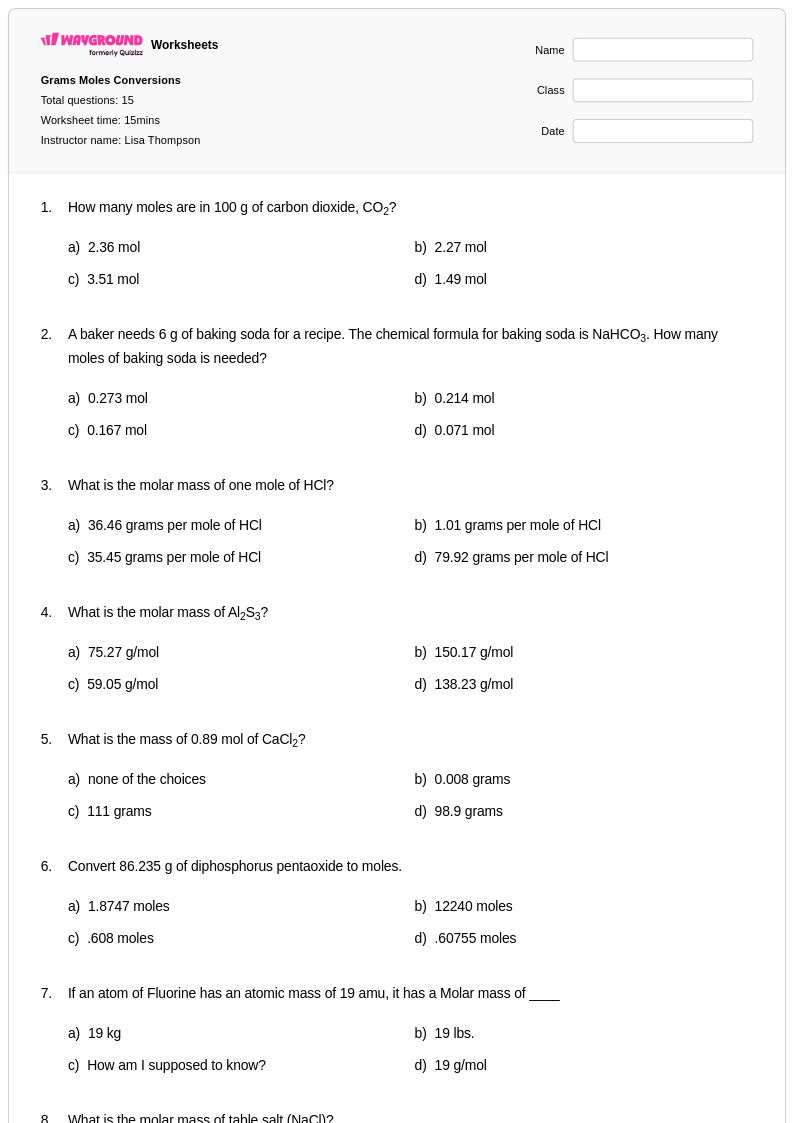
Grams to moles conversions represent a fundamental skill in Year 12 stoichiometry that bridges the gap between laboratory measurements and theoretical chemical calculations. Wayground's comprehensive collection of grams to moles conversion worksheets provides students with systematic practice in applying Avogadro's number and molar mass concepts to convert between mass measurements and molecular quantities. These carefully designed practice problems strengthen students' understanding of the mole concept while developing their proficiency in dimensional analysis and unit conversion techniques essential for advanced chemistry coursework. Each worksheet includes detailed answer keys and step-by-step solutions, making them valuable resources for both classroom instruction and independent study, available as free printable pdf downloads that support diverse learning environments.
Wayground's extensive library of millions of teacher-created resources empowers educators to find precisely the right grams to moles conversion materials for their Year 12 chemistry students. The platform's robust search and filtering capabilities allow teachers to quickly locate worksheets aligned with specific curriculum standards and learning objectives, while built-in differentiation tools enable customization for varying skill levels within the classroom. These stoichiometry resources are available in both printable and digital formats, including downloadable pdf versions that facilitate seamless integration into lesson plans, homework assignments, and assessment strategies. Whether used for initial skill development, targeted remediation, or enrichment activities, these professionally crafted worksheets support effective chemistry instruction by providing consistent practice opportunities that build student confidence in fundamental stoichiometric calculations.
FAQs
How do I teach grams to moles conversions in chemistry class?
Start by ensuring students understand molar mass before introducing the conversion process. Teach dimensional analysis explicitly — show students how to set up conversion factors so that grams cancel and moles remain. Using worked examples with common substances like water or sodium chloride helps ground the abstract calculation in familiar contexts. Once students can follow a model, transition to guided practice where they set up the problem independently before solving.
What exercises help students practice grams to moles conversions?
Structured practice problems that walk students through identifying the given mass, looking up or calculating molar mass, and applying the conversion factor are the most effective. Worksheets that progress from single-element substances to compounds build confidence incrementally. Requiring students to show dimensional analysis setup — not just the final answer — reinforces procedural fluency and makes errors easier to catch and correct.
What mistakes do students commonly make when converting grams to moles?
The most frequent error is inverting the conversion factor, dividing moles by grams instead of grams by molar mass. Students also commonly use an incorrect molar mass by misreading the periodic table or forgetting to account for all atoms in a compound's formula. A third common mistake is skipping units entirely, which makes it impossible to verify whether the setup is correct. Emphasizing dimensional analysis as a non-negotiable step addresses all three of these issues.
How do I use Wayground's grams to moles worksheets in my classroom?
Wayground's grams to moles conversion worksheets are available as printable PDFs for traditional classroom use and in digital formats for technology-integrated learning environments, including the option to host them as a quiz directly on Wayground. Teachers can assign worksheets for in-class practice, homework, or remediation, and each worksheet includes a complete answer key so students can self-assess or teachers can provide immediate feedback. The digital format also allows teachers to apply accommodations such as read aloud or extended time for individual students who need additional support.
How does dimensional analysis apply to grams to moles conversions?
Dimensional analysis is the core method for grams to moles conversions — it ensures the calculation is set up so that unwanted units cancel and the target unit remains. Students write the given mass in grams, then multiply by a conversion factor with molar mass in the denominator (grams) and 1 mole in the numerator. This approach is not just procedurally correct but also self-checking, because if the units do not cancel properly, the setup is wrong before any arithmetic is done.
How do I support struggling students with grams to moles conversions?
Students who struggle typically need reinforcement at one of two points: calculating molar mass correctly or setting up the conversion factor. Providing a periodic table reference and a structured template for dimensional analysis reduces cognitive load during early practice. On Wayground, teachers can enable accommodations such as reduced answer choices or read aloud for individual students, allowing those who need extra support to engage with the same material at a manageable level without disrupting the rest of the class.