Free Printable Molecular Structure Worksheets for Year 12
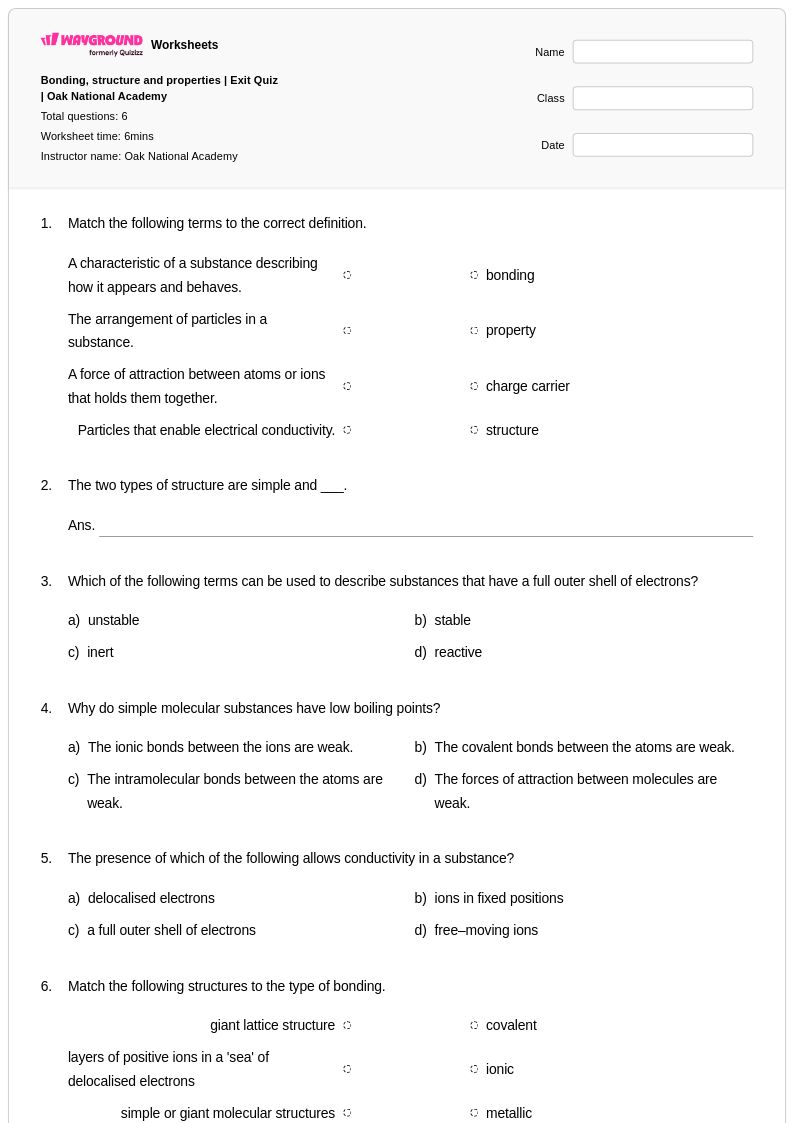
Explore Year 12 molecular structure worksheets and printables through Wayground that help students master chemical bonding, Lewis structures, and molecular geometry with comprehensive practice problems and answer keys.
Explore printable Molecular Structure worksheets for Year 12
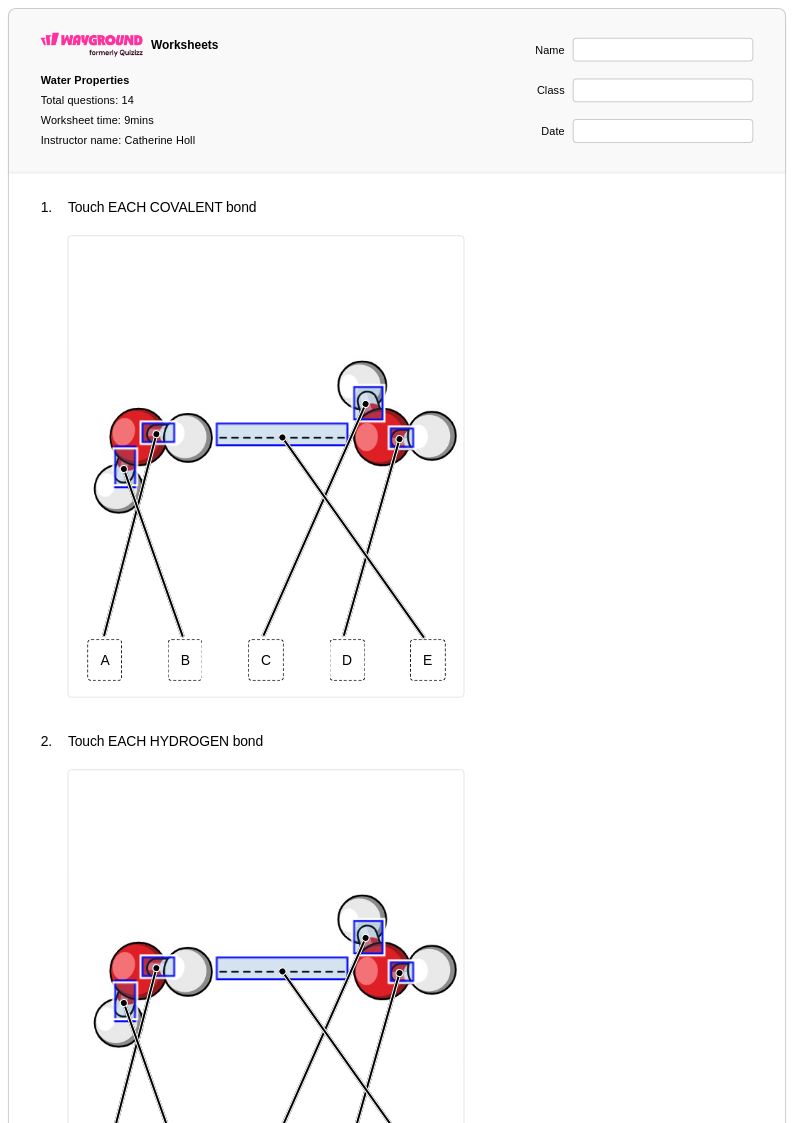
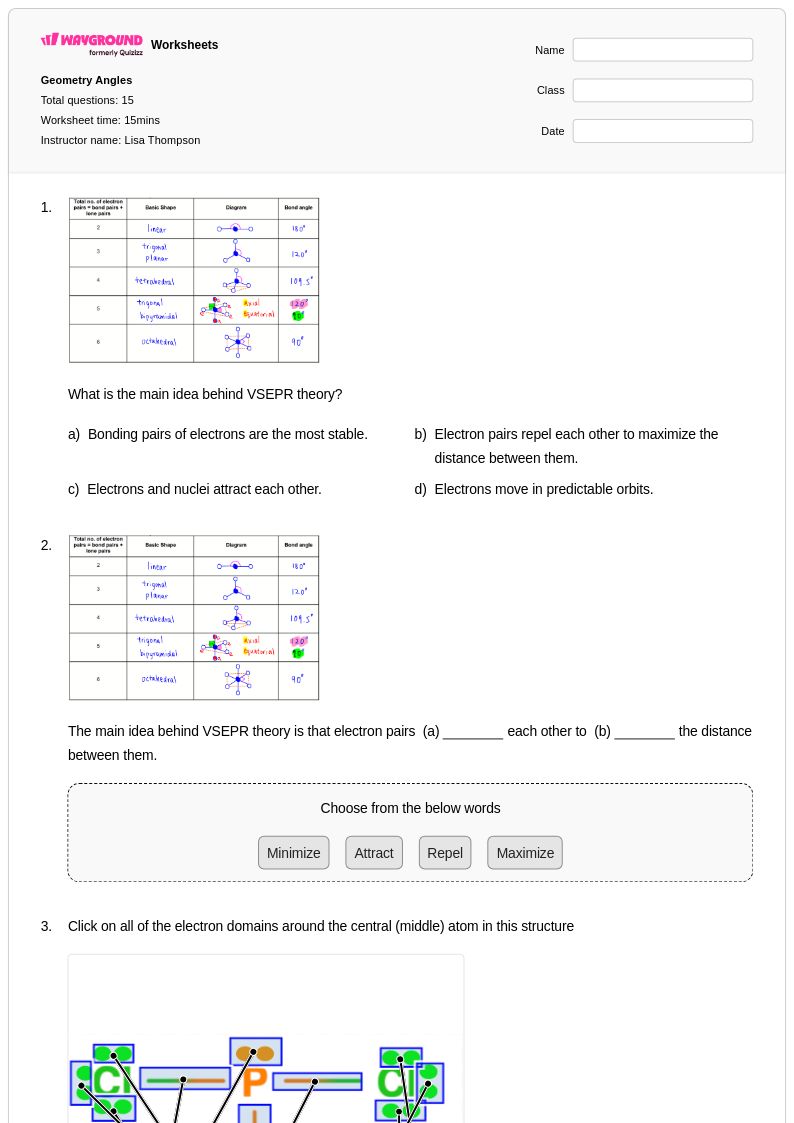
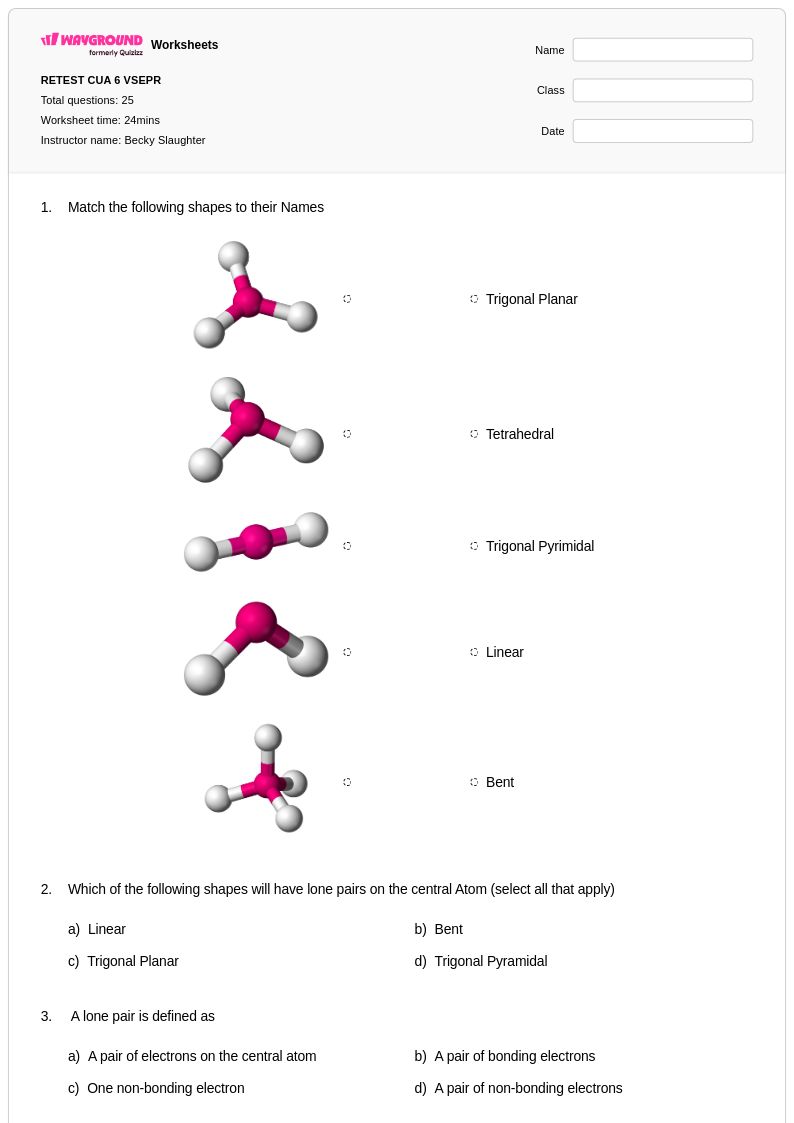
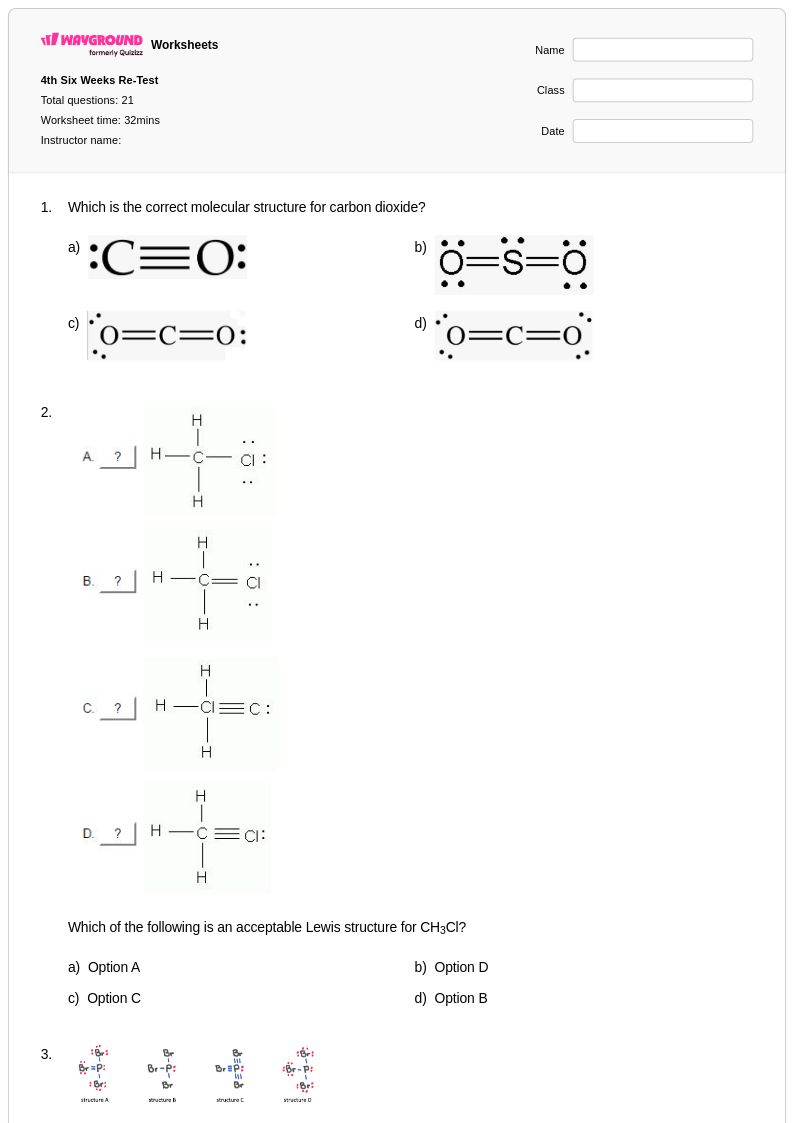
Year 12 molecular structure worksheets available through Wayground (formerly Quizizz) provide comprehensive coverage of advanced chemical bonding concepts, three-dimensional molecular geometry, and intermolecular forces that form the foundation of upper-level chemistry understanding. These expertly designed practice problems strengthen students' abilities to predict molecular shapes using VSEPR theory, analyze bond polarity and molecular polarity, and understand how molecular structure influences physical and chemical properties. The collection includes detailed answer keys that guide students through complex problem-solving processes, while free printable pdf formats ensure accessibility for both classroom instruction and independent study, making these worksheets invaluable resources for mastering the intricate relationships between atomic arrangement and molecular behavior.
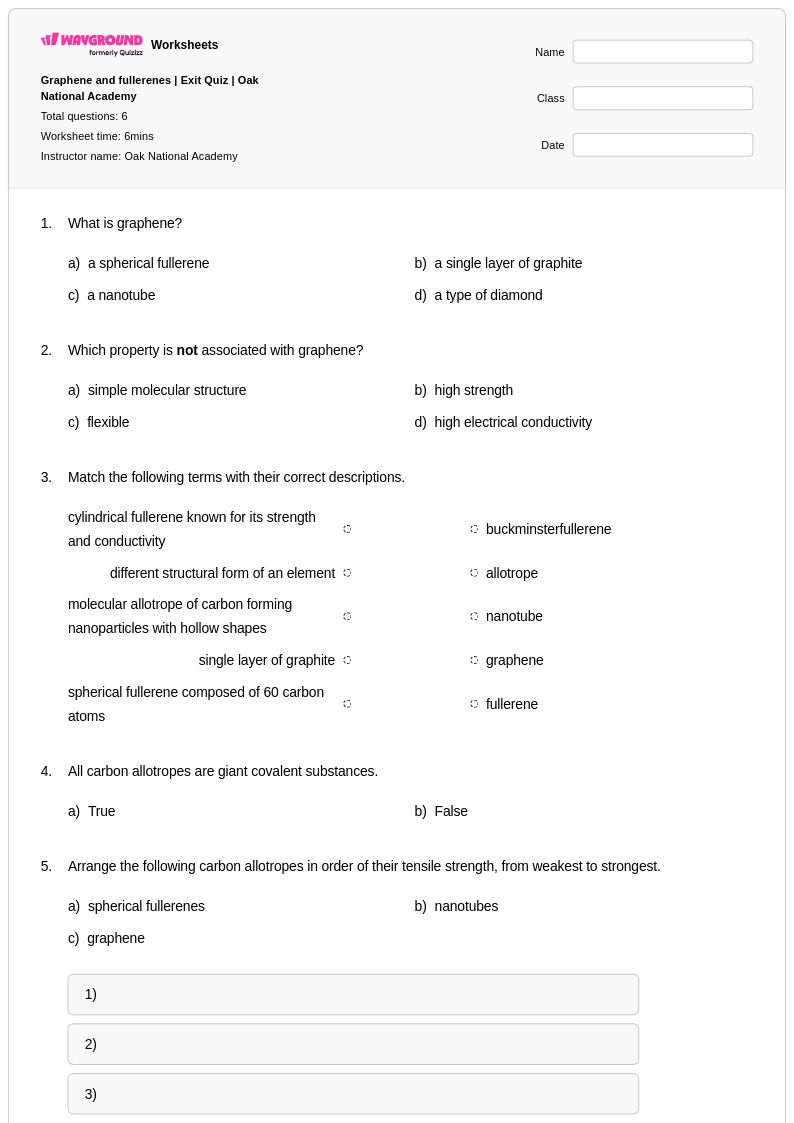
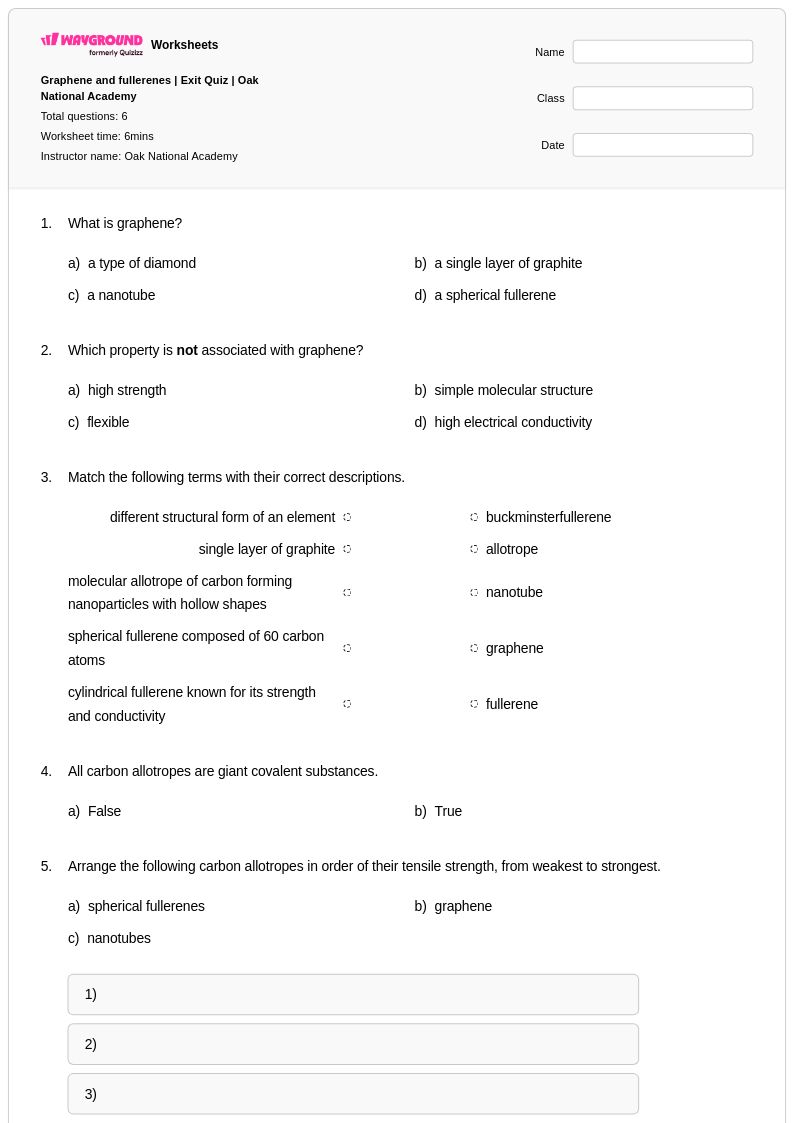
Wayground (formerly Quizizz) empowers educators with millions of teacher-created molecular structure resources that streamline lesson planning and enhance student learning outcomes through robust search and filtering capabilities aligned with chemistry standards. The platform's differentiation tools allow teachers to customize worksheets based on individual student needs, offering both printable and digital pdf formats that accommodate diverse learning environments and technological preferences. These flexible resources support targeted remediation for students struggling with complex concepts like hybridization and resonance structures, while also providing enrichment opportunities for advanced learners to explore sophisticated molecular modeling techniques, ultimately enabling teachers to deliver comprehensive skill practice that builds confident, analytically-minded chemistry students prepared for post-secondary scientific study.
FAQs
How do I teach molecular structure to chemistry students?
Teaching molecular structure effectively begins with establishing a strong foundation in atomic bonding before introducing Lewis dot structures and VSEPR theory. Students benefit from a scaffolded progression: start with electron configuration, move to covalent and ionic bonding patterns, then connect molecular shape to chemical properties. Using visual models alongside structured practice problems helps students internalize how atomic interactions determine the geometry of a molecule.
What are good practice exercises for molecular structure?
Effective practice for molecular structure should include Lewis dot structure construction, VSEPR theory application problems, and molecular geometry prediction exercises. Worksheets that progress from basic bonding patterns to hybridization and molecular orbital concepts allow students to build skills incrementally. Practice problems that ask students to connect molecular shape to chemical properties reinforce why structure matters, not just how to draw it.
What mistakes do students commonly make when drawing Lewis structures?
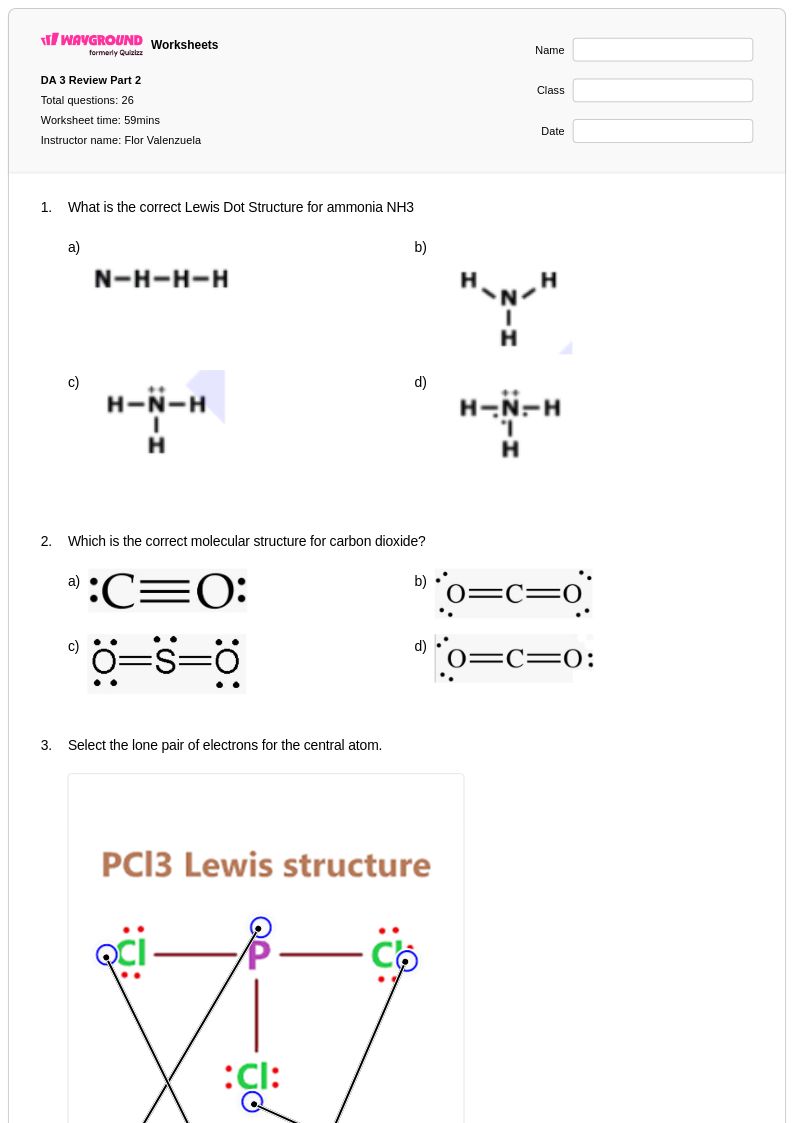
One of the most frequent errors students make is failing to account for the total valence electron count before placing bonds and lone pairs, leading to structures that violate the octet rule. Students also commonly misplace lone pairs on bonded atoms rather than the central atom, or forget to check for expanded octets in elements like sulfur and phosphorus. Targeted practice problems that include detailed answer key explanations help students identify and correct these patterns before they become ingrained habits.
How do students often confuse molecular geometry and electron geometry?
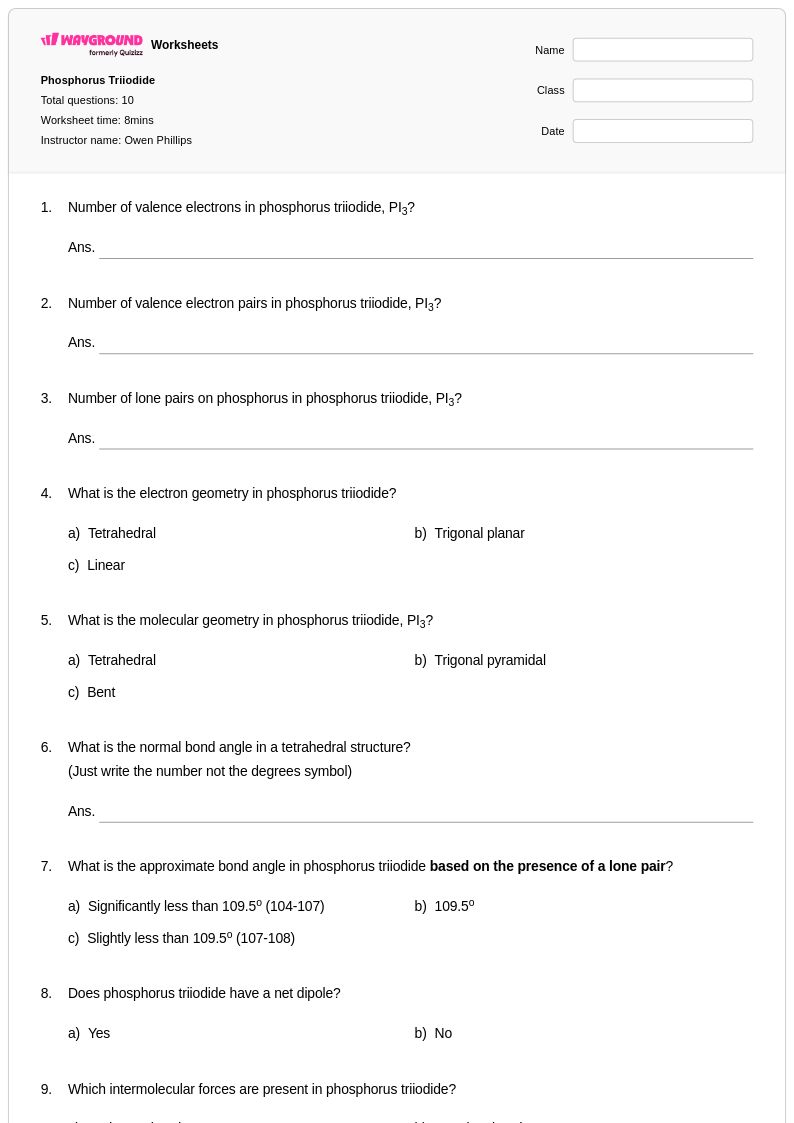
Students frequently conflate molecular geometry with electron geometry because they focus only on bonded atoms and ignore lone pairs when determining shape. For example, a molecule like water is often incorrectly described as linear because students overlook the two lone pairs on oxygen that push the bond angle below 180 degrees. Consistent practice with VSEPR theory, reinforced through labeled diagrams and answer key explanations, helps students distinguish between the two concepts reliably.
How can I use molecular structure worksheets in my classroom?
Wayground's molecular structure worksheets are available as printable PDFs for traditional classroom use and in digital formats for technology-integrated learning environments, including the option to host them as a quiz directly on Wayground. This flexibility makes them suitable for in-class assignments, homework, lab prep, or remote learning. Each worksheet includes a complete answer key, so students can self-check their work and teachers can use results to identify specific gaps in understanding.
How can I differentiate molecular structure instruction for students at different levels?
Differentiation in molecular structure can be achieved by adjusting the complexity of problems, ranging from basic ionic and covalent bonding for foundational learners to hybridization and molecular orbital theory for advanced students. On Wayground, teachers can customize content difficulty and scope to match their class's needs, and the platform's differentiation tools support creating personalized practice sets for both remediation and enrichment. For students who need additional support, Wayground also offers accommodations such as read aloud, reduced answer choices, and extended time, which can be assigned individually without notifying other students.