Free Printable Naming Acids Worksheets for Year 12
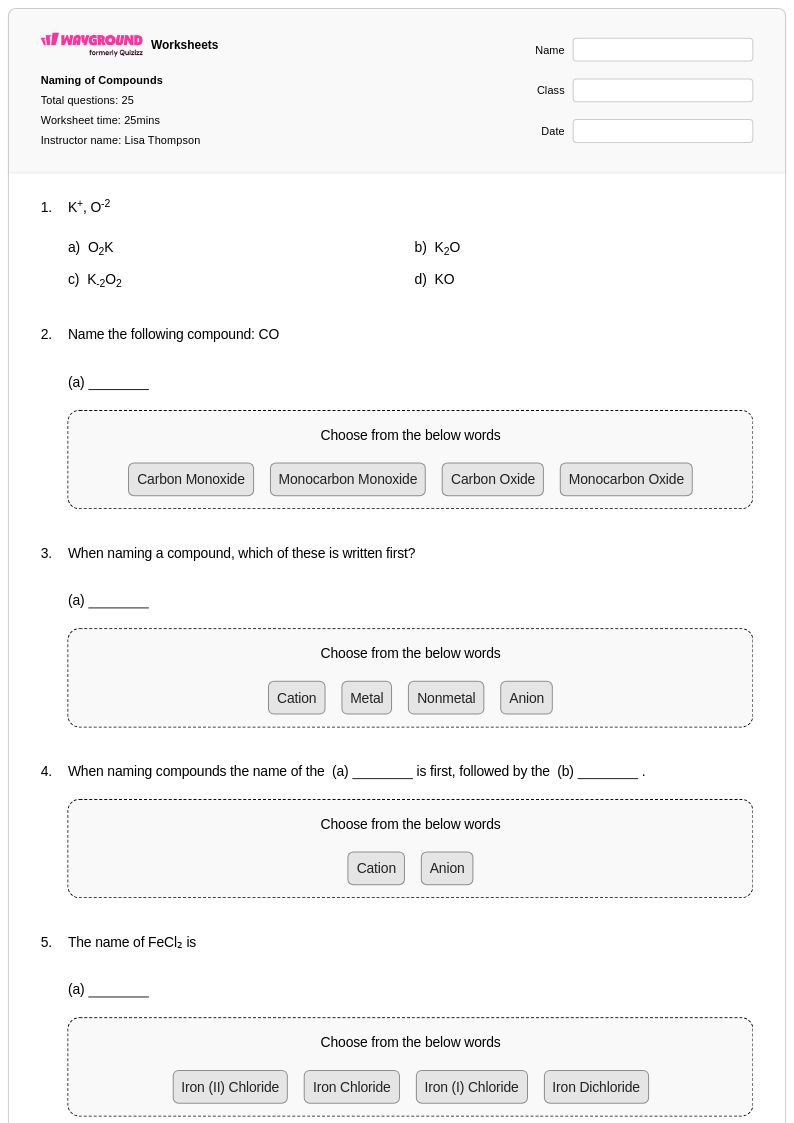
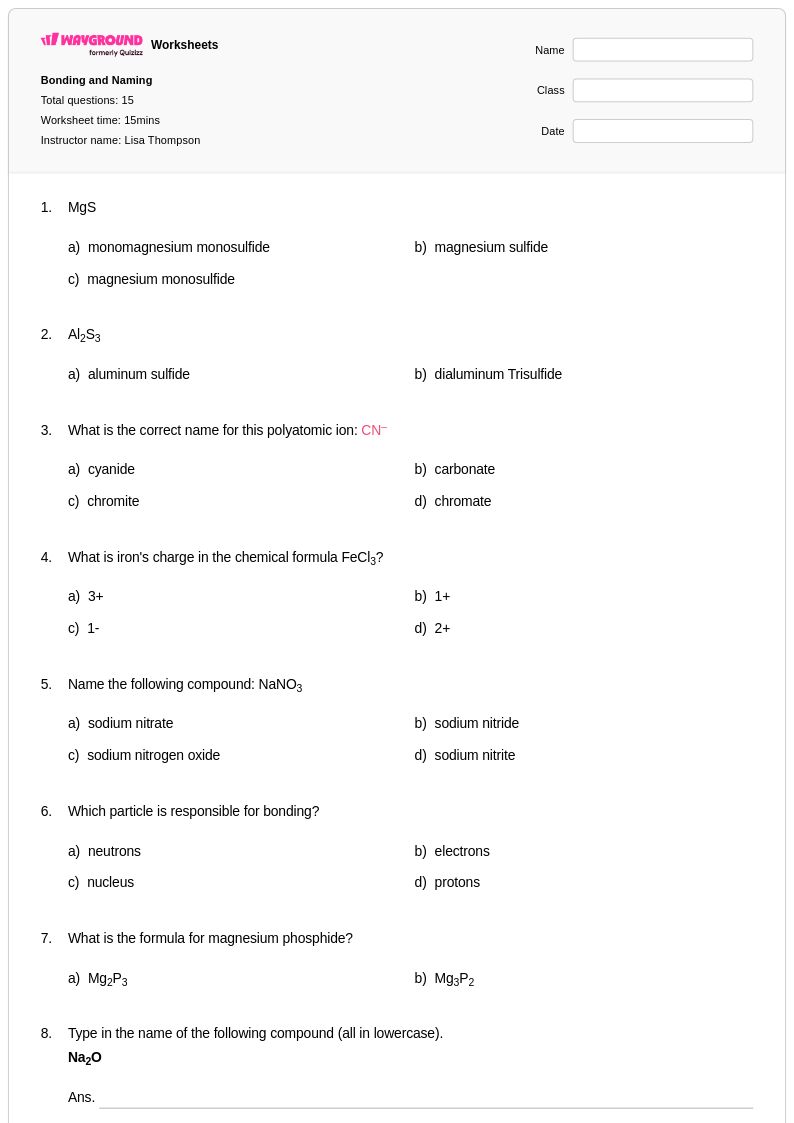
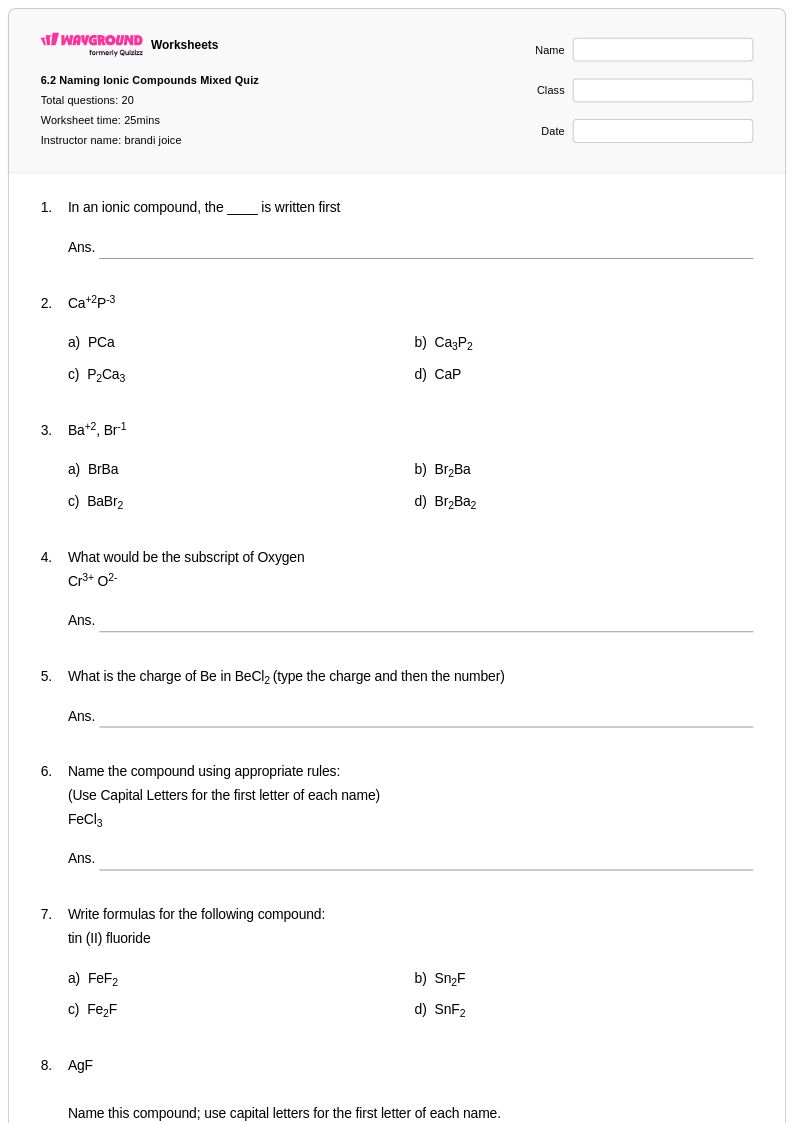
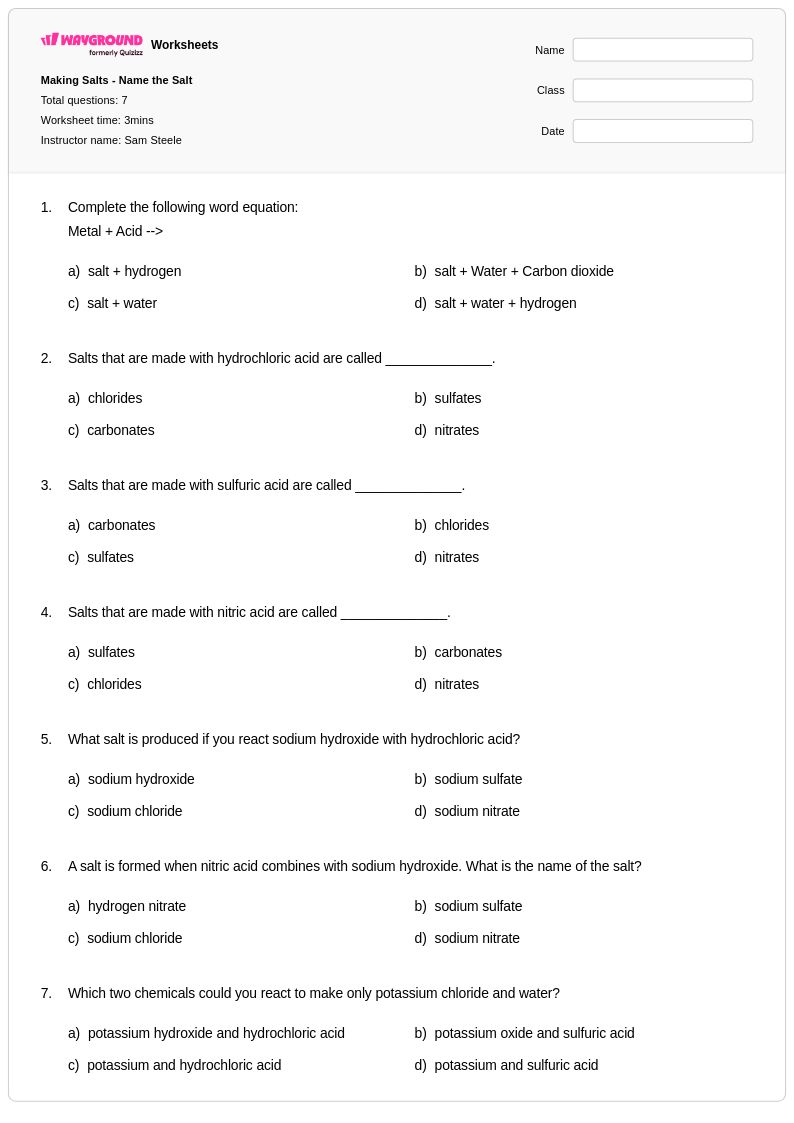
Year 12 naming acids worksheets from Wayground provide comprehensive practice problems and answer keys to help students master chemical nomenclature rules for binary and oxyacids through printable PDF exercises.
Explore printable Naming Acids worksheets for Year 12
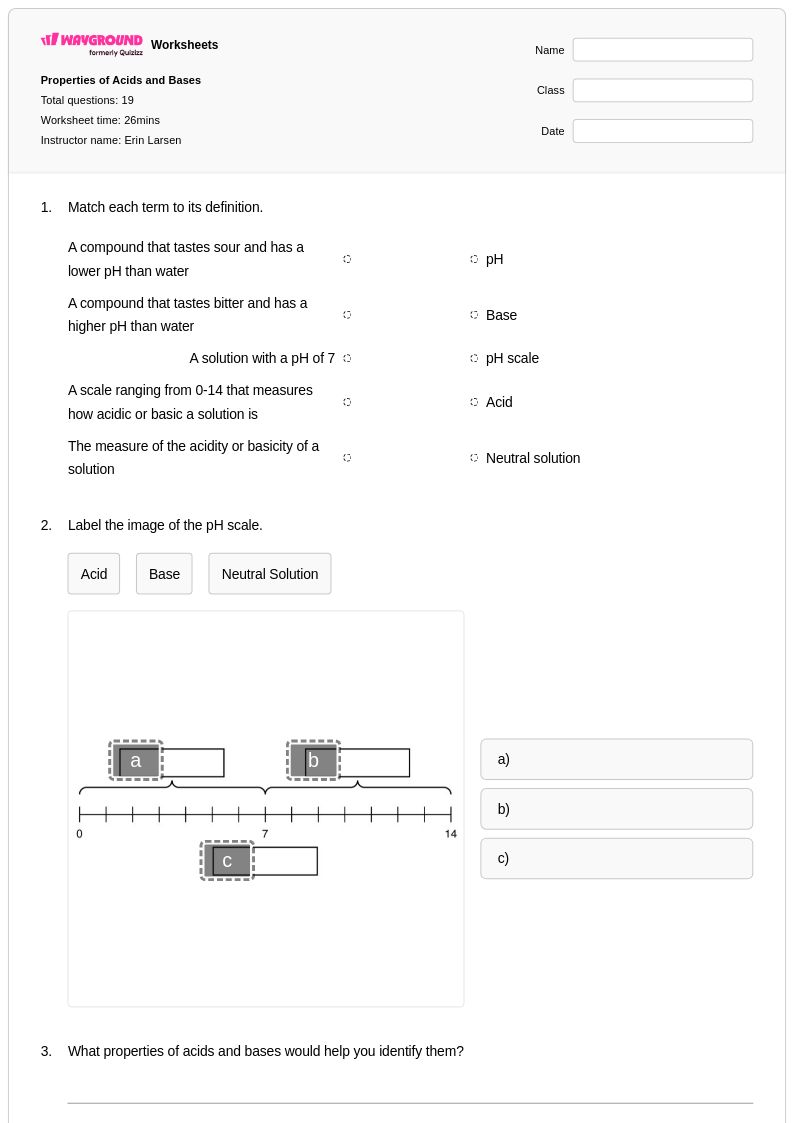
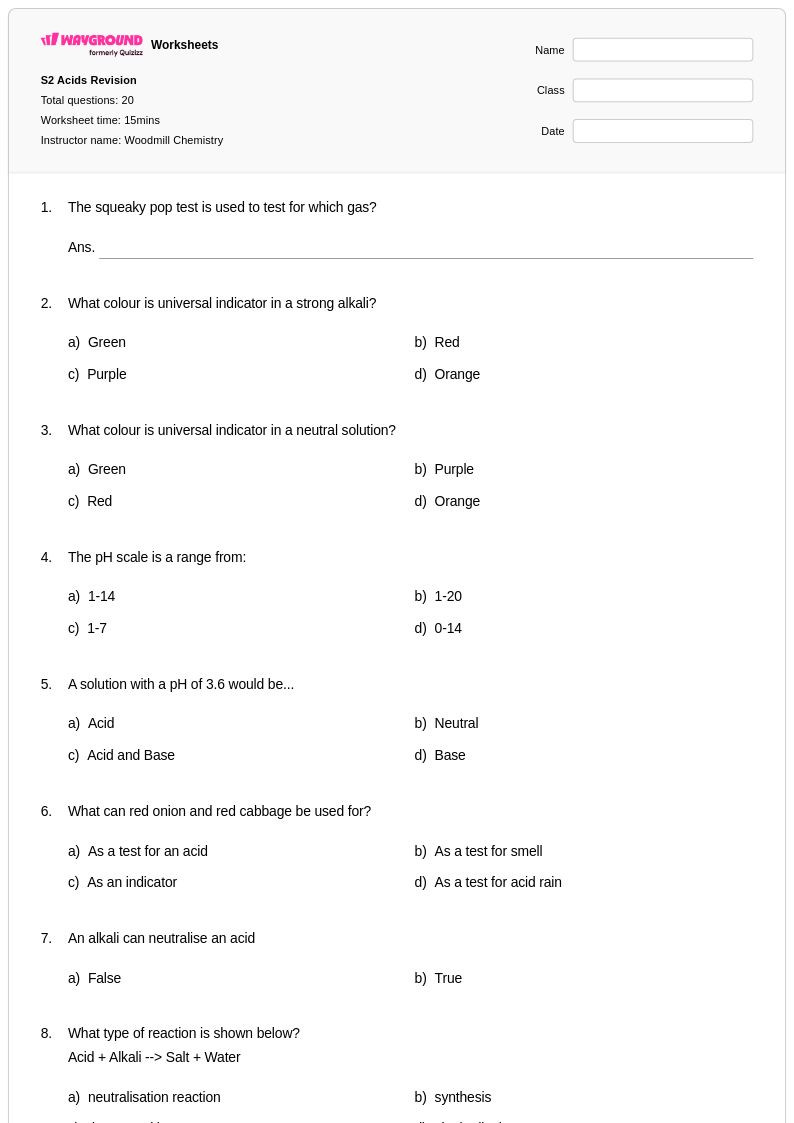
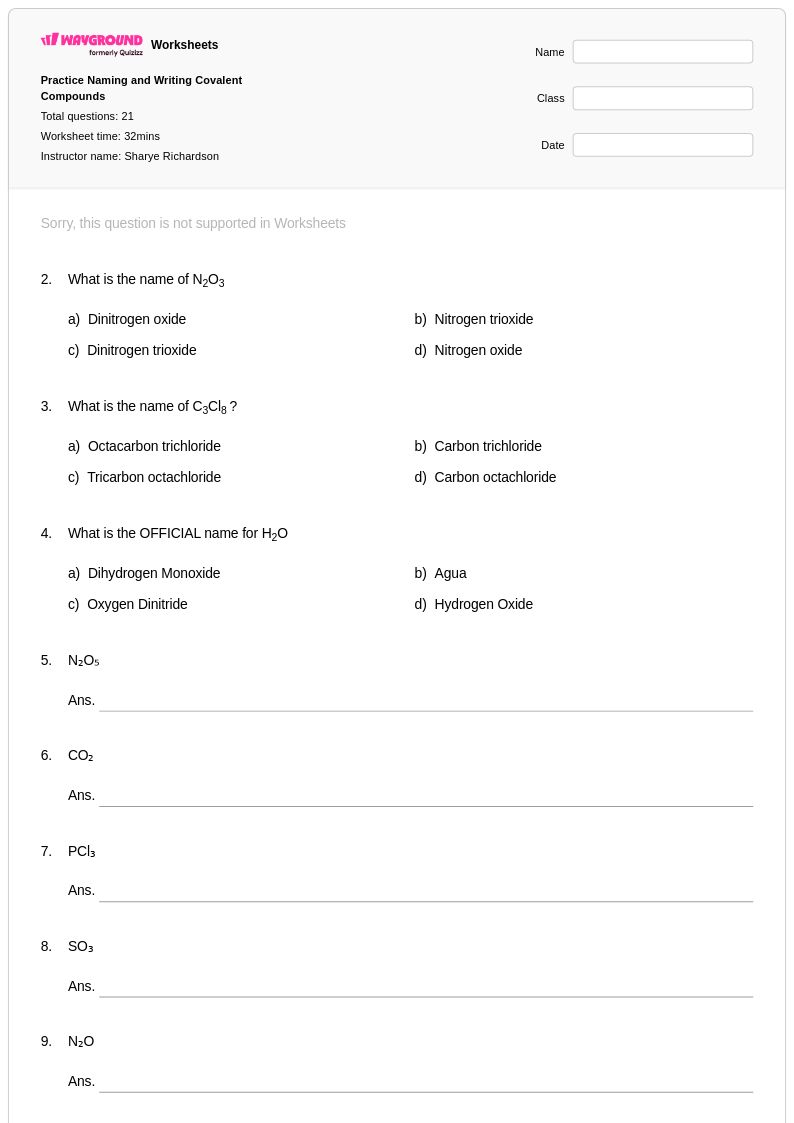
Naming acids represents a fundamental skill in Year 12 chemistry that requires students to master systematic nomenclature rules for both binary and oxyacids. Wayground's comprehensive collection of naming acids worksheets provides targeted practice problems that guide students through the essential conventions of acid nomenclature, including the proper use of prefixes like "hydro-" for binary acids and suffixes like "-ic" and "-ous" for oxyacids based on oxidation states. These free printable resources include detailed answer keys that allow students to verify their understanding of complex naming patterns, while pdf formats ensure easy distribution and consistent formatting across different classroom settings. The worksheets systematically build proficiency in recognizing molecular formulas, determining acid types, and applying appropriate naming conventions that are crucial for success in advanced chemistry coursework.
Wayground's extensive library draws from millions of teacher-created resources specifically designed to support chemistry educators in delivering effective instruction on acid nomenclature. The platform's robust search and filtering capabilities enable teachers to quickly locate worksheets that align with specific curriculum standards and match their students' varying skill levels, while built-in differentiation tools allow for seamless customization of practice problems to meet individual learning needs. These naming acids resources are available in both printable and digital pdf formats, providing flexibility for classroom instruction, homework assignments, and targeted remediation sessions. Teachers can efficiently plan lessons knowing that comprehensive answer keys accompany each worksheet, and the variety of problem types supports everything from initial skill development to enrichment activities for advanced students preparing for standardized assessments and college-level chemistry courses.
FAQs
How do I teach students to name acids systematically?
Start by separating acids into two categories: binary acids (containing only hydrogen and one other nonmetal) and oxyacids (containing hydrogen, oxygen, and another element). Teach binary acids first using the hydro- prefix and -ic suffix rule, then move to oxyacids where students must recognize the relationship between the oxyanion name and the acid name using -ic and -ous suffixes. Building a reference chart comparing ion names to acid names helps students internalize the pattern before working independently.
What exercises help students practice naming acids?
The most effective practice combines formula-to-name and name-to-formula exercises, since students must be fluent in both directions for exams and lab work. Worksheets that progress from binary acids like HCl and HBr to oxyacids like H₂SO₄ and HNO₃ build confidence incrementally. Including common laboratory acids in practice problems also reinforces real-world relevance and helps students connect nomenclature to practical chemistry.
What mistakes do students commonly make when naming acids?
The most frequent error is confusing oxyacid suffix rules — students often default to -ic for every acid without recognizing that the suffix depends on the oxidation state of the central element. Another common mistake is forgetting the hydro- prefix for binary acids, especially when students have just learned polyatomic ion names and try to apply those rules incorrectly. Students also frequently confuse sulfurous acid (H₂SO₃) with sulfuric acid (H₂SO₄), so side-by-side comparison practice is essential.
How do I use naming acids worksheets in my chemistry class?
Naming acids worksheets on Wayground are available as printable PDFs for traditional classroom use and in digital formats for technology-integrated environments, including the option to host them as a quiz directly on Wayground. Printable versions work well for in-class practice or homework assignments, while digital formats allow for self-paced review or remote learning. Each worksheet includes a complete answer key, so students can self-check their work and identify which naming rules need additional reinforcement.
How do I differentiate naming acids instruction for students who are struggling?
For students who are still building fluency, reducing the scope to binary acids only before introducing oxyacids is an effective scaffolding strategy. On Wayground, teachers can apply individual accommodations such as read aloud support, reduced answer choices, and extended time to specific students when worksheets are assigned digitally, without affecting the experience of other students in the class. These settings are reusable across future sessions, making it easy to maintain consistent support for students who need it.
What is the difference between binary acids and oxyacids, and why does it matter for naming?
Binary acids contain only two elements — hydrogen and one nonmetal — and are named using the hydro- prefix and -ic suffix, as in hydrochloric acid (HCl). Oxyacids contain hydrogen, oxygen, and a third element, and their names are derived from the corresponding oxyanion, using -ic for the higher oxidation state and -ous for the lower. Understanding this distinction is essential because applying the wrong naming rule is one of the most common sources of error in acid nomenclature assessments.