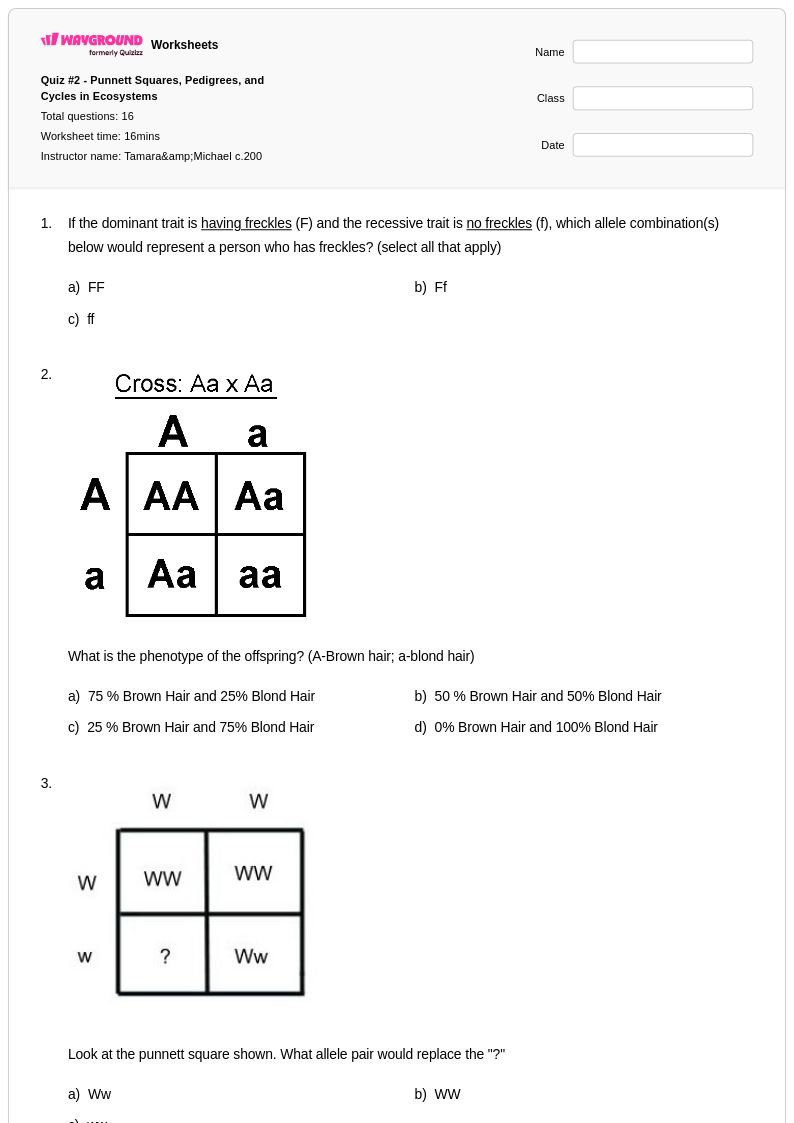
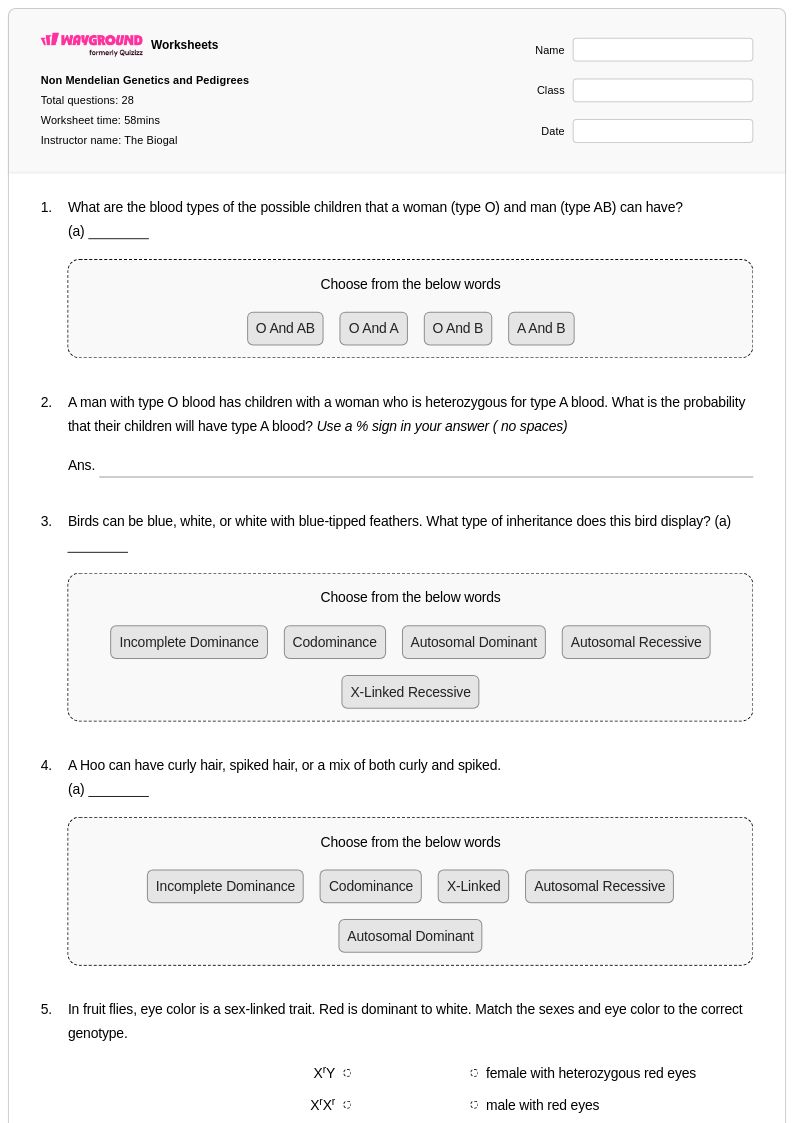
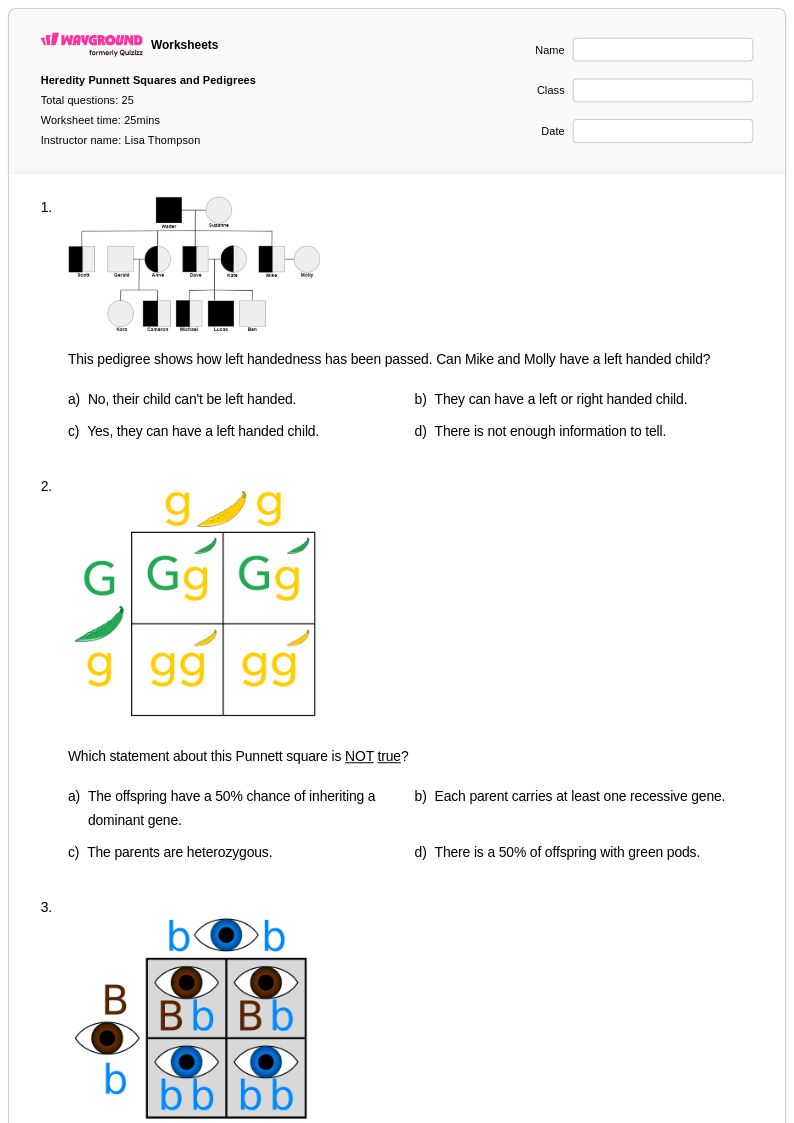
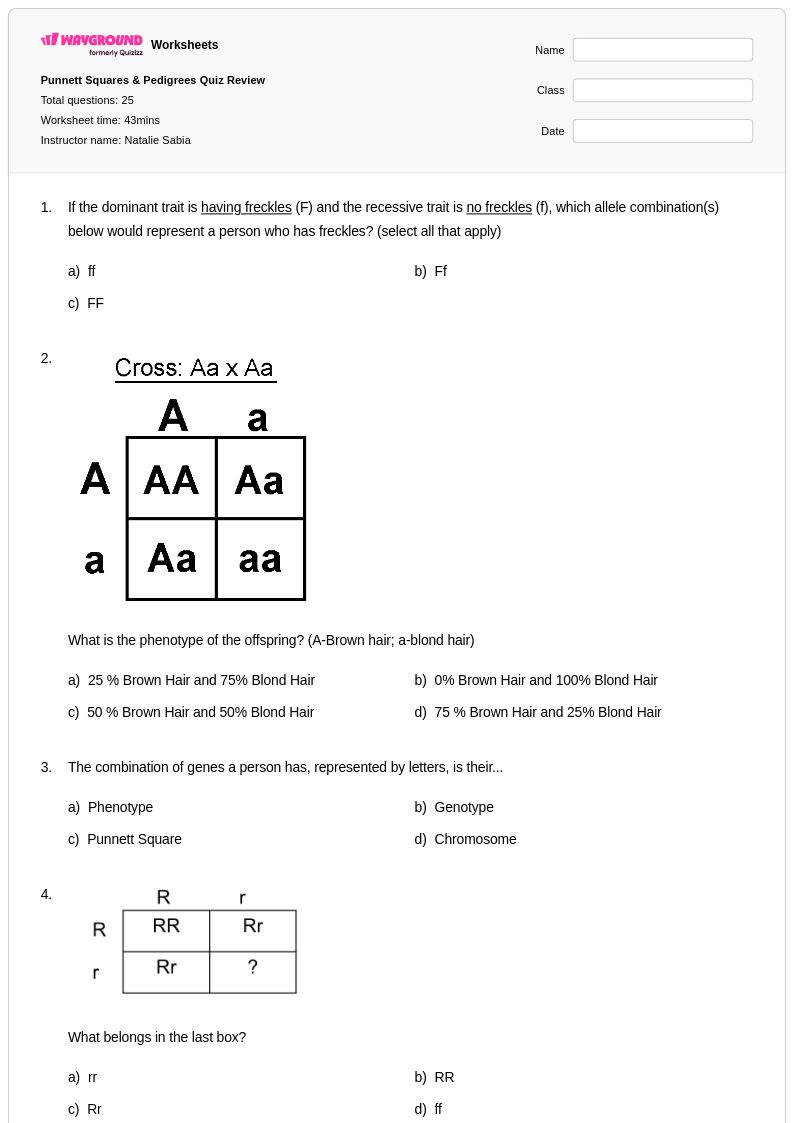
Explore Wayground's comprehensive collection of pedigree worksheets and printables that help students master genetic inheritance patterns through engaging practice problems, complete with answer keys and free PDF downloads.
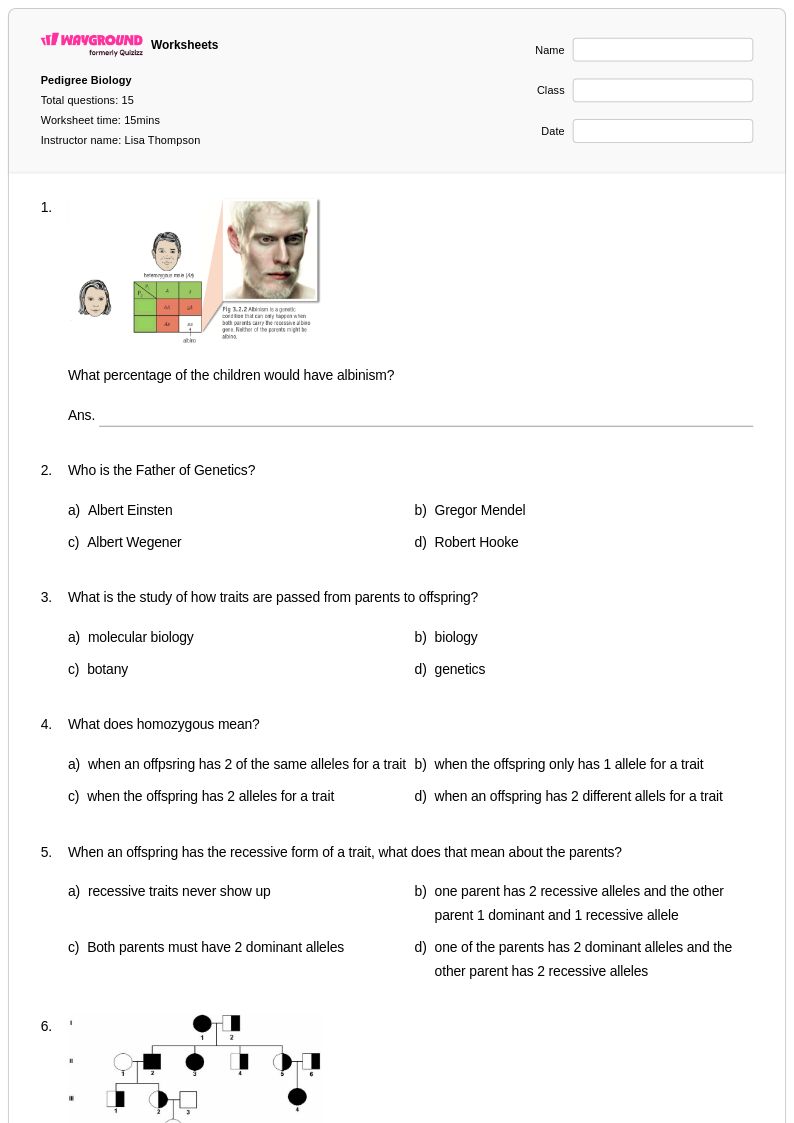
Pedigree worksheets available through Wayground (formerly Quizizz) provide students with essential practice in analyzing inheritance patterns and genetic relationships across multiple generations. These comprehensive resources strengthen critical skills in interpreting family trees, identifying modes of inheritance such as autosomal dominant, autosomal recessive, and sex-linked traits, and predicting the probability of genetic conditions appearing in offspring. Students work through carefully structured practice problems that guide them from basic pedigree symbol recognition to complex multi-generational analysis, with each worksheet including detailed answer keys that explain the reasoning behind genetic conclusions. The collection features both printable pdf formats and interactive digital versions, ensuring accessibility for diverse learning environments while building proficiency in this fundamental genetics concept through free, high-quality educational materials.
Wayground (formerly Quizizz) empowers educators with an extensive library of millions of teacher-created pedigree resources that streamline lesson planning and enhance student understanding of genetic inheritance patterns. The platform's robust search and filtering capabilities allow teachers to quickly locate worksheets aligned with specific educational standards and tailored to varied skill levels, supporting both remediation for struggling learners and enrichment opportunities for advanced students. Flexible customization tools enable educators to modify existing materials or create personalized assessments that address their classroom's unique needs, while the dual availability of printable and digital formats, including downloadable pdfs, accommodates different teaching preferences and technological resources. This comprehensive support system facilitates differentiated instruction in genetics education, helping teachers provide targeted skill practice that builds student confidence in analyzing complex hereditary relationships and genetic probability calculations.
FAQs
How do I teach students to read and interpret a pedigree chart?
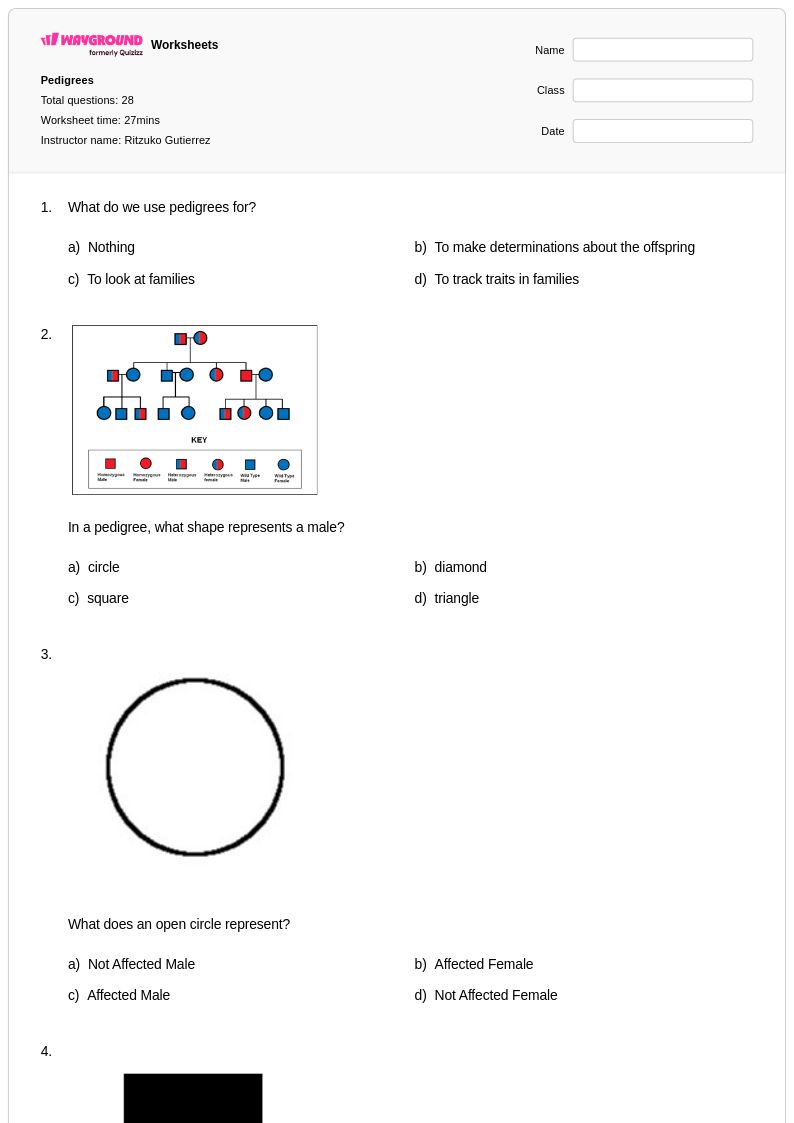
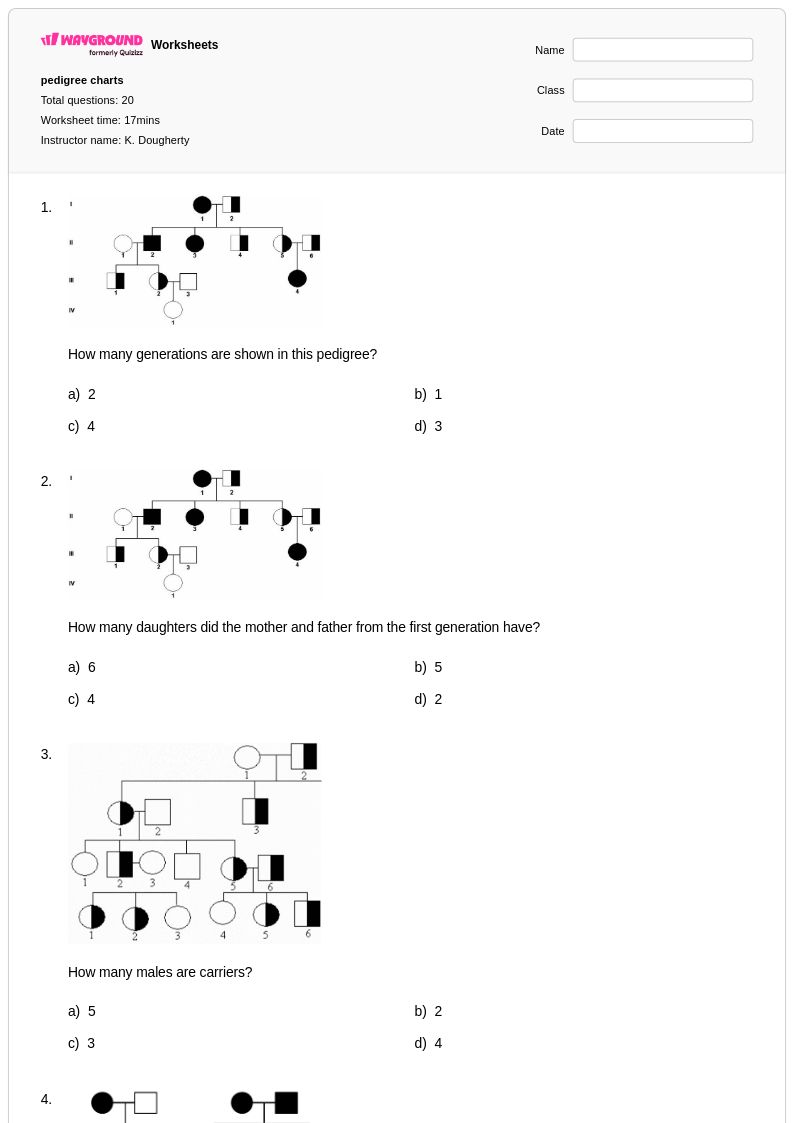
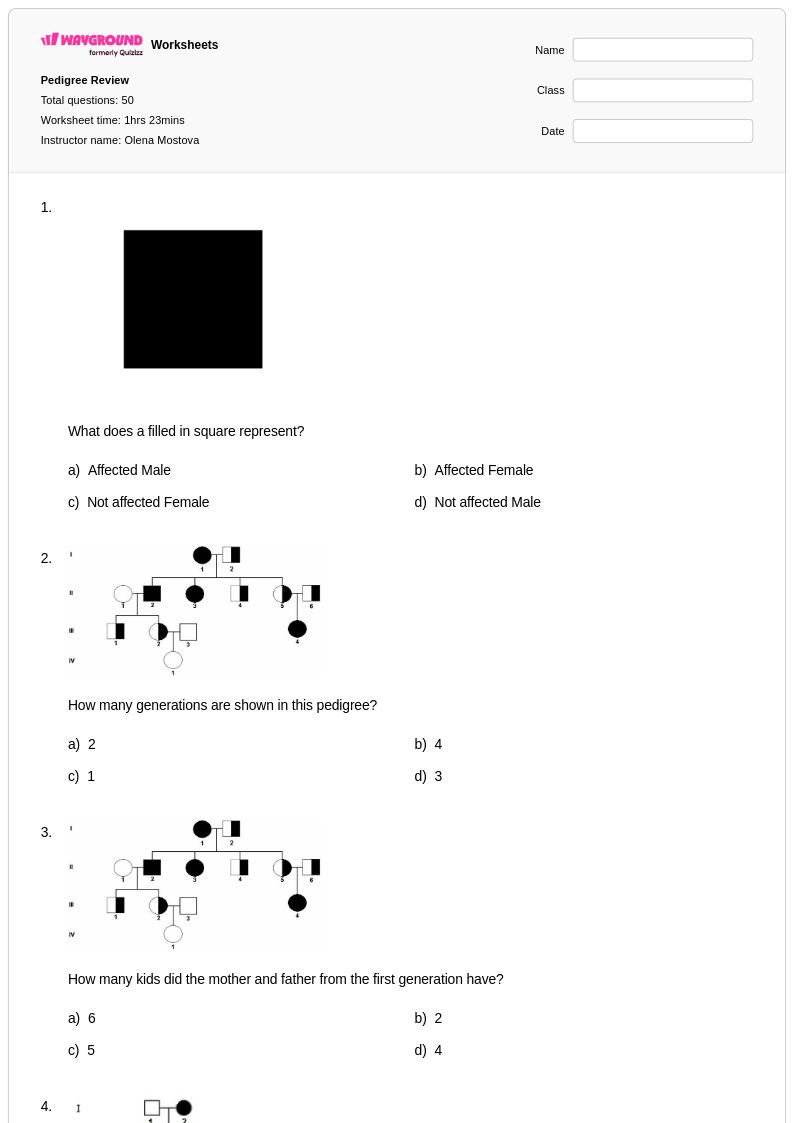
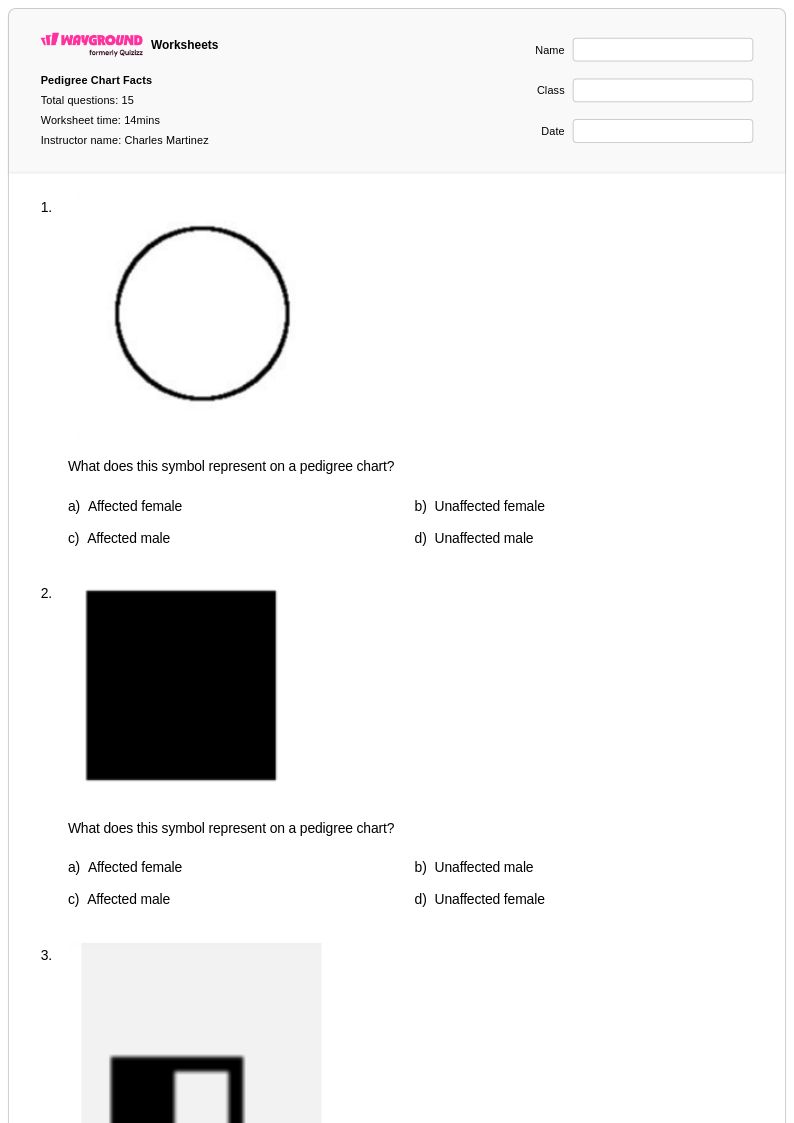
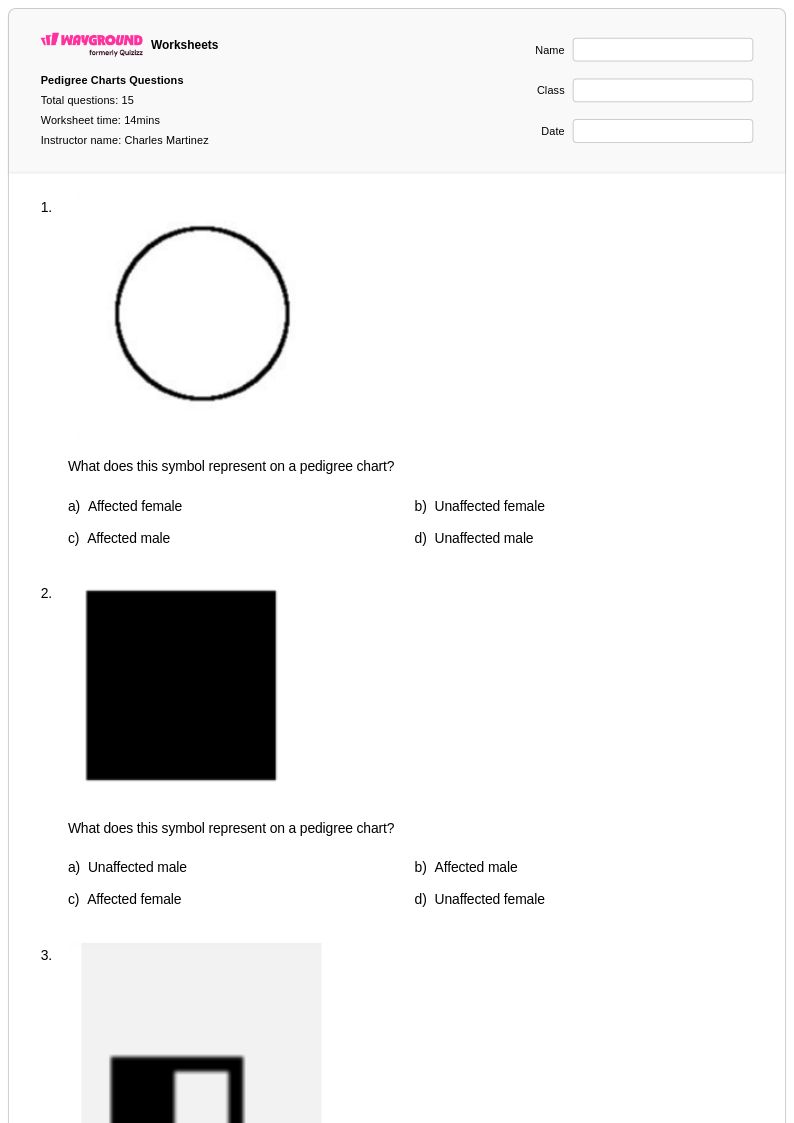
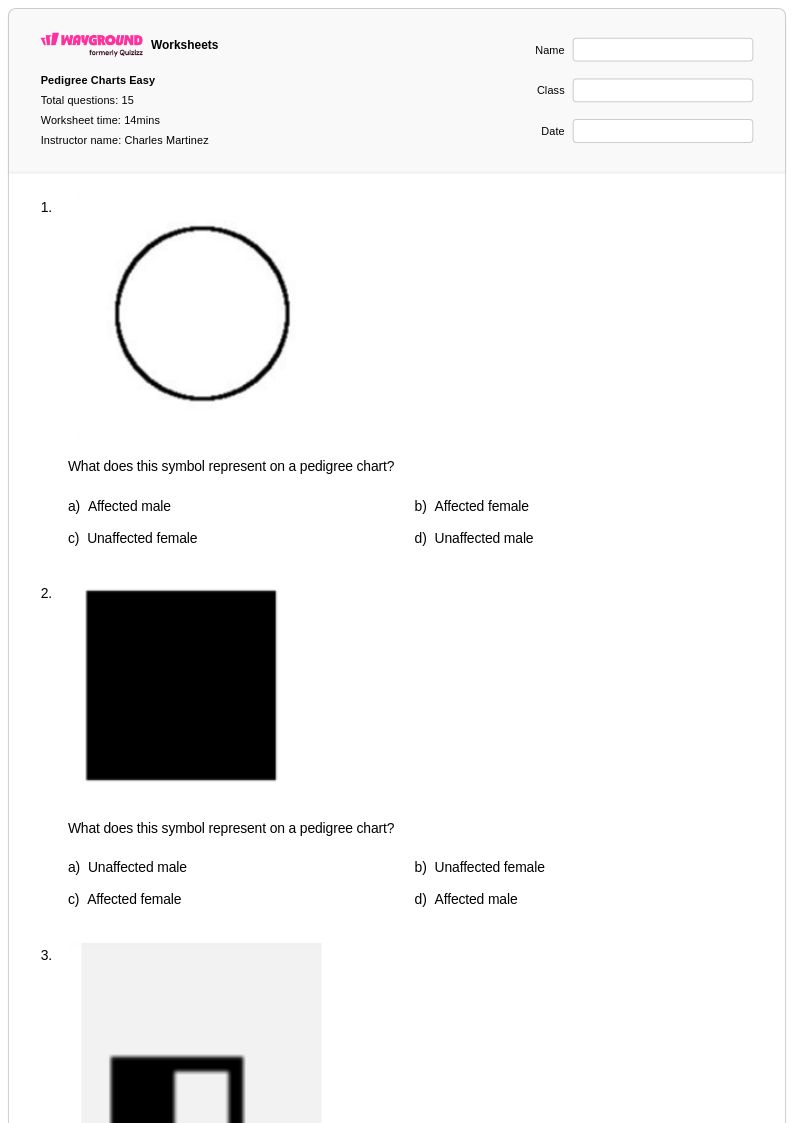
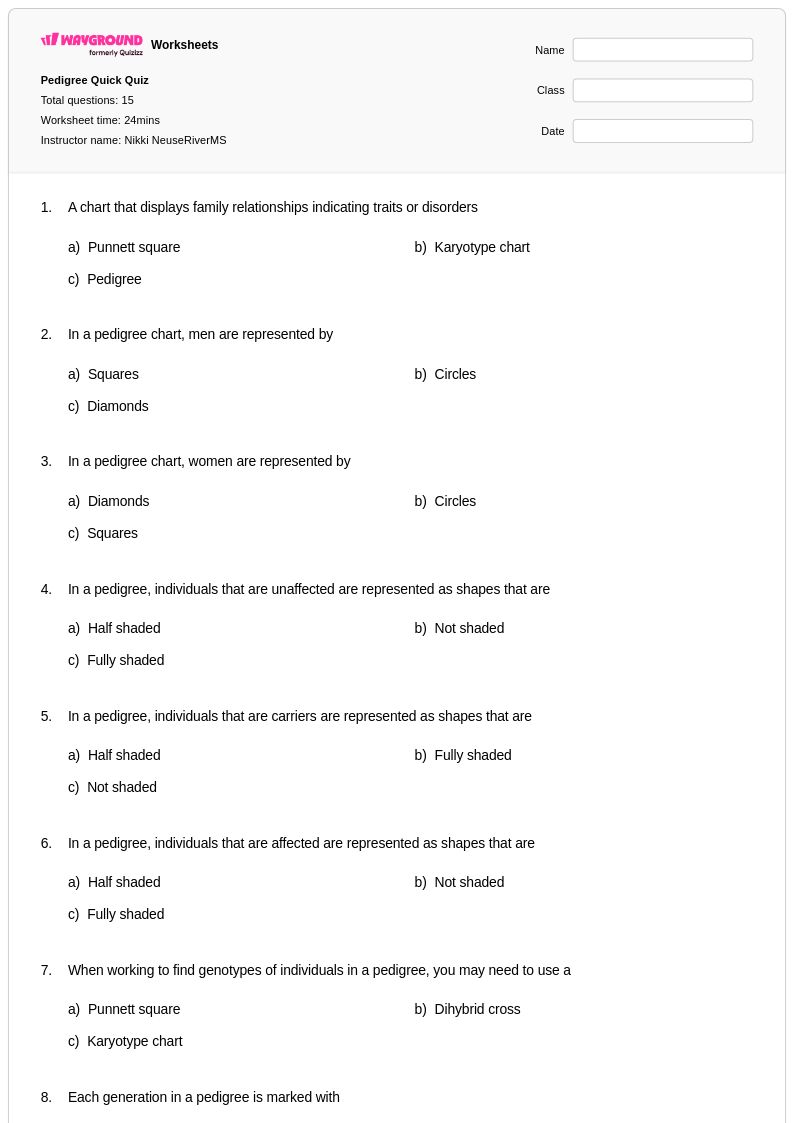
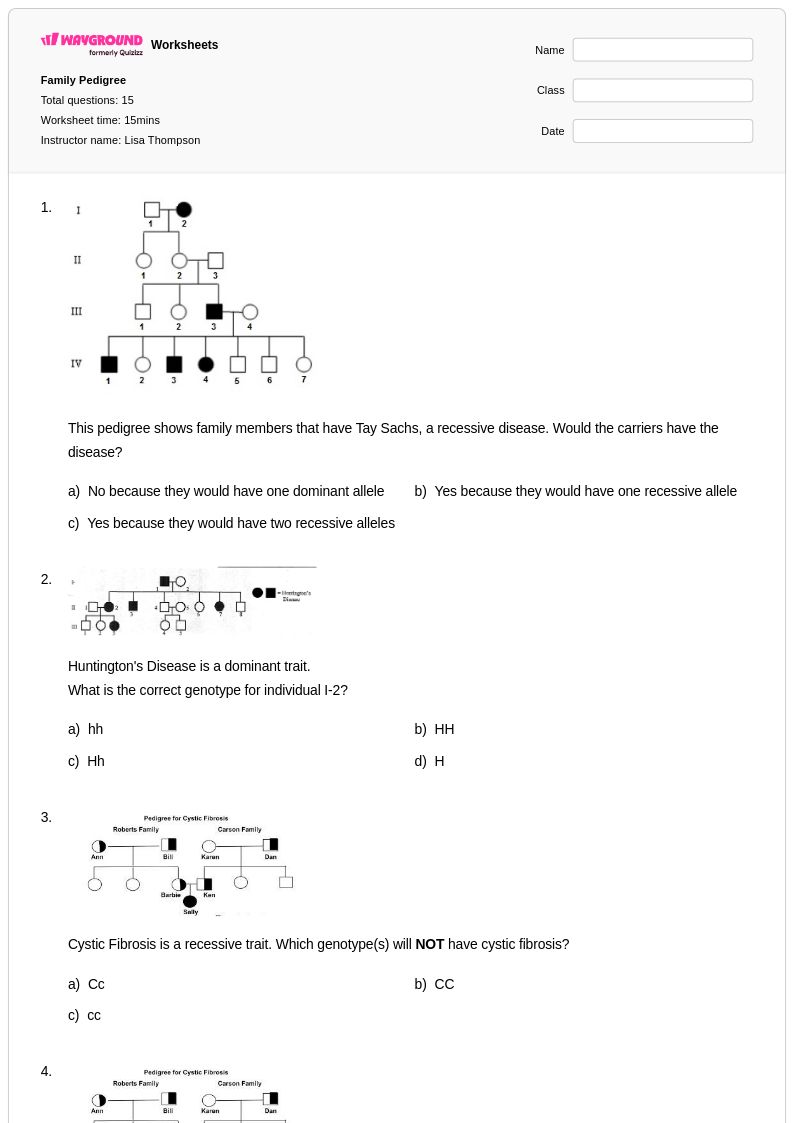
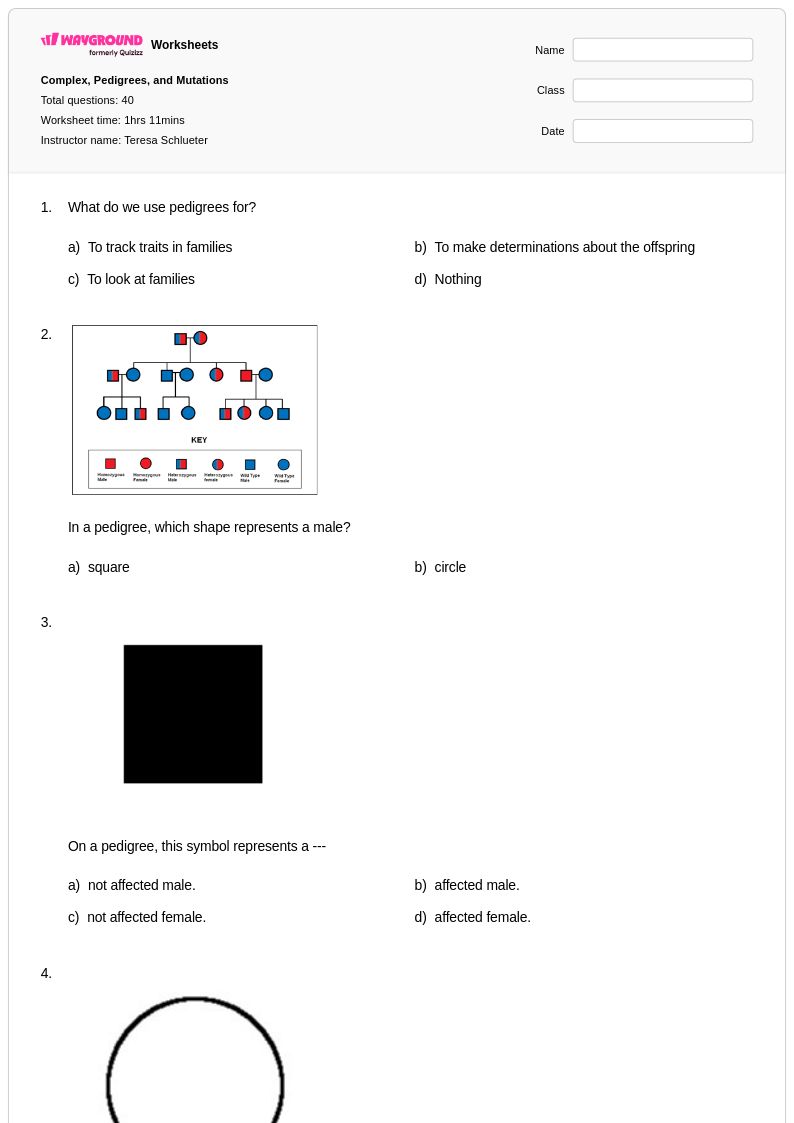
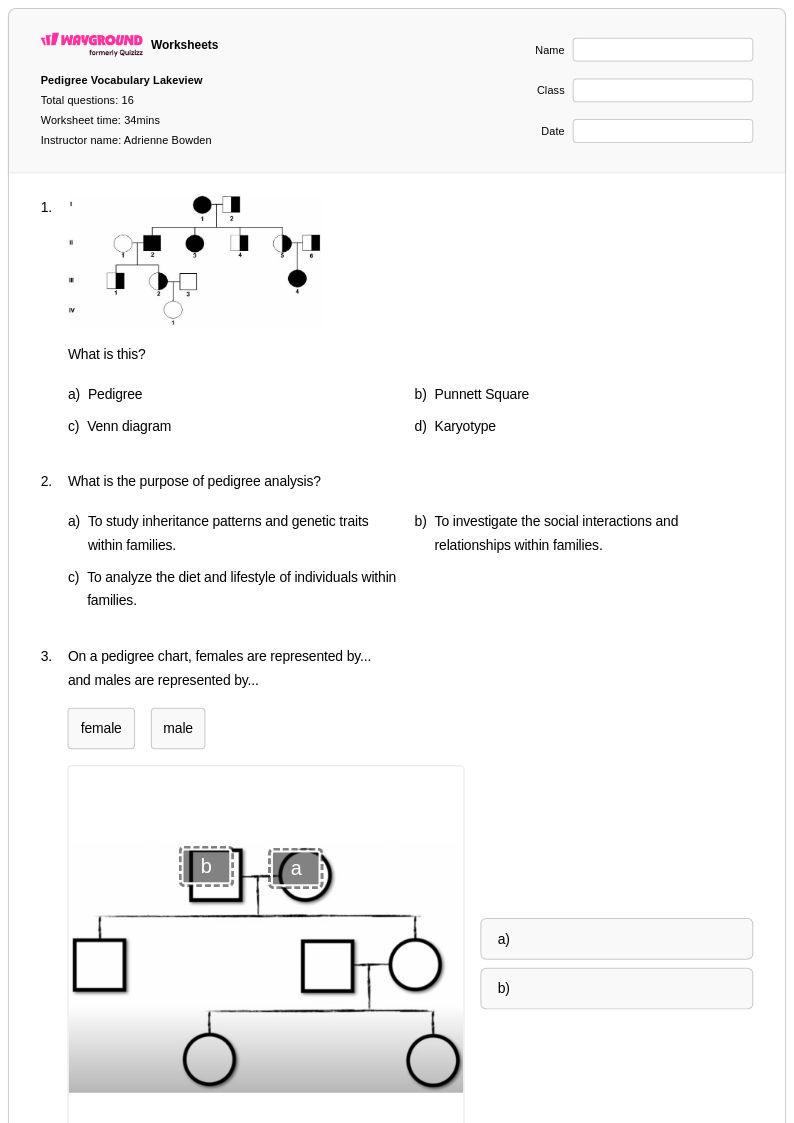
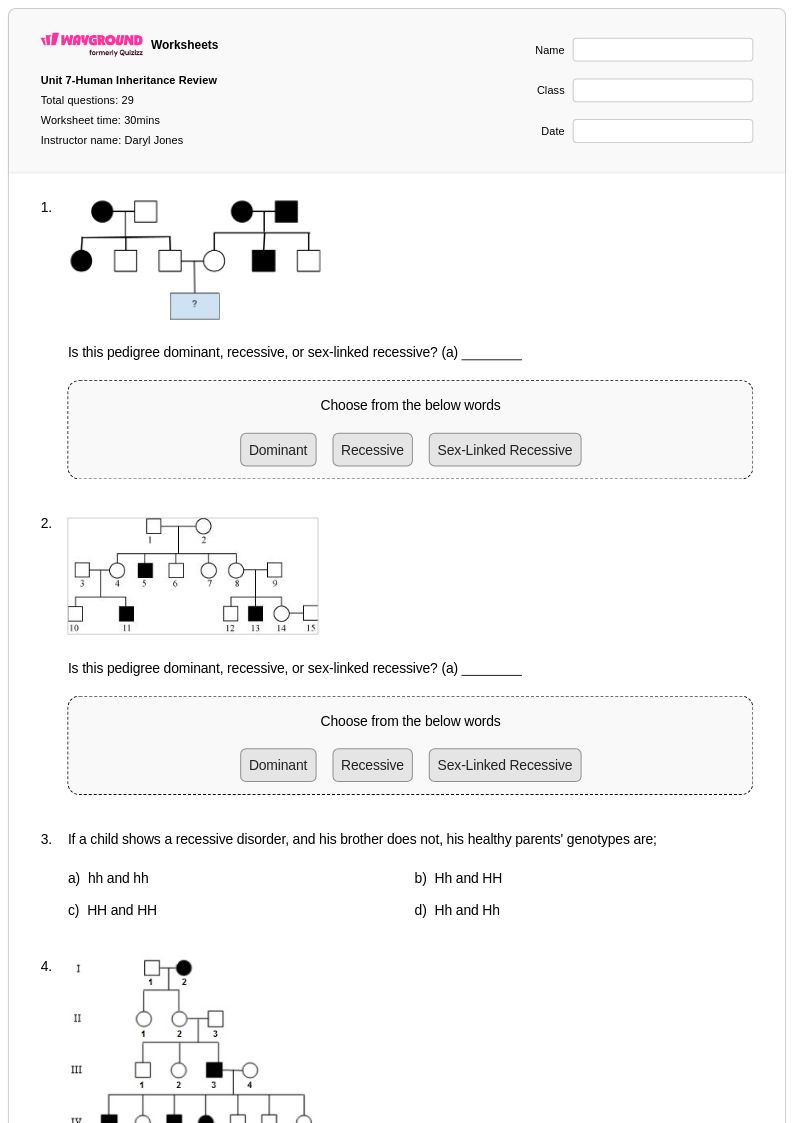
Start by teaching students the standard pedigree symbols: squares for males, circles for females, shaded shapes for affected individuals, and horizontal lines for mating pairs. Once students are comfortable with notation, walk them through identifying carriers versus affected individuals before moving to multi-generational analysis. A structured progression from simple two-generation pedigrees to complex charts with sex-linked traits helps students build confidence systematically.
What exercises help students practice identifying modes of inheritance in pedigrees?
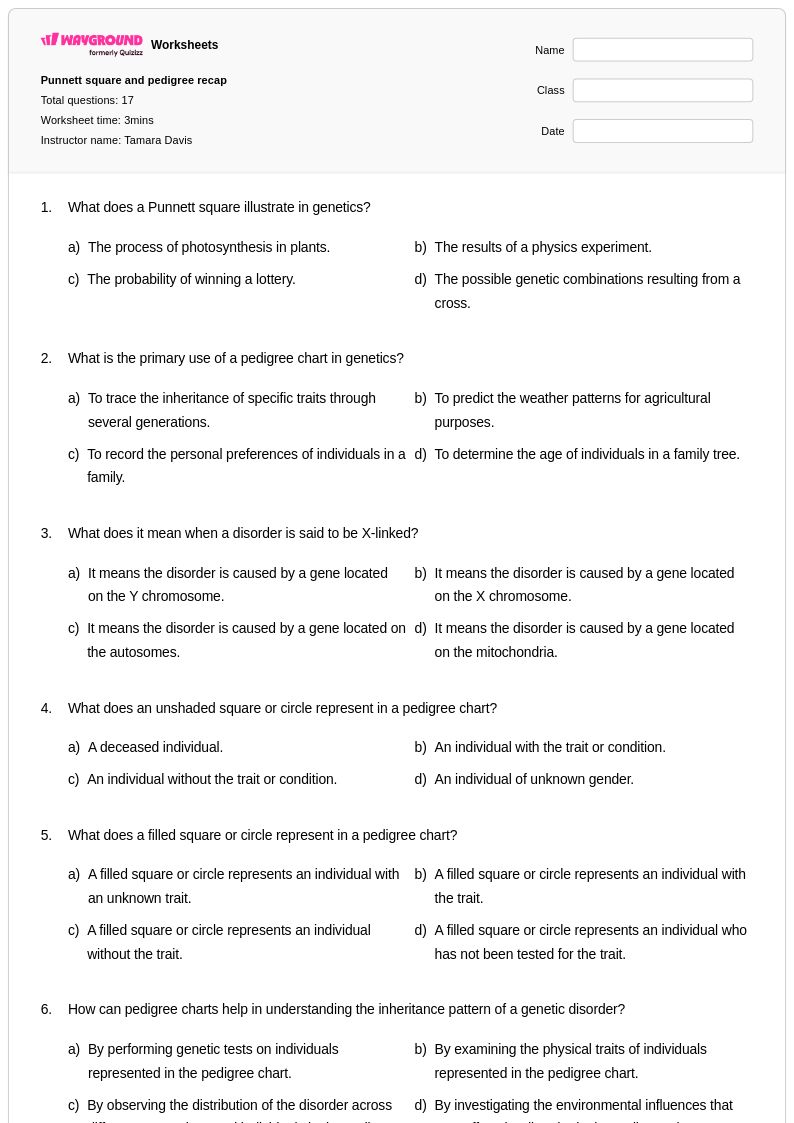
Students benefit most from practice problems that ask them to distinguish between autosomal dominant, autosomal recessive, and sex-linked inheritance patterns using observable clues in the pedigree, such as whether affected individuals appear in every generation or skip generations. Exercises that require students to assign genotypes to each individual and then calculate the probability of a trait appearing in offspring reinforce both pattern recognition and probability skills. Providing pedigrees with varying complexity across a single worksheet set helps students apply rules rather than memorize examples.
What mistakes do students commonly make when analyzing pedigree charts?
The most common error is confusing carriers with unaffected individuals, particularly in autosomal recessive problems where a phenotypically normal parent must be heterozygous based on the offspring shown. Students also frequently misidentify sex-linked traits because they apply autosomal rules without accounting for hemizygosity in males. Another consistent mistake is assuming that a trait skipping a generation automatically means it is recessive, without checking whether the pattern is consistent across all individuals in the chart.
How do I differentiate pedigree instruction for students at different skill levels?
For struggling learners, begin with pedigrees that involve only one mode of inheritance, provide a symbol key on the worksheet, and reduce the number of generations shown. Advanced students can be challenged with pedigrees that involve incomplete penetrance, codominance, or multiple possible inheritance patterns that require students to argue for the most likely mode. On Wayground, teachers can apply accommodations such as reduced answer choices or read-aloud settings for individual students, so differentiation can happen within the same assignment without disrupting the rest of the class.
How do I use Wayground's pedigree worksheets in my classroom?
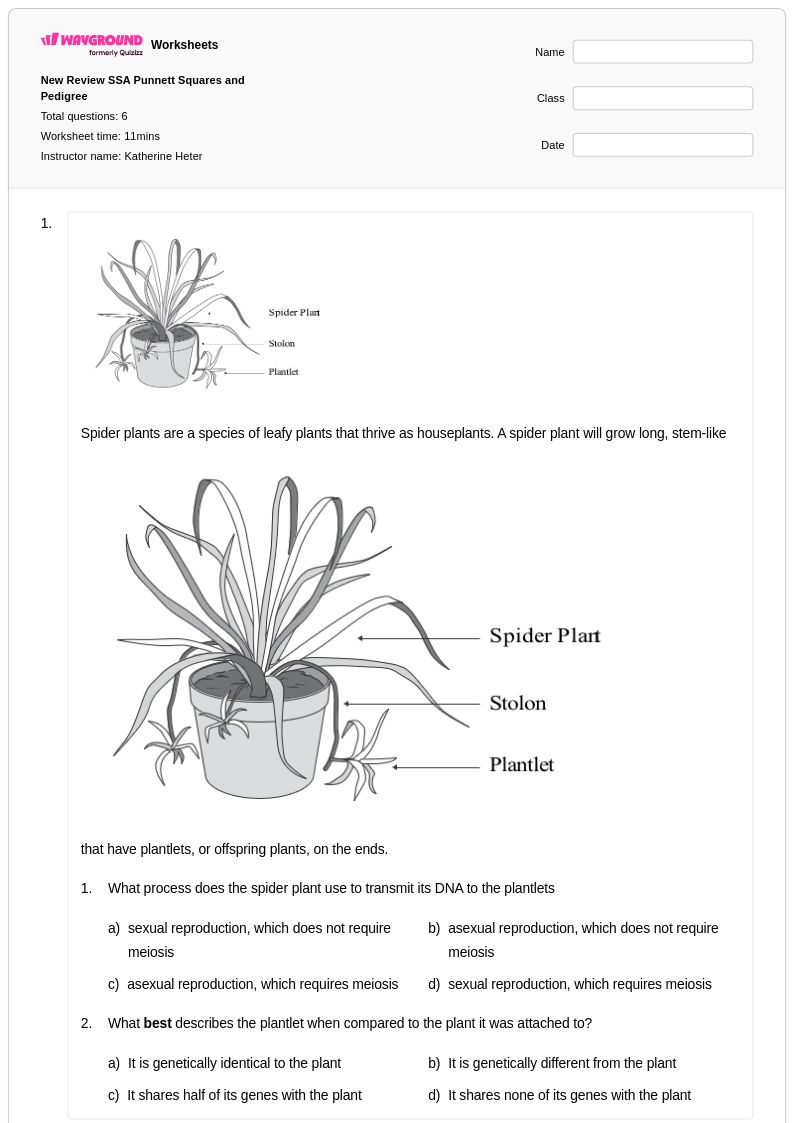
Wayground's pedigree worksheets are available as printable PDFs, making them easy to use as in-class assignments, homework, or lab supplements in a traditional setting. They are also available in digital formats, so teachers can assign them through technology-integrated environments, and can be hosted as a quiz directly on Wayground for streamlined student submission and grading. Each worksheet includes a complete answer key, which supports both independent student review and efficient teacher grading.
How do I assess whether students understand genetic probability after working through a pedigree?
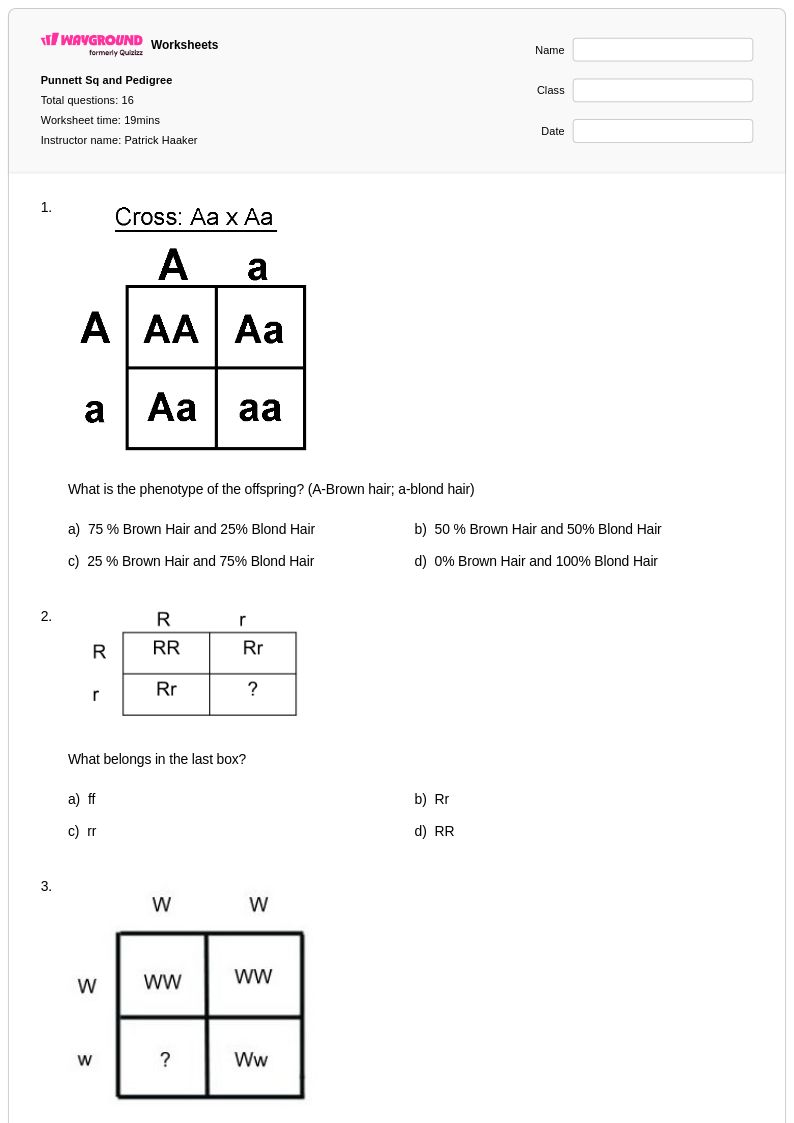
After students complete pedigree analysis, ask them to calculate the probability that a specific offspring will be affected, then justify their answer by stating the genotypes they assigned to the parents. Errors in probability often reveal an upstream mistake in genotype assignment rather than a flaw in probability calculation itself, so targeted feedback should address the reasoning chain, not just the final answer. Exit problems that present a new pedigree and ask students to identify the mode of inheritance and calculate one probability in a timed format serve as effective formative assessments.