
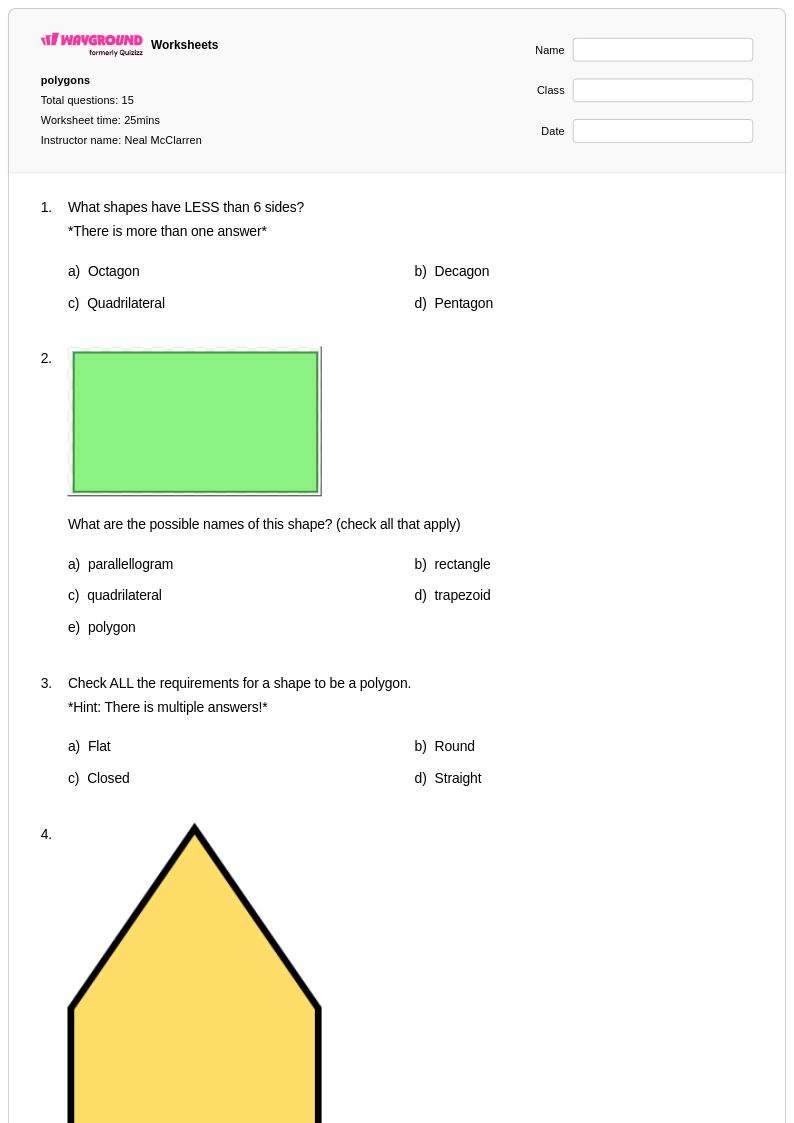
15 P
3rd
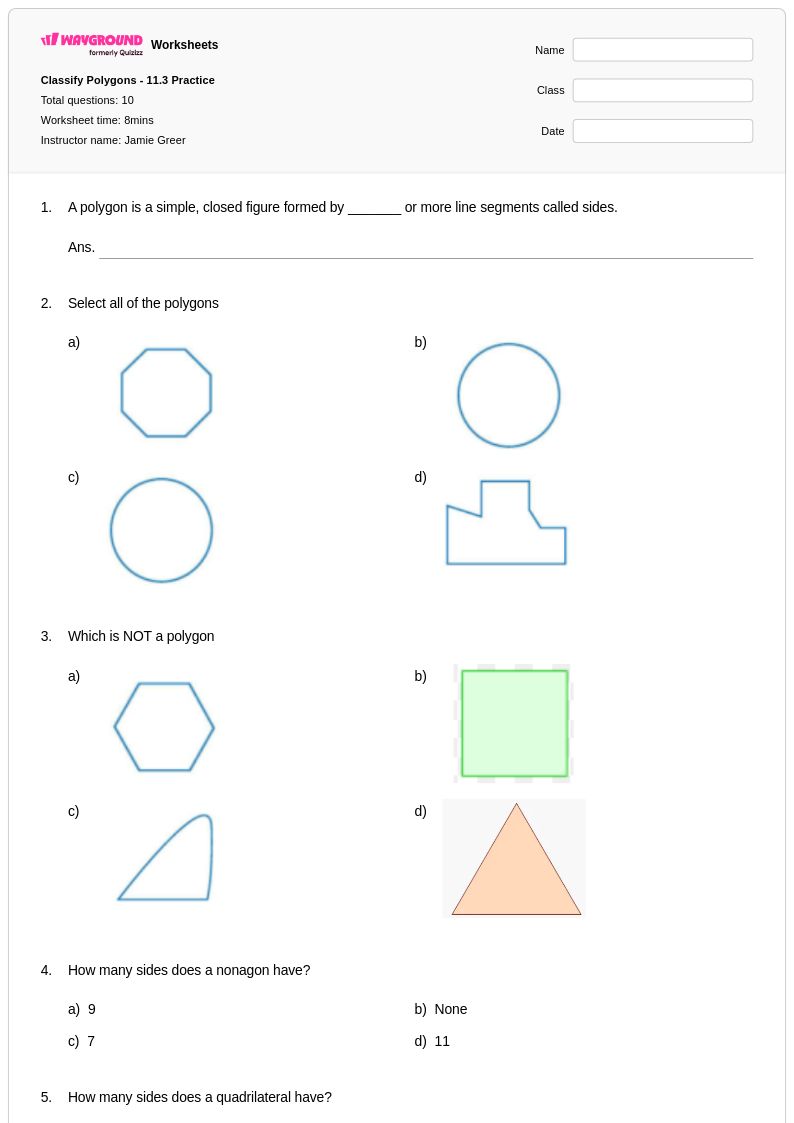
10 P
5th - 7th
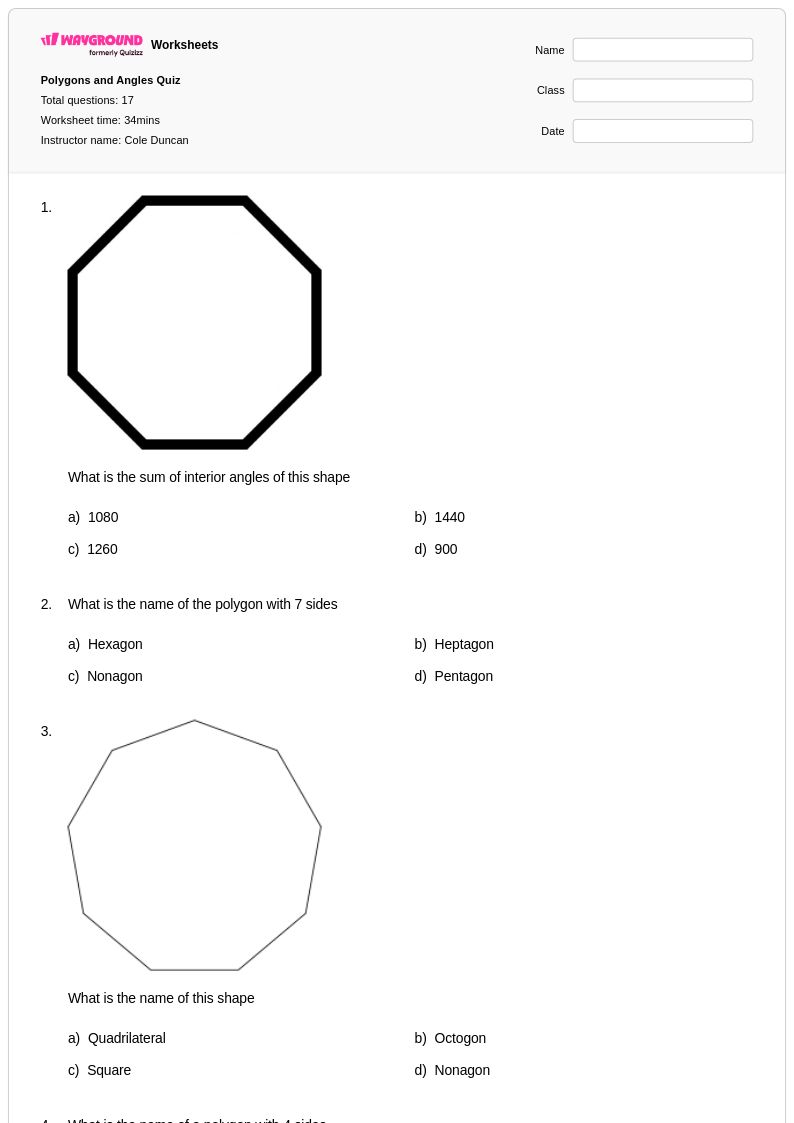
17 P
8th
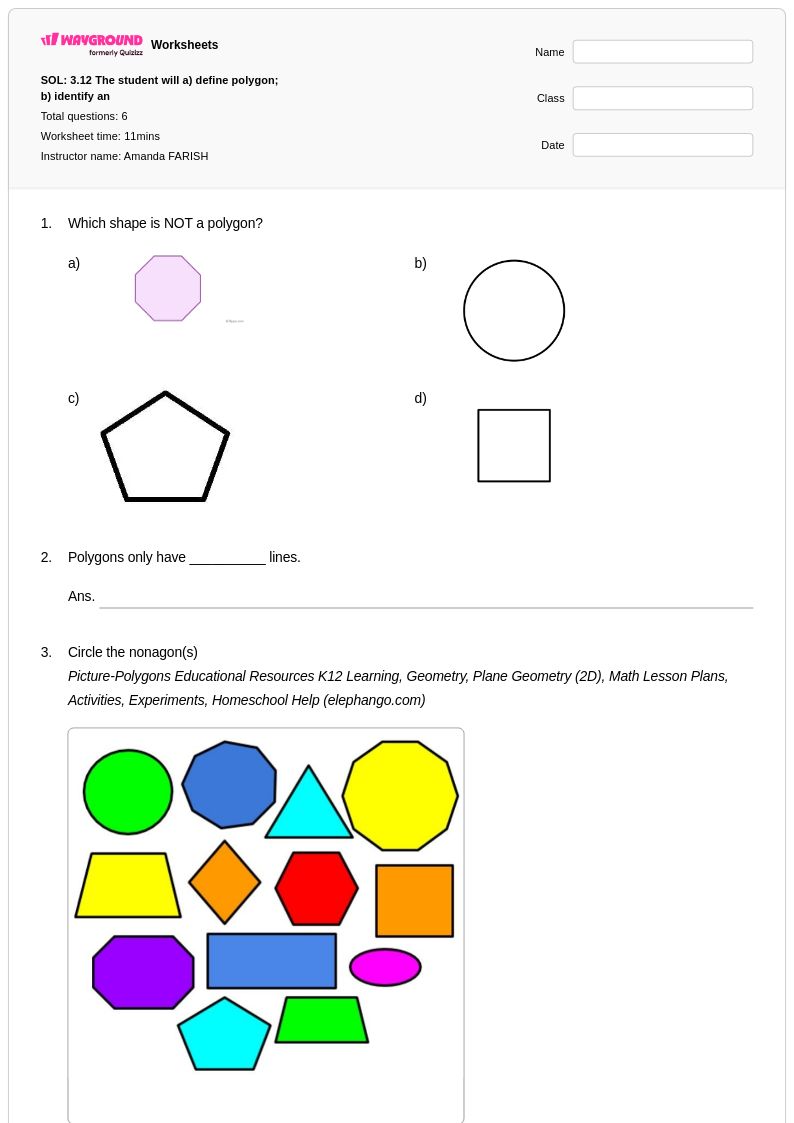
6 P
3rd
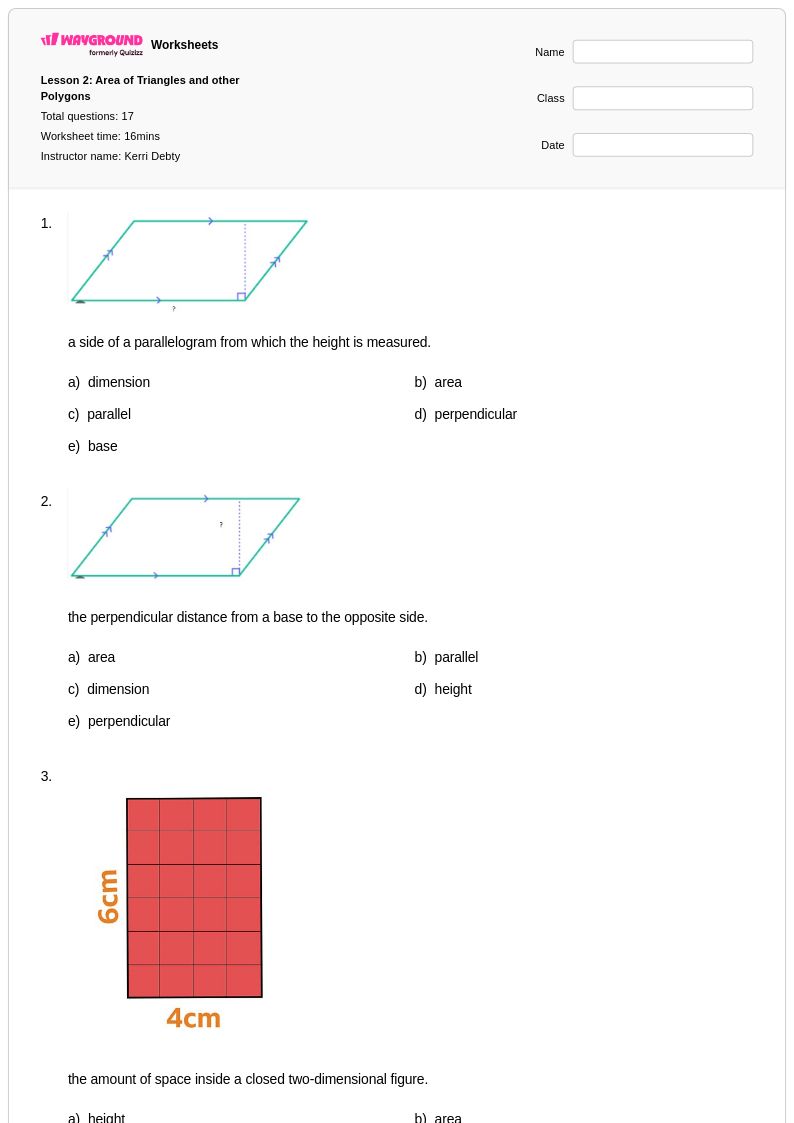
17 P
6th
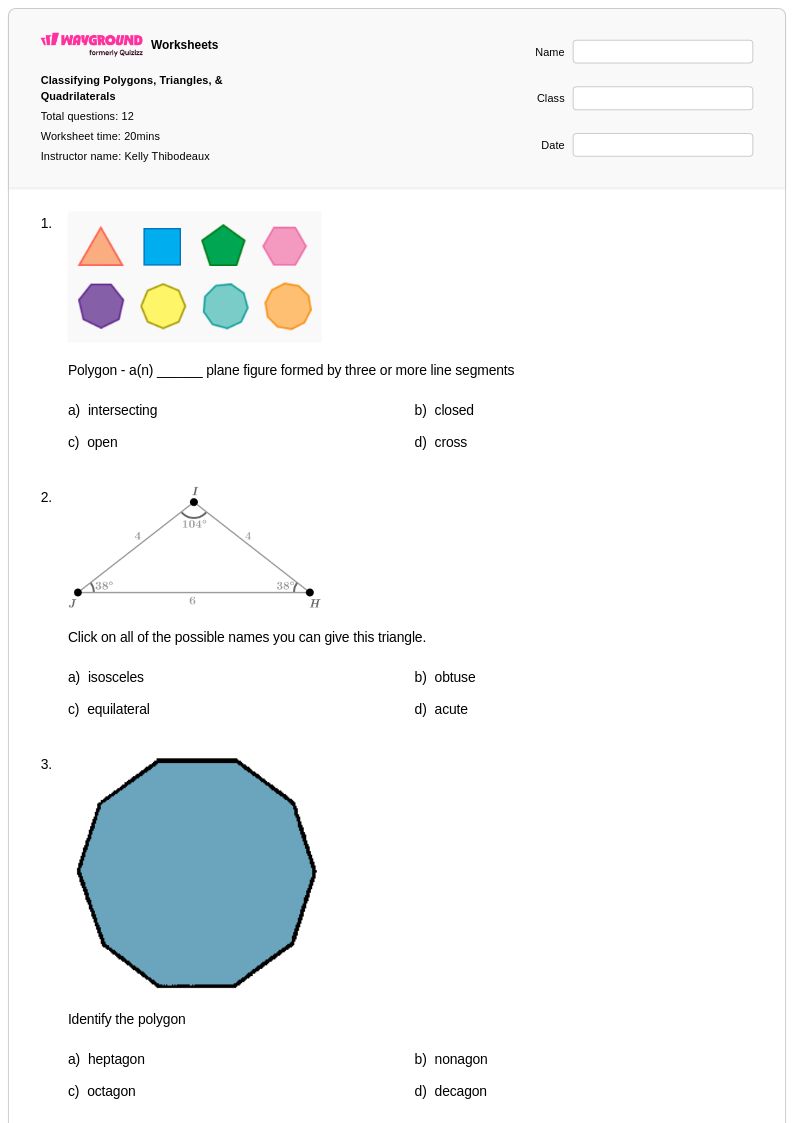
12 P
5th
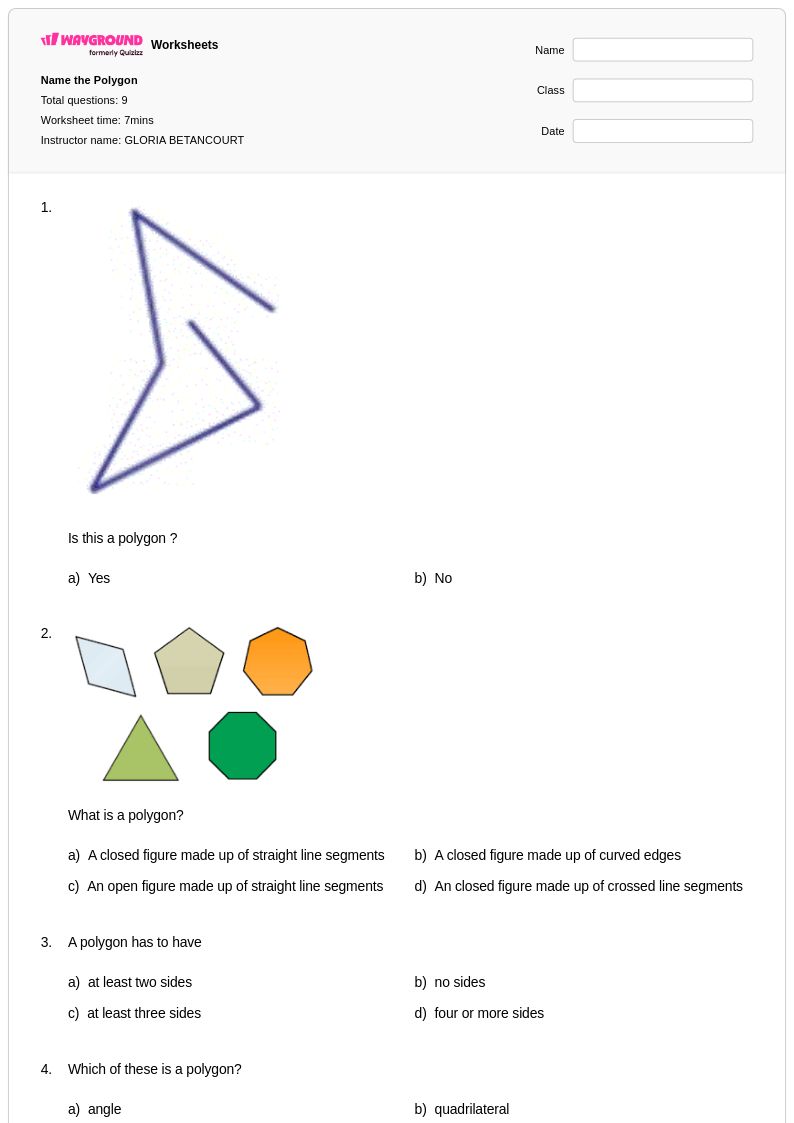
9 P
5th
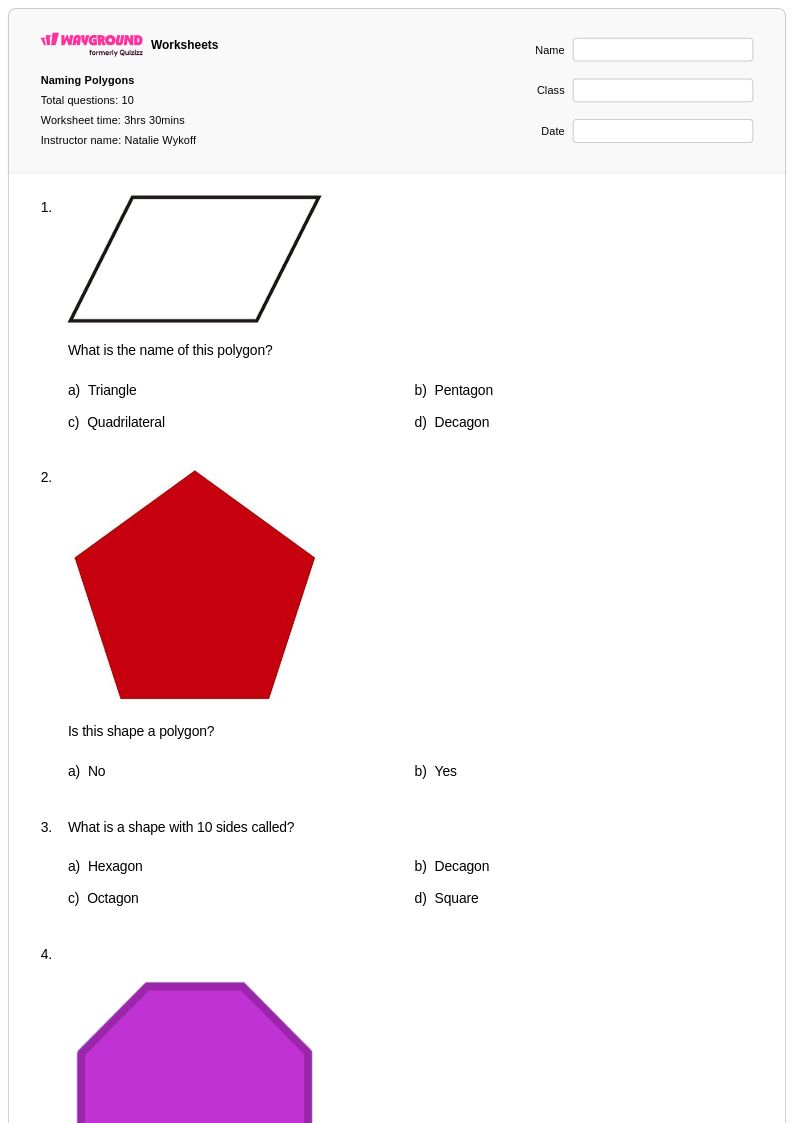
10 P
3rd
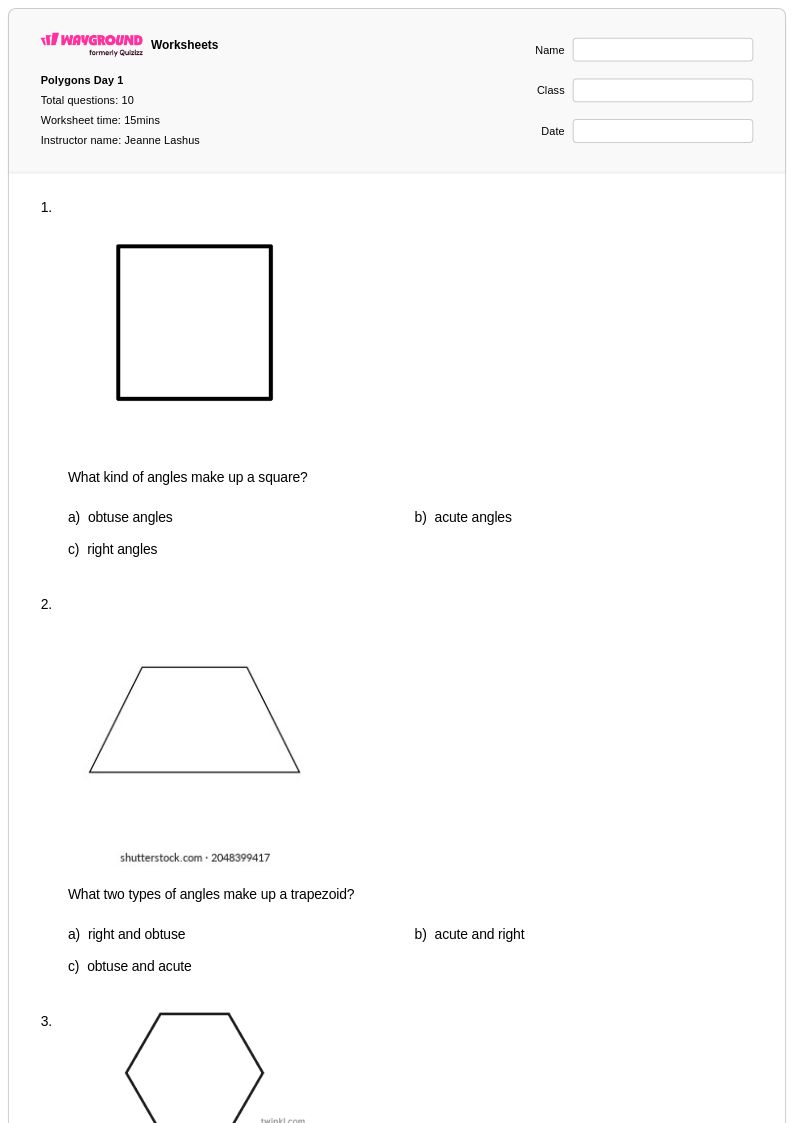
10 P
5th
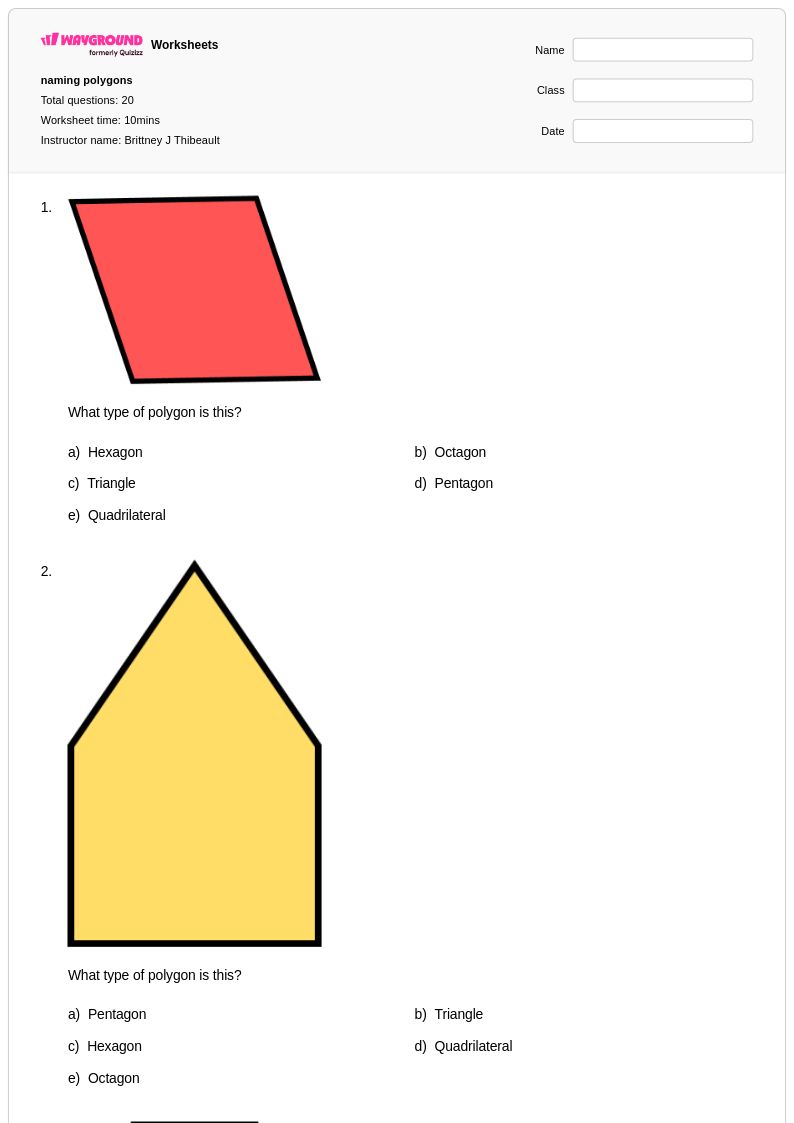
20 P
12th
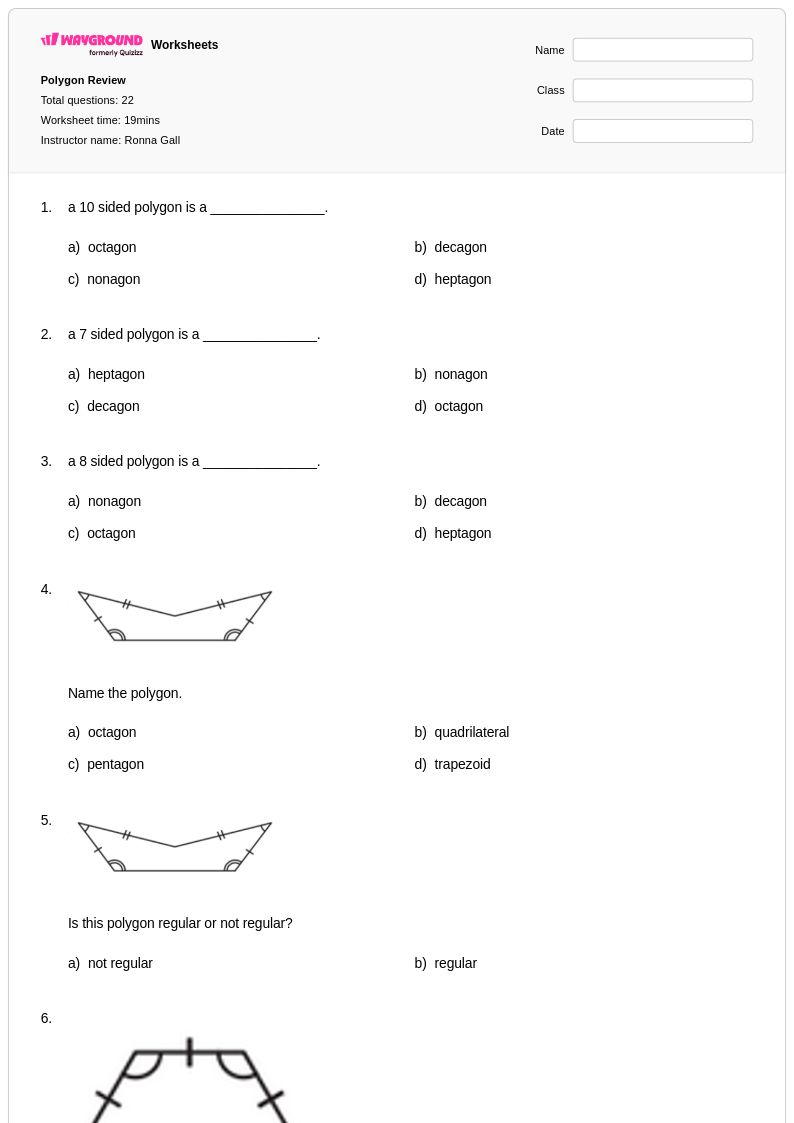
22 P
5th
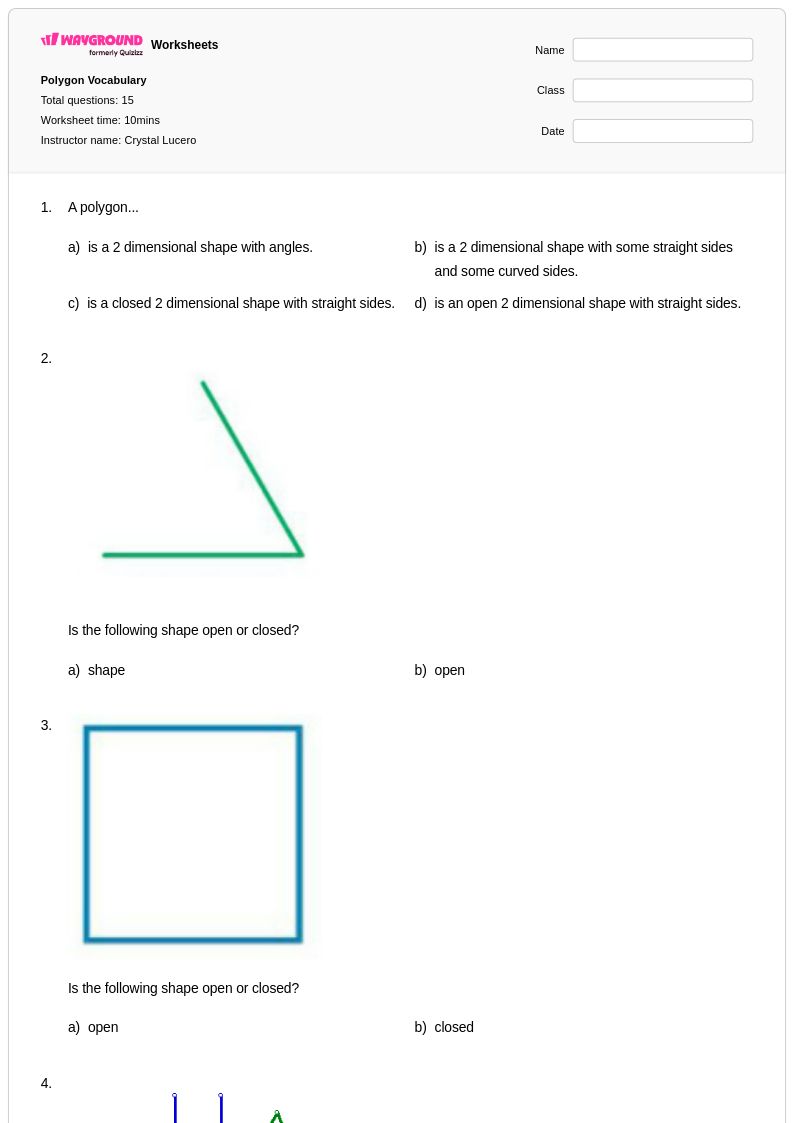
15 P
5th
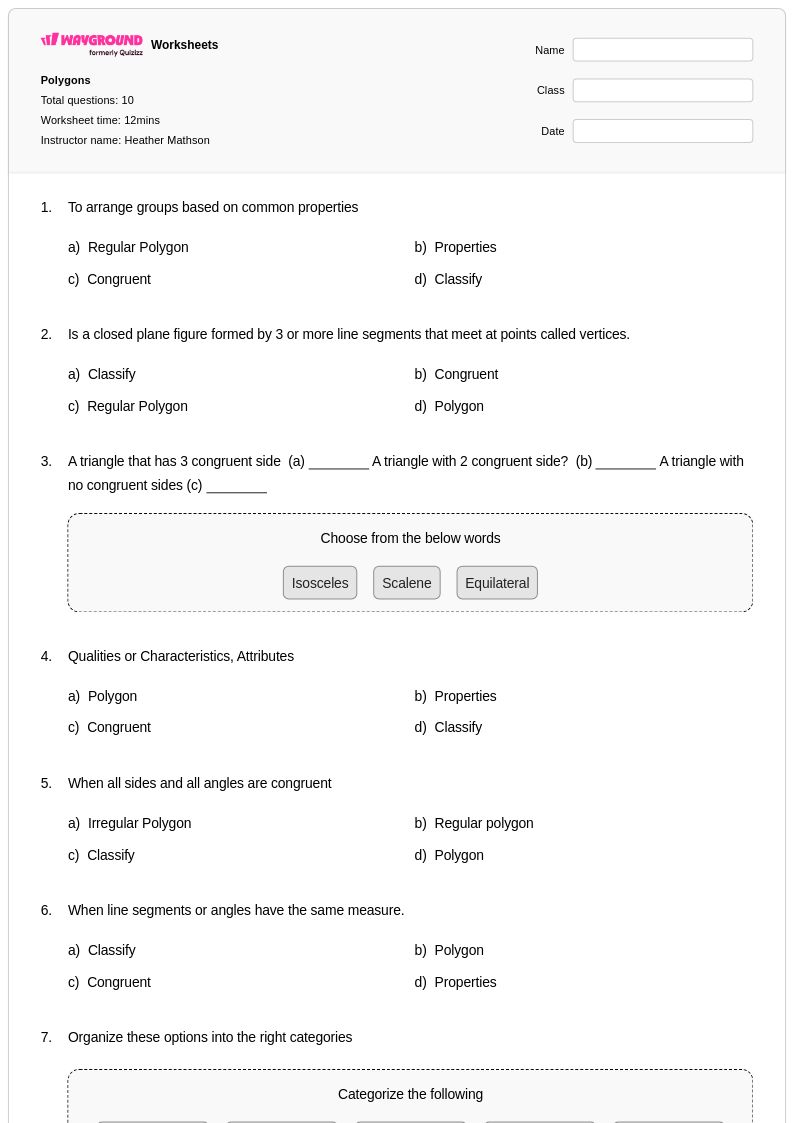
10 P
5th
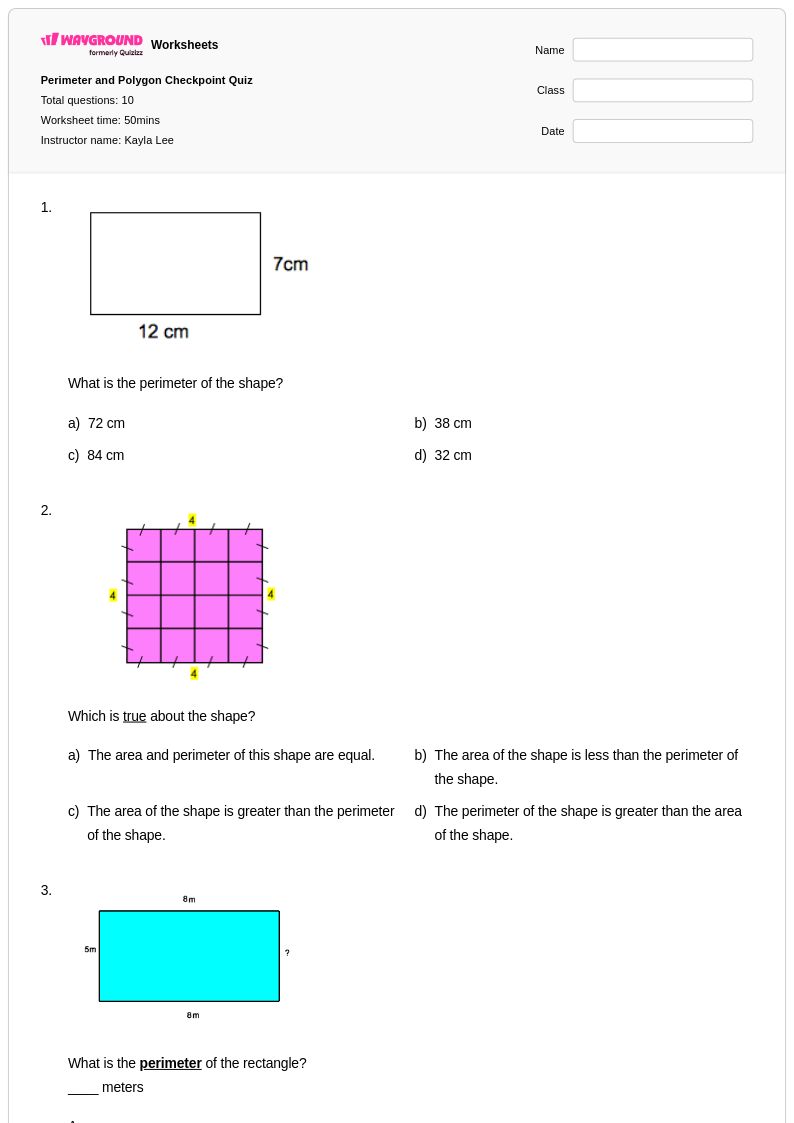
10 P
3rd
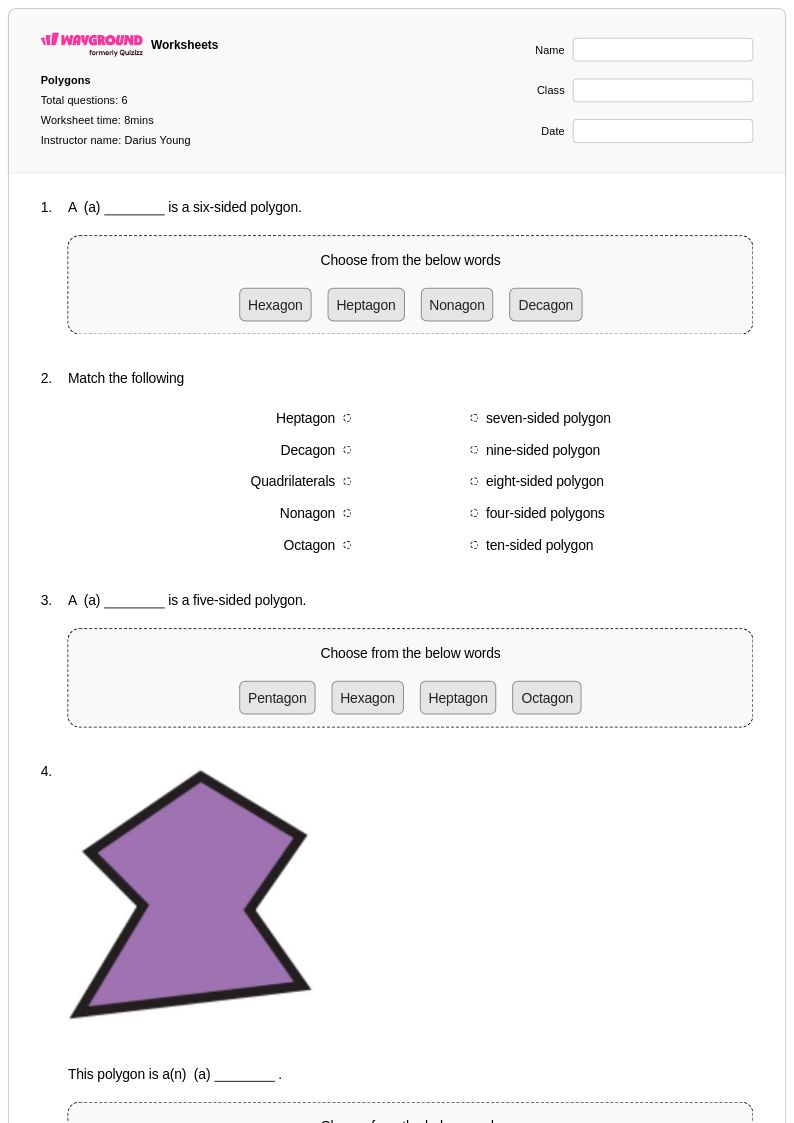
6 P
3rd
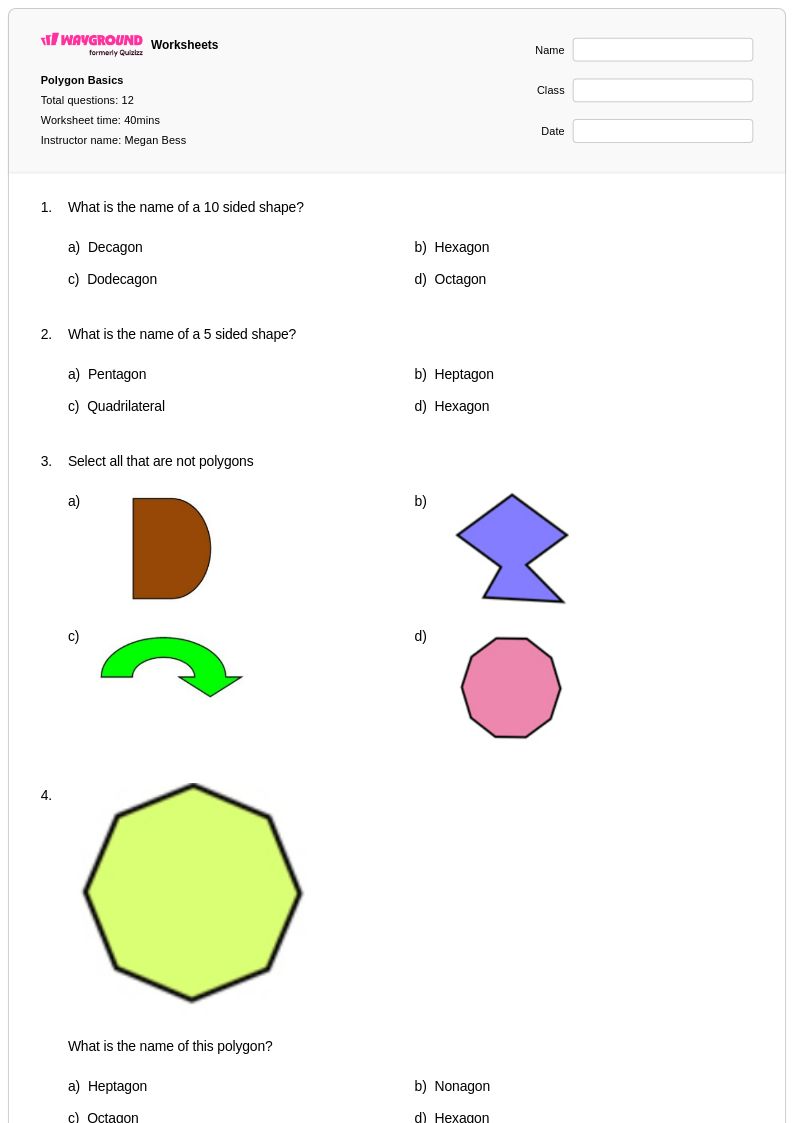
12 P
9th - 12th
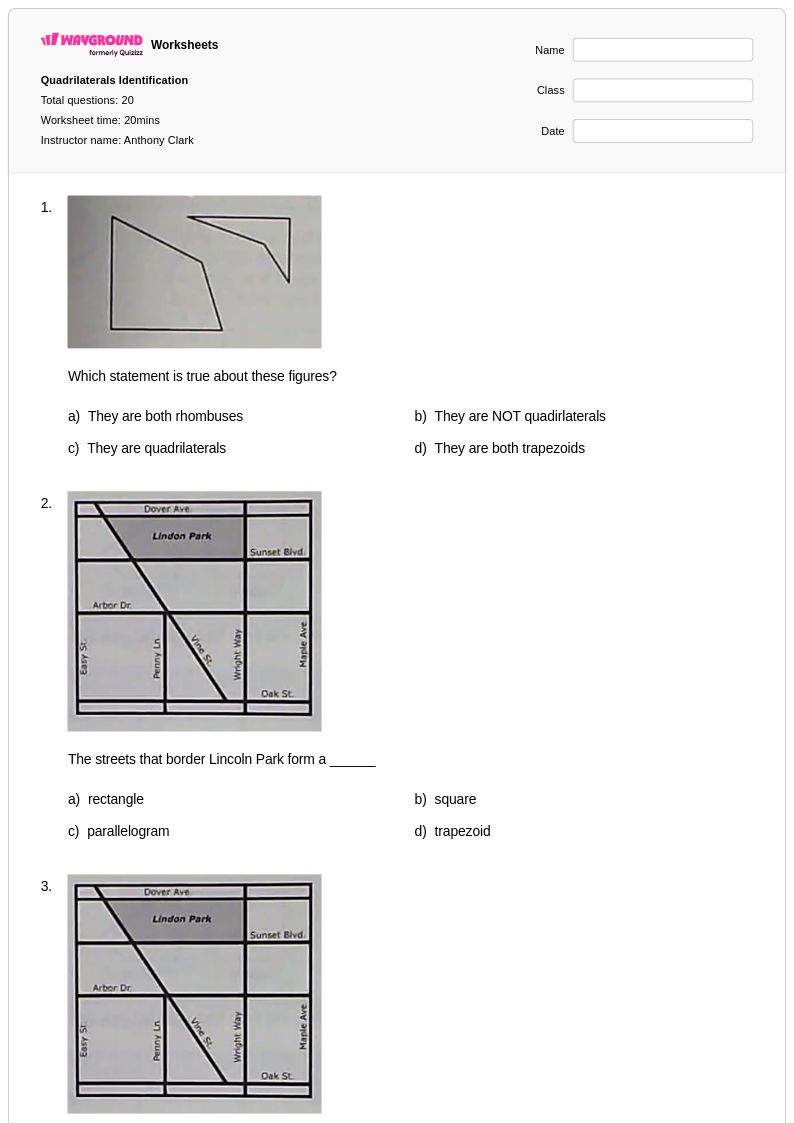
20 P
3rd - Uni
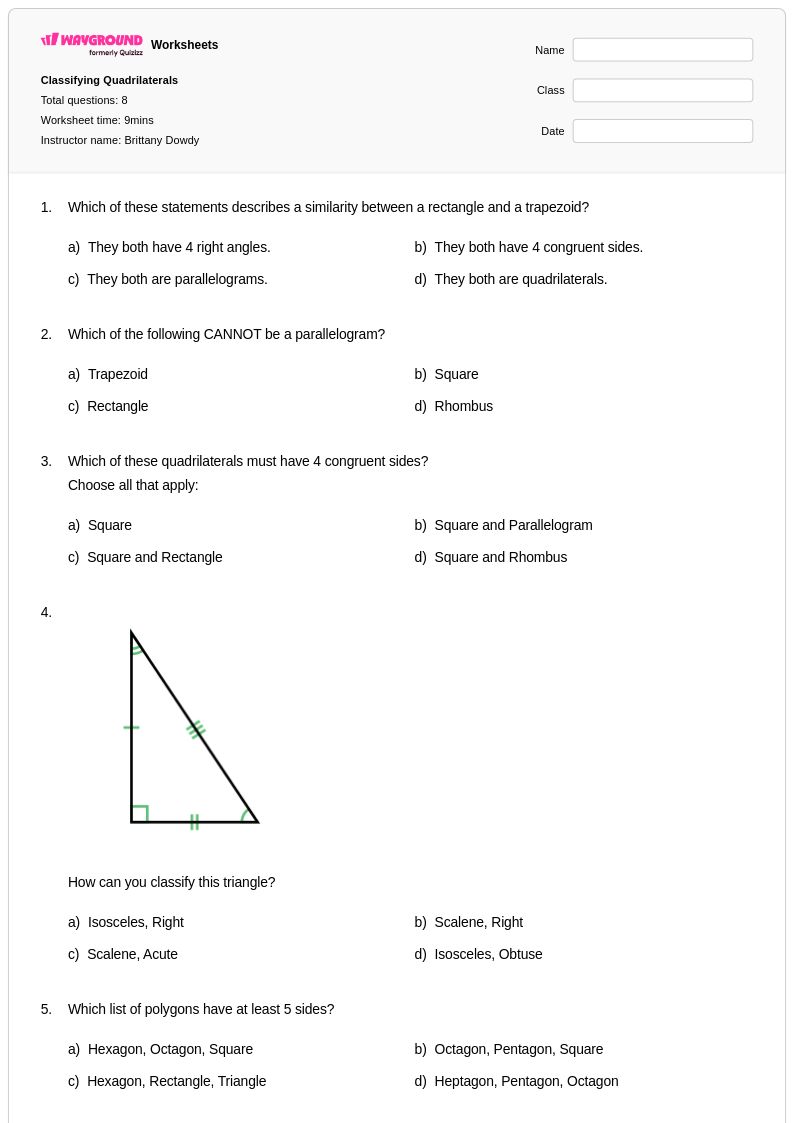
8 P
5th
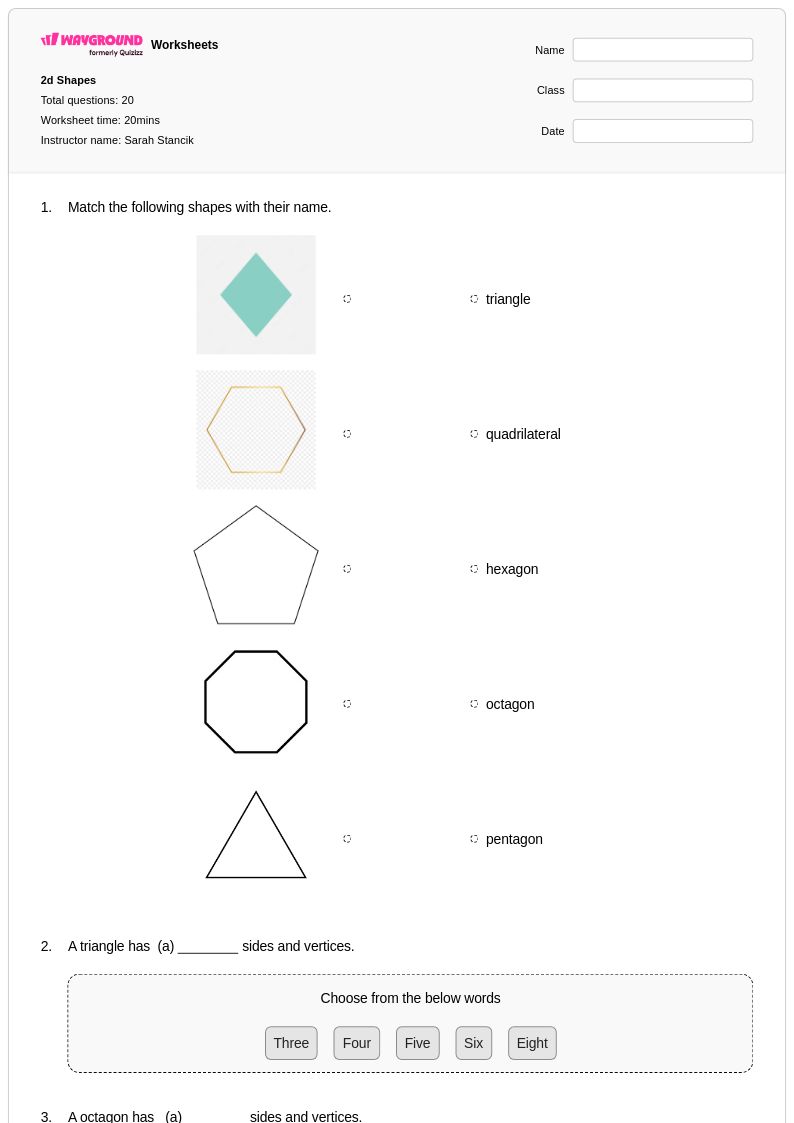
20 P
3rd
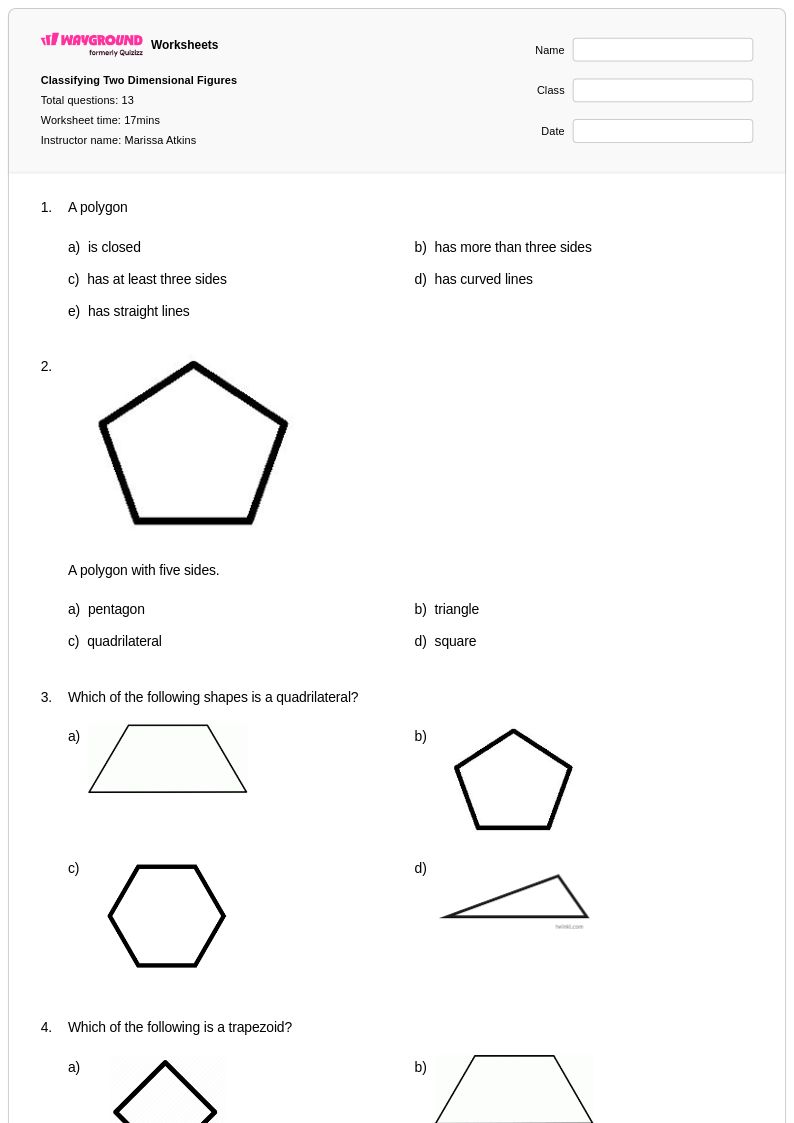
13 P
5th
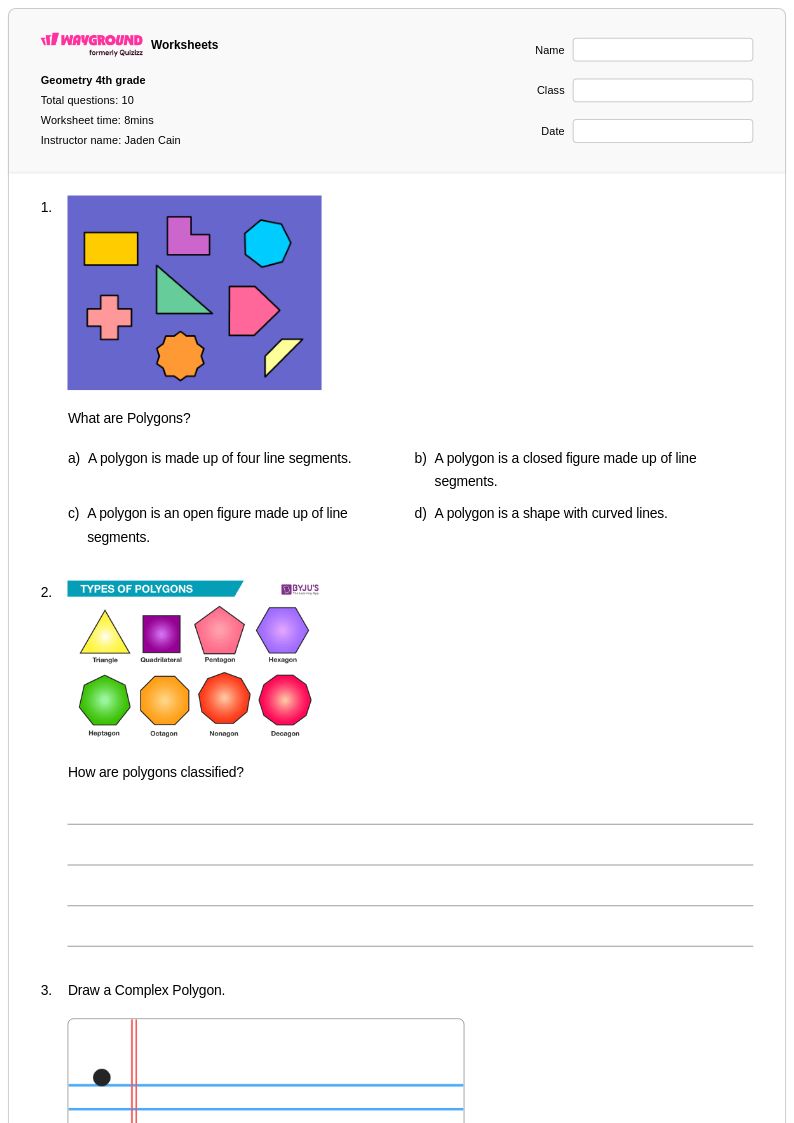
10 P
4th
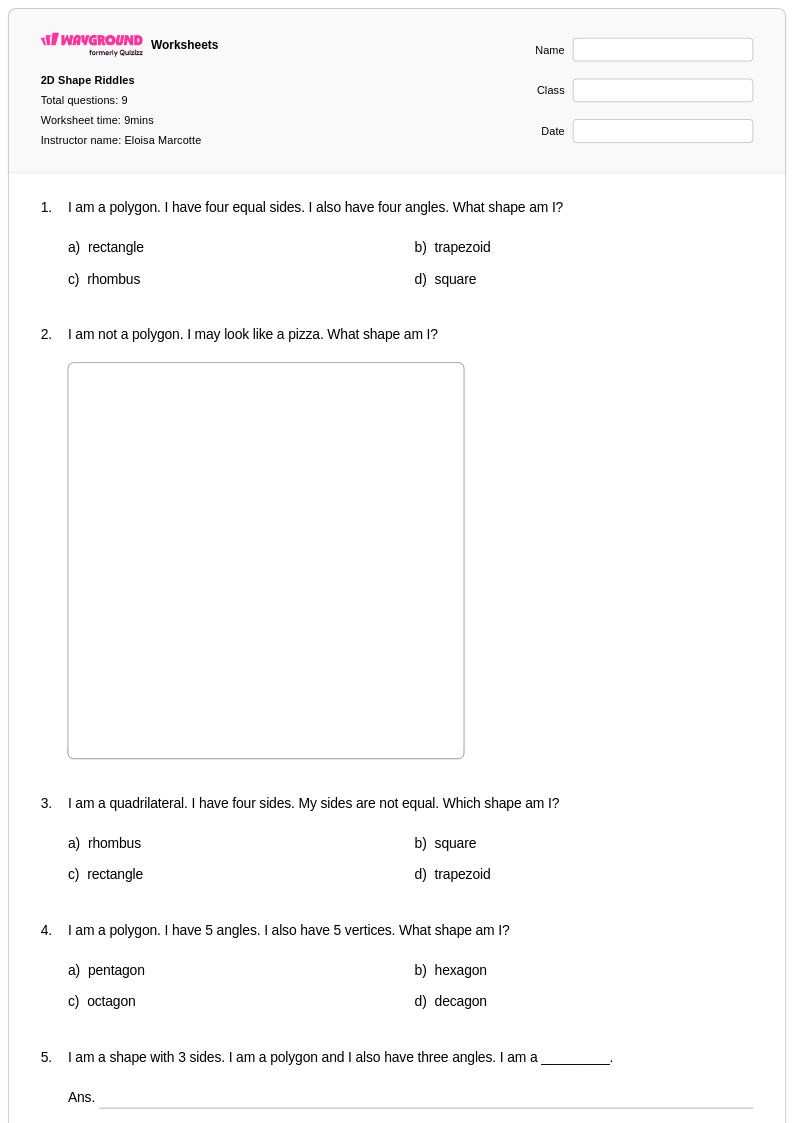
9 P
2nd
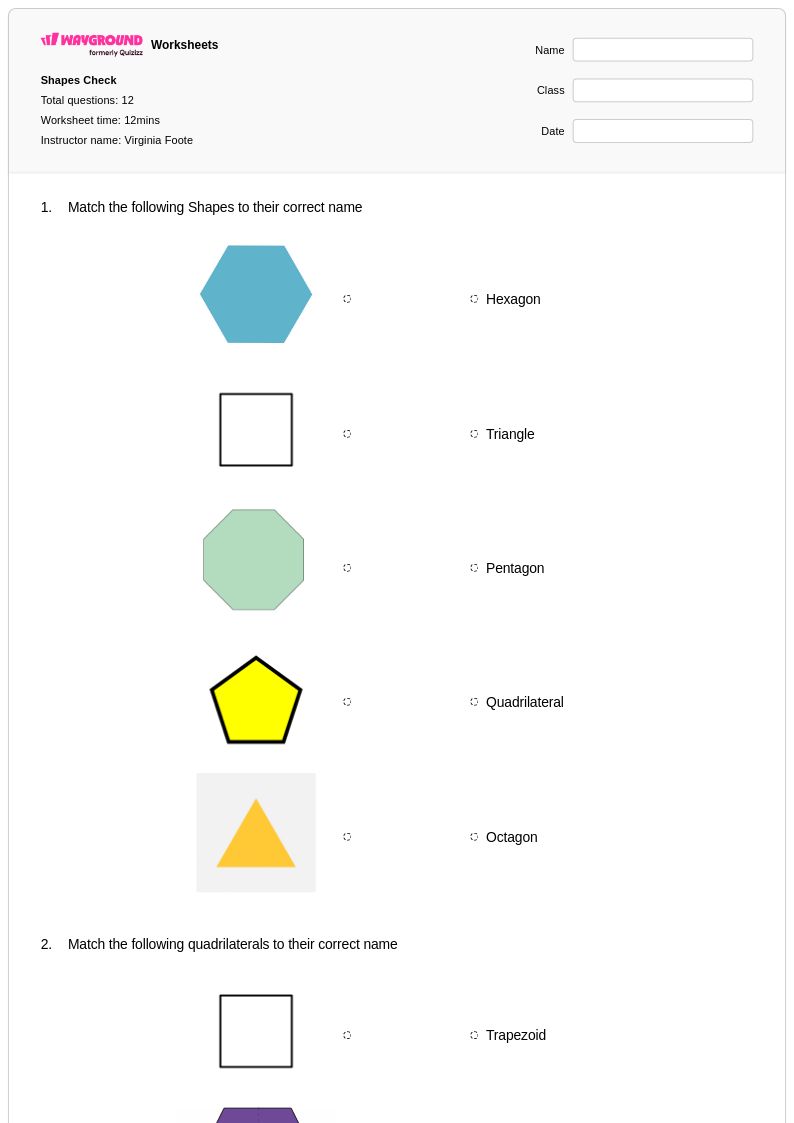
12 P
2nd
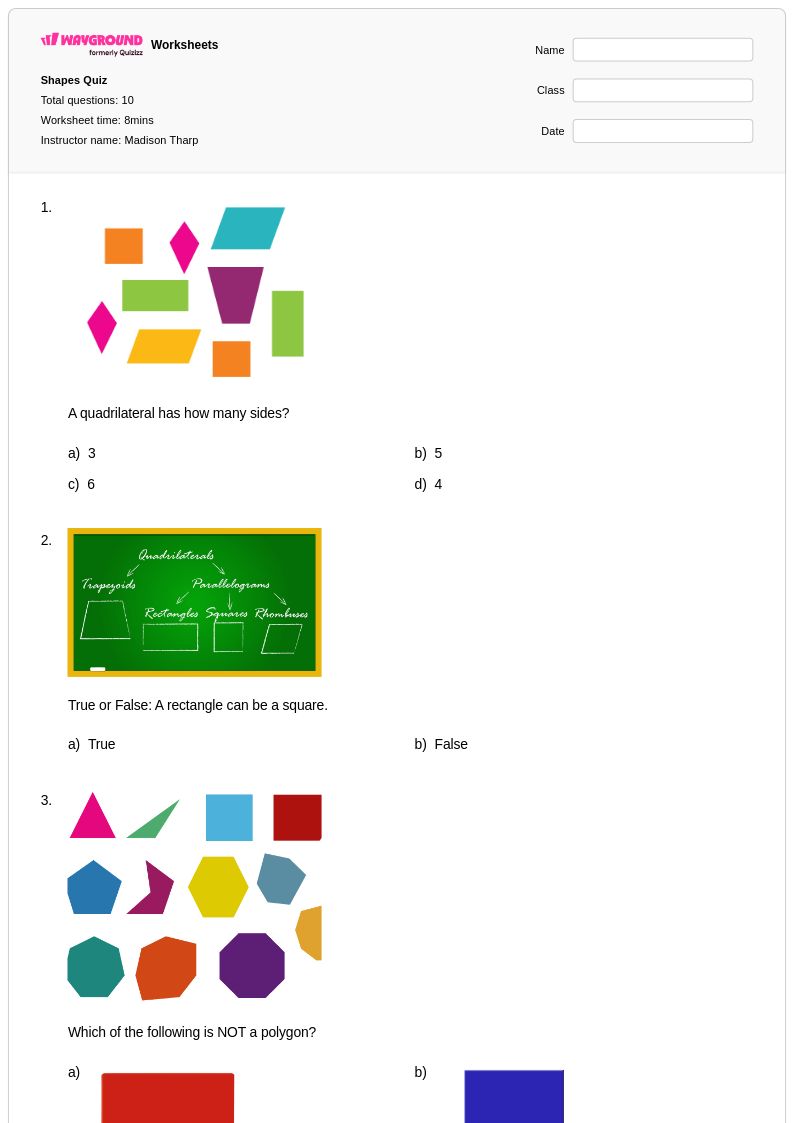
10 P
3rd
Przeglądaj arkusze według tematów
Explore printable Polygon Identification worksheets
Polygon identification worksheets available through Wayground (formerly Quizizz) provide students with comprehensive practice in recognizing, classifying, and analyzing various geometric shapes. These expertly crafted resources strengthen fundamental geometry skills by challenging learners to distinguish between different types of polygons based on their unique properties, including the number of sides, angles, and symmetry characteristics. Students work through carefully structured practice problems that progress from basic shape recognition to more complex polygon classification tasks, developing critical spatial reasoning abilities essential for advanced mathematical concepts. Each worksheet includes detailed answer keys and is available as free printable pdf resources, allowing educators to seamlessly integrate these materials into their geometry curriculum.
Wayground (formerly Quizizz) empowers teachers with access to millions of educator-created polygon identification worksheets that can be easily searched, filtered, and customized to meet diverse classroom needs. The platform's robust collection aligns with educational standards and offers differentiation tools that enable instructors to modify content for various skill levels, making these resources ideal for remediation, enrichment, and targeted skill practice. Teachers can efficiently plan geometry lessons using both printable and digital formats, including downloadable pdf versions that facilitate flexible classroom implementation. The comprehensive search functionality allows educators to quickly locate specific polygon identification activities, while customization features enable them to adapt existing worksheets or create new variations that address particular learning objectives and student requirements.
FAQs
How should I introduce polygon identification to my students?
What types of exercises are most effective for practicing polygon identification?
What are the common stumbling blocks for students learning to identify polygons?
How can I use these polygon identification worksheets in my classroom?
How does learning to identify polygons fit into the math curriculum?
How can I support students who struggle with identifying polygons?