Free Printable Writing Chemical Formulas for Ionic Compounds Worksheets for Year 12
Year 12 students can master writing chemical formulas for ionic compounds with these free worksheets and printables featuring comprehensive practice problems and answer keys to build essential chemistry skills.
Explore printable Writing Chemical Formulas for Ionic Compounds worksheets for Year 12
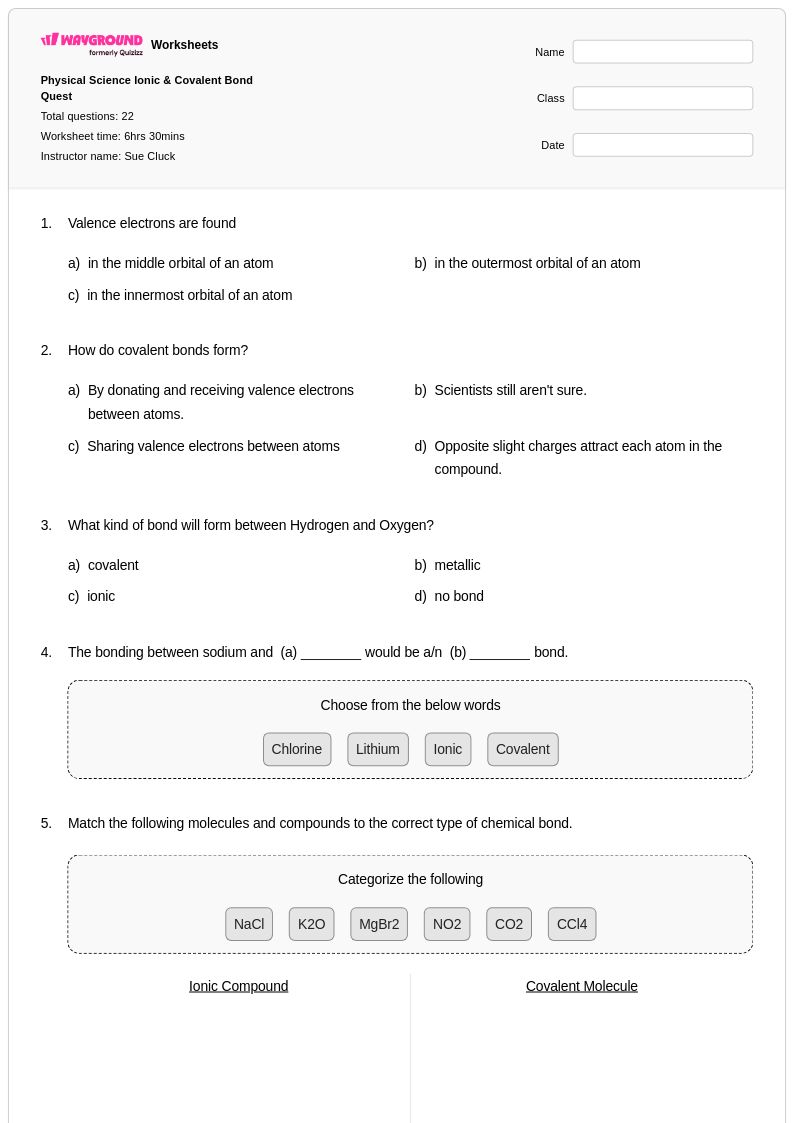
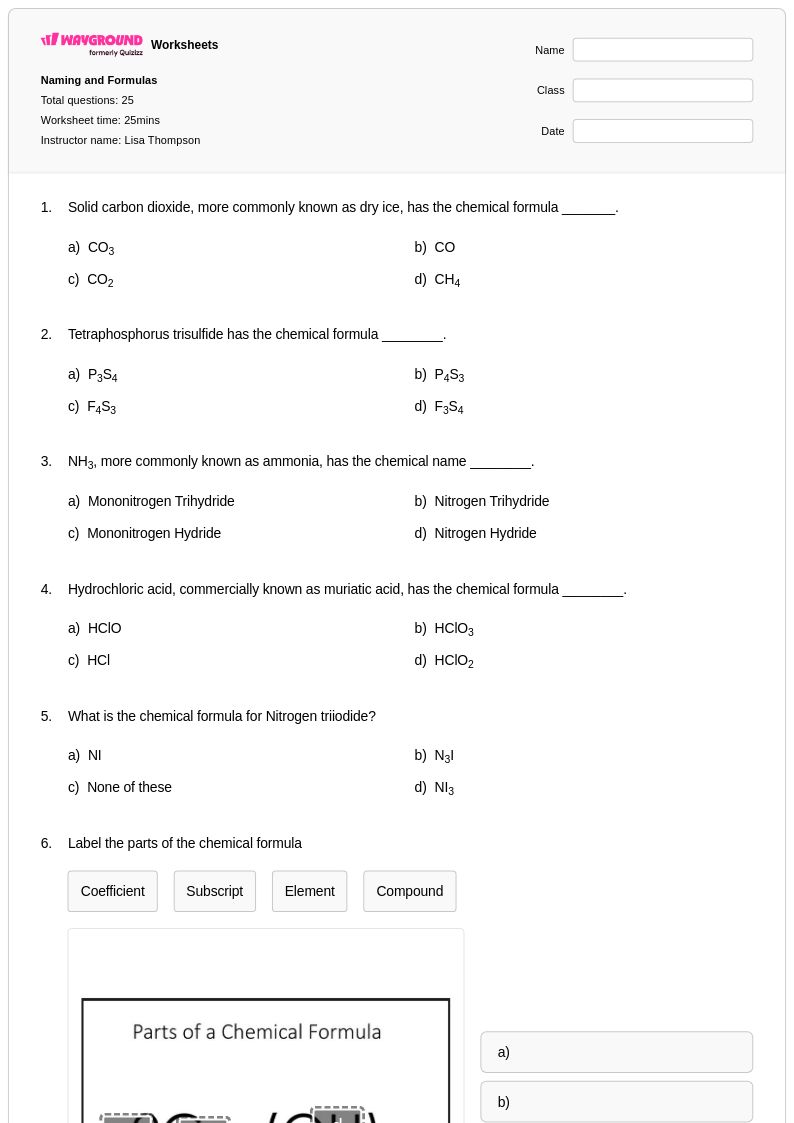
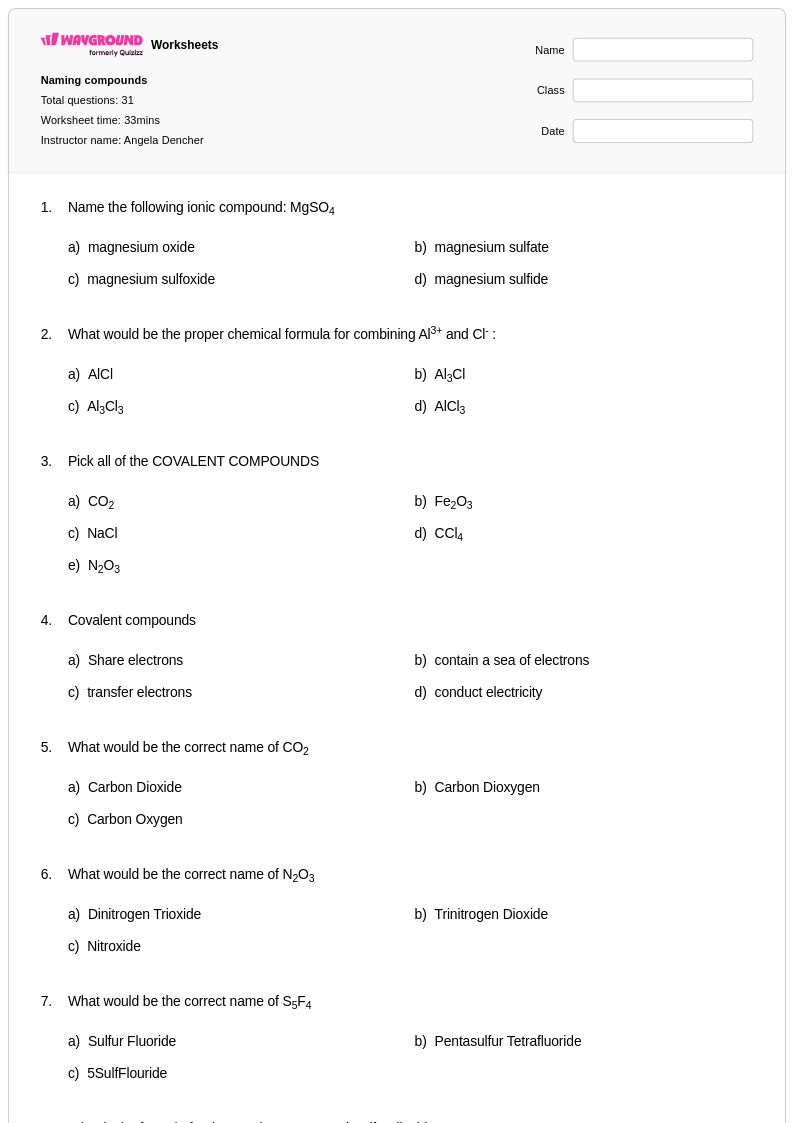
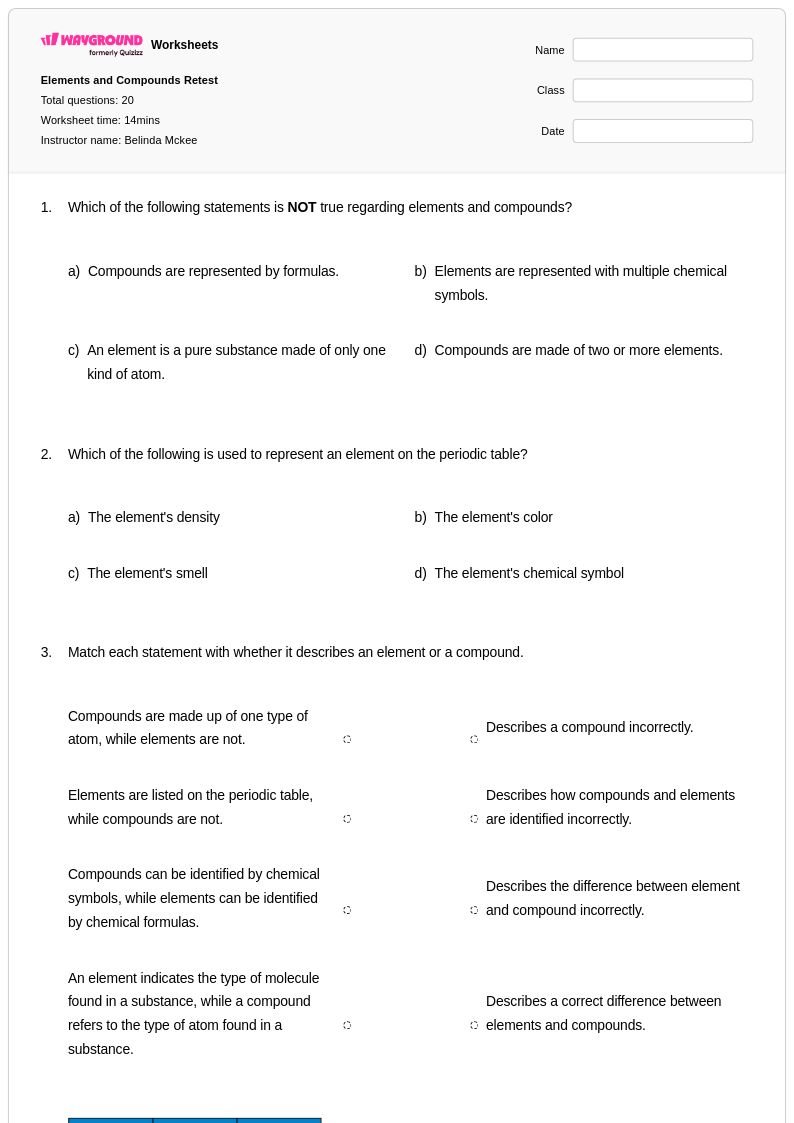
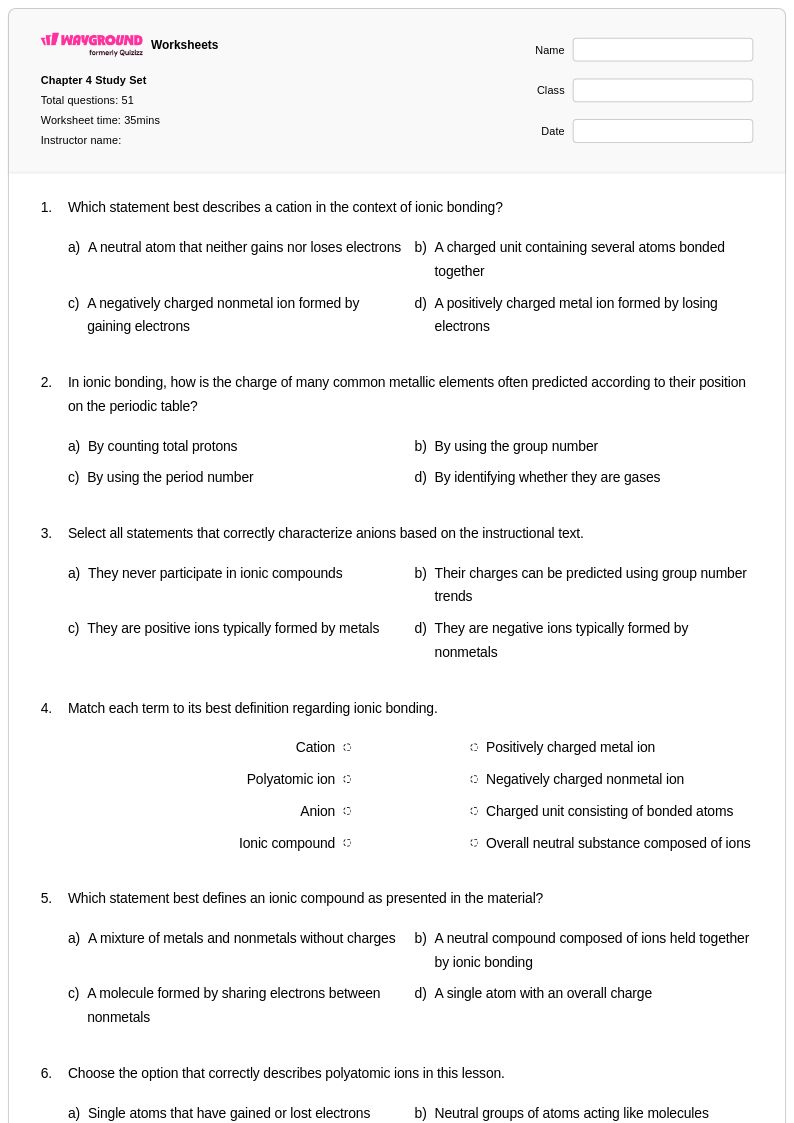
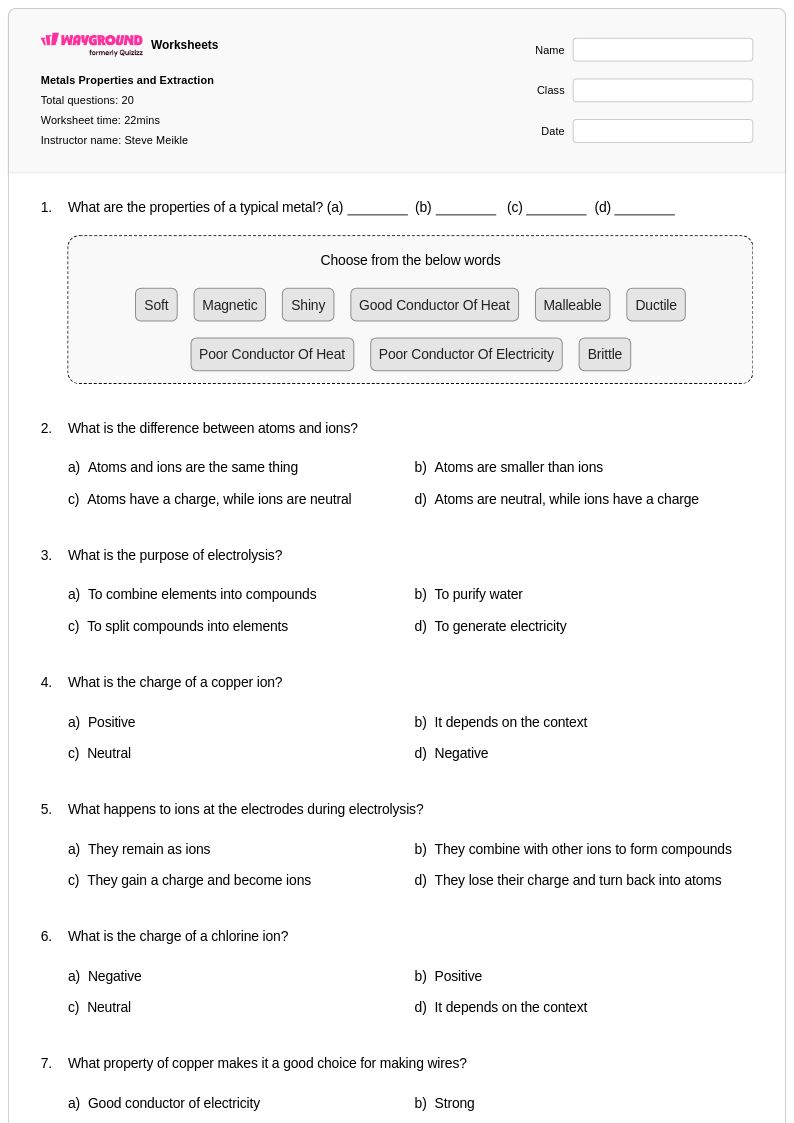
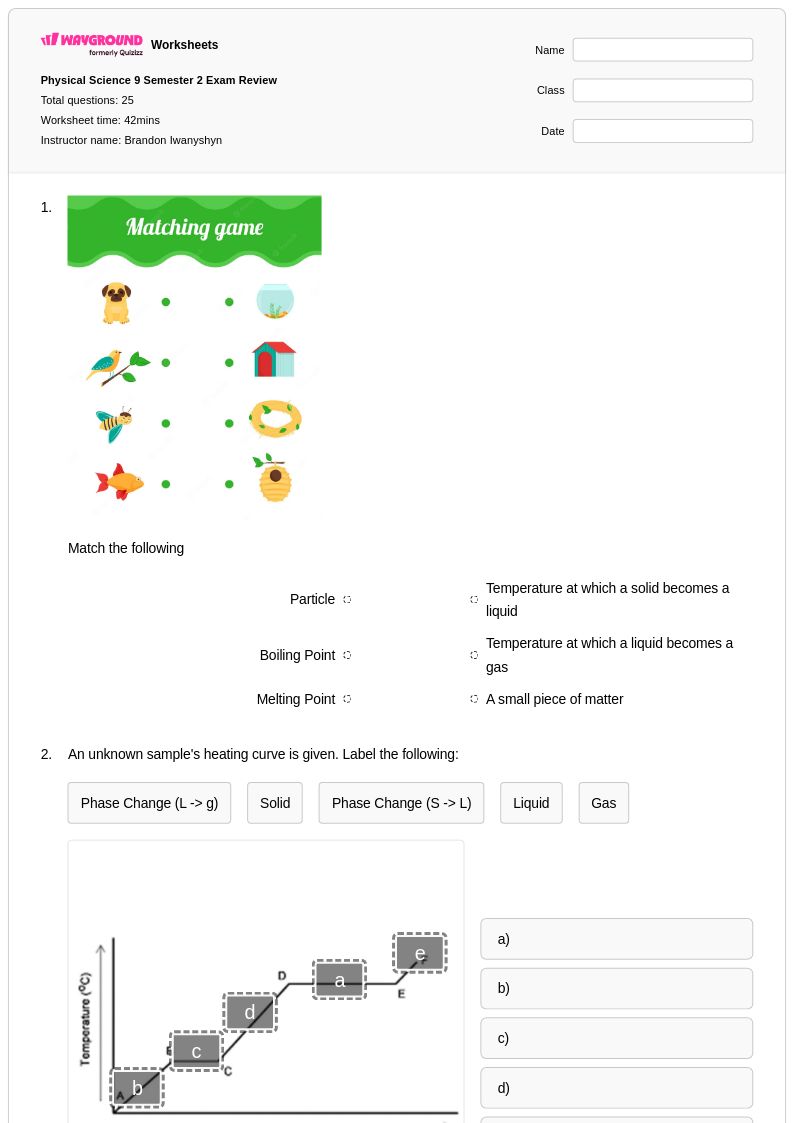
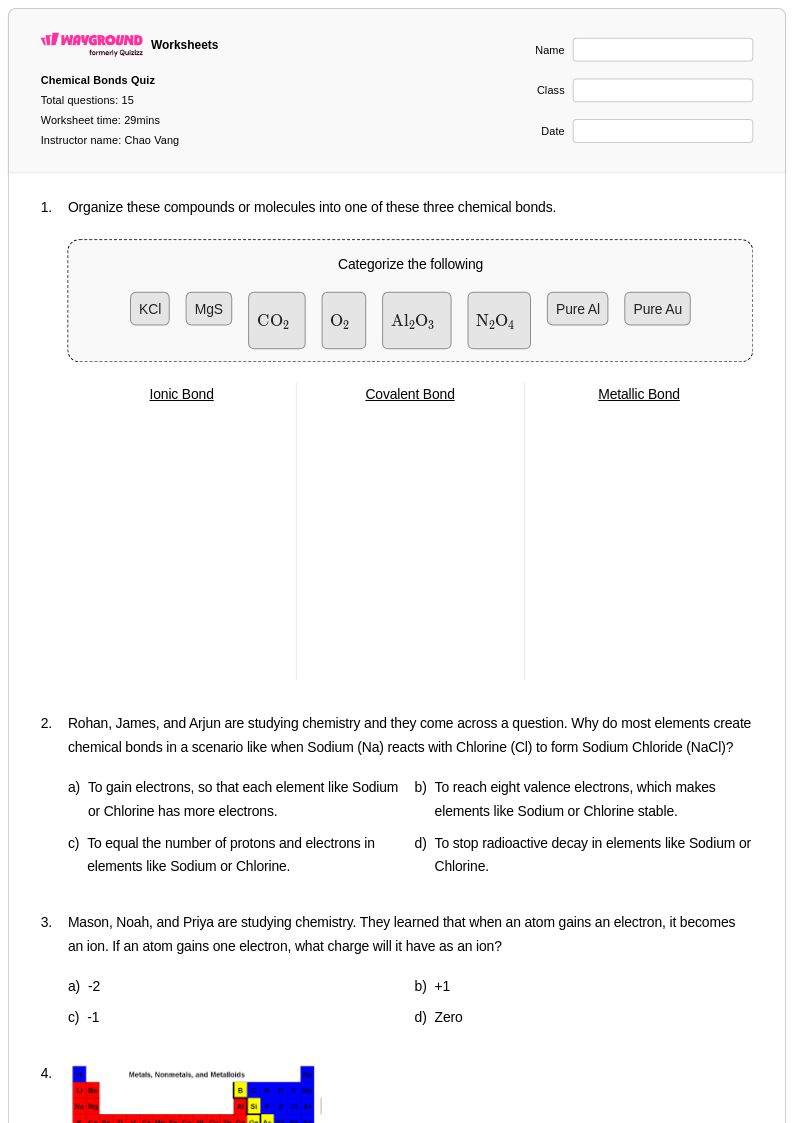
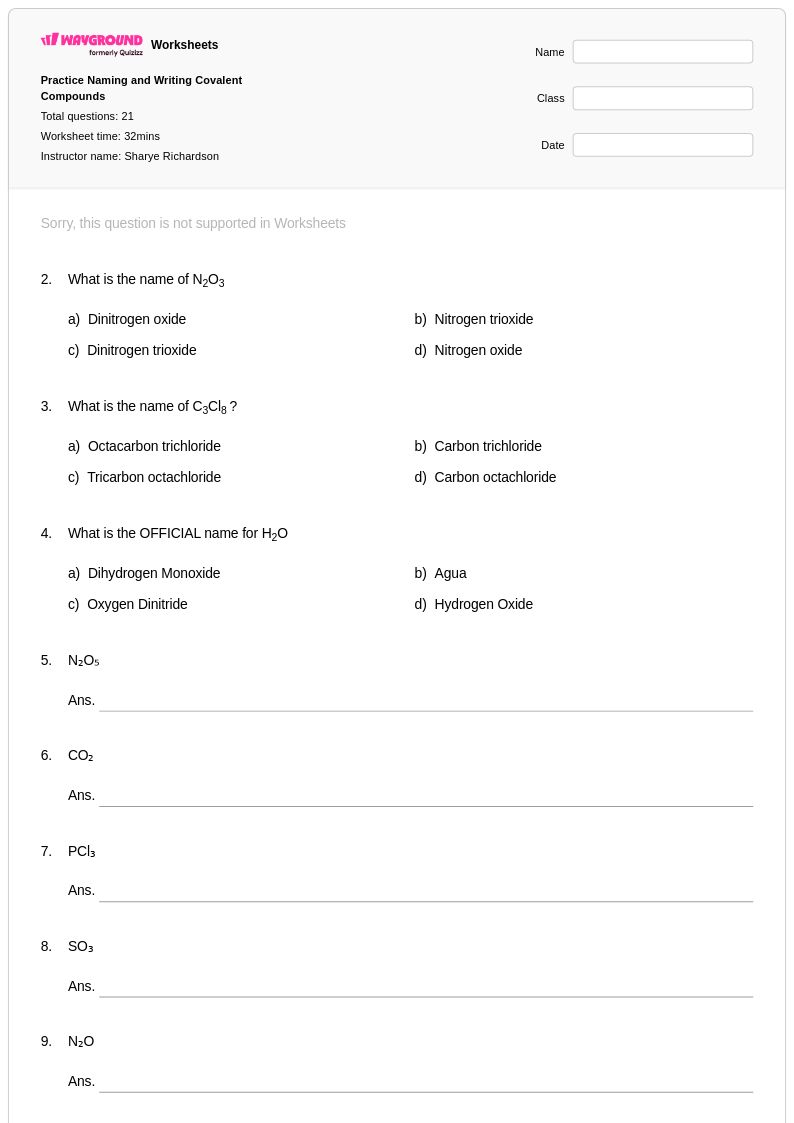
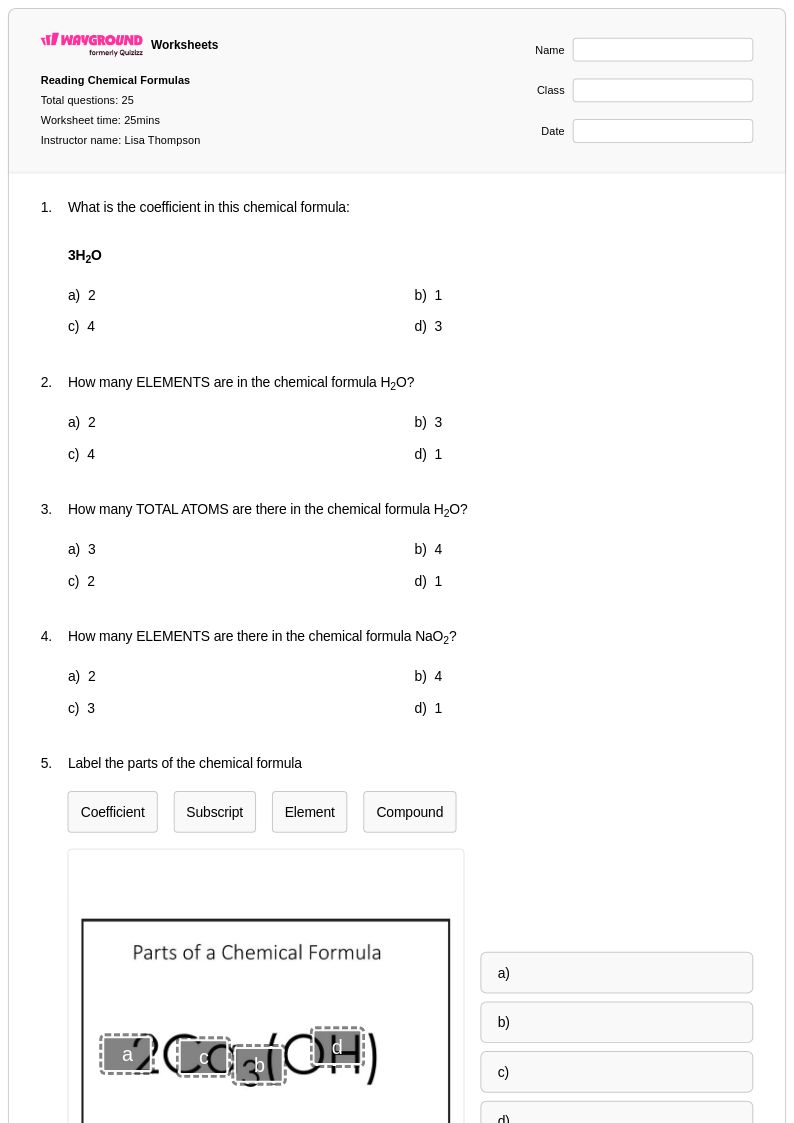
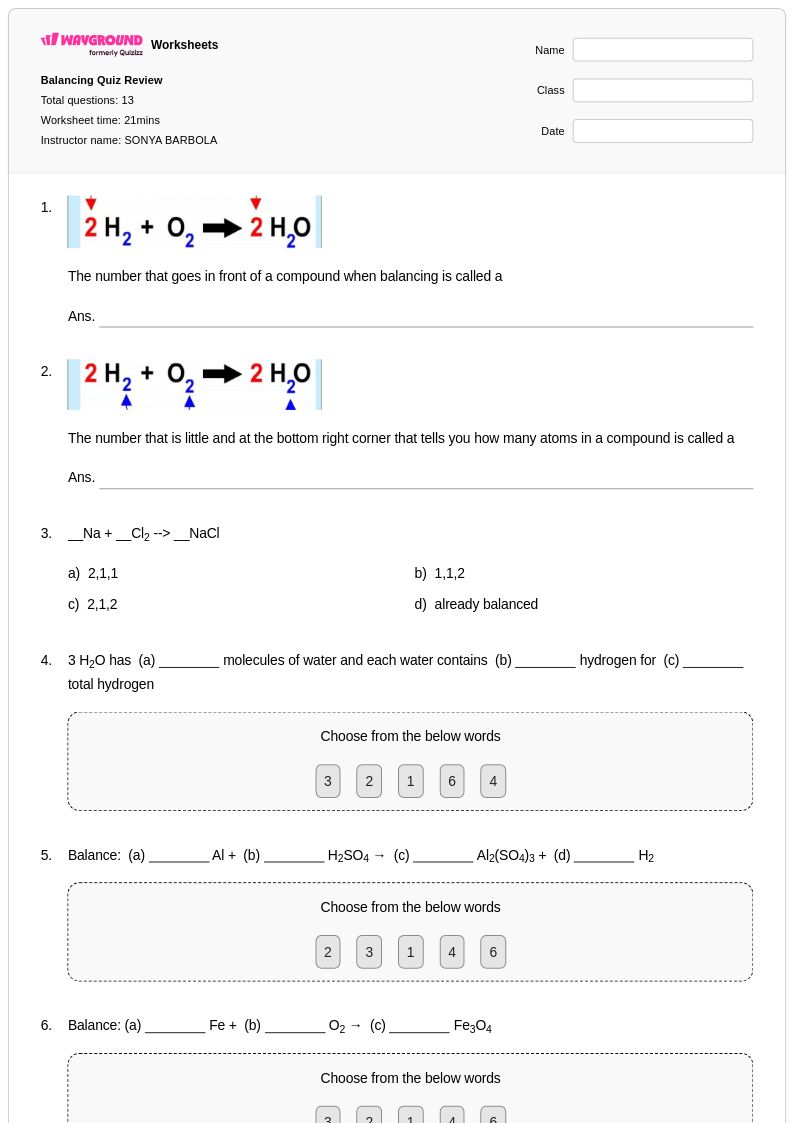
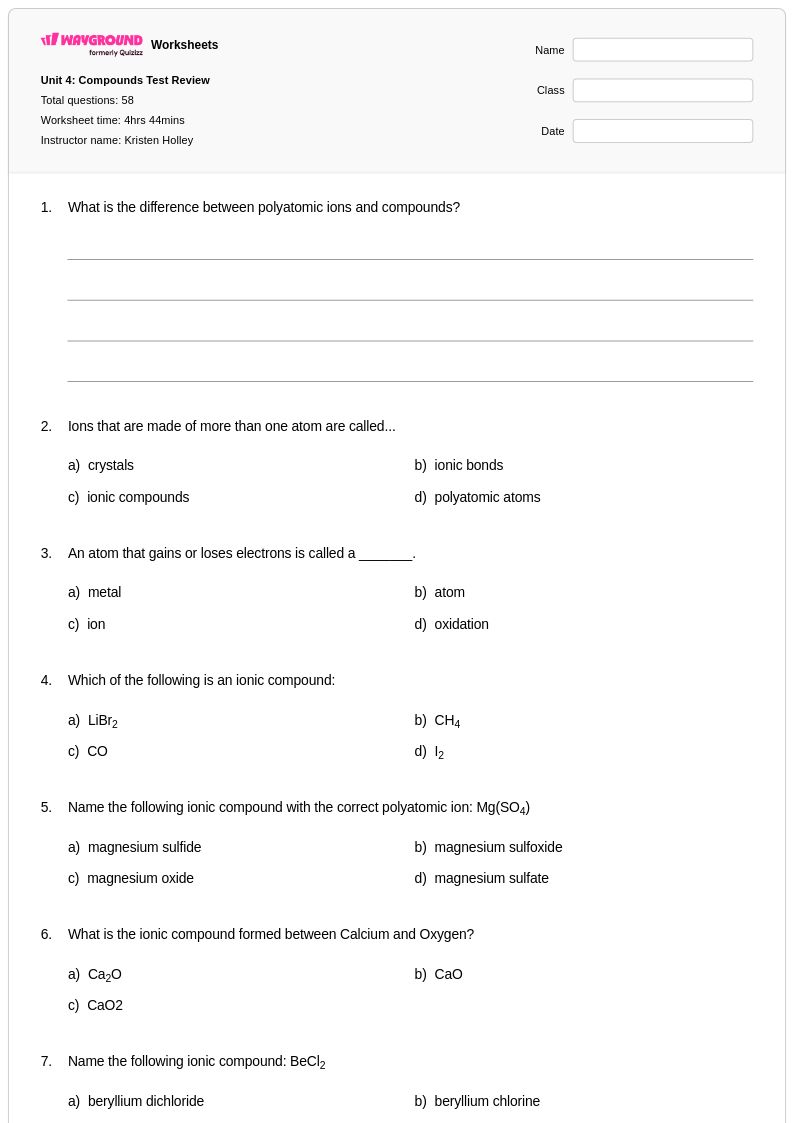
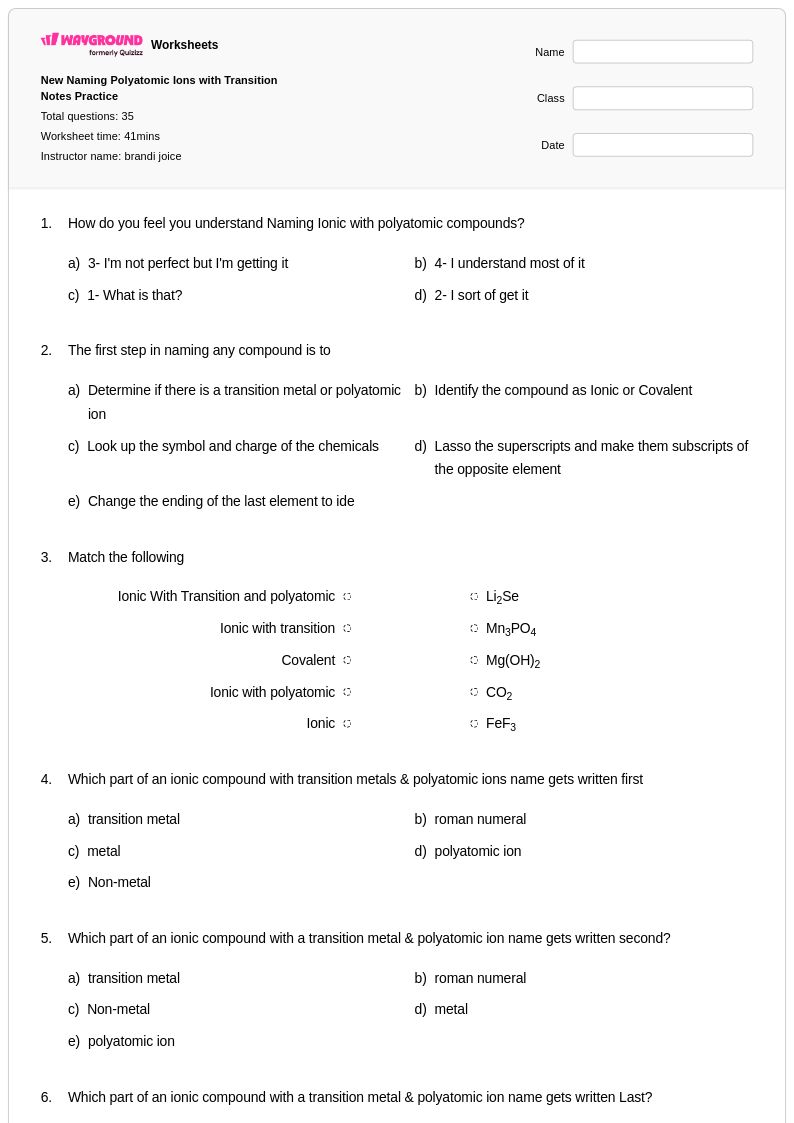
Writing chemical formulas for ionic compounds represents a fundamental skill that Year 12 chemistry students must master to succeed in advanced chemical studies. Wayground's comprehensive collection of worksheets focuses specifically on this critical subtopic, providing students with extensive practice in determining correct formulas using cation and chemical charges, polyatomic ions, and systematic naming conventions. These expertly designed worksheets strengthen essential skills including charge balancing, ion identification, and formula writing techniques through carefully structured practice problems that progress from simple binary compounds to complex polyatomic ionic structures. Each worksheet includes a detailed answer key and is available as a free printable pdf, allowing students to work through challenging problems systematically while building confidence in their formula writing abilities.
Wayground's platform, formerly known as Quizizz, empowers chemistry teachers with access to millions of teacher-created resources specifically designed for ionic compound formula writing instruction. The platform's advanced search and filtering capabilities enable educators to quickly locate worksheets that align with specific curriculum standards and match their students' skill levels, while built-in differentiation tools allow for seamless customization based on individual learning needs. Teachers can access these resources in both printable pdf format for traditional classroom use and digital formats for interactive learning experiences, making them invaluable for lesson planning, targeted remediation sessions, and enrichment activities. This flexibility ensures that educators can effectively address diverse learning styles while providing consistent, high-quality practice opportunities that reinforce proper chemical formula writing techniques across all student ability levels.
FAQs
How do I teach students to write chemical formulas for ionic compounds?
Start by ensuring students understand ionic charges and why compounds must be electrically neutral before introducing formula writing. Teach the crisscross method explicitly — where the absolute value of each ion's charge becomes the subscript of the other — and model it step by step with simple binary compounds like NaCl and MgO before progressing to polyatomic ions. Repeated practice with immediate feedback is essential, as students need to internalize the charge-balancing logic rather than memorize individual formulas.
What are common mistakes students make when writing ionic compound formulas?
The most frequent error is forgetting to reduce subscripts to the lowest whole-number ratio — for example, writing Ca2O2 instead of CaO. Students also commonly misapply the crisscross method when one or both ions already have a charge of 1, leading to unnecessary subscripts. A third persistent mistake is treating polyatomic ions incorrectly by splitting them apart or failing to use parentheses when a subscript greater than 1 is needed, such as writing MgSO42 instead of Mg(SO4)2... wait, Mg(SO4) — or more accurately Ca(NO3)2.
What exercises help students practice writing chemical formulas for ionic compounds?
The most effective practice sequences start with common monovalent ions and binary compounds, then layer in divalent and trivalent cations, and finally introduce polyatomic ions and transition metals with variable charges. Exercises that require students to work both directions — writing a formula from ion names and naming a compound from its formula — reinforce understanding more deeply than one-directional drills. Worksheets that progress in difficulty within a single assignment help students build confidence before encountering complex cases.
How do I help students who struggle with the crisscross method for ionic formulas?
Students who struggle with the crisscross method often have a shaky grasp of ionic charges, so returning to a reference sheet of common ion charges can reduce cognitive load during formula writing. Breaking the process into discrete labeled steps — identify each ion, write its charge, swap the absolute values as subscripts, reduce to lowest terms — helps students self-monitor each stage. Targeted remediation worksheets that isolate one variable at a time, such as only using 2+ and 1- ions, allow students to master the pattern before adding complexity.
How do I use Writing Chemical Formulas for Ionic Compounds worksheets from Wayground in my classroom?
Wayground's ionic compound formula worksheets are available as printable PDFs for traditional classroom use and in digital formats for technology-integrated environments, including the option to host them as a quiz directly on Wayground. The worksheets progress from simple binary compounds to more complex polyatomic structures, making them suitable for initial instruction, homework, or review. All worksheets include complete answer keys, so students can receive immediate feedback whether working independently or in a guided setting. On Wayground, teachers can also apply individual student accommodations such as extended time, read aloud, or reduced answer choices to support diverse learners without disrupting the rest of the class.
How do I differentiate ionic compound formula writing practice for students at different levels?
For students who are just starting out, limit practice to ions with charges of +1, +2, and -1 so they can internalize the crisscross pattern without being overwhelmed by charge variation. Intermediate students are ready to work with divalent and trivalent anions and should begin encountering polyatomic ions with parentheses. Advanced students can tackle transition metals with variable charges, which requires them to use Roman numerals and determine the correct charge from context — a meaningful step up in reasoning demand.