Free Printable Defense Mechanisms Worksheets for Class 6
Explore Wayground's comprehensive collection of Class 6 defense mechanisms worksheets, featuring free printables and PDFs with answer keys to help students master how organisms protect themselves through practice problems and interactive activities.
Explore printable Defense Mechanisms worksheets for Class 6
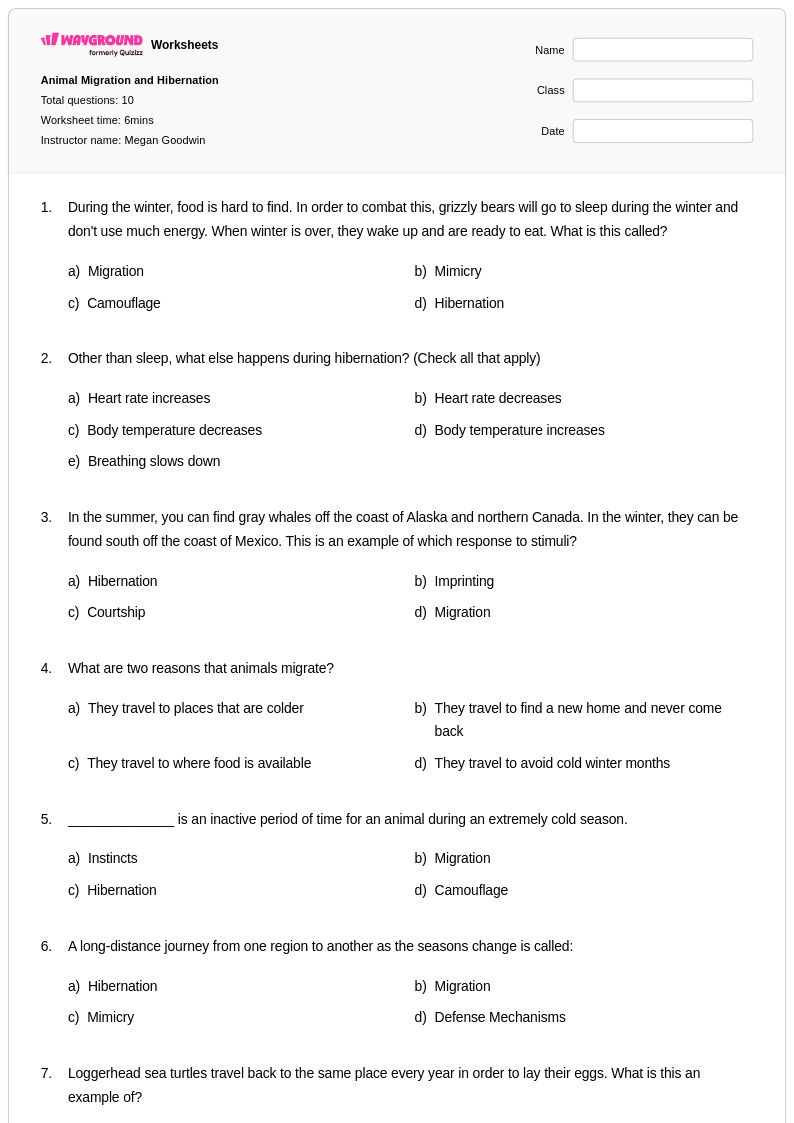
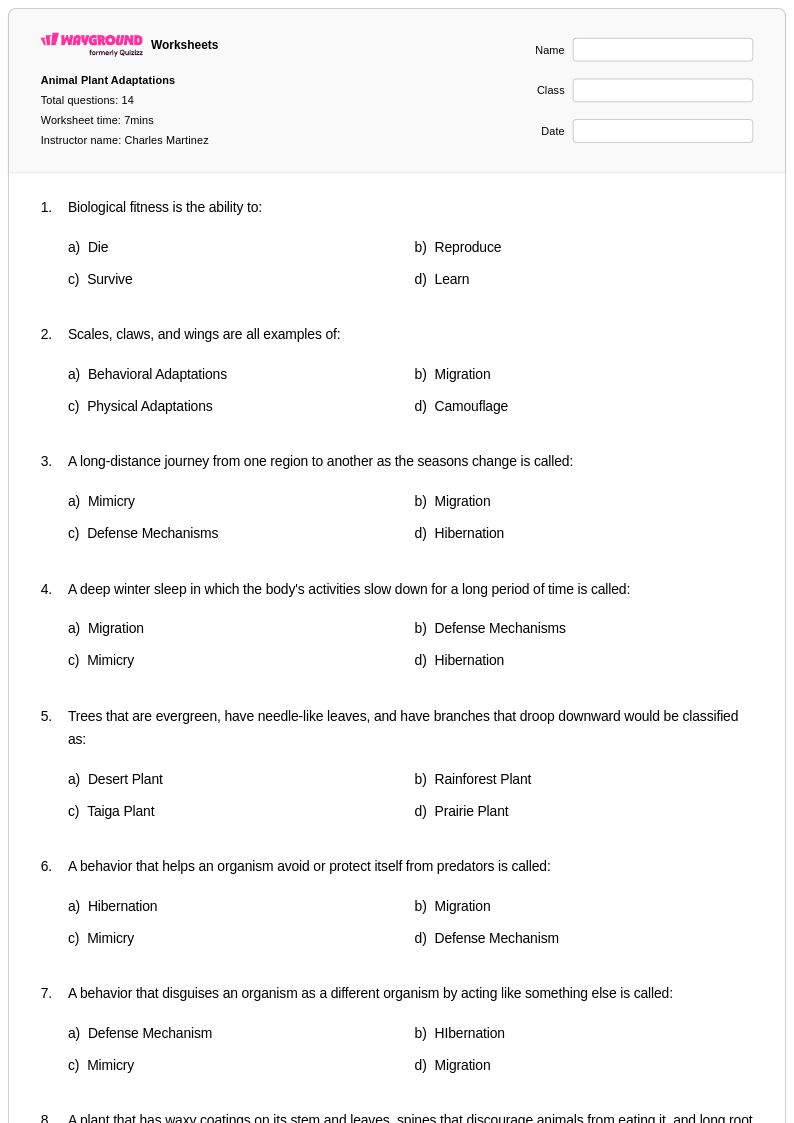
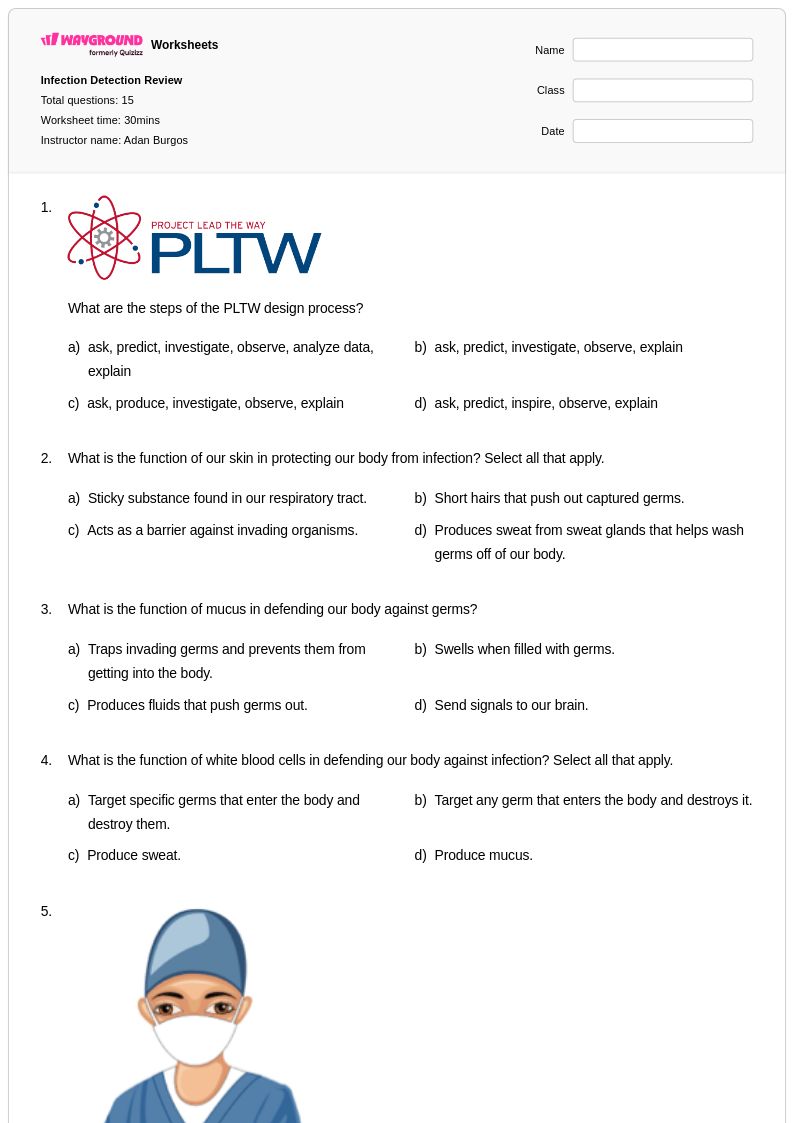
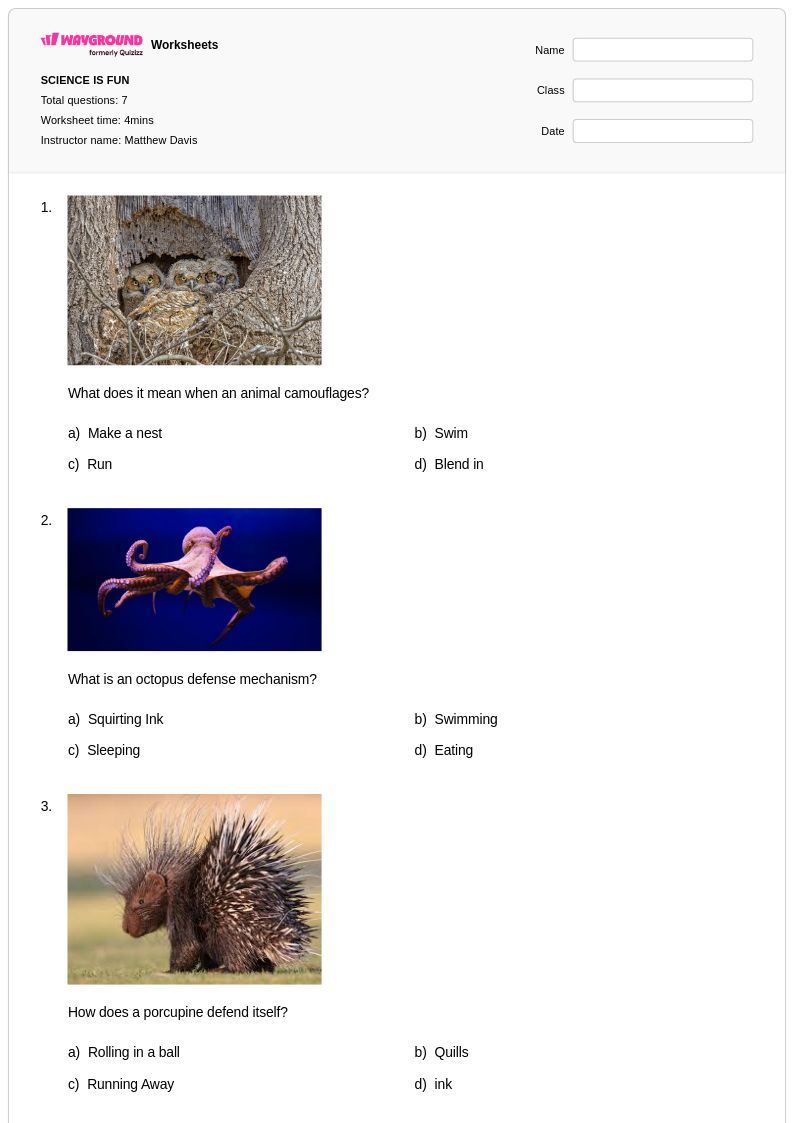
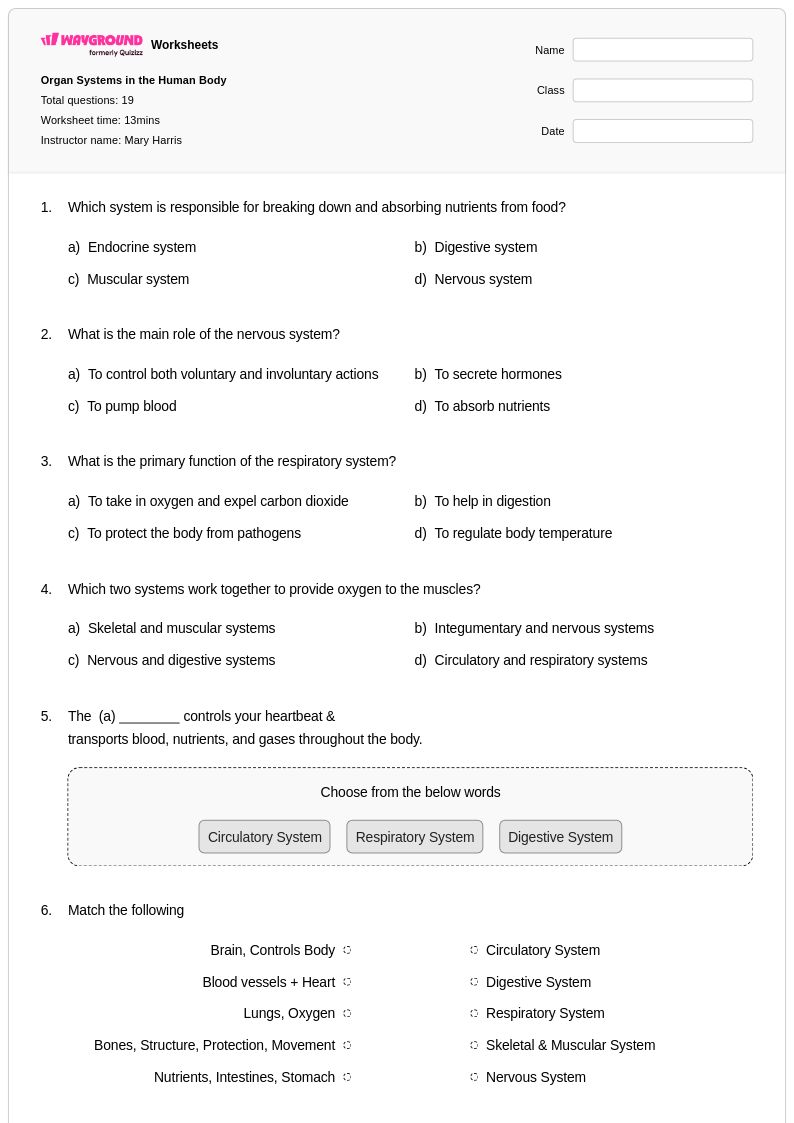
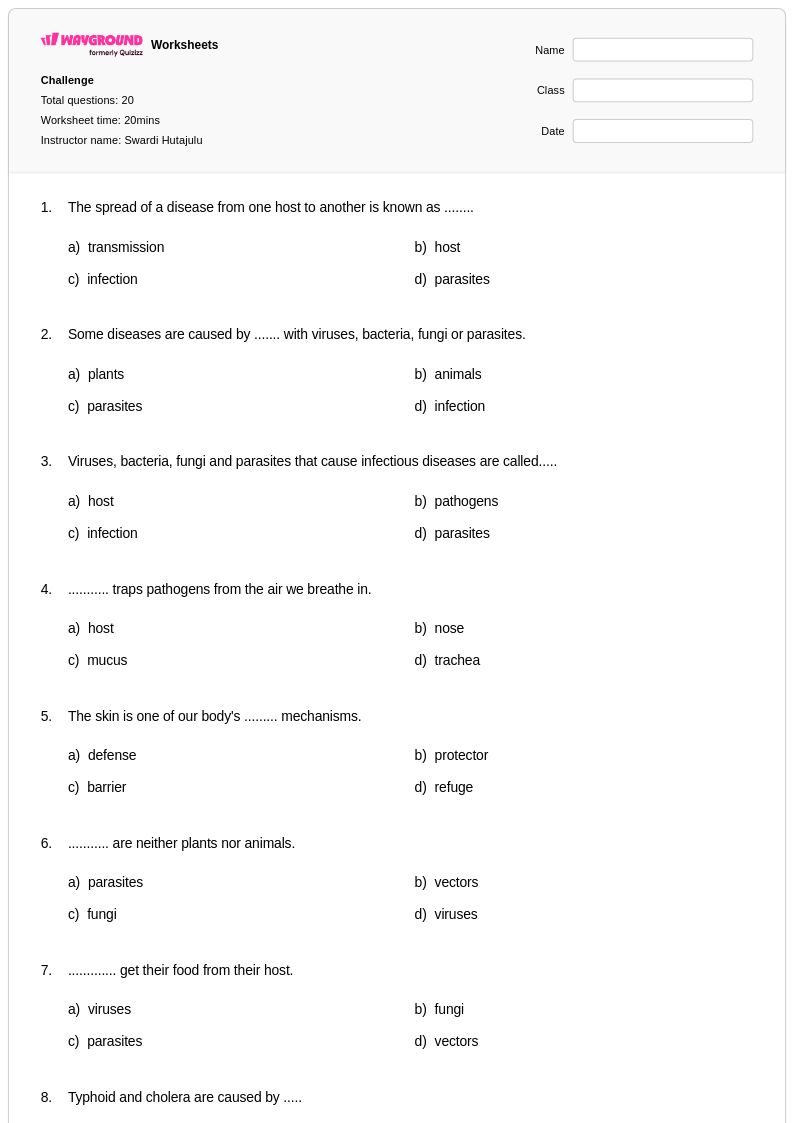
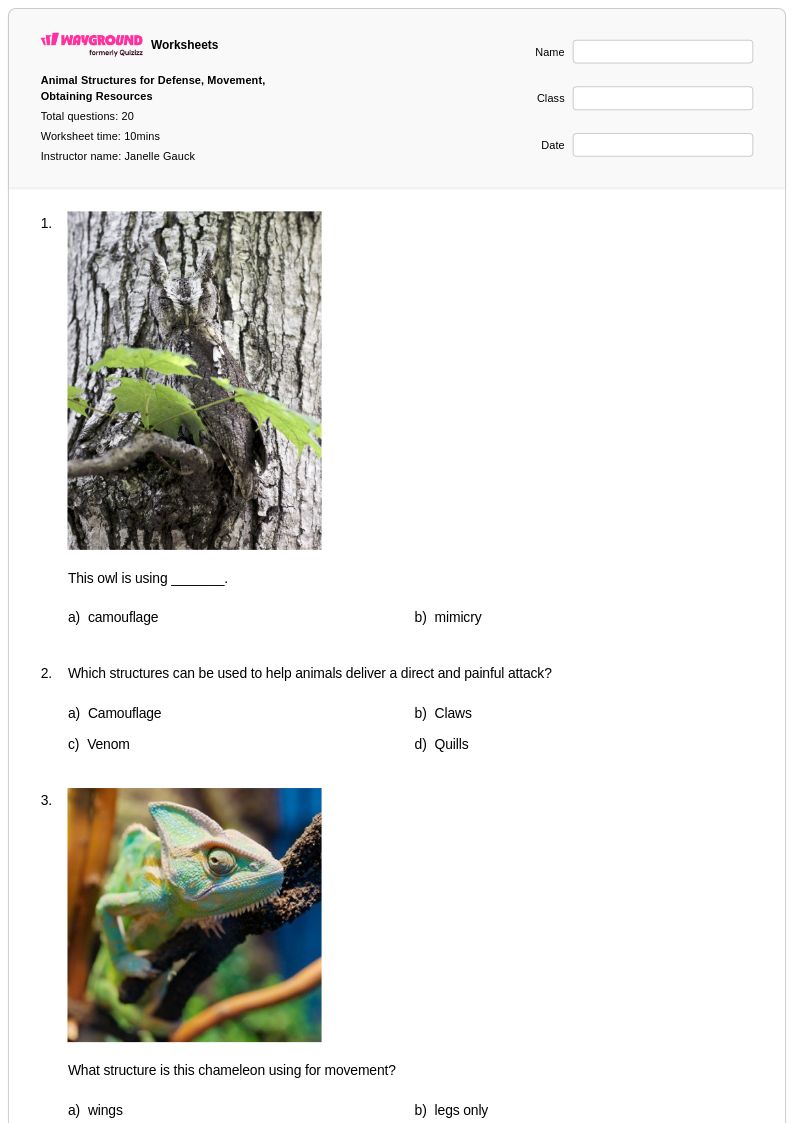
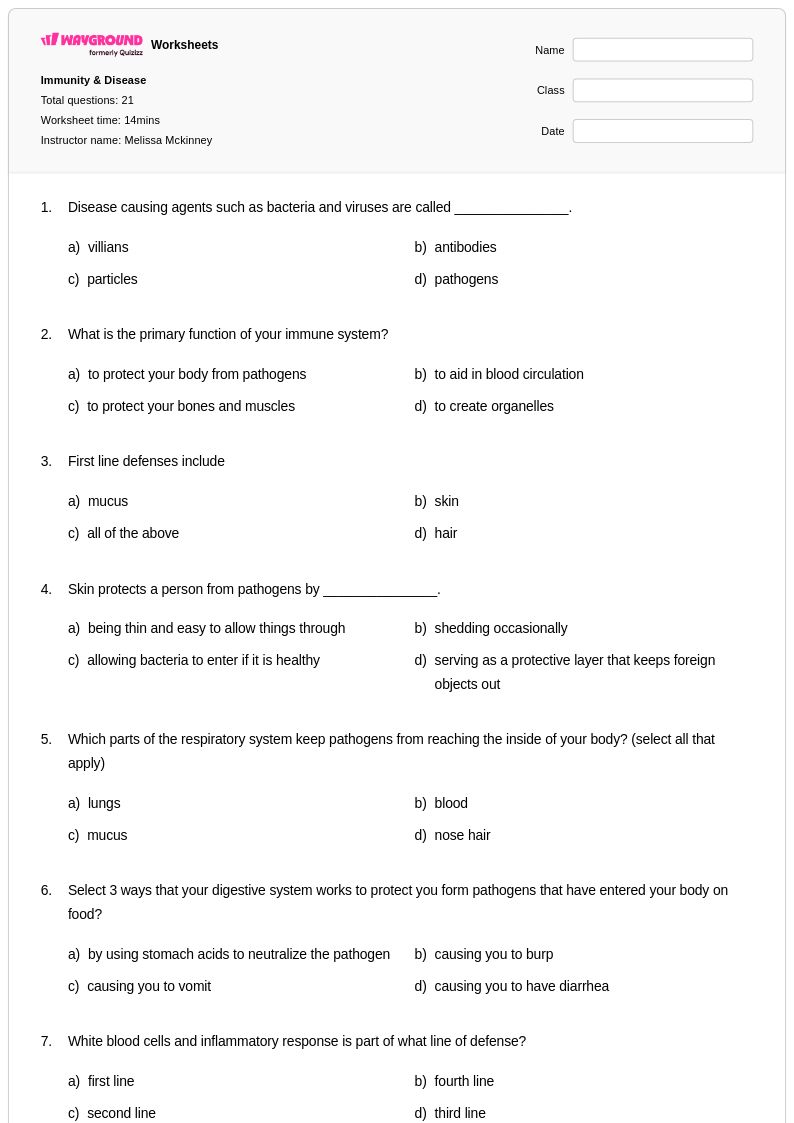
Defense mechanisms worksheets for Class 6 students available through Wayground (formerly Quizizz) provide comprehensive coverage of how organisms protect themselves from predators, environmental threats, and other dangers in nature. These educational resources strengthen students' understanding of behavioral and physical adaptations, including camouflage, mimicry, warning coloration, protective structures, and escape behaviors across different species. The worksheets feature engaging practice problems that challenge students to identify various defense strategies, analyze their effectiveness, and connect these mechanisms to survival and evolutionary success. Each worksheet comes with detailed answer keys to support independent learning and self-assessment, while the free printable format ensures easy classroom distribution and homework assignments.
Wayground (formerly Quizizz) empowers educators with millions of teacher-created defense mechanisms worksheets that can be seamlessly integrated into Class 6 biology instruction. The platform's robust search and filtering capabilities allow teachers to quickly locate resources aligned with specific learning standards and curriculum requirements, while differentiation tools enable customization for varying student ability levels and learning needs. These worksheets are available in both printable pdf format and interactive digital versions, providing flexibility for traditional classroom settings, remote learning environments, and hybrid instruction models. Teachers can leverage this extensive collection for lesson planning, targeted remediation of misconceptions about animal and plant defenses, enrichment activities for advanced learners, and systematic skill practice that builds students' scientific observation and analysis capabilities throughout their study of biological adaptations.
FAQs
How do I teach defense mechanisms in biology?
Start by categorizing defense mechanisms into behavioral, physiological, and structural types, then use concrete examples students can visualize — camouflage in stick insects, chemical secretions in skunks, or structural spines in sea urchins. Connecting each mechanism to its evolutionary advantage helps students understand why natural selection favors these traits. Moving from passive defenses like protective coloration to active responses like alarm calls gives students a clear conceptual framework before they tackle more complex species interactions.
What exercises help students practice identifying defense mechanisms?
Practice problems that present organism descriptions or images and ask students to classify the defense type, explain its adaptive advantage, and link it to a specific threat are highly effective. Comparative activities — where students analyze two species facing similar predators but using different strategies — build deeper analytical thinking. These exercises push students beyond memorization toward evaluating why certain defenses are more effective in particular ecosystems.
What mistakes do students commonly make when learning about defense mechanisms?
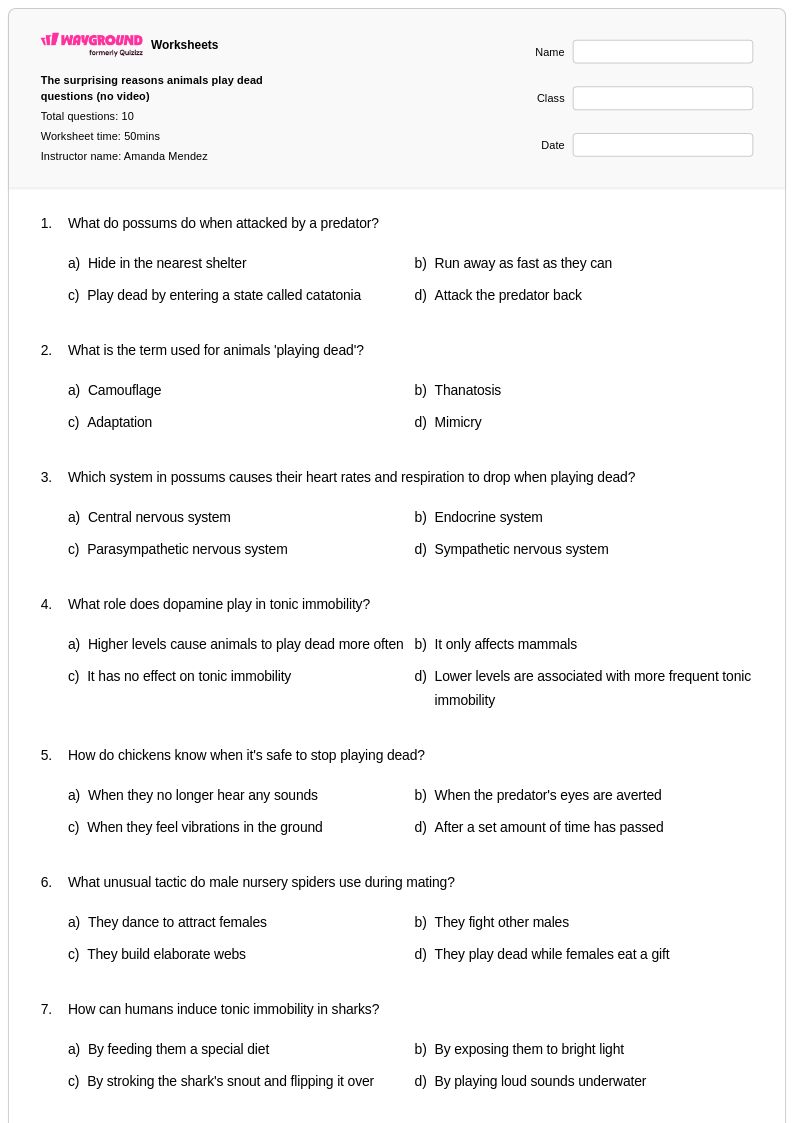
A frequent misconception is that defense mechanisms are consciously chosen by organisms, rather than being evolved traits shaped by natural selection over generations. Students also often conflate mimicry with camouflage, failing to distinguish between resembling the environment and resembling another organism. Another common error is assuming all defense mechanisms are physical, overlooking behavioral responses like alarm calls, playing dead, or group defensive formations.
How do I differentiate defense mechanisms instruction for students at different skill levels?
For students who need additional support, reduce the number of defense categories introduced at once and provide organism examples with visual scaffolding. More advanced students benefit from analyzing evolutionary tradeoffs — why a defense mechanism that helps against one predator might be ineffective or costly against another. On Wayground, teachers can apply accommodations such as reduced answer choices or read-aloud settings to individual students, allowing the same worksheet to serve diverse learners without disrupting the rest of the class.
How can I use Wayground's defense mechanisms worksheets in my classroom?
Wayground's defense mechanisms worksheets are available as printable PDFs for traditional classroom use and in digital formats for technology-integrated environments, including the option to host them as a live quiz on the platform. Teachers can assign them as independent practice, homework, or formative assessments following direct instruction on adaptive strategies. Answer keys are included with every resource, making grading and student feedback straightforward.
How do defense mechanisms connect to broader biology curriculum standards?
Defense mechanisms tie directly into evolutionary biology, natural selection, and ecology units, making them relevant across multiple curriculum benchmarks. Students examining how structural, behavioral, and physiological defenses improve survival are engaging with core concepts about adaptation and species interactions. This cross-cutting relevance means defense mechanism activities can reinforce understanding in multiple units rather than functioning as a standalone topic.