
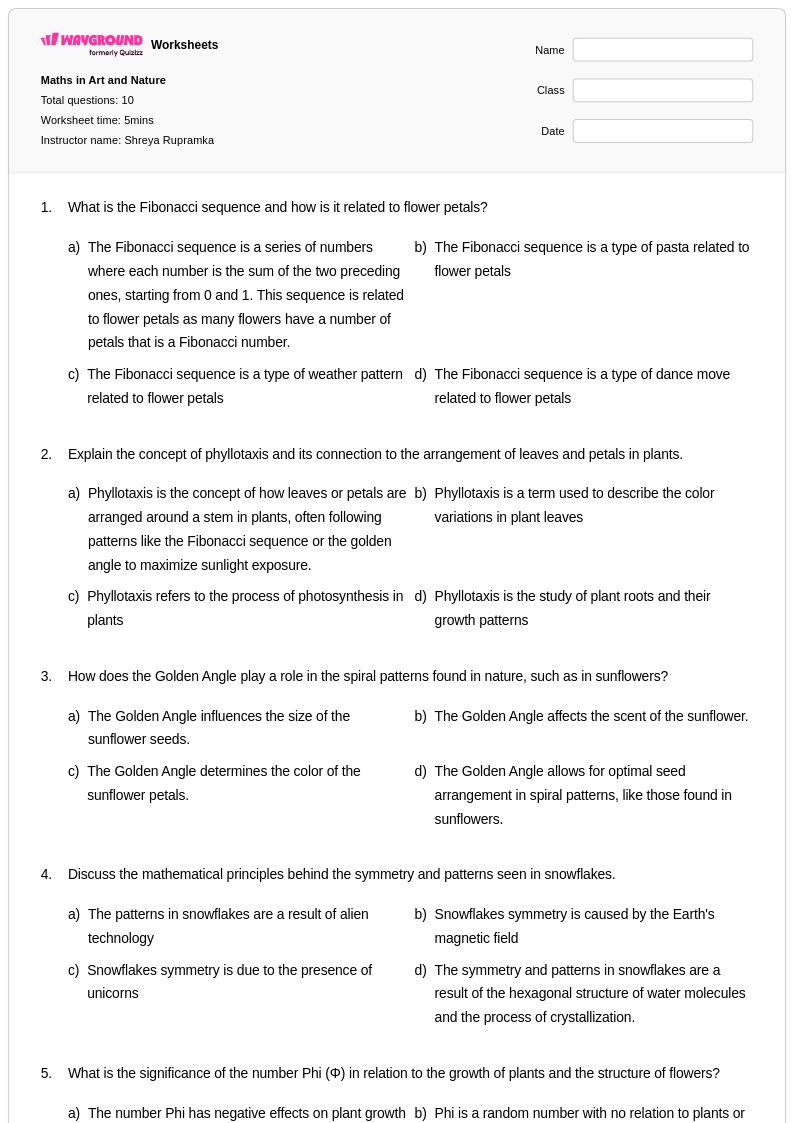
10 Q
7th
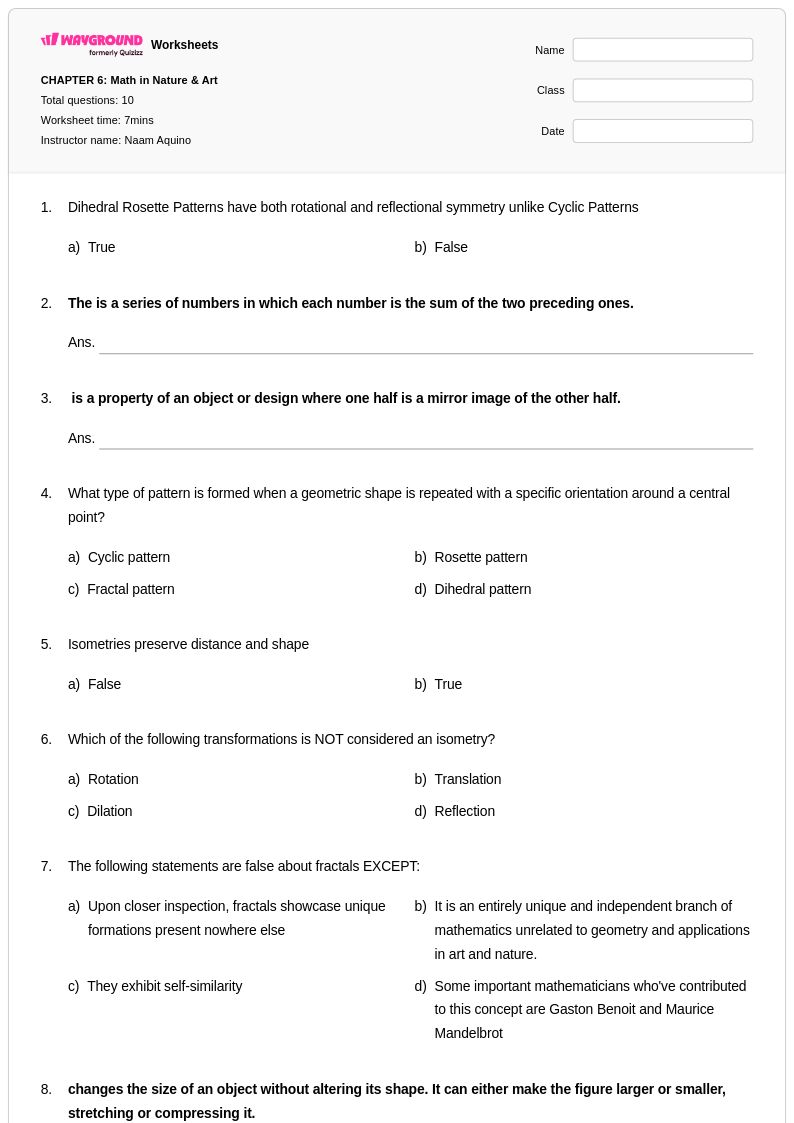
10 Q
Uni
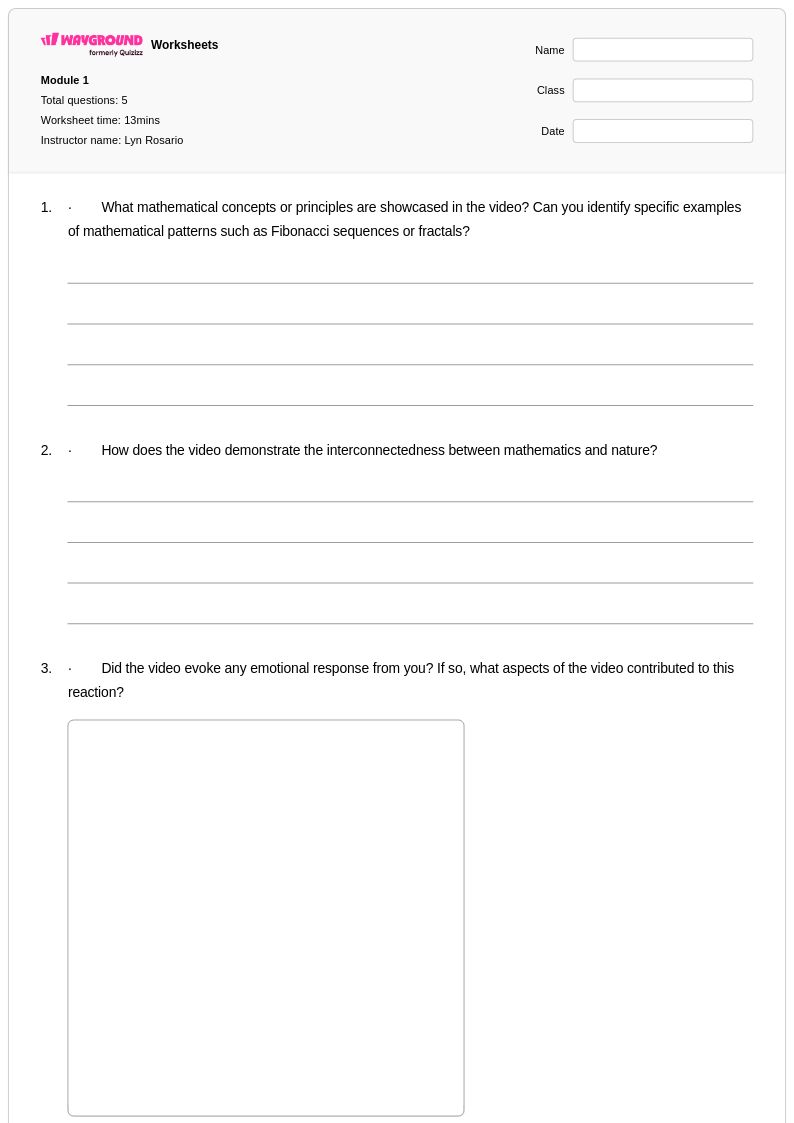
5 Q
Uni
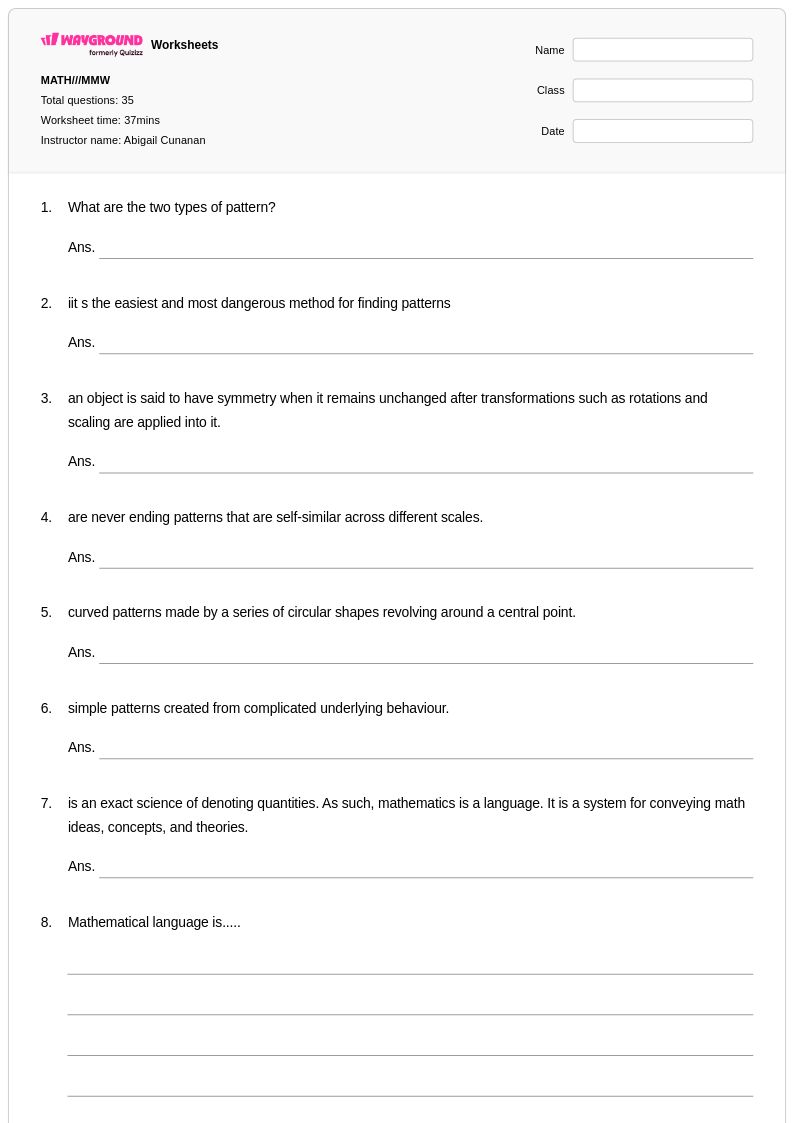
35 Q
Uni
15 Q
9th - 10th
23 Q
Uni
20 Q
Uni
20 Q
7th - Uni
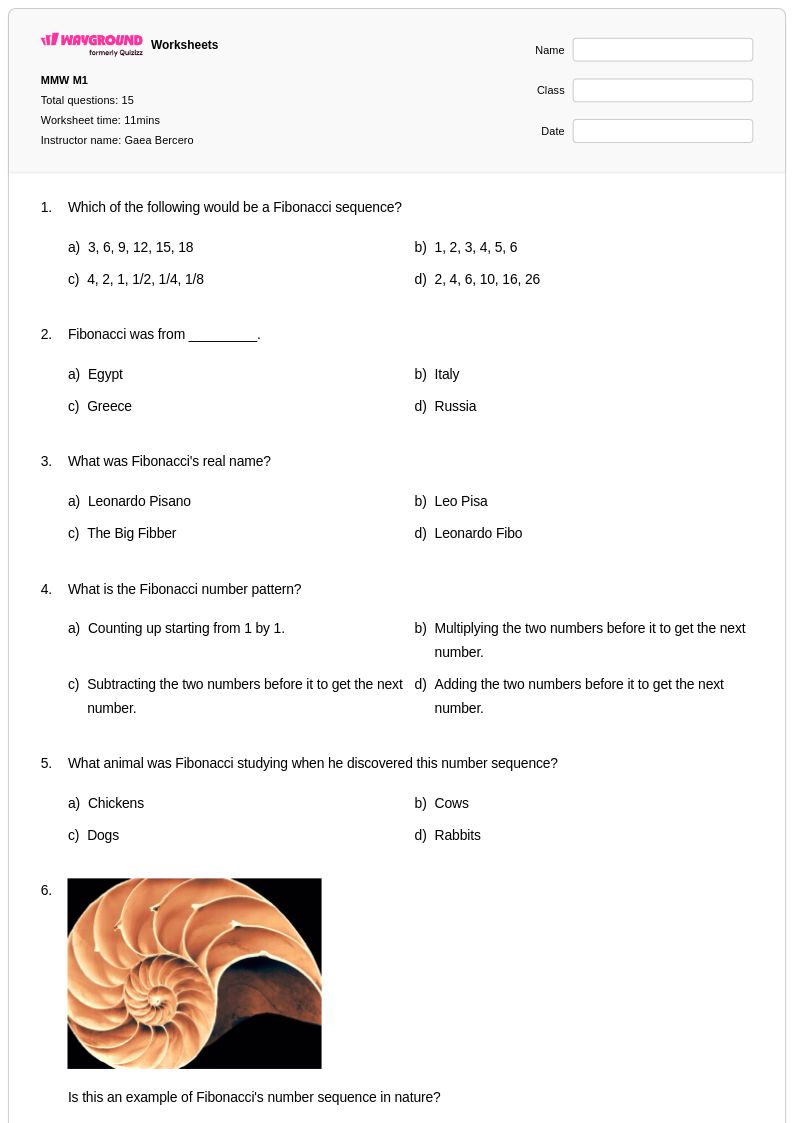
15 Q
Uni
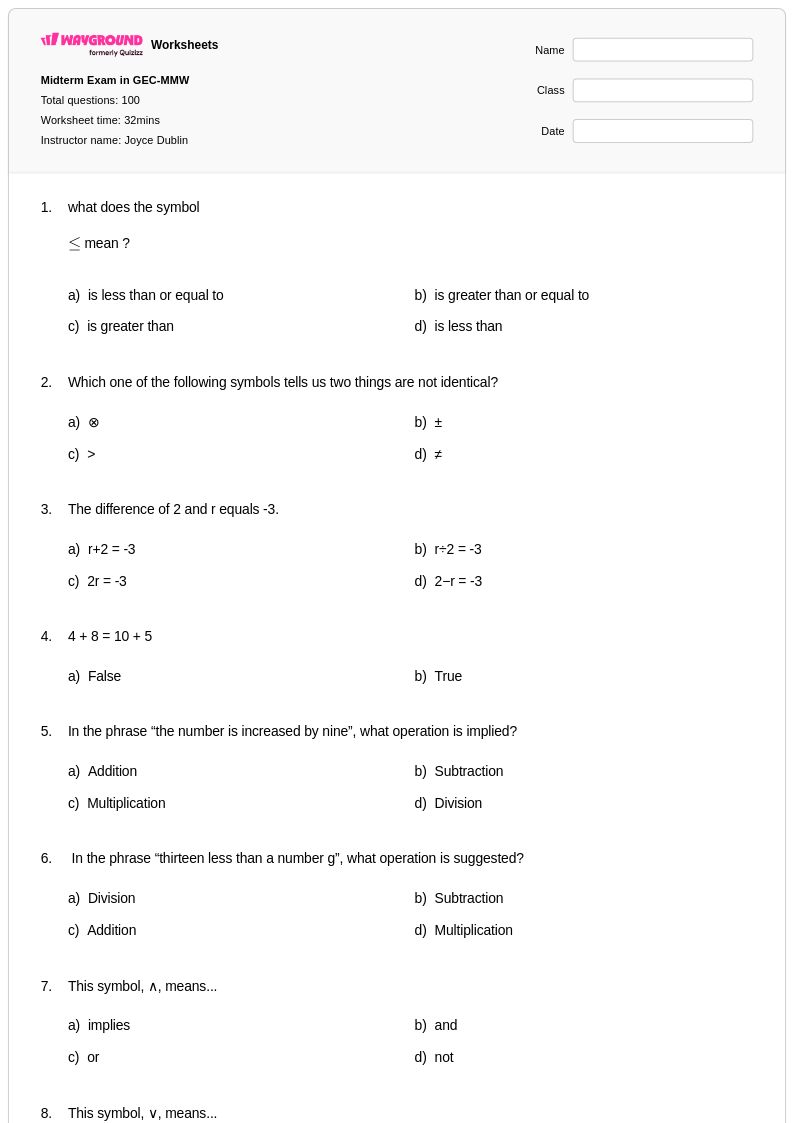
100 Q
Uni
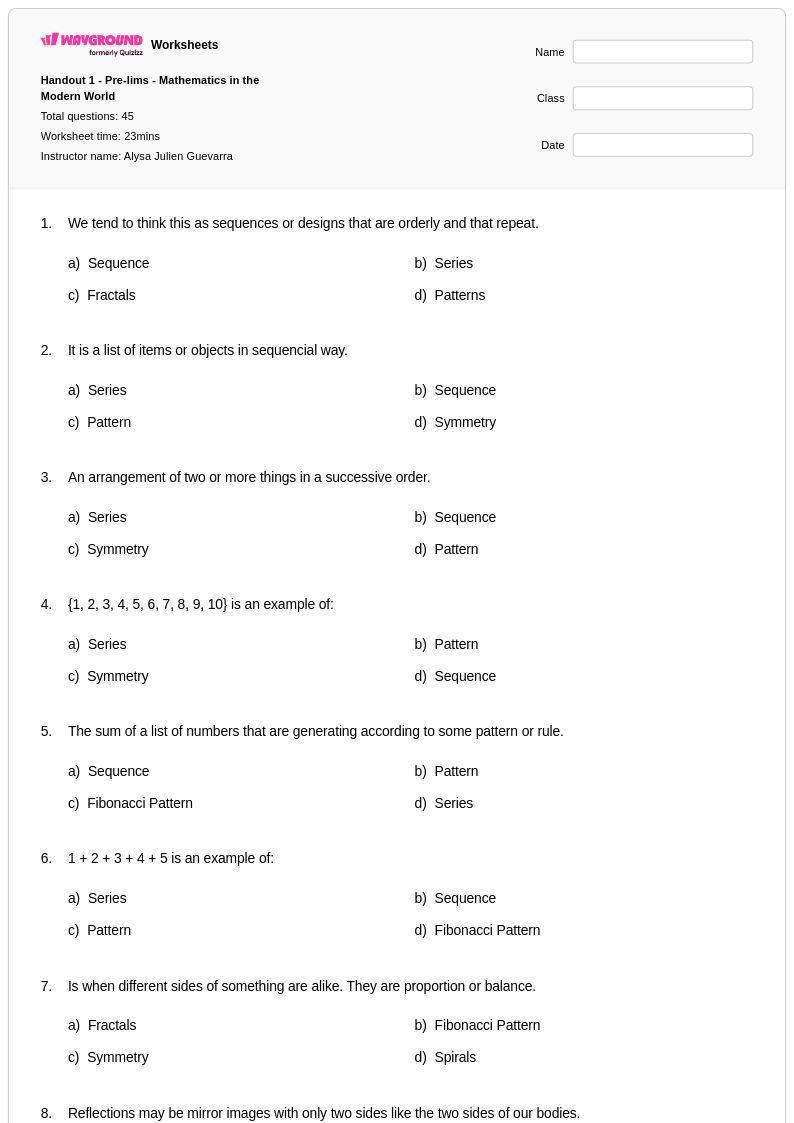
45 Q
Uni
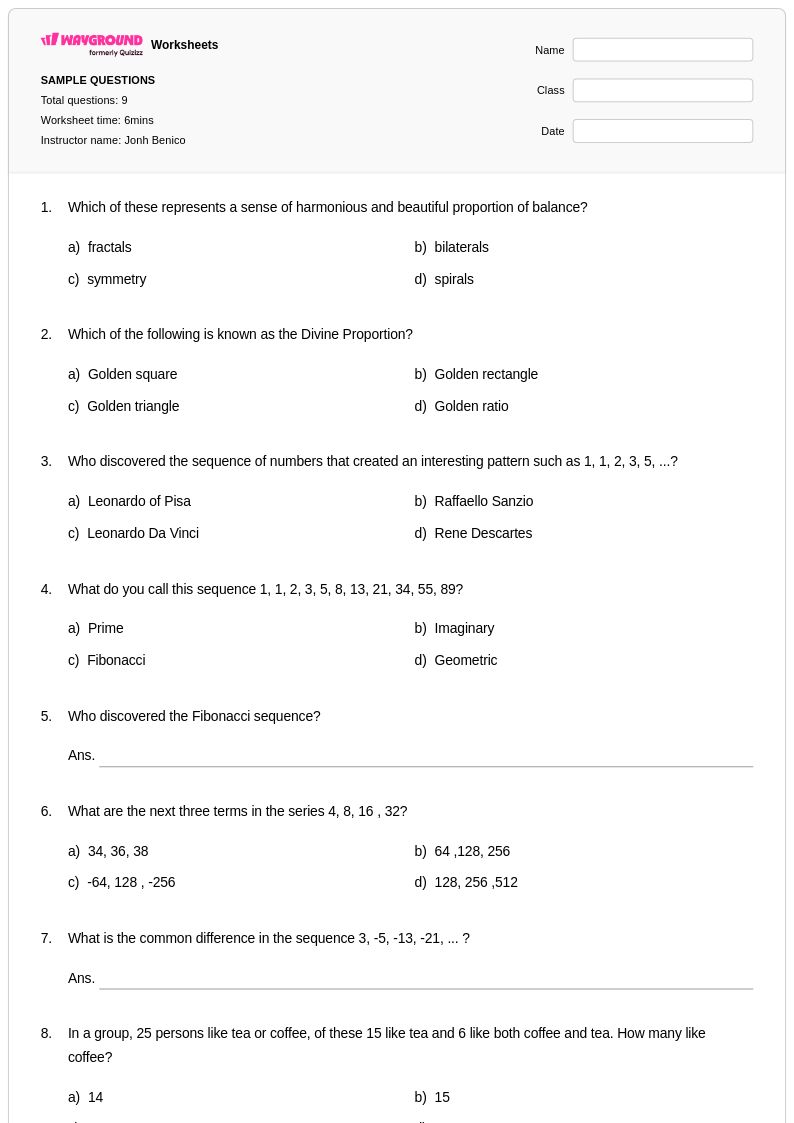
9 Q
Uni
16 Q
11th
15 Q
Uni
11 Q
Uni
46 Q
8th
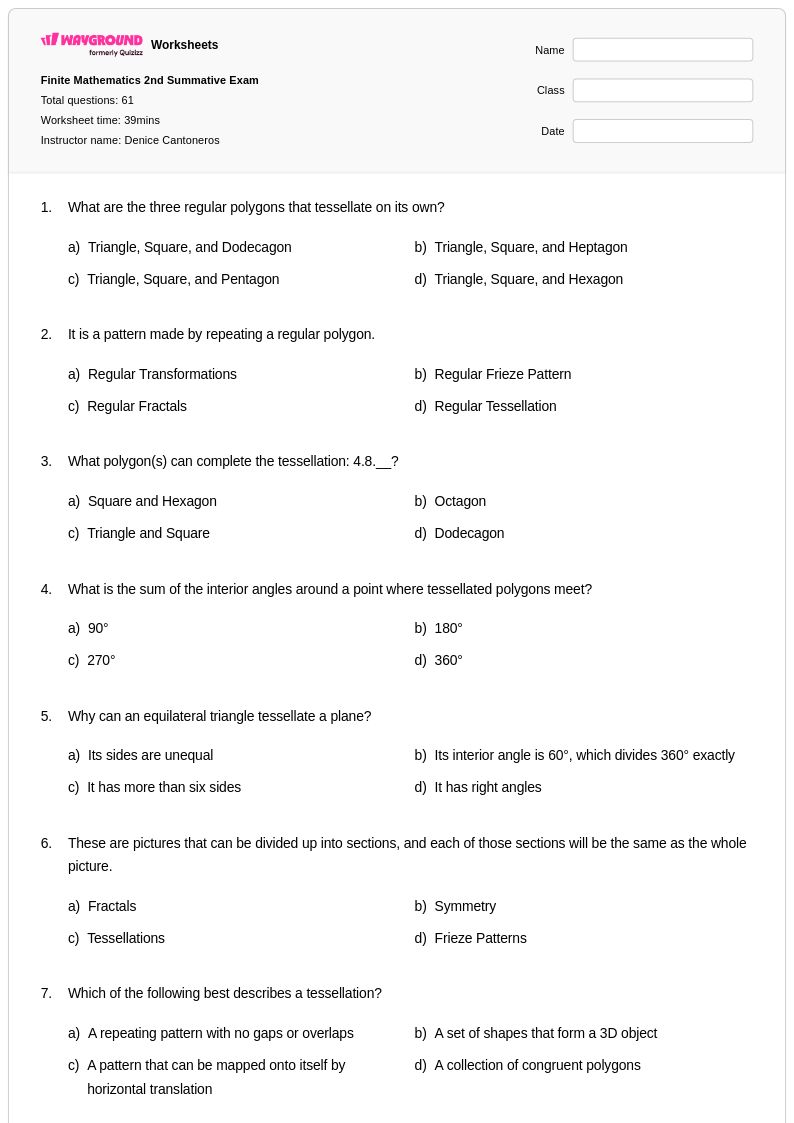
61 Q
11th
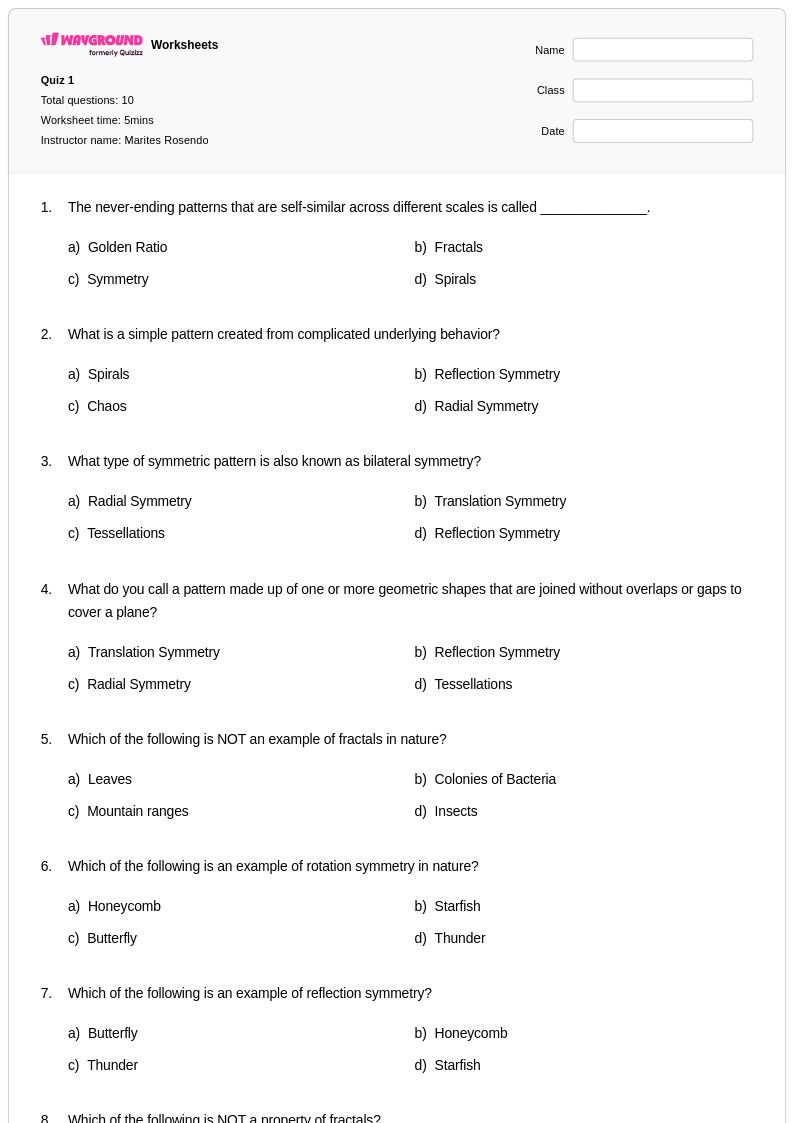
10 Q
Uni
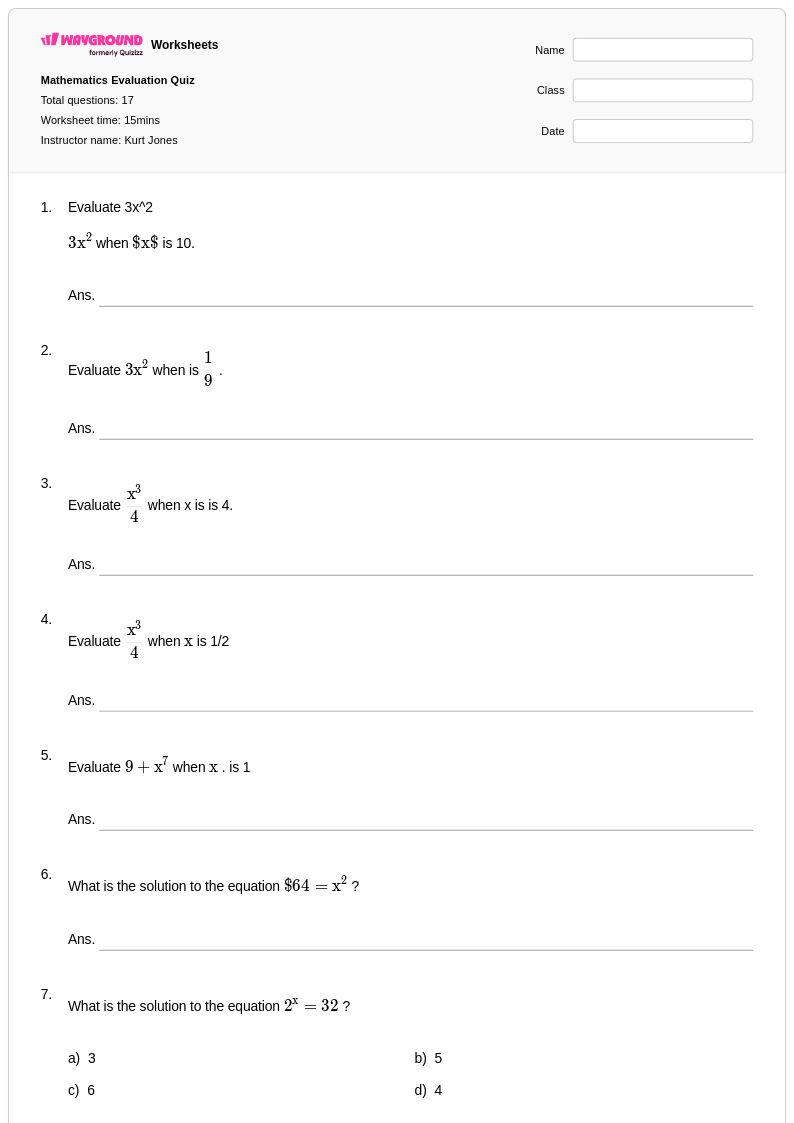
17 Q
6th
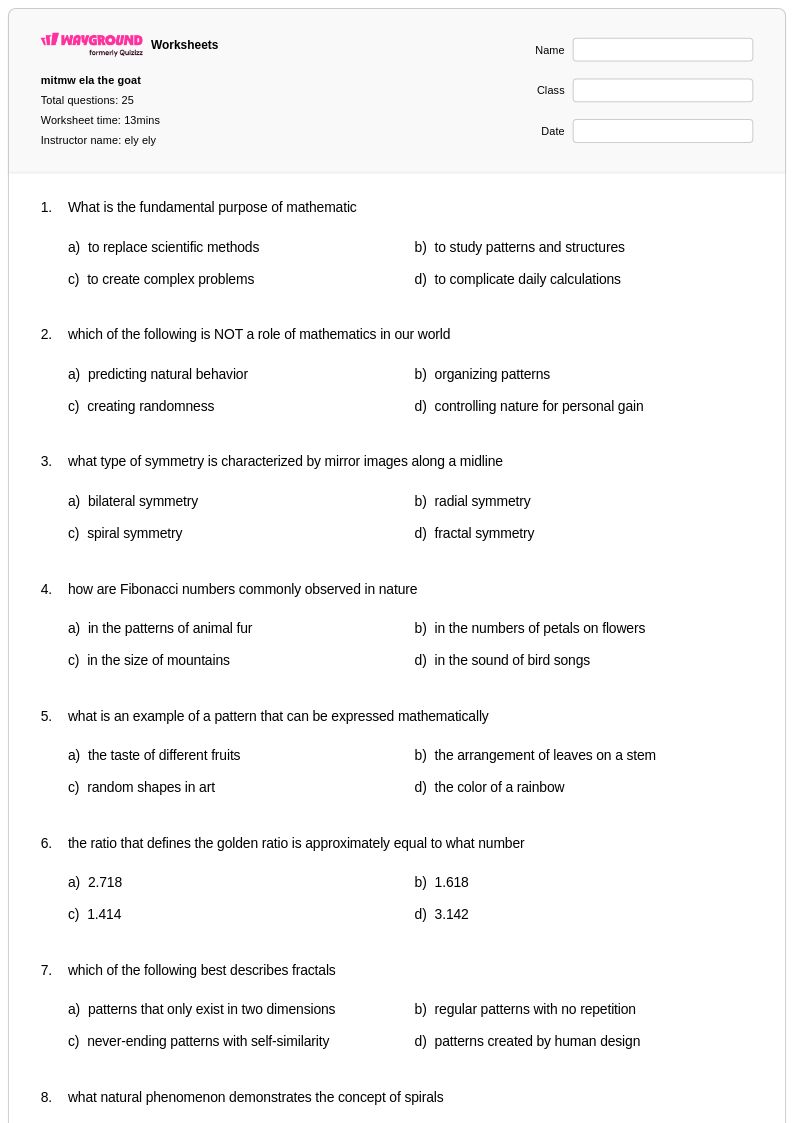
25 Q
Uni
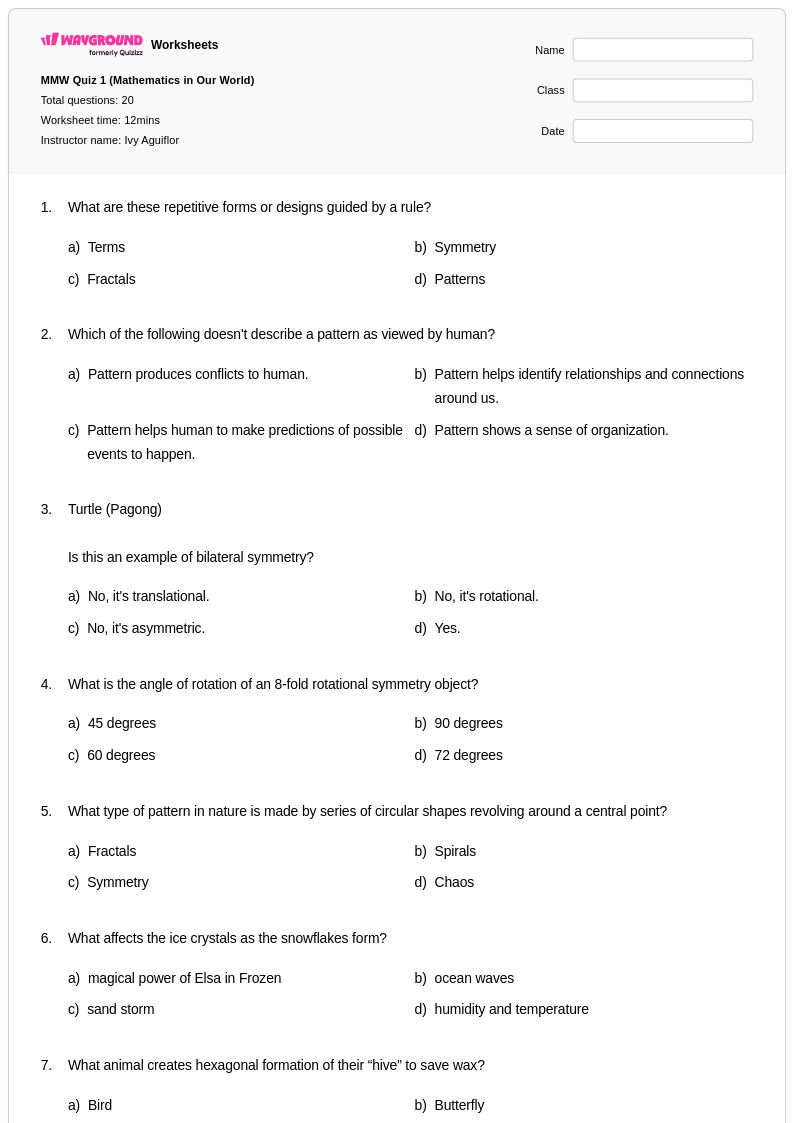
20 Q
Uni
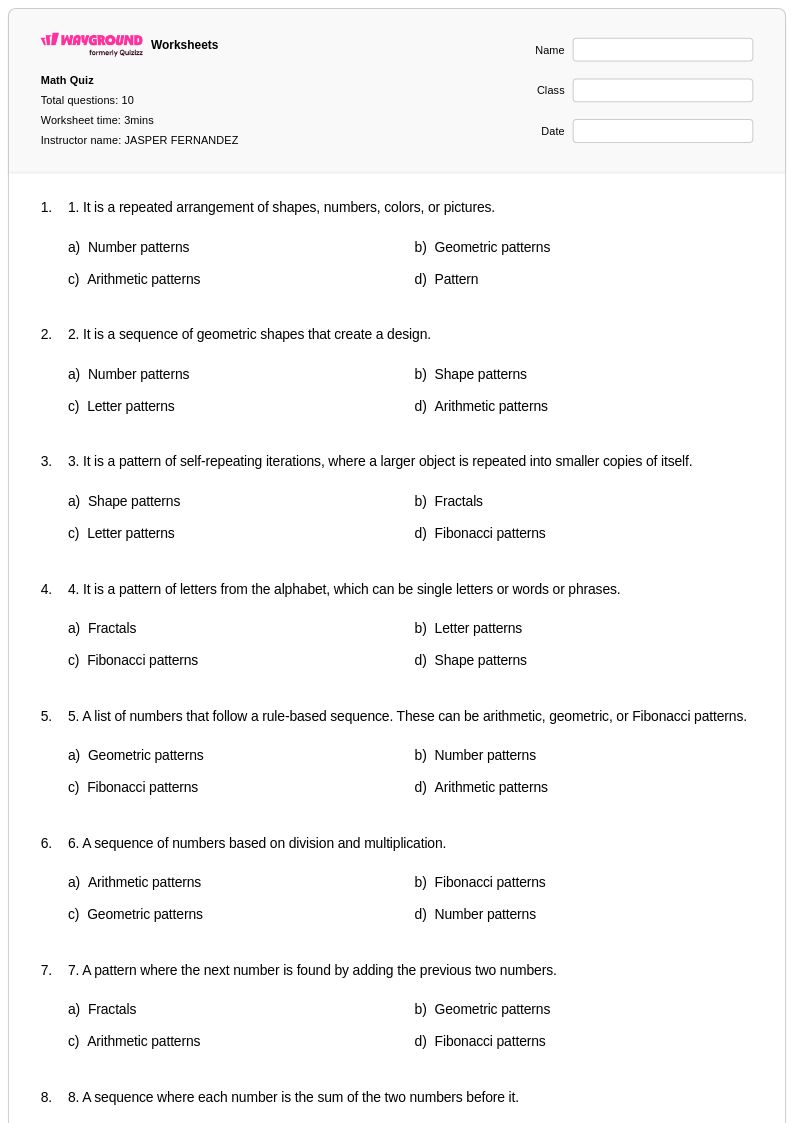
10 Q
Uni
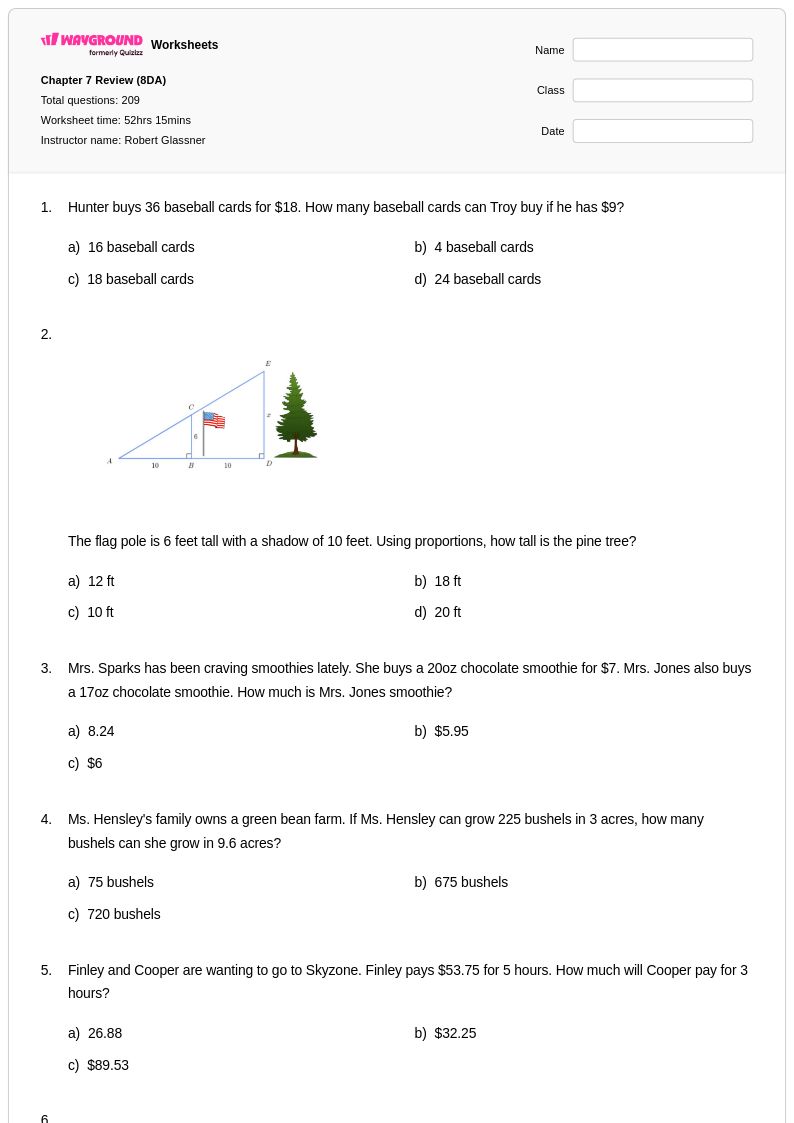
209 Q
8th - 12th
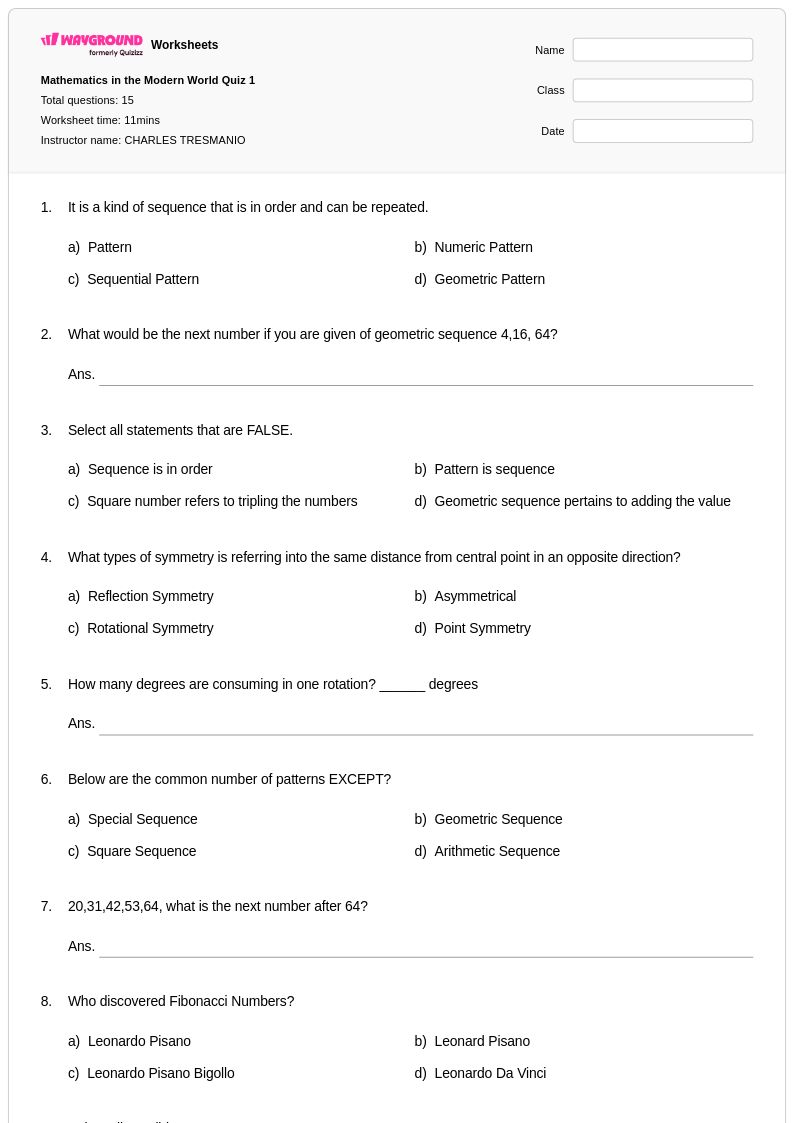
15 Q
Uni
Explore Worksheets by Subjects
Explore printable Fractals worksheets
Fractals worksheets available through Wayground (formerly Quizizz) provide students with comprehensive practice in understanding these fascinating mathematical structures that exhibit self-similarity at multiple scales. These expertly designed resources strengthen critical geometric reasoning skills by guiding students through the exploration of fractal patterns, iteration processes, and recursive mathematical relationships found in nature and mathematical theory. Students work through practice problems that challenge them to identify fractal properties, calculate fractal dimensions, and construct basic fractal shapes like the Koch snowflake, Sierpinski triangle, and Mandelbrot set iterations. Each worksheet comes with a complete answer key and is available as free printable pdf downloads, making it easy for educators to incorporate hands-on fractal exploration into their mathematics curriculum while building students' understanding of infinite complexity within finite boundaries.
Wayground (formerly Quizizz) empowers teachers with an extensive collection of millions of teacher-created fractal resources that can be easily discovered through robust search and filtering capabilities. The platform's differentiation tools allow educators to customize worksheet difficulty levels and adapt content to meet diverse learning needs, whether supporting students who need foundational practice with basic geometric patterns or challenging advanced learners with complex fractal calculations and proofs. Teachers can access materials in both printable and digital formats, including downloadable pdf versions, making lesson planning seamless across different classroom environments. These comprehensive fractal worksheet collections support targeted skill practice, remediation for students struggling with geometric concepts, and enrichment opportunities that connect pure mathematics to real-world applications in computer graphics, natural sciences, and architectural design.
FAQs
How do I introduce the concept of fractals to students?
What exercises help students practice fractal concepts?
What are common student misconceptions about fractals?
How can I use this Wayground worksheet with my class?
How do fractals connect to the standard math curriculum?
How can I differentiate instruction for a lesson on fractals?