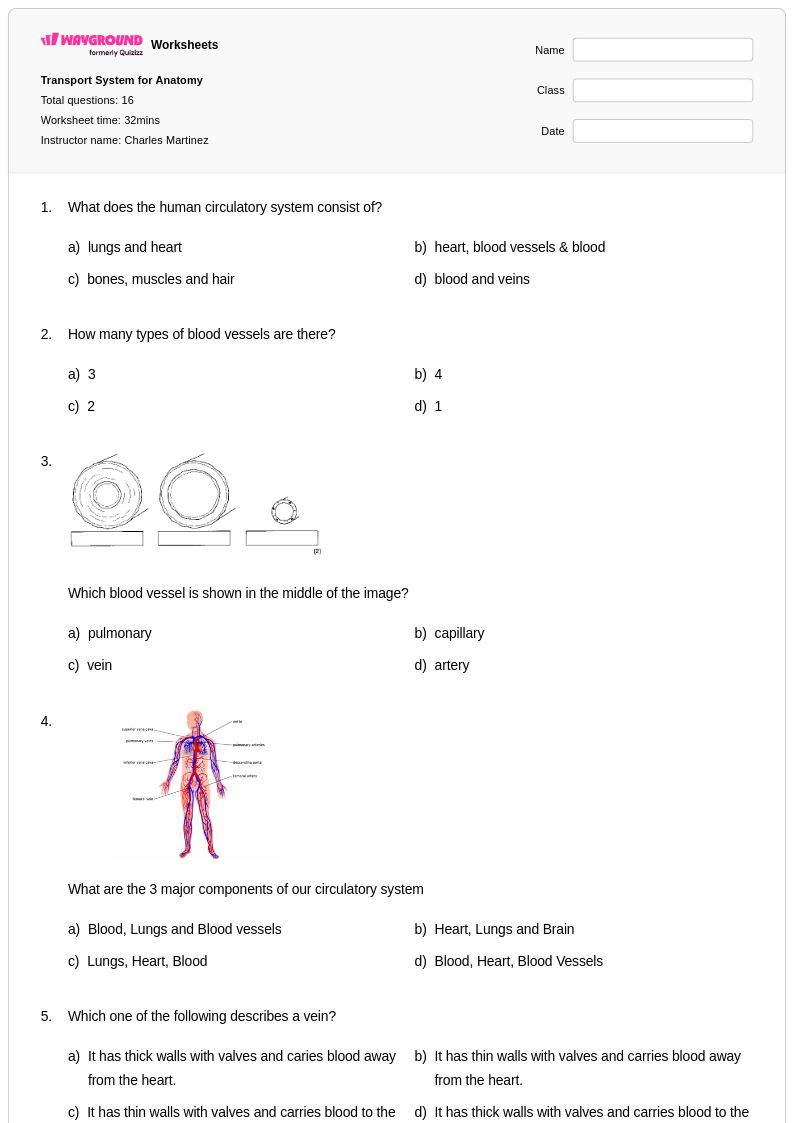
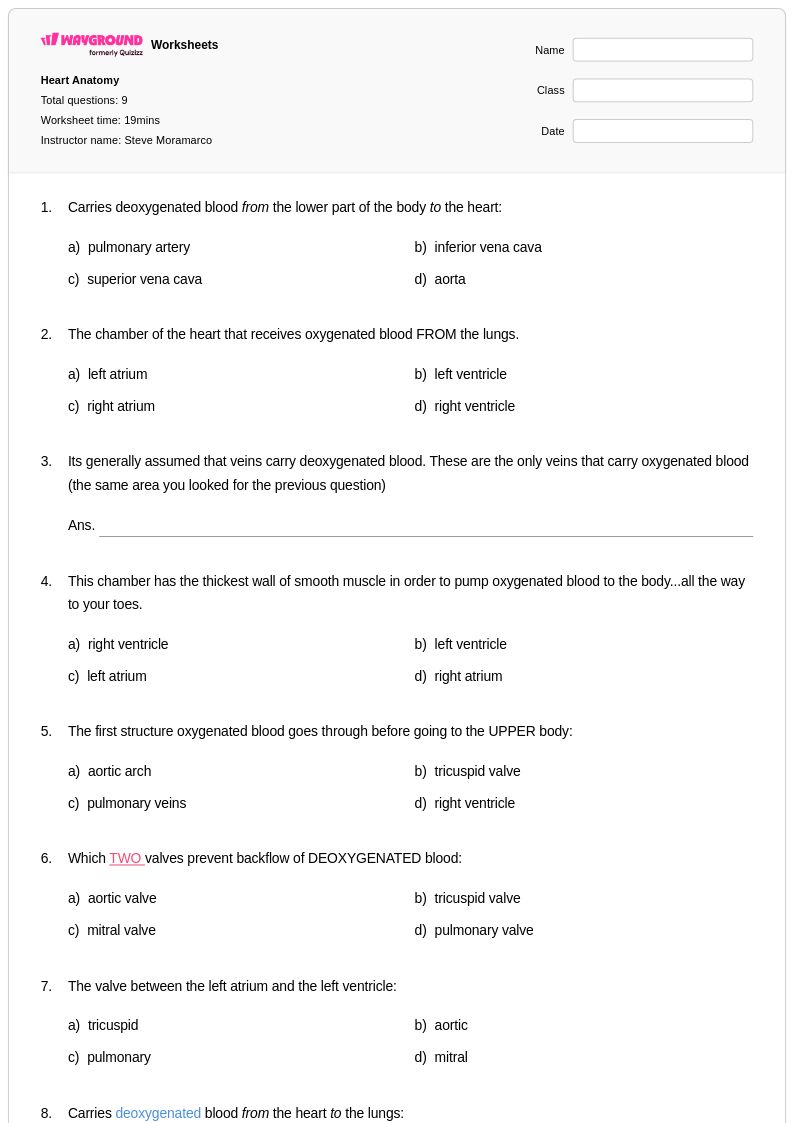
Discover comprehensive Class 11 anatomy worksheets and printables through Wayground that help students master human body systems with engaging practice problems, detailed answer keys, and free PDF resources for effective biology learning.
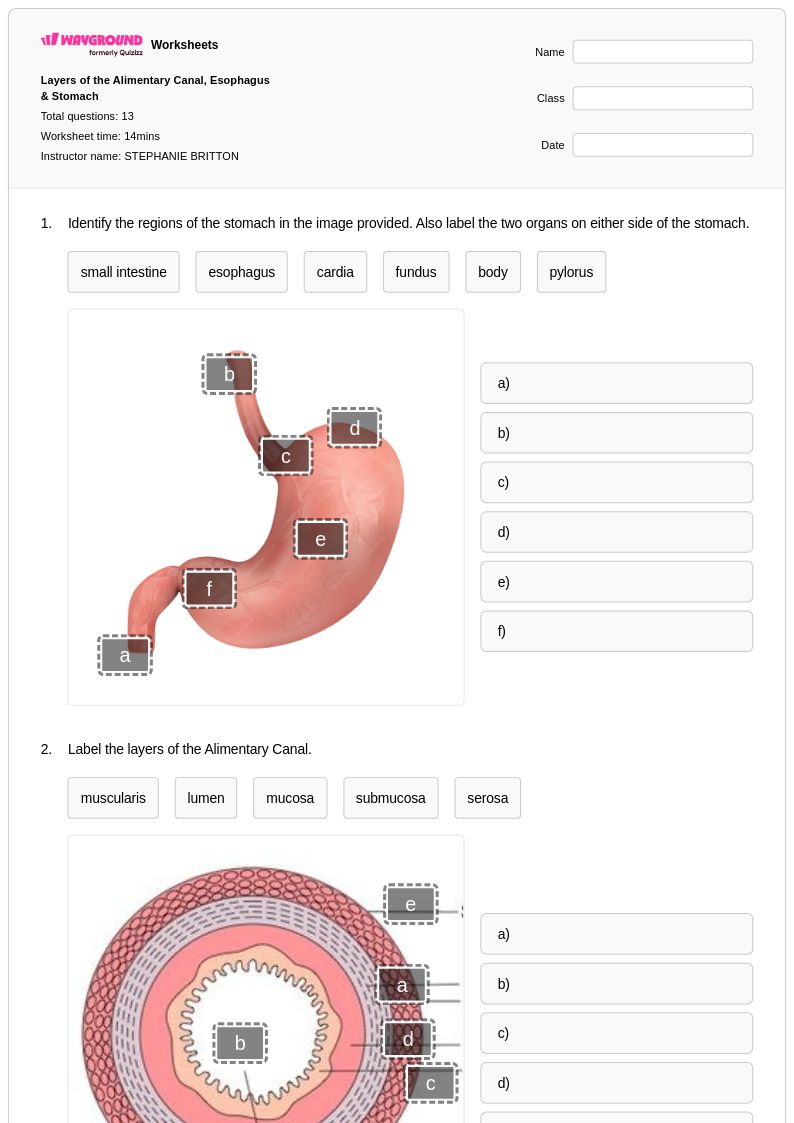
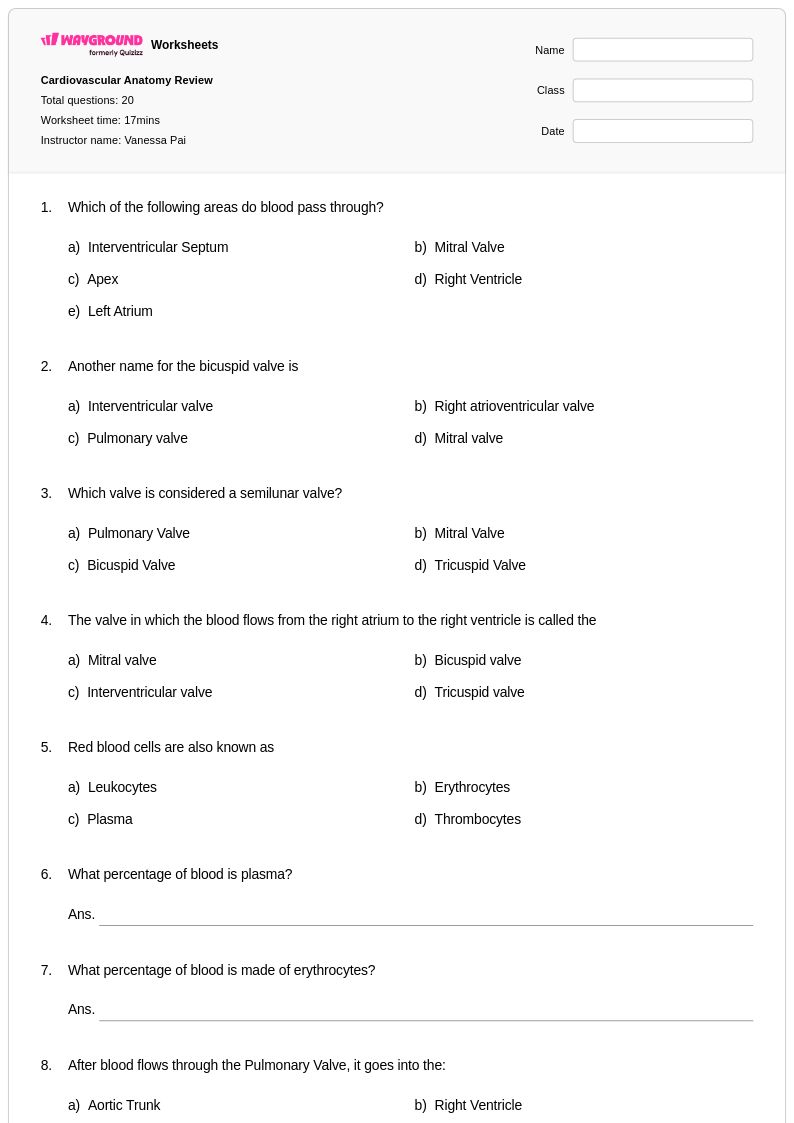
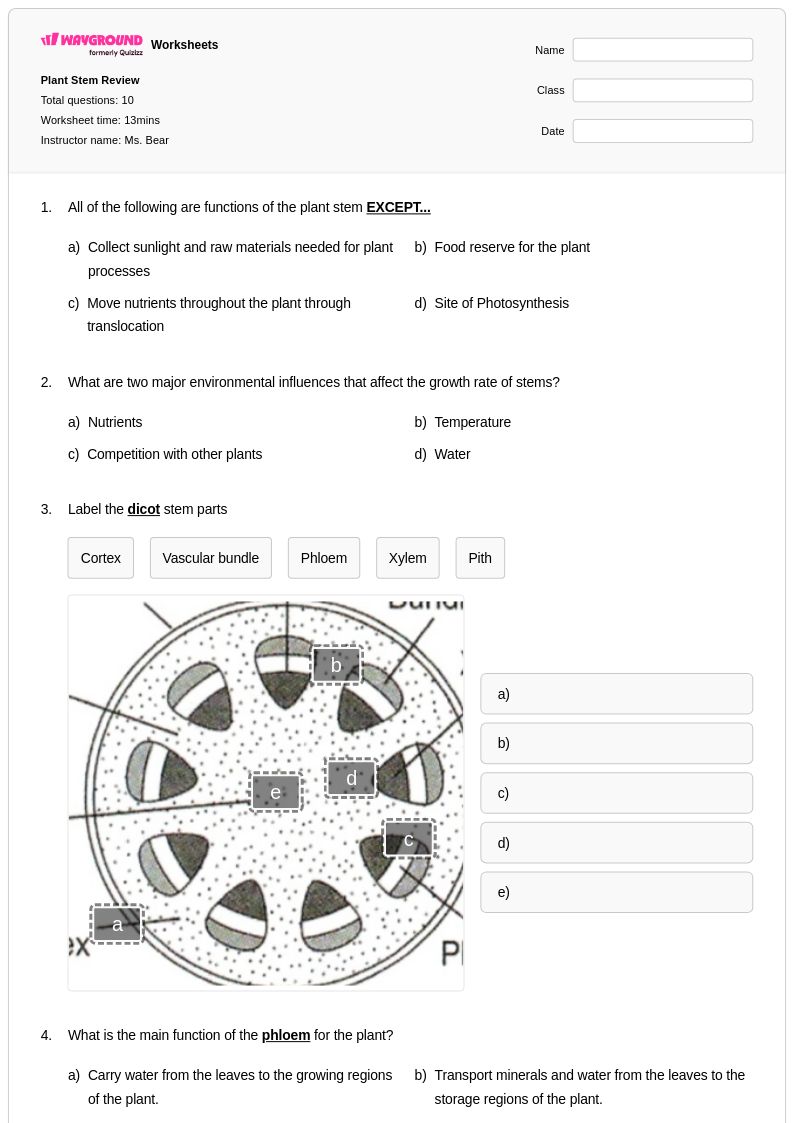
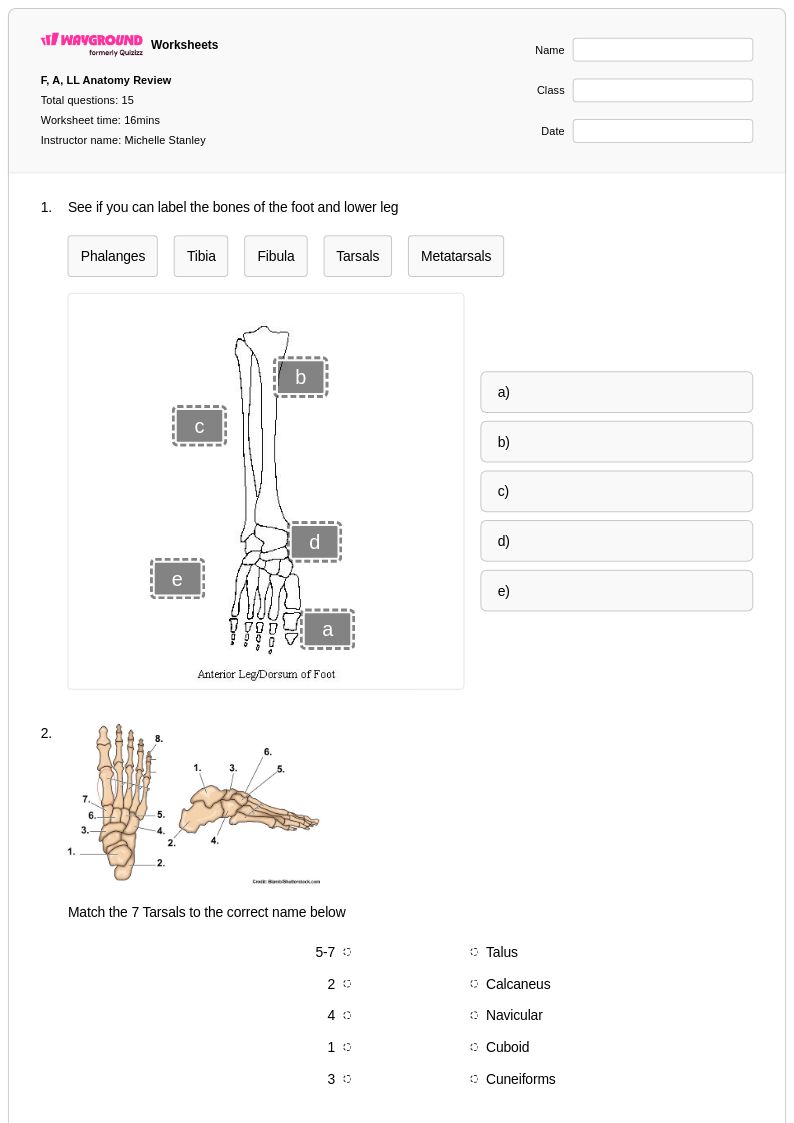
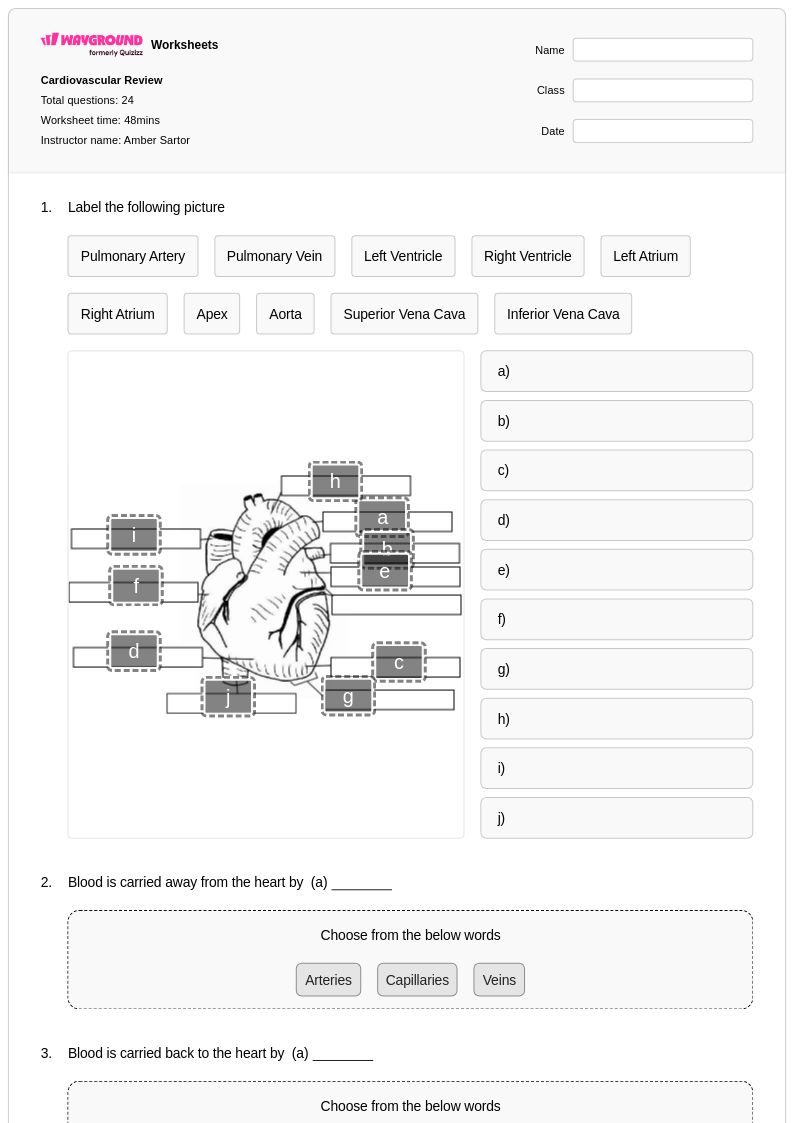
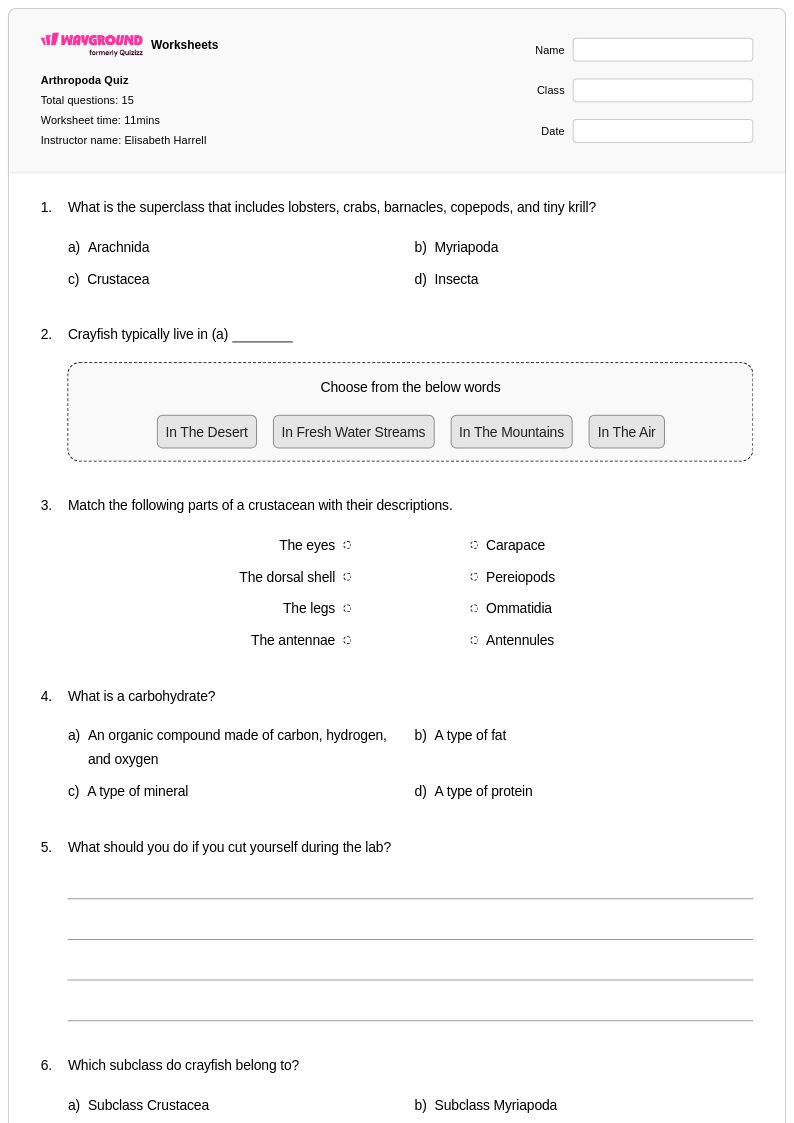
Class 11 anatomy worksheets available through Wayground (formerly Quizizz) provide comprehensive coverage of human body systems and their intricate structures, designed to strengthen students' understanding of physiological processes and anatomical relationships. These expertly crafted resources feature detailed practice problems that challenge students to identify organ systems, analyze tissue types, trace metabolic pathways, and comprehend complex physiological mechanisms. Each worksheet collection includes answer keys that facilitate self-assessment and independent learning, while printable pdf formats ensure accessibility across diverse learning environments. The free anatomy worksheets emphasize critical thinking skills through comparative analysis exercises, labeling activities, and case study scenarios that prepare students for advanced biological studies and potential healthcare careers.
Wayground (formerly Quizizz) supports educators with millions of teacher-created anatomy resources that streamline lesson planning and enhance instructional effectiveness for Class 11 biology courses. The platform's robust search and filtering capabilities allow teachers to quickly locate worksheets aligned with specific anatomical systems or learning objectives, while standards alignment ensures curriculum compliance across different educational frameworks. Advanced differentiation tools enable instructors to customize content complexity, accommodating diverse learning needs through scaffolded activities and enrichment opportunities. These comprehensive worksheet collections are available in both printable and digital formats, including downloadable pdf versions, making them invaluable for classroom instruction, homework assignments, test preparation, and targeted remediation activities that reinforce essential anatomical concepts and terminology.
FAQs
How do I teach human body systems in a way that helps students see how they connect?
Teaching anatomy effectively means moving beyond isolated memorization and helping students understand how systems interact. Start with a single system like the circulatory or respiratory system, establish structure-function relationships clearly, and then introduce how that system depends on and influences others. Visual mapping activities, labeling diagrams, and case-based scenarios where students trace a physiological process across multiple systems help build this integrative understanding over time.
What exercises help students practice identifying anatomical structures?
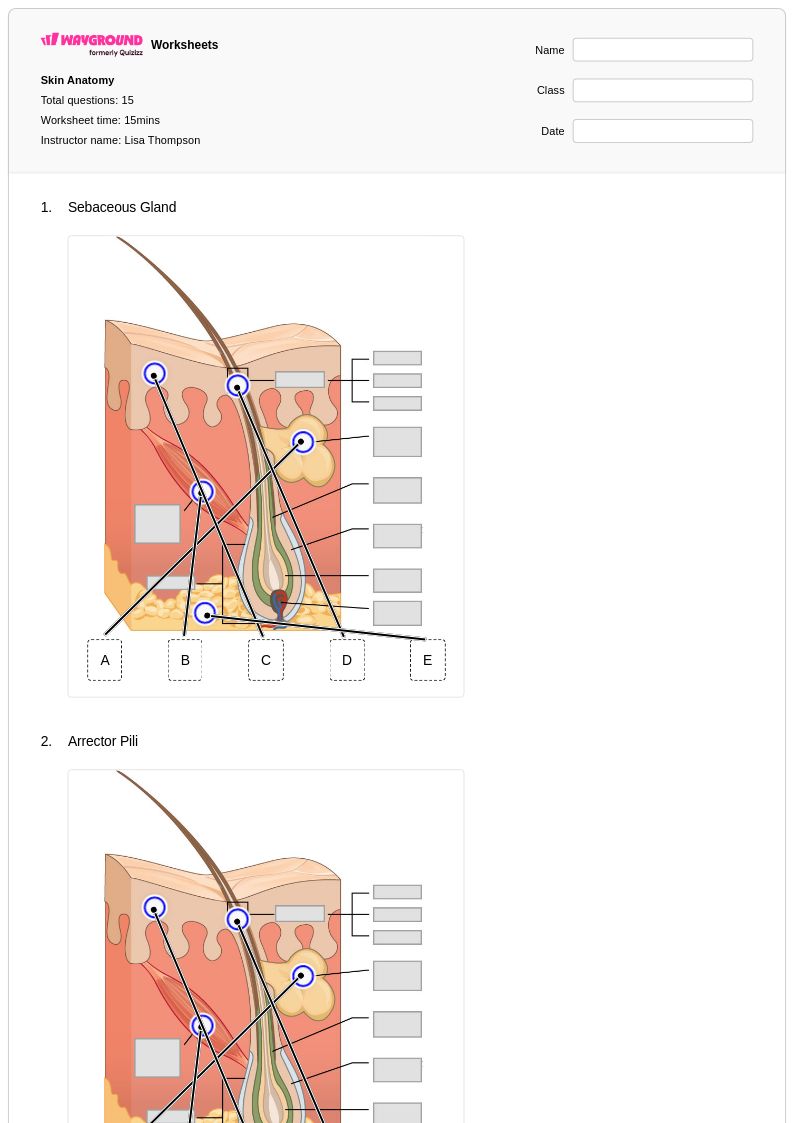
Labeling diagrams is the most direct way to practice anatomical identification, but students retain more when labeling is paired with function prompts — asking not just what a structure is, but what it does and how it connects to adjacent structures. Tissue classification activities, organ system matching, and physiological pathway diagrams each target different layers of anatomical knowledge. Repeated low-stakes practice with immediate feedback, such as using answer keys for self-assessment, builds both accuracy and confidence.
What mistakes do students commonly make when learning anatomy?
One of the most common errors is confusing anatomical location terms — students frequently mix up anterior and posterior, or proximal and distal, especially when applying them to non-standard body positions. Students also tend to memorize organ names without understanding spatial relationships, which causes problems when interpreting diagrams or clinical scenarios. A second frequent misconception is treating body systems as independent units rather than interdependent networks, which leads to fragmented understanding when students encounter integrated physiology questions.
How can I differentiate anatomy instruction for students at different skill levels?
For students who need support, reduce the complexity of diagrams by focusing on fewer structures at a time, and consider enabling reduced answer choices when using digital formats to lower cognitive load. For advanced students, introduce pathway analysis and cross-system integration tasks that require higher-order thinking. On Wayground, teachers can apply individual accommodations such as extended time, read aloud, and reduced answer choices to specific students without disrupting the rest of the class, making it practical to support diverse learners within the same assignment.
How do I use Wayground's anatomy worksheets in my classroom?
Wayground's anatomy worksheets are available as printable PDFs for traditional classroom use and in digital formats for technology-integrated environments, including the option to host them as a quiz directly on Wayground. Teachers can use them for direct instruction support, independent practice, formative assessment, or review sessions. The included answer keys make them effective for self-paced or independent learning as well as whole-class activities.
How do I help students who struggle with memorizing anatomical terminology?
Breaking terminology into root words, prefixes, and suffixes gives students a decoding strategy they can apply to unfamiliar terms rather than relying on rote memorization. For example, understanding that 'cardio' refers to the heart and 'myo' refers to muscle lets students interpret compound terms independently. Pairing terminology practice with visual diagrams and spaced repetition — returning to the same terms across multiple short sessions — significantly improves long-term retention compared to single-session review.