
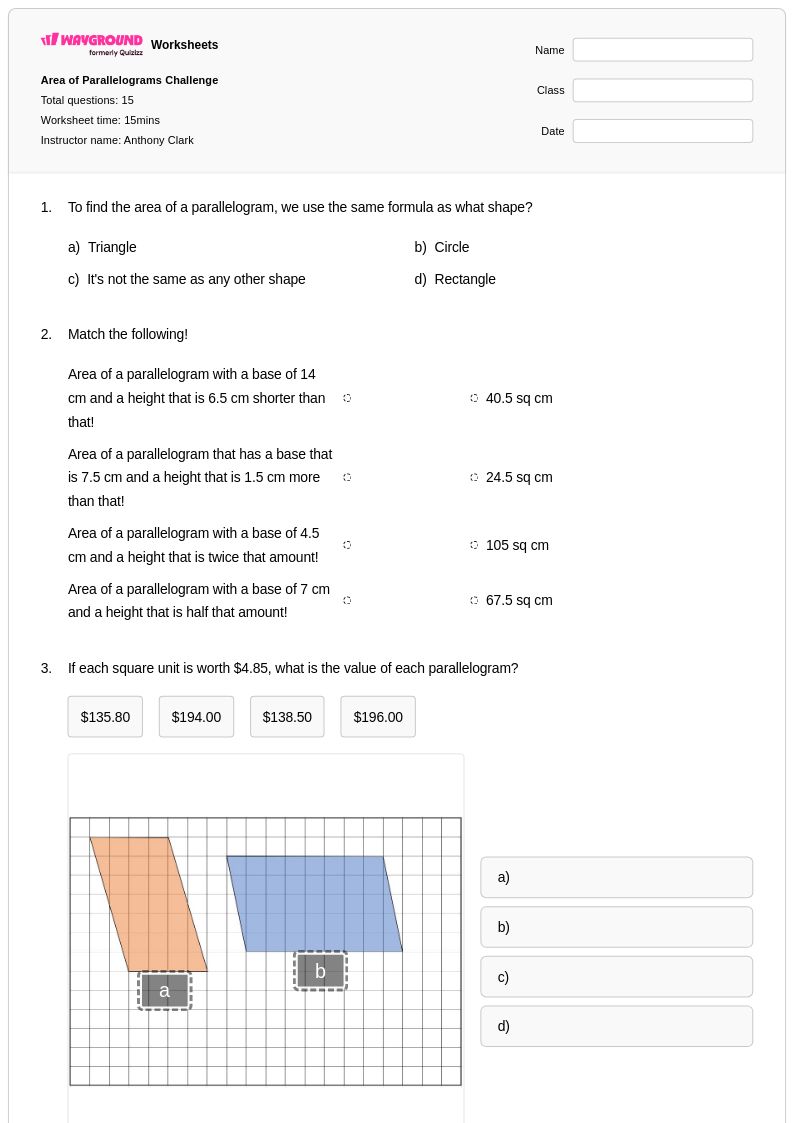
15 Q
6th - Uni
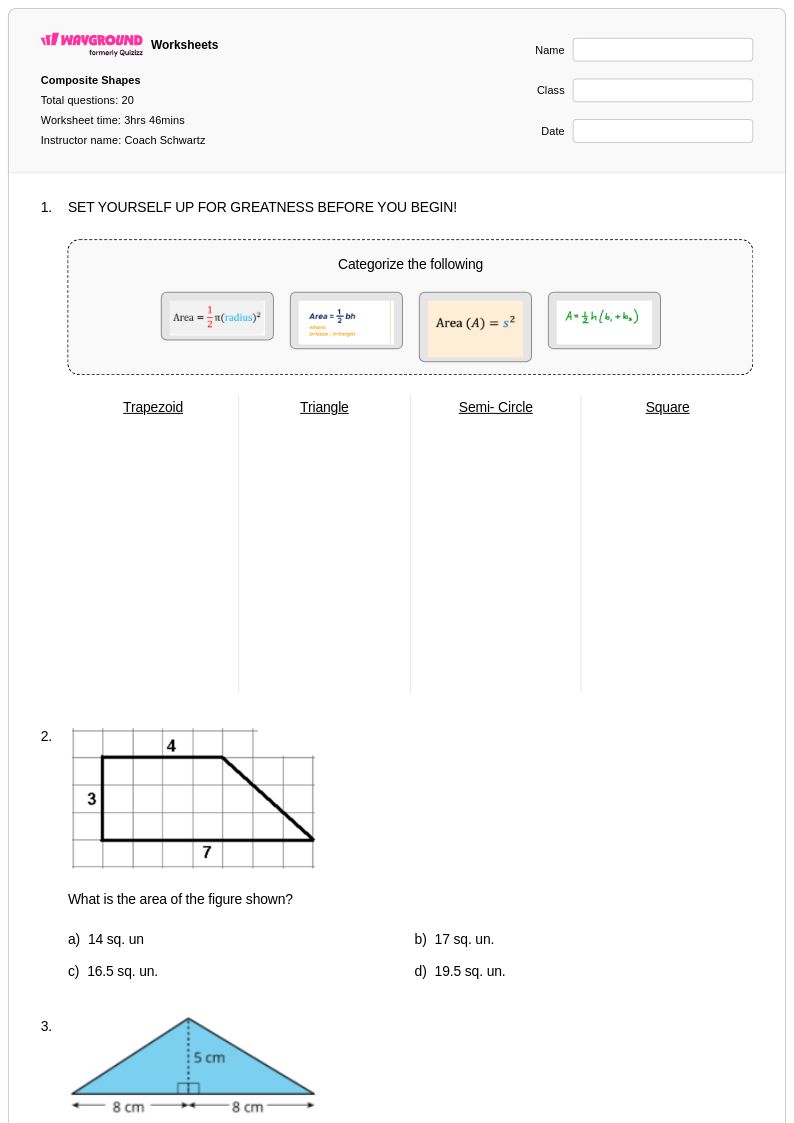
20 Q
7th
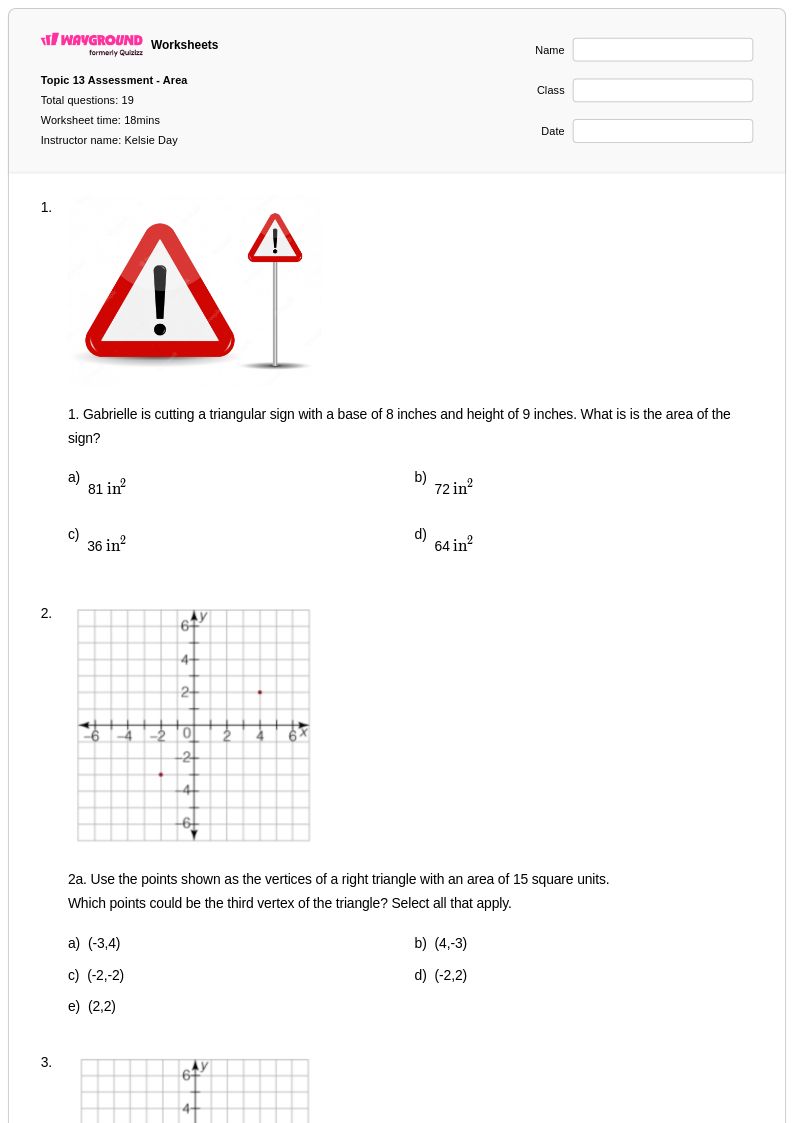
19 Q
6th
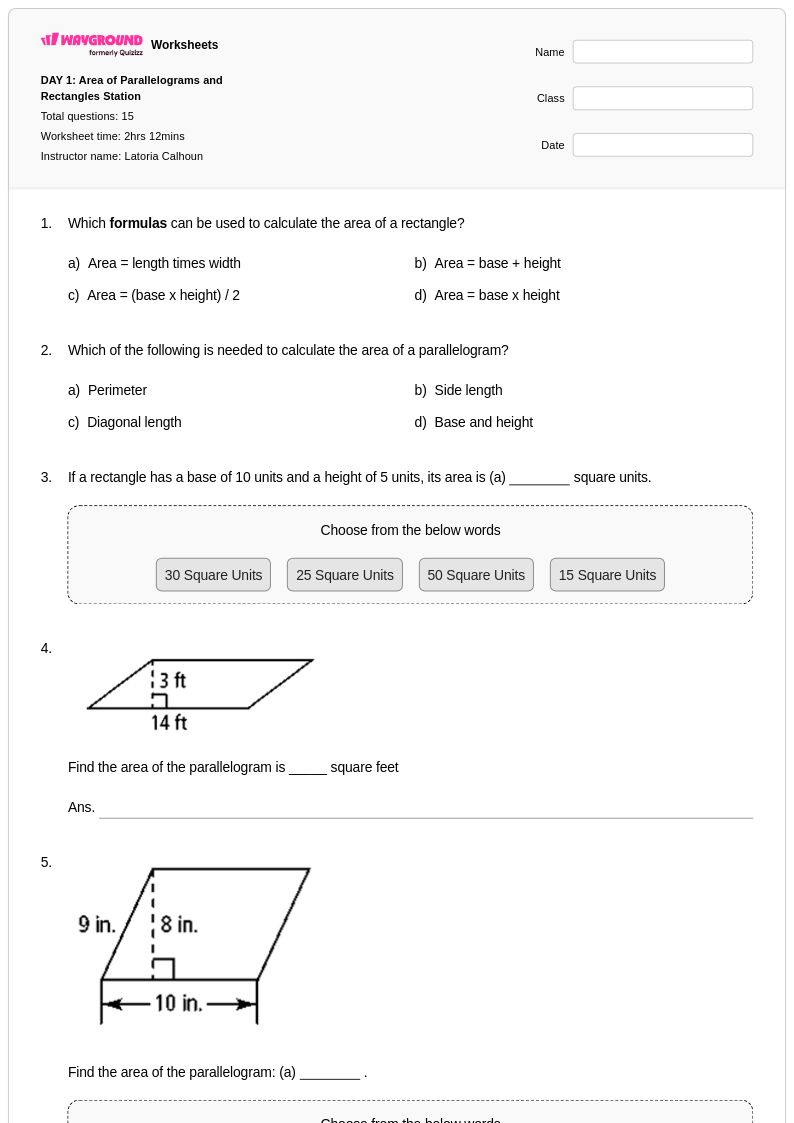
15 Q
6th
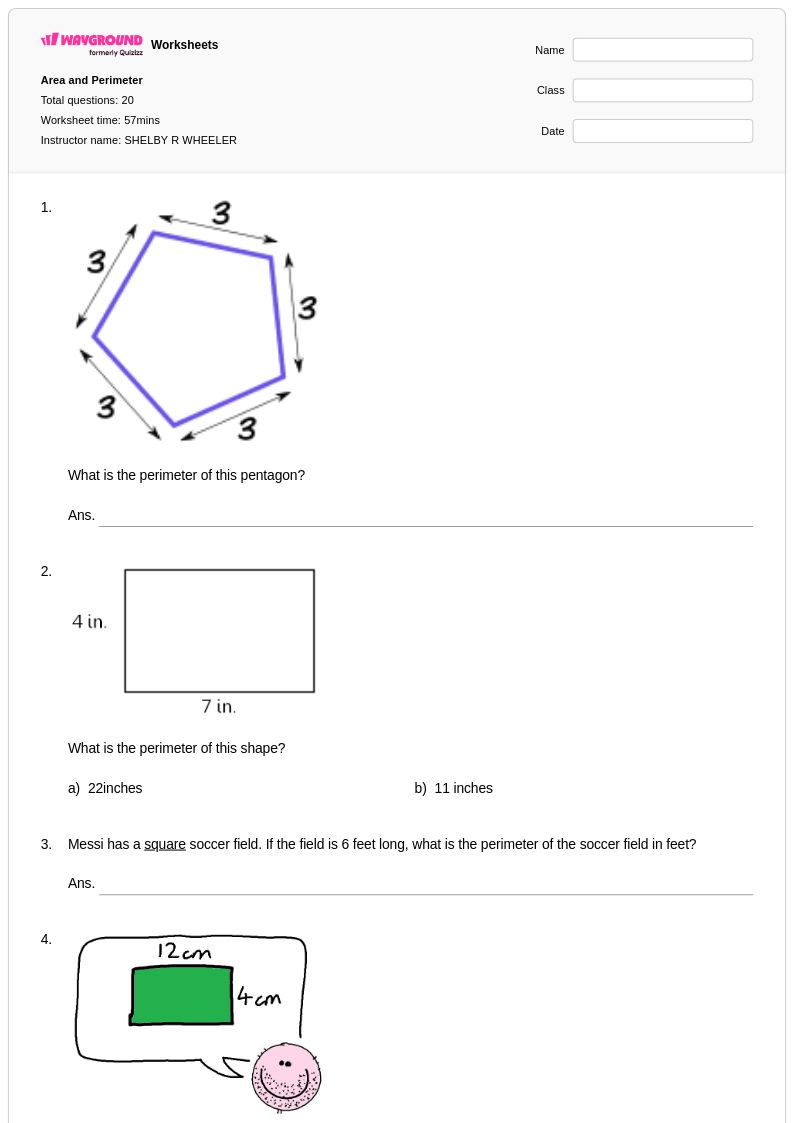
20 Q
3rd
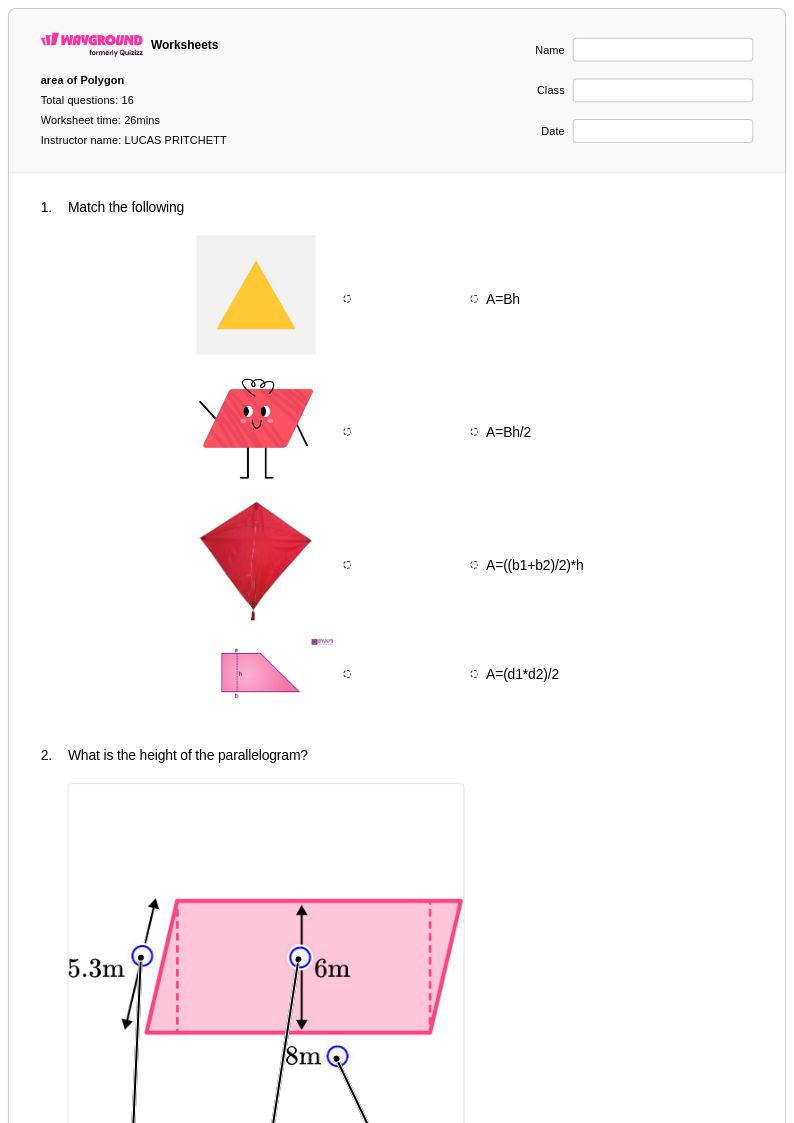
16 Q
10th
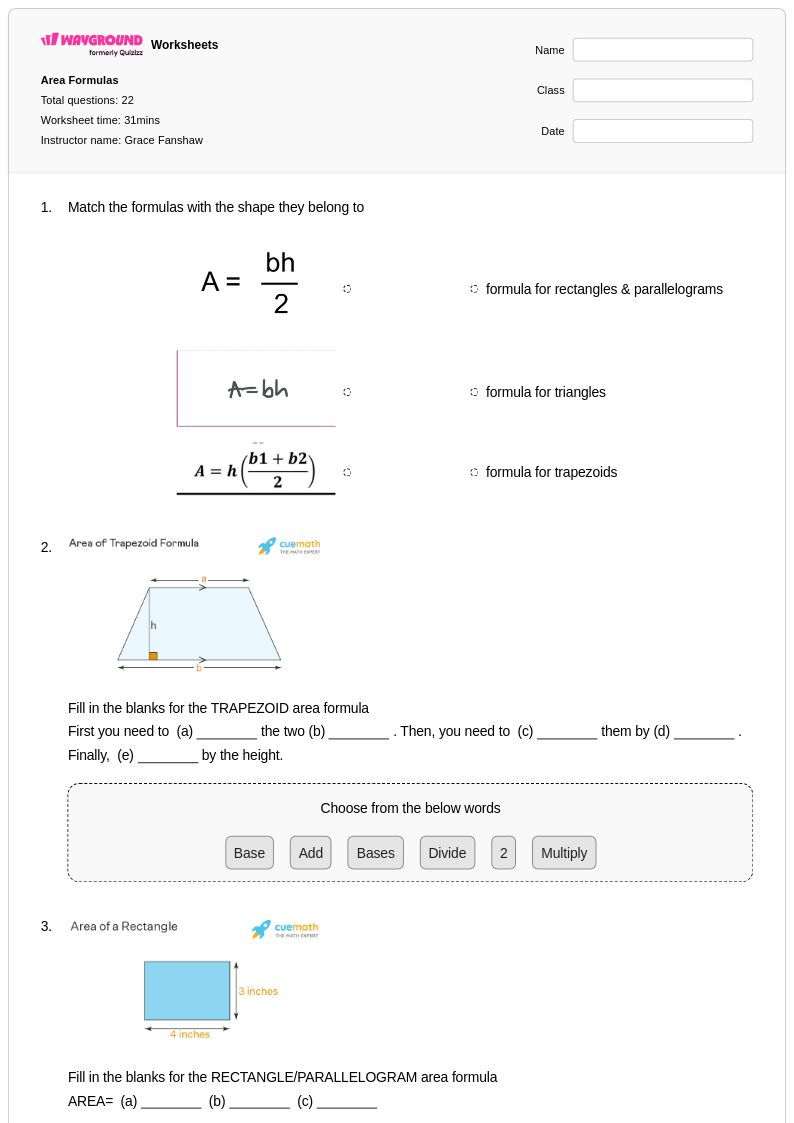
24 Q
6th - 8th
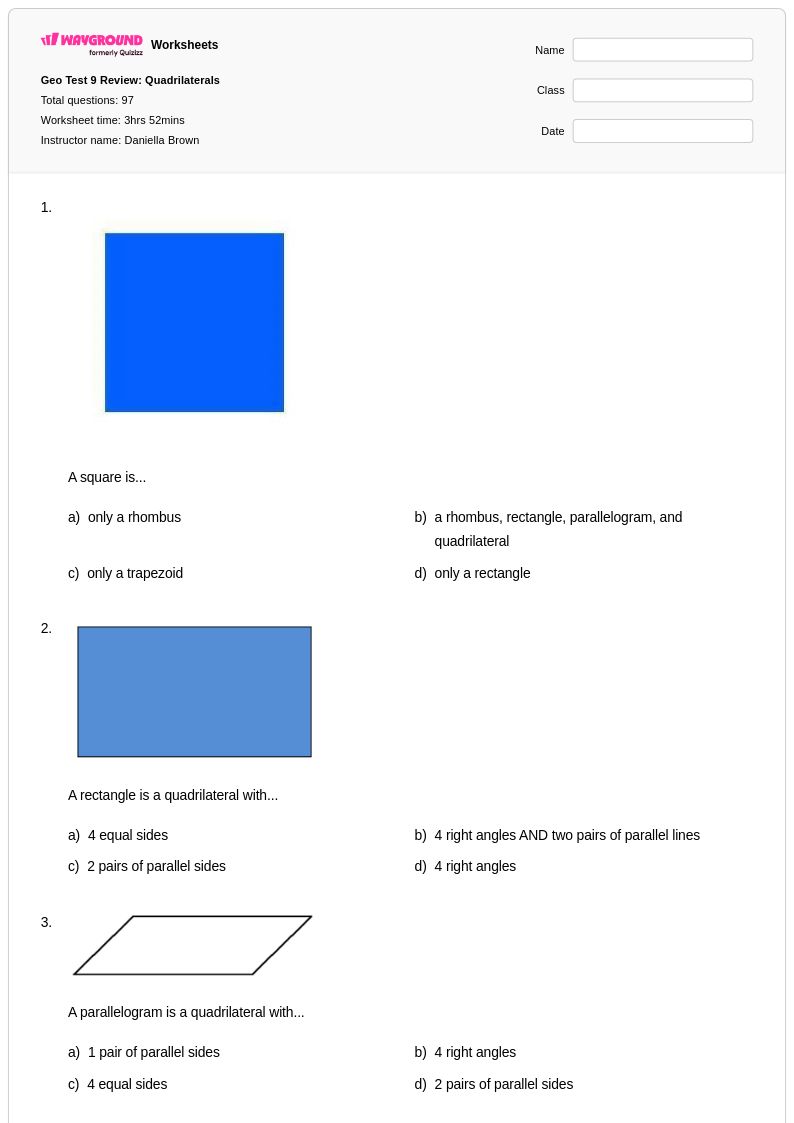
97 Q
10th
20 Q
6th
20 Q
5th

13 Q
7th
10 Q
6th
22 Q
7th
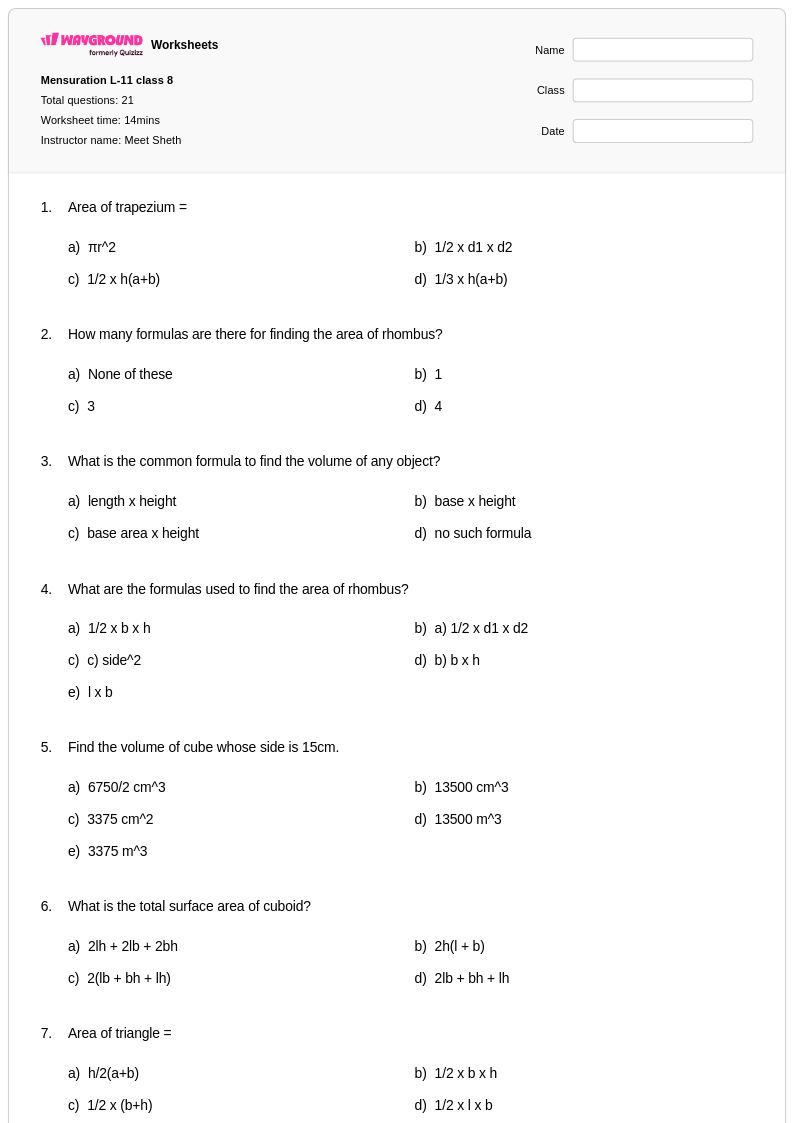
21 Q
8th
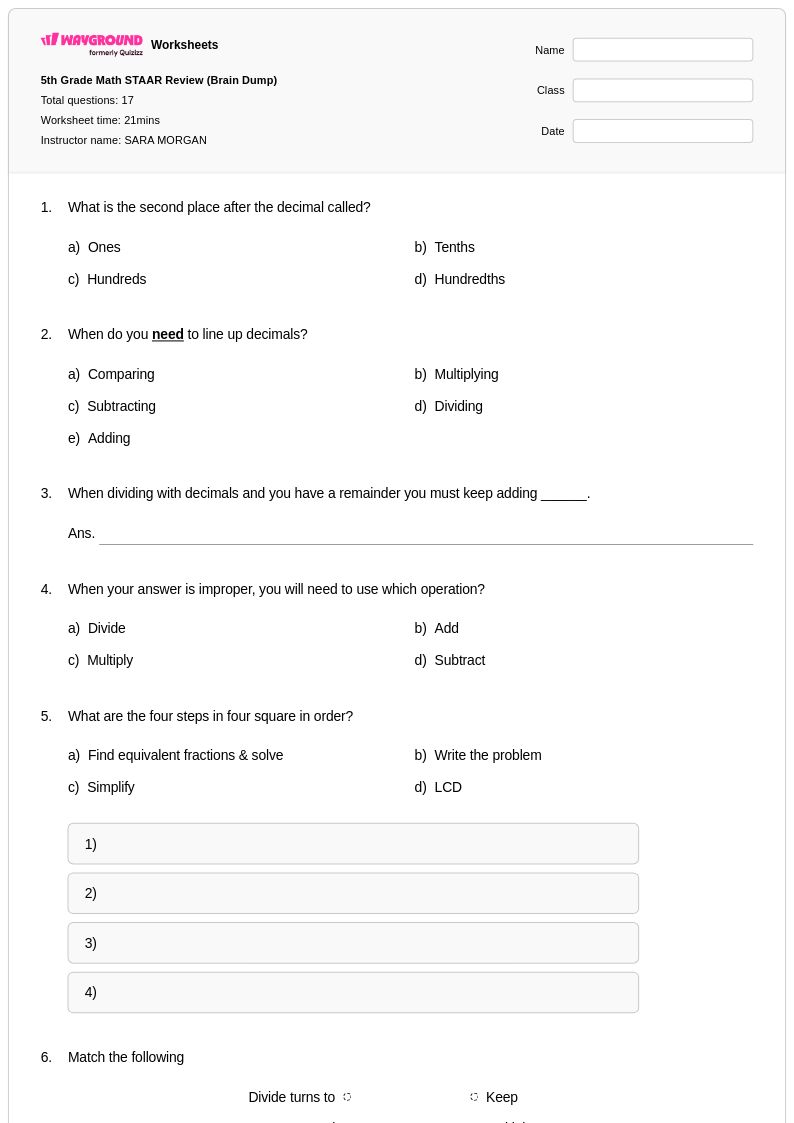
17 Q
5th
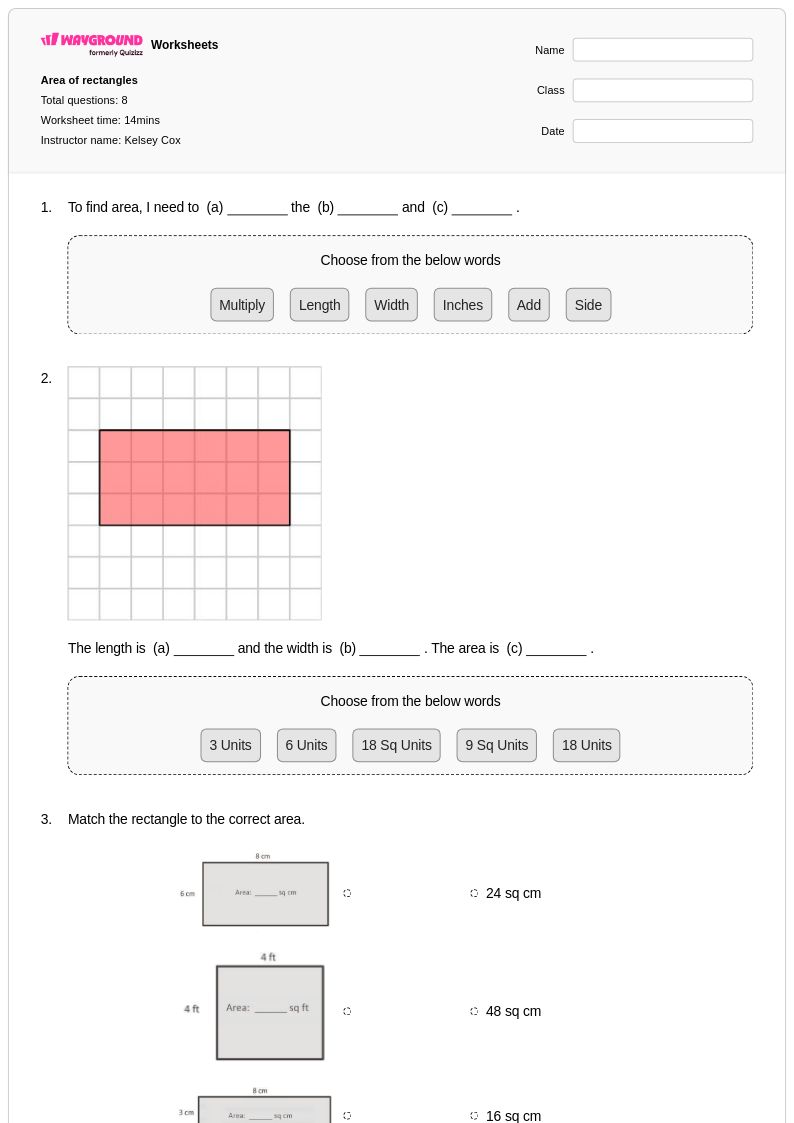
8 Q
3rd
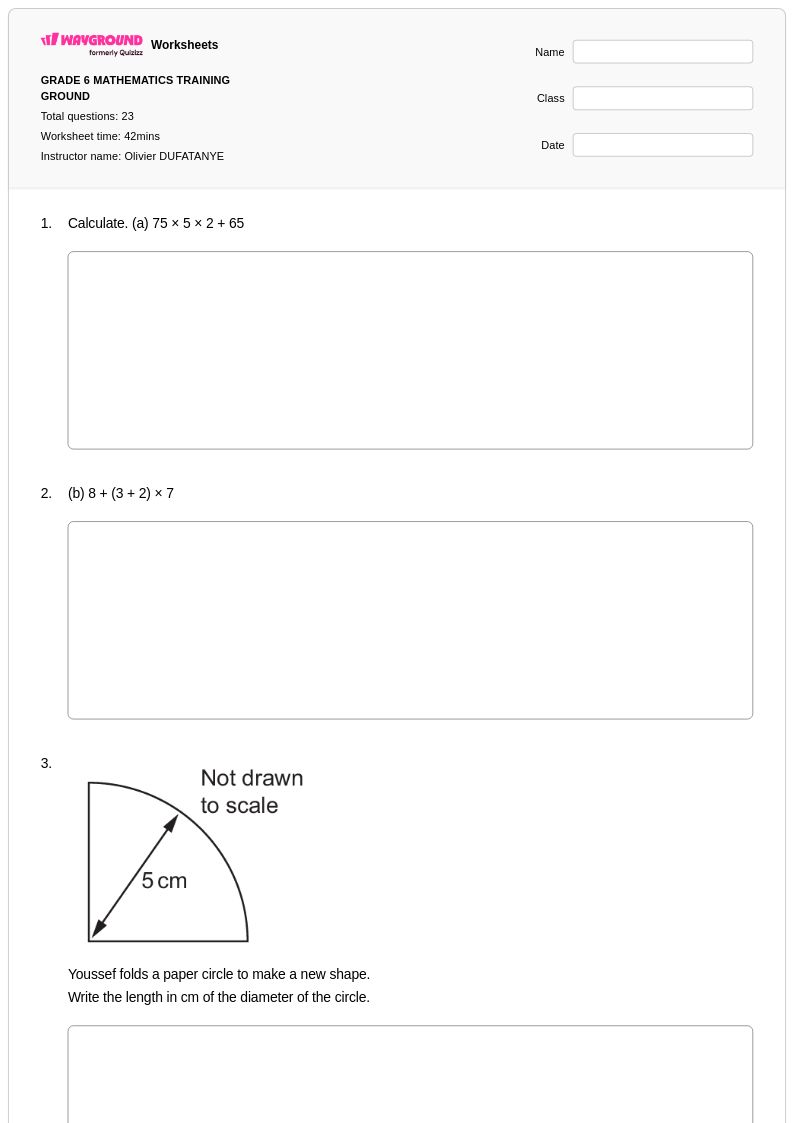
23 Q
6th - Uni
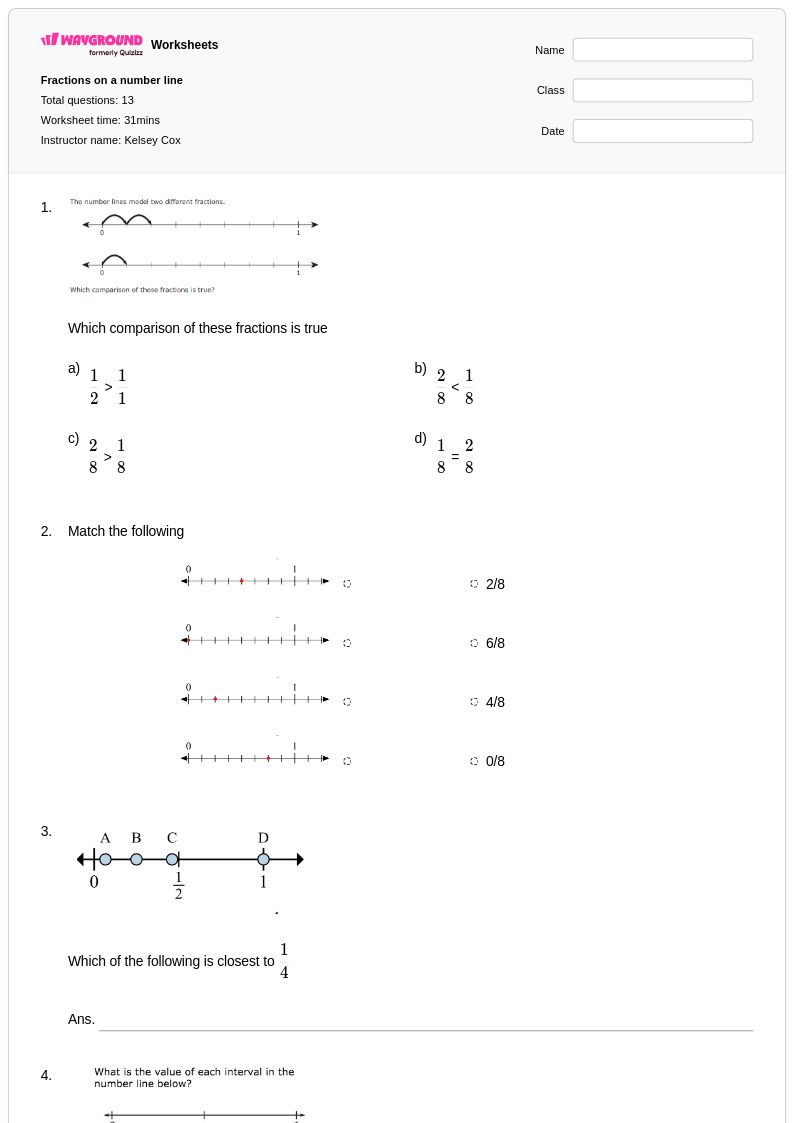
13 Q
3rd
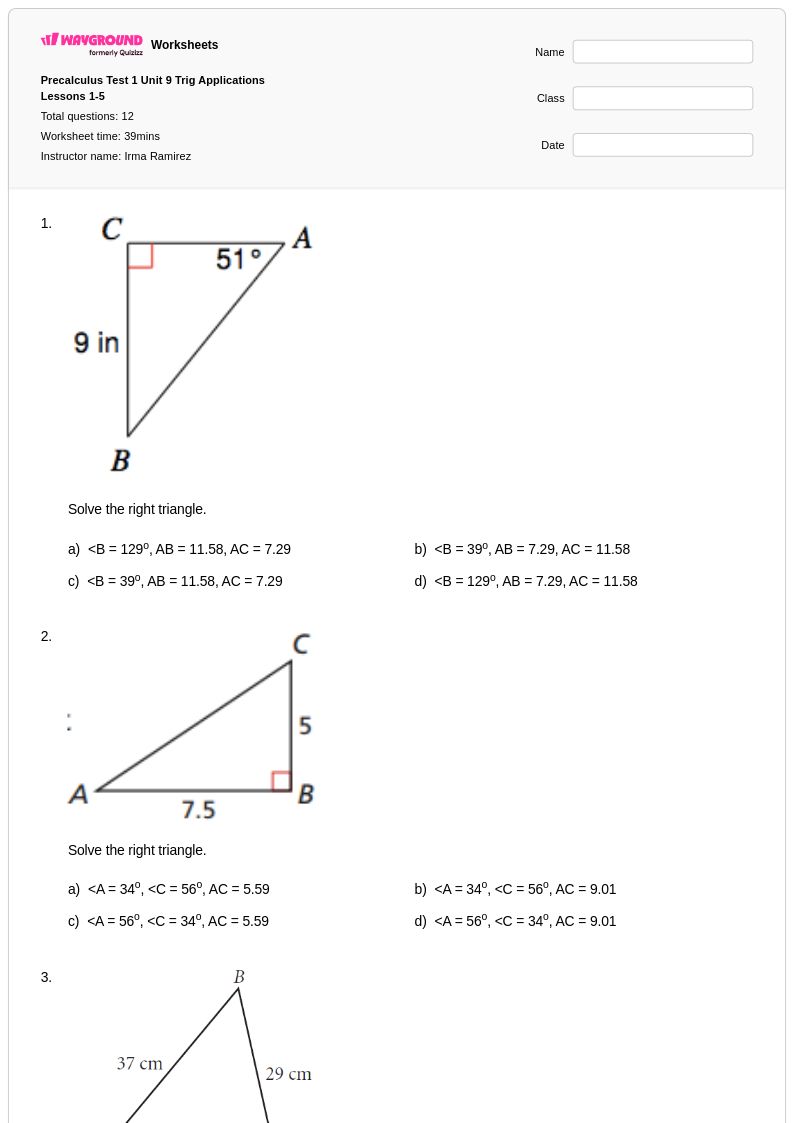
12 Q
11th
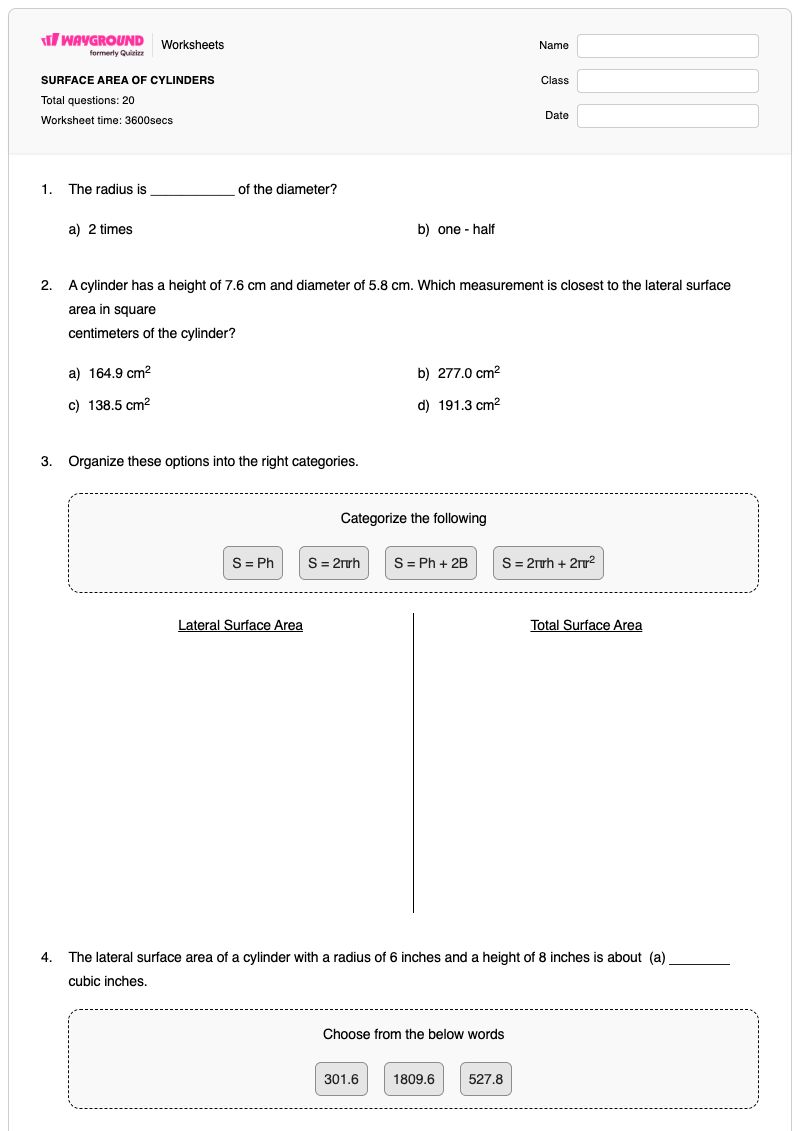
20 Q
8th
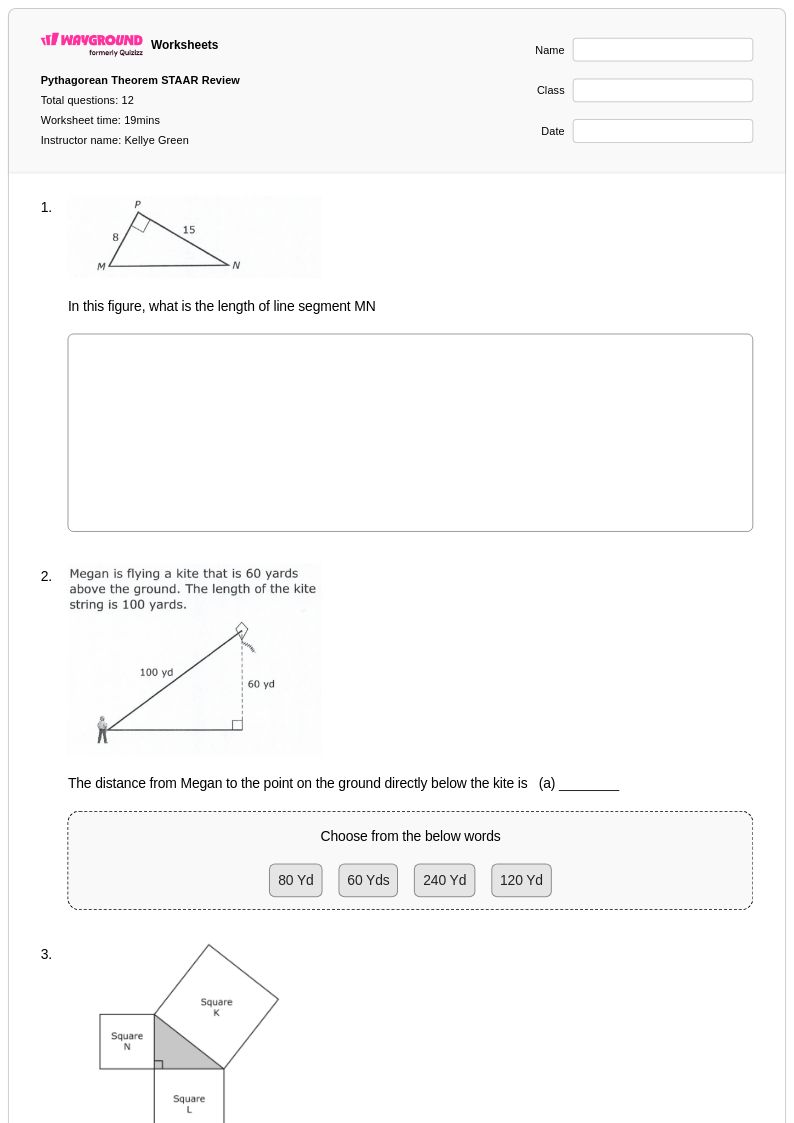
12 Q
8th
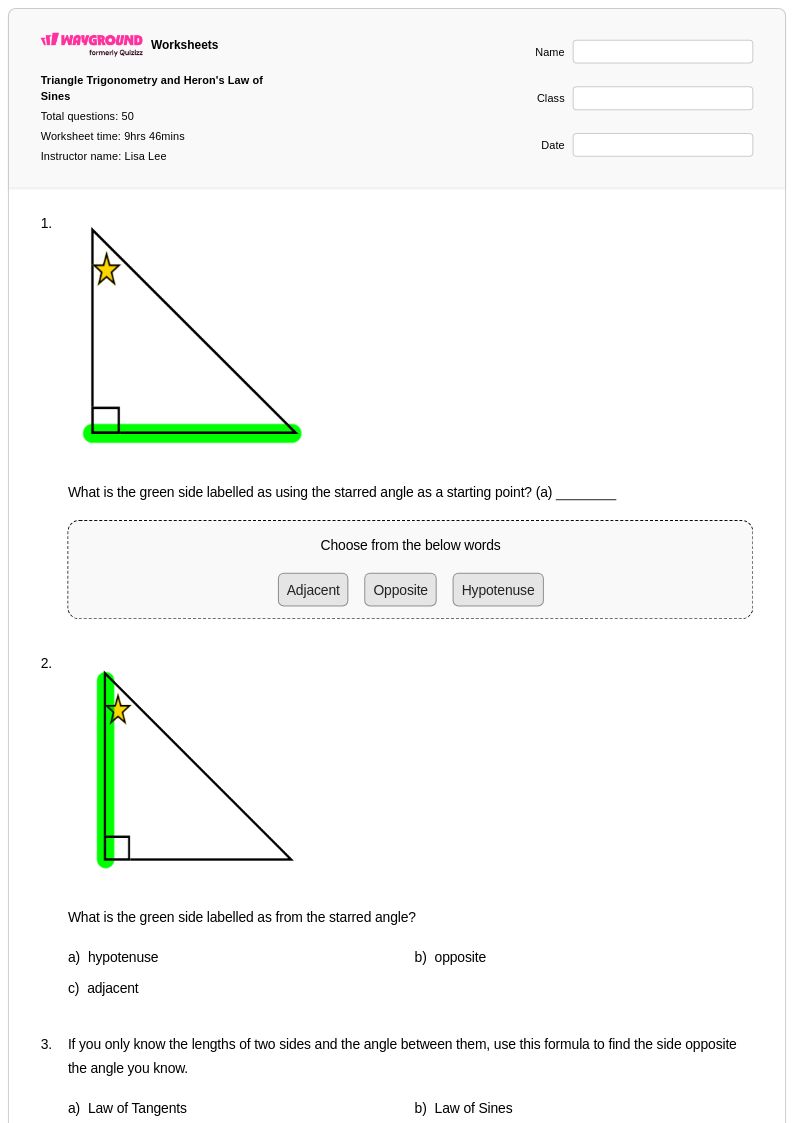
50 Q
11th - 12th
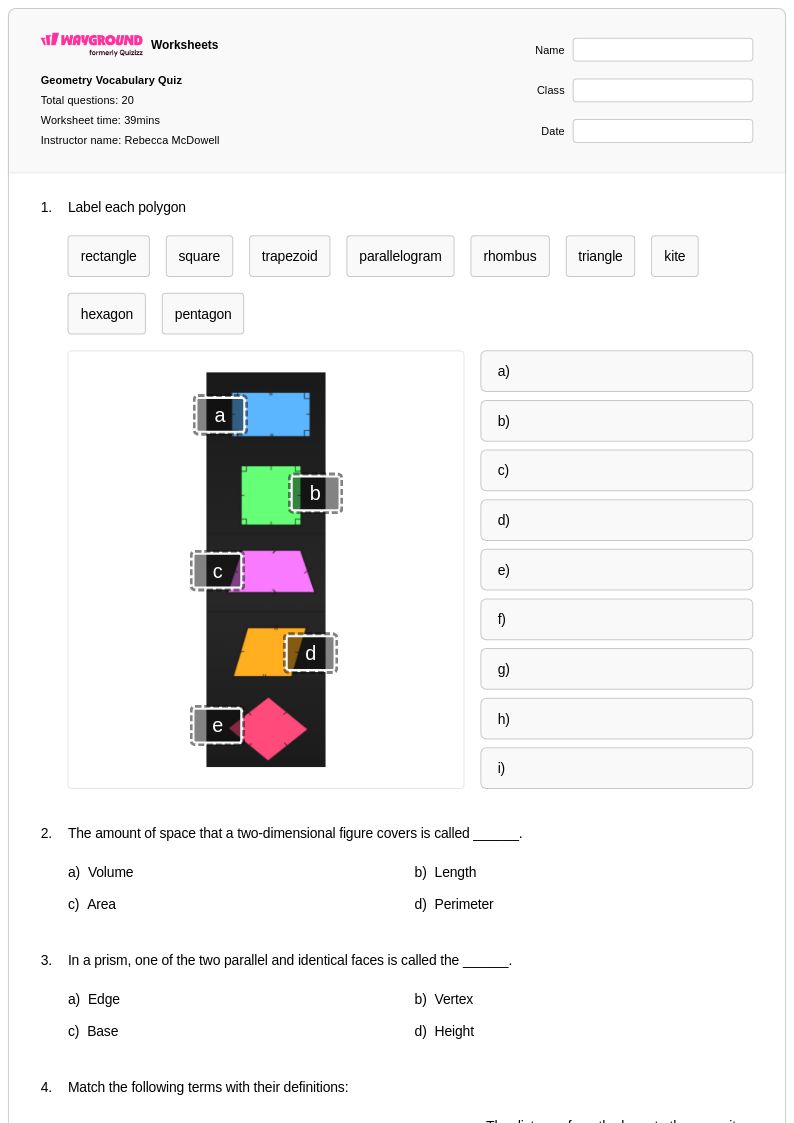
20 Q
6th - 8th
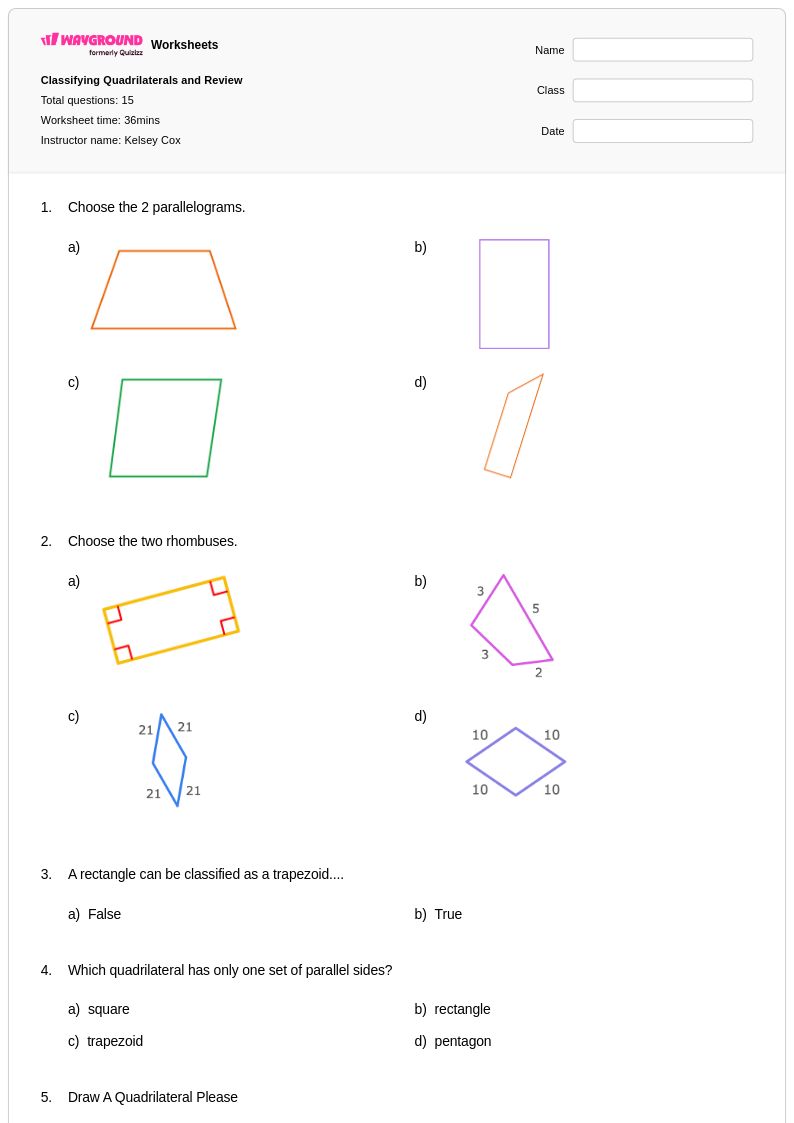
15 Q
3rd
Explore Worksheets by Subjects
Explore printable Area of a Kite worksheets
Area of a kite worksheets available through Wayground (formerly Quizizz) provide comprehensive practice opportunities for students to master this essential geometric concept. These carefully designed resources help students develop proficiency in applying the formula A = (d₁ × d₂) ÷ 2, where d₁ and d₂ represent the lengths of the kite's diagonals. The worksheets strengthen critical mathematical skills including formula application, measurement interpretation, and problem-solving techniques through varied practice problems that range from basic calculations to more complex word problems involving real-world scenarios. Each worksheet comes with a complete answer key, making them ideal for independent study, homework assignments, or classroom assessments, while the free printable pdf format ensures accessibility for all educational settings.
Wayground (formerly Quizizz) supports mathematics educators with an extensive collection of teacher-created area of a kite worksheets, drawing from millions of high-quality resources developed by experienced educators worldwide. The platform's robust search and filtering capabilities enable teachers to quickly locate worksheets that align with specific curriculum standards and match their students' skill levels, while built-in differentiation tools allow for seamless customization to meet diverse learning needs. These resources are available in both printable pdf and interactive digital formats, providing flexibility for various instructional approaches and learning environments. Teachers can effectively utilize these worksheets for lesson planning, targeted skill remediation, advanced student enrichment, and ongoing practice reinforcement, ensuring that all students develop a solid foundation in calculating the area of kites and related geometric principles.
FAQs
How do I teach students to find the area of a kite?
What exercises help students practice calculating the area of a kite?
What mistakes do students commonly make when finding the area of a kite?
How can I use an area of a kite worksheet on Wayground?
How does finding the area of a kite fit into the Common Core math progression?
How can I differentiate area of a kite worksheets for diverse learners?