
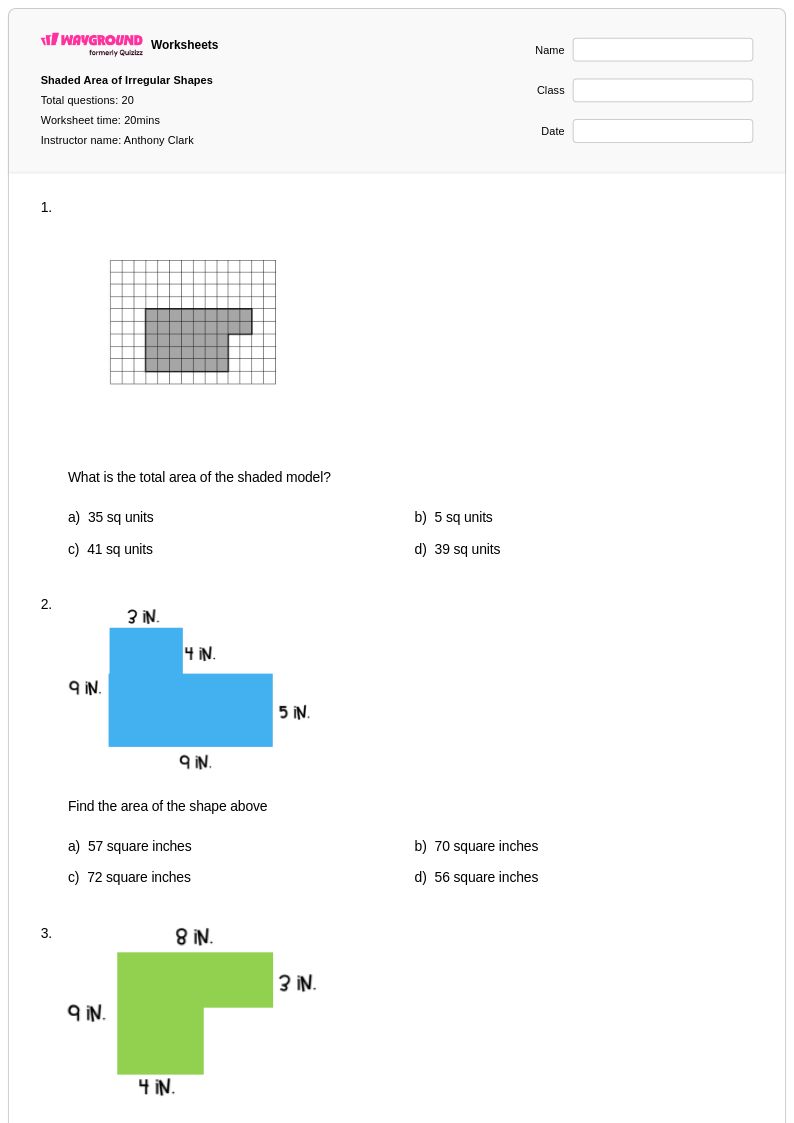
20 Q
3rd - Uni
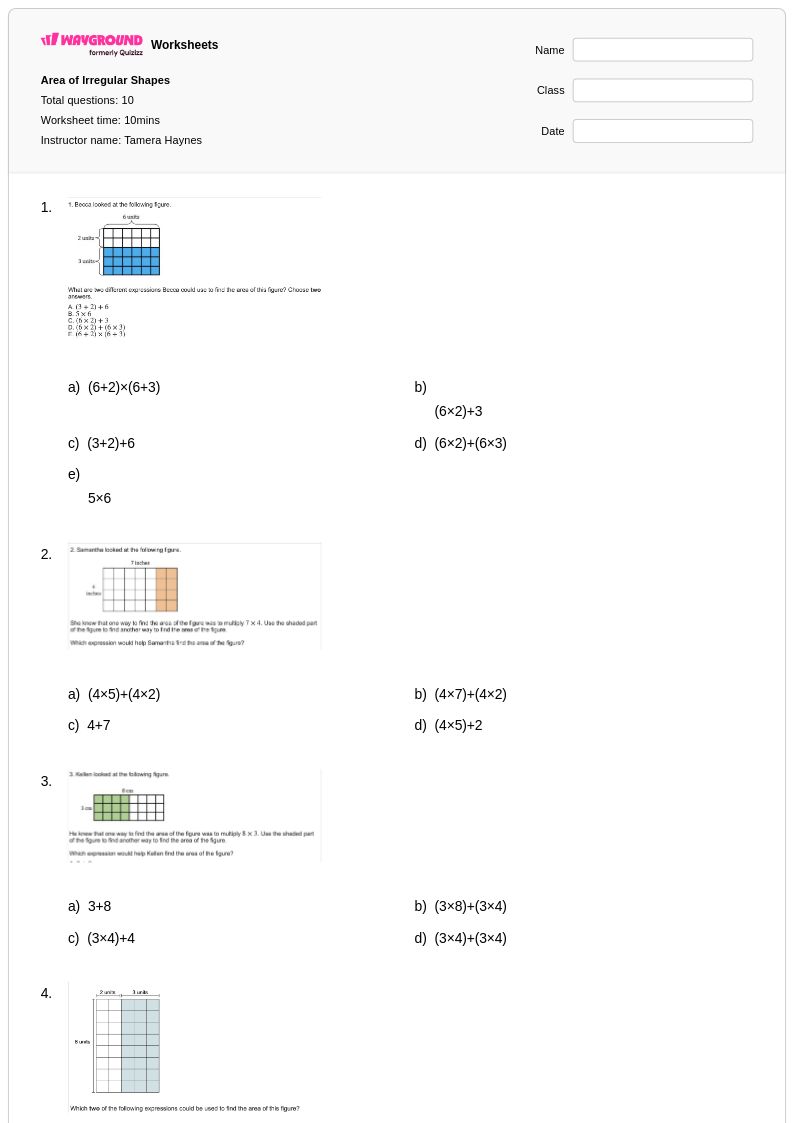
10 Q
3rd
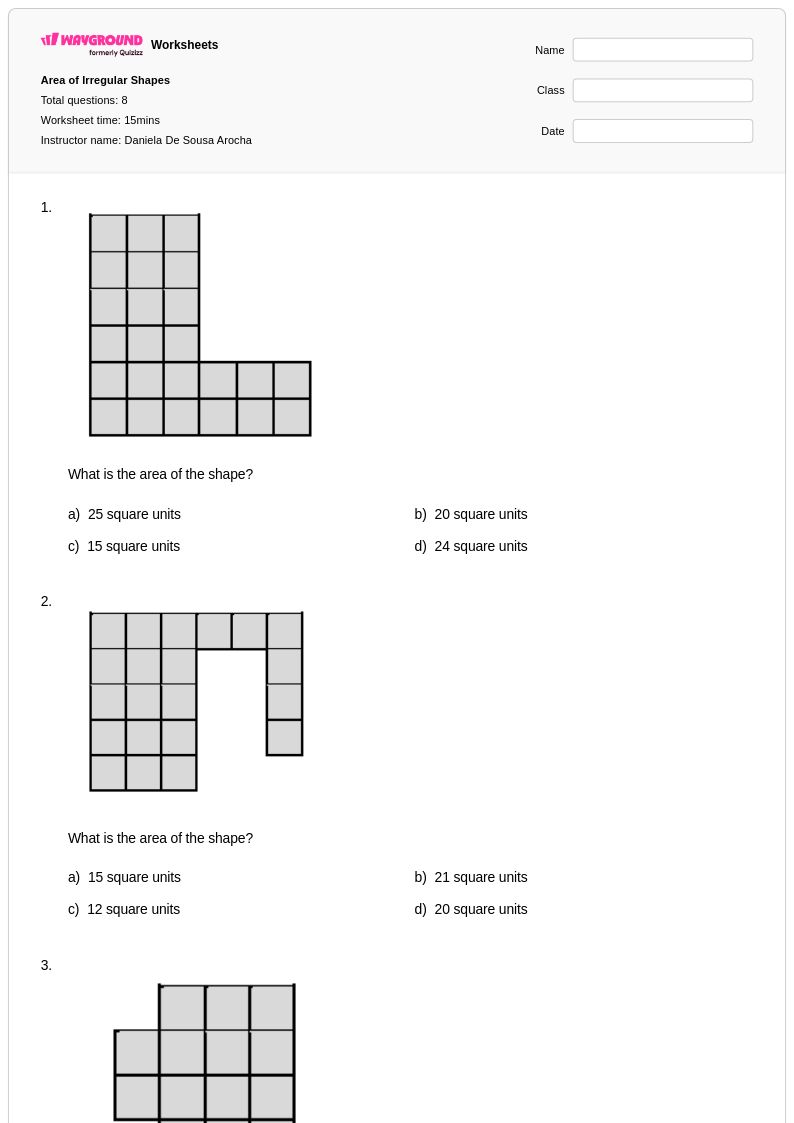
8 Q
3rd
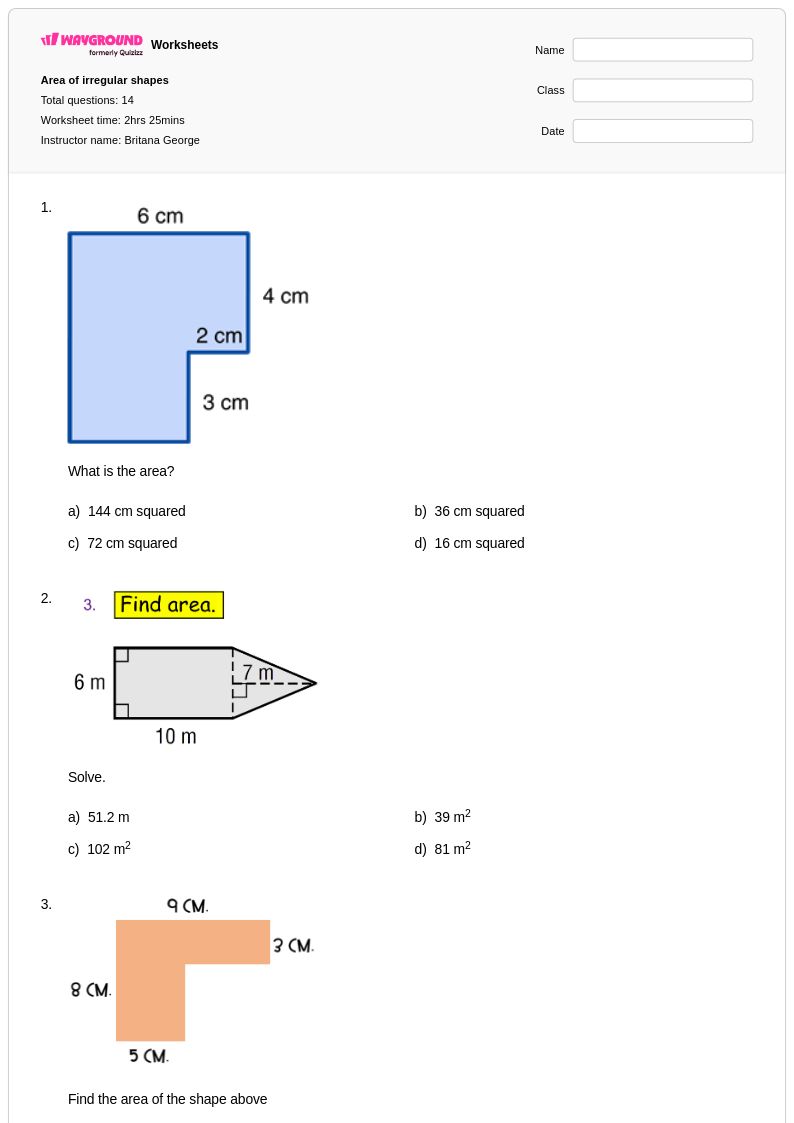
14 Q
12th
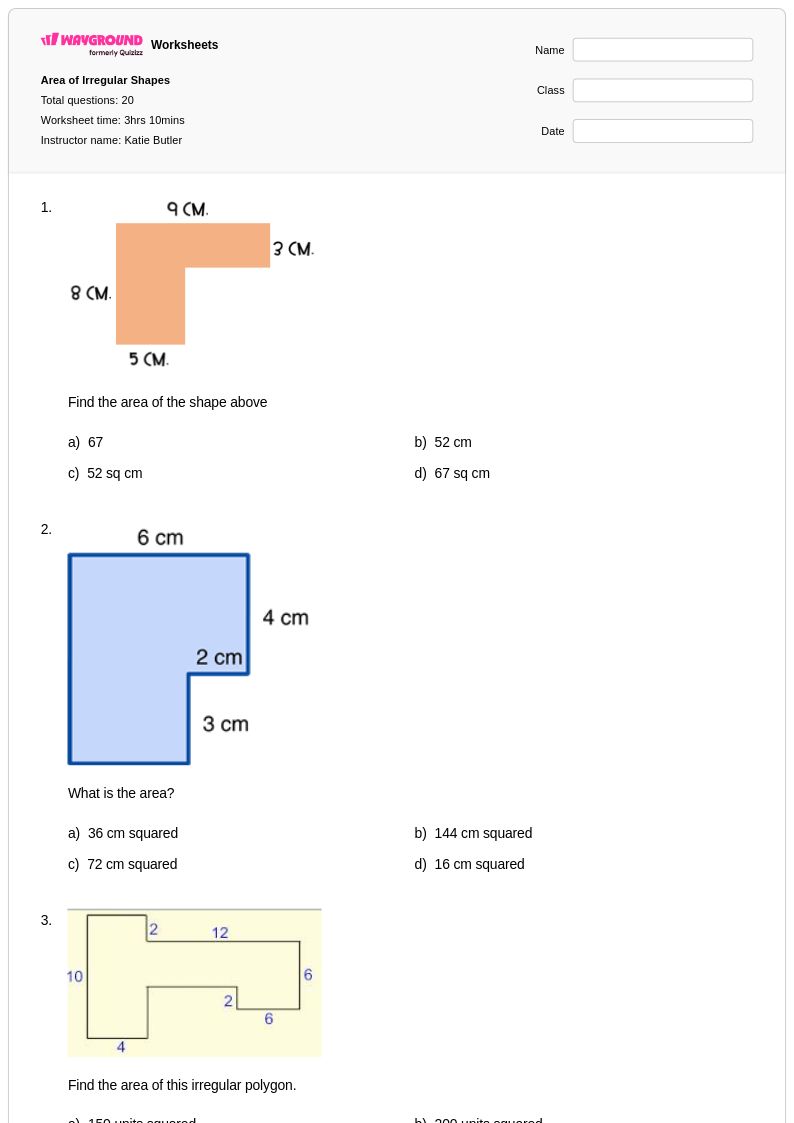
20 Q
7th
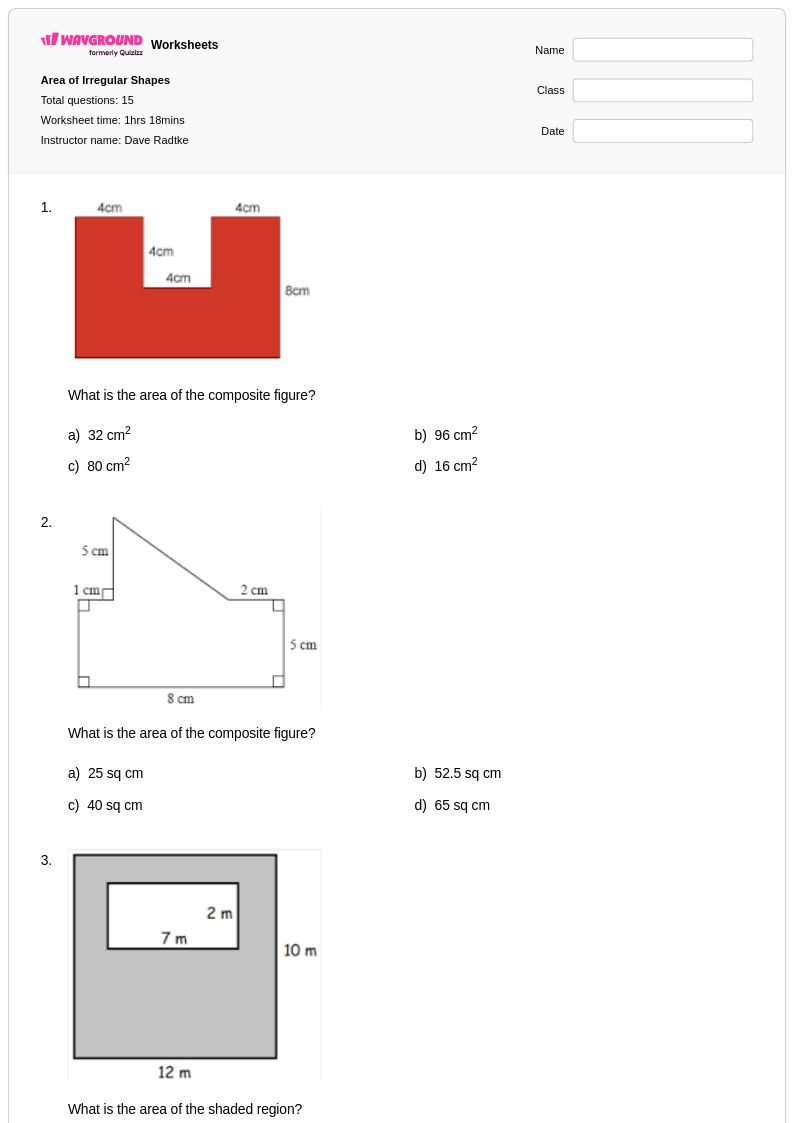
15 Q
6th
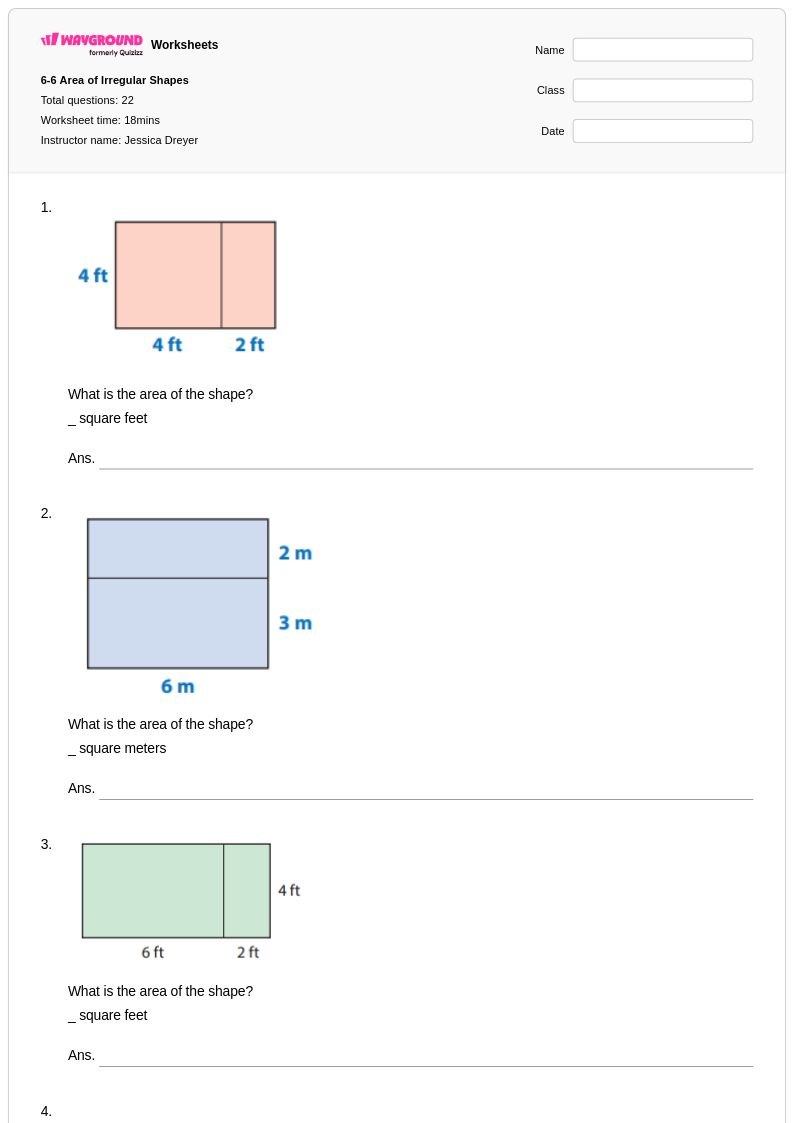
19 Q
3rd
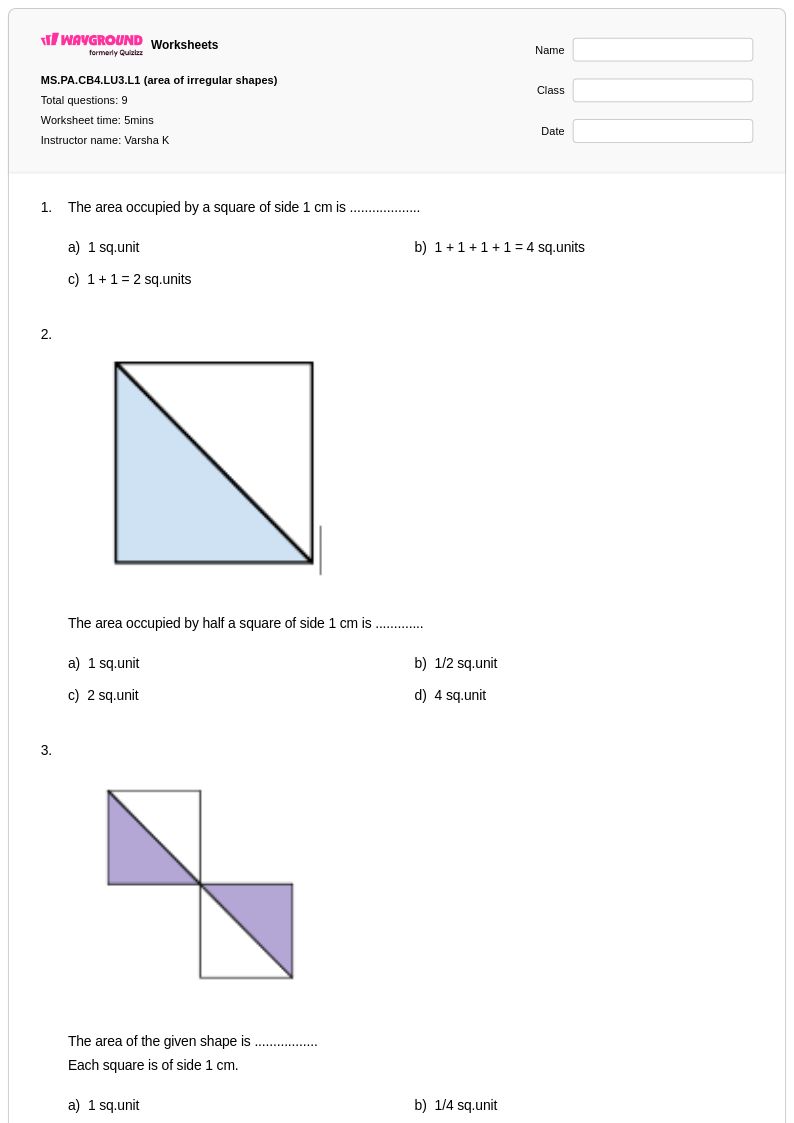
9 Q
4th
10 Q
3rd
18 Q
6th
18 Q
7th
10 Q
3rd
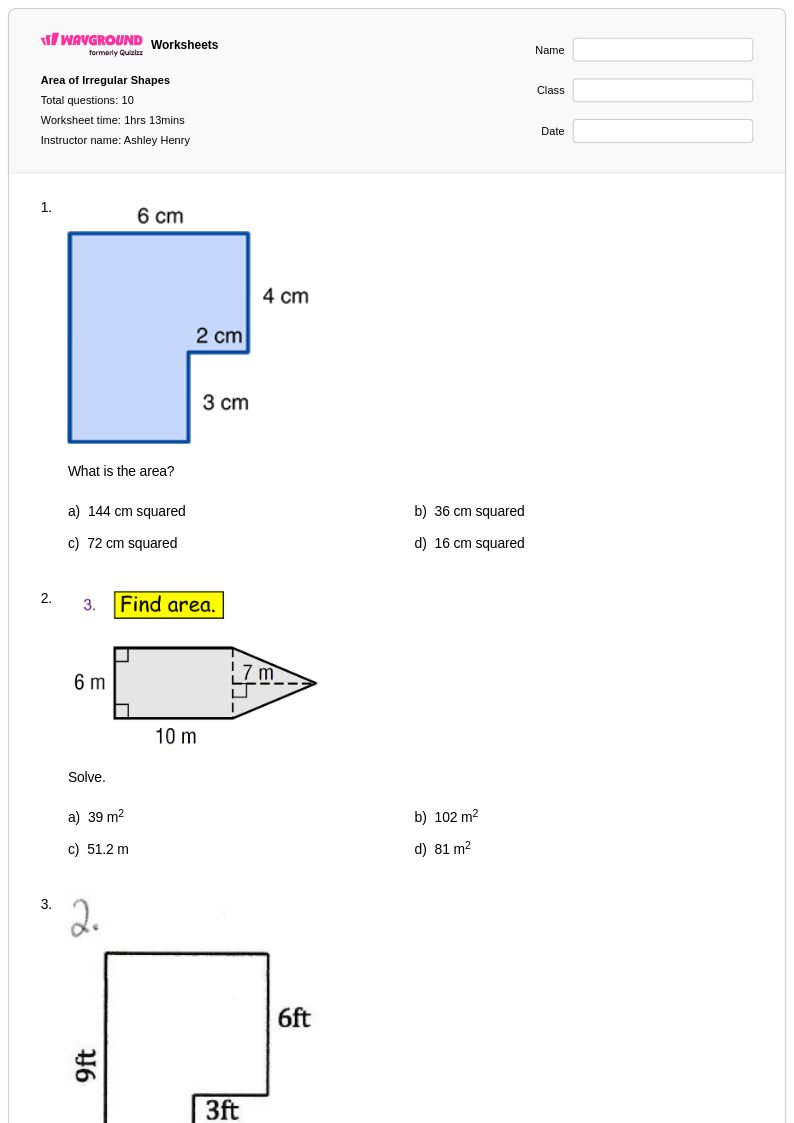
10 Q
3rd - 8th
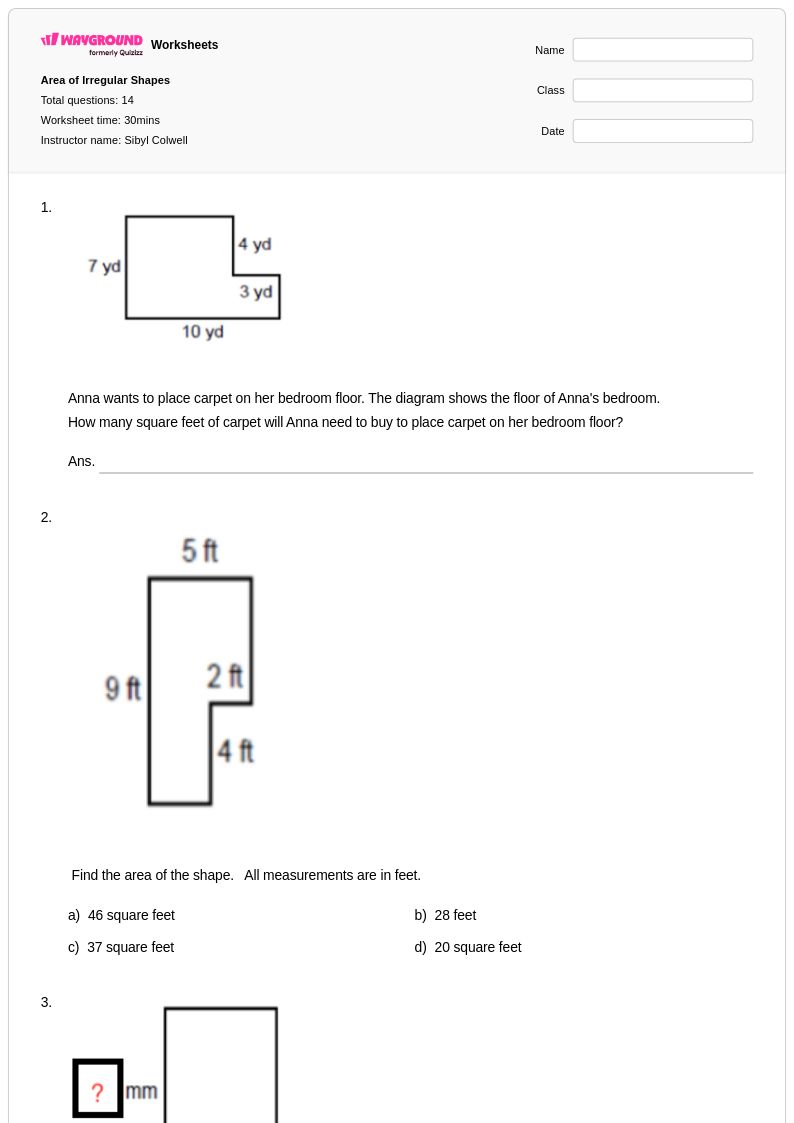
14 Q
3rd
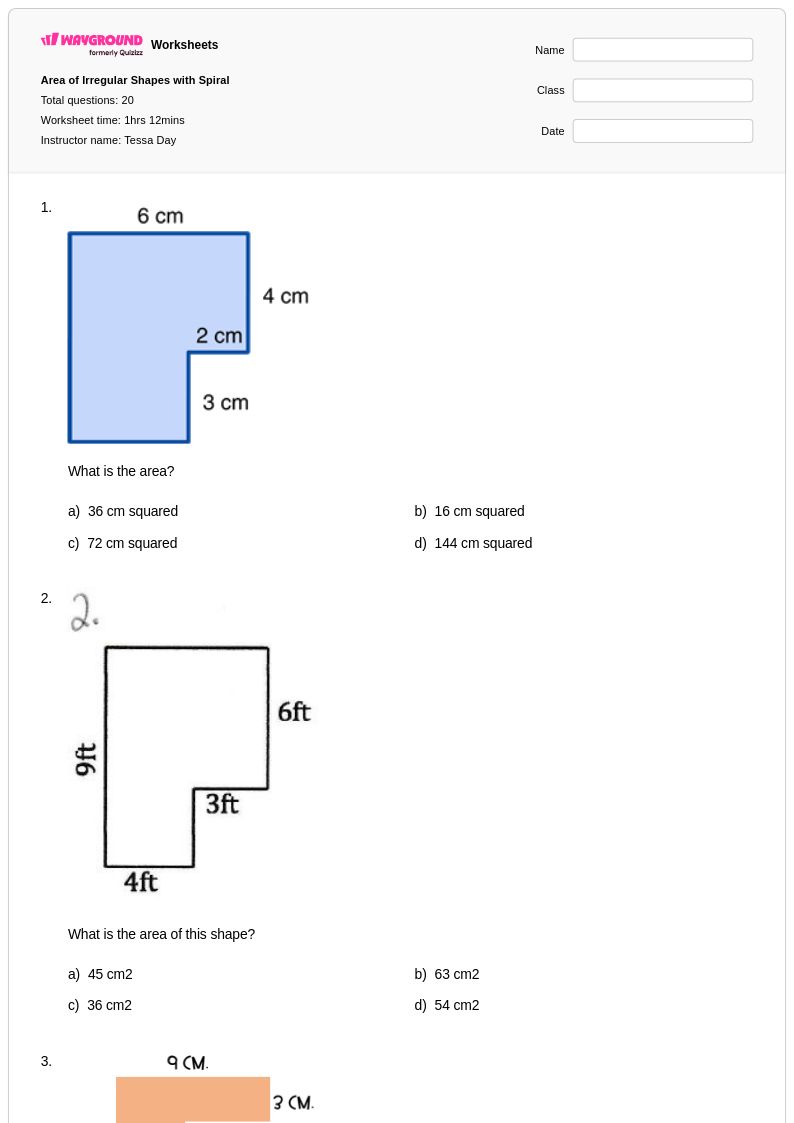
20 Q
4th
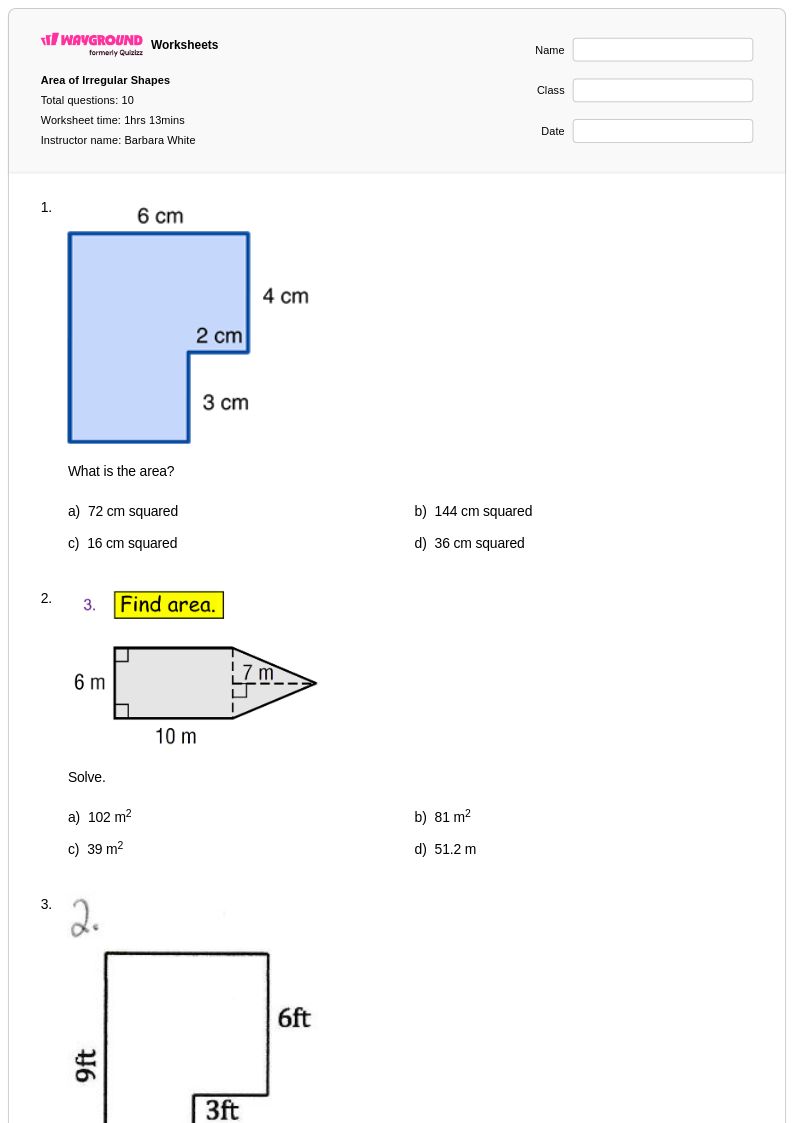
10 Q
3rd - 8th
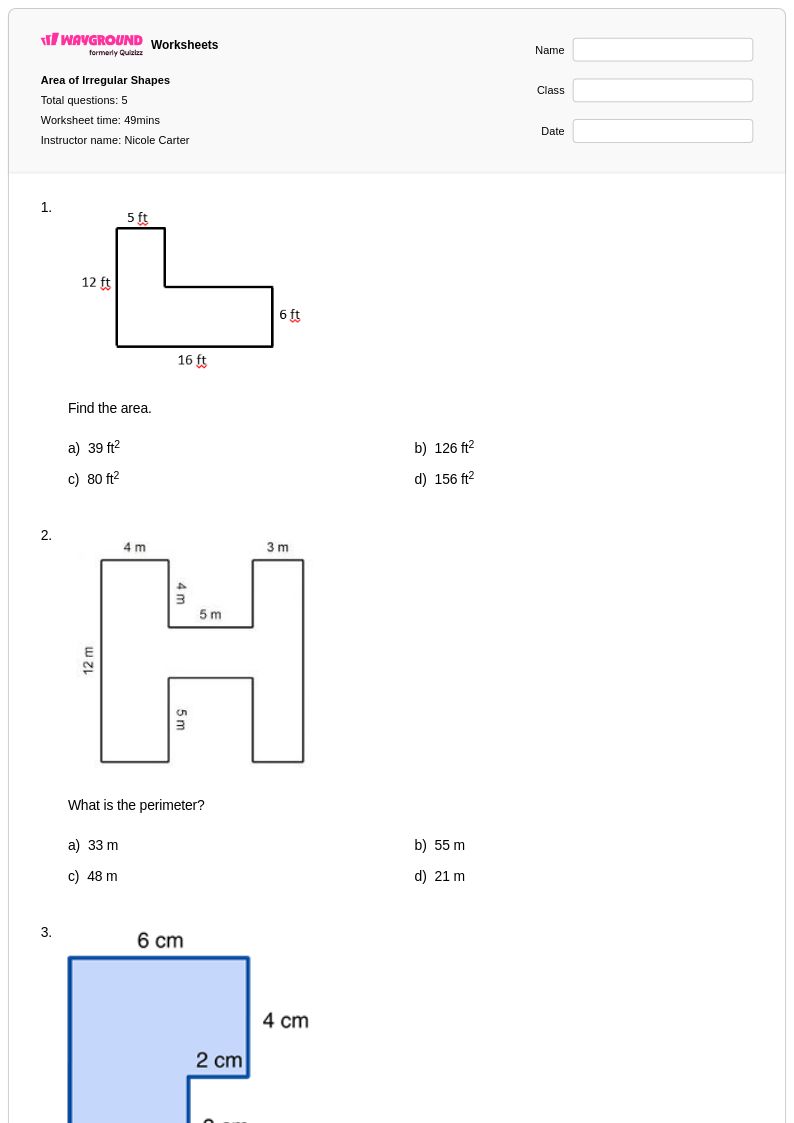
5 Q
5th
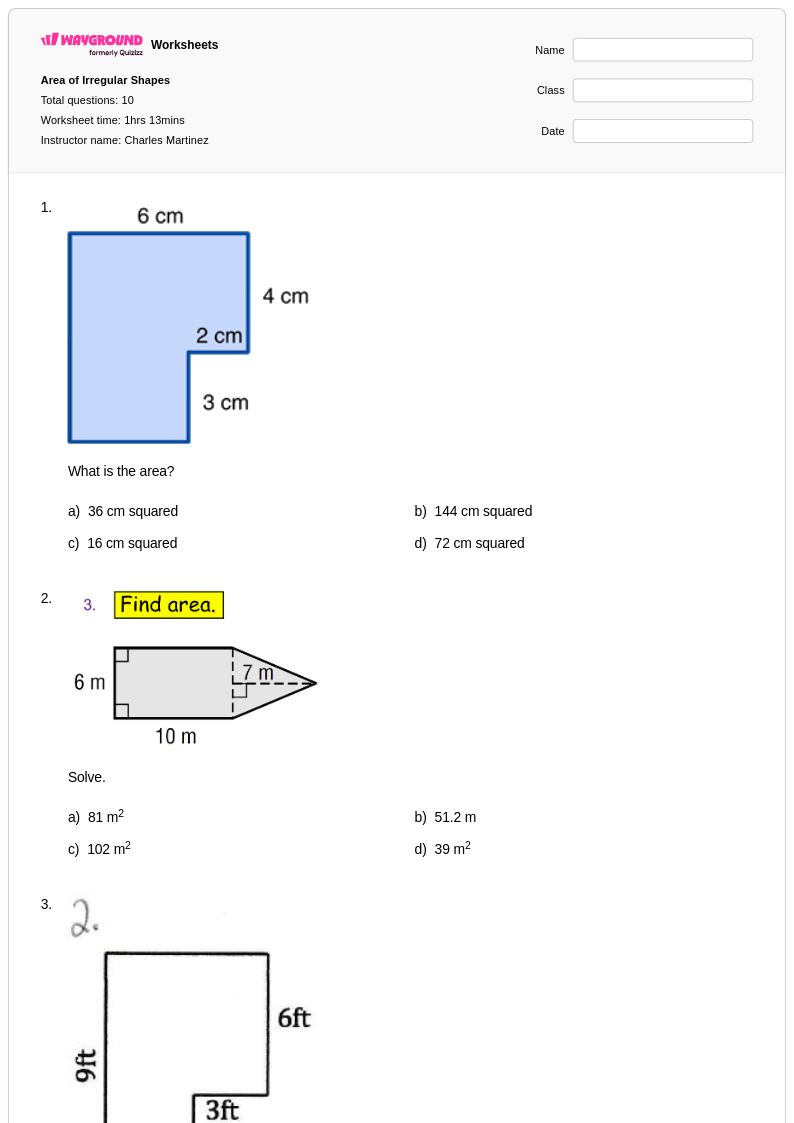
10 Q
3rd - 8th
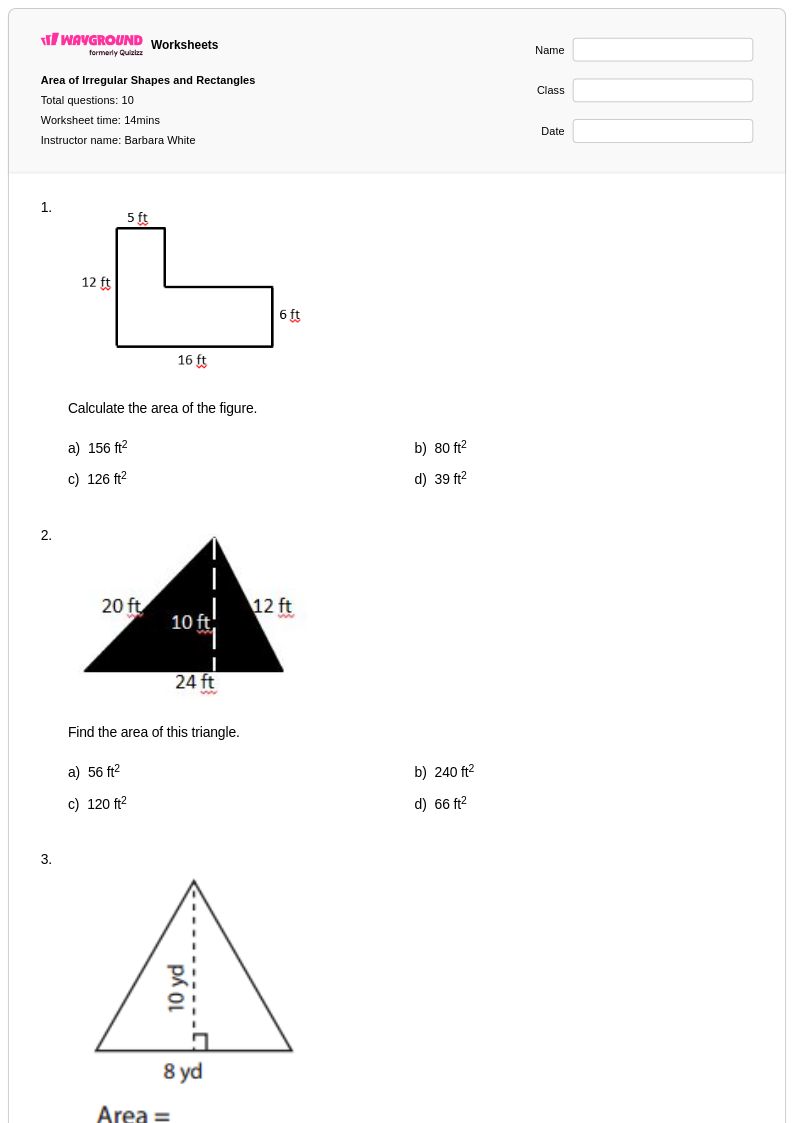
10 Q
6th
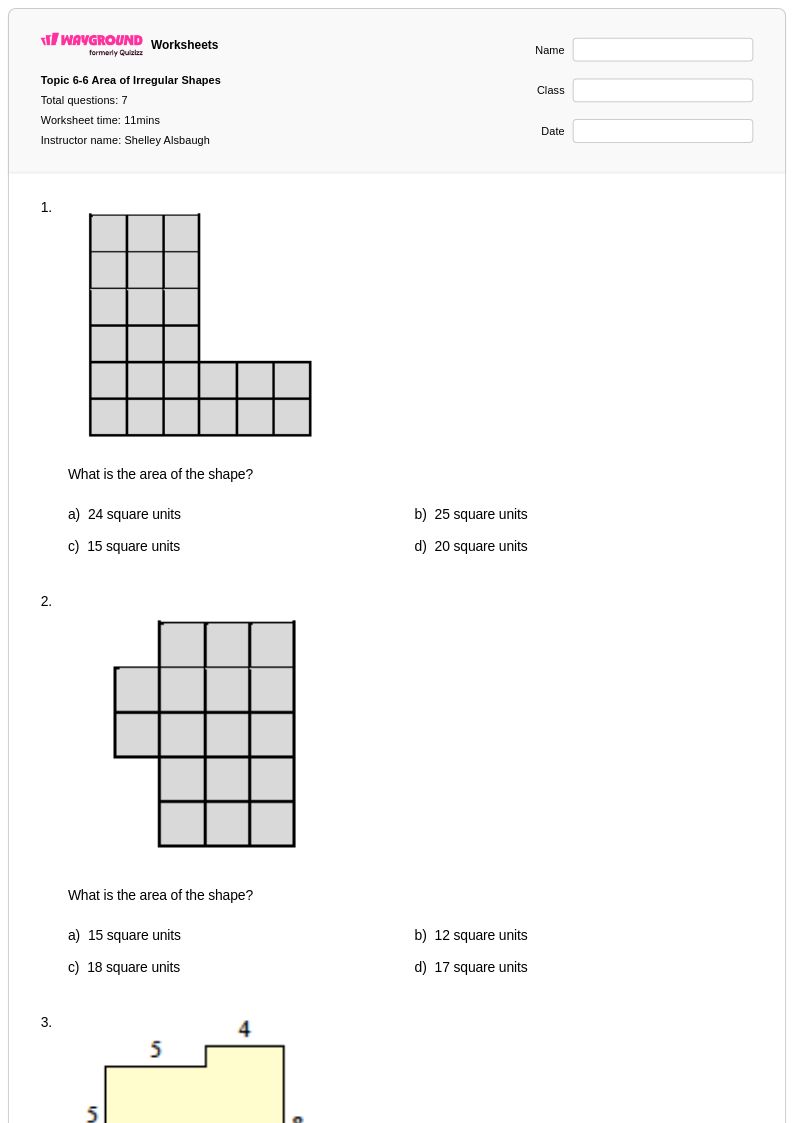
7 Q
3rd
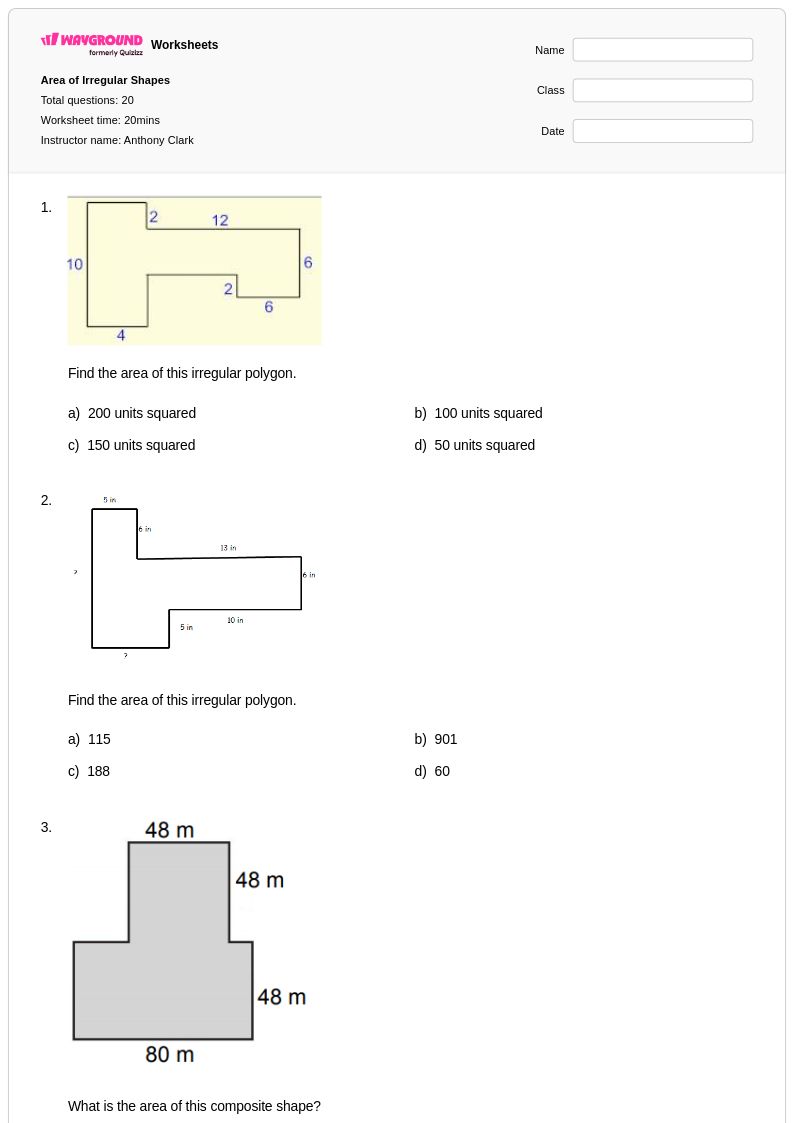
20 Q
7th - Uni
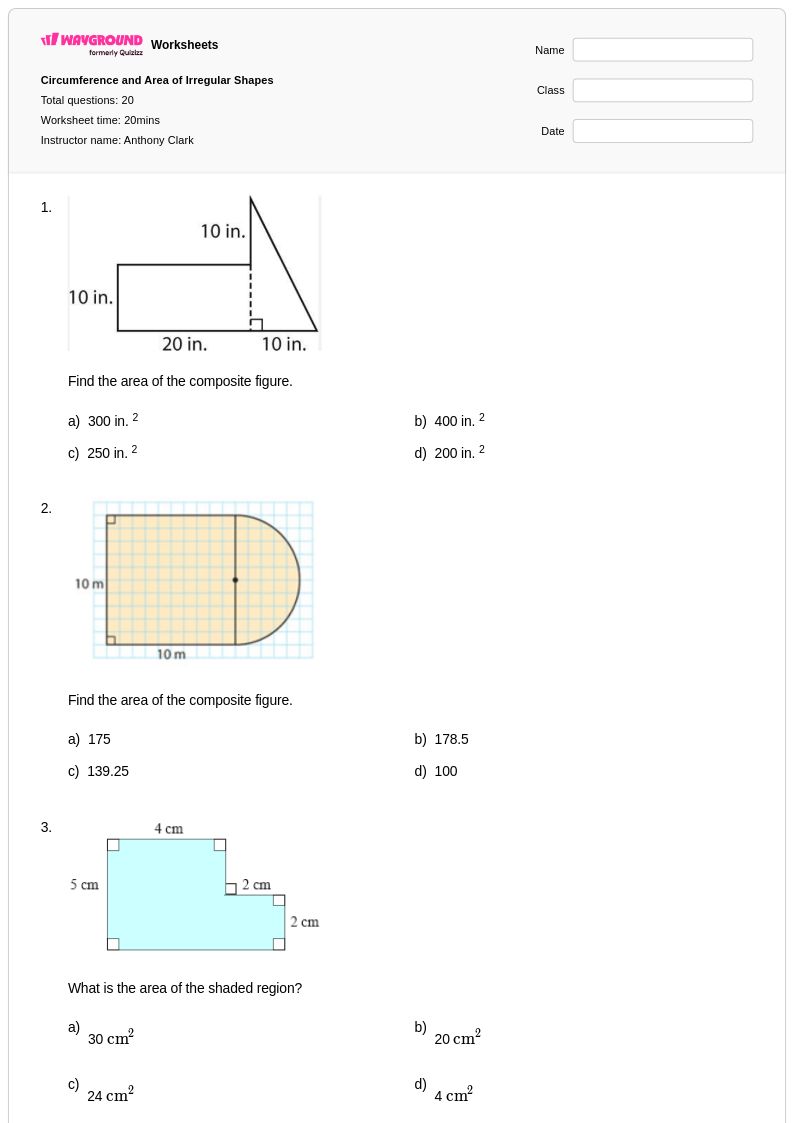
20 Q
7th - Uni
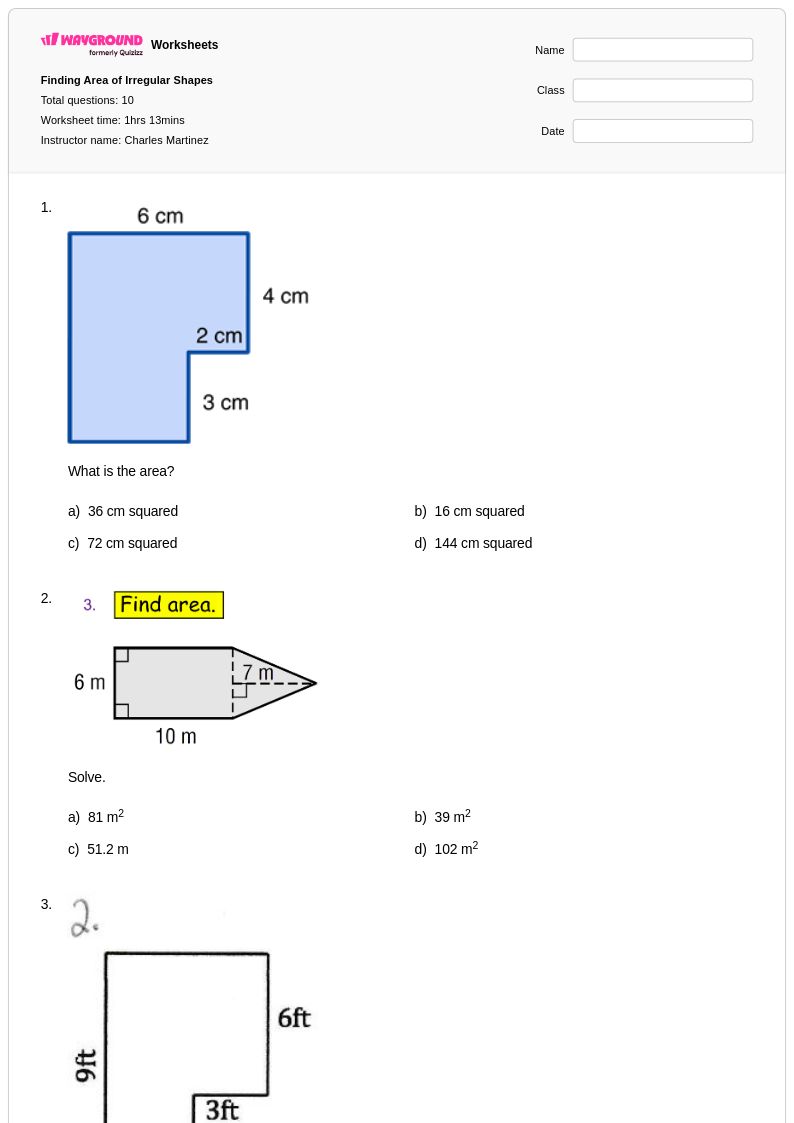
10 Q
3rd - 8th
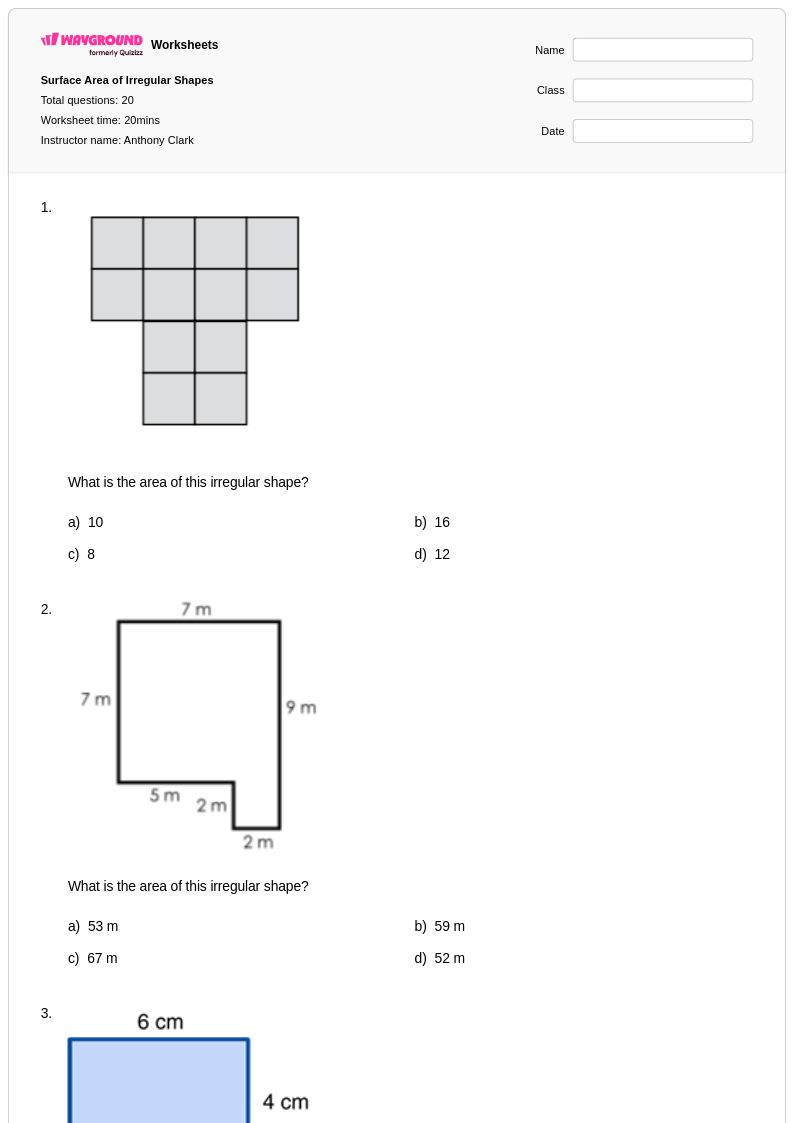
20 Q
6th - Uni
Explore Worksheets by Subjects
Explore printable Area of Irregular Shapes worksheets
Area of irregular shapes worksheets available through Wayground (formerly Quizizz) provide students with comprehensive practice in calculating the area of complex geometric figures that cannot be solved using simple formulas. These educational resources strengthen critical mathematical skills including decomposition strategies, where students break down irregular shapes into familiar rectangles, triangles, and other basic polygons, as well as subtraction methods for finding areas of shapes with cutouts or holes. The worksheet collections feature systematically designed practice problems that progress from simple composite shapes to more challenging irregular figures, complete with detailed answer keys that allow students to verify their solutions and understand problem-solving approaches. These free printables and pdf resources help students develop spatial reasoning abilities and reinforce fundamental area concepts through hands-on calculation practice.
Wayground (formerly Quizizz) supports mathematics educators with an extensive library of millions of teacher-created resources specifically designed for area of irregular shapes instruction, offering robust search and filtering capabilities that allow teachers to quickly locate worksheets matching their specific classroom needs and standards alignment requirements. The platform's differentiation tools enable educators to customize worksheets for various skill levels, providing both remediation support for struggling students and enrichment opportunities for advanced learners ready to tackle more complex irregular shape problems. Teachers can access these resources in both printable and digital formats, including downloadable pdfs, making lesson planning more efficient while supporting diverse instructional approaches from traditional paper-based practice to interactive digital assignments that enhance student engagement with geometric area concepts.
FAQs
How do I teach the area of irregular shapes?
What worksheet activities help students practice the area of irregular shapes?
What are common errors when calculating the area of irregular shapes?
How can I use an area of irregular shapes worksheet from Wayground?
How does area of irregular shapes connect to the Common Core math progression?
How can I differentiate area of irregular shapes practice?