
17 Q
10th
20 Q
10th - Uni
10 Q
7th
20 Q
10th
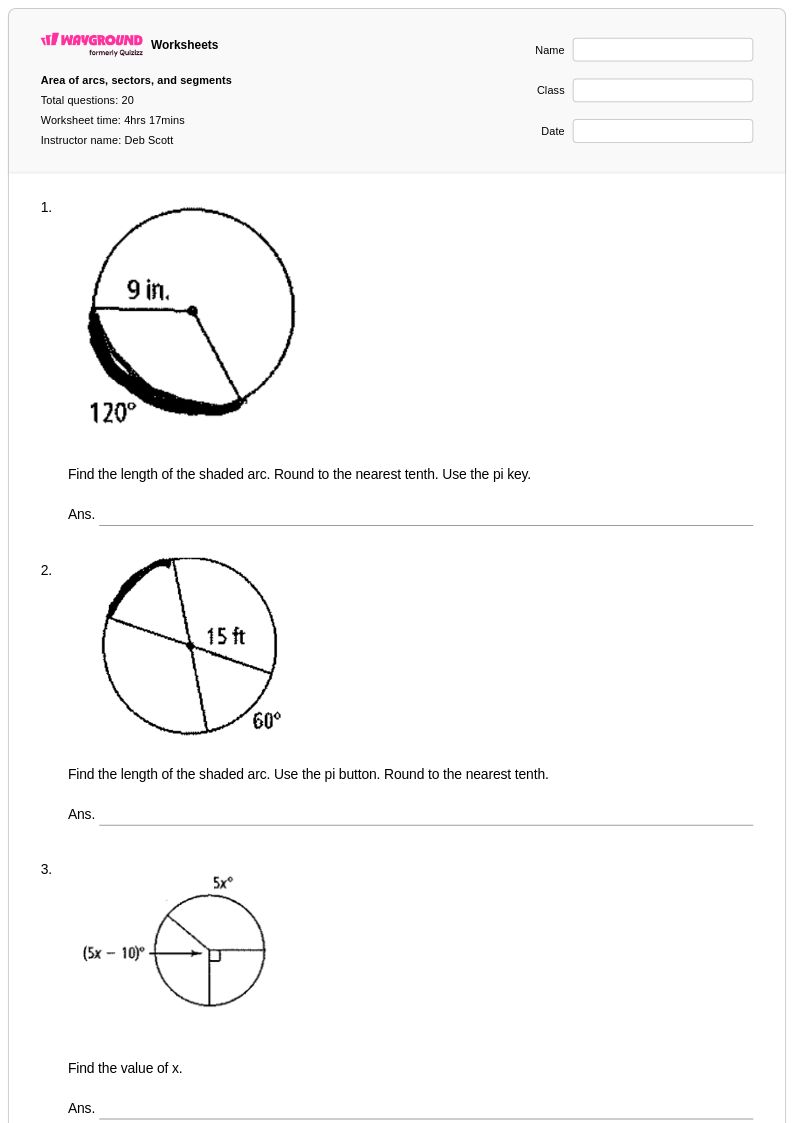
20 Q
9th - 12th
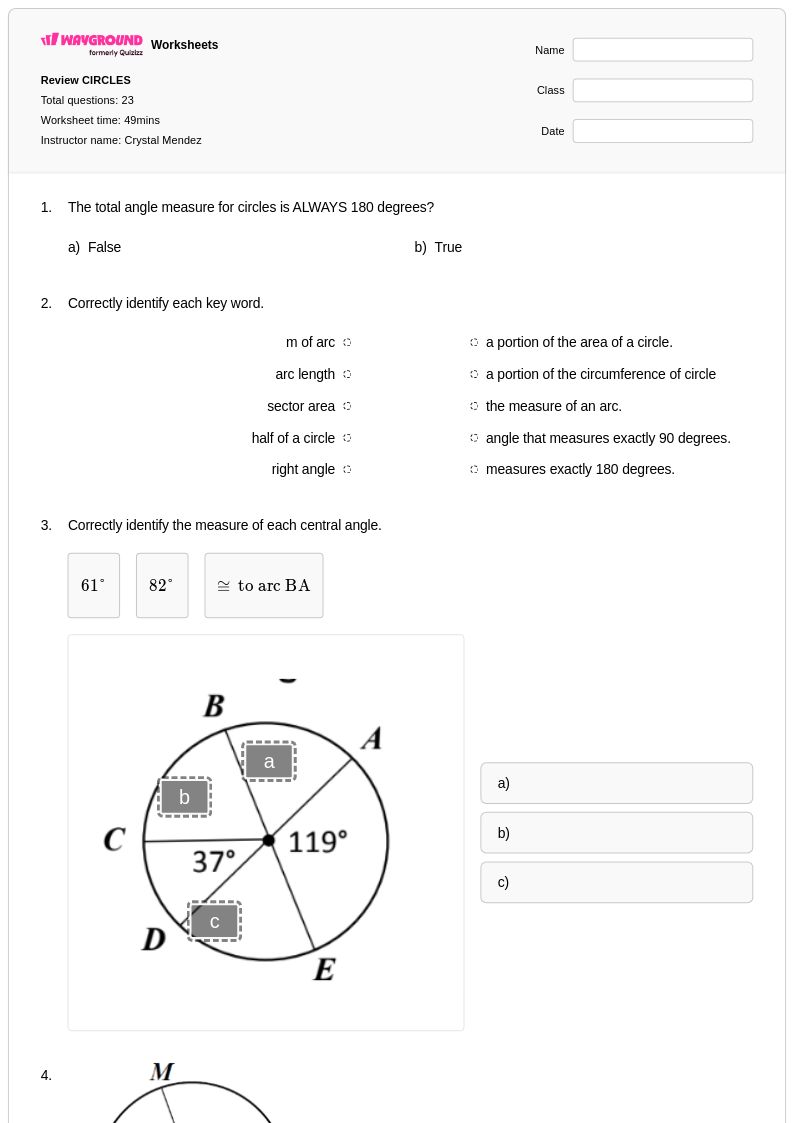
23 Q
10th
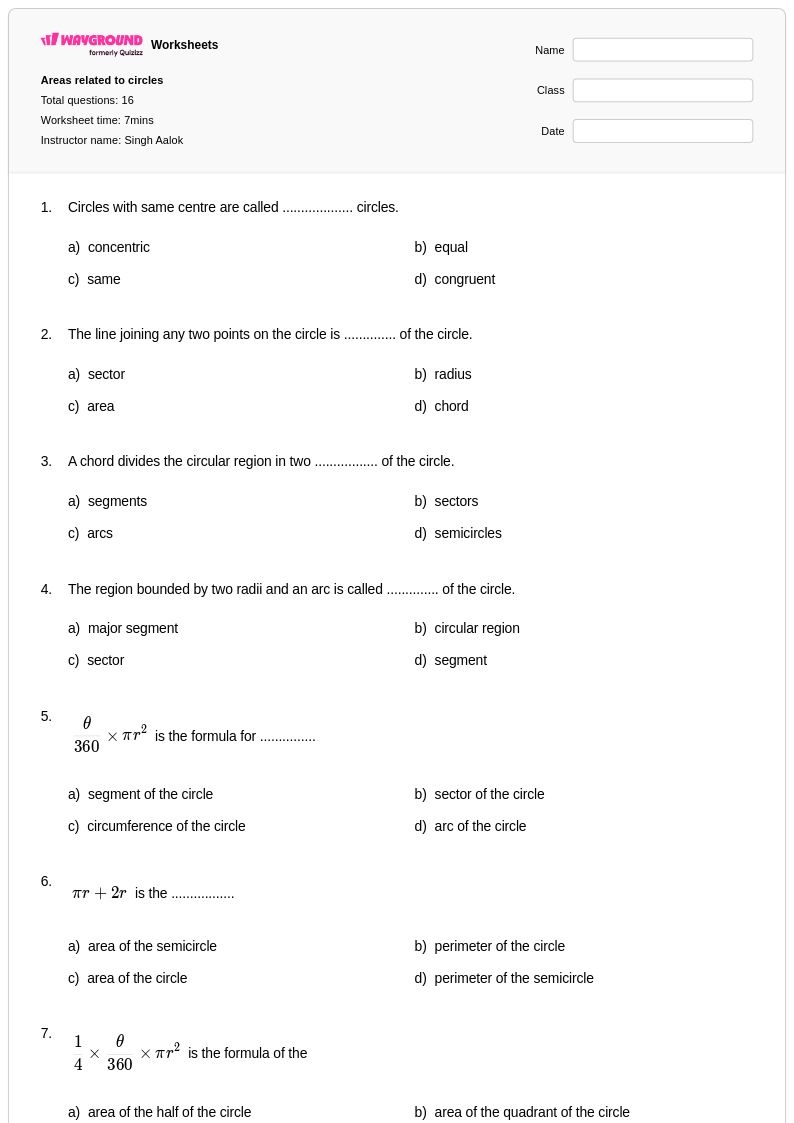
16 Q
10th
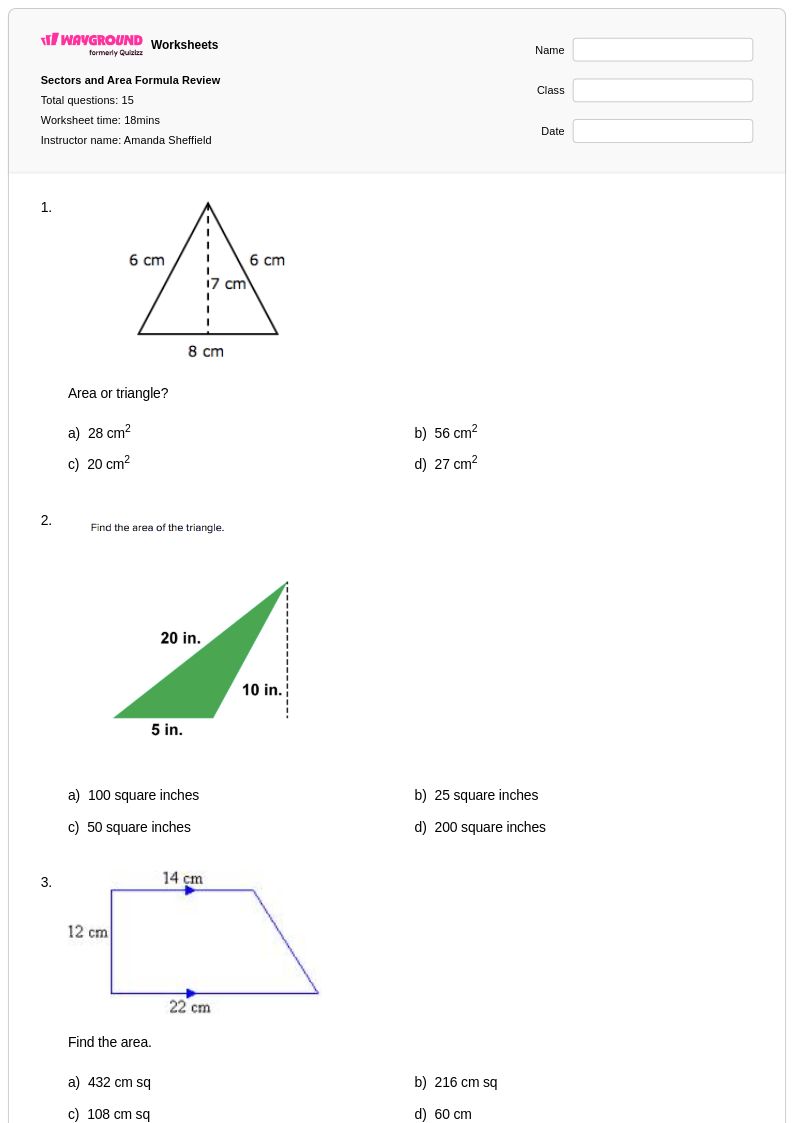
15 Q
9th - 12th
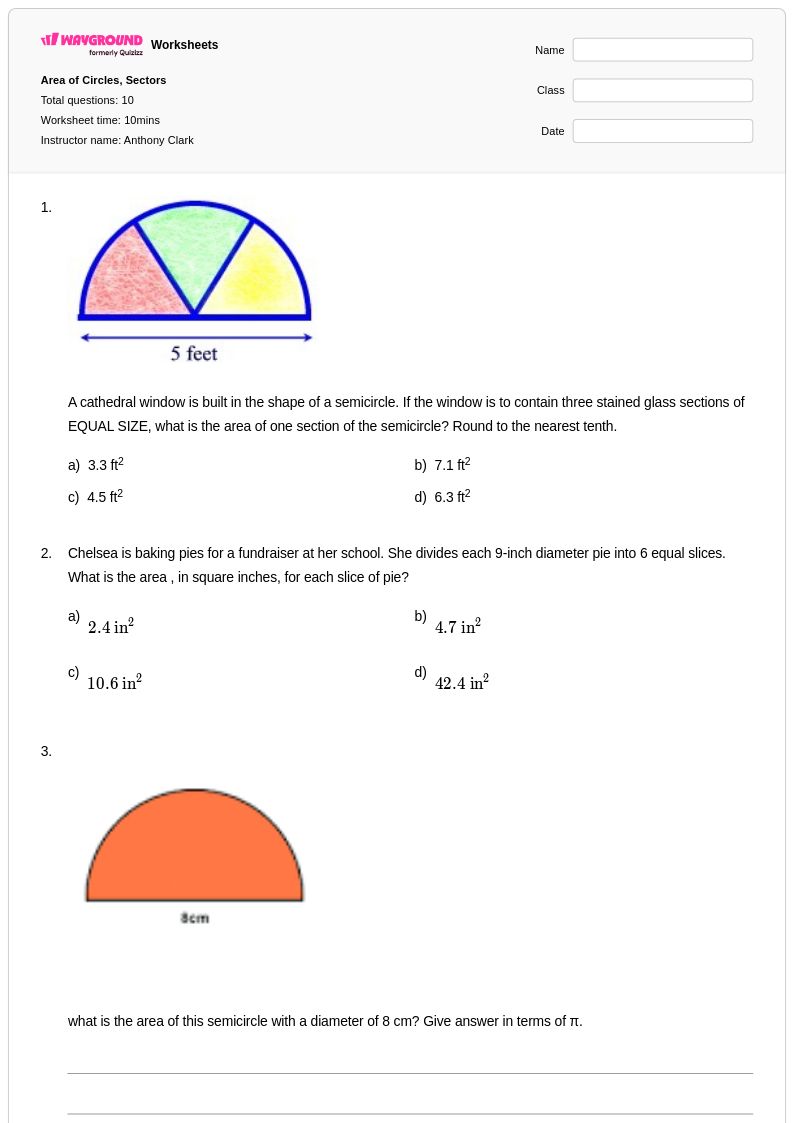
10 Q
10th - Uni
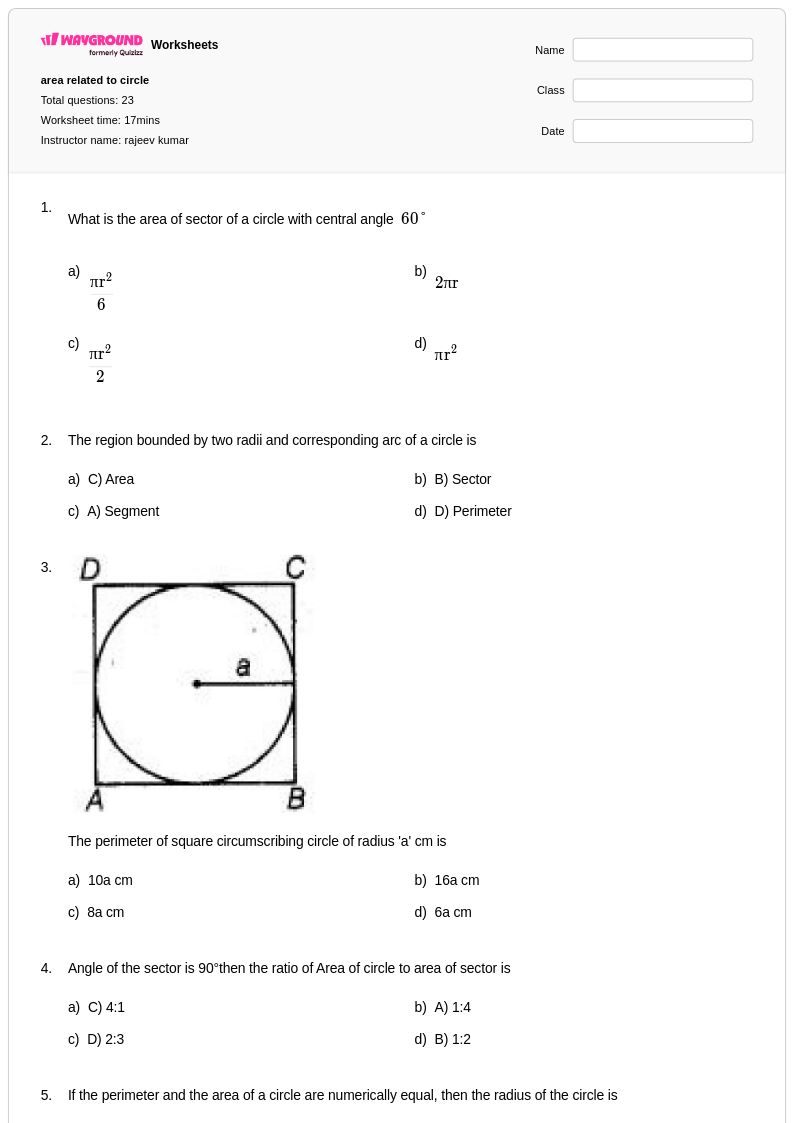
23 Q
10th
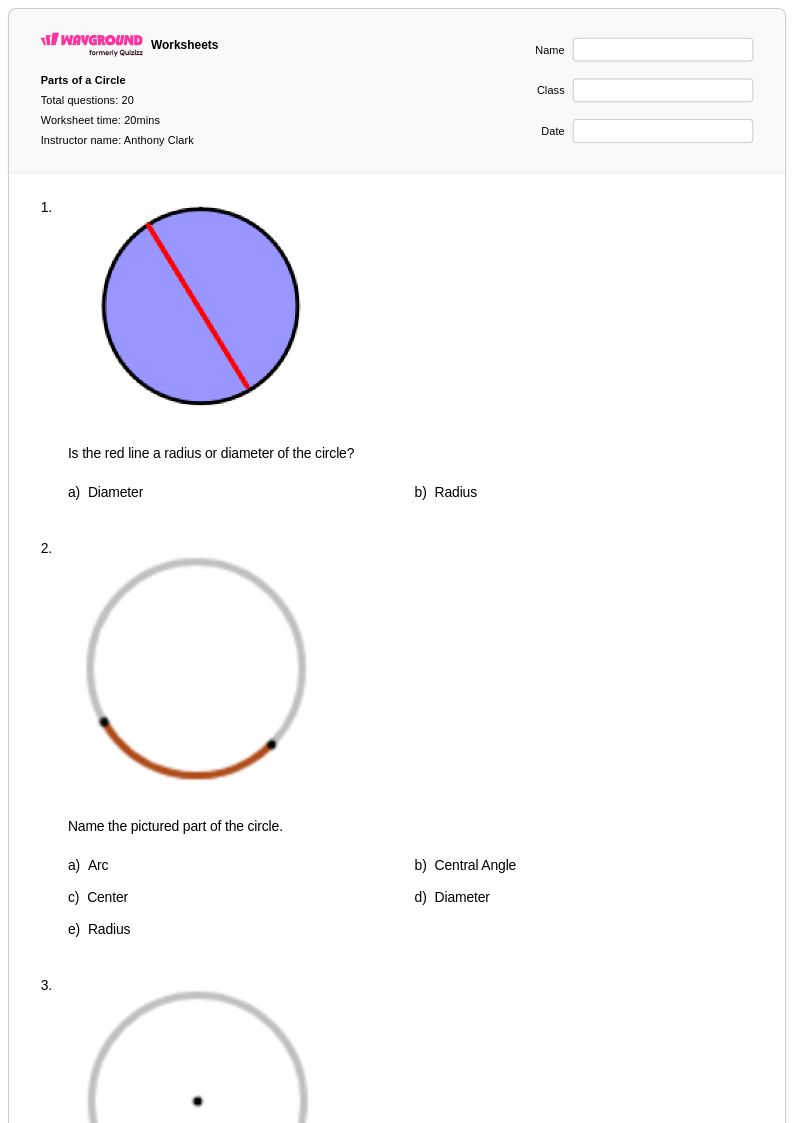
20 Q
7th - Uni
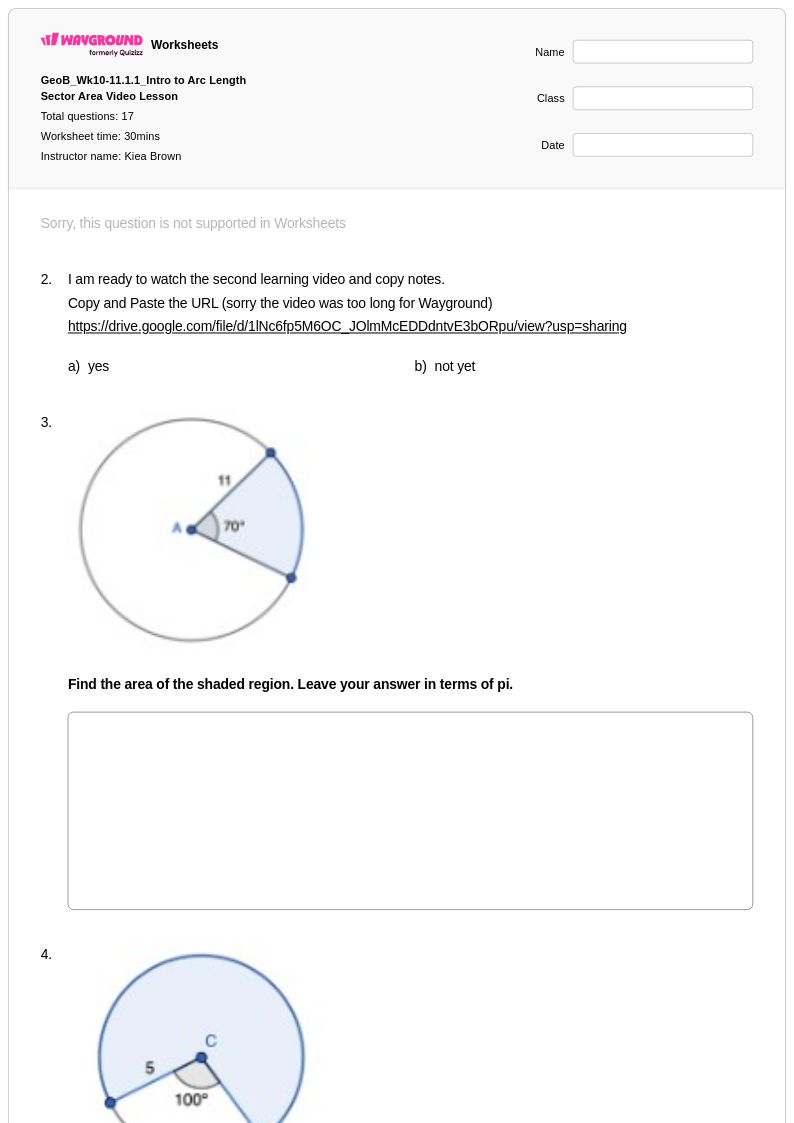
18 Q
9th - 12th
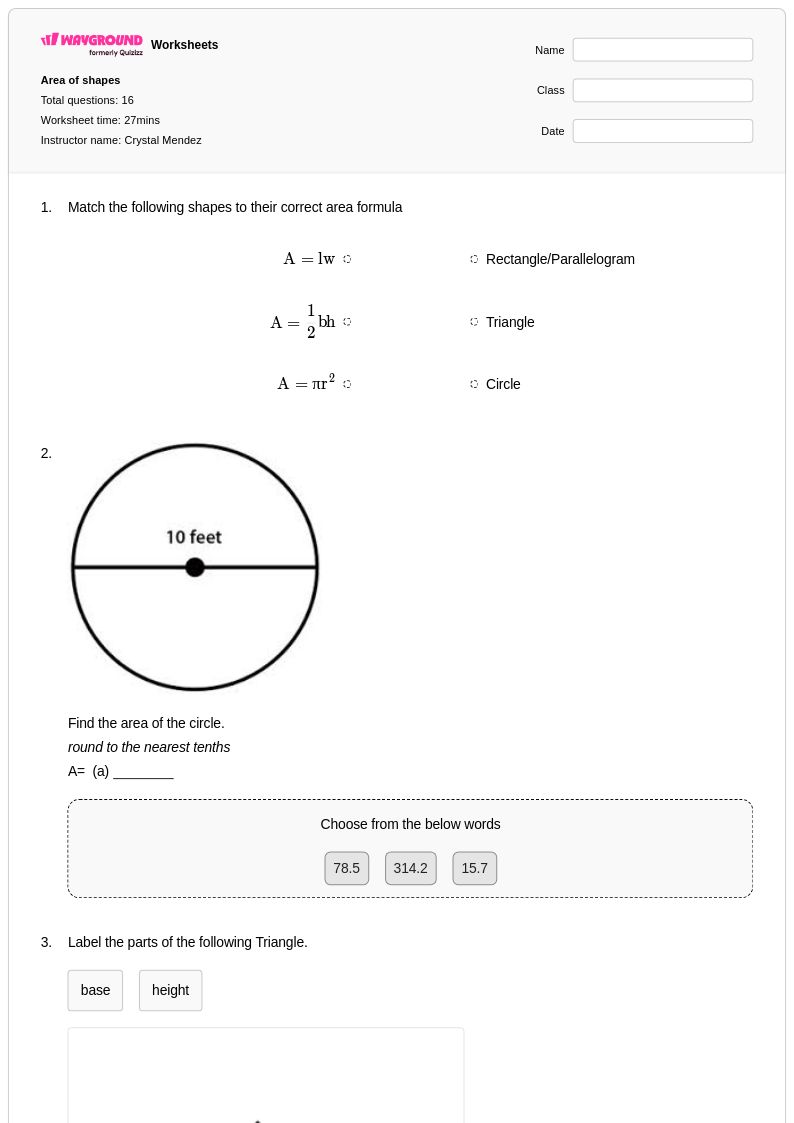
16 Q
10th
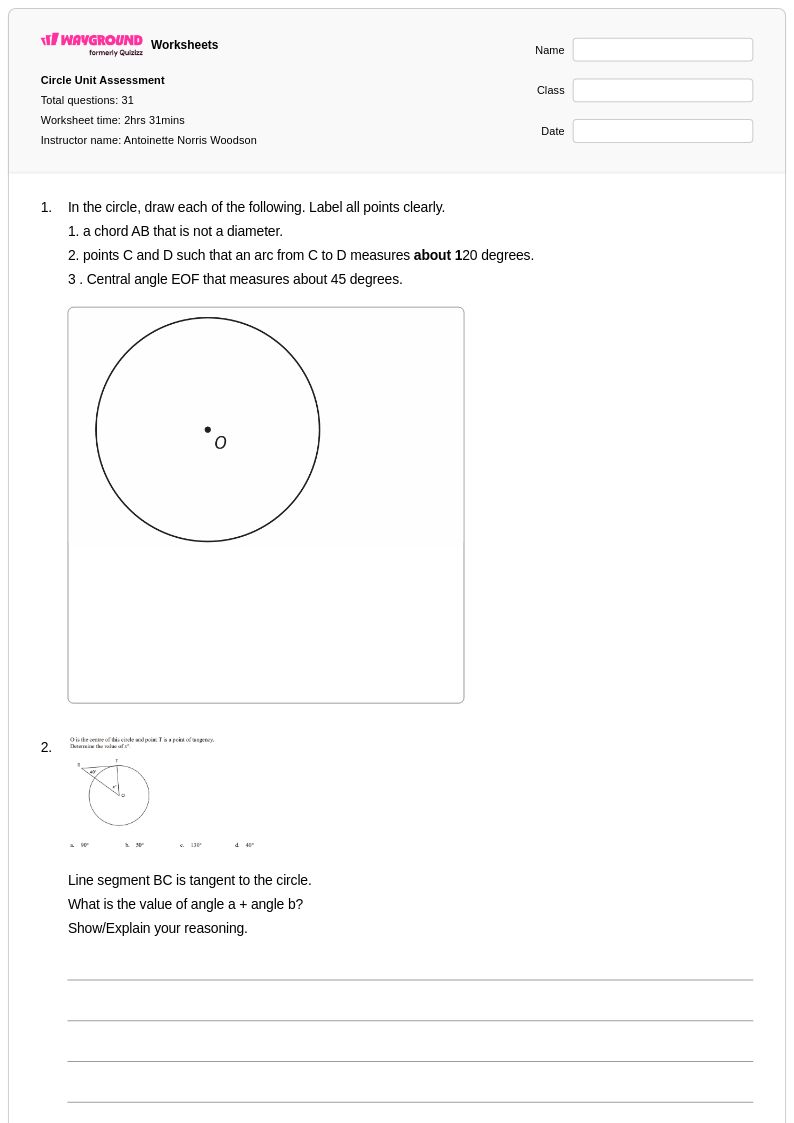
31 Q
8th
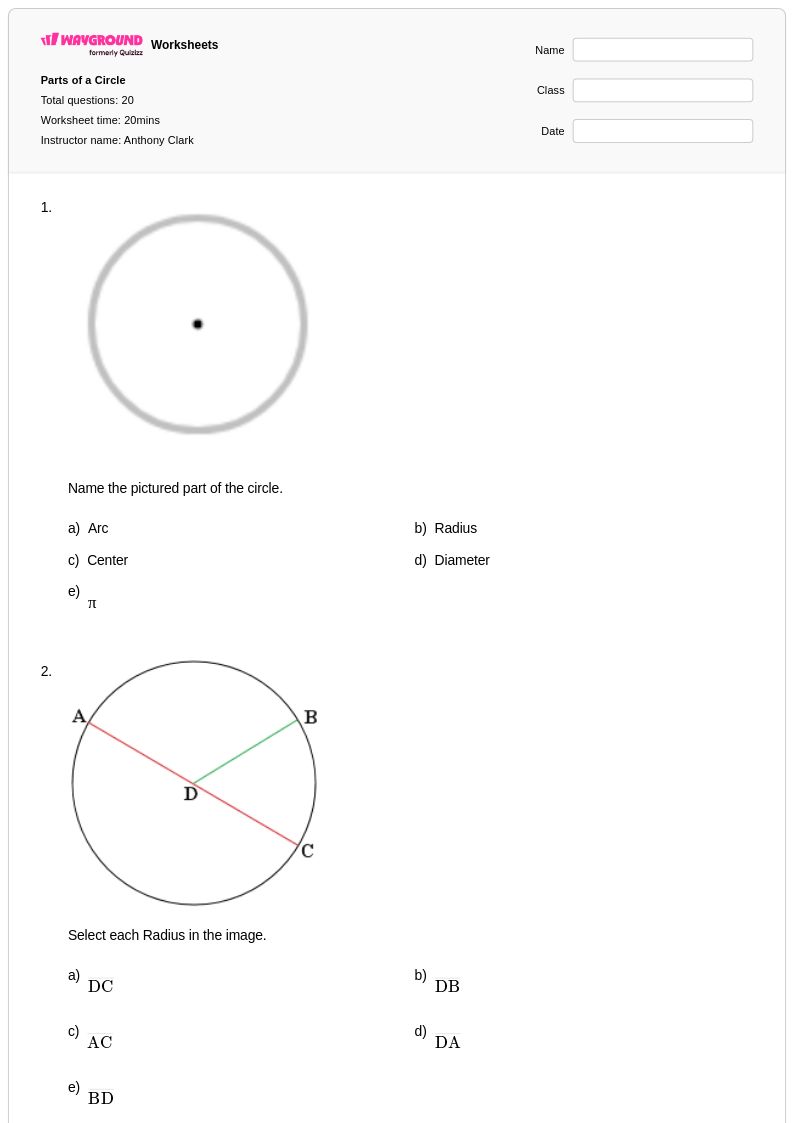
20 Q
7th - Uni
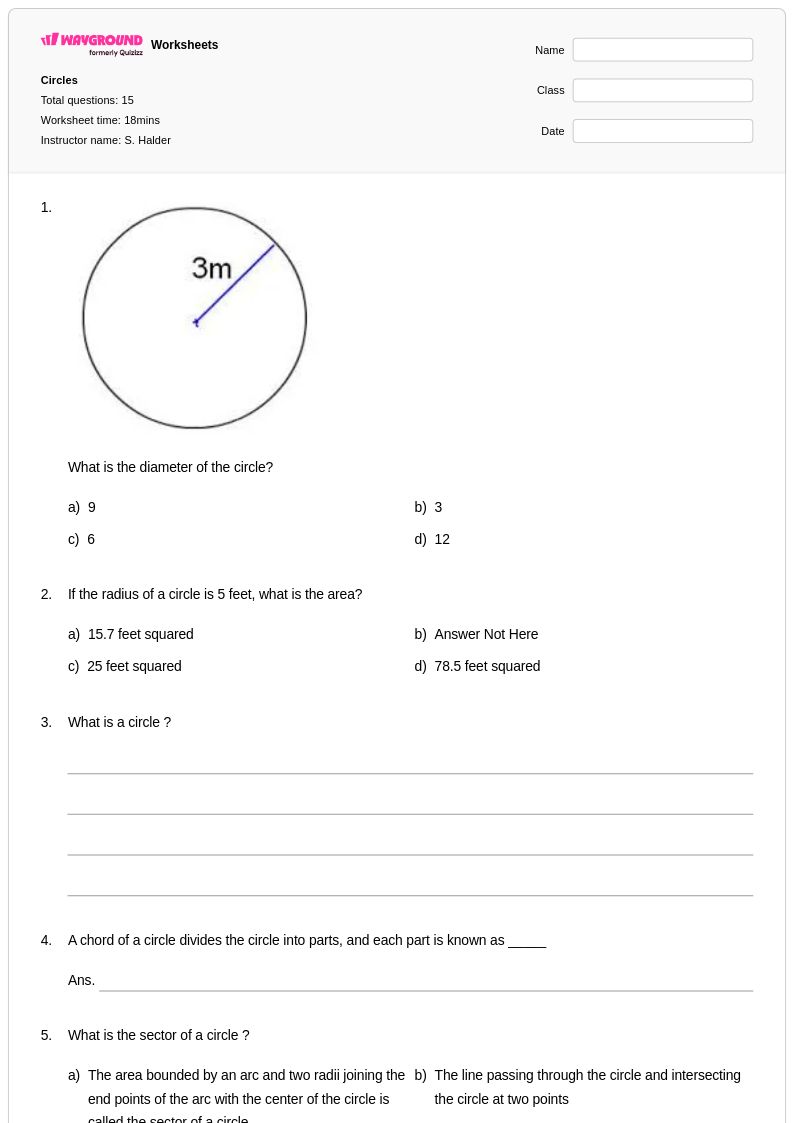
15 Q
6th
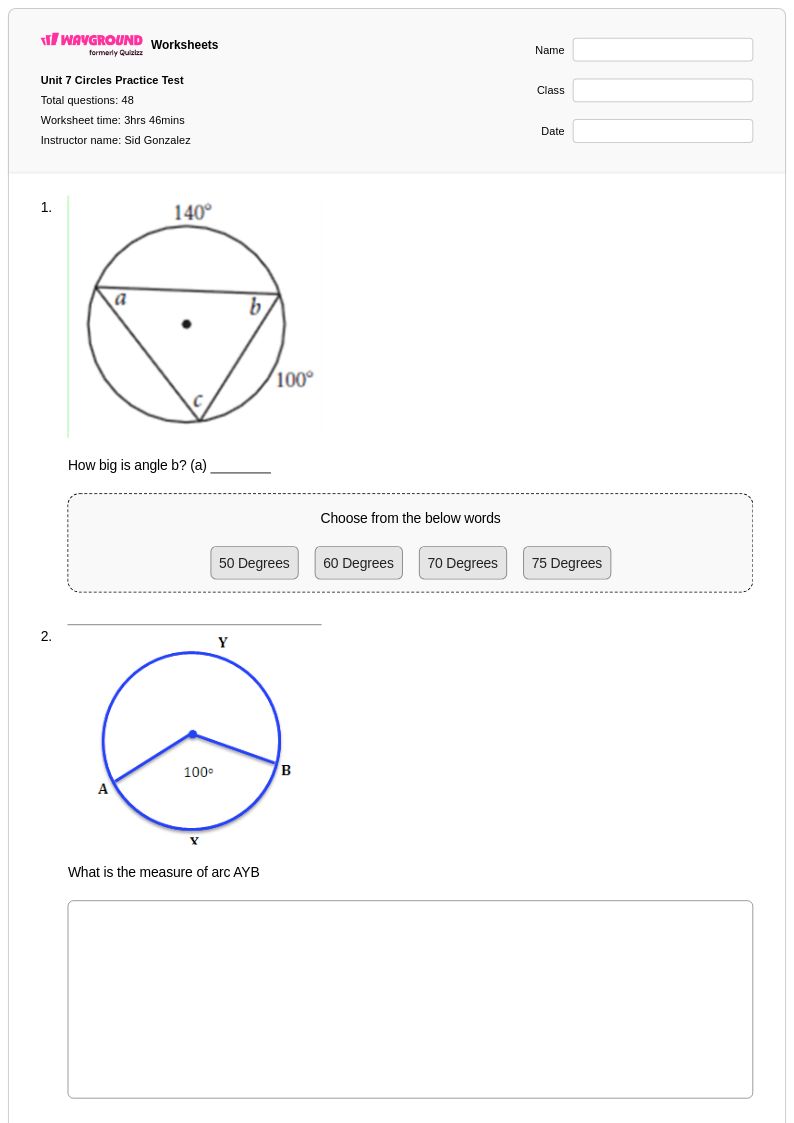
48 Q
9th - 12th
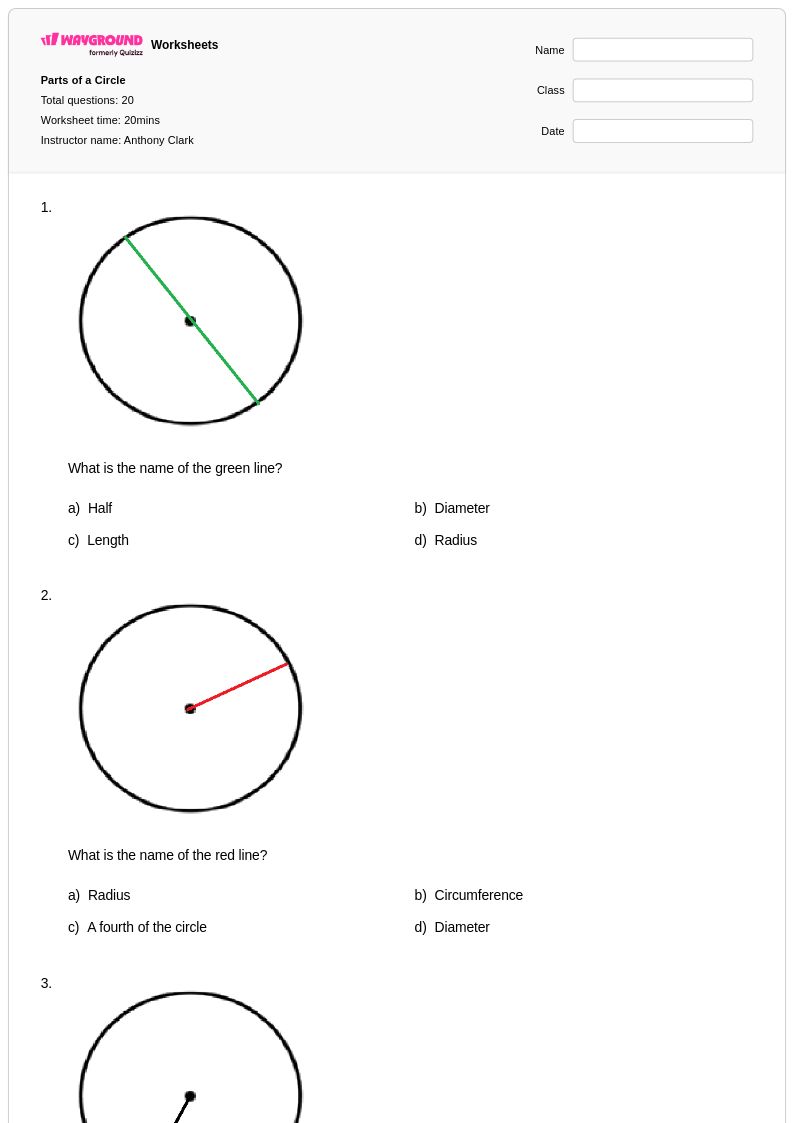
20 Q
7th - Uni
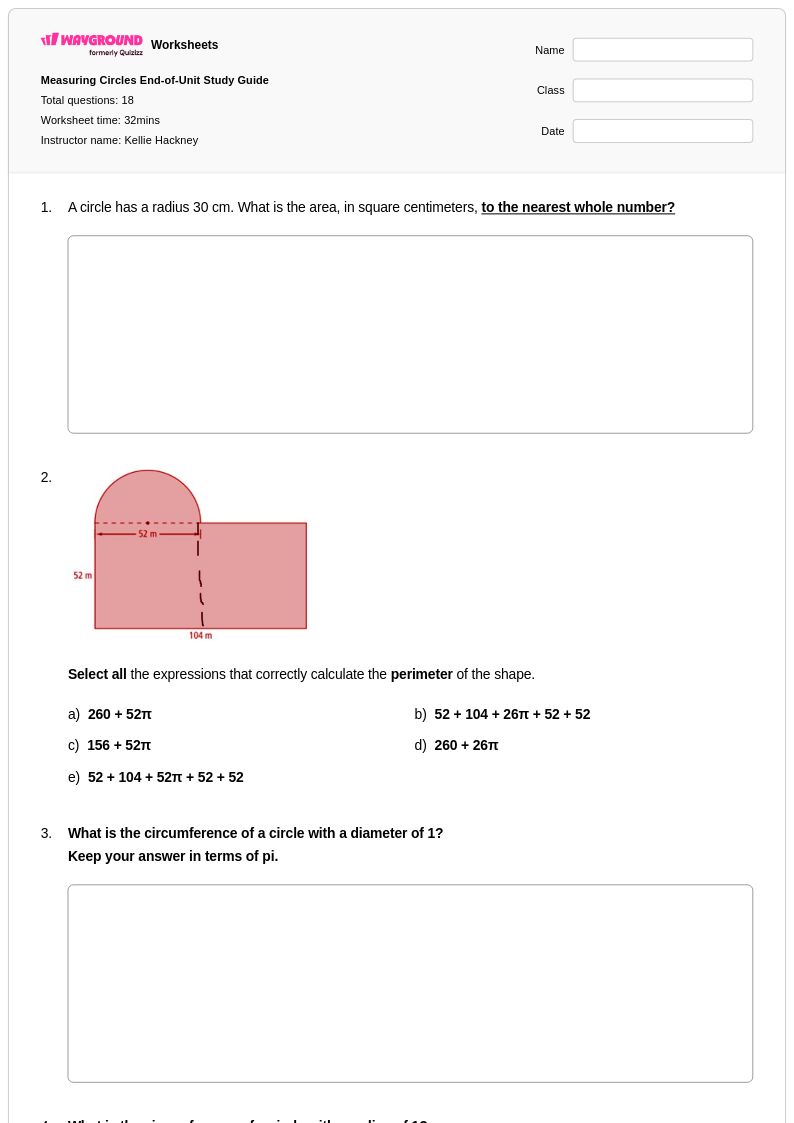
18 Q
7th
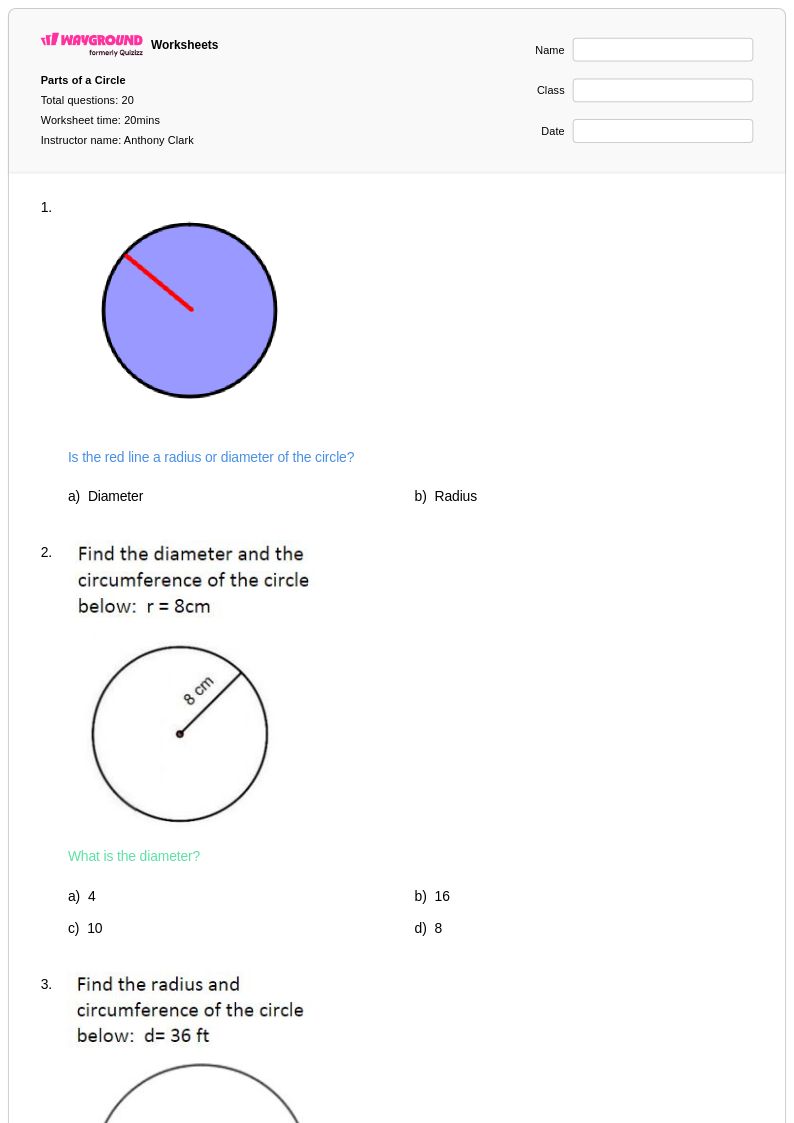
20 Q
7th - Uni
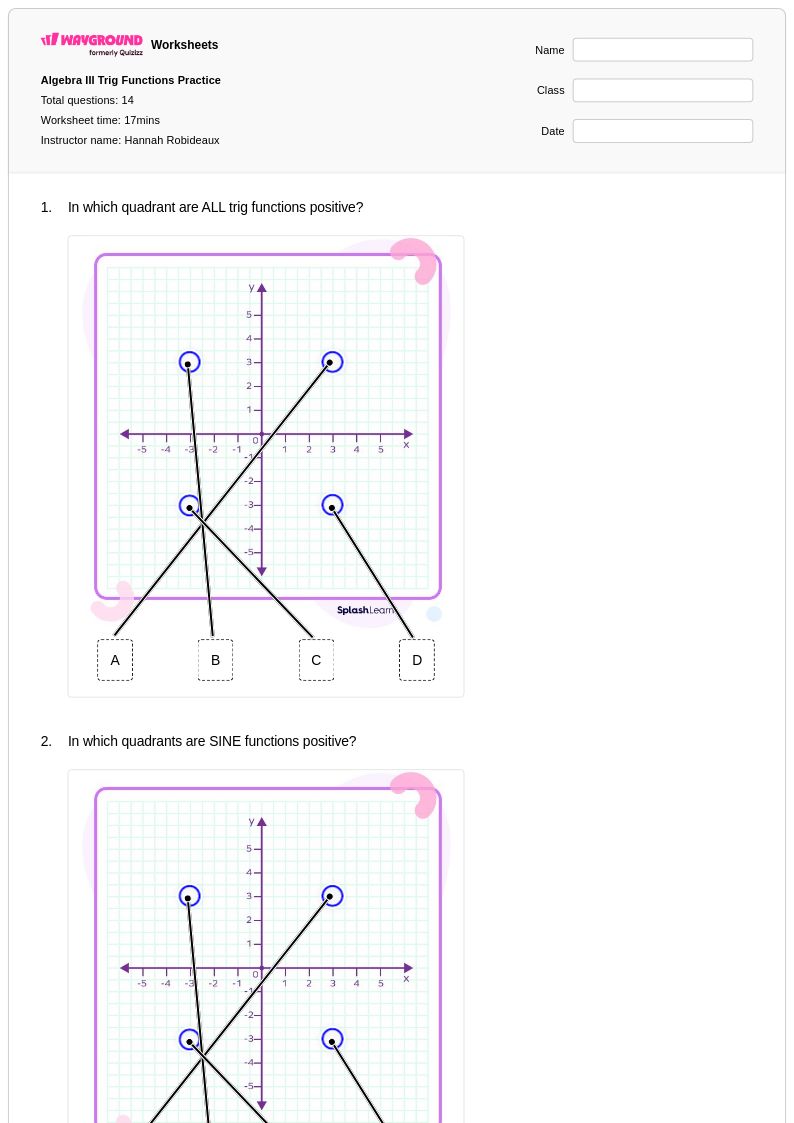
14 Q
12th
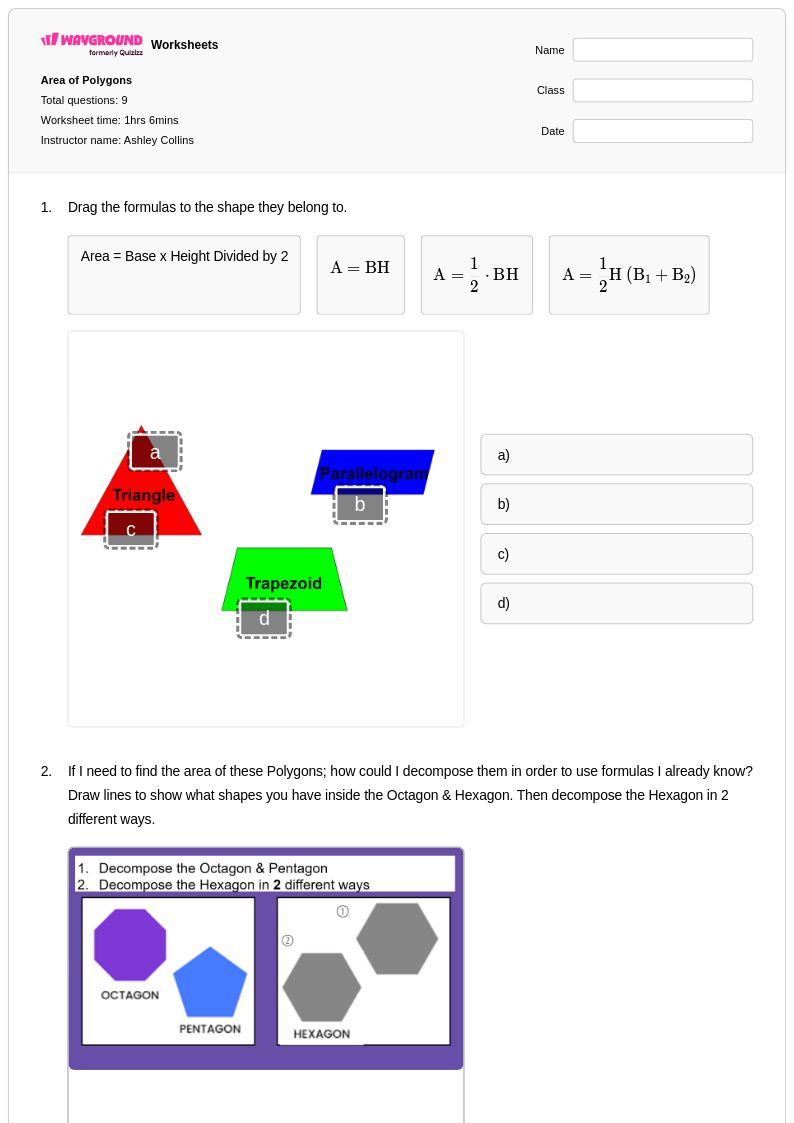
16 Q
6th
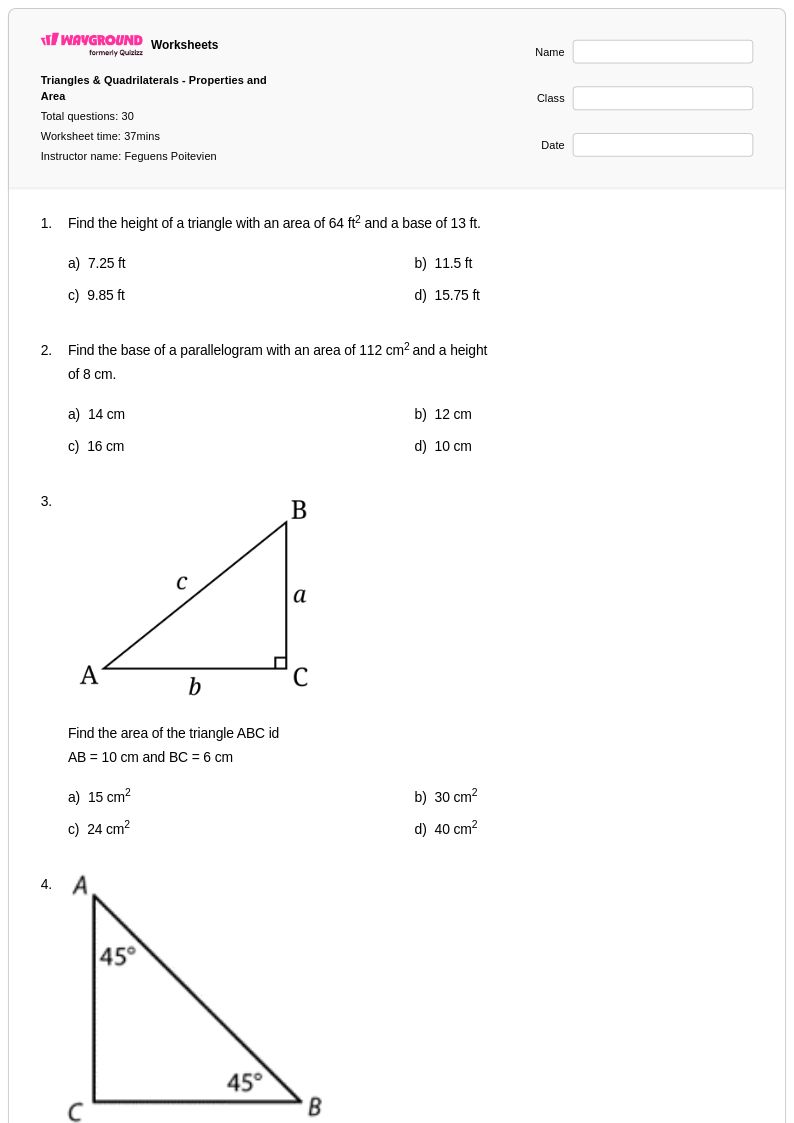
30 Q
10th
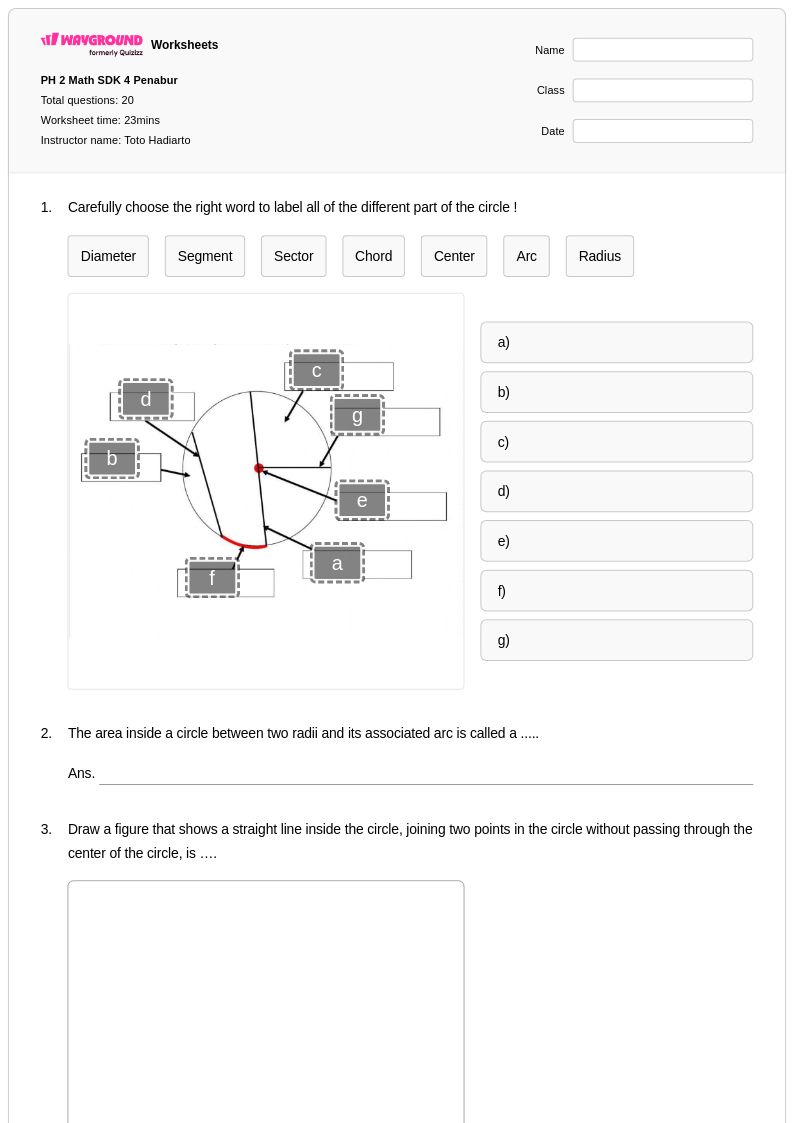
20 Q
6th
Explore Worksheets by Subjects
Explore printable Area of Sector of a Circle worksheets
Area of sector of a circle worksheets available through Wayground (formerly Quizizz) provide comprehensive practice materials designed to strengthen students' understanding of this fundamental geometric concept. These worksheets focus on developing mastery of the sector area formula, requiring students to calculate portions of circular regions using central angle measurements in both degrees and radians. The practice problems systematically build complexity, beginning with basic sector calculations and progressing to multi-step problems involving real-world applications such as calculating areas of pie charts, circular gardens, and architectural designs. Each worksheet includes detailed answer keys that allow students to verify their work and understand solution methods, while the free printable format ensures accessibility for classroom use and independent study.
Wayground (formerly Quizizz) supports mathematics educators with millions of teacher-created resources specifically targeting area of sector calculations and broader geometry concepts. The platform's robust search and filtering capabilities enable teachers to quickly locate worksheets aligned with specific curriculum standards, while differentiation tools allow for customized assignments that meet diverse student needs. These flexible resources are available in both printable pdf formats for traditional classroom use and digital formats for interactive learning experiences. Teachers can efficiently plan geometry units, provide targeted remediation for students struggling with circular measurement concepts, offer enrichment activities for advanced learners, and deliver consistent skill practice that reinforces the relationship between central angles and sector areas across multiple mathematical contexts.
FAQs
How do I teach students to find the area of a sector of a circle?
What exercises help students practice calculating sector area?
What mistakes do students make when finding the area of a sector?
How can I use an area of a sector worksheet in class?
How does sector area align with the Common Core math progression?
How can I differentiate area of sector practice?