
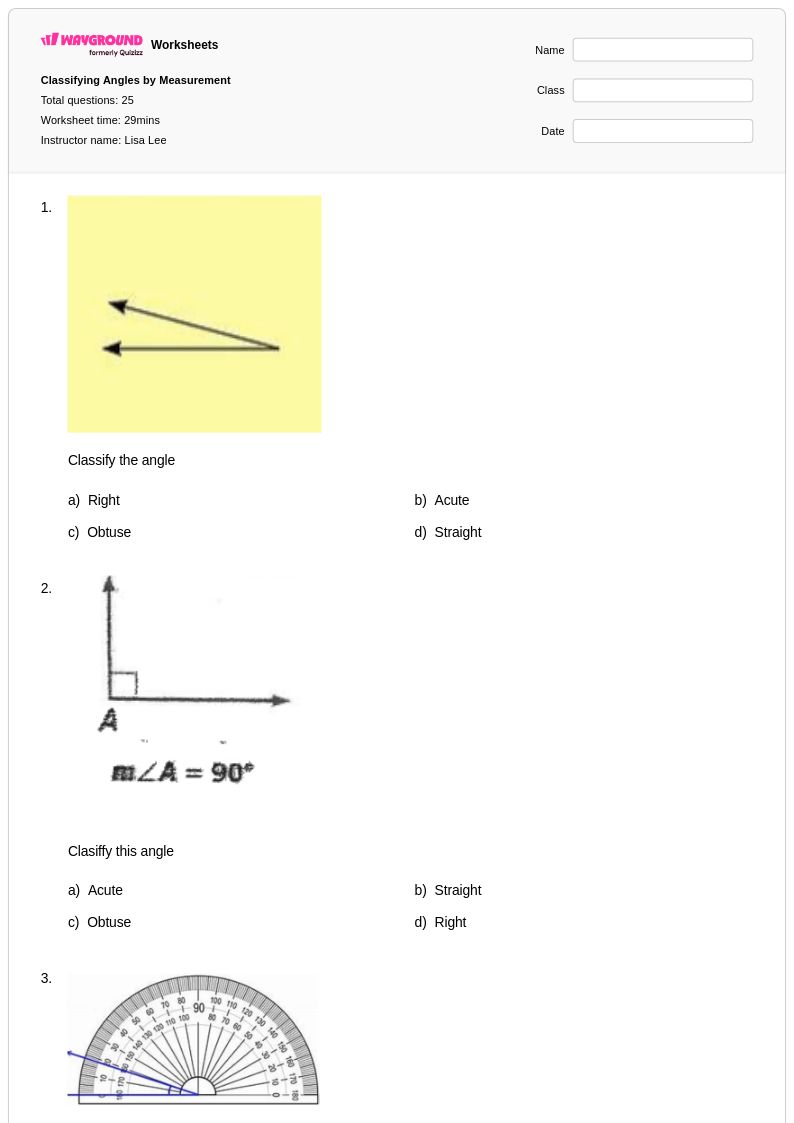
25 Q
8th
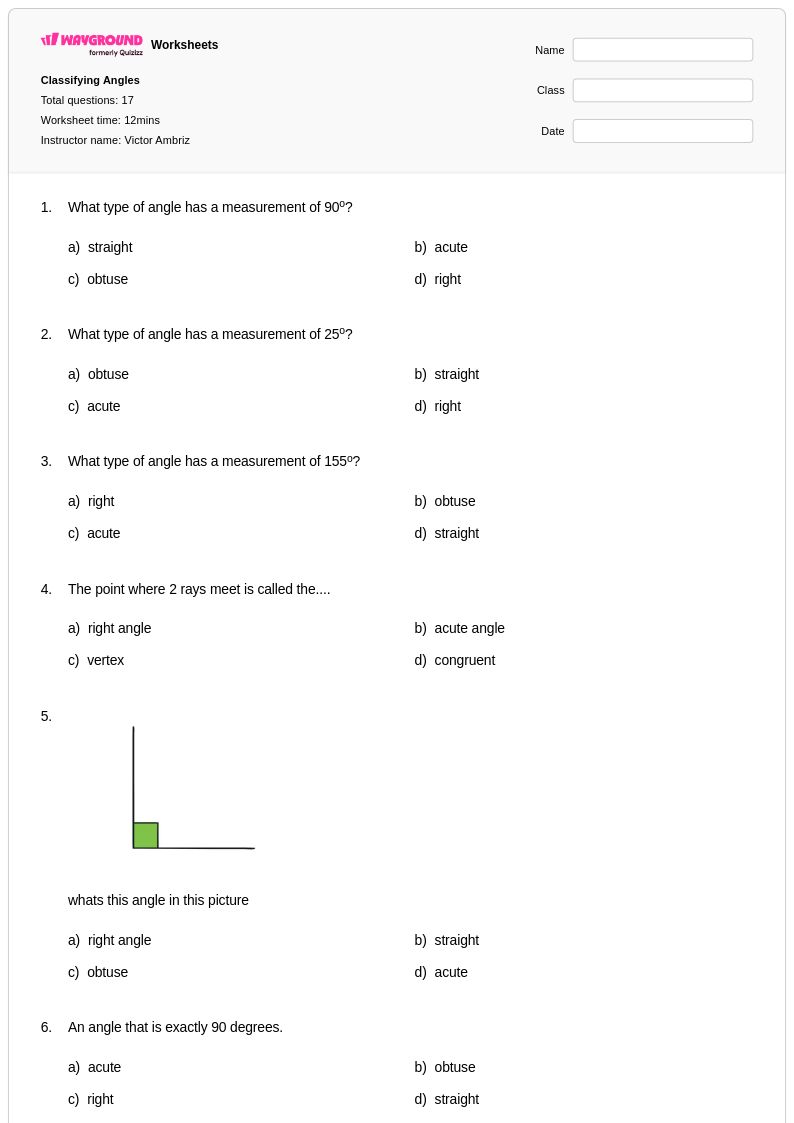
17 Q
4th
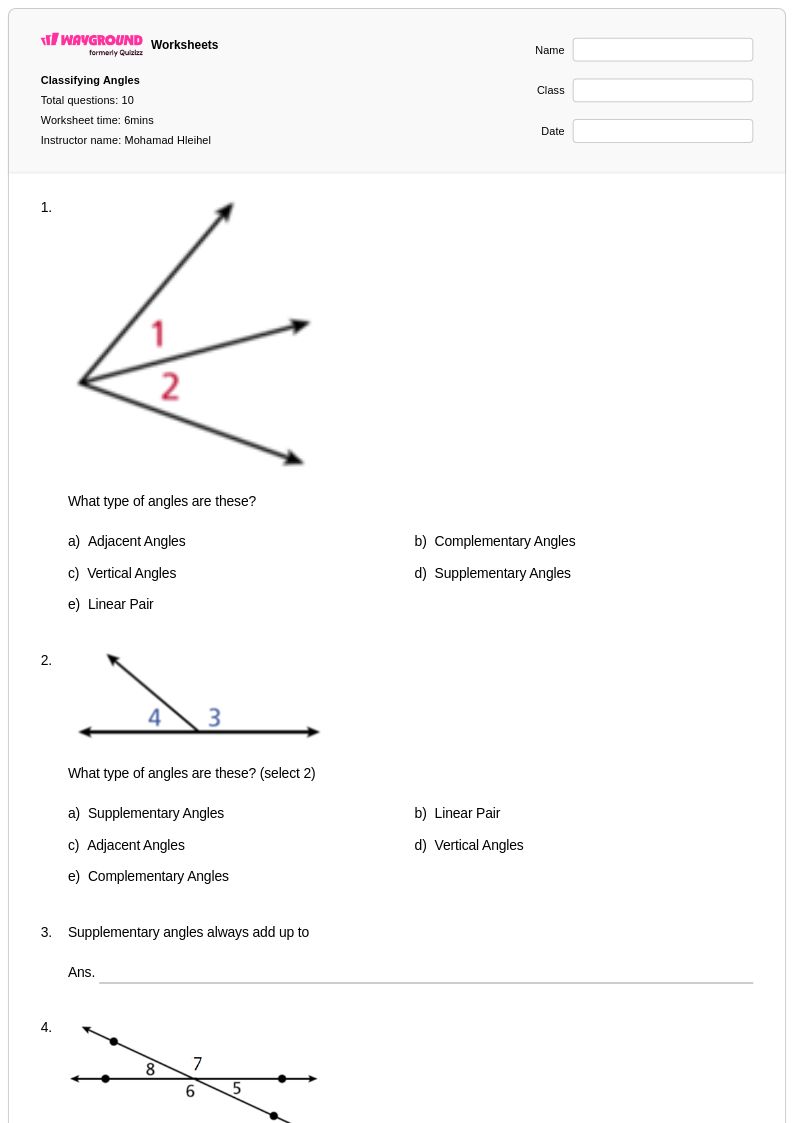
10 Q
9th
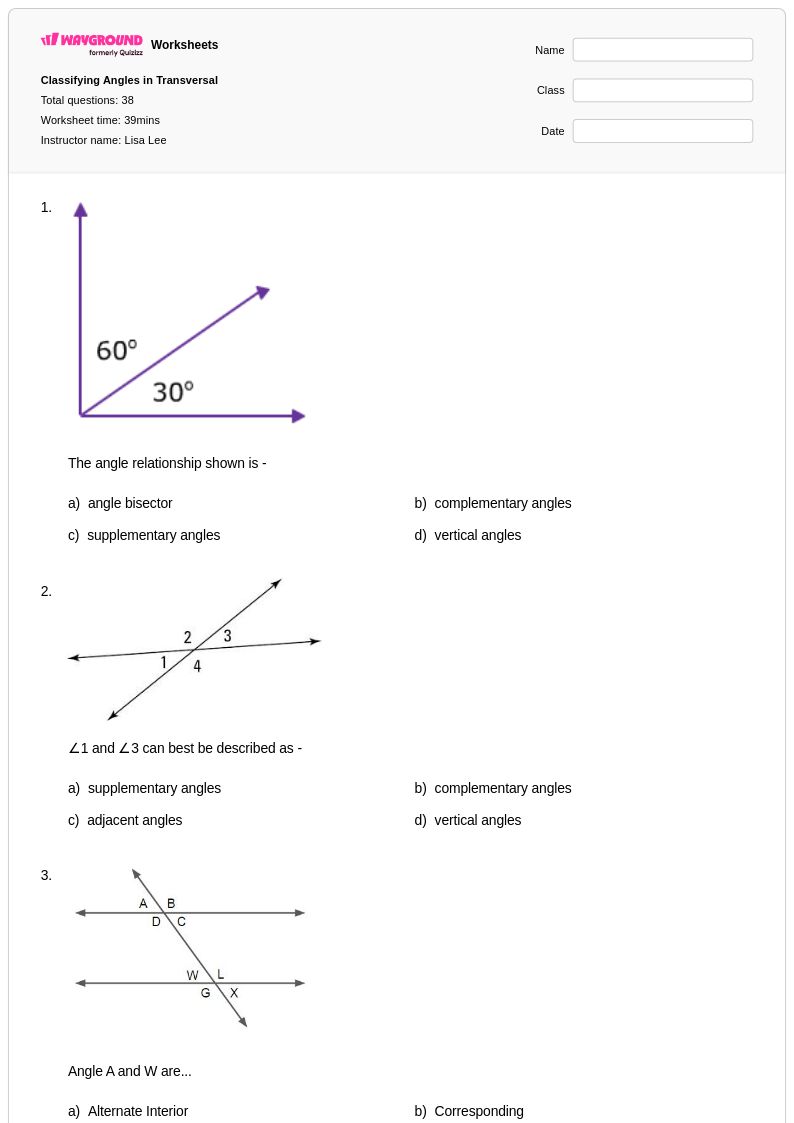
38 Q
9th - 10th
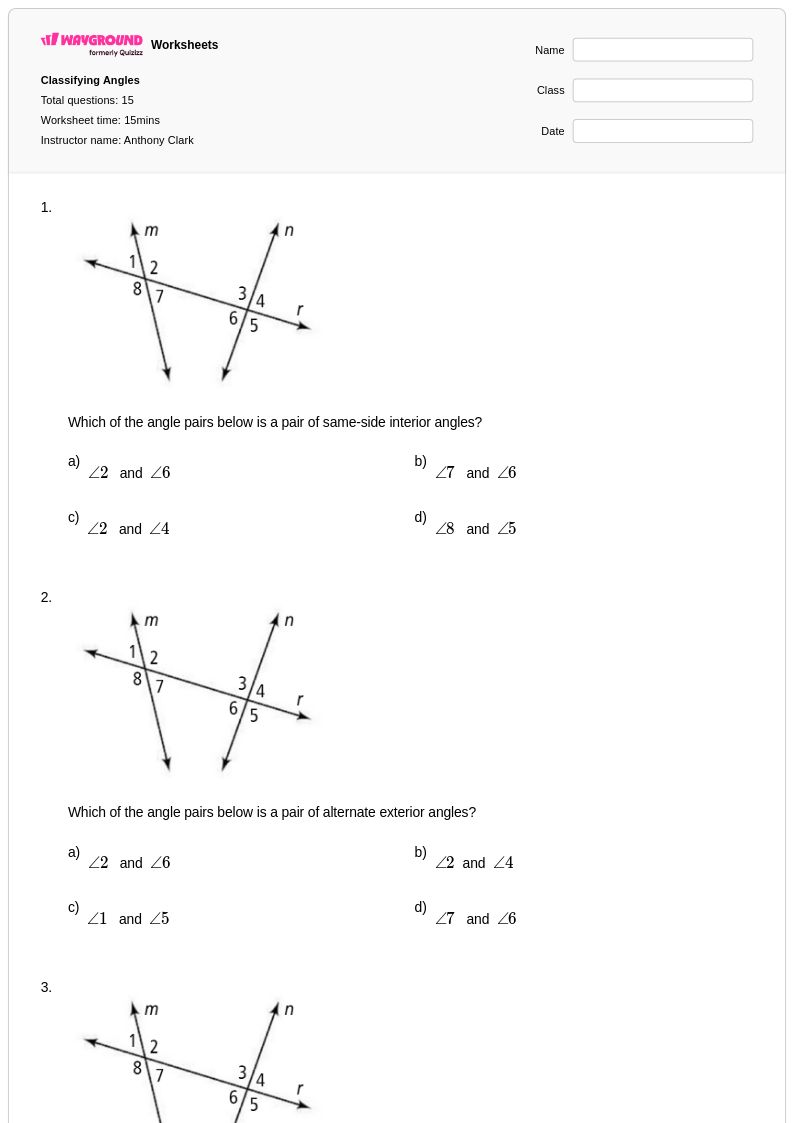
15 Q
10th - Uni
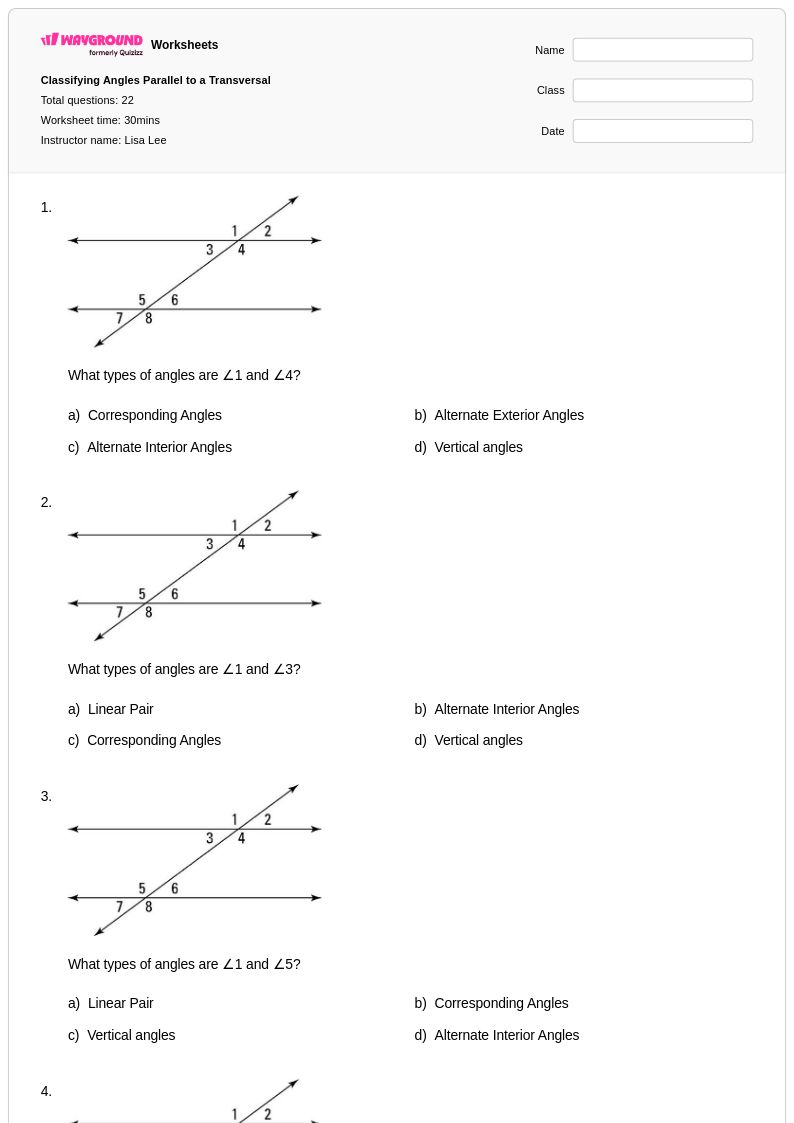
22 Q
8th - 12th
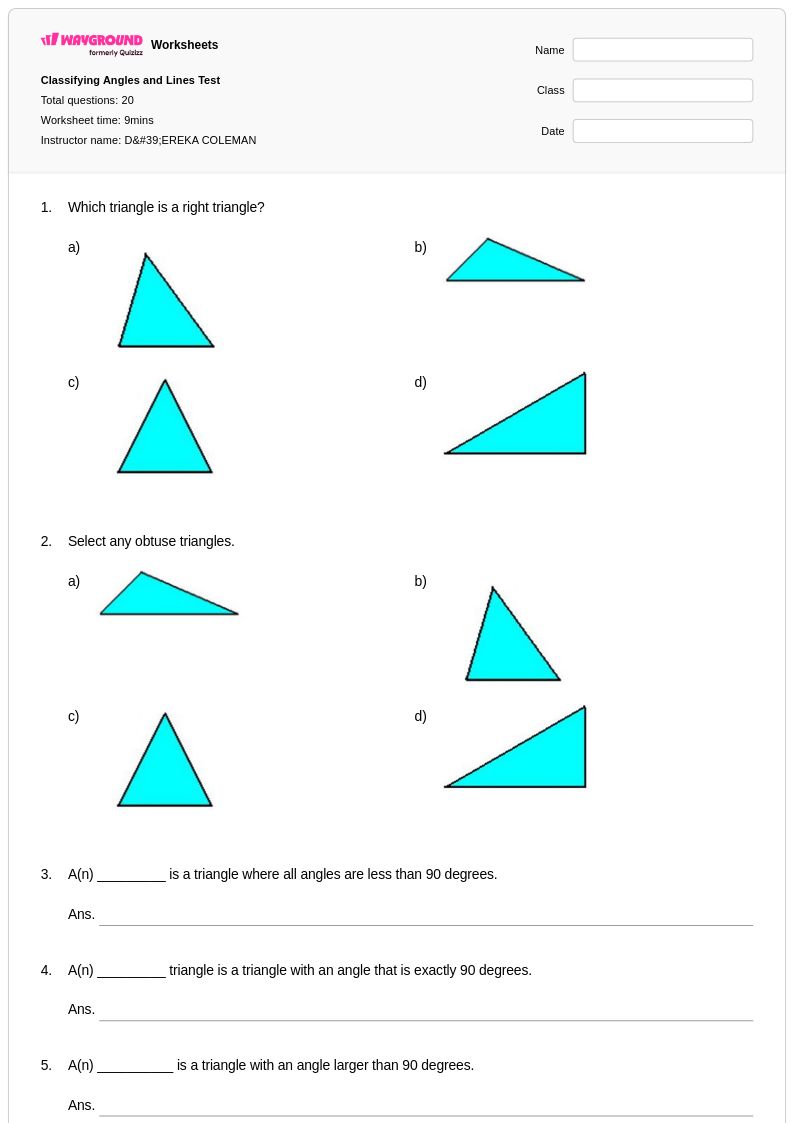
20 Q
4th - Uni
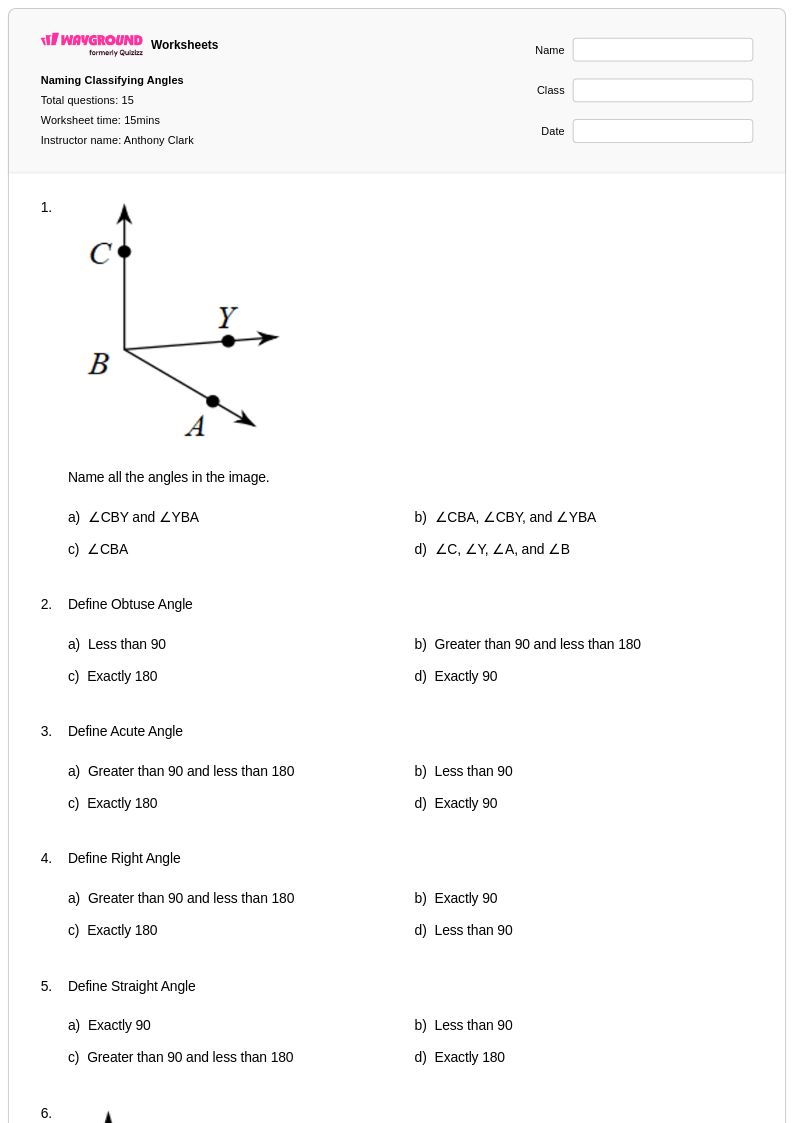
15 Q
9th - Uni
18 Q
8th
20 Q
9th - Uni
17 Q
7th - Uni
20 Q
9th - Uni
35 Q
10th
17 Q
9th - Uni
21 Q
10th
20 Q
10th
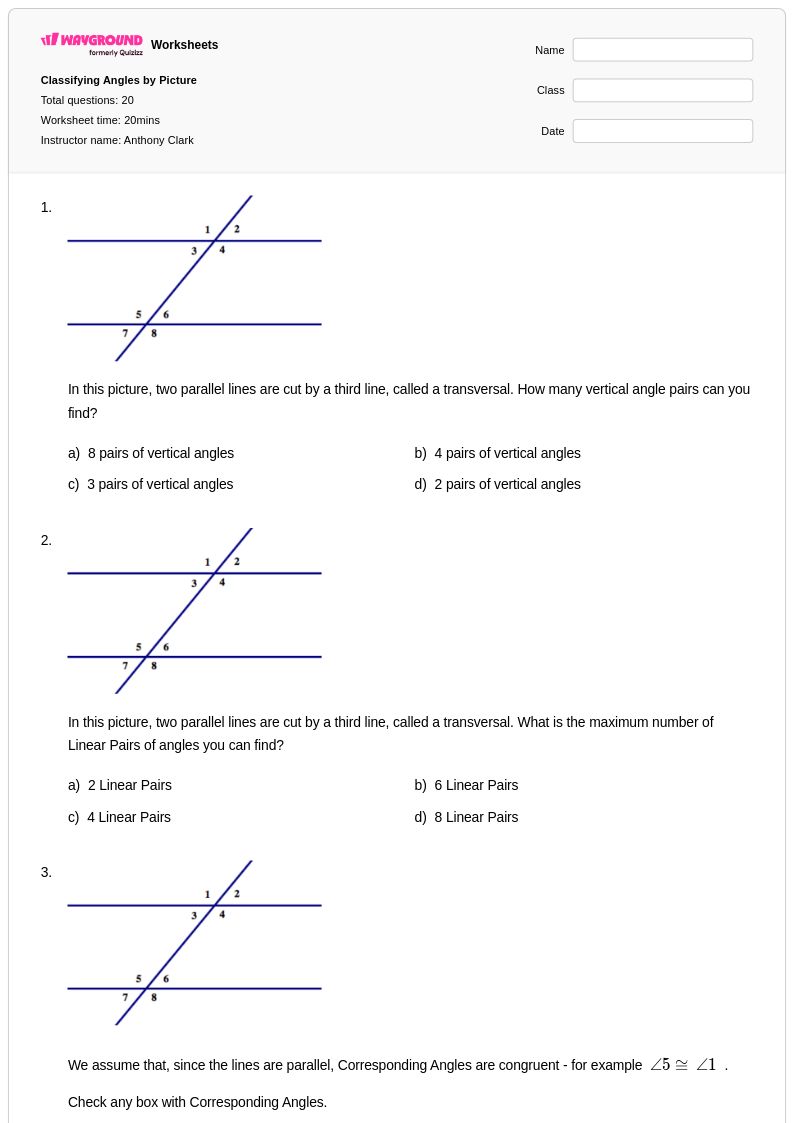
20 Q
9th - Uni
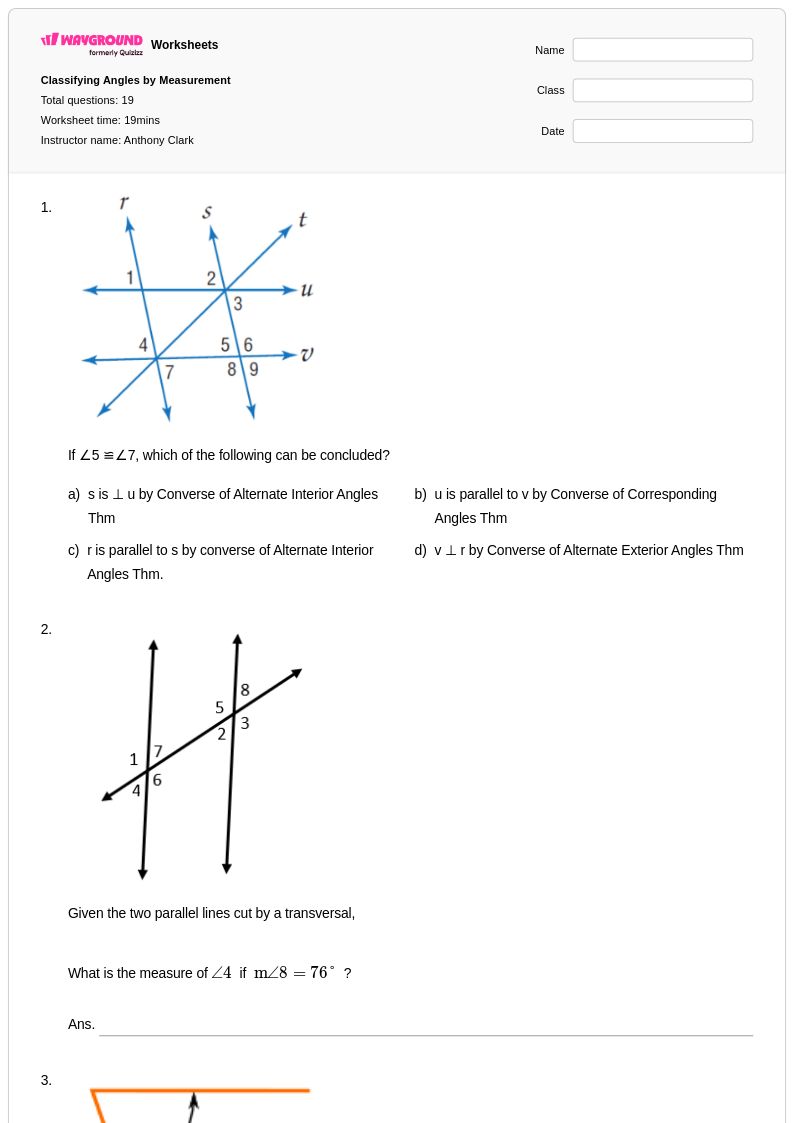
19 Q
9th - Uni
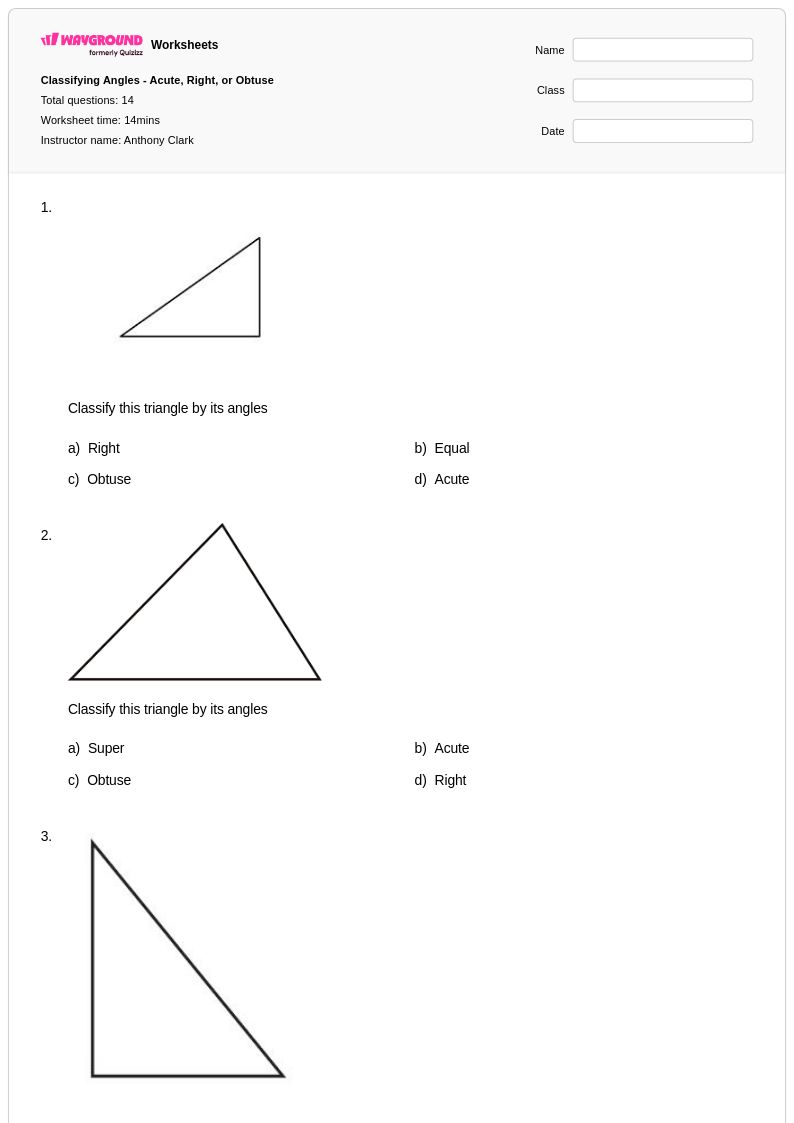
14 Q
5th - Uni
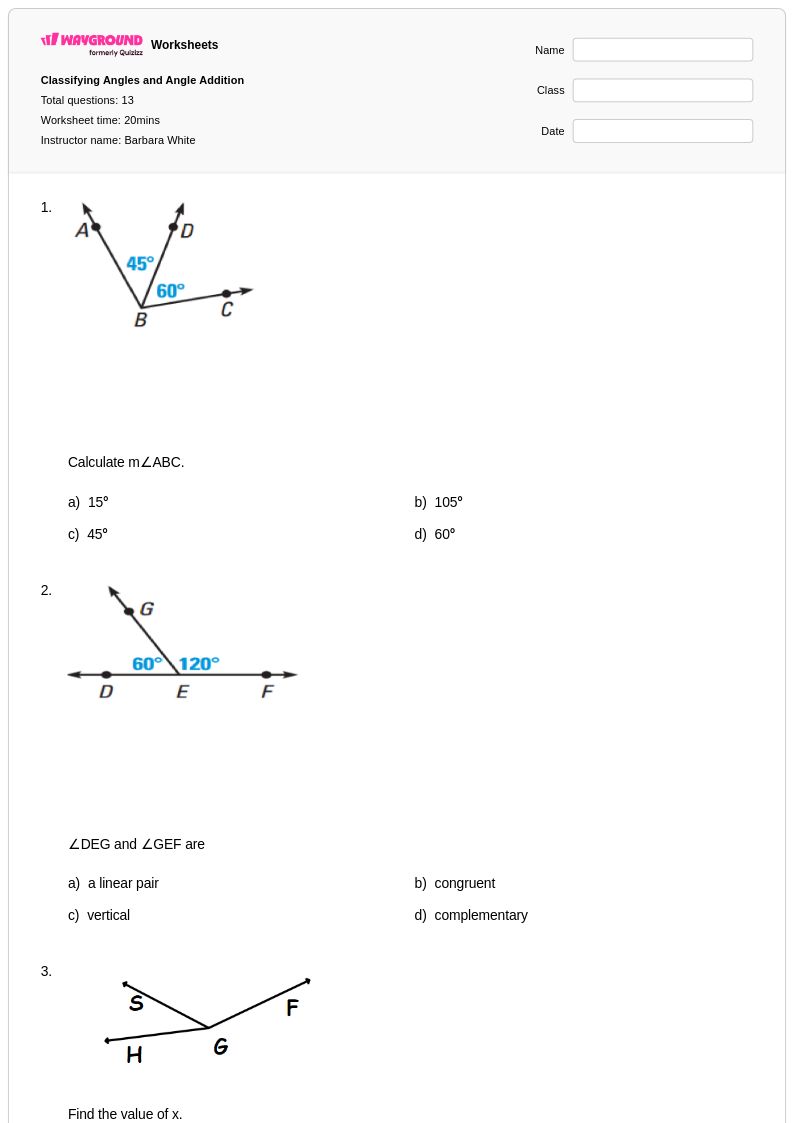
13 Q
10th
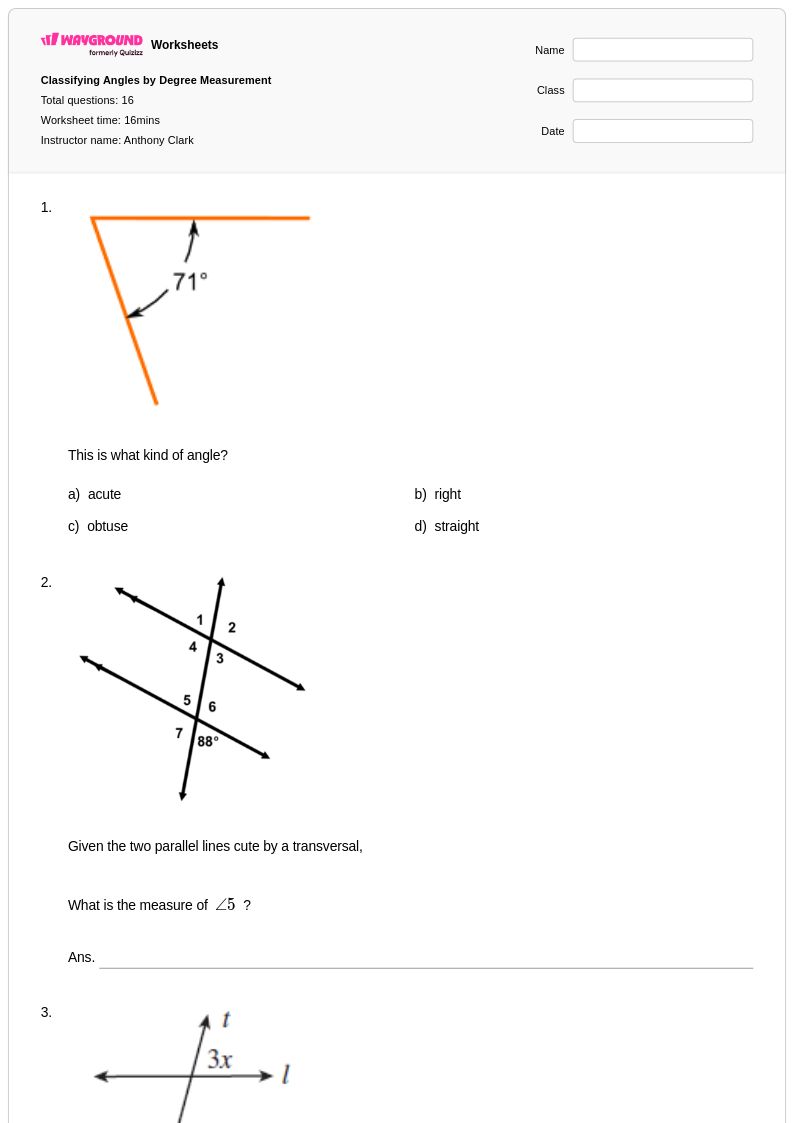
16 Q
8th - Uni
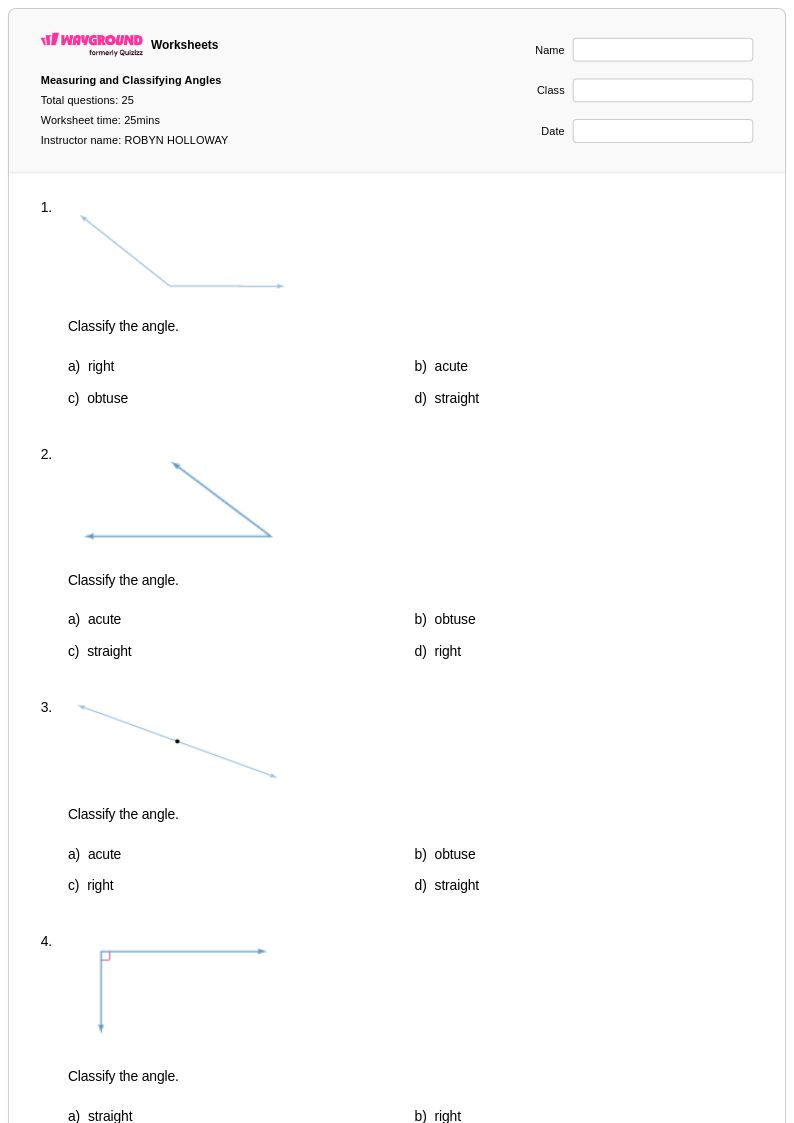
25 Q
9th - 12th
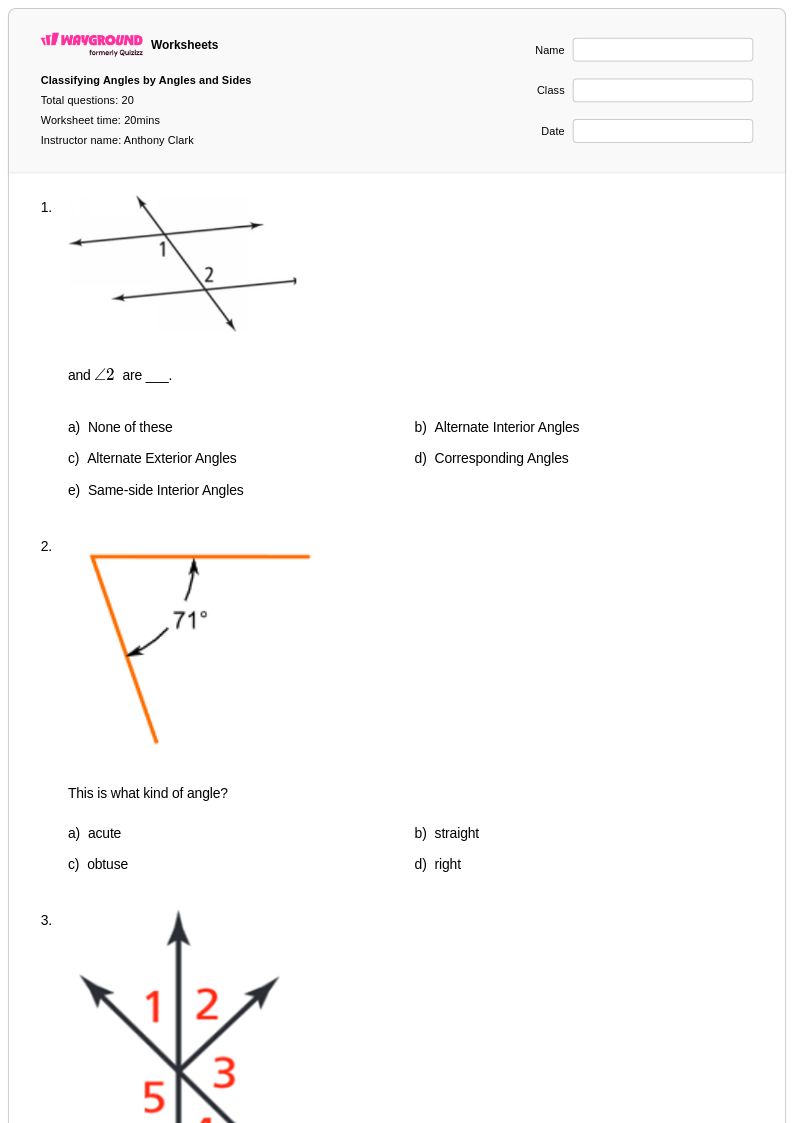
20 Q
9th - Uni
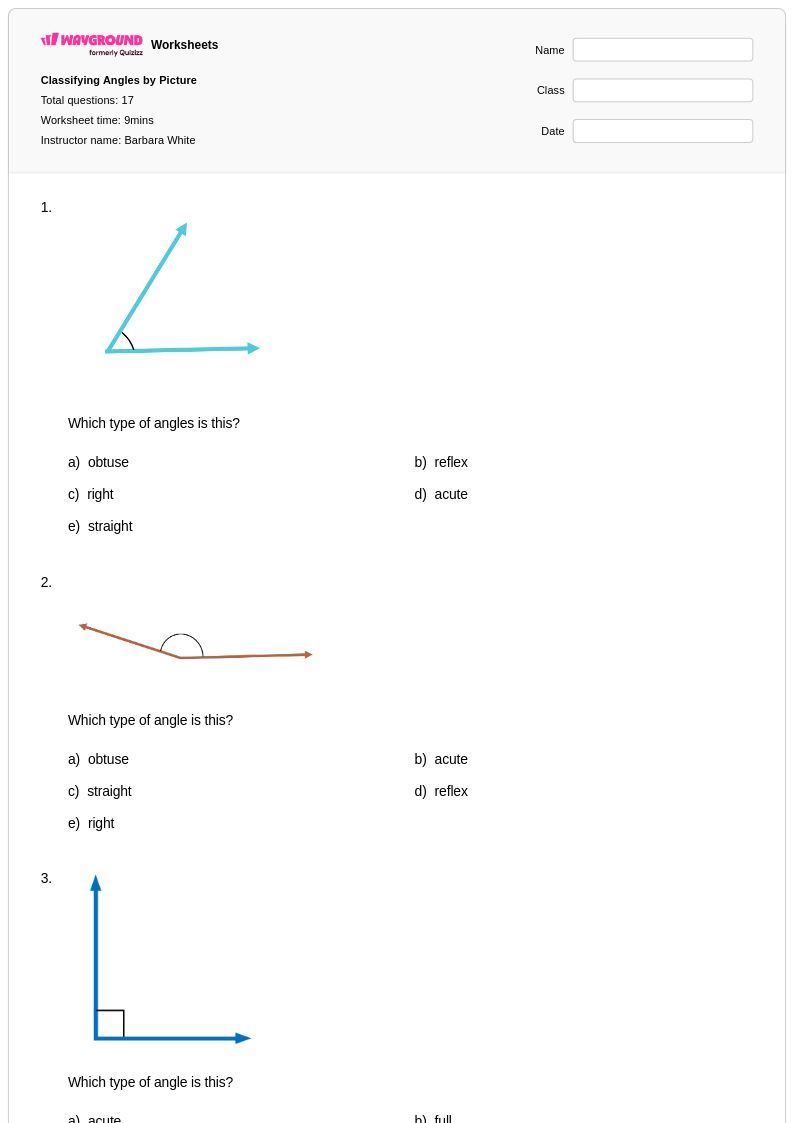
17 Q
2nd
Explore Worksheets by Subjects
Explore printable Classifying Angles worksheets
Classifying angles worksheets available through Wayground (formerly Quizizz) provide comprehensive practice opportunities for students to master one of geometry's fundamental concepts. These educational resources focus on developing students' ability to identify and categorize angles based on their measurements, including acute angles (less than 90 degrees), right angles (exactly 90 degrees), obtuse angles (between 90 and 180 degrees), and straight angles (exactly 180 degrees). The worksheets strengthen critical geometric reasoning skills through systematic practice problems that progress from basic angle identification to more complex classification tasks involving multiple angles within geometric figures. Each worksheet collection includes detailed answer keys and is available as free printable pdf downloads, making them accessible resources for both classroom instruction and independent study sessions.
Wayground (formerly Quizizz) supports mathematics educators with an extensive library of millions of teacher-created angle classification resources that can be easily discovered through robust search and filtering capabilities. The platform's comprehensive worksheet collections align with key mathematical standards and offer built-in differentiation tools that allow teachers to customize content complexity based on individual student needs and learning objectives. These versatile resources are available in both printable and digital formats, including downloadable pdf versions, enabling seamless integration into various instructional approaches from traditional paper-based assignments to interactive digital lessons. Teachers can efficiently plan targeted geometry lessons, provide remediation for students struggling with angle concepts, offer enrichment activities for advanced learners, and create focused skill practice sessions that build mathematical confidence and procedural fluency in geometric classification tasks.
FAQs
How do I teach students to classify angles?
What exercises help students practice classifying angles?
What mistakes do students commonly make when classifying angles?
How can I use Wayground classifying angles worksheets in my classroom?
How does classifying angles fit into the Common Core math progression?
How can I differentiate classifying angles practice for mixed-ability students?