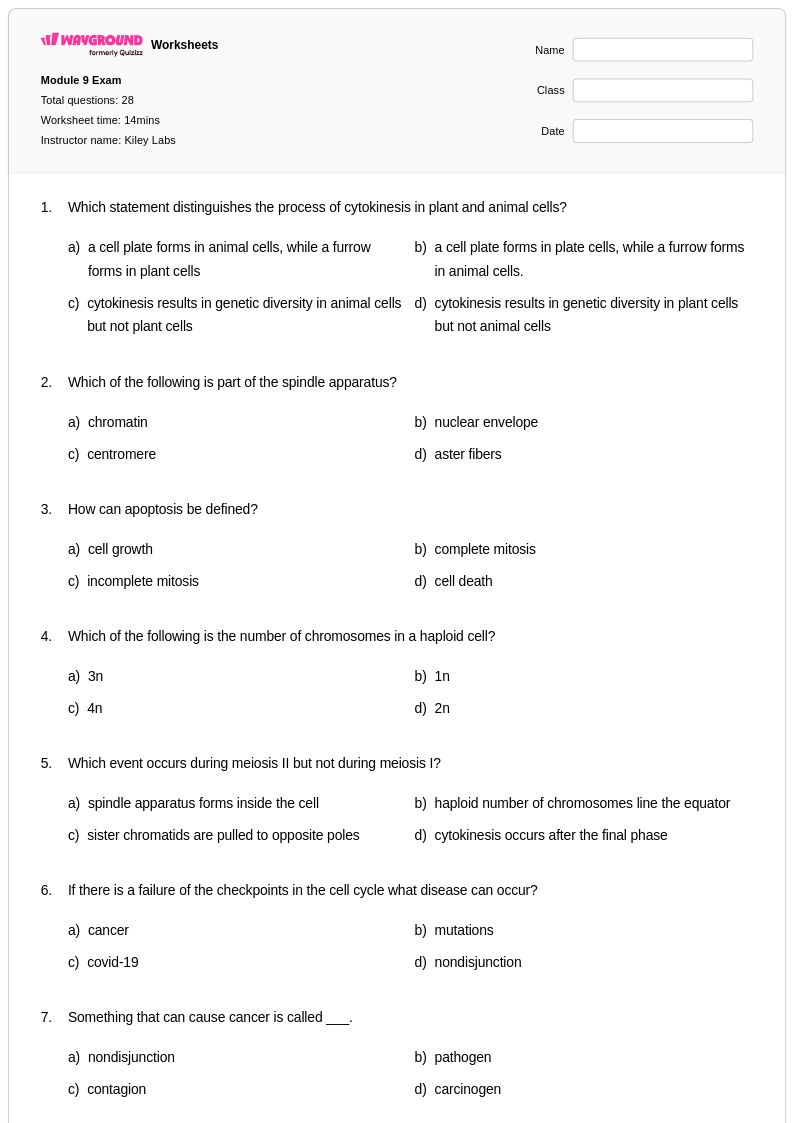
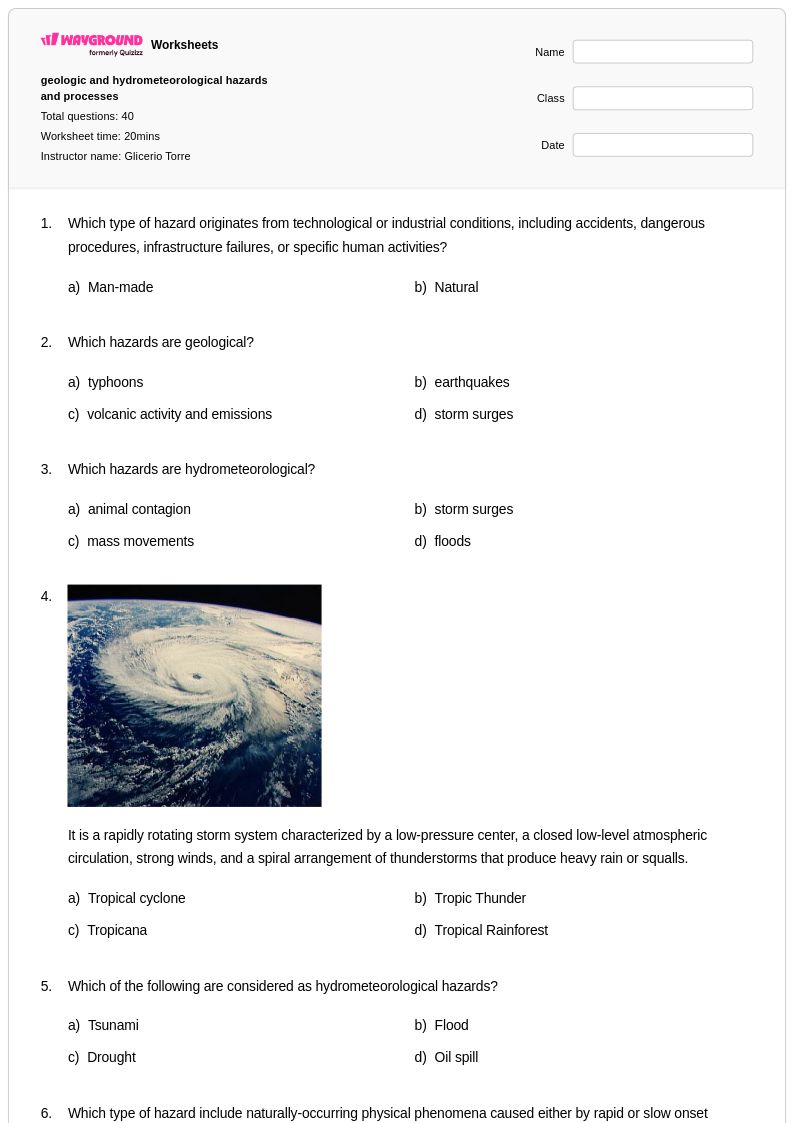
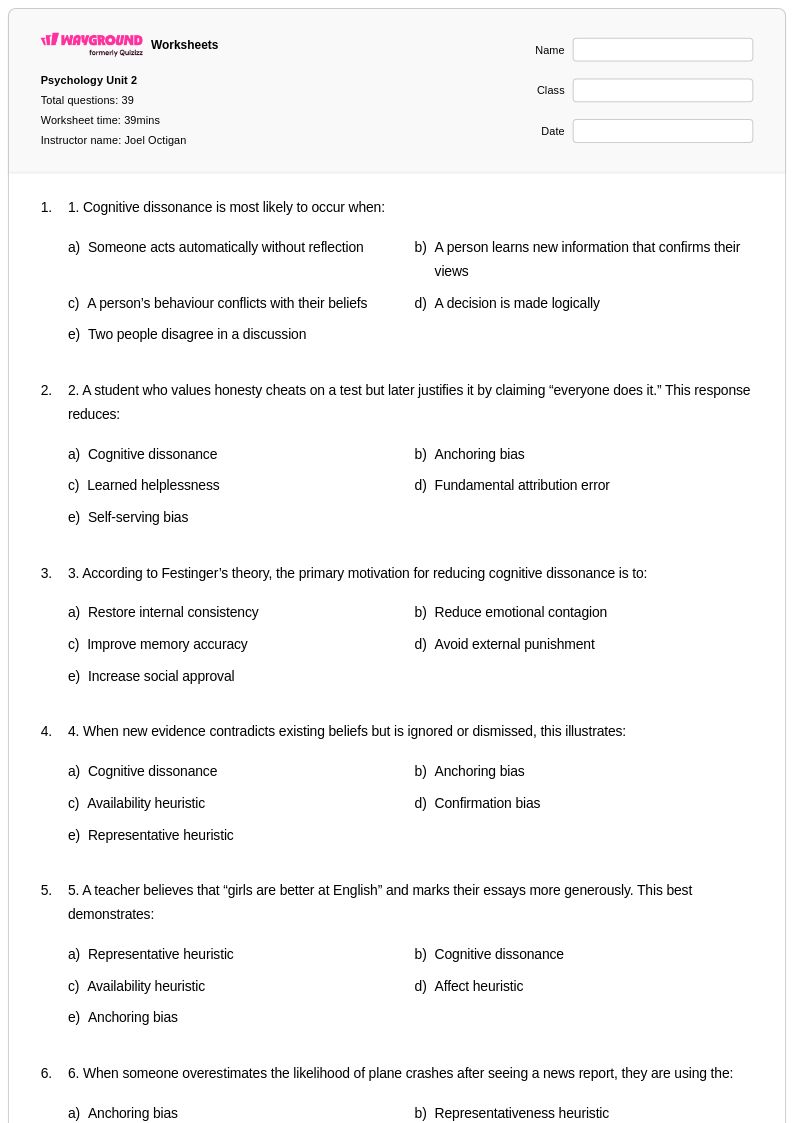
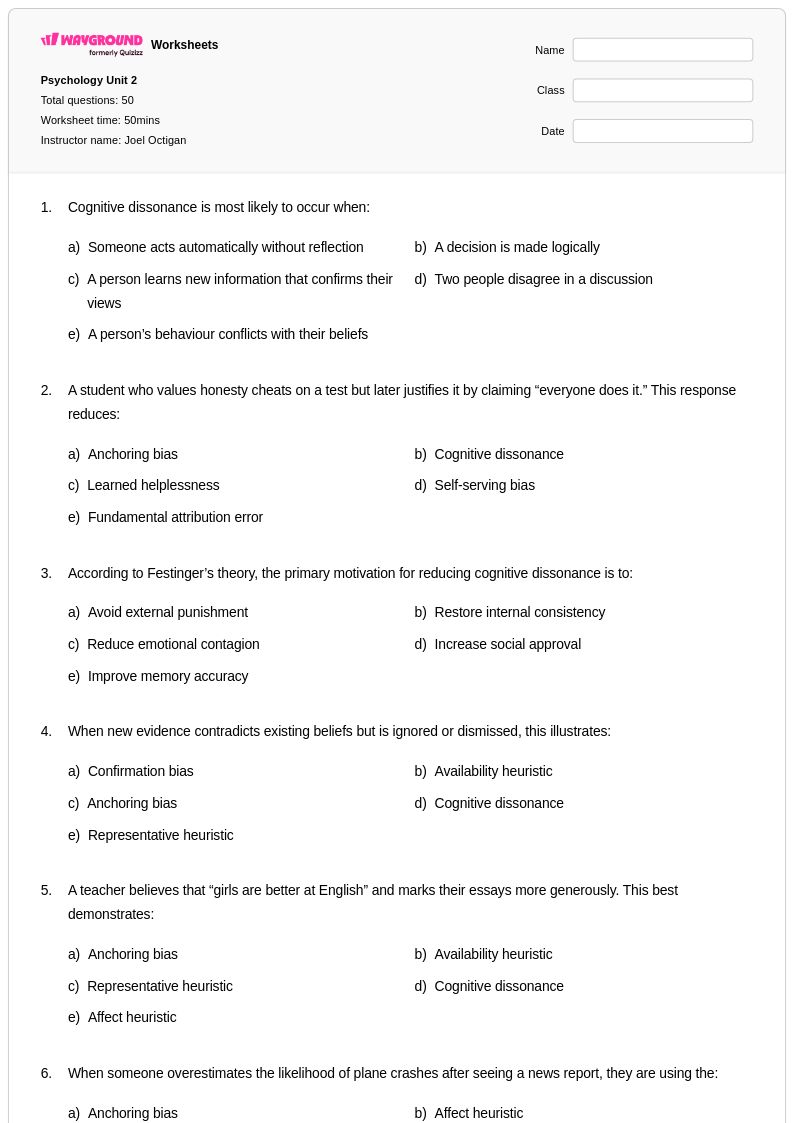
Explore Class 11 contagion worksheets and free printables that help students understand disease transmission, pathogen spread, and infection control through comprehensive practice problems and detailed answer keys.
Explore printable Contagion worksheets for Class 11
Contagion worksheets for Class 11 biology students available through Wayground (formerly Quizizz) provide comprehensive exploration of how infectious diseases spread through populations and the mechanisms that govern transmission dynamics. These educational resources strengthen critical analytical skills by engaging students with practice problems that examine pathogen characteristics, transmission modes, host-pathogen interactions, and epidemiological principles. Students work through scenarios involving viral, bacterial, and parasitic infections while analyzing factors such as incubation periods, infection rates, and population immunity. The worksheets include detailed answer keys that guide students through complex concepts like reproductive numbers, herd immunity thresholds, and containment strategies, with free printables covering mathematical modeling of disease outbreaks and real-world case studies of historical and contemporary pandemics.
Wayground (formerly Quizizz) supports biology educators with millions of teacher-created contagion and infectious disease resources that align with advanced high school science standards and learning objectives. The platform's robust search and filtering capabilities enable teachers to locate worksheets targeting specific aspects of disease transmission, from molecular mechanisms to population-level epidemiology, while differentiation tools allow customization for varying student ability levels within Class 11 classrooms. These materials are available in both printable pdf formats for traditional instruction and digital formats for technology-integrated learning environments, providing flexibility for lesson planning across diverse teaching contexts. Teachers utilize these comprehensive worksheet collections for targeted skill practice, remediation of challenging epidemiological concepts, and enrichment activities that connect classroom learning to current public health challenges and scientific research in infectious disease control.
FAQs
How do I teach contagion and disease transmission in a biology class?
Effective contagion instruction starts with distinguishing transmission modes: direct contact, indirect contact, droplet, airborne, vector-borne, and fecal-oral routes. Use real-world outbreak data or case studies to help students analyze how a pathogen moves through a population, then connect those pathways to prevention strategies like vaccination, quarantine, and hygiene protocols. Building from pathogen biology (viral vs. bacterial vs. parasitic behavior) to epidemiological outcomes gives students a coherent framework rather than isolated facts.
What practice exercises help students understand how infectious diseases spread?
Worksheets that ask students to trace infection pathways, evaluate R0 values, and analyze outbreak scenarios are particularly effective for reinforcing contagion concepts. Practice problems that mix question formats, such as analyzing transmission diagrams, classifying diseases by vector, and interpreting epidemiological curves, ensure students engage with the material at multiple levels. These exercises build the critical thinking skills needed to evaluate prevention strategies, not just recall definitions.
What misconceptions do students commonly have about contagion and disease transmission?
A frequent misconception is that all infectious diseases spread the same way, leading students to conflate airborne transmission with droplet transmission or to assume all bacteria are harmful. Students also often confuse infection with disease, not recognizing that a host can carry and transmit a pathogen without displaying symptoms. Another common error is underestimating the role of indirect transmission routes, such as contaminated surfaces or vectors like mosquitoes, focusing only on person-to-person contact.
How can I differentiate contagion worksheets for students at different levels?
For struggling learners, scaffold tasks by providing labeled transmission diagrams before asking students to interpret data independently, and reduce the number of answer choices on multiple-choice items to lower cognitive load. Advanced students benefit from open-ended case studies that require them to propose containment strategies and evaluate trade-offs in public health responses. On Wayground, teachers can apply accommodations such as reduced answer choices, extended time, and read-aloud support to individual students without disrupting the rest of the class.
How do I use Wayground's contagion worksheets in my classroom?
Wayground's contagion worksheets are available as printable PDFs for traditional classroom use and in digital formats for technology-integrated environments, giving teachers flexibility for in-class instruction, homework, or assessment prep. Teachers can also host these worksheets as a live quiz directly on Wayground, enabling real-time student responses and automatic grading. Each worksheet includes a comprehensive answer key, supporting both teacher-led review and independent student practice.
How do I connect contagion concepts to real-world public health events for students?
Anchoring instruction in documented outbreaks, such as influenza seasons, COVID-19 transmission data, or historical events like the 1918 flu pandemic, makes abstract epidemiological principles concrete and relevant. Ask students to identify the transmission mode, affected population, and containment measures used in each case, then evaluate what worked and why. This approach reinforces content knowledge while developing the data literacy skills students need to critically assess public health information.