Free Printable Distance Between Two Parallel Lines worksheets
Wayground's free distance between two parallel lines worksheets offer comprehensive practice problems and printables with answer keys to help students master calculating perpendicular distances in coordinate geometry.
Explore printable Distance Between Two Parallel Lines worksheets
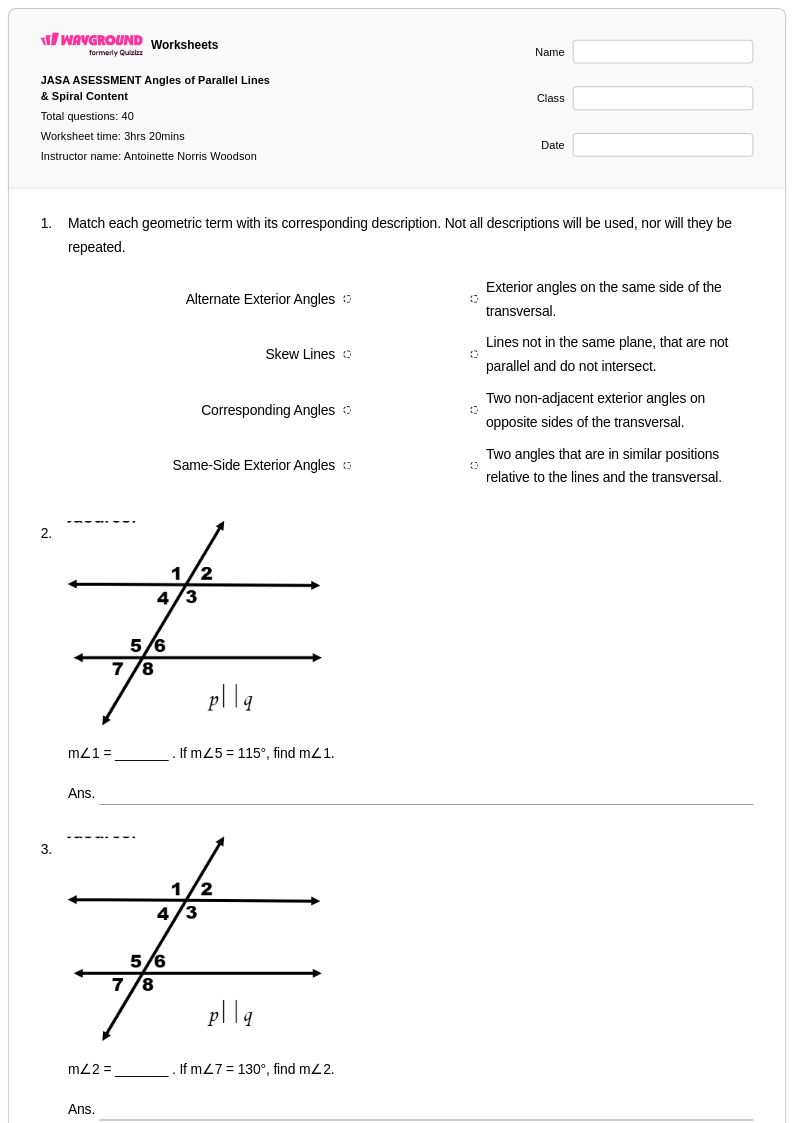
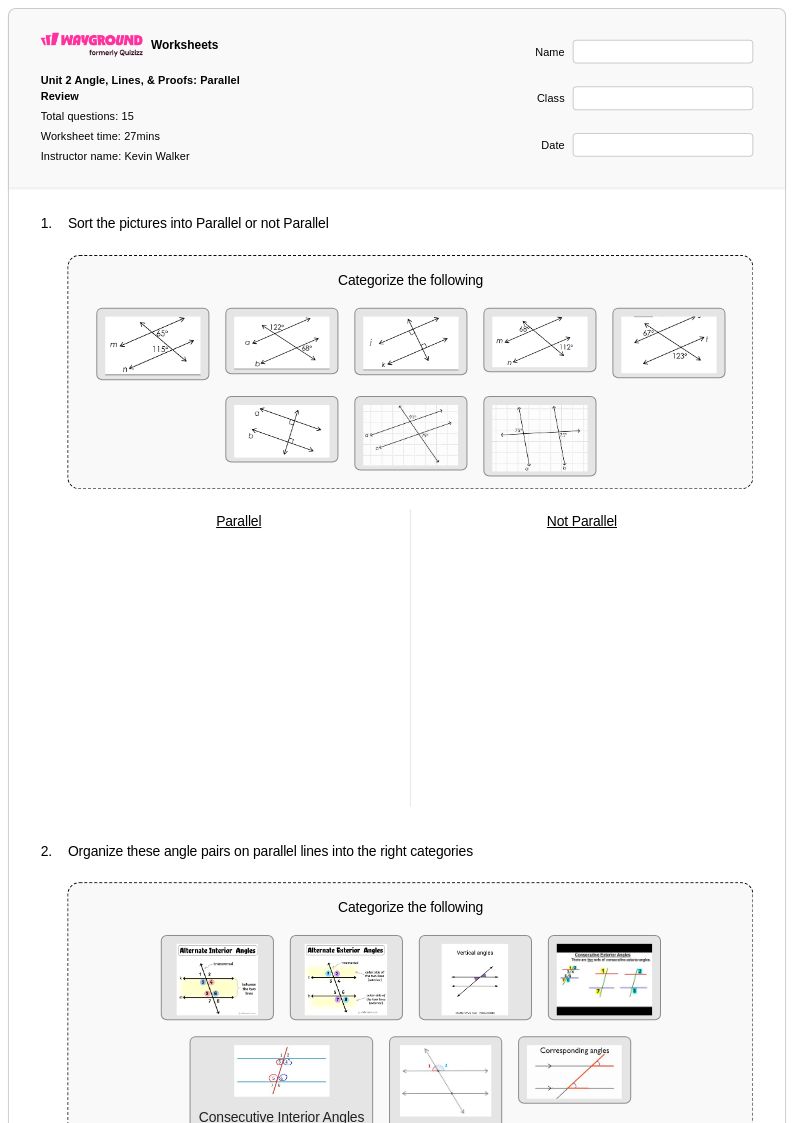
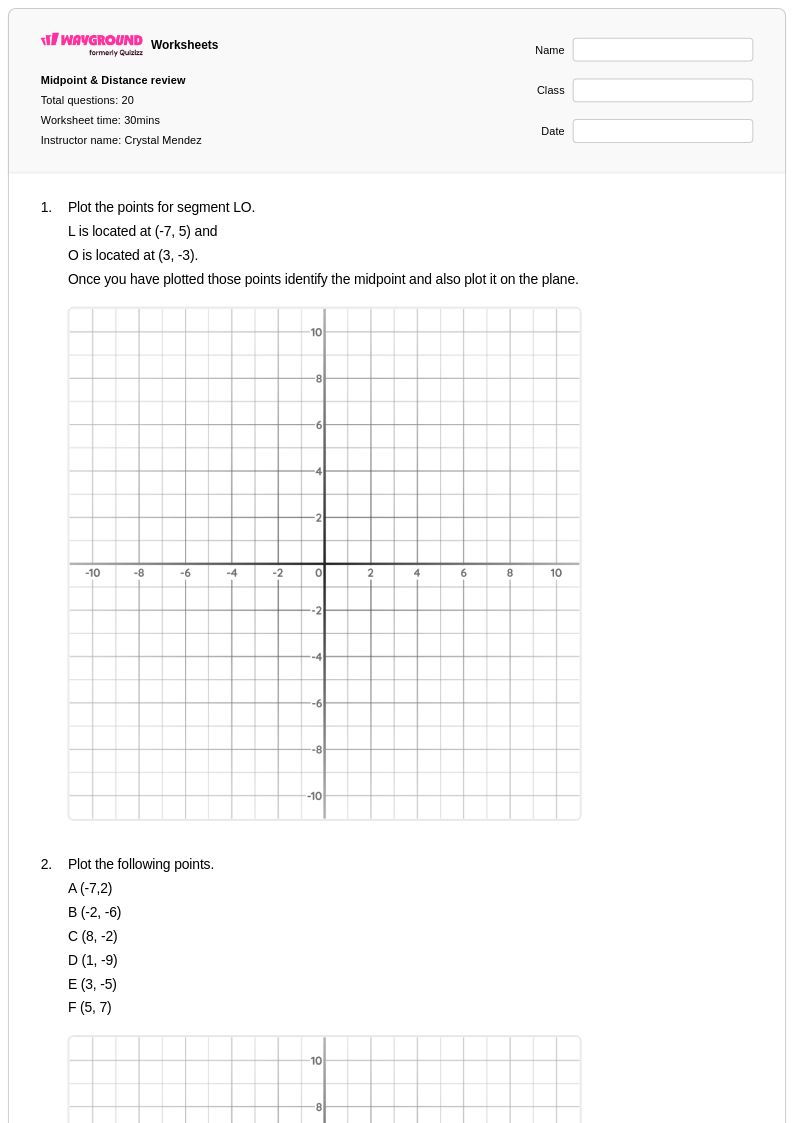
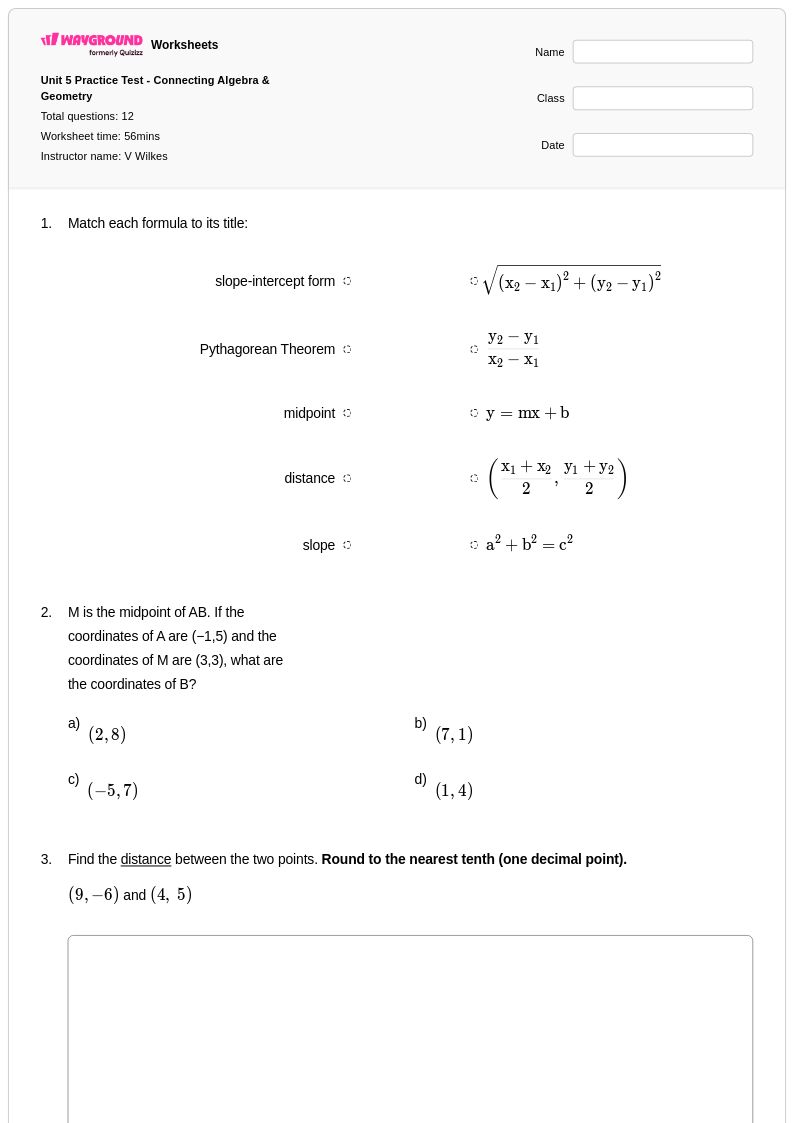
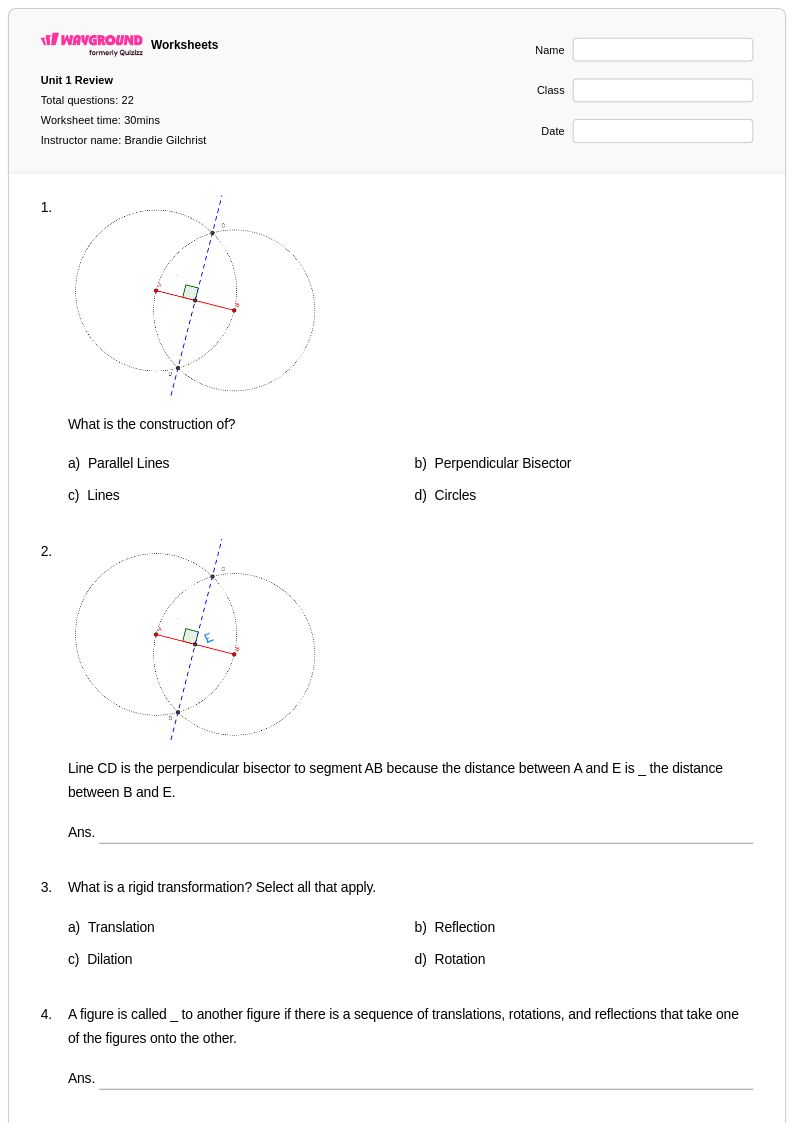
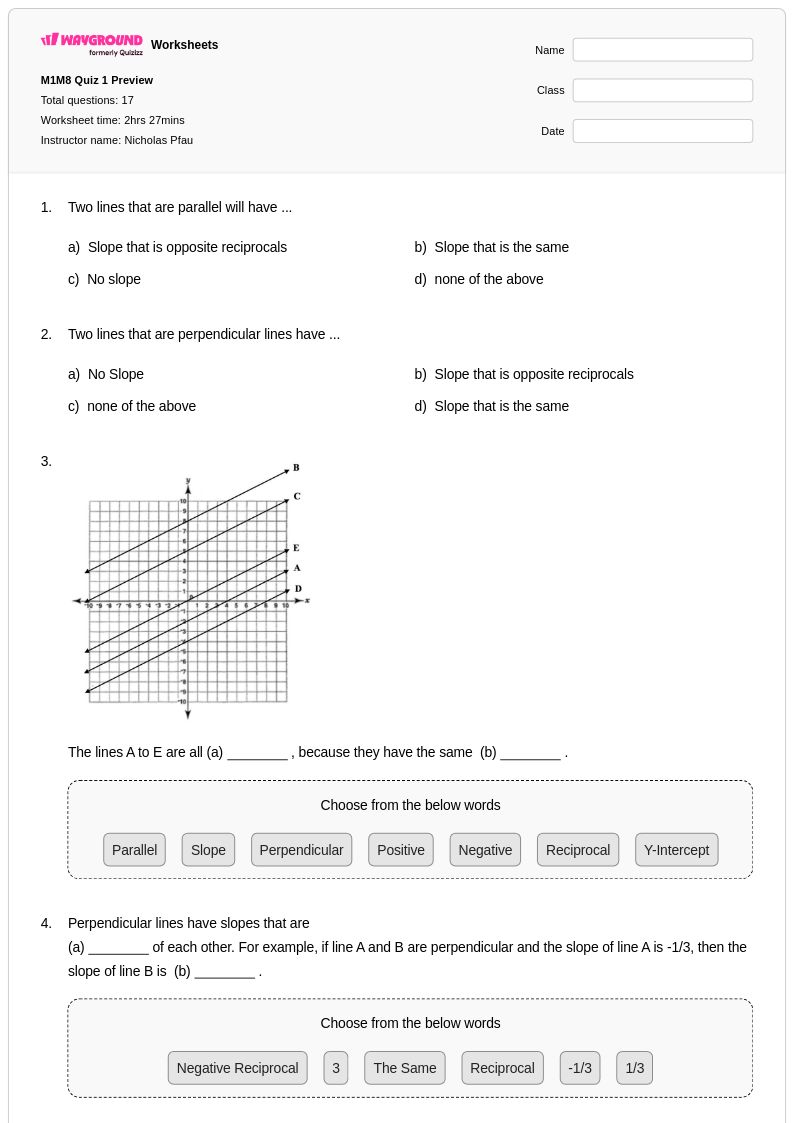
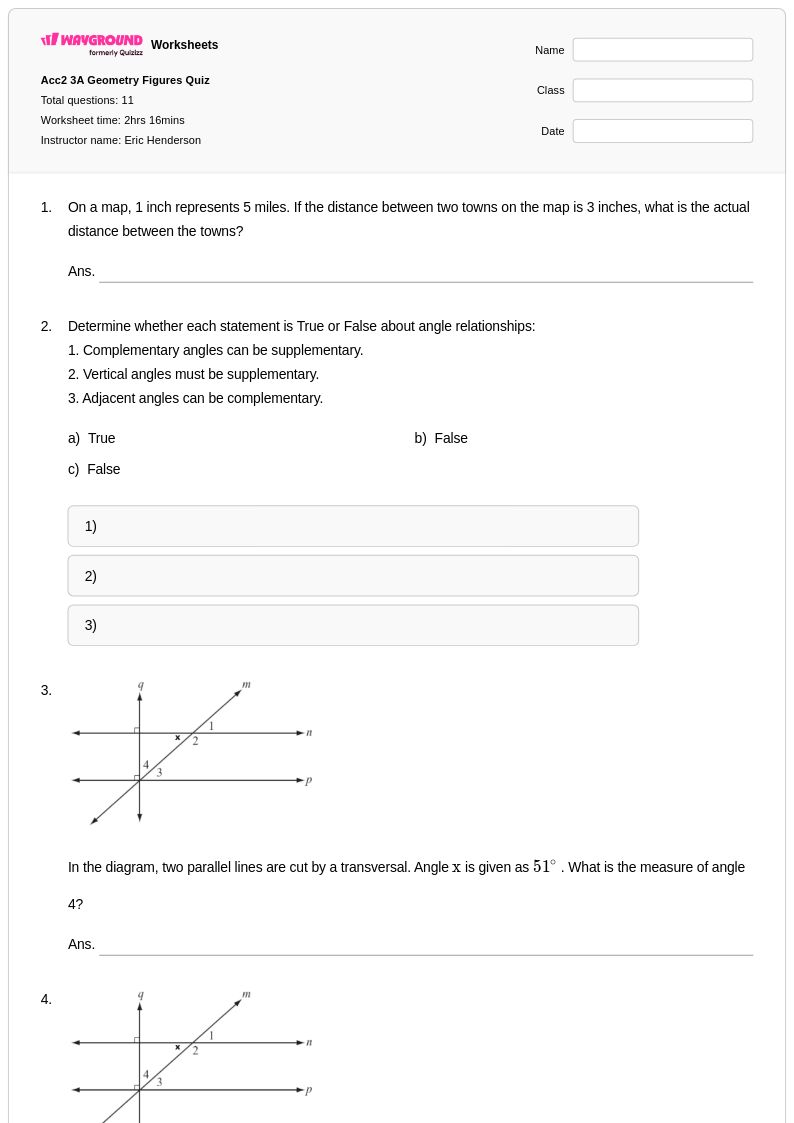
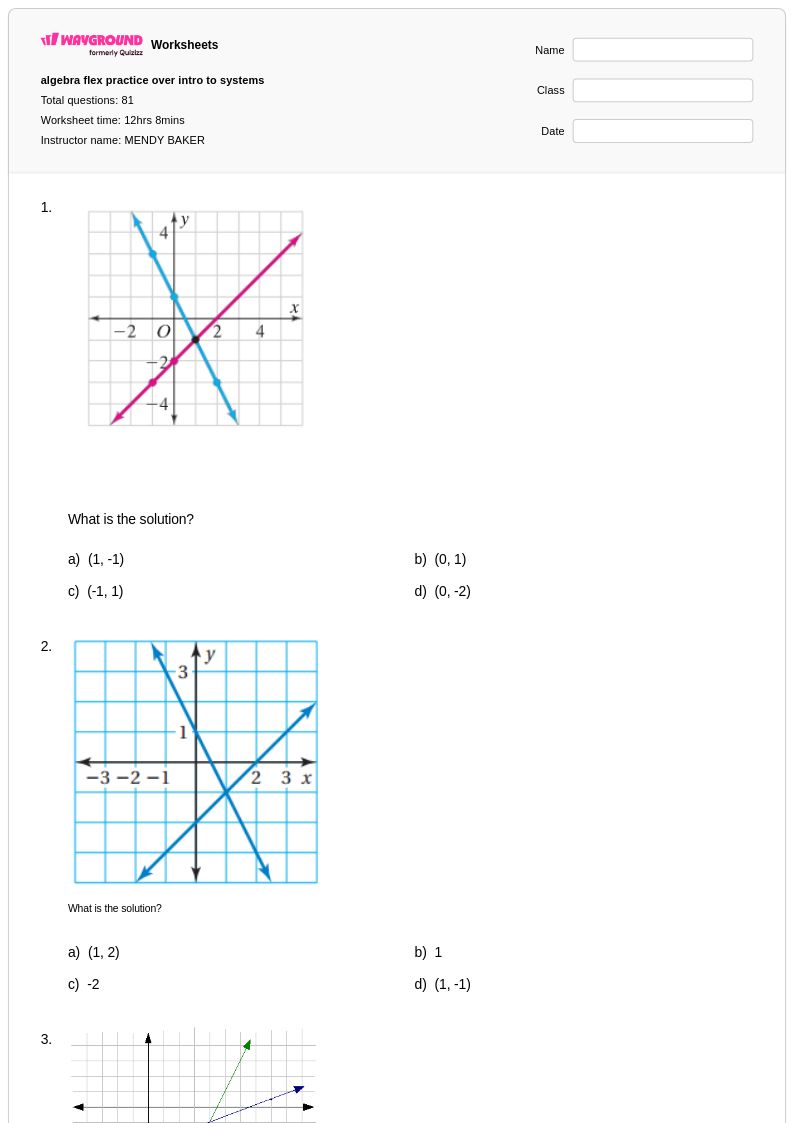
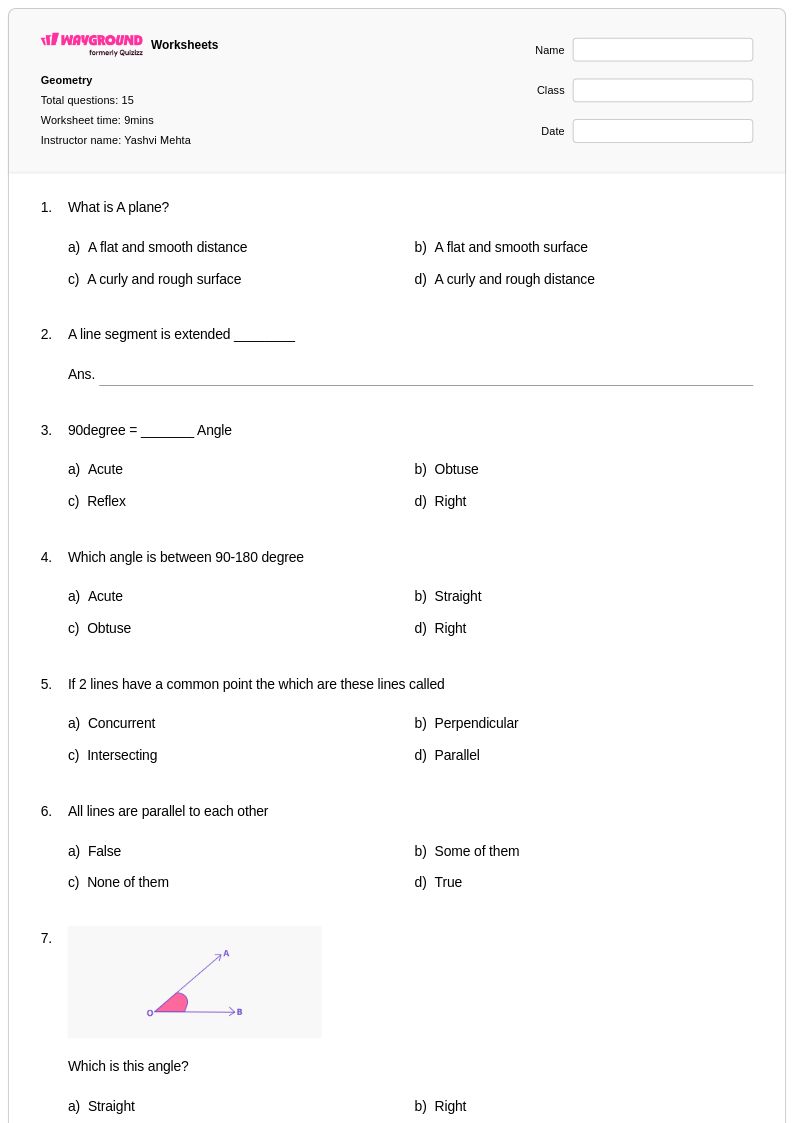
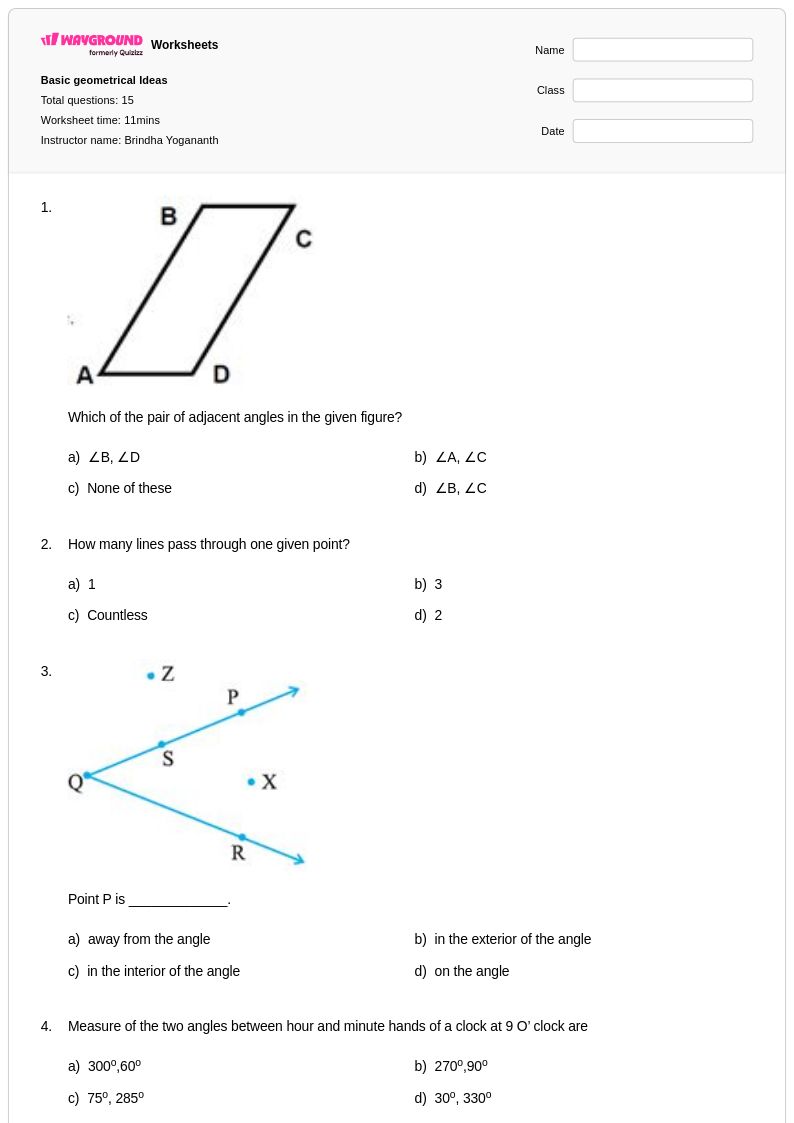
Distance between two parallel lines worksheets available through Wayground (formerly Quizizz) provide comprehensive practice for students learning this essential geometry concept. These carefully crafted worksheets strengthen critical mathematical skills including coordinate geometry, perpendicular distance calculations, and the application of distance formulas in various geometric contexts. Students work through systematic practice problems that build proficiency in identifying parallel lines, constructing perpendicular segments, and calculating precise distances using both coordinate plane methods and algebraic approaches. Each worksheet includes detailed answer keys that support independent learning and self-assessment, while the free printable format ensures accessible practice materials for diverse learning environments. These pdf resources emphasize conceptual understanding alongside computational accuracy, helping students master the relationship between parallel lines and develop spatial reasoning skills fundamental to advanced geometry topics.
Wayground (formerly Quizizz) empowers mathematics teachers with millions of teacher-created resources specifically designed for geometry instruction, including extensive collections focused on distance between parallel lines concepts. The platform's robust search and filtering capabilities allow educators to quickly locate worksheets that align with specific curriculum standards and match their students' skill levels perfectly. Teachers benefit from comprehensive differentiation tools that enable customization of problem complexity, visual representations, and scaffolding support to meet diverse learning needs within their classrooms. Available in both printable and digital pdf formats, these versatile resources seamlessly integrate into lesson planning for initial instruction, targeted remediation, and enrichment activities. The platform's flexible customization features allow teachers to modify existing worksheets or combine multiple resources to create tailored practice sets that address specific learning objectives and provide sustained skill practice throughout their geometry units.
FAQs
How do I teach students to find the distance between two parallel lines?
Start with the geometric intuition: the distance between two parallel lines is always measured along a perpendicular segment connecting them, and that distance is constant no matter where you measure it. Once students grasp why perpendicularity matters, introduce the algebraic formula using the standard form of a line. A common sequencing that works well is: (1) identify that two lines are parallel by comparing slopes, (2) write both lines in standard form, (3) apply the perpendicular distance formula. Grounding each step in a coordinate plane diagram helps students see what the algebra is actually computing.
What kinds of practice problems help students get better at calculating the distance between parallel lines?
Students need practice across a few distinct problem types: applying the formula when lines are already in standard form, converting from slope-intercept form before applying it, and working backward from a given distance to find a missing coefficient. Problems that mix these types — rather than drilling one form repeatedly — build the flexibility students need on assessments. These worksheets cover that range, with problems that progress from straightforward calculations to multi-step setups.
What mistakes do students commonly make when calculating the distance between two parallel lines?
The most frequent error is applying the distance formula between two points on the lines rather than using the perpendicular distance formula — students confuse this with the point-to-point distance formula they already know. A second common mistake is forgetting to verify that the lines are actually parallel before proceeding; if slopes differ, the concept doesn't apply. Watch also for sign errors when substituting coefficients into the formula, especially when lines are written in different forms.
How do I use these worksheets in my classroom?
Each worksheet includes a complete answer key, so students can check their own work during independent practice or you can use it for quick grading. For paper-based practice — useful if your school is managing screen time — print the PDF and grade submissions using the Wayground for Teachers app, which lets you scan or capture student work. If you prefer a digital route, host the worksheet as an online quiz directly on Wayground so students complete it on their devices.
How does the distance between two parallel lines fit into the high school geometry curriculum?
In Common Core-aligned geometry, this topic sits within the coordinate geometry strand and builds directly on students' prior work with slope, linear equations, and the distance formula for two points. It extends that foundation toward more abstract geometric reasoning: students move from measuring distances between specific points to understanding a property of an entire pair of lines. From here, the concept feeds into work on geometric proofs, transformations, and eventually analytic geometry in precalculus.
How can I differentiate these worksheets for students at different levels?
For students who struggle, Wayground lets you apply Read Aloud so multi-step problem prompts are read to them, and you can reduce answer choices on digital versions to lower cognitive load while they build confidence. For accessibility needs, you can generate an alternate version of the same worksheet with a dyslexia-friendly font or larger text — same problems, adjusted presentation. Advanced students can be assigned problems that skip the scaffolded steps and move straight to non-standard forms or real-world applications.