Free Printable DNA Structure and Function Worksheets for Class 11
Explore Class 11 DNA Structure and Function worksheets from Wayground featuring comprehensive printables and practice problems that help students master molecular biology concepts, complete with answer keys and free PDF downloads.
Explore printable DNA Structure and Function worksheets for Class 11
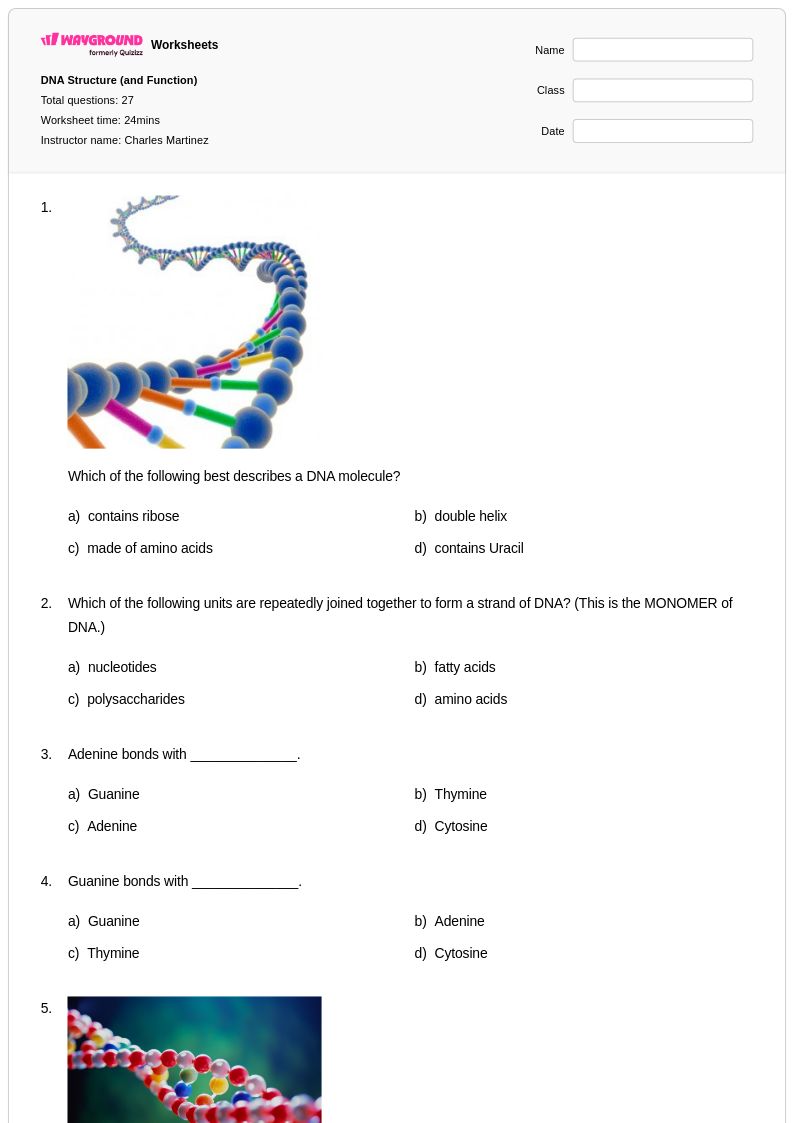
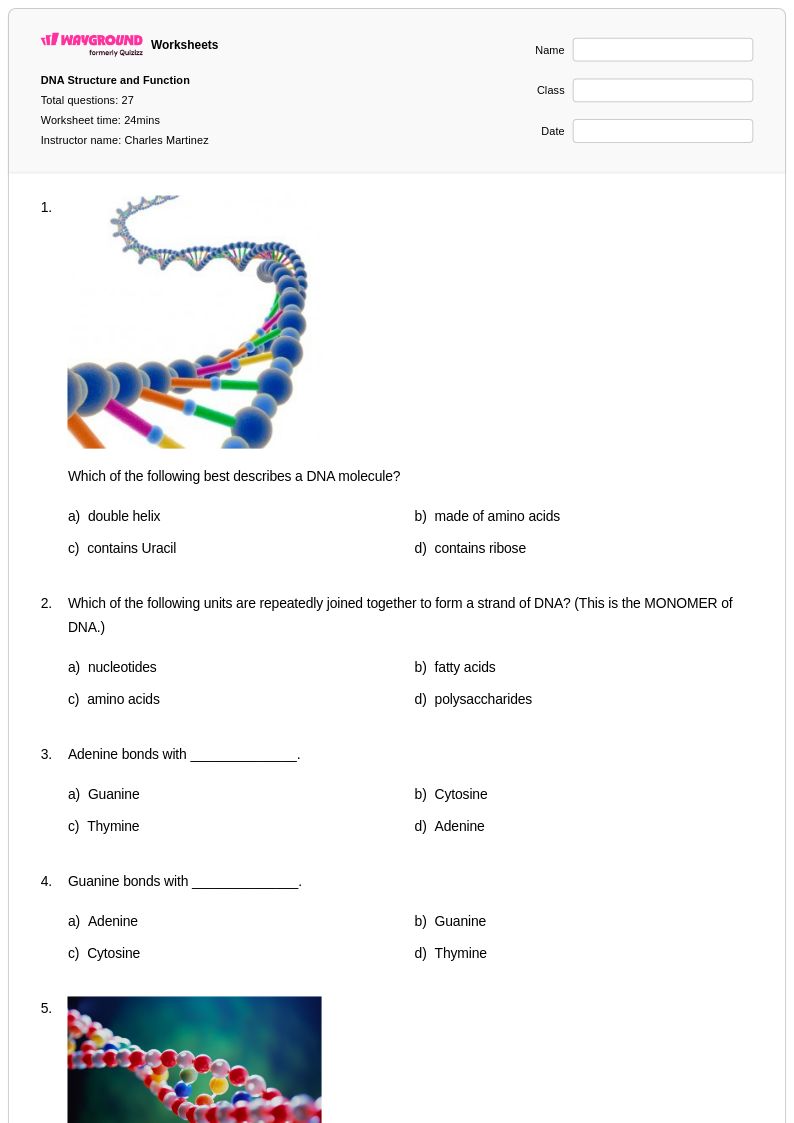
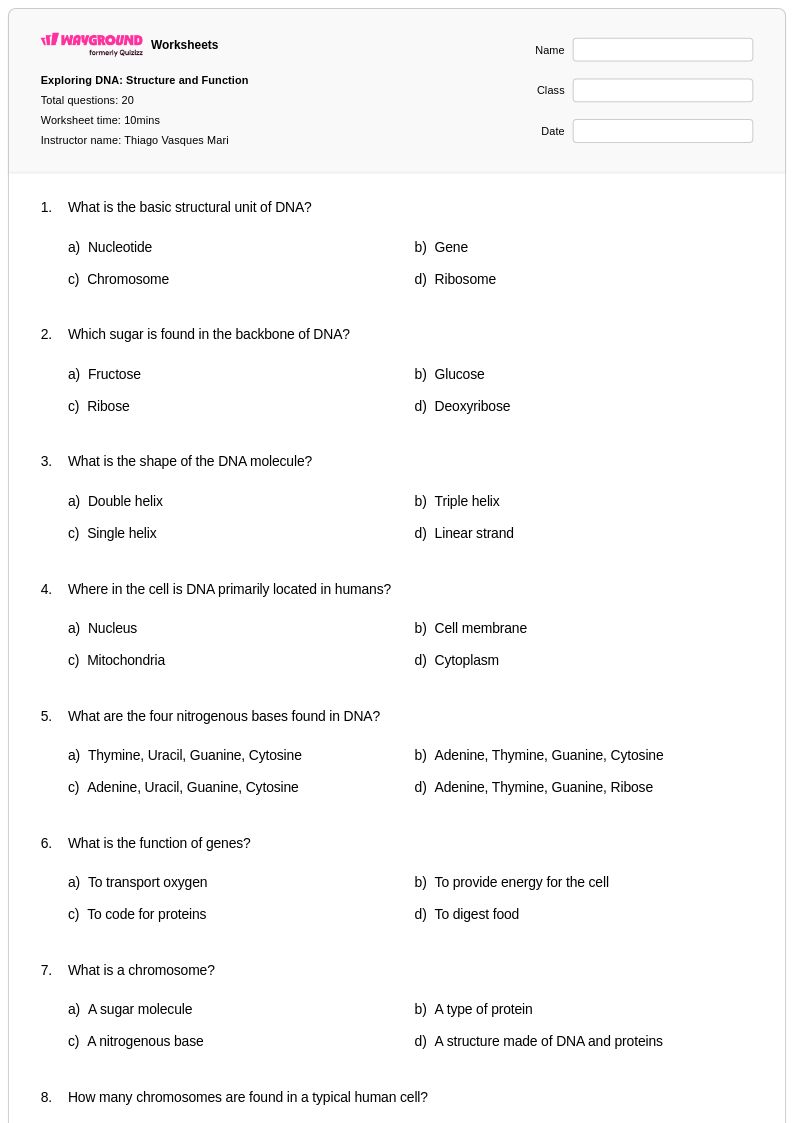
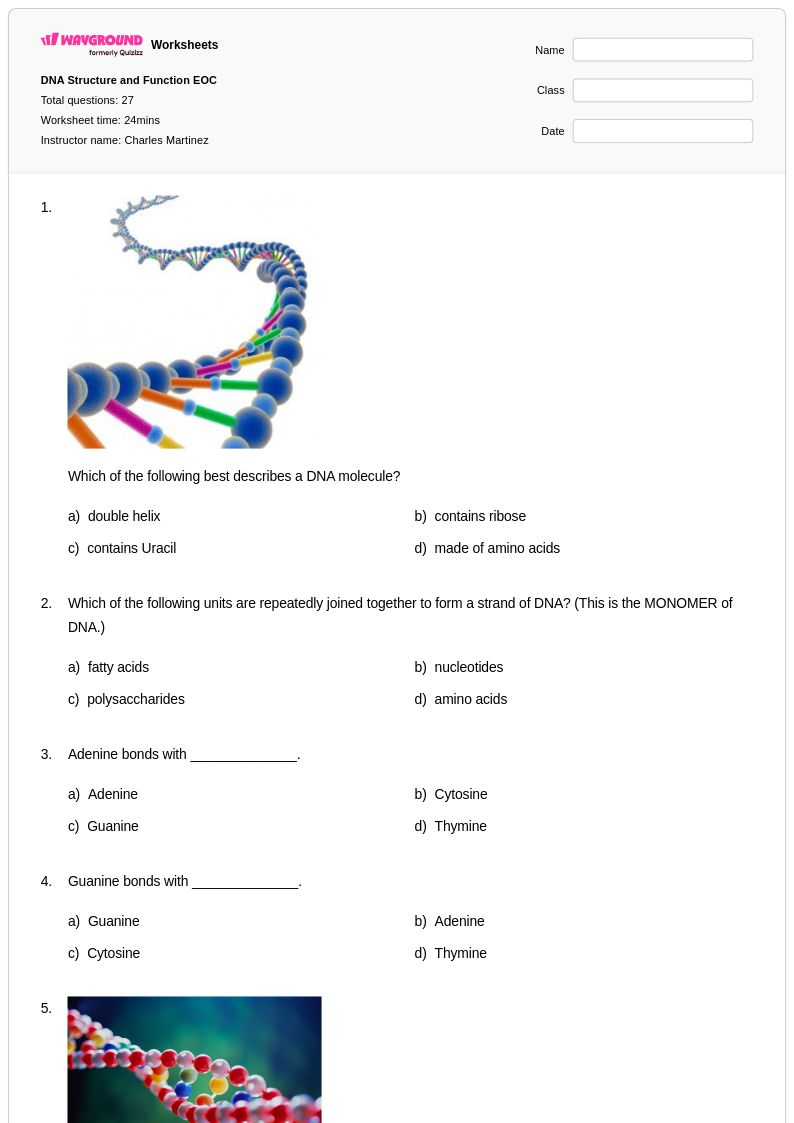
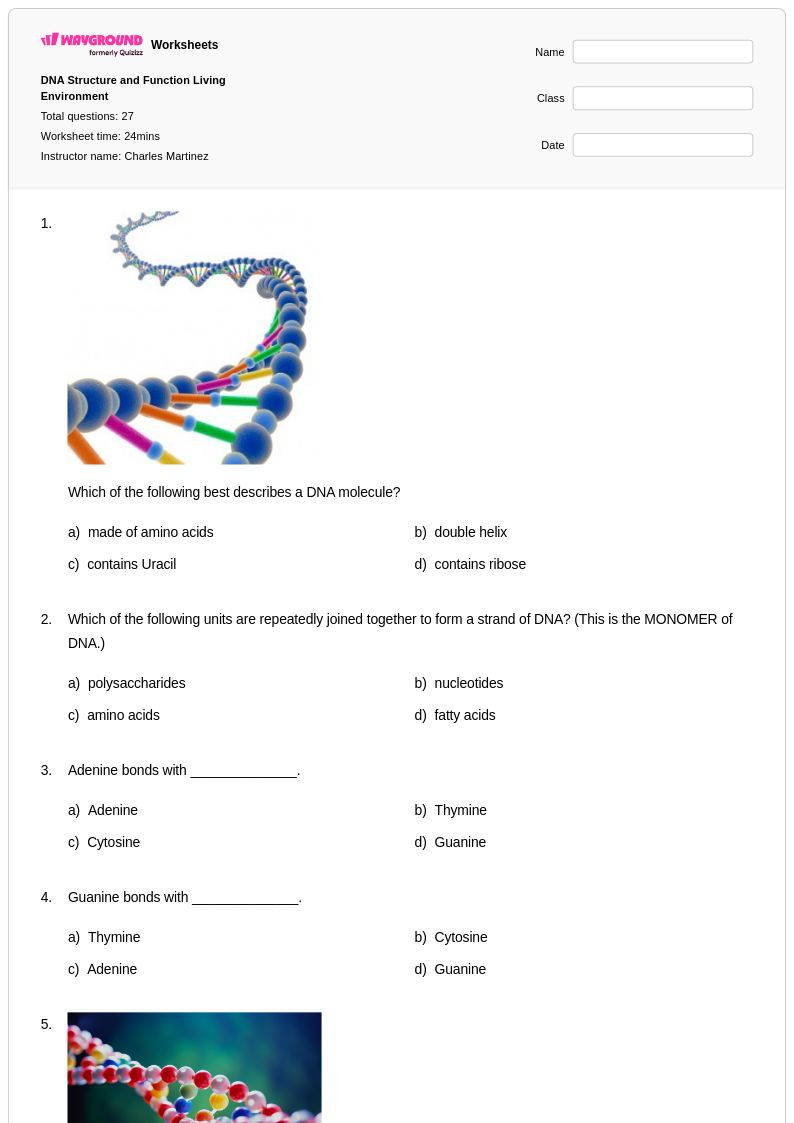
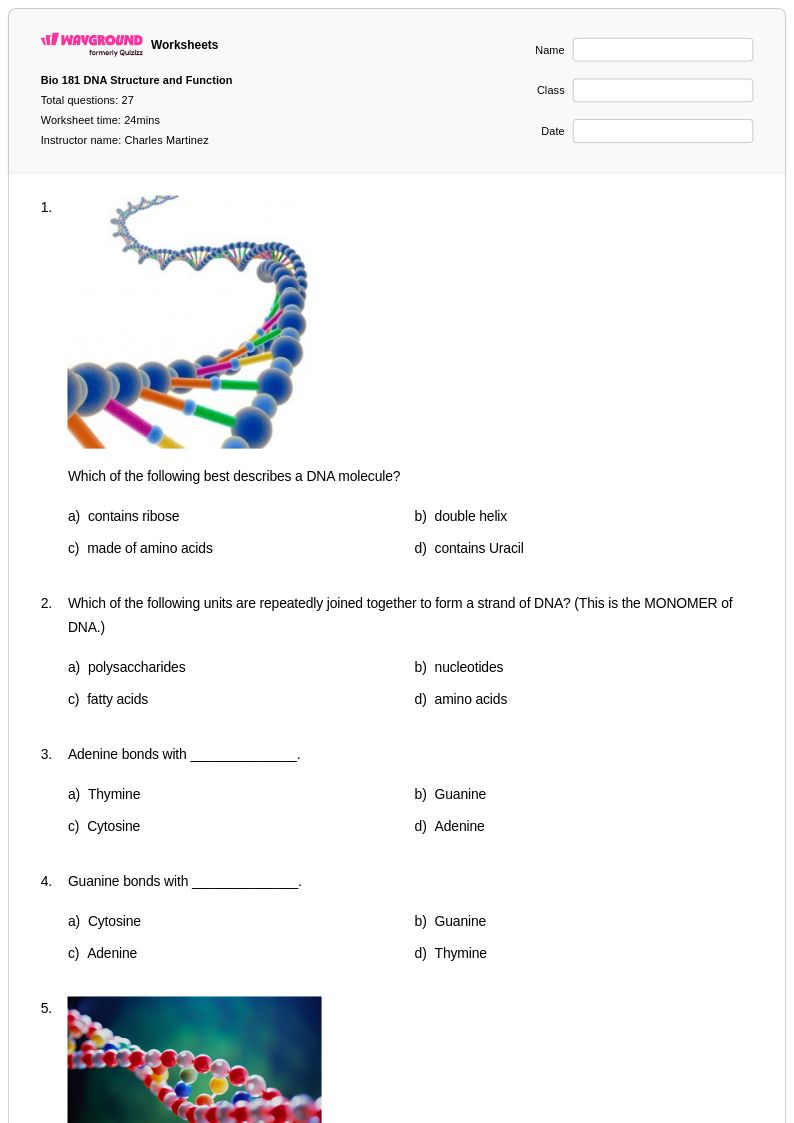
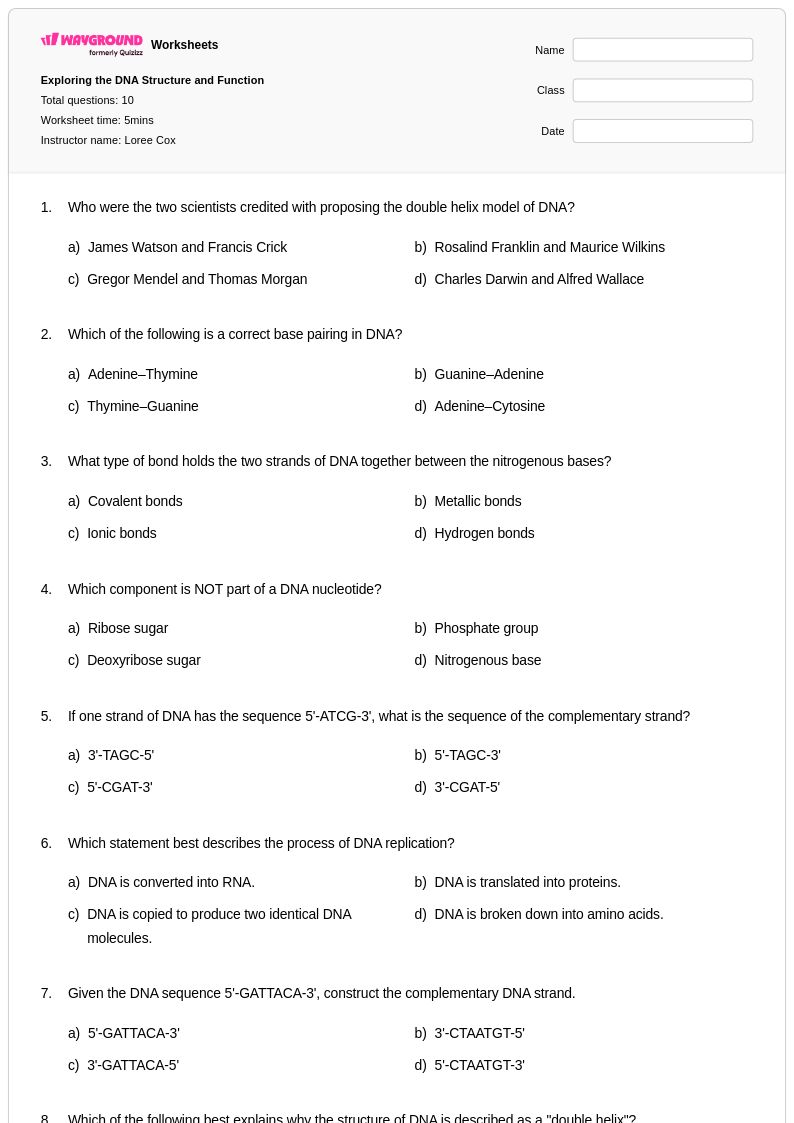
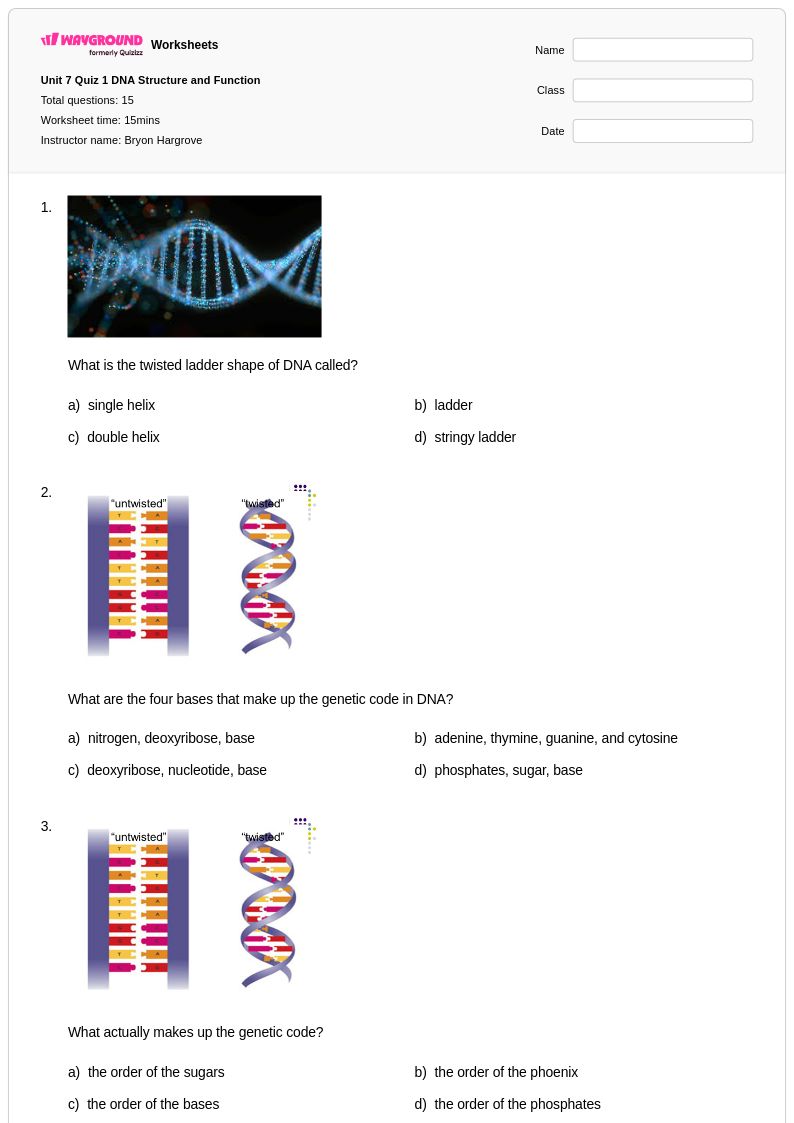
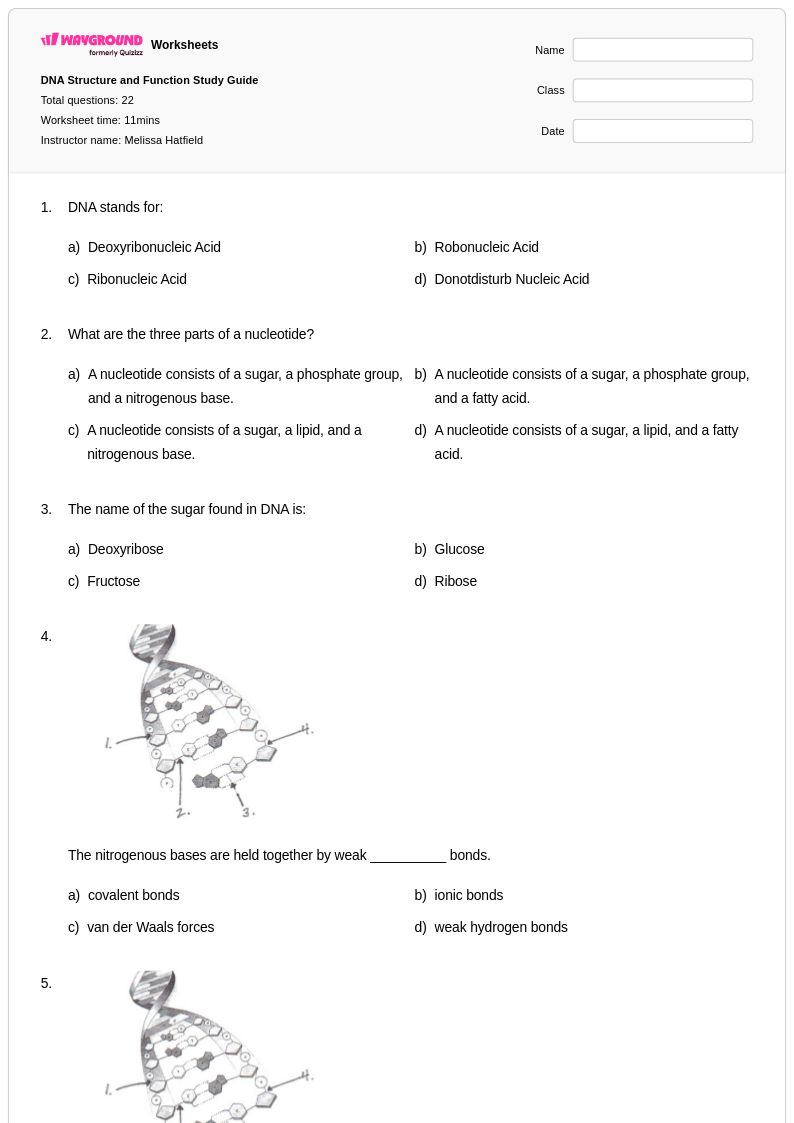
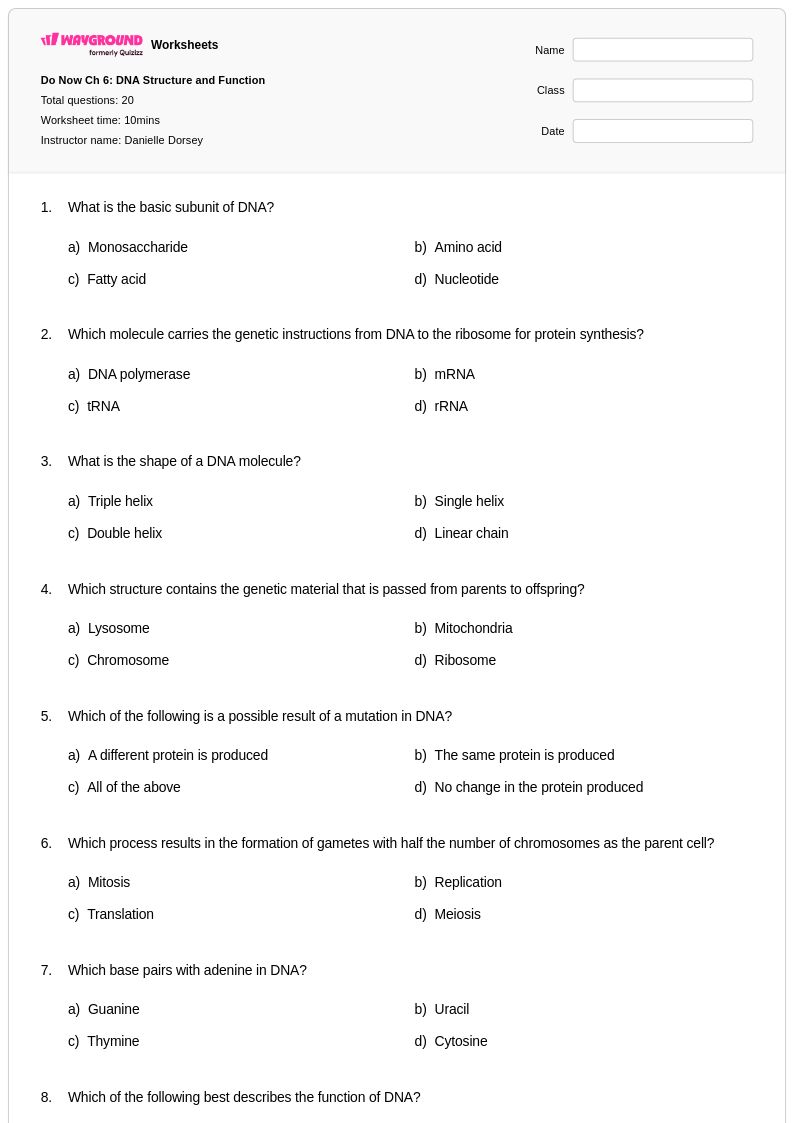
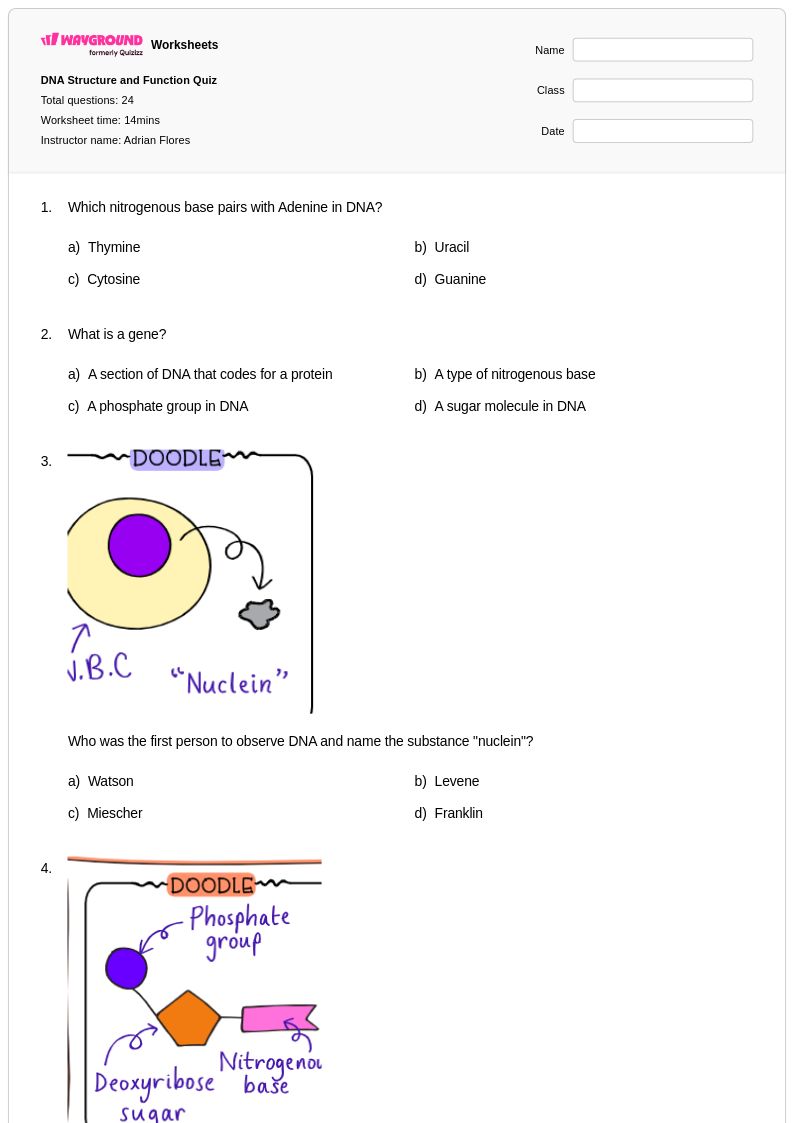
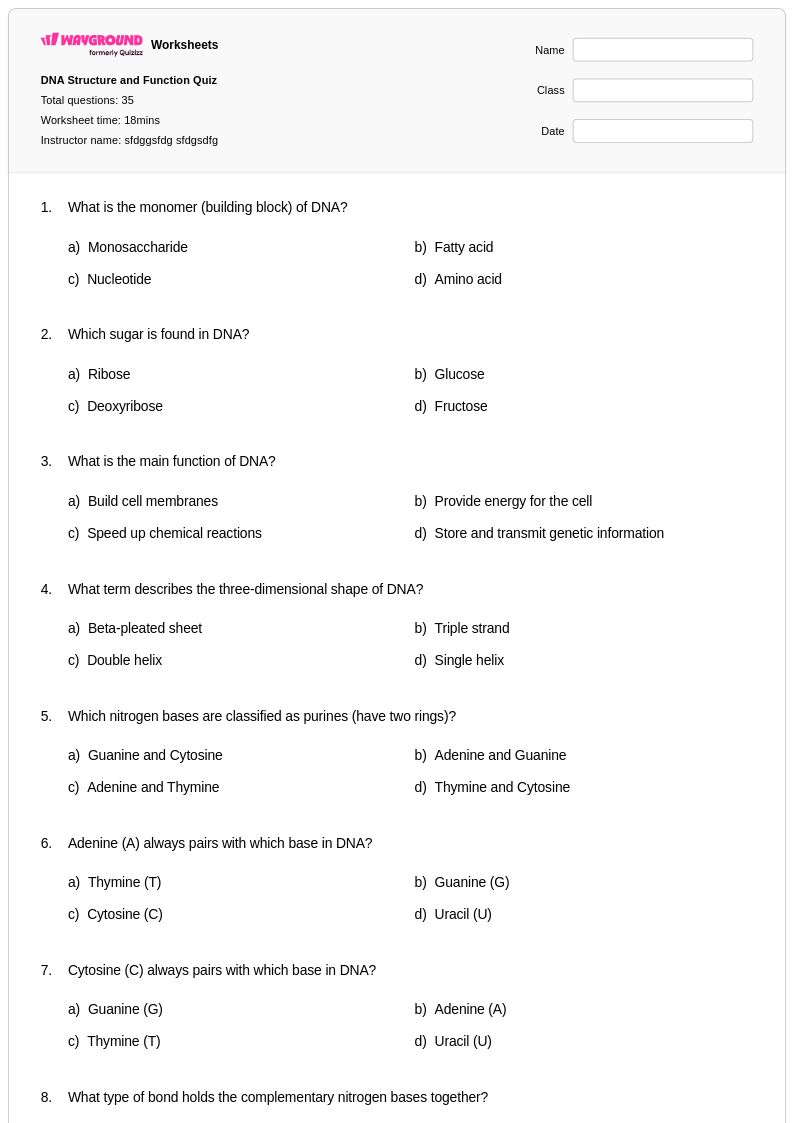
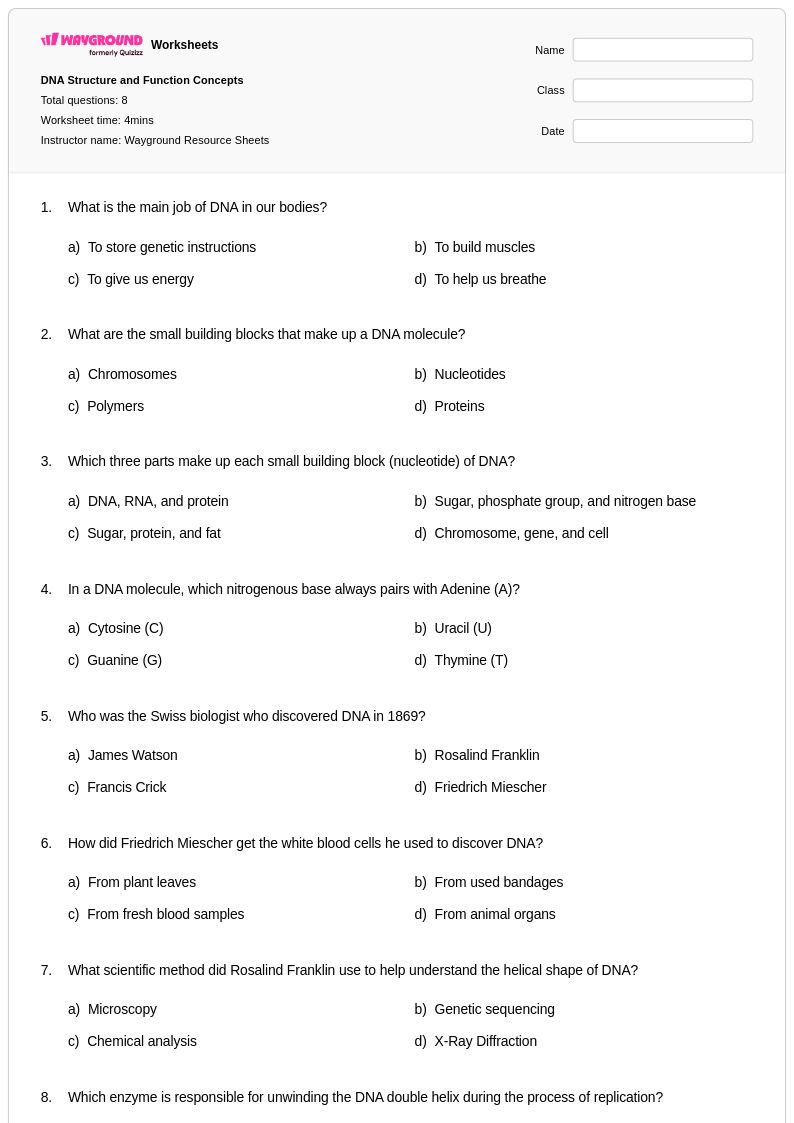
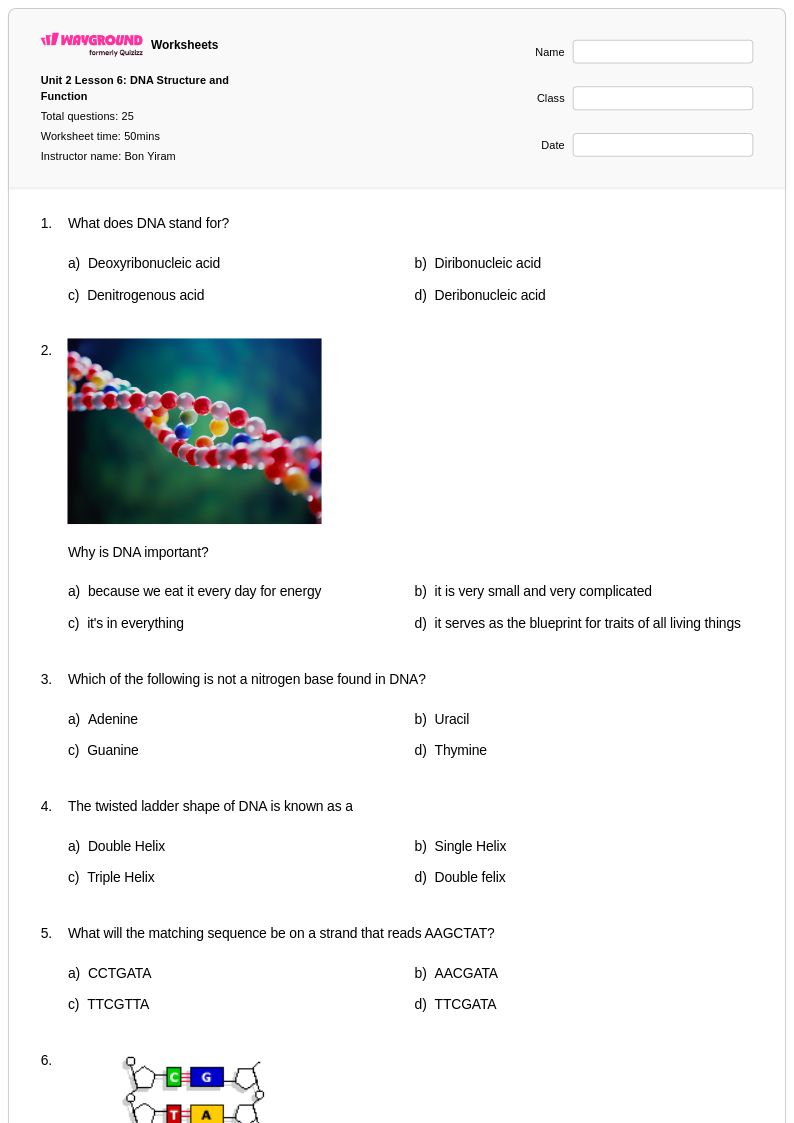
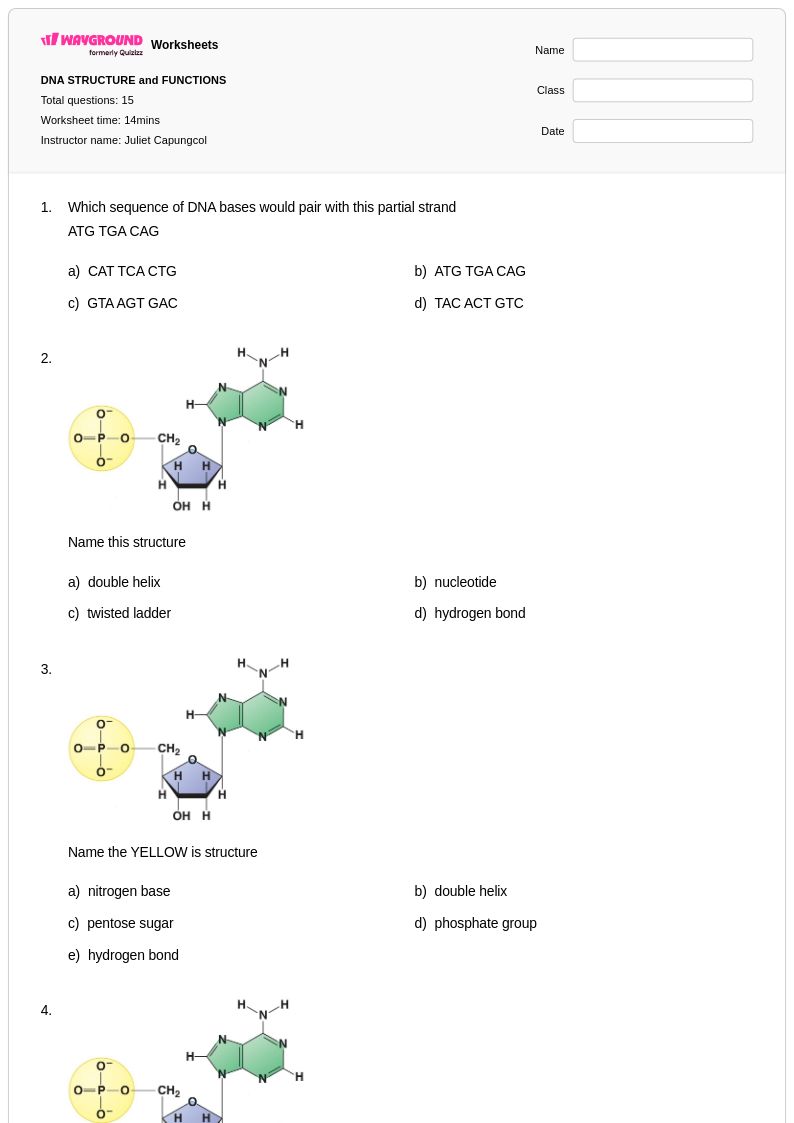
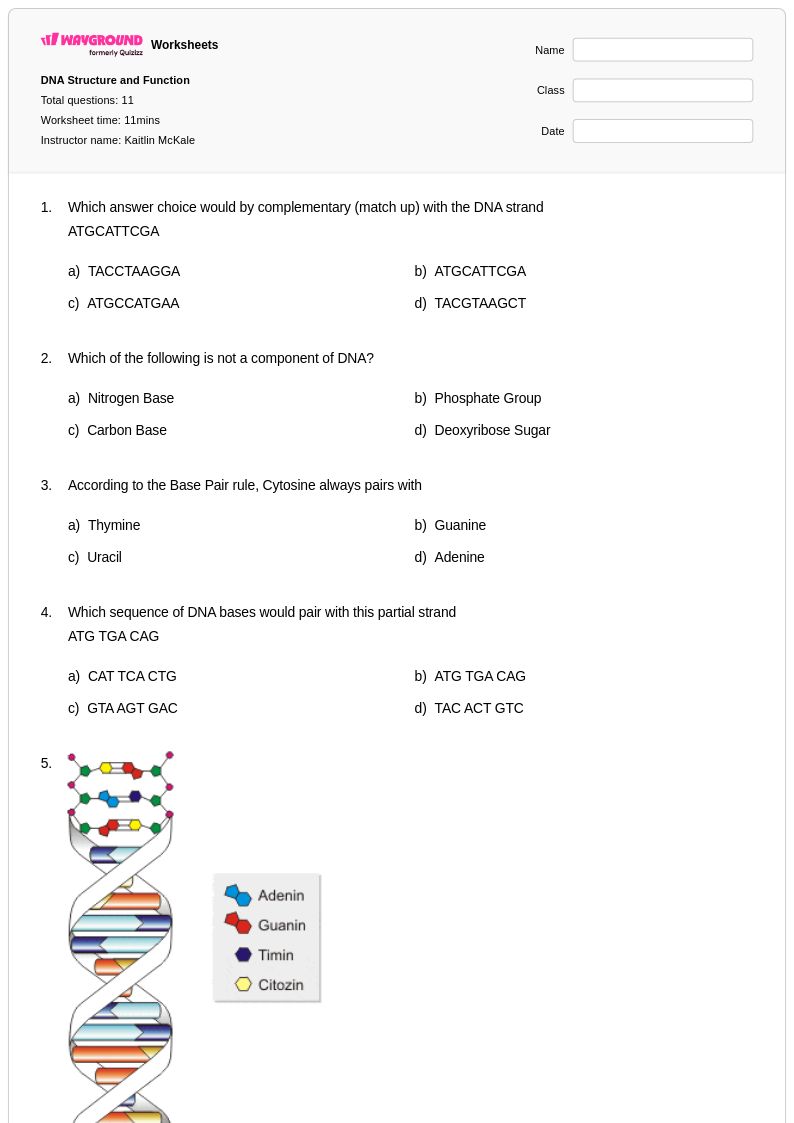
DNA Structure and Function worksheets for Class 11 students available through Wayground (formerly Quizizz) provide comprehensive coverage of molecular biology's most fundamental concepts. These expertly crafted resources guide students through the double helix structure, nucleotide composition, base pairing rules, and the critical relationship between DNA's architecture and its biological functions. Students develop essential skills in interpreting DNA diagrams, analyzing complementary base sequences, understanding antiparallel strand orientation, and connecting structural features to replication and transcription processes. Each worksheet includes detailed answer keys and practice problems that reinforce key concepts such as the roles of hydrogen bonding, sugar-phosphate backbones, and major and minor grooves. These free printable resources serve as invaluable tools for mastering complex molecular interactions and preparing students for advanced studies in genetics and biochemistry.
Wayground (formerly Quizizz) empowers educators with an extensive collection of millions of teacher-created DNA Structure and Function worksheets specifically designed for Class 11 biology instruction. The platform's robust search and filtering capabilities allow teachers to quickly locate resources that align with curriculum standards and match their students' specific learning needs. Advanced differentiation tools enable instructors to customize content difficulty levels, ensuring appropriate challenges for diverse learners while maintaining scientific accuracy. These versatile resources are available in both printable pdf formats and digital versions, supporting flexible classroom implementation and remote learning environments. Teachers utilize these comprehensive worksheet collections for targeted skill practice, pre-assessment activities, remediation support for struggling students, and enrichment opportunities for advanced learners, streamlining lesson planning while ensuring thorough coverage of this critical molecular biology foundation.
FAQs
How do I teach DNA structure and function to students?
Start by building a concrete understanding of the double helix before introducing function. Use molecular diagrams to walk students through nucleotide components, the sugar-phosphate backbone, and base pairing rules (A-T and C-G), then connect structure directly to function by explaining how the complementary strand enables accurate replication. Once students can visualize the molecule, introduce its roles in heredity and protein synthesis as logical extensions of that structure.
What worksheets or exercises help students practice DNA structure and base pairing?
Practice problems that ask students to write complementary base sequences are among the most effective exercises for reinforcing base pairing rules and demonstrating how DNA carries genetic information. Diagram labeling tasks that require students to identify nucleotide components, hydrogen bonds, and the double helix orientation help bridge visual and conceptual understanding. Worksheets that combine both question types give students the repetition needed to retain the structural details with accuracy.
What mistakes do students commonly make when learning about DNA structure?
One of the most frequent errors is confusing the directionality of the two DNA strands — students often forget that the strands run antiparallel (5' to 3' in opposite directions), which becomes a significant problem when they move on to replication and transcription. Another common misconception is treating the four nitrogenous bases as interchangeable rather than understanding that A only pairs with T, and G only pairs with C. Students also regularly conflate DNA structure with RNA structure, mixing up deoxyribose and ribose or misidentifying thymine and uracil.
How do I use DNA Structure and Function worksheets from Wayground in my classroom?
Wayground's DNA Structure and Function worksheets are available as printable PDFs for traditional classroom use and in digital formats for technology-integrated environments, making them flexible for homework, in-class practice, or lab follow-up. Teachers can also host worksheets as a quiz directly on Wayground, enabling real-time tracking of student responses and quick identification of conceptual gaps. For students who need additional support, Wayground allows teachers to enable accommodations such as read aloud, extended time, and reduced answer choices on an individual basis without disrupting the rest of the class.
How does DNA structure relate to its function in protein synthesis?
DNA's double-stranded structure stores genetic information in the sequence of nitrogenous bases, and during transcription, one strand serves as a template to produce messenger RNA (mRNA), which carries that sequence to the ribosome. The base pairing rules that hold the double helix together are the same rules that govern accurate mRNA production, which is why structural integrity directly determines functional accuracy in protein synthesis. Teaching this connection explicitly helps students see DNA not as an isolated topic but as the upstream driver of gene expression.
How can I differentiate DNA structure instruction for students at different levels?
For students who are still building foundational knowledge, focus on nucleotide identification, basic base pairing, and simple diagram labeling before introducing replication or transcription. Advanced students benefit from problem sets that require them to apply base pairing rules in the context of replication forks, compare DNA and RNA structure, or analyze how mutations in base sequences affect protein function. Selecting worksheets that span this range allows teachers to assign differentiated tasks within the same unit without creating entirely separate lesson plans.