
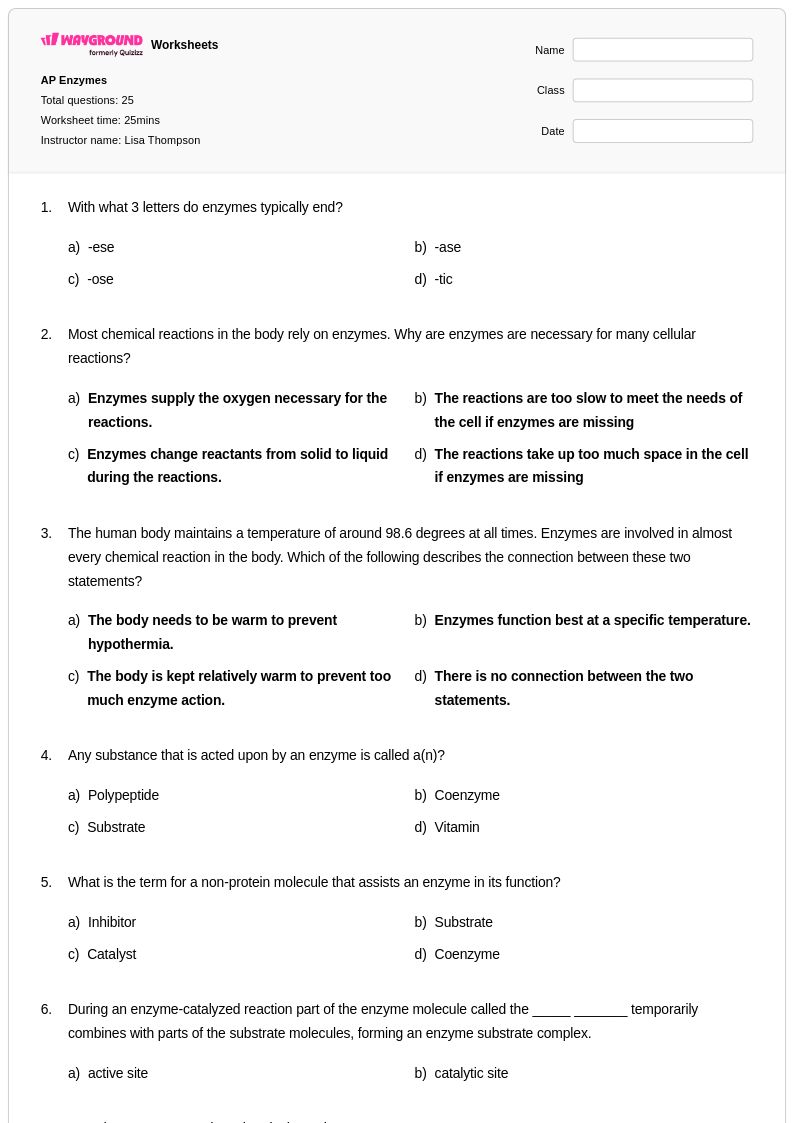
25 Q
11th - Uni
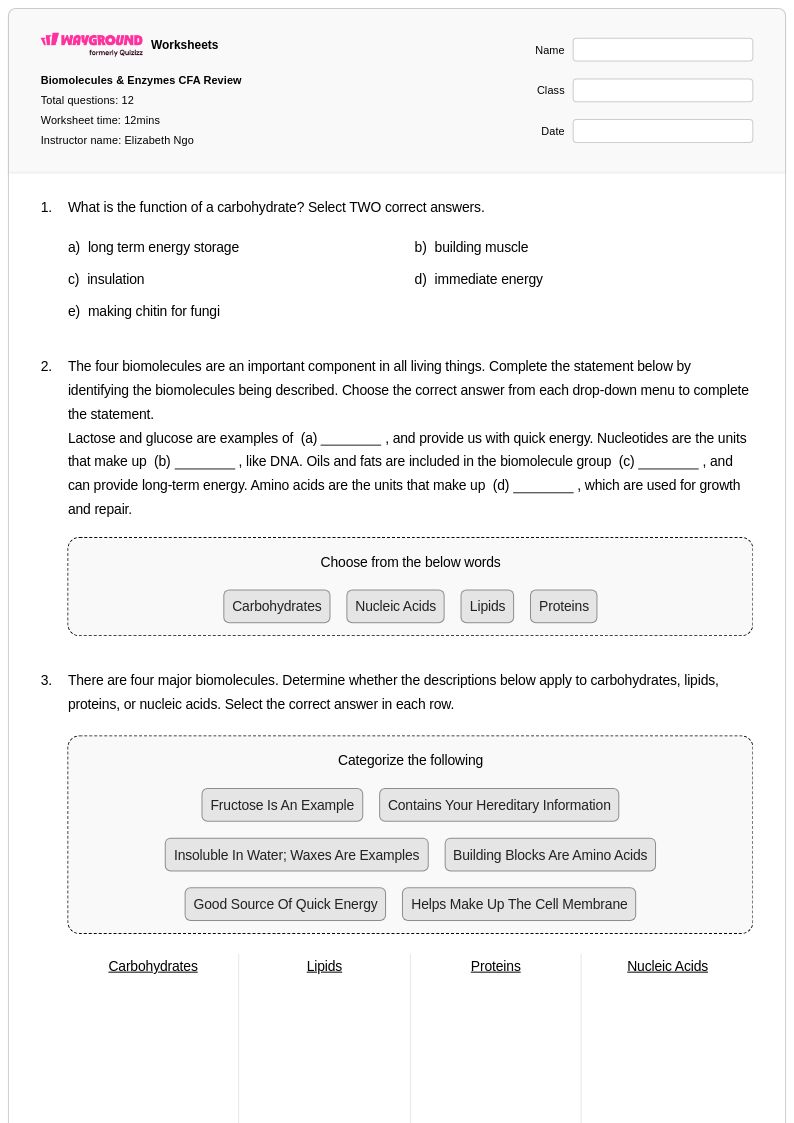
12 Q
9th - Uni
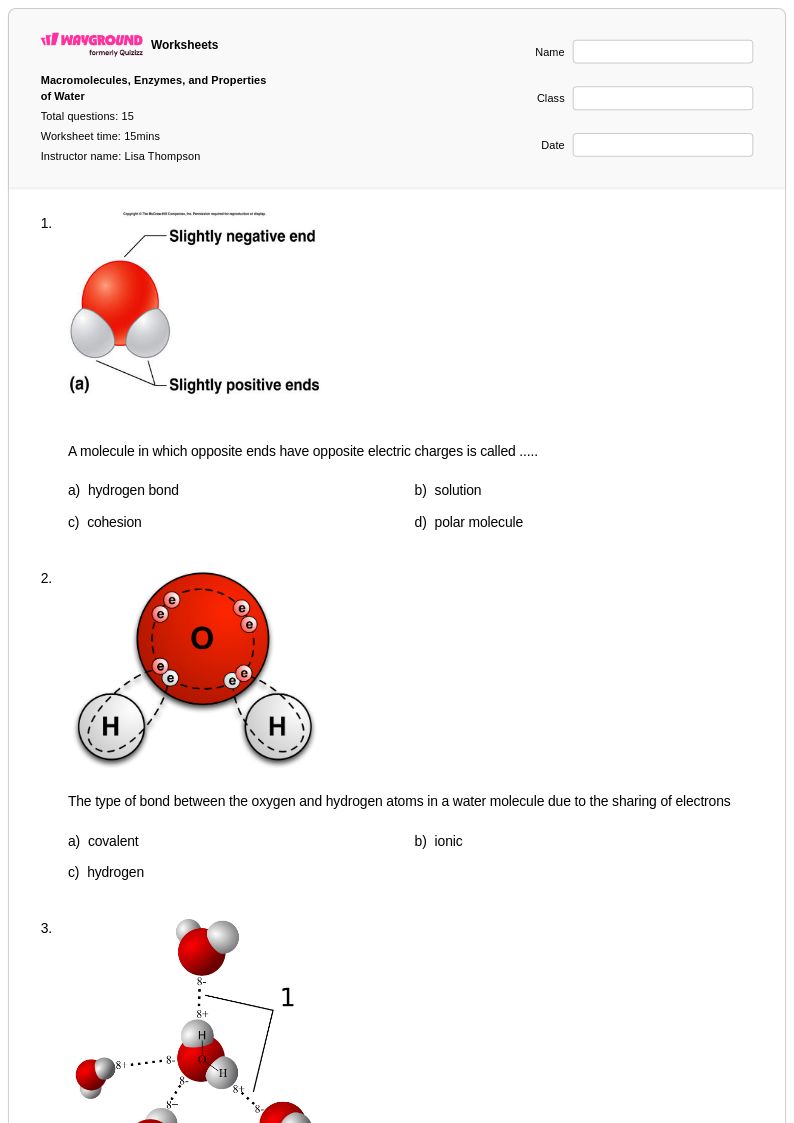
15 Q
10th - Uni
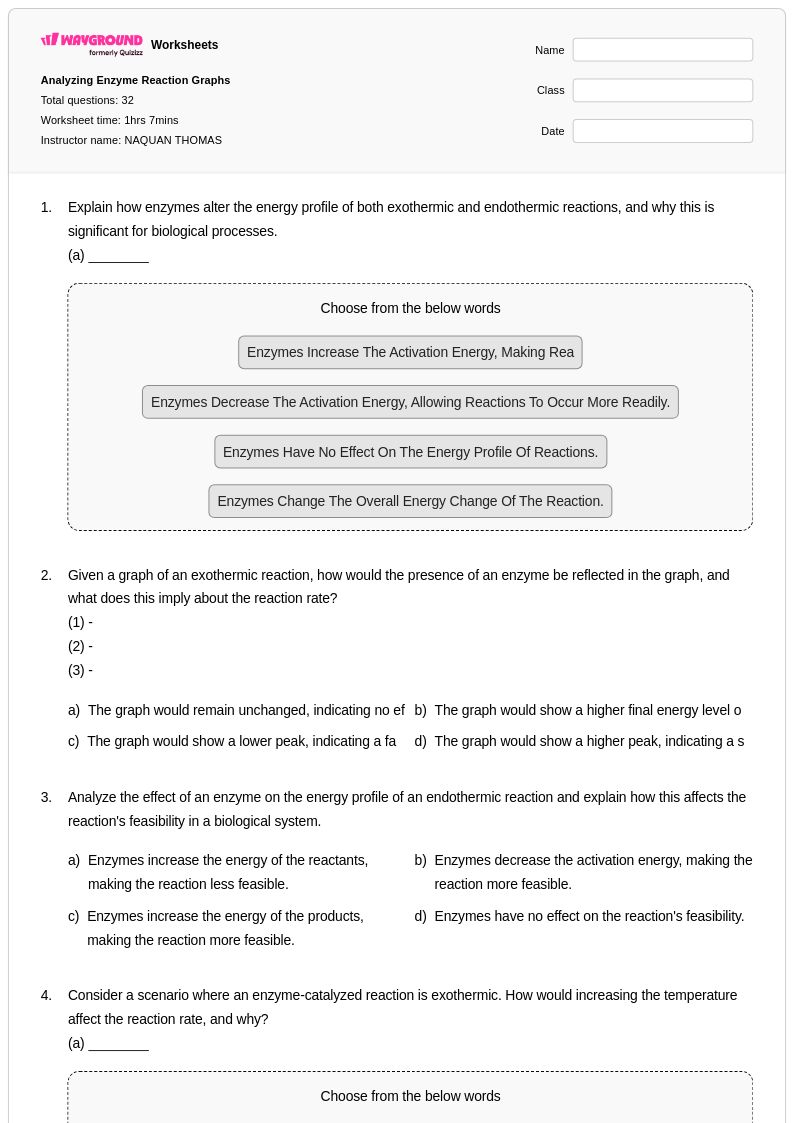
32 Q
11th
15 Q
7th - Uni
15 Q
10th - Uni
15 Q
11th - Uni
11 Q
9th - 12th
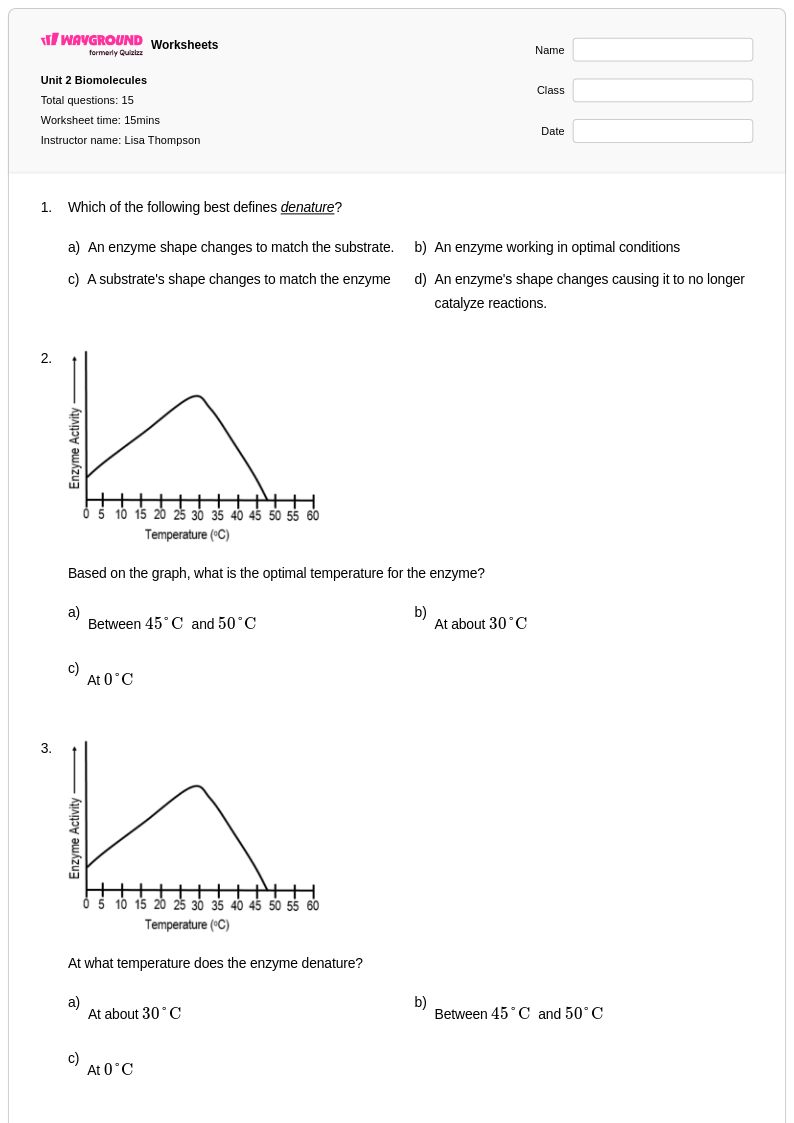
15 Q
10th - Uni
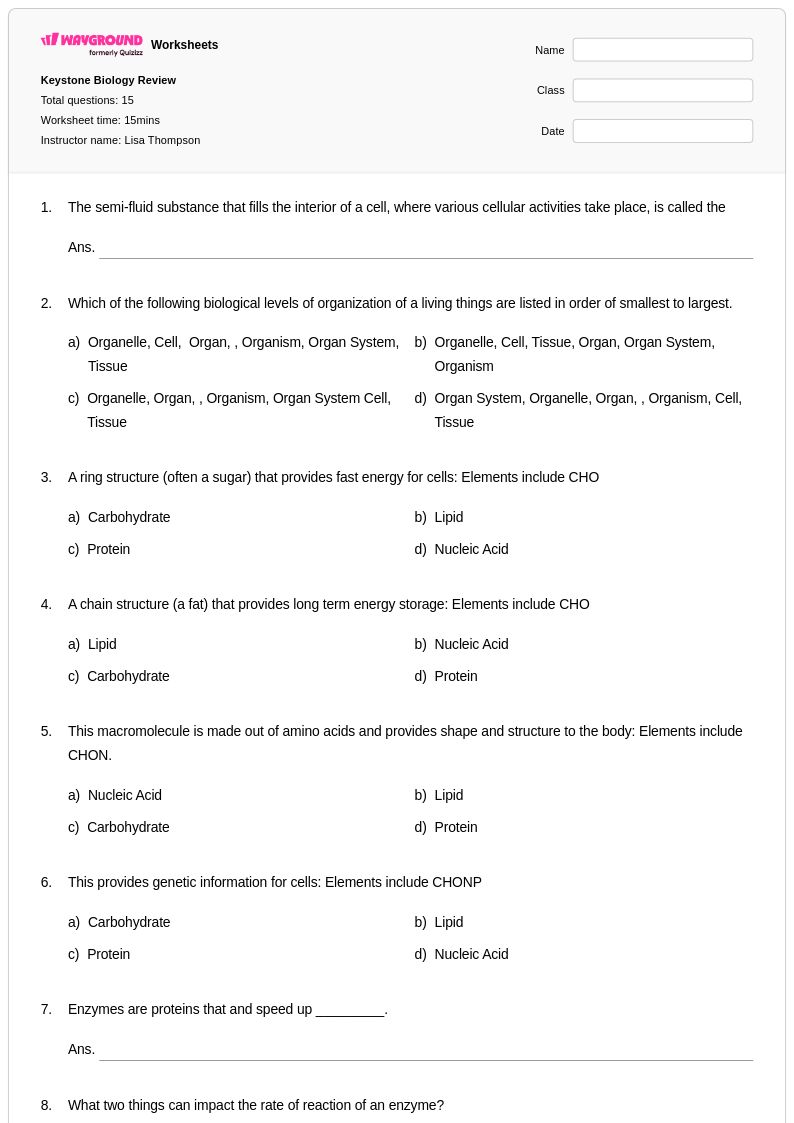
15 Q
10th - Uni
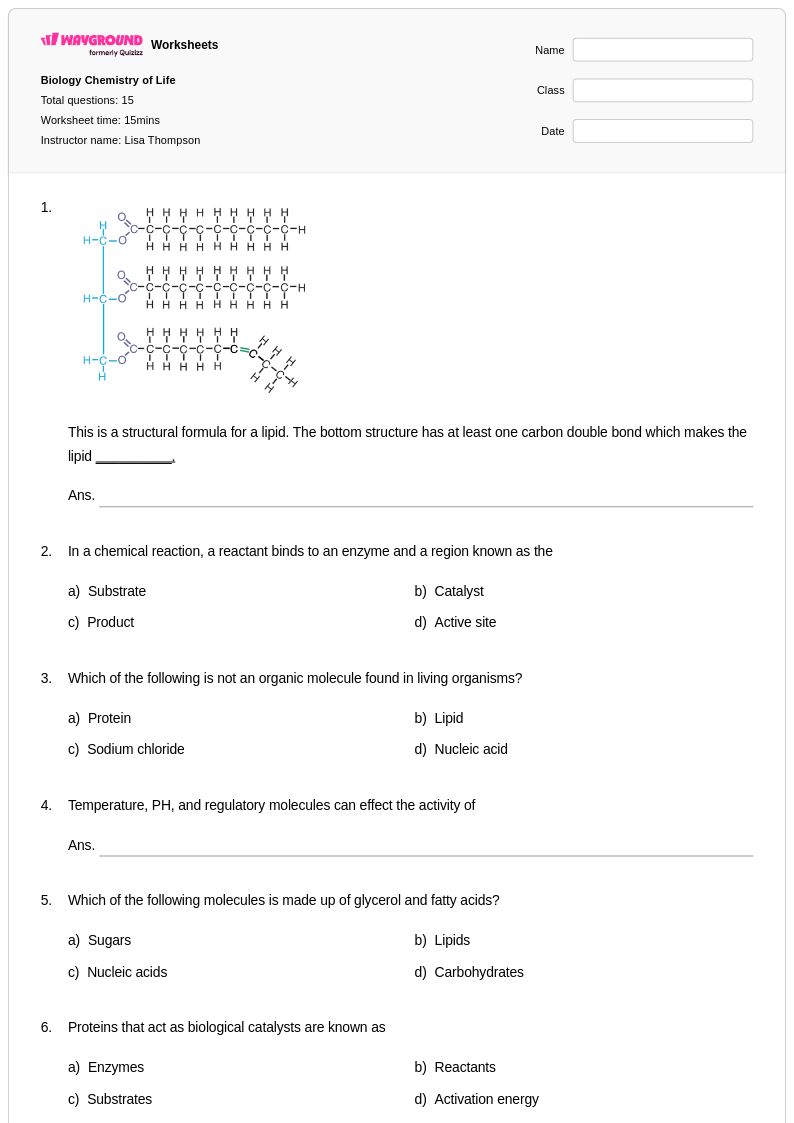
15 Q
9th - Uni
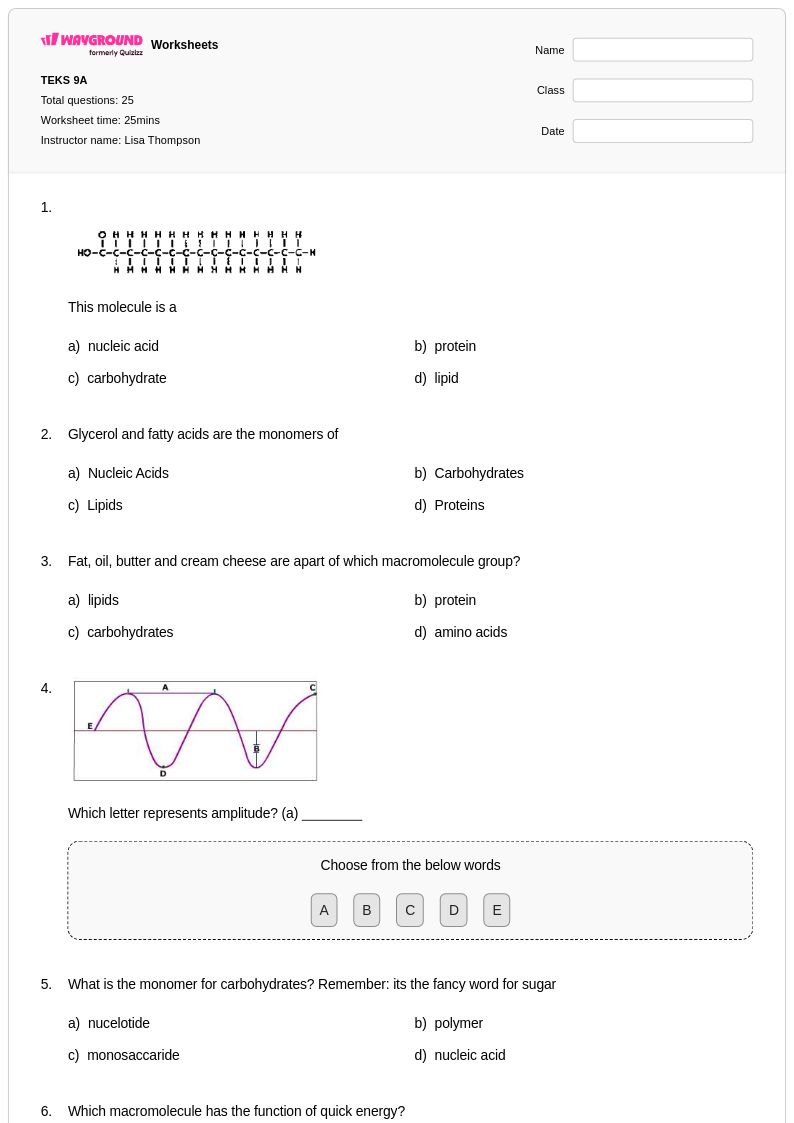
25 Q
9th - Uni
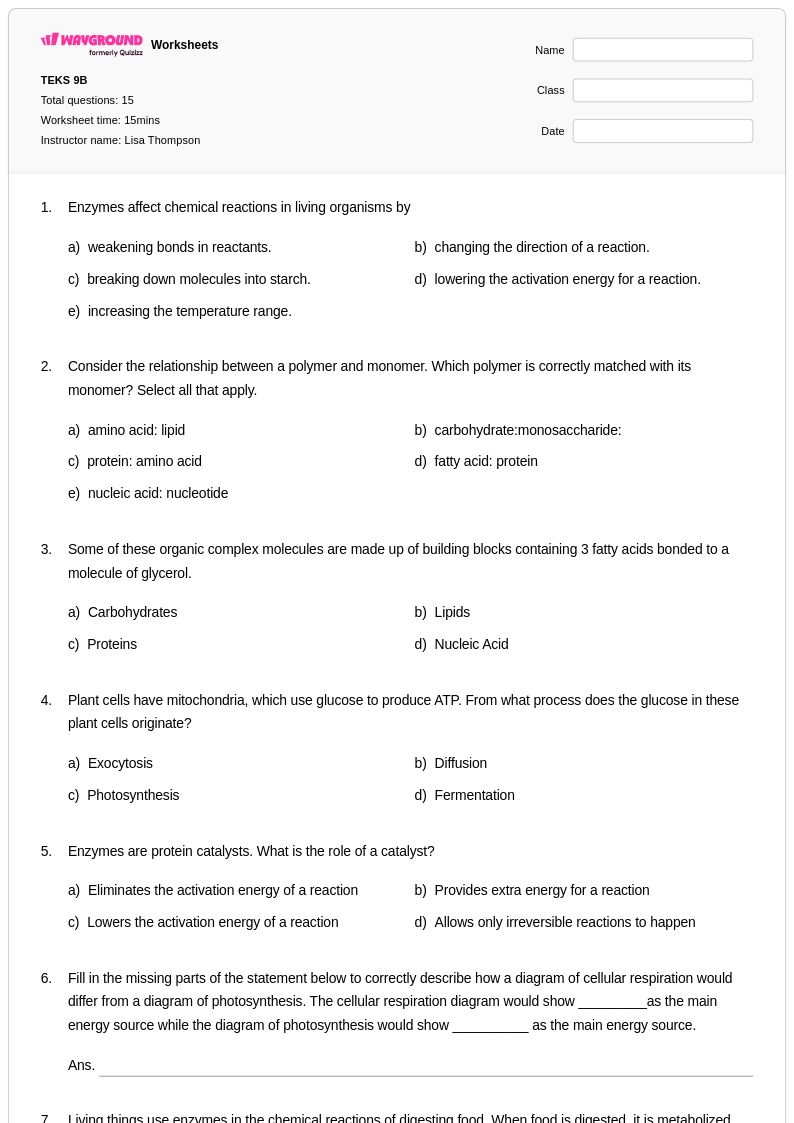
15 Q
9th - Uni
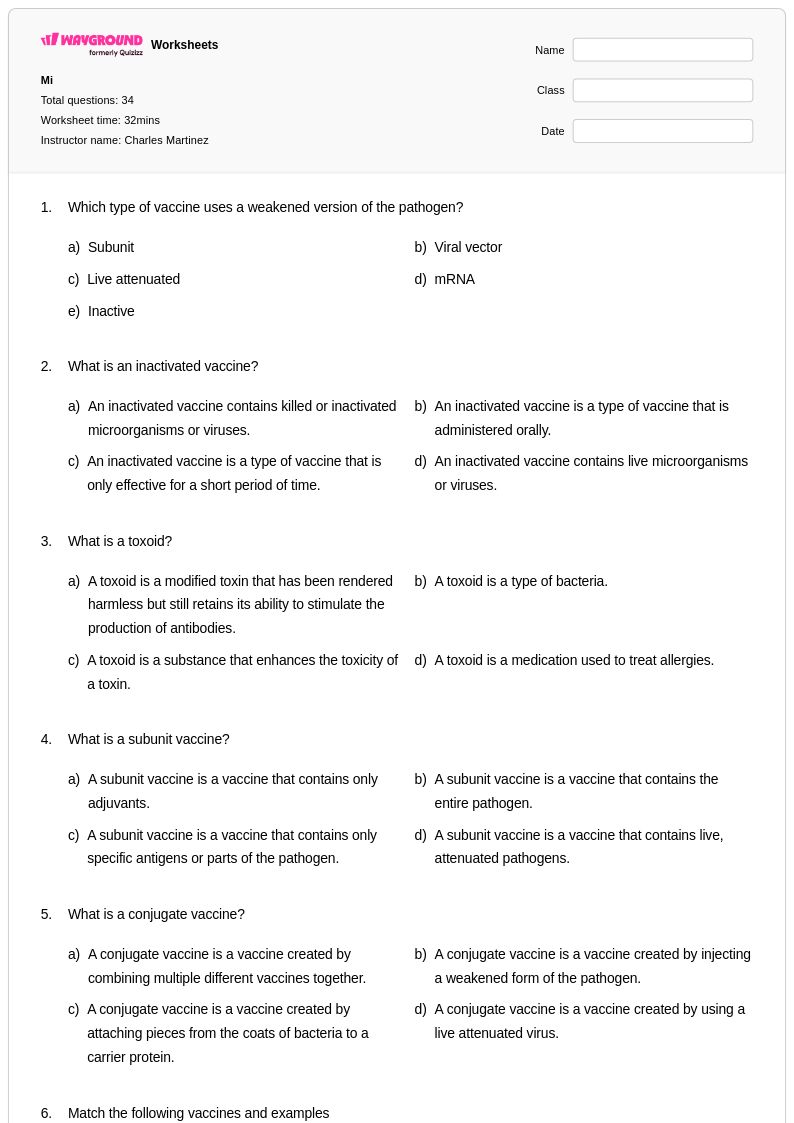
42 Q
11th
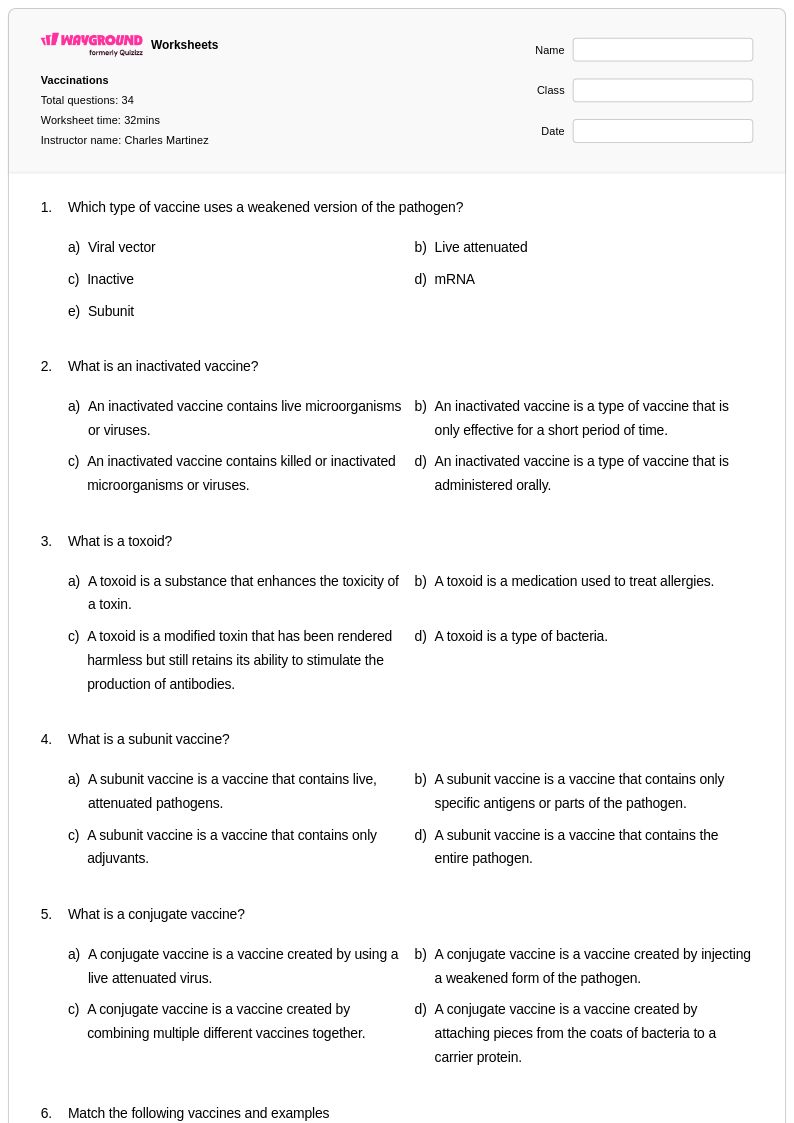
42 Q
11th
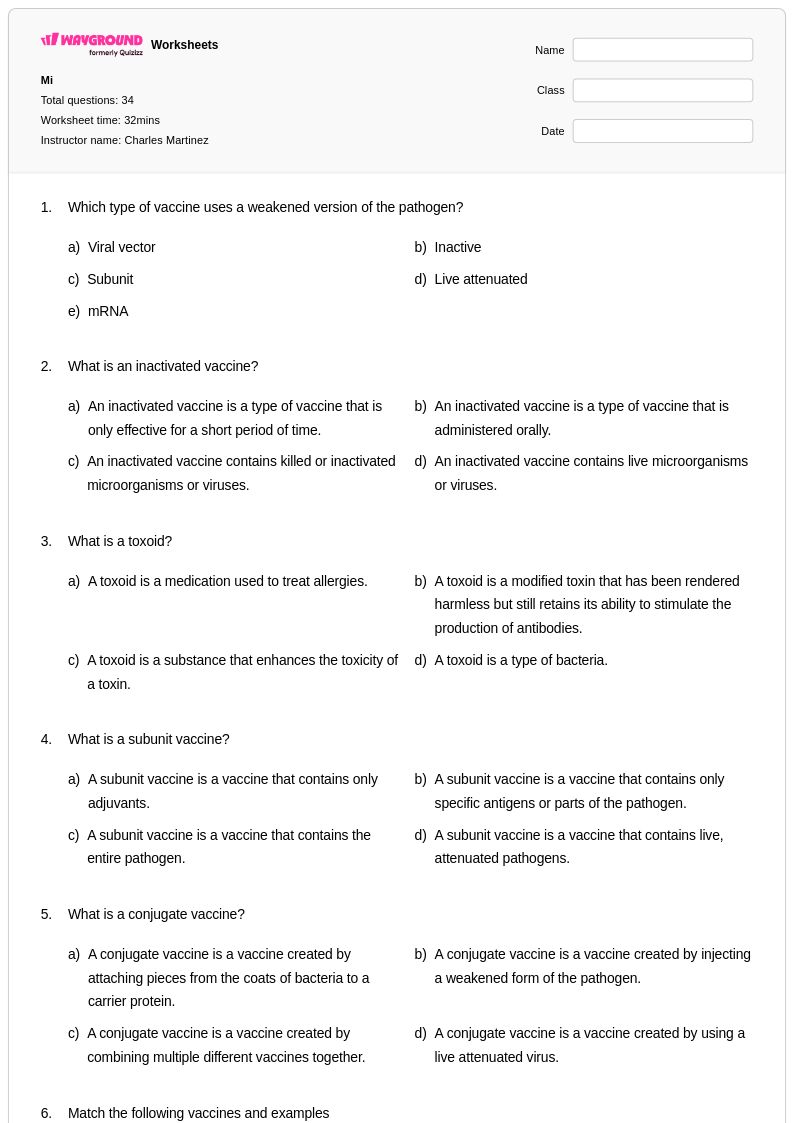
42 Q
11th
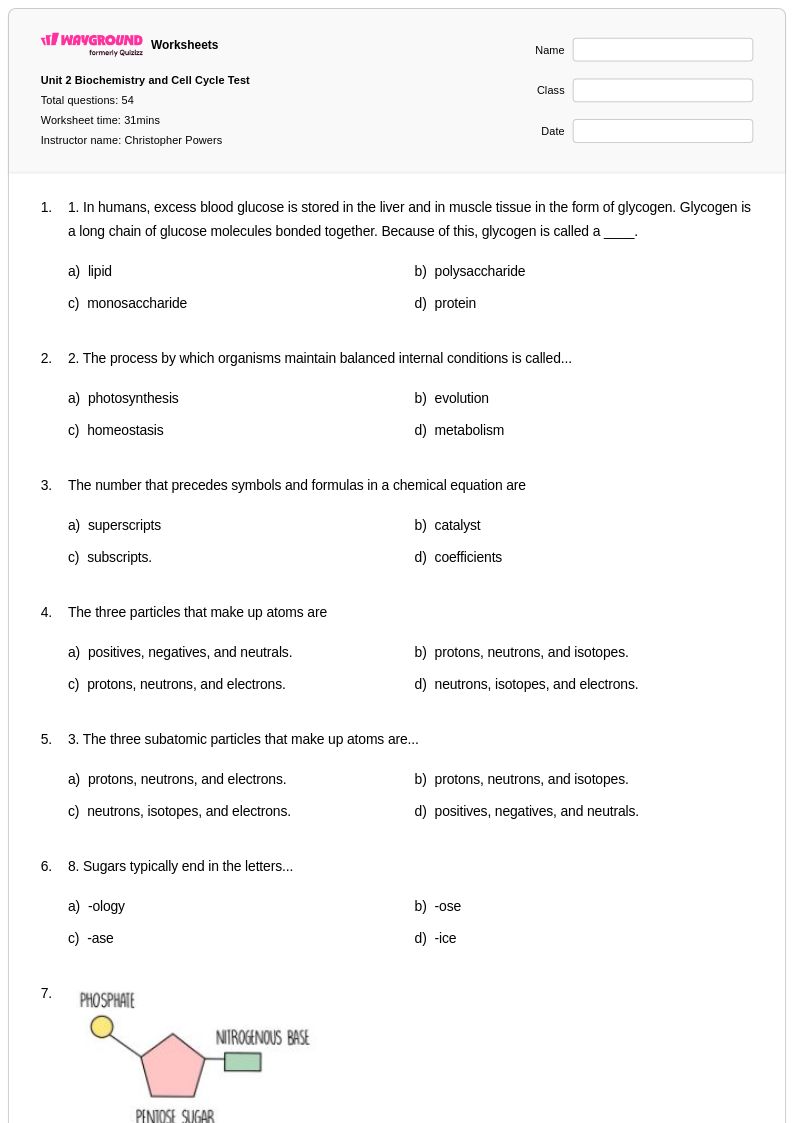
54 Q
9th - 12th
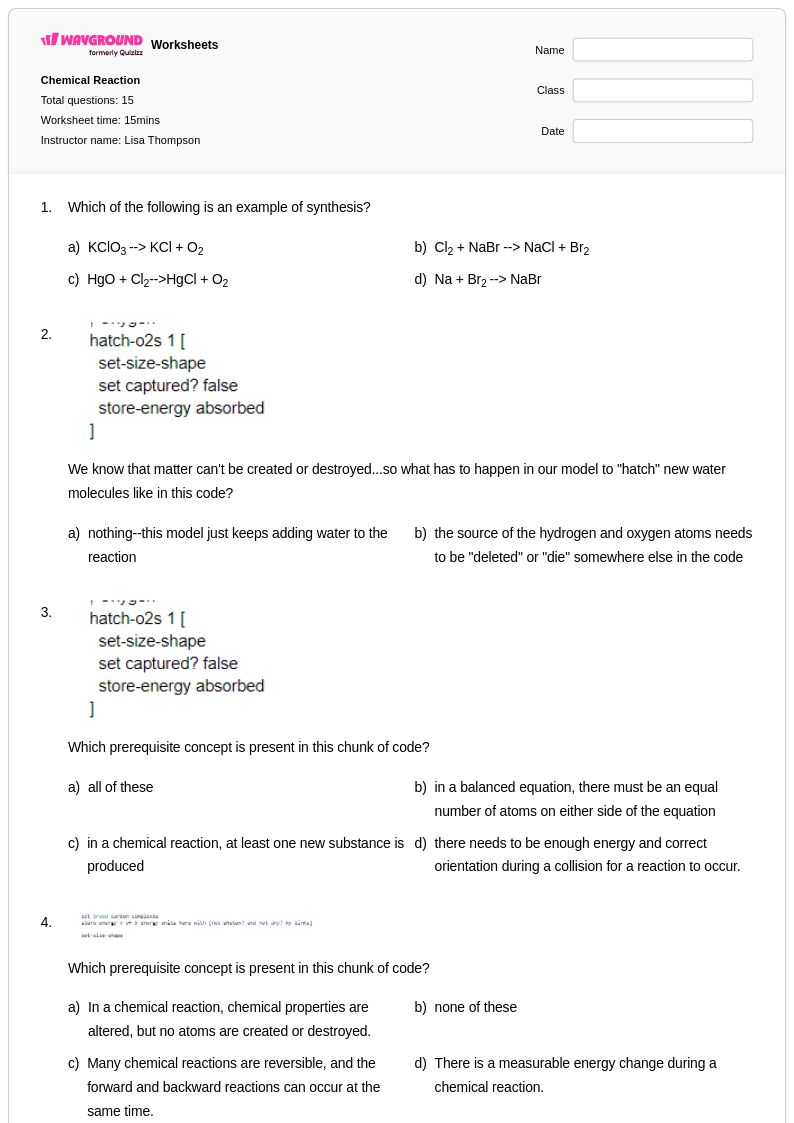
15 Q
10th - Uni
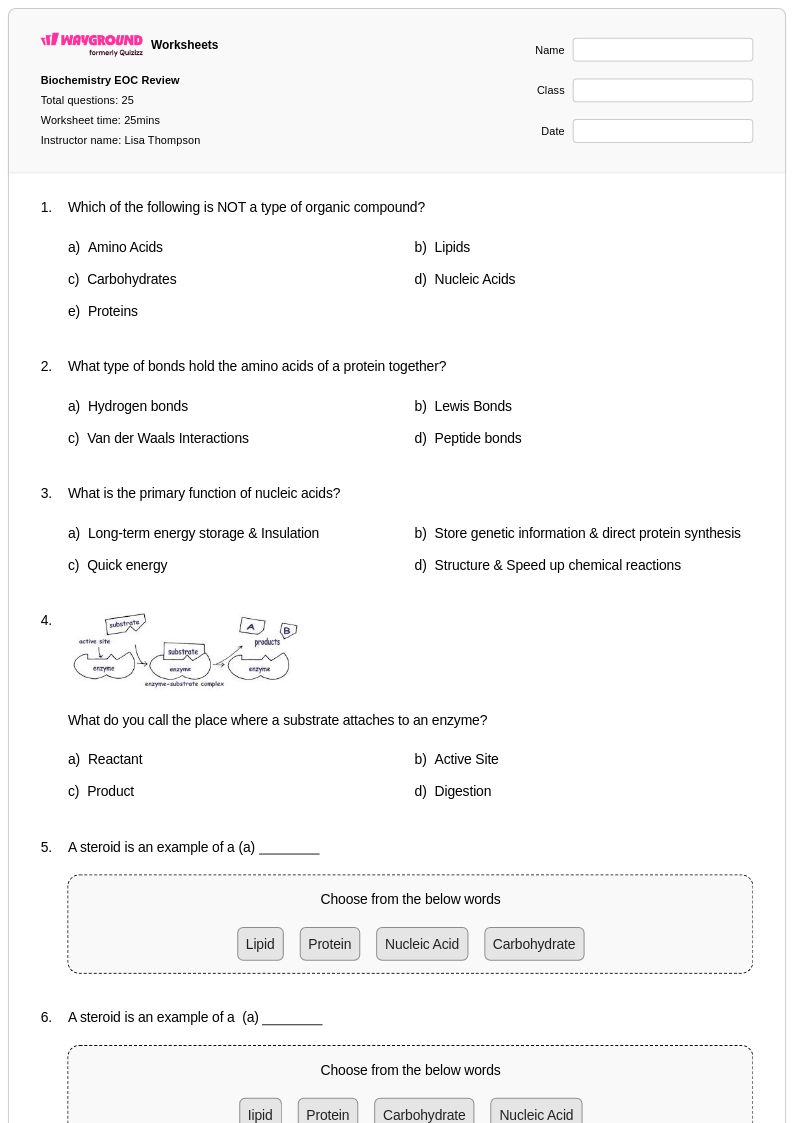
25 Q
9th - Uni
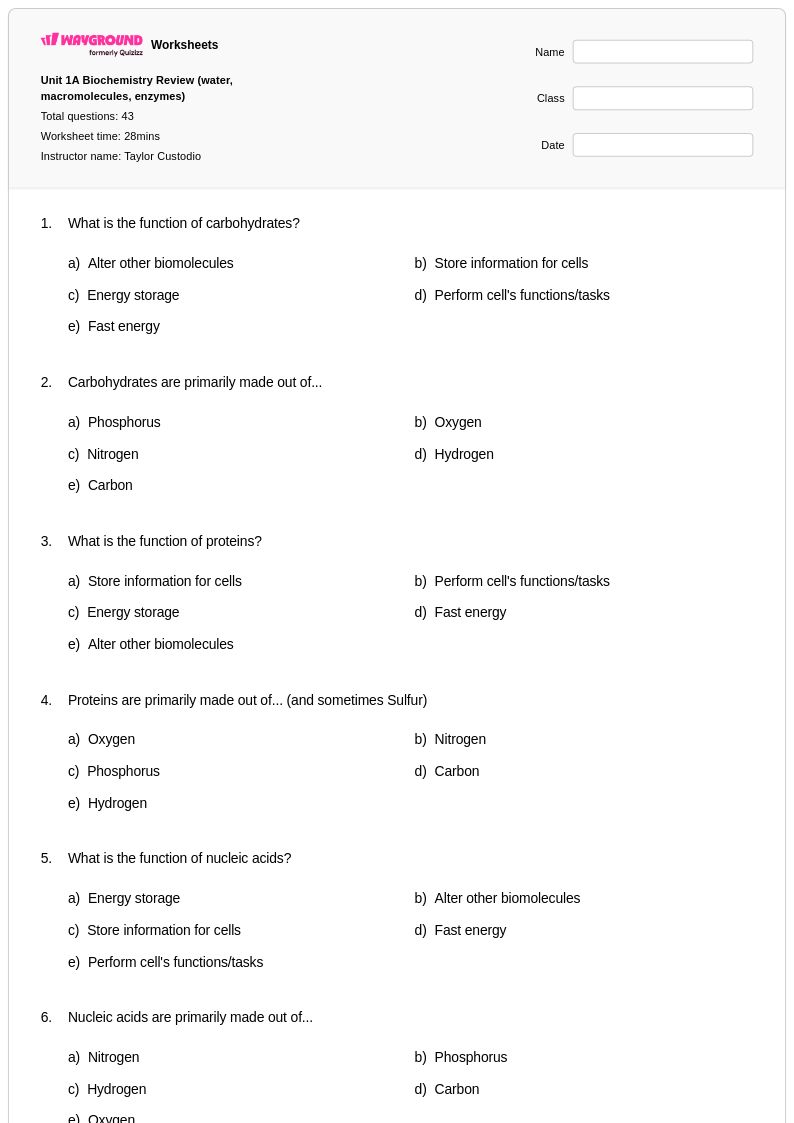
43 Q
9th - 12th
25 Q
9th - Uni
64 Q
9th - Uni
15 Q
8th - Uni
38 Q
9th - 12th
Explore Other Subject Worksheets for class 11
Explore printable Enzyme Activity worksheets for Class 11
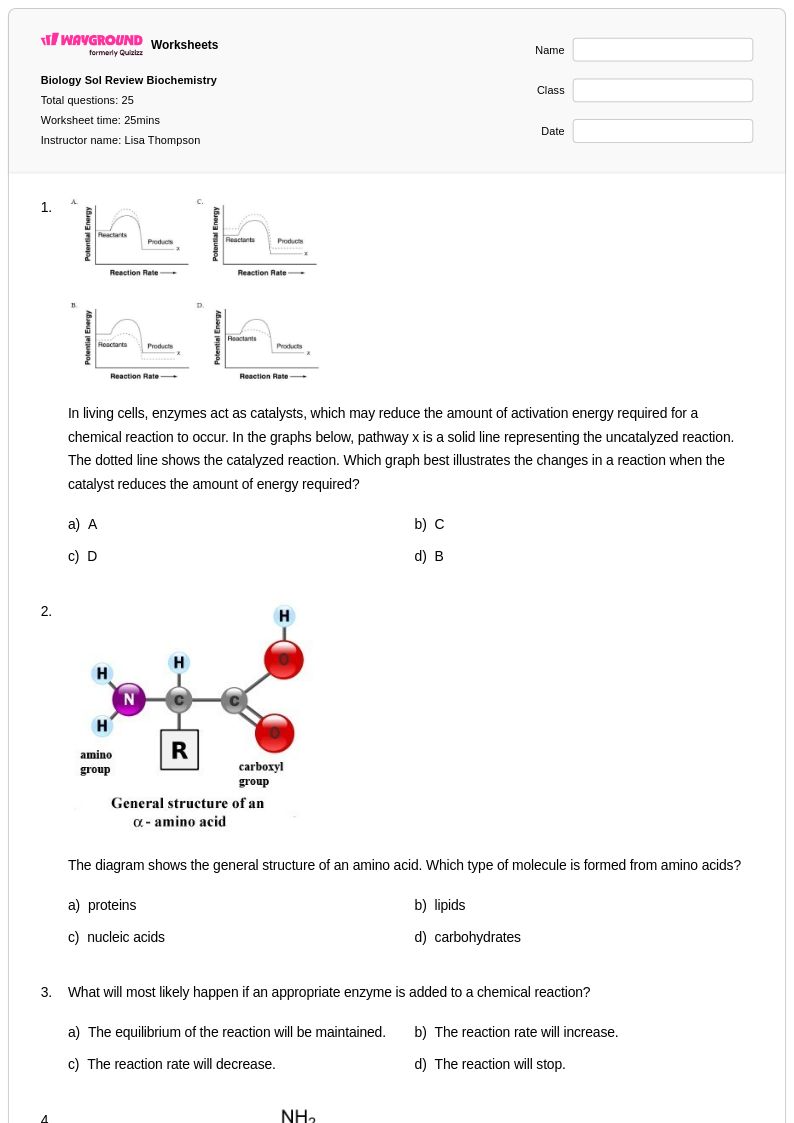
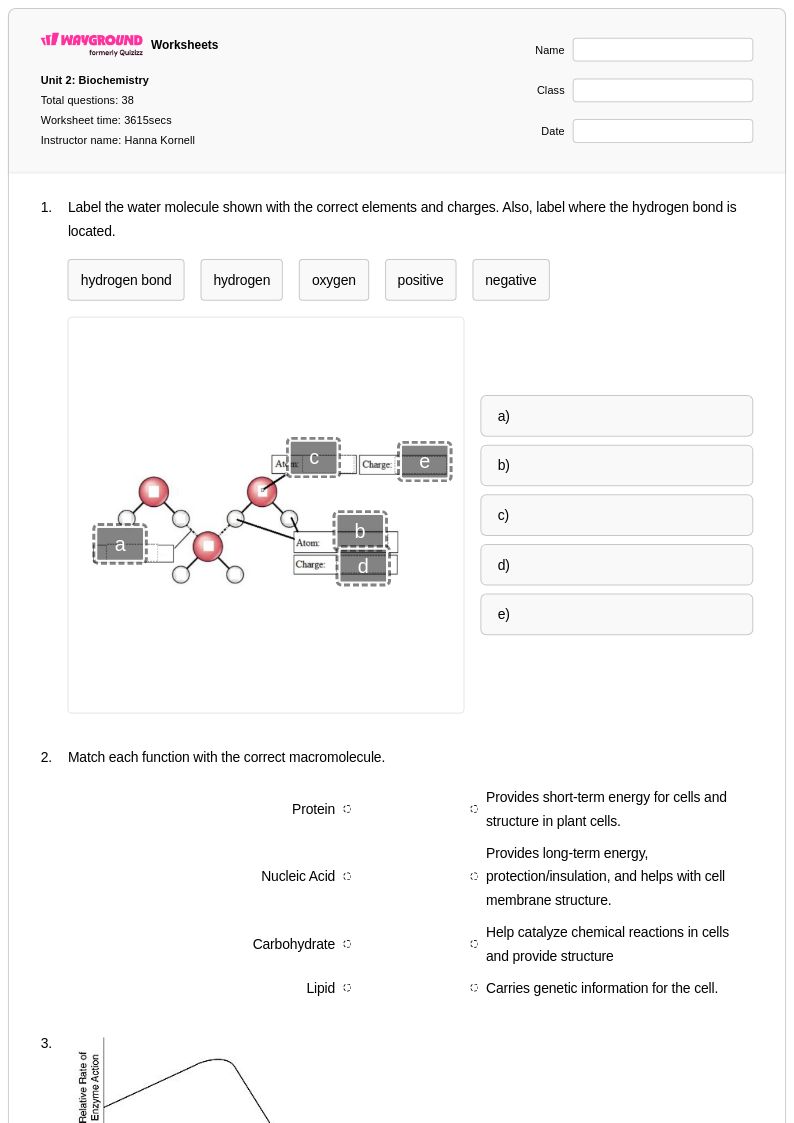
Enzyme activity worksheets for Class 11 students available through Wayground (formerly Quizizz) provide comprehensive coverage of this fundamental biochemistry concept that bridges molecular biology and metabolic processes. These expertly crafted resources guide students through the intricate mechanisms of enzyme function, including enzyme-substrate interactions, factors affecting reaction rates, competitive and non-competitive inhibition, and the relationship between enzyme structure and catalytic efficiency. Each worksheet collection strengthens critical analytical skills by presenting practice problems that require students to interpret enzyme kinetics graphs, calculate reaction rates, and predict how environmental changes impact enzymatic processes. The materials include detailed answer keys that support both independent study and classroom instruction, with many resources available as free printables in convenient PDF format for immediate classroom implementation.
Wayground (formerly Quizizz) empowers educators with access to millions of teacher-created enzyme activity resources that streamline lesson planning and enhance student comprehension of complex biochemical processes. The platform's robust search and filtering capabilities enable teachers to quickly locate materials aligned with specific curriculum standards and learning objectives, while built-in differentiation tools allow for seamless customization based on individual student needs and proficiency levels. These versatile worksheet collections are available in both printable and digital formats, including downloadable PDFs, making them ideal for traditional classroom instruction, homework assignments, laboratory preparation, and remote learning scenarios. Teachers can effectively utilize these resources for targeted skill practice, remediation of challenging concepts like enzyme inhibition mechanisms, and enrichment activities that explore real-world applications of enzymatic processes in medicine, industry, and environmental science.
FAQs
How do I teach enzyme activity to high school biology students?
What types of practice problems help students understand enzyme kinetics?
What mistakes do students commonly make when learning about enzyme activity?
How can I differentiate enzyme activity instruction for students with different ability levels?
How do I use enzyme activity worksheets effectively in my classroom?
How do cofactors and coenzymes fit into teaching enzyme activity?