Free Printable Feedback Loops Worksheets for Class 11
Class 11 Biology feedback loops worksheets from Wayground offer comprehensive printables and practice problems with answer keys to help students master positive and negative feedback mechanisms in biological systems.
Explore printable Feedback Loops worksheets for Class 11
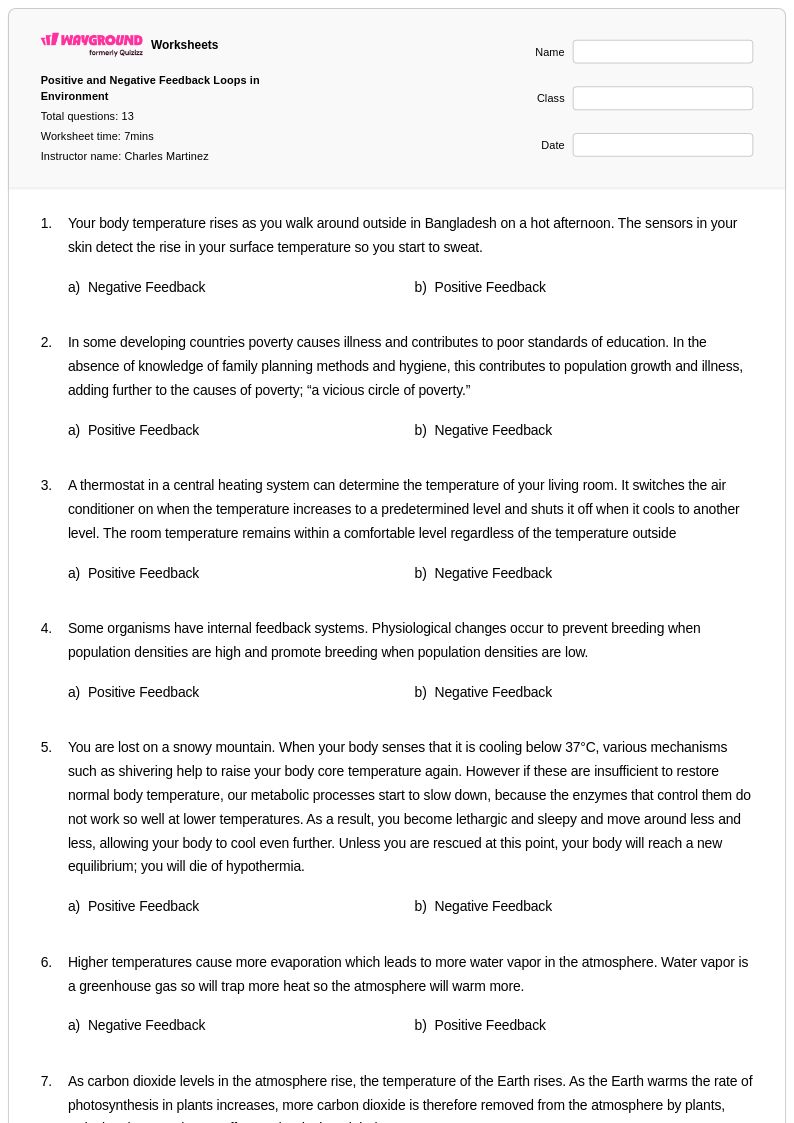
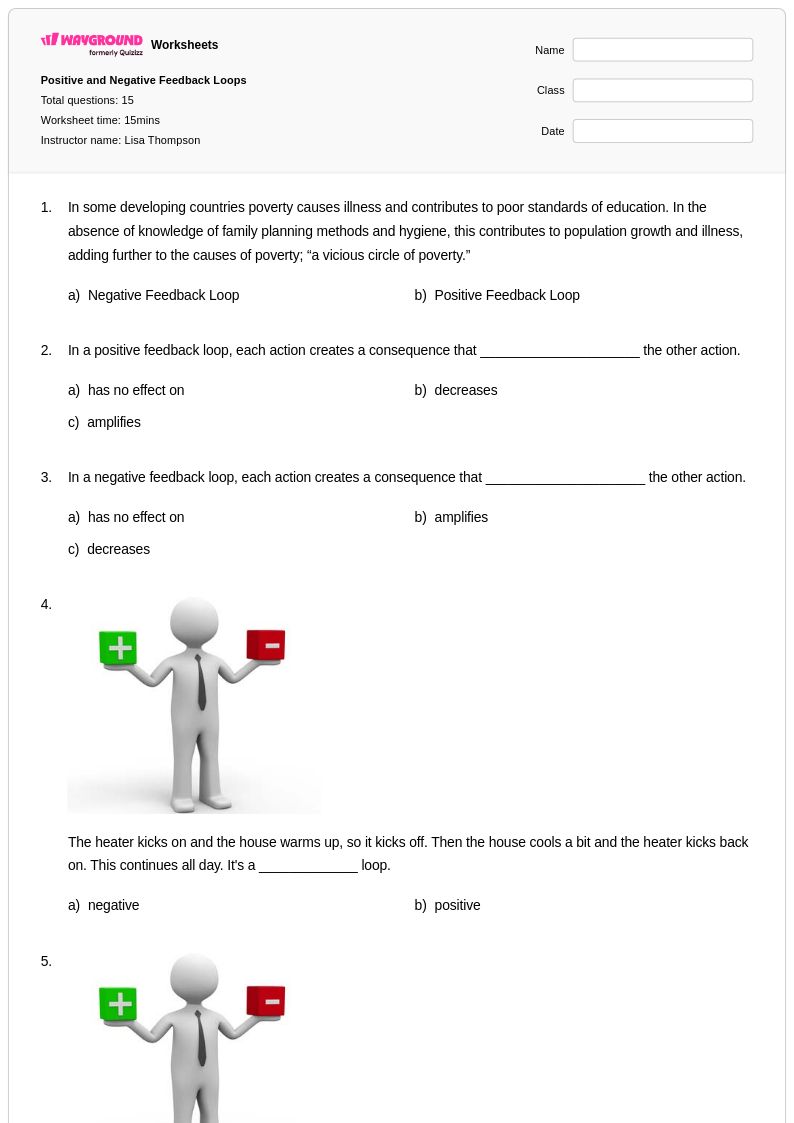
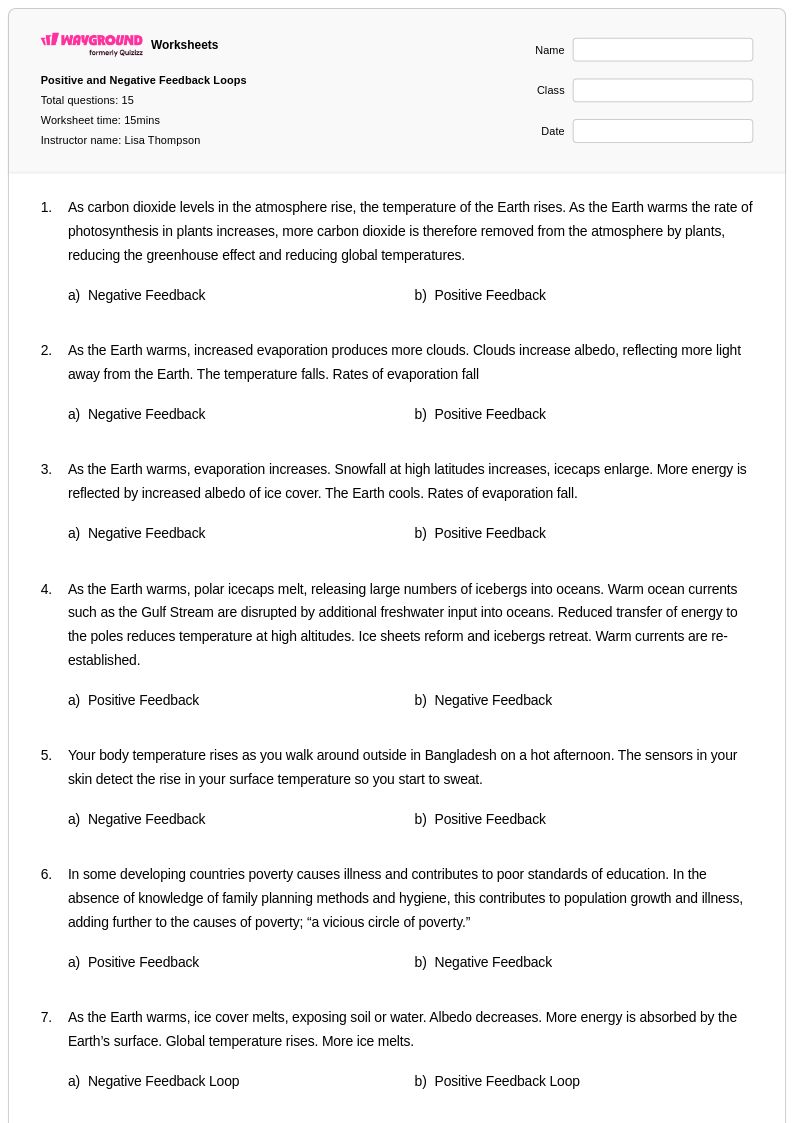
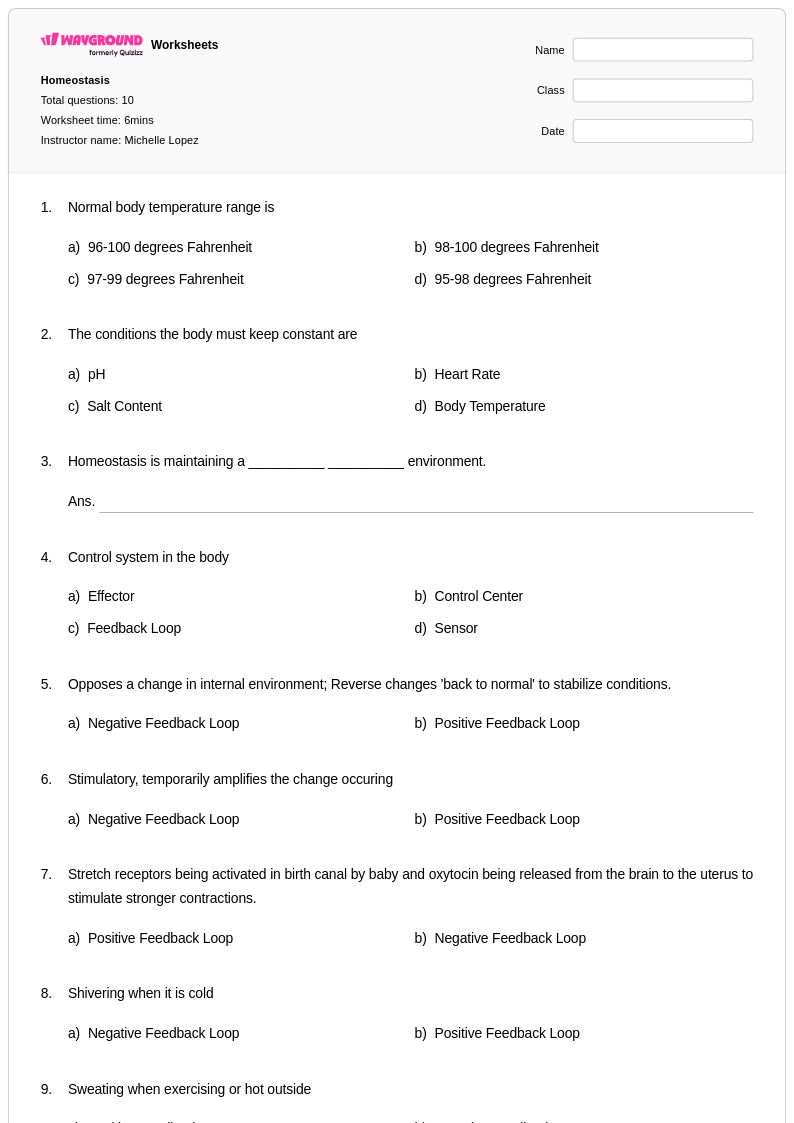
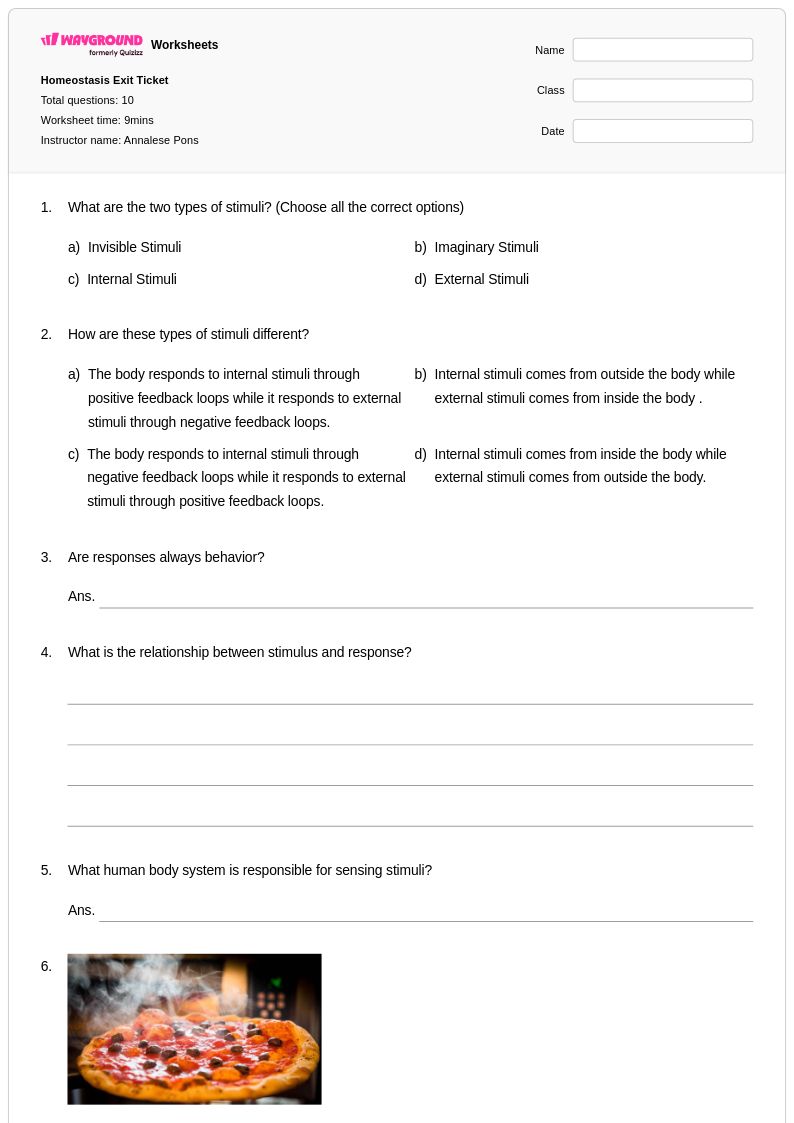
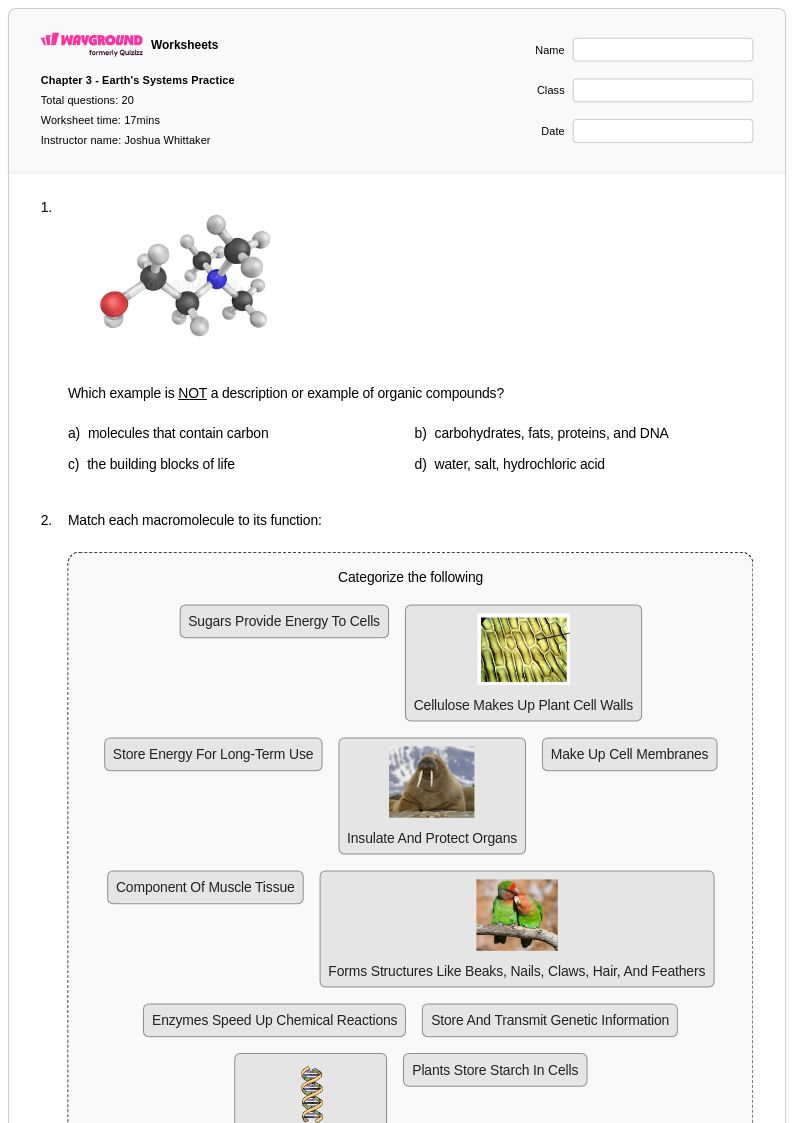
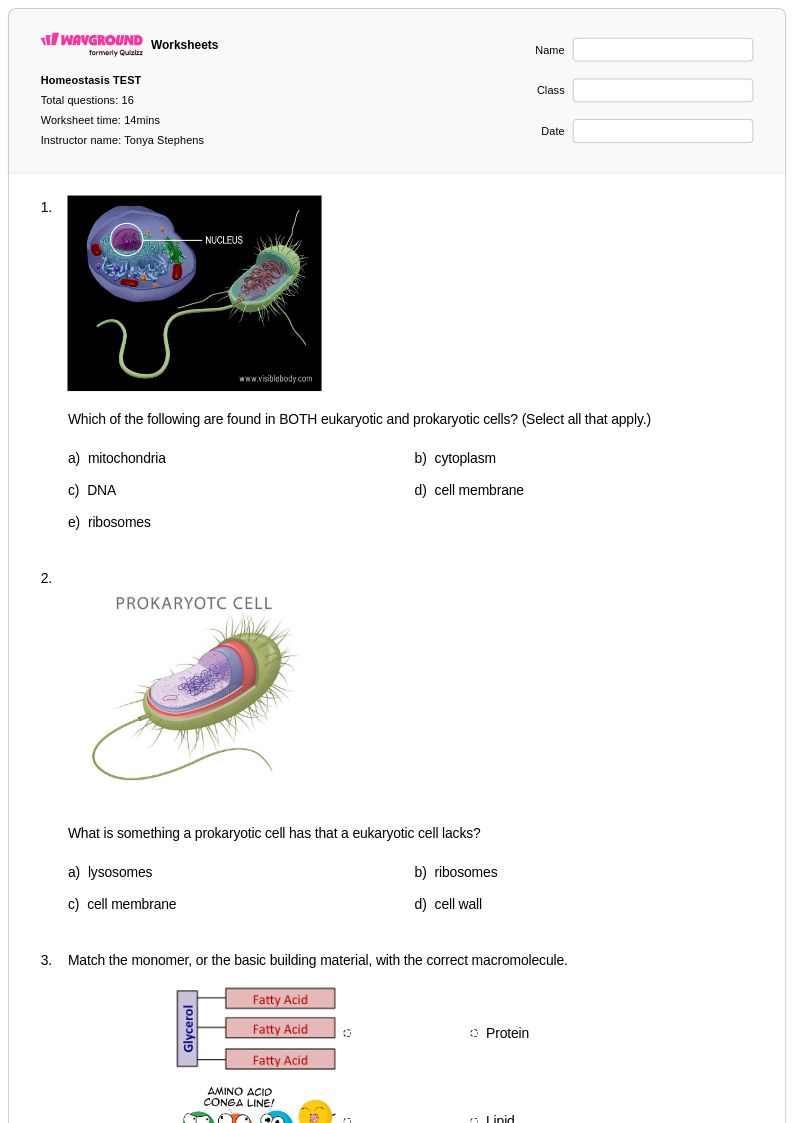
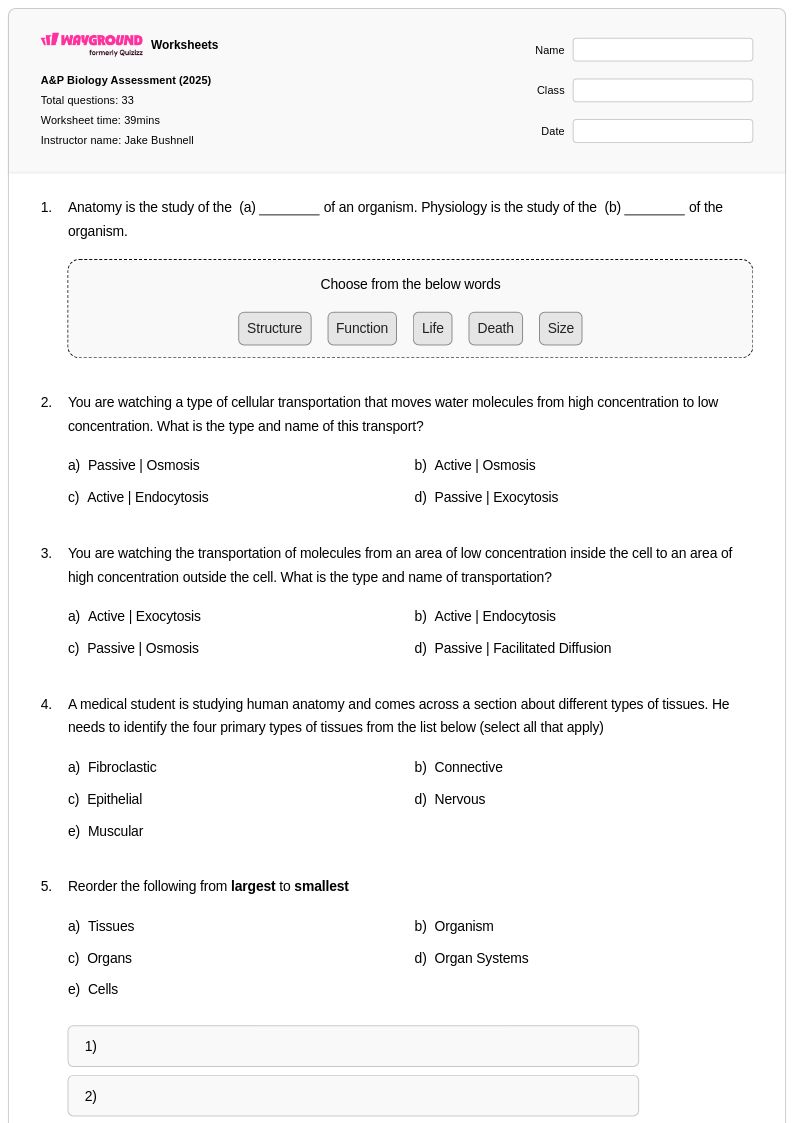
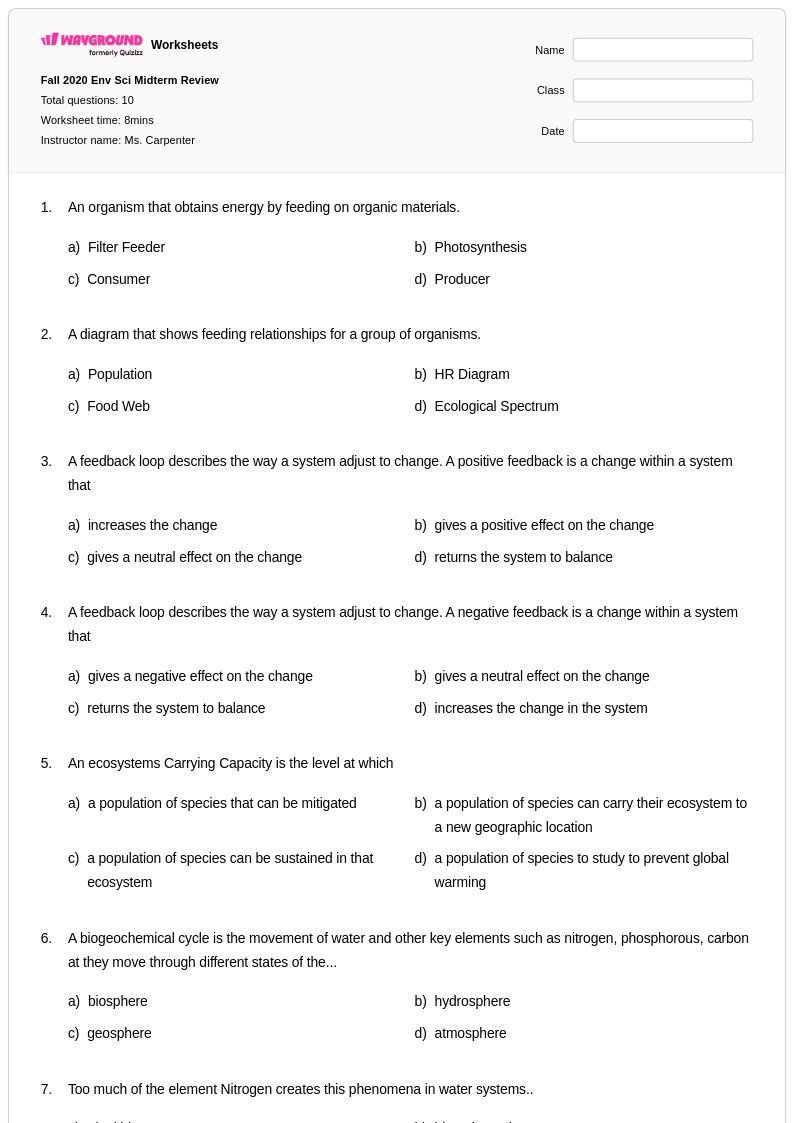
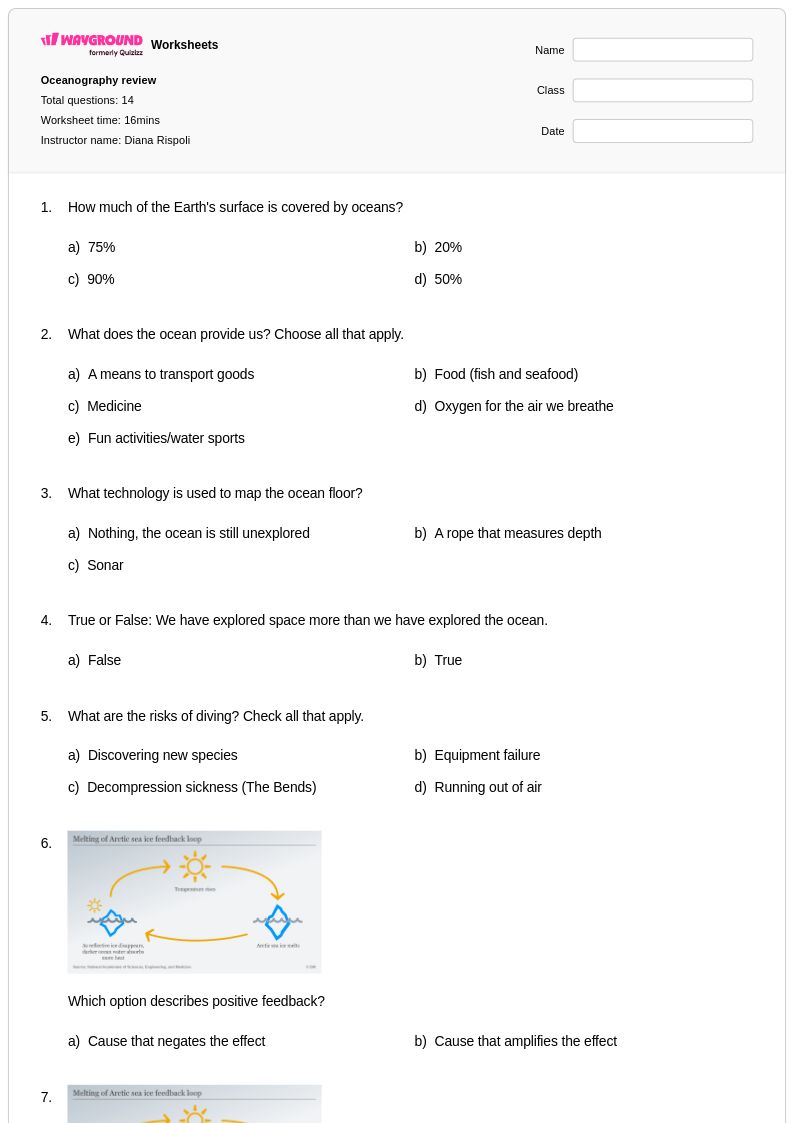
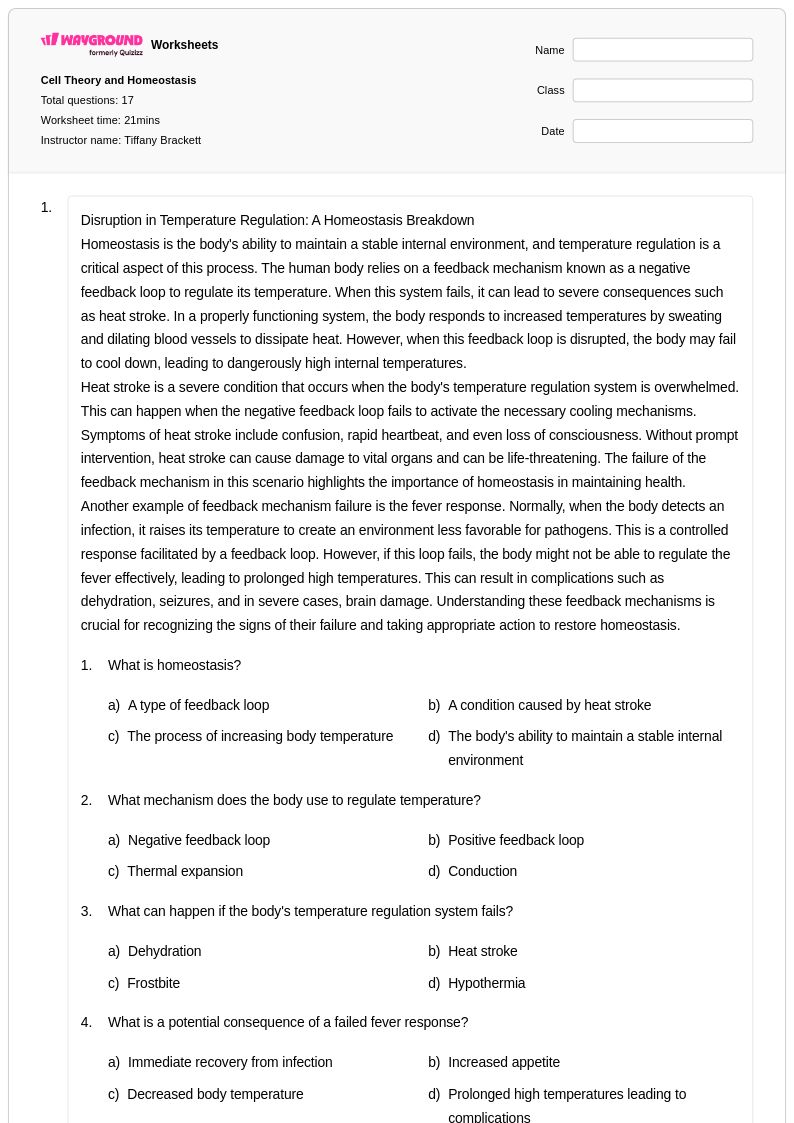
Feedback loops represent a fundamental concept in Class 11 biology that explains how biological systems maintain homeostasis and respond to environmental changes. Wayground's comprehensive collection of feedback loop worksheets provides students with structured opportunities to explore both positive and negative feedback mechanisms across various biological systems, from hormonal regulation to population dynamics. These expertly designed practice problems guide students through analyzing real-world scenarios, interpreting feedback diagrams, and identifying the components of regulatory pathways. Each worksheet includes detailed answer keys that help students verify their understanding of complex regulatory processes, while the free printable format ensures accessibility for diverse learning environments. Students develop critical analytical skills as they work through examples ranging from blood glucose regulation to predator-prey relationships, building the foundation necessary for advanced biological studies.
Wayground supports biology educators with millions of teacher-created resources specifically focused on feedback loop concepts, offering robust search and filtering capabilities that allow instructors to locate materials perfectly aligned with Class 11 curriculum standards. The platform's differentiation tools enable teachers to customize worksheet complexity, ensuring appropriate challenge levels for students with varying abilities while maintaining focus on essential feedback loop principles. These resources are available in both digital and printable pdf formats, providing flexibility for classroom instruction, homework assignments, and independent study sessions. Teachers can efficiently plan comprehensive lessons that address remediation needs for struggling students while offering enrichment opportunities for advanced learners, all while ensuring consistent skill practice in identifying, analyzing, and explaining the critical role of feedback mechanisms in maintaining biological stability and driving evolutionary processes.
FAQs
How do I teach feedback loops in biology?
Start by grounding students in the concept of homeostasis, then introduce negative feedback as the mechanism that resists change and positive feedback as the mechanism that amplifies it. Use concrete, physiological examples like blood glucose regulation (negative feedback via insulin and glucagon) and childbirth contractions (positive feedback via oxytocin) to make the abstract concrete. Once students can identify the components of a loop — stimulus, receptor, control center, effector, and response — move them toward analyzing novel systems independently. Visual diagrams and cause-and-effect mapping activities are especially effective for reinforcing loop structure before students encounter unfamiliar scenarios on assessments.
What are the best practice exercises for helping students understand negative vs. positive feedback loops?
Comparison activities that place negative and positive feedback side by side are highly effective, as they force students to articulate the directional difference in system response. Practice problems that ask students to label loop components within a diagram — identifying the receptor, effector, and corrective response — build the analytical vocabulary needed for exam questions. Real-world case studies such as blood pressure regulation, thermoregulation, and the hormonal cascade of labor give students repeated exposure to loop logic in distinct biological contexts. Feedback loops worksheets that include both diagram-labeling and short-answer explanation tasks are particularly useful for bridging visual understanding with written reasoning.
What misconceptions do students commonly have about feedback loops?
The most persistent misconception is that 'negative' feedback is harmful or undesirable — students often conflate the term's biological meaning with its everyday connotation. In biology, negative feedback is the stabilizing mechanism that keeps systems within normal ranges, and clarifying this distinction early prevents compounding confusion. Students also frequently struggle to identify the direction of change in a loop, incorrectly predicting whether a system will amplify or dampen a signal. Another common error is treating the stimulus and the response as the same event, rather than understanding them as distinct steps in a regulatory sequence.
How can I use feedback loops worksheets to assess student understanding?
Feedback loops worksheets work well as formative checkpoints after initial instruction, giving teachers a quick read on whether students can correctly identify loop type and trace the sequence of regulatory events. Diagram-based questions reveal whether students understand system structure, while written explanation prompts expose gaps in conceptual reasoning that multiple-choice items would miss. Using the same worksheet format across a unit — moving from guided to independent practice — lets teachers track individual progress on a specific skill over time.
How do I use Wayground's feedback loops worksheets in my classroom?
Wayground's feedback loops worksheets are available as printable PDFs for traditional classroom use and in digital formats for technology-integrated learning environments, giving teachers flexibility for in-class instruction, homework, or independent study. Digital versions can also be hosted as a quiz directly on Wayground, enabling self-paced practice with built-in answer key support. Each worksheet includes a complete answer key, so teachers can use them for both instructional delivery and self-checking activities without additional preparation.