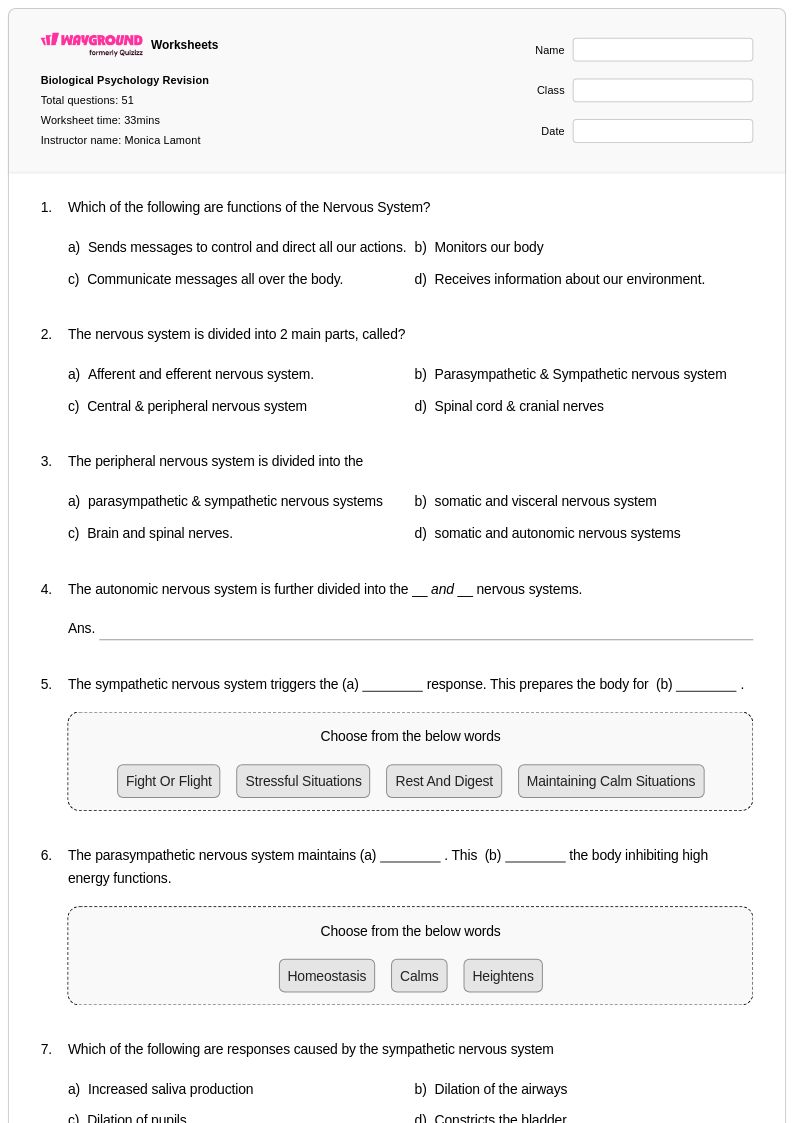
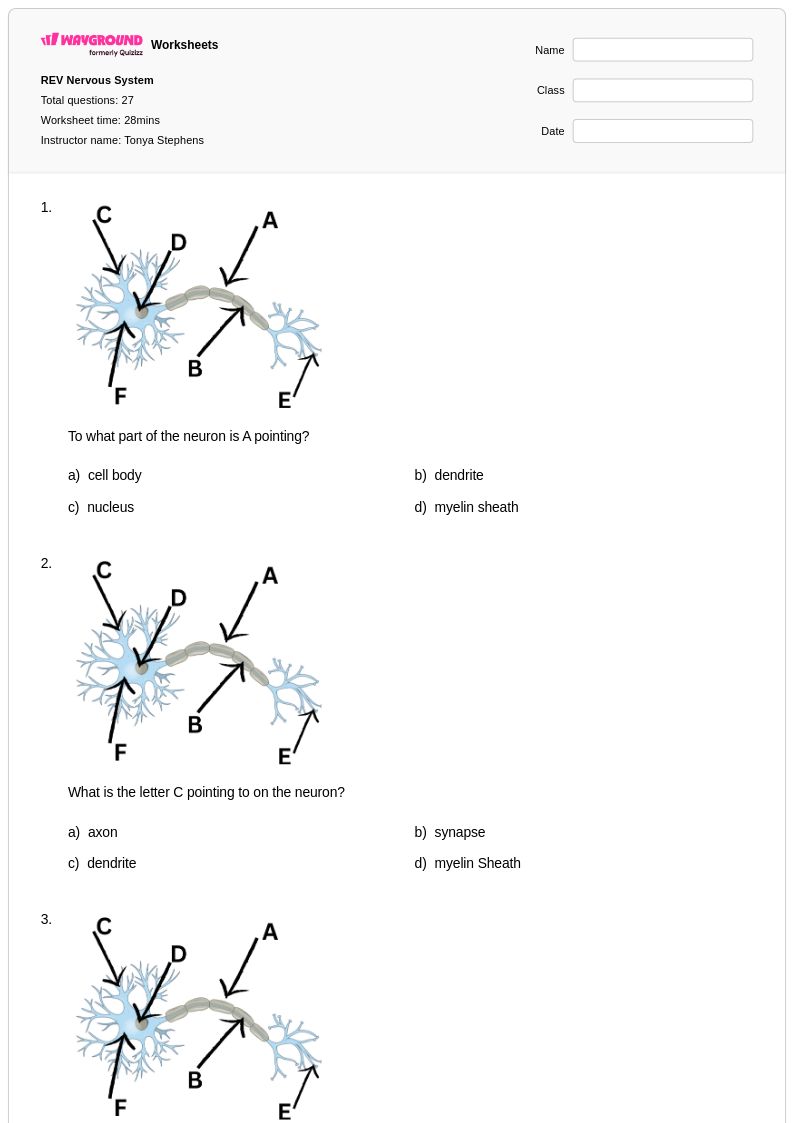
Free Printable Neuron Structure Worksheets for Class 11
Class 11 neuron structure worksheets and printables help students master brain cell anatomy through detailed practice problems, free PDF resources, and comprehensive answer keys for effective biology learning.
Explore printable Neuron Structure worksheets for Class 11
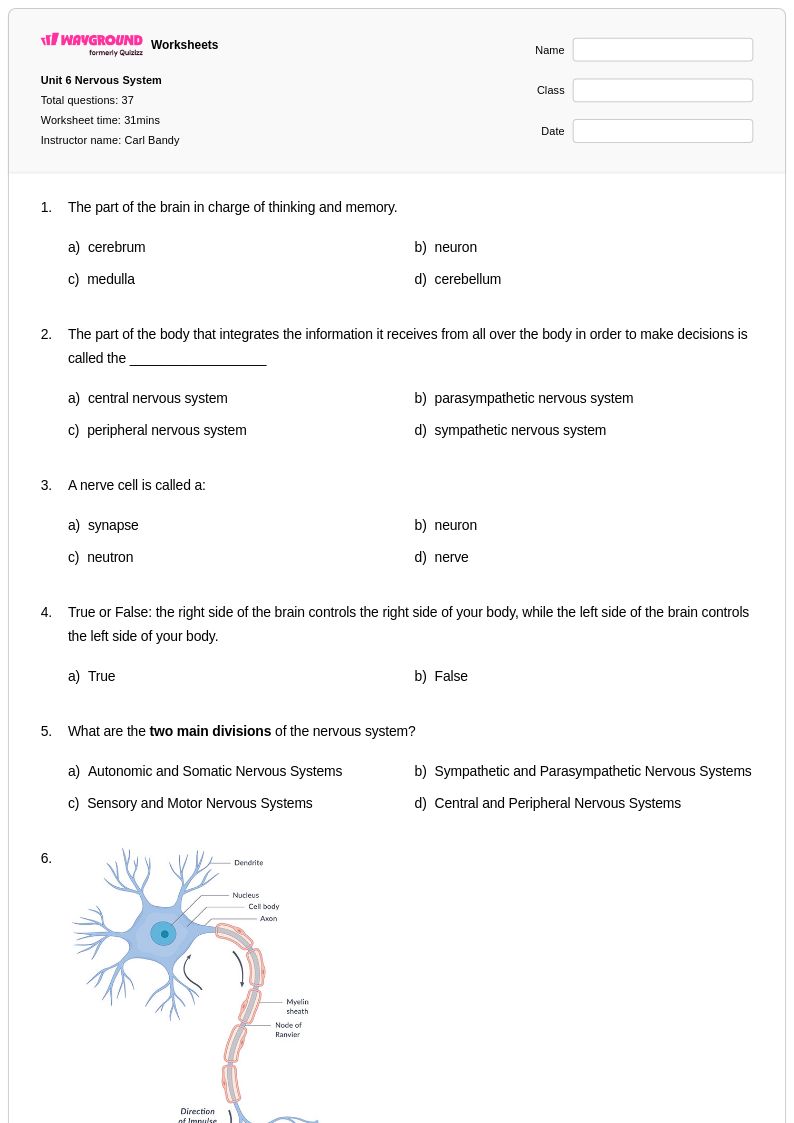
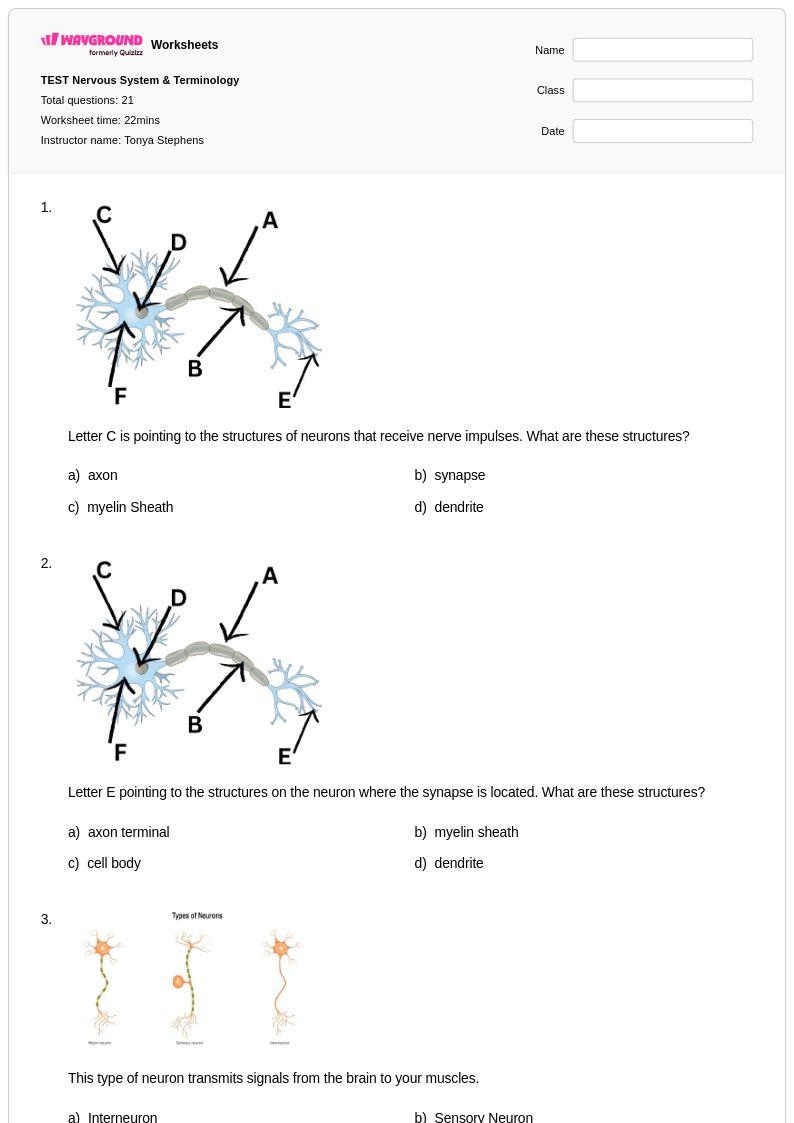
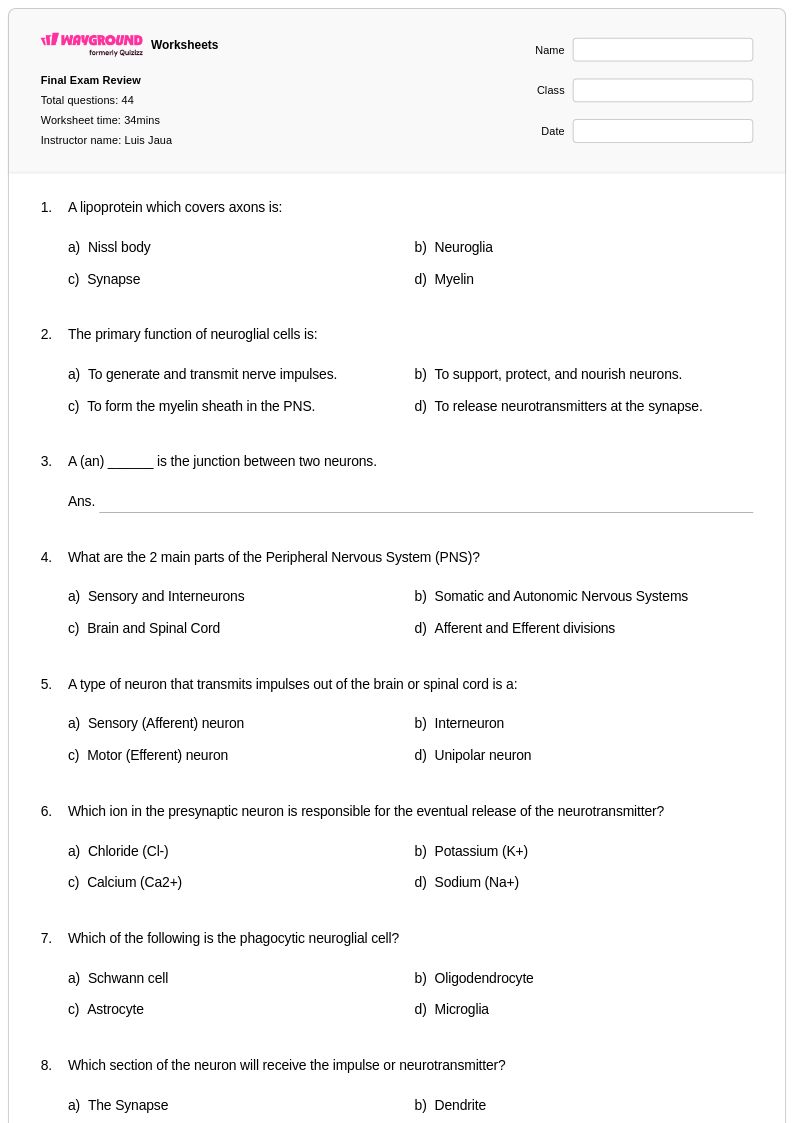
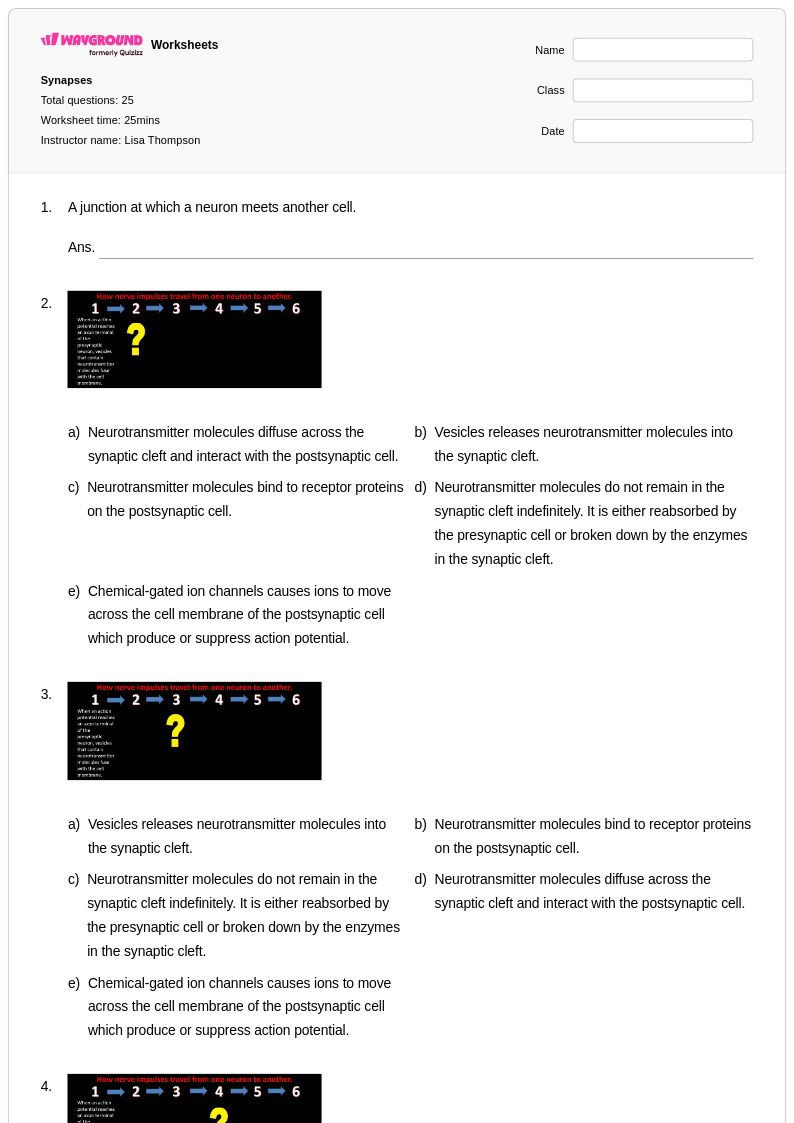
Class 11 neuron structure worksheets available through Wayground (formerly Quizizz) provide comprehensive coverage of the fundamental components and organization of nerve cells, enabling students to master this critical foundation of neurobiological understanding. These expertly designed resources guide students through detailed exploration of neuronal anatomy, including the cell body, dendrites, axon, myelin sheath, nodes of Ranvier, and synaptic terminals, while strengthening essential skills in scientific illustration, cellular identification, and structure-function relationship analysis. The collection features practice problems that challenge students to label neuronal components, compare different types of neurons, and explain how structural adaptations support neural communication, with each worksheet including a detailed answer key to support independent learning and comprehensive understanding of these complex cellular structures.
Wayground (formerly Quizizz) empowers educators with millions of teacher-created neuron structure resources that streamline lesson planning and enhance student engagement through robust search and filtering capabilities aligned with state and national science standards. The platform's differentiation tools allow teachers to customize worksheets for varying ability levels within Class 11 classrooms, providing both printable pdf formats for traditional instruction and digital versions for interactive learning experiences. These flexible resources support targeted remediation for students struggling with cellular biology concepts, offer enrichment opportunities for advanced learners ready to explore neural pathway complexity, and provide consistent skill practice that reinforces proper scientific vocabulary and anatomical precision essential for success in advanced biology coursework and college-level neuroscience preparation.
FAQs
How do I teach neuron structure to students?
Start by introducing the neuron as the basic signaling unit of the nervous system, then walk students through each structural component in sequence: dendrites receive signals, the cell body integrates them, the axon transmits them, and the synaptic terminals pass them on. Using labeled diagrams alongside this sequence helps students connect structure to function before moving into more complex topics like action potentials or neural pathways. Comparing different neuron types (sensory, motor, interneuron) early in instruction also reinforces why structural variation matters.
What exercises help students practice identifying parts of a neuron?
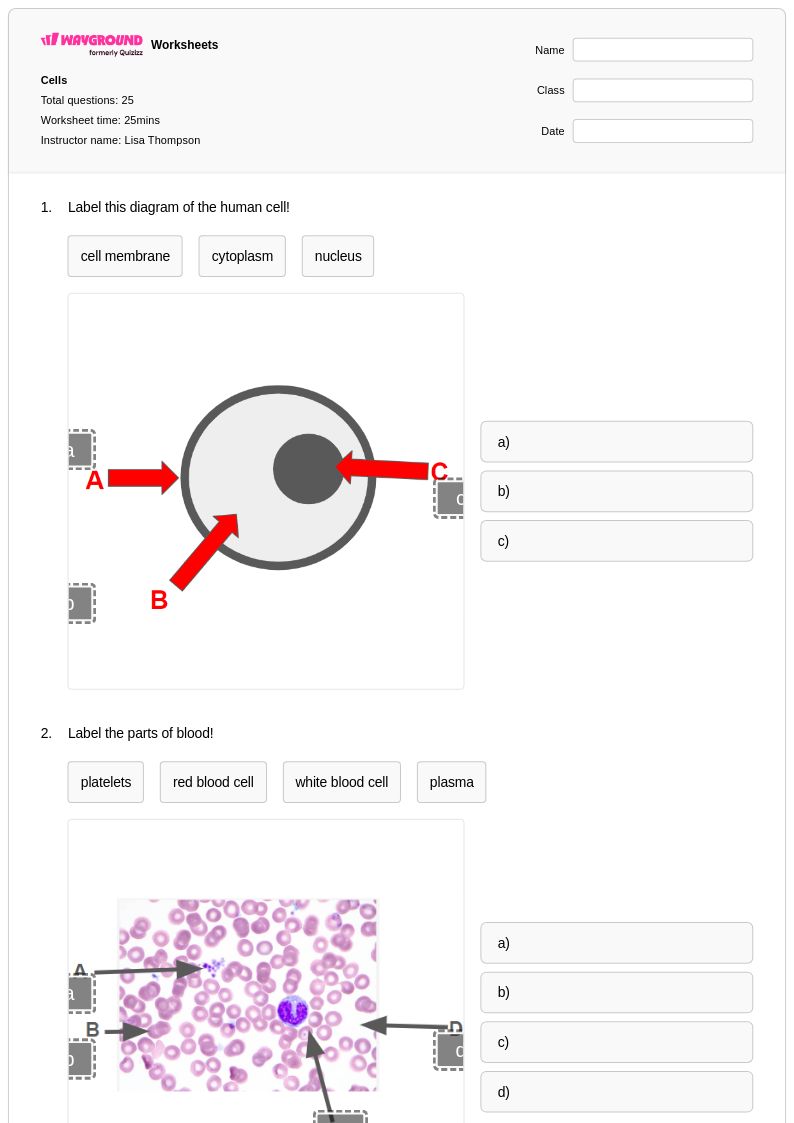
Labeling diagrams is the most effective exercise for neuron structure practice because it requires active recall of each component's name and position rather than passive recognition. Matching activities that pair structural features with their functions push students a step further, reinforcing why each part matters. Asking students to compare two neuron types side by side and explain structural differences in writing consolidates both vocabulary and conceptual understanding.
What mistakes do students commonly make when learning neuron structure?
A frequent misconception is confusing the direction of signal flow, with many students assuming dendrites send signals rather than receive them. Students also commonly conflate the axon with the entire neuron or misidentify the myelin sheath as part of the axon itself rather than an external insulating layer. Another persistent error is treating the cell body as purely structural rather than understanding its role in integrating incoming signals and maintaining cellular function.
How do I use neuron structure worksheets in my classroom?
Neuron structure worksheets work well as guided practice during direct instruction, as independent reinforcement after a lesson, or as a formative check before moving into nervous system function. On Wayground, these worksheets are available as printable PDFs for traditional classroom use and in digital formats for technology-integrated learning, including the option to host them as an interactive quiz on the platform. This flexibility means the same worksheet can serve different instructional purposes depending on your setup and student needs.
How do I differentiate neuron structure instruction for students at different levels?
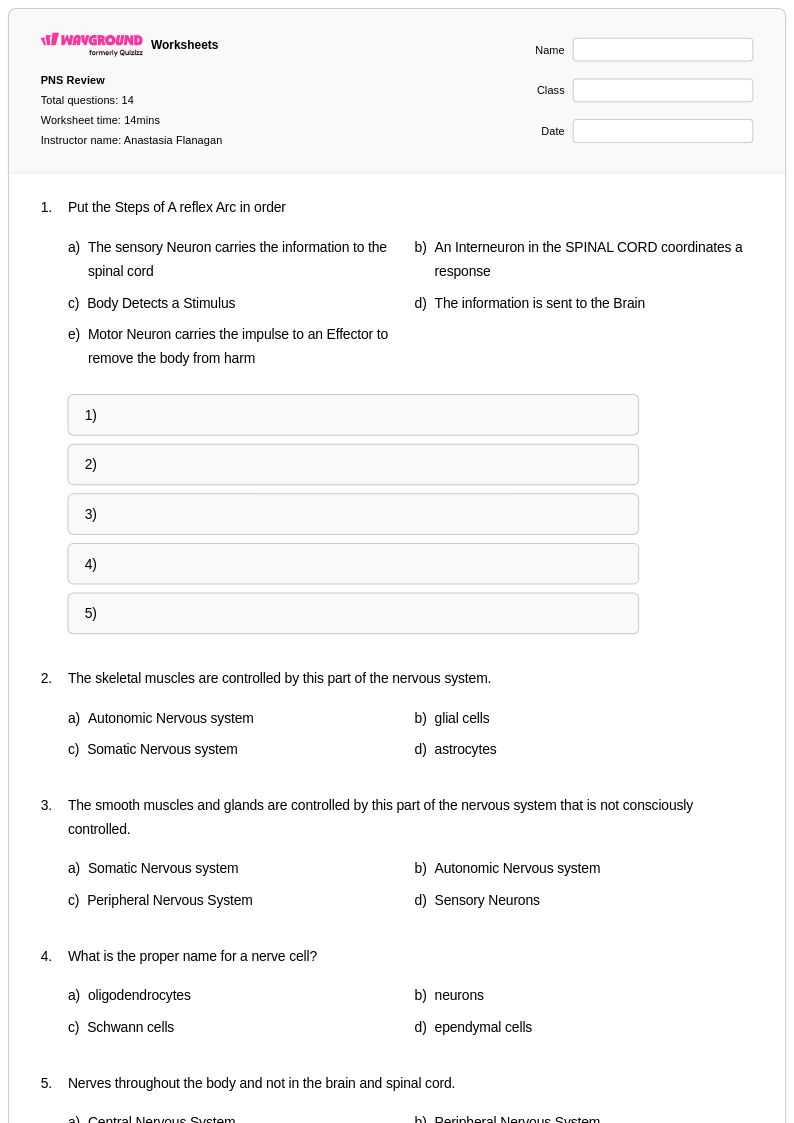
For students who need additional support, simplified diagrams with fewer labeled parts and reduced answer choices help lower cognitive load without removing the core learning objective. More advanced students can be challenged with open-ended questions that ask them to explain how a structural change, such as demyelination, would affect signal transmission. On Wayground, teachers can assign accommodations such as read aloud, extended time, and reduced answer choices to individual students while the rest of the class works through standard settings.
How does neuron structure relate to nervous system function?
Each structural feature of a neuron directly enables its signaling role: dendrites maximize surface area to receive incoming signals from multiple sources, the myelin sheath speeds electrical conduction along the axon, and synaptic terminals contain vesicles that release neurotransmitters to communicate with adjacent cells. Teaching students to trace this structure-to-function logic prepares them to understand more advanced concepts like synaptic transmission, reflex arcs, and neurological conditions caused by structural disruption.