
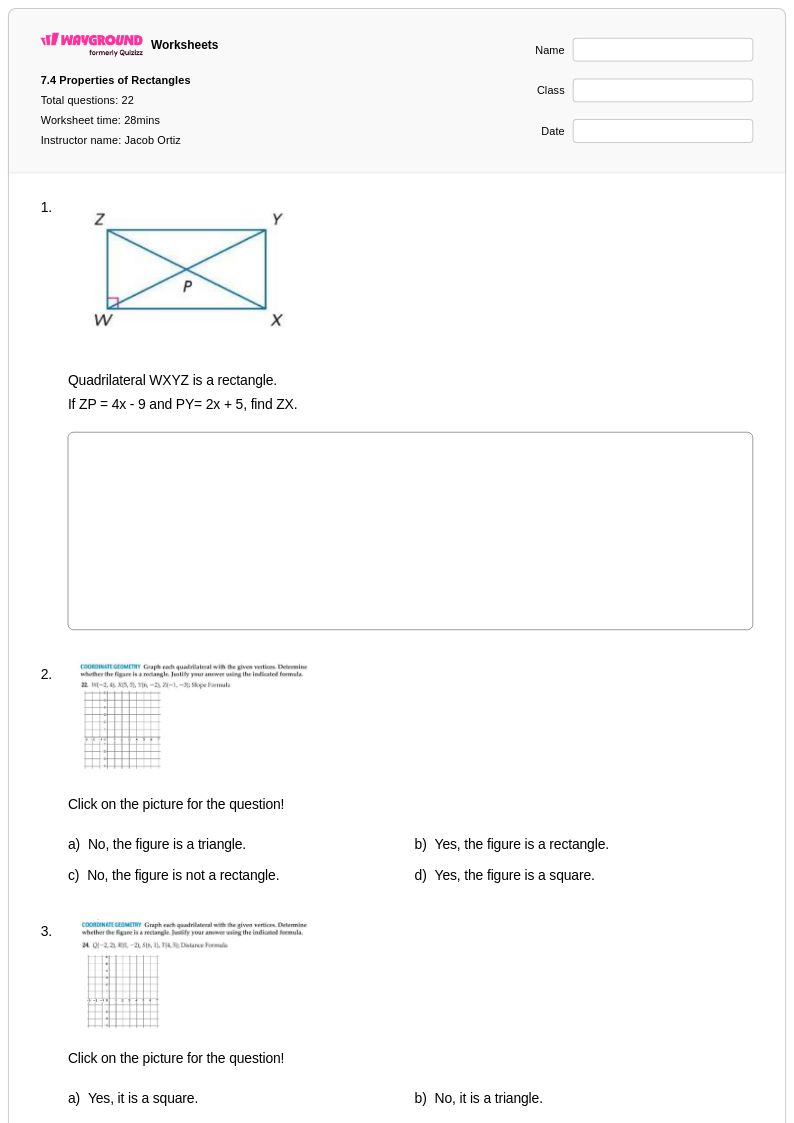
22 Q
10th
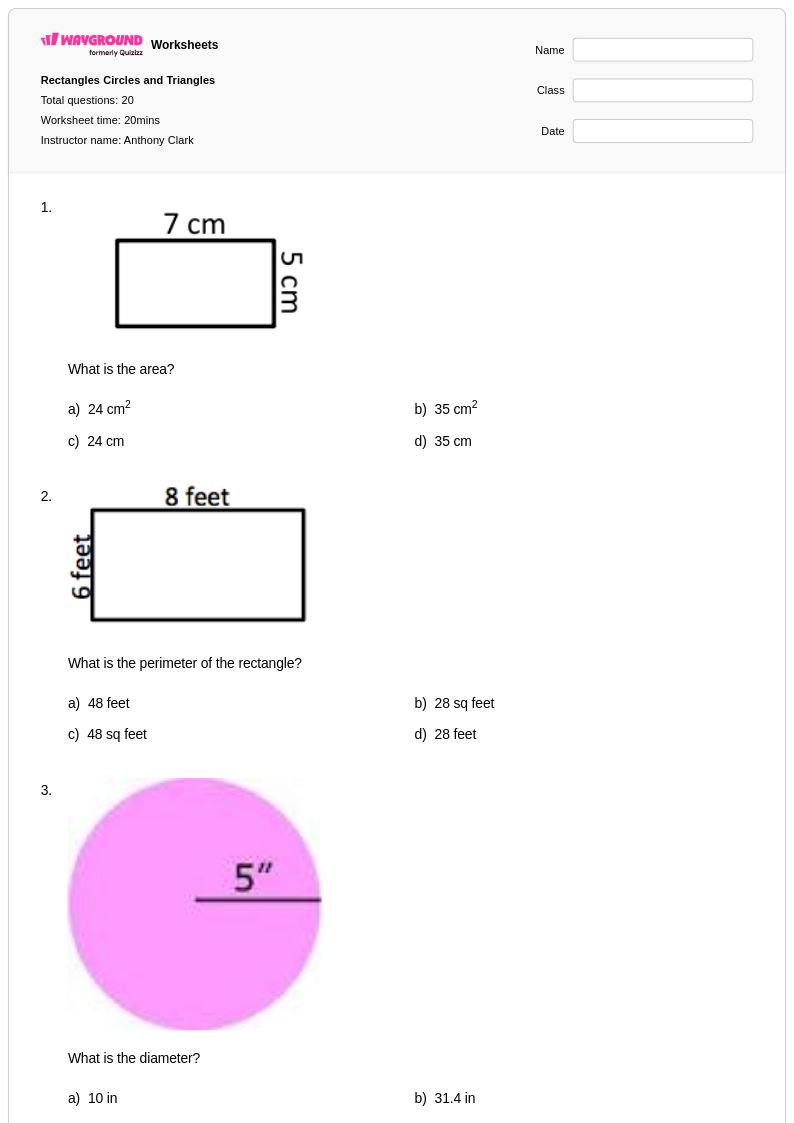
20 Q
7th - Uni
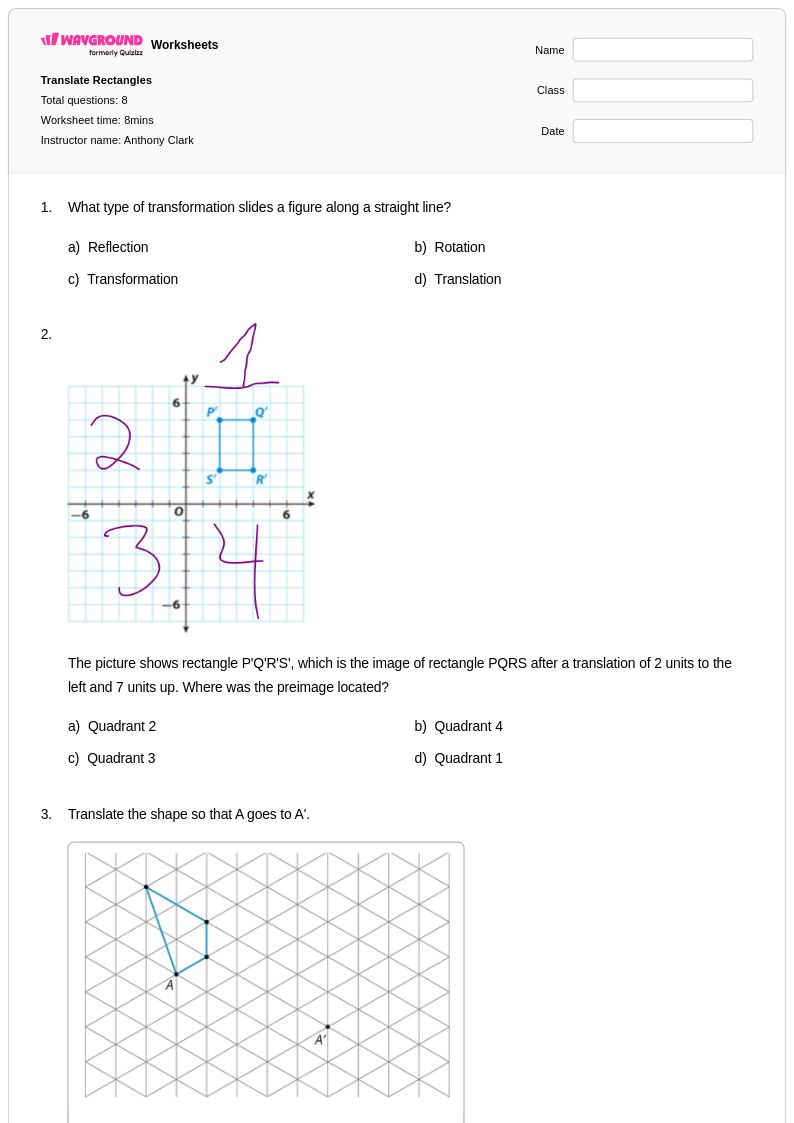
8 Q
8th - Uni
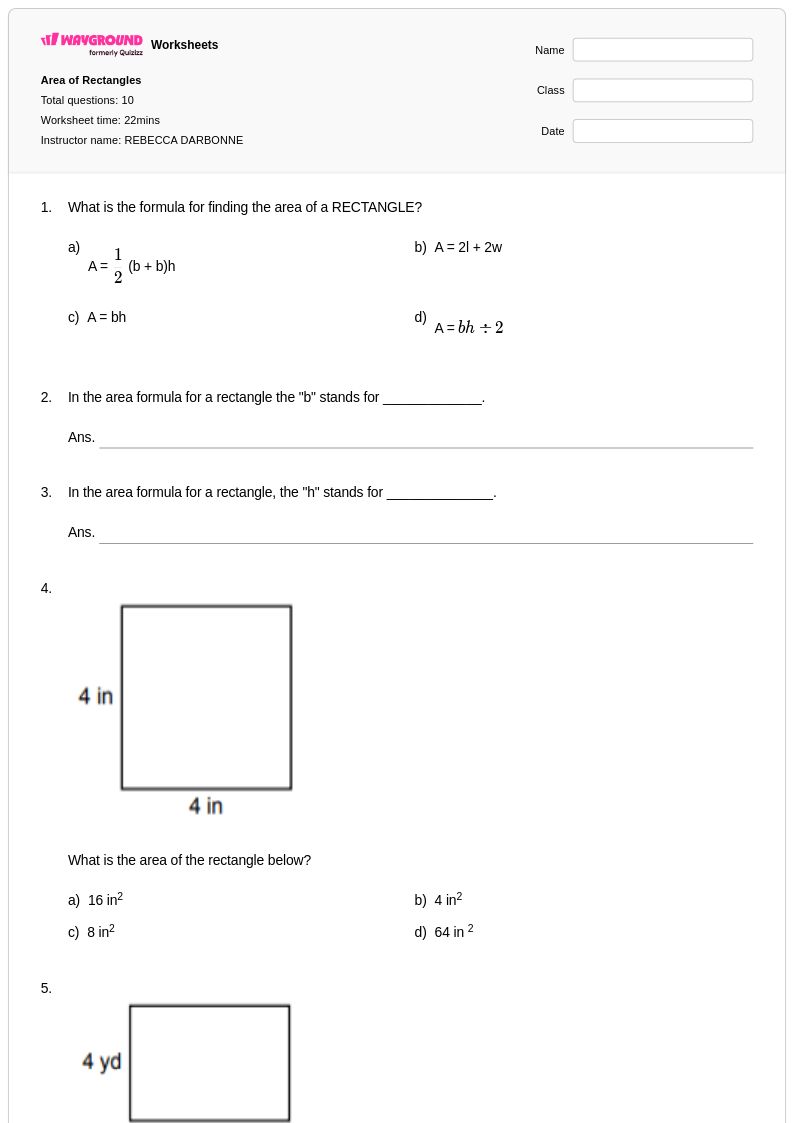
10 Q
3rd - 7th
16 Q
7th
10 Q
9th - 12th
20 Q
5th
14 Q
7th
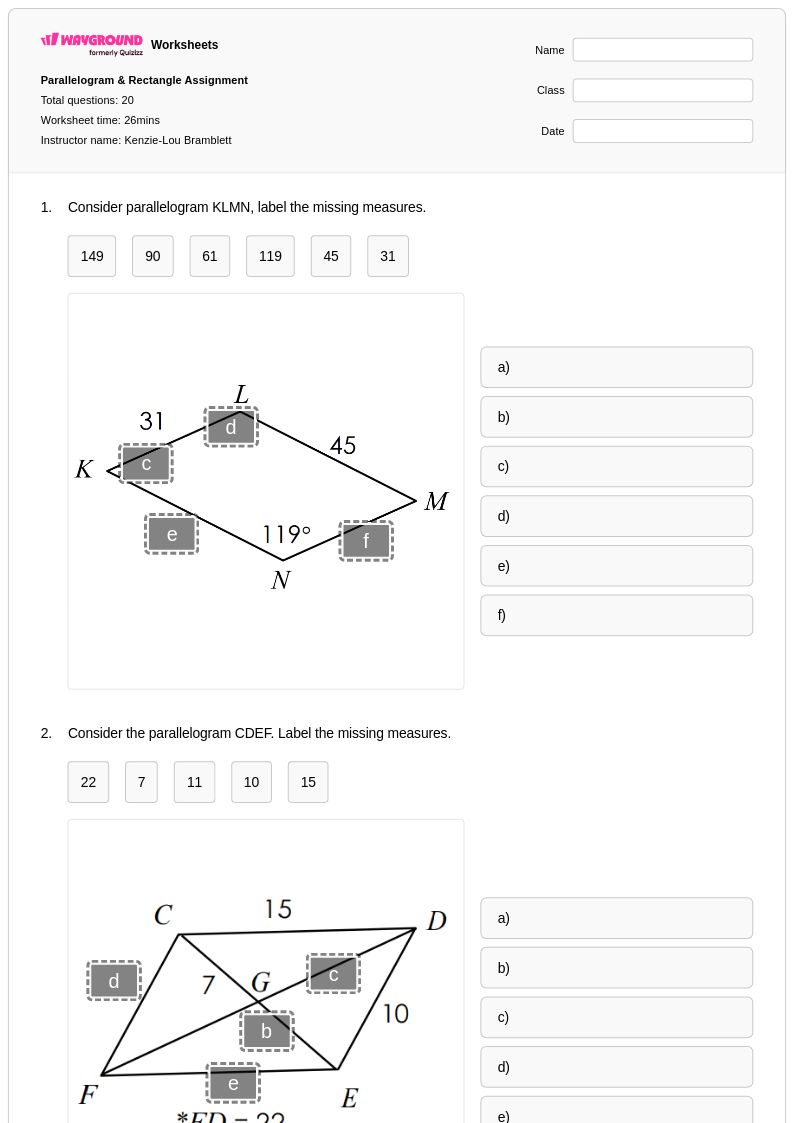
20 Q
10th
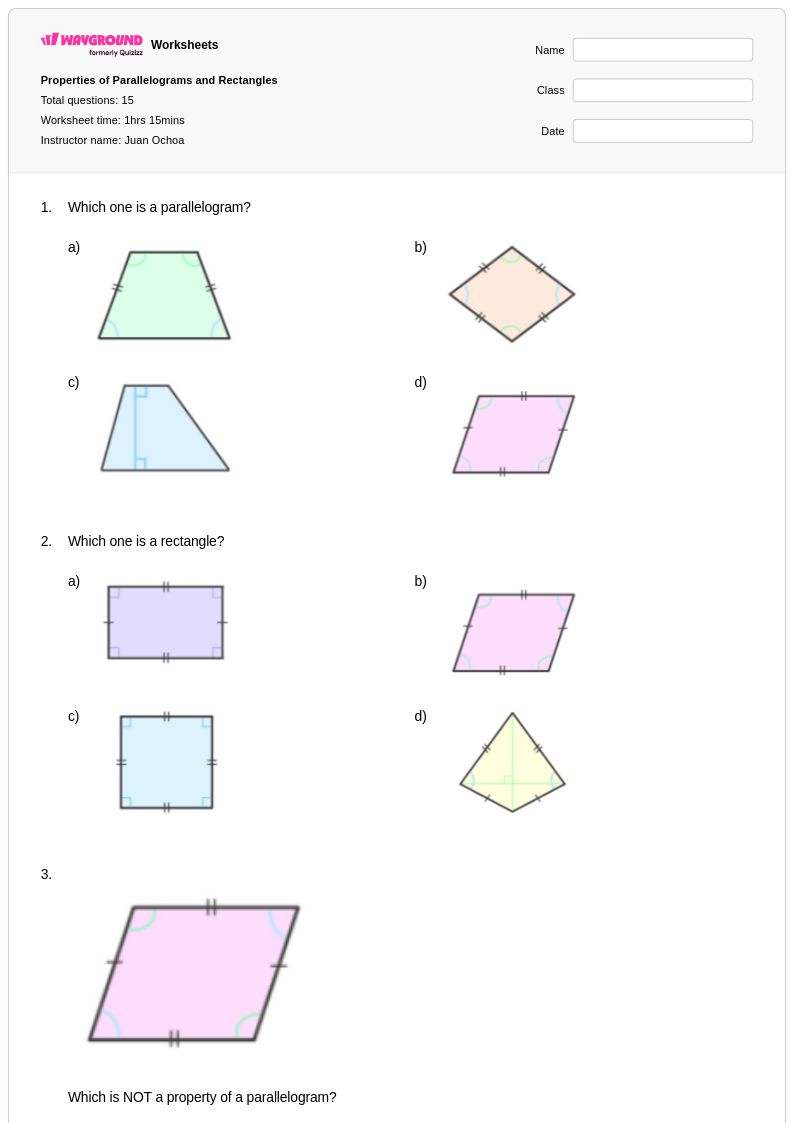
15 Q
9th
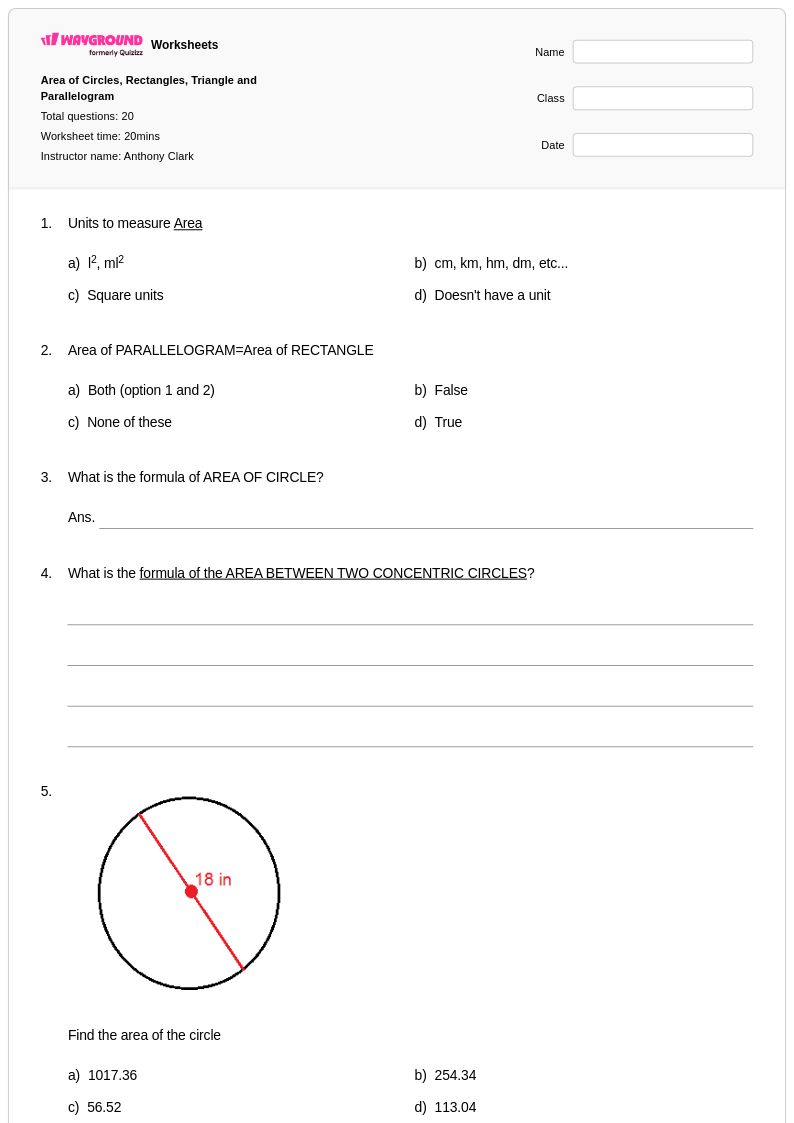
20 Q
7th - Uni
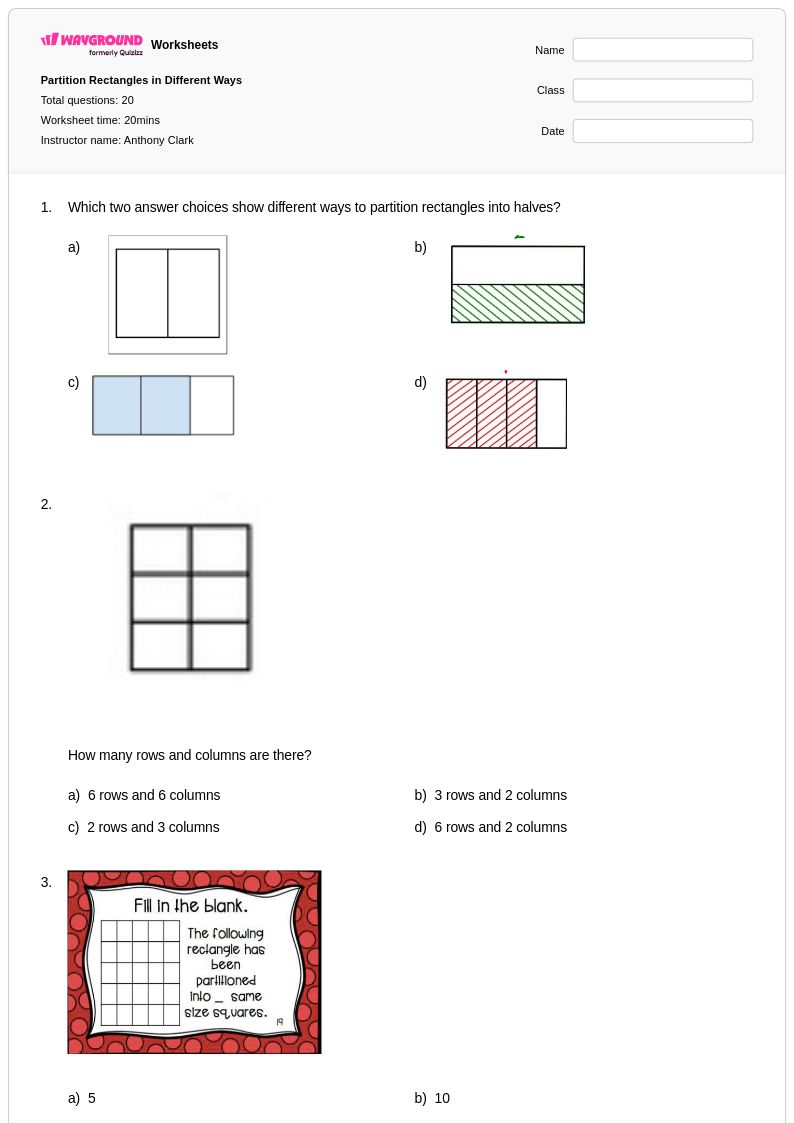
20 Q
1st - Uni
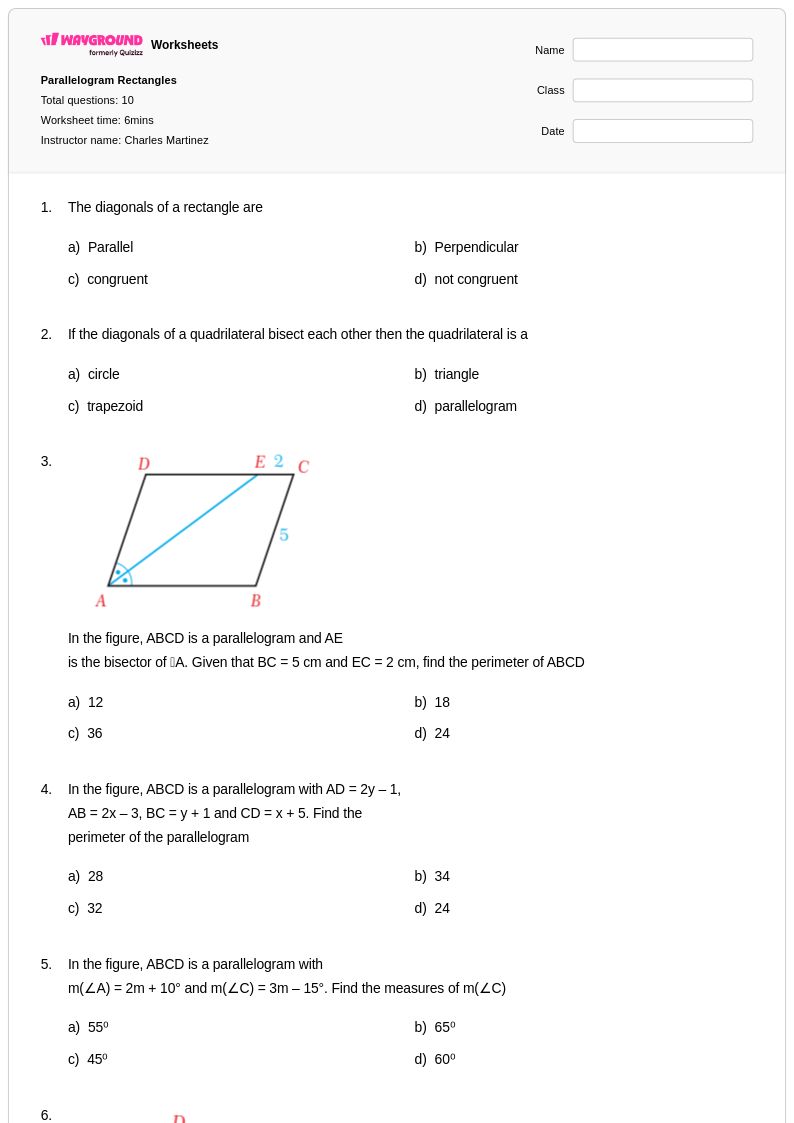
10 Q
8th
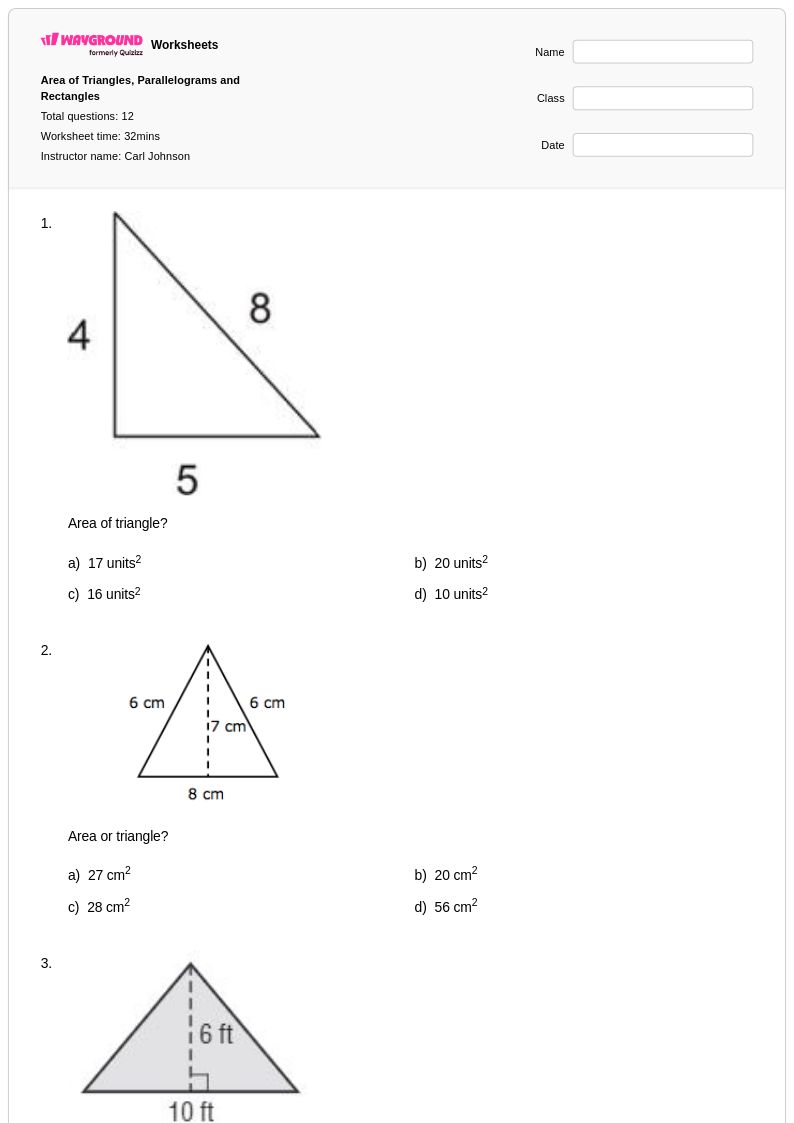
12 Q
7th
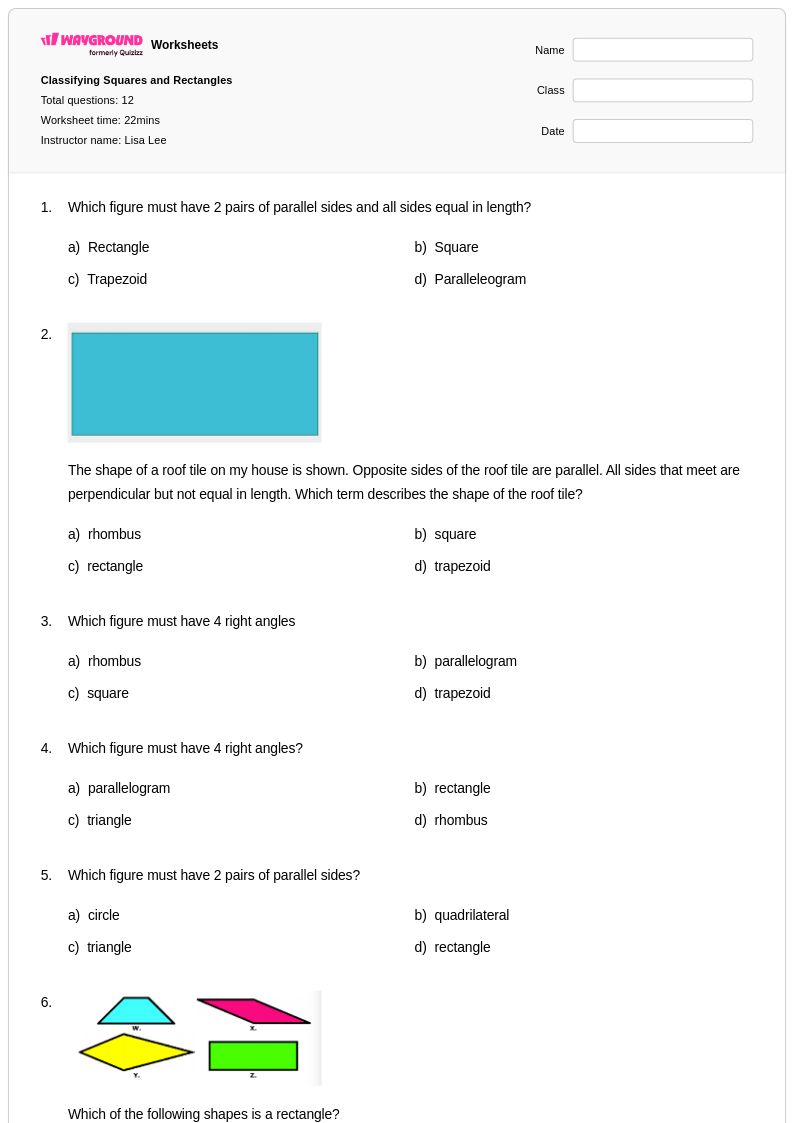
12 Q
3rd - 5th
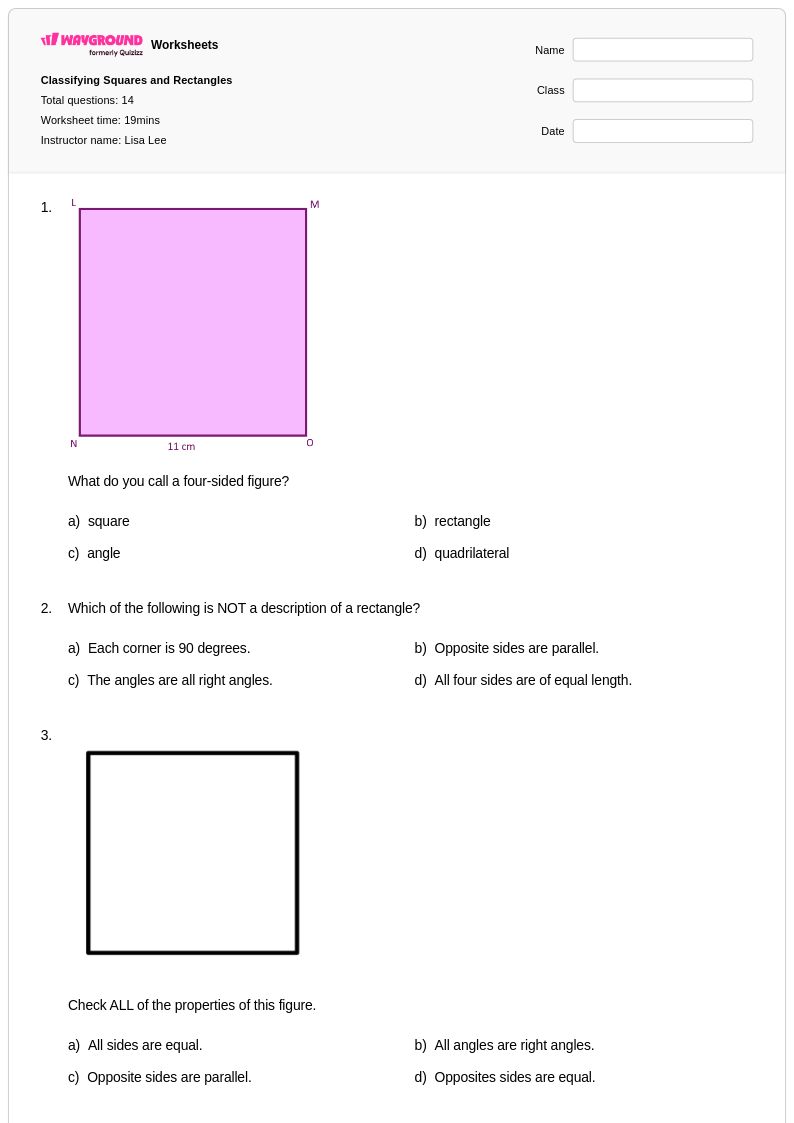
14 Q
4th
12 Q
4th
11 Q
4th
20 Q
4th
12 Q
5th
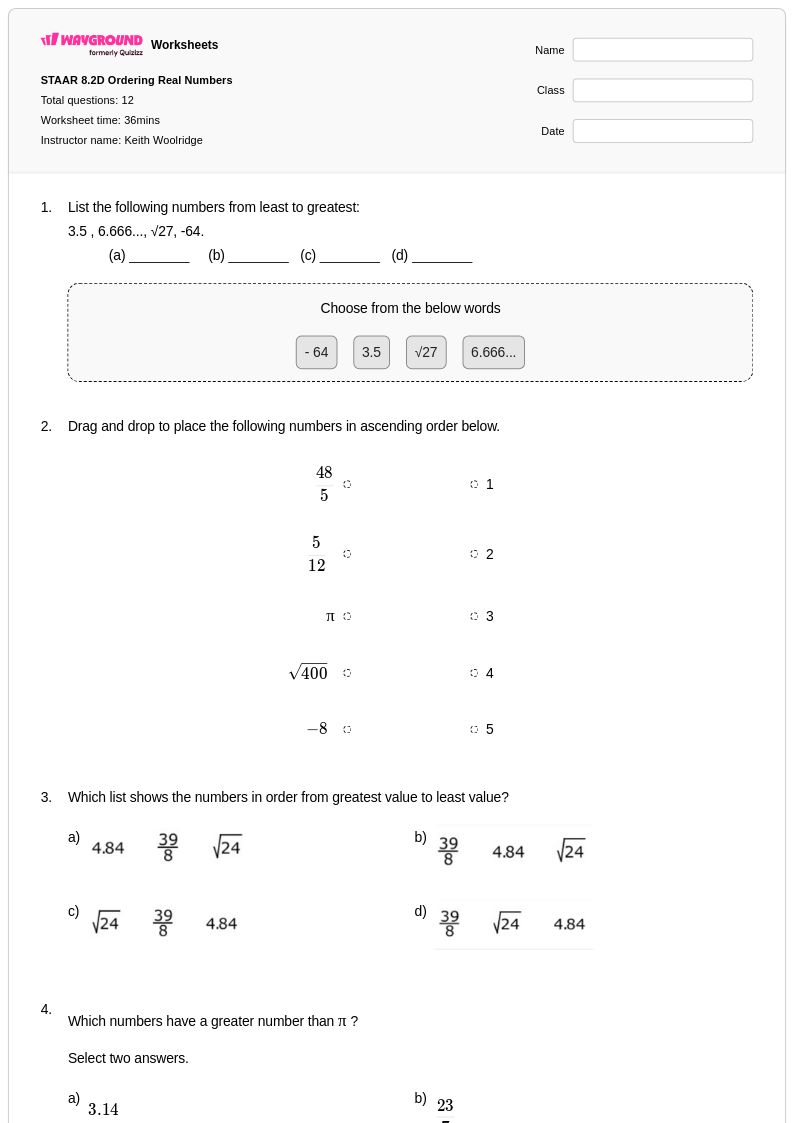
14 Q
8th
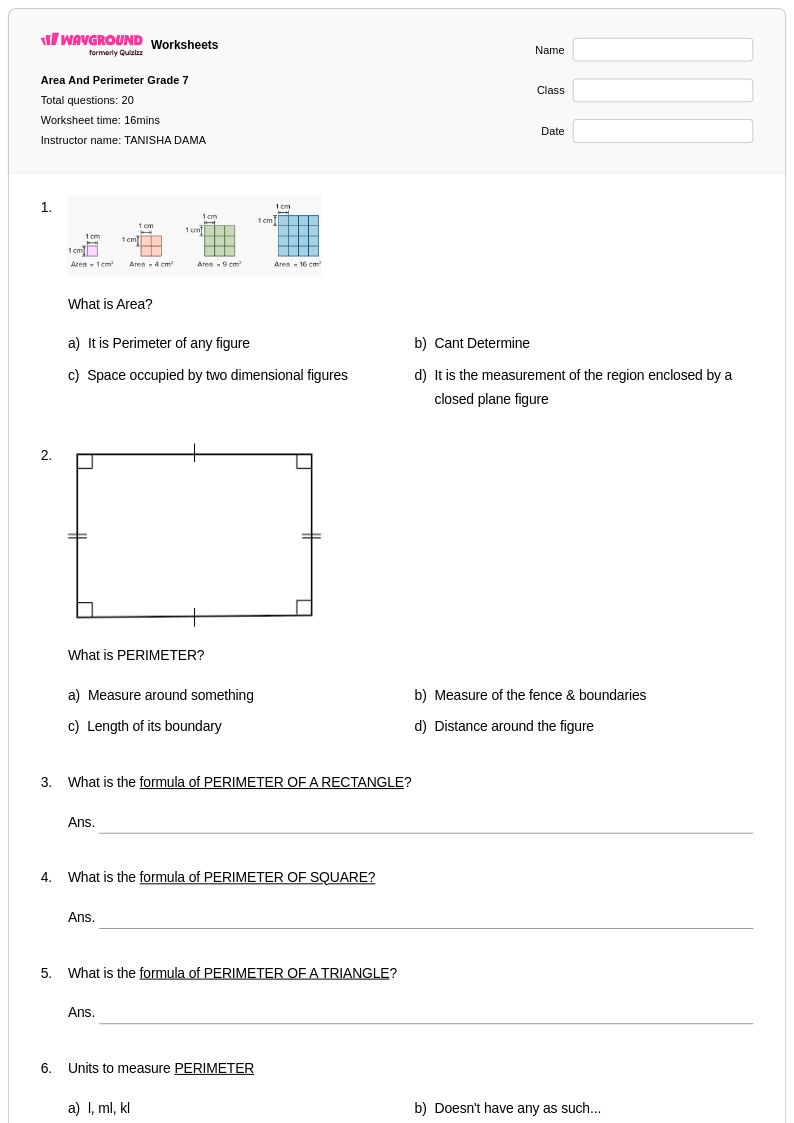
20 Q
7th
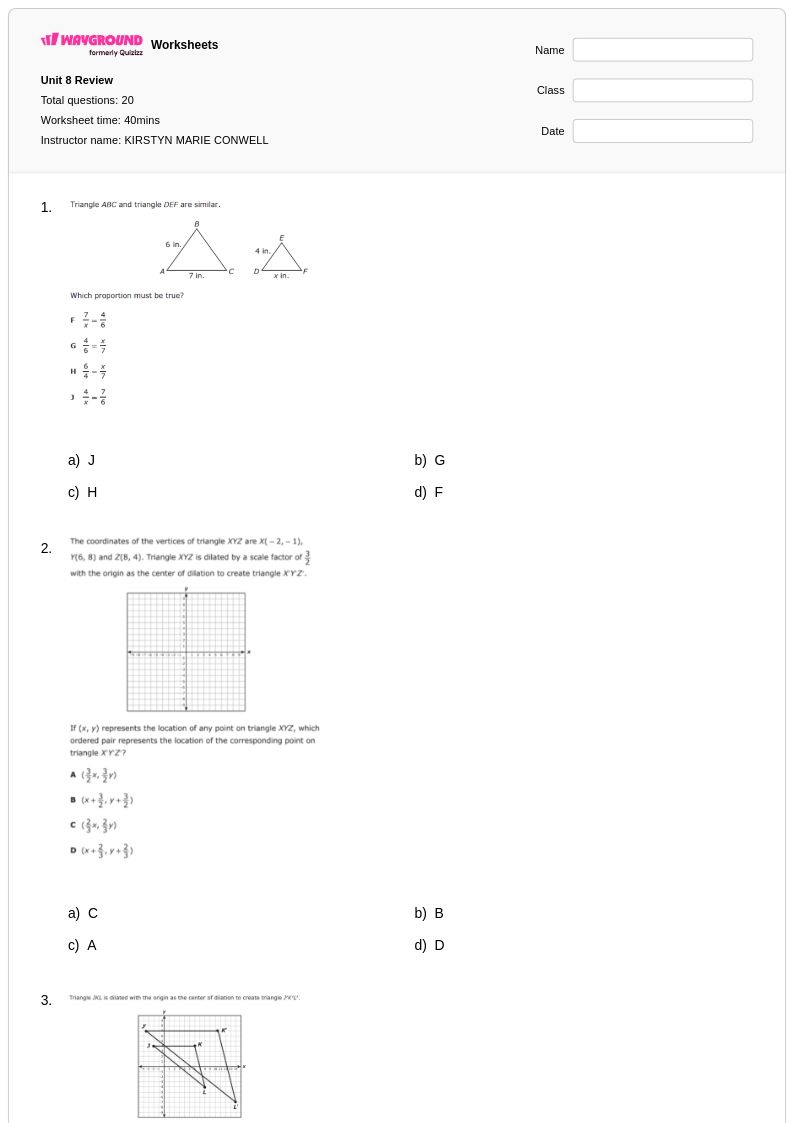
20 Q
8th
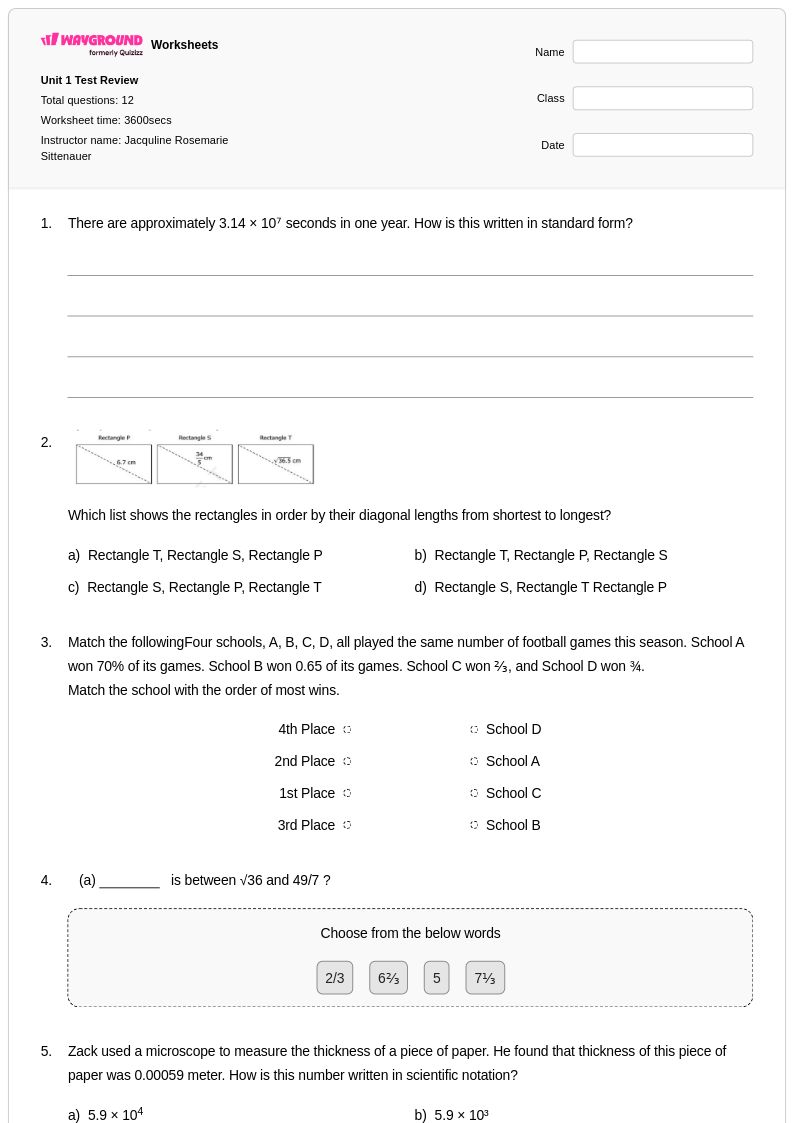
12 Q
8th
Explore Worksheets by Subjects
Explore printable Rectangles worksheets
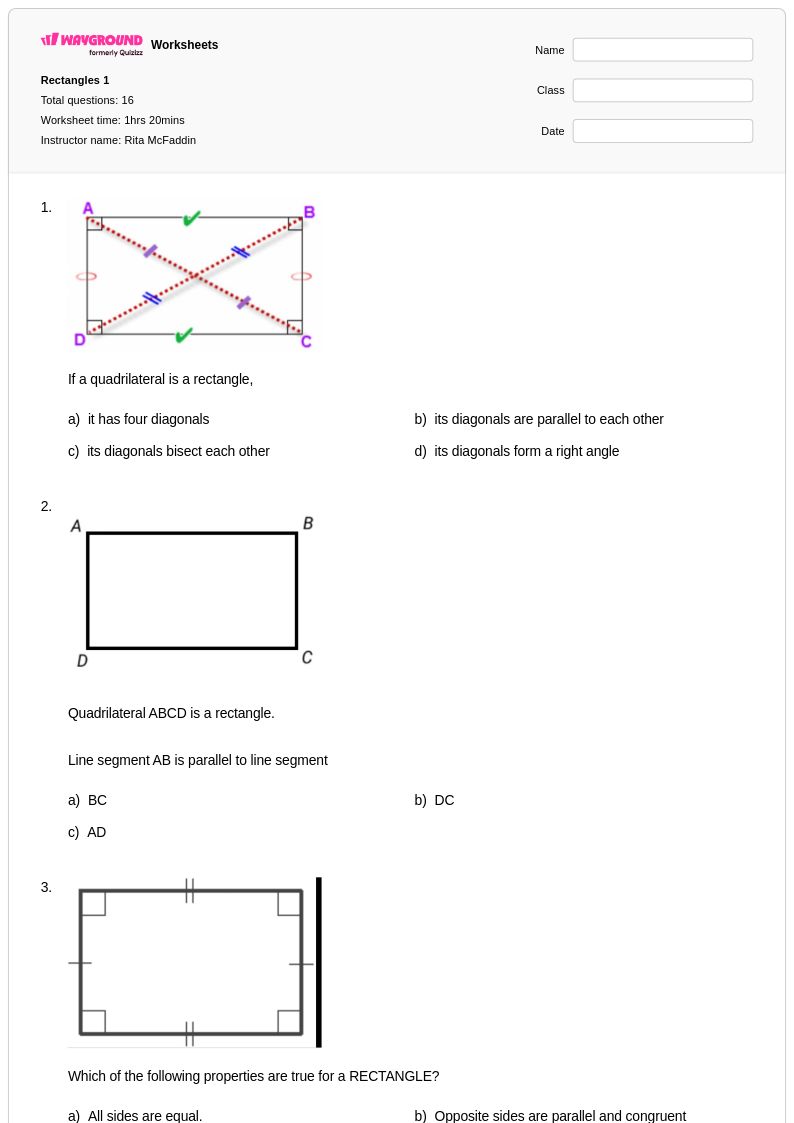
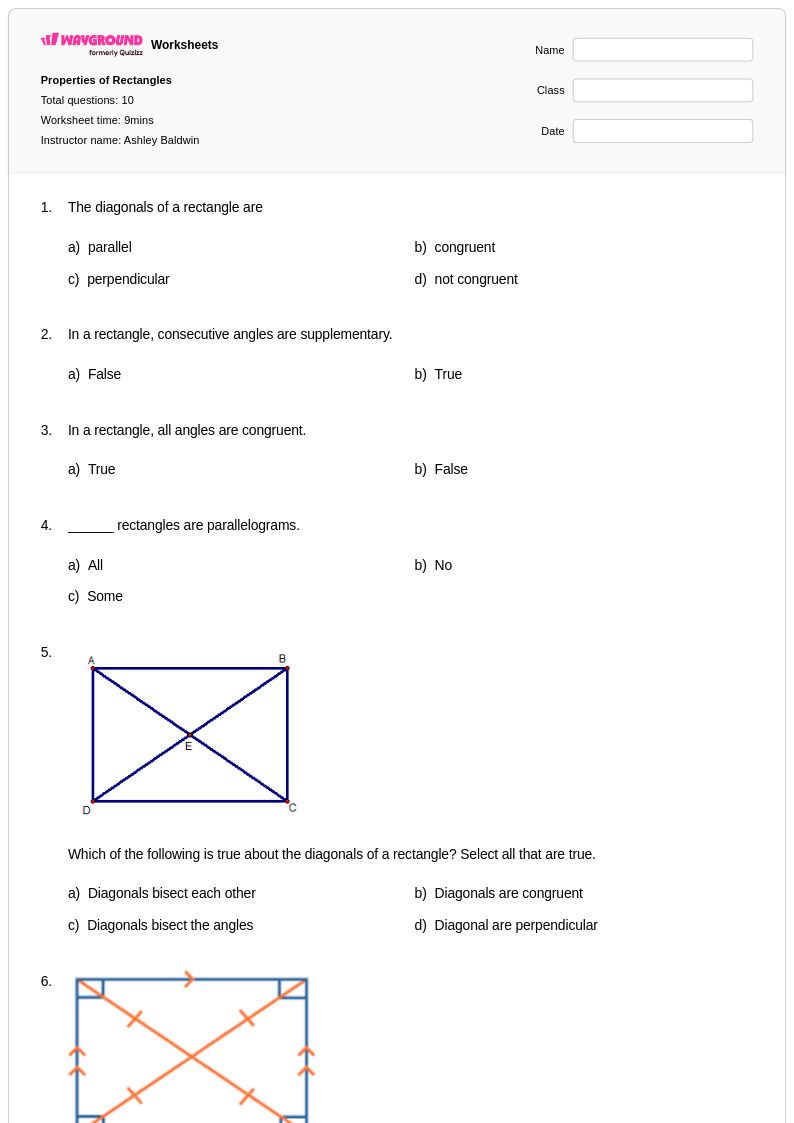
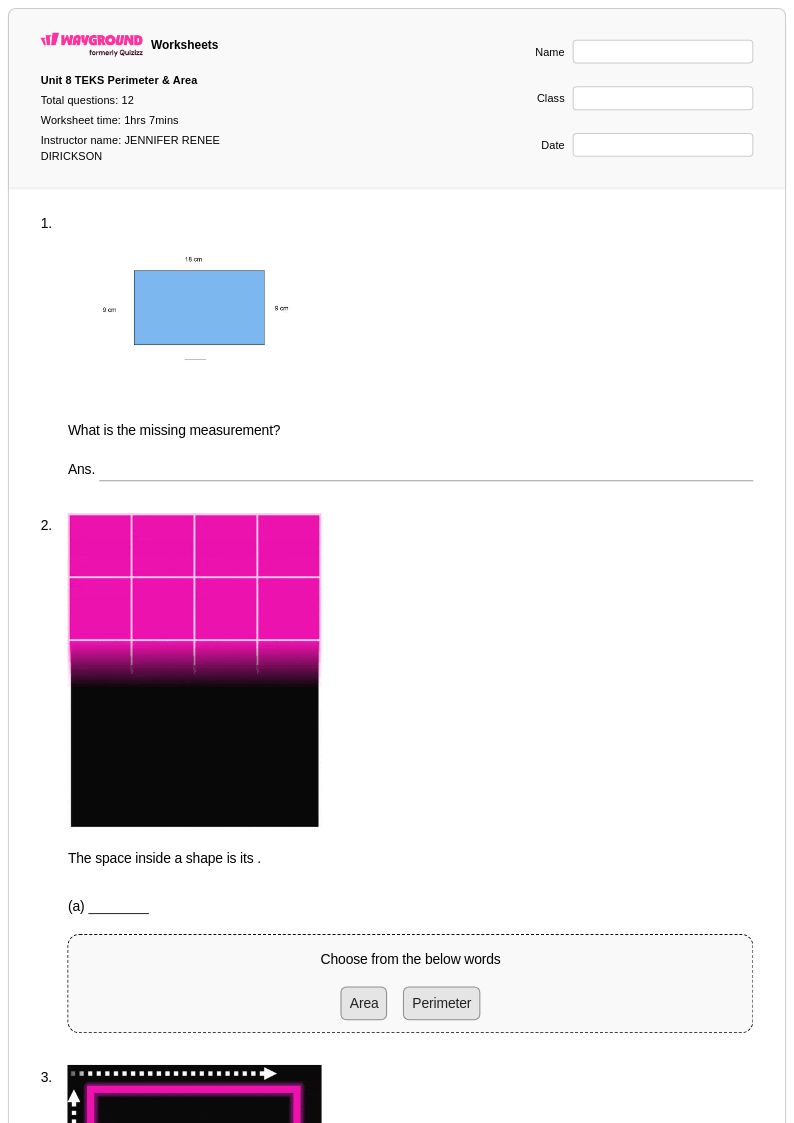
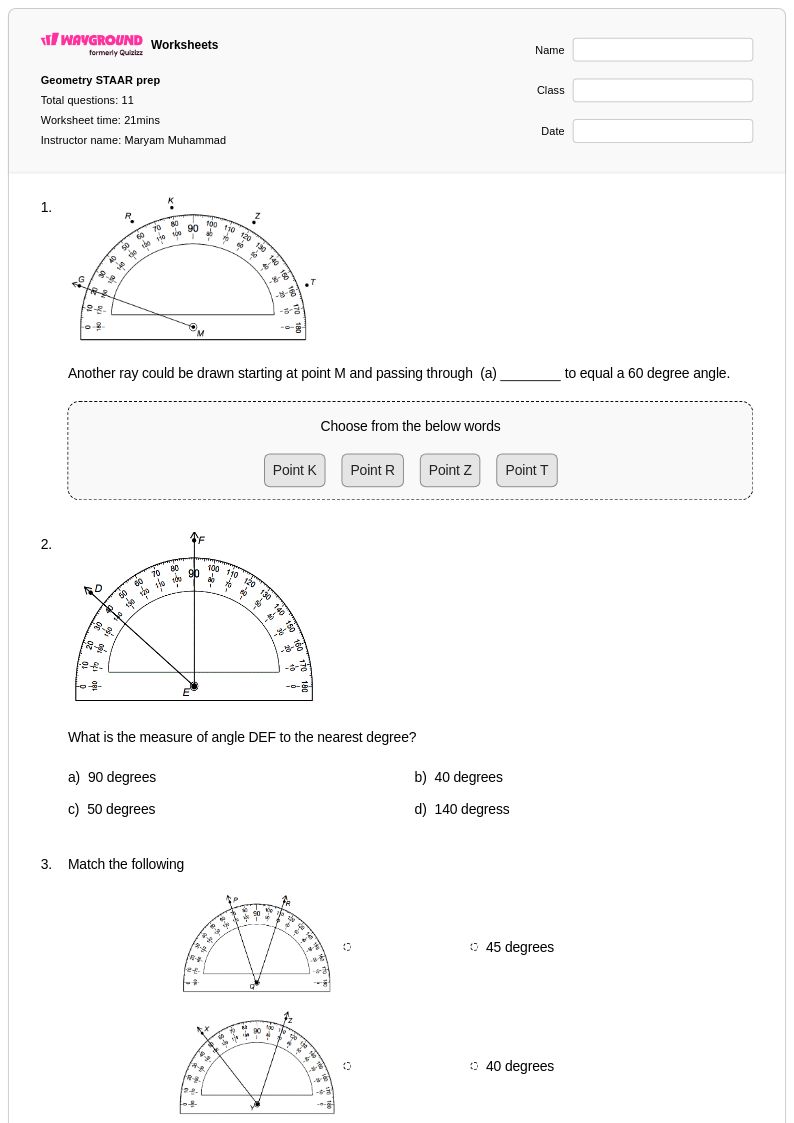
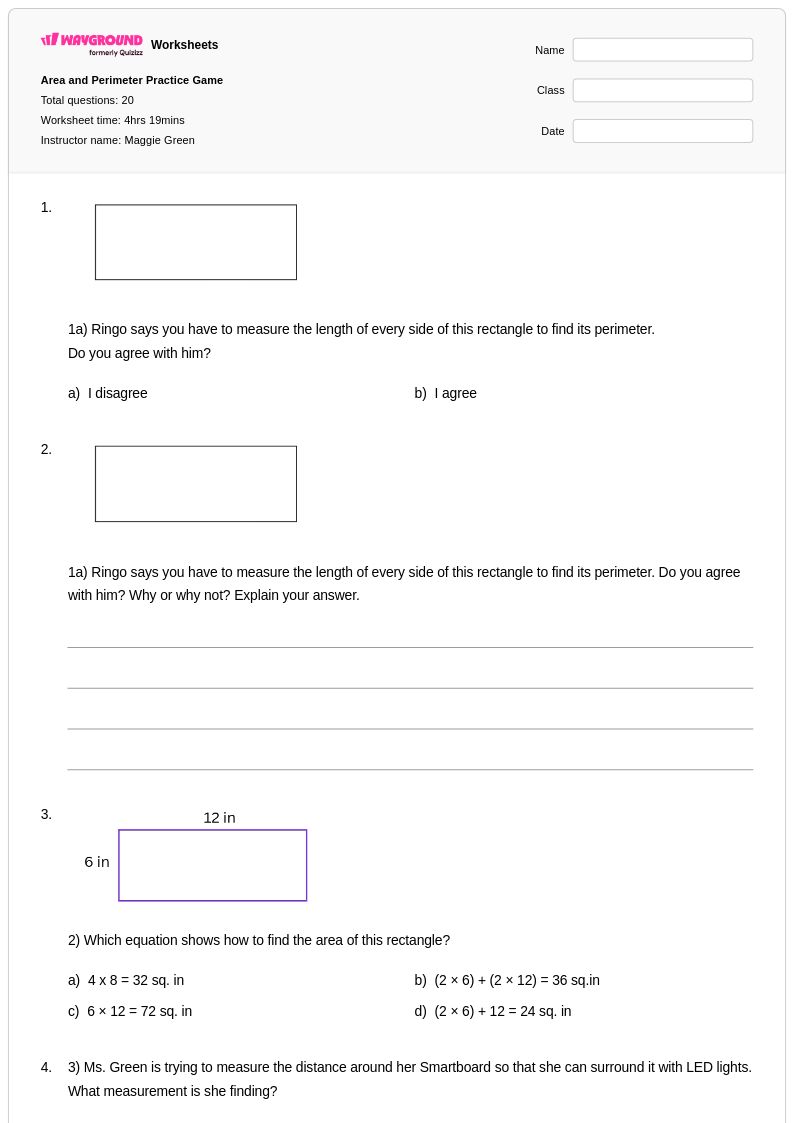
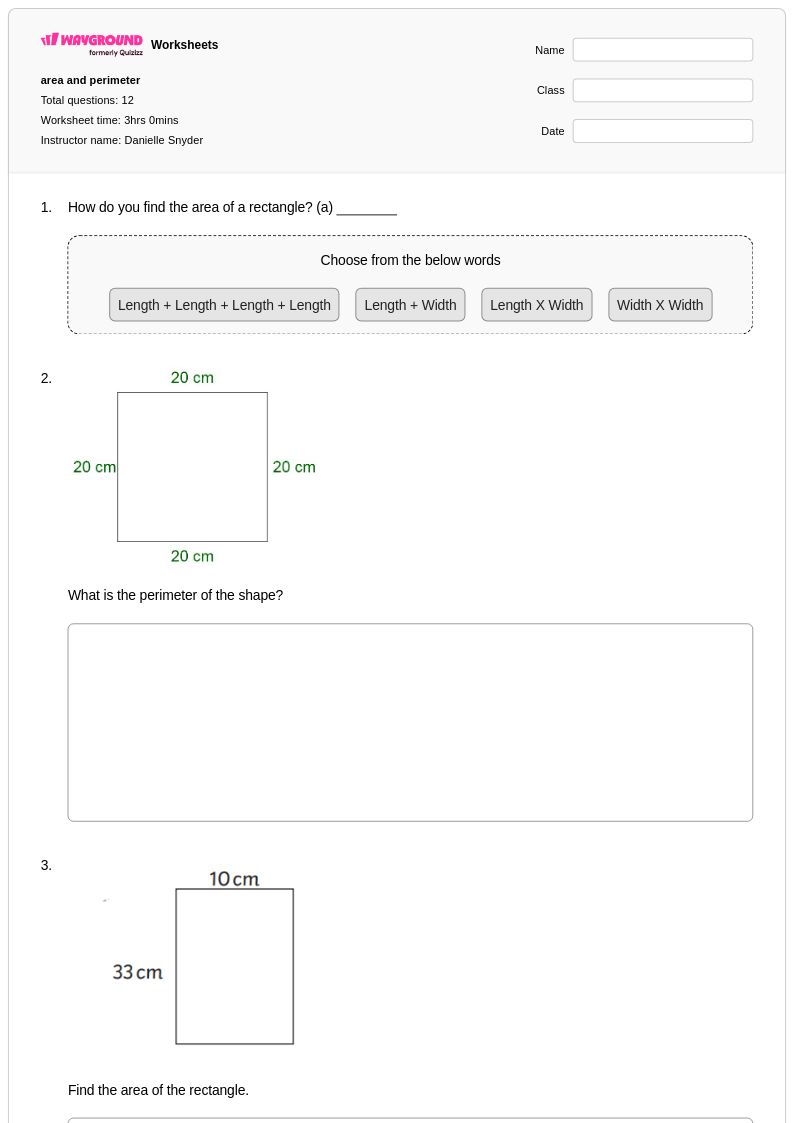
Rectangles worksheets available through Wayground (formerly Quizizz) provide comprehensive practice opportunities for students to master the fundamental properties and applications of this essential quadrilateral. These educational resources focus on developing critical geometric reasoning skills, including identifying rectangle characteristics such as opposite sides being equal and parallel, all angles measuring 90 degrees, and diagonals bisecting each other at equal lengths. The worksheet collection strengthens students' ability to calculate perimeter and area, recognize rectangles in various orientations, distinguish rectangles from other parallelograms, and apply rectangle properties to solve real-world problems. Each worksheet includes detailed answer keys and is available as free printable PDFs, making it easy for educators to incorporate targeted practice problems into their geometry instruction and assessment strategies.
Wayground (formerly Quizizz) supports mathematics teachers with an extensive collection of teacher-created rectangle worksheets drawn from millions of educational resources developed by classroom professionals. The platform's robust search and filtering capabilities allow educators to quickly locate materials that align with specific learning standards and match their students' skill levels, while built-in differentiation tools enable teachers to customize worksheets for diverse learning needs. These rectangle-focused materials are available in both printable PDF formats and interactive digital versions, providing flexibility for various classroom environments and learning preferences. Teachers can efficiently use these resources for lesson planning, targeted remediation for students struggling with geometric concepts, enrichment activities for advanced learners, and systematic skill practice that builds confidence in working with rectangular shapes and their mathematical properties.
FAQs
How do I teach the properties of a rectangle?
What exercises help students practice calculating the perimeter and area of rectangles?
What are common mistakes students make when learning about rectangles?
How can I use these rectangle worksheets in my classroom?
How do rectangles fit into the Common Core math standards?
How can I support students who struggle with rectangle concepts?