
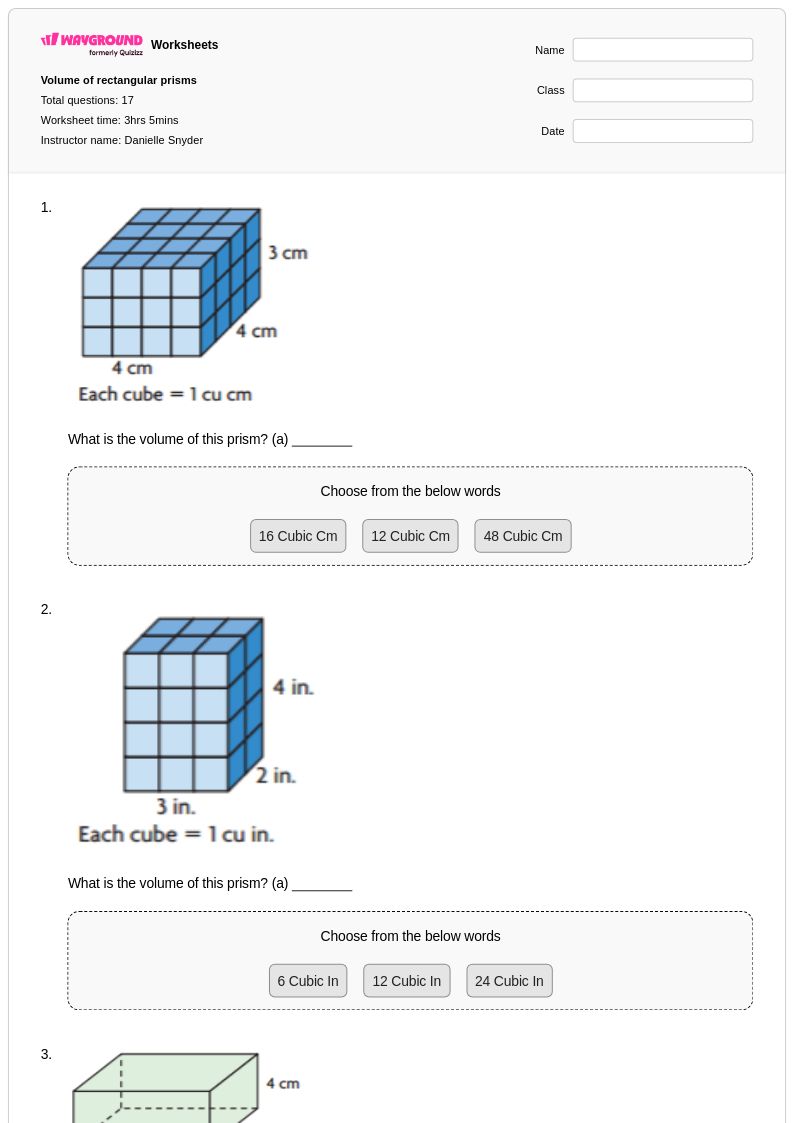
17 Q
5th
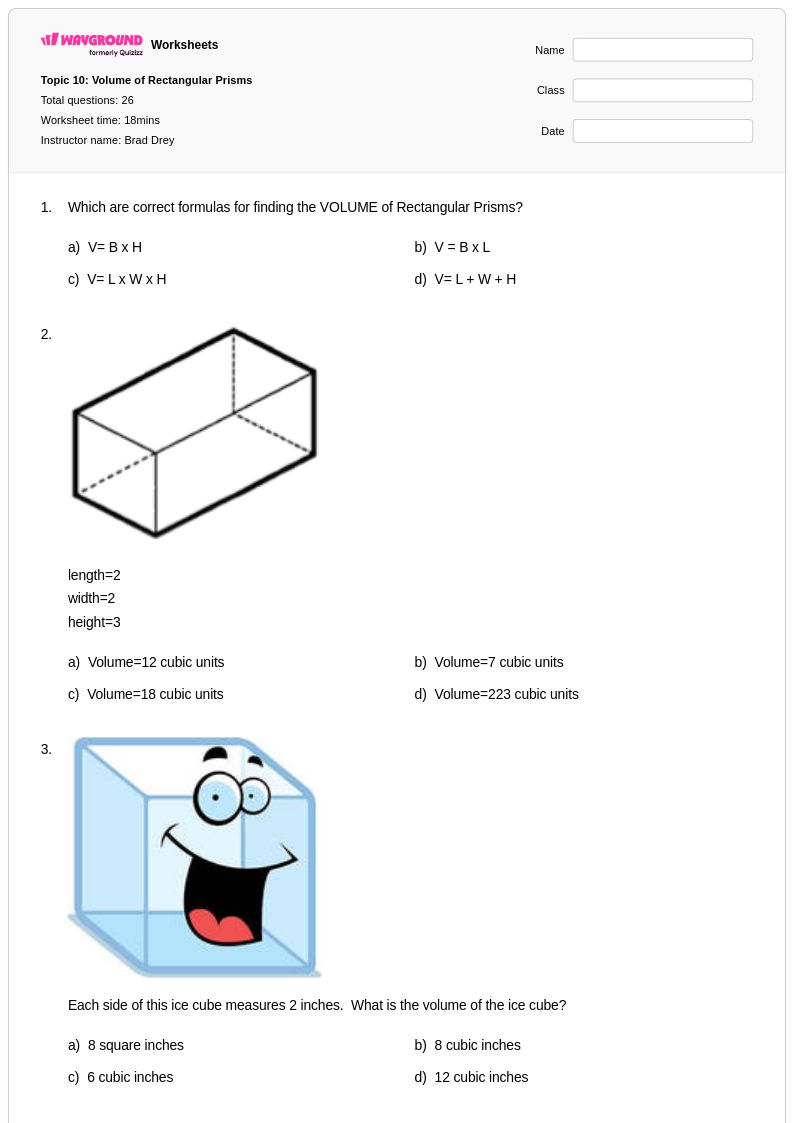
26 Q
5th
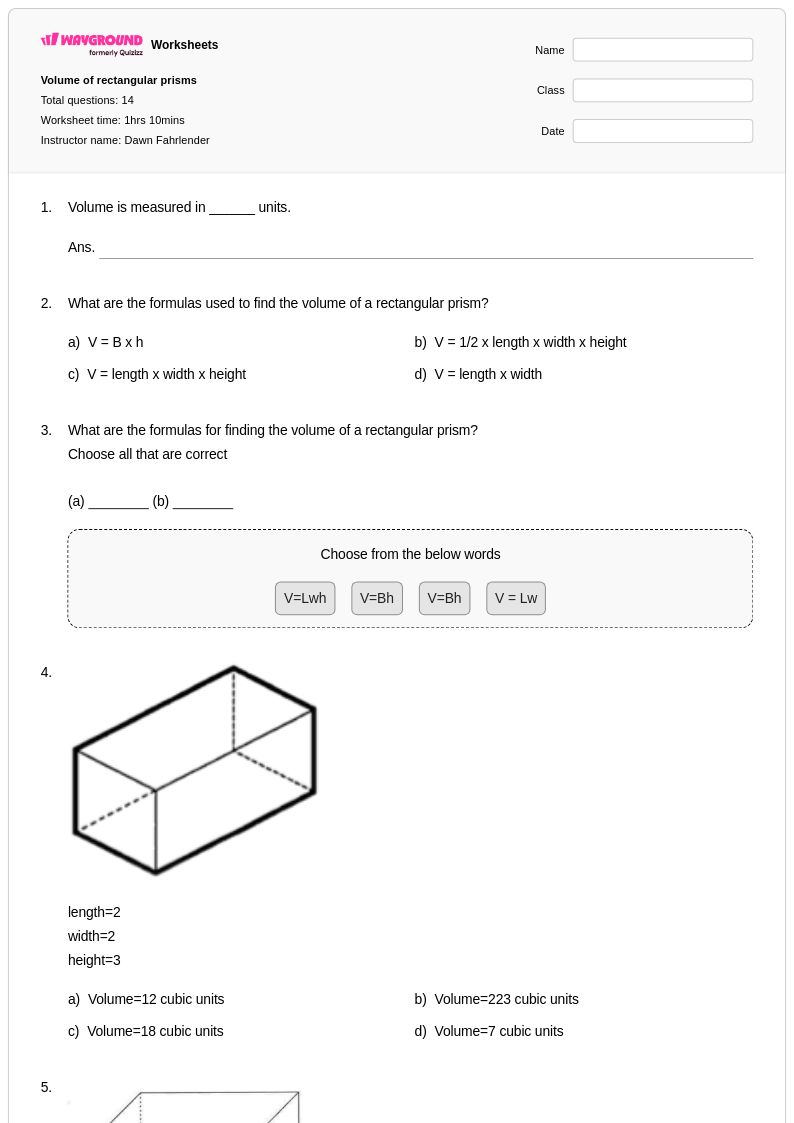
14 Q
6th - 8th
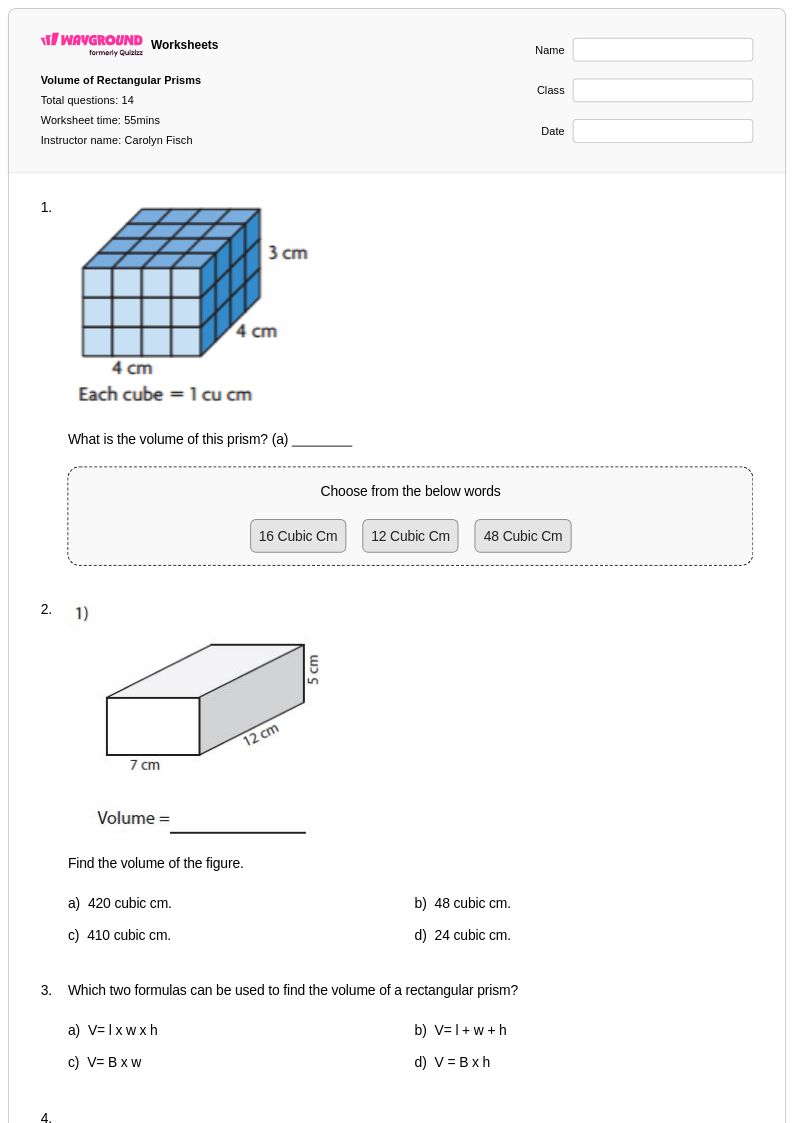
14 Q
5th
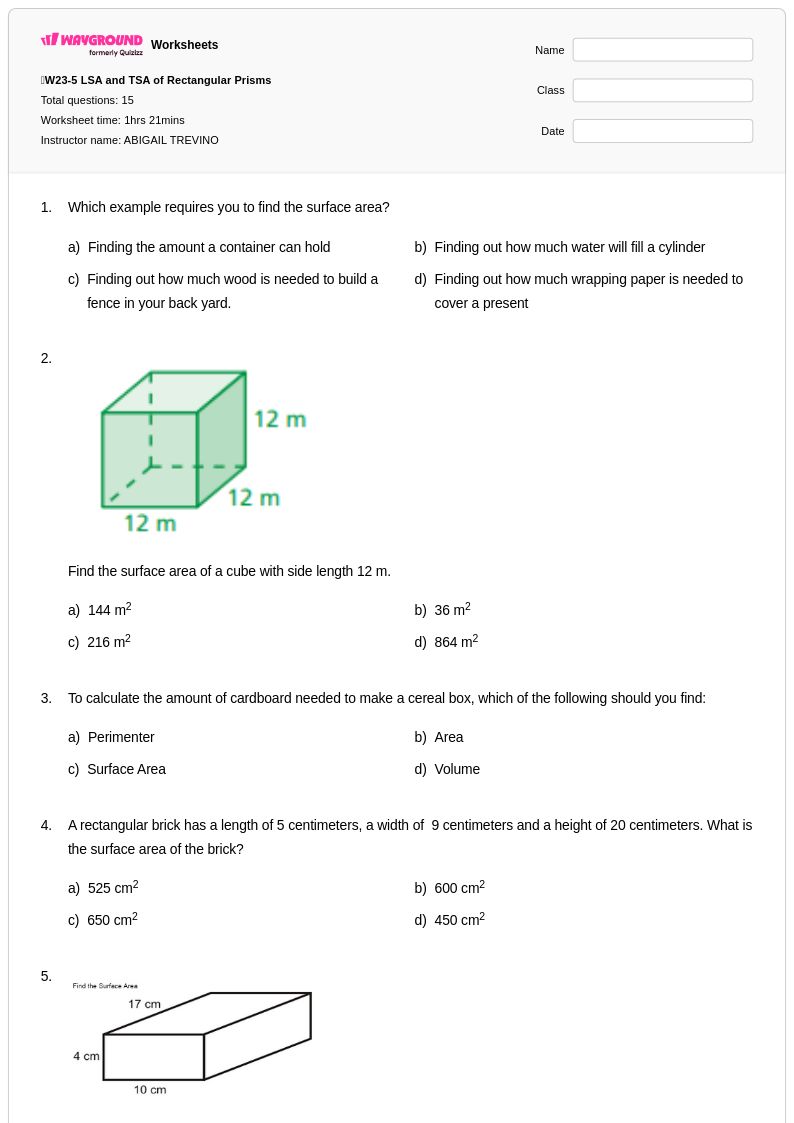
15 Q
8th
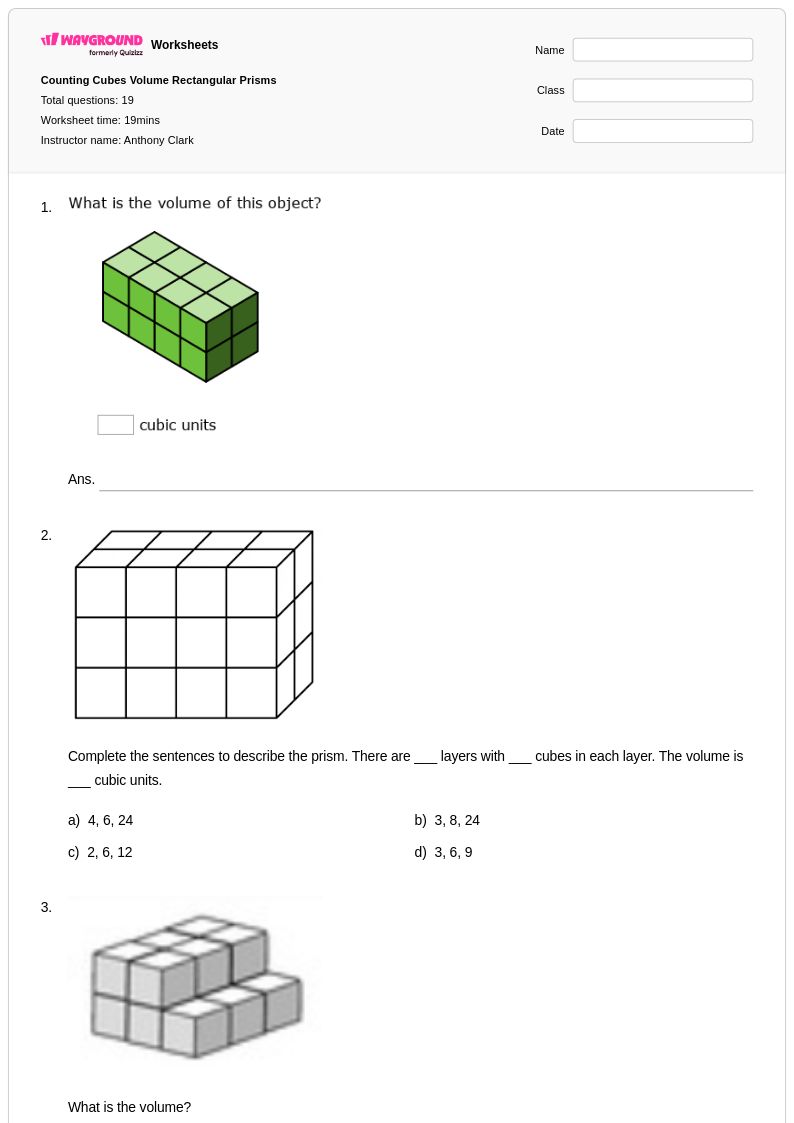
19 Q
5th - Uni
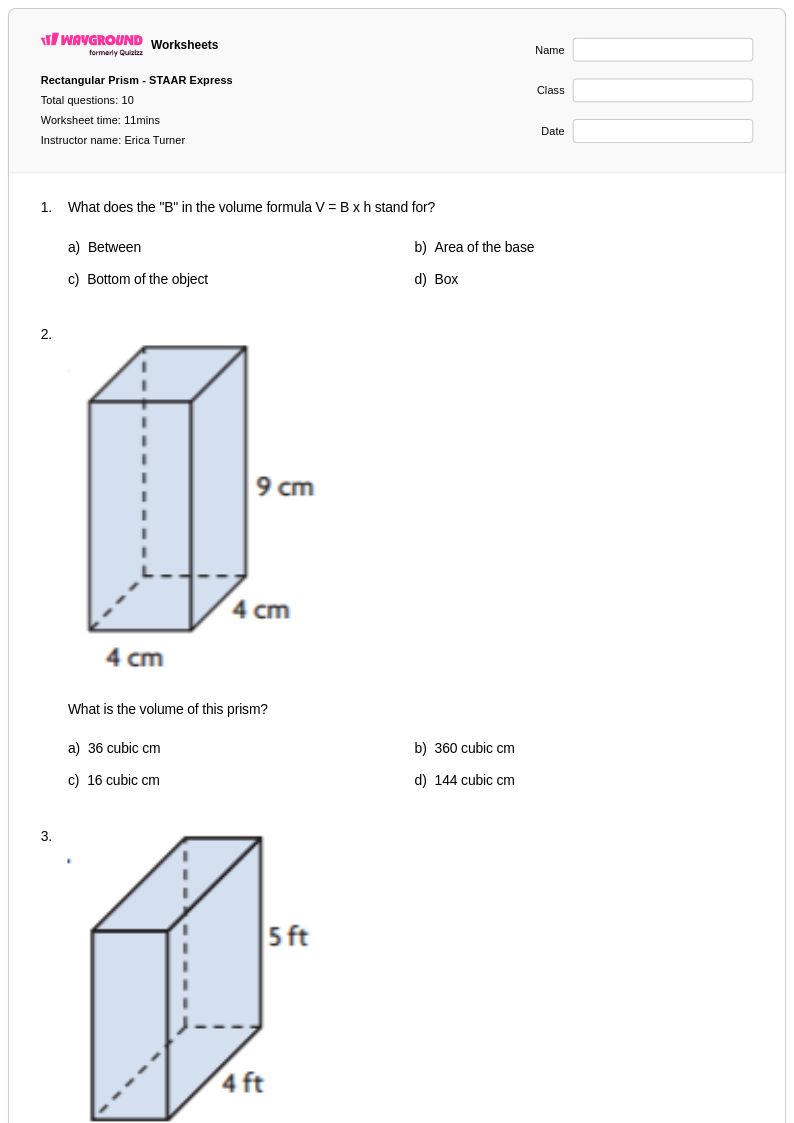
10 Q
6th - 8th
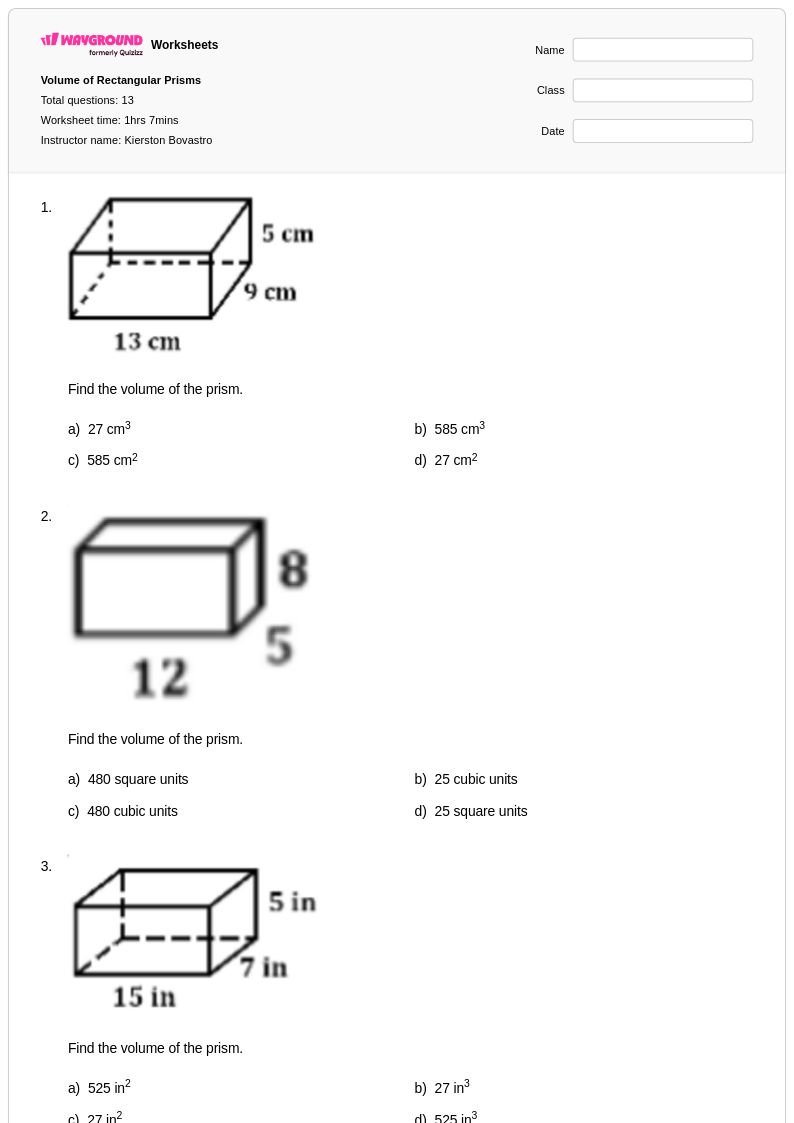
13 Q
5th
10 Q
5th
23 Q
5th
12 Q
9th
10 Q
4th - 6th
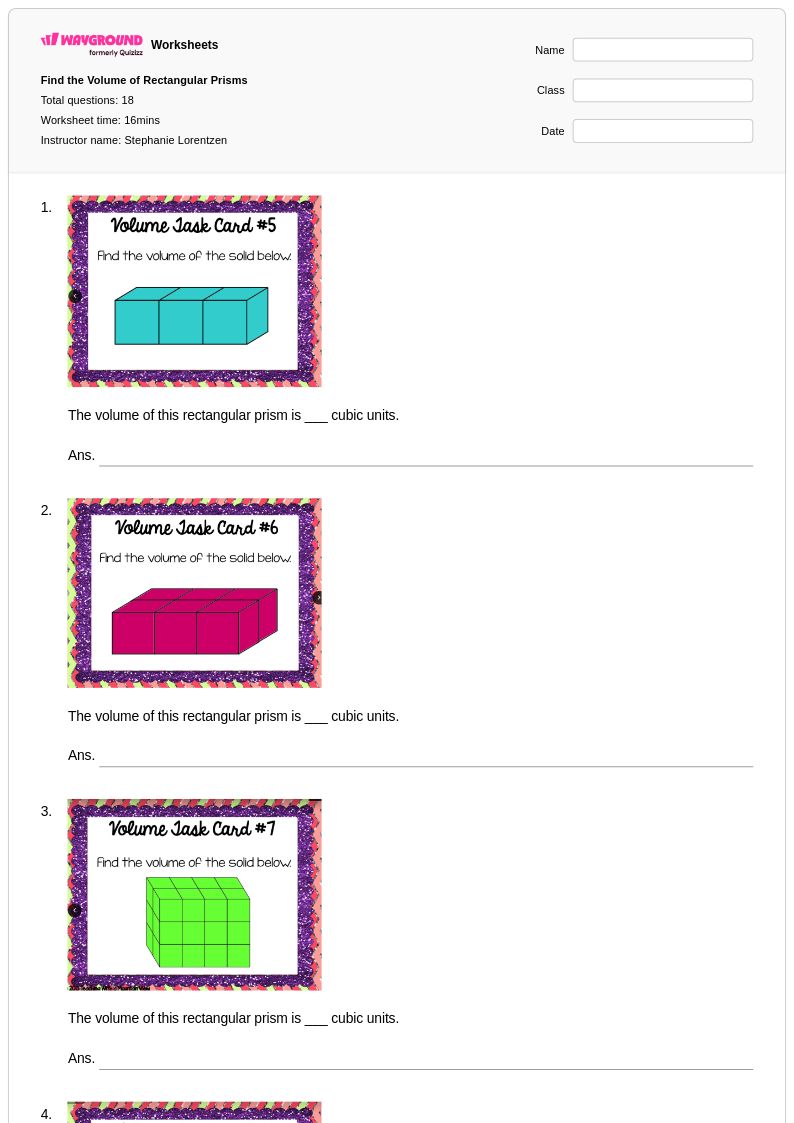
18 Q
5th
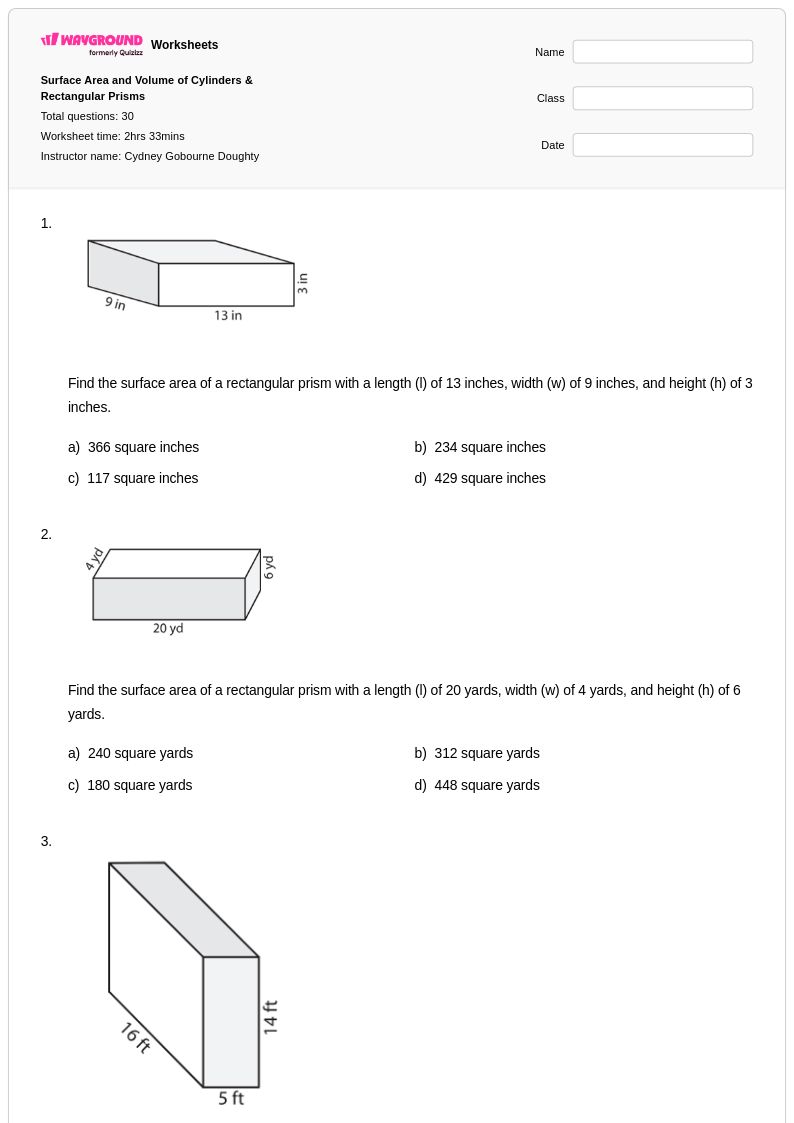
30 Q
8th
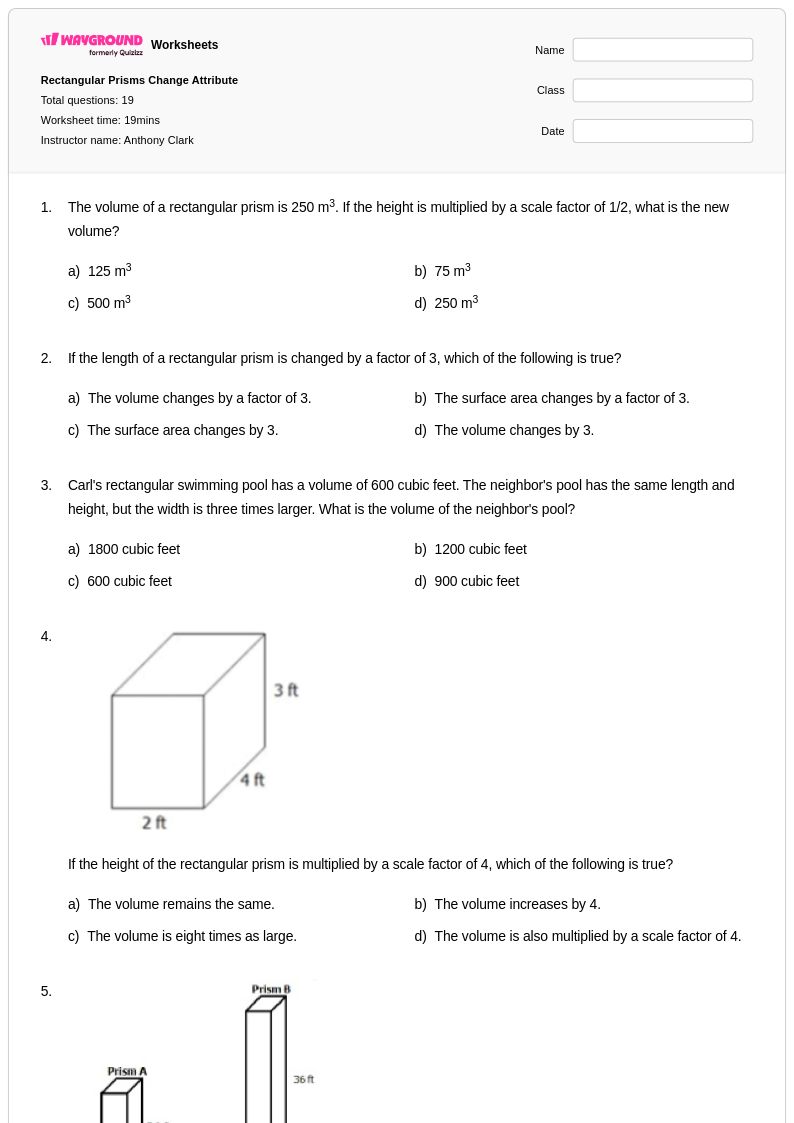
19 Q
8th - Uni
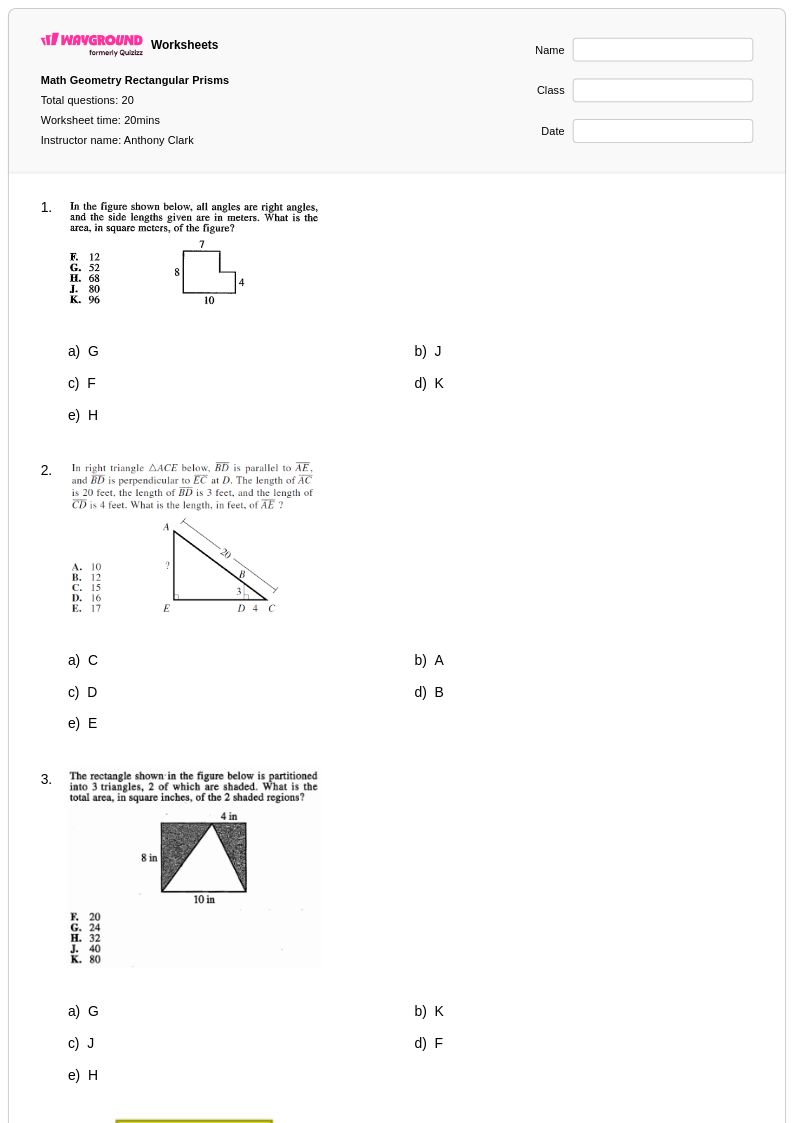
20 Q
8th - Uni
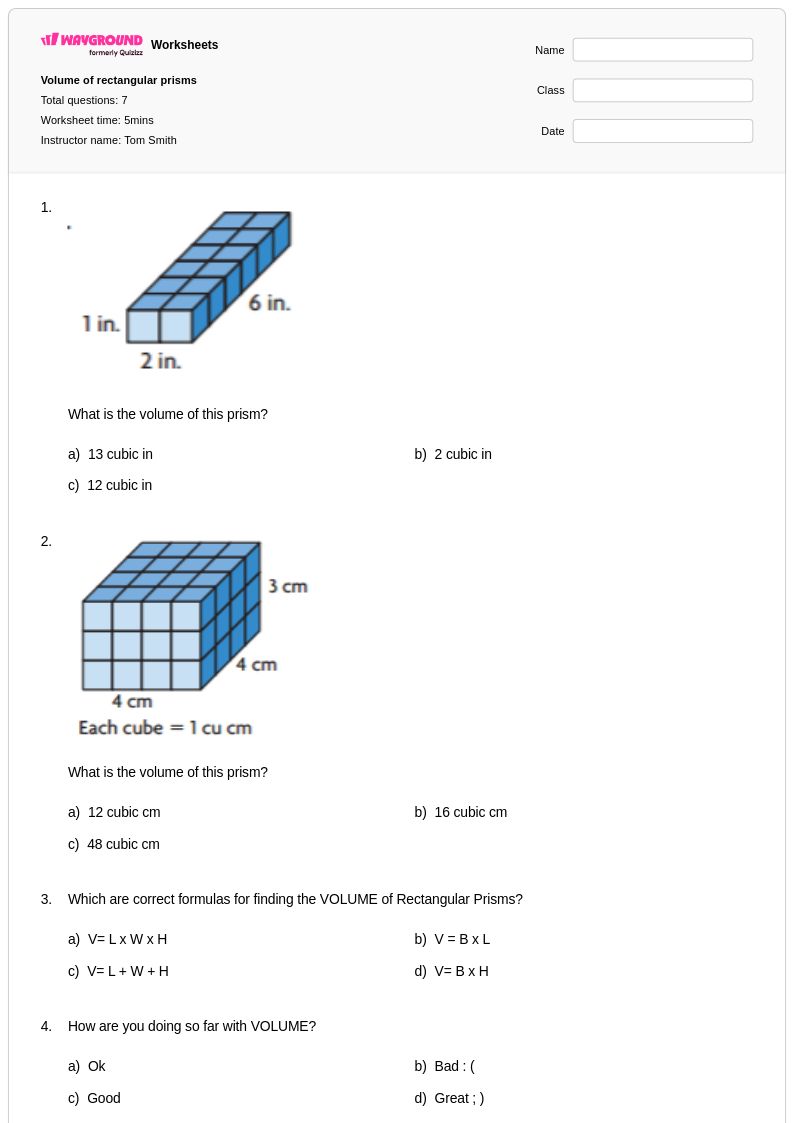
7 Q
5th
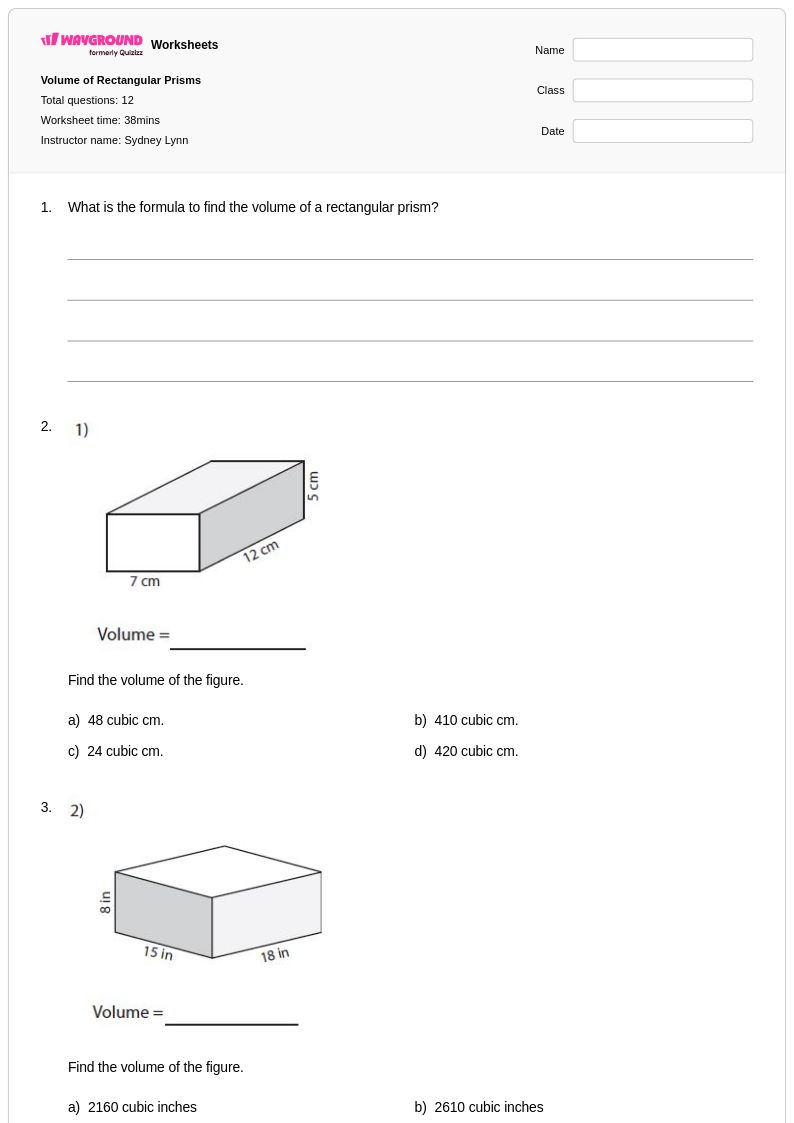
12 Q
5th
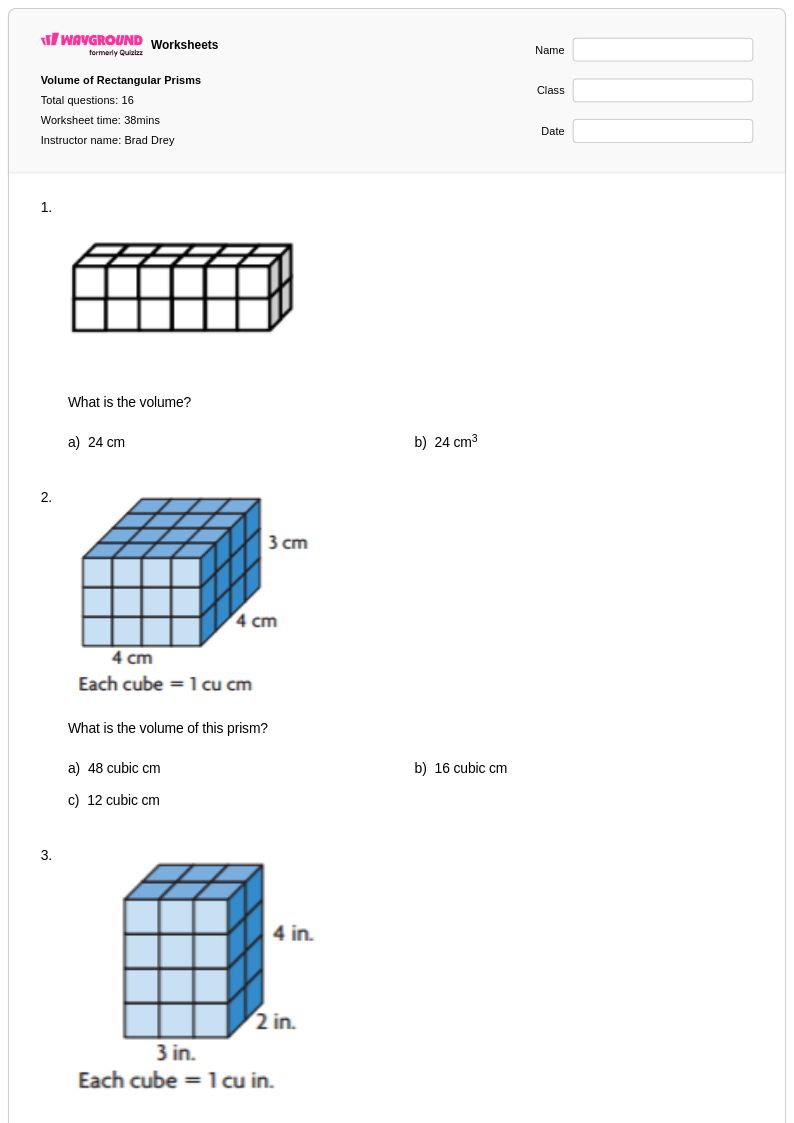
16 Q
5th
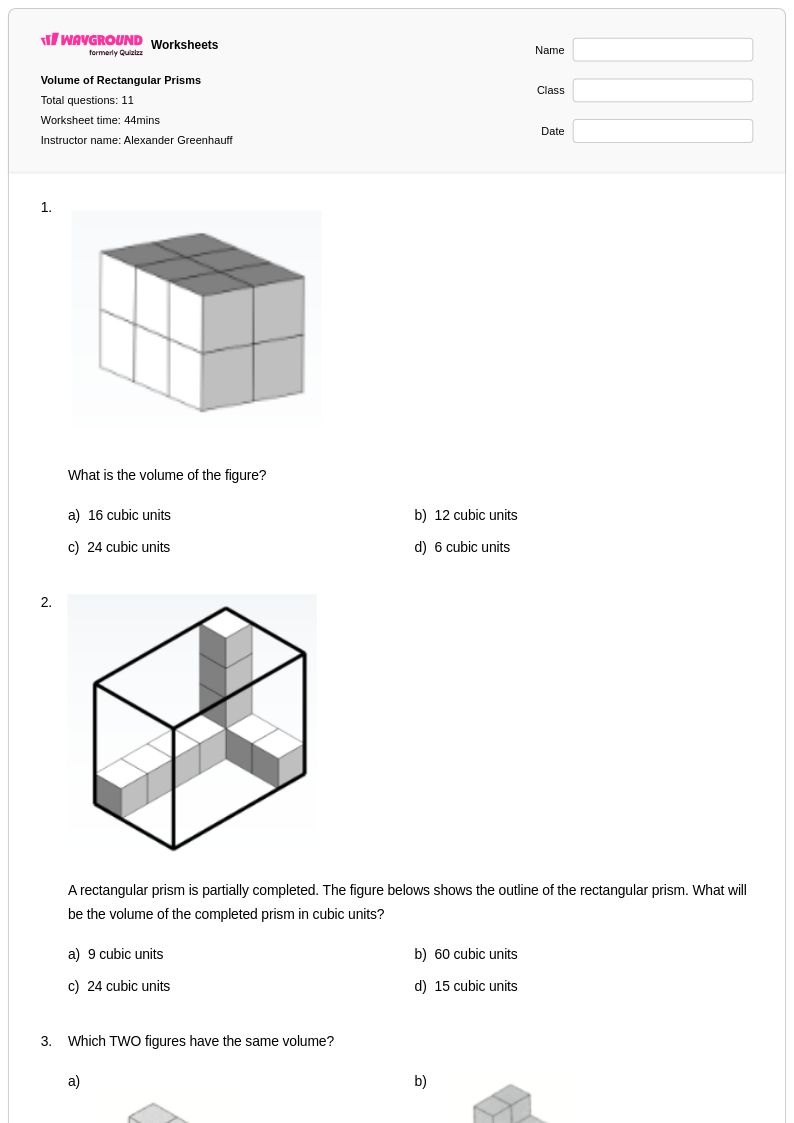
11 Q
5th
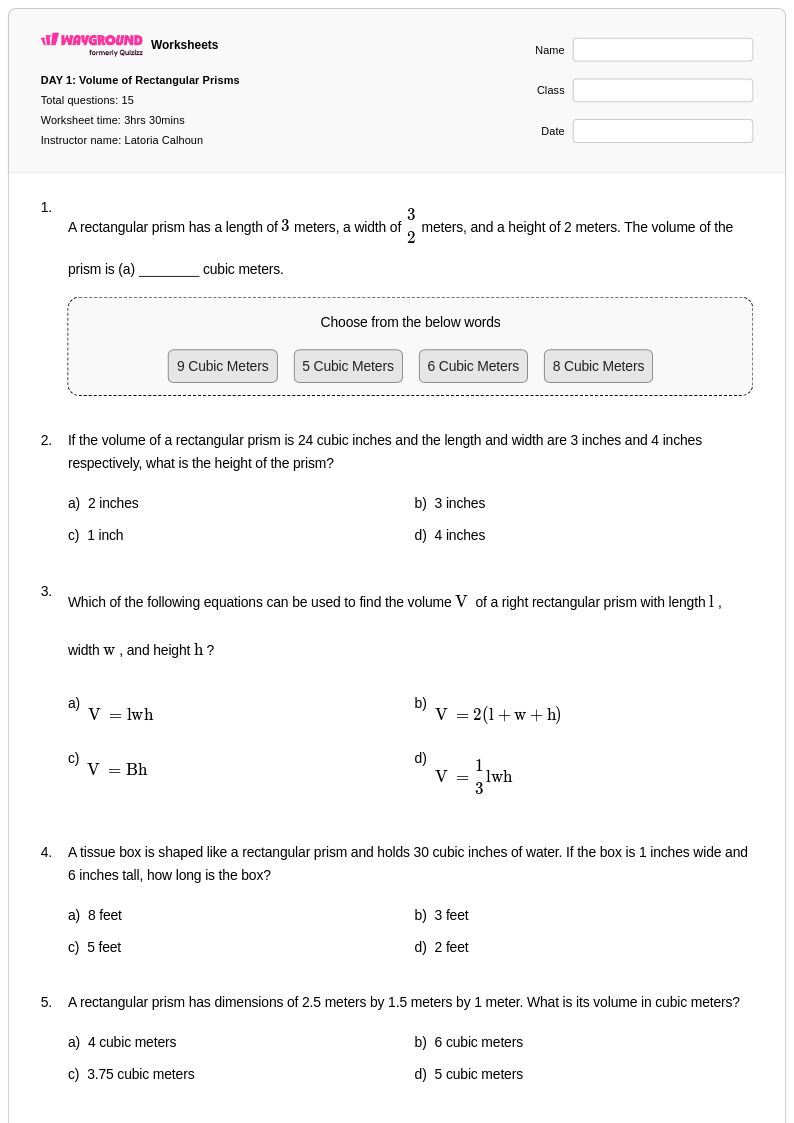
15 Q
6th
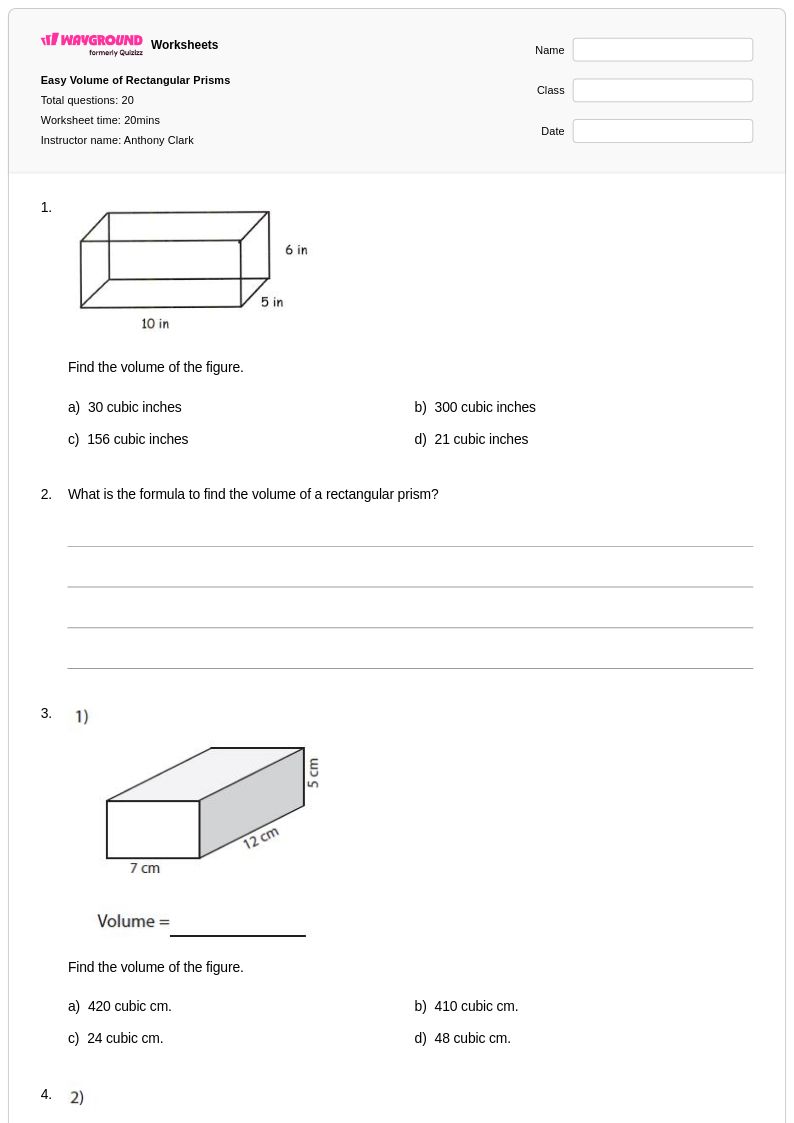
20 Q
5th - Uni
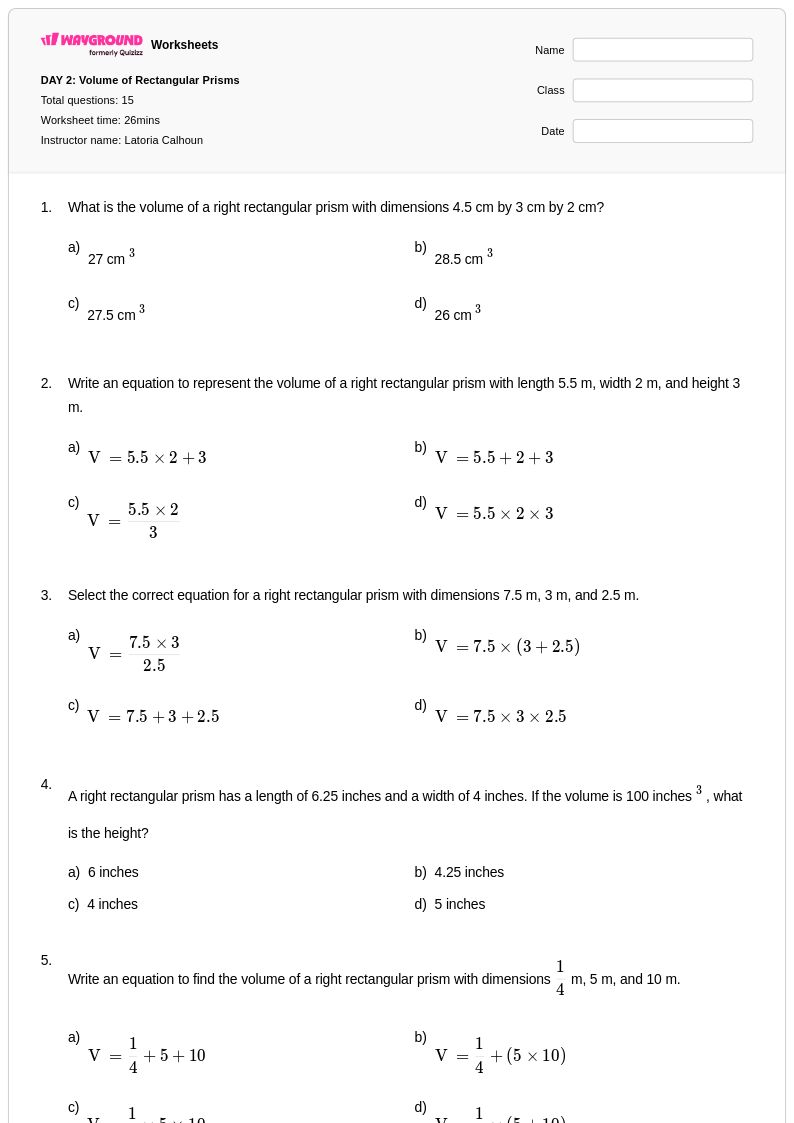
15 Q
6th
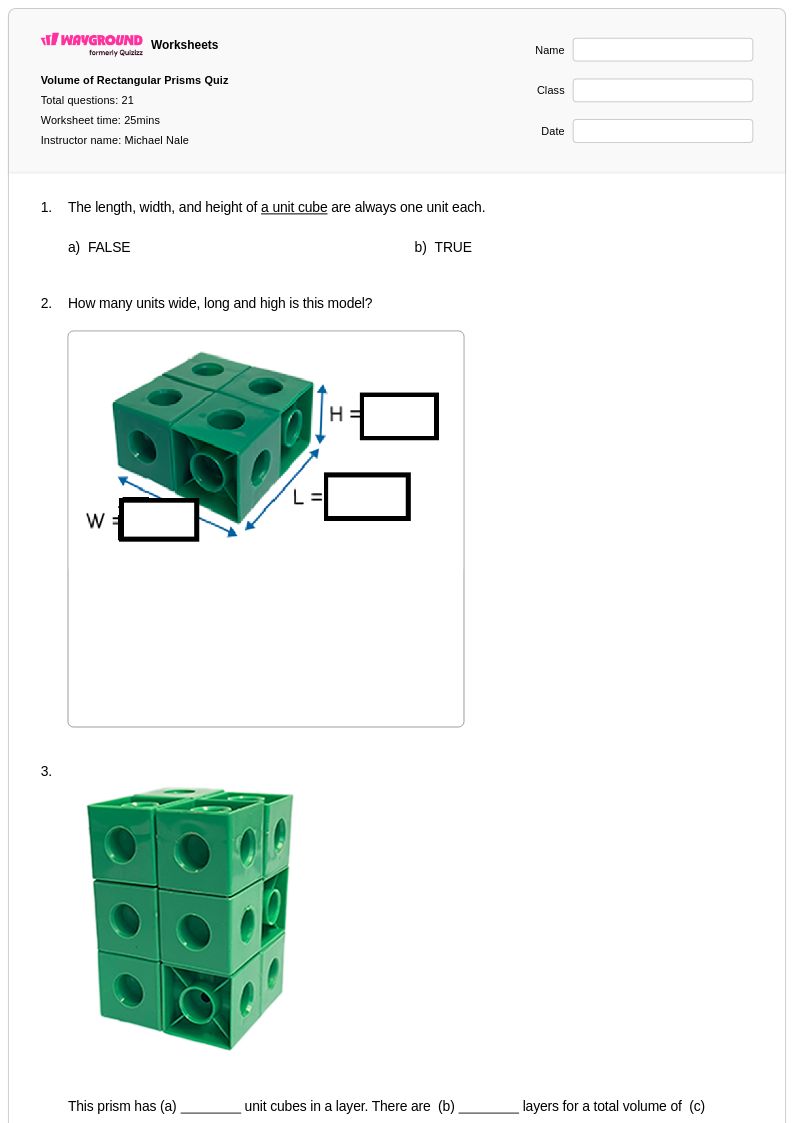
21 Q
5th
Explore Worksheets by Grade
Explore Worksheets by Subjects
Explore printable Rectangular Prisms worksheets
Rectangular prisms worksheets available through Wayground (formerly Quizizz) provide comprehensive practice opportunities for students to master the fundamental properties and calculations associated with these essential three-dimensional geometric shapes. These expertly designed mathematics resources strengthen critical spatial reasoning skills by guiding learners through systematic exploration of rectangular prism characteristics, including identifying faces, edges, and vertices, calculating surface area and volume, and understanding the relationship between two-dimensional nets and three-dimensional forms. The collection includes diverse practice problems that progress from basic shape recognition to complex real-world applications, with each printable worksheet featuring detailed answer keys that support independent learning and accurate assessment. These free educational materials serve as invaluable tools for building geometric visualization skills and developing proficiency in applying formulas for rectangular prism measurements across various mathematical contexts.
Wayground (formerly Quizizz) empowers educators with access to millions of teacher-created rectangular prism worksheets that streamline lesson planning and support differentiated instruction in geometry education. The platform's robust search and filtering capabilities enable teachers to quickly locate age-appropriate materials that align with curriculum standards and target specific learning objectives, whether for initial skill introduction, remediation support, or enrichment challenges. Teachers can seamlessly customize existing resources or create original content using the platform's flexible tools, then distribute materials in both printable PDF format for traditional classroom use and digital formats for interactive learning experiences. This comprehensive approach to resource management allows educators to efficiently address diverse student needs, implement targeted skill practice sessions, and maintain consistent assessment protocols while building students' confidence and competency with three-dimensional geometric concepts.
FAQs
How do I teach the difference between surface area and volume of a rectangular prism?
What are the most common mistakes students make with rectangular prisms?
What exercises help students practice rectangular prism calculations?
How does this topic progress in the curriculum?
How can I use this Wayground worksheet with my class?
How can I support students who struggle with visualizing 3D shapes?