
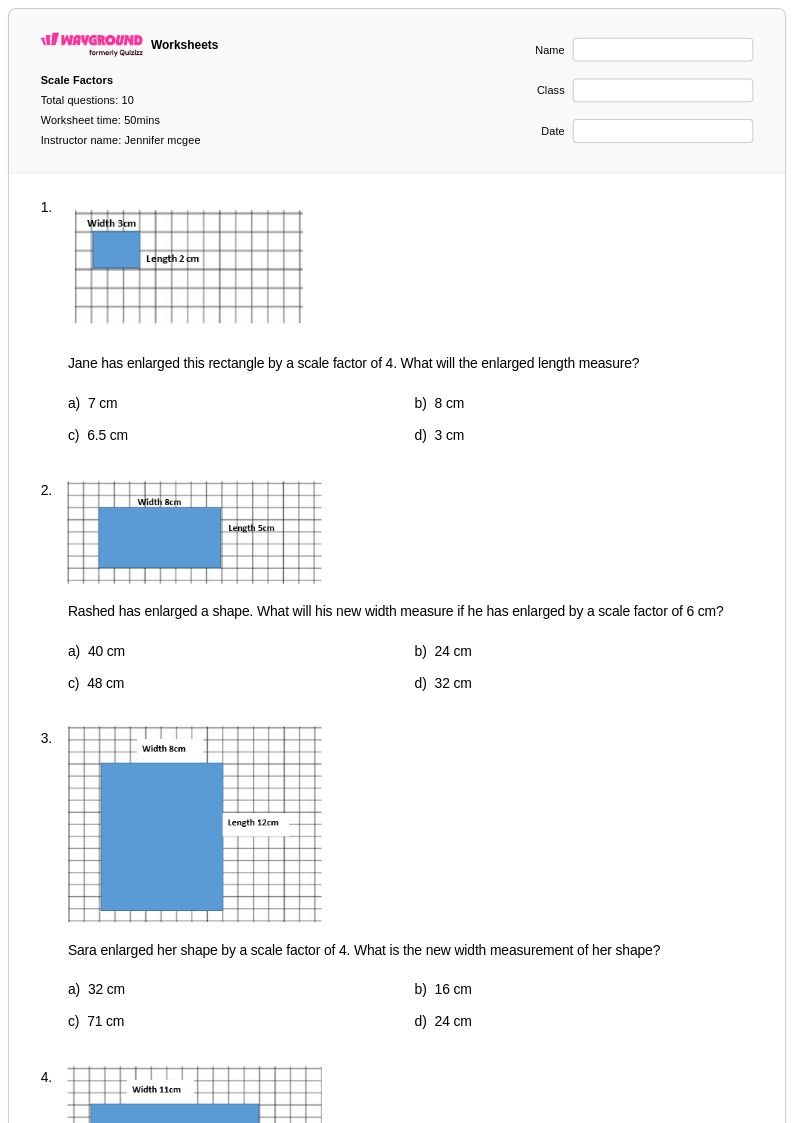
10 Q
6th
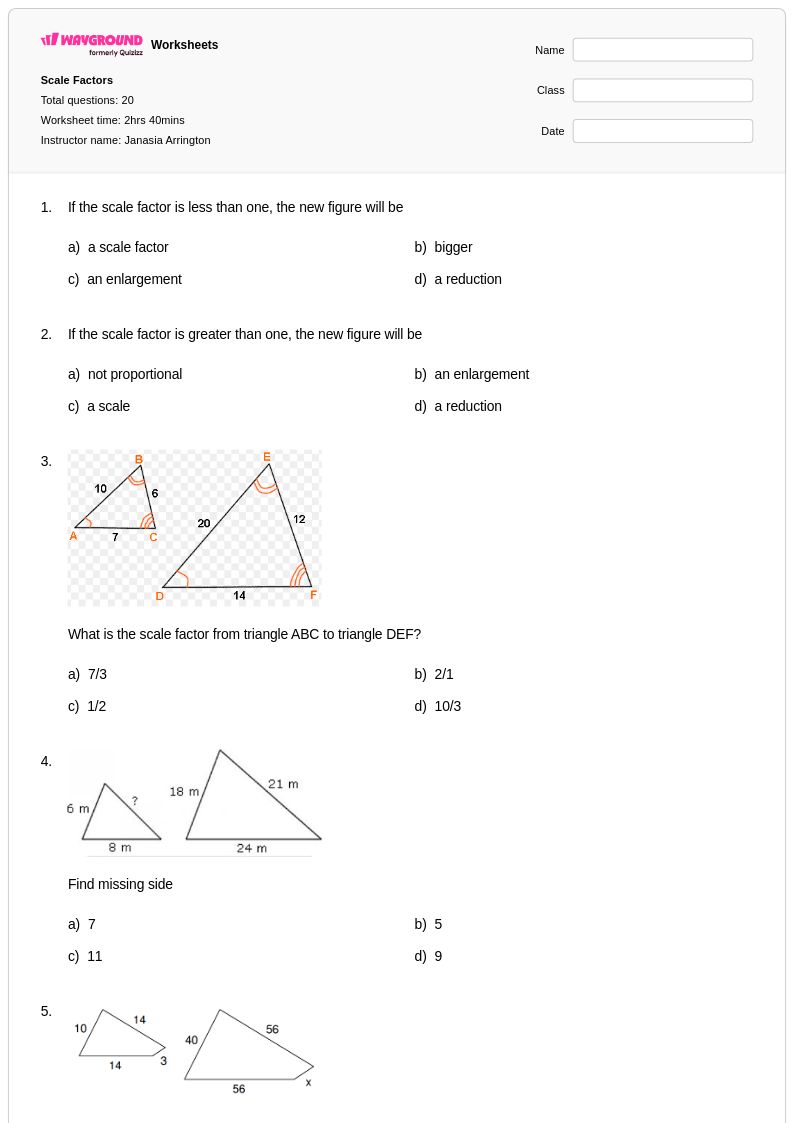
20 Q
7th
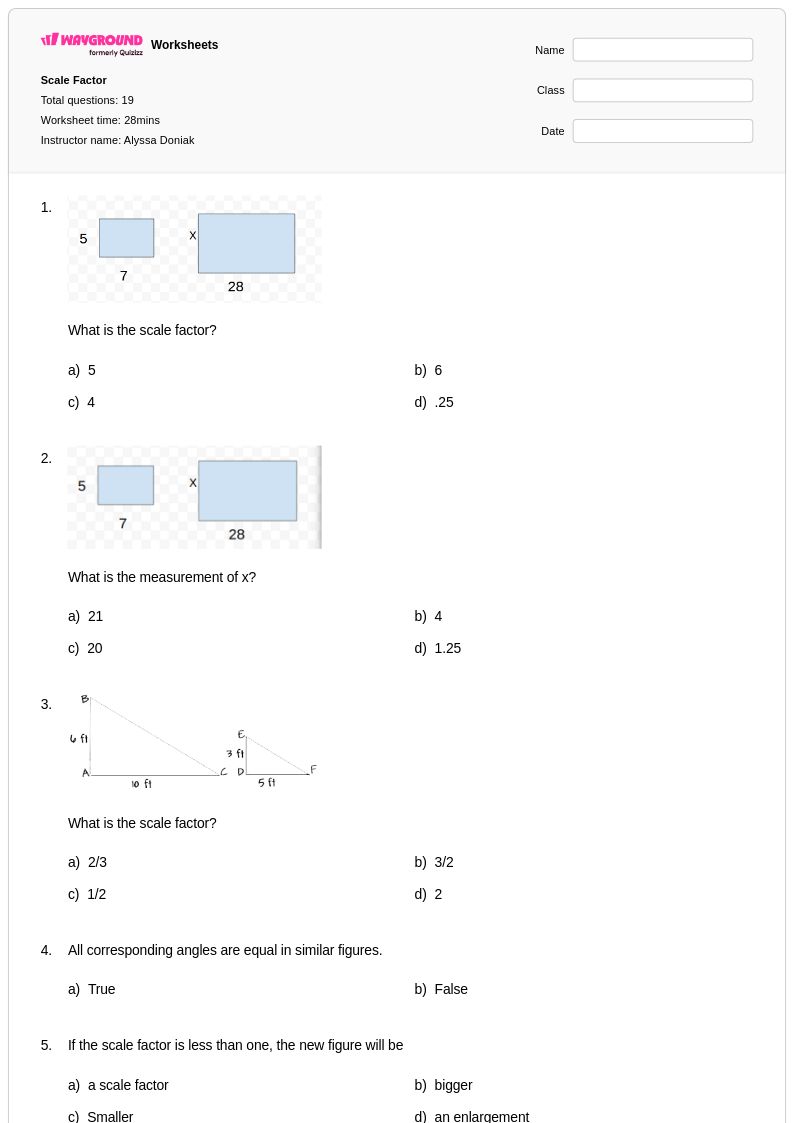
19 Q
7th
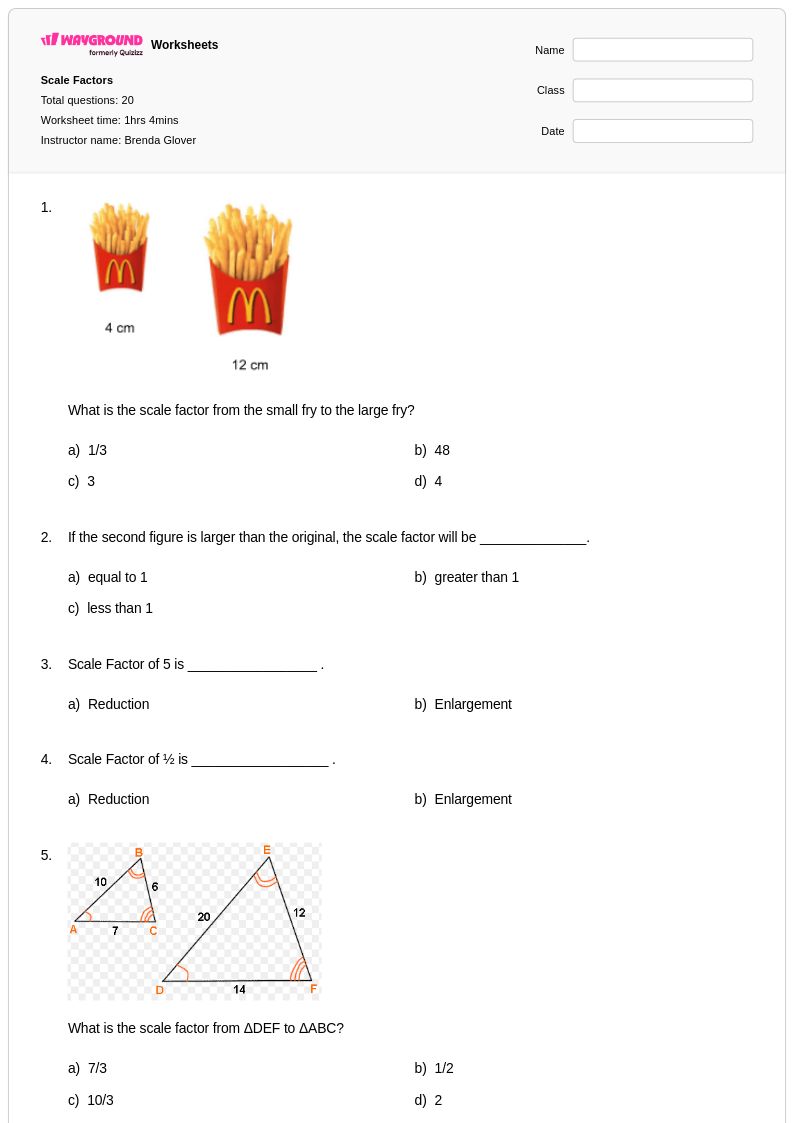
20 Q
8th
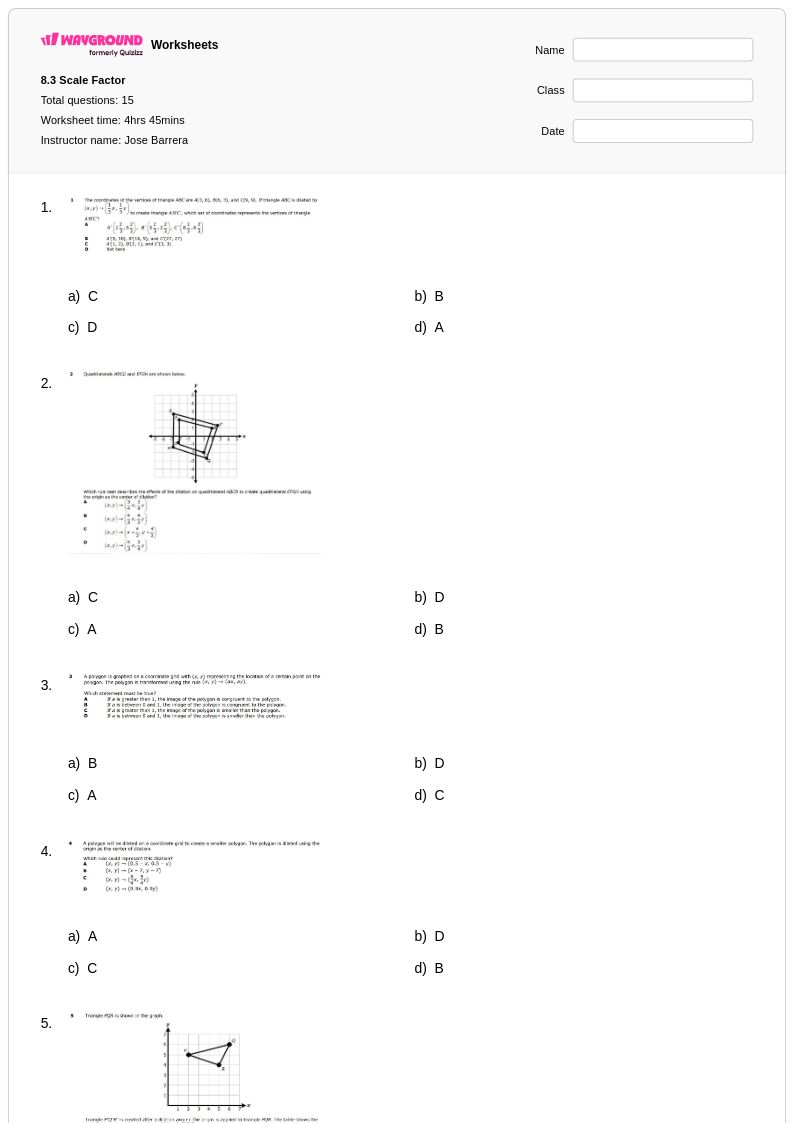
15 Q
8th
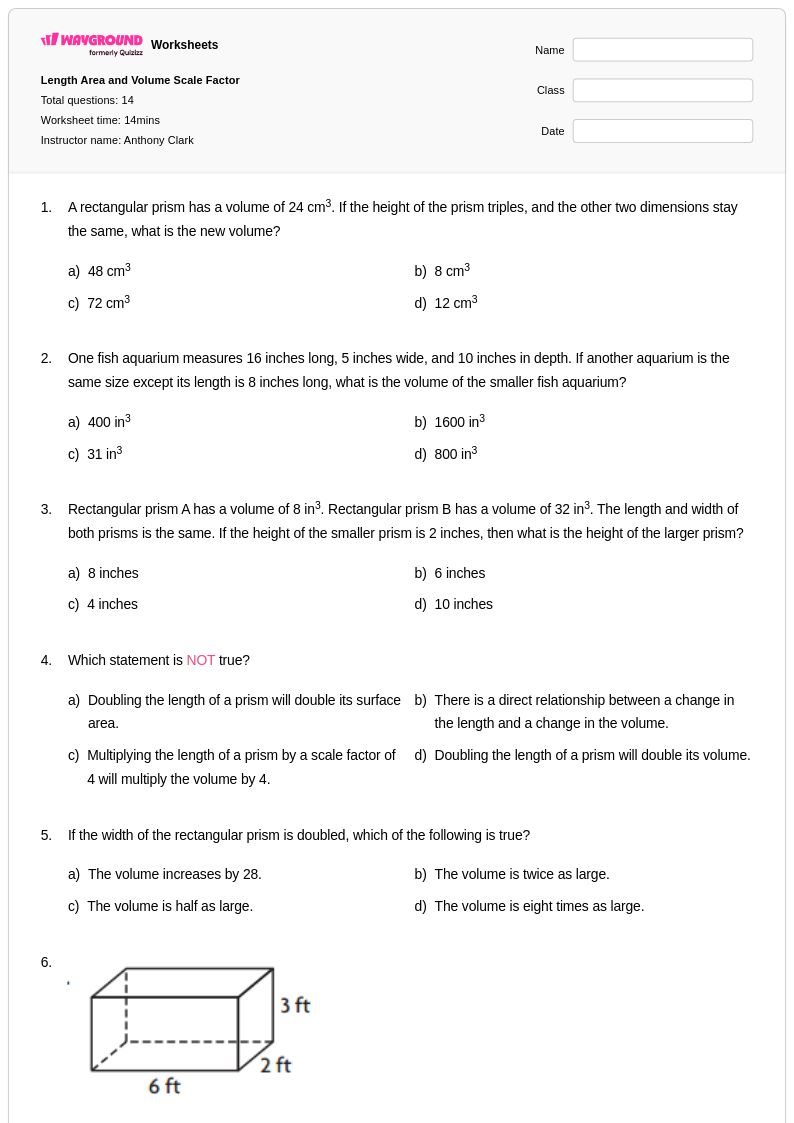
14 Q
10th - Uni
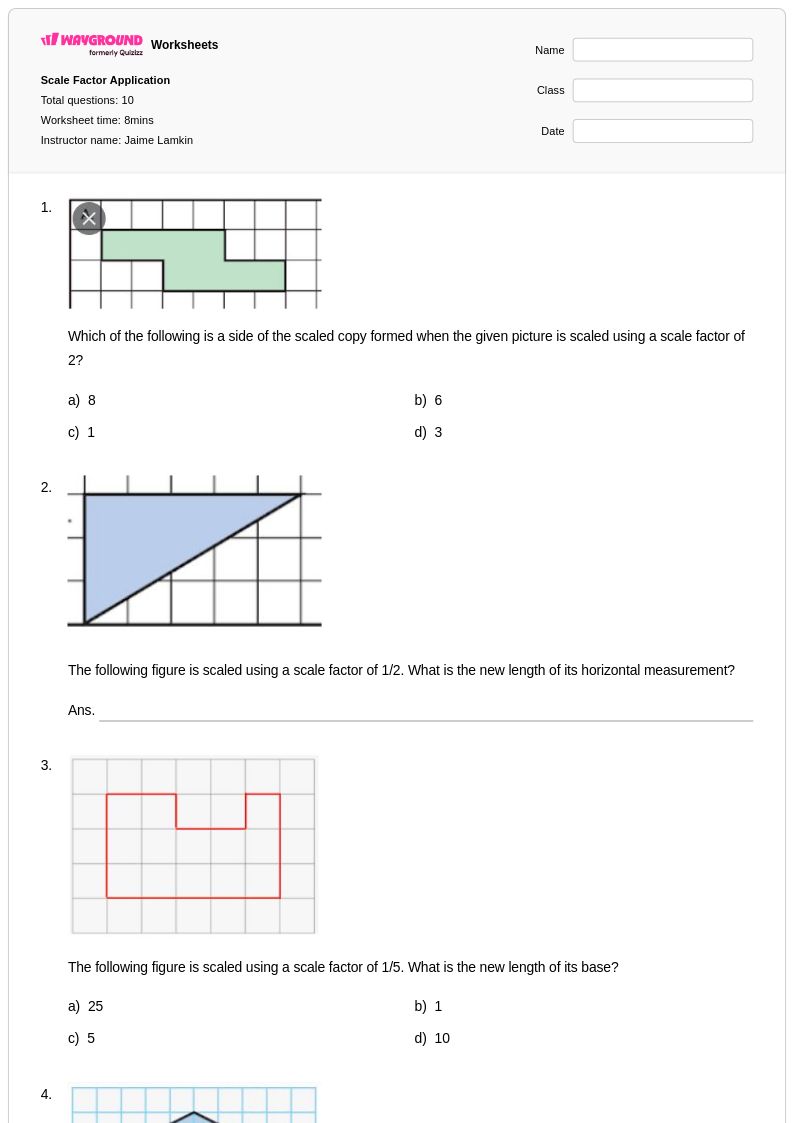
10 Q
7th
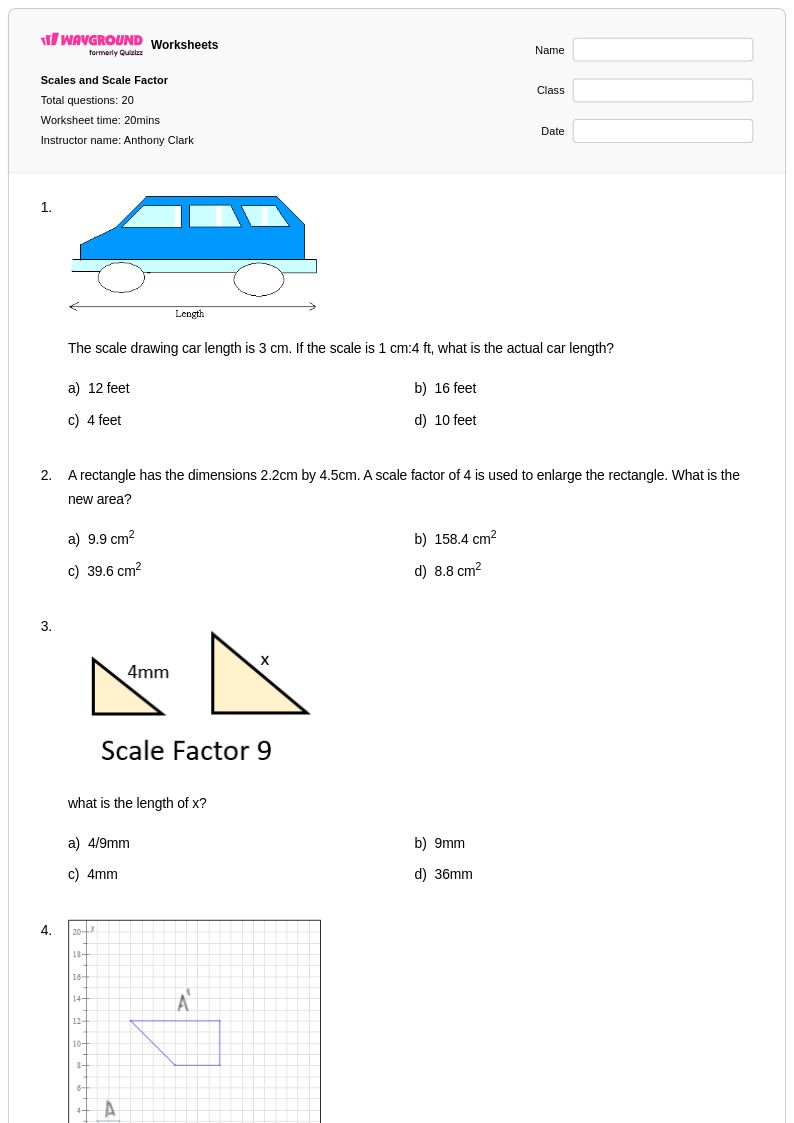
20 Q
7th - Uni
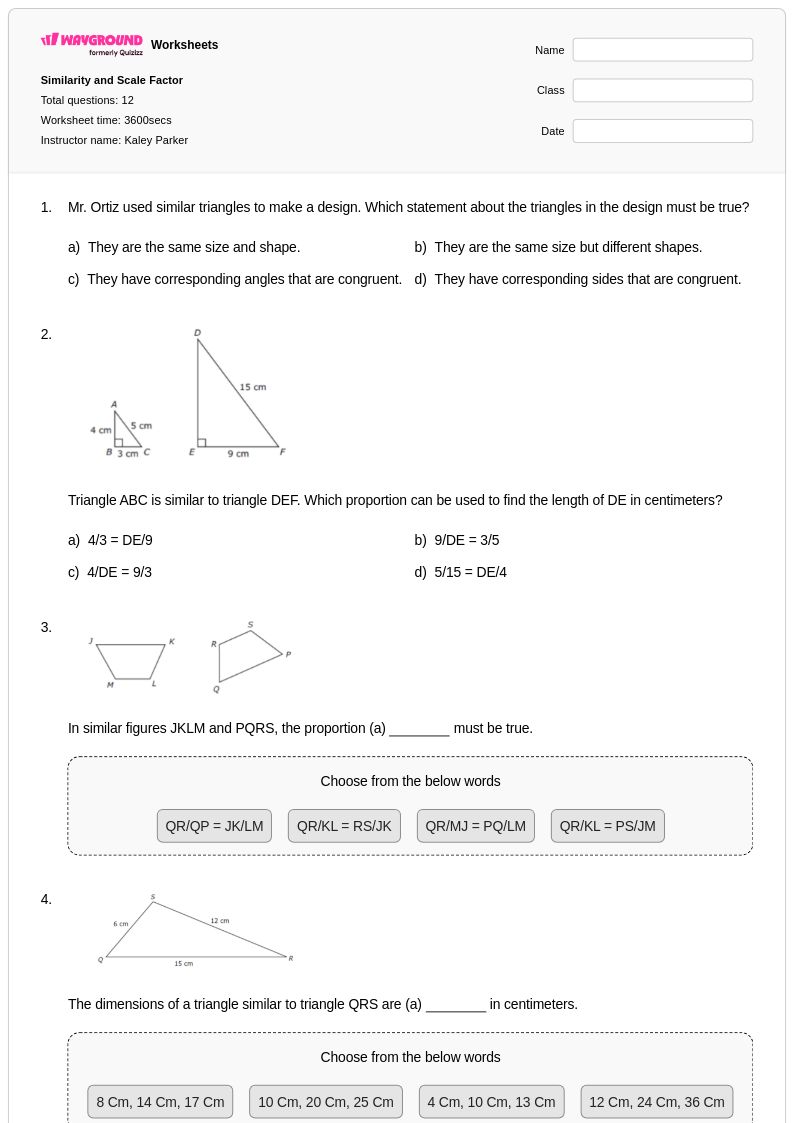
12 Q
7th - Uni
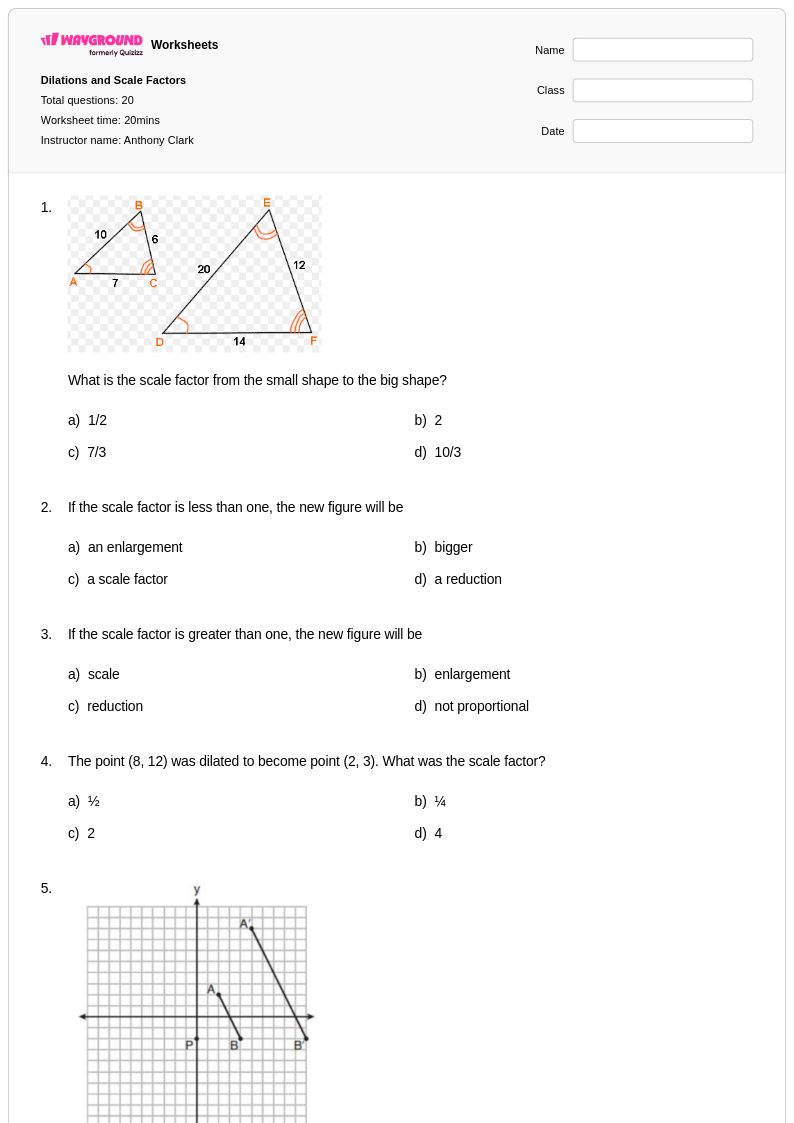
20 Q
8th - Uni
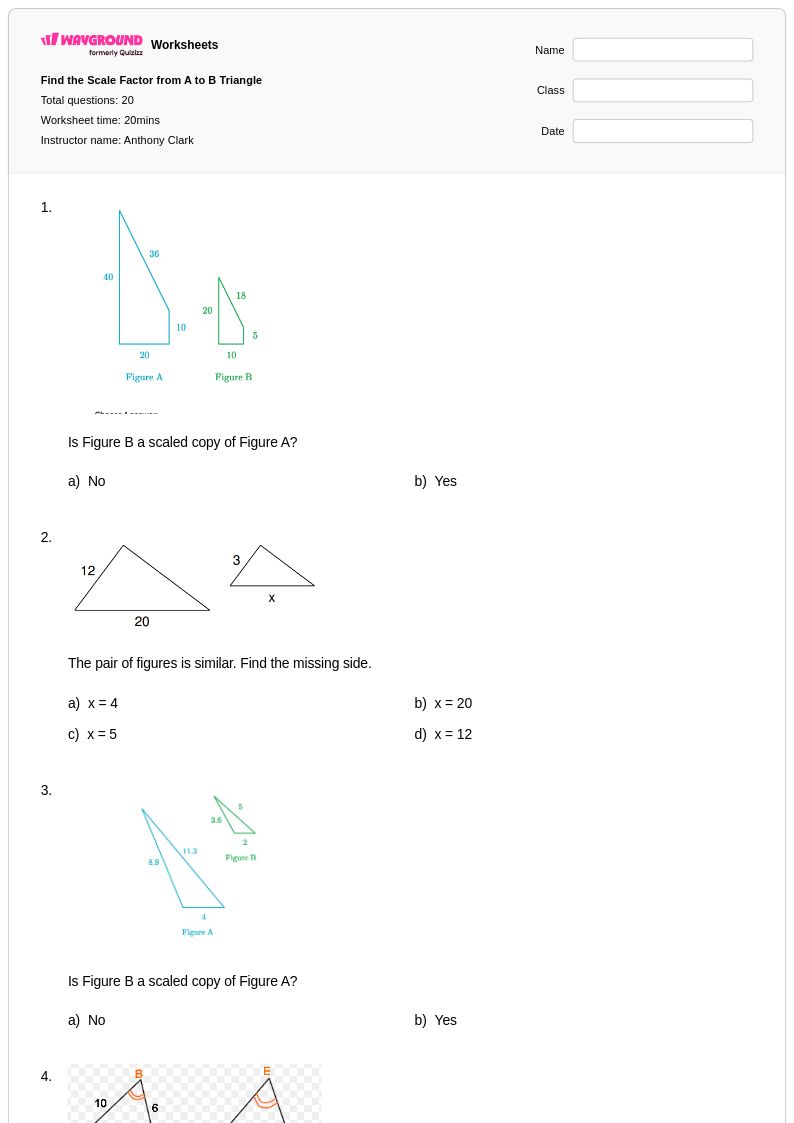
20 Q
7th - Uni
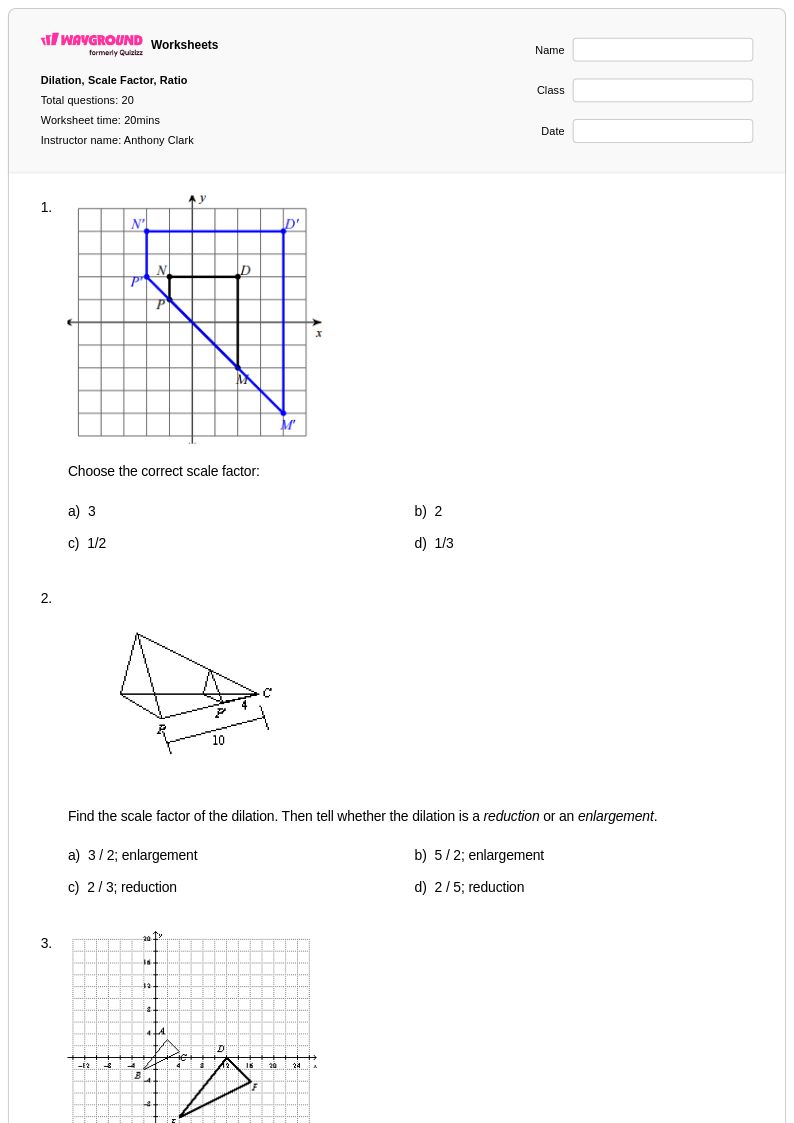
20 Q
8th - Uni
20 Q
8th - Uni
15 Q
8th - Uni
20 Q
7th - Uni
20 Q
8th - Uni
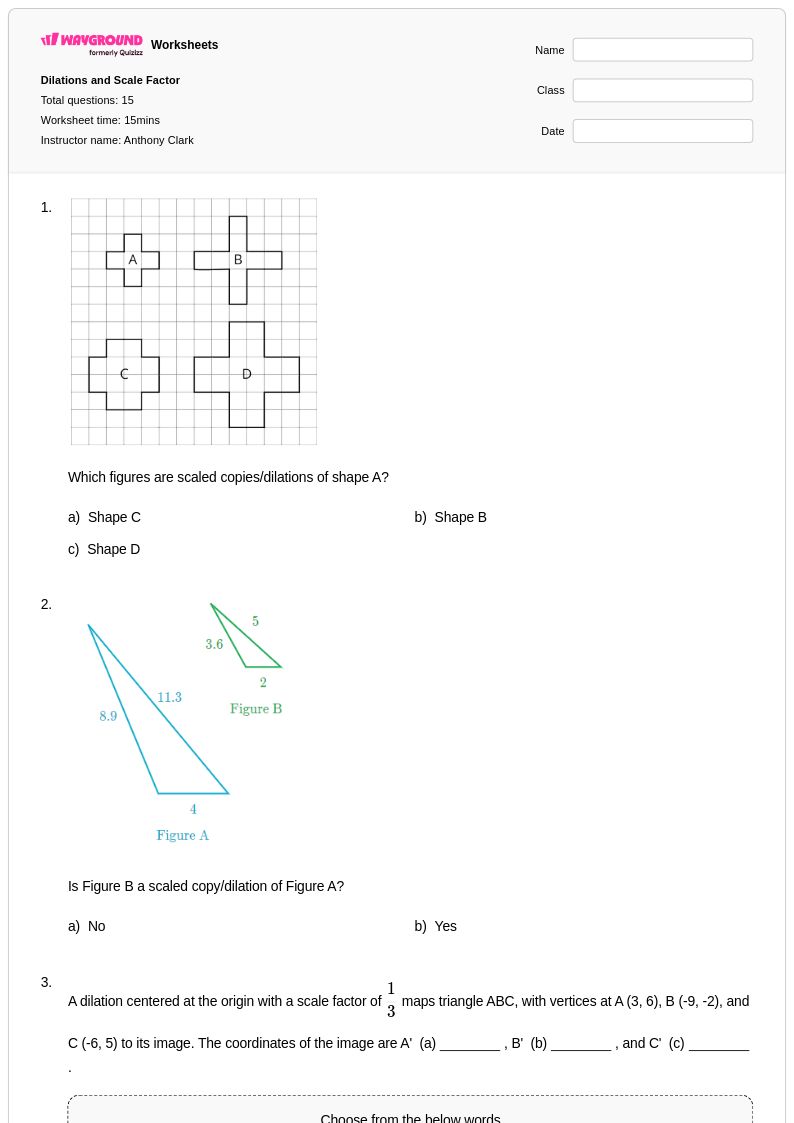
15 Q
8th - Uni
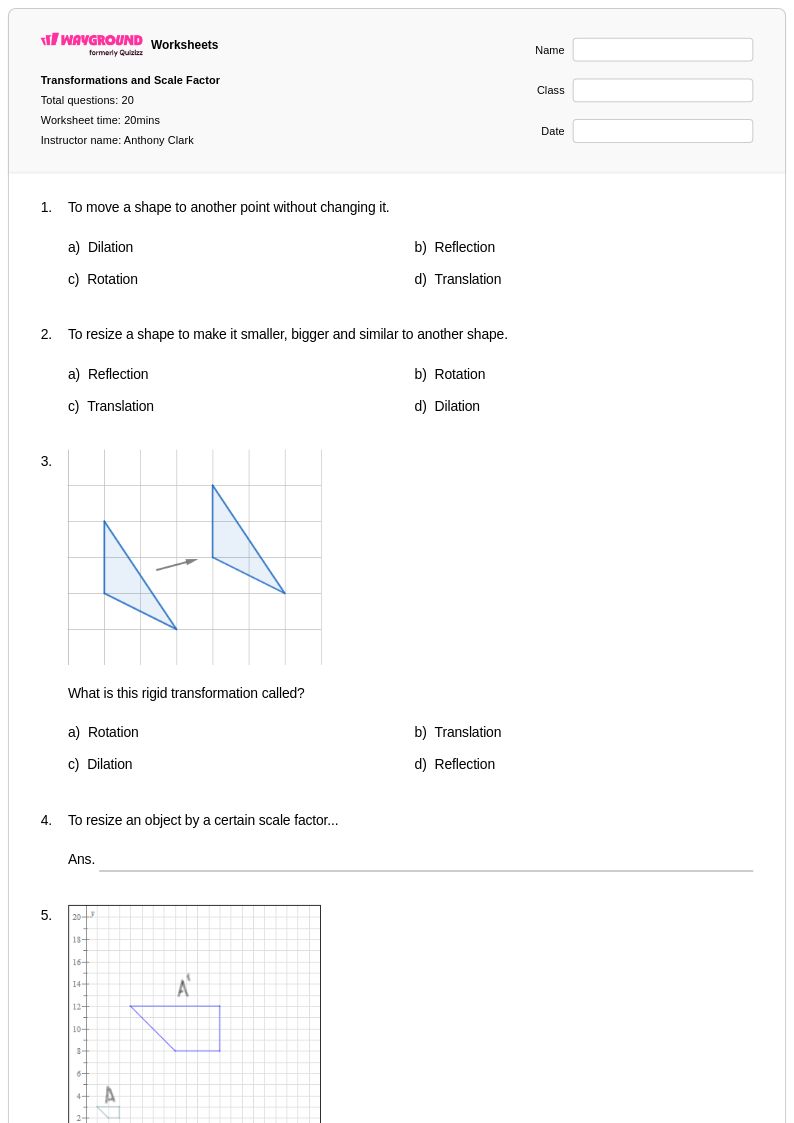
20 Q
8th - Uni
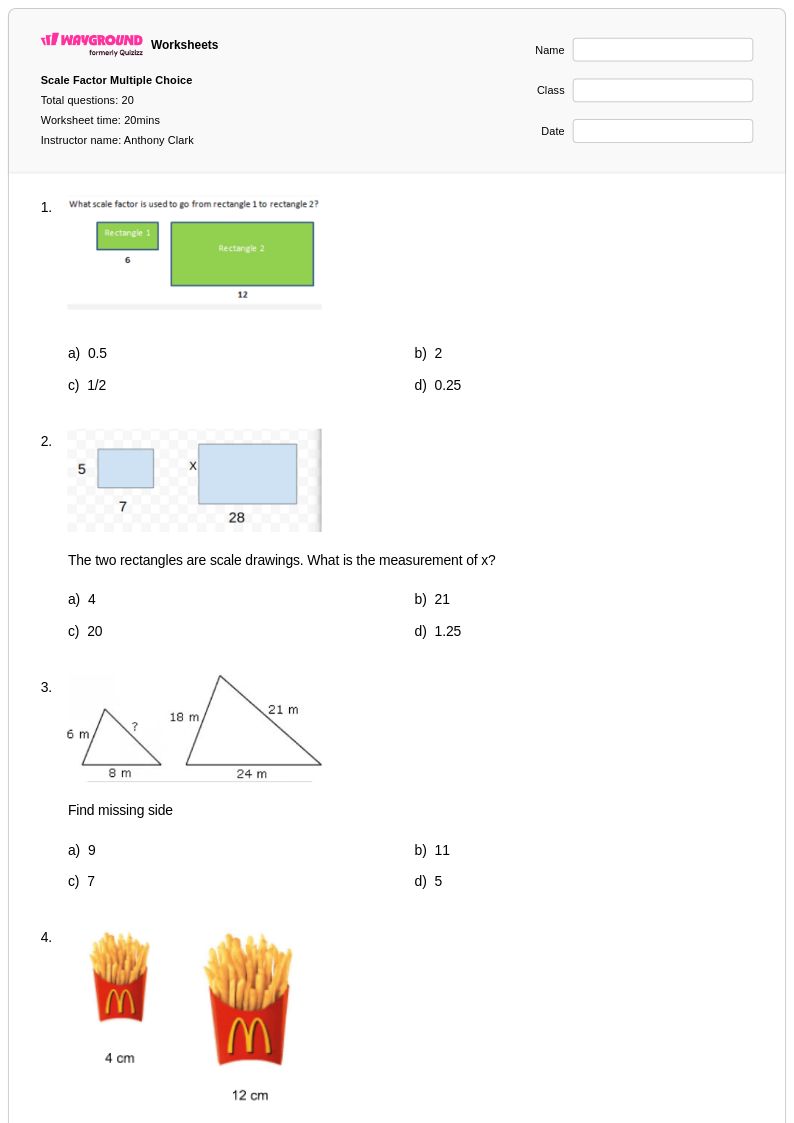
20 Q
7th - Uni
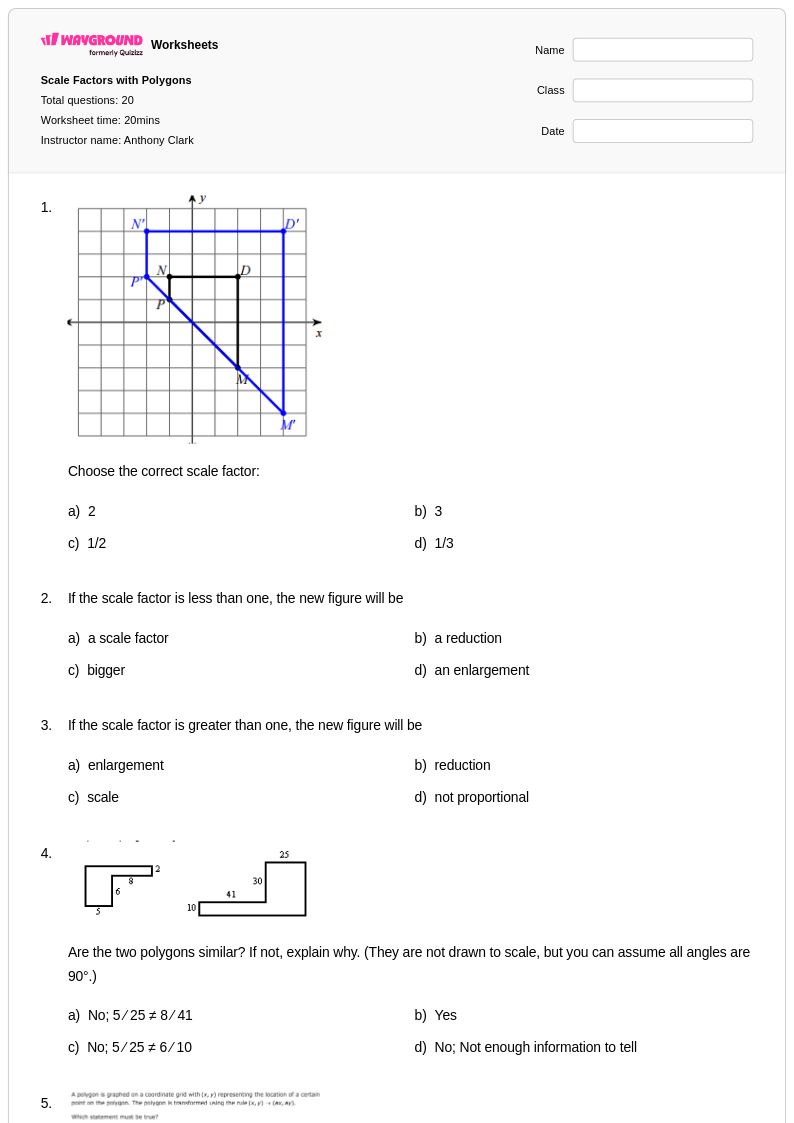
20 Q
10th - Uni
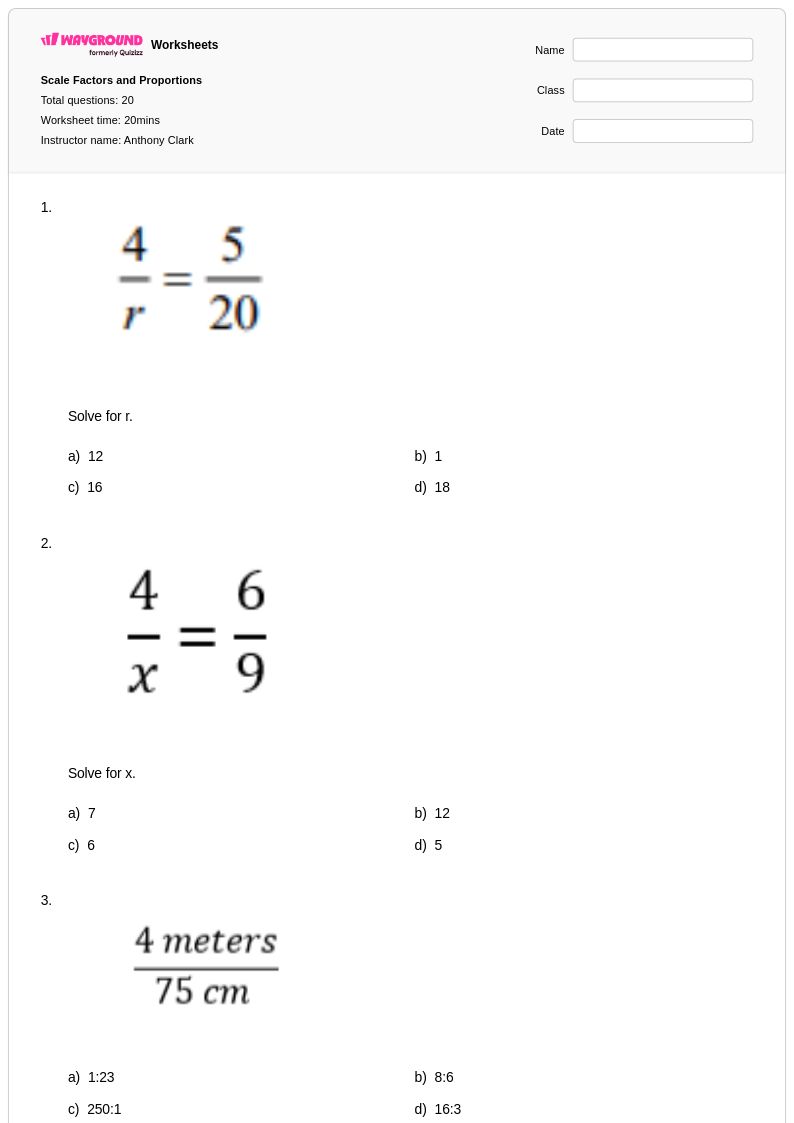
20 Q
7th - Uni
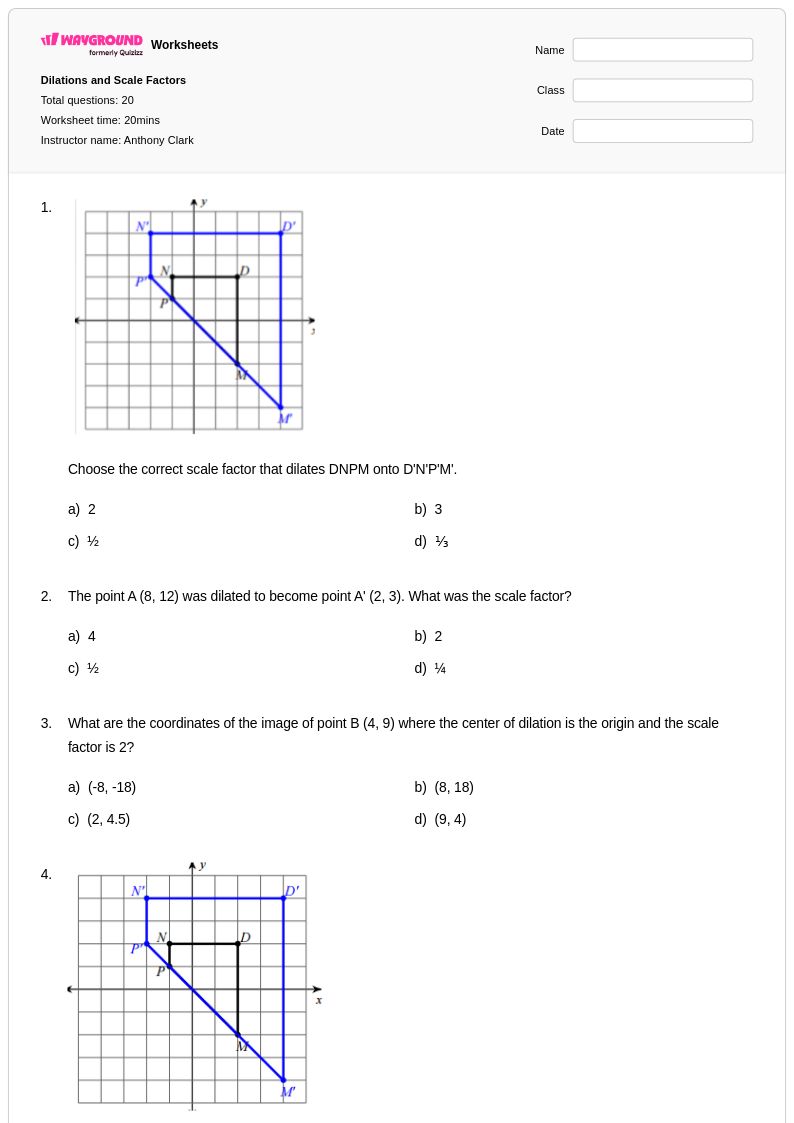
20 Q
8th - Uni
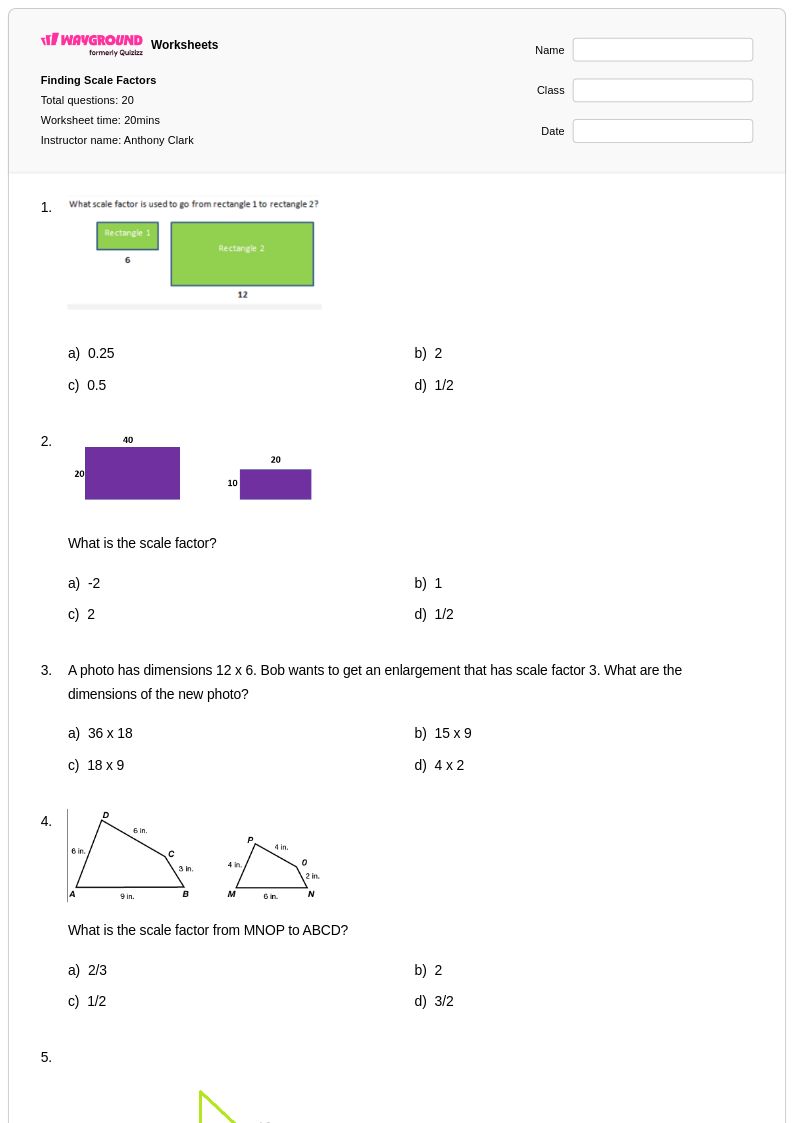
20 Q
8th - Uni
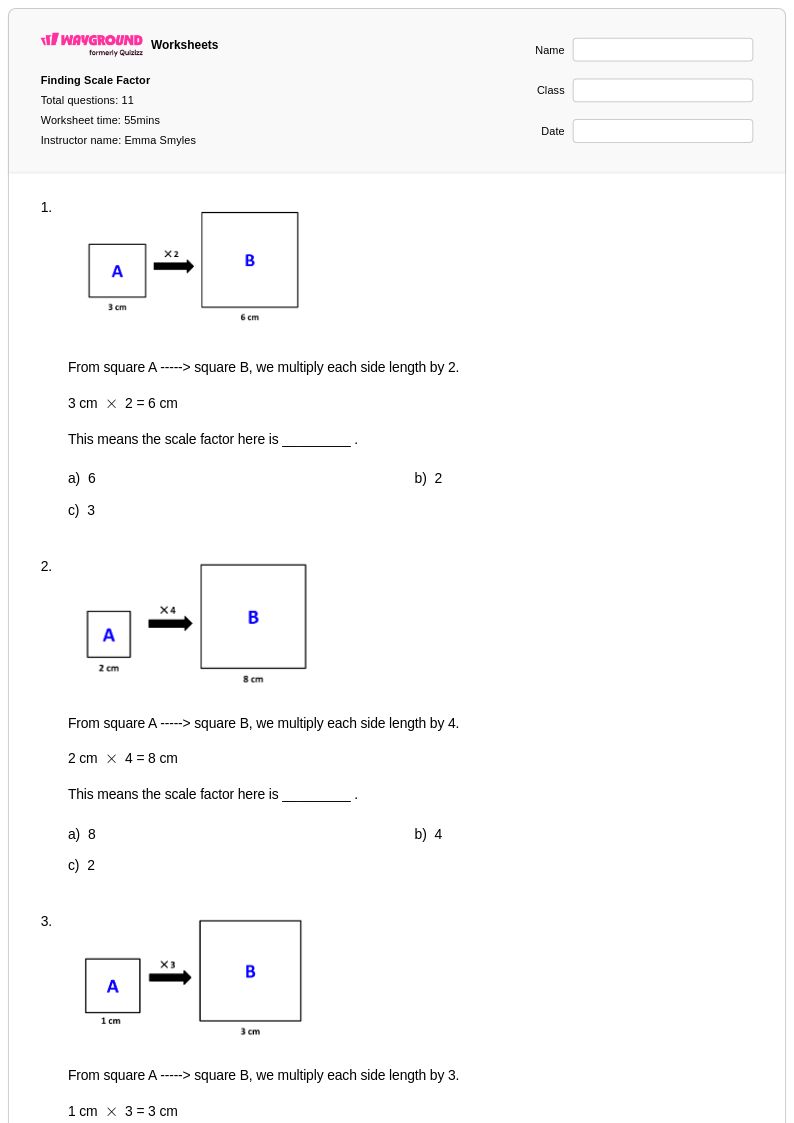
11 Q
7th
Explore Worksheets by Subjects
Explore printable Scale Factor worksheets
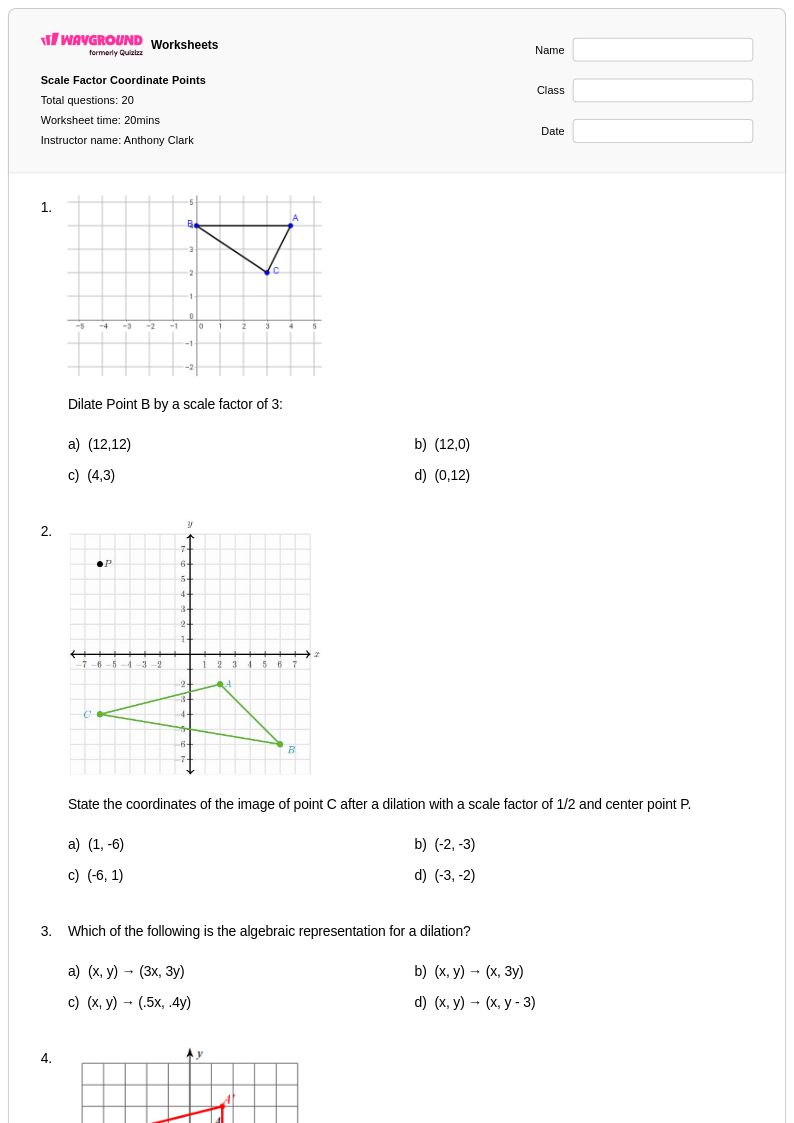
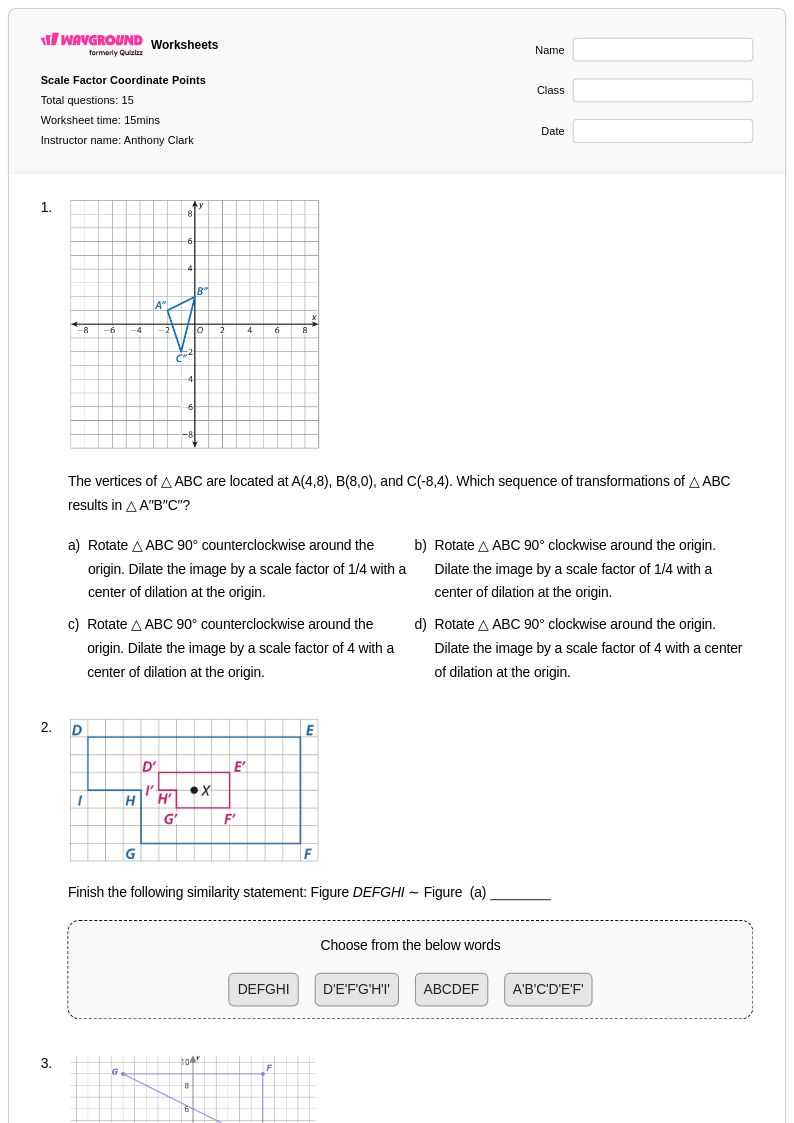
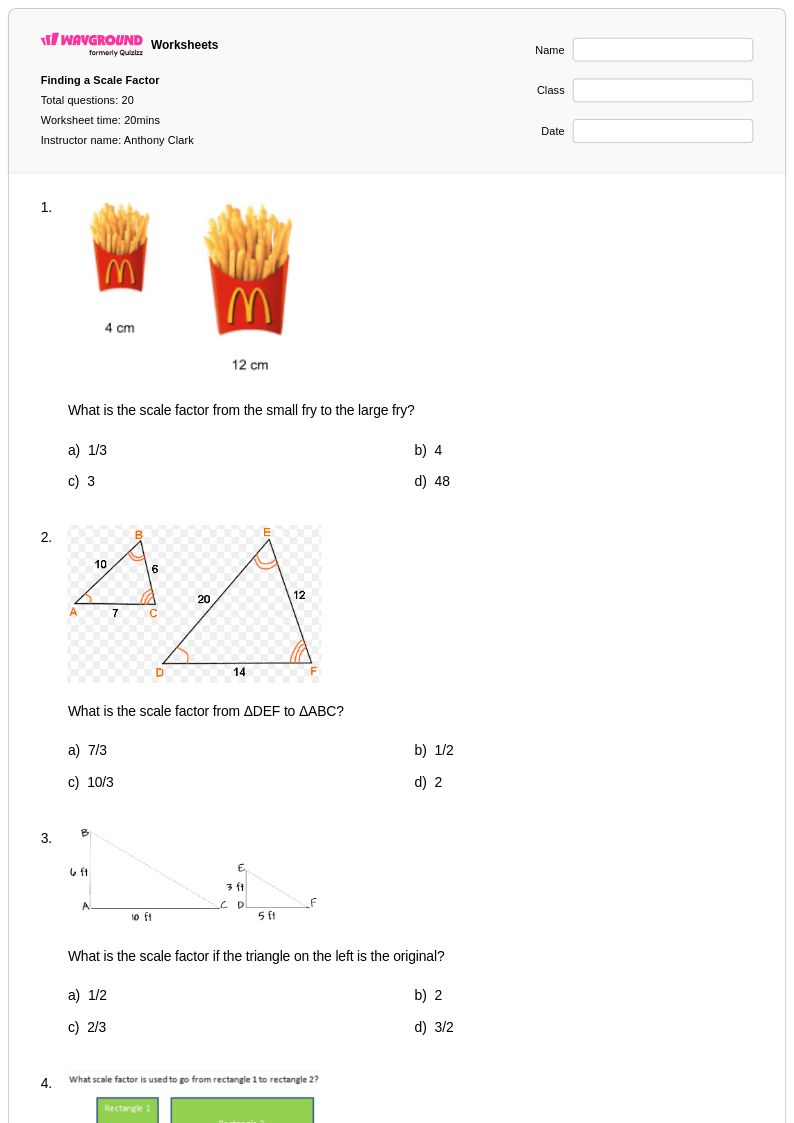
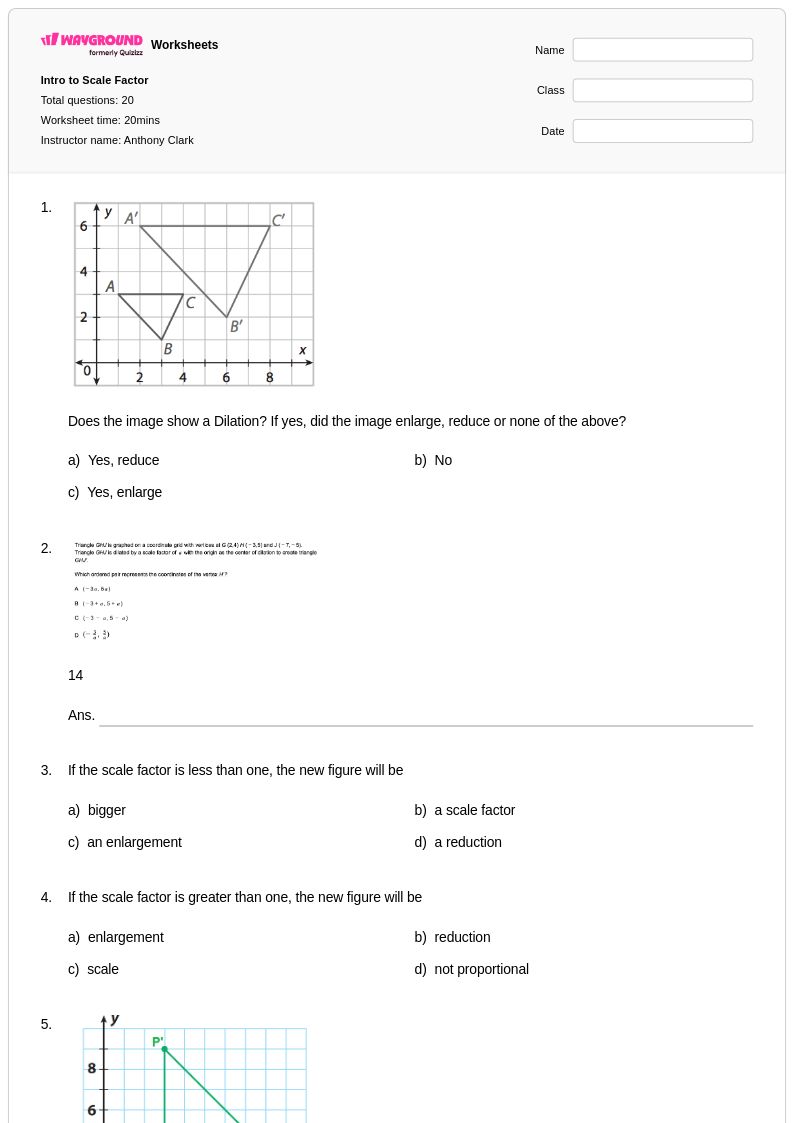
Scale factor worksheets available through Wayground (formerly Quizizz) provide comprehensive practice opportunities for students to master the fundamental concept of proportional relationships in geometric figures. These carefully designed printables help students develop critical mathematical reasoning skills by working through problems involving enlargements, reductions, and similarity transformations. Each worksheet includes structured practice problems that guide learners through calculating scale factors, applying ratios to determine corresponding measurements, and analyzing how scaling affects perimeter, area, and volume. The free pdf resources come complete with detailed answer keys that support both independent study and classroom instruction, enabling students to verify their understanding of proportional relationships and geometric scaling principles.
Wayground (formerly Quizizz) empowers mathematics educators with an extensive collection of millions of teacher-created scale factor resources that streamline lesson planning and differentiated instruction. The platform's advanced search and filtering capabilities allow teachers to quickly locate worksheets aligned with specific mathematical standards and appropriate difficulty levels for their students' needs. Flexible customization tools enable educators to modify existing materials or combine multiple resources to create targeted practice sets for remediation or enrichment purposes. These versatile materials are available in both printable and digital pdf formats, making them ideal for traditional classroom settings, homework assignments, or remote learning environments where students need focused practice with proportional reasoning and geometric transformations.
FAQs
How can I introduce the concept of scale factor to my students?
What types of problems help students practice scale factor?
What are the most common student errors when working with scale factor?
How can I use these scale factor worksheets in my classroom?
How does the concept of scale factor fit into the Common Core math standards?
How can I differentiate scale factor assignments for diverse learners?