
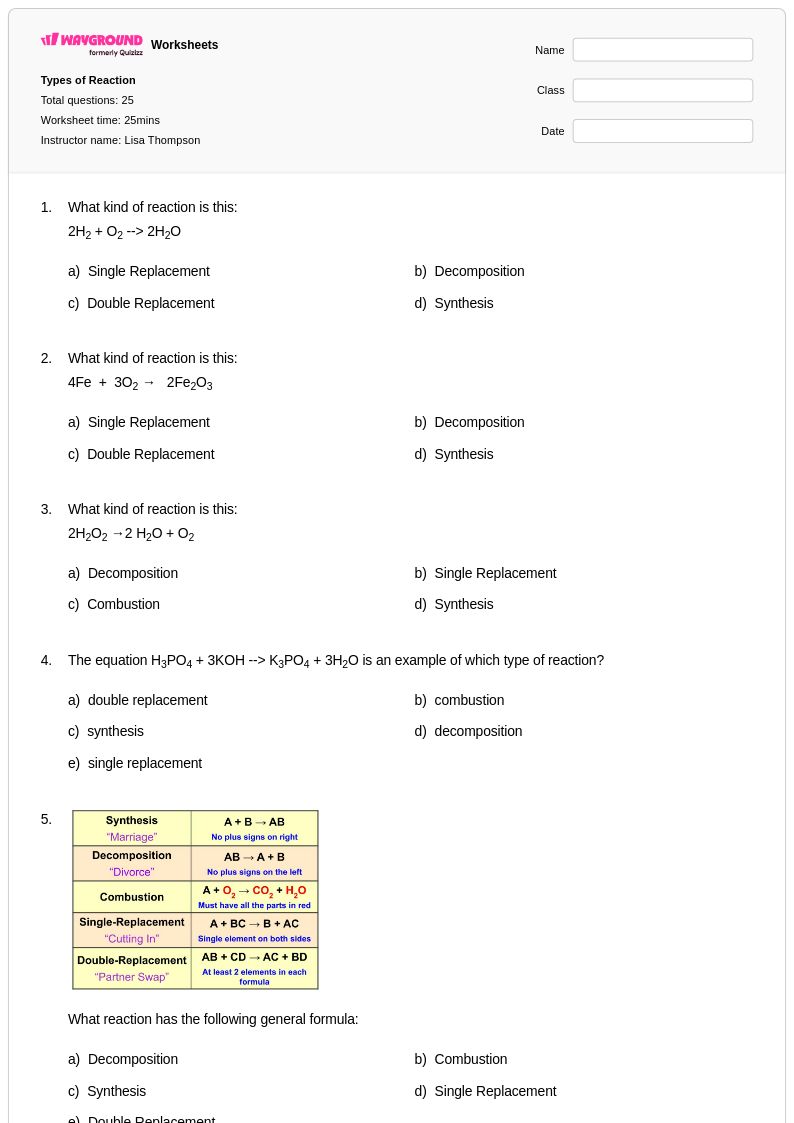
25 Q
10th - Uni
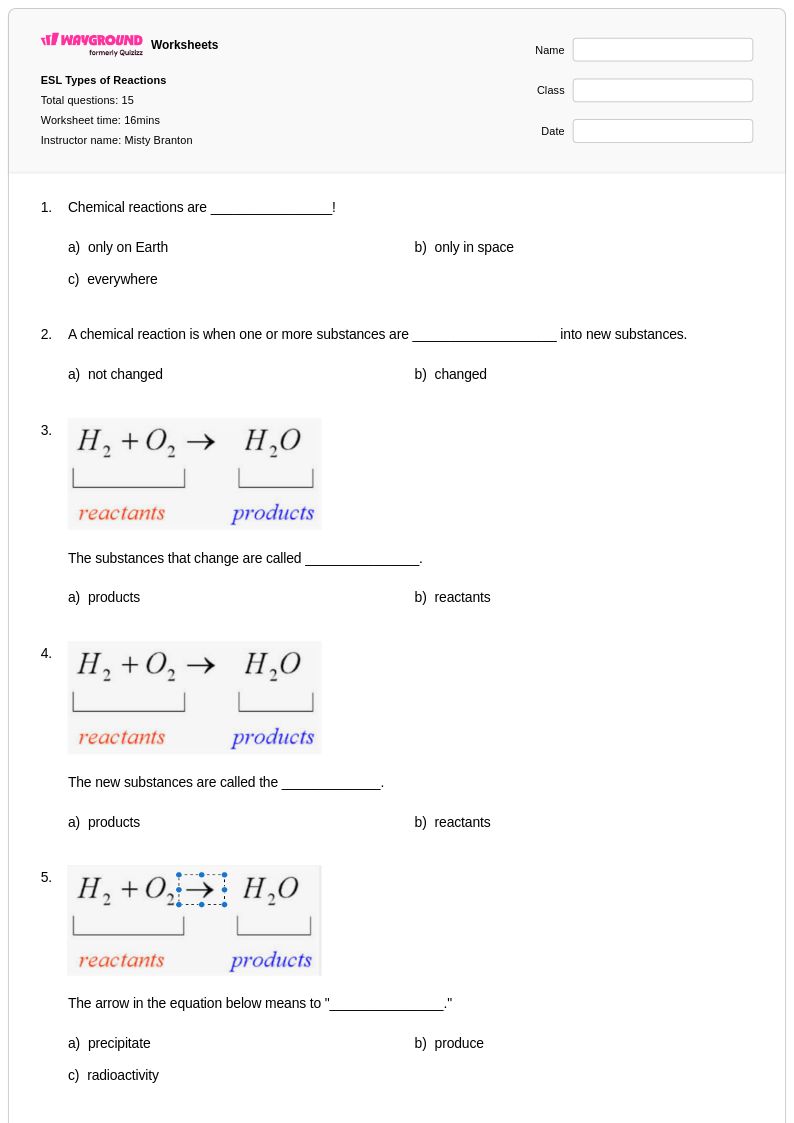
15 Q
9th - 12th
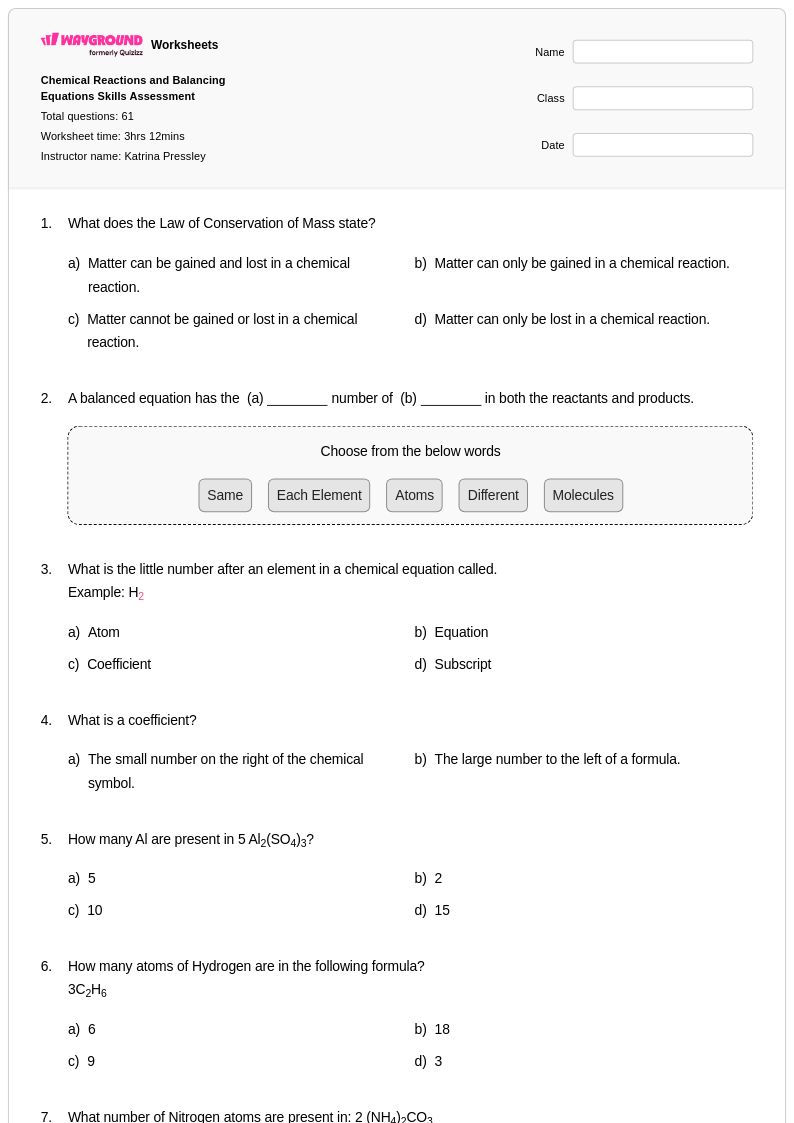
71 Q
9th - 12th
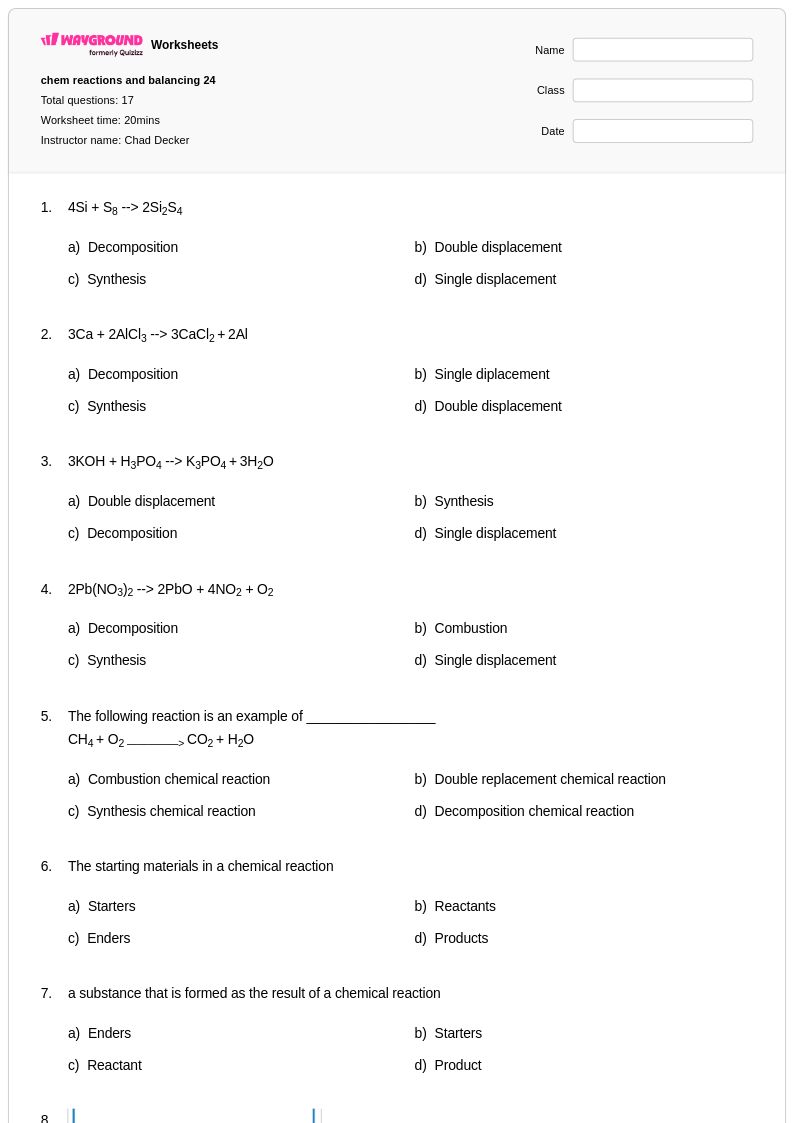
17 Q
8th - 12th
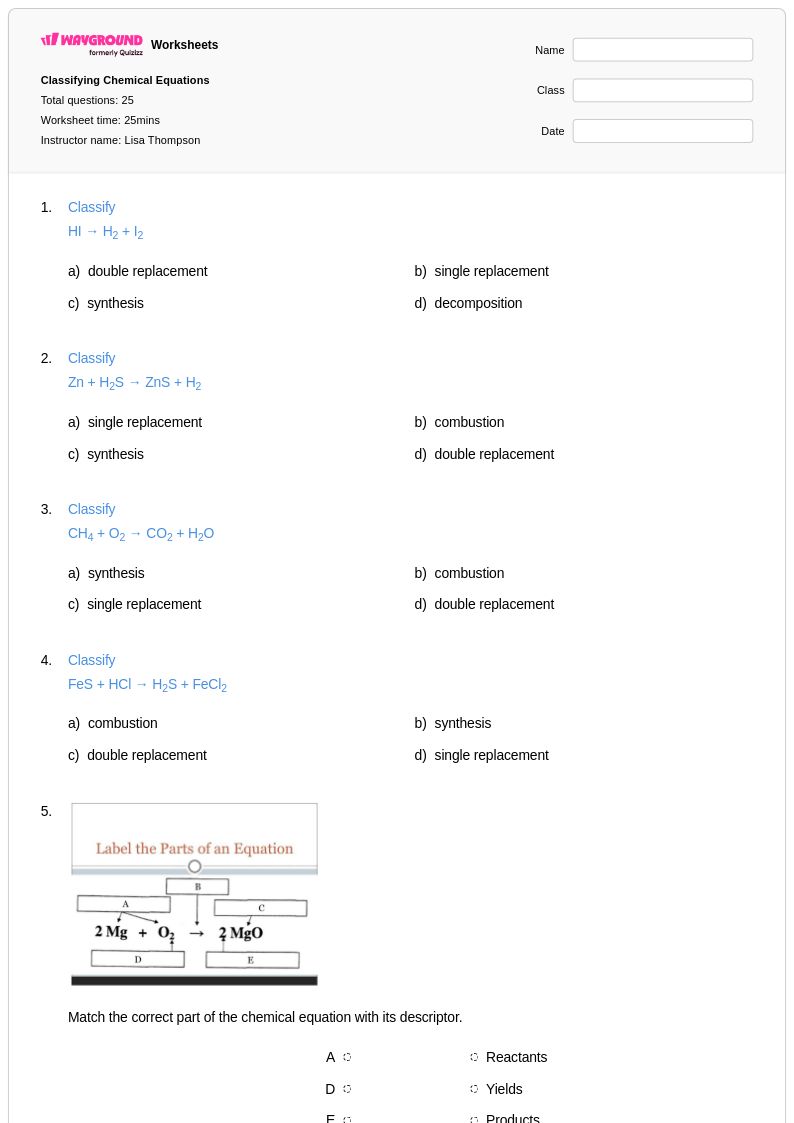
25 Q
10th - Uni
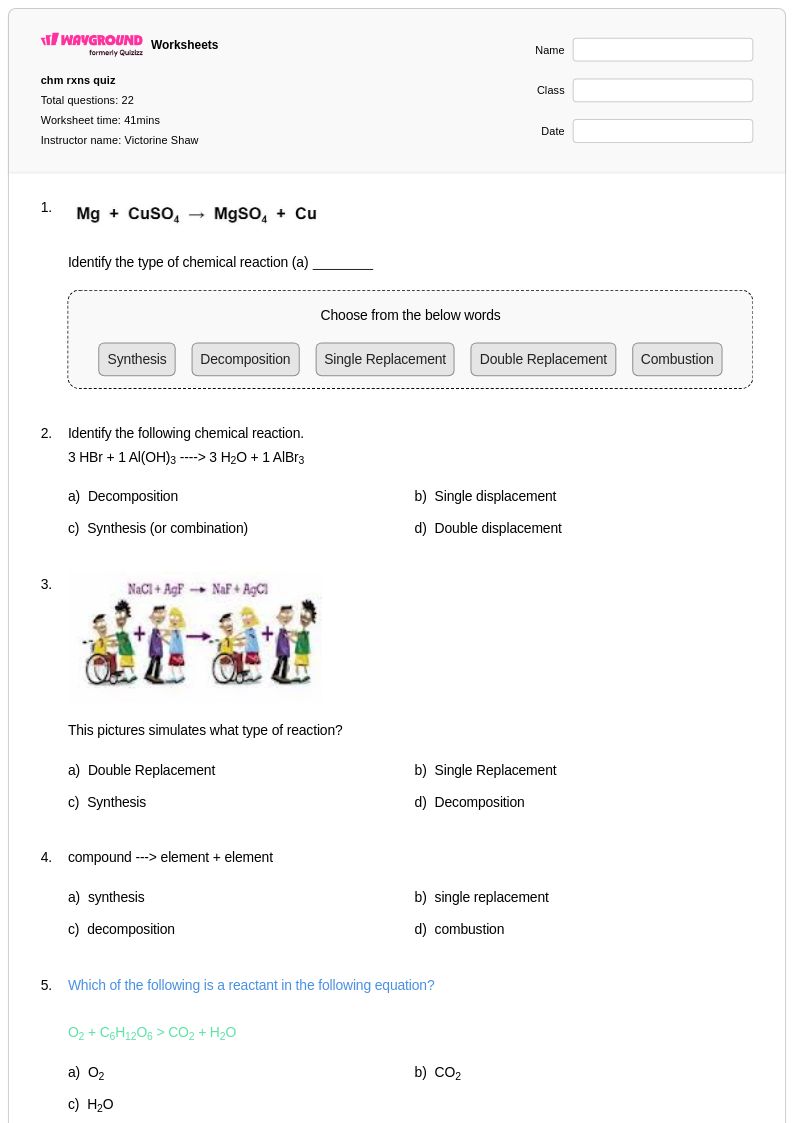
22 Q
12th
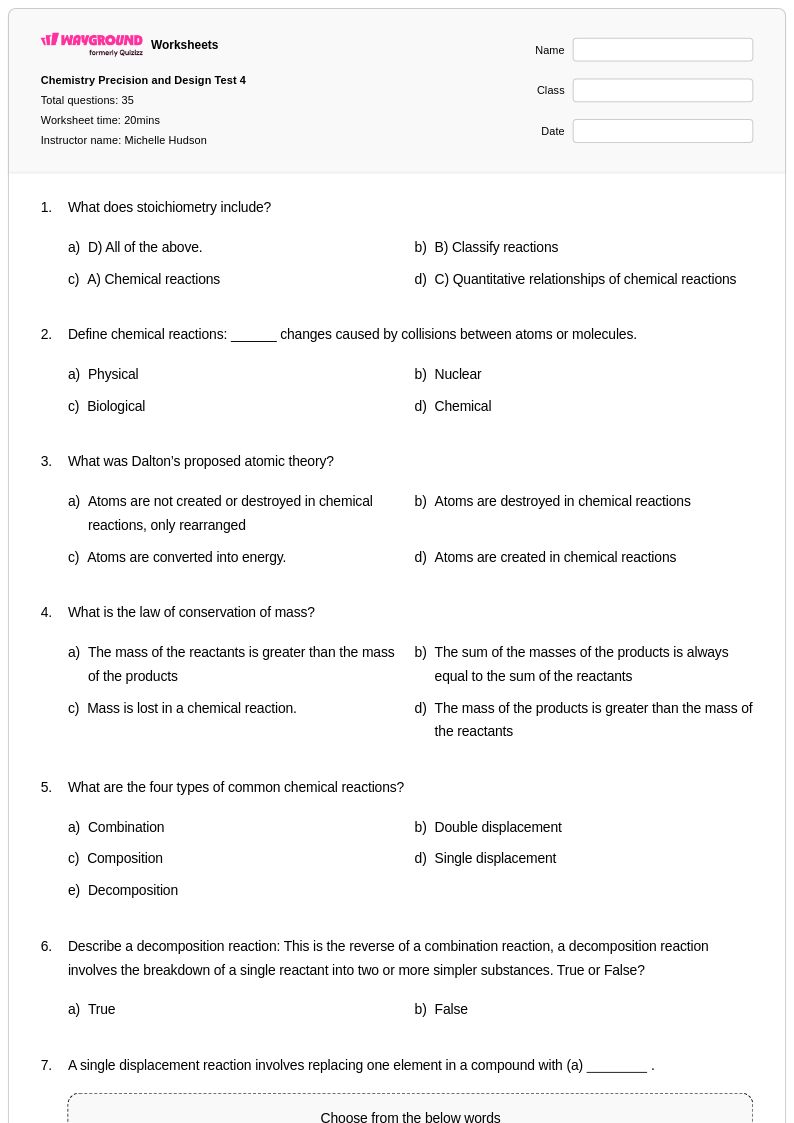
35 Q
11th - Uni
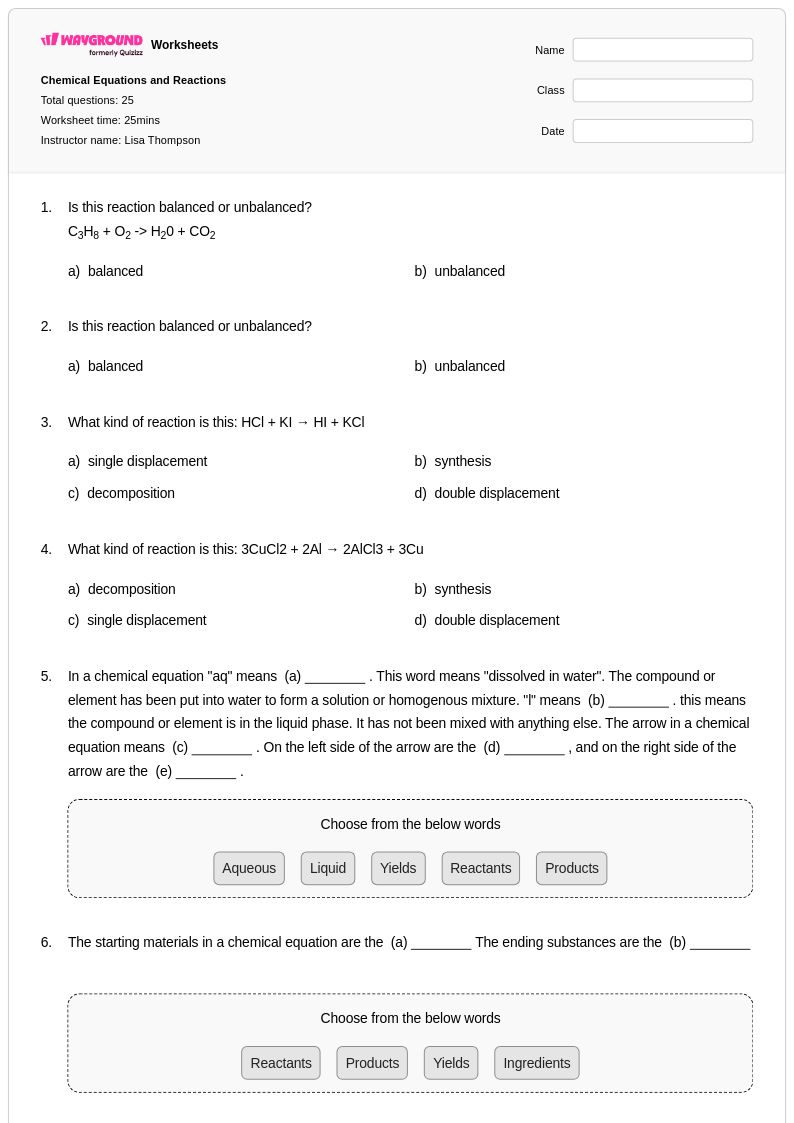
25 Q
8th - Uni
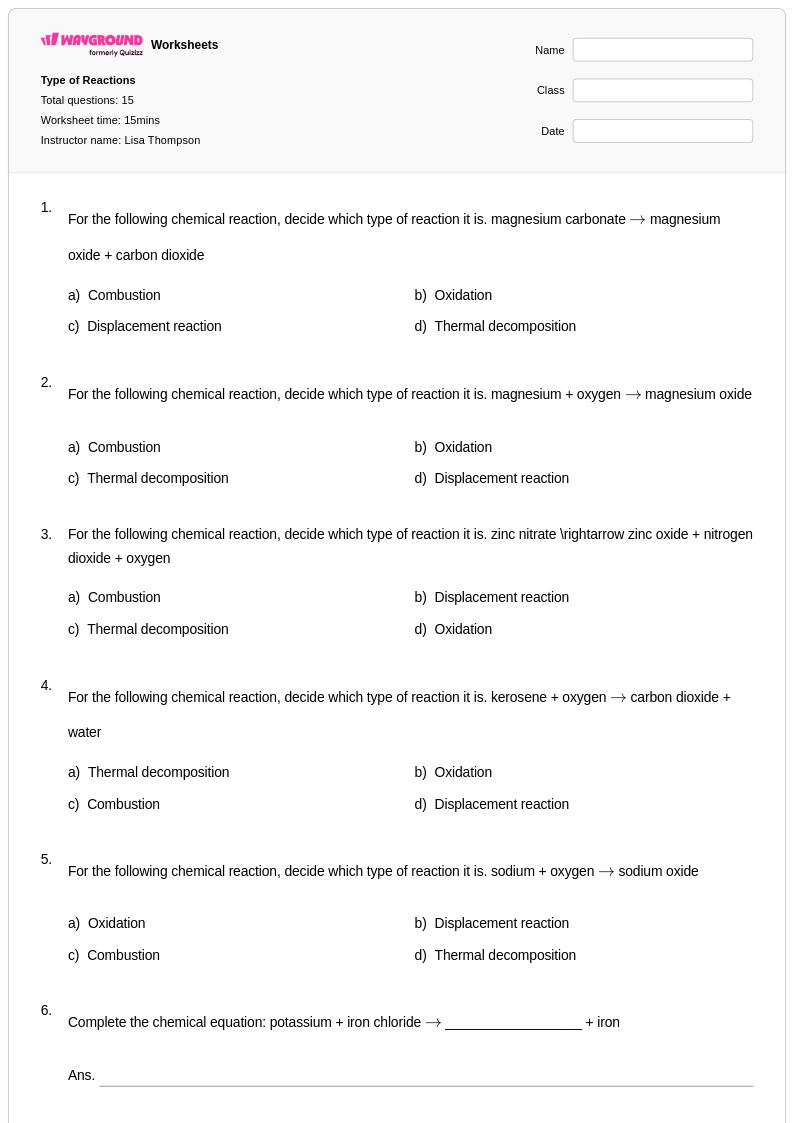
15 Q
9th - Uni
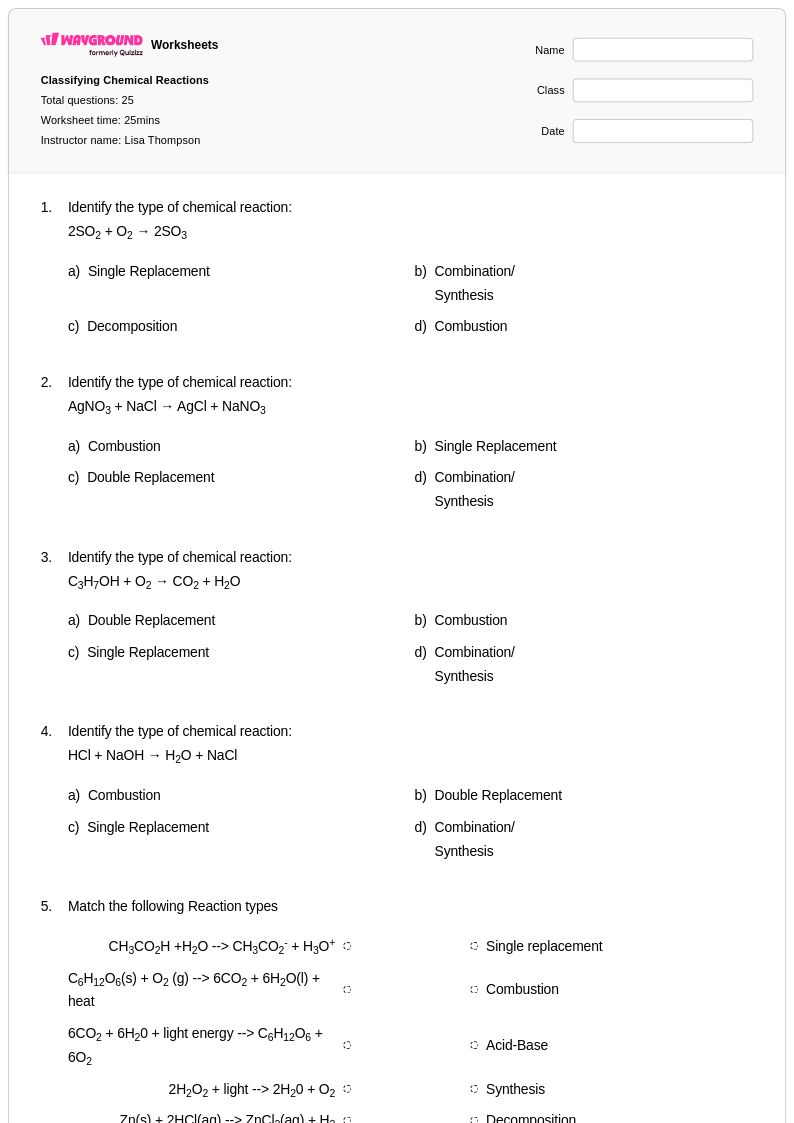
25 Q
11th - Uni
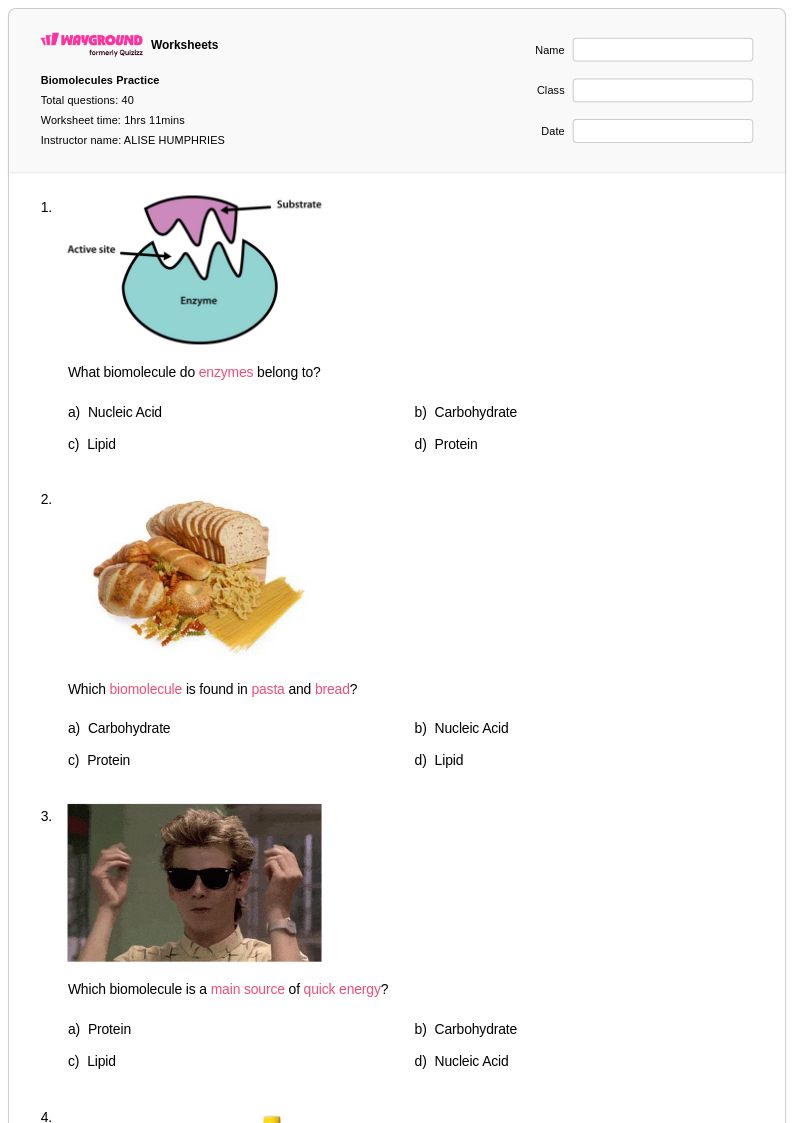
40 Q
9th - 12th
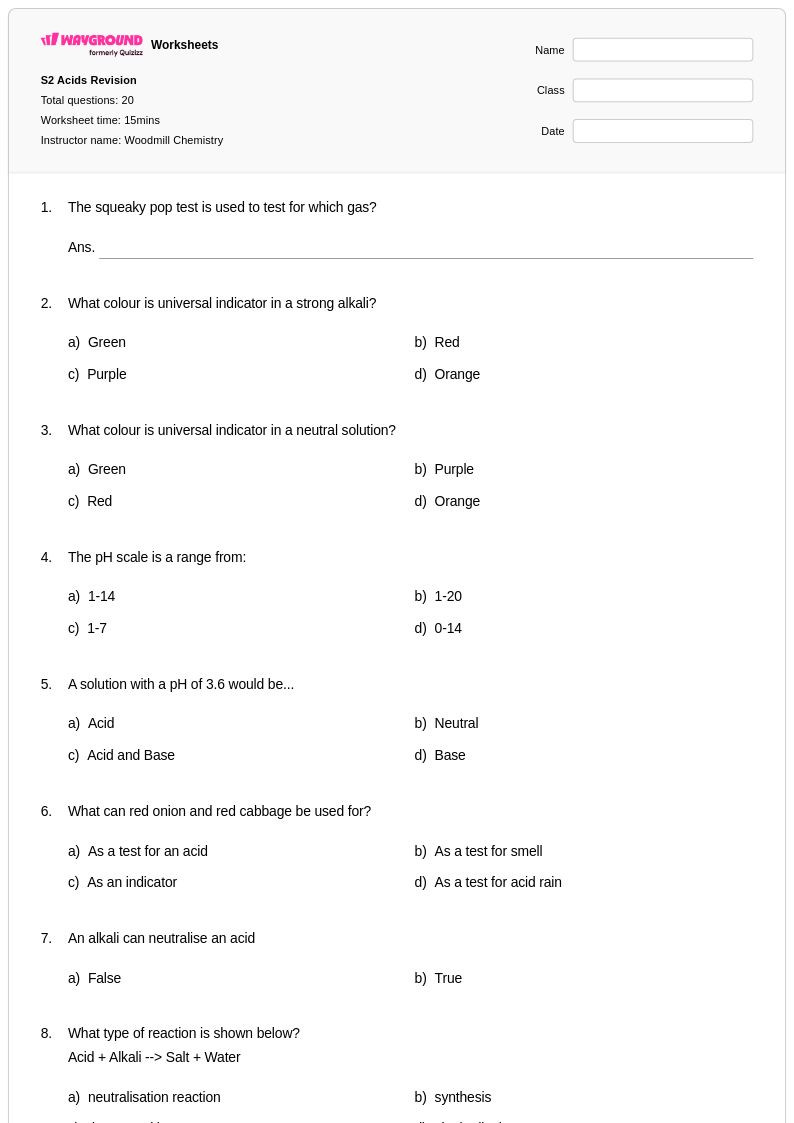
20 Q
9th - 12th
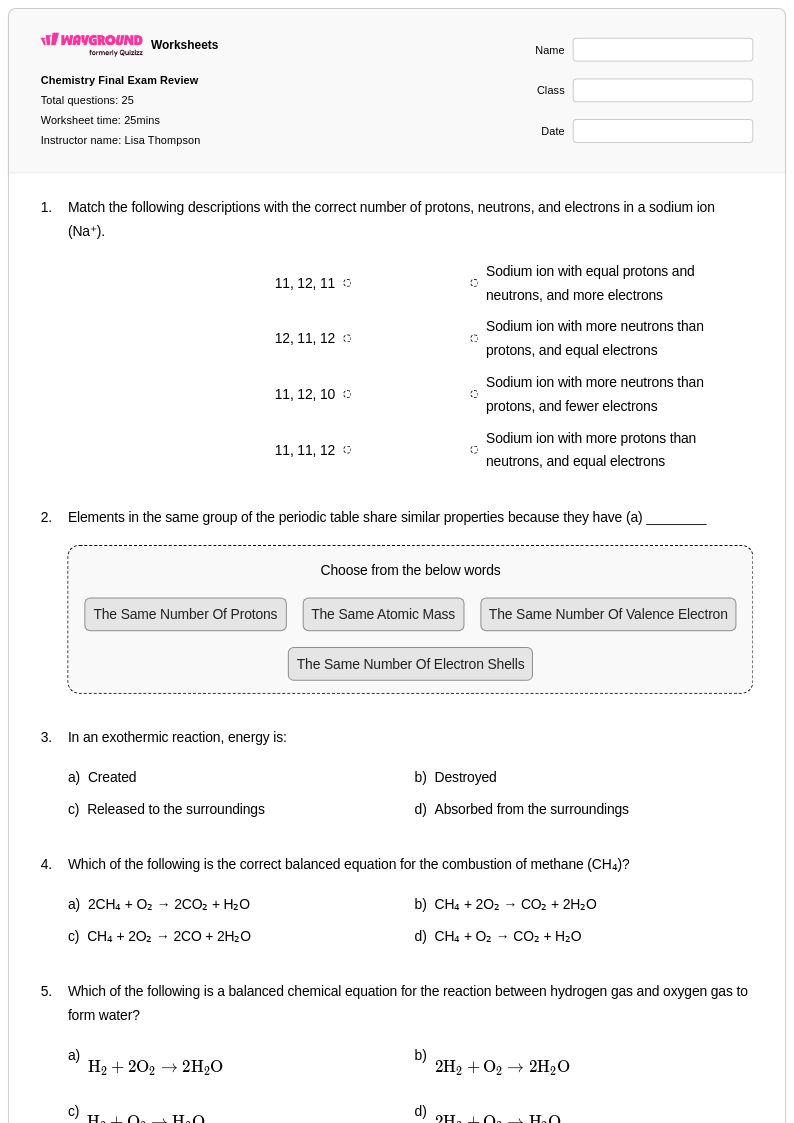
25 Q
10th - Uni
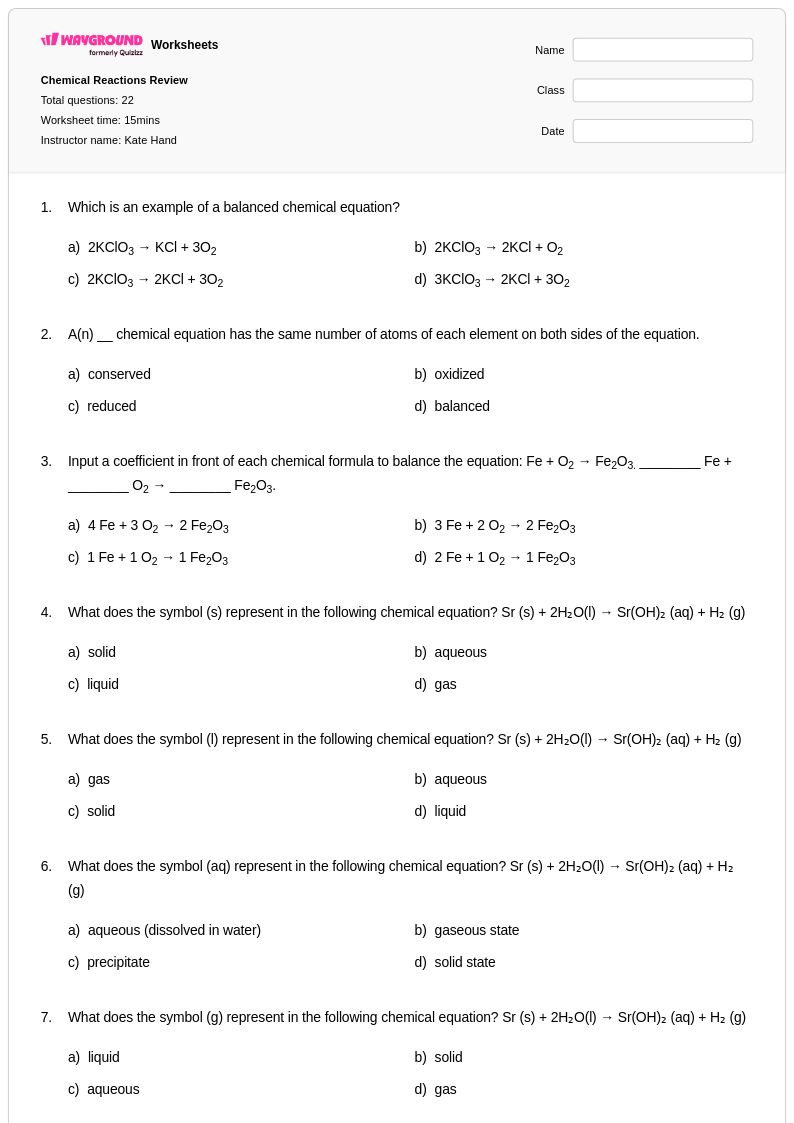
22 Q
9th - 12th
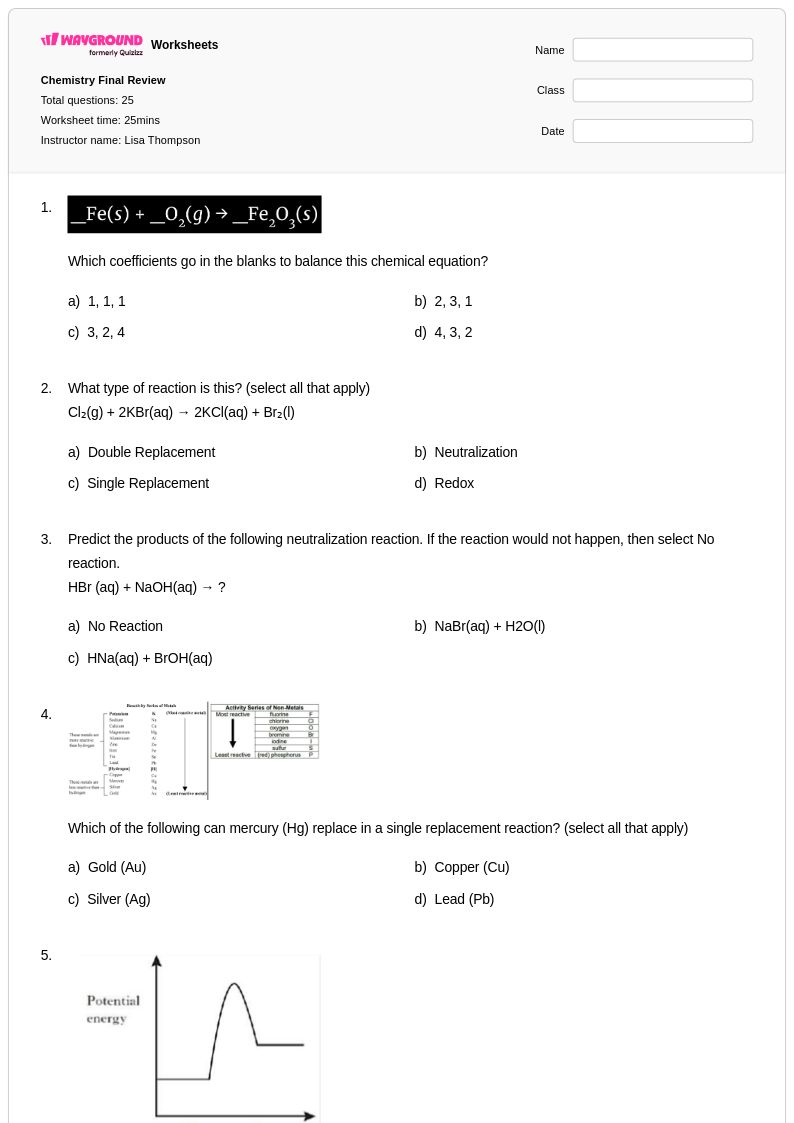
25 Q
10th - Uni
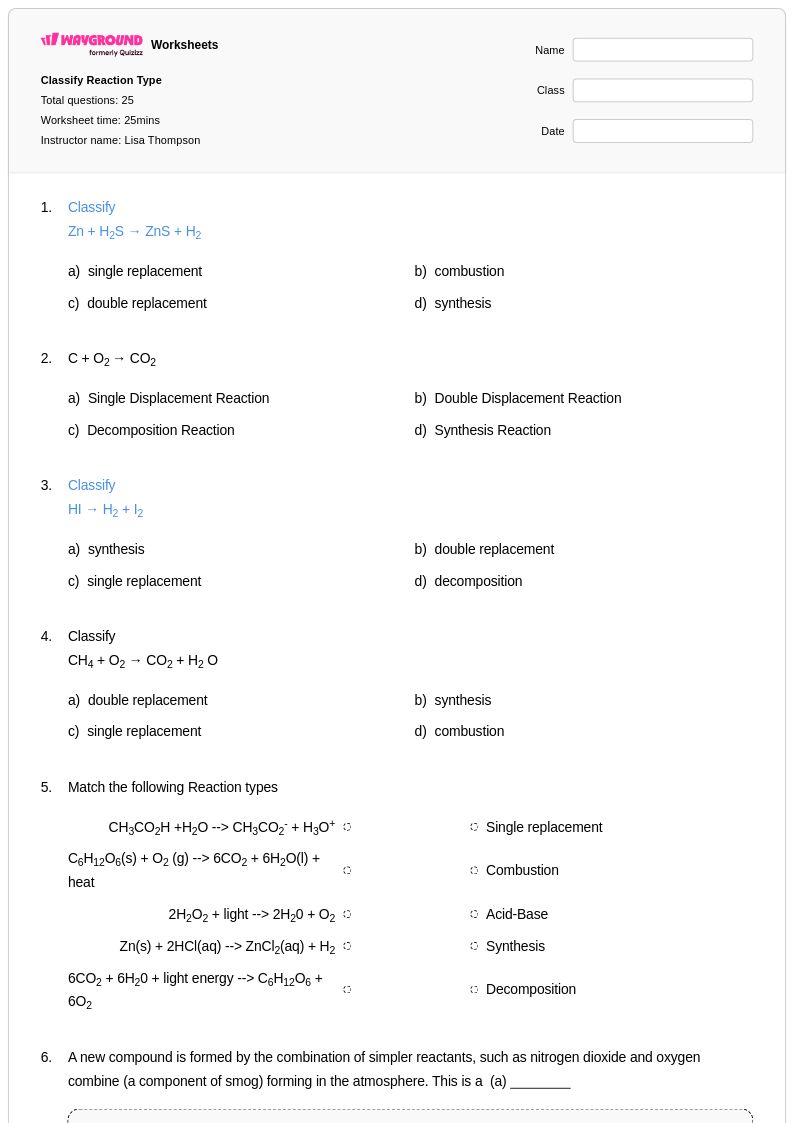
25 Q
10th - Uni
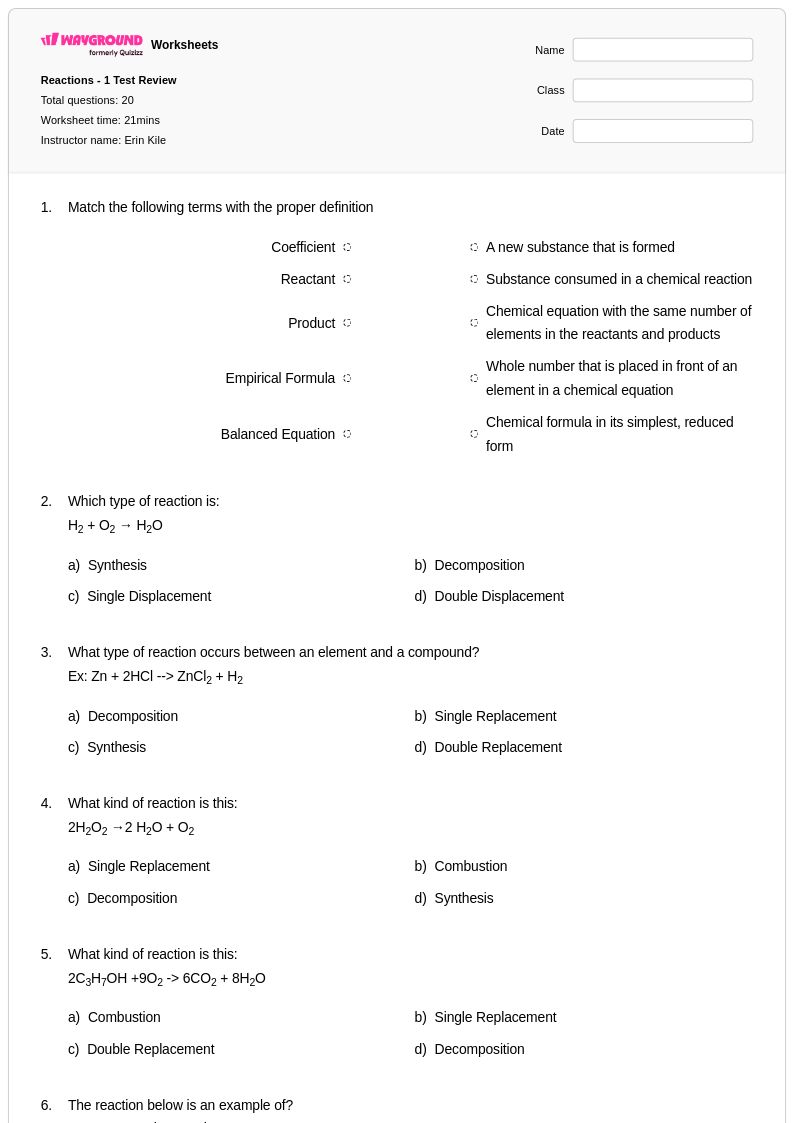
20 Q
9th - 12th
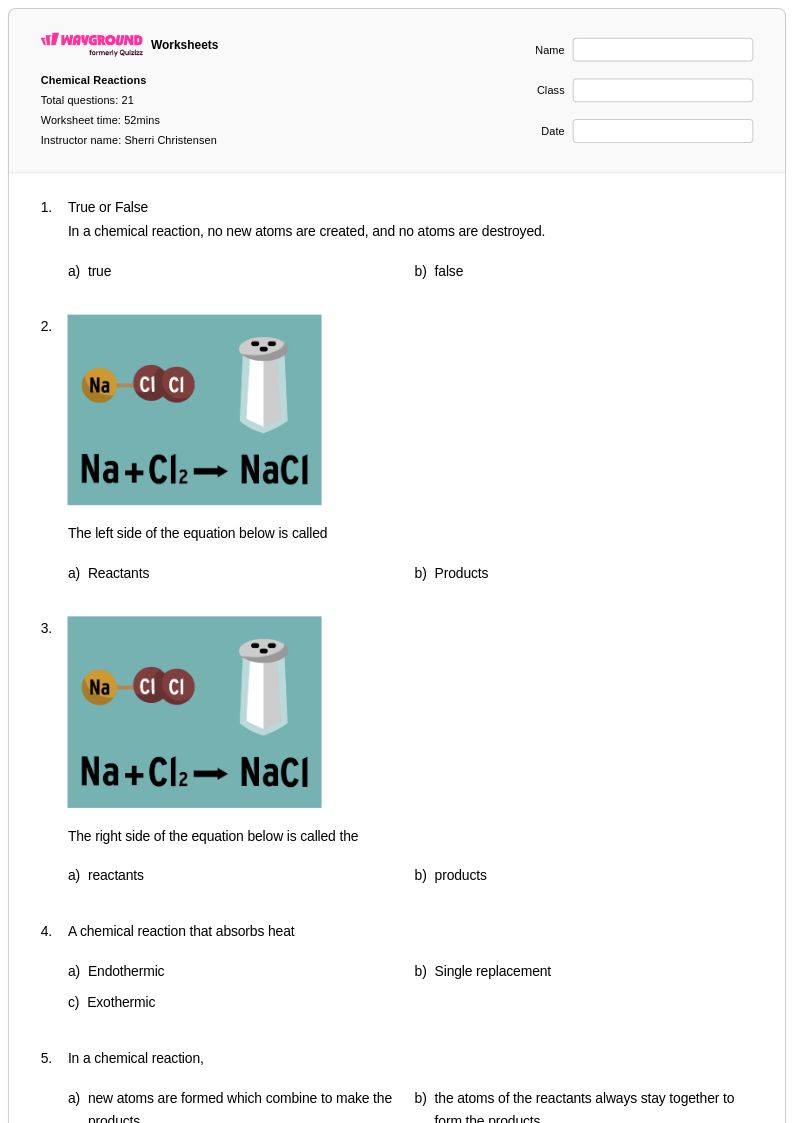
21 Q
9th - 12th
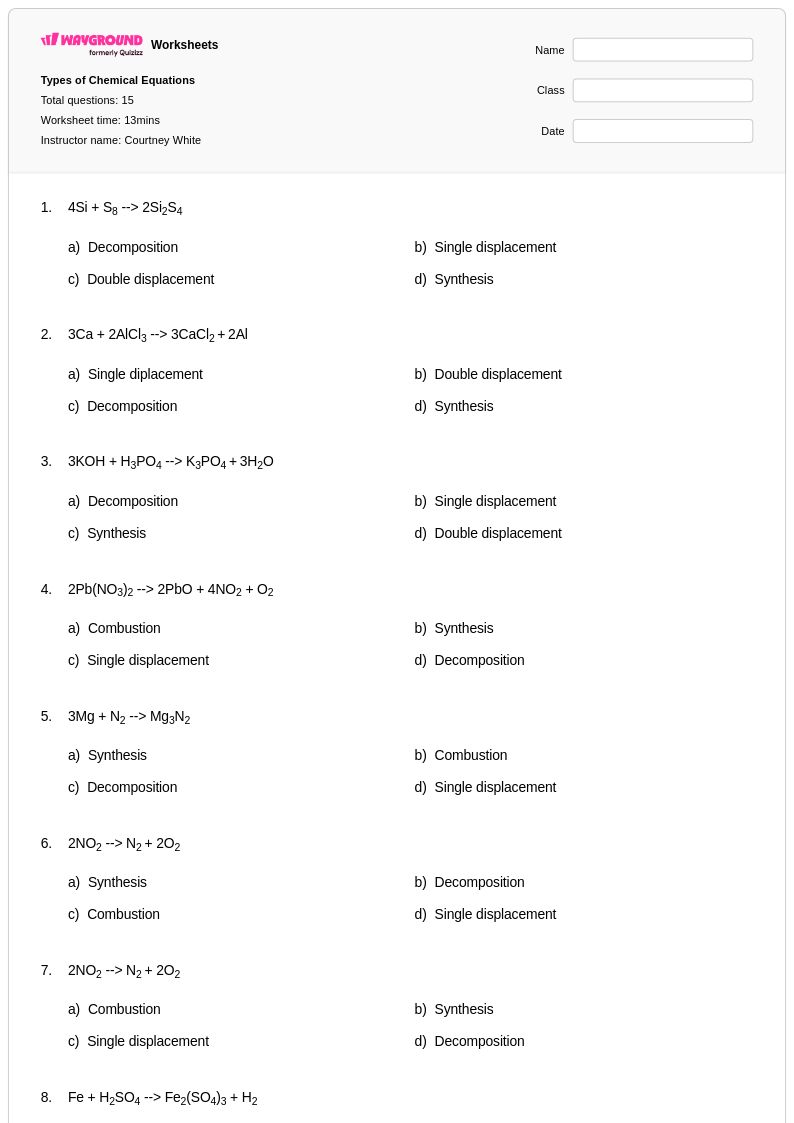
15 Q
9th - 12th
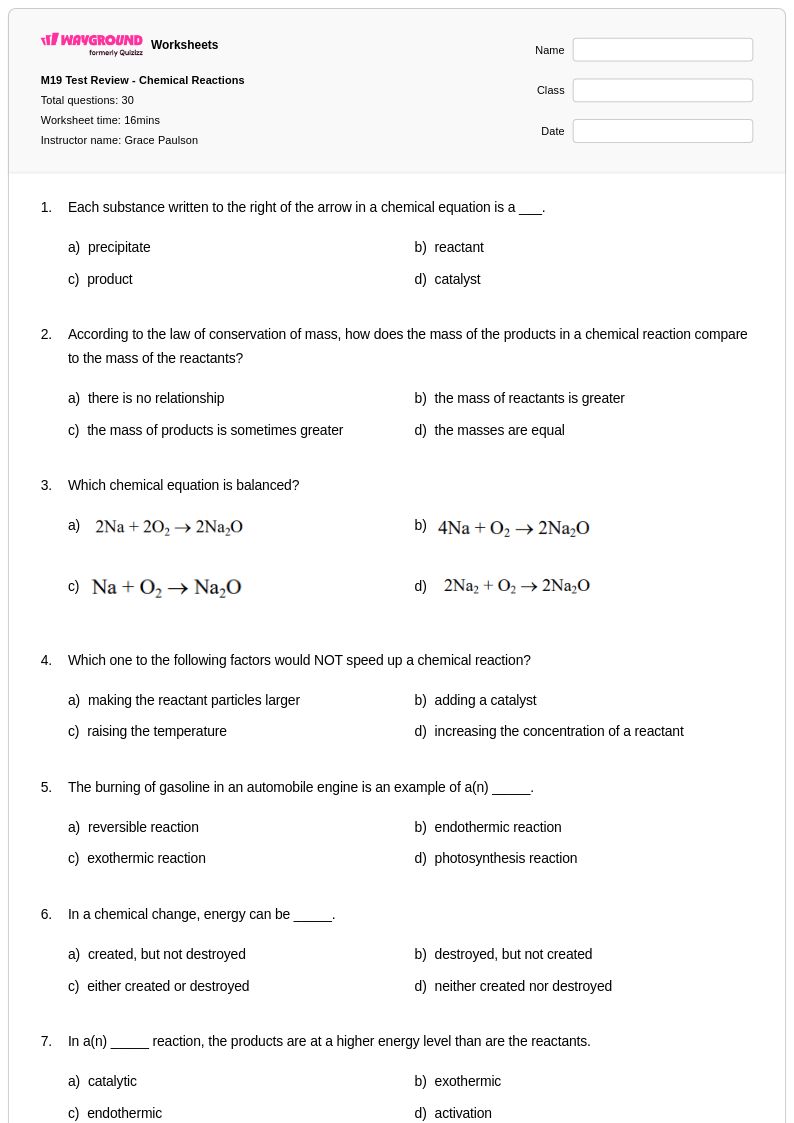
30 Q
12th
12 Q
9th - Uni
25 Q
9th - 12th
54 Q
9th - 12th
7 Q
9th - 12th
Explore Single Displacement Reaction Worksheets by Grades
Explore Other Subject Worksheets for year 12
Explore printable Single Displacement Reaction worksheets for Year 12
Single displacement reaction worksheets for Year 12 students through Wayground (formerly Quizizz) provide comprehensive coverage of this fundamental chemical process where one element replaces another in a compound. These expertly designed resources strengthen students' understanding of reactivity series, electron transfer mechanisms, and the ability to predict reaction outcomes based on metal and halogen displacement patterns. The worksheets include detailed practice problems that guide students through balancing equations, identifying spectator ions, and calculating theoretical yields, with complete answer keys provided to support independent learning. Available as free printables in convenient pdf format, these materials reinforce critical thinking skills needed to analyze reaction spontaneity and apply knowledge of oxidation-reduction processes in real-world chemical scenarios.
Wayground (formerly Quizizz) empowers educators with access to millions of teacher-created single displacement reaction resources that can be seamlessly integrated into Year 12 chemistry instruction. The platform's robust search and filtering capabilities allow teachers to locate materials aligned with specific curriculum standards while differentiation tools enable customization for diverse learning needs and ability levels. These worksheets are available in both printable pdf format and interactive digital versions, providing flexibility for classroom instruction, homework assignments, and laboratory preparation activities. Teachers can efficiently plan targeted remediation for struggling students, create enrichment opportunities for advanced learners, and develop comprehensive skill practice sequences that build mastery of single displacement concepts through systematic, scaffolded approaches to chemical reaction analysis.