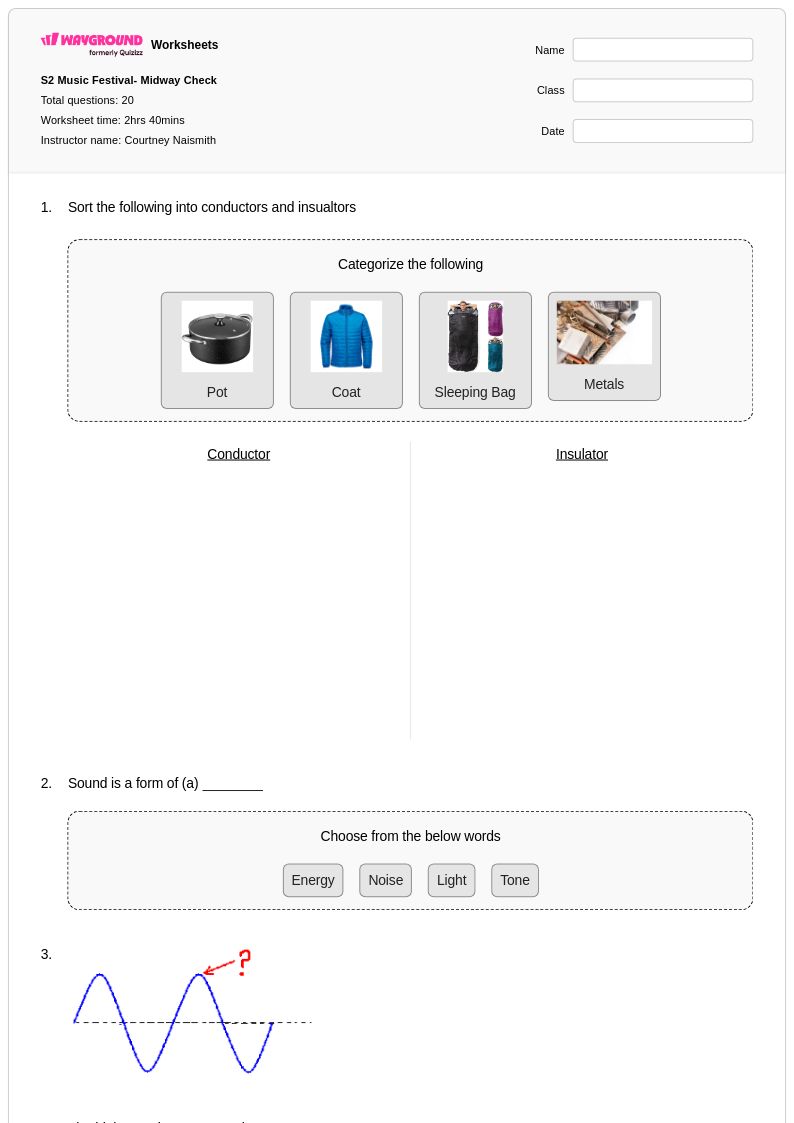
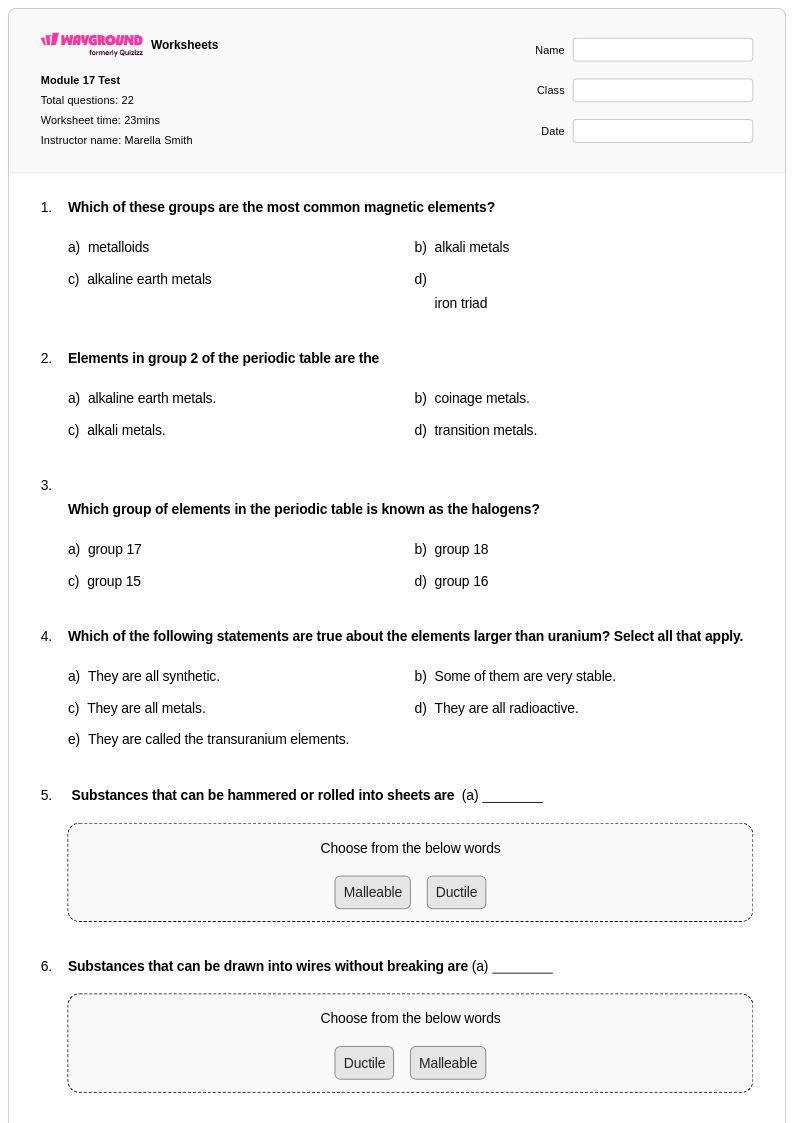
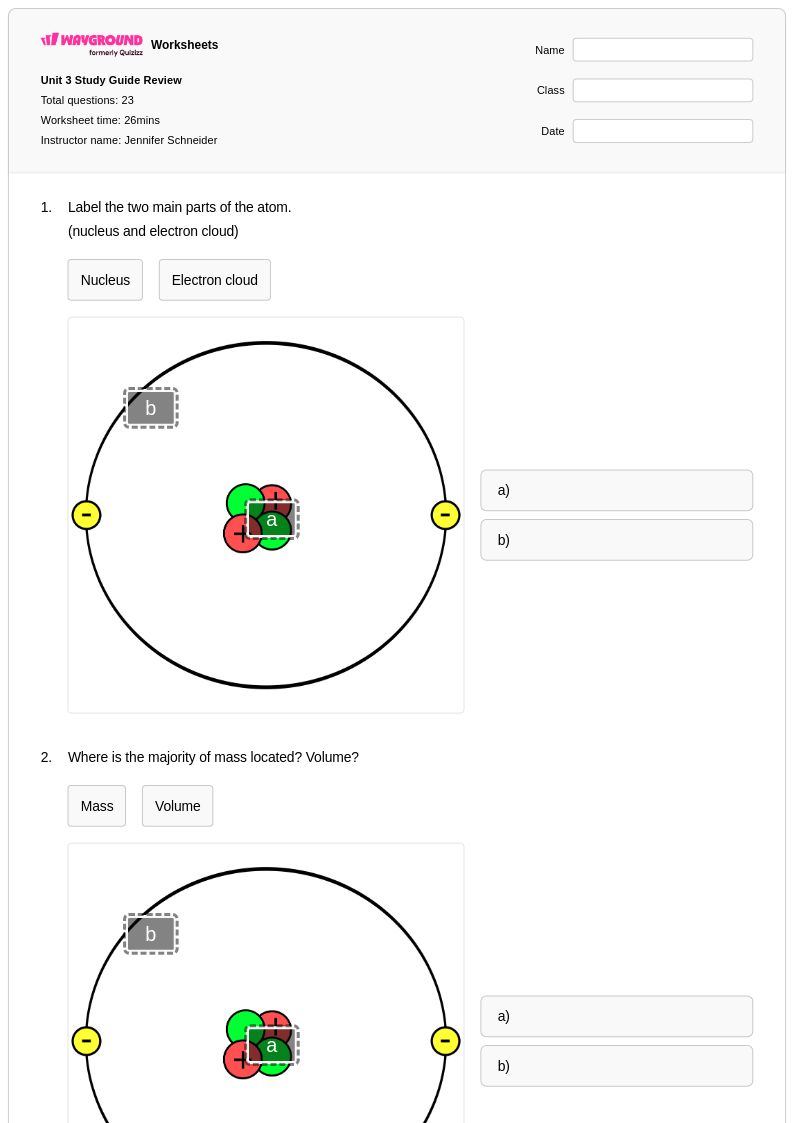
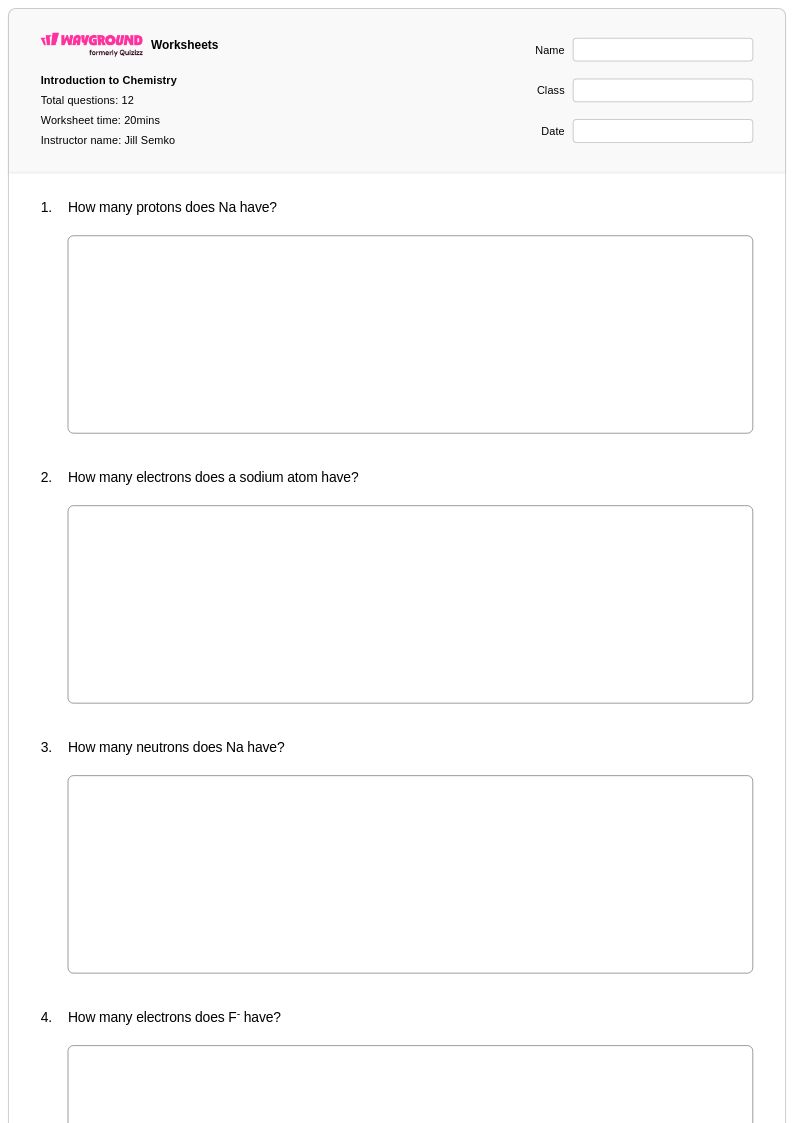
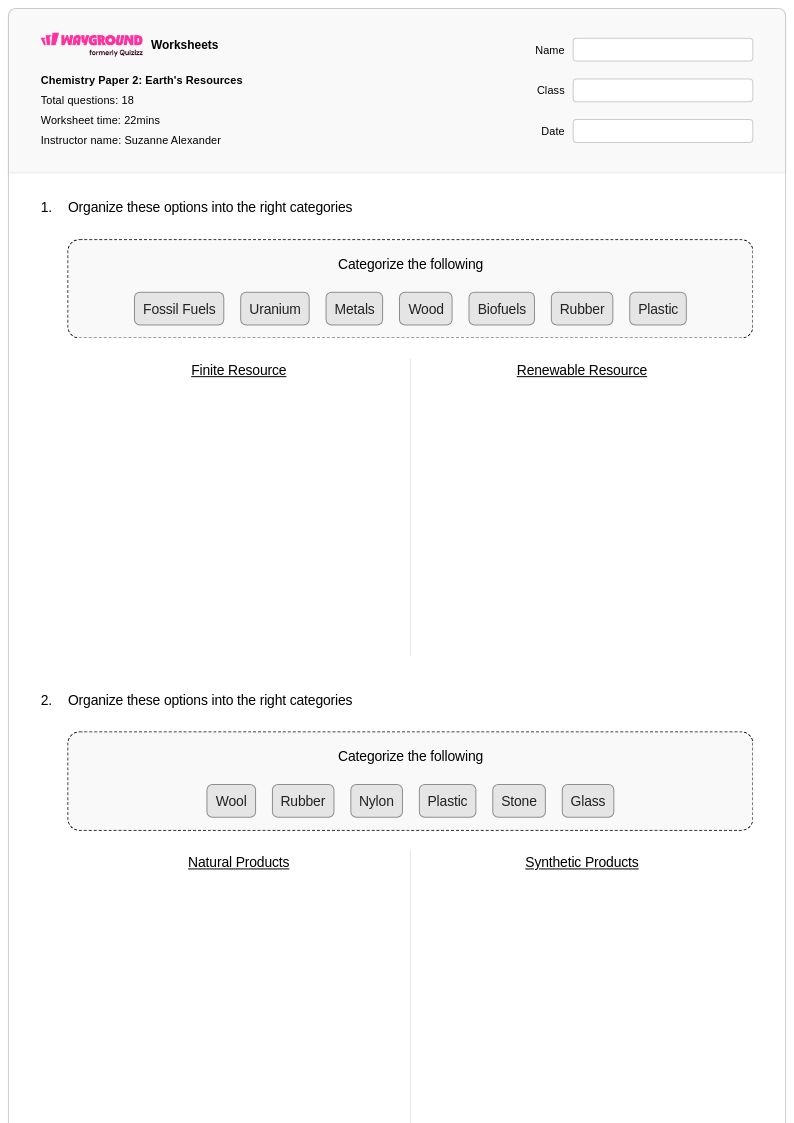
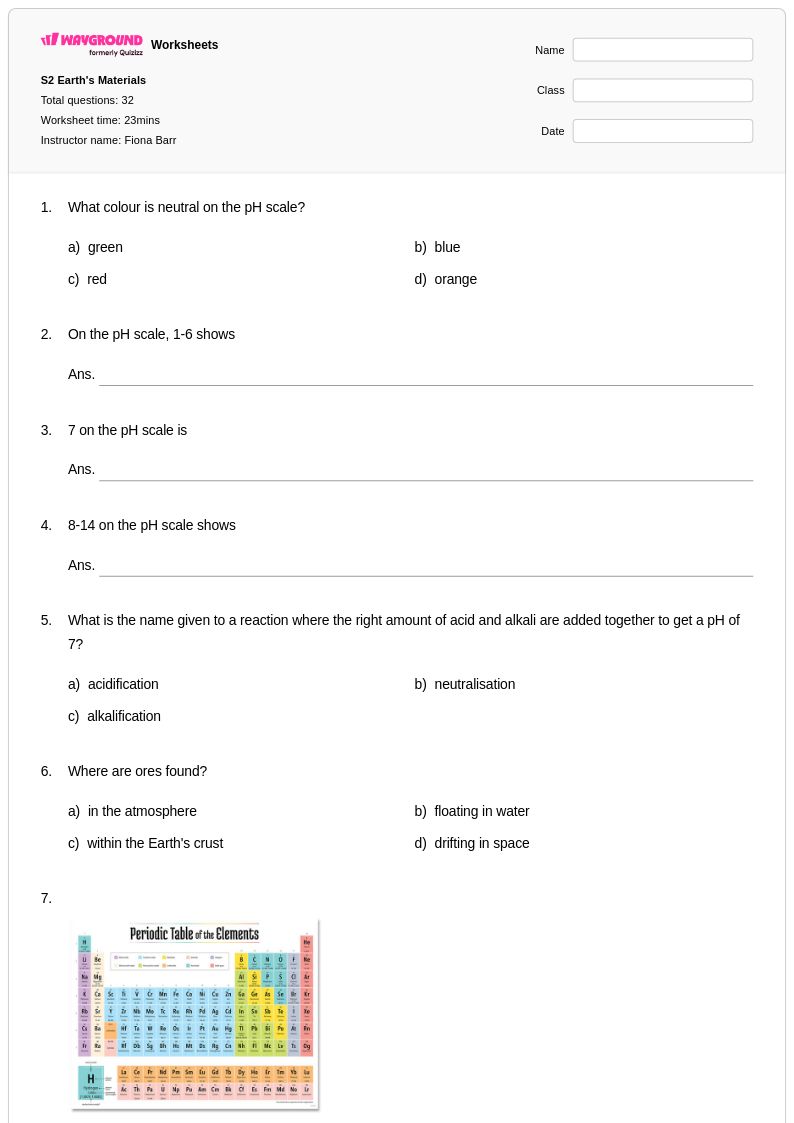
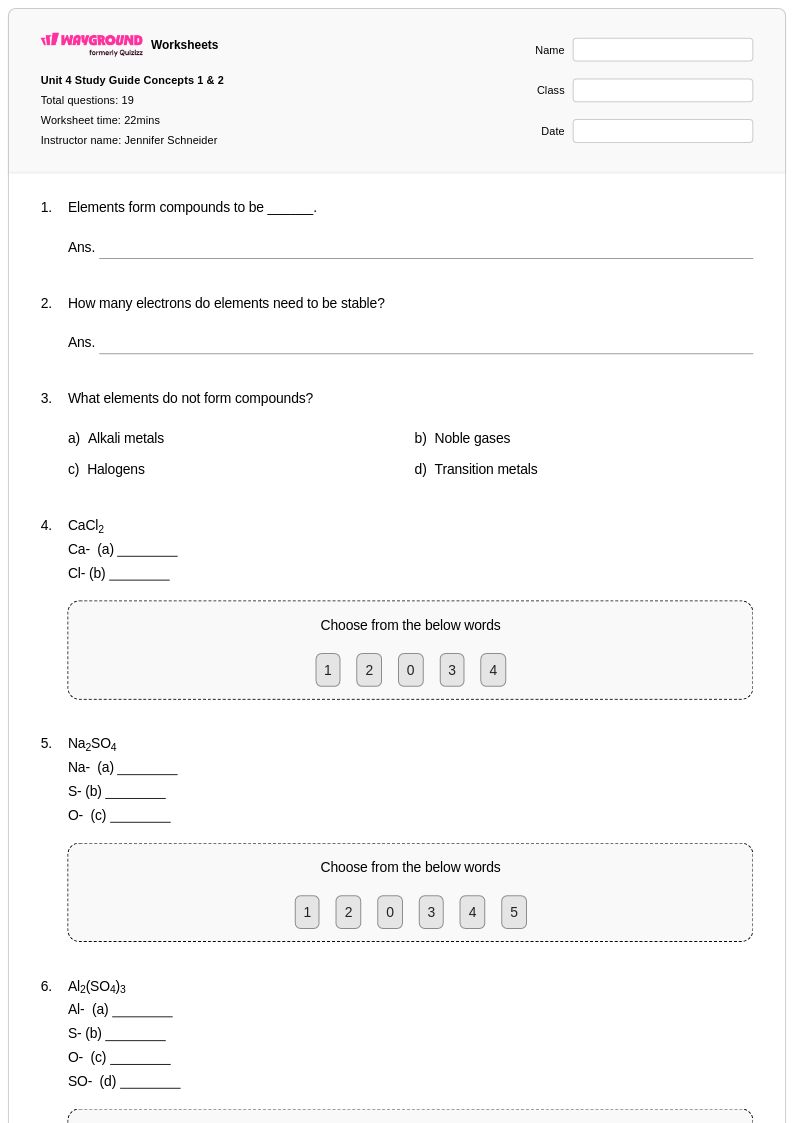
Year 11 metals chemistry worksheets from Wayground help students master metallic properties, reactions, and periodic trends through comprehensive printables, practice problems, and answer keys in convenient PDF format.
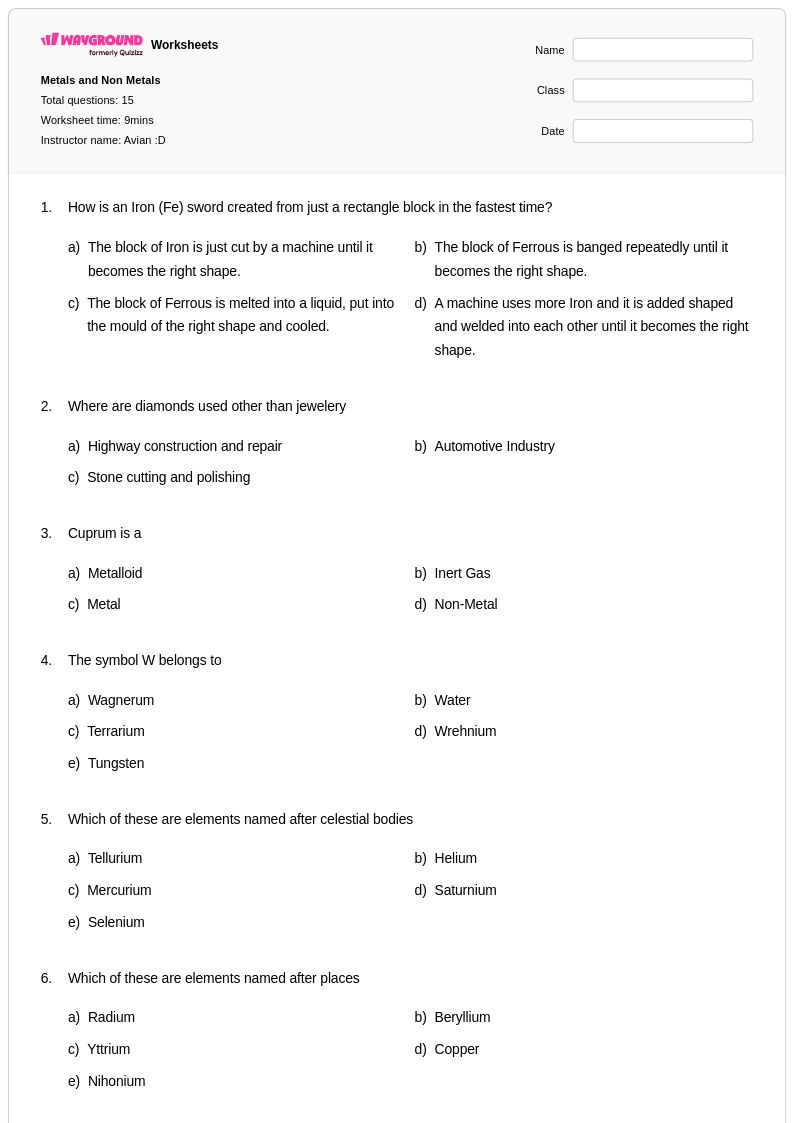
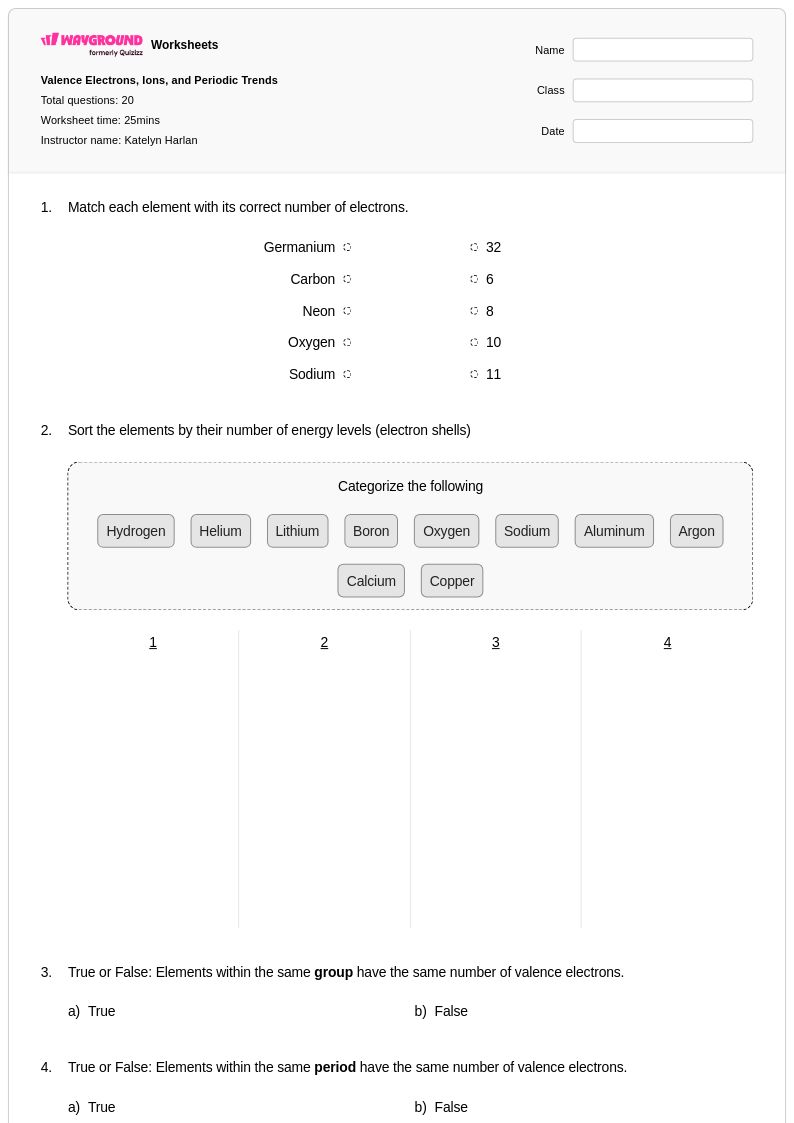
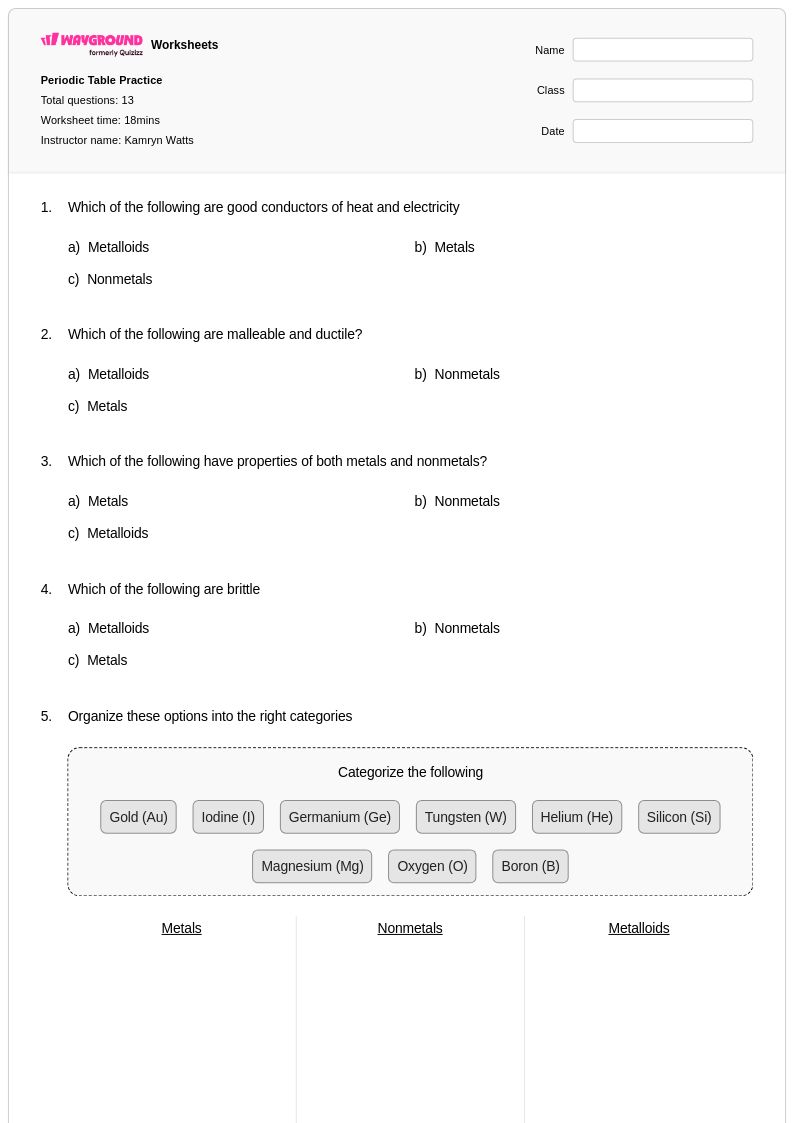
Year 11 metals worksheets available through Wayground (formerly Quizizz) provide comprehensive coverage of metallic elements, their properties, and chemical behaviors essential for advanced chemistry students. These expertly designed resources strengthen critical analytical skills including electron configuration analysis, metallic bonding theory, oxidation-reduction reactions, and comparative studies of alkali metals, alkaline earth metals, and transition metals. Students engage with practice problems that explore atomic radius trends, ionization energies, electronegativity patterns, and the relationship between metallic structure and conductivity. Each worksheet collection includes detailed answer keys and is available as free printables in convenient pdf format, allowing educators to seamlessly integrate targeted practice into their curriculum while reinforcing fundamental concepts about metallic character across the periodic table.
Wayground (formerly Quizizz) empowers chemistry educators with millions of teacher-created resources specifically focused on metals and their applications in Year 11 coursework. The platform's robust search and filtering capabilities enable instructors to quickly locate worksheets aligned with specific curriculum standards, whether focusing on metallurgy principles, alloy formation, or quantitative analysis of metallic compounds. Teachers benefit from sophisticated differentiation tools that allow customization of content difficulty and problem complexity to meet diverse learning needs within their classrooms. Available in both printable and digital formats including downloadable pdf versions, these worksheet collections support flexible lesson planning while providing targeted resources for remediation, skill practice, and enrichment activities that deepen student understanding of metallic properties and their practical applications in industrial chemistry.
FAQs
How do I teach metallic bonding and electron sea theory to high school chemistry students?
Metallic bonding is best introduced by contrasting it with ionic and covalent bonding first, so students understand why metals behave differently. The electron sea model — where delocalized electrons move freely among a lattice of positive metal ions — directly explains conductivity, malleability, and luster. Using diagrams alongside practice problems that ask students to predict properties from bonding structure helps solidify the concept before moving into reactivity or alloy formation.
What exercises help students practice the metal reactivity series?
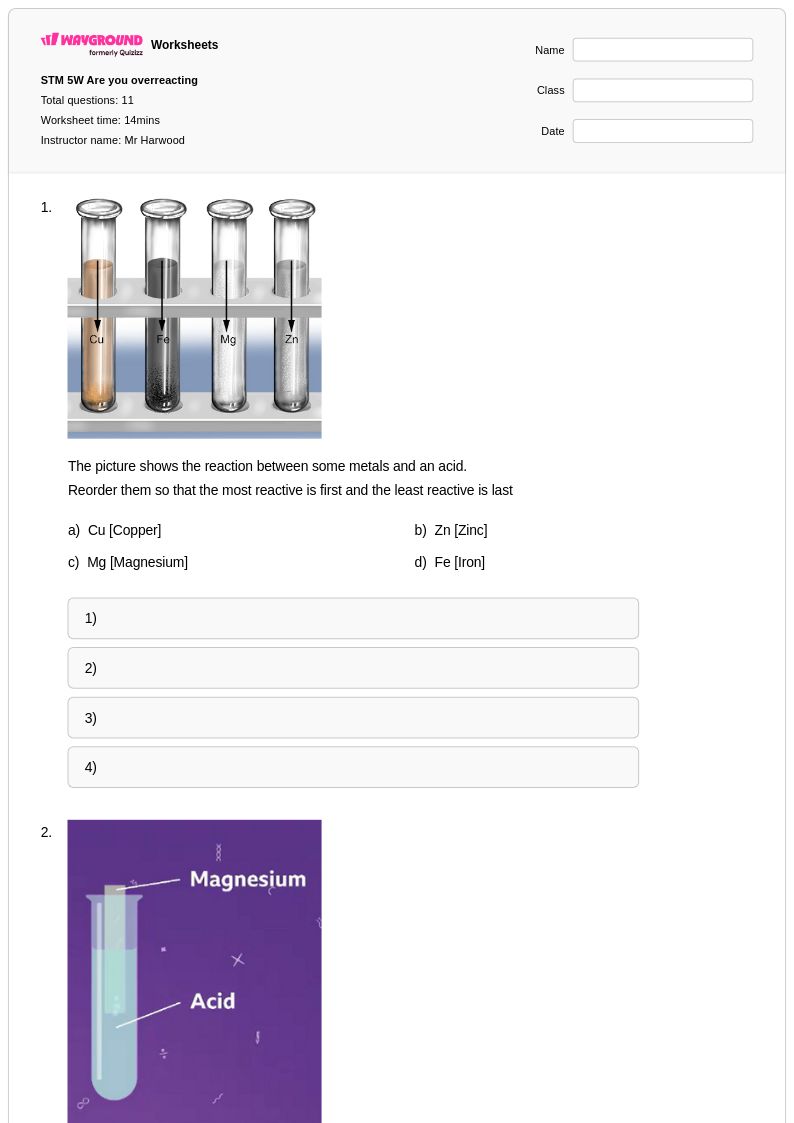
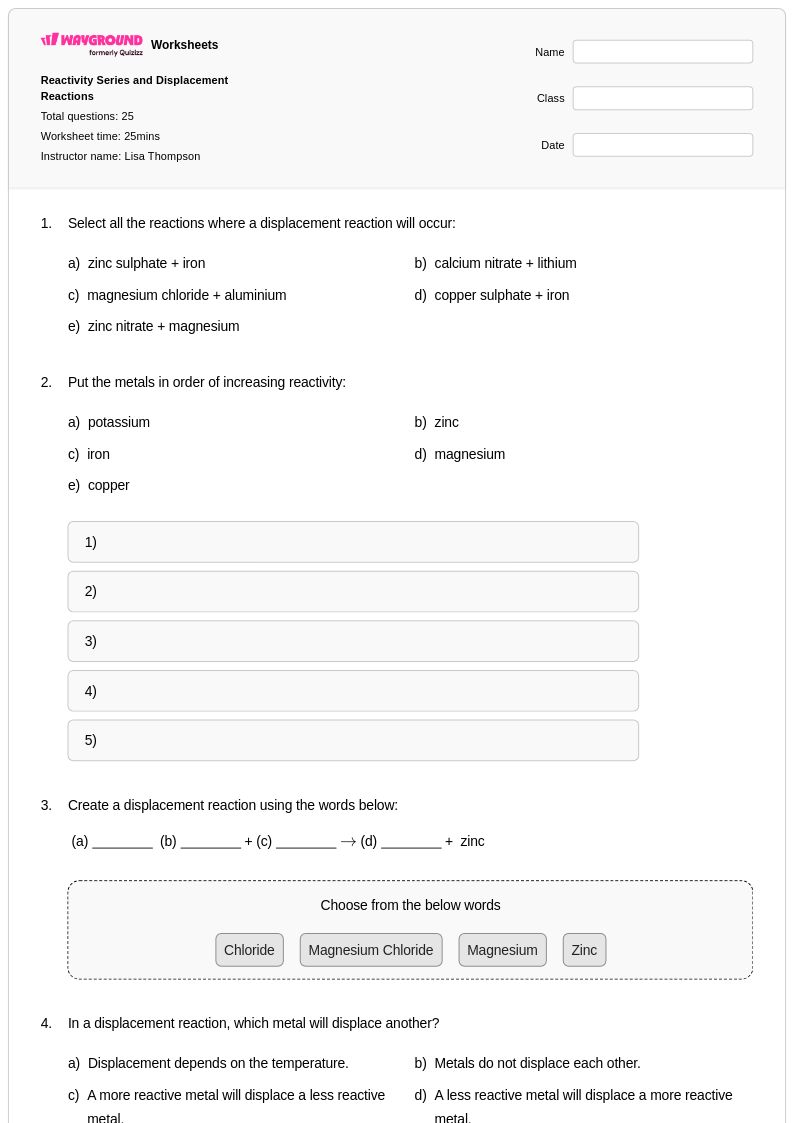
The most effective exercises require students to predict whether a displacement reaction will occur between a metal and a salt solution, then write the balanced equation if it does. Ordering metals from most to least reactive using experimental data — rather than just memorizing the series — builds deeper understanding. Problems that connect reactivity to real-world applications, such as explaining why gold resists corrosion or why magnesium is used in flares, give students meaningful context for the pattern.
What mistakes do students commonly make when writing oxidation-reduction reactions involving metals?
The most common error is failing to balance charge when writing ionic equations — students often balance atoms but ignore electrons. A second frequent mistake is confusing oxidation and reduction direction, particularly when metals act as reducing agents. Students also tend to overlook that not all metals will react with a given acid or salt solution, which is where a solid grasp of the reactivity series becomes essential for error prevention.
How can I use metals worksheets to support students with different skill levels in the same class?
Differentiated metals worksheets can be structured so foundational questions cover identification of physical properties and basic reactions, while extension problems address half-equations, electrochemical cells, or industrial extraction processes. On Wayground, teachers can apply accommodations at the individual student level, including reduced answer choices to lower cognitive load for struggling learners and extended time for students who need it, without other students being notified. These settings carry over to future sessions, making it practical to maintain differentiation consistently across a unit.
How do I use Wayground's metals worksheets in my classroom?
Wayground's metals worksheets are available as printable PDFs for traditional classroom use and in digital formats for technology-integrated environments, making them flexible for homework, in-class practice, or lab follow-up. Teachers can also host them as a live quiz on Wayground, enabling real-time student responses and instant data on class understanding. Each worksheet includes a complete answer key, so grading and feedback require minimal preparation time.
How do alloys differ from pure metals, and how should I explain this to students?
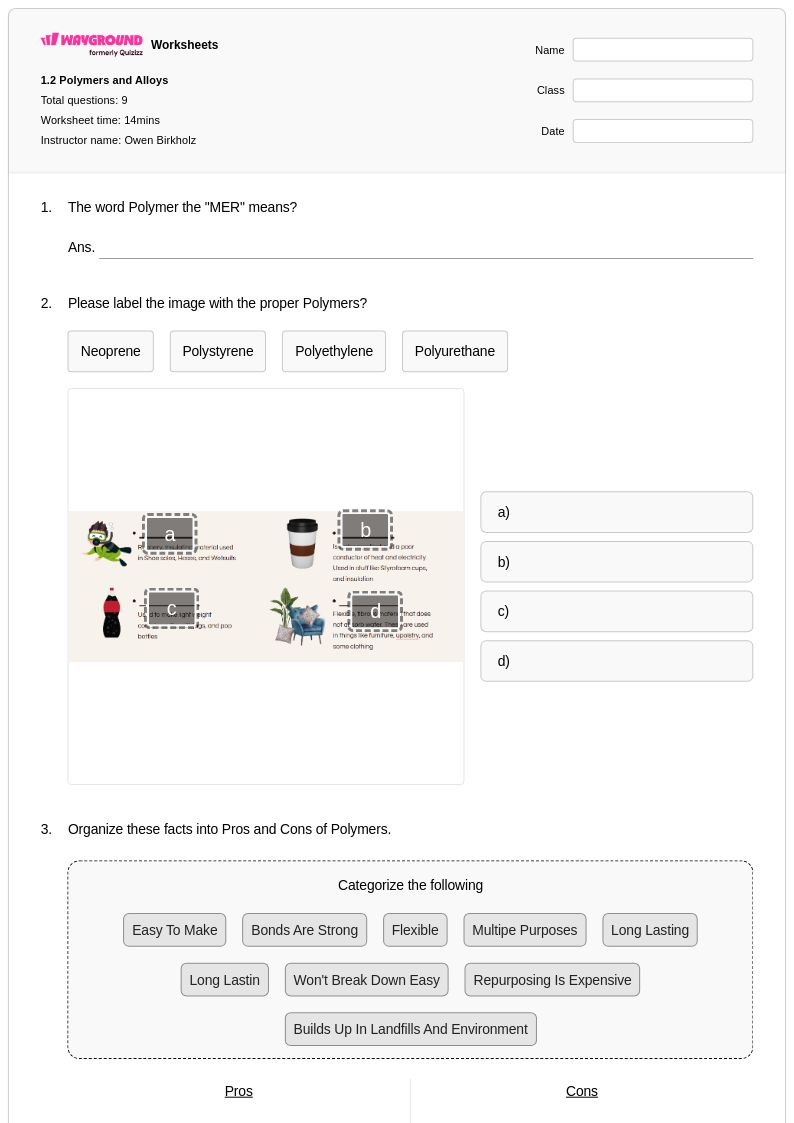
An alloy is a mixture of a metal with one or more other elements — usually other metals or carbon — deliberately combined to improve specific properties such as hardness, corrosion resistance, or tensile strength. Steel (iron and carbon) and bronze (copper and tin) are the most teachable examples because students can compare measurable properties against the pure metals. A common misconception is that alloying always makes a material stronger; in practice, the effect depends on atomic size differences and how the added element disrupts the regular metallic lattice, which is worth addressing explicitly.