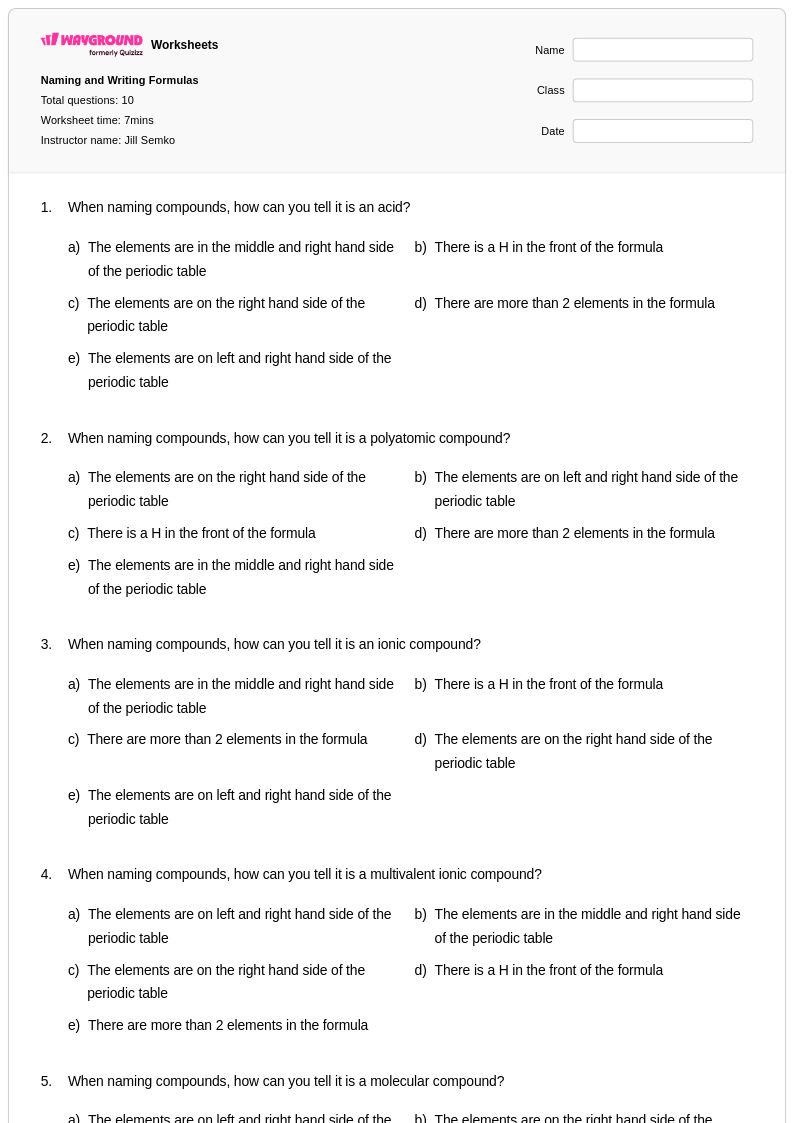
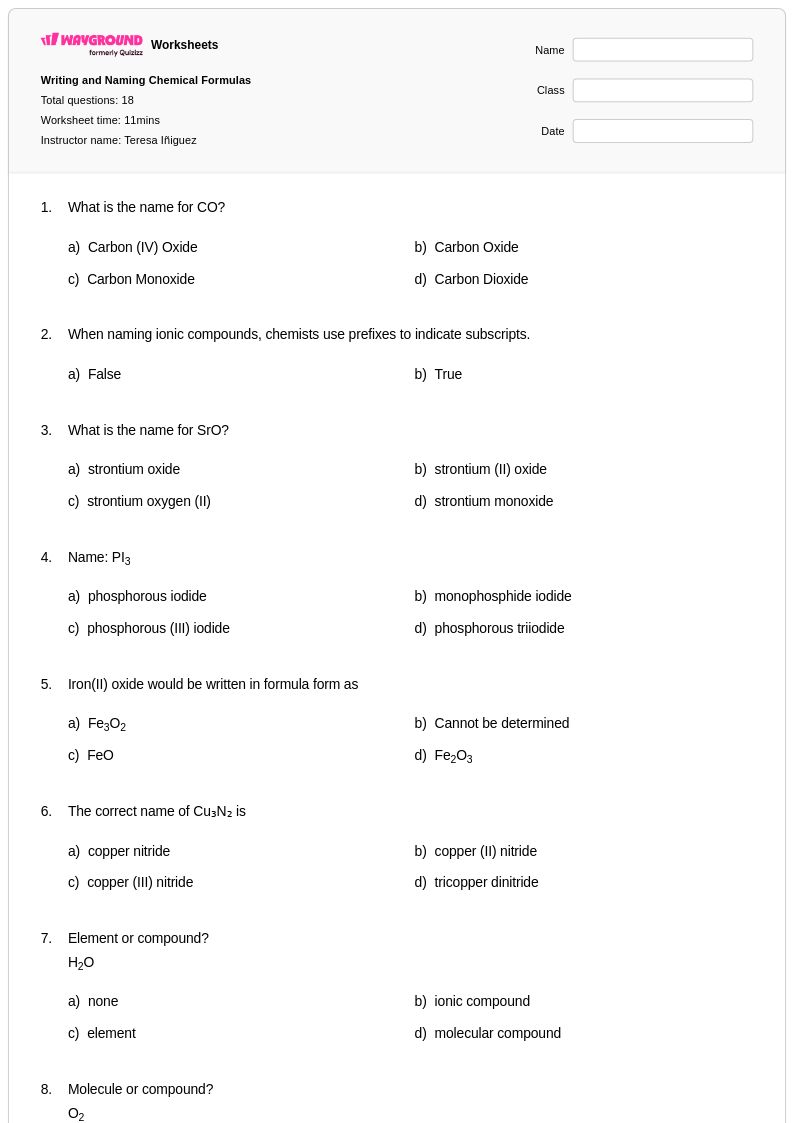
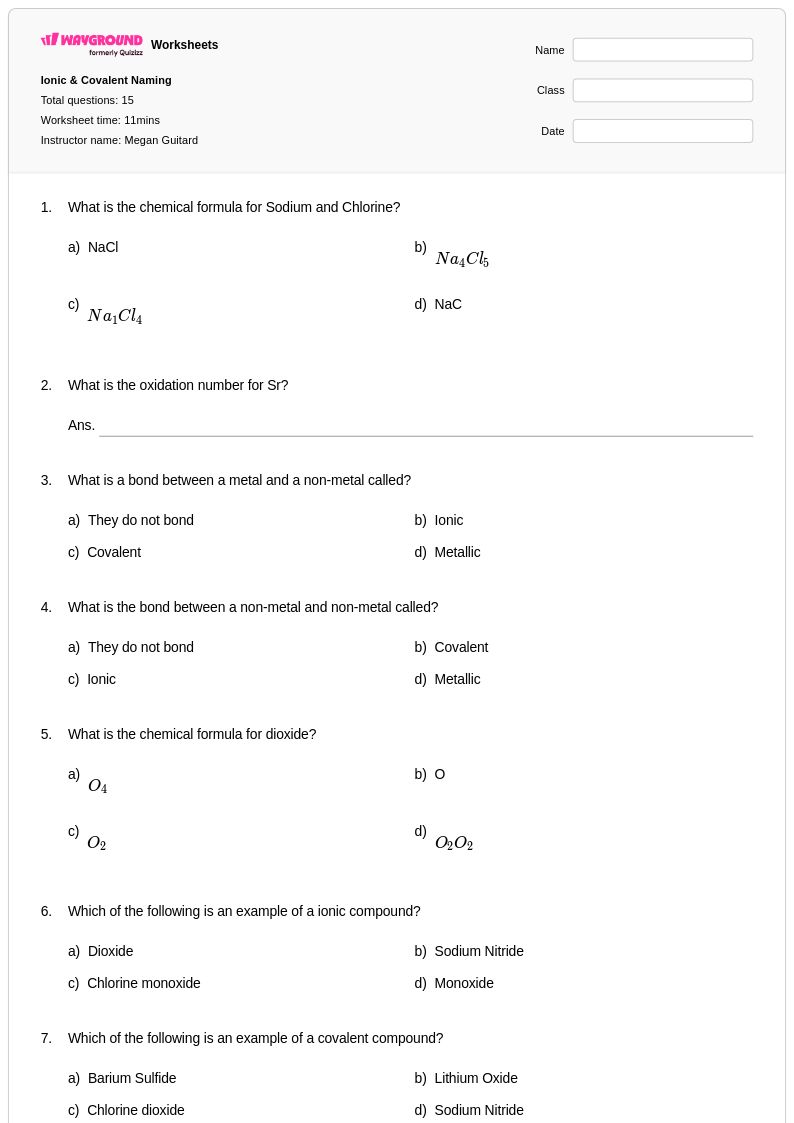
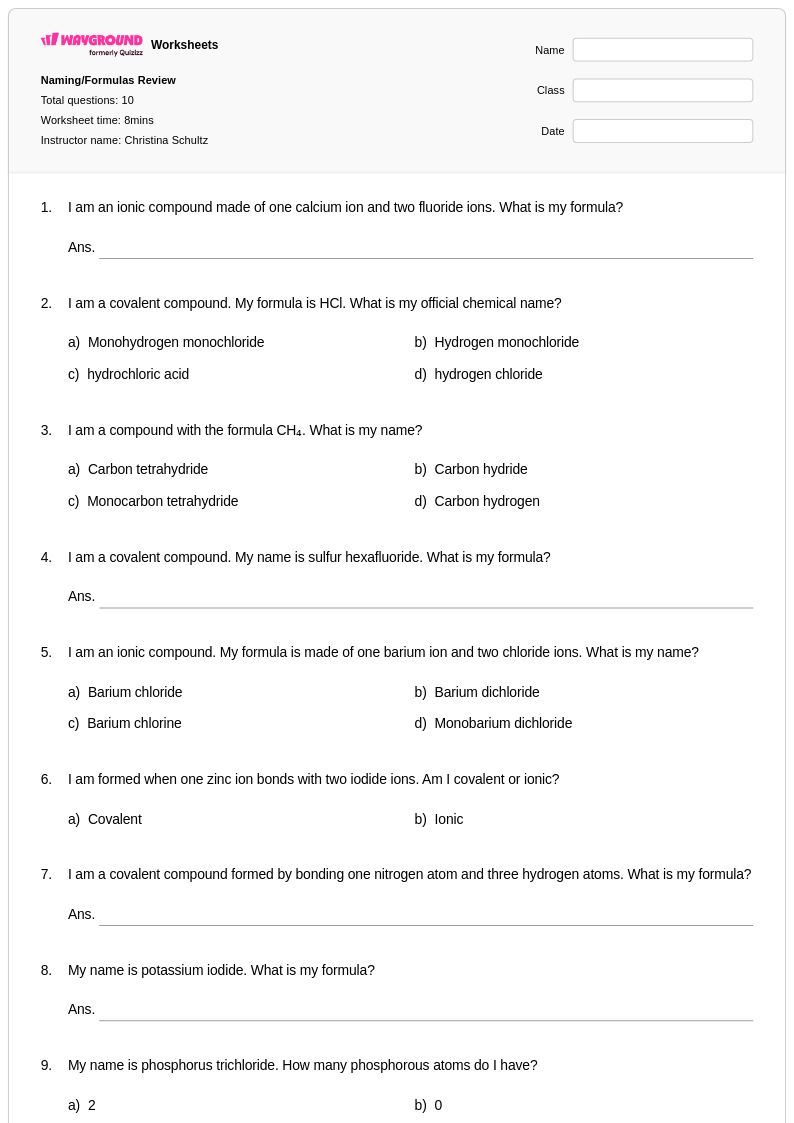
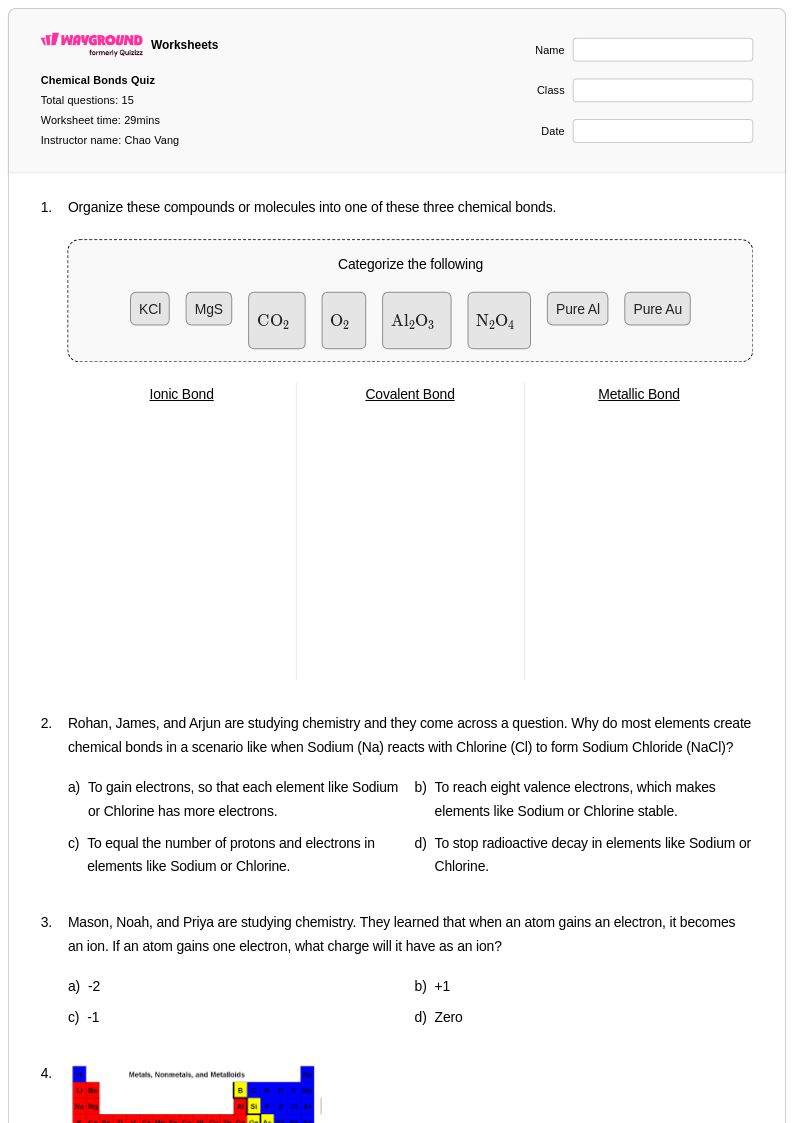
Master ionic formulas with Wayground's comprehensive collection of free chemistry worksheets featuring practice problems, printables, and answer keys to help students learn compound formation and chemical naming conventions.
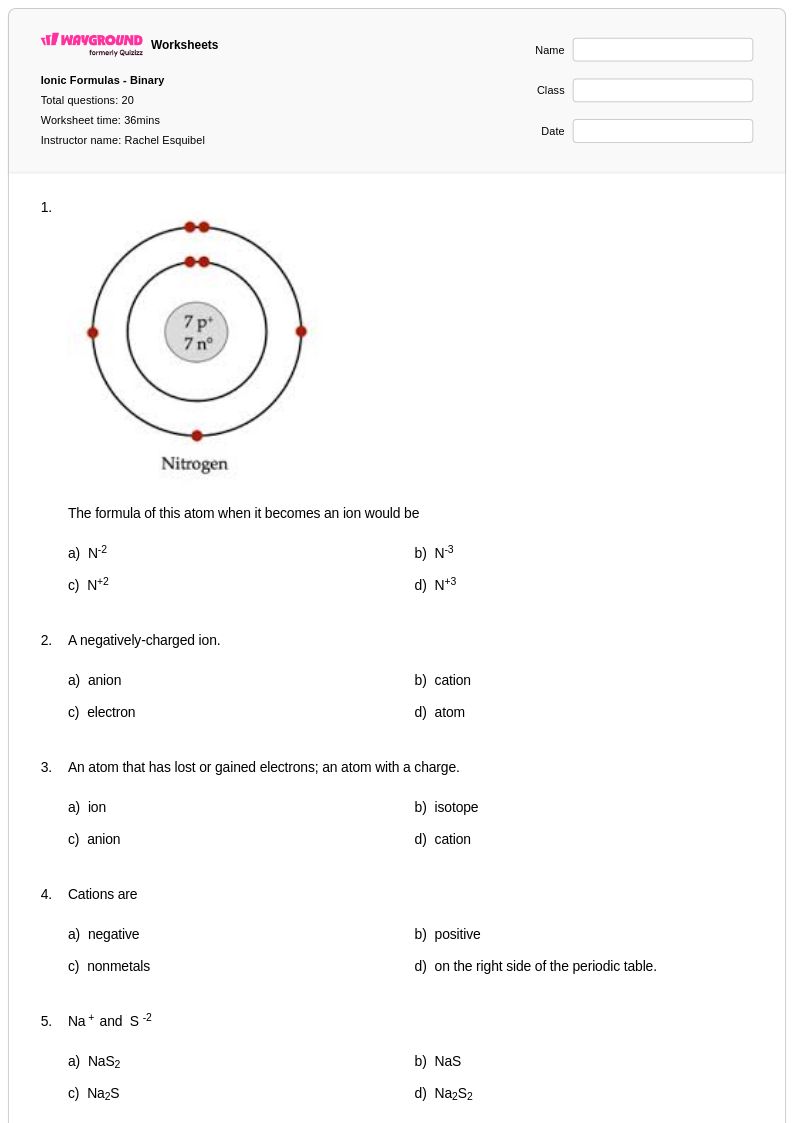
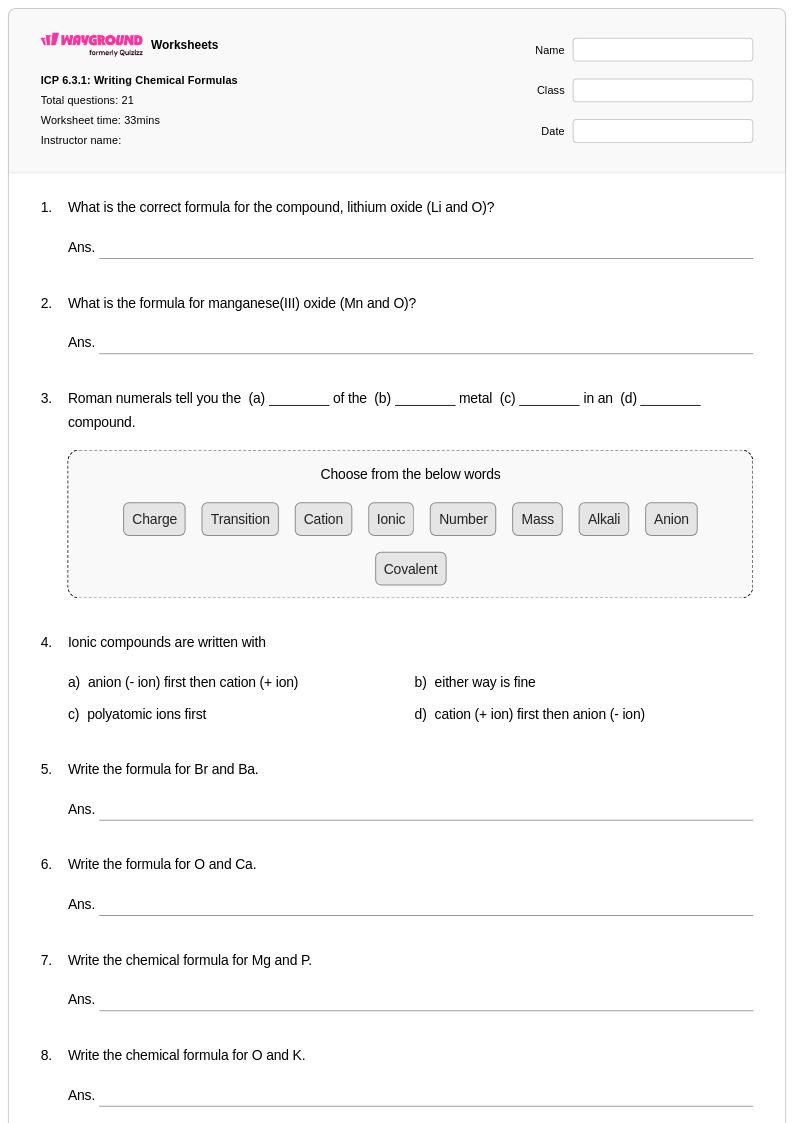
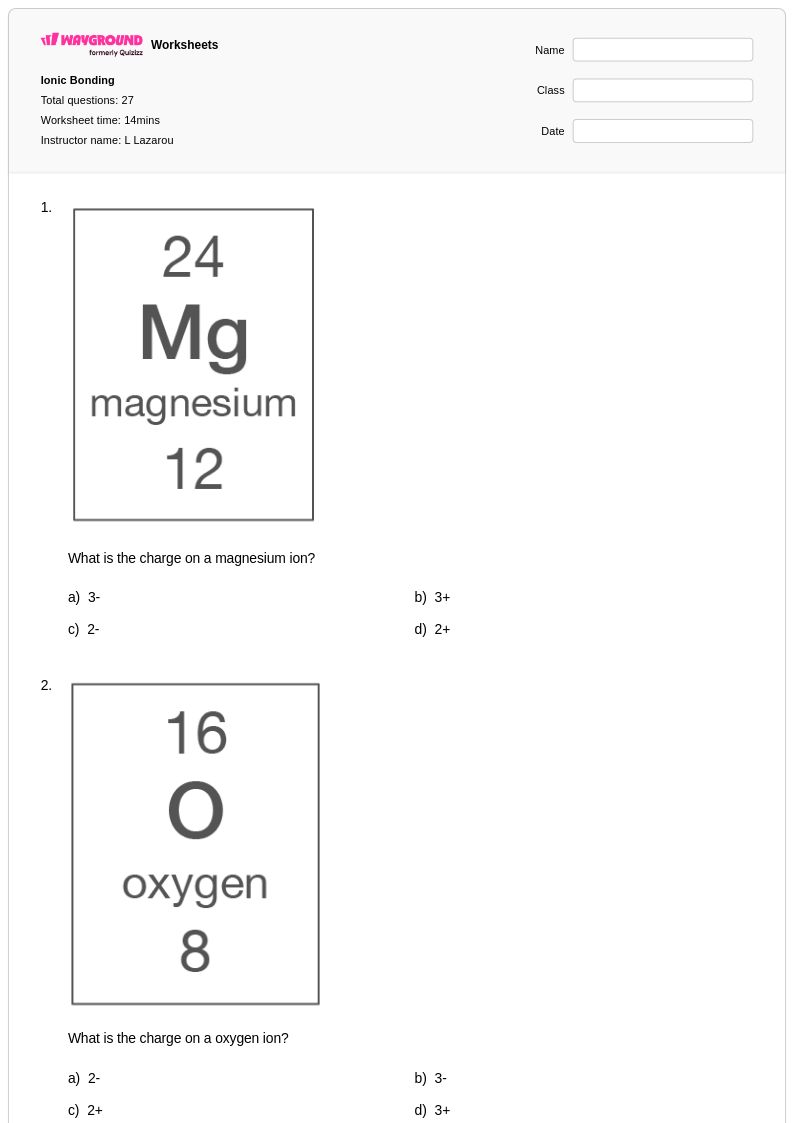
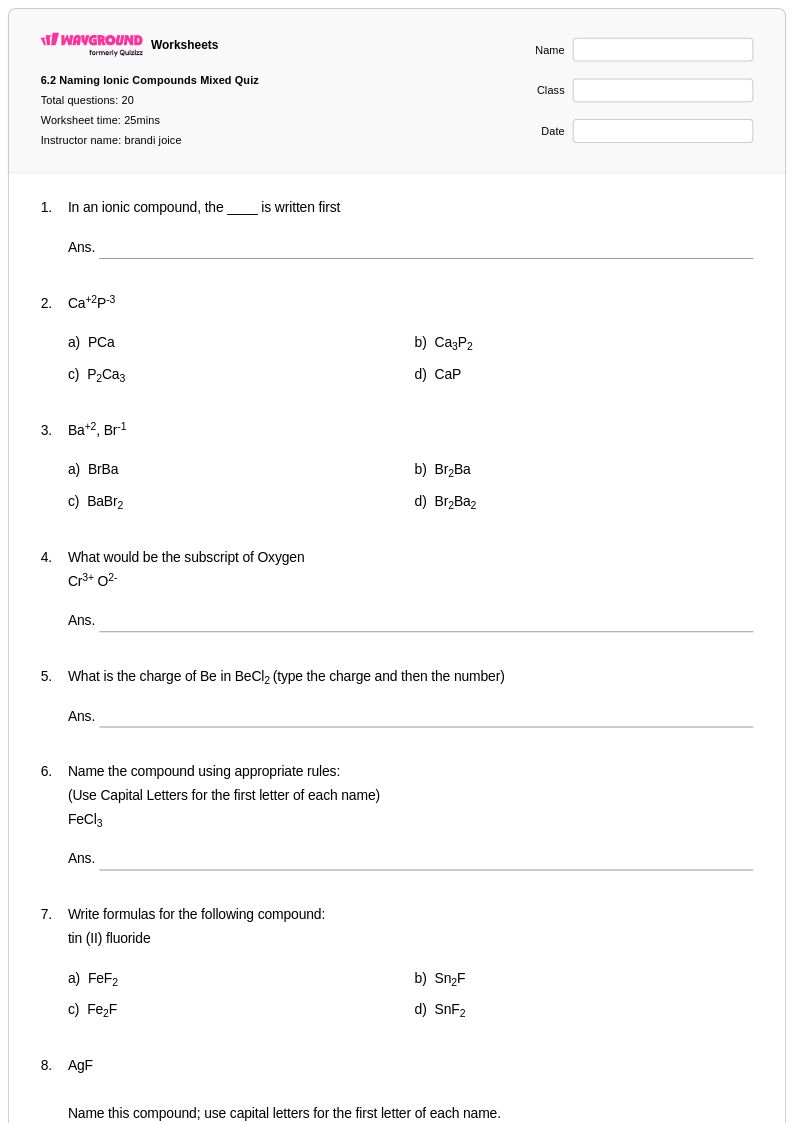
Ionic formulas worksheets available through Wayground (formerly Quizizz) provide comprehensive practice for students learning to write and interpret the chemical formulas of ionic compounds. These expertly crafted worksheets strengthen essential chemistry skills including predicting ionic charges, applying the principle of electrical neutrality, and correctly combining cations and anions to form stable compounds. Students work through systematic practice problems that progress from simple binary ionic compounds to more complex polyatomic ions, developing proficiency in naming conventions and formula writing. Each worksheet collection includes detailed answer keys and is available as free printable pdf resources, allowing educators to provide targeted skill practice that builds foundational understanding of ionic bonding and chemical nomenclature.
Wayground (formerly Quizizz) empowers teachers with millions of teacher-created ionic formula resources that feature robust search and filtering capabilities, enabling educators to quickly locate materials aligned with specific chemistry standards and learning objectives. The platform's differentiation tools allow instructors to customize worksheets for varying skill levels, supporting both remediation for struggling students and enrichment opportunities for advanced learners. These comprehensive collections are available in both printable and digital formats, including downloadable pdf versions that facilitate flexible lesson planning and homework assignments. Teachers can seamlessly integrate these resources into their curriculum planning, using the extensive variety of practice problems and assessment tools to reinforce ionic formula concepts, monitor student progress, and provide targeted skill practice that ensures mastery of this fundamental chemistry topic.
FAQs
How do I teach ionic formulas to chemistry students?
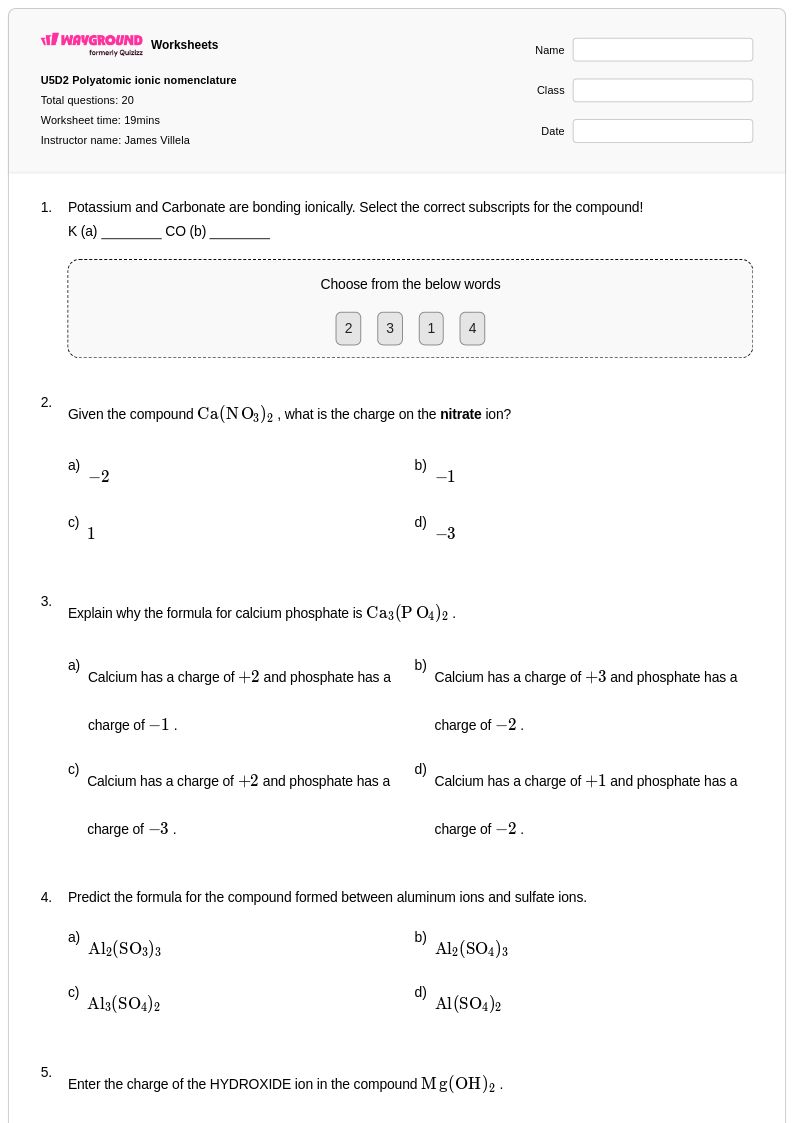
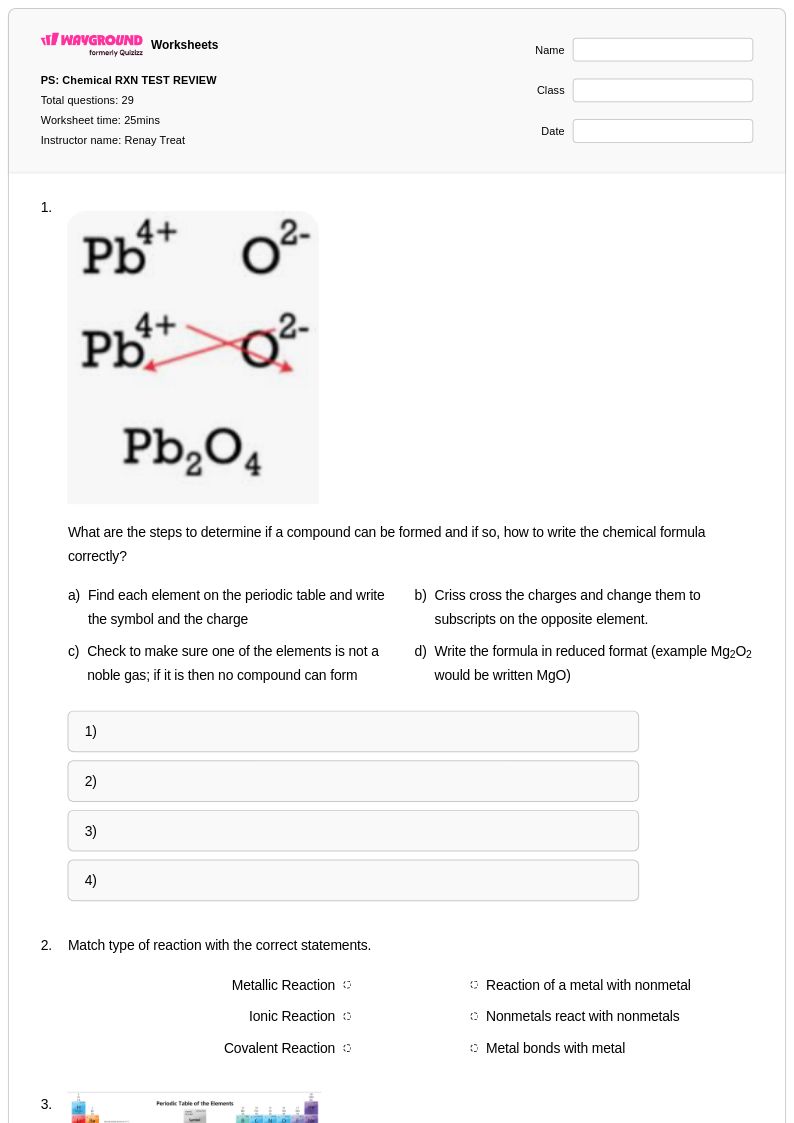
Start by ensuring students understand the concept of ions before introducing formula writing. Teach cation and anion identification first, then introduce the principle of electrical neutrality as the governing rule for combining ions. Progress from simple binary ionic compounds (like NaCl) to compounds with polyatomic ions, using visual charge-balancing methods such as the criss-cross method to make the process concrete and systematic.
What exercises help students practice writing ionic formulas?
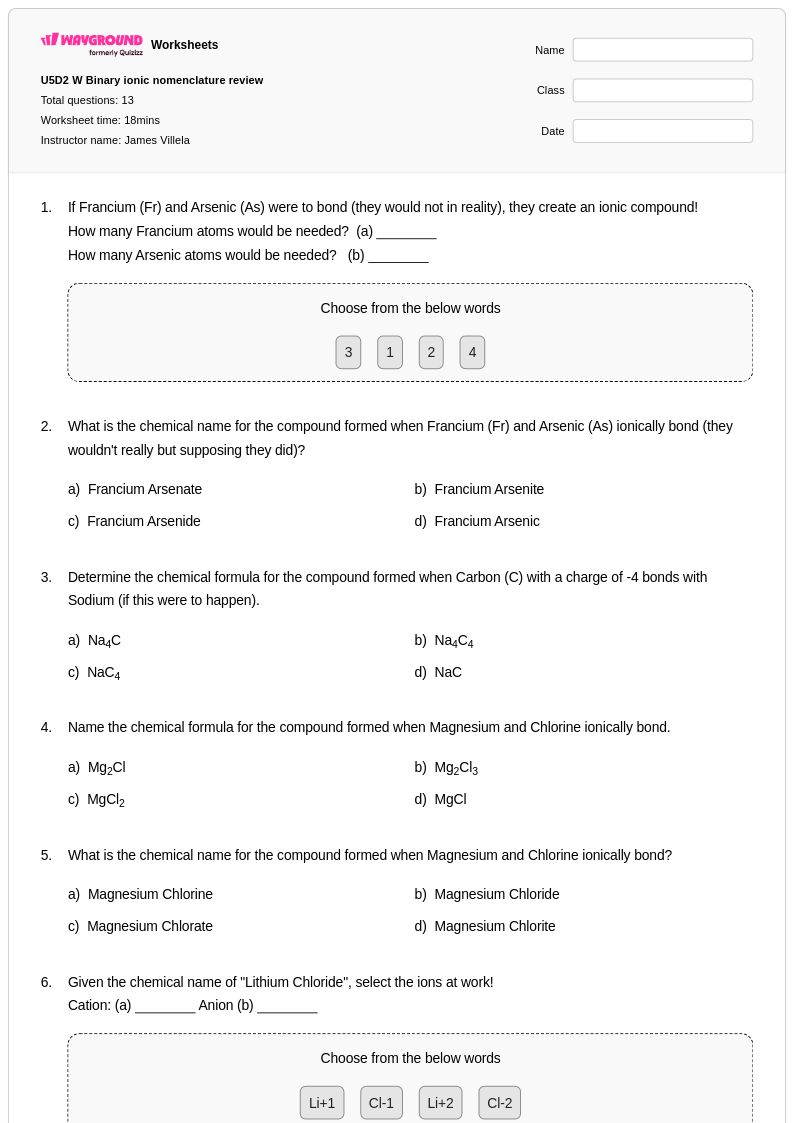
Effective practice exercises include charge identification drills, formula-writing problems that progress from binary ionic compounds to polyatomic ion compounds, and reverse exercises where students name a compound from its formula. Worksheets that mix formula writing with naming conventions reinforce both skills simultaneously and help students see the connection between the two. Systematic practice problems that increase in complexity ensure students build confidence before tackling more challenging compounds.
What mistakes do students commonly make when writing ionic formulas?
The most frequent error is incorrectly applying the criss-cross method, particularly forgetting to reduce subscripts to their lowest whole-number ratio (for example, writing Ca2O2 instead of CaO). Students also commonly confuse the charges of transition metals with variable oxidation states and misidentify polyatomic ions as individual atoms. Another persistent mistake is reversing the order of cation and anion in the formula, which can be addressed by reinforcing the rule that the cation always comes first.
How do I help struggling students understand ionic charge and electrical neutrality?
Use physical or visual models where positive and negative charge tiles must balance to zero, making the abstract concept of electrical neutrality tangible. Color-coding cations and anions in practice problems helps students track charges systematically. For students who need additional support, Wayground's reduced answer choices accommodation can lower cognitive load during digital practice, allowing students to focus on the charge-balancing logic rather than being overwhelmed by options.
How can I use Wayground's ionic formulas worksheets in my classroom?
Wayground's ionic formulas worksheets are available as both printable PDFs and in digital formats, making them flexible for traditional classroom use, homework assignments, and technology-integrated learning environments. Teachers can also host the worksheets as a quiz directly on Wayground, enabling real-time progress monitoring. Each worksheet includes a complete answer key, so they can be used for independent practice, in-class review, or formative assessment without additional preparation.
How do I differentiate ionic formula instruction for different skill levels?
For students who are still developing foundational skills, limit initial practice to Group 1 and Group 2 metals, which have fixed and predictable charges, before introducing transition metals. Advanced learners can be challenged with multi-step problems involving polyatomic ions or writing formulas from compound names in context. Wayground's differentiation tools allow teachers to customize worksheet assignments for varying skill levels, supporting both remediation and enrichment within the same class.