Explore Wayground's comprehensive collection of phase diagram worksheets and printables that help students master the relationships between temperature, pressure, and states of matter through engaging practice problems with answer keys.
Phase diagram worksheets available through Wayground (formerly Quizizz) provide comprehensive practice materials that help students master the complex relationships between temperature, pressure, and states of matter. These expertly crafted worksheets guide learners through interpreting triple points, critical points, and phase boundaries while developing essential skills in reading scientific graphs and understanding thermodynamic principles. Students work through practice problems that cover phase transitions, vapor pressure curves, and the unique properties of different substances under varying conditions, with each worksheet including detailed answer keys to support independent learning and self-assessment. The collection offers both printable pdf formats and digital versions, making these free educational resources accessible for classroom use, homework assignments, and individual study sessions.
Wayground (formerly Quizizz) empowers educators with millions of teacher-created phase diagram worksheets that can be easily searched, filtered, and customized to meet specific classroom needs and learning objectives. The platform's robust collection includes materials aligned with various educational standards, allowing teachers to differentiate instruction by selecting worksheets that match different skill levels and learning styles. Teachers can modify existing resources or create new variations, incorporating their own examples and adjusting difficulty levels to provide targeted remediation for struggling students or enrichment opportunities for advanced learners. Whether used for initial concept introduction, skill reinforcement, or assessment preparation, these versatile worksheet collections support comprehensive lesson planning while offering the flexibility to seamlessly integrate both traditional printable materials and interactive digital formats into diverse teaching environments.
FAQs
How do I teach students to read a phase diagram?
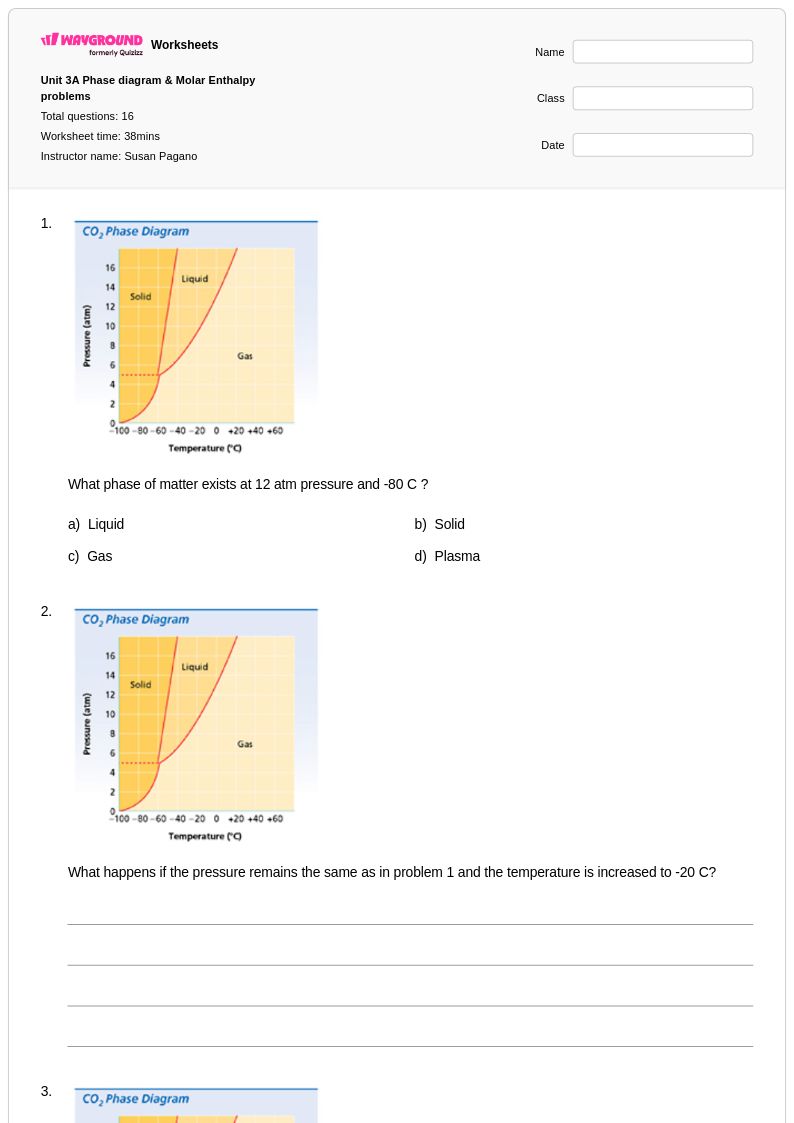
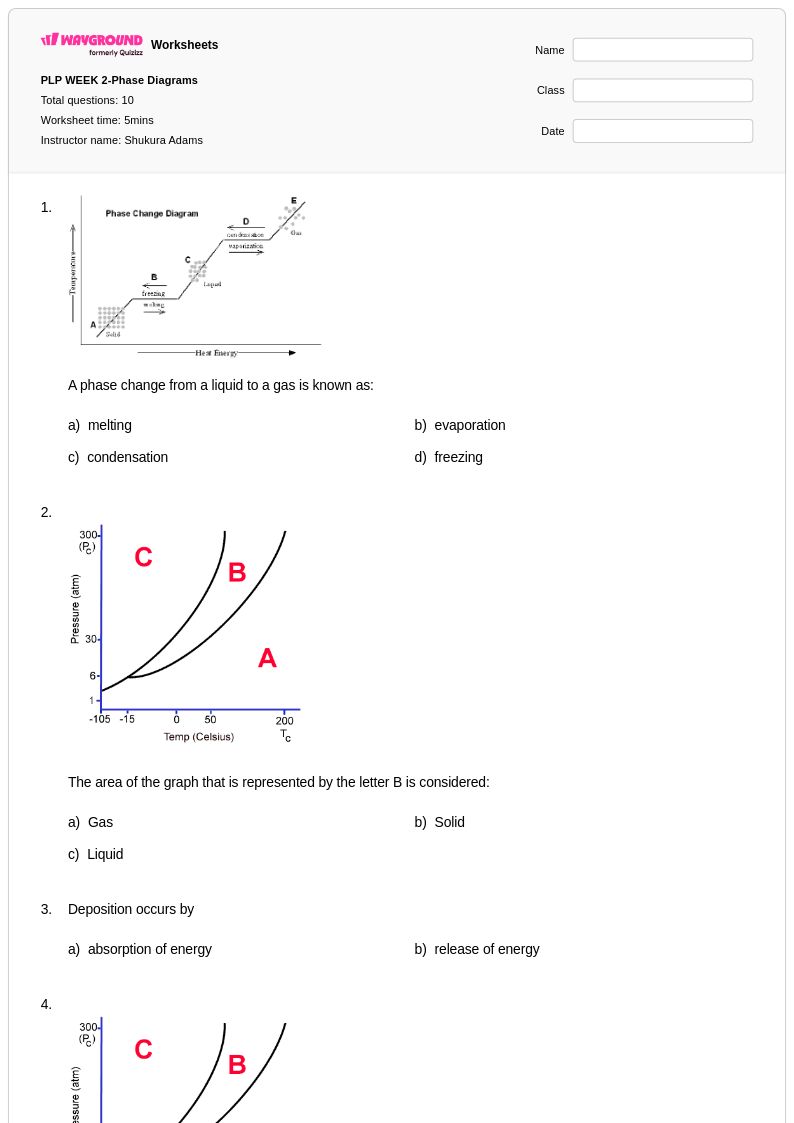
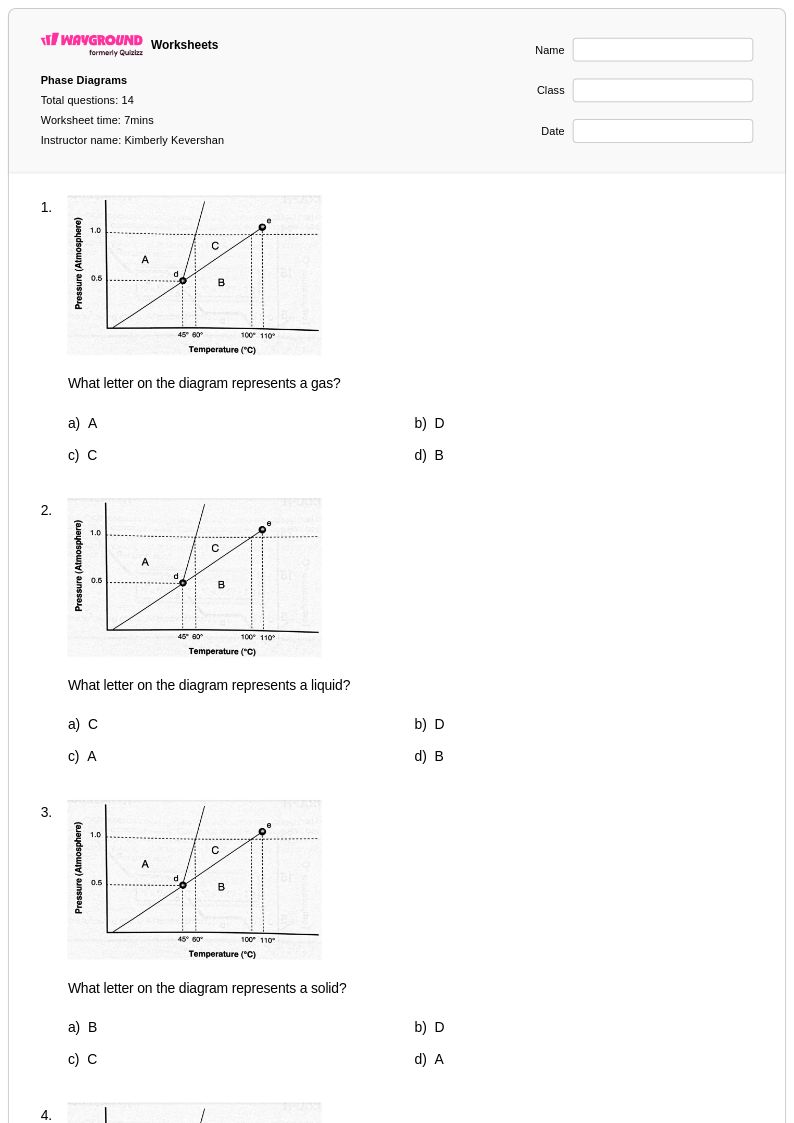
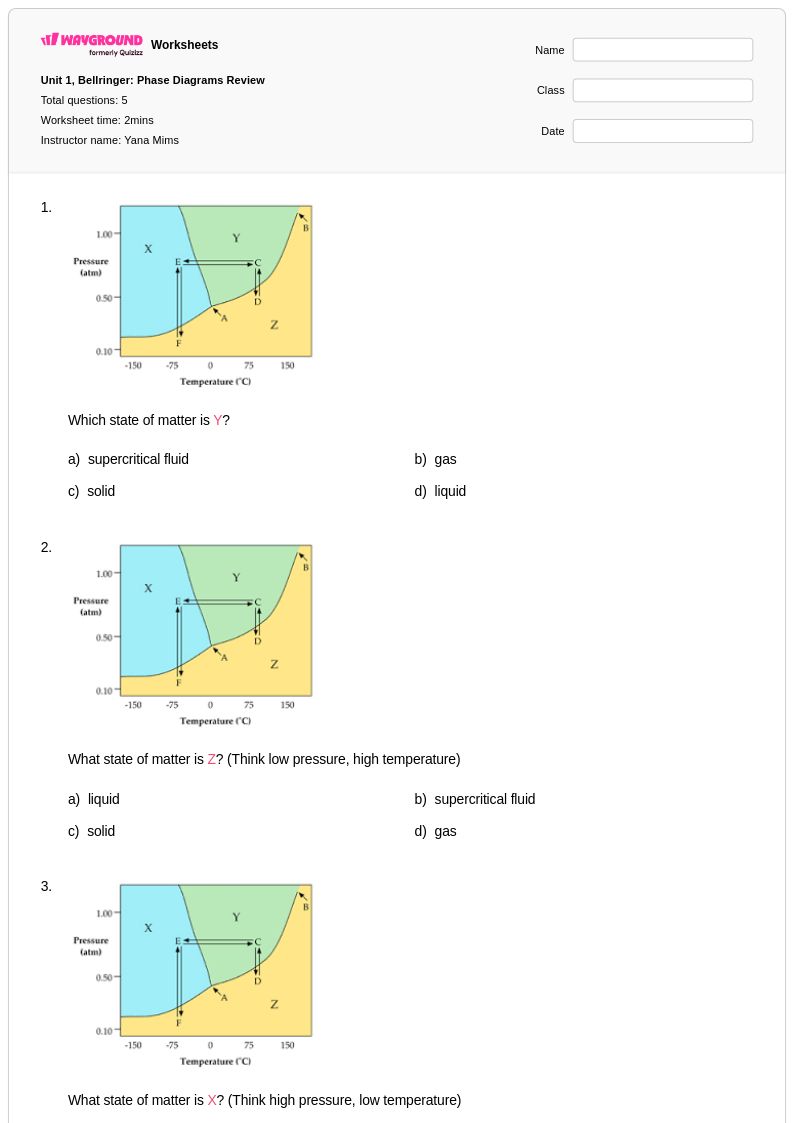
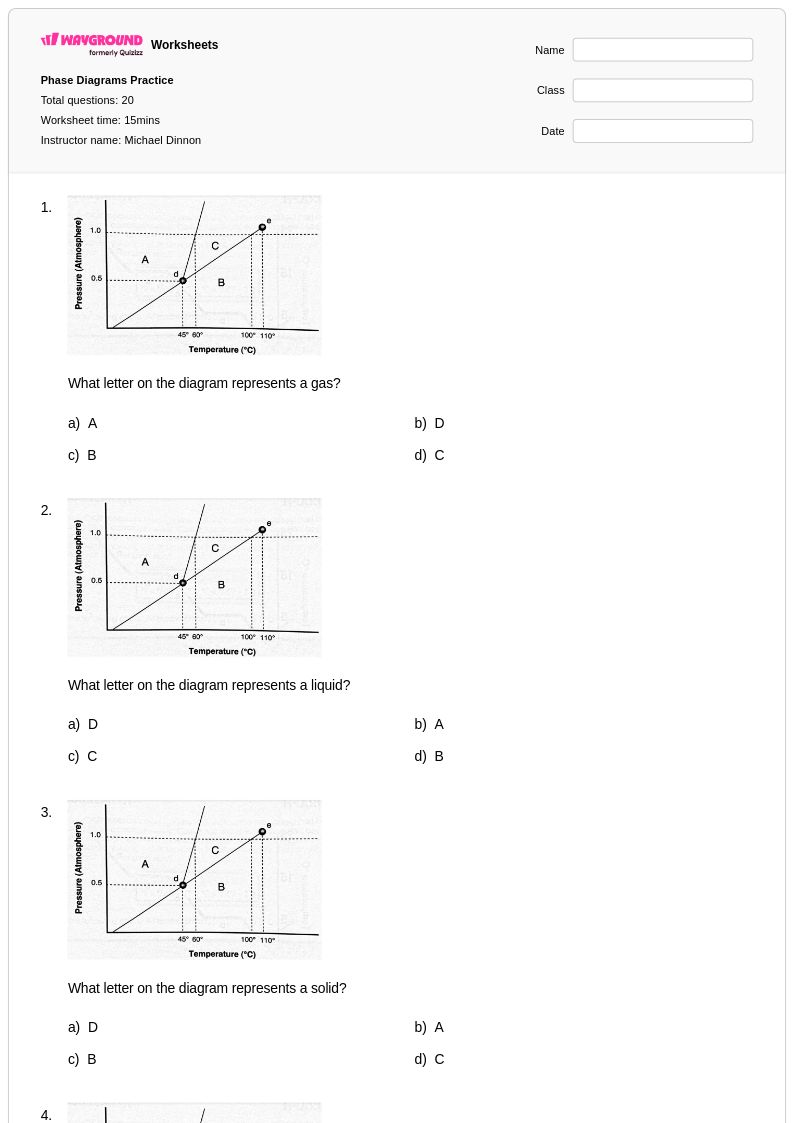
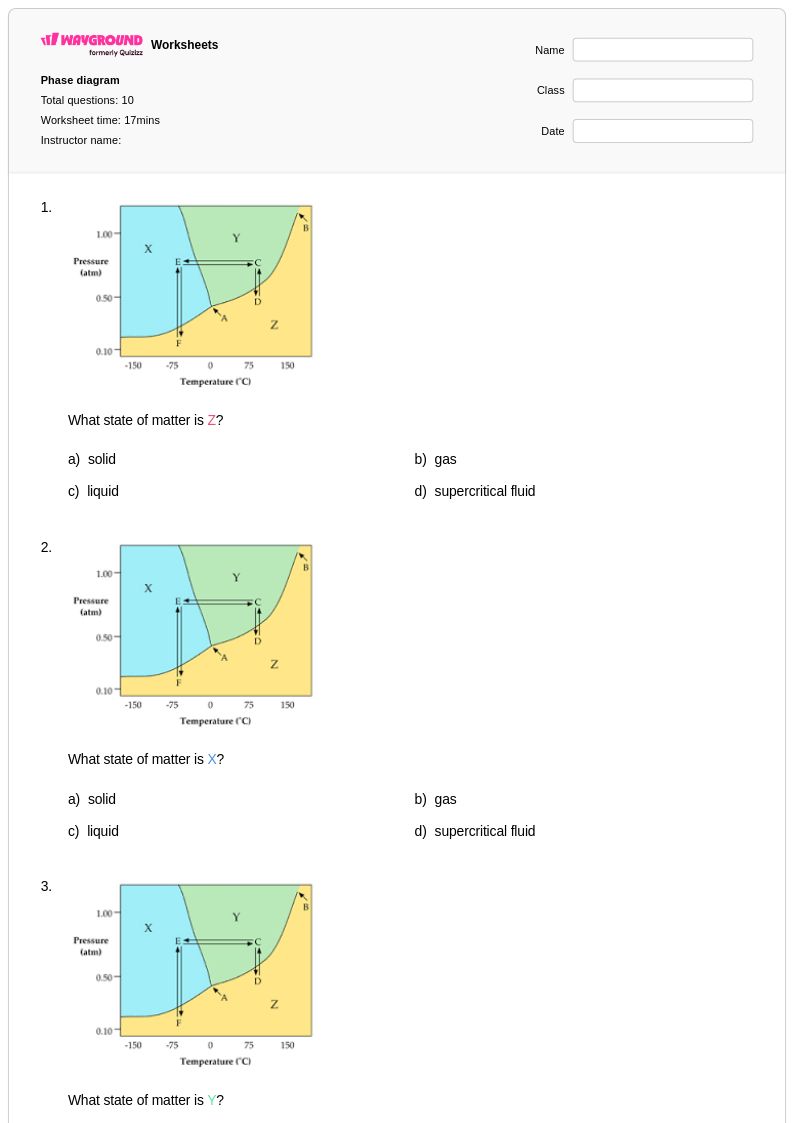
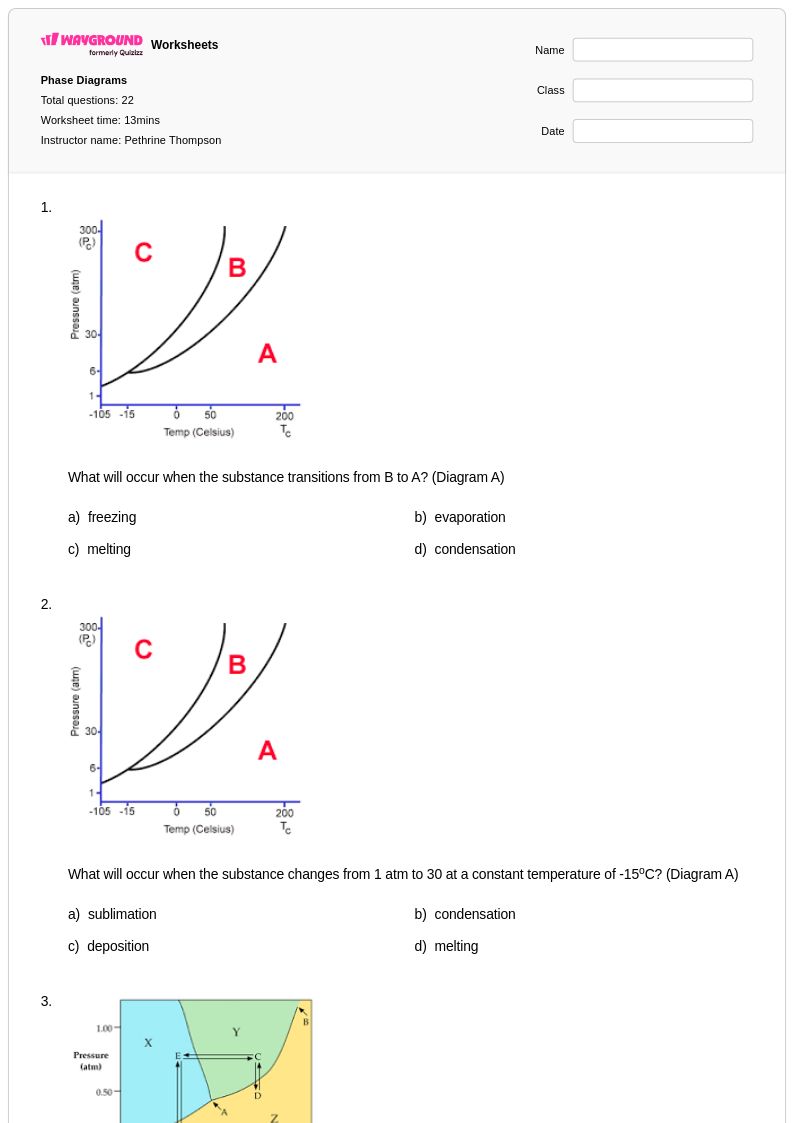
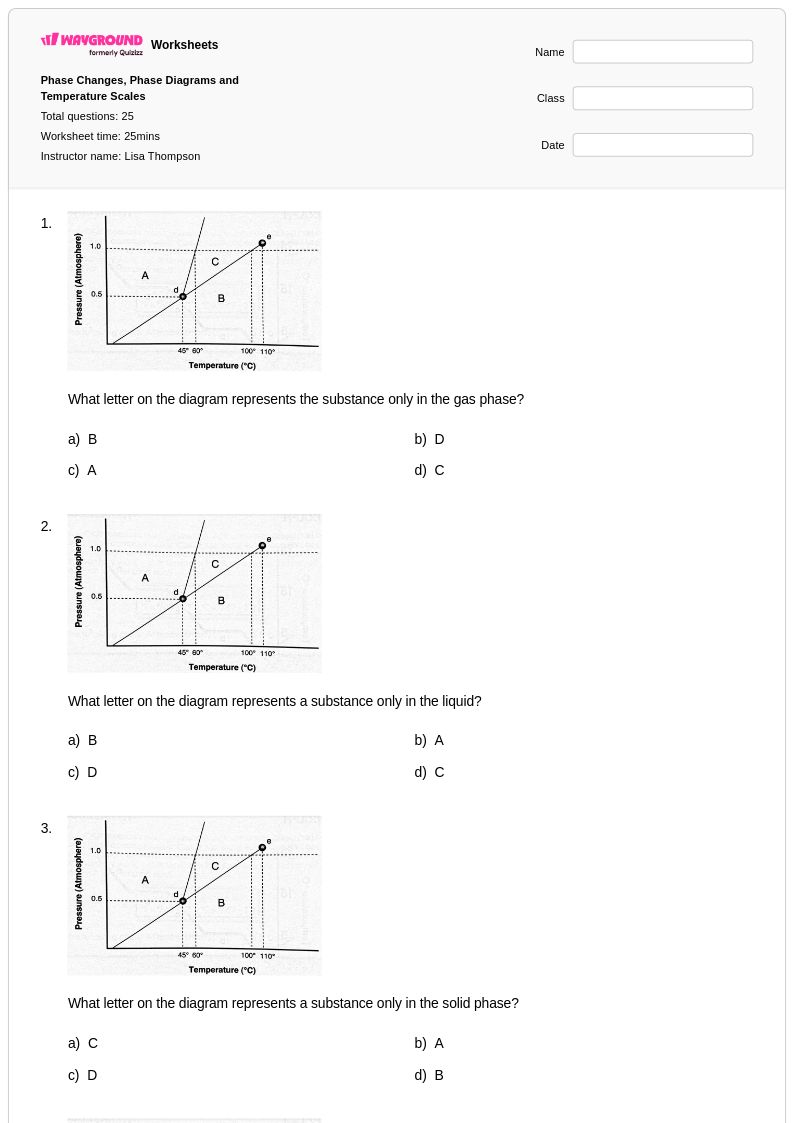
Start by orienting students to the axes — temperature on the x-axis and pressure on the y-axis — before introducing the regions representing solid, liquid, and gas phases. Walk students through identifying the triple point, where all three phases coexist, and the critical point, beyond which liquid and gas phases become indistinguishable. Annotating a diagram together as a class before moving to independent practice helps students build the visual literacy needed to interpret phase boundaries and transition curves accurately.
What are common mistakes students make when interpreting phase diagrams?
Students frequently confuse the direction of phase transitions, assuming that increasing temperature always moves a substance from solid to gas without recognizing the role pressure plays. Another common error is misidentifying the triple point as the melting point, rather than understanding it as the unique condition where all three phases are in equilibrium. Students also struggle to read vapor pressure curves accurately, often misinterpreting which side of a boundary represents which phase.
What practice problems are most effective for reinforcing phase diagram concepts?
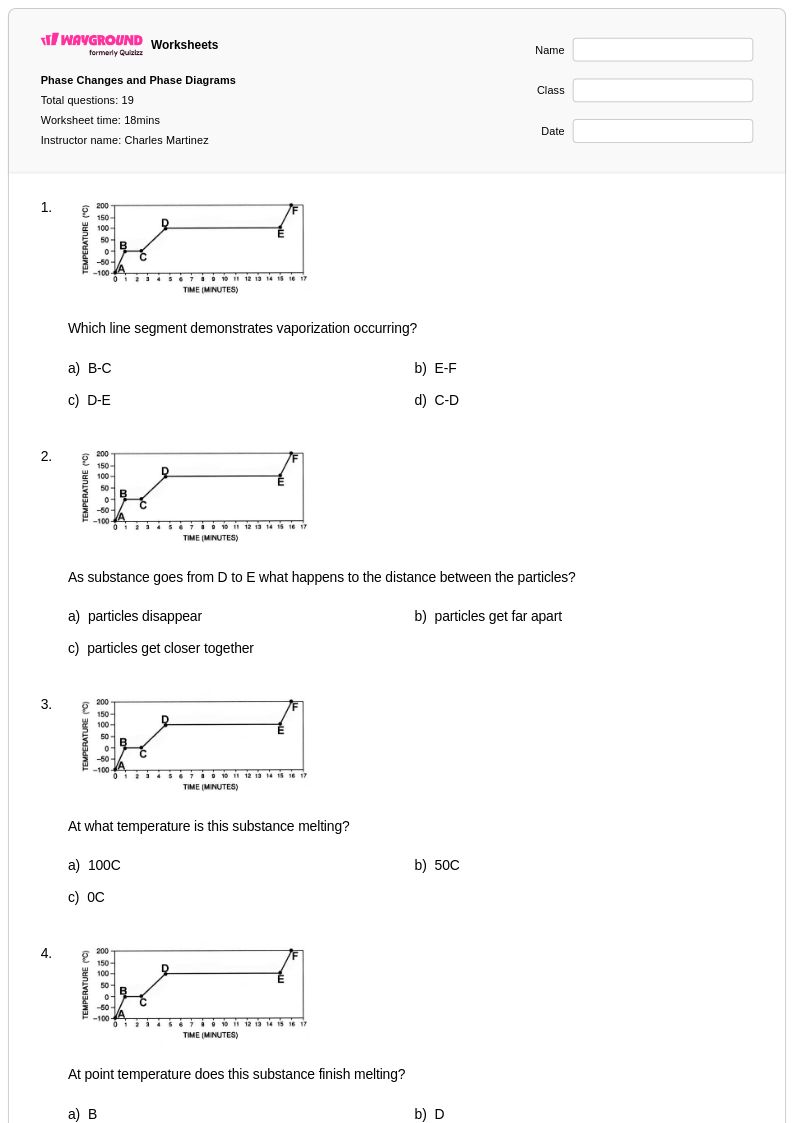
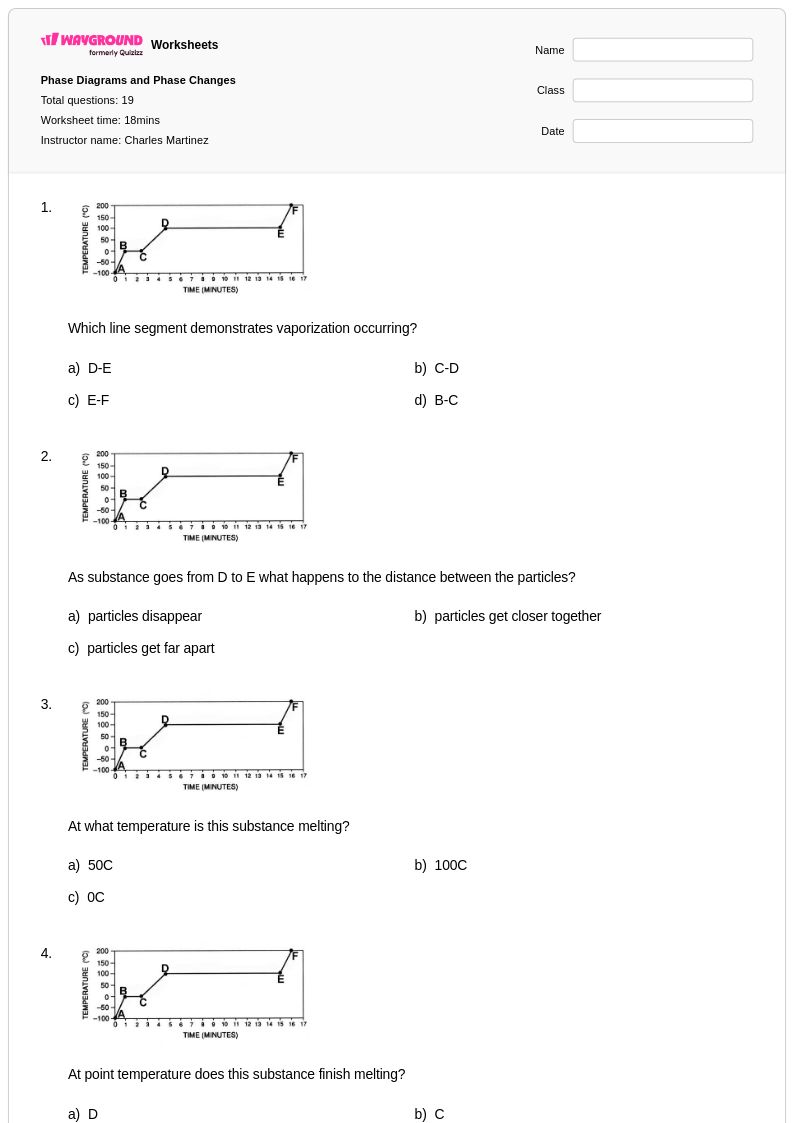
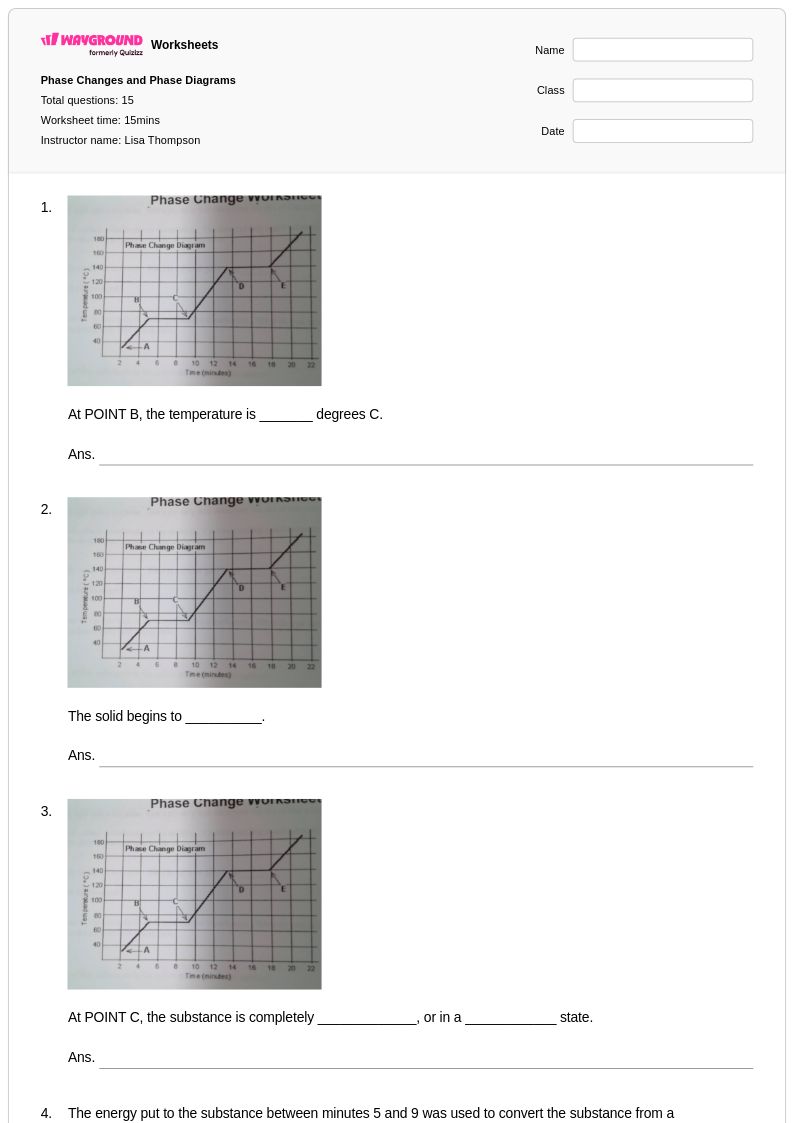
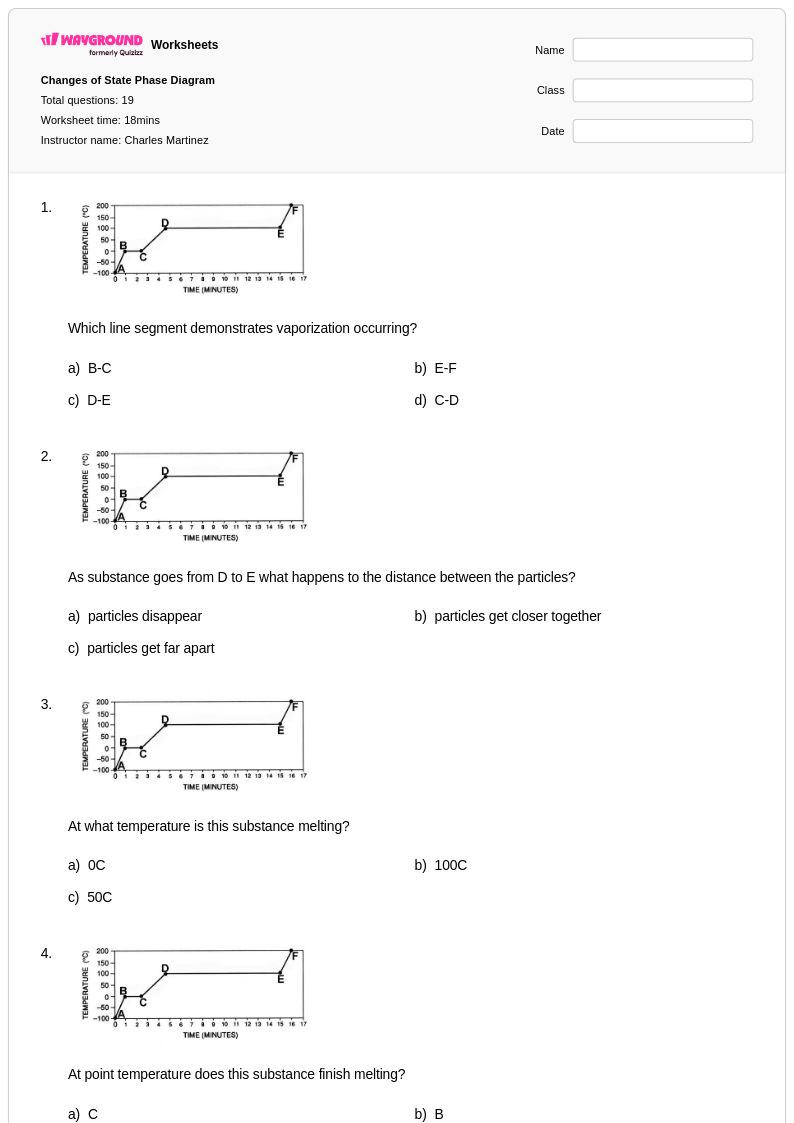
Problems that require students to trace a path across a phase diagram — for example, starting at a given temperature and pressure and then changing one variable — are highly effective because they force active engagement with phase boundaries rather than passive recognition. Questions that ask students to compare water's phase diagram to that of carbon dioxide, particularly around the solid-liquid boundary slope, help deepen understanding of how molecular properties influence phase behavior. Including problems on vapor pressure curves and the conditions required to reach the critical point rounds out comprehensive phase diagram practice.
How can I differentiate phase diagram instruction for students at different skill levels?
For students who are still developing graph-reading skills, begin with simplified diagrams that label only one or two features, such as the triple point or a single phase boundary, before introducing the full complexity of a standard phase diagram. More advanced students can be challenged with problems involving substances like carbon dioxide or helium, whose phase diagrams differ meaningfully from water's, requiring deeper analysis of thermodynamic principles. On Wayground, teachers can filter worksheets by difficulty and apply accommodations such as reduced answer choices or read-aloud support for individual students who need additional scaffolding.
How do I use Wayground's phase diagram worksheets in my classroom?
Wayground's phase diagram worksheets are available as printable PDFs for traditional classroom use and in digital formats for technology-integrated learning environments, making them suitable for in-class practice, homework, or independent study. Teachers can also host digital worksheets as a quiz directly on Wayground, allowing for real-time student interaction and streamlined assessment. Each worksheet includes a detailed answer key, supporting self-paced learning and reducing teacher grading time.
How do phase diagrams connect to real-world chemistry applications?
Phase diagrams have direct applications in fields like materials science, food preservation, and chemical engineering, where controlling temperature and pressure determines the physical state of a substance. The phase diagram of water, for example, explains why pressure cookers raise the boiling point of water and why ice can melt under pressure — phenomena students can connect to everyday experience. Grounding phase diagram instruction in these real-world contexts increases student engagement and helps learners see the relevance of thermodynamic principles beyond the classroom.