Free Printable Solids Liquids and Gases worksheets
Explore Wayground's free printable worksheets on solids, liquids, and gases, featuring comprehensive practice problems and answer keys to help students master the fundamental states of matter in chemistry.
Explore printable Solids Liquids and Gases worksheets
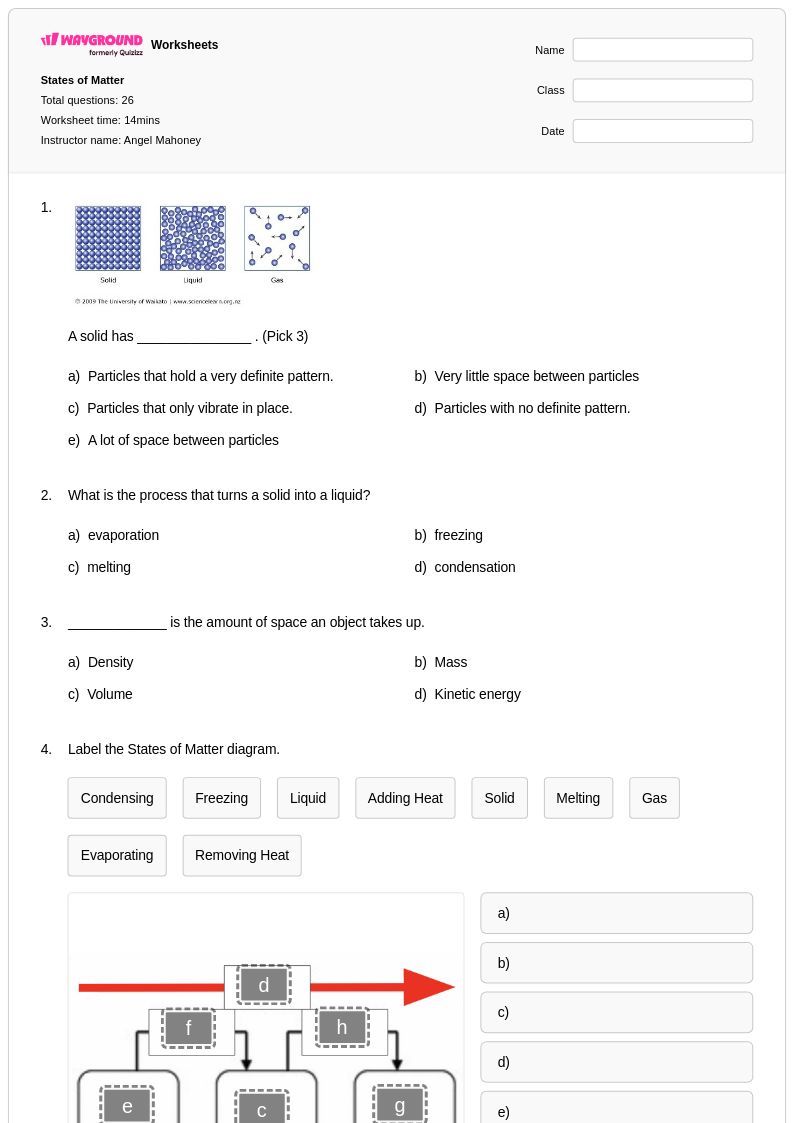
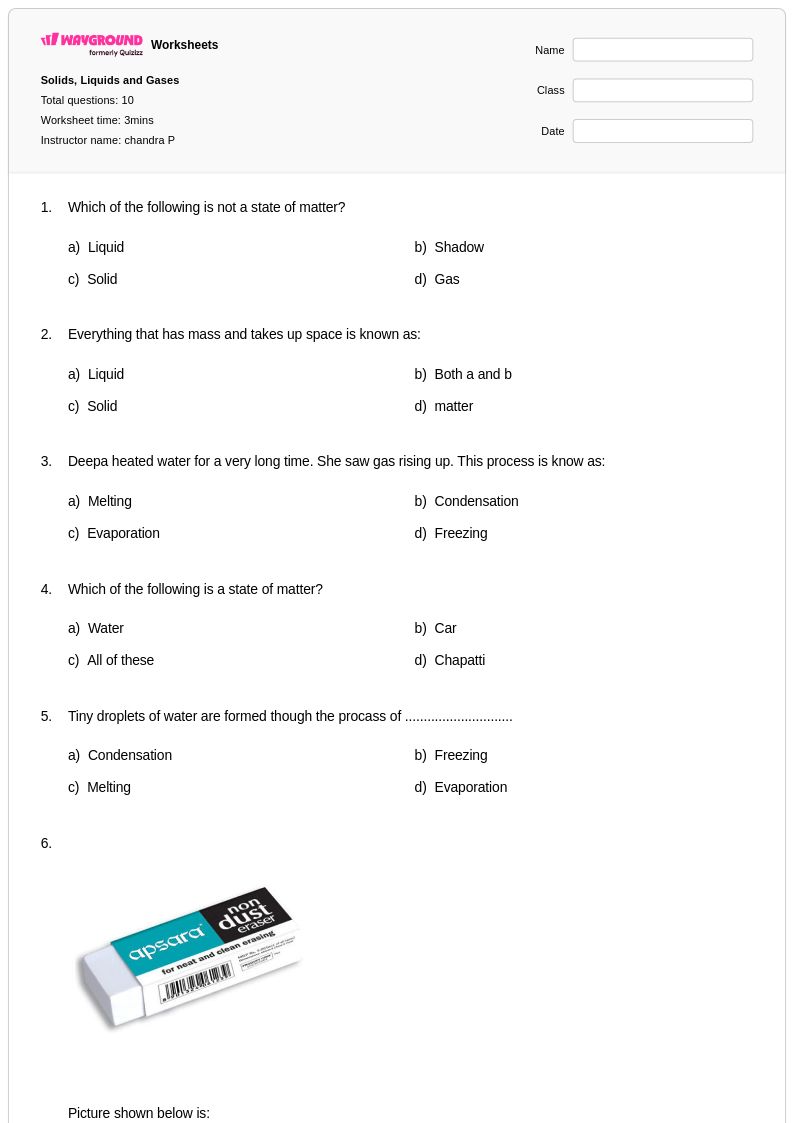
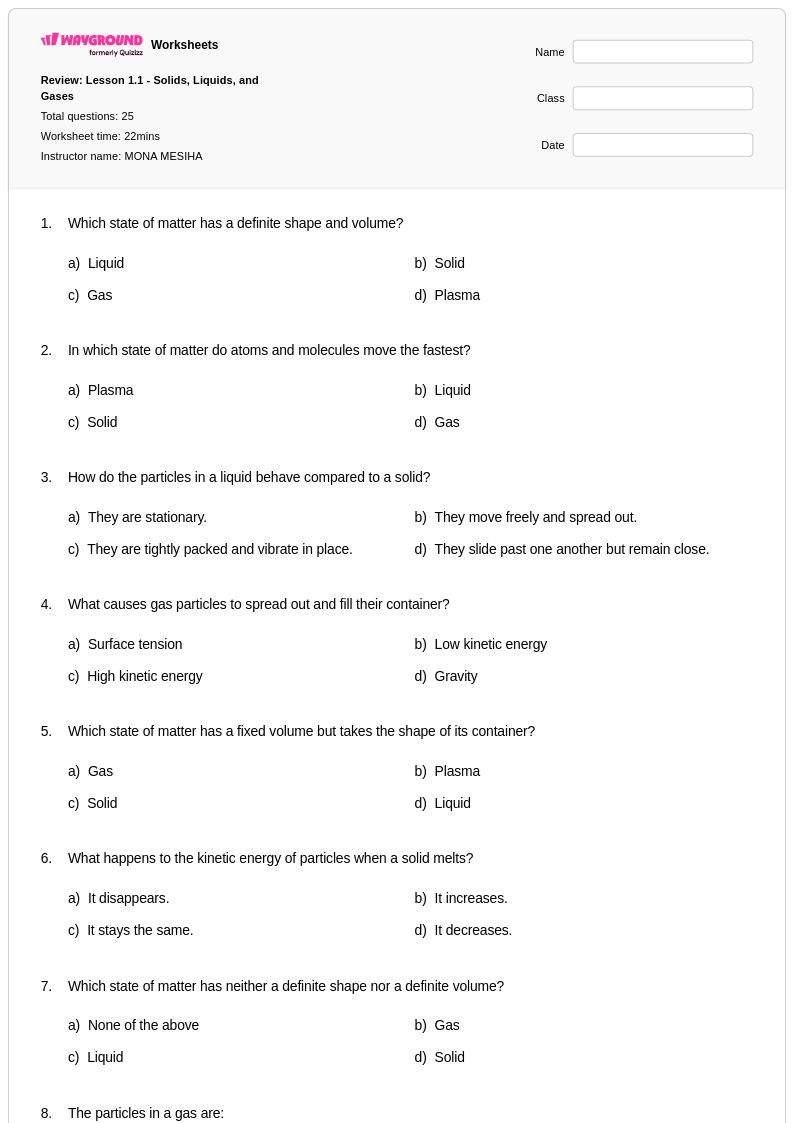
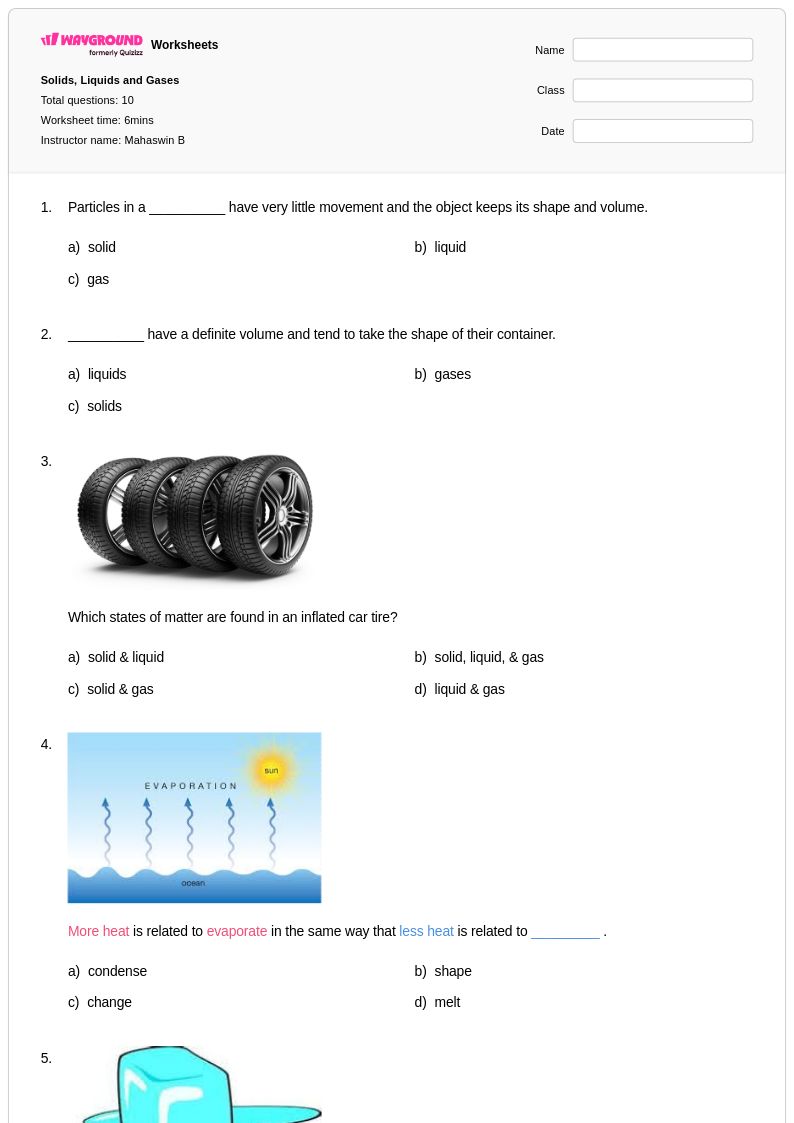
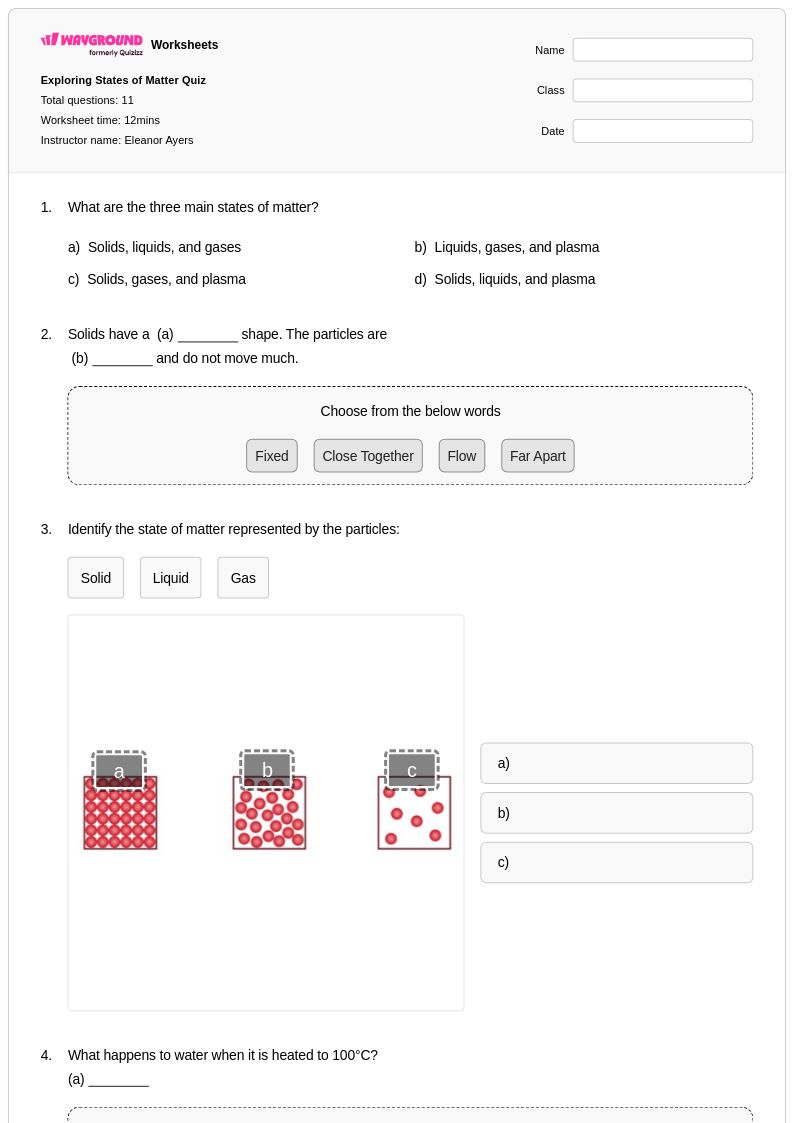
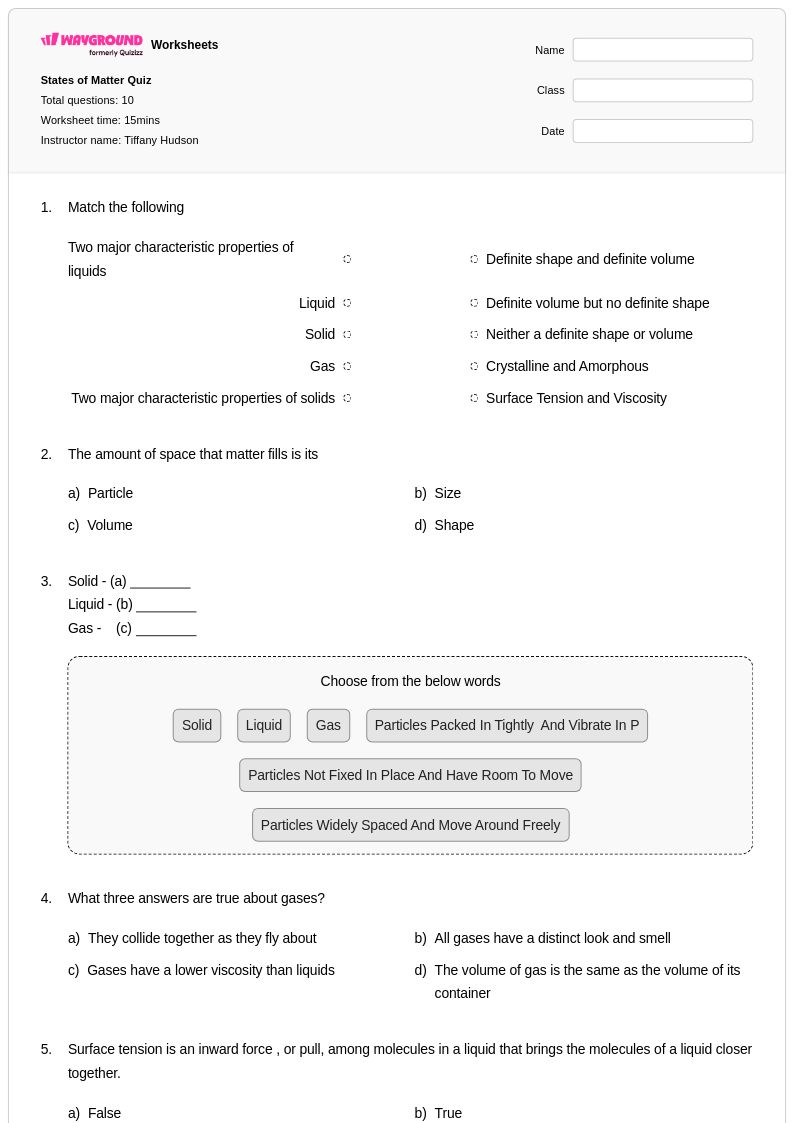
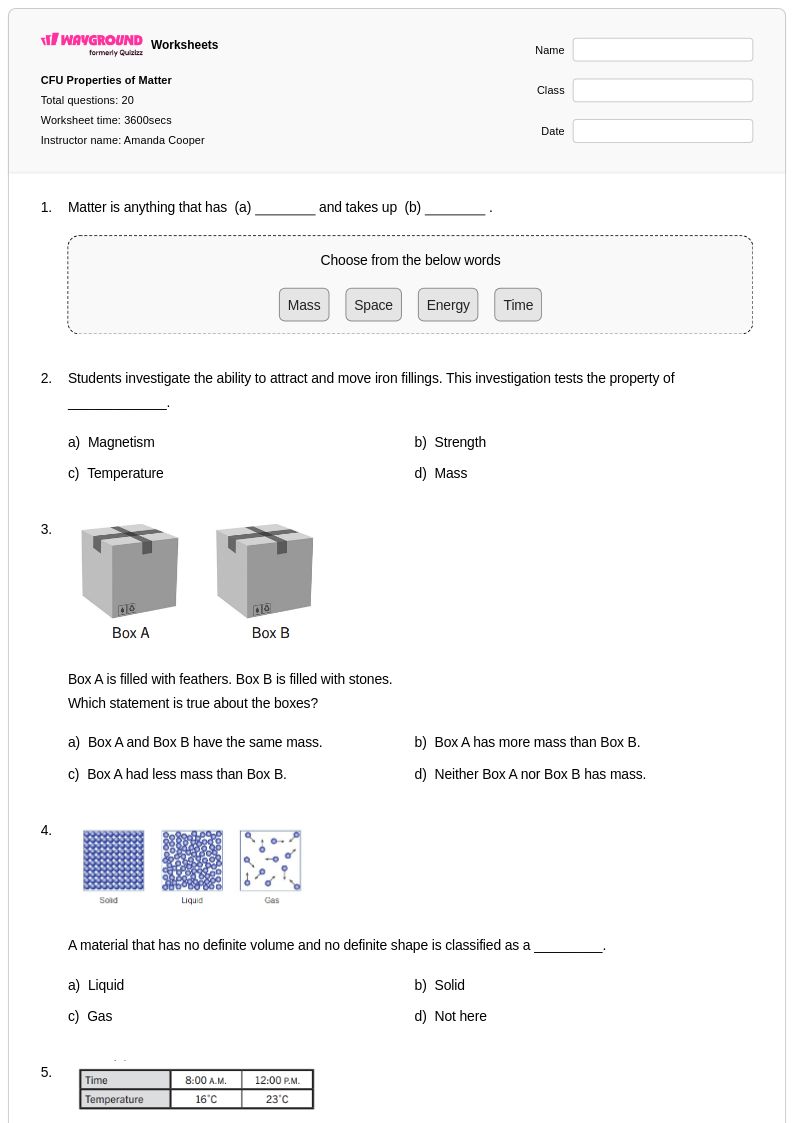
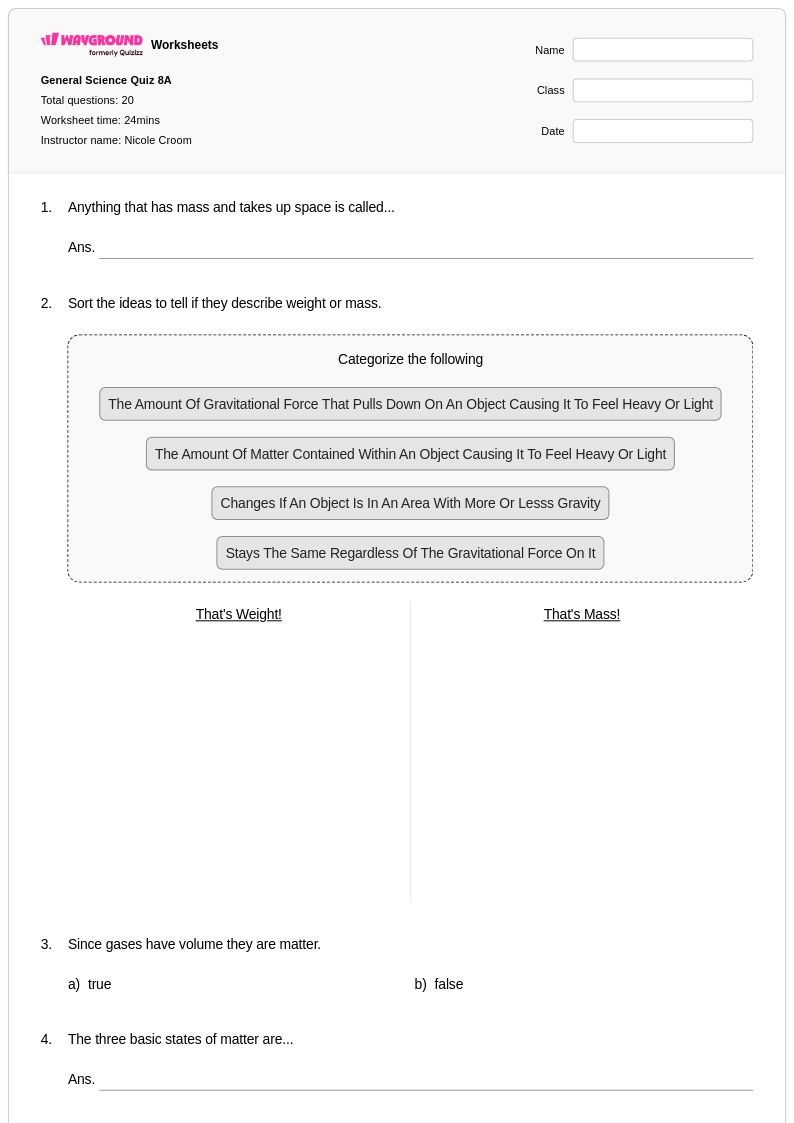
Solids, liquids, and gases worksheets available through Wayground (formerly Quizizz) provide comprehensive coverage of the fundamental states of matter that form the foundation of chemistry education. These expertly crafted resources help students develop critical understanding of molecular behavior, phase transitions, and the physical properties that distinguish each state of matter. Students engage with practice problems that explore particle arrangement, intermolecular forces, and energy changes during phase transitions, while teachers benefit from complete answer keys that facilitate efficient grading and targeted feedback. The collection includes free printables in convenient PDF format, allowing educators to seamlessly integrate hands-on learning activities that reinforce theoretical concepts with practical applications and visual representations of molecular structures.
Wayground (formerly Quizizz) empowers educators with an extensive library of millions of teacher-created resources specifically designed for solids, liquids, and gases instruction, featuring robust search and filtering capabilities that enable quick identification of materials aligned with specific curriculum standards and learning objectives. The platform's sophisticated differentiation tools allow teachers to customize worksheets based on individual student needs, supporting both remediation for struggling learners and enrichment opportunities for advanced students. Available in both printable and digital formats including PDF downloads, these versatile resources streamline lesson planning while providing flexible options for classroom instruction, homework assignments, and assessment preparation. Teachers can efficiently target skill gaps, reinforce key concepts, and track student progress through systematic practice with phase diagrams, particle models, and real-world applications of state changes.
FAQs
How do I teach solids, liquids, and gases to students?
Start by grounding students in the particle model of matter — how particles are arranged, how closely they are packed, and how freely they move in each state. Use visual representations like particle diagrams alongside real-world examples such as ice melting or water evaporating to make abstract molecular behavior concrete. Connecting phase transitions to energy input or removal helps students build a coherent mental model rather than memorizing isolated facts.
What exercises help students practice identifying states of matter?
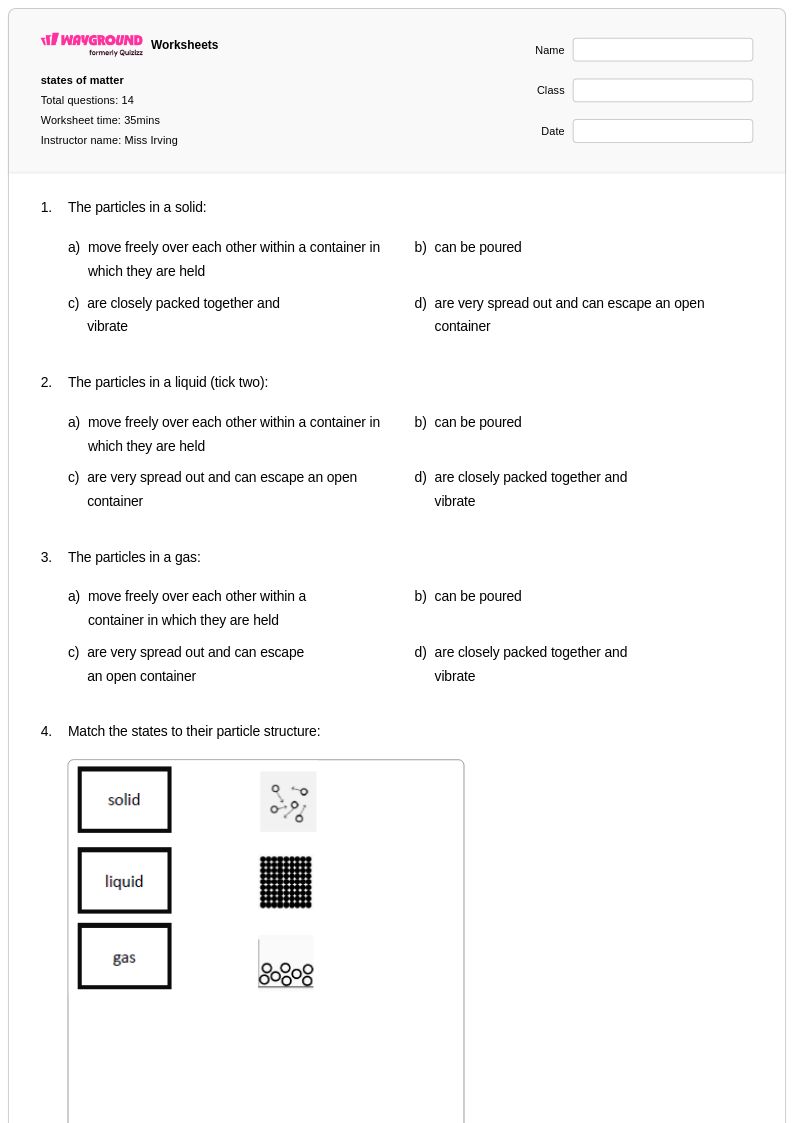
Effective practice exercises include particle arrangement diagrams where students label or draw molecular structures for each state, phase diagram interpretation tasks, and scenario-based questions that ask students to predict state changes given temperature or pressure conditions. Practice problems that connect intermolecular forces to observable physical properties — such as why gases expand to fill a container — deepen conceptual understanding beyond surface-level identification.
What common mistakes do students make when learning about solids, liquids, and gases?
A frequent misconception is that particles in a solid are completely stationary — students often do not recognize that particles vibrate in place. Another common error is confusing the direction of energy flow during phase transitions, such as assuming melting releases energy rather than absorbs it. Students also tend to overgeneralize, believing all solids are hard or all gases are invisible, which makes exposure to counterexamples like mercury or colored gas demonstrations especially valuable.
How do I help struggling students understand phase transitions?
Breaking phase transitions into two components — the energy change and the particle behavior change — helps students who find the concept abstract. Heating and cooling curve graphs are particularly useful because they give students a visual anchor showing where temperature plateaus during a phase change, reinforcing that energy is being used to break intermolecular forces rather than raise temperature. On Wayground, teachers can enable Read Aloud so question text is read to students who need additional support, and Reduced Answer Choices can lower cognitive load for students who are still building foundational understanding.
How can I use Wayground's solids, liquids, and gases worksheets in my classroom?
Wayground's solids, liquids, and gases worksheets are available as printable PDFs for traditional classroom use and in digital formats for technology-integrated environments, including the option to host them as a quiz directly on Wayground. This makes them suitable for in-class practice, homework assignments, or assessment preparation without requiring lesson plan restructuring. All worksheets include complete answer keys, so teachers can provide targeted feedback efficiently after any assignment.
How do I differentiate states of matter instruction for different learners?
For advanced learners, extend practice into quantitative phase diagram analysis and questions about how pressure affects boiling points. For students who need remediation, focus first on the particle model with highly visual tasks before introducing energy and phase transition vocabulary. Wayground supports individualized accommodations including extended time per question, Read Aloud, and adjustable font sizes through Reading Mode — all configurable per student without notifying the rest of the class.