Free Printable Balanced Chemical Equations worksheets
Master balanced chemical equations with Wayground's comprehensive collection of free worksheets, featuring step-by-step practice problems, printable PDFs, and detailed answer keys to strengthen your chemistry skills.
Explore printable Balanced Chemical Equations worksheets
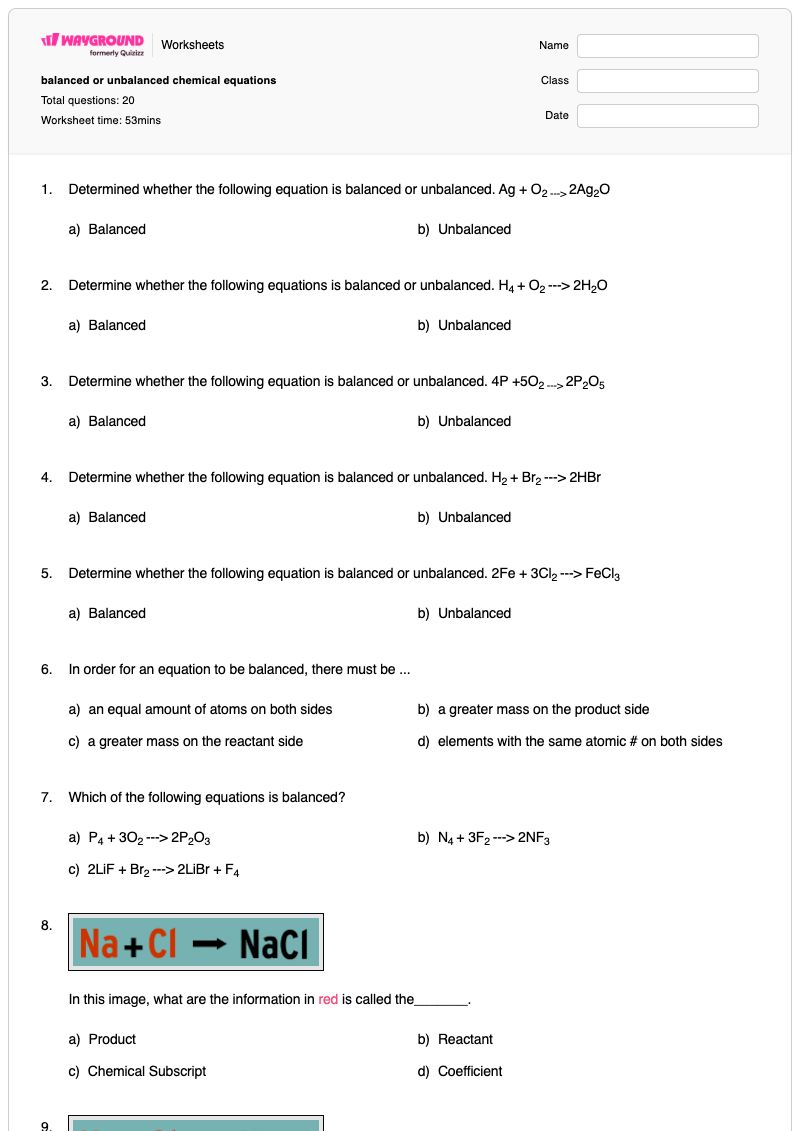
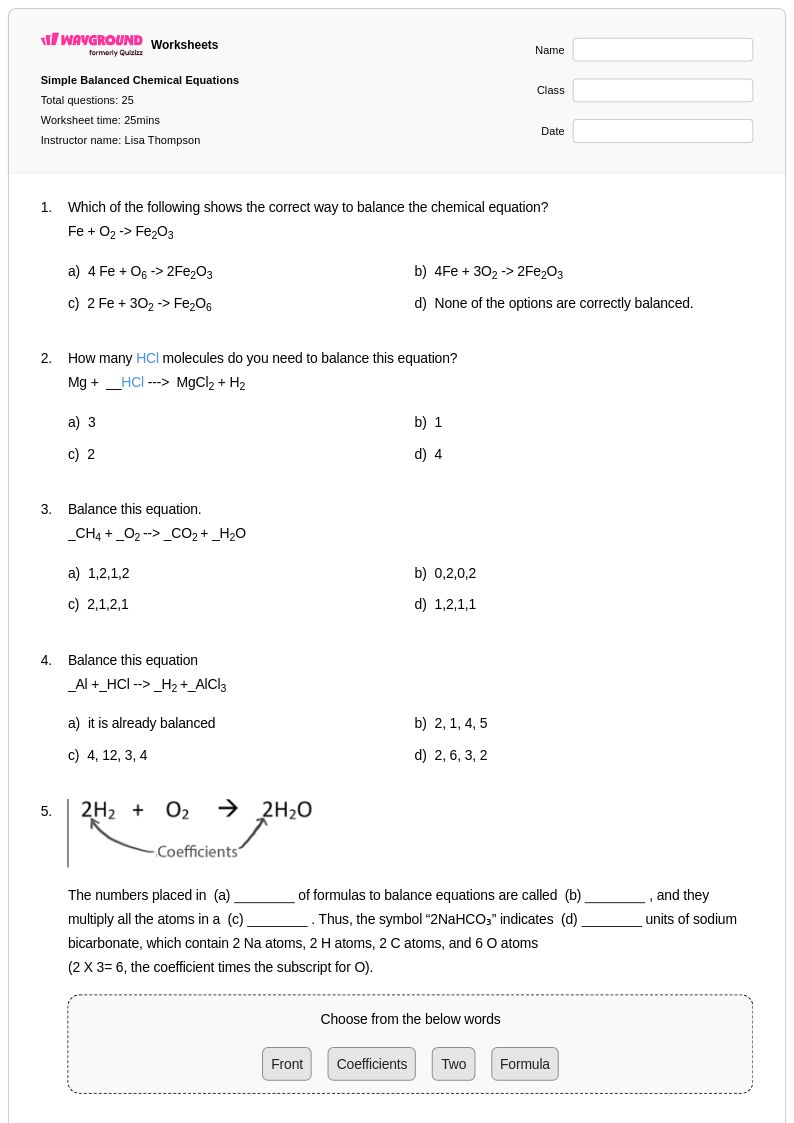
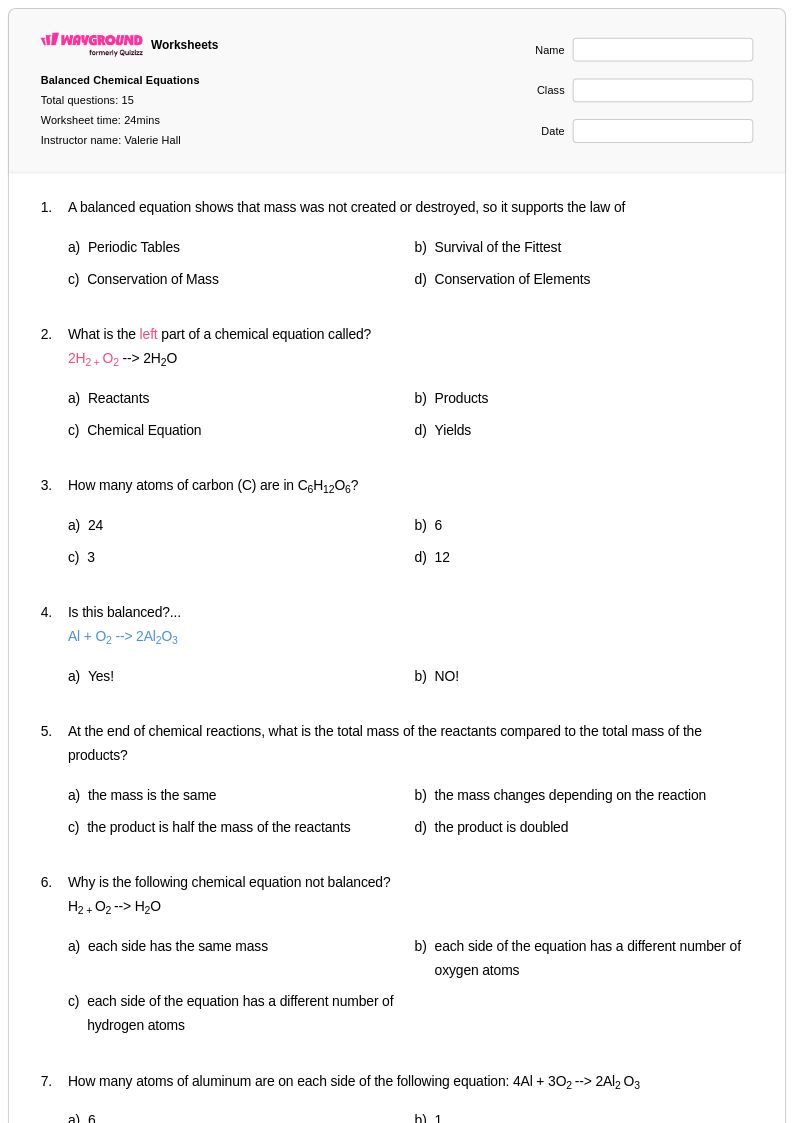
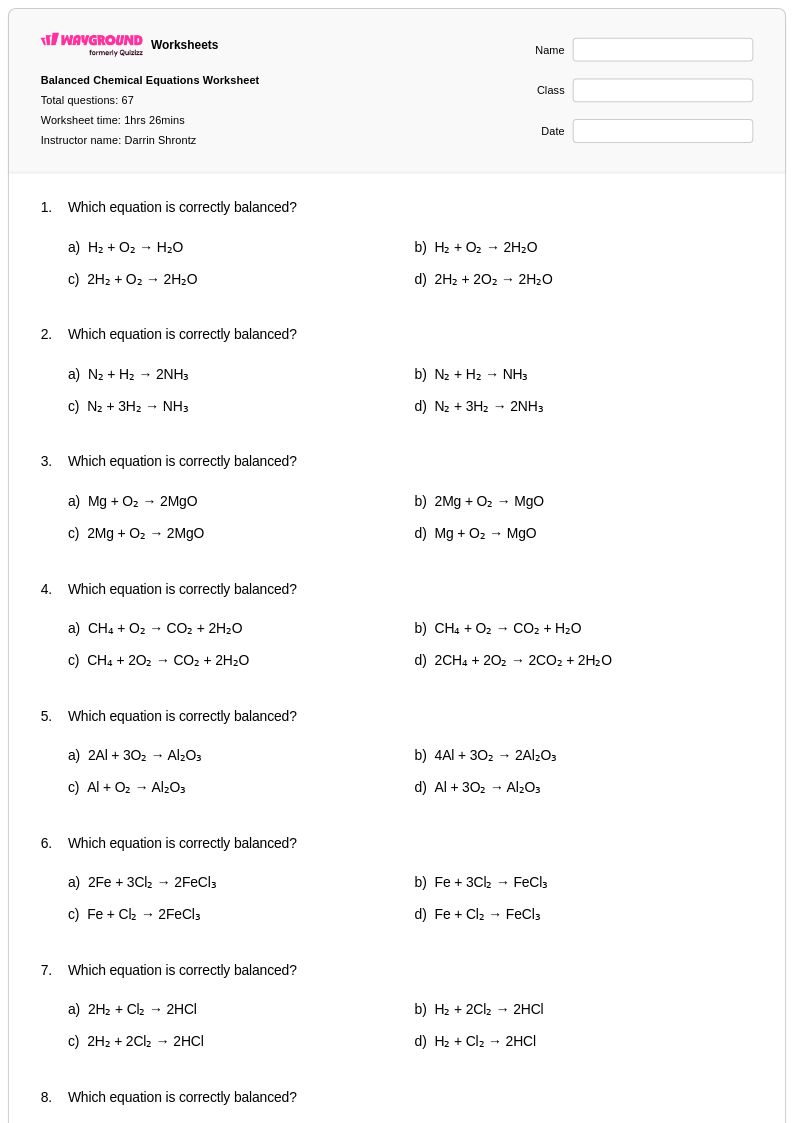
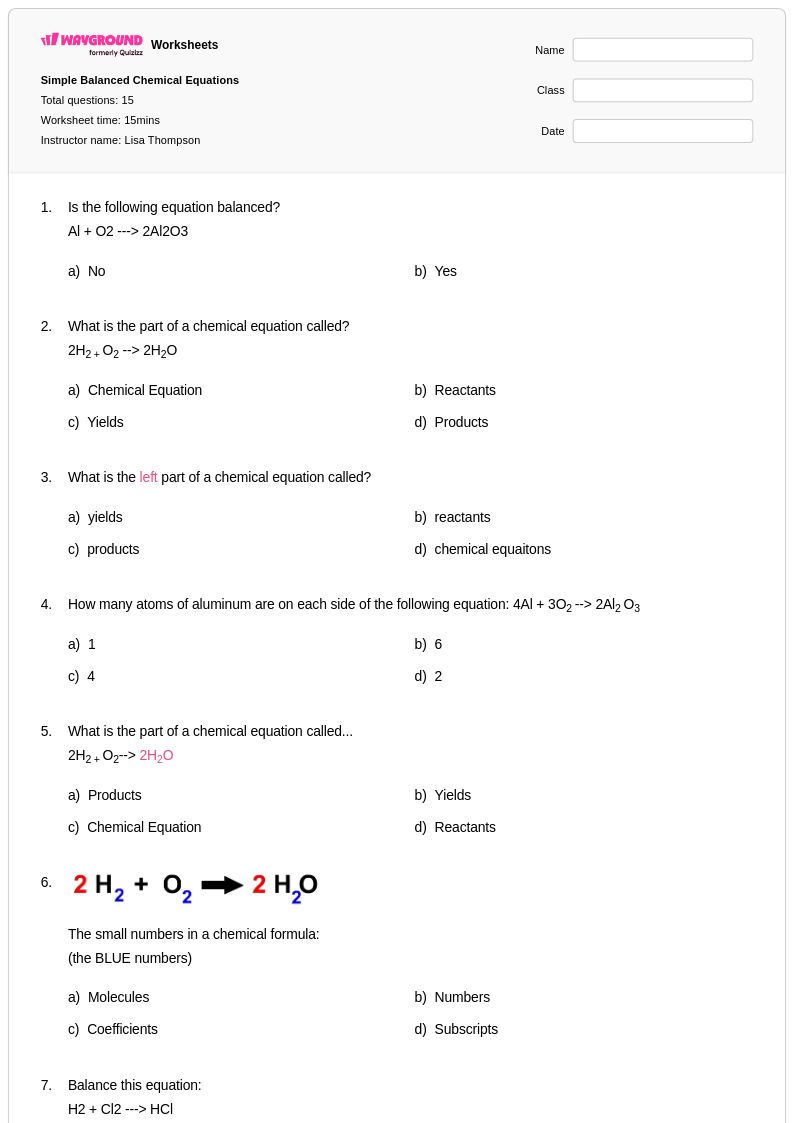
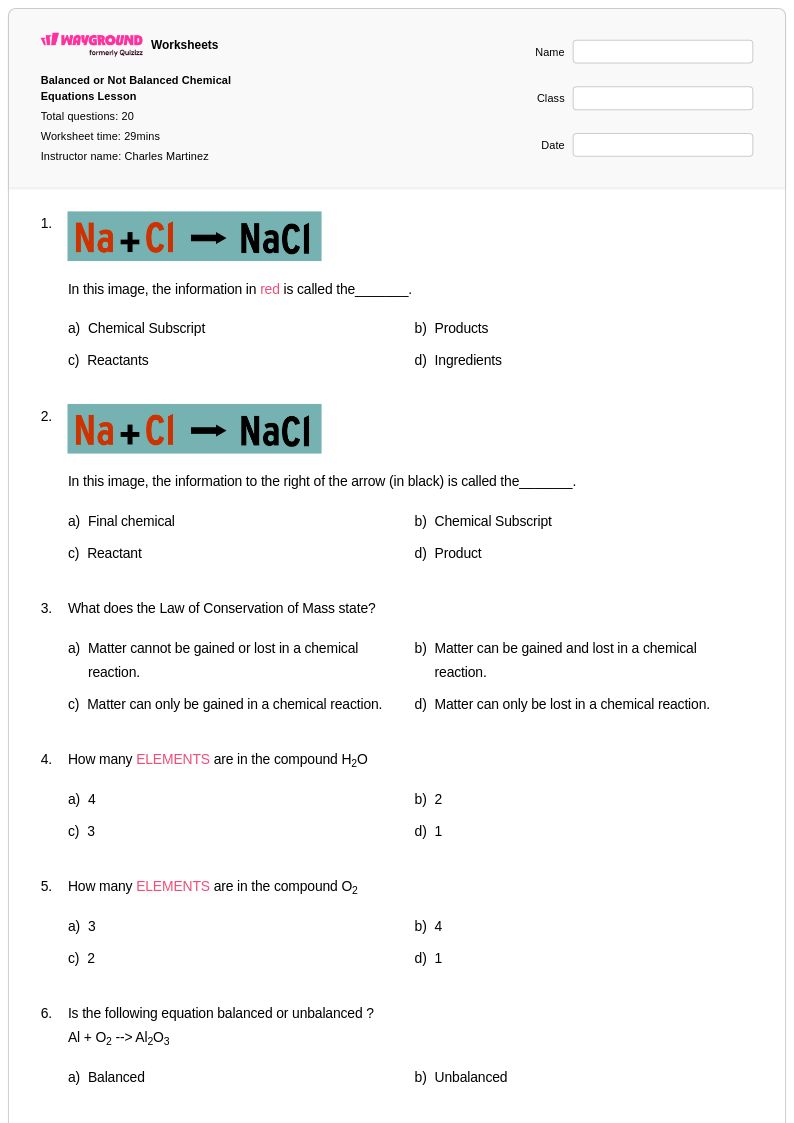
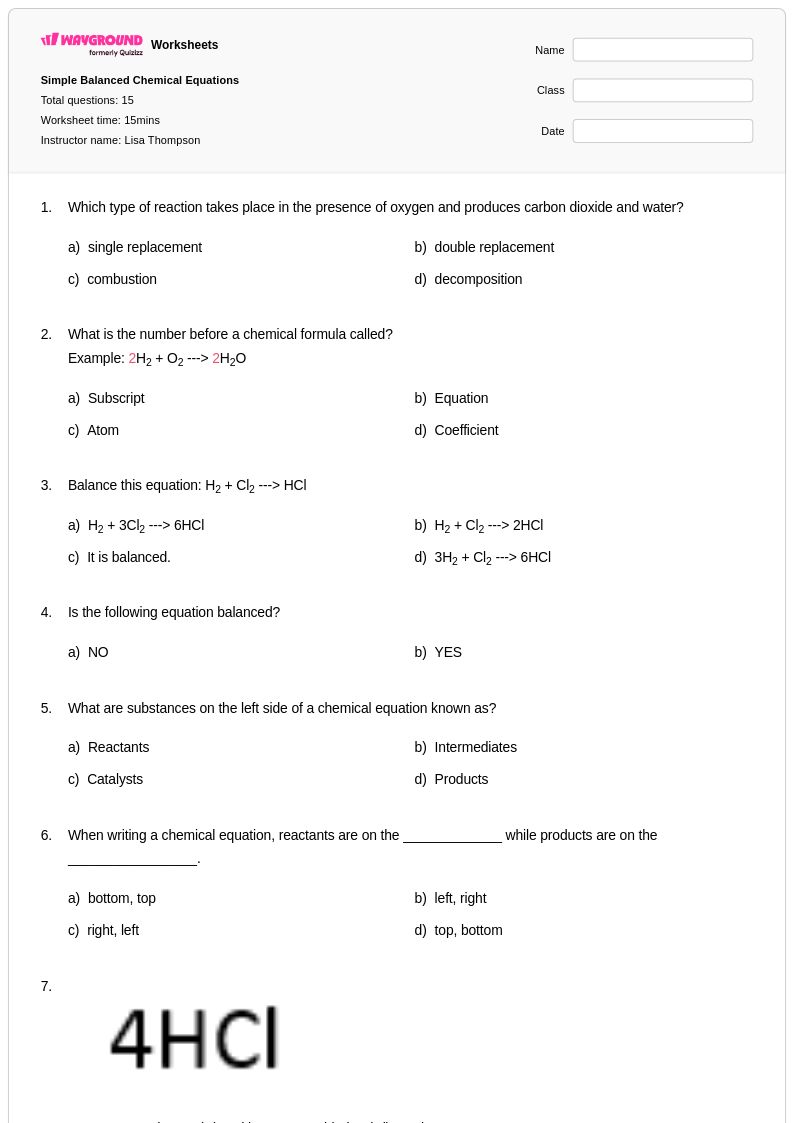
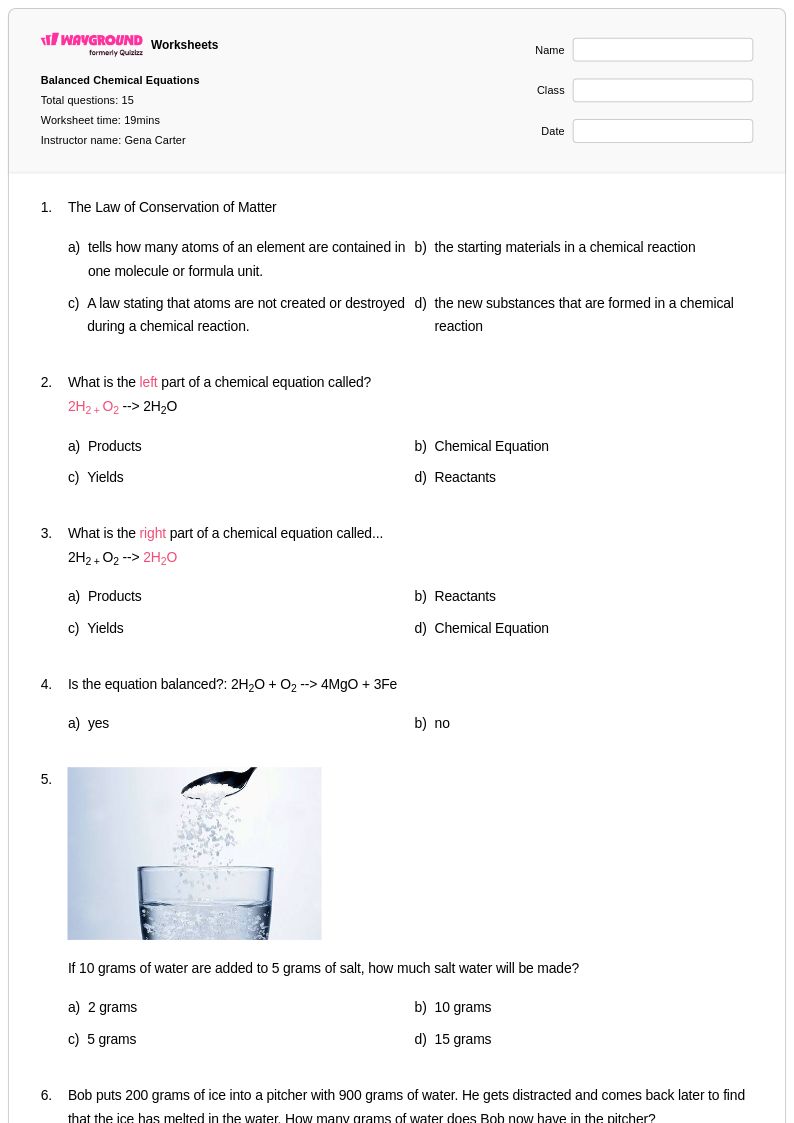
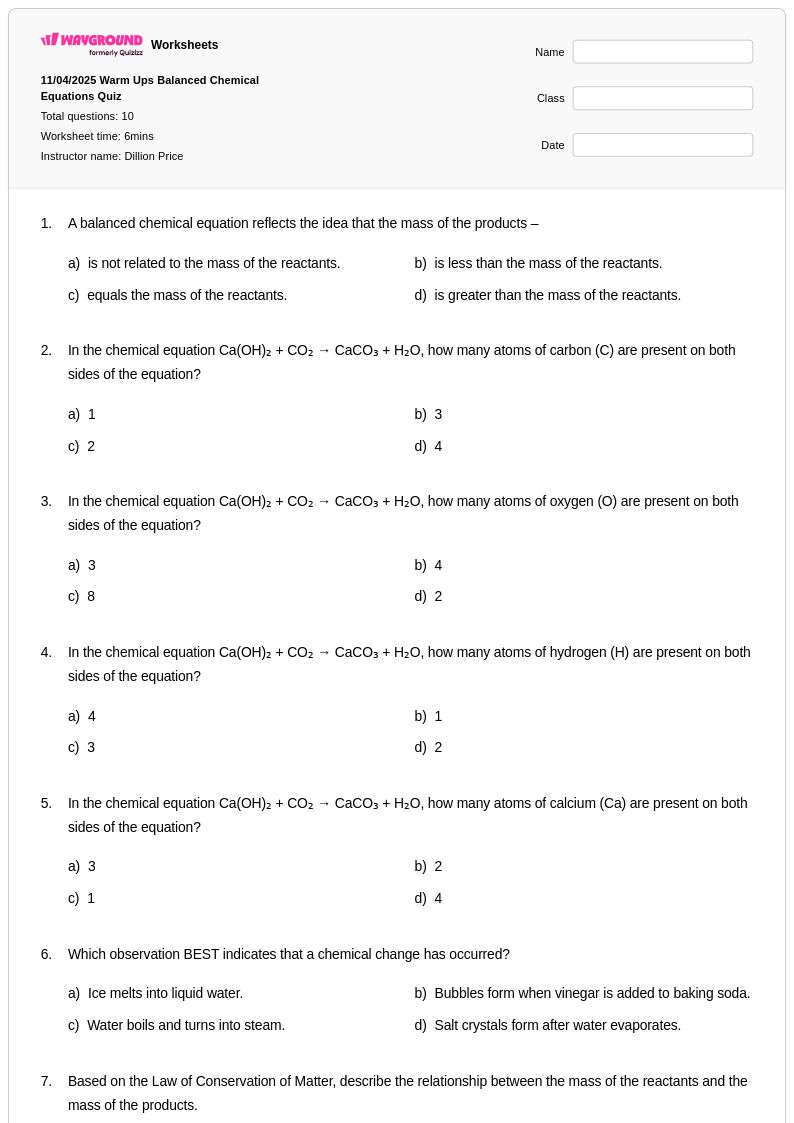
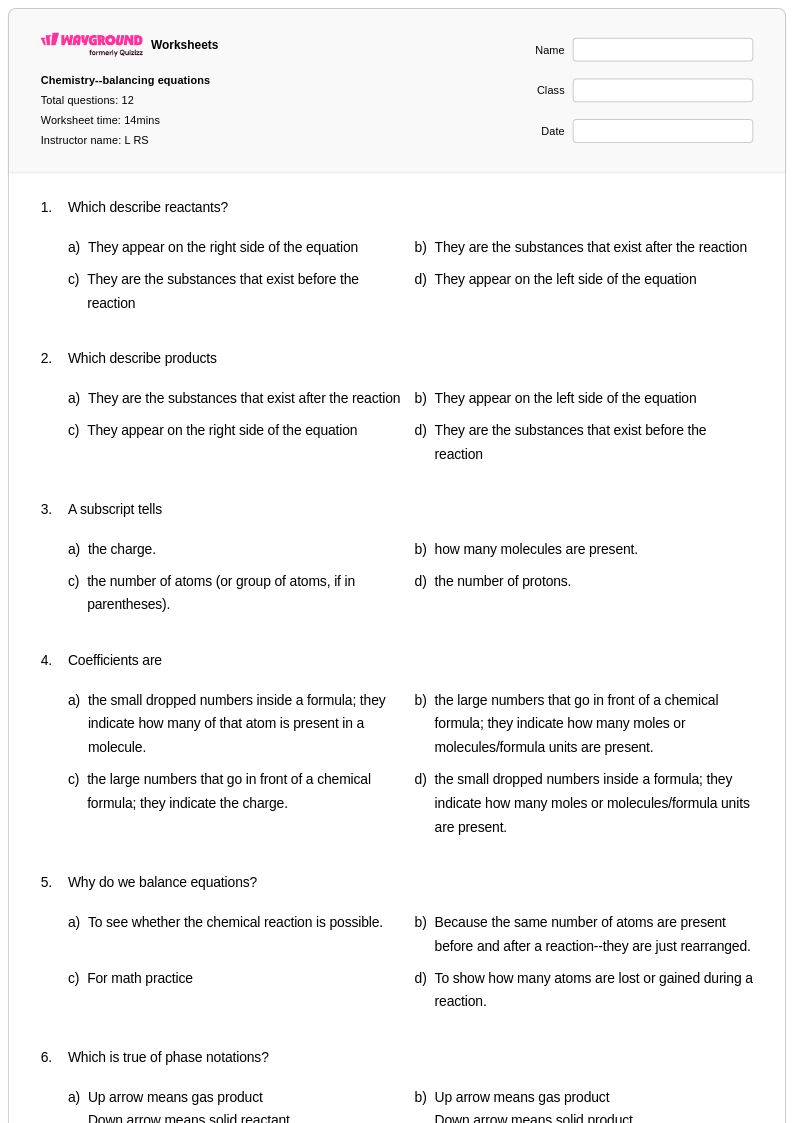
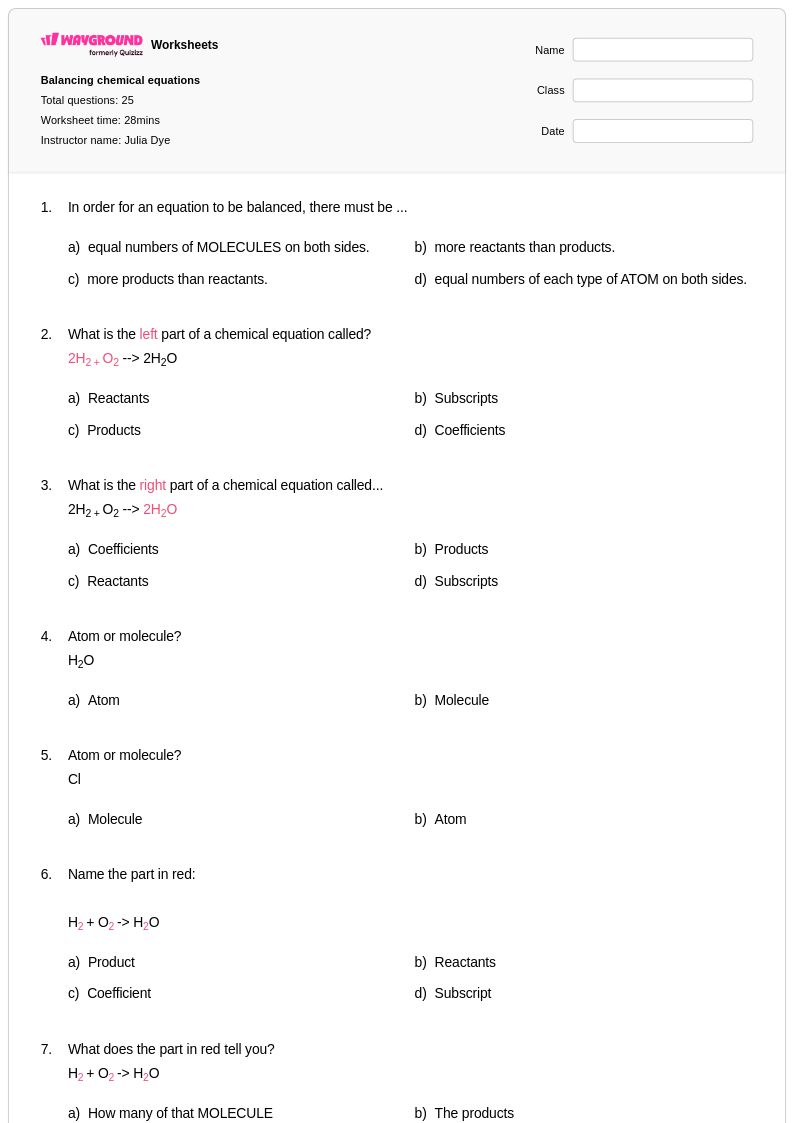
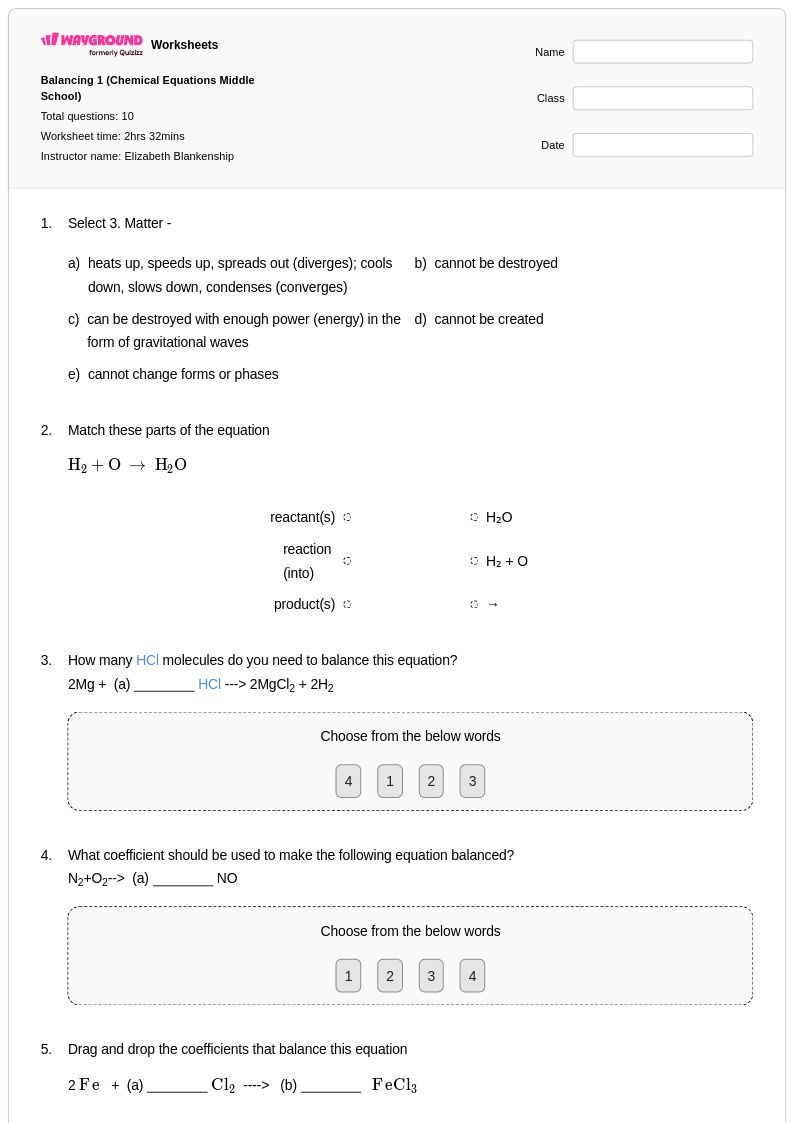
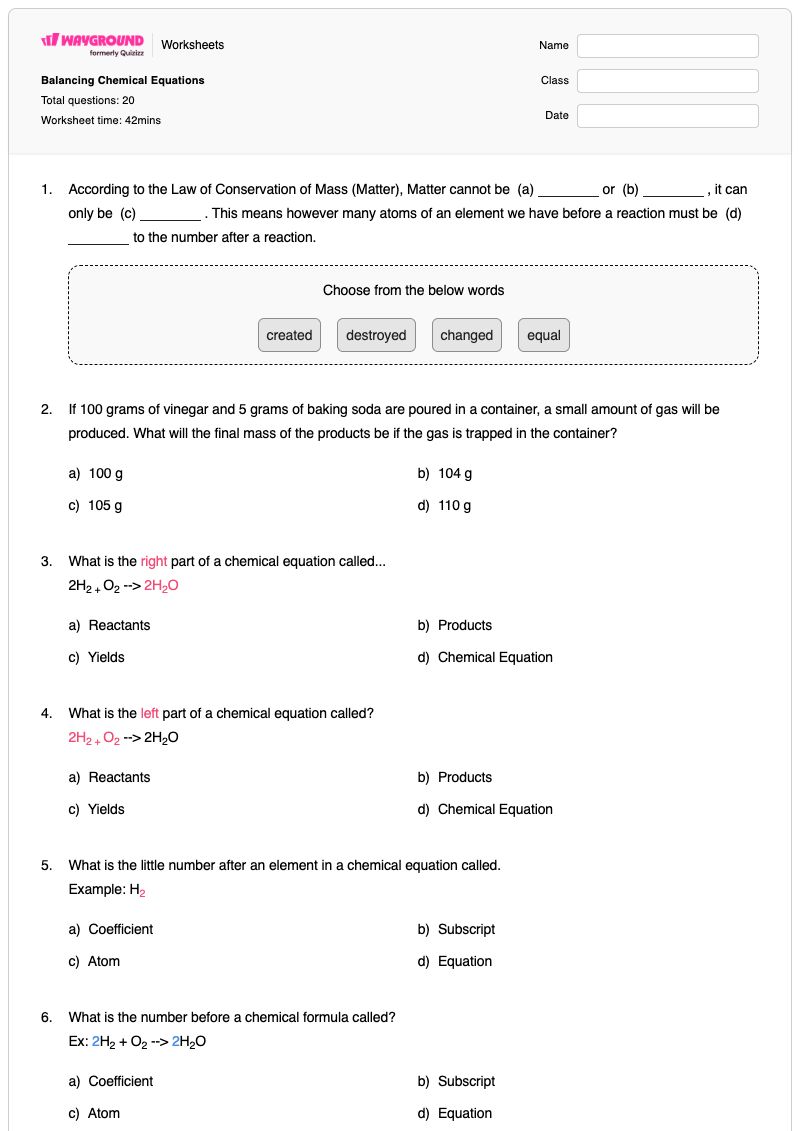
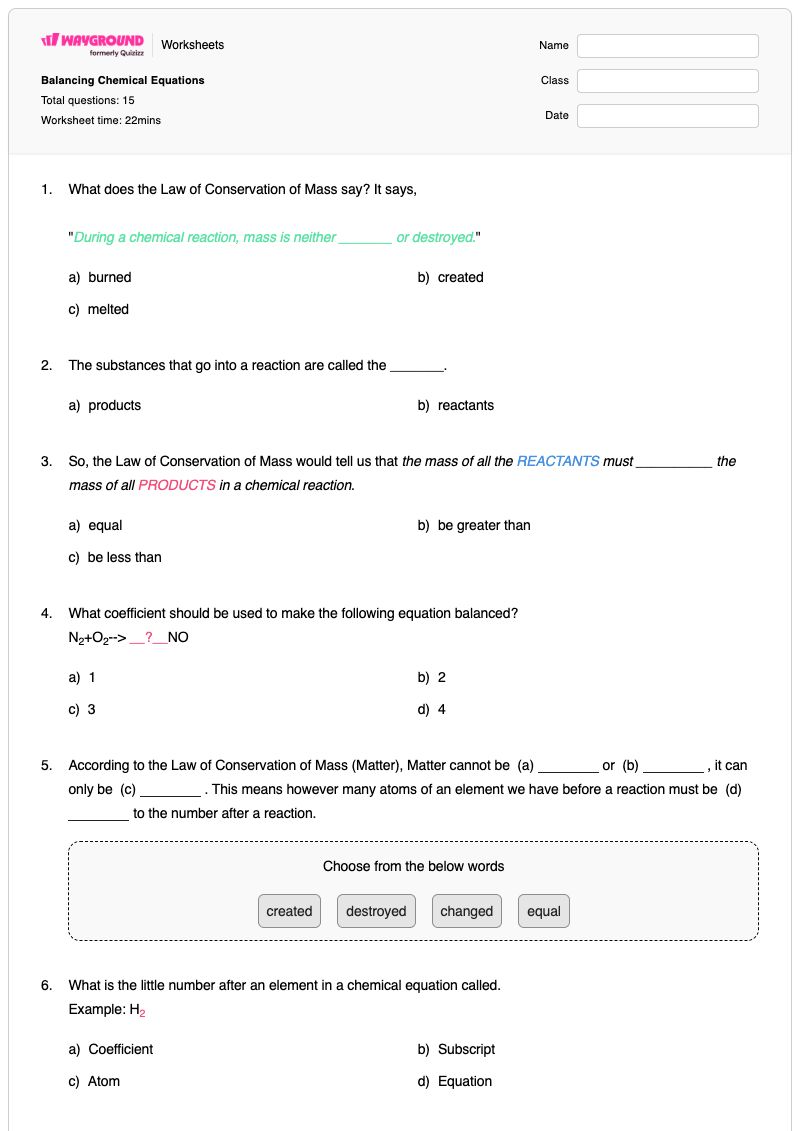
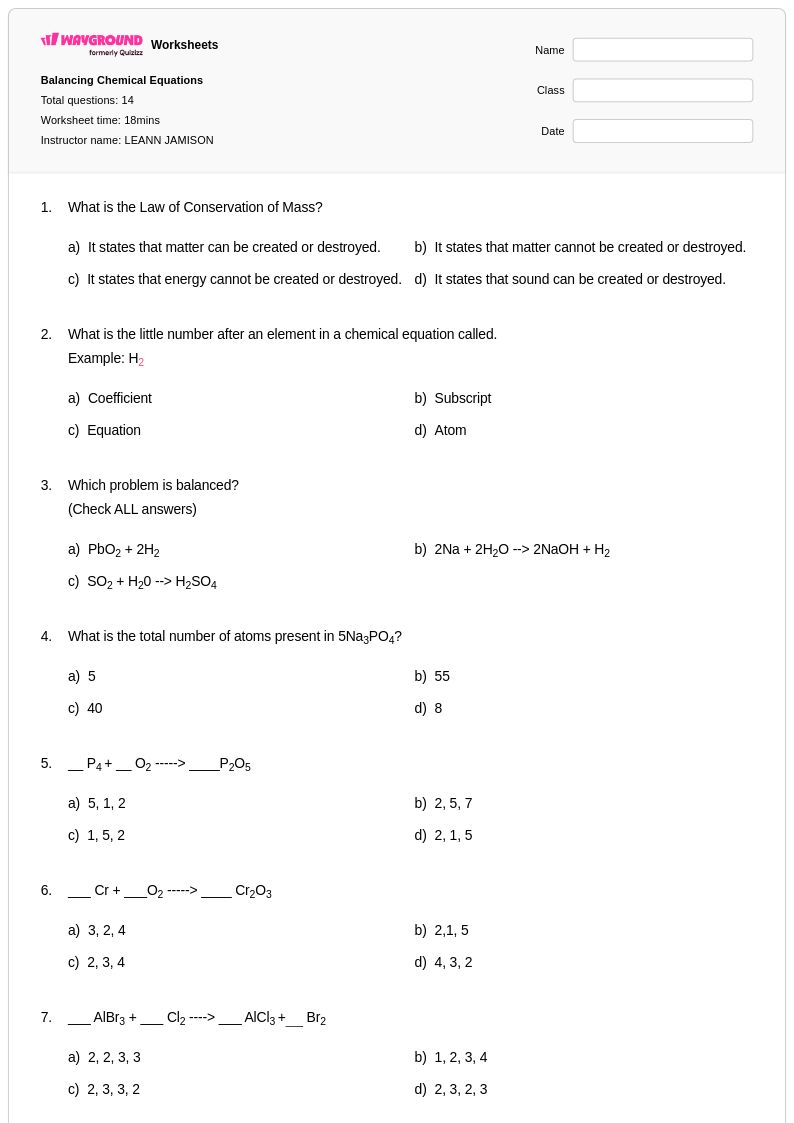
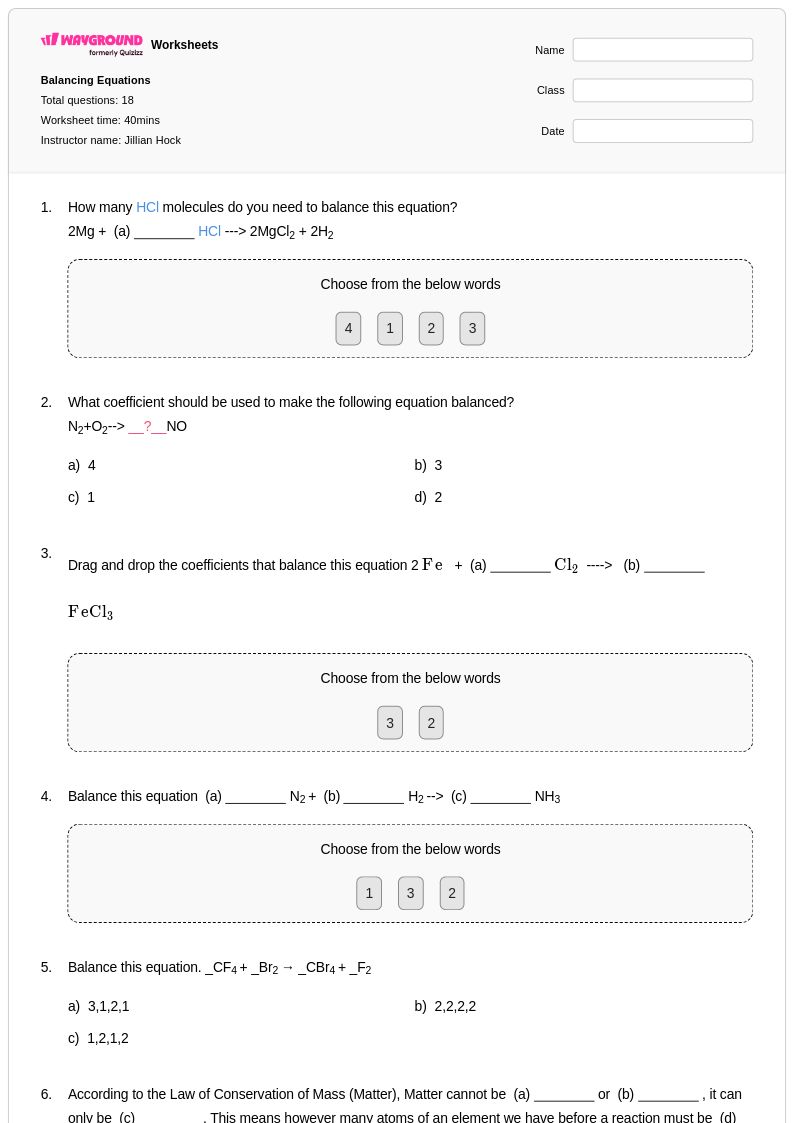
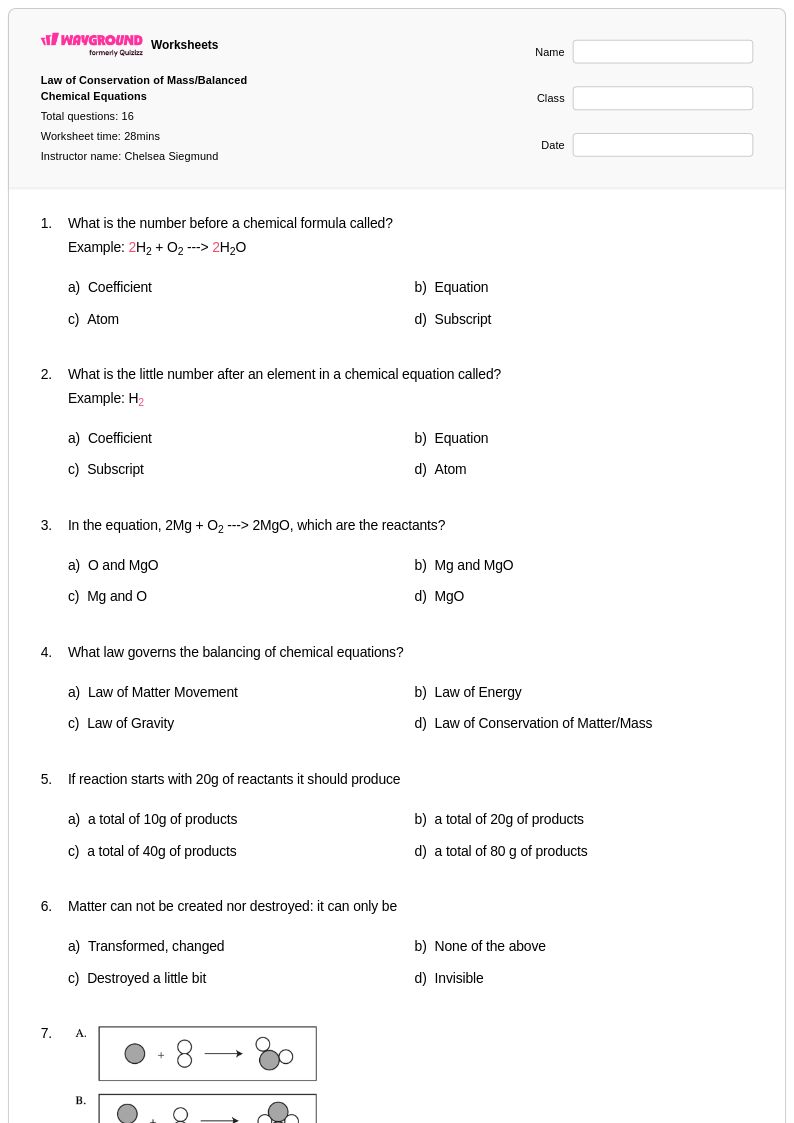
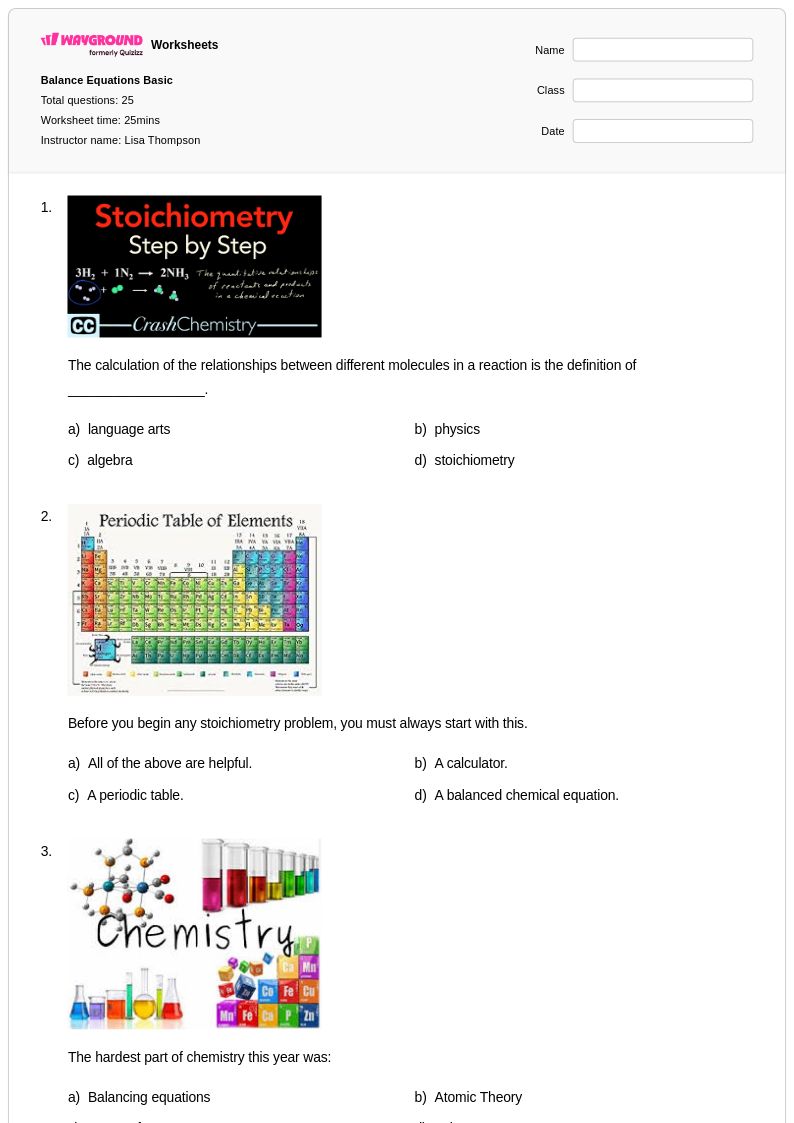
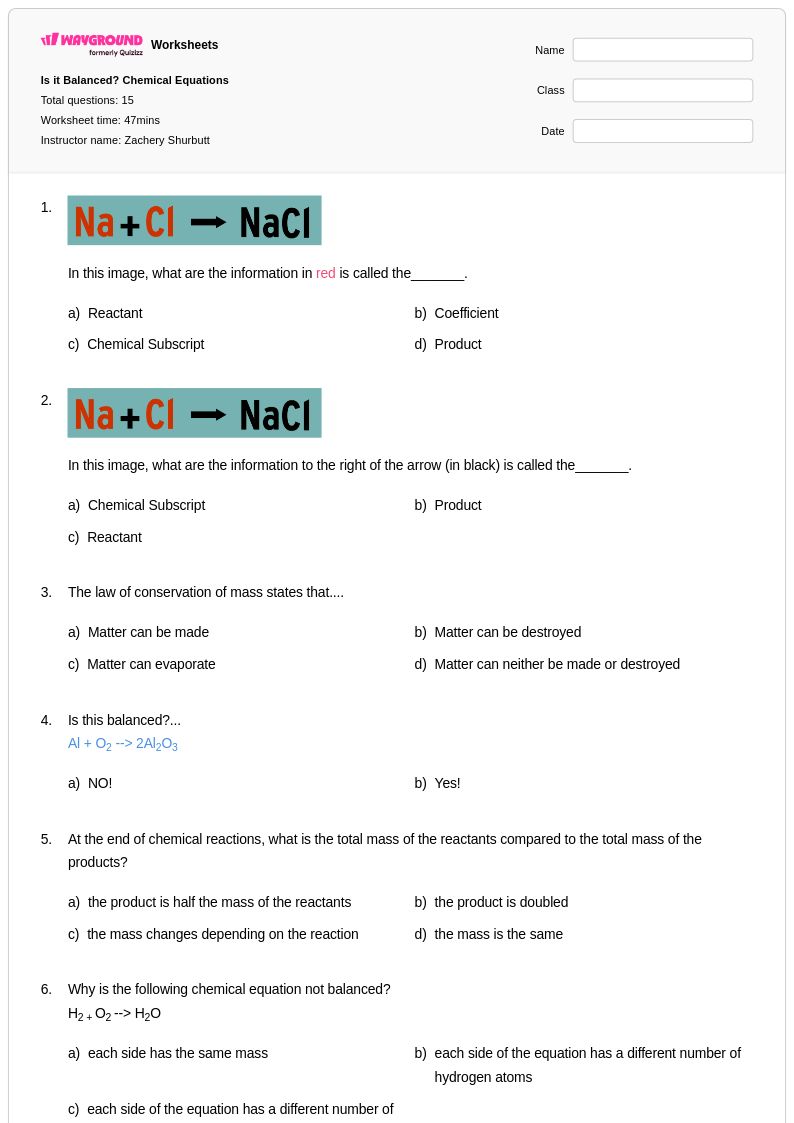
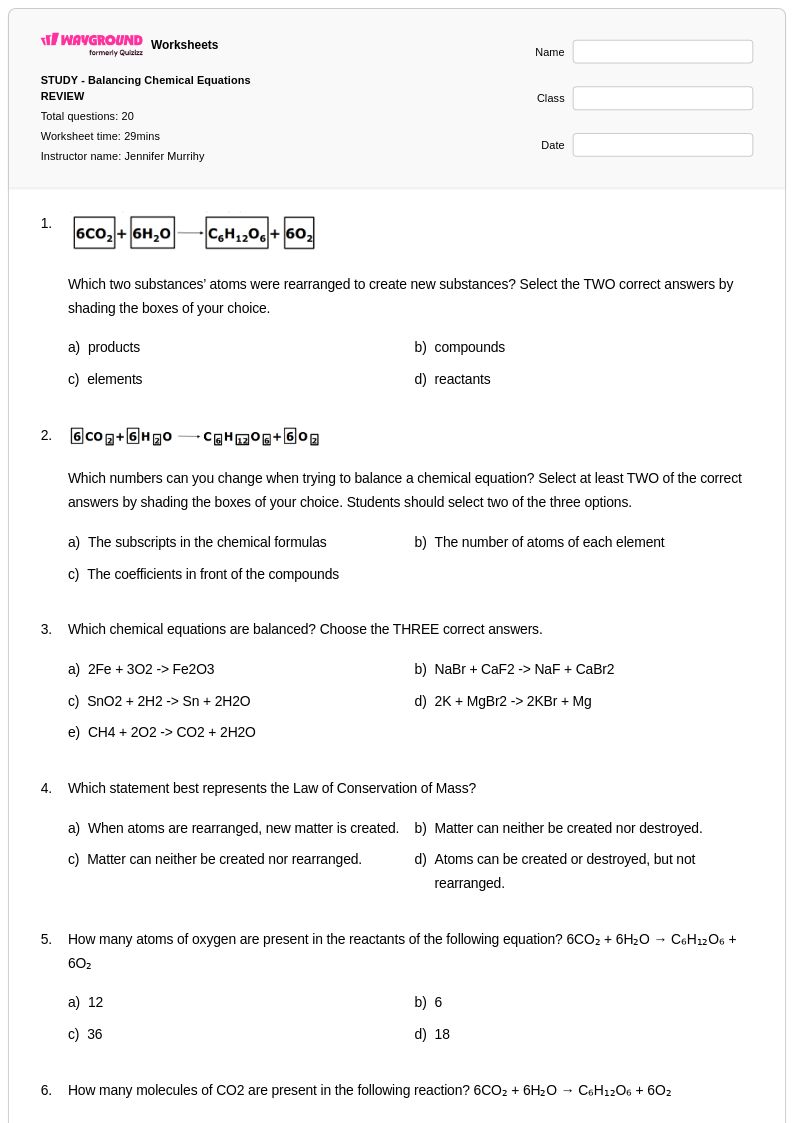
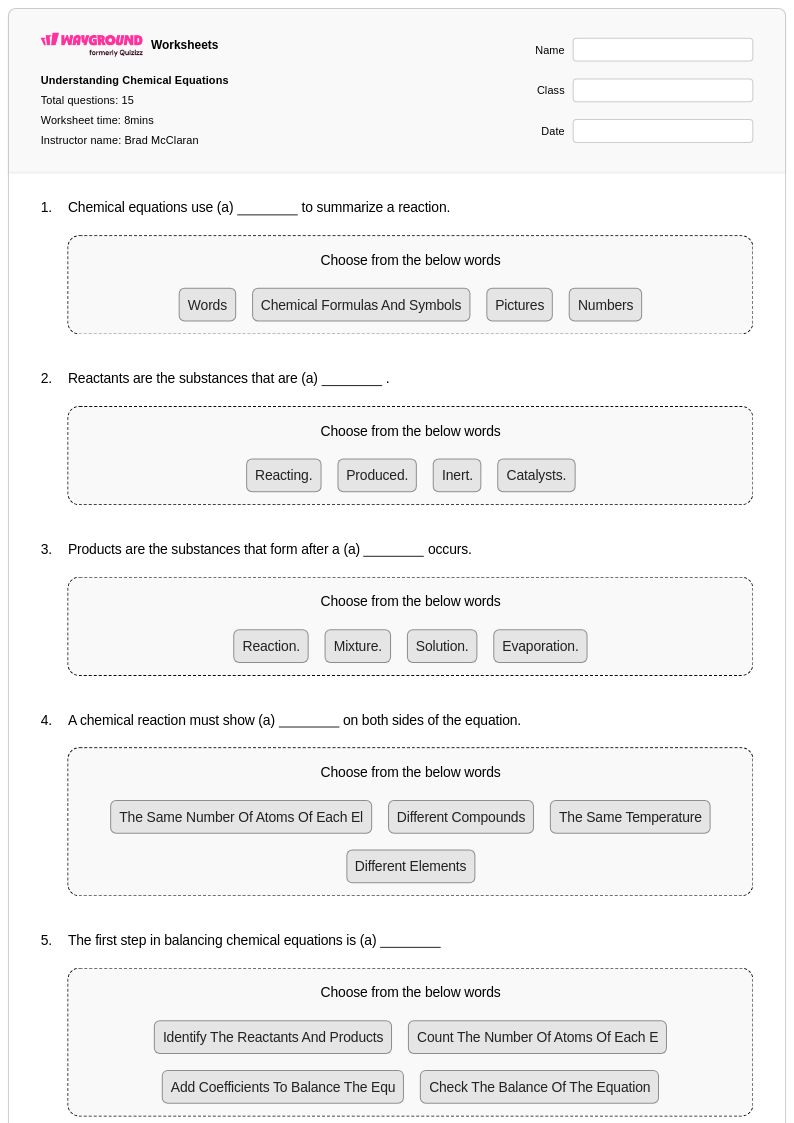
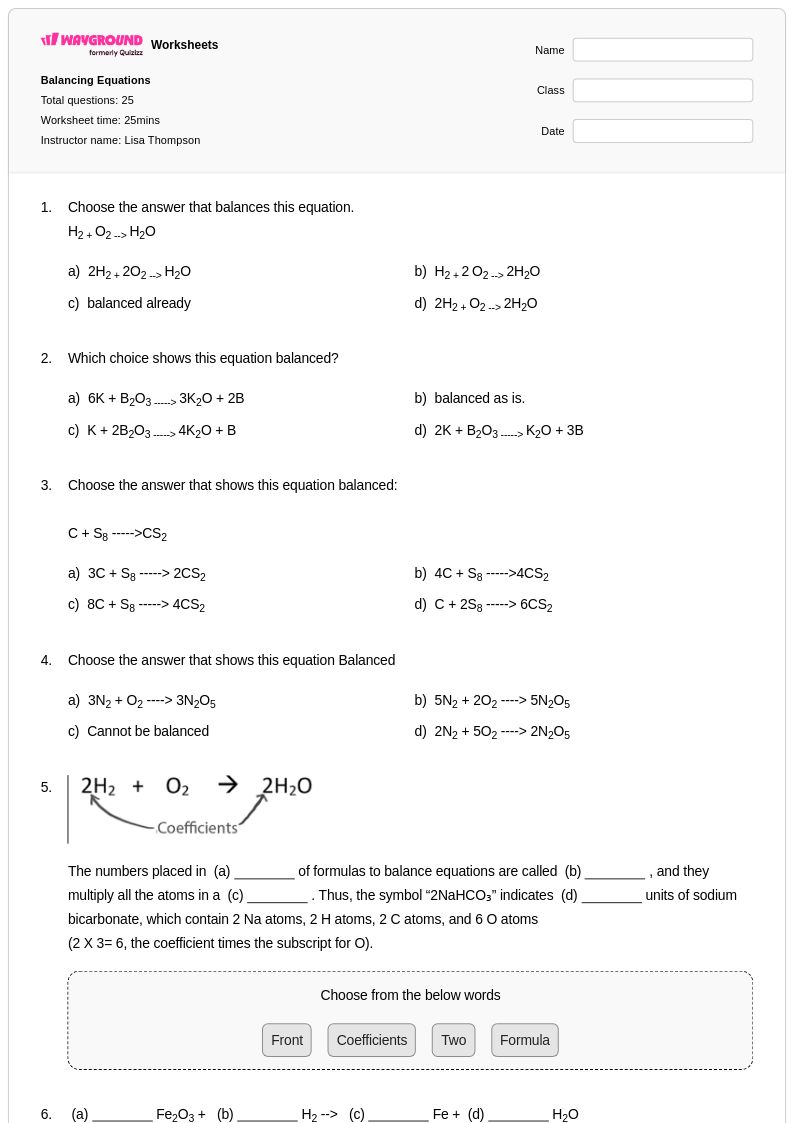
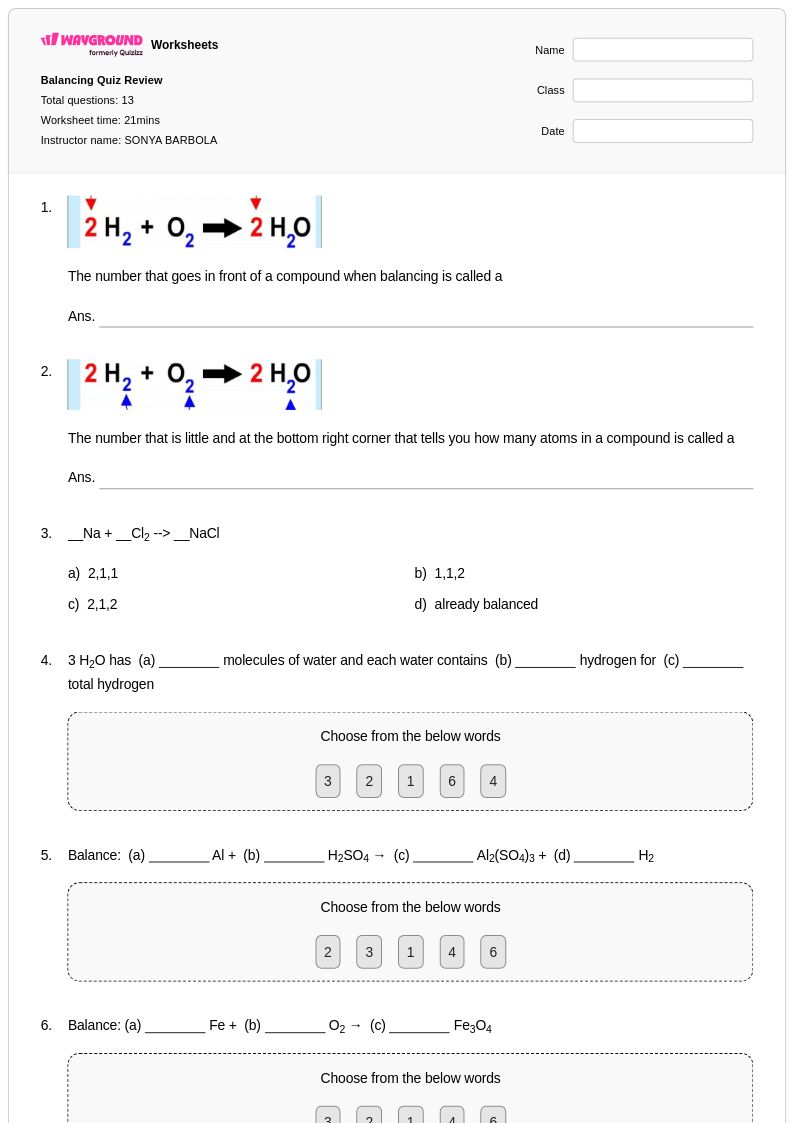
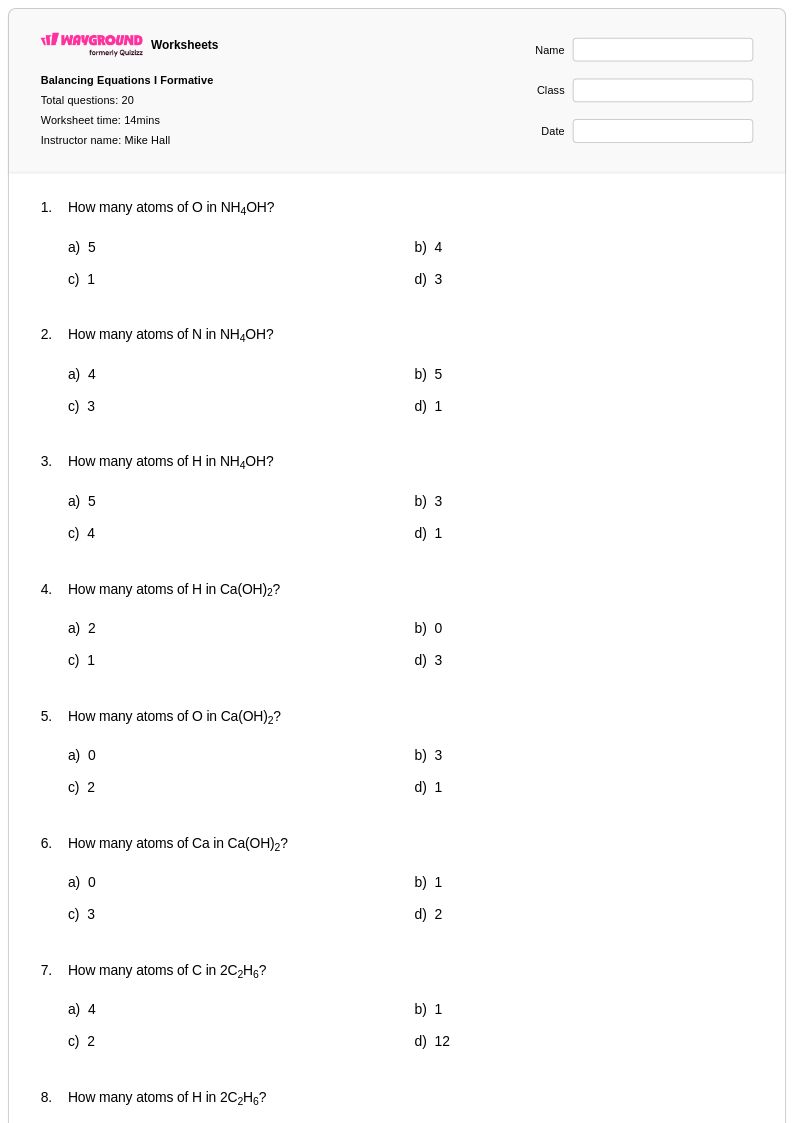
Balanced chemical equations form the foundation of understanding chemical equilibrium, requiring students to master the fundamental skill of representing chemical reactions with equal numbers of atoms on both sides of the equation. Wayground's comprehensive worksheet collection provides educators with expertly designed practice problems that guide students through the systematic process of balancing equations using algebraic methods, inspection techniques, and coefficient adjustments. These free printable resources include detailed answer keys that help students verify their work and understand common balancing strategies, while the varied problem sets progress from simple synthesis reactions to complex multi-step equations involving polyatomic ions and fractional coefficients. Each worksheet strengthens critical thinking skills as students learn to identify reactants and products, apply conservation of mass principles, and develop the mathematical reasoning necessary for advanced chemistry concepts.
Wayground's extensive library of millions of teacher-created resources empowers educators to select balanced chemical equation worksheets that precisely match their instructional needs through advanced search and filtering capabilities. The platform's standards alignment ensures that worksheet content corresponds to curriculum requirements, while differentiation tools allow teachers to customize problem difficulty levels for remediation or enrichment activities. These versatile materials are available in both printable pdf formats for traditional classroom use and digital formats for online learning environments, enabling seamless integration into diverse teaching situations. Teachers can efficiently plan lessons, create targeted skill practice sessions, and provide additional support for struggling students while challenging advanced learners with more complex balancing scenarios, all supported by the platform's flexible customization options that accommodate various learning styles and pacing requirements.
FAQs
How do I teach students to balance chemical equations step by step?
Start by teaching the law of conservation of mass so students understand why equations must be balanced. Introduce the inspection method first, having students count atoms on each side before adjusting coefficients. Once students are comfortable, progress to algebraic balancing methods for more complex reactions. Emphasizing that only coefficients can be changed, never subscripts, prevents the most common early mistakes.
What is the best order to introduce balancing equation practice problems?
Begin with simple synthesis and decomposition reactions involving only two or three elements, then move to single and double replacement reactions. Introduce polyatomic ions as a separate step before combining them with multi-step equations. Fractional coefficients and combustion reactions should come last, once students have a firm grasp of whole-number balancing.
What mistakes do students most commonly make when balancing chemical equations?
The most frequent error is changing subscripts instead of coefficients to balance an equation, which changes the substance itself rather than its quantity. Students also frequently forget to recount all atoms after each coefficient adjustment, leading to cascading errors. Another common mistake is treating polyatomic ions as individual atoms and splitting them apart when balancing, rather than counting the entire ion as one unit.
How can I use balanced chemical equations worksheets to differentiate instruction?
Use simpler single-reaction worksheets for students who need remediation on atom counting and the conservation of mass, while assigning complex multi-step problems involving polyatomic ions or fractional coefficients for advanced learners. On Wayground's digital format, teachers can apply accommodations such as read aloud support or reduced answer choices to individual students without signaling any difference to the rest of the class, making differentiation seamless and private.
How do I use Wayground's balanced chemical equations worksheets in my classroom?
Wayground's balanced chemical equations worksheets are available as printable PDFs for traditional classroom use and in digital formats for technology-integrated or remote learning environments. Teachers can also host the worksheets as a quiz directly on Wayground, making it easy to assign practice, collect responses, and review results in one place. Each worksheet includes a detailed answer key so students can check their work independently or teachers can use it for efficient grading.
How do balanced chemical equations connect to other chemistry concepts?
Balancing equations is a prerequisite skill for stoichiometry, where students use mole ratios derived directly from balanced equations to calculate reactant and product quantities. It also underpins understanding of reaction types, limiting reagents, and chemical equilibrium. Students who struggle to balance equations consistently will encounter compounding difficulty across virtually every subsequent chemistry unit.